Getting the transcript
Reading the captions from YouTube. A video nobody has opened here before takes 10 to 30 seconds; this page fills in on its own.
Getting the transcript
Reading the captions from YouTube. A video nobody has opened here before takes 10 to 30 seconds; this page fills in on its own.
orkid pulse · @orkid_pulse
Words
4,245
Runtime
32:13
Speaking pace
132wpm
Reading time
18min
132 words per minute, below the 160 25th percentile of 349 measured videos. That distribution comes from the 349-video hook study.
Opening (first 30 seconds)
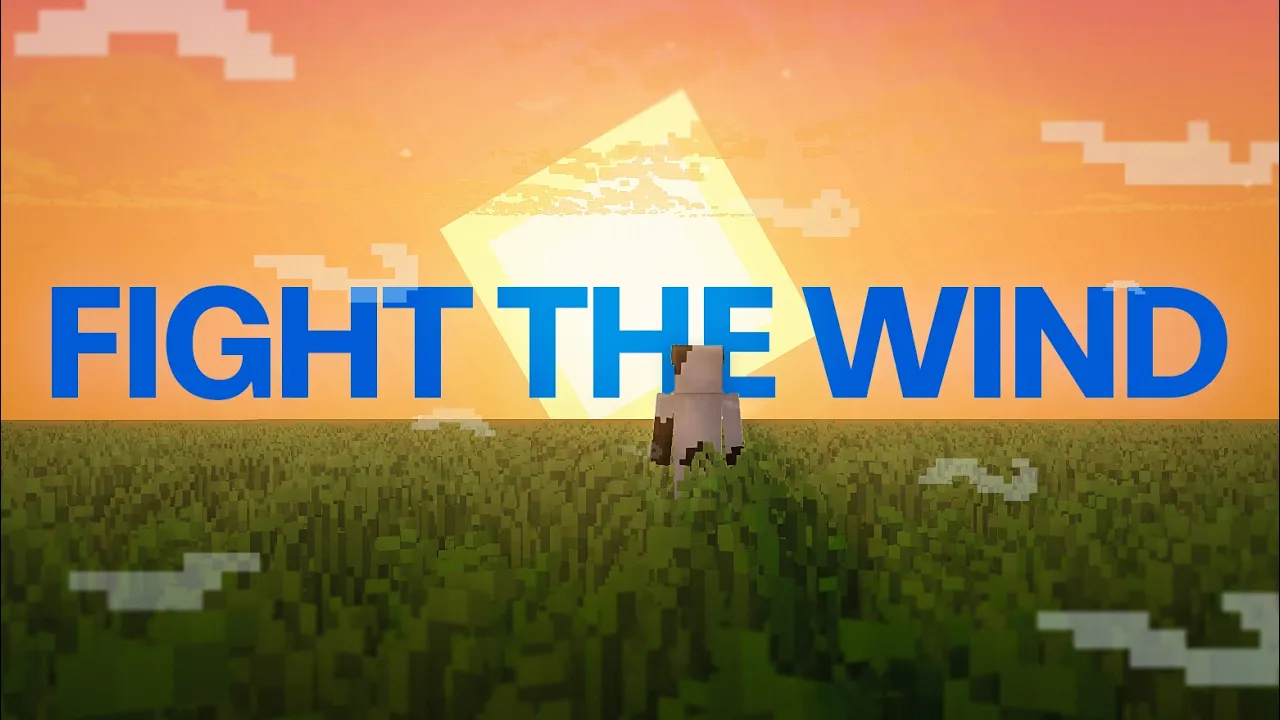
There is a particular kind of person who gets very angry at the wind. Not metaphorically. Literally the wind. Because the wind is one of those increasingly rare things that simply does not care what you are trying to do. It doesn't care that you had plans. It doesn't care that you're late. It doesn't care that you spent 40 minutes doing your hair. And it
66 words, the words spoken in the first 30 seconds at 132 words per minute.
Free, no signup. See how the first 30 seconds hold attention, with rewrites.
Sentence shape
| Measure | This transcript |
|---|---|
| Sentences | 392 |
| Average words per sentence | 10.8 |
| Longest sentence | 40 words |
| Questions asked | 20 |
| Sentences containing a number | 11 |
Most used terms
Filler phrases
32 in total: like 13 · actually 10 · you know 3 · kind of 2 · literally 2 · sort of 2.
A literal whole-word count of the same phrase list the Prepublish browser extension uses, so a phrase inside another word is not counted and a phrase used in its ordinary sense still is. It is a count and not a judgement.
Run the check on the words above: where attention is likely to drop, with a rewrite for each weak line. The free check shows the scores and the one issue costing the most.
What this transcript is
Every word below is the caption track YouTube publishes for this video, pulled from the video itself and reproduced unchanged. It is not Prepublish's writing, not a summary, and not a re-transcription: it is the video's own published captions. English captions, published by the channel, in the video’s original language. Source: the video on YouTube. A channel that would rather this page did not exist can ask for its removal through the contact page, and it is removed.
No Script X-ray for this video: YouTube shows a Most replayed graph only once a video has enough views.
There is a particular kind of person who gets very angry at the wind. Not metaphorically. Literally the wind. Because the wind is one of those increasingly rare things that simply does not care what you are trying to do. It doesn't care that you had plans. It doesn't care that you're late. It doesn't care that you spent 40 minutes doing your hair. And it certainly doesn't care that, according to the little blue line on your weather app, it was supposed to be blowing the other way.
We've gotten very good at knowing what the wind is doing. We can measure its speed, predict its direction, watch storms cross oceans from a phone in our pocket. We can give it numbers, names, categories, warnings. We just can't tell it what to do. Which is inconvenient because telling things what to do is sort of our thing. For thousands of years, human beings have been engaged, and what I think is a fairly bizarre project trying to make the universe more cooperative.
We put rivers behind dams, we put lightning inside wires, we split atoms. We put clocks on our wrist, roads through mountains, air conditioning in deserts, and human beings on the moon. Very, very fine grained as you get close to it. It's almost like a powder. Brown. This is very fine. Step off the lamb. That's one small step for man. One. That looks beautiful. It has a start all its own. It's. that, it becomes very easy to develop a slightly unreasonable expectation that things should go according to plan.
Well, they don't. A few thousand years ago, somewhere near a body of water, somebody had a problem. They wanted to go over there, but the wind was going over there. This was a serious problem because there was no engine. We had no propellers, no weather forecast. And unfortunately, yelling at the sky had produced inconsistent results. So somebody did something strange. They attached a large piece of fabric to a stick, and suddenly this completely uncontrollable thing could move them.
They hadn't defeated it, but they'd simply changed the boat. And that distinction turned out to be important because eventually sailors discovered something even stranger. A sailboat can travel toward the wind. Not directly. It has to zig-zag. It has to give up the straight line. It has to repeatedly turn away from where it actually wants to go. Left, right, left again, and somehow it gets there. I don't like this. I would much prefer if getting somewhere looked like going toward it.
And I think most people would. We like causes that produce predictable effects, plans that produce the future we plan for, study this, get that job, work this hard, become this successful. Love somebody enough and they'll stay. Make the right decisions, and eventually you will arrive at the correct version of yourself. Except people get sick, companies collapse, wars begin, people leave, ships sink, and sometimes the wind just changes.
There's an old saying. You cannot direct the wind, but you can adjust your sails, which sounds nice. The sort of thing you'd find written underneath a photograph of the ocean and a dentist's office. Because if you can't control the wind, how much of your life do you actually control? And if the answer is not very much, then how much time have we wasted trying? When does perseverance become stubbornness? When does planning become an attempt to control things that were never ours to control?
When does changing course mean you failed? And maybe, more importantly, if the wind is always going to resist us, why should resistance automatically mean we're going the wrong way? Maybe the point isn't to wait for the wind to become convenient. Maybe it isn't to surrender to it either. Maybe, sometimes, the only way forward is to fight it. Not because you can control the wind, because you can decide what it is allowed to stop you from doing so.
I'm going to build a boat on land. This is actually the easy part because right now nothing can happen to it. It can't sink, it can't drift away. It can't get caught in a storm. I could build the worst boat ever conceived by man in here. And as long as nobody puts it in the ocean, it is technically unsinkable. Which is a fantastic property for a boat. Dry docks are nice because they let you temporarily pretend that the ocean isn't part of shipbuilding.
You drain the water, prop the ship up, and suddenly this thing designed entirely around the existence of the sea can be worked on as though the sea doesn't exist. Everything stays where you put it. If something is crooked, you fix it. If something doesn't fit, you replace it. Problems in here are very agreeable. They have solutions. See? Problem. Solution. I like problems like that. There is, however, a slight problem with making something in an environment where nothing unexpected can happen.
Eventually you start designing for the environment where nothing unexpected happens, and then somebody lets the water back in. In fact, there's a game about this. In 2002, Nintendo released a Zelda game where they drowned the entire world, which was a fairly dramatic solution to a recurring villain. The Legend of Zelda: The Wind Waker takes place a very long time after the games that came before it. Hyrule, the kingdom you're normally trying to save is gone, not destroyed, exactly.
It's still down there under the water before the game begins, Ganondorf returns. He's the villain from the older stories, and when nobody can stop him, the gods respond by telling a handful of people to climb to the mountaintops. They flood Hyrule. The mountains become islands, the kingdom becomes an ocean, and generations pass. Eventually, the people living above it don't even really know what they're standing on. To them, this isn't a flooded kingdom.
It's just the world. Ganondorf does know, and he wants it back. Not the islands, not the people who spent generations building lives on them. Hyrule. The old one. And to be fair to him, I kind of get it. He remembers what was there before the water. He remembers the kingdom. He remembers losing. And there's a moment near the end of the game where he explains where he came from. Ganondorf grew up in a desert. During the day, the wind brought scorching heat.
At night, it brought deathly cold. And across the desert was Hyrule. Green, water everywhere, a completely different life. He says he coveted the wind that blew across that land. Not the gold, not really the throne, the wind. I think that's a much sadder motivation than the game really needed to give him, because the time he finally gets another chance at Hyrule, the wind he wanted is gone. The fields are underwater.
The people are gone. The world moved on without asking him, but Ganondorf didn't. Eventually, Ganondorf's plan works, almost. He finds Hyrule. He gets what he needs, and beneath the ocean, the old kingdom is sitting exactly where everyone left it. It's preserved, a kingdom in drydock, waiting for somebody to let the water out, and the King of Hyrule does something strange then, because he wants his kingdom back, too.
He'd spent the game guiding Link toward it. He's literally the King. If anybody has a reason to believe that restoring Hyrule is the happy ending, it's him. But when he's finally given the opportunity, he doesn't take it. He wishes for Hyrule to be washed away permanently, and he tells Link and Tetra to go live in the world above it. There is something almost cruel about that. Usually, stories reward the person who refuses to give up.
Keep trying, keep believing, keep fighting long enough, and eventually the music swells and the thing you always wanted becomes yours. Wind Waker doesn't do that. Ganondorf refuses to give up. That's the problem. The King gives up, and that's what saves everyone. Although I don't think giving up is quite the right phrase. He finally notices that the thing he's been trying to save isn't the same thing as the people he's trying to save it for.
That's a rather unpleasant possibility that you can make a good plan for a good reason and spend years executing it perfectly. And then one day you look up and see that succeeding at the plan would require going backward. I think that's why we like the idea of perseverance so much, because it saves us from having to ask whether we still want what we originally started. Because quitting is embarrassing. Changing your mind is embarrassing.
Starting over is definitely embarrassing. You know what's much less embarrassing? Building an increasingly elaborate boat on land. At least then you can point to the boat. The strange thing about Ganondorf’s wind is that he eventually gets it. At the very end., they're all standing in Hyrule, the place he spent his entire life trying to reach, and the wind begins to blow. But by then, it doesn't really matter. He had spent so long trying to get back to the world.
He remembered that he never figured out how to live in the one that replaced it. And I think that's where the saying starts to annoy me. You cannot direct the wind, but you can adjust your sails because it makes adjusting sounds easy, like the wind changes direction and you just pull a rope. Problem solved. But sometimes adjusting your sails means admitting the destination doesn't really exist anymore. Sometimes the thing that needs changing isn't how you're getting there.
It's where there is. Anyway, I finished the ship and I have created one small problem. There is no water, which means at the moment this is not really a ship. It's an extremely expensive, tedious building shaped like one. And I think before I decide where it's supposed to go, I should probably make one that can actually leave. Because fighting the wind is one thing. Learning how to move through it is something else. Okay, this one has water already an improvement.
Although putting the boat in the water has introduced a new problem, now it can actually go somewhere. The boat in the dry dock was easy to judge. It either looked right or it didn't. There was a plan. There were blocks, and if the blocks didn't match the plan, I knew which one was wrong. Out here, that's less useful because the moment a ship actually leaves the dock, the question stops being whether it matches the blueprint.
The question is whether the blueprint still makes any sense. And humans are remarkably bad at answering that question in real time. We're not necessarily stupid, but we have access to a piece of information about other people's decisions that we never have when making our own. The ending Steve Jobs was 30 years old when he got fired from Apple, And this is one of those stories that becomes almost impossible to tell properly once you know how it ends, because you know what happens next.
People are just not buying computers at the same pace of a year ago. So Apple is reorganizing. John Sculley, on the left, is taking control from Steven Jobs on the right. But we have the breakthrough ones. We have the Lotus Improv, we have the WYSIWYG WordPerfect, etc., etc. the productivity app comparison is no longer against these guys. It's against SUN and we're winning hands down. I've. I've been back about 8 to 10 weeks, and we've been working really hard.
And we are introducing a product today that takes us exactly there. And that product is called iPod. The second is a revolutionary mobile phone. Apple stock closes as the most valuable public company ever, closing at its all time high there at $665 Suddenly getting fired looks like a brilliant career move. It wasn't. It was getting fired. That's the problem with knowing the ending. Once something works out, our brains have a habit of quietly rewriting how obvious the outcome was from the beginning.
Psychologists call this hindsight bias. After we learned what happened, we systematically overestimate how predictable it was beforehand. An election result seems obvious after the votes are counted. A company that collapses suddenly had warning signs everywhere. The relationship that ended was apparently doomed from the beginning, and the investment that went up was obviously undervalued. The outcome reorganizes our memory of the evidence, and then we do something even stranger.
We turn it into a story. Jobs himself eventually gave the famous Stanford commencement speech, where he described his period of his life by saying. If I had never dropped out, I would have never dropped in on that calligraphy class. And personal computers might not have the wonderful typography that they do. Of course, it was impossible to connect the dots. Looking forward when I was in college, but it was very, very clear.
Looking backwards ten years later. Again, you can't connect the dots looking forward. You can only connect them looking backwards. So you have to trust that the dots will somehow connect in your future. You have to trust in something your gut, destiny, life, karma, whatever. Because believing that the dots will connect down the road will give you the confidence to follow your heart, even when it leads you off the well-worn path.
And that will make all the difference. Which is a very good description of the problem, because looking backward, everything connects. Of course, that happened and that which led to that, which is why I'm here in the first place. But looking forward, there are no dots. There's just a fairly large amount of ocean, which is inconvenient because I haven't built the mast yet. This creates a weird problem with advice. We love stories about people who refuse to give up, because we mostly tell the stories of the ones whose refusal eventually worked.
Steve Jobs kept going. Michael Jordan kept going. Eileen Gu kept going. Every startup founder apparently just kept going. But perseverance is much easier to recommend when somebody has edited out everyone who persevered for 20 years and got absolutely nowhere. Never give up. Believe in yourself. Failure is just another step toward success. Yeah. Well, sometimes failure is another step toward falling off the same block for the fourth time.
Information has been acquired. And this is where persistence gets psychologically complicated, because effort changes how we value things. The more time, money, identity, or pain we've invested in a goal, the harder abandoning it becomes. Even when the original reason for pursuing it has weakened. That's the basic logic behind the sunk cost effect. A sunk cost is a resource that has already been spent and cannot be recovered.
The money is gone. The time has passed. The work has already been done. From a strictly economic perspective. Those costs should not determine what we do next. The relevant question is what we expect to gain or lose from continuing now. But human decision making is not purely economic. When we invest heavily in a goal, we often become psychologically committed to it. Part of that commitment comes from loss aversion. Abandoning the project forces us to confront the loss directly, while continuing allows us to postpone that realization.
Part of it comes from self-justification. If we have spent years defending a decision, admitting that it may no longer make sense can threaten our sense of competence and consistency. And part of it comes from cognitive dissonance. The discomfort produced when our current behavior conflicts with what we believe about ourselves. If I think of myself as someone who makes good decisions, but the evidence suggests that this decision is failing, I have two options.
I can revise the decision, or I can reinterpret the evidence and invest more until the decision feels justified again. And that is how past investment starts exerting influence over future behavior. This is why the sunk cost effect is not simply a failure of logic. It's also a failure of emotional separation. We confuse two different questions. Was this decision reasonable when I made it? And is continuing this decision reasonable now?
The first question concerns the past. The second concerns the future. But once we've invested heavily, abandoning the goal can feel like admitting the original decision was foolish, wasteful, or meaningless. So we continue. The mind is trying to avoid a painful conclusion that effort does not guarantee value. That commitment does not prove correctness, and that something can matter deeply to us without remaining worth pursuing, which is a fairly expensive way to avoid feeling embarrassed.
This is also why just know when to quit is useless advice. The problem is not recognizing a bad decision when you're watching somebody else's life in retrospect. The problem is separating present evidence from past investment while you're still inside the decision to do that, you have to mentally remove the sunk costs and ask a colder question. If I had not already invested all of this, would I choose to invest in it today?
Which brings us back to sailing. Because I oversimplified something earlier, I said a sailboat can move toward the wind by zigzagging. That's technically true, but the sailor isn't just alternating left and right until eventually land happens. They're constantly comparing two things where they want to go and what the wind will currently allow. The destination gives the boat direction. The condition determines the route.
If either one changes, the route changes to. And I think that's the distinction I was missing when I said you should fight the wind. You should probably fight for the destination. You shouldn't become emotionally attached to the route. Unfortunately, those two things are very easy to confuse. There is a TV show that spends roughly three seasons explaining this. Avatar. Zuko begins Avatar: The Last Airbender with an extremely clear goal, Capture the avatar.
He knows where, he's going. He knows why. And practically every decision he makes is organized around getting there. Which would be admirable if capturing the avatar were actually what he wanted. What Zuko wants is to go home. More specifically, he wants his father to let him come home. And because his father told him that capturing the avatar is the price of being loved again. Zuko spends years treating those two goals as if they were the same thing.
Capture Aang. Restore honor. Go home. Be loved. That's his route, not his destination. And the entire reason his story works is that eventually he gets what he thought he wanted. He goes home, his status is restored. His father accepts him, and he's miserable. Because sometimes achieving a goal is the only thing that finally gives you enough information to realize you chose the wrong proxy for what you actually wanted.
Zuko doesn't need to become better at capturing the avatar. He needs to stop capturing the avatar, and that's a much more frightening adjustment than tacking, because now the destination on the map has moved. There's a question psychologist sometimes use in different forms when thinking about a goal that I find much more useful than, “should I give up.” “If I knew then what I know now, would I still choose this?” Somtimes the answer is yes.
And then you keep going. Sometimes it's yes, but not like this. And sometimes it's no. The nice thing about a sailboat is that changing direction doesn't leave a scar in the ocean. There's no road back there. No abandoned track announcing that you spent three miles going the wrong way. The water closes behind you. You just turn. The dry dock ship couldn't fail because it couldn't go anywhere. This one can. It can drift.
It can turn around. It can end up somewhere I didn't intend. It can probably sink. Although Minecraft is disappointingly uncooperative on that front. But that's the price of putting it in the water. Maybe adjusting your sails isn't about becoming so adaptable that nothing can hurt you. Maybe it's just refusing to let an old decision make every new decision for you. Because there's another possibility, what if you don't need another route?
What if for a while you don't need a destination either? What if the wind changes and you don't do anything about it? We've spent almost half an hour talking about what happens when the wind changes, and I think I’ve avoided the most uncomfortable possibility. What if nothing needs to be done? What if there is no course correction? No lesson, no better strategy? What if the wind is just wind or passing wind? Sorry I had to make the joke at some point.
I didn't know what this house was when I decided to build it. I found a photograph, liked it, and saved it as a reference to my Pinterest board of 1 million references. But the real house sits on a tiny island called Klovharun. I think that pronounced that right near Pellinki, Finland, and it belonged to Tove Jansson. If that name sounds familiar, is probably because she created the Moomins. But Jansson was also a painter, illustrator and novelist, and by the time she was 50, the characters she created had made her internationally famous.
In 1964, she and her partner, the artist— okay, this one's going to be harder— Tuulikki Pietilä, began building this. One room, four windows on an almost barren piece of granite sitting at the edge of the Finnish archipelago. And they kept coming back for 26 summers. Their first night on the island had actually been the summer before the cabin existed. They slept in a tent and a storm arrived. Waves crashed against the rocks.
Wind tore at the tent hard enough to nearly destroy it. The place was so exposed that building a house there seemed quite reasonably like a terrible idea. So they built one. The part I keep coming back to is the windows. There were four of them. One faced east towards the moonlight on the lagoon. One looked west toward rock moss and ferns. And one looked north so they could see boats approaching. And the southeast window was for watching storms.
I think I spent this entire video trying to figure out what you're supposed to do about the storm. And they put in a window. There's something in that that I understand better now than I did when I started this. Fighting isn't the opposite of surrender. Sometimes the opposite of surrender is simply refusing to organize your entire life around the thing you're fighting. Because if every gust demands a response from you, then the wind is still in charge.
You can call it perseverance. You can call it discipline. You can tell yourself you're winning. But if you're still watching the weather, are you? Jansson and her partner worked here. They fished. They filmed each other on Super 8. They brought music with them. They watched the storms move across the island. They made things. And then eventually, after decades of returning, they got older and they left Klovharun behind.
Their book, “Notes from an Island,” became, in part, an account of loving a place intensely and eventually having to relinquish it, which seems appropriate. Even paradise eventually asks you to let go. I started this thinking the saying was about control. You can't control this, but you can control this. Your response, your direction, your sails. And I still think that's useful, but I don't think it's enough because eventually you can become so obsessed with responding correctly to life that you forget to actually have one.
Every failure becomes something to overcome. Every mistake becomes something to learn from. Every storm needs to make you stronger. It doesn't. Some things will happen to you and give you absolutely nothing in return. Some plans will fail despite deserving to work. Some people will leave without giving you closure. Some years will just be yours and you are still allowed to keep going because there's still somewhere you haven't been, something you haven't made, someone you haven't met.
A version of your life that cannot possibly exist yet because you haven't lived long enough to stumble into it. That's the strange advantage we have over the wind. It doesn't know where it's going either. We spend so much time waiting to feel certain enough to move, certain that the job will work, certain that will be good at the thing, certain they'll love us back. Certain we won't look stupid. Certain we're not wasting our time.
You can't wait there forever. Safe, perfectly preserved, technically unsinkable. Or you can put the boat in the water. Maybe you chose the wrong destination. Maybe you spent years sailing toward it. Maybe turning around makes all of that look pointless. You do not owe your past the rest of your life because you've already given it a piece. And when you're tired, stop. Not forever. Not because the wind won. Just long enough to remember.
That you were never put here to spend your entire life fighting the weather.
The words are the caption track's own and nothing is reworded or re-transcribed. Paragraph breaks are placed between sentences so the text reads as prose.
Free tools for your own script: paste a draft and see where it stands before you record it.
Paste your draft and see where viewers are likely to drop off, with a rewrite for each weak line.
Paste the first 30 seconds of your own draft for a hook score and rewrites.
Check your draft against YouTube's advertiser-friendly guidelines before you record it.
Read this channel's public videos and transcripts, and download a writing brief for it.