Getting the transcript
Reading the captions from YouTube. A video nobody has opened here before takes 10 to 30 seconds; this page fills in on its own.
Getting the transcript
Reading the captions from YouTube. A video nobody has opened here before takes 10 to 30 seconds; this page fills in on its own.
Kiru · @lolitskiru
This video has no Most replayed graph yet: YouTube shows one only once a video has enough views. These are the moments viewers replayed most in Kiru's most watched videos.
Most replayed moment at 9:14
4.6x that video's typical replay level
and a really thick sub so with everything stacked together this is what our final result sounds like
Said at 9:08
The graph counts replays. It does not show where viewers stopped watching.
Words
1,997
Runtime
18:28
Speaking pace
108wpm
Reading time
8min
108 words per minute, below the 160 25th percentile of 349 measured videos. That distribution comes from the 349-video hook study.
Opening (first 30 seconds)
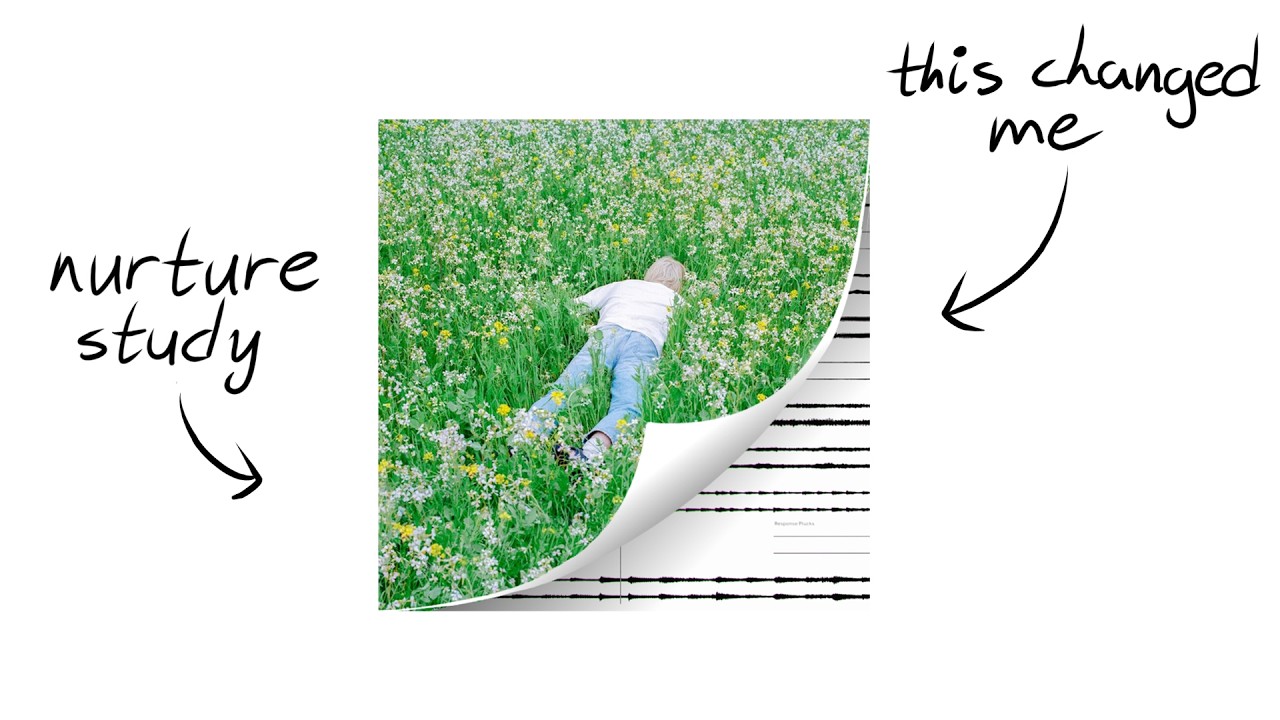
This is Porter Robinson, an indie music artist who is really good at doing one thing with his music, making me cry. If we set shelter aside, I think Nurture was the first time I teared up from listening to music solely on its own. It felt as if his music was somehow able
54 words, the words spoken in the first 30 seconds at 108 words per minute.
Free, no signup. See how the first 30 seconds hold attention, with rewrites.
Sentence shape
| Measure | This transcript |
|---|---|
| Sentences | 118 |
| Average words per sentence | 16.9 |
| Longest sentence | 45 words |
| Questions asked | 14 |
| Sentences containing a number | 5 |
Most used terms
Filler phrases
29 in total: like 18 · actually 4 · basically 2 · right? 2 · I mean 1 · literally 1 · um 1.
A literal whole-word count of the same phrase list the Prepublish browser extension uses, so a phrase inside another word is not counted and a phrase used in its ordinary sense still is. It is a count and not a judgement.
Run the check on the words above: where attention is likely to drop, with a rewrite for each weak line. The free check shows the scores and the one issue costing the most.
What this transcript is
Every word below is the caption track YouTube publishes for this video, pulled from the video itself and reproduced unchanged. It is not Prepublish's writing, not a summary, and not a re-transcription: it is the video's own published captions. English captions, published by the channel, in the video’s original language. Source: the video on YouTube. A channel that would rather this page did not exist can ask for its removal through the contact page, and it is removed.
This is Porter Robinson, an indie music artist who is really good at doing one thing with his music, making me cry. If we set shelter aside, I think Nurture was the first time I teared up from listening to music solely on its own. It felt as if his music was somehow able to properly communicate all his feelings directly to the soul, sometimes through no words spoken at all. So naturally, that made me wonder, how did Porter Robinson make such emotionally charged music that touched the hearts of so many people?
Are there secrets in the songwriting and production process? Or is there something more happening here? Well, finding that out was originally supposed to be the only goal of this video. But while I was researching and reconnecting with this album, I surprisingly found myself reflecting on my own life, and I accidentally So, how did all of this even happen? Let's start at the very beginning. If I wanted to learn how to make my music as evocative as Nurture, I first had to understand what the heck is even going on in that album.
So, I tried to look for any resources directly from him to try and understand what exactly is going on in his mind when he makes these songs. And this was all he had? Although I would consider everything Goes On as an honorary nurture track, this stream didn't really answer a lot of the questions that I had, especially questions about his process, his inspiration, and what he actually does most of the time. It did give me a lot of useful tips, but setting those aside, it seems like I'll just be relying on my ears.
This is what I learn- To get the sound and style that we want, we need to make sure that we have the right sounds and instruments. The most common instruments I can hear are pianos, strings, guitars, melodicas, pads, and other organic sounding things. The music theory in Nurture isn't very complicated in most cases. Since Nurture is heavily inspired by Japanese music, you'll tend to hear a lot of J-pop chord progressions.
And to get the same bittersweet or nostalgic feeling, I find that suspended chords seems to be the right voicing for that type of emotion. If you're not really sure where to start, I'd say start exploring with the iii, IV, V, vi chords and try to make progressions that begin on the four chord. He also likes to use the two chord a lot, so you can throw it in if you want as well. From what I can tell, his production is very clean, but there's a lot going on.
What I mean is he will usually put his main elements background elements can vary across a lot of different sounds, but granular textures seem to be a very consistent background element that is used on Nurture. That's going to be very important. I also find his drums really interesting because they all sound like they come from drum machines like 808s or 909's. It feels like it adds to the vintage or nostalgic feeling of the whole album, so I'll definitely use that as inspiration.
Now, here's a bonus production tip that I wasn't doing at the time. Resampling. Porter does a lot of sampling in his music where he'll use other people's samples. But what happens if you sample yourself? Well, Porter actually does this a couple of times in the album, most notably in Musician and in Dullscythe. All you have to do is to drag your song or sample into a sampler in your DAW, set it to slice mode, and then start pressing some keys until you find something that you like.
So far, we've only been focusing on the production side of Nurture, and we haven't really talked about songwriting and making lyrics, but that's okay. I'll just work on the instrumental first, and I'll talk more about songwriting when we get there, because surely it's not that bad, right? The first thing I did was I wrote this piano sketch and this ended up becoming the foundational driving idea for this piece. I then expanded on this idea a bit more and I ended up with this introductory orchestral section.
And because I'm a bit of a scatterbrain, I worked on the second idea at the same time. While I continued working on this, I felt like some parts sounded a bit too empty and they needed some more sounds to fill up the space. If only there was something that could help me with that. Um, Emergence is one of the granular plugins of all time. As you can tell, it's a pretty complicated plugin, but just like any other granular plugin, it's actually not too hard to understand.
You have settings for the input, and then you have settings for how you're going to affect the output. The crazy thing with emergence is that you have up to four streams, and you can customize each parameter within each stream using a bunch of different LFOs, random modulators, or even macros. It's even got pitch quantization. Like, what? Unfortunately, I didn't really have the time to really get deep into this. and develop my own presets.
But that's perfectly fine because if you're someone who's busy or lazy like me, there's actually a huge selection of presets that you can pick and choose from. And for this song specifically, I basically just only used like three input samples and put it through a bunch of these emergence presets and just took the best samples that I liked and used those. For example, do you guys remember this initial piano idea that I had?
Well, what if I told you that by putting this into emergence, I was able to make pretty much 70 or 80% of all the granular sounds that I used in this song? Let me show you how I used it. So, essentially, all I did was I went through every single one of Emergenc's presets while playing the sample itself. And then for the ones that I liked, I recorded it into a separate audio channel. Once I got enough samples that I was satisfied with, I would bring them into the project and basically chop up the parts that I really liked and process them a bit with some more effects to make them fit the song a bit better.
Here's some examples of the sounds that I made and used. And that's not all because like I said, I also used some other samples to make some more sounds. For example, one of them was vocals and I ended up getting stuff like this. And I even put in some pretty intense stuff, like entire stacks of instruments, just to see what it would sound like. I threw one of these results into a sampler with looping on and I put some effects onto it to create a very lush pad.
To be honest though, I think the coolest way to use the samples from Emergence is to chop them up and put a bunch of effects on them to create really cool results. For example, in the house part, I added these piano samples that ended up creating really cool spectral textures. And one of my favorite sounds that I ended up making from all of this is like this very ASMR plucky sound. I just think there's a lot of really cool ways that you can use this plugin, especially if you process it more later on like I did and chop it up to fit your needs even better.
So, if this interests you, definitely check it out. I highly recommend it. Thank you so much once again to Daniel Gurley for hitting me up about this. You're the goat for making this. Finally, with all of that out of the way, let's go back and see what we missed. All right, we still have to do some songwriting. That won't be too bad, right? It's been 6 months. Fahhh So, what even happened? Why do we make art? I could talk forever about this, but my short answer is that humans love to express themselves.
Whether it's a retelling of a personal story or a deep exploration of a grander philosophical topic, we've always loved connecting together over our shared emotions. And in my opinion, that's what makes certain artworks so special. Nurture was a project where Porter let himself get vulnerable about his thoughts and struggles. And through this honesty, we as an audience were able to understand and connect with his emotions.
And that's my final takeaway from this entire study. But what does that have to do with me? You see, I've always been someone who's pretty good at getting over my problems quickly. So, it was pretty surprising to find myself heavily struggling for over a year and a half over something simple like self-doubt and perfectionism. But simple as it seems, the effects of leaving it unprocessed is quite devastating. For me, I thought that everything had to be done 100% right for it to count.
If I wanted to quit some bad habits, it would only count if they were completely gone from my life. If I even had a single thought about them, I had failed. So, the result was a lot of self-directed negativity and as a result, I couldn't bring myself to do anything anymore since I just felt so helpless. But when I eventually started working on this project, I thought about that final takeaway, which got me to think about my situation and reach out to friends about it.
And eventually, I realized the journey forward begins with a single step. And as long as I take a step every single day, I'll eventually get to where I want, even if the path there was windy. Now, I know that I'm obviously more than just my flaws and mistakes. As long as I don't focus on the negativity, I'll be able to easily overcome them. It's important to be kind to yourself when you're trying your best, and I do well to remember that.
And so, I poured those feelings into the song, and for the first time in a while, I felt okay with what I made. Here's how the study turned out... I've created a sample pack for all of the main sounds that you've heard in this video. This includes drums, one shots, atmospheric stuff, and of course, the granular and glitchy textures. But just for this video, I've decided to give away those granular textures for free. I've attached a link to that in the description.
And of course, if you want the rest of the sounds, they'll be available on my Patreon. That's right, I'm launching a Patreon. This is my very first time setting something like this up. So, I'd love to hear some feedback from what you guys think. I have a Discord server. Join it. Let me know in the specific channels about anything that you think I should add or just general feedback about what I end up giving back to you guys.
Of course, only join if you really can and want to support me cuz it's going to be the best way to directly help support and fund my dreams. But whether or not you decide to join it, it's not going to change my appreciation for you being here. It already means a lot to see you guys express in the comments that you guys liked what I put out. So, seriously, thank you guys so much and look forward to what's coming. I'm really excited.
Also, special thanks to Daniel Gurgley. He literally made this video possible. So, definitely check out Emergence. It's really good. Okay, thanks for watching. baii <3
The words are the caption track's own and nothing is reworded or re-transcribed. Paragraph breaks are placed between sentences so the text reads as prose.
Free tools for your own script: paste a draft and see where it stands before you record it.
Paste your draft and see where viewers are likely to drop off, with a rewrite for each weak line.
Paste the first 30 seconds of your own draft for a hook score and rewrites.
Check your draft against YouTube's advertiser-friendly guidelines before you record it.
Read this channel's public videos and transcripts, and download a writing brief for it.