Getting the transcript
Reading the captions from YouTube. A video nobody has opened here before takes 10 to 30 seconds; this page fills in on its own.
Getting the transcript
Reading the captions from YouTube. A video nobody has opened here before takes 10 to 30 seconds; this page fills in on its own.
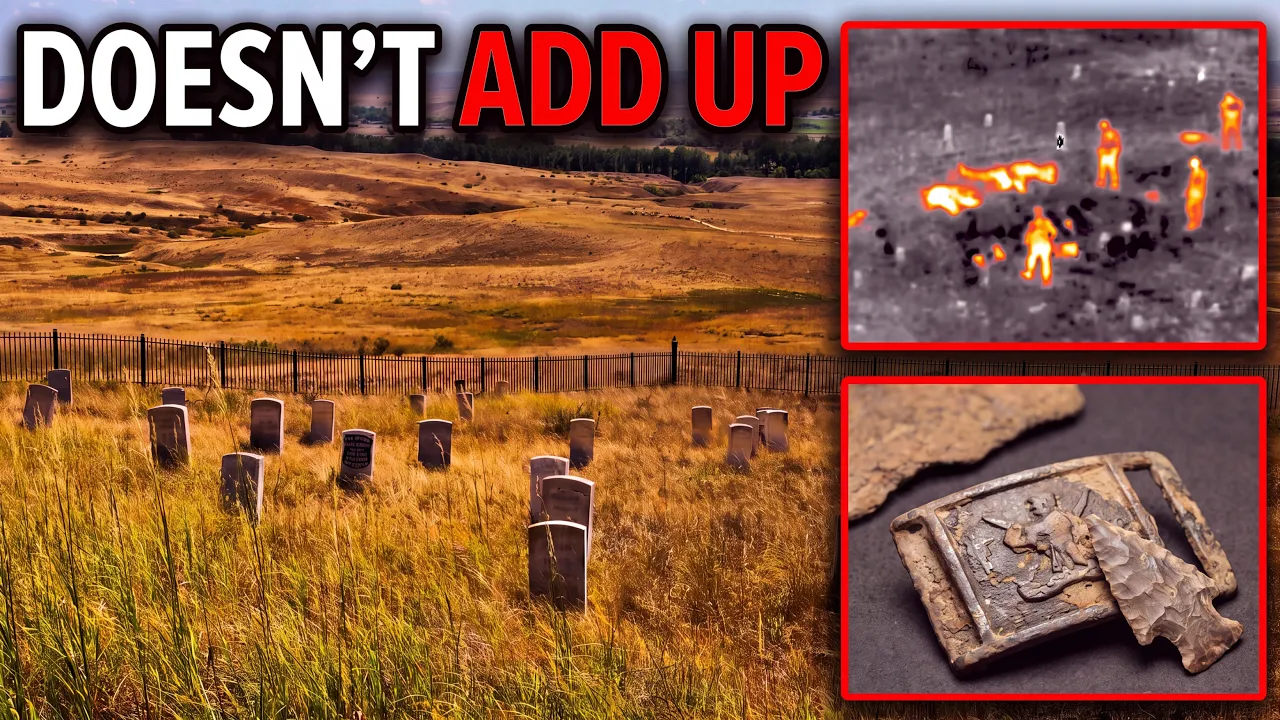
The Silent Ruins · @officialTheSilentRuins
Words
5,151
Runtime
34:30
Speaking pace
149wpm
Reading time
21min
149 words per minute, below the 160 25th percentile of 349 measured videos. That distribution comes from the 349-video hook study.
Opening (first 30 seconds)
Inside a national monument in Montana sits a battlefield that millions of people believe they already understand. And underneath the grass, forensic evidence was waiting to put a bullet through one of the most famous scenes in American history. The story is wrong. There may never have been a last stand at all. For over a century, the United States Army needed this defeat to look like sacrifice instead of a fatal misjudgment. And it
75 words, the words spoken in the first 30 seconds at 149 words per minute.
Free, no signup. See how the first 30 seconds hold attention, with rewrites.
Sentence shape
| Measure | This transcript |
|---|---|
| Sentences | 296 |
| Average words per sentence | 17.4 |
| Longest sentence | 76 words |
| Questions asked | 5 |
| Sentences containing a number | 58 |
Most used terms
Filler phrases
28 in total: like 12 · actually 11 · kind of 2 · literally 2 · um 1.
A literal whole-word count of the same phrase list the Prepublish browser extension uses, so a phrase inside another word is not counted and a phrase used in its ordinary sense still is. It is a count and not a judgement.
Run the check on the words above: where attention is likely to drop, with a rewrite for each weak line. The free check shows the scores and the one issue costing the most.
What this transcript is
Every word below is the caption track YouTube publishes for this video, pulled from the video itself and reproduced unchanged. It is not Prepublish's writing, not a summary, and not a re-transcription: it is the video's own published captions. English captions, generated automatically by YouTube, in the video’s original language. Source: the video on YouTube. A channel that would rather this page did not exist can ask for its removal through the contact page, and it is removed.
No Script X-ray for this video: YouTube shows a Most replayed graph only once a video has enough views.
Inside a national monument in Montana sits a battlefield that millions of people believe they already understand. And underneath the grass, forensic evidence was waiting to put a bullet through one of the most famous scenes in American history. The story is wrong. There may never have been a last stand at all. For over a century, the United States Army needed this defeat to look like sacrifice instead of a fatal misjudgment.
And it built a legend strong enough that almost nobody thought to check it against the ground itself. The image that took hold, a tight ring of troopers firing to the last cartridge, Custer standing at the center with his saber raised against a wall of warriors, became one of the most reproduced pieces of American mythology ever made. Hung in saloons and barber shops across the country for decades, sold, quite literally, to move beer.
At the center of that legend was one woman. Elizabeth Custer, Libby to history, was 34 years old when the news reached her, suddenly widowed, suddenly in serious debt, forced to watch a sitting president blame her husband publicly for the disaster. She could not afford, in every sense of that word, to let that version of her husband stand. So, she spent the next 57 years making sure nobody could say it in public again.
Memoirs, lecture tours, five decades of careful, relentless image management, until an entire country believed a version of events that no one who actually died on that hill was ever alive to confirm or deny. It happened on June 25th, 1876, on a ridge above the Little Bighorn River in Montana Territory. Lieutenant Colonel George Armstrong Custer led roughly 600 men of the 7th US Cavalry against one of the largest Native American encampments ever assembled on the northern plains.
Thousands of Lakota, Northern Cheyenne, and Arapaho people camped together by the river. Custer split his regiment, sending Major Marcus Reno and Captain Frederick Benteen off in separate directions, and kept five companies under his own direct command. Every one of those 210 men died. Across the full battle, 268 US soldiers were killed. No survivor walked out of Custer's own fight to say what happened in the final minutes, which meant for the next 100 years, somebody else got to write the ending for them.
And in 1984, when archaeologists finally searched that hillside properly, for the first time in over a century, the ground did not agree with her. That legend had a paper trail. Cassily Adams painted the scene in the 1880s. A German-American engraver named Otto Becker reworked it into a lithograph, and in 1996, on the battle's 20th anniversary, the Anheuser-Busch Brewing Company started handing it out. Over a million copies across 18 separate printings hung in saloons, barber shops, dining halls, and homes until Custer's Last Fight was one of the most viewed images in the entire country, arguably more viewed than most actual photographs of the era.
A defeat had been repackaged as glory, and it was selling beer while it did it. The army had its own reasons to let that painting hang undisturbed. A humiliating loss to an indigenous coalition in the middle of the nation's centennial year was not a story any general wanted told plainly. Better a doomed hero than a reckless one. The press cooperated instantly. Custer Massacre ran the headlines within days, and between the newspapers, the brewery, and a widow with every reason to keep polishing the image, nobody with real institutional power had any incentive to ask what the ground actually looked like.
Libby's own campaign ran on details the painting never needed. Three memoirs, Boots and Saddles, Tenting on the Plains, Following the Guidon, a national lecture circuit that ran for years, decades of careful, relentless image management, rebuilding her husband in the public mind as a brilliant, doomed commander rather than a man who may have gotten his own soldiers killed through overconfidence. She kept at it until she died in 1933.
And historians have noted, almost as an aside, that many of Custer's sharpest critics simply waited for that day before publishing what they actually thought. Purchase power outliving your opposition. That is not conspiracy. That is just what happens when one voice controls a story for half a century, and nobody wants to be the person attacking a grieving widow in the newspapers. Now, at the scout, his name was Curley, a young Crow man attached to Custer's column, and for decades he was marketed by the press, not really by himself, as the lone survivor of the last stand.
It made a great headline. The truth was smaller and stranger. Curley hadn't fought inside that final collapse at all. He'd watched the opening movements from a distance, seen enough to know the outcome was already decided, and ridden off to report what he'd seen. His early account was actually fairly accurate, and serious researchers of the era accepted it. But as the legend of a lone, disguised survivor grew louder in the press, Curley stopped correcting people.
At the 10th reunion of the battle in 1886, the Lakota war leader Gall reportedly turned his back on Curley and said flatly that he'd run away too soon to have fought anyone. That's not the account of a heroic survivor. That's the account of a man the myth used and then let take the blame for surviving. And that's the first crack. Opening long before a single archaeologist ever sets foot on that hill. The most famous last stand in American history was assembled almost entirely without witnesses.
Filled in by a widow protecting a legacy, a brewery protecting a product, and a press protecting a headline. None of them were lying, exactly. They were filling a silence. But, filling a silence is not the same thing as knowing what happened. For over a hundred years, nobody could check their work. The battlefield was overgrown, the grass thick, the ground undisturbed by anything more invasive than a century of curious tourists and quietly, a century of relic hunters who'd been picking up souvenirs long before anyone thought to stop them.
And then in August 1983, something happened that nobody planned and nobody could have engineered. A grass fire tore across the site. It burned fast and it burned almost everything down to bare dirt. The National Park Service, instead of treating this purely as a disaster, saw an opportunity nobody had ever had before. A fully exposed battlefield stripped of a century of vegetation, ready to be searched properly for the first time since the bodies were buried where they fell.
They brought in archaeologist Douglas D. Scott from the NPS Midwest Archaeological Center, along with Richard A. Fox Jr., physical anthropologist Melissa Connor, and a firearms specialist named Dick Harmon. Over two field seasons in 1984 and 1985, they did something almost nobody had done systematically before on an American battlefield. They walked it with metal detectors, grid by careful grid, and treated it like a crime scene instead of a shrine.
This is where the story stops being folklore and starts being forensics. Roughly 250 trained volunteers walked transects [music] across the field about 15 ft apart sweeping the ground with detectors while archaeologists flagged every single hit. Nothing got yanked out carelessly. Each object was excavated with a trowel photographed in place measured for depth and orientation before it was ever bagged and removed. Over 5,000 artifacts [music] came out of the ground in those two seasons alone and crews would keep working the surrounding land for another 20 years after that.
Here's the part that should have been impossible for a battlefield >> [music] >> from 1876. Cartridge cases. Thousands of spent shell casings scattered across the hillsides each one carrying a signature. Um when a gun fires the firing pin, the extractor and the breech face all leave tiny individual marks on the cartridge. Marks as specific to that one weapon as a fingerprint is to a person. It's the same principle used in modern criminal ballistics.
Send those markings to a lab and you can match different cartridge cases back to the exact same gun >> [music] >> even if those cases were found hundreds of yards apart. Scott sent the recovered cartridges to the Nebraska State Patrol Criminalistics Laboratory. And what came back let his team do something no historian, no memoir, no painting had ever been able to do. Track individual weapons as they moved across the battlefield in real time.
Not troop movements as somebody remembered them decades later. Actual physical proof of where specific guns were fired in what sequence as the fight unfolded. Scott had a phrase he liked to use about the difference between what he did and what historians before him had done. Historians, he said, are like detectives interviewing witnesses. And witness memory is unreliable, self-serving, shaped by trauma and time. Archaeologists are the forensic technicians.
The physical evidence doesn't remember things wrong. It doesn't protect a reputation. Artifacts, in his words, do not lie. And the artifacts had a very different story to tell than Otto Becker's lithograph. Start with the guns themselves, because this is where the myth takes its first real hit. Custer's troopers were carrying the Springfield Model 1873 carbine, a single-shot weapon. Load one round, fire, eject [music] the case, reload, fire again.
Slow, deliberate, built for an army that assumed it would always have the advantage of position and numbers. The warriors defending their village that day were not limited to bows and outdated muskets, the way the myth likes to suggest. The forensic firing pin analysis [music] identified at least 350 individual firearms in the hands of Lakota, Cheyenne, [music] and Arapaho fighters. And that's described as a conservative minimum, because several muzzleloaders firing identical round shot couldn't be separated from each other by caliber alone.
Some estimates, factoring in every distinct weapon type recovered, run past 370 individual guns across 47 different types. A meaningful number of those weapons were repeaters. Henry rifles, Winchester Model 1866 rifles, Winchester Model 1873 rifles, chambered in .44-40, capable of firing 16 rounds without a reload. Scott's own statistical reconstruction suggests that out of roughly 1,500 warriors on the field, something like 200 were carrying repeating rifles, >> [music] >> and hundreds more had single-shot weapons of their own.
Do the math on rate of fire. A single-shot Springfield carbine, worked by a trained soldier under pressure, might manage four to six rounds a minute. A lever-action repeater in a warrior's hands could put out something closer to 20. Custer's men weren't just outnumbered on that hillside, they were, in a very literal ballistic sense, outgunned. The famous painting never had to account for that math. The ground did. For decades after the battle, survivors of other companies and army officials had a convenient explanation for the disaster that didn't involve questioning Custer's judgment.
The Springfield carbine jammed. The soft copper cartridge cases could expand in the heat of rapid fire and stick in the breech. And the carbine, unlike some other rifles, had no built-in cleaning rod. A soldier with a stuck case had to dig it out with a knife under fire. It's a real design flaw. Major Reno himself testified that some carbines had jammed during his portion of the fight. It became folklore fast. A tidy villain, bad equipment, not bad decisions, lost the battle.
The archaeology did not support that folklore. When Scott's team examined the recovered cartridge cases for pry marks and extraction damage, the telltale signature of a jammed weapon being forced open, only 3.4% showed it. An earlier independent test in 1973 on a controlled sample of over 1,700 cases found extraction failures in less than half a percent. The flaw was real. It was not decisive. Which means the excuse that had comforted the army and the public for over a century, it wasn't our commander's judgment, it was the gun.
Was mostly just that. An excuse. The equipment took the blame the officers were built to avoid. So, if it wasn't a jammed rifle that ended 210 lives, what was it? This is where the cartridge case map gets genuinely eerie. Scott and Fox could trace Custer's initial approach, a push down toward the river at a crossing called Medicine Tail Coulee, where the command briefly split into two wings before pulling back and regrouping near a rise now called Calhoun Hill.
And here's the detail that should unsettle anyone who's only ever seen the painting. The densest concentration of army cartridge cases on the entire battlefield isn't at the famous hill where the monument now stands. It's at Calhoun Hill further out, where Company L held an organized skirmish line and put up what looks like the real sustained fight of the day. Then the evidence goes quiet. Not because nothing happened, because something happened fast.
When that company's position broke, the collapse spread sideways into Captain Myles Keogh's company, and from there, the whole formation seems to have come apart at speed. Warriors associated with Crazy Horse, with Gall, with a young fighter named White Bull, appear to have driven straight into that break in the line before the soldiers could reform. And then there's the hill itself, the one with the monument, the one on the beer poster.
Last Stand Hill produced surprisingly few army cartridge cases for a spot supposedly defended to the last bullet by 200 disciplined men. Not none, but nowhere near what a determined sustained defensive stand should have left behind. Richard Fox's blunt conclusion, laid out in his 1993 book, was that Custer's five companies actually started the engagement in good [music] order, following a real plan, showing real tactical discipline, right up until something broke that discipline all at once.
His phrase for it was stability collapsing into disintegration. Not a slow, heroic last few minutes. A sudden one, his words. The end came quickly, unexpectedly, largely amid terror and disarray with little organized firearm resistance left by the final moments. That should have been the reversal that settled everything. It wasn't. Because proving there was no organized last stand only raises a worse question. What actually happened to those 200 men in the final minutes if it wasn't disciplined defensive fire?
The bones answered part of that, and it is not a comfortable answer. Forensic anthropologist Clyde Snow, working with the physician named John Fitzpatrick, who reviewed the skeletal x-rays, examined the human remains recovered during those 1980s excavations. More than 20 individuals in total out of roughly 44 partial skeletons that have surfaced from this battlefield across the decades since 1877. What they found on those bones reads less like the aftermath of a firefight and more like the aftermath of something far more brutal and far quicker.
Blunt force trauma to the skull was the most common injury by a wide margin. Every single case where a skull fragment survived well enough to examine, 14 individuals, over 40% of the Custer side remains studied, showed evidence of blunt trauma. War clubs, stones, rifle butts swung like clubs once the ammunition or the will to keep firing was gone. Roughly a fifth of the remains showed cut marks from blades. Arrow wounds and hatchet injuries showed up, too.
One vertebra had been sheared clean through by a single-bladed strike, evidence essentially of a decapitation. There were signs of scalping, signs of dismemberment. A separate study of gunshot trauma [music] found that six out of 10 examined skeletons had actually taken bullets, three of them to the skull itself. Snow's own written conclusion, and this is worth sitting with, was that the physical evidence supports a scenario of a brief firefight followed by the close-range killing of the wounded, that most of these men were likely still alive, incapacitated, when organized resistance stopped, and that many of them were finished off afterward with crushing blows to the head.
Read that again against the painting, against the saber raised high, the tight circle, the last cartridge fired in defiance. The physical evidence says something closer to this. An initial, real fight that fell apart fast, followed by a short, brutal, close-quarters slaughter of men who could no longer fight back. That is not a lesser tragedy. If anything, it's a worse one. But it is not the tragedy America chose to memorialize on a million beer posters.
The bones told other stories, too, quieter ones. These were young men, mostly in their 20s, a genuinely international mix, American-born soldiers alongside Irish, German, and English immigrants, all serving in in the same regiment. Their teeth showed heavy tobacco and coffee staining, decay, abscesses. Their skeletons carried old injuries, compressed vertebrae, healed fractures, shoulder damage, the kind of wear that comes from a punishing physical life on horseback in a peacetime army that wasn't especially kind to its enlisted men.
Growth arrest lines in some of the bones even pointed back to childhood malnutrition. These weren't mythic cavalry heroes. They were tired, hard-living young men a long way from home, and the ground remembered that even when the culture forgot it. A handful of them got their names back. Skull fragments recovered from an area called the South Skirmish Line were matched through photographic superimposition against a known photograph and through dental wear consistent with a habitual pipe smoker to Mitch Bouyer, Custer's mixed-blood scout, a man fluent in several native languages who had reportedly tried to warn Custer that the village ahead was far larger than he thought.
Finding Bouyer's remains exactly where earlier accounts said he'd fallen also quietly confirmed something else. Curley's much-doubted early testimony about where he'd last seen him, the scout the myth had turned into a punchline for surviving [music] too soon had actually been telling the truth the whole time. A sergeant named Miles O'Hara and a farrier named Vincent Charley were tentatively identified the same way. Bone matched to face, face matched to photograph in a process the researchers themselves rated [music] anywhere from a good guess to something close to certainty.
None of this was DNA work, not in the '80s and '90s. This was old-fashioned forensic comparison, photographic overlay, dental analysis. Later geophysical surveys, a magnetometer pass in 1995 and ground-penetrating radar the following year picked up buried anomalies in a gully called Deep Ravine that matched where somewhere between two dozen and 28 men were reportedly buried and then lost their marker apparently never matching their actual resting place.
Nobody has ever excavated to confirm it. Those men, if that's really where they are, are still down there unrecovered. A hole in the record that the Park Service has never chosen to close. A museum can quietly update a label overnight. It cannot quietly fill an empty grave, and it hasn't tried. Here's where it gets more interesting, not less, because the archaeology didn't just contradict the museum brochure version of the battle.
It started to line up with testimony that had been dismissed [music] for a hundred years for the crime of coming from the wrong side. Cheyenne and Lakota participants had been talking about this battle since 1876. Wooden Leg, Gall, Two Moons, >> [music] >> Red Feather, Runs the Enemy. Their accounts describe warriors moving in small fast groups using the terrain instead of standing in the open, and soldiers who seemed disoriented near the end.
Moving in some accounts like men who were drunk throwing down weapons rather than reloading them. For a hundred years, mainstream American historians treated these accounts with polite suspicion at best. Then the cartridge case map came out of the ground and matched the shape of that testimony almost exactly. A rapid, chaotic collapse, not a disciplined defense. Small fighting groups, not a single unified line. For over a century, whose word counted as evidence had depended almost entirely on which side of the battle a person had been born on.
The people who had actually been there had been telling the truth the entire time. Nobody in power had been willing to listen, because listening would have meant admitting the painting was wrong before the ground could prove it. There's one Cheyenne oral tradition in particular that had been buried even deeper than the rest. The story of the Suicide Boys, a group of young Cheyenne warriors who, according to accounts preserved decades later by tribal historian John Stands in Timber, had vowed before the battle to charge without retreating, win or die, as an act of extraordinary courage meant to break the enemy's will.
For most of the 20th century, this detail barely appears in American retellings of the battle. It didn't fit the narrative where the courage all belonged to one side. Today, there are three markers near Deep Ravine honoring that tradition specifically. A small physical acknowledgement cut in granite that the bravery on that field did not only run in one direction. Not everything lines up so neatly, though. And this is where the story earns its complexity instead of just its drama.
Not every historian accepts Fox's version, and the disagreements are real, professional, and unresolved. Nathaniel Philbrick in his 2010 book The Last Stand and James Donovan, writing 2 years earlier, both push back against the idea of a battle that ended in mere minutes. Their reconstructions have Custer's fight lasting closer to 2 hours with Custer himself staying tactically aggressive on the offensive, not simply collapsing for most of that time.
Gregory Michno, working heavily from [music] native testimony in his book Lakota Noon, reconstructs a longer, harder fought engagement than Fox's rapid disintegration model allows for. Fox's defenders call this kind of pushback special pleading, an unwillingness to fully let go of the heroic version. His critics counter that Fox's own model, built partly on general theories of combat collapse from military historians like John Keegan, might be too clean, too binary, applied to a battlefield that a century of relic hunters had already picked half clean before the archaeologists ever arrived.
If cartridge cases are missing from Last Stand Hill, is that because there was less fighting there or because tourists and souvenir collectors had a 100-year head start scooping up the evidence before Scott's team ever unrolled their grid lines. That question has never been fully settled and probably never fully can be. There's an earlier researcher worth mentioning, too. John S. Gray, whose 1991 book on Mitch Bouyer applied rigorous minute-by-minute timeline reconstruction to the battle and notably defended Curly's reliability decades before the bone evidence backed him up.
Gray also concluded that the entire 7th Cavalry could be accounted for give or take one man, directly contradicting old rumors of 20 or 40 missing bodies, and identified Reno and Benteen, the two officers who survived, as among the least trustworthy witnesses to their own conduct that day. Convenient, isn't it? How often the surviving officers' memories favored the surviving officers? Then there's the darkest and least settled question of all.
The one about the soldiers themselves in the final minutes. Wooden Leg's account claimed that a number of troopers, seeing the end was inevitable, turned their revolvers on themselves rather than face capture or mutilation. It's a haunting claim, and it circulated for decades without any way to check it. Preliminary bio-archeological work presented in 2018 at the Society for American Archaeology by researcher Genevieve Milkie suggested that the physical trauma pattern typically associated with contact self-inflicted gunshot wounds simply wasn't showing up at the scale the old stories implied.
Her conclusion, carefully worded, suicides may have happened. Almost certainly some did, but probably not on the scale the legend suggests. That study is preliminary, a conference presentation, not a finished peer-reviewed paper, and the question remains genuinely open. Sometimes the evidence doesn't hand you a clean answer. Sometimes it just narrows the range of the mystery without closing it. So, where does that leave the object at the center of all this?
Because in a very real sense, the battlefield itself is the artifact. And it has never stopped being fought over. For decades after 1876, this land was administered as a monument to one side of the story only. It came under National Park Service control in 1940. And in 1946, it was formally named Custer Battlefield National Monument. The defeated commander's name, not the people who had fought to defend their own land and families that day.
For close to 50 years, that was simply how it was labeled on maps, on road signs, and school books. That started to change in the late 1980s. Native activists, including a public 1988 protest led by Russell Means, pushed hard for the name and the framing to change. Even Robert Utley, the Park Service's own former chief historian, someone who had initially opposed altering the name, eventually came around to supporting it.
In 1991, Congress passed Public Law 102 -201 and President George H.W. Bush signed it. The site was formally renamed the Little Bighorn Battlefield National Monument. And the law required something the site had never had in over a century of existence. A permanent memorial honoring the native nations who had fought there to defend their land and their way of life. The institution that had spent a 115 years protecting one version of events was finally [music] ordered by law to make room for the other one.
A federal agency does not casually retire a name it has been for over a century. And the years-long fight over this one was really a quieter fight over whose memory the government was legally obligated to protect. That memorial took a decade to build. Designed by John R. Collins and Allison J. Towers, featuring a bronze sculpture called Spirit Warriors by Oglala Lakota artist Colleen Cutshaw. The Indian memorial was constructed between 2001 and 2003 and dedicated on the anniversary of the battle itself, June 25th, 2003, with additional interpretive material added over a decade later, in 2014.
Red granite markers honoring individual Cheyenne and Lakota warriors at the exact spots where they fell, men like Lame White Man and Noisy Walking, began going into the ground alongside the older white marble soldier markers starting in 1999. Two different colors of stone on the same battlefield, telling two different stories that had finally, after more than a hundred years, been allowed to sit side by side. It has not been a clean or comfortable resolution.
Architectural historians studying the renaming and the memorial's construction have described it as one of the most significant design-based interventions in how a national historic site remembers its own past, >> [music] >> and noted that the process met resistance at literally every stage, including, at times, from members of the very tribal nations it was meant to honor, who had their own internal disagreements about [music] how their history should be told and by whom.
There is no single version of the story that everyone accepts. There never really was. And the ground itself is still working. Scott's team and successive researchers kept surveying land in and around the park for another two decades >> [music] >> into the mid-2000s, extending the cartridge case map onto private and tribal land that the original 1980 surveys never touched, filling in pieces of the earlier Reno Valley fighting that had gone unexamined for over a century.
Scott published a full synthesis of well over a century of investigation in 2013. Remote sensing work has continued to probe Deep Ravine quietly, on and off without ever pulling the trigger on a full excavation. The men believed to be down there have been left where they are, a decision, not an accident, and one that says something about how careful an institution has to be before it disturbs a grave, even in the name of finally getting the story right.
So, think about what actually happened here because it is stranger than a simple case of history getting corrected. This wasn't a hoax exposed or a forgery uncovered. The battle was real. The deaths were real. What was fabricated wasn't the event. It was the meaning laid over the event afterward, built by a widow protecting a legacy, a brewery selling a product, and a press that needed a clean story out of a national embarrassment.
And when real forensic science finally got access to the crime scene over a hundred years late, it didn't destroy the tragedy. It just took the heroism out of the frame and left something raw and more human underneath. >> [music] >> Young men outgunned, disorganized in their final minutes, killed up close, some of them possibly by their own hand, all of them buried under a story that was never really about them at all.
The evidence didn't answer everything. It never does. Nobody knows exactly how many warriors died that day. Reputable estimates >> [music] >> swing from 30 to well over a hundred because unlike the army, the encampment didn't leave behind muster rolls. Nobody knows precisely how long Custer's fight actually lasted. Minutes by Fox's reading or nearly two hours by Philbrick's. Nobody has recovered the men still believed to be lying in deep ravine and nobody has fully resolved whether Wooden Leg's account of soldier suicides [music] was describing a widespread horror or a handful of desperate final acts remembered as something larger.
What the cartridge cases and the bones did was something quieter and in its own way more unsettling than a clean resolution. They took a legend that had gone unchallenged for over a century and made it very difficult [music] to keep repeating with a straight face. The hill is still there as the wind still moves through the same grass. The white marble markers still stand where men fell and now the red granite markers stand near them, too, telling a second half of the story that took over a hundred years to get written into the stone.
Somewhere below deep ravine, undisturbed, are men whose names are already known and whose bodies have never been found. And in a beer poster somewhere in an old bar or a private collection, Custer is probably still standing tall with his saber raised, surrounded, defiant, dying exactly the way America decided he should. A version of the truth that the ground itself, more than a century later, quietly refused to confirm.
There was no last stand. There was a collapse, a cover story, and a hundred years before anyone checked the ground. If you've got your own theory about what really happened in Custer's final minutes, put it in the comments. And if you want the next buried contradiction before it surfaces, subscribe.
The words are the caption track's own and nothing is reworded or re-transcribed. Paragraph breaks are placed between sentences so the text reads as prose.
Free tools for your own script: paste a draft and see where it stands before you record it.
Paste your draft and see where viewers are likely to drop off, with a rewrite for each weak line.
Paste the first 30 seconds of your own draft for a hook score and rewrites.
Check your draft against YouTube's advertiser-friendly guidelines before you record it.
Read this channel's public videos and transcripts, and download a writing brief for it.