Getting the transcript
Reading the captions from YouTube. A video nobody has opened here before takes 10 to 30 seconds; this page fills in on its own.
Getting the transcript
Reading the captions from YouTube. A video nobody has opened here before takes 10 to 30 seconds; this page fills in on its own.
Reysu · @reysu
Words
4,130
Runtime
19:41
Speaking pace
210wpm
Reading time
17min
210 words per minute, above the 201 75th percentile of 349 measured videos. That distribution comes from the 349-video hook study.
Opening (first 30 seconds)
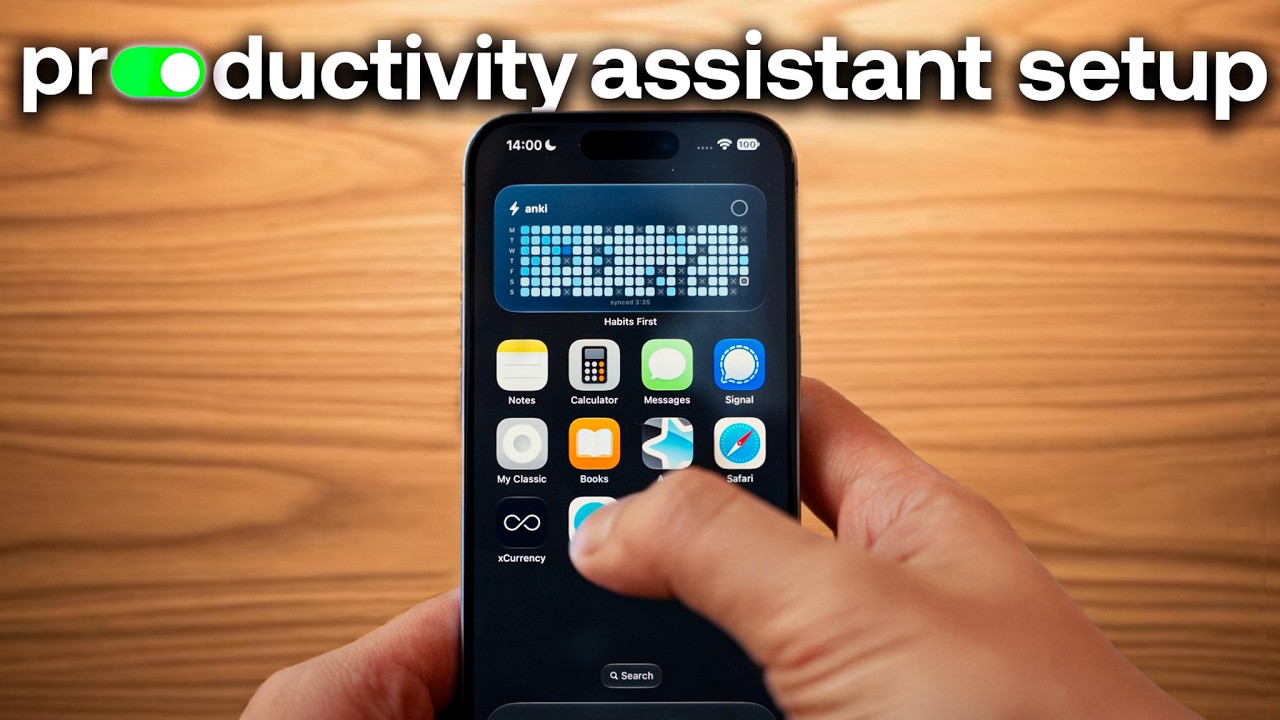
This is my productivity AI assistant setup. I took my old MacBook Air that I wasn't using and I transformed it into an AI power horse [music] that actually works as my AI system. I can control this computer from anywhere just using a messaging app. Unlike traditional chatbots or even cloud code, I can message it from any of my devices and it can actually go and do productive tasks for me. So, for example, it has [music] cancelled subscriptions for me, reorder supplies from Amazon. It's helped me buy movie tickets [music] and it's even helped me make more money. And all of
105 words, the words spoken in the first 30 seconds at 210 words per minute.
Free, no signup. See how the first 30 seconds hold attention, with rewrites.
Sentence shape
| Measure | This transcript |
|---|---|
| Sentences | 198 |
| Average words per sentence | 20.9 |
| Longest sentence | 84 words |
| Questions asked | 0 |
| Sentences containing a number | 12 |
Most used terms
Filler phrases
101 in total: like 56 · actually 16 · basically 10 · you know 5 · literally 4 · uh 4 · kind of 3 · sort of 3.
A literal whole-word count of the same phrase list the Prepublish browser extension uses, so a phrase inside another word is not counted and a phrase used in its ordinary sense still is. It is a count and not a judgement.
Run the check on the words above: where attention is likely to drop, with a rewrite for each weak line. The free check shows the scores and the one issue costing the most.
What this transcript is
Every word below is the caption track YouTube publishes for this video, pulled from the video itself and reproduced unchanged. It is not Prepublish's writing, not a summary, and not a re-transcription: it is the video's own published captions. English captions, generated automatically by YouTube, in the video’s original language. Source: the video on YouTube. A channel that would rather this page did not exist can ask for its removal through the contact page, and it is removed.
No Script X-ray for this video: YouTube shows a Most replayed graph only once a video has enough views.
This is my productivity AI assistant setup. I took my old MacBook Air that I wasn't using and I transformed it into an AI power horse [music] that actually works as my AI system. I can control this computer from anywhere just using a messaging app. Unlike traditional chatbots or even cloud code, I can message it from any of my devices and it can actually go and do productive tasks for me. So, for example, it has [music] cancelled subscriptions for me, reorder supplies from Amazon.
It's helped me buy movie tickets [music] and it's even helped me make more money. And all of this is with very little intervention [music] from me at all. In this video, I'm going to share with you exactly how I set this up, how [music] much it costs, the models that I use, and also share with you actual things in my life that I've had my AI assistant do for me. So, right now, basically, there's two types of AI. And you kind of see this in almost every company.
They offer two types of AI, which is pretty confusing, but they're pretty much converging into one. And the difference is that there are regular AI chatbots that you talk to where you ask it a question, you get a response. And then there are AI chatbots that sit in front of a computer. And the difference is that when the AI chatbot sit in front of a computer, they can actually do stuff for you. So it can log into a browser.
It can make appointments for you. It can edit essays for you in Google Docs directly. Those are called AI agents or AI assistants. And where AI is going right now is that everyone's AI chatbot is going to have access to a computer. Whether that's a computer that you own at home or a computer that is hosted in the cloud. If you think about it, this is pretty transformative on a societal level because [music] any task that you do on a computer, any administrative task, especially on a computer, can be done by your AI assistant more reliably and faster.
And that [music] means you can spend less time on the computer. You can spend less time working, less time doing things that you don't want to actually do, and more time doing the things that you want to [music] do. But yeah, if you've seen all these companies uh come out with their AI assistants like Grockbot, [music] Claude Co-work, Chat GBT, and Muse AI by Meta. Personally, I've tested every single one of them. I've signed up to every single one of them, and I'm still [music] testing them.
But they pretty much all do the same thing with slight variation in setup, UI, and speed. There are also open source ones, which the most famous ones are OpenClaw and Hermes. And the one that I personally use the most as my main assistants for my [music] life and my business is Hermes. And what it looks like when you interact with them is that they're just a [music] person on whatever messaging app that you use. So I use Telegram and [music] I can just message my system there from any device that I own and I can have it do stuff for me.
So, I installed Hermes on my old MacBook Air that's always plugged in. And whenever it's doing stuff, I can see it doing [music] stuff and I can also intervene pretty easily. That's one of the reasons why I like using an open source AI system because you can actually run it on a computer that you own. But [music] if you use one by Claude or Chibi or Gro or Facebook, you're basically forced to run it [music] on their local computers.
So, you have less control over your data. You have less control over [music] what the AI might do. like you can't unplug it if something goes wrong. And another reason why I like using open source A assistant is because you can easily swap it out for [music] any model in the back end. Right now, the model that I use for my [music] A assistant for Hermes is Opus 5. I find that to be the best one and the most capable to do like pretty much anything that I throw at it.
[music] But it's pretty easy to switch it out for any other model. So sometimes when a new model comes out, I'll just switch it out [music] and I'll test to see if it's better. But right now, Opus 5 is my favorite one. I would say the only downside of using an open- source A assistant like OpenClaw or Hermes is that you basically have to bring your own computer. Like you [music] have to set up a computer that's always on running at home that the AI agent lives on.
And if that computer goes offline for whatever reason, then it's not going to respond to any of your messages. So obviously that's not really possible for everyone even to have multiple [music] computers. But that's where the sponsor of this video comes in, Hostinger. So, Hostinger offers a super simple one-click way to set up Hermes or any AI assistant. I think they've made it as simple as possible. It literally takes [music] less than 60 seconds and you can connect to Telegram.
You get your own private computer in the cloud. [music] So, your AI system can actually complete tasks without your computer being on. And you get a lot of stuff built in like security. you get AI credits and [music] you can have AI agents running 24/7 as many agents as you want. So, let me just show you how this works. Okay, so we're on the homepage. We'll click get started and then we'll select [music] 24 months because it's 73% off.
We'll pay for it and then can select the [music] agent. So, we'll select Hermes and literally that's it. And Hermes is fully set up. We can even connect our Chadupt [music] subscription. So, I'll just click that and connect it to my [music] Tragic D subscription. Okay. And then the next step is to [music] connect it to Telegram. So, I'll just follow these steps to connect it to Telegram. I can choose the AI model that I want to use.
So, GBT6 Astra. That's pretty much it. It's fully set up. I can message it. And to test it out, I'll have it do like a task that probably a regular chatbot can't do. So, research the best standing desks [music] and send me a markdown file that gives me a breakdown. >> A few moments later, >> few minutes later, and it has the full breakdown [music] that I can read through. It's pretty good. Yeah, you can see it also created a skill product buying guide.
[music] So, that just means the next time that I asked it to do a similar type of research, it can do it much faster [music] and improve naturally over time. And that's one of the main reasons I like Hermes because it can self-improve over time. If you're interested, you [music] can check out the link in the description or use the code race at checkout for a discount. You also get 1,000 free AI credits specifically for web scraping.
I think this is literally the easiest way to set up Hermes or any AI [music] assistant. But let's get back into the video and let me show you how I use my AI assistant to save me time and money. So, now that you know what an AI assistant is and actually how to set it up, let [music] me get into some of the things that I've had my AI assistant do for me. So, maybe it can inspire you to set something similar up. So, the first is probably the most basic category, but that is with basic productivity with email, calendar, and tasks.
So, first I have my ex check my email and message [music] me only when there's something important. And that has allowed me to basically just turn off notifications for my [music] email and not worry that I'm going to miss anything. This is something that I always wish was built into email [music] clients, like only notify me when there's something that I want to see. Like it's it's so vague that you can't really build that as a notification system, but [music] when you have an AI agent, you can describe to him and have it learn over time the types of emails that you want to be alerted [music] for and other types of emails that you can just check on your computer whenever.
In certain cases, it's also really useful to [music] have it generate a first draft based on the things that you want to convey and you can just edit it directly in the chat. [music] So sometimes in the messaging app, it'll just tell me I have this email. I'll maybe go back and forth and have a draft [music] and then just have it send it directly and I never even have to open the email app. So this has really improved my workflow a lot more especially since this is kind of like a oneperson business that I'm operating here.
The second thing when it comes to work that my a assistant has [music] also really helped me save time on is with managing my calendar. So usually I add all of my obligations on my calendar like meetings I have to attend or place I have [music] to be. And usually there's just a little bit too much friction for me to pull up the calendar app and then you know fill [music] out the specific thing I have to do the location and the time that you know sometimes I just [music] don't do it.
But now with my assistant, I can just tell it in natural language like with a voice note or just with text [music] like add this to my calendar at this time at this place and then it'll just fill everything for me on my calendar and it's there and it's just there on my desk and I can I [music] can see it. So this is really useful for one-off events but it's also really useful for bulk adding different things to my calendar.
So, for example, I have a trip plan and somebody sent me the itinerary [music] and rather than adding each thing manually on my calendar, I just forwarded the itinerary to my assistant AI assistant and then just added everything on my calendar like pretty much instantly. I wish I had this when I was working in corporate when I had like a ton of meetings and and like ton of like places I had had to go to. And even in college, I remember like in college whenever I registered for classes, I had to like manually add every single [music] class, the schedule of every single class to my calendar.
Like check when they have days off, check when the professor has office hours. [music] And this would take multiple hours sometimes if I especially if I had to add like all the school holidays and everything. But now you can just literally tell it to add everything to your calendar and then it's just going to do everything for you. So you don't have to waste time doing that. So yeah, right now if you set it up, your AI agent, your AI assistant can do that all for you in the time that you're watching this video.
The next thing in the work category that's also really useful is managing my task. So the to-do app that I use that I've talked about on the channel before is Things 3. And it's been really seamless to integrate my AI assistant with things [music] three. So it can help me manage my task and add tasks to my to-do list. So, I can have it help me add tasks [music] if I just ramble and explain something uh through a voice memo or it can go through my inbox, which has like hundreds of different ideas or different tasks and it can, you know, filter out things for me to actually do.
The next thing that I now delegate to my ASM completely is making any sort of reservations or filling out forms on the internet. I don't know if it's just me, but I've always found it like super annoying to fill out any sort of forms on the internet and going through different pages, like filling out surveys when it comes to like making a reservation at a restaurant or even getting a return label. Like sometimes I find it to be extremely tedious, especially in Japan.
Like with returning Amazon [music] packages, it's not that easy. like I have to go to this specific website and fill out all of my information, what I'm returning, and then it would generate a QR code for me to bring to the post office. And that would take like 15 minutes for me every single time. But now AI agents have gone good enough that it can do all of that for me without any of my interventions, which is pretty amazing.
[music] So naturally, with making reservations and filling out forms, sometimes you have to make a payment, which hasn't really been possible with AI agents up until recently. And so that leads me to the next thing, which is using AI agents to help me purchase things. If you want to do something like this, you probably want to be pretty careful. But right now, there are a few ways that you can create a secure card with a limit and [music] give that to your AA agent to use for purchases.
So that's exactly what I did, and it's been an incredible life hack. Obviously, you can have it so before it makes a purchase, it will always confirm with you. But it's actually super convenient that it has a small budget that I can use [music] every single month. So, for example, the other day I wanted to watch The Odyssey in Tokyo and [music] it's only playing in a few theaters in Tokyo and it's only playing at very specific times.
[music] So, rather than going to every single theater site and finding out where it's playing and like what screen's playing, I just told my ASM to go find out where it's playing near me [music] that night and help me purchase tickets. So, I went to the theater. I was able to pick up the tickets with no issues and that was pretty mind-blowing to me. Another thing that's also really useful now that it has like a budget for spending is I told him my preferences for different supplies that I use in my apartment like uh like the water I like to buy paper towels, toothpaste [music] and so now I can just tell it I can message it and say get me some more paper towels or get me some more toothpaste and then it'll just go and buy it without me having to do anything else.
So, the next thing that my AI assistant has helped me out with is [music] helping me track my meals and my workouts into the existing apps that I use. So, I've seen a lot of people try to build a meal tracker or a workout tracker with Open Claw with Claw Code. But, as someone who's been tracking their meals and their workouts for many years, I don't think that works for a few reasons. Like first, [music] if you're building one from scratch, it's most likely going to be some sort of like Obsidian Vault or some [music] website and it's not going to be very optimized across your different devices.
[music] And second, the most valuable thing with meal tracking like with My Fitness Pal or MacFactor is their database. So apps that basically estimate your calories just by [music] taking a photo of it, it's going to be wildly inaccurate. So, the way that I solved this is not by building a super elaborate meal tracker or workout tracker. The way I solved this was I gave Hermes access to my Android tablet and it would basically help me add meals and update my workouts directly in the app.
So, that way it's still synced across the devices that I use and it's actually using the super valuable databases that these [music] apps already have. So, what it looks like now is it can help me track my meals. It can help me input my weight into my fitness app and it can also [music] help me build custom routines in the app that I already use without me having to, you know, spend an hour adding it manually. For example, in the past, if I cooked a meal and I wanted to track the amount of calories or the amount of protein I ate, I would have to input every single thing manually into macroactor.
But now I can just for that entire recipe and the measurements I have into Telegram into my AI assistant and it's going to add everything for me manually on my Android tablet. And also [music] giving my AI agent access to an Android tablet has been way more powerful than just tracking my macros and workout because it can actually go and tap on different apps like navigate through different screens. I also [music] give it access to Uber Eatats and Uber.
So it can help me call a taxi. It can help me reserve a car. can help me order meals from Uber Reads based on my macros without my intervention. And after I started to do this, I kind of feel that my Telegram chat with my agent is becoming the super app [music] because now in theory my Apple Watch, which has Telegram, is sufficient enough for me to do pretty much anything. It has access to a computer. It has access to an Android tablet with different apps that I use.
[music] And it's really helped me reduce a lot of friction with using especially like really poorly designed apps where it's like really hard to find things and really frustrating to do things like contacting customer support because I can just have my AI agent do it for me. But the next thing that my AI assistant [music] now does for me is helping me create apps on the go. So earlier in the year, I made a video about cloud code and how [music] it's pretty amazing for building custom apps, but now AI assistants [music] are basically an extended version of that where you can have it build apps for you [music] and you don't have to look at any code.
You don't even have to be in front of your computer. So you can do this [music] all with your voice and through your phone. And because the models are even more capable now and they're even faster now, you can build apps that only serve a single purpose for a single day and then just delete [music] them afterwards. A few weeks ago, I went to Japanese immigration for a visa thing, and there was a super long queue with a single TV that showed the current number, and everyone was crowded around this TV.
They had a website where you could see the current number, but the website would not auto [music] refresh. So, you basically had to spam the refresh button on the website to see when your number was up. And the website wasn't even optimized for mobile. So, it's like really hard to look at on a really small screen. you have to like zoom in and find find the number to see if your number is coming up. So, what I did was I messaged my AI assistant [music] to basically keep an eye on that for me.
And it spent a few minutes and wrote a program that would basically refresh the page [music] like every 30 seconds and it would just notify me when my number was up. And because it did that, I could actually get up, I can walk around, I could go for a walk and it just messaged me when my number was almost up and I just went there and everything was all good. Yeah. So AI models are so good now that you can have your [music] AI as create a one-off app that you only use for a single day or you can have it [music] replace an entire app by creating a custom skill.
Those are probably the most transformative things that my AS does for me right [music] now. But there's also a lot of small things like it helps me spend less time on social media by scrolling for me and sending me the things that are the most impactful. I can ask it for stats about my YouTube videos without me having to go to YouTube Studio and checking it. It helps me learn things much faster. Adds Anki cards for me and it also helps me manage my self-hosted server.
If you're thinking about setting something like this [music] up, there's two extremely important things, like two mistakes that you should not make. And the [music] first is you should not waste your time with a local model. If you want to use an AI assistant, it's [music] definitely worth it to pay a subscription to use a Frontier model. Local models are great for privacy [music] and keeping your data local in theory, but having tried out every [music] open- source model there is, there's none that even come close to paying a $20 subscription to Chatt [music] or Claude.
It's actually so bad that I I can't believe I see YouTubers or people on online like recommending using a local model with an AI assistant. But that's just where it is right now. I'm sure in the future local models will get to the point where it's extremely affordable for everyone to run locally on their phone and it's going to match the performance of Opus 5 today. The second thing when it comes to setting something like this up is you also want to make sure you prioritize security.
So, as AI agents and AI assistants become easier to use and the default on all these AI platforms, it's inevitably going to become a bigger part of our lives and people are just going to use it to delegate more administrative tasks of their lives. So, it's pretty [music] worthwhile to think about what you're giving an AI agent access to uh when you set [music] something like this up. Another thing you can do is have really clear separation containers for your AI agents and AI assistants.
So [music] that's why for me I use a dedicated computer just for the AI assistant [music] and everything I have logged in there is things that I want to give it access to. And I also have separate email address or virtual cards. So [music] it doesn't have access to my main email address. It only has access to my work email address. And also with the cards I set up there's also limits and constraints in place. I think AI agents are now getting to the point where it's actually becoming useful and actually being able to help us save more time and focus our time on the things that we actually want to do to be more present in our life.
For me, the way I think about AI is that it's really just a tool that can help us spend more time in the real world, more time pursuing the things that we want to pursue and less time on our screens and less time on our computers. And at the end of the day, it's never about the tool itself, it's about how you use it. I think if we use AI assistance to help us be more present, spend more time on our relationships, further deepen our interests, that can only be a good thing for the future.
But yeah, that's it for this one. I'll see you in the next video. Let's get it. Boom.
The words are the caption track's own and nothing is reworded or re-transcribed. Paragraph breaks are placed between sentences so the text reads as prose.
Free tools for your own script: paste a draft and see where it stands before you record it.
Paste your draft and see where viewers are likely to drop off, with a rewrite for each weak line.
Paste the first 30 seconds of your own draft for a hook score and rewrites.
Check your draft against YouTube's advertiser-friendly guidelines before you record it.
Read this channel's public videos and transcripts, and download a writing brief for it.