Getting the transcript
Reading the captions from YouTube. A video nobody has opened here before takes 10 to 30 seconds; this page fills in on its own.
Getting the transcript
Reading the captions from YouTube. A video nobody has opened here before takes 10 to 30 seconds; this page fills in on its own.
vidIQ · @vidIQ
This video has no Most replayed graph yet: YouTube shows one only once a video has enough views. These are the moments viewers replayed most in vidIQ's most watched videos.
Most replayed moment at 23:09
3.7x that video's typical replay level
opens up a web app tool from VidIQ all about the search terms related to your channel where there are opportunities. This is high search terms on YouTube with low video supply and that means that you can create content that fills
Said at 23:01
The graph counts replays. It does not show where viewers stopped watching.
Words
1,699
Runtime
8:41
Speaking pace
196wpm
Reading time
7min
196 words per minute, between the 181 median and the 201 75th percentile of 349 measured videos. That distribution comes from the 349-video hook study.
Opening (first 30 seconds)
The 27th of August 2026 will go down as a date YouTube views changed forever. Holy sh- Okay, we have a lot to cover, so let's just jump straight into it, shall we? YouTube announced that from August the 24th, 2026, they were going to count long-form views differently, meaning that views should significantly increase for everybody. Well, I decided to cover that day in detail to see where the views went. Turns out they didn't go anywhere because YouTube didn't flick the switch. Apparently, it seems YouTube wanted to tease us for just a few more days
98 words, the words spoken in the first 30 seconds at 196 words per minute.
Free, no signup. See how the first 30 seconds hold attention, with rewrites.
Sentence shape
| Measure | This transcript |
|---|---|
| Sentences | 96 |
| Average words per sentence | 17.7 |
| Longest sentence | 59 words |
| Questions asked | 4 |
| Sentences containing a number | 24 |
Most used terms
Filler phrases
9 in total: actually 4 · basically 2 · I mean 1 · kind of 1 · like 1.
A literal whole-word count of the same phrase list the Prepublish browser extension uses, so a phrase inside another word is not counted and a phrase used in its ordinary sense still is. It is a count and not a judgement.
Run the check on the words above: where attention is likely to drop, with a rewrite for each weak line. The free check shows the scores and the one issue costing the most.
What this transcript is
Every word below is the caption track YouTube publishes for this video, pulled from the video itself and reproduced unchanged. It is not Prepublish's writing, not a summary, and not a re-transcription: it is the video's own published captions. English captions, generated automatically by YouTube, in the video’s original language. Source: the video on YouTube. A channel that would rather this page did not exist can ask for its removal through the contact page, and it is removed.
The 27th of August 2026 will go down as a date YouTube views changed forever. Holy sh- Okay, we have a lot to cover, so let's just jump straight into it, shall we? YouTube announced that from August the 24th, 2026, they were going to count long-form views differently, meaning that views should significantly increase for everybody. Well, I decided to cover that day in detail to see where the views went. Turns out they didn't go anywhere because YouTube didn't flick the switch.
Apparently, it seems YouTube wanted to tease us for just a few more days before flicking that switch. And when they did, boy did it make a difference. So, what you're looking at here are the real-time long-form views on the VidIQ channel before any changes were made. We did publish a video right here, so it has the usual climb and then slow decline into a normal cadence of views on the channel. But then, look what happens here.
This is not a result of a video being uploaded. This is the effect of YouTube making that views switch. So, in a typical hour at that point in the day, we would expect to get 2,000 views. And then, all of a sudden that jumped to 3,700 views. That is a percentage increase from 1 hour to the next of 81% without publishing a new video. So, what happens when you publish a video? Well, I would say the effects are magnified.
On the real-time analytics screen, it does this. Compare that to the video we published the day before counting views in the old style. But that doesn't really tell you the whole story. The video smashed its way to over 5,000 views in the first 37 minutes, which is an easy one of 10 on our channel. But if you counted the views in the old style way, engaged views, that same video would have only got 2,000 views. So, in the old YouTube world, that would have been more like a seven or eight out of 10.
So, in the first 30 minutes of a video being uploaded, we are getting 160% more views. It's incredible, isn't it? Now, I tracked those numbers again after the first hour, and it was still a enormous difference. And then I looked at the watch hours, and this is the telltale metric. Despite the fact that this video has an incredible amount of views, it actually has less watch time than typical. Now, this is because all of the key metrics from click-through rate to view duration to watch time are not connected to the new views count.
It still tracks the engaged views, and the only way to see that now is to go into the advanced mode of the studio analytics, and then add it as a new column. So, basically, the new YouTube views metric for long-form videos is kind of by itself. It's a complete maverick. So, now let me show you the totals for the channel for the entire day. On August the 26th, we got 66,000 views. Then the following day, 127,000 views.
But here's the really interesting thing. I'm now going to switch it to engage views, and look at the graph. It's basically flat. Nothing's changed. Now, as for revenue, unfortunately, we can't see that today because those numbers are delayed by a further 24 hours. But I would be astonished if those are impacted by these new view counts, because it would completely upend how ads are served on the platform. If you're still with me at this point, well done.
But believe it or not, these are the basics. Now we're going to get into some really weird stuff. I want you to look at this video that was published the day before the view counts changed. And then look at the real-time analytics and see how from 1 hour to the next, the views suddenly jump up. That is when the switch is made. Now, here's a weird thing. All of those views gained before the switch are not retroactively upgraded to reflect the new type of view counts.
So, when we look at the journey of this video, we can see the literal bend of views as it shifts from engaged views to new views. Yeah, I don't know how else to explain that. I hope it makes sense. And then as a comparison, if you look at the watch time graph, it has that traditional bend as the hours flatten out over time. The summary of this is that every single video and live stream uploaded to YouTube before August the 27th will have had their views counted as engaged views, and then from August the 27th onwards, their views will now be counted through this new system.
So, if you have evergreen content that's been getting, let's say, 50 views per hour for years, now all of a sudden it might get 75 or 100 views per hour, but ultimately you're not going to get any more watch time or any more revenue. So, for creators, the next few months are going to be an absolute headache when they're trying to work out just how well their long-form videos are doing because the views now are essentially completely different.
I mean, right now we top 10 video tracker list is completely useless until you've published 10 videos and it normalizes itself again. And then, spare a thought for viewers, the majority of which will have no idea this change has happened. For example, this video published on August the 27th is saying that it already has 44,000 views. But had that same video been published this time last week, it would actually have 20,000 views.
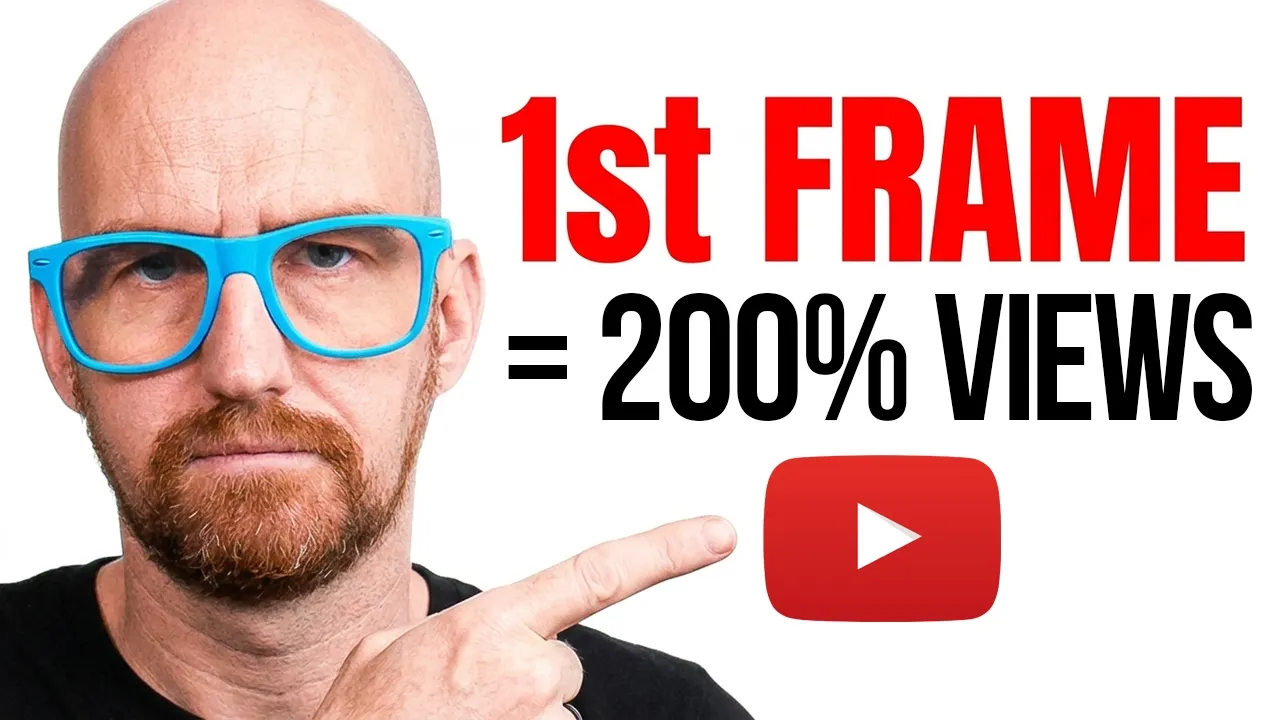
And so, I have to assume as a viewer looking at all of these videos on a YouTube homepage that have been published in the last 24 hours that they have double, potentially triple the views they normally would do. And I've just given them all an extra view. And this is because this new views counting system is all based upon the first frame principle. In other words, as soon as a video starts, it counts as a view. And I'm going to demonstrate right now.
So, what we have here is a 10-year-old vidIQ video that nobody's watching, which means that I can track individual views. So, all I'm going to do is mouse over the video for a second and then see if it comes up as a view. And in the real-time stats, there's that search view from half a second of footage. Now, the really interesting thing is that I did the exact same test earlier on in the week before the switch. And what happened in that case is that the real-time analytics picked up a traffic source, but did not attribute a view to it.
But now it seems the switch has happened, which means all of those mouse-over thumbnails playing a single frame, all of those videos auto-playing in the mobile app when you're scrolling through the feed, all of the videos auto-playing at the end of a video which you are on for barely a second, they all now count as views. Although I think there are still some exceptions. When you mouse over a thumbnail on a channel page or on a thumbnail down the suggested view column on a watch page, that's actually showing a GIF of a video, not actually playing the first frame of the video, so that doesn't count as a view, I think.
So in summary, once again, what viewers are going to see is videos with loads more views, maybe from their favorite creators, and they're going to think, "Hey, this channel's really taking off and I want to support them." But at the same time, everybody's views are going up, so it doesn't really give anybody more social proof. Now a couple more things to point out. For live streams, it doesn't look as if concurrent viewers are impacted in any way, they don't seem a lot higher.
However, when you go to the live stream replay, that is now counting the engaged views versus views, with views seemingly double the amount. As for shorts, well, YouTube implemented this exact update to that part of the platform 18 months ago. So the views have been crazy for quite a while now. But what I will say to you, directly YouTube, is in the analytics, you kept both the engaged views and views metric on the main screens, can you put that back in for the video tab as well?
Pretty please. Now of course, I'm just a random nerd on the internet sharing data on a single channel across millions, so I needed some corroborating evidence. And on social media, you are now starting to see other people say that their views are spiking. So I think this is truly it, the new age of YouTube view button themselves. I think the key takeaways are that your long-form views on videos are going to significantly increase, spiking when the videos are first published, possibly up to 200%.
The new views metric is not connected to watch time, click-through rate, average view duration. That is still all controlled by engaged views, if you can find where they are. Your older videos, because they're going to cross over from engaged views to all views, are going to look really funky in a few months' time. And viewers on YouTube are going to see views everywhere. Here, there, there, down there, over there, behind you.
In a quick poll Dan and Travis ran during a live stream covering this views update, 50% of you said that you've already seen an impact on your own channel with these new views. And, really interestingly, 45% of you said it was a good idea. Well, it's time to share your thoughts. And once you've done that, you can watch the whole live stream over here when Dan and Travis talk about it in more detail and answer your questions.
They'll see you in there.
The words are the caption track's own and nothing is reworded or re-transcribed. Paragraph breaks are placed between sentences so the text reads as prose.
Free tools for your own script: paste a draft and see where it stands before you record it.
Paste your draft and see where viewers are likely to drop off, with a rewrite for each weak line.
Paste the first 30 seconds of your own draft for a hook score and rewrites.
Check your draft against YouTube's advertiser-friendly guidelines before you record it.
Read this channel's public videos and transcripts, and download a writing brief for it.