Getting the transcript
Reading the captions from YouTube. A video nobody has opened here before takes 10 to 30 seconds; this page fills in on its own.
Getting the transcript
Reading the captions from YouTube. A video nobody has opened here before takes 10 to 30 seconds; this page fills in on its own.
BoardGameGeek · @boardgamegeek
Words
2,534
Runtime
11:23
Speaking pace
223wpm
Reading time
11min
223 words per minute, above the 201 75th percentile of 349 measured videos. That distribution comes from the 349-video hook study.
Opening (first 30 seconds)
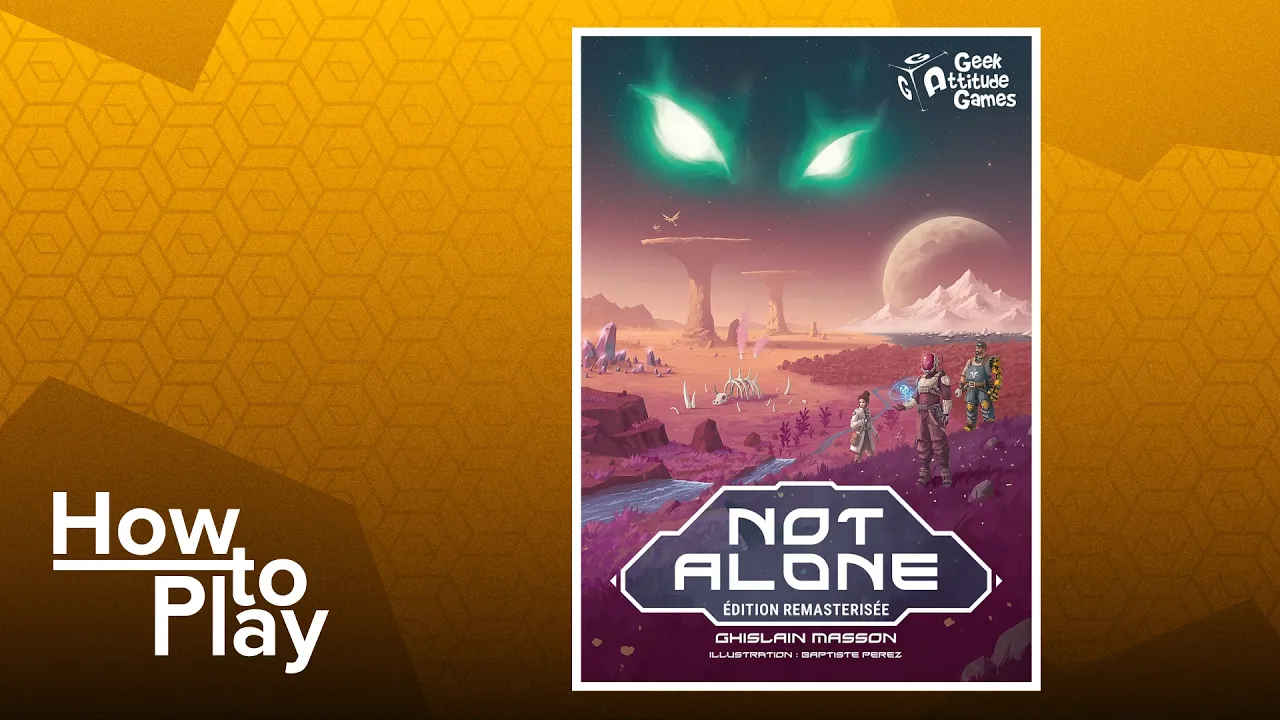
You've crash landed on this strange planet. Your readings have said that it's habitable and should be perfect for humans. But the moment you crash down to the surface, you [music] feel a strange uneasy feeling. This planet is not all it seems, and you know that you are not alone, which is designed by Gelain Mass and published by Geek Attitude Games, who are sponsoring this video. Hi everybody, my name is Nick Murphy of the Brothers Murf and we are here with Board Game Geek. Well, it's about time to see just what this strange plan is all about. So, let's get this game down to the table and learn
112 words, the words spoken in the first 30 seconds at 223 words per minute.
Free, no signup. See how the first 30 seconds hold attention, with rewrites.
Sentence shape
| Measure | This transcript |
|---|---|
| Sentences | 137 |
| Average words per sentence | 18.5 |
| Longest sentence | 42 words |
| Questions asked | 0 |
| Sentences containing a number | 7 |
Most used terms
Filler phrases
10 in total: like 9 · you know 1.
A literal whole-word count of the same phrase list the Prepublish browser extension uses, so a phrase inside another word is not counted and a phrase used in its ordinary sense still is. It is a count and not a judgement.
Run the check on the words above: where attention is likely to drop, with a rewrite for each weak line. The free check shows the scores and the one issue costing the most.
What this transcript is
Every word below is the caption track YouTube publishes for this video, pulled from the video itself and reproduced unchanged. It is not Prepublish's writing, not a summary, and not a re-transcription: it is the video's own published captions. English captions, generated automatically by YouTube, in the video’s original language. Source: the video on YouTube. A channel that would rather this page did not exist can ask for its removal through the contact page, and it is removed.
No Script X-ray for this video: YouTube shows a Most replayed graph only once a video has enough views.
You've crash landed on this strange planet. Your readings have said that it's habitable and should be perfect for humans. But the moment you crash down to the surface, you [music] feel a strange uneasy feeling. This planet is not all it seems, and you know that you are not alone, which is designed by Gelain Mass and published by Geek Attitude Games, who are sponsoring this video. Hi everybody, my name is Nick Murphy of the Brothers Murf and we are here with Board Game Geek.
Well, it's about time to see just what this strange plan is all about. So, let's get this game down to the table and learn how to play Not Alone. Not Alone is a one verse all game where one player will be playing as the [music] creature on the planet trying to assimilate the other players into the planet. And everyone else is the hunted trying to well not be assimilated. The hunted are trying to last long enough to be rescued while the creature wears them down and assimilates.
Now, this is the 10th anniversary edition of Not Alone, and it comes with the frozen lands way to play as well. But before we get into all that, let's go over the setup. We are going to teach the base game of Not Alone first, and then go over what the frozen lands entails at the end of the video. The blue place cards, the contamination tokens, and the hunt and survival cards with the contamination [music] symbol all belong to the frozen lands variant, so leave these in the box.
To begin, the creature player places the main board in the center of the table with the side they would like facing up. Place the rescue counter on the left side of the track equal to the number of players. Place the assimilation marker on the right side of the track equal to the number of players. Place the 10 place cards next to the board in two rows in ascending order like this. This is the planet of Artimia. Place the marker counter next to the number four beach card.
You will create the reserve of the six through 10 place cards according to the number of players. one card of each type if there's only one hunted player, two of each for two to three hunted players, and three of each for four to six hunted. Shuffle the survival cards and place them near the hunted players. Shuffle the hunt cards and place them face down near the creature player. The creature player then takes their player board, draws three hunt cards, and takes their three hunt tokens.
Each hunted player takes a hunted board and their hunted figure. They take a set of place cards numbered 1 through five and one survival card. They then place three willpower cubes at the top of their board here. All of the hunted characters and the creature have skills listed on their board. Decide before the game if you are using [music] these. You must all choose to either use them in the game or not. Note that the creature has two skills, but only the second one is applicable in a game with five or more players.
Once all players have decided, it's time to start the game. Not alone is played over a series of rounds until one of the end games is triggered. If the rescue marker gets to the victory space first, the hunted have been successfully rescued and they all win. If the assimilation marker reaches the victory point space first, the creature has successfully assimilated the hunted into the planet and they win. [music] Each round of the game is broken down into four phases.
The exploration phase, the hunt phase, the resolution phase, and the maintenance phase. Before we explain the phases, let's first chat about the three kinds of cards in the game. The place cards are the cards that the hunted will play, and these will dictate where their figure goes on the planet of Artimia. The creature is trying to predict where the hunted will be. The hunt cards are cards that the creature will play to further their plans.
For example, the despair card dictates that no survival cards may be played for this turn. The survival cards are played by the hunted and will help them out. Note that hunt and survival cards will dictate a specific phase that they may be played in. The creature may only play one hunt card per turn, and each hunted may only play one survival card per turn. If a hunt and survival card are played at the same time, the creature gets to decide the order in which the cards resolve.
Okay, now let's start with the exploration phase. During this phase, all hunted players will secretly choose which place card on the planet they would like to go to. They do this by choosing one of the place cards in their hand. Remember that at the start of the game, they only have access to one through five. The hunted may discuss what they would like to do, but they must do so out loud so the creature can hear. Throughout the game, the hunted will have a discard pile of their place cards, [music] making it easier for the creature to guess where they'll be heading next.
During the exploration phase, before choosing a place card, the player may either resist or give up. When they resist, they will pay one or two willpower cubes and take two or four cards from their discard pile back into their hand. Note that they may not discard their last willpower token to do this. If the player gives up, they will return all discarded cards to their hand and they refill all of their willpower cubes.
Though, when a player gives up, the assimilation marker moves forward one space. Once all players have chosen their place cards, [music] the exploration phase ends. Next comes the hunt phase. In this phase, the creature player will place one to three of their hunt tokens on the place cards on Artimia. They are generally placing these tokens where they think the players are going to be. They will always place their creature token.
They will place the Artimia token if they played a hunt card with the Artimia symbol or if the rescue counter is on a space with the Artimia symbol. And finally, they will place the target token if they played a hunt card with the target symbol. Note that the creature may place multiple tokens on the same place card. Once all applicable tokens have been placed, we move on to the resolution phase. All hunted players will reveal the place cards that [music] they chose and they will place their figures on those cards on Artimia.
First, the hunted on places without a hunt token will resolve those places in ascending order. Then resolve the target token, followed by the Artimia token, and finally the creature token. If a hunted player is on a place card without a hunt token, they will activate the ability on that card or they may take one card from their discard pile back into their hand. We'll go through all the place cards abilities a bit later.
If the hunted player is on a place card with the target token, they will resolve the card that put the target token there. In the case of the Mirage Hunt card, the target token is placed between [music] two cards and both of those place cards abilities are not used and the player may not retrieve a card from their discard. [music] Though, a survival card like resistance could be played to avoid the ability of the target token.
After the target token is resolved, the hunted may then activate the place card or retrieve a discarded card unless it was canceled by something like the Mirage. Each hunted on a place card with the Artimia token must discard one card from their hand, and they may not activate the place card nor retrieve a card from their discard. Note that whenever a hunted player discards a card, they must keep the tops of the cards showing so the creature [music] can see what card they have already played.
If the creature token is on a place card with one or more hunted players, all those players must discard one willpower cube and then the assimilation markers move forward one space regardless of how many hunted players were affected by this. Note, if one or more hunted lose their last willpower cube, move the assimilation counter forward one additional space regardless of how many hunted were affected by this. Though, also note that the blue player's ability prevents that additional space when the creature finds them and they lose their last willpower.
The normal advance for being caught still happens, but always remember to check your special powers to see when they're applicable. The hunter may not activate the place card or retrieve a card from the discard pile if they're on the same space with a creature token. Note that the creature and artimia tokens cancel the effects of the place only for the players on those spaces. If you activate an ability that allows you to activate another place card, you may still activate places with these tokens.
Once all plays cards have been activated, you will move to the maintenance phase. During this phase, all hunted players will retrieve their hunted figures from the board. They will also discard their played place card onto their discard pile, remembering to keep the tops of all cards visible, unless you have an ability like the green player who gets to discard their first place [music] card face down. Then the creature player will take back their hunt tokens and draw hunt cards until they have three in hand.
Lastly, the rescue marker will move one space forward on the track. Now, we move back to the exploration phase and keep playing. We've already discussed the hunt and survival cards and some of the player abilities, and we've seen what some of them can do. But before we end, let's talk about what the 10 place cards do. The one card allows you to take your discard pile back into your hand or copy the ability of the place with the creature token.
But [music] watch out, if the creature catches you here, you lose one extra willpower. The two card allows you to take the card you [music] just played and one card from your discard pile back into your hand. The three card allows you to choose two place cards next turn and decide which one you want to use before revealing during the resolution phase. The four card allows you to place the marker counter on the beach card or if it's already there, remove it to move the rescue marker forward one.
Note that this may only be done once per turn. So, you can't have one hunted place the marker and then have another remove it to move the rescue marker forward. The five card allows you to take one of the six through 10 cards you don't already have and add it to your hand. The six card allows you to take the card [music] you just played and two others from your discard pile back into your hand. The seven card allows you to draw two survival cards and choose one to keep.
The eight card moves the rescue counter one space forward, but this may only be activated once per turn. The nine card allows any one hunted, including yourself, to regain one willpower, or you may draw one survival card. And finally, the 10 card allows you to discard the place card you played and play a different one and resolve it. Note that the artifact's power cannot be copied. And that is all of the place cards.
The players will go around after round until either the rescue marker makes it to the victory [music] point space and the hunted wins or the assimilation marker makes it to the victory point space and the creature wins. Now, that is how you play the base game. Let's quickly talk about the frozen lands variant. Note that this mode may only be played with four or more players. The setup remains the same except that you'll use the frozen lands place cards and you'll shuffle the hunt and survival cards with a contamination symbol into their respective decks.
Take all the contamination tokens and shuffle them and place them face down. You will not need the marker token that is usually placed next to the [music] beach card. I will let you discover the new place, hunt, and survival cards for yourself, but let's [music] go over the changes in the game. These mostly deal with these contamination tokens. Now, whenever a player gives up or loses their last willpower cube, they will also have to take one random contamination token.
They are not allowed to reveal this token or look at the other side of it. It must remain hidden. Now, instead of using a place cards ability or retrieving a discarded card, the player may discard one of their contamination tokens and shuffle it back in with the others without revealing it. During the maintenance phase, when the rescue counter would move onto the victory space, the hunter players must make a choice. If they decide to move the marker to the victory space, they must all reveal their contamination tokens.
And if any have the contamination symbol, the creature immediately wins. If none have it, the hunted win. But if they don't want to risk it, when the rescue counter would move on to the victory space, they may instead keep it where it is, and one hunted player may discard one of their contamination tokens without looking at it. If the rescue counter reaches the victory space during the resolution phase from something like the escape pod, the game ends immediately and you check your contamination tokens right away.
Though moving the counter with the escape [music] pod is optional, so you can choose not to make that move. And that is how to play Not Alone and the frozen land variant. Not Alone is a classic game of cat and mouse, except for this time the cat is a mysterious creature trying to assimilate [music] you into its planet. This game is all about trying to keep the creature on their toes and try to make sure it's not too obvious where you're going.
And the creature has to use their wits and their hunt cards to box in the hunted. And if Not Alone seems like a game you'd enjoy, make sure to check it out and learn more. And until next time, I've been Nick Murphy. We're here with Board Game Geek. And that is how to play Not Alone. Have a great day.
The words are the caption track's own and nothing is reworded or re-transcribed. Paragraph breaks are placed between sentences so the text reads as prose.
Free tools for your own script: paste a draft and see where it stands before you record it.
Paste your draft and see where viewers are likely to drop off, with a rewrite for each weak line.
Paste the first 30 seconds of your own draft for a hook score and rewrites.
Check your draft against YouTube's advertiser-friendly guidelines before you record it.
Read this channel's public videos and transcripts, and download a writing brief for it.