Getting the transcript
Reading the captions from YouTube. A video nobody has opened here before takes 10 to 30 seconds; this page fills in on its own.
Getting the transcript
Reading the captions from YouTube. A video nobody has opened here before takes 10 to 30 seconds; this page fills in on its own.
Project Kamp · @ProjectKamp
Where viewers went back to watch this video again, from YouTube's public Most replayed graph, lined up with what was said at that moment.
Most replayed moment #1
9:168.0x the video's typical replay level
I'm going to put it in a big jar. And after a little while, we're going to refrigerate it. >> [music] [music]
Said at 9:09
Most replayed moment #2
10:186.3x the video's typical replay level
>> You might have seen Mariana before at the brick ruin, right? Let's take a break to get to know her a bit better. >> Hello. I'm Mariana and I'm 34 years old. Goody. Meow. Okay. Cool. I'm curious about how things work.
Said at 10:11
Most replayed moment #3
19:196.1x the video's typical replay level
very concentrated the taste of it. What's the winner I would go for the dried cherries, but I would say there's no losers. I liked all of the things that we made with it. So now that everyone at camp has been enjoying a nice snack self-picked, we
Said at 19:12
The graph counts replays. It does not show where viewers stopped watching.
Words
3,437
Runtime
25:44
Speaking pace
134wpm
Reading time
14min
134 words per minute, below the 160 25th percentile of 349 measured videos. That distribution comes from the 349-video hook study.
Opening (first 30 seconds)
Six years ago we bought this abandoned [music] piece of land in Portugal to try to find another way of living. And so far we have been building our base camp, [music] regenerating the land, and documenting what we do so we can all learn from it. And in this video we're going to process all the fruits that we got from our [music] neighbors and upgrade
67 words, the words spoken in the first 30 seconds at 134 words per minute.
Free, no signup. See how the first 30 seconds hold attention, with rewrites.
Sentence shape
| Measure | This transcript |
|---|---|
| Sentences | 319 |
| Average words per sentence | 10.8 |
| Longest sentence | 41 words |
| Questions asked | 9 |
| Sentences containing a number | 16 |
Most used terms
Filler phrases
19 in total: like 12 · uh 3 · actually 1 · kind of 1 · right? 1 · you know 1.
A literal whole-word count of the same phrase list the Prepublish browser extension uses, so a phrase inside another word is not counted and a phrase used in its ordinary sense still is. It is a count and not a judgement.
Run the check on the words above: where attention is likely to drop, with a rewrite for each weak line. The free check shows the scores and the one issue costing the most.
What this transcript is
Every word below is the caption track YouTube publishes for this video, pulled from the video itself and reproduced unchanged. It is not Prepublish's writing, not a summary, and not a re-transcription: it is the video's own published captions. English captions, generated automatically by YouTube, in the video’s original language. Source: the video on YouTube. A channel that would rather this page did not exist can ask for its removal through the contact page, and it is removed.
Six years ago we bought this abandoned [music] piece of land in Portugal to try to find another way of living. And so far we have been building our base camp, [music] regenerating the land, and documenting what we do so we can all learn from it. And in this video we're going to process all the fruits that we got from our [music] neighbors and upgrade our first aid system. Welcome to a new Project Camp update. >> [music] >> The landscaping team was helping João cutting some firewood.
[music] And then he invited us for a cherry picking on his land. Since most of the people of camp don't speak Portuguese, it was hard to understand what Senhor João wanted to tell us. But luckily we have someone in camp now that is a native [music] speaker. Mel from our kitchen team >> [music] >> has been professionally picking cherries for some time now. Let's hear what she has to teach us. >> like this, but trick is to try to get more than one in one hand and to rip up against the I don't know.
You can grab them like that. And you can grab a bunch of them all at once. You can pull the whole bag up from the root. >> [screaming] >> And now I leave you with Kata. >> We have our own cherry trees on the land. They're in base camp, but they don't give cherries at all. To find out more about the reason for this, we went to see João later to ask if he could give us some advice. João mentions how our land at base camp is rocky and dry.
He mentions cherry trees like humidity. Then a better spot would be around the bottom fields, closer to the river or the lagoon. He mentions that back in the days there used to be some wild cherry trees there even. He has five cherry trees on his land. He shared that when he bought them the quality was not very good. So, then he improved them through grafting techniques. His trees give us the ginger type of cherry, which is very good for making liqueur and jam.
But now, let's take a look at them. These trees are now 12-13 years old. He told that he he got these trees in 2013, and [music] that he started having cherries 2 years later, which is really good comparing with our cherry cherry trees. [music] There was a lot of rain in the last week, and that's why also Sr. João told us to to come pick them up really fast because the cherries got very damaged by the rain. There's a lot of [music] cracks as we can see, and they got rotten really fast.
We're going to meet neighbor Fernanda now. She asked us to go pick up a nespera, so let's see how many nesperas we can get this time. Ooh, what's a nespera? A nespera [music] is a small orange, very tasty, very juicy fruit, which has a very beautiful, shiny seeds or bones, usually three, maybe four. Yeah. >> [music] >> And actually, my my grandparents had a big nespera back home, so I grew up eating nesperas. It is my favorite fruit.
Our neighbor Fernanda has two loquat trees in the garden. One of them is the child of the other. The mother got burned in the 2017 forest fires. Fernanda shares that it was really hard to keep this tree alive and for it to sprout and give fruits again. After some time, she managed, but the loquats always come as if they are burned forever. The ones we will be picking up are the ones from the child tree. This one was planted already after the fire.
Its roots faster and they're better quality. >> [music] [music] >> And the seeds that Cato was talking about? >> You don't eat those. >> You don't eat those? >> They're also really big. >> Yeah, but they're very shiny and >> pretty, yeah. >> and slippery. >> [music] [music] >> The harvest is complete. >> So, now that we have all these fruit, let's see what our kitchen manager Cato is going to do with it. So, we got a lot of fruit from our neighbors, cherries and loquats, nesperas.
Because we got a lot, we have to process some them quick so they don't go bad. We have three fun ways how we're going to process them. Make a jam, make a drink, and dry them in the solar dehydrator that we have. First, we're going to have to take out the pits and the seeds. So, that's what Julie and I are going to do right now. And these I don't need to, I just take out? >> No, you can't do that one without the chopstick.
They said cherry pits could be done with a chopstick. I don't know anything. >> [music] [music] >> We finished the step of taking out the seeds and the pits. Now we're going to process them. And the first step is with these frames from the solar dehydrator. We're going to fill them up with the fruit. And by the end of the day we should have dried fruits. >> [music] >> It's best that they lie with the skin down. So the moist part gets dried quicker.
Moist. They're all filled up and now we move them to the solar dehydrator. So they're in and they're going to dry now with the sun. It's going to be a very hot day, so probably at the end of the day they will be done. Maybe they need a little bit of more sun in the tomorrow morning. Tomorrow definitely we'll have some dried fruits. The second thing we're going to make is the loquat jam, sugar and a little bit of ginger.
We realized that these are probably too big of a chunk for a nice jam, so we're going to cut them first. Okay. The jar is like 2/3 full. Uh now I'm going to weigh how much this is, put in a 1:1 ratio with sugar, zest in some ginger, let that sit for a little bit, then the sugar draws out all the moisture from the loquat. And after that we have a very simple no heat jam that we can eat during breakfast. Exciting [music] times.
Takes a long time. Come on. Too heavy. Fine. How much fruit do we have? 1,800. >> [music] >> I just weighed it. We have 1,800 g of loquats. I'm going to put in 1,800 g of sugar. >> [music] >> Oh my god. >> [music] >> Maybe I should have washed it before. I'm making the problem bigger. >> [music] >> Okay. Advice. Mix it in a little bit more before you put it in a big jar. Because now it's sticking. >> [music] >> Mix it in here. >> [music] >> Okay.
So, I have equal parts sugar and fruit here. I am mixing it well before putting it into the jar. I'm going to grate in some ginger. Everything is mixed together here. Ginger, sugar, loquats. I'm going to put it in a big jar. And after a little while, we're going to refrigerate it. >> [music] [music] >> So, we've heard there is a situation here. We eat cherries. We have many ants here. Maybe do a warning of ant footage.
They're all coming from here. So, we're going to try something that I've learned after many years of living in the Portuguese countryside. But first, we need to remove the bits that are full of ants to get the least amount of ants possible inside. We are going to spray the dehydrator mostly where the ants were. >> You might have seen Mariana before at the brick ruin, right? Let's take a break to get to know her a bit better. >> Hello.
I'm Mariana and I'm 34 years old. Goody. Meow. Okay. Cool. I'm curious about how things work. I like to make people laugh. And I've played futsal for many years. Yes, [music] it's a different sport than football. I've been watching Project M for 5 years now, and it felt like the right time to join camp. I like it here because [music] I can spend more time outside building things with my hands. In the future, I hope to keep renovating old houses like I'm doing here with the brick ruin project or renovate old things in general. >> Bikes or cars. >> And other cool stuff. >> Or sailing. >> [music] >> I've never sailed before, but if anyone has a boat, let me know in the comments.
Enough about me. Let's get to the bottom of this ant problem. This only has vinegar. We're also going to spray the tray. It's food safe, obviously. It's just vinegar. And then the ants won't come the path that they already know. So, that's the next step. And this bottle is broken. Let's try again, but now with a bottle that maybe sprays. Oh, yeah. Okay. So, vinegar all over the frame. They're dead now. The problem with ants is uh they do they do funerals.
I'm not joking. Sorry, they don't do funerals, but they do graveyards. So, they do come and collect their bodies. So, it's not great to have dead ants for ethical reasons, but also because you're going to have bigger problem. Now, spray the dehydrator. Next step is to make the dehydrator kind of an island. So, we're going to put four big bowls with water inside, and then the dehydrator feet will stay inside of the bowl.
Let's hope that works. It's not ideal that we have a metal screw and wood in contact with water, but I think it's better than having ants. It's important that the feet are not touching the side of the container. Otherwise, ants will make a bridge and still go in. So, we're going to center this. Yeah, that's okay. >> [music] [music] >> We blew every piece of cherry and every piece of loquat. And it's all good. >> I think so.
I think so. >> Done. The third thing we're going to make is a wild fermented drink with the cherries. I'm going to need bottles for that. These ones. We're going to fill them up with 30 g of sugar, bit of cherries, and water. That's it. We let them stay for a few days. They will start to fizz, and then we have a nice fermented drink. I'm also going to put in some lemon thyme from the herb garden. This one we do with mint and cherry.
We filled the bottles up with cherries and the herbs. Now we're going to put in some water. Close it so we can shake it. So it mixes with the sugar. And a couple of times during the next day we're going to do this so it mixes well. But for the next 24 hours we're not going to close it fully. We're going to put it like this so the air can come in and it can ferment with the wild yeast in the air. What is important is that you leave the neck free.
So water up until here. Then after 1 day, because of the heat, if it's not as hot, 2 days, you can close cap and then the second fermentation starts. After about half a day it should be sparkling enough. Then we do half a day and during the day we pop them once in a while. If you do this at home, please pop it once in a while because these become glass bombs otherwise. After the 12 hours of the second fermentation, you can put them in the fridge, let them chill a little bit, and then we have a very nice natural soda.
These bottles have been chilling for 7 hours. So, now it's time to shake them again. Let me close them first. And there should be no, like, sticky sugar at the bottom anymore. And that's it. And then you open them again and let them rest with the cap. Like this. >> [music] >> Tada! Different day, different setting, same project, even harder. The jam, the loquat jam, stayed very liquidy. So, we're going to make it into a syrup.
I'm going to strain out the loquats. And then we have a nice syrup for everyone to enjoy during this hot hot day. If you know what we could have done better to make it into a jam, let us know. We're curious. Some help from Julie. Some help here. It's going good. Going good. Going good. The solids we're going to use in a different dish, a little snack. And the syrup we can drink now. >> What about the soda? >> I closed them this morning, and now we're going to plop them so they don't explode.
So, they're all plopped. We're going to let them sit a little bit more. Tonight I put them in the fridge, and then tomorrow morning we have a nice refreshing drink during another hot day. And now the fruit's dry, no? We're back at the solar dehydrator. They have been in drying for over a day, and they should have been dried, but we are afraid that But solar dehydrator is not suited for things that are this uh has this much water.
I'm afraid that it will not fully dry. But we're going to see. We're going to let it dry one more day and maybe maybe it will work. >> As you can see, the little ant trap works. It's sad that they all died, but at least they're not on the food. >> They're still quite juicy. I think the problem is that there's no airflow because it has been very hot. It's still very hot. And [snorts] they just don't get much drier. So, this solar dehydrator is not really suitable for fruits.
It works really well with herbs, but they're still very tasty even though they're not fully dry. So, we're still going to snack on them. >> [music] >> Yummy. >> You can see, very juicy. >> Wow. >> It's not bad. >> Mhm. >> [music] [music] >> Oh, you're dirty dirty cup. >> [music] [music] >> There it is. >> Mhm. >> Okay. Okay. Wow. >> Ooh. This is my favorite. >> This is the winner for me. It excites me more than the dried fruit.
We don't have really lemonade. Sometimes kombucha, but it's a good addition. >> I I like the cherry dried cherry. It's very concentrated the taste of it. What's the winner I would go for the dried cherries, but I would say there's no losers. I liked all of the things that we made with it. So now that everyone at camp has been enjoying a nice snack self-picked, we are diving into a more serious topic, which is in this case the first aid. >> [music] [music] >> So time to redesign.
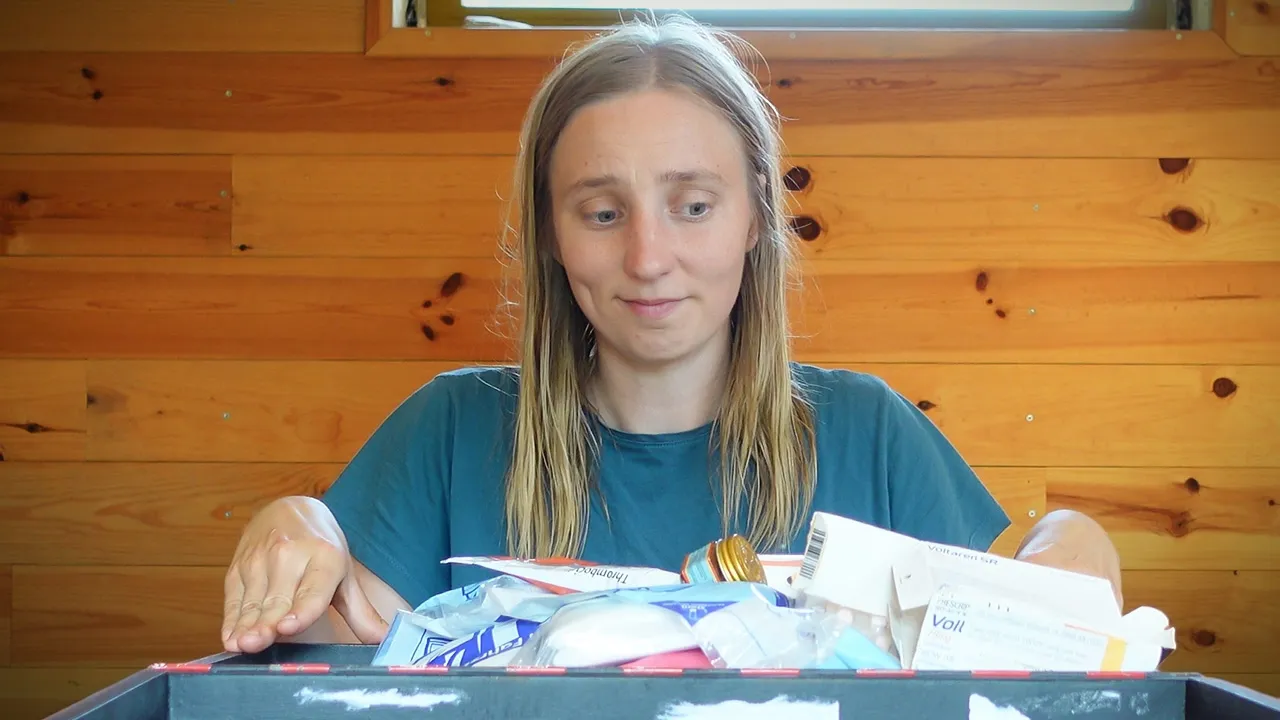
Okay, we are going to start with this box because this is our first aid box and luckily no big accidents have happened yet. But if you would need to bring already this box to the accident or or place of emergency, it would be quite of a hassle because it's very heavy and it's not as handy to bring with you. But if we look in the inside, there are some other struggles. There are many different products products here all collected by the different people that come from all around the world to live here for a temporary amount of time.
And there are all different elements in here. There are different creams, some are even out of date, some natural products, some pills as a subscription from a doctor which I wouldn't recommend without doctor prescription. Also with some list of plaster. Pills. Not sure what they are for. And this happens every season again and every end of the season we clean it out, we take the expired products out, but still it's it's messy and it's hard to find.
And in the case of a real emergency, we need to be quick and straightforward. So currently the best thing seems to be moving everything out, taking a look of what is inside and seeing what is missing. But to be understanding what it is missing, I think we need some support. And luckily this year we have a former nurse, which is called Lobke. >> Hi, my name is Lobke. I've always worked in the hospital as a nurse, but now I'm at Workspace.
My intro will come a little bit later because safety goes first. I think here at camp there are a few things that can happen when we don't have a well-organized first aid box. So, I am here to help organize it a little bit better. Here first aid is important because we are far away from the hospital and it might take a while before an ambulance can arrive here. I think it's good that we can help ourselves before the first responder arrives.
Our first aid box is full of items. So, everyone's digging in it, they can't find what they need, then you have no clue what you are using. What we want to do is take items that we use more often and in this case people can find it quicker. With fewer items you can find faster what you need. I was also thinking that we should divide the level of emergencies. If someone has an injury which is small, you have a different bag than when someone has a big bleeding and you need to run with the bag so that you can keep it a little bit more organized and separated.
Now let's see in the shops what they have available. We bought a lot of things, different kinds of bandages and new medical supplies. The trip was very successful. We even got two new very handy bags. >> We were searching for a new first aid bag and we couldn't find it, but then we went to the hardware store and they just gave us this. >> [laughter] >> How sweet of them. >> All the storage thingies we can use. Look at this.
And then if someone cuts their leg or someone really needs help, then you can just go >> [music] >> Correct? >> [music] [music] >> So, another thing that I think it's important is that people know what to do. Right now, people don't feel super experienced. They might feel not so secure about handling an emergency situation. So, therefore, I'm going to make a course. The course will happen in Agogela, where there's an old school working as a community center nowadays.
One pod manager from each pod was there to attend, as well as some people from landscape and workspace pods who stay all season. >> [music] >> It took two half days. The first day was a bit more theoretical. In the second one, we got to use a CPR dummy, and here we went more into the practical side [music] of the first aid by going over different cases. >> [music] >> So, these are our two new first aid boxes. This is for big emergencies.
This is for small. People also know what to do now, and they can react when there's a big emergency. This also means that we can take a more professional approach. People are a bit more aware of risks that can happen at work, especially if you are with a chainsaw or with other risky tools. But, so far we had no major accidents, so let's keep it this way. >> Thank you, Lobke. Now we are prepared for any emergencies to come.
Hopefully, there will not be many. If you are interested in the other part of the video about food processing or any other area you have seen before in Project Camp, there are still some applications open on our [music] website, so head on to there. If you are ready to stay at home, that's cool, too. And maybe then Patreon is your page, where [music] you can see the videos 2 weeks in advance in 4K without ads. If not, just subscribe here on YouTube and we see you here same time, same [music] channel.
Ciao. >> [music]
The words are the caption track's own and nothing is reworded or re-transcribed. Paragraph breaks are placed between sentences so the text reads as prose.
Free tools for your own script: paste a draft and see where it stands before you record it.
Paste your draft and see where viewers are likely to drop off, with a rewrite for each weak line.
Paste the first 30 seconds of your own draft for a hook score and rewrites.
Check your draft against YouTube's advertiser-friendly guidelines before you record it.
Read this channel's public videos and transcripts, and download a writing brief for it.