Getting the transcript
Reading the captions from YouTube. A video nobody has opened here before takes 10 to 30 seconds; this page fills in on its own.
Getting the transcript
Reading the captions from YouTube. A video nobody has opened here before takes 10 to 30 seconds; this page fills in on its own.
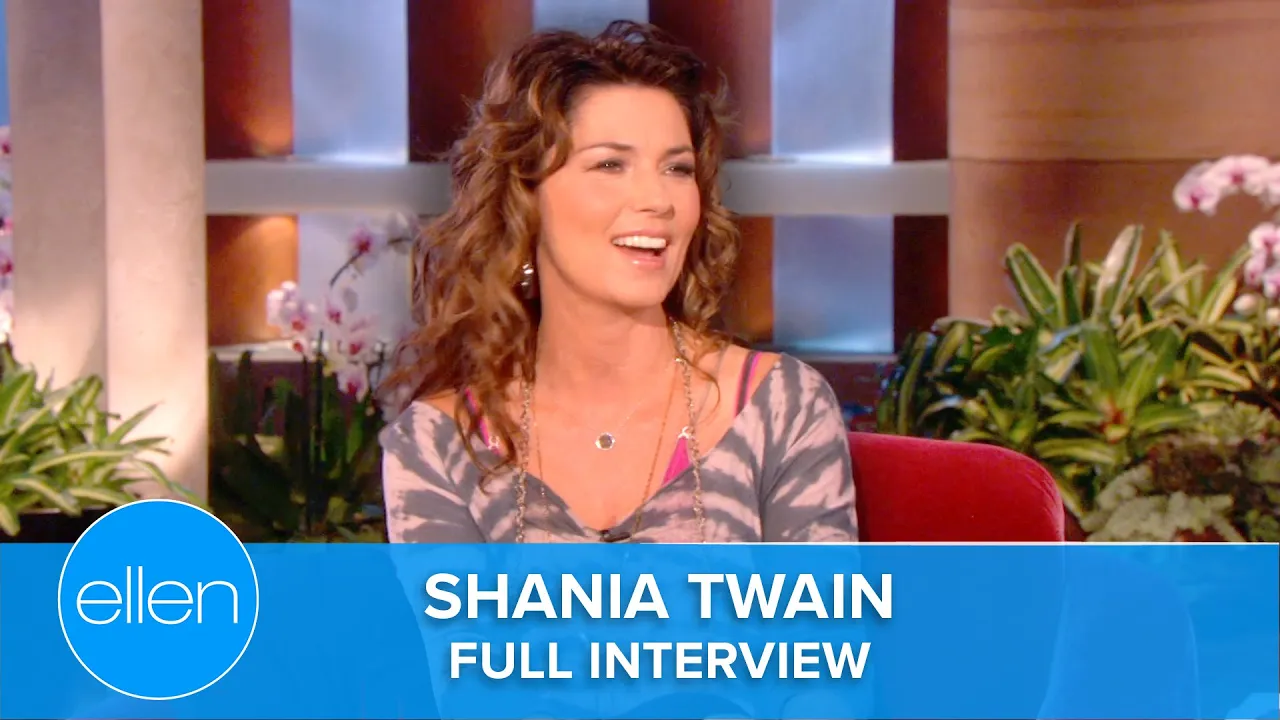
TheEllenShow · @TheEllenShow
Where viewers went back to watch this video again, from YouTube's public Most replayed graph, lined up with what was said at that moment.
Most replayed moment #1
4:1910.4x the video's typical replay level
But for someone to lie to you and to-- all right, we have to take a break. And we'll talk about that situation. And I have more to tell you if you want to hear about your life. [LAUGHS] I love it! We'll be right back. [WHOOSH] We're back with Shania Twain, and we're talking about-- so you're suspecting something is
Said at 4:11
Most replayed moment #2
9:087.2x the video's typical replay level
So now you're married. Now we're married. Now you and Fred are married. So it's a beautiful story in the end. [CHEERS, APPLAUSE] And on that, however it happened, however it worked out, you know, it's
Said at 9:02
Most replayed moment #3
7:295.7x the video's typical replay level
And that's what-- Your son? --kept me going. And that is sort of why you wrote the book, so your son can-- [APPLAUSE] Right? Yes. Did you call this woman and say--
Said at 7:22
The graph counts replays. It does not show where viewers stopped watching.
Words
2,985
Runtime
16:37
Speaking pace
180wpm
Reading time
12min
180 words per minute, just under the 181 median of 349 measured videos. That distribution comes from the 349-video hook study.
Opening (first 30 seconds)
[CHEERS, APPLAUSE] Our first guest sold over 75 million albums and was at the top of her game. Then, her world came crashing down when she endured a very public and betrayal and divorce. Now she's put it all in her new book, From This Moment On. Please welcome Shania Twain. [CHEERS, APPLAUSE] [UPBEAT MUSIC PLAYING] Uh-Oh! Hi! So this-- first of all, your story is-- I thought I knew your story when you were out there still, and we were all listening to you and loving your music. And
90 words, the words spoken in the first 30 seconds at 180 words per minute.
Free, no signup. See how the first 30 seconds hold attention, with rewrites.
Sentence shape
| Measure | This transcript |
|---|---|
| Sentences | 271 |
| Average words per sentence | 11.0 |
| Longest sentence | 53 words |
| Questions asked | 30 |
| Sentences containing a number | 6 |
Most used terms
Filler phrases
37 in total: you know 16 · I mean 6 · kind of 4 · like 4 · right? 4 · basically 1 · sort of 1 · uh 1.
A literal whole-word count of the same phrase list the Prepublish browser extension uses, so a phrase inside another word is not counted and a phrase used in its ordinary sense still is. It is a count and not a judgement.
Run the check on the words above: where attention is likely to drop, with a rewrite for each weak line. The free check shows the scores and the one issue costing the most.
What this transcript is
Every word below is the caption track YouTube publishes for this video, pulled from the video itself and reproduced unchanged. It is not Prepublish's writing, not a summary, and not a re-transcription: it is the video's own published captions. English captions, published by the channel, in the video’s original language. Source: the video on YouTube. A channel that would rather this page did not exist can ask for its removal through the contact page, and it is removed.
[CHEERS, APPLAUSE] Our first guest sold over 75 million albums and was at the top of her game. Then, her world came crashing down when she endured a very public and betrayal and divorce. Now she's put it all in her new book, From This Moment On. Please welcome Shania Twain. [CHEERS, APPLAUSE] [UPBEAT MUSIC PLAYING] Uh-Oh! Hi! So this-- first of all, your story is-- I thought I knew your story when you were out there still, and we were all listening to you and loving your music.
And then, there's so much more to it, then, because I knew about your parents. But when you-- first of all, congratulations. This is-- we just found this out-- you're on The New York Times' Bestseller List. So that's a-- [CHEERS, APPLAUSE] Whoa, that's great news. Let's back up to, two, you're on top of the world. You're the biggest-selling female artist. And you give it all up. You move to Switzerland. Is that right?
Yeah. So why Switzerland? Why did you move there? Well, you know what? We'd moved to Switzerland before I decided to get off the road and stop-- and take a break, I guess. I just really needed to take a break. Switzerland was just a place that I could go and be very quiet. Mm-hmm. It's a very quiet place. It's very beautiful. And I became a mom. And it was just a really great place to start that part of my life. And I saw, in the series that's on OWN and that you talk about, that you really were singing to make your mother happy.
When you started singing at a young age, it wasn't something you wanted to do. But you thought, if you quit, that was the one thing that was the light in her life, that you were making her happy. Yeah, it would have devastated her if I'd ever quit music. I always loved to sing. I had a great passion for music, and for singing, and for writing. I didn't have a desire to be on the stage doing it. I was very happy to be in the backyard or in my own bedroom doing it.
And so it was the performer side of it that I was pushed and forced into. And I never really-- you know, I never really did get comfortable enough with it for it not to stress me and really be difficult. So you get to this part-- and we're gonna kind of jump around-- but for those of you who don't know, you lost both of your parents immediately in a car accident when you were 19 years old? 22. 22 years old. Then you had to raise your siblings, that you were the parent all of a sudden to.
Just-- and plus, the relationship was very abusive. And so we'll get back to that. But so then you have a career. You get over that. You lose your parents. You raise your siblings. You are this huge star. You have a husband of 14 years who is-- I can't even keep up with you! Is this really my life? It's like, wow! This is really-- it's, [GASPS] by the time I got to page 72 reading the final draft, I was exhausted. I know!
Just listening to you, hearing someone else tell it back to me, it's like, whoa! That is just so much in one lifetime. Well, it's-- and, obviously, you know there's more. I mean, it's just there's so much that happened to you. And then, for your best friend, your husband, to have an affair with your best friend, and they lie to you-- you keep asking your best friend, is something going on? And she's blatantly lying to you saying, nothing's going on.
And it's her that he's cheating with. Yeah, betrayal is really a devastating thing. And the end of any marriage is very sad. And it's devastating in itself, especially when there are children involved. But betrayal is a little bit-- that's harder to take. Yes. I struggled more with that, I think. Yeah. And in the end, that was the more devastating side of it. Yeah, I think-- I agree. I think heartbreak is-- I mean, that's enough.
It is what it is. We all know what heartbreak is. Right. But for someone to lie to you and to-- all right, we have to take a break. And we'll talk about that situation. And I have more to tell you if you want to hear about your life. [LAUGHS] I love it! We'll be right back. [WHOOSH] We're back with Shania Twain, and we're talking about-- so you're suspecting something is going on with your husband, and there's something wrong.
You're asking-- and did she work for you, is that right, this woman? Yes, she was our Secretary. OK, and so you're asking her, and she's, what are you talking about? And so, how did you find out? And they're still together today? I don't know. OK, all right. Well, it doesn't matter. It doesn't matter anymore. [LAUGHS] It's no longer my business, yeah. So this woman is saying, absolutely not, nothing's happening with your husband.
I don't know why you're thinking that. And then you found out, how? How did I find out? Well, it was Eastertime, and we were the two families spending the holidays together and whatnot. And Fred just called me up after the holidays. Fred is her husband at the time. Fred is her husband at the time, exactly. He's my husband! What are you talking about? I know he is now! No, he was her husband at the time. And we didn't have a-- Fred and I did not have a one-on-one relationship at all-- Quite.
A formal relationship, really. And he didn't have my personal phone number, for example, but found out how to reach me, and called me up, and just said, I really need to talk to you about Mary-Ann, and can I come and see you? So he just basically explained that, I've been waiting for a few weeks to tell you. I've been hoping that they would tell you themselves, and they, obviously, haven't. And I think you need to know.
And then, he told me. How did he know and you didn't know? What, did he catch them or something? How-- Well, that's what I said. Of course, I didn't believe him, and I thought for sure he was making it up. I was, obviously, just deny-- denial on my part. Sure. He just said, you know, I have proof if you want it, and I've been following it now for a few weeks, and I've got hotel bills and all kinds of details. And I don't go into the details in the book.
So if that's what you're looking for, you probably don't want to read it. I don't go into the details about the affair because it's just not necessary. Mm-hmm. I talk more about how it affected me and what I've learned from it, really, more than anything. Yeah, let's-- if you will, we can-- you can read from that section on how you-- I'm going to need my glasses. All right. I'll listen with my glasses. [LAUGHTER] Maybe I should try yours.
Don't we look studious! OK, so yes, here we go. For the first week after finding out about the affair, I was ready to die, to go to bed forever and never wake up, or to hurt someone. I was ready to do something desperate, but in reality, there was nothing to do but to suffer through it. Fortunately, when you're a mom, the responsibility of caring for your child can keep you going. And that's what kept you going? And that's what-- Your son? --kept me going.
And that is sort of why you wrote the book, so your son can-- [APPLAUSE] Right? Yes. Did you call this woman and say-- Yes. --and confront her? I did. I called her up, and I said, you know, why don't you come over? I want to talk to you about something. I asked her if there was anything she needed to tell me. I wanted to give her the opportunity to tell me herself without me accusing her. And because really, still, at this point, I wasn't really-- I wasn't sure that Fred was-- maybe, you know, not exactly.
Right. He might have been exaggerating or something. And she said, no, I really have nothing to tell you. I don't understand why you think I would ever hide anything from you. This is after you know that it's happening. Oh, yeah, I know. So she's continuing to lie? Of course, yeah. Not of course, but-- so you know, it unraveled very slowly from there, and then it just, you know, took a long time to deal with. And it's a very slow grieving process on my end, and on Fred's end, obviously.
So we keep Fred, who was her husband-- obviously, you both kind of leaned on each other. Yeah, we slowly became very, very good friends. We had many months of just trying to make sense of everything, holding each other up. It was a very difficult time emotionally for both of us. I would say he was probably stronger through it than I was. He was a tremendous support. We were a support to each other, and really found something very beautiful in the end and unexpected.
But-- So now you're married. Now we're married. Now you and Fred are married. So it's a beautiful story in the end. [CHEERS, APPLAUSE] And on that, however it happened, however it worked out, you know, it's love, which is the most important thing. It is. And this is why it's not-- it's easy for me to talk about it in the sense that I'm not angry when I talk about it anymore. I'm not even really confused because it's obvious that life just has to play out the way it's meant to, and how can I complain with the way it's ended up?
Of course, it was painful. It's more difficult, to be honest, to talk about other elements of my life with the public because, to be honest, the divorce and the betrayal was already splattered all over the tabloids without me having anything to do with it, and I've already gone through that humiliation and embarrassment. So it's almost, for me, I've already gone through that part in the public. Right. And now, it's just it's easier to talk about than a lot of the other things.
And I also-- part of writing the whole book and starting from the beginning of my life was to put that part of my life and divorce in perspective. It doesn't define who I am, and it doesn't define my whole life. My whole life is a much bigger picture, and writing the book from the beginning gave perspective to that one very difficult time that really is just a part of my life, and not my whole life. Well, I would define you as a very, very strong woman.
What you have lived through is just astonishing. And when we come back, we're going to talk about your childhood, which is-- that alone is impressive, that you are a kind, happy woman today. So I admire you for that, but not to mention all that other stuff. But we'll talk about your childhood after this. We'll be back. [APPLAUSE] So when I'm talking about the childhood, first of all, you had very, very little money. You were a very poor family, and you had three siblings, is that right?
Two brothers and a sister? Five of us. There were five of us. Five of you. Four siblings. So and you're in a tiny place about the size of this stage. And on the other side of a wall, you could hear your father-- Beating my mother. --beating your mother, yeah. And you're four years old, and you walk into the bathroom and see your father dunking your mother's head in the toilet trying to kill her, at four years old. Well, I didn't know if he was trying to kill her.
I thought he had killed her. I mean, they were just fighting, and I don't know whether-- I'm sure he wasn't trying to kill her. I don't even know. I mean, how can I [INAUDIBLE]. So it's not a gesture of love. It's, I mean, you know-- Yeah. That's-- Yeah. That's not, he's-- that, for a four-year-old to come in and see that, and, like you said, you're confused. You don't know what that means. So you grew up with that kind of-- he was your stepfather, but you said in many ways, he was very loving and kind.
So when he stopped abusing your mother, you loved him, and you thought he was a great guy. Exactly. Look, in between the violence, you know, everything just went back to normal, right? The next day, everybody just carried on like nothing ever happened. And that is how we all-- you know, how I, certainly, suffered in silence, and how we suffered in silence by not talking about it with each other. And I know I'm not alone in this.
I know there are a lot of people out there, under different circumstances, but certainly suffering in silence. They're too afraid to speak out. Why? I don't know. It's embarrassing. It's humiliating. It's going to hurt the people you love. It's too vulnerable of a position to be in. You're afraid. So you live under that fear, and in silence, and there may not even be one other person you share that with. That could be hiding your sexuality.
That could be hiding an addiction. That could be hiding anything that makes you yourself feel uncomfortable. And for us growing up, it was hiding the poverty, hiding the abuse. And later, that just carried on through my whole life. It's as though I learned very well how to hide how I was feeling and what was really going on. I got so good at it. And the more famous I got, the harder it got, the harder I had to work at hiding everything, and the more afraid I got of being humiliated and embarrassed by it all.
So you know what? Anyway, eventually, everything just bottlenecked, and I decided that I had to let it all out once and for all and start from scratch. I'll go to the extreme of being the Shania that everybody knows never talks about anything personal, even in my private life, because even a lot of people who have known me my whole life will learn a lot about my life through the autobiography. But then, going to the end, the other extreme, and, hopefully, at the other end of it, finding a balance of a really healthy way to express myself.
And it's not an easy thing to do, but-- well, I hope that other people relate to this and that they-- even in finding my own voice, because it's blocked my voice, all of this lack of self-expression, I hope that through finding my own voice that it speaks for others as well. You are helping others. I think that's what I said during the break. This is-- I know how hard this is, but I think I personally feel an obligation.
This fame is, we have a platform. Exactly. If we can help other people, if we can be an example and be a story for somebody out there to have the strength and say, well, if they did it, I can do it-- so you are doing that. The platform makes-- you know, this platform is-- it's great. It's fantastic. But it's so much more meaningful to use it for a deeper meaning, a deeper personal meaning. For me, I'm grateful for my life.
I'm grateful for the father that I had. This is a man who-- I mean it's hard. You have to read the book. I'm not standing that to sell the book because I'm not here to promote the entertaining side of my life. This is the personal side of my life, and I'm sharing it with you for very genuine and sincere reasons. But my father was a beautiful man. Both my parents were. They-- bad things happen to good people. When it comes to my parents, my dad tried his hardest to overcome his own problems and issues and his own suffering silence.
And the outcome, unfortunately, was cycle did not get broken, and, you know, the children had to suffer through it, and so did my mother. And had he-- had someone confronted him, and he could have worked through it in some kind of anger management or something to get it out another way-- because you said he was a beautiful man. He just had that one issue where he couldn't control himself. Exactly. We have to go, but quickly, I know you said that it's affected your voice, and you haven't been able to sing since all this happened.
So it's taking a physical as well as an emotional toll on you. Do you think you will sing again? [SIGHS] Yes, I will sing again, absolutely. [CHEERS, APPLAUSE] We want to see you sing again. We want to hear that. It's such a beautiful voice. Thank you. And the more you keep talking about it, the more your voice is gonna open up. And I can't wait to hear you sing again. I can't wait. All right, the name of the book is From This Moment On.
Everybody in the audience, you're going home with a copy. We'll be back. [CHEERS, APPLAUSE] [THEME MUSIC]
The words are the caption track's own and nothing is reworded or re-transcribed. Paragraph breaks are placed between sentences so the text reads as prose.
Free tools for your own script: paste a draft and see where it stands before you record it.
Paste your draft and see where viewers are likely to drop off, with a rewrite for each weak line.
Paste the first 30 seconds of your own draft for a hook score and rewrites.
Check your draft against YouTube's advertiser-friendly guidelines before you record it.
Read this channel's public videos and transcripts, and download a writing brief for it.