Getting the transcript
Reading the captions from YouTube. A video nobody has opened here before takes 10 to 30 seconds; this page fills in on its own.
Getting the transcript
Reading the captions from YouTube. A video nobody has opened here before takes 10 to 30 seconds; this page fills in on its own.
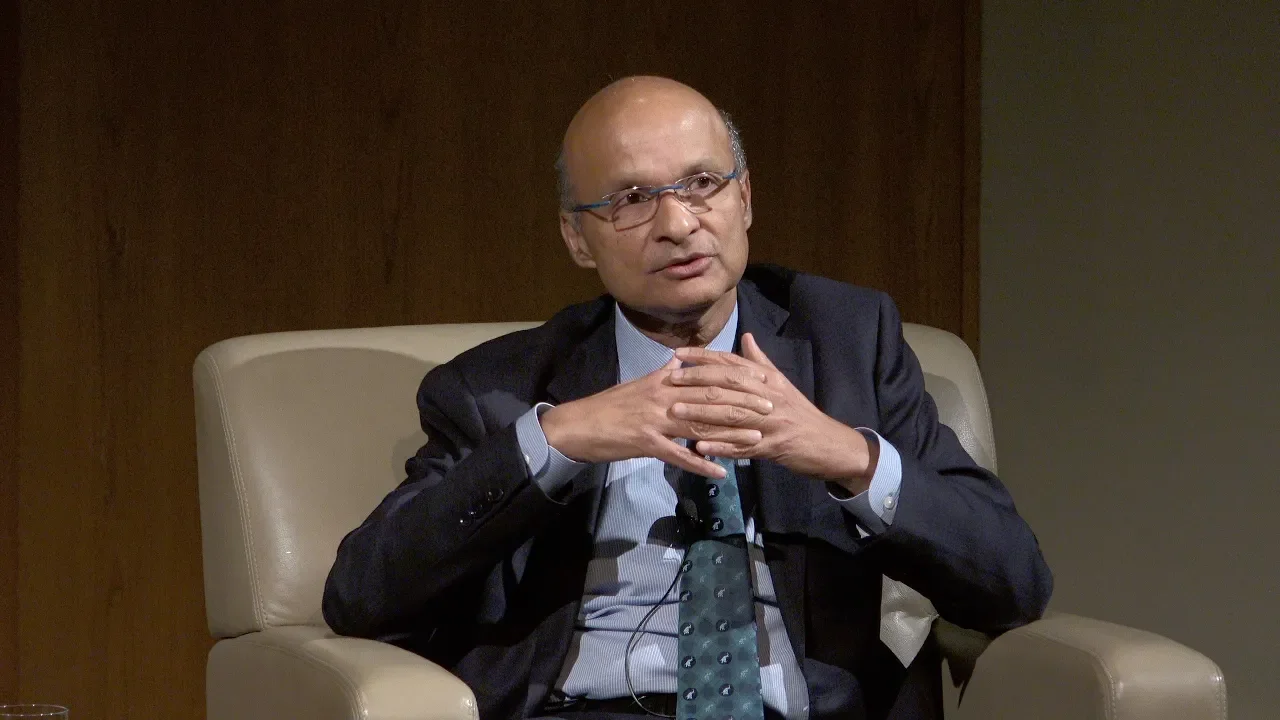
Duke University - The Fuqua School of Business · @FuquaSchOfBusiness
Words
9,071
Runtime
58:41
Speaking pace
155wpm
Reading time
38min
155 words per minute, below the 160 25th percentile of 349 measured videos. That distribution comes from the 349-video hook study.
Opening (first 30 seconds)
- Good evening, everyone. And welcome to a very exciting Distinguished Speakers Series event. It is my honor and privilege to introduce to you all Mr. Omar Ishrak, the chairman and CEO of Medtronic, the world's leading medical technology company. When Mr. Ishrak joined Medtronic in 2011, he followed a 16 year career at GE where he served as president and CEO of GE Healthcare Systems. When he joined Medtronic, he was actually only one of two outsiders
78 words, the words spoken in the first 30 seconds at 155 words per minute.
Free, no signup. See how the first 30 seconds hold attention, with rewrites.
Sentence shape
| Measure | This transcript |
|---|---|
| Sentences | 839 |
| Average words per sentence | 10.8 |
| Longest sentence | 46 words |
| Questions asked | 61 |
| Sentences containing a number | 18 |
Most used terms
Filler phrases
103 in total: actually 31 · like 24 · I mean 16 · kind of 16 · you know 10 · sort of 4 · literally 1 · right? 1.
A literal whole-word count of the same phrase list the Prepublish browser extension uses, so a phrase inside another word is not counted and a phrase used in its ordinary sense still is. It is a count and not a judgement.
Run the check on the words above: where attention is likely to drop, with a rewrite for each weak line. The free check shows the scores and the one issue costing the most.
What this transcript is
Every word below is the caption track YouTube publishes for this video, pulled from the video itself and reproduced unchanged. It is not Prepublish's writing, not a summary, and not a re-transcription: it is the video's own published captions. English captions, published by the channel, in the video’s original language. Source: the video on YouTube. A channel that would rather this page did not exist can ask for its removal through the contact page, and it is removed.
No Script X-ray for this video: YouTube shows a Most replayed graph only once a video has enough views.
- Good evening, everyone. And welcome to a very exciting Distinguished Speakers Series event. It is my honor and privilege to introduce to you all Mr. Omar Ishrak, the chairman and CEO of Medtronic, the world's leading medical technology company. When Mr. Ishrak joined Medtronic in 2011, he followed a 16 year career at GE where he served as president and CEO of GE Healthcare Systems. When he joined Medtronic, he was actually only one of two outsiders ever to become CEO of Medtronic.
So, it was an amazing feat. One of his most impressive accomplishments was the acquisition of Covidien. A $10 billion global manufacturer of surgical products and supplies. At that time, it was the largest medtech acquisition in the history of the industry. So, it was a pretty big deal. One of its amazing products that have come out under Mr. Ishrak's leadership include Micra, the world's smallest pacemaker. It's literally the size of a pill.
And the MiniMed 670G, the world's first artificial pancreas. Other than that, Mr. Ishrak has always been methodical and purposeful. Even in his younger days. During a break from doctoral studies at King's College in England, Mr. Ishrak decided to hitchhike across the US. But it wasn't just to see the sights. This man was on a mission. He had contacted every university with an electrical engineering department in the country with an ultrasound unit in hopes of speaking with professors about his thesis.
A copy of which he had in his backpack the whole time. It's the same ingenuity that's helped him lead Medtronic to amazing organic growth and market success. So, please, everyone, join me in welcome. Give a warm welcome to Mr. Omar Ishrak. (applause) - Well, first, thank you for that very kind introduction. - So, it's wonderful to have you here. And so, I thought I would start with focusing on this career journey you've had.
And you mentioned earlier today that you've been in three or four. Made three or four significant changes in terms of your career. As we think about the people in the audience, they're going to have to make choices about do they stay, do they go? What opportunities do they choose? And so, every time you made a decision to move to a new firm, what thought process did you go through that led you to make those choices? - Yeah, you know, I think it's three times I've moved in my whole career.
Now, I've grown within those companies. But I've shifted companies relatively few times. And the reasoning I went through each time was that, good or bad, I always had a sense of, a longer term sense of purpose as to what I wanted to accomplish. Which was not get to the next level of management. What difference did I want to make? And, if I felt that this opportunity would give me a better chance to achieve that, I made the move.
And I was very leery about the grass is always greener and all this kind of stuff. So, I thought through that very carefully. But that is what made me move. And, I can tell you, I did my PhD in electrical engineering and ultrasound technology for imaging. At that time, it wasn't necessarily medical imaging, but that's what I started to work in. And, for the first, I would say, 20 years of my working career or so, 15 to 20 years, my solitary goal was how do I make a difference in ultrasound?
That was my goal. How do I make more people use ultrasound for the right reasons? Because I was really fascinated by it and I enjoyed the technology. And so, every time I made a move, that was the question. And then, as I started to do more and more of that, it gradually shifted towards how do I make a difference in healthcare? A broader context. Which gives you more variables and more things to think about. But those were the types of questions that I asked myself.
In this new role, can I really achieve that better than where I'm at right now? And, if I can, then I moved. It was really as simple as that. - Did you ever hit a point where you thought, "I've derailed my upward trajectory. I've got myself off in a cul-de-sac. And, therefore, I'm not going to be able to fulfill my ambitions." - Not really. I mean, I don't know. (laughter) I don't think too hard. (laughter) Because the ambitions are so broad and it's not next year's ambition.
And, you know, you can't give up on the first problem that you face. Whatever it is. I've always. I guess I've always kind of gone back and tried to find what the issues were that were problems of that time when I faced any kind of adversity. And am I really approaching this in the right way? Are the fundamentals right? And, if they are, I stick to it and say, "Well, there must be a different way to solve the problem." I think a structured approach to this in your own mind helps a lot.
And a consistent thought process. Which, look, frankly, I didn't design it or do anything like that. Over time, it just evolved that way. I guess my. I think my engineering training and then using that in a PhD actually did help. Because you deal with fairly abstract. In a PhD, you got to do something that no one else has done. Whether it's important or not is secondary. But no one else has done. And you've got to not only demonstrate it empirically, at least in engineering, but you've got to write the theory.
And the analytical capabilities that one has to build in trying to do that, if you can then apply it to other fields, gives you good training. So, I think I was fortunate in that sense. I'm not saying everybody in the world has to do a PhD. But, in my case, that, I think, did help. - So, applying those skills, did you ever run into some tension between trying to make a difference, use your skills to make a difference in, over time, healthcare. - [Omar] And short term. - As opposed to making money? - I have a fundamental belief that value.
That, if you create value of some sort, that has money associated with it. If you don't create value, then the money is probably not real. It may seem real, but it's not sustainable. So, if the goal is, in the end, to create value, then the money will come. So, the real question that everyone struggles with is not so much whether I doubted whether you could make money with it or not. The real question is could you make it in the short term?
Because sometimes these things take time. And how do you balance short term priorities with long term priorities is a challenge that one always has to go through. And I think that's part of business. And, you know, as you do bigger and bigger businesses, you sort of learn more techniques how to do that. But that is essential. You cannot be either only a short term. If you're running a big business with the goal to be enduring and one that always survives, you've got to always look at both short term and long term.
Just long term alone is not enough. You've got investors who want results. And, at the same time, if you don't think of long term, you can get disrupted. So, you've got to do both. And, I think, the way in which we do both depends on the particular circumstances. Depends on the particular business. But you just cannot run a business without thinking of both all the time. - So, in addition to balancing short term and long term, you've talked about Medtronic's forth tenet, which is fair profits.
Can you elaborate? - A little bit on that, yeah. Well, if you allow me, let me actually run through some of the other tenets. Because it's good to put that in perspective. Because I do think that the mission of Medtronic, which was written in 1960 and was written by our founder, who actually just recently passed away a few weeks ago. It was written by him and his management team when the company was barely less than $1 million in sales with maybe a few hundred employees at most.
Not making money. And the company had just borrowed money to grow. And the idea here was to use that money. His idea of writing a mission was to make sure that people who ran the company used the money that the company had in a responsible way. And he wanted to write that down. And that's where the mission of Medtronic came from. And, you know, the first tenet, which, in itself, is another one that. I think they're all profound.
But there are a few that really stick out. The first one also sticks out, because the first one says that we're a technology company. In biomedical engineering. Biomedical engineering technology. Which makes it fairly specific. But we're a technology company whose goal is to alleviate pain, restore health, or extend life in people around the world. What that essentially means is that we're a technology company with a charter to change outcomes.
And I think that's important to realize. Because there are lots of companies who, like a hospital, who alleviate pain, restore health, and extend life. But they're not technology. And there's technology companies out there who will be satisfied by selling the technology and let someone else move it to an outcome. And whether it actually happens or not is secondary. Medtronic does both. And there's all kinds of strategic decisions that result from that.
But it's also true that, in the end, the value in healthcare is indisputable. If you actually change an outcome. If you actually alleviate pain, restore health, and extend life, I think anybody anywhere will find a way to pay for that. And there's a clear value associated to that which is not in dispute. And I think that sets. That is one piece. That that quest to improve lives is something that never goes away. Even 100 years from now. 200 years from now.
It will always be there. And engineering, in the same way technology, is going to progress. And our knowledge of the human body is only going to increase. We still know actually very little about it. And, when you put all of this together, you get a statement which really says that you're an enduring growth company. And I think that's an important thing to fall back on and not drift in some way. Now, there are other tenets.
One which says the importance of focusing and scaling and not trying too many things. Then there's a tenet which talks about our values of honesty and integrity, dedication, service, quality of our products. I mean, these are pretty standard. We come to the fourth tenet, which is the one that we talk about the fair profit. And the reason that is, I think, a very striking statement. Because let me take you back to where the company was when this mission was written.
Less than $1 million of sales. Hardly making money. A few hundred employees. In 1960. Okay, and you're going to write a statement about profit so that you can reuse that money to reinvest in other things. Why was the word fair used? And, if you're not making money, I think make a profit is a pretty good goal. Or, short of that, at that point, you're probably going to say "I'm going to maximize my profit." Which is a more natural thing to put than make a fair profit.
And I don't know if Earl, who's our founder, actually thought about it this way. But, in my sort of interpretation of that, that is a very profound statement. Because what it says is that, if you charge a fair price and you can only succeed if your customer succeed. Because, if your customers don't succeed, you don't have any customers. And, for your customers to succeed, you have to charge them a price which would be of value of them so that they can make money.
And, therefore, I think the word fair has got enormous implications. Now, if you try to make that into a definable business process, then it's very easy to sell this philosophically. If you really want to translate that into something that's actionable, you have to start to quantify price and you have to start to quantify value. And, once you start to do that, you have to understand your customer's operation properly.
And you're going to understand how they make money. And, in our world, in the end, that becomes how the healthcare system makes money. Because the customer's worried about their customers. And so, it leads you very quickly to a point where we come to the conclusion that, unless we do things that is a line of sight that creates value in healthcare, over the long term, the company will have a problem. And I think this fourth tenet defines it.
And there were times when you could question where, in a fairly coincidental fashion, we could be exploiting regulation in a way that we just make more money. And we need to be careful of those. Or overtreat. Sell products because people want to buy them whether it's useful or not. But we make money. And you've got to be very careful about things like that. So, I think it does give certain guidelines to the company that's extremely important. - So, speaking of value, there's been this push towards value-based care.
And the thinking that maybe this is finally the way to bend the cost curve. And you've embraced this as a company. And you've been willing to price based on value. So, tell me what've been some of the challenges in moving to that model in a world where the incentives for the payers and the providers may not be completely aligned depending on whether they're value-based or fee-for-service-based? - Well, I'll start by saying we've only moved to that model in very, very few instances.
Because of all the things you've stated. But I'll tell you also that we've learned a lot about what it takes and what's important and how you do it and who your partners have to be. Our desire to move to that state resides in the two tenets that I talked about. Our mission states that we have to change outcomes and that we have to make a fair profit. If you put the two things together, value-based healthcare becomes obvious.
Because value is created when you change outcomes. Our mission states you can change outcomes at the lowest possible cost. And fair profit means you do it so that it's done in the lowest possible cost. And so, value-based healthcare is inherent in this company. And, in today's world, in the end, it's inherent in all of healthcare. Now, to move towards value-based healthcare, to operationalize it, is a whole new suite of challenges.
And, over the past many years, we've learned that, to operationalize value-based healthcare, one has to think about healthcare in a granular fashion. Which it is. Because a treatment for a cardiac problem is. An expertise that's required for a cardiac problem is completely different from orthopedics or a sprain or some other problem. In fact, even in cardiology, there's a big difference between what is called interventional cardiology, which looks at the vasculature, or electrophysiology, which looks at the electrical system.
Those two disciplines are completely different. And so, healthcare is granular. People are different. You know, a treatment that may apply to a certain person with the same condition may not necessarily apply in the same way to another person. And so, it is a granular subject. So, you've got to understand that. But, if you're going to talk about value-based healthcare. And value-based healthcare really means being paid for increasing the outcome-over-cost ratio.
So, in other words, you either improve the outcome or you lower the cost or you keep the outcome the same and lower the cost. That's how you create value. And, if you're going to create a business model around that, well, you've got to start with. The first question is can you actually define the outcome? What is the outcome? That's the first question. And in a clear fashion on which you'll actually get paid for. Not some fuzzy thing like people filling forms out.
It's got to be measurable. Second is remember you're getting paid for an improvement in outcome. So, what do you have to do? You have to baseline the current state. So, can you retrospectively baseline the outcome? Both in terms of the outcome itself and the cost required to reach that outcome in a retrospective basis. And then can you monitor prospectively the improvement? Only if you can do that you have the basis of a model.
So, you got to start with that. Can you define the outcome? Can you measure it? And in an appropriate way so you can see the improvement? The next thing you've got to do is you've got to be granular about who the patients are. Because, even. Like I said earlier, even for a very specific treatment, depending on the condition of a patient, you may get a different outcome. You have cardiac surgery on someone who's 80 years old or 60 years old with comorbidities and all the rest, you expect something different and the cost will be different than doing cardiac surgery who's got a congenital problem or something and is 30 years old.
Same cardiac surgery. But the expected outcome's very different. You've got less complications and other stuff. So, the cost would be different. So, understanding of cohorts is fundamental to value-based healthcare. Who do you treat? And who would you overtreat or undertreat? And what is the value of that? So, understanding of cohorts and understanding of outcomes in a very quantitative fashion is important for value-based healthcare.
The third thing that takes you to a business model is how many variables are there? If we have a technology that, when applied to a given cohort, has a guaranteed outcome and there's no other variables. That means you put the technology in and you get the result. That's the easiest model. But, in healthcare, it's not that simple. Usually a doctor puts it in. Sometimes a patient needs to adhere to some medication. Sometimes discharge instructions are rewritten correctly.
There's all kinds of other variables that come into play. And, if I'm going to be responsible for an outcome and get paid for it and there's some doctor who makes a mistake, then I'm not going to pay for that. So, the more variables you have, the more complicated the business model becomes. Solvable, but more complicated. So, we started with things where there are few variables. So, that's our approach to value-based healthcare.
It is a long journey. I can go into this and talk for the next hour about different trade offs. Which probably would be too much. But all I'm saying here is that there's certain principles to operationalizing. And we're just very early in this journey. But, eventually, stakeholders will change. This is a multi-stakeholder journey. It's not just us. - So, the life blood of Medtronic is innovation. And that innovation requires quite a bit of R and D spending and fairly long lead times in developing these new products.
With this shift to value-based care, do you worry that that puts your basic innovation model at risk in terms of your ability to recapture those investments? - Not really. Because, in many ways, all our products are not necessarily long cycle. We have short cycle products, too, where we do incremental innovation. And, in many ways, a true move to value-based healthcare where we actually get paid for the incremental innovation, depending on what value you create, is actually better for us.
Because, today, that's arbitrary. Today, there's no increase in reimbursement for an incremental innovation. So, the doctor than has to verbally prove to the administrator that, "Look, this thing is actually doing something." And the administrator's asking, "Well, if there's no increase in reimbursement and it's going to cost me more money, why should I do it?" And, believe it or not, there are conversations that people have where it says that, "So, this is going to prevent rehospitalization?
Well, that's going to cut my revenue, not increase it. So, why should I do it?" In a value-based healthcare world, that problem goes away. Because you get paid for something that the hospital and the healthcare system actually benefits from financially. And so, we can price adequately straight away. And, if you move to that place where innovation which is not paid for today or paid for but it's highly qualitative on how well you can make your story and what kind of relationship there is and this kind of stuff.
Instead, if it's more quantitative, then, eventually, we'll all move to a state where the quality of our products go up. The value of our products go up. Because you're getting clearly paid for that. I think that, in itself, actually is a benefit to us. And then, the longer term programs where we invent new markets. I mean, there, we go through clinical trials. We have evidence. And we actually get a reimbursement for it.
Because you're creating brand new markets and you're making big differences to people who would otherwise die and are now living for 10 years. Something like that easily works in a value-based healthcare world. It actually works in the present system, too. I think a value-based healthcare approach to things that are not that well defined today is where it has the maximum benefit. The long term programs we're going to do anyway.
And then they've got long term trajectories. Today, we're fighting a battle where. And we're big enough that we have enough of these coming out. And they're a big financial benefit for us for all the right reasons. But we have a drag on our core business if you don't have continuing innovation in that core business which doesn't get rewarded. So, value-based healthcare will stabilize that core business. And, perhaps, increase it.
Because the engineering that we do gets more efficiently rewarded because we've quantified the value. And, if that goes on, then it gives us actually more headroom to work on the real growth areas, which are, in many ways, from that perspective, easier to grow. Of course, a lot more difficult from a technical perspective, because you're inventing a new thing and creating a new market. But, once you're there, the value's a little easier to portray, if you like. - So, the firms that are being celebrated for their level of innovation these days are the tech firms.
And you're a tech firm. But you're a medtech firm. So, what do you think really distinguishes medtech from the tech firms that we see in Silicon Valley? - Well, the difference is, in medtech, you got to make a difference to people's health in a directed fashion. It's a very clear objective. And you cannot make a mistake. Because, if you make a mistake, someone's going to die. That's not acceptable for anybody. Not us.
Not the patient. Not the healthcare system. Nobody wants that. So, the consequences of a mistake are much greater. And so, our ability to prove things and stand by them is extremely important. And we have to get regulatory approval. And our payment mechanisms are different. We get paid by payers. Either private payers or the government or whoever. But the payers. In the tech world, consumers pay. The consumers. If you buy something and you don't like it, typically, you just say too bad.
Sometimes return it. But usually you don't. You just kind of live with it. In our world, if you don't like it, there are consequences. If a patient doesn't get better. I mean, to some degree, there are flaws in our fee-for-service system where, actually, there are no consequences. But it's costing the healthcare system money by doing that. But I think that's the biggest difference. The regulation for the right reasons, the results and consequences of a mistake, and the preciseness of the value proposition are key differences.
And, therefore, the use of technology tends to be what I call more structured. We do clinical trials. We're structured. We have lots of data when you do clinical trials. We understand statistics. But it's in a very structured way. What are the. Where's this data coming from? What patient is it on? How do you use it? It's all structured. Tech companies tend to deal with unstructured data and they make assumptions with stuff that just comes in.
And so, it is different. It is different. And, in some ways, they can move faster. Because you don't have the burden, if you'd like, of proving everything. But there's things that we can learn from them. And we're maybe too slow. And there's things we can learn from them which can be additive to what we're doing. You know, behavioral data coupled with clinical data might help us identify diseases more easily than the way we do it today. - So, this device I have, my Apple Watch, arguably is medtech.
Are you worried about a company like Apple? Where they can take advantage of going direct to consumers and compiling massive amounts of data and using big data science techniques to learn more about potential applications? You see them as a threat or a potential collaborator? - I think much more of a collaborator than a threat, because they'd have to find ways to, in a definable way, change an outcome. Not just alert a problem.
Which may or may not result in an improved outcome. So, we can use that capability. Be more broad based in our selection of cohorts because of that. And then actually do something about it that we can stand up for and, if not guarantee, kind of at least show credible evidence saying it works. I think to jump between one environment to another is quite a change. We are not a consumer company. We need to understand consumers.
We need to understand patients over time and know how to manage them at the right pace so they stay better. But we're not going to go around. We don't know anything about advertising to patients. And that's not our skill set. They know how to do that. Tech companies know. Get orders of magnitude more data than we do. But it's unstructured. It's behavioral. And they've learned, through artificial intelligence, to use them.
And so, I think they will be much more useful in monitoring certain conditions. And, when allied to clinical data and clinical structures, we can probably make a difference. So, that's why I'd argue that it's probably more collaborative. Now, tech companies are bigger than us. They've got. We've got a lot of firepower. But they've got even more firepower. And they could buy a medtech company and find a way to integrate it and do what I'm saying instead of collaboration by owning.
Then they do become a threat. And we'll find another tech company who's not doing that and figure out how to work with them. But I don't think they will organically learn what we are doing. It has to be. They could do it. But it's a major change. - Is it possible that. I mean, in your world, a lot of cost is associated with clinical trials. Is it possible that, with the use of unstructured data, that you can reduce the cost of these clinical trials? - Yes, almost certainly, we can do that.
We can find cohorts more easily. We can engage. One of the biggest costs of clinical trial, one of the biggest time in clinical trial, is patient enrollment. To identify patients in a certain category and find them and enroll them. I'm certain that using behavioral data and the analytic capabilities that tech companies have, they can probably find the right patients for enrollment in way faster time than we can. First, they can reach more people.
Second, through their behavior, they can narrow down a likely suite of candidates much more quickly than we can by just going to a hospital and asking doctors and primary care physicians who they know. Manually, essentially. And here they, through a massive amount of data. Like it or not. Knowing what emails they're writing and what they're doing and where they are. I mean, I'm sure you can figure out from that, given a specific type of person to find, their capability to do that is much greater than ours.
So, that's of great help. So, that alone, patient recruitment alone can help with clinical trials. Outcome measurements, followup time can be quicker. So, certainly. I mean, that's almost one of the first things that we could do. I'm going beyond that. I'm going, just in management of patients after clinical trials. I'll give you an easy example. People have. There's something called an aortic aneurism. In your aorta, if you get an aneurism, that's not a good thing.
Now, you can block that aneurism and you can be cured. And you can do that with certain standardized procedures. If you don't find the aneurism and it bursts, that's a serious problem. And you have a high mortality rate if that happens. Because, by the time you show up to the hospital, you're bleeding. Internal bleeding. All kinds of stuff. And it's very risky thing. You don't want to get that. And yet. So you have to do screening on asymptomatic patients as to who has a risk of aneurysms.
And go and do something about it and monitor them in some way. And there are certain procedures outlined. If you're a smoker. If you're over 65. Then you should get aortic screening through ultrasound. But that's a recommendation. And that's all it is. It depends on people going to their primary care office. Their doctor knowing about that. Actually doing the scanning. And, if they find it, know the right thing and then report it.
You have to do all those things. Which, on paper, can be done. But to make sure that that actually is done by people at large. Not to speak of systems where the healthcare systems don't even exist properly. That's quite a challenge. If, through data, you could find that people who've had aneurysms blow up have had certain behaviors. Have been to the doctor more than twice or have certain things. Then I don't know what the answers are.
But I can imagine that, through their view of statistics, looking at behavior for a certain pool of patients, they might be able to find that, "Look, if you do this, this, and this, this pool has a very high likelihood of this happening." Even though no one's done any scanning or anything. The likelihood that this can happen. Then what are they? And can you do something about it? I mean, that's just one. There are other examples.
And this may or may not be possible. I don't know. I'm just thinking this up as an example. Because it's one that we've thought about. There are many other things that can be applied. - I'm going to shift the conversation to purpose and values. And you said something to me earlier that was very interesting. Which is people come together at work where, under normal circumstances, they might be enemies. That they show up and work together.
What do you think makes that possible in a work environment that seems so challenging in society? - Well, it's a common goal. It's a common goal. And then the specific example is, as a global company, we have people from. And we're not the only ones. Almost any global company. People from all kinds of ethnicities. You name it. Religions and whatnot. Traditionally enemies. Working together with no problems at all. Absolutely zero issues.
As friends. Overnight. How does that happen? Because they share a common goal. They'll get rewarded for the same thing. And, when you get rewarded for the same thing, you work with each other. And that common goal is what drives this collaboration independent of who you are. You've got competition. Yeah, you've got somebody else trying to fulfill the same goal. That's your competition. It's not your ethnicity. It's another company trying to do the same thing.
Probably with the same blend of people. Actually, if you can find a bigger blend, you probably have a bigger chance, because you have more perspectives. And so, I think that is what the fundamental difference is. In a sort of nationalistic society where a society gets a benefit for just making that country more. Or that ethnic group stronger at the expense of somebody else and that's your competition, I can imagine all kinds of fights starting.
But, in our world, it isn't that. It's a common goal which is not where you come from or who you are or what race you are. It's what problem you're trying to solve. And I do think that that. If you could harmonize that, that would solve a lot of problems. - So, you're a global citizen. And you believe in globalism. Tell me some of the challenges that you face as a consequence of the rise of nationalism here and in other parts of the world. - Well, actually, the biggest challenge is that the rules keep changing as a result of that.
And, you know, frankly, we're not too idealistic about this kind of stuff. I mean, I'm not going to live in a world where there aren't any countries and borders. There are going to be. And there's going to be competition between borders. You've just got to accept that. The fact is that we can hire people to make them work together. But I'm not going to change the world by doing that. At least we can't. We just sort of do our own thing.
So, we're going to live in a world where there is nationalism. Either extreme or not. It doesn't matter. There is nationalism. And, for us, if the rules are clear, we can work towards that. Whatever they are. Just tell me the rules and keep them the same. We'll be fine. We'll figure it out. Now, if the rules change, that makes it very difficult. Like, one moment, global manufacturing is of value. The next moment, you penalize everything.
And you can't shift your factories from one place to another overnight. And so, it takes a long time to establish that. So, consistent regulation helps us actually. Now, given that, given the fact that that may or may not always be the case, then we look towards certain facts. And, in healthcare, I'll point to a couple. First, it's just a fact that business in healthcare is dependent on the size of the population. The more the people, the bigger your business is going to be.
Maybe not today, but eventually. And so, for a US-based or US healthcare company, going outside the US and understanding those markets is critical. Because more people live outside the US than in the US. And the bigger countries, in the end, will have the biggest healthcare markets. So, I mean, that's a recognition that a healthcare company just has to have. If you want to be global. In the long term, your markets outside.
Another country, a country like China, is going to be the biggest market. And you better know a Chinese. There'll be more Chinese physicians than any other kind of physician in the next 20 years. And, if you don't know those Chinese physicians, then how are you going to be successful? And so, just that fact that you have to understand that. And the other is realizing that there's going to be conflict. There's going to be conflict with rising powers.
China's going to be a threat of some sort. And we've got to live in that world. And we've got to win in China. And I know there'll be policies that are going to try to undermine them in some way. We've got to figure out how to live within that. And there are things that we think about. Like doing a lot of localization in China. And not taking from the US. But for China itself. We wouldn't do localization in a small country very easily.
Although, in healthcare, even in a small country, if you reach real penetration, you've got a fairly big market. But China's the extreme end of that. So, you got to think through things like that. In a world that's. You just got to be pragmatic and principled at the same time. And kind of work your way through that. - So, I'm going to ask you one last question. And then I'm going to turn it over to the audience to ask questions.
Which is, in your introduction, the acquisition of Covidien was mentioned. And so, did you get caught up in this debate over globalism versus nationalism with the tax inversion that was a part of the Covidien acquisition? - I don't know if it was framed as globalism versus nationalism at that time. It was framed as "You're a US company. You're not patriotic because you're moving somewhere else." That was the kind of emotional storyline.
And sure we got caught up in that. And we thought about that a lot. In the end, the reason we did the inversion was for the benefit of the US. At least, as the tax regulations stood at that time. Because what inversion did was. Actually, the tax regulations pertaining to what we'd call legacy Medtronic didn't change. Didn't change at all. It was the same. All we did was made sure that the tax regulations that applied to the company that we were buying didn't change in a negative way.
A negative way meaning that the cash that they were generating while, before the acquisition, could be used anywhere, including the US, without paying any further taxes. If you'd incorporated them in the US, we wouldn't have access to that case anymore. And, if we didn't have access to that cash, then we wouldn't be paying any more taxes on it, because nobody was doing that. It would just be sitting outside the US. And the only ones who would benefit from this would be some banks who were using their money.
And we wouldn't be able to use that cash. And we certainly wouldn't be able to use it in the US. And so, we felt that that just didn't make any sense. And, instead, if we took that cash and invested it in the US in a more aggressive fashion than what Covidien was originally doing, at least, under those regulations, it would only benefit the US. You can say what you want about tax rules and patriotism and all this other stuff.
But, if I look at am I helping the US or not, we could clearly point to the fact that we were. And we knew that this was going to be a subject of controversy. So, we said straight up front that we made a commitment. That we were going to take. We committed to investing so much incremental money in the US over a 10 year period. That we would create so many extra jobs in Minnesota because of this. And we made that commitment.
And we had to. And it wasn't made up. It was real. And we followed through on that. We're still in the journey on doing that. But we followed through on that. And we told that same story to everybody. Whether they supported us or didn't support us. Because that's what it was. That was the strategy. There was no other paintbrush around it or some kind of tweaking or nothing. That's what it was. And I said it as directly as I'm just telling you right now to everybody.
And it didn't always. It wasn't always received with applause. But the story was consistent. And, at least in our own principles, we felt at that time and still feel that we did the right thing. For our employees. For our customers. For the US at that point. And for the overall company. - Alright, I'm going to turn it over to the audience. Questions. - [Man] Thank you so much for being with us today. I got a question about your experiences when you were young.
Are there any defining life moments you had when you were in Bangladesh that shaped your personality and the strategies that you employed when you took over at Medtronic? - You mean when I was growing up? Is that what you mean? You know, not really. (laughter) I wasn't. I was just growing up as a kid. I didn't think too much about healthcare or anything. I just grew up. (laughter) I think I have a sense of belonging still.
And I feel that, if I can, I'll make a difference there with what I know and what I can do today. But I can't really honestly say that looking at the poverty around me made me so principled that I wanted to do something about it. I didn't understand any of that at that time. I was just going to school and playing and doing whatever and saw things around me and thought that that was the world. So, that's the honest answer.
It's not as fabled as it could be. But that is the honest answer. Yep. To that point, it gave me other experiences which have been of benefit. Like learning how to adjust in different societies. There were other things that I learned. That is true. That growing up. I went to an English medium school. So, I learned English well. - [Bill] Did you mean to say you learned English good? (laughter) - So, I. Also, we moved around quite a bit growing up.
From place to place. So, I learned how to adjust. So, there are things like that which I learned certainly. And then, when I moved to England when I was in my teens and I spoke English. But, culturally, it wasn't quite the same. I fit in. But you still learn different things. So, moving around has taught me a lot. But I'd say just a pure growing up there and looking at poverty and all that. I'm not sure that, at that time, that had a big impact.
Yeah, please, go ahead. (bad sound quality) - [Man] My question is you appear incredibly humble in your leadership style. How do you cultivate that humility? And how do you propagate your humility and modesty through your leadership at Medtronic? - Well, I don't know. I mean, look, I think Asians in general are taught to be humble. They're just taught. You know, you kind of respect your elders. And that's a core value.
It just is. And I think Asians in the audience will agree with that. That that's a core value that your parents teach you. And just don't lose it. I don't know. I don't think too much about it. I just kind of do what I think is right. I think doing what you think is right at all times is important. And that gives you the balance between. If you're so humble that you never ask for anything, that's not good, either. Or you never stand up for anything because you're too intimidated.
I mean, that's not the same thing. So, you've got to have your principles and you've got to stand up for what you believe in. And you're going to push for what you believe in. And know what's right. And stay on that. But you don't need to brag about everything, as well. You can take credit. But you can be reasonable about it. I think the other thing is just, in healthcare, you learn very quickly is just how little we know and how little we can just do by ourselves.
I think acknowledging that. I mean, in healthcare, it really is something that, if you really think about it. And, at any time, if any of you have ever really tried to understand how the human body works, even the simplest things, it's so mind boggling how it works and the genius of however it evolved. And how much we have to learn just tells you how little we know. And so, I think it's just experiences like that which teach you that there's a lot more around you than what you are.
And just remember those things. And I do think that it isn't. You just be yourself. - [Man] So, you spoke a lot about the changes that you've made have been very impact-driven working towards your mission. But you also mentioned that you run a public company with shareholders. So, you must face these decisions every day balancing impact and business. And how do you go about that? - It's not easy. It's not easy. And I'll tell you things like value-based healthcare, actually, our long term initiatives, I know are important.
And yet I can't just say that we'll just do value-based healthcare. Because the current business model in healthcare doesn't support it. And so, that is the kind of thing that leads you to think about that. And that's why we actually came to the conclusion that we did. How to operationalize value-based healthcare and make it count in today's world. And so, we came to that analytical framework about outcomes and cohorts and things that don't have variables.
So, I think you've got to. You cannot wave away or minimize the importance and the discipline that's required to meet short term results. I mean, there are times when no one likes it. But there is a certain discipline which forces you to be analytical about this stuff. And then, in terms of long term investment, start analyzing. What are the risk levels? If you're going to make an investment between three things and you can only do one of the three, because that's all you can afford, how will you choose the right one?
How do you quantify risk levels between technology risk, clinical risk, and market risk? And how do you know where you are on each and how much of an impact each will have? So, I think just waving your hand at this stuff or complaining about it is not the right approach. It's really kind of thinking through these things. And short term and long term is a matter of when you get the result and how certain you are of the result and over what time period.
And I think doing real planning around that which is quantitative and grounded is what the trick here is. That long term work is not just long term. That a certain accountability associated with it, which may be different from short term, because there are more unknowns. That doesn't there isn't accountability. That means you've got to quantify the unknowns. You've got to frame the unknowns. You've got to retire the risks.
And, when you retire the risks, things change. Or risks get bigger. That forces you to drop stuff. So, I think analytical framework around strategic planning. Which forces you to quantify what you're investing in. And when you expect the result and the risk level of each is extremely important in running a business that has got both short term. And most businesses have both short term and long term. But to approach that in a thoughtful, systematic, consistent way, and quantitative, as well, I think is very important.
Otherwise, it's very easy to blame stuff. But, in the end, you have to do both. - Okay, we have time for one more question. - [Man] I don't want to hog the question. Medtronic is a very large company. How do you think about growth? And how fast would be too fast to grow a large company? Do you have enough internal opportunities or will it continue to require larger outside merger activity to get to wherever you want to get to? - Well, the beauty of healthcare, like I said right in the beginning, is that, in the end, healthcare is a growth industry.
Because the need is always going to be there. Like I said earlier, the quest to improve clinical outcomes is never going to go away. And our ability to use technology to improve that is never going to go away. And, if you do those two things, you're going to create value. And, on top of that, you've got an access problem around the world which is also pretty big. So, in the end, healthcare is a growth opportunity. It's a matter of how you focus and how you select the growth opportunities at the right time, which also is a bit of the other question.
Now, there's certain other principles. First, the way I phrase that, one might almost think that you can grow a lot organically. It's putting these pieces together and executing. Understanding what the risk levels are and doing enough of them so that you can balance your risks. And, from that, with diversification, get a growth level that's reasonable. And, if you get better and better at that, going to the right markets at the right time and have enough of a spread of high impact areas, you can inch your growth rate up over time.
I think the importance of inorganic in our world is really two things. The most important piece of inorganic is that one has to realize that, no matter how big you are and how smart you think you are, you're not going to invent everything. And you're not going to be right about everything. Especially in technology and innovation where you can have multiple approaches. Like I just mentioned, there's risk levels involved.
So, once you recognize that, you've got to learn how to acquire, as well. Now, the earlier you acquire, the better it is. But it's also the high risk. And so, acquisitions have to play a role in a company which has the firepower to do the acquisitions. Which we do. And so, I've got no doubt that this company can and should be a growth company. Growth at a certain level. And, if we're not, then we're failing in our own strategies because we're not approaching areas which obviously have growth.
We're either not inventing the right things or we're not in the right markets or we're not tying the two together well enough. So, it's our responsibility to grow. Because the opportunity is there. And we've got enough degrees of freedom to be able to do that. In many ways, we've got too many. Because you can make too many wrong choices. You got to learn how to make the right choices. And then inorganic is an additional area through which you can either supplement your growth or you can cover risk.
Both cases. So, that's the way we think about it. That the size. I mean, look, in the last. Through this acquisition process of Covidien, which is a big acquisition. Which doesn't happen often. I mean, that happens rarely. But we went from a company which was $15 billion growing at about 5% to a company which is $30 billion also growing at actually more than 5%. So, that says that we just doubled the size of our company.
We kept the growth rate the same. Because we went after parallel growth markets. And increased our margins at the same time. So, in the end, the scale helped us do things more efficiently. And, because we thought carefully about where we are growing, not cannibalizing each other, we actually kept the growth rates the same and doubled the size of the company. So, if I can do that between 15 and 30, we can do it between 30 and 60 and so on.
There's no fundamental reason why not. Especially in healthcare. Because there's no end to this market. I don't see it maturing. No one's going to tell me that, at some point, they'll say, "Okay, I've lived long enough and that's it." (laughter) Everyone's going to want to live a little longer however old it is. And no one's going to say that going to a hospital and going through this pain and then I always have to suffer that.
At one time, people had surgeries without anesthetic. You can't imagine it today. But people did that. And, today, we don't even think about it. Maybe soon, instead of open surgeries, you only make a little dot. And we'll think cutting someone's stomach open is barbaric. Like we think of doing surgery without anesthesia today. Maybe 100 years from now, in short, people think that cutting someone open is probably. "What were they thinking?
How could people live with that?" So, that's where healthcare is. In my view, healthcare is a permanent growth opportunity. And it's up to us to make sure that we go in the right areas at the right pace by using analytical methods to be able to execute on that. And all that stuff's easier said than done. But I think it's all possible. - [Vincent] Thank you so much, Mr. Ishrak. Please give a round of applause for him. - Thank you.
Thank you very much. (applause)
The words are the caption track's own and nothing is reworded or re-transcribed. Paragraph breaks are placed between sentences so the text reads as prose.
Free tools for your own script: paste a draft and see where it stands before you record it.
Paste your draft and see where viewers are likely to drop off, with a rewrite for each weak line.
Paste the first 30 seconds of your own draft for a hook score and rewrites.
Check your draft against YouTube's advertiser-friendly guidelines before you record it.
Read this channel's public videos and transcripts, and download a writing brief for it.