Getting the transcript
Reading the captions from YouTube. A video nobody has opened here before takes 10 to 30 seconds; this page fills in on its own.
Getting the transcript
Reading the captions from YouTube. A video nobody has opened here before takes 10 to 30 seconds; this page fills in on its own.
CNBC · @CNBC
Words
680
Runtime
4:26
Speaking pace
153wpm
Reading time
3min
153 words per minute, below the 160 25th percentile of 349 measured videos. That distribution comes from the 349-video hook study.
Opening (first 30 seconds)
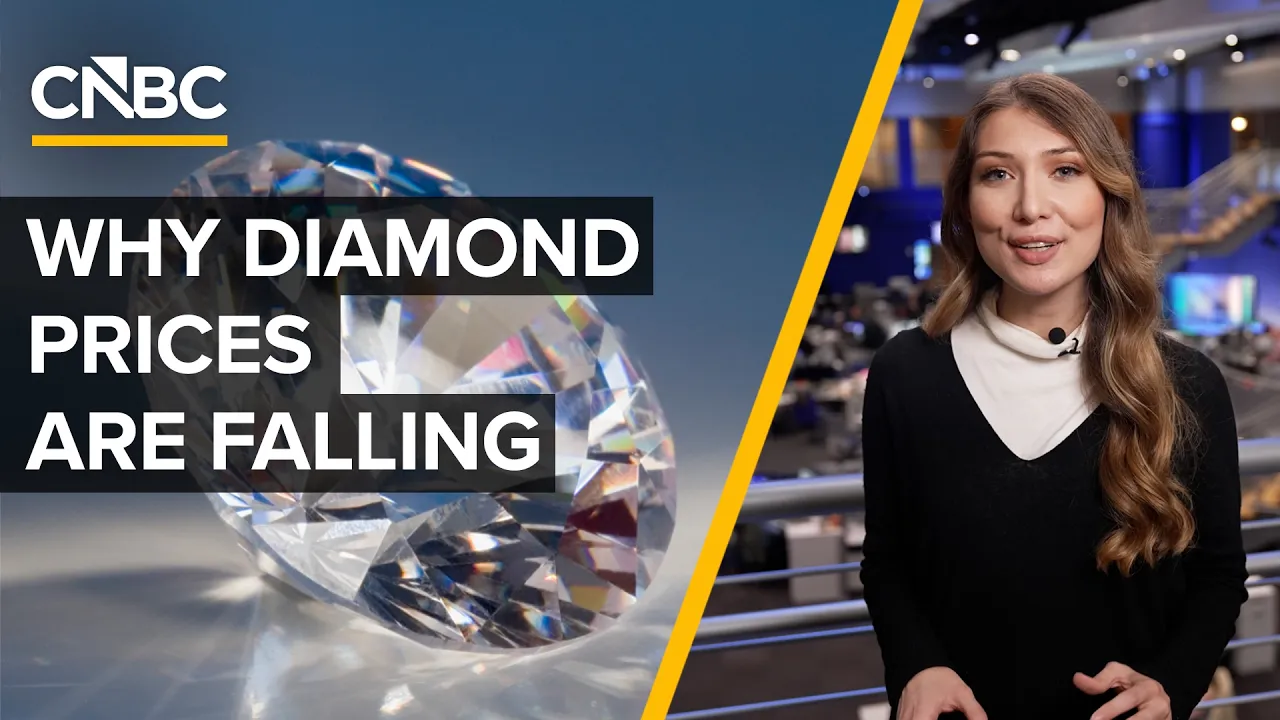
The price of natural diamonds has plunged roughly 60% in five years, falling from an all time high of about $10,000 for a one carat diamond in March 2022. The main culprit a boom in lab grown alternatives. Entering the market at a fraction of the cost, man-made diamonds have surged in popularity over the last few years. While buyers save thousands of dollars. The shift is changing the fabric of the traditional diamond market and raising
77 words, the words spoken in the first 30 seconds at 153 words per minute.
Free, no signup. See how the first 30 seconds hold attention, with rewrites.
Sentence shape
| Measure | This transcript |
|---|---|
| Sentences | 50 |
| Average words per sentence | 13.6 |
| Longest sentence | 33 words |
| Questions asked | 4 |
| Sentences containing a number | 12 |
Most used terms
Filler phrases
7 in total: you know 4 · right? 2 · like 1.
A literal whole-word count of the same phrase list the Prepublish browser extension uses, so a phrase inside another word is not counted and a phrase used in its ordinary sense still is. It is a count and not a judgement.
Run the check on the words above: where attention is likely to drop, with a rewrite for each weak line. The free check shows the scores and the one issue costing the most.
What this transcript is
Every word below is the caption track YouTube publishes for this video, pulled from the video itself and reproduced unchanged. It is not Prepublish's writing, not a summary, and not a re-transcription: it is the video's own published captions. English captions, published by the channel, in the video’s original language. Source: the video on YouTube. A channel that would rather this page did not exist can ask for its removal through the contact page, and it is removed.
No Script X-ray for this video: YouTube shows a Most replayed graph only once a video has enough views.
The price of natural diamonds has plunged roughly 60% in five years, falling from an all time high of about $10,000 for a one carat diamond in March 2022. The main culprit a boom in lab grown alternatives. Entering the market at a fraction of the cost, man-made diamonds have surged in popularity over the last few years. While buyers save thousands of dollars. The shift is changing the fabric of the traditional diamond market and raising questions about the future of the centuries old industry.
Lab-grown diamonds are created by placing small diamond seeds into a vacuum chamber with carbon rich gases. Under controlled heat and pressure, t he seed grows layer by layer before being cut and polished. They look just like natural diamonds and have the same chemical and physical properties. But because they can be produced in unlimited quantities, lab-grown stones sell for far less than natural diamonds. This price difference has driven an enormous shift in consumer habits.
In 2026, lab-grown stones, including diamonds, accounted for 61% of all U.S. engagement ring sales. That's a 239% increase since 2020. A diamond it's a carbon precious stone - scarcity. It's a rare stone. Now, this is a product that is produced in a factory. There's unlimited supply. Retailers have noticed. Pandora, a Danish retail jeweler with stores in more than 100 countries, completely stopped using mined diamonds in 2021, pivoting exclusively to 100% lab grown stones.
We see today when they stand at around 60 or 70% of engagement rings are synthetic diamonds, not natural diamonds. Beyond the price tag, lab-grown diamonds have other benefits, too. A one carat lab-grown diamond has a carbon footprint 90% lower than a mine diamond of the same size. Natural diamonds also carry a complicated history. Conflict diamonds, mined in war zones, once represented about 4% of global production.
The Kimberley process came into force in 2003 in an attempt to stop the trade. But there is a catch. Lab grown diamonds might not have the same resale value as a natural diamond does. You shouldn't be buying a diamond thinking that there's a financial investment to it. And all they write back every single time is that you get no value back on your lab-grown diamond. Right? All right, well guess what. You know, surprise.
You don't get any value back on your natural either. To understand how deep this crisis goes, you have to look at where diamonds come from. As of 2025, more than 85% of global diamond mining happens in just five countries: Russia, Botswana, Angola, Canada and the Democratic Republic of Congo. Between geopolitical uncertainty, excess inventory of polished diamonds, and higher tariffs on diamond imports from India, the biggest players in the industry are being forced to pivot.
De Beers Group, a subsidiary of Anglo American, announced it would pause production at its flagship Venetia mine in South Africa for over two years to cut costs and streamline operations. The diamond company also briefly opened and shut down its very own lab-grown diamond brand. Lightbox was launched in 2018, with the plan to price its stones at $800 per carat. The business closed seven years later after lab-grown diamond prices fell 90% at the wholesale level.
And DeBeers isn't alone. Russia's state owned Alrosa, which accounts for about 30% of global diamond production, reported a decline in production between 2023 and 2025. So where does that leave the market? Have natural diamond prices finally hit rock bottom? According to Mano, Rapaport's diamond research shows signs of stabilization. I believe and our organization, believes that we are around rock bottom and things are starting to shift.
I think the pricing is extremely fair right now. The big thing that consumers see is kids walking around with five carat diamonds, right? And now they're able to do so, and able to afford it. And then, you know, able to take the extra money that they didn't spend on the five carat natural and, you know, put it towards their wedding and, you know, buy a house.
The words are the caption track's own and nothing is reworded or re-transcribed. Paragraph breaks are placed between sentences so the text reads as prose.
Free tools for your own script: paste a draft and see where it stands before you record it.
Paste your draft and see where viewers are likely to drop off, with a rewrite for each weak line.
Paste the first 30 seconds of your own draft for a hook score and rewrites.
Check your draft against YouTube's advertiser-friendly guidelines before you record it.
Read this channel's public videos and transcripts, and download a writing brief for it.