Getting the transcript
Reading the captions from YouTube. A video nobody has opened here before takes 10 to 30 seconds; this page fills in on its own.
Getting the transcript
Reading the captions from YouTube. A video nobody has opened here before takes 10 to 30 seconds; this page fills in on its own.
The Andrew Faris Podcast · @andrewfarispodcast
Words
10,899
Runtime
54:00
Speaking pace
202wpm
Reading time
45min
202 words per minute, above the 201 75th percentile of 349 measured videos. That distribution comes from the 349-video hook study.
Opening (first 30 seconds)
Ben Perkins and his brand and caller said $15 million in 2024 at $1.7 million in profit. That's a very healthy profit number to put on the bottom line of a $15 million business. And let me tell you, it was not easy and it did not happen overnight. In fact, Ben and his team got there by drastically cutting a bunch of costs that were weighing down their organization and making a whole bunch of mistakes related to debt, bloat, and ad spend, too many agencies, too much software, all that kind of stuff. And the amazing thing about Ben
101 words, the words spoken in the first 30 seconds at 202 words per minute.
Free, no signup. See how the first 30 seconds hold attention, with rewrites.
Sentence shape
| Measure | This transcript |
|---|---|
| Sentences | 695 |
| Average words per sentence | 15.7 |
| Longest sentence | 331 words |
| Questions asked | 51 |
| Sentences containing a number | 79 |
Most used terms
Filler phrases
695 in total: like 188 · uh 183 · um 92 · you know 89 · I mean 49 · sort of 26 · actually 24 · kind of 22 · right? 11 · basically 10 · literally 1.
A literal whole-word count of the same phrase list the Prepublish browser extension uses, so a phrase inside another word is not counted and a phrase used in its ordinary sense still is. It is a count and not a judgement.
Free, no account. See where attention is likely to drop, with a rewrite for each weak line. The free check shows the scores and the one issue costing the most. Or run it on the words above first.
Free · No login · See a sample audit first if you prefer.
What this transcript is
Every word below is the caption track YouTube publishes for this video, pulled from the video itself and reproduced unchanged. It is not Prepublish's writing, not a summary, and not a re-transcription: it is the video's own published captions. English captions, generated automatically by YouTube, in the video’s original language. Source: the video on YouTube. A channel that would rather this page did not exist can ask for its removal through the contact page, and it is removed.
No Script X-ray for this video: YouTube shows a Most replayed graph only once a video has enough views.
Ben Perkins and his brand and caller said $15 million in 2024 at $1.7 million in profit. That's a very healthy profit number to put on the bottom line of a $15 million business. And let me tell you, it was not easy and it did not happen overnight. In fact, Ben and his team got there by drastically cutting a bunch of costs that were weighing down their organization and making a whole bunch of mistakes related to debt, bloat, and ad spend, too many agencies, too much software, all that kind of stuff.
And the amazing thing about Ben is that he is willing to tell you about all of it and own the mistakes himself. Uh, this is an incredibly helpful interview and incredibly transparent interviews. One of the most transparent interviews I have ever done. You are going to love this conversation and it is a worthy start to my new profit monsters series. It's the first episode in that series that I am doing. The whole point of this series is to get people like Ben on my show who are running really strongly profitable businesses, eight figures plus, and who are doing that while being willing to tell you about exactly what they are doing to make it happen.
And so we talked really tactically here about literally like how he gave P&Ls to individual employees with which they were measured for their performance. How he cut a bunch of OPEX, how he refinanced his debt. Like it's just really full of stuff that you can take and do in your business. You are going to love this episode. Let's get into it with Ben Perkins from And Callers. Ben, what's up, man? How are you, Andrew?
Good. How are you doing? Good. It's so good to have met you and to have uh gotten to do this. We were introduced by a mutual friend um on this and and as I'm sort of working on this profit monsters series like the idea of creating extreme actionability around uh around um how to actually go about driving profit in your DTOC business. Not just like hey you should prioritize profit but like what are people doing to actually make it happen. your name came up really fast and then I started looking at your content and like the the transparency is on a whole different level which I really appreciate so much.
You've got the last post of yours on LinkedIn uh that I've seen sort of updating this shows net revenue up 3% gross profit up 5% opex minus 22% ad spend - 14. I mean just go all the way through the P&L basically to work through what you guys have do have done is really cool. So um the the the headline number to me is like the 1.7 million in profit against against 15 million in in topline is really awesome for an callers but then like I said that net income increase of 4,800% is uh is big that's a big it's a big increase.
So I I want to hear all about it. Give people a little sense of what an color is first um men's apparel business but maybe anything else you want to say to give people context of that and then what I want to do for the rest of this episode after that is just break down with you um what you have done to drive profit in the business. um uniquely. There's some really interesting stuff here. Yeah, percentage increases are uh interesting in that if you start with a really low number uh that that percentage looks great.
So, uh so just beware. Um yeah, uh I started end caller specifically to be a college resume builder so I could get a real job. Uh that was while I was swimming out of school in 2017 playing college soccer and uh you know here I am eight years later. So it's gone well enough that or I'm just dumb enough that uh I'm still here selling stretchy dress shirts to everyday guys. Yeah. Where where did you play soccer? So first at the University of Kentucky and then Utah Valley University.
Okay. Awesome. Um on the bench actually. I was on those wheels but positioning was uh not really on the field. Yeah. Got it. Um so uh okay so an caller um dress shirts for men is the sort of center of of what you guys are selling. Um but the interesting thing that I want to see say talk about right away here is something that is listed in as you have cited your numbers which is interest expense. So you guys did 15 million last year.
Let's let's just start like how much did you do the year before that? It looks like it looks like very similar revenue numbers year-over-year. Like it looks like you maintained about the same amount of revenue, but you drove a whole bunch more profit year-over-year. So, is that is that right? You guys did something to sort of slow growth down and get profitable. Yeah. So, uh, just really quickly started out, you know, 20,000 year 1, 2017, 67,000 year two, uh, 300,000 year three, 2.1 million year four, 6.7 million year five, and then to your point, that's where it started.
I then we got to 10 year six and kind of slowed down. I mean for a number of reasons. Uh a lot of mistakes more so than anything. Uh and yeah, the last really 12 16 months uh have been kind of digging ourselves out of that trench. Uh which is great. Doesn't look as great from a topline perspective, but in terms of actually making money and running a sound business, uh it looks really good. And so yeah, the it hasn't been consistent growth.
I mean, I just told you what it was. Yeah. Yeah. But now starting to pick back up again. No. Q1. Yeah. Start with the trouble. What kind of trouble did you get into that you had to dig yourself out of? You said Yeah. I mean, you started off with debt. Uh or you talked about interest expense. I forgot. So, it's debt. Yeah. I think I worded it the way you did. Interest expense and then Yeah. I'm assuming that's debt. Yeah.
Yeah. Yeah. So, I mean that that's where we started off where we didn't raise money, you know, outside of a couple small angel checks. More so to get smart people in on the business. nothing really do you finance the business. Uh and so that was you know macro environment was 2020 when there was zero interest you know it was it was a crazy world and you could get debt from any you know MCA merchant cash advance yeah uh provider who b you know underwrites based on revenue and when you're growing as well as we were I mean you could get debt within 24 hours and like a decent amount and we didn't have a smart enough person running finance or ops at the time.
I mean, it was me. Uh, and so it's stack debt. You know, repayment on on that is supposed to be found or, you know, business friendly, but it's not particularly friendly when you're growing back. And so interest, you know, annualized interest rates were 30 40% when you're growing from 300,000 to two billion to 7 million. Uh, and so, and the way the percentages on those work too, right, is that like actually the better you're doing, the faster you have to pay them back, which effectively rate higher, right?
Yeah. Where those Yeah. those annualized rates really go up where, hey, if growth starts to slow down, then it's great because it's not a fixed repayment schedule. Uh but when you're growing so fast, I mean, we'd repay, let's call it a 500,000 Shopify loan or Wayflyier loan. You pay it back within three months, which just strangles the rest of the business. Yeah. Uh and again, it's it's a double-edged sword, and we wouldn't be where we are today without having had that debt to get us there.
Uh but it brings a lot of baggage especially if you do it and take it on incorrectly which I'd say we did. Uh and so we just had pretty aggressive in a bad way uh rates uh that we were just carrying with us into each new year. And so yeah, that that's what you know that incre interest expense uh decrease looks like where first we were with the MCAs, everyone under the sun, wayfly, Shopify, Clear Co, PayPal even as a MCA.
Um we've done them all. So I could talk for a while. Let me transition to a kind of uh Neo Fintech that did consumer lending called Ampla uh where the rates came down to a fixed rate uh anywhere from 17 to 19%. Uh and it was like a pseudo traditional line of credit. Uh and so you know that was a graduation from the MCAs that they went out of business and we had to repay that almost yeah immediately. It was an unfortunate uh thing that went on and then finally we uh graduated to a commercial lender TBank and so okay there's a lot there and if you're not familiar with those debt products which have definitely changed a lot since the days then you did it including people like Amplan I think 8 fig went out of business um and you know they're a complicated um in a lot of ways they're a complicated product in part precisely because of how easy they are to that they were to get.
I don't know if they're still so easy to get. I don't Did you even know if Shopify Capital still exists? It still does. Yep. I get an email every two days that we could draw. Okay, great. Um, so, um, I'm not going to rehash them here because there's too much to it, but I have an episode with the two best people I can think of in e-commerce to address this, probably besides you at this point, considering how many you've taken, but um is um is um Drew Fallon uh and uh from Iris Financial and Bill Alessandro uh from Natural Dog Co.
Bill's actually a client of mine now at this point talking about them sort of as a debate format. Um, you know, and exactly what you just said is exactly the kind of frame of the debate, which is that, you know, Bill is like, "These are preposterously expensive loans, like to the to the level that you just said." Um, Drew is like, "Yeah, but they're often also not personally guaranteed a lot of them." And and you can get them immediately and you can get them at very small numbers in ways that traditional banks just can't do.
And so, um, both perspectives that you just said, which like got the cash really easily. it's probably the way we could grow the way we did and also it ended up being extremely expensive and challenging for us are reflected in their perspectives. I have an old episode on that if you want to go get into this. It's a really good like financial um sort of uh get your bearings straight kind of episode. I will link that in the show notes to this episode.
So people should go check that out um there because they both have published some good stuff about that. Um but Ben, I actually want to talk about the purpose of that debt in your in in your um story. So you were I'm assuming you were grabbing that debt primarily as a way to fund inventory uh as you were growing very quickly. Is that correct? Yeah, it's the classic Shark Tank, you know, question. It's almost the chicken or the egg.
It's either inventory or marketing to sell set inventory. Y So yeah, basically only those two cost categories. So were you guys growing profitably at that time? Uh depended on the year. We were never I I would say we were never like Albert's type level. We were typically pretty close to the line. Um depending on the year and especially if you looked at an IBIDA perspective, it was always decently healthy. There's just such a massive delta between IBID net income when you're paying several hundred,000 in interest dollars a year.
Yeah. Uh so the answer the I there is quite large. Yeah. Yeah. And we don't do it adjusted Ebidar. whatever the community adjusted I mean we kind of look at it black or white and so uh the answer is uh depending on the yearish uh we we when you're again when you only have debt you can only be so unprofitable uh so you're always in a window yeah and I mean if you're if you're growing somewhere close to break even it sounds like you know sort of all things rolled together and also in your you know you're paying interest on that then you have to take more loans because you don't you just can't fund the growth otherwise basically it becomes becomes a vicious cycle which is the other thing everybody says about those MCA loans is that it creates a sort of challenge of ever getting out of it but you guys since then have now rightsized that and what I see is two things in your statement about this well well three um and and really this is all about like reducing costs in the last year so you grew a little little bit it looks like right 3% plus um which is um which is fine but to do that at the same time while shaving let's talk about three numbers that are a giant minus on your report here on your LinkedIn post minus 22% OPEX minus 14% ad spend minus 14% interesting expense so um that is that is a lot of minuses next to a plus of 3% net revenue actually it's really really impressive I actually just recently had McCoy Mkeley on the podcast from Portland Leathergoods and he said something similar about their last year which is that they you know they're a nine figure business really big brand um but he said you know they grew a little bit year-over-year I don't know what that number was, but they like tripled their profit, you know, and it was like that was like where they focus as well.
Um, and I I think that's a great story for a lot of brands to do exactly that. If you're serious about driving profit in your business, then there is one core tool for conversion rate optimization you should be using over every other one. It is not a fancy agency. It's not crazy fancy tests. It is Intelligence. Intelligence is a profit maximization tool for operators like Ben in this episode who are thinking carefully about how do you actually build everything you're doing around profitability.
And the reason Intelligjs is so good about this is twofold. First, the key metric that Intelligjs is spitting out for everything for every test you are running is not conversion rate or revenue per session. It's actually profit per visit. And the reason that's so important is because Intelliggeems will actually tie into your COGS data in Shopify so that as you make changes and tests on your website, Intelligence will measure the outcome of those changes and tests by what people actually buy like down to the product level and then tell you the profit driven by each of those changes.
Secondly, Intelligjam also allows you to test major profit needle movers on your site, like the actual price of your products, like the free shipping threshold on your site, which I bet you pulled out of thin air. Like sitewide offers, like the 10% off you give to new visitors when they give you your email address. Is that actually just cannibalizing revenue you're going to have anyway? You don't have to wonder. Uh, you can find out for sure by running an Intelligjam split test.
And it's really easy to set up, really fast. Go to intelliggeems.io io and use the code ferris 20. That's f a r i s 20 to get started with intelligjs today at uh 20% off your first three months of the program of intelligjs. Um it's really excellent. Almost all of my clients are using it. I'm a huge fan of intelligence and have been for a long time. Go check it out today. Intelligjs.io. The code is ferris 20 for 3 months at 20% off on Intelligjs.
So let's talk about um let's talk about that a little bit. Let's start with that interest expense. What did you do to get out from under that? It sounds like that is meaningfully being paid down in your story. So, um, was there some prioritization of paying down interest or stopping taking loans or what happened there? Yeah, I was trying to get out of the hamsky wheel. Uh, you know, the way that you worded it and so that's where we moved to Ampla where they take us on.
They they refinanced I think it was the outstanding waveflyer uh debt we had at the time. Again, it was got it a little less aggressive. And then when they said they were shutting down and hey, we were featured in the New York Times because of it. Uh, uh, it's a pretty expensive CAC on whatever containers came and bought from you because of that. Yeah. And we we were like trying to aggressively walk the line down. So for scale where it was I mean not borderline it was just I mean we we were about as overlevered as you could be where I think the largest we ever had out on our line with AMPLA.
Yeah. So we were I mean about as overlevered as you could possibly be where you know 10 million let's call it at the time in top line. We had 3 million out standing on our hind with AMPLA uh which is not where you want to be. that's not to be recommended and every quarter uh I mean we cut it down pretty aggressively and so uh at the time with AMPLA this is April of 20 you know almost exactly 12 months ago uh I think we had 1.3 million no excuse me we had 1.8 8 million uh outstanding.
So, we walked it down pretty aggressively over a yeah, that's a lot 14-month period. So, we wanted to prioritize that. One, I don't think it's healthy to be have that much outstanding and have that much leverage. And two, I mean, the interest expense is just a massive burden when you see cash you're lighting on fire. Yeah. Uh so, yeah, we're already walking it down. Ampla said, "Hey, we are going out of business or for the most part." Uh, and you need to pay this back yesterday.
Yeah. And so last and so within about 45 days, the line got cut. So we're like, "Hey, we have to make money every single week." You know, when you have the handcuffs or gun to the head, say, "You got to make money this week." You start to get real creative. Yeah. Uh, and then we did have Wayflyier come in just to help out. Uh, and I think it was one there's the 1.8 just because we couldn't pay that back with course. Of course, uh, and it was 1.8 and a weekly payment of 65,000.
So, uh, which you have to make a I mean you have to make that money. Uh, and so when we're paying back 65,000 a week, I mean that number went way down. So in September, we ended up being able to refinance with Key Bank, a commercial lender. Uh we were a little bit too small for Chase, you know, the Chasees of the world, the Bank of America's, the Banks of America of the world. And so Key Key Bank came in, uh saved us.
We did a 10-year term loan on the 1.3. Uh they gave us a $750,000 line of credit if we need to flex up or down. And it's crazy when you know your monthly payback is 18,000 on a 10-year term loan instead of 65k a week. So that is a game changer. Yeah. So that was uh four minutes of me getting really into the weeds that uh that's that interesting. That's the point. Yeah. We'll continue. That's the point, right? Like I mean there's somebody out there watching or listening to this who is stuck under that kind of debt and like hearing some kind of a pathway for clearing that out which I what what I hear in your answer is two things at the same time which is um both the you said you got creative which I'm going to come back to in a second um you know about how to make the money but then secondly you said you also refinanced which I which I hear is like essentially you began to to organize the operations of the business to generate income that you had to have.
So there was actually that and then at the same time you also refinance the debt, right? Which like so it's not sort of an either or like you go do both of those things. Um so let's talk about the got creative because that that sounds like the refinancing we sort of um put a period on that you know that that makes sense. That's what you're able to accomplish. But um what about the getting creative part? What did you guys do to start generating?
Was there something on the marketing side or you know product side or something like that that allowed you to start um solving some of these problems at the cash level and and growth level? Uh going into this, you talked about the two other line items that I called out with uh negatives next to them. Yeah. Uh and I mean that's what that's been an opex. Yeah. That's been an opex and that's what got creative. So uh the real Yeah.
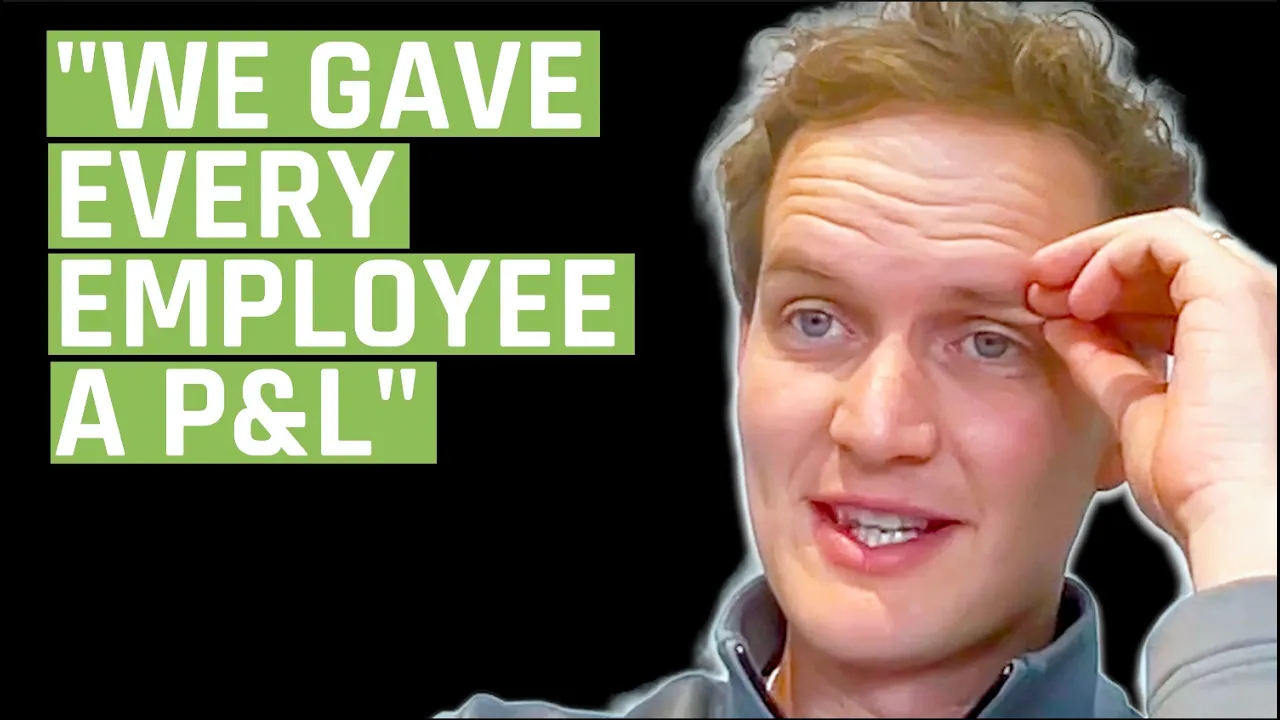
Go ahead. Go ahead. Which go whichever one you want to go to first. I was going to say OPEX, but we can do whichever one you want to go to first. Yeah, we can do that. The real wizard of uh our team who kind of navigated us through this crisis, Mark Brown. uh he came from an investment banking background and he was the one who was like hey this debt is crazy when he came in at the three million uh max that we had had like this yeah this is unsustainable so I give him most of the credit and so when that happened uh on the OPEX side we uh basically gave every employee a P&L uh which I know sounds pretty mercenary but when you have to make money I mean everyone has to have ROI by and we felt like and it was a weekly report and it's saying hey Andrew you're assigned this P&L you're our influencer manager and we're going to assign you know gross profit applies to you as well uh maybe attribution gets a little bit wonky but we'll agree together on where we think what what revenue should look like you attach our normal gross margin to that which is let's call it 57% uh and yeah you're held to that and weekly you've got to make money.
Uh same with our wholesale, you know, 20% uh 15% of our business is wholesale. Uh it's like, okay, you know, outside of existing accounts, just nurturing those, it's like we got onboard new accounts, uh or expand existing accounts. So, you're you've got your P&L attached to you. So, that's one thing that we did. It's like, hey, everyone has to make money where we'd we'd let ourselves get pretty fat. Uh so let's let's let's dig into that a little bit.
Okay. So first of all, you said pretty fat. What was your opex as a percentage of your revenue at that time? Uh you know, I know looking at everyone's S1s that everyone looks at opex a different way. So we throw everything above gross margin in terms of actual delivered costs. So yeah. Okay. That's that's the way that certainly I would frame it as well. Again, um I've got some episodes on this. I will try to link one of my favorite ones of those in the show notes.
I actually can't remember the title of it right now, but check the description. And I've got an episode where I just walk through how I think about breaking down a P&L. Four sections. Just really quick reminder for other people, right? Uh cost of delivery would be every variable cost associated with getting the product to the customer. That includes um freight 3PL, all those kinds of things, including credit card fees, you know, which is like 3% basically transaction fees.
Um you know, all of those things. Number two, CAC, any any ad dollars that you send out. Number three, OPEX, which would be every fixed cost. That's humans and offices and software basically are the main three and e-commerce. Um, and then number four would be profit, which is the good one. So, um, so yep, agree. Okay. Yeah. So, that's the way that I would do that. Um, and and like I said, if you are new to this, please go back and check that episode.
It will help you get your bearings straight on how we think about that. But I that's actually an important clarification, I think, because when you talk about reducing opex and getting fat, that's exactly what I have in mind, which is like it's not about like sort of making it so that you get 5% cheaper cogs, which may also be the case at some point. We could talk about that but if so but like it's about you know reducing the fixed cost in the business.
So do you know what that opex was as a percentage of revenue? Yeah right off the top of my head I mean I don't have an exact number but though people was probably about 14%. Yeah. Uh and then agencies was pretty significant. That was let's call that probably another six to 8%. So 20 to 25% all in. Yeah. Yeah. That's definitely too much right. I mean like you you know and this is not news to you. You've shaved it since then.
It sounds like you know I would be targeting 15 max in an e-commerce business. Um gets a you add a maybe a little bit on the high end of that once you've got like wholesale components some of that you got you got to manage that with people and some of those things depending on how much part of your business it is. But u but yeah I think you know and there there are definitely e-commerce businesses that are doing 10. Uh and so that's pretty lean.
But yeah where are you guys at now? Uh yeah, now it's pretty I mean we we did long story short, we uh based on those P&Ls offered everyone a route out saying, "Hey, and and this is ill advice." Said you can get four months of four months of severance or pay and we'll help you try to find another job. Uh or I mean prove that you've got ROI every single month, right? Um, what percentage of people took took the took the severance?
Uh, about half of our full-timers. So, we had 13 full-timers to begin 2024 and now we're at um six. So, and what about agencies? Uh, agencies was really significant. So, you know, you're talking about the four buckets. So, CTC was in there. I know that I know that methodology. Yeah. Agencies all in we ended up cut cutting 450 grand. Yeah. What year was this? 24 last year. Okay. Yeah. So I mean in annualized costs whenever we made the kill that I'm looking at that in annualized cost.
So if we made the Yeah. Yeah. Yeah. Yeah. Uh so it ended up being about 450 or 500 grand, you know, with still some agency fees. So we were just paying way too much to agencies. We went both coasts and we said, "Hey, the bigger the agency and more wellknown, it's got to be better." And so you're paying 25 grand a month on the ad side. Uh on CRO you've got an extra 20 grand and retention got 20 grand a month. I mean stuff just stack content.
Yeah. Creation separately. So it's just way way way too much. And then same with the tech stack what which is what you were talking about where it's I mean I could talk about basically any uh e-commerce SAS on planet earth because we probably pulled for it at one point and full price not negotiating of uh stuff overlapping. So I think we ended up cutting an extra 250 there. Yeah. Yeah. That's a lot. How did you how how could how did that happen on the tech stack side?
Sure. I mean, just in general, it sounds here's let me let me let me theorize. I appreciate your humility about this so much. Speaking as somebody who has um run e-commerce businesses into the ground personally. I I have I have no um I have no uh condescension about this at all, Ben. So, just just want to be again clear and actionable wherever I can. Um uh yeah. So, um here's my theory. Here's my guess. You tell me if this is right.
Okay. My guess is there's a lot of noise about a lot of things that can help you be better and you just start sort of saying yes to them because it looks like what will help. And then after a little while you realize you've said yes to a whole bunch of different things. Then you're not really doing any of them that well and they actually don't operate excellently on their own. Even if they do provide value, if they've got some focus attached to them and then suddenly you've got $250,000 worth of excess software.
Is that basically what happened? Like Well, that's exactly it. And I never take it as condescending. I say I'm an expert and that's why I said I was good for this because I've made every single mistake. I'm an expert on that. Not necessarily what to do, but like, hey, I stacked so much data on top of each other. I can talk to you about MCAs. I can talk. So, yeah. Never condescending. Yeah. Yeah. Okay. Yeah. Because it just, you know, there's so much noise about what you do and don't need in your business.
And so, um, yeah, it's it's one of the hardest things I think in our space is actually I think one of the reasons that DOC is in a great place right now is there's so much more knowledge in the space than there used to be. There's just so much um you know, and then um I mean just even this conversation, right, you're sitting here talking through the details of MCAs that that knowledge didn't exist 5 years ago. Like it just didn't it wasn't here, you know?
Maybe maybe early. Yeah. Anyway, so but the problem is there's so much of it that now then it becomes easy to like go and say I got to get everything that everybody else is doing and it becomes really hard to like resist shiny object syndrome I think you know. Oh yeah. And then they always do the logo they know exactly what they're doing. They do the logo that you want to be like and it's always Dr. Squatch or true classic.
Credit to both you know marketers and operators at both. It's like oh yeah I want to be like them. And if they're using the same, you know, email collection tool that increased their total subscribers by 28%. Then I need to do that. So yeah, surely. Yeah. Yeah. Um Yeah. Okay, that's awesome. So you guys did that. Did you do anything else on the people and agency side? Like did you offshore at all? Did you um did you just I mean like did you just cut some stuff?
And like when you you know when you did when you did all that cutting did you did you get to a point where you're like we did all this cutting and it didn't hurt our revenue at all like is that Yeah. And I think that was the most indicting thing is between the people and the agencies when it's like oh you know output and input are both increasing even though the team is haved. It's like oh I mean that that's pretty damning you know particularly of me because I'm the one who let it all come in. uh like it's not a victim.
I don't have victim syndrome. It's it's like oh it was me that let let that happen. But uh yeah, we didn't we didn't add anyone else. We didn't move things around. We didn't offshore it. Uh yeah, it was just Yeah. Yeah. Just cutting. Yeah. Yeah. I mean that's Yeah, that's great. Yeah. Again, part of how I uh ran e-commerce businesses into the ground was just too fat on OPEX. So I understand um do uh okay what about um uh ad spend.
So you reduced ad spend by 14% revenue stayed the same. Um now I'm I'm curious to hear more about that. What did you guys do? What changes did you make? Etc. Yeah. I mean that almost more so than anything was enforced by the summer when we were paying down 65k a week. It's like hey discretionary spent it's going to be tough to come by. Uh, and when post-purchase surveys tell us that 65% hear about us from friends or family, you know, of new customers, excuse me, hear us hear about us from friends or family.
Wow. Like, oh, we're probably wasting dollars on Meta anyway or wherever else allocation was. And so that one we were almost forced into spending less. And I think it was a good exercise. Um, a little bit of like hold out uh testing. Yeah. Yeah. Yes. And and since you know that I mean it looked okay, I think it sends you into this where where revenue like you said grew a couple points. Uh so it looks okay in the short term.
It's like oh everyone should cut spend. I will say the other side of that is new customer cohort sizes were down. So it's like, oh, we're we're having to dig our way out of that now 12 months later when that consideration period isn't 10 days. So anyway, all that to be said, it was I wondered about that in an apparel business, right? Like you're going to have a cycle of customers rebying. And so if you're up, you know, 3% in gross, that probably means that what's happened is that your returning, you know, your new customer revenue has come down a little bit. your returning customer revenue has been realized off of older cohorts and if you don't figure out how to keep acquiring then you're going to eventually pay the piper on that.
Yep. And that's why we onboard that new CMO uh where I I told you a couple months ago Yeah. where he came from a company who LTV equals AOV or other way around. Yeah. Yeah. Yeah. And so they have to make money on first purchase. Yeah. Yeah, they have to make money on first purchase or else they're dead where we just, you know, within status on CTC's side. Yeah, we're in the 98 percentile on 30, 60, 90day LTV lift. Uh, and we just again in the short term it was fine and we needed to make that cut.
Uh, but since then it's like, oh, there very much is correlation between how much we spent and new customer revenue. So, we're not trying to always wear OPEX. It's like, oh, I don't want to hire again or hire much slower. It's like, oh, ad spend. I want that number to be up 80%. Definitely. Definitely. Yeah. Um, you know what I wondered was if there was any cut when I saw the minus 14% number, if there was any cut on like channels that were actually not performing for you and you realized that cutting them didn't make a difference or something like that.
You know, you had a big Pmax number that was bad or something, you know, I don't just anything like that. Yeah. And and I'd say that was our weakness where in 2020 2021 the big growth year is we invested in content and as the long form kind of funnier content one I feel like the platforms let themselves to success there so I'm not going to pretend like we were some wizards but we were doing a better job of investing in new content that was pretty broad and universal where we really slowed down in 23 24 so we couldn't really spend against anything there was a little bit of an element of ad fatigue so no I wouldn't say there were any real platform tweaks or learnings when we cut branded search on Google.
Sure. Maybe that we totally turned off Google. Uh yeah, but beyond that, I don't have any great insights for anyone. Yeah. Yeah. Yeah. Yeah. Okay. Um All right. Well, that man that's still a really helpful look at things. So, so where with all of that background, so like if we're sort of again sort of focus on actionability here, what I hear in that is a couple things. First is like there's a real problem with getting fat.
There's a real uh challenge with taking on too much debt of the wrong kind. If you could run that back, let's play the debt game back a different way. Would you have just grown slower? Yeah, grown slower. Grown slower. Now that I know, just ask you like I mean get your manufacturers aligned. However that is, it's like, hey, let's whatever our inventory turns, let's either buy less so we can have quicker inventory turns or meet our terms. we'll pay you an extra $150, an extra whatever 10 15%.
That's realistically what I'd do or honestly have them finance us overseas like oh they would have if they can find an extra 10 15% like oh they would have beat those rates. So looking back at it I honestly think I would have gone to them first with some sort of creative financing you know on the on the cost of goods side. Yeah, this is something that mates Bogle talks about a lot which is that like essentially especially if you're manu are you manufacturing in China?
Yeah, chi China and a couple other places but yeah. Okay. Yeah. That at least in China that almost everybody there has access to cheaper debt than you do basically and and that you know what I think a lot of people forget is that um manufacturing businesses are volume businesses and that like the way they win is by getting bigger. That's where all their profit is is with growth and size, right? And so, um, yeah, that's true in some ways of a lot of businesses, but it's really true manufacturing that essentially like they scale really, really well.
And so, the bigger you can get, the more valuable. So, if you can actually present them with something that says like, "Hey, this is the thing that's going to hold us back, especially if you're willing to get on a flight and go to China and do it, you know, um, then you can potentially get to a spot where you can um you can uh, you can get them to help finance the the growth of the business because they have access to cheaper credit than you do, basically.
And that allows that allows them to kind of help you say, especially if you can show them, look, we we want to grow more. We just can't afford it. They're going to be like, okay, great. We're motivated to do it because we want your bigger PO anyway. And so you can find ways to do that. Have you actually played that game out with them yet? Is that like where you're at with things? Yeah. I mean, not not exactly to the financing portion, especially now with Key Bank and it's like, oh, we don't.
Yeah. Right. There were times where it's like, hey, we'll pay an extra. But we found they were they almost always said yes if not to the first proposal uh than to the second or some sort of compromise whether that's speeding up goods like we've say what were the I was just going to ask what were the proposals like yeah two sides one was to make things faster so uh Q1 this year year-over-year looks really awesome it was our men's warehouse if you're familiar you know about as big of a big box as you can find for dress shirts which is what we sell did a really large PO with them, kind of an introductory thing.
Uh, and we needed to beat Chinese New Year. And so we asked our manufacturing to do their custom tagging, you know, routing guidelines. And so it was like, hey, we will pay you, tell us how much more we need to pay you on a, you know, a perunit basis, uh, to be able to fulfill this order before Chinese New Year. like we need this thing exactory or FOB January 15th and this is you know this is just before Christmas uh which is not our usual lead time and I was like hey yeah we'll do it we've got the stock fabric we'll charge you an extra$180 and it's like hey we will we took no brainer yeah especially for for something like that especially for a wholesale thing where you're it's not like you're not sure if you're going to be able to sell the inventory like yeah you lost a little bit of margin there.
But to to fulfill somebody that big to get it done that fast, like nob brainer. You guys we told Yeah. Yeah. Where it's like, hey, this is 30,000 units. You win, we win. If you deliver really great experience, we anticipate this scaling to hundreds of thousands of units a year. So, I just found anyway that that was on the faster side. And then, you know, while we were still on the cash crunch side, it's like, hey, push our terms out, charge us an extra two, three, three and a half% on the PO uh to give us an extra 30 days or an additional 30 days kind of factor.
But it's like, hey, we all win when we grow together. If you need to optimize the supply chain of your e-commerce business, the team with which you should do it is move supply chain. That is the team that I was talking about has helped with my own business that I am starting now building the whole thing from scratch coming in at COGS lower than I had forecasted which is amazing and uh they actually told me early on in our relationship it's going to be hard to know how to optimize the supply chain further because just from the jump it is so good compared to what they see so much of the time in e-commerce.
In fact, what they say is that when most people call them they get really excited on the intro call because there is so much they can do so fast. Move uh is a supply chain optimization agency is based in the Philippines which by the way is like an hour hour and a half flight from key areas of China where lots of manufacturing happens. So they can go get in person with manufacturers much easier than you can as representatives from your team.
And uh Move can do that while at the same time being really affordable for you because again being based in the Philippines means that they're able to do that uh while attracting great talent into their organization at costs that are much lower than it would cost you to do the same thing in the US. Uh they're just really awesome. I couldn't I can't say enough good things about them. They uh have worked with me, like I said, on my own brand.
I've sent them to lots of others, gotten texts back saying we're saving 30% on our COGS at the same time a dollar off all of our 3PL fees and on every order, etc. You know, just like all kinds of great stories, if you don't know where to start with supply chain optimization in your business, there's a simple call you can make to see if they can help you, and that is with Move Supply Chain. Go to moveupplychain.com, sister company of more staffing and behindthe-scenes studio who you've heard me talk about on this show uh as like really high quality, deeply qualified and experienced people in e-commerce who can help your business and who will do a great job.
Moveup supplychain.com to start optimizing your supply chain today. Have you done anything differently um with anything else with your relationship with them? You mentioned, you know, pushing out POS, some some a little bit inventory financing there, speeding up some POS. Anything else on that side of sort of negotiating with them to get to make the business run more efficiently? Uh not not really in terms of financing.
Uh yeah, nothing nothing really groundbreaking. I just found it it seems very intimidating but when the way you worded it was really good or it's hey they want the larger POS and they want you to do more POS I mean if those are the two levers bigger POS and more freedom of POS it's like oh they'll do whatever they can to help you get there so yeah I feel and to your point now you're hearing more about it but I feel like that's the biggest unblock that no one goes to again even if we're if we're going from two to six million or seven million in 12 months.
Like the manufacturer is seeing that so why wouldn't they bet on you? So anyway, instead of going to someone else for really expensive debt, go there and uh the Lo founder, if you've heard of Lo, the baby Yeah. He he did a really good comment where he said, "Chinese manufacturers are more sophisticated than you than we think as consumers." It's like, hey, that if you go in, it's going to be a completely different experience than what you probably have in your mind as an American consumer.
Uh so, so it's you're not dealing with people who don't know what they're doing. They're they're sharp. Uh and they're willing to do business. So that going back, my business would be so much better if we would have just approached them first. It's amazing that we've never talked before because there are a lot of things that I'm laughing at how much like are dovetailing with things that I've sort of said or thought about for a while and you just mentioned one of them which is like there wasn't a lot of talk about this for a while and now there's starting to be a little bit more.
I have a pet theory which is that um supply chain optimization is the most underoptimized part of DTOC brands and is the next is the next um frontier of great content in DTOC. We we we did number one was meta ads. You know, that has sort of always going and will always kind of be top of mind because it's such a big line item for people and there's just a lot of content there. But, you know, there's there's been a lot of good meta ads content for a while at this point.
Number two was finance uh led by people like Taylor who you mentioned before, Drew Fallon, who I mentioned, Matab, I just mentioned. Increasingly, they just released the finance operators podcast. That's the culmination I think of a lot of people getting more sophisticated over time, people working through MCA type stuff. Bill's been vocal about this stuff for a while, Bill Dlesandro. Um, and so, but now there's much more financial knowledge than there was before, like just cohort forecasting and cash flow modeling and everybody needs a 13week cash model and like all that stuff, you know, stuff that frankly like even when I was running for 100 was not nearly as um as as sort of central in the discourse that it is now.
But I still think it's it's really it's there's just really not enough out there on supply chain management and all of the opportunities there. And I just really think a lot of brands are going to get a lot smart smarter in the next couple years about how to do that at kind of every level. Like I've said this in a couple places, but I'm starting a brand right now and working with a supply chain team on building that out, right?
They reached out to 60 uh manufacturers in like the first or they source 60 manufacturers reach out to 45 of them in the first week of working together. And just like so many of the DTOC brands I've been around have never talked to more than five in their lives, you know. Um, and and I just think that's going to be more and more common that brands going to do that and then they're going to know how to negotiate over time using the content like you just said, like go bring these asks, show them, show them what's happening in your business, recognize they're sophisticated.
This is another mistake people make with anybody offshored. They just assume sometimes because of language barriers and things like that, they just assume that they are like um, yeah, I still make this mistake all the time. I just don't expect enough out of my my overseas partners and I work with them all over my business. Um, and so yeah, anyway, I just think I think you hit on a couple things there that are really crucial for brands to operate with excellence, right?
Uh, and and to build profitability because now I bet, right, and this maybe looks us forward a little. Now, what I bet is as you look forward, you've got, you know, a relationship with with Men's Warehouse that is an opportunity for you to like push some very profitable volume in your business. And now you've actually got, you know, the line of credit set up with the bank as well as like the right conversational starting points with uh your manufacturers.
And now if you can just sort of get the ad spend back in, you've got a lean team. If you can get the sort of ad spend redialed, you're in a spot now where I'm assuming the future looks pretty bright to you at Anallers. Like, you know, with debts being paid down, like that that's a pretty good combo you're talking about. Oh, this is the easiest we've slept at night. Um and you you nailed it right on the head where end of year it's like oh we did so much optimizing you know talking about the supply chain mark I think on the year gross profit was up 5% a little bit more you know outpaced revenue and this year they should outpace revenue by even more than that for a few reasons switched 3PL's did the fre you know you talk about the supply chain optimization our our COO uh Mark who I was talking about from the investment bank background he's like hey let's instead of pallet loading let's floor load containers and do 40 foot containers instead of LCO or let's never air freight again just plan better.
It's like, hey, that finds us hundreds of thousands of dollars, hundreds of thousands, so much money on on doing that. And it's like, so to totally agreed with you there. And you know, same with people. And I think everyone now with those weekly P&Ls, uh, it's like, oh, each person has ROI. We've got we're not worried about banking. In fact, they want to grow that relationship with us. Wholesale was growing. So yeah, to your point, uh Mark and I had a meeting in November where last year was the heaviest lifting we've ever done.
I mean, it was kind of hellish year. It's like, oh my gosh, every week it's like we're changing 3PLs. We're changing financing partners. Uh just it was whack-a-ole. Uh and we sol for the most part at least kicked it it down the road a number of years solved a lot of issues like okay you can't optimize your business to 50 million where now that's why we hired that CMO where it's hey all roads lead back to marketing was the meeting Mark and I had that's what I was referencing where like okay now it's back to getting messaging right uh and creating new captivating content and getting the hook messaging and following you all the best practices that you see out there from the marketing gurus like Cody Ploffer.
It's like, oh, we know we should be doing that. Do landing pages based on customer persona or whatever. And so now getting back to basics there, but yeah, it feels good to know that there aren't crazy skeletons anymore and it's now the fun part again. And your downside risk is pretty low. First of all, congratulations on that. I mean, that's an incredible story. Every time anybody's every time anyone comes to me with telling me about where their business is at, even if they're three million bucks or, you know, a million dollars or whatever, like it doesn't have to be as sort of eight figures like you guys have gotten to and all that stuff.
I just I'm never lose sight of the blood, sweat, and tears, but you've you described a lot of blood, sweat, and tears on this on this episode. So, it's it's it's really awesome, man. Yeah. Like Yeah. Right. Yeah. Maybe a lot of blood and sweat. Uh yeah, but the um so that's incredible. It's it's really really cool and I I appreciate so much your transparency and sharing it all because uh I think it's going to really help people a lot.
Um, but yeah, and I mean your downside at this point now too is like I don't know, run a really profitable $17 million business. Like that's not so bad, you know, like good. Where it's like, hey, look, debt, you don't have this. Obviously, we still have debt. Again, I think it's the right amount of leverage where you don't have something lurking over you or it's like, oh, you have the bank go under and you're dead. The existential crisis feel Yeah, I'm sure.
Yeah, for the most part mitigated or traversed. Uh and so yeah, we we've said the downside and now that you make money, it's like, oh, it's kind of nice to have a business that makes money. Who who would have thought? And so, yeah, it uh definitely feels better than it has before. I mean, it feels like it's at the end of or in the middle of the eighth round of boxing and we've just taken a lot of beating. Uh but uh yeah, I mean learn learned a lot.
So to your point and I mean not trying to go off on a a big tangent, but I'm a believer in the cockroach business. Uh I'll trademark that one day where I know you talk about the camels are unicorns, but less so than the camel of going slow. I think the cockroach is resilient like Yeah. Yeah. Oh, COVID happened. and no one's buying dress shirts or oh you were so dumb and you stack three MCAs on top of each other or oh you sold pink shirts that as white shirts or whatever.
I mean cool stories but uh it's like oh it if you just survive it almost feels like you get you slowly fight towards towards safety. Yeah that's awesome. Um, okay. I have two more things I want to mention or I want to bring up to you. Um, which is So, the first is um the I I I almost didn't get to this. The first is the um the employee P&Ls, which is sort of I think in some ways the single most genius thing you've said on here in terms of like even if it was just a m like you just had to do it like how was that received?
Did employees resent it? Uh yeah, there was some resentment. Uh but I think it was also a really good sifter uh in terms of high performers and not good performers where I mean if I'm a good performer I mean it should be liberated. Yeah. Yeah. where it's saying, "Hey, look, I can like I I would use it to ask for a raise." And if I'm a if I'm an outbound wholesale person, I'm like, "Hey, look, based on your P&L that you're populating and giving me, it's like I'm driving 80 grand of net income on a week or what, you know, whatever the number is, which uh it's like, yeah, give me Yeah, pay me 20 grand." Yeah.
Yeah. Yeah. Pay me 20 grand a week. Uh yeah. So yeah, it more more so than so yes there was resentment but I think there were two camps of people. One camp is not here anymore. Again I feel horrible about saying it. Uh and and raising my hand. I think before that there were no expectations where it was the wild west. Hey Andrew go sort you know figure this thing out. I've never done it and I think a lot of brands do this.
So we didn't set good enough expectations to begin where I think the P&L removes most emotion. So it made those hard conversations easier uh saying hey this is what you and I agreed to and you know some roles are harder. It's like a finance role it's like I don't know if I can really say ROI but we found creative ways. So yes there was resentment but it was the best thing we did. Yeah, I I mean, yeah, one of the things that holds me back from pushing on trying to grow a bigger business is precisely that that like I just am not sure I'm ready to manage people like that, I'm not sure I'm ready to step into that in those ways.
Um because I think you have to be ready to do that if to have some kind of clear accountability structure against clear KPIs in that case of P&L to do it and the fact that you lost all those people and didn't lose any money is sort of the ultimate picture of like exactly what you said which is like yeah it it probably created some resentment. It also probably we weeded out some people who we didn't really need that much and probably good great quality human beings who probably even worked with integrity.
It might have not even been about them not working hard or anything. But yeah, it's just uh yeah, it's a challenging thing. Yeah. Uh I had a second thing and I can't remember what it was, so it's just gonna have to go away into the ether. Um Ben, this has been a fantastic conversation. I really appreciate it a lot. Um, I'm very interested to see if we should just sort of pres-schedu, if I can get time on your calendar, on April 2nd, 2026.
We'll do a year update from now. Um, and I would love to hear what's going on um, next. Uh, because it's it's incredibly impressive what you've uh, accomplished. I think the turnaround kind of thing is amazing. And I think the easy thing to underrate is how much u even making those decisions reflects the level of accountability that you were willing to take in the business which I think is ultimately the thing that happens which is like you know you can't do that unless you're willing to be the one who says like oh I made a lot of mistakes I'm ready to go do things differently and own it and all that kind of stuff and uh it's just impressive at a human level at a business level uh all those things.
So thanks thanks again for sharing it. Thanks for um being so public about all of it and yeah appreciate it man. No, that's really nice of you and uh thanks for your time and thanks for helping educate people so they don't waste 36 months of their lives like I did. I think waste is probably not the right word, right? Okay. Make mistakes that are easily avoidable. Let me let me say that one. Um yeah. Well, you know, build a positive way of framing that would be build up the intellectual capital on your on your human balance sheet.
Uh uh and yeah and I I mean that's been my that's been my experience with the mistakes that I've made in it which is like I don't know that I would have gotten there another way. So yeah you are going to have those you got a lot of career in front of you is that you're going to have those lessons for a while. So yeah. Yeah. All right man. Uh thanks again. No thank you Andrew. Appreciate it. What a conversation. I love that so much.
I just hope this episode absolutely blows up because I mean when have you heard somebody be that transparent about their business? And I hope it was as helpful to you as it was to me. I really loved that conversation a lot. Definitely go follow Ben on LinkedIn. The link for that is in the show notes of this episode. And buy yourself a dress shirt and callers uh so that you know he knows that this was worth his time. Uh uh also you should you should subscribe right now to this series because uh this is the first in my profit monsters series and I've got a couple other ones lined up that are going to be incredibly good including Nate Legos coming on the pot.
I've got Isaac Mertens from Flux Footwear. That's a much bigger business. uh we're talking mid eight figures in that business and uh and really profitable. There's just there's just going to be a lot to learn from this series. So, subscribe wherever you're watching or listening to this podcast. You're not going to want to miss any of these episodes. The goal is to get as transparent as that. Maybe not as transparent as that.
That's that's a pretty high level of transparency, but as actionable as that. Get really into the details of what it is that's driving profit in these businesses so you can do the same in yours. Make sure to subscribe and not to miss those. And of course, you should follow up with everything I'm doing at afgrowth.com. drop your email uh address in the footer on that on that website or on the popup. Either one will get you not only four free my essential e-commerce resources from me, but it will get you subscribed to my newsletter, which you're going to love.
So, uh go check that out and of course you can email me podcastfgrowth.com. Uh thanks so much for watching, for listening. I'll see you next time. [Music]
The words are the caption track's own and nothing is reworded or re-transcribed. Paragraph breaks are placed between sentences so the text reads as prose.
Free tools for your own script: paste a draft and see where it stands before you record it.
Paste your draft and see where viewers are likely to drop off, with a rewrite for each weak line.
Paste the first 30 seconds of your own draft for a hook score and rewrites.
Check your draft against YouTube's advertiser-friendly guidelines before you record it.
Read this channel's public videos and transcripts, and download a writing brief for it.