Getting the transcript
Reading the captions from YouTube. A video nobody has opened here before takes 10 to 30 seconds; this page fills in on its own.
Getting the transcript
Reading the captions from YouTube. A video nobody has opened here before takes 10 to 30 seconds; this page fills in on its own.
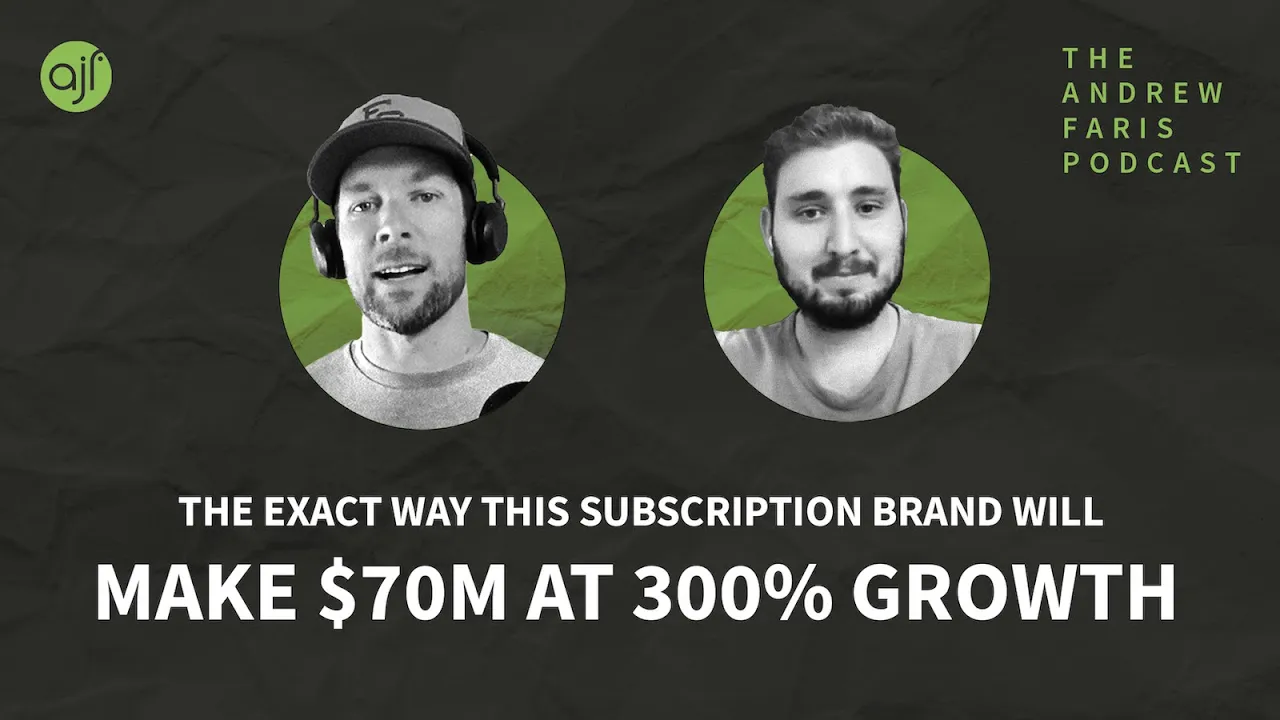
The Andrew Faris Podcast · @andrewfarispodcast
Words
11,112
Runtime
53:11
Speaking pace
209wpm
Reading time
46min
209 words per minute, above the 201 75th percentile of 349 measured videos. That distribution comes from the 349-video hook study.
Opening (first 30 seconds)
[Music] foreign [Music] ER Ferris podcast thanks so much for joining me for another episode of the show today I have an interview with the great Jack Rubin co-founder co-ceo of Purdy and fig a monster subscription-based e-commerce business in the UK I have had the great privilege of getting to work alongside Jack and his business in sort of a coaching capacity basically it's not a managed Services clients for me we'll actually talk more about who he has worked with in that in a little bit but Jack's business is an incredible business it is one of the most fun businesses I work
105 words, the words spoken in the first 30 seconds at 209 words per minute.
Free, no signup. See how the first 30 seconds hold attention, with rewrites.
Sentence shape
| Measure | This transcript |
|---|---|
| Sentences | 2 |
| Average words per sentence | 5556.0 |
| Longest sentence | 10,751 words |
| Questions asked | 0 |
| Sentences containing a number | 2 |
Most used terms
Filler phrases
357 in total: you know 83 · like 73 · actually 43 · kind of 36 · basically 35 · sort of 32 · uh 22 · um 17 · I mean 15 · literally 1.
A literal whole-word count of the same phrase list the Prepublish browser extension uses, so a phrase inside another word is not counted and a phrase used in its ordinary sense still is. It is a count and not a judgement.
Free, no account. See where attention is likely to drop, with a rewrite for each weak line. The free check shows the scores and the one issue costing the most. Or run it on the words above first.
Free · No login · See a sample audit first if you prefer.
What this transcript is
Every word below is the caption track YouTube publishes for this video, pulled from the video itself and reproduced unchanged. It is not Prepublish's writing, not a summary, and not a re-transcription: it is the video's own published captions. English captions, generated automatically by YouTube, in the video’s original language. Source: the video on YouTube. A channel that would rather this page did not exist can ask for its removal through the contact page, and it is removed.
No Script X-ray for this video: YouTube shows a Most replayed graph only once a video has enough views.
[Music] foreign [Music] ER Ferris podcast thanks so much for joining me for another episode of the show today I have an interview with the great Jack Rubin co-founder co-ceo of Purdy and fig a monster subscription-based e-commerce business in the UK I have had the great privilege of getting to work alongside Jack and his business in sort of a coaching capacity basically it's not a managed Services clients for me we'll actually talk more about who he has worked with in that in a little bit but Jack's business is an incredible business it is one of the most fun businesses I work on because it has these dynamics of a subscription businesses the subscription business that are really unique in e-commerce and if you've if you've been around subscription businesses you know the kind of things I'm talking about how you think about acquisition relative to LTV and really getting serious about measuring that and to Jack's credit Jack has been really really good about carefully measuring and thinking through the value of a customer at every level deeply understanding how contribution margin Works in his business if you have heard me talk about those kinds of things in this show I think this episode is going to be very useful to you to to get kind of a first-hand up close look at how somebody who is operating his business very effectively and building a serious serious business is thinking about all of that using it to steal the ship in his business I will not delay any longer let's jump in with Jack Rubin hi Andrew thanks for having me on Jack thanks for making time man I really really appreciate it you know I'm a big fan of your version of your business and and the other day it occurred to me like wait why haven't we done a podcast yet this is like there's so much good stuff to talk about from your business and I think people will get a lot out of it so thanks for thanks for taking the time it's morning for me in La at at about 9 15. what time is it for you you're in London right five five yeah five o'clock for us um in London but um no it's a real honor I mean I actually love love this podcast like this it's one of my genuine regulars the quality of content on here is pretty amazing well yeah thanks man I appreciate it and uh what's what's life in London like right now what's what's the weather like what's going on in London yeah it's weather's been not bad the summer yeah sitting at 20 degrees pretty good for over here not too rainy it's good call my brothers my brother and Cody Farmer's wedding on Friday as well so we've got lots going on I didn't know that was happening congratulations to Charlie that's great let's talk about that really fast so give people a sense of pretty and fig and what the business is obviously you can go pretty big.com go check it out link is in the show notes of course so you can go see kind of what Jack business looks like but you guys are exclusively in the UK so for all my us listeners which is most of them they won't have had a chance to purchase the product really but give people a sense of what the business is and then also if you wouldn't mind talking about sort of the division of labor between you and Charlie as co-ceos and co-founders sort of what part of the business are you taking on what part of the business is you taking on yeah sure yeah so as you said we're um we're a DC brand focused on on selling Yeah by e-commerce basically and we sell uh cleaning products I mean the form of our cleaning product formulation was originally created by party Rubin who's me and my brother's mum and a woman with Charlotte figs and Landing party and fake who who weren't really setting out to kind of change the world or anything but they they really wanted to create a cleaning product that dare I say made cleaning a bit more enjoyable um or even tolerable yeah it's something they they had been doing their whole lives basically and I had a really clear sense of what what the problems were in cleaning and the fact that clean products are toxic made with toxic ingredients and toxic sense synthetic sense um they smell that synthetic scent smells quite strong and nasty and not at all natural like a kind of candle they're extremely unsustainable obviously in plastic packaging often and shipped through long Supply chains in supermarkets and the way cleaning products are actually presented is extremely confusing I mean you've got 15 different products just for different surfaces in your home whether it's the word the stainless steel the floor your countertops bathroom tops whatever it might be and they were really fed up with having all these different products that you had to Lug around the house in a big kind of cleaning box and so they really came up with this pretty incredible and Innovative formulation with with a chemist a PhD chemist which is basically the kind of foundation for for our for our business their cleaning products that are designed to genuinely make cleaning uplifting and pleasurable so you can take pride in doing the cleaning and take pride in your your home and your surroundings and that's really how the whole thing came about in terms of how it works now I mean I run the growth growth side of the business basically the business is split into growth growth and products pretty much but obviously there's a whole operation as well so I do the growth Charlie does the product and then we have a an operations team as well um and that's how it works yeah so the you and I end up talking growth all the time I don't deal as much with Charlie because I'm going to be useless talking about manufacturing cleaning products and all that but that is an important note that you guys are vertically integrated so you're well or that you're manufacturing yourself and and uh and so that's a big part of the business yeah we formulated the products ourselves we mix them formulate them we fill them do all that manufacturing then we also do our fulfillment yeah so that's a big part of the business and we could talk about how cash moves through that part of the business at some point but actually what I think is really interesting for my audience and the main kind of things here is is to think more about sort of the the customer acquisition or retention model that you guys have built now let's like talk a little more about the product because you cannot talk about retention even with the subscription component without talking talking about the product itself and what makes it good like I've talked about this a lot of times but besides subscription as this big lever you know product is the driver of retention and above all that lots of other tactics can surround that an email and SMS and all those kinds of things but but ultimately uh the product itself is this core part of it so you just referenced a few elements that make the product unique but let's talk a little bit more about what those might be so you reference non-toxic so clean ingredients the scents the packaging and then one product for all of the cleaning in your house because did I miss anything there what are the things that people like love about this product that keeps them coming back and keeps them excited about it if I had to package up what really is our big difference it's the way you use our product you understand that we've taken cleaning really seriously and that cleaning actually really matters and the product you use really matters and so everything in our product has been so deeply thought about in a way that I you know the the category has not really had before the category is basically bottom the lowest common denominator price driven type category and we've approached it in this in this very unique way and we've got the main output of that really is the experience so the scents are natural essential oils they are beautifully Blended by a iron Health theme to create almost very sophisticated almost perfume level done in the home almost like a candle type scent people really love that about the product people love the sense that's a big part of the acquisition strategy but that's like a major major component of it yeah no it's it's absolutely massive and it's really hard to you know the formulation of those sounds in terms of the blending but also how they work with surfactants and natural surfactants without clashing and going off it is it was a really hard task and yeah no one else has really managed to master that so that that's a big thing and then the non-toxic things big but just because some people use natural ingredients as the fractions but no one has been able to do uh the sense side in a non-toxic way and synthetic sense are basically quite toxic especially when you breathe them in they go into your microbiome and gut and so we've solved that and so you don't cough when you clean uh in the bathroom it's it feels very natural and nice so that's another big thing and then the sustainability piece is obviously massive we we sell our cleaning products and concentrates so our starter kit is like a box with a bottle for life that looks lovely on the side a lovely cloth that look with planting fig on it and three concentrates in three different scents and we can get onto how we got to this starter kit because it had a lot of implications on retention maybe we could show people that landing page really fast would you mind if we do that sure okay and in fact by the way really fast before we do that can just give people a sense of kind of where the business is at scope wise any metrics you want to say you know simply wants our cool saying Revenue numbers some people are not but give a basic sense of where you guys are at and you've decided some stats lately I'm happy to I mean uh yeah our first year we turned over a million pounds second year turned over three and a half million pounds initial we're telling it was 17.5 million so it's been massive growth rate massive growth of the business where the growth is coming from we're really really having customer acquisition so we're acquiring twenty twenty five thousand new subscribers every month um at the moment and that's just gonna continue to grow yeah and and the thing is and we'll get to more of this but the LTV is so massive that when you think about that jumped from three and a half million pounds of 17.5 million pounds the the forecasted future revenue is is like gigantic I don't know if you do I don't know if you have a number on hand right now for what you're looking at for next year but yeah 54 54 million actually yeah so so that level of growth rate to you know to go from three and a half million to 17.5 million pounds and then a 54 million to like grow by that much again is like ridiculous and it's only possible because the LTV is so good which speaks to how much people love the product which is why I wanted to start there is it profitable yes I mean underlying it is profitable but we do in that reinvest huge amounts of our profit into new customers that's all we've got this dilemma with subscription to subscription Brands and it's basically you know if you wanted to if you turned off the new customer out of position with a subscription brand that's developed and has you know compounding cohorts going back you can produce absolute huge amounts of profit or just on the spot as long as your fixed cost space is significantly lower than your existing customer contribution then you're in a good place and you can produce profit but really as a subscription brand you're not interested in profit you're interested in in this idea of future value so what's the fusion value you're generating in a single month on a contribution basis and so for us as a business like a bad month is a profitable month so if we miss our targets forecast on new customer acquisition we make a ton of profit and that's a really bad month for us if we hit our growth Target for Newcastle Newcastle acquisition we make much less profit but we know the future value we've generated which you can't show on that one's p l because it wouldn't really wouldn't really make sense but as long as you understand how that teach profit and future value is going to work then you're in a good good place so the way we kind of break that down is we actually have three ebit does in our business so we've got the kind of Baseline normally the da which is so the kind of thing you refer to probably when you ask the question and we do like to make sure that at this stage of our business is on at profit we then got what we're calling existing customer ebitda so we're taking our existing customer contribution and we're monitoring our fixed cost space and looking at the ebitda on that level which is which is extremely healthy and then we've got a third thing called steady state in the DAR which is which is essentially the same thing but accounting for churn so you'd be saying what's your turn right let's say you're churning 5 000 customers a month I'd have to invest how much would you have to invest in in marketing to acquire 5 000 customers to keep your active custom base at the same size and you take the contribution loss from those new customers you'd have to acquire off your ebitda and that's essentially saying you know if someone acquired this business what would they pay on a multiple of the steady state even though which is just keeping the business as it is exactly even right yeah exactly even yeah yeah yeah and and you've seen valuations off the subscription business based on that study City better number yeah we've seen we've seen Lots yeah so okay so one of the things I want you to hear right there just to sort of bring in the narrator voice here for a second is just that Jack is thinking carefully about each of those and how those goes those work through a subscription business and I want to put my finger on that right away because one of the reasons I wanted to talk to you today Jack one of the reasons I love working with you is because you are acquiring customers as you just mentioned there and kind of breezed over but at a loss and that you want to acquire customers at a loss at this point but that you've you are really thinking carefully about why to do that and this goes against some of the things that you hear kind of tossed around and most businesses by the way should not do this this is an important thing some somebody when you were talking about like the notion that you're not you're sort of profitable today right you actually you actually do have Baseline profitability today so there's that but when this notion that you actually don't want to be very profitable in in a one month period that's bad for you to be too profitable you know there's somebody out there who's going like yeah bud what about all birds and what about you know all of the you know big examples of companies that just like we're going to grow and grow and grow and went public and get all these big valuations and then just tanked because they could actually never realize the profitability they were promising along the way your business is different than that in my opinion and and so those examples Loom larger people's heads as like sort of the venture-backed model by the way are you guys what's your capitalization or it's probably worth noting how you guys capitalize the early stages of this yeah I mean we took some Capital rise at the beginning but friends and family though right yeah we haven't raised since yeah so to over two years ago took not much capital and it's basically bootstrapped from that yeah yeah so you you can't operate it at such a massive loss because you know you've never had that kind of it's not like your venture-backed or anything so those are the things so let's actually walk through a little bit you mentioned a second ago let's sort of unpack all that now for people uh because that actually represents this whole notion of sort of what that forecast is and why you're acquiring at a loss and the way you're thinking about the valuation actually contains within it and now they talk about the product contains within it the mechanisms of acquisition of an offer of your execution of that customer acquisition on your meta ads approach and then into how you're thinking about the LTV cohort and some of those kinds of things so let's take that on the acquisition side first we started to talk about that offer that you came to and now I am going to share my screen here in just a second now if you were listening to this and you're not watching it on YouTube you could switch over to YouTube and you'll see the screen share here if not we will do our best Jack and I will do our best to explain what's going on here but this is the one of the landing pages that you've got I'm gonna I'm gonna have a faux pas here which is I'm gonna show this let's put up let's pull up a different one uh let's put up this one here I'll just send you send you the link in the chat okay Okay so we've got the right landing page here and now I'm going to share my screen so again we'll do our best to explain what is going on with this and and sort of how this landing page works and what the offer is especially so you just got to talk through this Jack and just tell me tell me we want to scroll yeah I mean just start with the with the package so we can the messaging is is you know reasonably self-explanatory but if you go straight to the this page will be linked by the way in the show notes if you want to look at it if you go to the buy box that'll be most helpful if you just cross get offer yep we're there yep yep yeah so you got it so this is uh this is our hero the hero ski basically so um what you can see here is a bottle for life and three concentrates which are in different stamps or flavors and you can see in the bullet points here you get three refills for a 90 days report Supply you get them delivered quarterly on the subscription and there's a big offer of 50 50 off to sign up for this quarterly subscription now we have some upsells down down the funnel so this this aov ends up being being about 22 pounds yeah after all the upsells and our cack on this is about 15 15 pounds so you know we're making seven pounds on the on the on that difference we cack and revenue but we obviously have cost so we end up making a small net contribution loss on this this starter kit now we have had models that make us contribution profit on first order but there's there's a reason why we ended up scaling this model and I I just like yeah I can dive into basically how we came came about this model let's talk a little bit more about the offer itself so you've got you've got the bottle itself that you say is the is the Free bottle like the spray bottle and then and then you've got the three different scents that are are part of it in the initial offer do you want to talk about how you came to that offer of bottle plus three cents with like you know again framing it as 50 off yeah exactly so if you break that what we did is we broke down subscription into its into its fast principles and we kind of looked at what are the core components you've got the frequency of the subscription you've got the price of the subscription and the contents itself and kind of Orthodoxy would say on a subscription you want to have as many deliveries as possible and go for a monthly subscription try and get as much now as possible for the highest value but what we try to do is think slightly differently about it and we played with lots of different frequencies we played with one month two month three month four month five month and sixth month we played with having three different sounds three of the same sense a mixture of where you could choose and we played with different price points as well and essentially what we landed on we did that right at the start and then we kind of applied.com's razor and we just cut away at anything that it basically didn't work so any model that had a too high CPA that had a big massive first contribution loss well then we cut away at models that didn't produce the proper retention that we wanted and essentially over time when we let these the different models play out on a cohort basis it was really clear that by providing three different sounds you gave customers the opportunity to find and certainly loved by doing a quarterly subscription they never got overstocked with product and so when it came to their their next order they were very much looking forward to this special Retreat of that of their Podium seed coming and we we managed to retain customers on an incredibly High basis with that model and then with the discount we we basically tested lots of discounts and 50 just simply produced the best Delta between essentially your CPA cost annual contribution profit uh variable cost profit on there on the purchase and it many people go can't believe you're doing a 50 discount on your first order but it was a very simple you know basic calculation the basically mathematical looking at that you know you could try and get another five pounds from customers on the first order you get 20 you may get 20 pounds but we found our customer base we're very sensitive to higher price points when they didn't know the product they hadn't tried the product and so just a five pound increase in in Revenue in your first order would lead to a much larger increase in cash than the contribution profit you're getting from that extra five pounds so it just doesn't it didn't make sense you know to try and increase the price and so then what we had is based on its formula between lowest possible car highest possible LTV and we basically just scaled that out hey let me interrupt this conversation to say that right now I can tell you with certainty because I've been in the conversation that Jack himself is considering adding excellent Ecommerce talent to his business from the Philippines he's looking at it on the creative side of his business that is definitely a place you can look to hire excellent talented people in the Philippines and my recommendation for the place to do that is with my friends at more Staffing by going to morenow.co you can get set up in the interview process to recruit train on board all the things involved with hiring incredible e-commerce talent in the Philippines all across your business that includes the creative side of the business design editing that sort of thing it also includes supply chain operations they're just incredibly talented people who are in the Philippines who would be great hires for your business who come at a much lower cost than hiring that same talent in the US or the UK as the case may be and my friends at more Staffing are the people to help you do that as they say hiring a virtual assistant can be useful helpful in your business hiring virtual professionals can be transformative they know it because they have Randy Converse businesses themselves with large teams from the Philippines so they understand the details of exactly how to find the right people on board them get them integrated and it has been really really good for businesses that they have personally run go if you are looking to add talent to your business seriously consider doing that with my friends at more Staffing tell them I sent you go to morenow.co to get that process started today yeah I just love that I love that way of thinking about things and even the notion of like a lot of people say you know 50 off oh that's so bad but you know this is exactly the kind of thing that I think applies all over your business which is like a lot of people say as a way of guiding your business would not be a good way to guide your business but you guys have aggressively tested these things and you measure them over time and you make really sure that it's like actually right for you and for your business and your customer one of the things I would have been nervous about with a 50 off offer up front was the value of those customers over a longer period of time you know are you just going to get a bunch of people who are really really price sensitive and who you know just came for the discount or whatever but that has not been true you have found these customers are exceptionally valuable do you want to talk before we talk about the value of those customers over time let's actually talk more about the acquisition method so once you guys have locked on that offer let's note sort of what you have done to scale your spend against that offer and then we could talk about the measurement and making sure that sort of the lcvs work out over time but you know now you're talking about getting towards a mid 50 pound 50 million pound business that's us that's what like 70 75 million dollars you know you're talking about building a really big business next year you're already over that sort of going to be this year over that U.S 20 million dollar mark how have you guys gone about actually scaling acquisition against that against that offer once you've kind of landed on what the offer is sure I mean just really quickly just just to finish off finish off that previous point about a lot of people say is a big value in our business is thinking from class principles so if you break anything down to its component parts and just try and and try and just work it out you're gonna you get a lot further often than taking Orthodoxy from people around you and it really does get you a long way it's amazing how many of the decisions you make in the business are very contextual to your exact circumstance to any received wisdom should should either be tested or or just thought about in those terms um but yeah and in terms of what's interesting about that Jack really fast is that that in some ways sounds almost arrogant because like oh you don't listen to other people or something like that well it doesn't it doesn't sound arrogant but I can imagine somebody taking it that way like oh come on you know but actually like I think it's one of those things where like the willingness to test is a reflection of sort of humility as an operator which is that like of course I could be wrong why don't I just test it and find out before I go do that and you're also impressively patient with your tests I've noticed like you'll you'll run an acquisition test check the offer and you have a hunch that like maybe this customer will be especially valuable to you like I know we've talked about sort of changing it so that people will start with like a double subscription to start or whatever and so there's this hunch well if they're subscribe if they're subscribed to two products instead of one in the beginning then they'll be more valuable long term in my past cohorts and you and I have looked at this and talked about you know changing that offer and doing that and it's possibly true but your you know your business is moving along really nicely you're going at this exceptional rate so there's no reason to potentially to start throwing all your chips in on that until you've seen no no that's actually right we can we can make sure this is working and and it's it's performing great you know so I love that about the way that you that you operate things especially when you're talking about this kind of deal which is this sort of like acquisition offer approach test it figure out what works go from there and you're taking big tests you're not changing button colors you're talking about changing the offer you know changing the offer which is a big deal because you've gotta you've got to understand you know the impact on the LTV oh you can't just look at the CPA impact but the the whole that whole way of thinking is is basically the reason when we first started we couldn't we we really couldn't acquire customers and we were ugly and it was thinking from first principles about how people buy cleaning products and the cost of cleaning products versus the cost of our product the the hump the mental hunt they'd have to get over to to try and spend that kind of money and then thinking about leaning into what's really valuable in cleaning which is once you find a product you like you're going to use it for a long time that kind of first principle leaning into that and building it around a subscription and you know lost some first purchase type model doesn't have to be always a subscription but you know in this case it was that's what allowed us to unlock the the scale and we always had a great product I was trying to I was thinking about everyone else was thinking yeah with these very grid lines you have to do it a certain way have to be high aov profitable in first order you know and anything else as a bonus that was kind of my mindset couldn't get anywhere but then as soon as we started thinking about the actual customer journey and how they interrupt the products you start building the model around that and it took off yeah that's so good the high OVO one's another great one it's something people love to talk about is how important just get a highway and I I I'm so convinced that aov is the most overrated overrated data point in e-commerce like there are great like high OV can be great but it can also not be great for all kinds of reasons and what really matters is contribution margin and uh and so yeah so if if you can actually produce that aov and high contribution margin without having to pay a bunch of advertising then great actually though I think that there's some ways in which we'll lower aov is a massive advantage in e-commerce especially in the early stages and so anyway I don't want to get too derailed on that but it's a good example we can get that you can get the data through it's much easier much easier yeah yeah and typically a lot of times to the the lower aov represents a better repeat customer who has more value on the back end on the returning customer side which is where all the contribution margin is and so typically higher aov if especially if it's higher aov less total orders per customer you're going to pay a bunch of dollars on the new customer acquisition and you're going to actually eat into all that contribution margin that aov produces so it can create a real problem because if you don't have pale TV with it it doesn't necessarily work that well okay so how did you scale the acquisition you actually solved it to some degree and now you're scaling position now you're scaling acquisition a whole bunch more than you ever have before you're seeing continued record months of customer acquisition what was the what what unlocked app what we worked with we were working with the kinship team for a long time now before we almost coming on two years uh we're probably actually 18 months basically and they've been fantastic Partners so you might have heard of them I'm not sure you have but they do they help with influencer seating which is a great way to to build awareness in your target audience and then also generate huge volumes of content to put into to matter so that's kind of you know how we got going really in terms of getting that volume of content through which was they're basically testing a huge amount of different things because they were producing two or three hundred assets when we were a very small team and that was that was really fantastic but then as we kind of scaled up spend obviously on the creative side we've now built our own house team that that produces slightly different types of creative targeting angles we sort of learned what works off of all that initial testing and and actually produced it but it's just worth putting our finger on there that that it's like a meta ads driven approach via wide range of testing and you know initially the influence receiving stuff there's some pretty good evidence that that seeding has produced a bunch of awareness such as major meta account perform better even aside from the value of the creative in the account and ketchup actually some super interesting data about that we'll link them here as well because I think they should get some credit here for being a really good partner to you they've done a really good job I've looked closely at that ad account and you know shout out Nick Bauer who's I know running your your ad account and uh on that on the entertainment yeah he's awesome and so they've done a really really really good job and some of their data around the way that actual influencer posts and seating has produced value at the back end of the ad account level is super interesting how many influencers have posted at this point for you guys or like what's the number of posts oh girl I mean it'll be in the in literally in the 45 or 6 000 influence as opposed to about us in the last 12 months five or six thousand influencers yeah yeah so and that some of those approaching a couple times so you're looking at age 10 000 posts something like that right yeah at least yeah yeah something like that well how did you go I've got a funny story about kinship so when we first started work I was running the ad account and it was at a time when we were starting to build some traction and you know things were working nicely and so I was very precious about running the other account and they they run a very kind of they're very bullish on cost cut AC cost cap approach and a very certain way of doing things and I'm um yeah I fancy myself for a bit of a media buyer so I was like look you can do the C thing and I'll do the run the ad account and then if you want to you know run some campaigns alongside me and we can see how they perform so we did that for about six or seven months um me doing a more traditional approach and then doing that approach and I was like fighting for dear life to hold on but you know their their approach was incredibly efficient and over about six six months through they proved that it worked this video using basically using cost caps and we won't go into detail that approach but yeah it worked it worked very well well but it's worth noting again that you you've done something really important because you've measured the precise contribution margin goal and value of your customers and then given a very clear Target back to kinship for what number you want to hit and then they just take that and say okay great they run cost caps and they run the account they've been very public about this and about like they're going to push that creative through and without getting to the entire setup of the account it's just worth noting that once they have that clear Target because you've done the hard work and this is something I talk about all the time of measuring clearly the value of your customer for you and what kind of profitability Target what kind of profitability threshold you want to create then they just pump that through cost caps you know you obviously you've heard me say I my preference would be actually to move towards mid caps but that's okay cost caps is not really my enemy like if you're running cost caps at this like that's like that's a very a good approach overall and by doing that they've been able to just like essentially launch tons of stuff and scale scale scale and keep growing that ad spend because it's just like if meta can spend as much as possible at your number it really works but the key thing is like the cost gaps are part of the way that you actually execute this plan but the measurement and the clarity to the Target between both unit economics on first purchase and future purchases and then the cohort value and the cohort measurement is what enables you to use that strategy really effectively because by knowing exactly the target Target you can punch that into your cost cap number right here's exactly what CAC number one we want and then boom you get as much spend there as possible measure it both in platform and at the Amer kind of level new customer Revenue watching that really really carefully and by doing those things then you then you can really really effectively maximize that platform whether it's their seating content or its influencers or creative that you guys produce all those you know you've seen lots of different stuff work and mostly now it's creative that you guys are producing so you know it's not really about that per se but you've locked the offer you're still testing some offers and now you've been able to kind of move that forward and I think it's like sort of a perfect execution of of how you can use those strategies to really really effectively scale a business once you know the numbers yeah no it's absolutely right and then the second part of that which is it's critical for a subscription brand uh for those that are doing doing the more thinking about them is because you've got this this lag this compounding where you've got compounding existing customer revenue from previous cohorts but there's a lag as a lag so you can't scale up ad spend too quickly because you know suddenly your mer is going to go through the roof if you don't let the cohorts come through at those higher higher ad spend levels so now if we jump from spending half million pound a month to a million time a month uh we've spent on ads we spend actually 500k on ads that month but the cohort where we spent the 500k well I'm gonna come through for three months and then give us that the big chunk of returning customer Revenue which is you know the the 70 or 80 of customers that stay with us for that second order so yeah you've got to basically have your cactile get very clear that you need to have 70 70 to 80 of customers say with you for that second order that is a big number so okay keep going this so so you've got to have the character I get but then you've got to have a very very for your cash flow um management you've got to have a very clear ad spend forecast which bakes in you know all the previous cohorts and what they're going to do on other attorney customer revenue and contribution so you can clearly see you know what you can invest without basically bankrupting the business in in future value in that month and so you've also got to think carefully about those Dynamics the final thing I'll say about that is eigen that's a really useful constraint and growing ad spend in that kind of way where we we basically grow ad spend very in a very linear way it will be you know 30 to 50K added every single month and I think that creates real advantages when it comes to maintaining efficiency with your CAC targets and also allowing Facebook to to do full funnel targeting so that you know if you if you suddenly scale from 500 000 to a million time on spend what Facebook will essentially do is it will just try and convert all the people that are most likely to convert in your whole funnel whereas if you grow it more more steadily your Facebook will continue to build your top or funnel audience and continue to build that awareness in people who kind of just see an ad once or twice and so your efficiency targets will will stay intact and I think that's a very it's been a very nice constraint for us in terms of the efficiency I think the constraint there that's it's sort of more interesting is that by by what you're essentially doing is you're saying we want the returning customers with all the contribution margin they produce to fund our acquisition over time but to accomplish that we have to wait now this is where measuring the value of those returning customers has been really crucial so let's actually come back to that point in a second but let's talk about that you know for a fact that your customers are exceptionally valuable that 70 to 80 number is through the roof in terms of not churning that means people love this product they're excited to get it Etc but what what is it that makes it so that customers or what what have you done to measure the value of those customers over time and to know those chords are going to come through and create value because the place where you are most likely to get destroyed in this process is that you acquire these customers at a loss like you've said but then the value doesn't actually come through and you don't actually produce additional value on it so convince me that you have done the work to make sure that's not going to happen in this business because the thing everybody's worried about with taking the strategy convince me that and and tell tell people how you did that how did you actually get that information so I'm really quickly just jump on that on that stepping point which is how do you know the lifetime value is going to come through well obviously you've got an Evidence base and that evidence base is essentially the repeatability of of your lifetime value and your attention basically to the point where you can predict almost you know to the to the percentage Point how every single cohort you've acquired in the past is going to behave when it comes to their quarterly order and by that I mean you know you take if you think about you know taking the last two years of data you take every single cohort 24 cohorts and you and you basically plot in the month of June exactly the retention rate across all 24 kilowatts in that month of June and you know if you do that and you're correct enough times which is you know basically where we're at you know we've done that you know for six months now across all those cohorts we predicted almost to the T exactly what's going to happen then you start to build confidence in the evidence there now the tricky thing and the thing that gets the reason why I thought very deeply about why subscription brands have had a problem with this lifetime value and the the tricky thing is if you acquire a cohort it's so big that if it behaves differently for whatever reason it might be the offer you brought them in on it might be the time of the year the product quality something went wrong the delivery time was slow if anything goes wrong with that coal and that they're too big that's a headshot risk to your to your cash flows and what we've noticed is as we've grown we've got the chance to acquire 20 we we if we wanted in July we could require 40 000 customers now the reason we're not acquiring 40 000 customers is because we have a total of 130 000 subscriptions right now active subscriptions that would be a third of our total subscriptions in one Cobalt if we acquired 40 000 customers now for us that risk is just which is the growth rate so so massive that risk is just too big you know if that cohort behaves differently the Financial Health of our business would dramatically change and if we did that for three months in a row it would be really dangerous to the overall cash flows so I think that the brands that scaled incredibly aggressively Venture funded you know their cohort sizes were just getting bigger and bigger and bigger and we're stacking on top of each other and there will be a point when it when it changes and you just when it does change you need to adjust your strategy and plans and if you don't if you don't have the time to do that because you've already acquired the customers yeah it's it you start to get this yeah you start to get all sorts of problems which I won't I won't dive into now but you know basically massive churn problems where your business starts constricting because your churn is bigger than your new customers coming in and it's a feature of basically grinding fast so a mixture of having this very clear data or all previous cohorts and then not creating too much risk in any single code what you acquire you know basically gives you the confidence so good man that's helpful can we talk quickly about sort of what you're doing on a week by week basis to measure that because what you've now talked about is essentially the setup on the front end you're you're building a cohort based forecast which I've talked about a lot on this podcast you're carefully measuring your uterine economics and thinking about the value of a customer relative to contribution margin relative to unit economics and LTV building that all into that forecast and then you're tracking it and making sure that it doesn't work and you actually created something that I've since used with other clients so thank you I've adjusted it some but um you created something as a way to to sort of keep an eye on this week over week because because like you just said there's this potential headshot risk so if that happens you need to know about it as fast as possible to mitigate it and so you've created this spreadsheet and I'll pull up a sort of different version of it with dummy numbers in here by the way so just just so everybody's clear these are not Jax numbers that you're about to see they're not anybody's numbers I just made them up and so I'll pull up this spreadsheet that we look at you send it out in a weekly email to me that we go through on coaching calls and those kind of things to just sort of talk through where the business at here you go this weekly dashboard template it includes a whole bunch of stuff again if you're not watching this if you're just listening we've got a few key elements of it Jack do you want to talk through what you see here do you want me to talk through it yeah no I'm out with you I mean basically yeah we since we started to create this weekly dashboard which essentially has you know you all your most important metrics and kpis in it and you just plot it against your monthly forecast you know to basically make sure that um everything is in order and nothing is getting out of whack it's an incredibly helpful tool I mean partly because it stops you checking all the numbers every four hours which can be a big distraction for Founders but it also allows you to just find you know noticed big trends you're like oh we've missed this three weeks in a row and you can you can really start to to feel that quite closely it just keeps you very close to numbers it's it's really handy yeah I think so the key ones here you've got weekly Revenue aov you know those things can be helpful and then contribution margin right there at the top so you have a sense of your weekly actual contribution margin and revenue relative to targets and there's sort of two columns here there's the actual and there's a forecast for that week so that means that you have to have a forecast Target for that week by the way for this to work so you know what you're supposed to do this week and then you've got an actual against it you've got your variants as well so you can just divide you can't just divide your monthly full cost by 30 and talk about seven if you want which is what I do which is exactly what I do for these so so I'm not actually building a weekly forecast per se I'm just sort of straight lining uh monthly ones which creates some stuff you know if you have a sale one day or something like that then you know okay that's straight lining my monthly forecast into four weeks or you know 4.3 weeks is is not exactly right but that's okay you know those things are happening in your business you're getting close enough to it at this point and then you've got ad spend in there so you know exactly what you're spending exactly what the revenue is again you've got a forecast for your spends you know if you're over or under that under that spend in this case I've got my conditional formatting set so that if you're under spend it's formatted it's red it's not green because you actually want to get through all of that spend and if you understand something might have gone right as long as you're over revenue or over new customer Revenue but it also might have gone wrong maybe you should have spent more just depends on your inventory position Etc so um you want to be hitting that spend number and then crucially crucially returning customer revenue is forecasted and actualized every single week and this to me is one of the ways to protect against the problem that everybody sees coming with acquiring customers at a loss which is yeah but what if those cohorts don't come through if they don't come through we will know it very very fast and this is true in a subscription business or not a subscription business I do this with I have a client that has a quite low LTV all told and we still look at this number every single week because we want to know how these were how these four cohorts are coming in relative to their forecast and we do a core based forecasts either way because I just want to make sure that we're we're on top of exactly these kinds of numbers and by having a returning customer Revenue number in there we'll know if suddenly our return comes to remember the number is much lower than our forecast and if our if our sort of net active subscribers number is much lower than it should be then you've got problems and and you need to go address them so we're taking at the Top Line with the revenue and contribution margin is for the week but then we're breaking that out into returning retention and acquisition components of this you've got return customer revenue and subscribers and then new customer Revenue uh Amer and sub and like a projected customer contribution margin LTV off the customers that you're acquiring right so if I'm acquiring you know if I need to do 100 in this case it shows if I if I'm forecasting for 105 000 in Revenue I actually did 105 612 then what's my contribution margin off of that well you just calculate that by multiplying by how much gross margin you have and then subtracting out multiplying that by that by the LTV forecast that you have right so if I expect in this case I think I've got it set so that it would be like 50 growth over the course of a year so somebody spends 100 today spend another 50 over the course of the year and then subtracting out ad spend and and so in real time you have a sense of not only what is my contribution margin today but what is the projected contribution margin of the customers that I acquired in the last week as well and that should keep you aligned up now that means week to week we are looking at new customer Revenue returning customer Revenue plus our contribution margin actualized and our forecasted contribution margin off the customers we've acquired this week if you do that every single week if you break those things down every single week as the operator of your business it will be very very hard to get in trouble especially if you add one last thing in your forecast which is your Opex as long as you're forecasting and maintaining discipline around your Opex you should be in really good shape to be able to know exactly where profitability is that's everything we've now covered the entire p l we've got our ad spend we've got our cogs basically built into that contribution margin level and we've got our Opex if you are tracking those three things forecasting them and then measuring your performance week over week in a d2c e-commerce business you are going to have a very hard time getting really off track and you can make adjustments very very quickly I also should note that I prefer you sort of working with you Jack has led me to be to really prefer doing this on a weekly basis and not a daily basis there's all kinds of reasons for that but uh but basically I think daily just gives you too much reason to make adjustments too fast and actually you want to see you want to allow some sample sizes to grow you want to see day of the week effects work themselves out and some of that right if you're running cost Caps or bid caps you'll see bigger weekends and slower weekdays a lot of times and so daily can actually throw you off if you're straight lining your projections Etc so doing that on a weekly basis has been like an incredibly good way and I found it to be incredibly useful for lots of people now if we sort of put all that together and you've got unit economics cohort based forecasting and that to track each week very very simply man you've got the basis for like building a really really good business Aussie and then also just thinking thinking really carefully about about the risk of the risk basically risk on cohorts risk on new offers just being very aware that the only thing that could really screw you is getting you up getting your lifetime value wrong and your lifetime contribution wrong if you're losing money on that disorder and so don't scale a new offer don't scale a new bundle or way of buying to the moon and just until you've got the data to prove that it works as well and that's on obviously a contribution basis and really struck out all variable costs and don't kill yourself as well yeah yeah yeah yeah don't kid yourself that's good last thing here Jack and then and then we can wrap up why take the additional risk of acquiring customers at a loss if these customers are this valuable to you what is the point of acquiring customers why not just be super profitable all the way because that's really the difference right like why not just say like no we're going to acquire customers profitability and we're going to you know sort of focus on profitability and just be super profitable all the way so we're maybe break even on first purchase and then profitable after or even make a little bit of money on first purchase what is the answer to that question why take the risk at all well it's just a mathematical answer I mean it's a worse model for our business you know it's the value perception in cleaning paired you know trying to match that with higher aovs will not lead to very a scalable business model where you can you know make a serious amount of contribution profit from yeah or increasing returning customers yeah yeah so it's just it's it's actually not if if you're thinking carefully about this stuff in your business it shouldn't really be a choice it's kind of like I well I I love Jeff Bezos a lot and take a lot of my like operating principles from here but basically at Amazon there are decisions that require judgment and decisions that that are just obvious Based on data and you know 90 of the decisions are just obvious Based on data and you don't need to try and use your judgment which is Judgment isn't there's been a whole box written on judgment and it's an incredibly complicated topic for the self and play and yes you can have good judgment bad judgment but basically if you don't have to use your judgment and you can use data you're much better off and for us this was a detailed data driven decision yeah I I mean maybe if it's simple sentence is that you'd be costing yourself tens of millions of pounds or dollars if you were acquiring customers right like yeah because you might not even be able to acquire them you probably won't be able to acquire them yeah and so and so it's like it's sort of very obvious that you should do that so all right anything else you want to give people at the end here go ahead I would just say it's um it's also not it's actually not that complicated as well so understanding your your Capital TV dripping out variable costs looking at contribution profit using softwares to look at retention and all that stuff and tracking these numbers in a weekly spreadsheet that you just showed it's actually not rocket science so if you again don't be so yeah don't be too scared by the by the thought of it and the fact that it's not commonly done just think about what's best for your business and and just do the fundamentals these fundamentals and and it can work and it can scale very nicely love that all right Jack thank you so much anything any last little bits anything that we didn't get to that you wanted to make sure people hear or anything like that no no good Andrew thanks uh thanks for having me on I hope it was a bit useful okay no it's very useful I think this is one of the best episodes we've done actually I think it's really really strong lots of really good tactical and strategic stuff here that can I think really help people so awesome where can people find you if they want to follow you and uh hear more from your journey you've been you've been pretty awesome about sharing stuff yeah I'm on Twitter Jack Reuben one yeah hit me up on Twitter you gotta get in touch if you want to ask any questions and um I post you know I do tweet about decisions for making and strategy so yeah give it a follow link is in the show notes of course thanks again jack for giving us your time you get a lot less out of this than people who get to listen to you so it's gracious of you to give your time in terms of in terms of the benefit to your seller so thanks again and I'm looking forward to talking to you what next week for a weekly call next week yeah bye [Music] foreign [Music] I hope that was helpful to you I really do think that was one of the better episodes I've recorded to be honest with you because Jack was so generous with the information involved as well as his articulation of his strategy and how he got to where he got to all those things I just think are so useful you can hear the thoughtfulness behind the decisions he's made the clarity to it and I can just tell you I've looked at the business very closely all of that has really worked to create an incredibly valuable e-commerce business that I am extremely bullish on for the future so yes Jack is awesome if you are in the UK get yourself some pretty big definitely go give him a follow on Twitter as he said that's at Jack Reuben one and that link is in the show notes that will uh he's a great fall he does lots of other generous sharing on Twitter about what's going on in his journey and the kinship guys are doing the same kind of thing there all the links including the kinship to that landing page I mentioned all of that stuff is in the show notes his Twitter feed all those things are there along with don't forget that you can also get all the other things in my Twitter feed that includes a link out to my sponsor for this episode more Staffing who I absolutely love virtual assistants can be helpful to your business virtual professionals can be transformative go hire great eCommerce talent in the Philippines with my friends and more Staffing go do that it will be useful to you if you are growing your business and also of course you can follow me on Twitter at Andrew J Ferris you can email me about this or any other episode we've done podcasts at ajfgrowth.com and if you want to look at ways to work with me and those sorts of things I don't really have any space right now but you can go check ajfgrowth.com get on a waiting list that sort of thing and reach out to me if you're interested when space does open up as always I really appreciate a subscription when you subscribe on YouTube or whatever podcast app that you're listening to this on and even more than that what would really be great would not only be a rating in review but would be if you would share this with a friend who would also get value out of it that would be if you liked this content that would be the number one way you can say thanks to me so that's it for this week I hope that I will see you next time I've got more great stuff coming so definitely subscribe and I'll see you then you know [Music]
The words are the caption track's own and nothing is reworded or re-transcribed. Paragraph breaks are placed between sentences so the text reads as prose.
Free tools for your own script: paste a draft and see where it stands before you record it.
Paste your draft and see where viewers are likely to drop off, with a rewrite for each weak line.
Paste the first 30 seconds of your own draft for a hook score and rewrites.
Check your draft against YouTube's advertiser-friendly guidelines before you record it.
Read this channel's public videos and transcripts, and download a writing brief for it.