Getting the transcript
Reading the captions from YouTube. A video nobody has opened here before takes 10 to 30 seconds; this page fills in on its own.
Getting the transcript
Reading the captions from YouTube. A video nobody has opened here before takes 10 to 30 seconds; this page fills in on its own.
The Andrew Faris Podcast · @andrewfarispodcast
Words
12,101
Runtime
55:12
Speaking pace
219wpm
Reading time
50min
219 words per minute, above the 201 75th percentile of 349 measured videos. That distribution comes from the 349-video hook study.
Opening (first 30 seconds)
Matt Pertulli needs very little introduction, probably no introduction. He's the co-founder and CEO of Pila and Lomi. He's one of the hosts of the operators podcast and is a known figure in the e-commerce space and we'll probably talk a little bit about e-commerce somewhere in here, but that is not primarily the reason that I got him on here. I got him on here because he idally tweeted something randomly. Therefore, was rope into a podcast with me where I'm going to now ask him to unpack a very off the top of the head sentence. And here is that sentence that he tweeted that spawned this podcast.
110 words, the words spoken in the first 30 seconds at 219 words per minute.
Free, no signup. See how the first 30 seconds hold attention, with rewrites.
Sentence shape
| Measure | This transcript |
|---|---|
| Sentences | 718 |
| Average words per sentence | 16.9 |
| Longest sentence | 225 words |
| Questions asked | 65 |
| Sentences containing a number | 26 |
Most used terms
Filler phrases
880 in total: like 500 · uh 110 · um 105 · you know 64 · sort of 26 · actually 24 · kind of 23 · right? 15 · I mean 10 · basically 2 · literally 1.
A literal whole-word count of the same phrase list the Prepublish browser extension uses, so a phrase inside another word is not counted and a phrase used in its ordinary sense still is. It is a count and not a judgement.
Free, no account. See where attention is likely to drop, with a rewrite for each weak line. The free check shows the scores and the one issue costing the most. Or run it on the words above first.
Free · No login · See a sample audit first if you prefer.
What this transcript is
Every word below is the caption track YouTube publishes for this video, pulled from the video itself and reproduced unchanged. It is not Prepublish's writing, not a summary, and not a re-transcription: it is the video's own published captions. English captions, generated automatically by YouTube, in the video’s original language. Source: the video on YouTube. A channel that would rather this page did not exist can ask for its removal through the contact page, and it is removed.
No Script X-ray for this video: YouTube shows a Most replayed graph only once a video has enough views.
Matt Pertulli needs very little introduction, probably no introduction. He's the co-founder and CEO of Pila and Lomi. He's one of the hosts of the operators podcast and is a known figure in the e-commerce space and we'll probably talk a little bit about e-commerce somewhere in here, but that is not primarily the reason that I got him on here. I got him on here because he idally tweeted something randomly. Therefore, was rope into a podcast with me where I'm going to now ask him to unpack a very off the top of the head sentence.
And here is that sentence that he tweeted that spawned this podcast. Okay, the sentence is this. Building a business is a spiritual process disguised as a financial one. I think that sentence probably contains multitudes and I'm going to try to pull all of them out of Matt's brain to hear what he meant by it and then we're going to talk about it and see how it goes. You don't need me to tell you anything more about Matt.
He's a returning champion on this podcast. You've heard him before here, but it's been a little while. Let's talk about why building business is a spiritual process and what he means by that and what we can learn. Matt Pertulli, thank you, man, for coming on the show and for taking time. I know you already do enough podcasting in your life, so I appreciate you taking time to do one more. Well, it's Thursday. I don't do any podcasting on Thursdays.
It's great. It's a nice quiet day. It's good to be perfect. Um, okay. Uh, so what did you mean, Billy? Um, is I I jumped on this. I'll just I'll tell you why I why I perked perked my attention up and then you get into Okay. I think the most interesting questions in all of business is what's the point? Um and uh and I and I know people are thinking about that all the time or or maybe not all the time, but sometimes idally between meetings and uh and financial problems to fix and marketing campaigns to work on and things like that, you sometimes probably step back or go home or hang out with your family or something like that and think, I I only have one life.
I am going to die at some point. And uh sometimes maybe in those terms, maybe not. I certainly think about those things and I think what am I trying to accomplish here. So I don't know what you meant when you said building a business is a spiritual process skies a financial one. But it was enough for me to be interested to hear about it. So do you remember what you meant? That was tweeted on May 5th. That's almost a month ago.
Yeah. Oh yeah, dude. I I I was doing a lot of journaling and writing on this. Uh I think it's the I have a pretty good zoom out function. I guess I think it I think what you're hitting on, Andrew, is like some at some point you're in this game long enough and you get old enough that you do start to sort of zoom out and ask I would say like more meaningful questions, right? And I would say where this started for me was like I had this reflection uh that you know so far in my life experience everything good I have has come on the other side of doing hard things and like repetitive boring consistent things uh like over long periods of time you know rarely like nothing good I have has come very quickly uh at least in my life I'm sure it's different for some people but like that's kind of where it started and and I think I have this other I had this other thought playing around in my mind at the time which was like I think this idea of like building a business is like we treat it like work like any other kind of work and that we try to put in a little container where like almost like you're Batman like you put on a cape and a costume and you go away and you do this work.
That's right. And then you like come back to your life and even the phrase work life balance implies that right like they're two separate things. Totally. And and I think if you talk to anybody who has trained for like whether they're like high level sports, they've done an Iron Man, a marathon, like anything that took an incredible amount of discipline and patience, uh, and pain, I I think you wind up listening to them and only hearing the same words and the same phrases that any any entrepreneur would describe their life with.
So, I I tweeted that out because where I landed was at the end of the day, uh, yes, we only have one life, but more importantly, you only get one pass through it. Like, there's literally there's no doovers, right? There's no like, oh let me rewind the clock on this one. So, I, as I was sitting down to think about this and I'm like, "Oh, man." Like, we we're so confused on this. Like, we look at building a business as like a purely financial gain exercise. when I got to be honest like I think this is far more about personal development and truly like it's a spiritual exercise as opposed to like I'm just chasing at a dollar.
Yeah, you probably have enough dollars, dude. I sold a company. I I'm rich. Like I I don't like financially like personally like great wife, amazing kid. I love my life. Like very fortunate, very grateful for where I am. Like yes, there is no more dollars. I think I do zoom out a lot just to think about like why the hell am I still building companies like this is hard. Uh and I don't choose easy companies to build. Like I'm trying to do things that I think are meaningful and work worth doing and try to find people who also want to do the same thing.
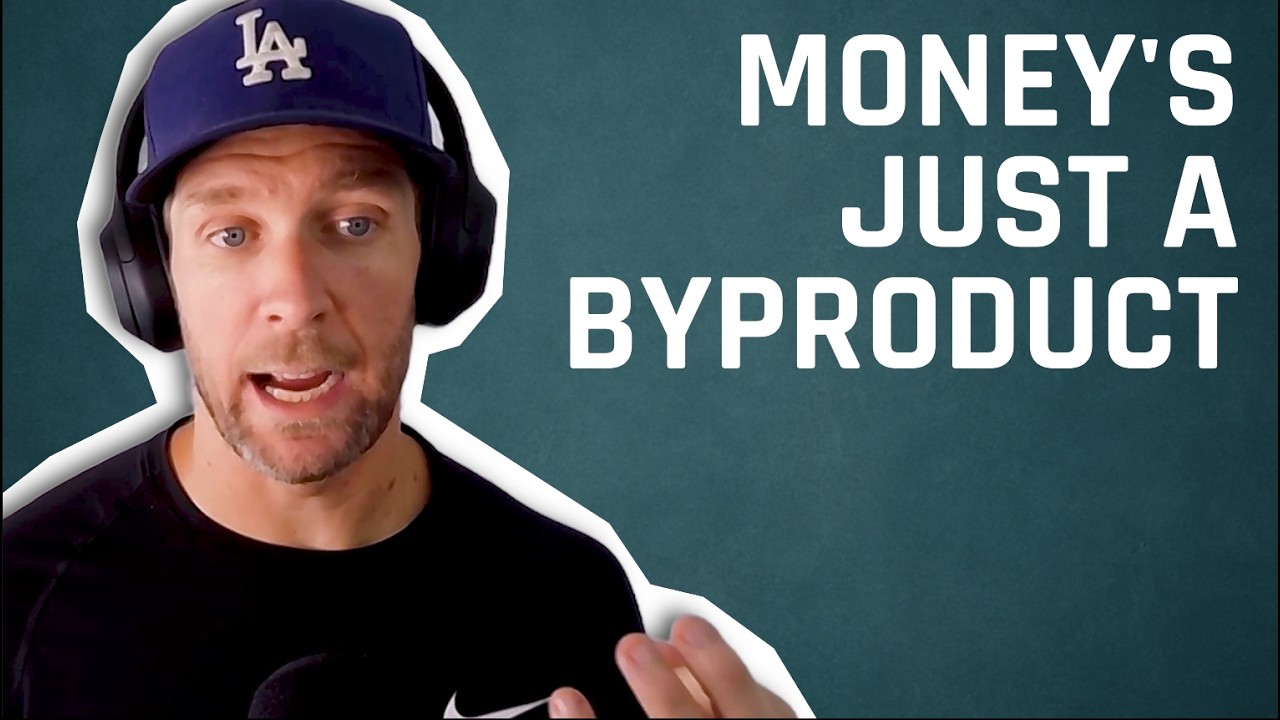
And it doesn't m I think I don't know if you how much time you've thought about this like it does not matter which angle I come at work from. I wind up in the same place, which is this is a spiritual one, not a financial one. Like, and and money is just like a nice byproduct. Like more dollars at this point is like more impact. I'm not buying more crap. I can tell you that, you know, like that that that I think like anybody who's had financial success will tell you like you can only have so many pairs of jeans and so many pairs of shoes and so many car like you can buy more boat.
You can buy a bigger boat or something. Yeah. That's also there's also like there's a an emptiness to it I think at some point like that's just you know a lack of selfreflection unless you really love boats in that case go buy a badass boat right you know like whatever whatever whatever whatever you're into. Yeah. Yeah. Yeah. You were going to say whatever floats your boat but it's like I was I was going to go like that's such a dad joke.
I'm like I'm going to park you right there. Yeah. Okay. Let me ask you a couple questions about things you said and then I'm gonna come back to the main point. So these are like more detailed questions. How old are you? I'm 44 as of yesterday. Oh hey happy birthday. Didn't know that. Yeah. Um, I'm 41. Okay. So, there's just context for everybody. Uh, you have a wife and one kid. How old is your kid? Daughter is almost 10.
Awesome. Uh, I have a 5-year-old and a three-year-old and two two sons. Young. Yeah, that's that's busy. It's busy. It's not as busy as it was a year ago, but it's busy. No. And same with two years ago. Um, uh, okay. You also said you were journaling about this. Is that a regular thing for you? I write every day, man. Uh, I spend a weird amount of time reading and a weird amount of time writing. Let's go into that for a second because I think it's relevant to this conversation.
Uh, what kind of writing do you do? Do you first of all, do you write with pen and paper? Do you like type? No, I type. Yep. Okay. And then do you use any software for it? Uh, notion. Yep. I use I started using Evernote like 15 years ago and I'm stuck in Yeah, I know. I I need to like get off there because it's the dumbest subscription I pay for. I just use as a word processor, but and it's all there. Have you at any point fed this is a side this is a side tangent.
Have you fed any journal writing into chatbt yet? And oh yeah uh almost all of it at this point I have uploaded uh yeah I'm trying to tell you anything terrifying about yourself. Do you know I start I have asked some yes actually. Yes. Uh yeah nothing like truly terrifying but it it is wild how effective chat GPT or Gemini any of them can be at like analyzing your thinking. Um I don't want to total aside my wife started to tell it all about her dreams every day.
So she goes in it and she's like here's what I dreamt last night and it start and it asking it for analysis on her dreams and she's like going to run this experiment for a year. She's like I want to see how good it gets at giving me like what the hell do these dreams mean? And right out of the gate we were reading one of the responses. I'm like that's pretty good actually. So she knows you. Uh yeah I the other day I I'm a journaler too.
I don't journal every day but I journal a lot. And uh the other day I told it um I just gave my last 100 journal entries and was asking Chet for feedback and and I said be honest with me about like what you see here. You know one and one of the pieces of feedback it gave me was you confuse the idea for action like you just you get the idea in your mind and you think that because you wrote it in a journal it's the same as it having an action.
And I was like oh it's a jagger of the heart that's completely right. It's like it's vulnerable to hear that. Um okay. Okay. So tell me more about your journaling practice. What do you how often? So, you write every day. How long do you write for? What time? Every morning I So, I'm an early riser. I get up between 4:30 and 5. Uh, Panzer loves to give me about this all the time on the pod. Um, and I kind of get up and first thing I do is sit I actually like I have no morning.
I don't do any of this like productivity crap. I grab a cup of coffee. I sit down and I just start writing uh whatever's on my mind. Like, so sometimes it is like pedantic nuanced business stuff. Sometimes it is just like straight brain vomit. Like this is just what's on my mind right now. And I could be stressed out about something or my kids my kids struggling in school about something. It doesn't matter. I I have just come to learn this about myself that like I don't think clearly unless I write.
And I think a lot of people are like that and that we just don't ever build the muscle around writing. And I think entrepreneurs especially my guidance to almost everybody is like you should build some kind of practice around writing because it will make you a better thinker. No question. Which will make you a better entrepreneur. Yep. There's a Christian pastor who I like a lot who's written a whole bunch of books. Um, and I've heard him say the reason he writes so many books is just because writing is how he thinks.
It's like so that's that's the reason they end up in books is like he that's what he does is like he just he writes and writes and writes and writes and that's the way he gets clarity to his ideas. I've always really loved that idea. So one of my big fears with AI actually is that it will like sort of sap people's ability to to go through the mental friction of writing um because it will do it too much of it for them and you need the mental churning.
I think you do. Yeah. And think about that like is AI going to take away your ability to actually think? So like if you just depend on a two I don't know though. I think I you know I liken it to like the calculator you know remember when we were in school like young in school and you started using the calculator and your teacher would give you crap cuz like you need to learn how to do the math yourself. I don't know how true that is.
Like I still don't think I could do the math myself and I think I've turned out just fine in life. If you are building a business and you need help on your team, you should do that with my friends at More Staffing. More staffing is the best agency I know of for connecting you to incredible talent in the Philippines for your business. And the reason I know that for sure is because I have built my business with their help.
In fact, there is basically nothing I touch at this point that is not also touched at some point by more staffing or one of their sister companies in terms of the humans involved with doing the work that I do. And that is a major reason why that work is consistently good. Um, I love working with more staffing, not because I am just trying to find the cheapest talent in the world, but because I want to get access to incredible talent at a price that I can afford.
And that is a great uh proposition also for the people I'm working with. And that is the opportunity in front of you with more staffing and hiring in the Philippines. Find incredible talent, manager, director, executive level talent, not just virtual assistants, but people who are going to really contribute across your business, across every kind of department, people who have deep e-commerce resumes. And if you can find that talent and offer them um at or high end of the market wages in the Philippines, it will still be drastically cheaper than hiring that same level of talent in the US.
That means you're going to attract incredible talent. You're going to provide things for their lives that are going to be incredible for them. Make it so their work is paying them in ways that is meaningful and important. I've had team members buy houses off of uh salaries from mine. I had one buy a field that they could farm and employ people to farm it. incredible things on amounts of money that are shocking for you if you are based in the US.
Um, and it fits right into this conversation about the possibility of contributing in some way to people and to meaning in the world and everybody can win at the same time. That is the basic proposition of this. That is the way that I have um thought about it. Uh, I love it. Go to more staffing.co/af morestaffing.co/af to get connected to them today. They give you a one-year guarantee on any talent that you connect them to.
So, if you uh hire with more staffing and that person does not work out for a whole year, uh they will replace them for free. Of course, hiring is a hard thing. So, no matter how good more staffing is, it happens, right? Uh very rarely. I've only heard of I think one instance of somebody having to get rid of somebody for more staffing on their team, but it does happen. And um and so they'll guarantee you that for free for a whole year.
That's way longer than most staffing agencies will give you. Um they'll also provide ongoing coaching and um training and things like that to their team. I have been with them in person in the Philippines and can tell you that people are excited to be working with the team at more staffing um because Filipino employees have told me as much uh with a whole lot of joy about how their jobs via more staffing into other e-commerce companies in the US etc have been incredible fits for them.
You should go look into it. I highly recommend it. Staffing af yeah seem fine to me. Um we don't know each other that well. Maybe you're terrible. Who knows? Yeah. Maybe I'm a total psychopath. Maybe I am too. Yeah. Um Yeah. Um okay, let's You also said you read a lot. What do you read and and like how what's Do you have like a practice around this or is it just like an idol thing? Get to the end of the workday you read.
Do you do in the morning? Like do you read anything specific? Do you read, you know, anything like that? I'd like to say I read every day. I don't. I probably read like three or four days a week, five days a week tops. Uh typically concentrate on the weekends because that's when I have like the most quiet time. Um I read anything and everything. I I like again I will read like you give me a book on the on marketing or psychology I'll read that.
Uh I'm like a huge Chaldini fan. Love everything about what he's written. Um right now I just finished reading Effortless by Greg Mchuan. So he wrote uh that's his second book. The first one I forget his first book. Also awesome but it's on like doing less but doing it well and doing better. Uh I love that concept too. Like just doing less things. I kind of I'm all over the place. I I sometimes read fiction. I like spy novels and all like those old Tom Clansancy books.
I have them all like all original copies, too. Uh I don't know. I'm I'm also a like I think you've heard me say this before on the pod if you I don't know if you listen to it, but like I I love consumer and consumer goods and consumer culture. So, like I read about like the luxury strategy and I just I like how like all this whole world that we exist in and how it intersects with like what did you start off by saying like after all I know before we were recording you were like hey after all we're all human and I'm like that's a big part of this right like spirituality to me is it's like how like core question is how do you be a good human?
Yeah. Yeah. Absolutely. What does that mean? you know. Okay. So, so, okay. So, I I asked those questions because you mentioned them and I just want to get like context for like how you're going about how you're going about trying to process this stuff in your day-to-day. Um, okay. So, then you also said a second ago something about like um you know this notion of things being personal development and what you're aiming at.
I mean, like, I don't want to put my assumptions and views on um money on to you. I I'd like to hear like your thoughts. I think whatever you think is sort of reasonable to consider. Um but I think it is interesting that what you brought up about how you've already had an exit and so you you have enough certainly, you know, um you said you're bo I mean almost expressed like new toys don't do that much for you. Um, I guess I guess what I'm asking is like how true is that?
How much do you feel like you're motivated at this point in your career by money versus and I'm not trying to pick on you. I'm just it's like the it's like the right answer to say like you don't care about money, but it's also entirely true, right? I've tried to interrogate this about myself like how much am I driven by more? Yeah. Yeah. I I think where it comes it's like there's an unhealthy relationship with money that I think uh entrepreneurs especially I think I meet a lot of entrepreneurs as I'm sure you do and like a lot of us operate from like some kind of chip on the shoulder or like some thing that we were lacking and like is it a kid or there's just something right um so I think that there's a lot of I've met a lot of entrepreneurs that have really unhealthy relationships with money I think early in my career I did I was extremely money motivated um and I think as I've gotten older And then like once I was beyond scarcity and like financially free and didn't have to work again, it definitely starts to lose some amount of importance because all it does is uh all money does is just allow you some time and space and all I do with time and space is think uh and I just start to ask questions like I'm just a curious person.
So, I think over time I am less money motivated, but I can still very easily go there. Like, it's it's such an easy thing to tap into like, ooh, that's opportunity. I want to go do that. And I will still to this day like catch myself after the fact being like, I did that entirely to make a dollar. Uh, and I it doesn't feel good afterwards, right? Do uh do you can you elaborate on when you say you previously you were extremely money motivated like what that looked and felt like?
Yeah. I mean my first Yeah. Uh yeah I wouldn't say you can also refuse to answer any question I ask you honestly I think it's like it's a great topic uh depending on the audience right like it's a great topic. the I would say like I was not materialistic but I think a lot of my identity as a young man was tied up in like I need to be outwardly seem successful. Uh and I think that was more about like I just did not know myself that well in my sort of like mid to late 20s and early 30s.
I I sort of think my wife and I were just talking about this yesterday. figure out for a hike that like I feel like I'm starting to figure out a little bit more about who I am, what makes me tick, what do I like, what do I don't like, what are my needs, wants, all that stuff. And I think in my 20s and 30s, like because I was pretty good at making money, it was very easy to to wrap myself up in like I'm a business builder.
I'm successful. And I think that that's a for me that's at least a dangerous place to go because like when those moments hit where I was not doing well, I just felt like crap about myself. Even though I was like I got a good marriage, I'm pretty healthy. Other good other things could be going well in my life, but if I was like financially or my business was doing poorly at a moment in time because that happens. Uh I also like I just attached myself to it.
So when I say I'm no longer money motivated, I think I think I just I don't care as much or I don't have my own identity tied up in the success or like not success of my business, right? Even though like the measure of a business is clearly like you keep score with financials. Um I think that's part of why it's always tempting is like there's just it's so it's it's the you have to that's right and also it is the most measurable thing.
So it's just like a you manage what you measure problem. You can't measure vibes like it's really really hard to measure your joy or contentment or something like that, you know? Even though I think I think when people want money, what they really want is joy. They the dollars themselves can't do anything for that. It's just it's what it's it's what it potentially provides you for. And I think it has varying abilities to deliver that depending on how much money you have and depending on your relationship to it.
You know, I certain I certainly won't say it has no ability to deliver that. I I I don't I also think people No, that's also a lie. No, no, no. Like having money is amazing. It's great. Like you're you're significantly less stressful when you are financially free. You really are. Like anybody saying otherwise is just full of crap. Yeah. I I would say I think I I think what it is is that um like this like the business building thing at least for me it's not so much that I'm chasing joy.
I think it's like there I have two things that I I look for. It's like one is I want to feel like I'm doing meaningful work and I'm being helpful. In order for me to do that and feel like it's worthwhile, that's where the money piece comes in. It's like I like to over earn and overperform there. So, it's like meaningful work and over earn. And then on the other side, it's the like joy part. I've actually realized, I don't know if this is a you thing too, but I have sort of sought out whatever I like my own version of peace, right?
And so like to me that's like I uh I've posted this before, but like from where my house is here, we just have this incredibly expansive and large view of like lakes and mountains. I like to just sit outside quietly. And it's that's my version of like this is peace. And I think a lot of us are chasing that without really knowing it. That that's it. It's like there's just this like calm that you're looking for. Especially in our world right now, it's just very noisy.
So, I do think that there's a relationship between those things. I think that's just it's I think as entrepreneurs, it's just so easy for us to get tied up in the numbers because like we look at them all day. Like think dude, think of it like you're an ad guy. How many freaking numbers can you look at a given minute a day? Yeah. I almost always dollar signs. Yeah. One of my one of my like main ways of avoiding doing work is checking out accounts actually.
Like when I it's it's like the same as checking Twitter to me. It's like it's it's not actually productive. It's kind of dis I mean I I don't there's parts of it that are productive. There's parts of Twitter that are productive. Like I don't I'm not I like Twitter. I like I'm not anti those things. Um but yeah, it's what you're saying is right, which is like it's just a default behavior that uh is not necessarily correlated to like the actual best use of my time or something like that and in terms of the things that I care the most about really.
And I I feel this thing, you know, I I've said for a while about my business that I'm not really trying to grow it. And I go back and forth thinking about like uh how aggressive I try to grow my agency. I have four clients. Uh it's very very boutique. Um goes goes well right now. Like trying to do really good work for a few clients. That's it. And but I think about trying to grow it. And I I really try to answer the question of like well that will that will require cost for me to go try to grow it. trying to grow the business requires risk and cost in a lot of ways.
Um, it's going to require yeah all these things. And at the same time, I don't think I primarily care about getting like richer, you know? I already by any reasonable standard of the word, I'm already rich. So, like I just think I just think like it's it's it feels self-deceptive to me to think that having more stuff or money or whatever is going to deliver me addition increasing amounts of joy. I think uh I can already get most of the things I need and and in fact I'll take it another level and say if I want to pursue something I think the most likely thing to deliver the highest benefit to me would be if I was truly content and if I like actually re if I re and I would sort of put the the word content and the word joy with a lot of overlap.
Um but uh but if if I had if I have that then I it's really hard to figure out how your life is bad like even if let's say I lose half my clients and half my money but I maintain the contentness. So so then I think that's a win. So then it feels like or if I go up in contentedness, it feels like in that case what I the logical the rational response to that is to pursue contentedness with in with the same level of of motivation as I would growth or wealth or whatever it is, you know, because that's the thing that I actually want.
So having said all that though some to come back to something you said earlier if I sort of try to frame up the potential desire to grow a business in that you said right at the beginning of this conversation something that I've been thinking a lot about recently which is that almost everything good in my life is on the other side of cost um and and challenge and uh and it seems to me that there's something like a moral law of the universe by which that is true and like you sort of we all see this anytime you like avoid eating like crap you know because that mean that if you if if you eat a bunch of garbage food, what you are doing there is like incurring you're incurring long-term cost in exchange for short-term pleasure.
And you want to flip that, right? But it's really hard to flip. It's super difficult. Okay. It's like one of the hardest things in life is to and yes. Yeah. And that that relationship. So then it makes me think to your point about building a business as a spiritual thing. Well, maybe the whole reason I ought to pursue large building a larger business is precisely because it's costly. Um, in the sense of like so far it seems to me that like that is the way you grow in life.
And if there really is no separation between the Batman suit and like regular or like Andrew at home with his wife and kids and Andrew at work, if that's really all just one person, then the more able I am, you know, granting some confines around I don't want to work 900 hours a week. I don't want to, you know, I'm not saying you have to like sacrifice everything for work, but I'm saying within some constraints like that and some boundaries.
It seems to me that it might be for the development of becoming the um the highest character individual I could be that it is worth pursuing something difficult like growing a business uh you know and managing people and managing clients and things like that precisely because the val the you know and I think that would fit with what you're saying about like that's the spiritual pursuit element of it is like the whole reason to take on the difficulty aside from anything else is because it does that and now then you just get a new difficulty which is like okay how do you um how do you live contently while generating more money or something you know like that there's just it's a it's just a next question you know so I don't know if that makes sense but that's the like lens I've been thinking about recently you can do smarter and better CRO conversion rate optimization in your business by using intelligence and that's because intelliggeems is not first and foremost CRO software the way people think about it they're not optimizing for conversion rate what intelliggems helps you do is optimize for profit it and that is a key distinction and is the reason why Intelligjam has separated themselves from the rest of the field in this category.
Intelligence ties in first of all to all of your data for your product data um and helps you to understand uh how each test that you run on your website or landing page or whatever uh actually uh impacts not just the conversion rate on your page, not just the AOV on your page, but the actual profit that you generate per visit to your website. And because that is the goal, that also means they've built the tool to help you test the most impactful things in the business.
For example, things like the price of your products. I have a client just the other day who finished a price test where they thought, "What happens if we take this price from $12 a unit to $15 a unit? Maybe they're undercharging for it in their category." What happened? AOV went up, revenue per uh per visitor went up, but conversion went rate went down too much. You did all the math, combined it all together with the COGS information, and it was a loss.
And they discovered, nope, they should stay at that $12 price point on that product, and that was the way to maximize profit. They could see that all extremely clearly know for sure what the answer was after a whole bunch of debate about whether or not that would help or hurt based on their margins. Um, that's the kind of thing that you can do over and over and over again and can make a really big impact on the performance of your brand and on your ads. do that with um your sitewide offers like the 10% off you offer to new customers, your free shipping threshold, your average shipping or your shipping charge for different customers, shipping charges at different kinds of shipping.
Like there just so much stuff like that that you can do. You can even do it with different SAS products on on your website. You can also do that without the help of a developer with a really quick install. Um Intelljs will guide you through it. They also have great support. Really awesome software that uh if I was running an e-commerce business right now, I would do the same things multiple of my clients are doing. I think three out of my four clients are using Intelligjam uh to build their CRO tests and to learn definitively what is driving profit in their business and on their website.
Go to intelliggeems.io intelliggeems.io use the code ferris 20 f a r i s20 to get 20% off on the first three months of using intelliggeems intelliggeems.io code is ferris 20. Go get it today. Yeah, I guess probably part probably part of why I lash on your tweet so much. Yeah. No, I get listen man I I have this conversation with a lot of people right now. Like I think I think part of what you're hitting on there is just values, right?
So build a bigger business. Sure. If it's in pursuit of of whatever you already value, right? Like I think that's one of the the the core things with money is money is just an amplifier, good or bad, right? Um and if you're going to go out and say like I'm going to trade cost, time, family, health, like the there's costs to like building something or do there's costs to doing anything very hard. Um, and I'm saying like very hard as in like you're looking for a top 1% or a 1% of 1% outcome.
And I think that's like the people who say like I'm going to go build a big company. That's what you're putting your hand up and saying is like I'm going to go do a 1% of a 1% or a 1% of a 1% of a 1% outcome. And that there's an incredible amount of cost every time you like try to pursue something harder and larger in any aspect of life, not just business. Um so I think then it really what it comes down to Andrew is like what do you actually value right and and to say like it's a personal development journey it's like yes but to what you know like for me curiosity is a major driver uh being helpful is a major driver um I whether I don't know if this is healthy or unhealthy yet I haven't done enough like unpacking and work on it but I really I get a lot of joy out of making physical things that that are in people's lives.
I don't know why. Uh I think I think I grew up in retail. So like I was born into it and my family just makes stuff. Um so I don't know if that's it or is it actually just like is it an ego thing where like I just get I get high off of seeing like that person has a lomi in their kitchen. That's my PLA case. I like I invested in that company. It's used everywhere. So and I and I what I have figured out though is like it's the the physical things there's like an element of senses and tangibility.
So I started my career off as a software developer. I did not get the same feeling out of making software that I did I do out of making physical things. So I to all that is just to say like the journey for me at least like again going back to the spirituality thing. It's really like it's been an exercise in also figuring out like what do I truly value and what principles do I want to operate my life off like around. You you just also introduced another challenge with this which is that you you said you have a value that you can state which is having physical goods in people's homes but then you evaluated that by saying it may or may not be healthy.
It may be healthy it may be unhealthy. And I think another thing that's extremely obvious about the human condition is that our values very often lead us astray. So, uh, our desires, maybe our desire, maybe values is not the word, but I mean, I would say that, too, but our desires point us in a direction and they they tell us and promise us that we're going to have some kind of return, uh, that's going to be positive for us.
And yet, when we actually go and do that, it doesn't actually deliver that. And that, again, this is very obvious if you've ever wanted to eat a donut, you know, like or too many donuts or something like it's just like that's like the simple uh outworking of this kind of thing is that you have a desire, you meet the desire, it goes back, you know, whatever. So, um, so I think that's just another really big challenge with this is like you're trying to sort out, you know, what things are right and you you just might be wrong.
You just might be wrong about whether or not it's good for you. Um, and and that, you know, you know, one of the things I've noticed uh, in having talked, one of the benefits of the podcast is just like you you meet and you see this, right? like you just meet so many interesting people and being being so narrowly focused in the world of consumer. I only talk to people in consumer like I I have a really good friend of mine who's big in the SAS world so I get like some taste of what that looks like over there but for the most part my social network is in consumer.
I have noticed something uh about consumer operators. Anybody who plays in consumer, we are all very good consumers. Like the best consumer operators are good consumers. We uh we did this uh like brand meet up in LA last week with Pod and the the Buck Mason guys were there or one of the Buck Mason guys were there and Sean at one was like we were chatting afterwards and Sean made this mention to the Buck Mason guy. He's not going to care that I say this that he was like he's like I am such a Buckmason superconsumer.
He's like I like I reached out to you guys cuz I just bought so much crap over the years from you and I'm like oh Sean's a really good consumer. Like he's he he like dog foods his own industry and I think when I started to look at like all of the operators closest to me, we are all good consumers. Like every single one of us loves this stuff and for whatever reason like it's just it's who we are. Yep. Yeah. It's funny.
I um Yeah. I I I totally see that. And and it is partly like a curiosity thing like you buy something from some other company and you're just like, "Oh, this brand kills it." And then you just like take a certain amount of delight in their emails and in their product selections and their merch. You just kind of see on you you you see into the matrix of all the things that they're doing, you know, sort of behind behind what's being presented to you.
And if you're impressed by it, it's like, "Oh, it's it's awesome." Oh, dude. I was peeling I was peeling apart a box the other day. I was like, "I got a I forget my wife ordered something and the box came in and I'm looking at her like unboxing this thing. I'm like, that's like that looks really good." And I went I like I'm holding it. I'm like, "What the hell is this made of?" And I actually started separating the layers of the of the box and I'm like, "What is in this?" It's like there's fabric in here and like, "Holy crap, I'm a nerd." Yeah.
Yeah. Oh, totally. Yeah. I I had some friends over who were like supply chain people at one point and they were in town and I was showing them something and I was like, "Hey, I'm kind of interested in making a product in this category." And so I showed them like the the competitor brand or whatever, you know, that I referenced. And even before I started talking about it, they just immediately flip it over and start looking at the ingredients and look at the packaging and they they just they can't even look at the product itself.
All they can see is like underneath and inside it, you know. Um do you uh do you think when you say that the um that the that building a business is a spiritual pursuit disguises a financial one? Um do do you have any like was there any specific thing about business? And again this is almost a month ago that you tweeted this so you might not remember but is there maybe or maybe it's even something more pressing today or something.
Is there like a specific element of the experience that felt like that? Is it people management? Is it selling a product to people? Is it like is there something like that that is like the thing that made you think about it? No, you know what? Okay, so what really triggered the tweet was um so I'm a I'm in this thing called YPO. Have you ever heard YPO before? So it's like a EO there's like it basically it's a big group of entrepreneurs around the world.
It I think it started out called being called the young professionals organization. So there's 33,000 members. Um and it YPO is like a revenue limit to get in. So like I think every member of YPO is like 15 or 20 million and up in revenue. And it's every industry, man. So, I had two of my friends and YPO mates over to my house. We were just having wine out in the backyard and just talking business, talking life. Like, we all have similar age kids, similar interests.
Uh, and they left and I was like, I just sat down. I just like I felt compelled. I'm like, I want to write. And I just got so many thoughts cuz it was such a like great few hours that we spent together. And one of the things I wrote down is like, my gosh, the business of business is people. And I don't spend enough time investing in people anymore. Like I used to I used to be like that it was like one of my principles was just around like your network is your net worth.
And I just kind of stopped at one point. And I I ended up this on this like whole spiritual thing because like at the end of the day, this experience that we're living is a human one. And one of if you talk to people like I think one of those things that you hear about when people get to their deathbed and it's like the the regrets are almost always around relationships. Uh almost always. And I was just like, it just hit me and I'm like, my like this whole thing is about like the the the humanity of it.
And one of the greatest benefits I've had from building companies is just the people I've met. It's like it is an incredible treasure that I think I've like there's moments where I just undervalue it. Uh and it's a community thing. Like it really is like I I think and I I think like another good example of that for me has just been like how much fun it's been to do the pod with those three jackasses that I hang out with.
Like I just like I have so much respect for these guy and it's just so much fun and and I think that like all of this just to me is like that's what it means. Like this is it's it's a very spiritual and very personal thing and I I just haven't really put as much thought into this element of it. And then I'm like I I'm gonna I'm I'm gonna just like throw this out there and see if anybody cares about this topic. At least one person did.
We'll see if anybody listens to this if they do too. Yeah, this might be the worst rated podcast you've ever done. No, I'll tell you what's going to happen. I I can almost guarantee you what's going to happen. It will get probably relatively low download and view counts relative to my other content. Certainly relative to uh here's how to make your meta ads make money. Yeah, I can make you more money. Yeah, right. Yeah, it will get lower than that.
Um, but I will get a whole bunch of individual texts and emails about how good it was. Like that almost that almost always is what happens when I do any episode like this. I've done a few of them before. And I and I think that's interesting. I think what it taps into is that almost everybody feels this in some way that at some point in everybody's life like very few people are going through their day-to-day life in business and just not thinking at all about whether like about what matters, what brings them joy, what is significant in life, you know, like I almost everybody's thinking about it in some way.
And so when somebody pauses in a like business podcast or whatever and says like here's other people who are kind of in your world and in your case, you know, well past at the revenue level and exits and all those things well past what most vast majority of people have experienced. Um here's here's how these people are thinking about it. I think it always just resonates in some way really deeply even if Oh yeah. Even if even if it's not like everybody's exact it's not algorithmically powerful, you know.
Totally. You're you're you see the same thing we do. It's like we do a pod or we send a newsletter on something really tactical and like I would say like immediate term value and it's like the the data is just like it screams and then we do like uh I sent a one of our operators newsletters was like I sent like everything I learned about selling my first company and the responses you get from that is insane because it's all the it's the human stuff and and I I think that's always like the that is to me it's like a depth versus breadth thing.
There is an infinite amount of things that we can talk about with running great advertising and marketing because it's also one of the more fun parts of what we do. Um, and there's just so much variety and so much surface area there. At the end of the day, it's like when you sit back and you however you unwind, you're probably not thinking about your ad account. Like I don't you try I try not to. Yeah. It's it's a little hard for me because I'm in the ad account all day, but like Yeah.
I Yeah. Yeah. You want to go ahead. Go ahead. No, I was going to say you want to know uh on your topic around like the looking at numbers as like a form of distraction. I want to build I might just build this for myself is like I would like to build a counter for how many times I hit the meta ads refresh button in the in their business manager just so I could surface a number at the end of the day and feel bad about myself cuz like how many times you unlocked your phone that day.
Yeah. Yeah. It's like it's my step counter for meta ads refresh. Yeah. I want that. somebody somebody who's listening, build that and I will buy you buy it from you because I need I need to whip myself. Yeah. Yeah. I It's like a It's like um what you actually really need is like the the cell phone type software that like locks you out of your phone after a certain number of things or whatever. You need that for the ad account, you know.
Um I uh I think you said something else interesting which is that you I asked you what made it a spiritual pursuit and what was specific about it and you immediately started talking about people. Um, and I think a lot of times when people hear the word spiritual, they're not thinking about people actually. They're thinking about um, you know, spirity things like uh, meditation and prayer and God and yeah and and even in the way they think about God or or or something like that, they're thinking about it in terms of like personal spiritual practices like like I said like meditation or something like that or prayer or something that comes into it.
Um, so I I think it's interesting that you went straight to the idea of not that, but of actually of people as uh as a and human connection. Um, and I'm just curious if I mean you might have said enough about that already, but I just wanted to put my finger on that and see if you had any other sort of reaction to it. Well, I guess I I I might be wrong on this and I I spirituality is such a personal thing. Like it's so personal.
Um, to me it's always like community and connection has always been something that fills my cup. And I'm And the funny thing is is I'm actually not an extroverted kind of guy. So like you give me an opportunity. I would prefer to sit alone at home. Yeah. I I need both, right? And uh but I have I have found over time that like I get great joy if I like when I reflect you know like sit back and reflect on life a moment whatever there's just so much joy in those moments spent with other people uh and I I I do think that some element to this this might just make make me an old guy at this point in this space is like everything being so digital and so fast and now with AI that I I crave crave that slowness and I you know when I for me like spirituality has always been this like greater this like we are all connected whether we can see it and touch it and feel it and hear it all that stuff that's different but like I just have this belief that we are all connected deeply um you know we're we're we're all sharing this experience together so I I kind of like end up sort of what prompted the tweet is like is that thought and and like I should I should do more there.
Do you um do you have that? This actually thing I found a lot. I'm I'm I'm very involved in my church and my church community and uh and so I have a lot of local community to to your point about people uh to where like my wife and I have no plans to move ever, you know, like we're just like we have Yeah. So I I'm But this is not something that's necessarily the case for people who are not involved in churches or something.
So I I'm curious um as you talk about that with people you you have obviously made good friends. I think those operators relationships like I know that came out of a text group. Those are those are not just like business colleagues at this point. Those are real friends in your life and stuff, right? Text them about everything right of that group of guys. I know Mike probably the best and you know just a pretty Yeah. You know the kind of person Mike is like gez 100%.
So yeah. So so I have a sense of what those relationships are like. I'm curious if you have anything like that in um sort of not connected to business locally, those kinds of things. like friends around in in community and if so like what do you do to prioritize those relationships? I think I I mean I've just talked to a lot of people especially in the world of remote work who feel unable to tap into anything locally like that and I'm just curious what you've done if anything to sort of cultivate that if being people is the spirituality you know you can't just do that on Zoom you know as much as this is a great conversation like it's not it's not the same as if you were doing this at my house you know so like no it's not you know when we were all last week when we were all in LA uh I think it was Bill Dellesandro you know Bill yeah he's my client actually.
Yeah. Okay. So, Bill, we were we were leaving the hotel. Uh well, sorry. Bill and Katie Mamari from Kaden Lane. They had an early flight and I was up getting a coffee and Bill as he was leaving, they're getting in an Uber and Bill's like, "God, it's just so nice to see real people like in in real life." He's like, "We got to do this again." So, to answer your question, like locally, yes. Uh, I spent the first 18 years of my career in Toronto, which for everybody listening, if you don't know Toronto, it's just really big Canadian city.
I think it's like the fourth largest city in North America. Uh, so it's massive. Um, very close to New York, Chicago, like huge city. And when you live in a big city, like you're just it's really hard to not feel alone and anonymous and you just like there's no there's no real sense of like community in the city. So, I moved out west to British Columbia. It's the west coast of Canada. And my wife and I moved out here after we sold our first company.
Didn't know anybody. We just fell in love with like the landscape, lakes, mountains, vineyards, like very healthy, active living. And what happened over the last seven years is some of my best friends uh that I met through like mastermind groups and uh events over the years all moved here. So there's probably I want to say there's like eight or nine families that all kind of wound up in the same place and we do a lot of life together.
Like Andrew, dude, we like we do vacations together. Our kids are all the same age. They go to the same school. We spend Christmas together. We do Thanksgiving together. Like uh when when one of us has a birthday, it's like like today they all walked into my office uh because my birthday was yesterday with a birthday cake singing me happy birthday. Very embarrassing and I hate them for it. But like uh it's we do so much.
You just it's like it's a it's a family you choose. And I think that's kind of what you're getting like with church. It's like that's a chosen family kind of element to it. Um and yeah, I do I think I think that it's like it is a deeply spiritual thing. And and I think that you're right in a world of remote work and digital we do not we do not society invest in this enough. All the data that I've seen is scary. in like I think I saw in one it's like um the time spent with friends on a per day basis is down 66% in 20 years.
That is freaking insane. Uh like again go listen to old people who are on their deathbeds. Like they're going to tell you you're screwing it up, you know? So yeah, I I I now one of my things this year for the next 12 months with business is like I'm gonna reach out to more people in YPO connected to the pod and just spend more time connecting with folks just because I think I think it's a nice thing to do. Yeah. Um I have a I have a newsletter idea percolating right now uh that hasn't I need to actually think about it a little bit more, but I'm going to write it at some point.
And the the subject line is going to be you're going to die. Here's what that means for your business. Um, and I and I mean you just again you've referenced it a couple times in this conversation. The idea that people on their deathbed tell you something. I think most of us recognize at some point that like there's something about if you could sort of go forward to to Matt about to die and you could hear him tell you something, it would be like the greatest gift you could possibly get.
Right. I think I've heard that Kirk Cousins, the quarterback, um, doesn't count up for birthdays. he counts down. Uh so I I I don't know if this this might be apocryphal, but I I had heard something like this that he had like sort of figured out his average life life expectancy or whatever and every and so instead of counting up for his birthdays every year, he he does that and it's just like a it's just a yearly practice to remind himself of something that's otherwise sort of hard to keep your head around, you know.
Um but the reason I haven't written the newsletter yet is I haven't I don't have all the implications yet, you know? I I like I need to fill out what that means. But it's something I've been trying to think more about is this like that reality and what does that mean for how I conduct my day-to-day now because it's going to be gone in a blink of an eye. And so it's like yeah, it's it's um so anyway, I like that your mind has gone there a couple times in this conversation because I think it's it's uh both extremely relevant and really hard to stay close to in the day-to-day of your life.
Even though I like I I want it to be. There's actually an old Bible verse in the book of Ecclesiastes that says that essentially like it's better to spend a day um in the house of mourning like a mourning like somebody who's weeping over death than it is in the house of feasting. And the point is not that you should never feast of course. The point is that like there's just so much value to getting close to that at times for you to understand how your how your life works.
I think that you know that's like a bit of 4,000-y old wisdom for you about about that same point. wrong. Um, you know, I think there there's a I I think in the in our world, right, like I just call it inconsumer, but I would say like broadly in business, there's a I think a very good piece of wisdom out there that like you should as an entrepreneur, whatever you're doing, like you should try to get to like some form of financial security as fast as possible.
And I the reason I like it and I think that that needs to go handinhand with like don't just chase money, but like you should definitely get to like, you know, first base, get to like whatever that is for you quickly, reasonably. Uh, and that after that everything gets easier. And I think part of the reason it gets easier is like you just start to you start to ask better questions. you start to create time that allows you to spend it with like more people, more meaningful people, and all of that just starts to spin this flywheel that just makes you better at the craft of building a company, too.
Um, and then you start to discover like, am I directionally correct on on the moves I'm making? Am I like am I building the wrong thing or like, you know, climbing the wrong mountain? And it's hard to do any of that stuff if you are financially insecure. Like I I think uh having not ever experienced it but knowing people who have I think that that is probably it takes up it takes up mind share. I mean just in a way that's different.
Yeah. Yeah. For sure. You just need to get I think I think there's a bunch of good data too to say that essentially like you know once you get like that certain tiers of wealth building are strongly correlated with different levels of happiness, right? That like you get to certain points and it really does really does make a difference but then then it falls off. there's diminishing returns on it like we're talking about so far as I can tell um you know happiness data is famously difficult to get at because it's self-reported and it's hard to it's squishy and all those things but yeah um um I uh with just a few minutes left do you think um there's anything else that sort of on the practical of your life as you think about this kind of thing that that this stuff is um interacting with in your um in your day-to-day business stuff like when you go that set out your day?
Like is this, you know, are there any ways in which this is informing your daily decision making that you could sort of put tangibly uh in your sort of business life or is it more of a general cloud like a good cloud over the way that you're sort of approaching everything? I'm just I'm just curious how this sort of plays out in the day-to-day for you. I mean the there is this line that my business partner uses a lot which is you can't do the right thing wrong.
And I think that really good. He he's a he's like one of the most wise people I know. Uh yeah, you know, funny enough, he's also like really strong church community, like really strong um very spiritual man. But that like you can never do the right thing wrong is like I would say that that's a governing like it's almost like a very deep-seated human value that I I do believe in. And I think that whatever your definition of spirituality is and however you live your life and whatever is like guiding you um that that is a nice one from a like okay I'm building a company that company is going to impact people I think uh most companies do.
Yeah. Yeah. Yeah. Um that's a pretty good one to wake up to. Yeah. That's really good. I like that a lot. Uh I have heard Jordan Peterson say and I know people have mixed feelings about him but just a thing that I thought was sort of an interesting comment after being a psychologist for a long time. uh I've never seen anybody get away with anything. Uh which is like a sort of fascinating fascinating idea that like and I'm I'm sure there's ways in which that's not true.
But I think his point is just that like sort of that same thing you can't do the right thing wrong that you like it's you're going to experience in some way you know consequences for behaviors of yours and that's why you can't do the right thing wrong because if if you do it wrong like it just is going to come around. Um Matt this is a great conversation. Um people should listen to Operators podcast. They probably don't need me to tell them that.
Uh, but it's an unbelievable unbelievable resource in this community. I talk about this all the time as reasons um as reasons why I'm bullish on e-commerce because there are people like you who have exited a company, are building two more in a holding company, nine figure businesses who are telling other people how to do it. They are far Matt is way farther along in his journey than I've been, way farther along than you've been if you are listening to or watching this, unless you are a tiny tiny minute part of my audience.
And he is telling you how he did it for free, which is crazy. It is crazy that that intellectual capital exists in the world for free. Amazing. It's amazing. And then there's three other people doing it as well with different kinds of businesses, different approaches, all kinds of things. To say nothing of their marketing and finance teams and all that stuff. So, go check that out. Subscribe to the operators newsletter.
It is one of two newsletters that I subscribe to. That's it. Alongside with my friends at workspace 6. Uh yeah, it's just great. And so, go check that all out. nine operators.com. That's number nine operators.com is the place to go do all that. You can also follow Matt on X. Are you a LinkedIn guy, too? I don't really use LinkedIn much. I don't know. I try not to. Yeah, that's how I felt. I've been trying to avoid it.
Um, so follow Matt on X so you can get tweets like this and ask to interview him about uh one random throwaway tweet as well. You can try and see if he'll do that. Um, Matt, thanks for your time, man. I appreciate it. This was fun, dude. I'm happy we did this. This is great. Huge gigantic thank you to Matt Bertulli for having that conversation with me which gets into some vulnerable things and into challenging issues that people have all kinds of personal views about.
I would love your feedback on this issue. You can email me at podcastfgrowth.com um or tweet at me do something public get some conversation going around this sort of thing. Andrewj Ferris onx if that is where you are. You can also go to my website if you do not want to miss out on the you're going to die newsletter that I talked about. Um you can go to ajfgrowth.com drop your email address in the uh pop-up there. There you'll get my four free essential e-commerce resources.
Stuff I really use with my actual clients week in and week out. Pass them on to you for free. Um or you can drop your email address in the footer there. It'll do the same thing. Uh if you know pop-up won't trigger or something like that. I've got a bunch of great episodes coming up. You should make sure you subscribe. You're going to not want to miss them. Um so wherever you're watching or listening, you're going to subscribe.
Bunch more interviews, solo podcasts, and everything in between. And uh recently been also dropping some videos um like doing ad account analysis that I think um people are going to be really helped by where I get actual ad accounts and break down what's going on in them. So um that's really I just did one the other day that was 500,000 euro per month spent and somebody gave me access to the ad accounts show it publicly which is really cool.
So don't miss that. That's specifically on YouTube. Thanks again for watching for listening. Thanks again to Matt Rulie. I'll talk to you next time. [Music]
The words are the caption track's own and nothing is reworded or re-transcribed. Paragraph breaks are placed between sentences so the text reads as prose.
Free tools for your own script: paste a draft and see where it stands before you record it.
Paste your draft and see where viewers are likely to drop off, with a rewrite for each weak line.
Paste the first 30 seconds of your own draft for a hook score and rewrites.
Check your draft against YouTube's advertiser-friendly guidelines before you record it.
Read this channel's public videos and transcripts, and download a writing brief for it.