Getting the transcript
Reading the captions from YouTube. A video nobody has opened here before takes 10 to 30 seconds; this page fills in on its own.
Getting the transcript
Reading the captions from YouTube. A video nobody has opened here before takes 10 to 30 seconds; this page fills in on its own.
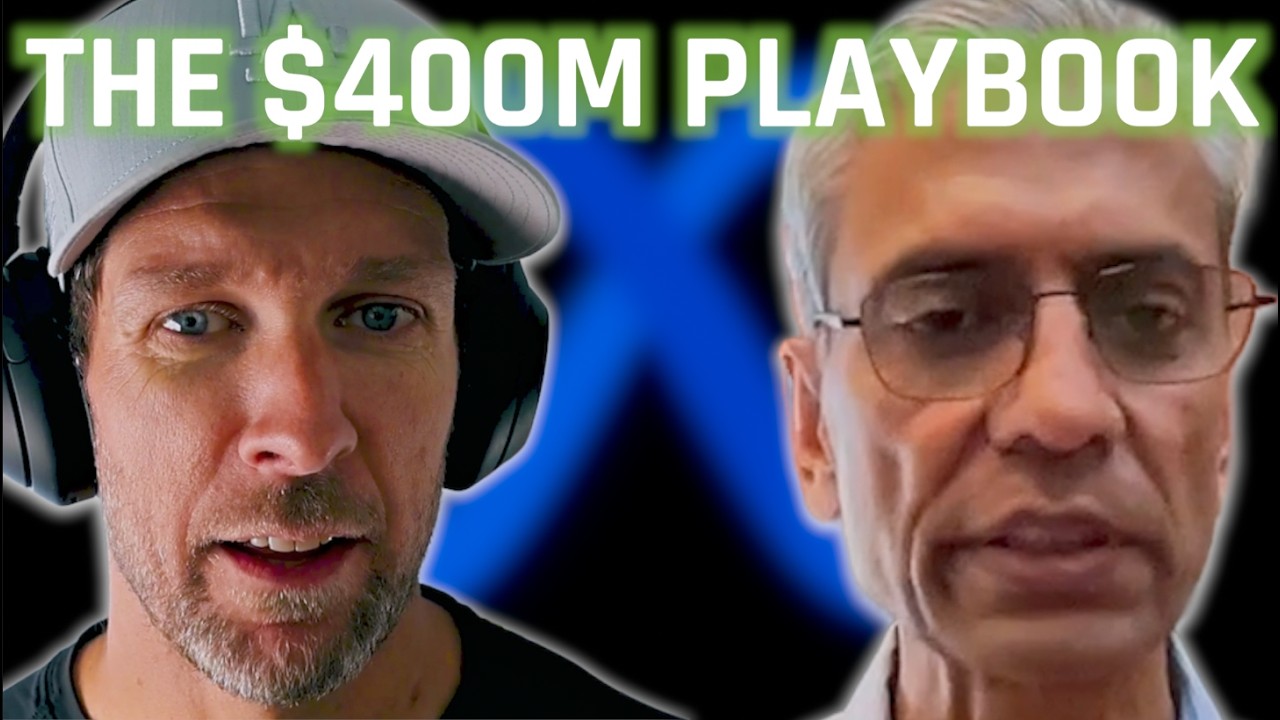
The Andrew Faris Podcast · @andrewfarispodcast
Words
10,149
Runtime
54:32
Speaking pace
186wpm
Reading time
42min
186 words per minute, between the 181 median and the 201 75th percentile of 349 measured videos. That distribution comes from the 349-video hook study.
Opening (first 30 seconds)
If you've watched or listened to my podcast before, you will detect in this interview that perhaps I have never sounded so nervous in the asking of questions as I did here. Because as I brought on Sunil Agraal, I just was struck by the scope of what he has built. Sunnil has built a $400 million per year publicly traded holding company with six brands in the portfolio. The largest of which is $240 million on its own. It's all jewelry and fashion accessories. an unbelievable scope of what he's doing and
93 words, the words spoken in the first 30 seconds at 186 words per minute.
Free, no signup. See how the first 30 seconds hold attention, with rewrites.
Sentence shape
| Measure | This transcript |
|---|---|
| Sentences | 533 |
| Average words per sentence | 19.0 |
| Longest sentence | 392 words |
| Questions asked | 52 |
| Sentences containing a number | 73 |
Most used terms
Filler phrases
523 in total: uh 260 · like 110 · um 50 · you know 34 · sort of 24 · kind of 13 · actually 12 · I mean 8 · basically 5 · right? 5 · literally 2.
A literal whole-word count of the same phrase list the Prepublish browser extension uses, so a phrase inside another word is not counted and a phrase used in its ordinary sense still is. It is a count and not a judgement.
Free, no account. See where attention is likely to drop, with a rewrite for each weak line. The free check shows the scores and the one issue costing the most. Or run it on the words above first.
Free · No login · See a sample audit first if you prefer.
What this transcript is
Every word below is the caption track YouTube publishes for this video, pulled from the video itself and reproduced unchanged. It is not Prepublish's writing, not a summary, and not a re-transcription: it is the video's own published captions. English captions, generated automatically by YouTube, in the video’s original language. Source: the video on YouTube. A channel that would rather this page did not exist can ask for its removal through the contact page, and it is removed.
No Script X-ray for this video: YouTube shows a Most replayed graph only once a video has enough views.
If you've watched or listened to my podcast before, you will detect in this interview that perhaps I have never sounded so nervous in the asking of questions as I did here. Because as I brought on Sunil Agraal, I just was struck by the scope of what he has built. Sunnil has built a $400 million per year publicly traded holding company with six brands in the portfolio. The largest of which is $240 million on its own. It's all jewelry and fashion accessories. an unbelievable scope of what he's doing and he gave us an hour of his time.
Remarkably, this content is free to talk about what has led to the success that he has experienced and we got to boil that down into a few things. The reason I would think I was nervous about this was not anything about the way Sun Neil presents. In fact, he comes across incredibly gentle and kind and humble in everything he does, but because I was just nervous that I wasn't going to take the conversation to the right places so that you could get the most out of this time as a watcher or listener.
You can decide for yourself if that's the case. But here's what I know after conducting the interview. I feel like I learned a ton from this conversation, particularly about how I carry myself and think about my role as a leader each and every day. This is a monster business run by an incredible CEO who's built something like almost nobody in this space over a longer time period than almost anybody else. Let's lock in.
Let's get to it. I shouldn't delay it anymore. Sunil Agraal, the founder and CEO of VGL Group and Shop LC. Let's get to it. So, Neil, thank you so much for your time. I I've really been looking forward to this conversation. I have admired you from a distance for a while without knowing tons and tons about your business. And so, when we connected at uh recently in Montana, I was very grateful that you said yes to to taking some time.
So, thanks for I know you got plenty to do. So, thanks for taking time. >> Pleasure to be here. >> Uh okay, Sunil, let's give some people some context for your businesses. So, Shop LC is like the headline business that I think people would know you for or or would see the biggest. It's the biggest of the businesses in your portfolio, but um and I said it in the intro, $240 million a year. That number is not only something that you're generous to share, but it's publicly traded.
So, so it's all public information. uh as part of VGL group, can you give the basic uh overview of what your brand like the the sort of portfolio looks like right now for VGL group and and maybe a quick comment about um any of that that you want to sort of focus on but but give give a little overview of of what you're working with. >> Sure. So total six brands Shabasi is US brand that does 240 million a year. Uh the next biggest is UK.
So we we do about 200 sorry UK we do over 100 million dollars amongst three brands in UK and Germany about 30 million and uh about 20 million is a wholesale revenue that we sell to other uh D2C players because we have manufacturing in India. So uh we manufacture jewelry and fashion jewelry, fine jewelry that we sell to many different uh retailers all over the world >> and and it's jewelry and lifestyle uh like some fashion accessories beyond jewelry across the entire portfolio.
All six brands >> uh couple of brands are only jewelry uh one brand is only lifestyle and uh three brands are mixed jewelry and lifestyle. >> Okay. Yeah. So, so all in that space. So, you've got jewelry dialed at this point. Uh, I, you know, understand exactly how to how to sell it. And then within that too, like I know that I know that there's a mix of stuff that you guys are making yourselves as a brand and then also doing some retailing for other brands as well.
Can you speak to that a little bit? sort of how much of that of the maybe at the level of the of the holding company of the 400 million like or really whatever level you want sort of how much of it is stuff that you guys are actually manufacturing and sourcing yourselves versus how much is stuff that you're you're getting from third party companies >> about 60% is what we manufacture in our in our facility in India so we have manufacturies in India uh we employ about 200 people in India making uh right from gemstone cutting to designing to making jewelry largely for our own six brands but also to some for other retailers US, Japan, Europe uh and rest of the 40% we source from China, Thailand, Indonesia, there's our own sourcing units but we also source from countries like Bangladesh, Korea, um uh Turkey, Italy, all many different countries.
I have a lot of questions. I mean, you told me when we were talking before that you um you know, on the one hand, you've got Shop LC at this Monster 240, you've got another business that you started yourself like from scratch in the midst of that as a brand, you know, and everything in between. And so that means you started while having this Monster Shop LC, you also started another business from zero. I think that's a fascinating thing on its own.
Um, but I want to actually start sort of from the beginning here because one of the I just recently recorded an episode of of my podcast just talking about I think the the sort of importance of reasonable expectations. And one of the things I I actually fear right away bringing you on is that people are going to almost feel like um like they're not doing enough big enough fast enough because here's Sunil with his $240 million business or whatever.
And um you know as a part of a $400 million holding company publicly traded all those things but you you started this business uh the holding company at least in what year? 1980 is that what you said? Yeah, I was 20 year at the time when I started this and it was uh gemstones. So I I didn't have money at the time. So I borrowed some gemstones, went to Hong Kong, went door to door and uh just started that and got lucky uh got some good clients and some good uh business colleagues who uh joined me in the company.
And uh >> so you you you borrowed the gems. Like did somebody say sure? Like essentially you were selling them on consignment basically. >> Yeah. Yeah. So they gave me on consignment. If I sell I pay them money. If I don't I give them a stones back. So they were kind. So they gave me the stones and uh I just I went to Hong Kong, took the flight, went to Hong Kong and just went uh door to door. Every jewelry store in Hong Kong central district I knocked on the door and went in and showed my staff. and some people uh took a liking to the product that I had and uh bought from me and ordered and that's how I started the journey. >> Did you in those days think I am trying to build a very large business like how clear in your mind as best as you can remember 45 years ago.
Um, how clear in your mind were you that you wanted to build a big business versus like this is a thing to make money in the short term? Like >> uh I was a bit of ambitious but I didn't know uh what size I could make or what it entails to make a big business. I had no idea. So you uh go with the ambition keeps you going, keeps you experimenting, testing, uh course correcting. So many times uh you know the tough times and learning times but all of those difficult times were opportunity to learn something new and just on. >> So okay so it wasn't like you had a very clear idea that you were trying to build something big but would you say you were always ambitious? >> Yeah, I was always ambitious. wanted to do something uh meaningful with life.
Uh wanted to make impact and uh uh so not just impact but also make a good living, good kind of uh uh financial freedom. That was in my mind do something uh you know meaningful and God has been kind. >> Yeah. Yeah. Do you uh do you uh in the midst of that, do you um if we sort of jump ahead to where things are at right now, how how much of the businesses are uh well actually let's go to 2007 because 2007 is when you start um when you start shop LC and shop LC is a really interesting business to me because you have this this mix of you know I know some meta ads DC kind of stuff is in there but really like a TV first brand uh so far as I can tell.
So um so how did shopl start in the midst of this because that's sort of the headline asset in the in the portfolio right now. >> Well we were selling to TV networks like QVC, JTV, HSN. So we had the understanding of how the business work product works, how the business works and so we started first in 2006 in UK uh TV network and then 2007 in US. So uh understanding that business from seller point of view coming from other side the retailer point of view it seemed easy initially it was not so had my tough time initially and in 2007 was right before global financial crisis in 2008 2009 >> I didn't think about that >> it was pretty tough but uh during that tough environment we figured out uh deep discount model and we being vertical we could serve uh to that audience who looking for deep value and that model continues till today. >> So let's talk about that model a little bit because I think it is interesting um you guys do you called it a deep discount model.
Can you just walk through what you mean by that phrase? >> Yeah so average price point for our product is generally much lower than QVC or other competitors. So QVC, HSN, GTV. So we may be about uh just a little over half of their average price point. So that gives customer a perception of value. Although margin wise we may be equal or better than them but uh the margin also is a factor of us being vertical. But just to give an example every Friday everything we sell on our TV is under $10 $10 less. >> So we sell huge number of pieces that day and every Tuesdays everything's under $50.
Other days could be mixed price point, but those two days gives a lot of value perception to uh watchers or customers. >> And at the same time though, you guys have like headline pieces that are like, you know, multiple thousand pieces of jewelry, right? So like all as part of the same business. I think a lot of people would look at something like jewelry and they would say, "Oh, you can't you can't be discount heavy.
You can't be promotional. It's going to ruin the brand or whatever." But you guys are selling things where you, like you said, every Friday it's under $10. At the same time, you've got other pieces that are, you know, multiple thousand dollars fine jewelry. Like, so like, uh, you know, how do you sort of did you guys have a fear that you were going to be too promotional or was it from the beginning? Like there there is no there is actually no tension there.
People think there's tension, but there's not. Like how have you guys sort of resolved that? >> You know, I had no idea of how the brand perception would be. Uh so when we were in 2007 when we launched and in 20089 during global financial crisis we were trying everything that could work to make make this business work. So we uh we were at $150 average price point in 2008 2009 we went down to $20 average price point and that worked and from there on we just started testing with different price point mixing the price point higher medium low and it just worked.
Uh now there there was a fear sometimes we our board sometimes uh our advisor would say that you may be dividing the brand or you may be confusing the customer by mixing the price point but we felt that this worked having the mix of price point from uh $10 up to $10,000. So it creates a value perception to start with and also creates aspirational aspect to the customer. They see $10,000 even some pieces that we have 30,000 $40,000 piece dollars as well.
We don't say don't sell many of them but we have them in inventory that shows customer the uh aspirational value of the brand. So looking at all the mix together it's working. >> That's interesting. So you think there's sort of like a brand shine that happens from from having more expensive pieces even if you're moving those and and of course you're moving them less often, right? There's just less people could afford that kind of thing.
People are going to take longer to make that decision. All those kinds of things. uh by having both together. That's super interesting. Um >> and one thing I'll tell you, Andrew, >> when customers trusting you, especially in TV shopping business, I'm sure that's same in ecom as well. When customers trust you, they are open to buy higher price points from you as well because they initially they buy $10, $20 product and then they uh show show it around to the friends, families and some of the customers go to the local jewelers get them appraised and usually appraisals comes much much higher than what they bought for and once they develop the trust and they go in for a higher price point later.
They don't enter at a higher price point. It's funny though because a lot of people would tell you that sort of the opposite is true, which is that essentially getting somebody uh acquiring a customer who's a lowpriced customer is never going to become a high-priced customer. That's that would be like a sort of common piece of wisdom. And what I'm wondering as you're telling that story is is the dynamic you're describing specific to jewelry where where people would be where people would be willing to do that because of that especially with there's like literally an appraisal value you're talking about, you know, where somebody can actually figure out how far their money went in the process and some of that because I because I just know, you know, like people will say, "Oh, if you get bad customers, they're going to be, you know, they're never going to spend real money with you or something like that." >> Yeah.
So maybe the TV business is different than to D2C. So it could be I do not know but uh on TV we we acquire a lot of customers under $10 day under $50 day and those customer we see go and on to buy a higher price point not all but a good portion of those customers buy higher price points later. Now the same behavior is it true need to see we've tested lower price point only in D2C uh some of them do go high buy high price point but uh the overall ROI or overall ras on the customers hasn't proven that yet for us in D2C >> so there may be something to the TV specific audience here >> could very well be so we don't have a strong evidence that this exactly work this works in D2C also we don't have that evidence Have you uh across?
Go ahead. >> We're testing it though. We're testing it extensively uh launching new products D2C on meta on app and see uh how the lifetime value of that customer is versus we also launching high price point and seeing what is their lifetime value and trying to see mix and match and make it work. There is a reason that literally every one of my clients is using Intelligjs and that's because it is the ultimate CRO tool really profit optimization tool for e-commerce brands that are serious about getting the most value for their business out of each and every website session that happens and they intelligence helps you do that by uh by helping you set up uh set up and measure the right kinds of tests the right kinds of ways.
What I mean by that is there are certainly some kinds of tests that you need to have to use a tool like Intelligjs for that are very simple CRO tests, right? You got two landing pages, you want to see which one's going to perform better than the other. And so you set up a CRO test. Intelligence can help you do that. It will help you measure it at the level of profit per visit, not just conversion rate optimization or something like that.
It will actually tie into your COGS data and tell you um which which uh control or variant is is generating again not just a better conversion rate but actual profit. And that is the kind of simple test that Intelliggeems makes extremely easy, extremely fast, and you should definitely use it for that. But it goes so much beyond that. And that's really what you should be thinking about it for. Where should you be setting your free shipping threshold?
What should your sitewide offer be for percentage off for new visitors? Should you be trying a deep discounting strategy like Sunnil is talking about in this episode for his brands? You you could test all of those kinds of things. Price, price itself. You can be testing all those things for your brand by uh using Intelligj. Intelligence is fast and easy to set up. You do not even need a developer. You can get up and going and testing with it pretty much right away.
And it's just become one of those tools that I just can't imagine a serious e-commerce business being without. It's a core part of what great brands are doing to grow their businesses by generating more profit per visitor like I said. And again, by measuring it the right way all the way down to the COGS data on the products that people are buying. So go get Intelligence today. You can get 20% off your first 3 months by going to intelliggeems.io io and using the code ferris 20 that's f a r i s20 only one r in there uh intelliggeems.io Ferris 20.
Go check out Intelliggeems today. Across your six brands, do you guys take this deep discount strategy for all of them? >> We show value perception on all of them. >> Yeah, >> we can because we show our factory photos, videos, our host, TV host going onto the uh studio, going to the factory floor and getting the piece done by themselves and how the stone is cut, how the design is made, how the jewelry is made. So we show it again and again and we have our host crew go to the mine area different part of the world or say the pearl farm or to the silk market or the bag market in China or to the gemstone fac mine in Tanzania, Madagascar, Mexico uh within US.
So that crew goes there and creates the value perception right from source and creates a deep value perception for the customer. I'm interested in this in this in the deep discount element of this because of how much this is something I know operators really really uh uh they have anxiety about sort of the notion of like ah if I give um if I give discounts it'll it'll attract discount customers for forever and and I I'm certain I'm certain that train of logic is real in some businesses that it actually does create some kind of value loss over time.
I know you've done lots of other coaching for other businesses and sort of been a mentor to other people and and looked in plenty of non-jwelry businesses and stuff too. I'm curious if you have a perspective like should more businesses approach value communication and deep discounting the way that you guys are doing it or do you think there's something unique about jewelry here? >> You know at at $400 million we are a fraction of the market size. the market size is huge and we are not guardier, we are not uh uh Tiffany.
So we believe that the value segment the perception value segment is pretty large and uh we have much smaller uh market share than we can probably get to. I do not know where we'll go but there's a lot of market to be had in uh value segment. Now, we do sell $10,000, $20,000 product as well, but our customer likes value. They like the appraisals we send to them. They like to brag to their friends and families. They got this piece for $10,000, but the appraisal I got for this is $30,000, $25,000, $30,000.
And that works for us. Even though our margin margin wise, we make 60% plus margin. So it's not that we uh you know we are at 20 and maybe D2C players are at 80 margin. So I understand there's a 20% delta between other D player and us but even at uh 60% margin we are far far cheaper than the brands out there whether it's Kartier or Tiffany or one cleaf we are much much lower for similar specs we are onetenth or 115th of the price what they sell for.
Yeah, it's interesting. I mean, one of the things I hear in that answer is sort of like I don't know. There's plenty of value customers to be had. You you've got a $400 million business. Like it's it's like how how big do you want your business to be? Like it's it's almost like sometimes I think there's a like there's a sort of anxiety that DTOC operators have about their brand or something like that that is just sort of out of touch with how small they really are. you know, just like there's plenty of market to be had in all these different things.
So, yes, maybe it's true that like massive global companies have to be really worried about discounting or something like that to devalue their customers and some you know, I don't know if you're if you're the Gap or something like that and you're like a huge uh you know, whatever fashion company. Yeah. But but for the average DTOC brand doing 20 million bucks or something like that in revenue and that's actually not the average brand. brand is doing great.
A $20 million business is is a very impressive business. Um it it's like, yeah, stop stop concerning yourself so much over this. And if you're generating value for your customers and maintaining a margin that works for your business, just do it. It's I I'm a little bit putting words in your mouth and and you may not want to say it the way I just said it, but uh but yeah, that that's a little bit of how I interpret what you said.
I don't know if you have any response to that. You know, every brand has their own perception and uh every brand owner must go with what feels right to them because uh if they'll be successful only if they're authentic uh so I go with what I believe uh to be my uh perception of the market and my perception is the value segment. Look at Walmart, look at uh Sheen, look at Teimmo how big they are. So we are a small small se subsection of what they are doing ju just in jewelry Walmart is one of the biggest retailers in the world biggest jeweler in the world but they're all values right so in that sense if you're giving value or creating a value perception for our brand we have a long way to go we are getting to the time of year where your customer service tickets are about to reach their all-time high and that means Your costs are also about to reach their all-time high with your customer service help desk provider.
And that's why you should switch right now to Rich Panel. Rich Panel is an AI first customer service help desk uh uh piece of software that promises you that if you switch from Gorgeous or from Zenesk, they will save you at least 30% on your bill. And again, that 30% is going to look the biggest for many brands in the next few months as we round into holiday season here. Rich Panel does not just promise you lower prices.
They also promise you a great experience. They do that with an incredible self-help service portal that uh sees an average of a 30% reduction in tickets because customers find answers to the questions that they need fast and easy. They also have an AI comment interactor tool that can automate interactions on Facebook ads uh for you and on Instagram ads. Uh I've been in the Facebook and Instagram ad game for a long time, over 10 years.
This has been an annoyance for everybody the entire time I've been in it. Uh like interacting with comments, there's just never been a great way to do it. Uh Rich Rich Panel does an incredible job of doing that for you and they do that without AI slop like the the AI agent does a really really good job. And in all of that, they also promise a two week transition time for your brand to switch over to Rich Panel because they know you need to get up fast and they know that at the same time you uh don't have time to waste on uh on switching over and training customer service uh agents on new software.
So, Rich Panel promises to make that easy for you. Go to richpanel.com to get started with Rich Panel today. Richpel.com to get started today. Um really great piece of software. I've got multiple clients using it. You should check it out today. You talked a little bit about how part of this is made possible because you're vertical uh and because because of your your you guys uh manufacture and source a lot of your own products.
Can you speak to that a little bit? Uh it how much of an advantage is that for you and and is that what you guys have always done? I I can't imagine it was from the beginning, but maybe I'm wrong about that. >> Yeah, so we I started as a gemstone dealer when I was 20 and then we went vertical into uh jewelry manufacturing. That was about 29 years ago. And that that's when I took the company public raised just a couple of million dollars when I went public in India and that money I used to set up the jewelry manufacturing and started selling to QVC HSN uh Walmart u was selling to Fred Meyers and uh White Hall jewelers pretty much all retailers uh large details US UK Japan so uh we have that background right from the beginning and we took advantage of that background when we went D2C in 2006 in UK and that worked for us for a lot of companies uh it that doesn't work because there is a diverse attention uh but somehow for us it worked so I don't recommend that everybody goes into that vertical maybe you know if it works for you that's great but for us it worked because of the roots that we had and the you know low cost structure uh that we have the operation structure and the mindset that we have. >> I'm curious if there's some way that you would boil down your success to something where you'd say like if I look at the whole thing that we're doing, this is the thing that makes us really really good at it and it's been able to help us generate a business.
I I know that's it's going to be an oversimplified question in that there is not one thing of course, but you know, you've got 45 years in this game. That alone separates you from almost everybody I talk to. you know, most people just don't have that kind of longevity in business. You referenced hard-learned lessons from bad years starting starting Shop LC right before 2008 and the financial crisis. And so there's just there's just this it almost just feels like any I'm I'm nervous as I interview you that I'm going to ask the wrong question and not get you to the place that actually you would say this is the thing that's most important to me.
So this this is the point of this question right now is like help me take the conversation to where you would say this is really where I I this this is what this is one of the top one or two or three things or whatever that I feel like I understand deeply that really powers the success of VGL group at this point as best as you can boil boil it down and it's really broad but yeah >> yeah so number one thing that I attribute whatever little success I had is to being a constant learning so be student.
So, I've been constantly learning, reading. Every day I read a book. I went to I did my MBA uh 20 years after. >> Did you say every Did you say every day you read a book? >> Every day, >> like a full book, >> a part of the book, a few pages of >> Oh, okay. Okay. Great. All right. Yeah. Okay. Okay. something so learn something >> uh leadership business strategy ecom so uh everybody learning something new I did my MBA 20 years after my undergrad so where I thought it's necessary for me to get to the next stage I went to Columbia University u uh when I was 42 and I finished when I was 45 so uh constant learning is one thing that has worked for me.
Uh second thing that worked for me is uh perseverance. So I don't take no for answer easily. I don't take uh failure as a uh you know stop. Failure is a learning opportunity. Learn from it. Uh shake your clothes, get up and then get at it again. So uh I've had many failures. example uh from B2B to convert to B TOC pretty it was hard I had seven failures before the eighth one became successful so I don't give up easily and third thing is uh to take care of your team members hire u uh hire more than your requirement and train people coach coach people well take care of them but fail fast.
If somebody is not working out, change respectfully. Uh change with uh give them a cushion, give them a good exit, but change fast if it doesn't it's not working. >> All right, let's take those in order. Um those are great answers. And it's it is interesting how much of the things you're talking about are softer lessons, not they're not uh none of the three answers that you just gave are sort of like a business platitude.
They're like they're they're much more about you and about the way you're thinking about yourself and your personality and your and the way you show up in your business. Um and and I I I respect your answer in the sense that I I believe you when you say those are the things that have been most important to you. So let's let's try to pick them apart a little bit. So let's talk about learning. Um uh you you mentioned one learning habit you do and I I'll I'll say I I've noticed this about you.
It's another reason I wanted to have you on is that you've built this thing that's bigger than basically everybody I talk to in our space. Like there's almost nobody who's in that space and yet I find that you present Sunil uh with a kind of humility and gentleness about your success that is really striking. One of my very favorite entrepreneurs I've dealt with is um has been really successful um is is al has been a really high achieving person in life. went to an Ivy League school, got to very high levels in his pre uh DTOC career in the place that he was at before, has built a great DC business.
He is the most likely person I have ever been around to ask the question, what do you mean by that? I don't know what you're talking about in a meeting. And I've always thought that that was probably those two things are probably connected like that. He has been so successful and he's so willing to tell you when he doesn't know something. Um, and I noticed this about about a post you made after being at e-commerce fuel live. uh where you you were talking about how you learned so much about DDC in that space and all I could think when I looked at that is like you built a bigger business than probably everybody there and here you are talking about all the things that you're learning from all these other people and so I want to I wonder uh what that is like what are the actual practices that you're putting into place to to cultivate that.
So you said you read a little bit of a book every day. Let's get specific. What kinds of books are you reading? Is it all business books? Is there other stuff that you're getting in there? How do you choose which books you're learning from? Like uh let's let's talk about your reading habits a little bit. >> Yeah. So the books come my way. I don't go out really looking for books. So the books come way through the references, through the guides, through the board members, uh my friends in the business.
So books get recommended and then which resonates with me, I buy them and keep them in my uh to-do uh uh waiting list. And so the book I'm reading right now is a humanocracy by Gary Heml. So that book uh I've read probably three times already. So this is the fourth time I'm reading. So this is updated version just came out. So uh Gary He talks about how to make your organization bureaucracy free. How to create so we have total about 3,500 people across organization.
So the it's very easy for bureaucracy to set in uh people to look up to me or to senior people for decision-m how to create an organization that is entrepreneurial how to make them uh taking decision themselves and make them part of the winning that happens within their areas. So that's a very impactful book uh that has impacted our me and my organization quite a bit and uh uh there are multiple books I uh look up to but this is a book that uh is highly impactful for me and our company. >> Do you find it has been I mean like how much time are you putting into reading in a day? >> It's about an hour. >> Okay.
Is that uh at night? Is it during the workday? Where where do you slot that in? Most of the night. >> At night. Do you take notes when you read? >> No. Sometimes I I do the action to-do list in my notes uh in my phone. So if there's a to-do list that comes to me, strategic thought process that comes to me or something I have to share with my team. I put the notes in my uh note and then I would do that uh during my weekly feedback to the team.
I send out emails every week to the senior management and I put some snippets there or during the quarterly strategy meeting I would discuss more about it. H um do you find that it's hard to implement things that you're reading or like or sometimes here's an experience I've had right I'll start reading something I'll get really excited about it I'll start telling everybody about it including the people I work with and then it just kind of dies out because um I think partly because I'm the only one who read it right so uh so do you like do you for do you have other people say hey this is really good take these five pages and go read it please and let's really talk about how to do it like you know how do you sort of turn that kind of stuff into action or is it more likely the case that you just sort of by continuing to have a habit of reading it forms you and shapes you over time in a in a way that's like a little bit harder to track >> goes both ways so if something's very important then I get people to read that area or that book uh for example humanocracy 50 at least 50 people have read that book I forced them to it's not easy read so I kind of pushed it hard and had sessions on that multiple sessions they had to come prepared uh and then put the action plan based around that and then have those discussions preset okay with how much interval we'll have the meeting about it put the action plans put the um uh part part of the KPIs so we have balance scorecard so put the within the balance scorecard the measurables on that uh so that people are held responsible uh for the actionables So it's not easy and uh just one more point to that uh let me just so there's a there's a conference in New York called Wii world of business ideas so we go there I' I've been going there for 25 years every year in October November so more and more I'm taking more people in the organization to the conference because that's where we met Gary Hamill twice and he spoke to the people and we had onetooneh conversation with him and then people hear directly from these people the thought leaders uh is much more impactful than coming through me.
So this is a normal 20 25 of us will go to New York 2 days to attend the Wii conference. >> Quick note and this is not an ad uh when I asked Sunil at the beginning of this episode that uh about what what I could promote for him and if there's anything there. He said actually the only thing that he really wanted to do was leave his email address. That's sunnil su n i lvgroup.com. The link for that is in the show notes.
And specifically, he wanted people to email him who are interested in working with and for him in VGL group, specifically digital marketers. So, if you are digital growth talent, digital marketing talent, and I know uh the the viewers and listeners to this podcast, there's plenty of you among them. Uh and you are interested in working with a guy like Sunil and a business his size. It's really monster uh business still growing fast in the midst of you know $240 million company on the large end.
They also started another brand from scratch. They have all kinds of different size of business in there to be working with uh digital marketing talent. Reach out to Sunnil at sunilvgroup.com. Send him an email. Tell him you're interested in applying to work with him. Tell him I sent you uh as well so that that he knows where uh that you found him through. Uh yeah, that's it. Sunilvjr.com. Reach out to him. How many conferences do you go to in a year? while we're talking about learning.
So this kind of strategy conference uh VOI is one and maybe one or two more but WI is the most impactful is very macro very strategic level very thought leaders some like Cheryl Sandberg would be there or uh uh G chairman was there so top level people are coming but then I would go to the uh ecom conferences I would go to jewelry conferences I would go to uh lifestyle product conferences So I do maybe eight or 10 conferences a year. >> Okay.
So that I mean that's a lot. That means you're putting in a lot you're giving a lot of your time to to learning and I I mean I I would just say your actions there uh are aligned with the thing that you just said was a value of yours. You're giving an hour a day to reading. You're giving 8 to 10 conferences a year. That's travel time. That's hard work. You live a lot of the year in India. I know. Right. So, it's like I mean that's it's not short travel time for you, you know, um to to get to some of these conferences.
I'm sure it's that's a long flight. Um yeah, I'm I'm very I'm I I think that makes sense. It seems like you have decided you really do value just the continued intake of information and and so you're you're doing that. Um it's interesting. It's making me question my own information diet actually. Um do you uh what about digital information? Do you do you uh make a habit of reading um you know Twitter or forums or just I you know any anything else blogs anything as part of that or is it or do you stay away from that shorter form content?
So not I don't go to Twitter. I don't uh I do go to ECF forum uh from time to time. Uh mostly go reply on the emails that I get. Uh if there's something that I can share then I go there and share. Uh but I do subscribe to some of the uh digital uh uh newsletters that I look through and it is interesting information. and I go deeper into it, get my team to go deeper and I uh then we debate about it. So I I do spend maybe half an hour day to go through these newsletters and the forums and all put together. >> It sounds like what you're saying is that you what you really value is uh truth.
You know, you it sounds like you value ideas a lot. And I think it can be popular almost to go the other way to say like who cares? Just action action action action action. Um, but a little bit of what I hear you saying is like the the idea matters and getting clear about ideas matters. Uh, do do you think that's a fair way of describing what you're saying? >> Absolutely. And uh if I need to grow uh Andrew, it's important that I don't have any day job.
My day job is to learn uh to share that information with the team, grow the team. Uh I do a lot of skip levels. So 3 or 4 hours a day goes for me to meet my team at multiple skip level down be three four five level down in the organization uh and to get ideas from them share my thoughts with them learn what their ambitions are help them succeed uh in their career goals. So I I share a lot of information with the team learn from them and uh and grow the team to do the best that they can.
All right, I have many more questions about that, but I'm going to resist. Uh, do you uh because I want to talk about perseverance. So, that was your second answer. You said you think you don't take no for an answer very easily. Can you give me an example of a time where you didn't take no for an answer and it had a really big payoff in the business? >> So, just the fact that uh I'm an ecom ECF member or I was MDS member.
So, uh we've been investing in ecom for a long time. So, since we went retail 19 years ago. So some money was going into um Google always and then Meta started about 10 12 years ago but we never really made good u ROI out of that. So two years ago or three years ago uh one of my business friend he connected me to a mastermind. So I became part of that mastermind. Then through that I came to MDS. Through MDS I came to ECF and I'm learning so much from ECF.
And from UCF I was connected to many other but I haven't gone any other place because I believe there's so much to learn from ECF and to give back to the community. So I'm learning every day to make meta work. So it's been now two two and a half years journey. I I need to make meta work. It's out of six brands is already working for three. >> For three brands we still yet to make it work. So make it work means in in terms of we need to make it scale.
So to to get to say half a million a month or a million a month spent on meta we are not there yet. We spend couple hundred thousand a month uh but we need to get a million or above that per month. So that is where I am uh learning again and again and experiment test experiment. So this this is my journey to learn and to implement in the business. So it's like you're describing a combination of perseverance and learning there which is like you have this goal which is make get meta to half million to a million a month and spend and you are not going to be stopped until you know until that happens right is that is that the way you're is that what you mean by that >> yeah so for each of the brands so total we already spend about 800 8 million a year on meta but uh uh but each brand must spend half a million or more half million to million to to be able to scale uh the revenue uh the D2C revenue.
Our business still largely depend on TV and I want to uh move it to D2C because TV is slowly uh slowing down a little bit although we still have a growth path within TV because we still not fully distributed but uh when you're looking long run uh it'll slow down. So we have to find the way mitigate that uh uh loss of audience into either digital or OTT. OTT means Roku or Fire TV or Apple TV. So that's that's another place we investing heavily.
We're currently investing about uh 250,000 a month into OTT but we need to scale that much higher. Just to give an example on TV we invest about 3 million a month just for US brand but we are nowhere close to that spend into OTT or Meta or Google. >> Yeah. So uh do you but just while we're on the subject with all of your meta learning but well I'm I'm curious too like it's it's interesting that you think that it's your job as the CEO of the company to learn meta and not like I don't know your head of digital's job or something like that.
I I think there's a sort of an ownership of that there. Like how did you make that calculation? Because certainly you're not the go-to expert in your company on every detail of everything, right? You can't be your company's too big for that. So, uh, is that because you just came to the conclusion that meta was just too important for the business and you therefore need to have expertise here? >> No, this is a very good question, Andrew.
I I'm not there to learn meta in detail because I can't I don't have that aptitude but I want to know enough to be able to hire the best people because all these last 15 17 years I was not hiring right people. >> Okay. So the perseverance then is you're going to go learn everything you can until you solve that problem basically. >> Yes. uh through the through the talent or through the partners through the partnerships whichever way I need to find a way to get uh Meta working meta applian uh influencer affiliate working for these six brands. >> Yeah.
So you're just going to be dogging about that. You're just going to say that you've identified that in the business one of the core things that needs to happen is that your digital channels meta and then also app and OTT for example need to be great which means you then have to take it on yourself to figure out enough to be able to hire very well in those places etc. Um okay I I like that. Uh yeah you you learn enough about the business to understand sort of where the leverage point is and then you apply yourself to that leverage point because it's too important to success of the business not to um Yeah.
Yeah. >> And other example of perseverance I gave you earlier. Uh I failed seven times in D2C. Uh I tried D2C from 30 years ago. I didn't succeed and uh the uh the final success came in 2009 when the US business shop LC worked. Is that just because the cost of failing is a lot lower than the the like it just seems like it's an the thing you're describing is just asymmetric bets. Like you can fail seven times and win on the eighth, but that eighth win is so massive that it it's it's almost like a it's like a poker player.
Like it covers your bets basically for all the littleer ones, right? Is or or I mean I guess the example is venture basically. It's like it's a it's a venture mentality about it. >> So partially venture and partially that we are public company. We could raise money. >> Yeah. >> Then invest into uh experimentation. >> Yeah. Via selling equity. >> Yeah. We sold equity. So when we went public and then also we sold equity later.
So we we had uh pipe investment this private investment public entity where I raised about $75 million in 2004 2005 area uh time frame. So that $75 million we invested into setting up businesses in UK, US and Germany. >> Um, okay. Just for the sake of time, our last uh the the last thing I wanted to ask you about was the the third thing that you had attributed uh your success to and I had it in my mind a second ago and now it just escaped my brain.
Uh what was it? What did you >> What was it? Oh, your people. Your people. Your people. Your people. Yes. Um okay. Uh what is the key to treating your team well? Go ahead. What were you going to say? >> I was just going with all your question. Go ahead. >> Uh how how do you how do you treat your people? Great. What What is People will answer that question in their mind. For a little while it was popular to answer that question with like snack rooms and ping pong tables, you know, or like sometimes it was like health and wellness benefits.
Sometimes it's just pure comp. What do you what do you think is the key to treating people great? >> So, it's a comprehensive way you treat people. First of all, you treat them respectfully. Even uh even if they're not working out, you be respectful. Uh exit them respectfully. But during the time that they are with you, pay them well to the market. Pay them bonuses, profit share. U RSU is a public company. We give RSU out.
Uh so treat them well. >> Train them. >> We have a process of training. >> Train them, coach them. >> What's an RSU? RSUs like ESOP. So restricted stock got in the public. Thank you. >> So top 250 people have RSUs in the company they get every year and then coach them train them. So we have a process that uh everybody minimum would be 30 hours per year would be formally trained by an external trainer or some form of training will be given to each and every employee. uh at senior level it's 100 hours or more but every person must be trained for their job and for the job next to them.
Everybody has a career pathing already uh um designed for them top three levels at least. So what is the next for them is already designed and they're trained for the next phase of their career and the succession planning is in place. Everybody uh all know three top levels have their successes defined in the company and the successors know that they are potential successes for this particular manager. So the structure in the organization is pretty well defined and the processes are there to take care of the people and the biggest benefit that biggest difference that I believe has happened is our one for one program where we give out a meal for every piece we sell.
So uh each employee of the company in India especially and whenever foreign employees goes to India they go to the kitchen and the school and distribute the meal by themselves. So it makes it real for them. In US we part of the charities and we go out and distribute the charity. For example uh Thursday this Thursday I'm going out and giving two hours in a local charity to pack the meals for the uh needy people. So give we give out that uh we donate two hours every month for the charity and then we connect to the charities by going to the places and connecting to those causes.
So that makes a difference for the peoples to connect to the organization. >> Yeah, I have a lot of follow-up questions to that but because we're we're just about out of time and I I do want to just give you a couple more minutes to talk a little bit about that because I know it's really important to the goal of the business. I relate very deeply to the way you've described the purpose that it gives um to people and um and some of that.
So um so maybe you could talk just a little bit more about that. I said it in the intro, but 57,000 meals per school day given out per day per school day. It's crazy by you guys. Um that is is is is really extraordinary. um what can you just tell us about that program about why it's so important to you and um and about sort of the role it plays in the in the life of the business and and in your life as as the CEO? So 12 years ago I was in this VOI conference and I heard uh Blake Mikoski he's a founder of Tom's shoes and his one for one program how he described really touched me and my colleagues we were eight of us at that time in uh New York radio city hall and touched us and Blake got uh standing ovation for his speech and uh to me uh this was A moment of reflection on what is the purpose of business?
Is it just to make a just to make me financial free financial free or it is something more? And then it re the realization dawn on me that if we create a model where the business can help the community and also connect our employees and customers to that cause. It is a beautiful model that helps everybody, helps the shareholders like me, helps employee connect, help customer connect, help helps the community, uh the partnership that the local governments where wherever we operate, they support it.
So, it's a kind of a a positive cycle that moves the business forward. So that realization uh changed the whole organization's uh DNA from just shareholder interest it changed over to the all stakeholder interest >> and that has helped our growth substantially over the years. help me >> help me as a human >> become a more kind of settled and more grounded person. >> Yeah, it seems like even if it didn't pay off business-wise, it it was a it was a it was a big win like like you just described, you know, and it sounds like it did as well.
Um Sil, um it's really awesome. Thank you so much for taking the time to do this. I appreciate it so much. Um I uh I will uh definitely be reaching out again at some point. Okay. Uh because I I I have a lot of follow-up questions. Uh and of course, open invite anytime you ever want to come back. So, thank you so much for your time. I appreciate it. >> Thanks, Andrew. Good talking to you. >> Thanks so much for watching or listening to this episode.
If you didn't hear me say it earlier, you can email Sunnils at sunnil silvgroup.com. Particularly if you're interested in working with VGL on the digital marketing, digital growth side of things. Uh he he specifically asked me if um he said that was the thing he would like to promote the most. So, shoot him an email, tell him I sent you. Uh really awesome guy. I loved that conversation. Learned a ton from it. You can also reach out to me podcastfgrowth.com and find everything I'm doing at afgrowth.com and follow me on xandrewj ferris.
Don't forget to subscribe to this podcast wherever you're watching or listening and like and comment and all those kinds of things. I would love any feedback you have about this particular episode and this particular interview. Um and there's all kinds of great stuff coming that you're not going to want to miss. So like I said, do subscribe. Uh, if you also are interested in working with AF Growth when we are reopening for new clients next year, you can do that.
Go to afgrowth.com, fill out the form there. Even if we can't take you on now, I may have a great recommendation for you for somebody to take on. So, for somebody to to help you grow your business. Um, so I'd love to talk to you about that. There's a an intake form there to tell me a little bit about your business and then I'd love to get a conversation started. So, afgrowth.com for all that. Thanks so much, like I said, for watching, listening.
I'll talk to you next time. [Music]
The words are the caption track's own and nothing is reworded or re-transcribed. Paragraph breaks are placed between sentences so the text reads as prose.
Free tools for your own script: paste a draft and see where it stands before you record it.
Paste your draft and see where viewers are likely to drop off, with a rewrite for each weak line.
Paste the first 30 seconds of your own draft for a hook score and rewrites.
Check your draft against YouTube's advertiser-friendly guidelines before you record it.
Read this channel's public videos and transcripts, and download a writing brief for it.