Getting the transcript
Reading the captions from YouTube. A video nobody has opened here before takes 10 to 30 seconds; this page fills in on its own.
Getting the transcript
Reading the captions from YouTube. A video nobody has opened here before takes 10 to 30 seconds; this page fills in on its own.
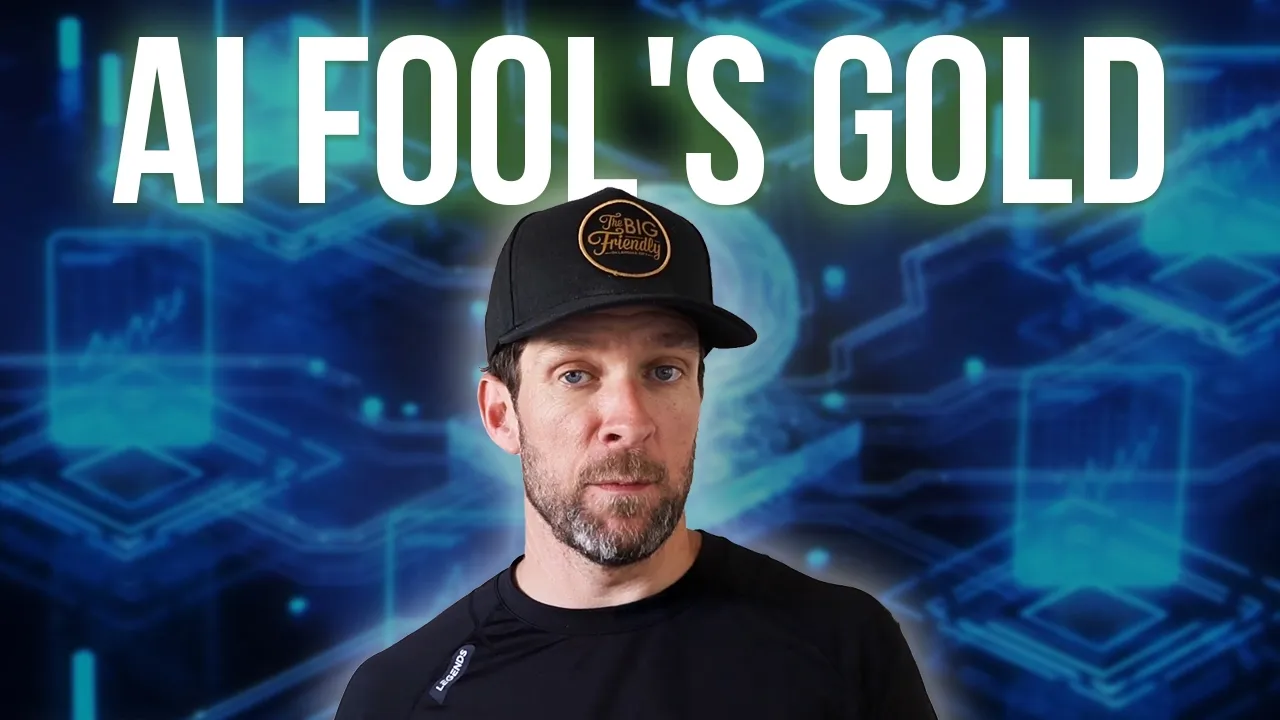
The Andrew Faris Podcast · @andrewfarispodcast
Words
6,098
Runtime
27:09
Speaking pace
225wpm
Reading time
25min
225 words per minute, above the 201 75th percentile of 349 measured videos. That distribution comes from the 349-video hook study.
Opening (first 30 seconds)
This is the critical distinction that gets lost in the AI hype cycle. AI doesn't replace methodology. It amplifies methodology. If your methodology is bad, AI makes you bad faster. If your methodology is good, AI makes you powerful. That is a quote from Taylor Holiday from a piece Taylor wrote uh I don't know a week or two ago at the time of recording this about how Taylor and CTC are using AI in CTC's work to generate increased value based on the methodology and data set that they already have. It is also exactly my perspective on AI and has been for uh some time now. From the beginning of watching
113 words, the words spoken in the first 30 seconds at 225 words per minute.
Free, no signup. See how the first 30 seconds hold attention, with rewrites.
Sentence shape
| Measure | This transcript |
|---|---|
| Sentences | 341 |
| Average words per sentence | 17.9 |
| Longest sentence | 117 words |
| Questions asked | 30 |
| Sentences containing a number | 7 |
Most used terms
Filler phrases
122 in total: like 31 · actually 21 · sort of 15 · uh 15 · you know 15 · right? 13 · kind of 6 · I mean 2 · basically 2 · literally 1 · um 1.
A literal whole-word count of the same phrase list the Prepublish browser extension uses, so a phrase inside another word is not counted and a phrase used in its ordinary sense still is. It is a count and not a judgement.
Free, no account. See where attention is likely to drop, with a rewrite for each weak line. The free check shows the scores and the one issue costing the most. Or run it on the words above first.
Free · No login · See a sample audit first if you prefer.
What this transcript is
Every word below is the caption track YouTube publishes for this video, pulled from the video itself and reproduced unchanged. It is not Prepublish's writing, not a summary, and not a re-transcription: it is the video's own published captions. English captions, generated automatically by YouTube, in the video’s original language. Source: the video on YouTube. A channel that would rather this page did not exist can ask for its removal through the contact page, and it is removed.
No Script X-ray for this video: YouTube shows a Most replayed graph only once a video has enough views.
This is the critical distinction that gets lost in the AI hype cycle. AI doesn't replace methodology. It amplifies methodology. If your methodology is bad, AI makes you bad faster. If your methodology is good, AI makes you powerful. That is a quote from Taylor Holiday from a piece Taylor wrote uh I don't know a week or two ago at the time of recording this about how Taylor and CTC are using AI in CTC's work to generate increased value based on the methodology and data set that they already have.
It is also exactly my perspective on AI and has been for uh some time now. From the beginning of watching AI content start to appear, what became very clear to me is that AI is really dangerous in generating particularly explanatory content, content about how to do things, methodology type content, because AI is really convincing. It doesn't just tell you, hey, I'm doing a bad job of telling you what to do next. It just tells you what to do next with a lot of confidence and in a way that sounds smart.
And if it's wrong about what to do next, then it can lead you down a really bad pathway. But if it's right, it can be incredibly helpful. And so AI becomes this this uh confusing and surprising thing. And what I want to talk about right now is how that quote from Taylor and how that uh observation about AI is going to change the next couple years of how agencies and brands work together and what both sides what agencies and brands need to get crystal clear about in what they are looking for in the work they're creating themselves and in the work that they are getting from from their partners.
So, if you're if you're on the brand side, you need to get this clear, not only for your own operations, but for what you're looking for in an agency. And if you are on the agency side, you need to get clear about this because I think if AI is going to kill your agency, it's going to be for this reason that I'm getting at right now. It's not going to be for some of the reasons people think. It's not just about the ability to generate a bunch of, you know, AI generated content in general, although that may kill some agencies in some spaces, some hypers specialists.
But instead, I think it's going to be about the way that AI works to amplify both good and bad ideas. So, let's let's dive into what I'm getting at here. If you can get this down, I think you're going to do very well over the next period of time. If you can generate a very strong point of view here, here's the big point. Okay, the big point is if it's the case that AI amplifies your ideas, whether those are good ideas or bad ideas, if it's the case that it does that, okay, then you have a very strong incentive to get as clear as possible about your best ideas.
In fact, you have a strong incentive to to seek and to find to uncover truth as far as you can find it. The more things you can understand correctly in your space, in your domain, then the more you have a tool that is incredible at alchemizing that truth, right, at turning that truth into all kinds of replicated process and replicated content output across the board. There's always been a strong incentive for for agencies to uh to think clearly about good methodology, but that incentive is now stronger now than ever because of what AI does.
And I should clarify here what I mean by AI. I'm not really just talking about like going and using AI, you know, like a expanded version of Google or something. What I'm really thinking about here is the ability to output huge amounts of work fast. The sort of processoriented element, agentic kind of approaches to AI because what is happening very clearly is that AI allows you to do all kinds of work really really fast.
Certainly the way that we are we are working we're investing in AI right now at AJF Growth is is that over the last few months Patrick my COO my business partner has spent a couple months building what we call AJFOS and it's just it's just the operating system for our agencies. All it really is it's a place to centralize all the work that we do and to get it into one place that's basically a web app that allows us to take all of our client work in every possible way and have it all in one place.
And the point of that is that he is a COO doing that kind of work. A traditional COO wasn't sitting and vibe coding software, custom software. A CS, a traditional COO is building documented processes and things like that across an organization, right? But now the answer to documented processes across an organization is software because AI allows that to be possible. Vive coding and and then generally using AI tools within that vibe coded software to amplify ideas, to repeat processes, etc.
And so that's where we're putting our time. And so you think about that, right? What that means is now we have a centralized place where our work is happening which means anything that we create has a shared knowledge set that AI can work within and expand on or or to use the word earlier amplify okay can amplify the things that we're doing much much faster I'll give you a really clear example of this and that example is landing pages so within the last week of writing this we have gotten to a point where we can make landing pages with a couple of clicks okay for a long time we've already focused on the message at AJF Growth as the core sort of central foundation of our advertising.
The idea is that the message is the thing that moves the needle. And so because of that, we want ads that work off of a message. Well, if we already have the message and we already have the ad copy and we have already have the brand documentation that informs the tone and the voice and the style of the way the brand talks and all those things are in our AI tools to help us generate ad content at scale. Okay. Well, it's really obvious then that we could also build landing pages off that because we already have all the core things.
We have the brand identity, all that. Now, the only things we're missing there are visual brand assets, right? Those exist on Google Drive or in some third party asset management tool or frame or whatever, right? Well, what did Patrick do? He made it so that the assets now live in AJFOS. Okay. So, now we have the assets. We have the brand's documentation like you know their copy guidelines and all that stuff. We have documentation down to individual product levels including dos and don'ts.
Here's how to talk about it. Here's how not to. Here's the value propositions. All those things. Okay. So, we have we have all of that documentation. We have our own opinions about what makes good messaging. So, our point of view, our methodology makes good messaging. And and like I said, I think we have the assets themselves. That means now that we have all of the foundations of the things that you would need to give to a designer or a copywriter or whatever to begin the basics of landing page building.
And so what AI allows us to do because of that is it allows us to go and very quickly build a landing page because the actual building of the page is table stakes for AI. That's not actually a very big deal. It's not very hard for it once it has the information that we have. Now there's humans involved in this process. There's you know there's in the sense of like reviewing and making sure everything is good and and we'll have to refine all of those things.
But we are at that point where it's like a couple clicks and we have a landing page. Okay. So the point is that if we can do that that fast, there is a potentially really big problem, which is that unlike ad creative landing pages actually require time and money to test. Okay, so I just did an episode of this podcast with Drew Marone, CEO of Intelligjam, all about testing methodology because I think people are wrong about this all the time.
They run stupid bad tests where they cut off the results way too fast, way before they have real knowledge. They don't understand stats. they bias their tests, all these things. Okay, so we talked about you should be running your tests on two week cycles at at least. You should be taking big swings in your tests, etc. Okay, so the thing is if you run a twoe landing page test and your landing pages are consistently bad, what's going to happen is you're going to put a bunch of money into ads that are going to landers that are performing badly and it's going to cost real money and it's going to cost time and learning time and you're not actually going to make progress going forward.
So if our landing page methodology is bad and if our AI tools amplify much faster than ever before our bad landing pages, we are actually going to cost our clients money. Okay? And so it is important to us that we have really clear perspective on what makes a good landing page and when should you use a landing page versus when should you use the PDP. We should also have really clear perspective on how to do effective testing of a landing page.
If we don't have that, we have a really big problem. Okay? Because now we're going to run bad tests that are going to give and you get the idea, right? There's all these things underneath and around this really cool thing where AI produces this very visually impressive tool. And I mean, I sent this immediately to the client and said, "Look, we know we need to clean this up a little. We just wanted you to see what we came up with with the first landing pages we made." And we said, "Check this out." Right?
And you know what the client said? They said, "This is really awesome. It looks really good." Okay? And that's the problem. It always looks good on the surface, but if in fact like it's convincing, okay, it's convincing, but if in fact it's fool's gold, then it's a really big problem. Okay, and it's very hard for most people to tell what's fool's gold and what's not. In this case, your supply chain is the most underoptimized part of your business.
I know that because I talk to e-commerce operators all the time, especially e-commerce operators in that sort of sub10 million side of the business. You're starting to grow. you're starting to get a little more operational uh leverage in your business. That's the time when you should be going ham on your supply chain, going and shopping manufacturers, building backup manufacturers into your process, working on getting better terms so cash flows better as you grow, getting better pricing, getting out of orderingQS, doing all the things, faster turnaround times, all the things that make your supply chain hum, which makes your cash flow hum.
And my friends at Move Supply Chain are the people who can help you do that. Move Supply Chain is a great supply chain based agency. They're birthed out of more staffing. If you listen to my podcast for any amount of time, you've heard me talk about more staffing and a recruiter in the Philippines that helps connect you to incredible e-commerce talent in the Philippines. Well, there's a specific subset of those folks who have a long history in e-commerce supply chains.
And so, they built a separate business, an agency style service that really knows supply chains really, really well. They deeply understand those things and they're also affordable. So they can be an extension of your team because they're based in the Philippines. They get great talent with deep supply chain experience who can be an extension of your team, can negotiate on behalf of your team, can go help you source manufacturers all over the world.
Actually, being in the Philippines here is not only a cost advantage to you, but it's beyond that. It's also a location advantage. The Philippines is like an hour to an hour and a half flight to key manufacturing sectors of Vietnam and of China. And so it's just much easier for them. They're in those places a few times a year. It's much easier for them to get there to negotiate on your behalf to meet your manufacturers and to show up as a representative of your team.
If your supply chain, if you want better terms, like I said, better pricing, backup manufacturers, building things into your supply chain so that it's more robust and ready to scale with your business. Get on a call and see what moves supplychain can do for you. Go to moveupplychain.com right now to check it out at movesupplychain.com. Tell them that I sent you. And AI, again, the tools are so good that it makes it especially hard.
The whole thing comes across sort of with confidence. you can catch the little like, you know, simple brand mistakes or visual, you know, the little tiny things you have to clean up. But the total ability of the page to convert, that is something that actually is going to be a little bit harder for anybody to guess at. They're going to see it, it's going to look cool, and that's that. So, there's this fool's gold problem.
Okay? And so, the the client might think it's cool, but over time, what's going to happen is, in fact, internally, we think it's cool, but what could happen here is that we actually start launching these tests and it goes badly for the client, and the client doesn't move forward. The client eventually fires us, the client loses the time, client loses the money, all of those kinds of things happen. That's a real danger here because the methodology really really matters.
And so the the for me as a CEO, it has become more incumbent on me than ever to get as clear as possible and because you know in my role CEO at at AF Growth, I'm essentially the head of strategy as well. Okay. So, it's become my job to be as absolutely crystal clear as possible about all of these different elements of how DTOC brands grow, how they grow profitably, how uh, you know, advertising funnels perform, how they perform differently for an apparel brand versus a jewelry brand versus a supplement brand versus a different problem solution brand, you know, whatever, right?
All these kind of things. I have to get as clear as possible. It is now more important than ever for me to think really clearly about what what those different things are and not just me but of course other people in the organization can contribute to this but for us to be building into our tools those kinds of clear perspectives and to get those perspectives into the rest of our organization because if we are right we have the ability to do a couple clicks when we have the landing page.
Right? So now we can move extremely fast. If we are wrong, we have the ability to do a couple clicks and we have the landing page and we'll get those wrong problems into the business really fast. One, one more way to illustrate this is with the idea that I've heard sometimes from athletic training which is called negative transfer. Okay, negative transfer is the notion that you can train something in sports that's actually really really bad for you.
Taylor, who I mentioned earlier, has a great old example of this from when he was a college baseball player. He says he would do drills where the whole point of the drill was learning how to hit in baseball a ground ball up the middle. And you don't have to know anything about baseball to just trust me with what I'm about to tell you, okay? Which is this. Hitting a ground ball up the middle is actually, even though it's sort of pretty and historically people have said, "Oh, hitting it right up the middle is really good.
It's sort of old received wisdom in baseball." It's actually the literally worst outcome for a batted ball in baseball. It has the lowest ability to generate runs of any ball you can possibly hit. It goes for double plays a lot. It has no chance of being a home run and so it's really really bad. But he was doing drills to reinforce his ability to hit the ball up the middle to hit ground balls up the middle and grooving his swing for the worst possible outcome.
That's what negative transfer is. When you use uh reinforce processes that uh operationalize bad ideas. Now what you're doing is you're uh you're actually replicating and amplifying things that are that create negative value for the outcome that you're trying to pursue. And that's a problem across all sorts of things, right? Right? This happens in all of life, right? It's it's a real problem. So, but now again, what's happening with AI, right, is there's this ability to do that more than ever.
And so, this is one of the implications of this. The losers in the AI world, in the DTOC world with uh AI, particularly the losers on the agency side are, I think, going to be agencies and freelancers who actually don't have very much perspective. They don't have very much point of view. The kind of agency or freelancer who says, "Oh, it's just different for every account. You just got to do what's right for every account.
I get the little grain of truth in that statement, the sort of there is no playbook kind of idea. I understand what somebody is saying with that, which is that there are some things that are actually unique to each brand and there's ways in which brands break centralized things, but that's going to get you nowhere. You have no methodology at that point of doing anything that's replicable. And it's probably because you just sort of have lacked the ability to think carefully from a first principles perspective about what works and what doesn't work and how the tools that you're using work and and all those kinds of things.
And some of those people have done very well for themselves and are making plenty of money right now because and you know look they may make plenty of money still based on reputation or whatever. But what I think is likely is that because some of those people have hitched their wagon to the most powerful marketing performance marketing tool in the world meta ads. They've been able to generate some value for clients or or for whatever.
But those agencies and those media buyers are going to be like what they are is they're unspectacular thinkers thinkers using a spectacular tool. And therefore it looks like some generation. I think those are the people, some of the people who are going to have the hardest time in the new world. They're going to get eaten alive by thinkers who are better thinkers, who are able to build operational process with AI around their best ideas because they're going to amplify those ideas.
And so those agencies, those media buyers, those kinds of people who are there, like I said, there's they're using a spectacular tool and they may have some level of effort and ability to get you onto a spectacular tool and use it to some degree pretty well. It's it's better to be a an average thinker with a spectacular tool than to be an even worse thinker with a spectacular tool or to not be using the spectacular tool.
I'm also not questioning the good intentions of these folks. I'm not saying that people in that space are trying to steal people's money or something like that. There's sometimes this weird thing that goes around anytime an agency relationship goes wrong. Brands will accuse the agency of being money hungry. And I just don't think that's actually mostly the case. I think most agency people are really trying their best to serve their clients.
At least the ones that I've been around, that's the case. I'm just saying what we all know is true, right? And that is this. Some people are better thinkers than others. Some people are smarter than others. And those people who are smarter and better thinkers than others are very likely going to take those good their best thoughts and amplify them much further in the future. And they're going to be big winners in the AI race in all this.
And the people who for in the service business space in particular, the the worst thinkers are going to be the losers. The best thinkers are going to are going to be rewarded even more for their best thoughts. Now, this is not a new problem. The negative transfer problem is not a new problem in agencies. Okay? Just like I've been around enough to know that there's been plenty of bad thinking from agencies and plenty of bad work done by agencies that create negative transfer, negative value for their clients.
Okay? The thing is it's all amplified even more. And the gap between good and bad is going to grow even more. And I personally find this both humbling and exciting. Okay? As an agency operator, it's humbling in the sense that it's going to be much easier now for the best agency operators in the world to outperform me. like it just is they're they're going to have an easier time because they are going to have better tools than they used to have before and more tools at their disposal.
And some of those people are also ahead of me financially so they can invest more capital into it. So it's it's it feels challenging to me at times that makes me nervous. All the best thinkers in the world just got drastically more powerful. It's also humbling because I am not so foolish as to think that all my ideas are good ideas or that I'm not necessarily putting myself in this super great thinker camp. I think I have plenty of good ideas and I try to test them as best as I possibly can.
And I'm pursuing truth as best as I possibly can. But AI is going to amplify my bad ideas just like it will amplify everybody else's. Okay? And the problem is I don't know which one of my ideas are bad or not. If I did, I would stop believing the bad ideas. Okay? And so there is this challenge that I feel of trying to figure those things out. Now I think our methodology is second to none in terms of right now the way we think about how to grow e-commerce brands particularly in the phase that we really focus on which is taking brands who are from 5 million to 25 million in revenue and getting them to $50 million between 25 and 50 profitably.
That stage of the journey I just feel as confident about as anybody. I watch it happen all the time with brands that we work with where they experience success on that road. I think the big advantage that we have is that we've walked that road a lot of times and we have excellent knowledge for how to do that part of the journey. Speaking of AI, you should be using Rich Panel for your customer service software if you are an e-commerce brand.
That's because Rich Panel is built from the ground up with AI. And that means from day one, they've been able to save you money while delivering a great service. Here's the headline thing that Rich Panel puts out all the time, which is that if you switch to Rich Panel from Gorgeous or from Zenesk over to their customer service software, their customer service help desk, you will save 30% on your bill guarantee. So, just like that simple, right off the bat, save on some SAS costs and go over to Rich Panel.
But it's not just about being more affordable. It's also about being great software. Huge brands like Ridge use Ridge Panel, including their agents, their AI agents that go and respond to social comments for you. Uh the self-help customer service portal, a huge part of what makes Rich Panel great, uh allows customers to get answers to their questions really, really quickly and easily, which means the average ticket when you go from Gorgeous Resendust to Rich Panel is 30% less.
So, you need less people to staff those tickets. Customers are getting answers to the questions faster. Just a great piece of software. And like I said, it's ready to scale with your business. Whether you're at $0 or you're on the way to nine figures or beyond, Rich Panels built to be part of that journey. Big brands, medium-sized brands, small brands, they're all using Rich Panel all across the journey. Multiple of my clients are using Rich Panel.
You should be checking it out, too. Go to richpanel.com to get started today. So, I feel really good about that. And here's the exciting part when I sort of chalk all this up for myself. The exciting part is I now have dramatically more incentive as a CEO to think as carefully as possible about the work of growing DDC brands brands along that journey. Like right now, however good we are, we can get way better. And there's a big incentive for me to spend a bunch of time during my workday reading and thinking and analyzing and looking at data and all those things because on the other end of that sort of slowed down process actually being more deliberate and more deliberative in my thinking process.
Okay. Now I have much more firepower like I said for amplifying any of those ideas that we come across. Whereas before it was extremely hard to transfer whatever my best ideas were across the entire organization. It is now much easier than it was before. And that incentive for us to do that is much stronger than ever. Um, so my ability to impact my teammates and the brands we serve is increasing all the time. So if I can actually go and uncover the best ideas and I can get them documented in some way or another and I can work with Patrick to get those into our tools, now we have this ability to go really fast and make a big impact.
That's where it's just so exciting to me. So but the thing is I better have good thoughts. Okay? And that means for you as an operator, you need to be on the hunt for the best thinkers who are operationalizing their thoughts as best as possible. Again, this was actually always true. To come back to a phrase I use all the time, agencies are operationalized knowledge. That's what the business is, operationalized knowledge.
And in the past, they were agencies that were good because they had great knowledge and they were able to operationalize it pretty well. The best agencies could do both of those really well. There were agencies that were average because they had great knowledge and average or worse ability to operationalize it. and agencies that sometimes have a negative transfer problem because they have bad knowledge. They actually believe some wrong ideas and are pretty good at operationalizing it.
So being good at operationalizing bad ideas is sort of the worst outcome actually. And then of course there's some agencies that have neither one really and those typically are like smaller freelancer type things where it's really just like an individual person or something like that. Or you see sort of legacy agencies that just don't do as good of a job as they used to. You get with the super junior employee all the kind of classic problems like low knowledge level, poor operationalization, all those kinds of things.
The operationalized knowledge that we have now is really important. And so for you as an operator, you need to go and be attracted to those people. If I was hiring an agency right now, I would ask a couple things. One of them is I would ask, what are the things that you believe that are central to your methodology that you guys have put your flag in the ground on? And if somebody answered with that, every brand is different and you got to custom build everything, I would say, I'm not interested in working with you.
That's it. It's over. The discussion is over. I would instead be looking for the opposite. who has the strongest, clearest beliefs and point of view about how to leverage, you know, in this case, I'm thinking about meta ads and and other tools, other channels, but especially meta ads. How to leverage meta ads for your brand stage of the journey the best possible way. What are the things that you guys do and believe better than anybody else or that you have the strongest views about?
Okay, that's question one. And look for clear definitive answers to that question. Okay, number two, I would ask them, what are you doing internally to operationalize those things? What are you trying to do? Right? I would answer question number one by saying that for the vast majority of brands in the space that I'm in, running manual bids and eliminating your creative testing campaigns is actually a really really really big deal worth hundreds of thousands maybe millions of dollars to brands every single year.
And so that's one of the things that I would say right you should be doing that and and running manual bids excellently is a path to generating a really really good return on your ad spend which is really important because it's the number one line item on your books. If you think about your four quarter accounting in your P&L, you're getting, you know, shaving a few points off of your CAC is a huge deal. Shaving 10 points off your CAC or growing your revenue so much while keeping your CAC as a percentage of revenue the same is a big deal.
But understanding just how big of a percentage of your P&L is your CAC and then leveraging that tool as excellently as possible is just a really, really, really big deal. It creates outsized growth opportunity and limits your downside risk significantly. Getting that right's important. We're incredible at executing that playbook. Okay, that would be one thing I would say. The other thing I would say is that the message is the most important part of the ad and that we've built an entire creative process around that that also leverages diverse creative, diverse high volume creative in order to communicate our message across a whole bunch of ads.
Okay, those are the couple things I'd look at. The third thing I would say would be that cohort forecasting is a necessity and that your brand needs to understand the long-term customer value or lack thereof in your business and build your spend plan accordingly. Okay, those are the three things that we do I think as well as anybody else. And there's various levels at which we do those things and various ways in which we engage in those things with brands, but those are the three driving things.
Cohort forecasting, media buying built off of manual bids, and then a creative process built off the message. And so our services are built around those things. We think if you get those few things right for your stage of business, you can go really, really far again, especially from that 5 to 50 journey basically somewhere in there. Okay, your agency needs to think clearly about that because now I can drill deeper into all of those ideas and build a whole bunch more process around all of it.
And that's the thing that we're trying to do every single day. Your agency needs to have clarity to those kinds of things. That's the goal. If every time you get on a call with an agency media buyer or strategist or whatever it is and all they can say to you is like sort of, oh well, you know, things were a little different this week. It was worse. I'm not really sure why. You know, they just sort of talk you through a bunch of things.
We're going to try this strategy different than this old strate. Like there's just this sort of filibustering that happens when things are going wrong. But you should have more clarity to the ideas that are driving your agency's processes and they should have clarity to those things too. The more agencies have those and the more you internally have those whether it's agency or an internal media buyer or internal growth strategist or whatever and the more they are right about those things, the more likely it is that you are going to be able to generate a huge bunch of value and that in the next couple of years AI is going to be a massive force multiplier for those things.
To come back to the quote from Taylor, the critical distinction that gets lost in the AI hype cycle is that AI doesn't replace methodology. It amplifies methodology. If your method is bad, AI makes you bad faster. If your method is good, AI makes you more powerful. The winners in the AI revolution are going to be the people with really good methodology. Get that right and there's a really, really big opportunity. Get that wrong and it's going to be a really, really big cost.
If you want to get in on the ground floor of what AJF Growth is doing with AI, and it is awesome, you should join us by going to afgrowth.com and filling out the little intake form on the website to tell me a little bit about your brand, what challenges you're facing, and how we might be able to help you. When you tell me that, I will be able to tell you if I can be some help. So, go fill out that form if you want to work with us and our team.
We're doing really cool things. You will like it. You should, of course, like and subscribe wherever you're watching or listening to this episode of the podcast. And you should uh also leave a comment. I engage with every one of those. I read them all. I try to reply to every single one of them and I would love to talk to you there. It's actually one of the best ways to get a hold of me. So go do that. And uh thanks of course to rich panel and to move supply chain.
Links for both of those great sponsors are in the show notes. Everything I'm doing today.com including my newsletter. You can sign up for that there as well. And get my four free essential e-commerce resources which are in which I'll email to you if you sign up either in the pop-up or in the footer. Both work. Thanks so much for watching or listening. I will see you next
The words are the caption track's own and nothing is reworded or re-transcribed. Paragraph breaks are placed between sentences so the text reads as prose.
Free tools for your own script: paste a draft and see where it stands before you record it.
Paste your draft and see where viewers are likely to drop off, with a rewrite for each weak line.
Paste the first 30 seconds of your own draft for a hook score and rewrites.
Check your draft against YouTube's advertiser-friendly guidelines before you record it.
Read this channel's public videos and transcripts, and download a writing brief for it.