Getting the transcript
Reading the captions from YouTube. A video nobody has opened here before takes 10 to 30 seconds; this page fills in on its own.
Getting the transcript
Reading the captions from YouTube. A video nobody has opened here before takes 10 to 30 seconds; this page fills in on its own.
Ross Cameron - Warrior Trading · @DaytradeWarrior
This video has no Most replayed graph yet: YouTube shows one only once a video has enough views. These are the moments viewers replayed most in Ross Cameron - Warrior Trading's most watched videos.
Most replayed moment at 7:43
3.2x that video's typical replay level
occurred there it is so this is actually in solid but you could have it either either in a solid line or a dotted line whichever one you prefer so this is factoring in the amount of volume that occurs at price and the volume weight moving average um volume weight average
Said at 7:37
Most replayed moment at 14:45
3.5x that video's typical replay level
entries is to find the first pullback so in this case this is a five minute pullback right here we have a five minute pullback and this is a pullback that is right at the volume weighted average price which is our dotted line and it's right at the nine moving average which is this grade
Said at 14:37
Most replayed moment at 11:52
2.7x that video's typical replay level
that have the highest probability of success so let's watch what happens right here macd is against the trade right here so no nothing in here you should be trading no trade no trade no trade and then right here we can get back in now I'm going to do some something kind of cool and I'm going to
Said at 11:45
The graph counts replays. It does not show where viewers stopped watching.
Words
10,663
Runtime
54:35
Speaking pace
195wpm
Reading time
44min
195 words per minute, between the 181 median and the 201 75th percentile of 349 measured videos. That distribution comes from the 349-video hook study.
Opening (first 30 seconds)
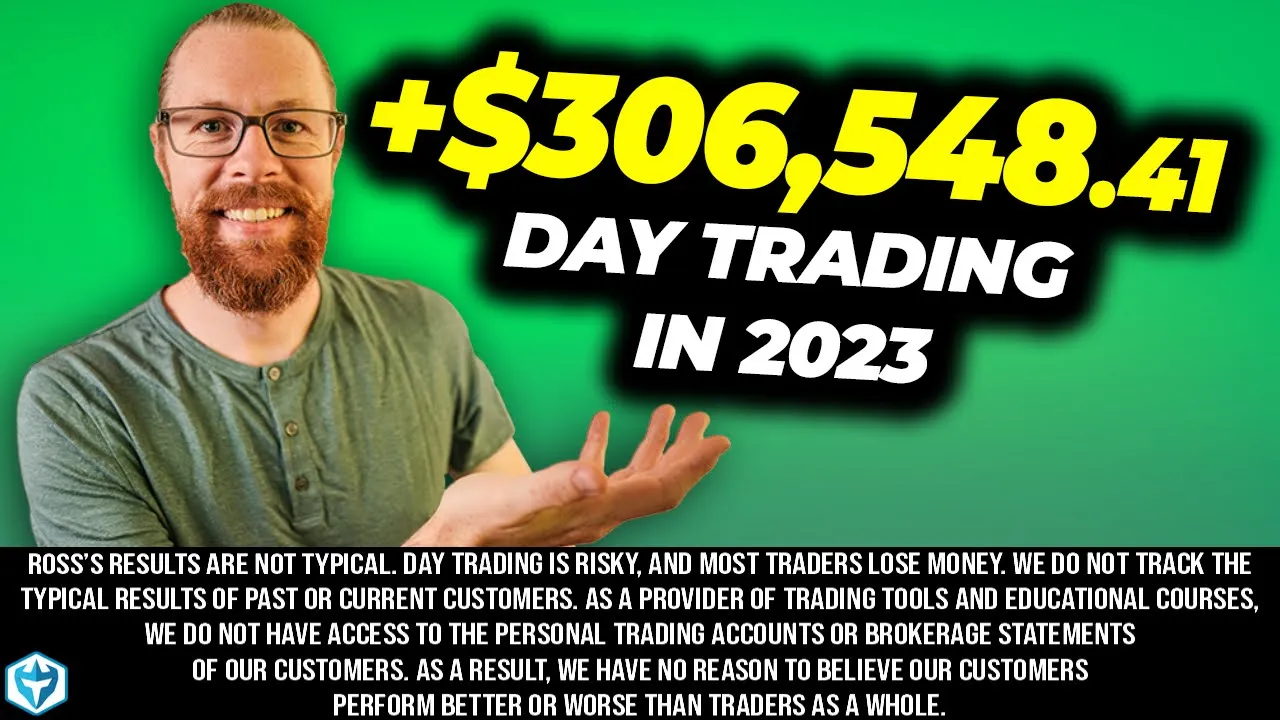
2023 is in the books and I finished with over $300,000 in net profit from day trading in this episode I'm going to break down for you where that profit came from time of day day of the week month of the year but also the individual stocks what stocks gave me my biggest winners and which ones gave me my biggest losers as I analyze my data I'm going to share with you the four steps that I followed in 2023 that allowed me to make over $300,000 and I'm going to share with you my goals
98 words, the words spoken in the first 30 seconds at 195 words per minute.
Free, no signup. See how the first 30 seconds hold attention, with rewrites.
Sentence shape
| Measure | This transcript |
|---|---|
| Sentences | 23 |
| Average words per sentence | 463.6 |
| Longest sentence | 5,753 words |
| Questions asked | 0 |
| Sentences containing a number | 23 |
Most used terms
Filler phrases
292 in total: um 67 · like 56 · uh 54 · you know 51 · actually 23 · kind of 18 · sort of 14 · I mean 4 · basically 4 · literally 1.
A literal whole-word count of the same phrase list the Prepublish browser extension uses, so a phrase inside another word is not counted and a phrase used in its ordinary sense still is. It is a count and not a judgement.
Free, no account. See where attention is likely to drop, with a rewrite for each weak line. The free check shows the scores and the one issue costing the most. Or run it on the words above first.
Free · No login · See a sample audit first if you prefer.
What this transcript is
Every word below is the caption track YouTube publishes for this video, pulled from the video itself and reproduced unchanged. It is not Prepublish's writing, not a summary, and not a re-transcription: it is the video's own published captions. English captions, generated automatically by YouTube, in the video’s original language. Source: the video on YouTube. A channel that would rather this page did not exist can ask for its removal through the contact page, and it is removed.
2023 is in the books and I finished with over $300,000 in net profit from day trading in this episode I'm going to break down for you where that profit came from time of day day of the week month of the year but also the individual stocks what stocks gave me my biggest winners and which ones gave me my biggest losers as I analyze my data I'm going to share with you the four steps that I followed in 2023 that allowed me to make over $300,000 and I'm going to share with you my goals for 2024 now I have to say as always this is a disclaimer my results are not typical I've been trading for a long time in fact there's a picture of me in my new book how to day trade the plain Truth uh from when I was ju this was in Middle School which is when I uh first really got introduced to the stock market a semester where we set up uh pretend trading accounts with a partner and began investing in dot stocks during the 1990s that was my beginning more than 20 years ago and this book highlights the guard rails that I Implement in my trading uh we'll talk about some of those in today's episode right here but more most importantly I want you to understand that I have a lot of experience a tremendous amount of intuition and that's what allows me to make as much money as I make my hope is that you can piggyback off of my educated intuition by being side by side with me each morning when I'm broadcasting and trading for members at Warrior trading but also just by tuning in to an episode like this you can learn my system of how I analyze my own trading data because something that you probably know I shared it with readers of the book was that one of my turning points was a big red day and what I did on that red day changed the trajectory of my career what I did was I analyzed all of my historical data that I had up till that point to try to figure out and uncover what was working for me and what wasn't and I actually found buried in all of that data some really critical lessons I implemented them and that was my turning point so in today's episode as I go through my analytics and my metrics and give you my annual report for 2023 I hope this is an opportunity where you can um see my process and do this for yourself as you review your own uh trades your own trading history okay so let's go ahead and jump in well you know what hold on before we do this the broker statements where are the broker statements show me the broker statements I had someone just on YouTube the other day saying Ross you never post your broker statements that is incorrect that is incorrect you can find my broker statements on my website in fact on my website you will see broker statements from 2017 18 19 20 21 22 23 and 24 will be coming February 1st when we get our first uh January statement so you can always find this at the footer of of my website right here this has been here for forever now the reason I started with 2017 was because on January 1st 2017 I funded a small account with $583 15 and from that point forward I have only been trading with the profits from that account that account has now grown to over $10 million in profit so as of December 2023 the last trading day which was yesterday I was at 10, 725,000 in profit and so my 2023 broker statements are right here you can see all of them and for those of you who are super skeptical you could also uh click right here at the top and you could see the audit an independent thirdparty accountant audited all of my trading records and substantiated that I did in fact turn $583 starting balance into over $10 million now these audits are updated annually so this is as of uh 1231 2022 so all of 2023 will get um added to this in the coming months okay so now that you know beyond a shadow of a doubt that although my gains are not typical they are real let's go ahead and start diving into the annual report okay so high level I finished with 36548 41 in 2023 how did I do it I did it by following these four steps step number one risk management I'm not going to full screen this because we're going to jump back and forth from the slides to the actual analytics the metrics and I might show you some charts and we're definitely going to do some whiteboard step number one is risk management we know that trading is risky I say it every time I've been saying it for forever so this is nothing new we know that trading is risky however we know that there are people that obviously are very successful trading I'm one of them but there's many people that are very successful and the people who are successful are doing something different and what they're doing is helping them reduce their risk so they approach trading from a little bit of a different perspective than the rest of the people they approach trading understanding that there is risk and thinking about risk first and profit second what I like to say is that a gambler thinks about profit they're chasing the big win the thrill the adrenaline rush of the big win but a Trader is thinking about risk now in the stock market if you choose to gamble you're welcome to gamble you can throw your out in the market you can chase the wins you can chase the adrenaline rush and you'll probably lose money as most beginner Traders do most Traders don't make money most Traders are not following a system most Traders don't have discipline most Traders don't understand how to manage risk okay so when we're talking about how to manage risk the way I look at it and this is a little bit different every everyone I suppose is different I look at it as my real risk is the difference between my entry price and my exit price so if I buy a stock at $3 what's my profit Target well based on a target of a 2:1 risk to reward ratio if I buy at $3 I want to risk a dollar to make $2 so I I suppose in theory I could set a stop at $2 and I could set a profit Target of $5 but that that would be very very large um profit targets and stop losses for this type of stock so rather than using ACT $2 and $1 let's do something a little simpler let's say um we could do- 5% and plus 10% so plus 30 cents would be a profit Target and minus 15 cents would be a stop loss so then when I'm thinking about risk if I'm going to buy 1,000 shares of this stock right here at $3 how much am I risking am I risking $3,000 the answer to me is no I'm risking $150 my risk is the difference between my entry and my Max loss now some people will say on a trade like this where I actually make the 10% and make $300 they'll say Ross you were just risking $ 3,000 bucks to make $300 it's a bad risk reward ratio and I say well that comes from a misconception about risk I'm not risking 3,000 because I'm not willing to let the whole position go to zero however I will acknowledge that it does require $3,000 of buying power to be able to take this trade so yes I am putting $3,000 on the line to buy a th000 shares at $3 but my profit Target is 10% which is a $300 profit and my stop loss is 15 is 5% which is $150 so this right here would be a terrific trade now if you can take trades with that type of profit to loss ratio you only need to be right 33% of the time right here in order to break even I didn't mean to cross that out 33% would be your break even point if you can maintain the 2:1 profit to loss ratio so here's uh a sad truth when I was getting started I had a inverted profit loss ratio of 1 to two my average winners were a dollar my average losers were $2 and actually the way I thought about it was cents per share but it doesn't matter the ratio was still negative it was it was inverted so I was losing uh $2 for every dollar I was making well that's not sustainable my accuracy was like 55% well if we look at our metrics here on this uh sheet what you'll see is that if you have a negative profit loss ratio where you lose $2 and you make only a dollar you'd have to be right 67% of the time just to break even that's your break even point and now you've effectively set the bar so high you are destined to fail so the the problem is I have met so many beginner traders who trade and they don't even know what their profit loss ratio is they have no idea what it is okay so let's first of all let's take a look at my profit loss ratio and I'll admit it's not it's not as good this year as I was hoping it would be it came I came up a little short this is my profit loss ratio for this year my average winners are $538 my average losers are 613 I have a slightly negative profit loss ratio so it's not even quite one: one even though on my trades I aim for 2: one at the end of the day I came up short I aim for two to one but not all trades re realize that full potential which indicates that maybe some of my trades I had higher expectations for what the stock was going to do than what it was actually able to do and I have to start to adjust my expectations a little bit I think that is telling of being in the second year of a bare Market this was a very difficult year for a lot of Traders a lot of Traders had slower years didn't make as much money as they'd made in previous years we were in second year of a bare Market we were dealing with uh banking collapse at the beginning of the year I know it's been several months now but Silicon Valley Bank I mean you know first rep was first Republic there there were four or five banks that that went under this was pretty serious it was scary we were wondering if we were going into another 2008 financial crisis and then we had some reprieve but not too much because the Federal Reserve is still still jacking up interest rates at a rate unprecedented and that's creating tightening economic conditions so the markets yes the market overall rallied thanks to some large tech stocks which sort of you know led the way but for most active Traders this year was pretty tough so I think I did spend a lot of the Year trading thinking oh this stock has a potential you know to go from $3 to 350 but they kept coming up short or even from 3 to 330 and they still kept coming up short so the net result is that my profit loss ratio slightly negative and my accuracy also declined a little bit I've been I've been averaging about 69% so I declined to just under 65% that's a little disappointing um I mean I'm not going to beat myself up too much but I'm going to be critical because the point of being critical is that I want to be a better Trader ultimately no matter how much money you make you could make 30 million you can make any amount of money you could always look at your metrics and say could have been a little better could have been a little better and that's kind of the fun of trading it's a puzzle and if you can solve that puzzle you can do it a little bit better you'll make more money so there's some real motivation to trying to do better okay so profit loss ratio for me came up uh slightly negative and accuracy fortunately 65% nearly rounding up uh was enough for me to to make $300,000 a profit so I was in the the profitable um sort of um section here if for instance my accuracy had been 40% I would have lost money this year if my profit loss ratio had been minus $2,000 for average losers even with 64% accuracy I probably still would have lost money so profitability ultimately does come down to sort of a combination of accuracy and profit loss ratio and I'll actually tell you that I think you can sort of you you could you could strive for one number to be better than the others for instance there are traders who trade with really high levels of accuracy some of those Traders I consider them to be a little bit stubborn because they do not cut their losses they'll keep averaging down and adding and adding and adding but 95% of time the trade turns around and works so they've got great accuracy but that 5% of the time it doesn't work they have huge losses and the result is their profit loss ratio is terrible so they've got great accuracy but bad profit loss ratio and on the other hand you could have someone with a great profit loss ratio like 3:1 4:1 or 5:1 but their accuracy is low and what's happening there is when they have a small winner they're not taking it off the table they're waiting for it to get to the 2 to1 3 to1 4 to1 5 to1 before they start taking it off the table so they end up with a lot of winners they're green but end up coming back down so yes there is a bit of a trade-off between profit loss ratio and accuracy here's my feeling on it and this is my personal two cents you should of course do what feels best for you but my feeling on it is that accuracy breeds confidence and a confident Trader is a profitable Trader so for me I want to be on a positive feedback loop and a positive feedback loop means I focus on high accuracy I try to trade the best quality setups then naturally I have more winners I naturally have a better profit to loss ratio I feel more confident and then that just becomes this positive feedback loop where I'm making more money I'm taking bigger size my accuracy stays high now the inverse of this and this is a negative feedback loop that many beginner Traders will experience is they have poor accuracy poor profit loss ratio they're losing money now they're getting nervous and insecure they're not trading well they're trading with smaller size and this can actually become in a way a self-fulfilling prophecy where I've seen traders who have throttled themselves back so much because they've lost confidence they've gotten scared in the market I've seen this happen to traders who have been trading for five plus years who did really well and then they kind of stall out and now they get too afraid of loss so they say I I I don't deserve to trade with big size anymore so they lock themselves into trading with tiny size but if you always trade with tiny size you're never going to have big Winners and then they just sort of stall out they they it's like they Plateau they just kind of they th they go into just this sideways and and that's not good either so you don't want to be on a negative feedback loop for sure you want to be on a positive feedback loop and you also want to try to avoid uh boxing yourself in because of fear losses happen in trading I had my fair share of them this year my biggest loss of the whole year I just had it two weeks ago it was $10,000 you know what that's not so bad a $10,000 loss that's not bad at all considering the fact that I have over $10 million in net profit over 12 million in gross profit but 10 million in net profit a $10,000 loss this year is nothing my biggest winner is also about 10,000 so you know I would have liked to maybe have had a couple more big wins this year but it didn't end up happening for me anyways Bigg winner Biggest Loser about the same and my average hold time about 3 minutes this year both for winners and for losers the whole time had to be a little bit shorter this year because we were in a market where you had to take what you had and if you didn't you were finding yourself giving back profit I'll talk more about that in a moment so the big thing for me this year and this is Step number one that led to my success was being able to manage my risk Knowing When to Walk Away knowing how to cut my losses I am really I am ruthless about pressing that cell button and getting out contrl Z that's the key those are the keys on my keyboard I press control Z I am out of the trade I'm done and you know I didn't have any trades I held overnight I didn't turn any you know day trade losers into swing trades I didn't have any blowups I didn't have massive massive winners but I kept risk in check and risk comes first here's the beginning Equity curve that I've seen for so many Traders and uh Jack is a member umy Jack if you're watching this I hope you hit the thumbs up and and chime in he's been a longtime member uh at Warrior and he's been trading I don't know exactly when he traded from switched from SIM to real money um but he started trading and this was his Equity curve basically he had this sort of I don't even know if he had any beginner's luck some Traders have a little beginner's luck and then they go negative I'm not sure if he even had beginner's luck he just for whatever reason just started to go into the negative and then he went through this period of going kind of sideways more or less sideways and just in the last six months he started to climb back up and he's right about he's kind of like right about here just about to cross back over to profitable and this is really meaningful to me because this exemplifies to me the true struggle that most beginner Traders have maybe a little bit of beginner's luck then a period of overconfidence losing money not really knowing what you're doing and then this point right here break even being being break even it's so easy to us underestimate being a break even Trader when you're a break even Trader you're keeping your head above water you're not having blowout losses no you're not making a lot of progress your accuracy needs to improve but guess what that comes if you gain more experience as you gain more experience your intuition gets better and then that's when you start to see that curling and that's exactly what's been happening for him he's starting to pull away he's starting to move up and so now to me it's like it doesn't none of this matter anymore what matters is that he's proving right here this is what is possible he is showing that he can grow his account by managing risk focusing on strong stocks and staying disciplined he's broken out of the the sideways period of just treading water and now he's pulling away so that's the beginning Equity curve that I see for a lot of Traders if you're a new Trader you may relate to it you may have had beginner's luck before going into the draw down you may have not you may have just gone straight into a draw down it's it's a little different for everyone but but it's very common that most traders in fact I know very few Traders the only Trader right now that I can think of who didn't experience a significant draw down before you know pulling away is Trader who traded in a simulator for it was maybe six or eight months six or eight months in a simulator and then when he flipped to real money he already had a track record he already had experience and so then he just started pulling away but most beginner Traders even though I always say trade in a simulator trade in simulator a lot of people won't do it so let that be a word um of wisdom to trade in the simulator okay so step number one is managing risk step number two was I got really good at finding the best stocks to trade I've Gotten Good at it over the years I stayed really solid at it and this is an area where I'm harnessing harnessing technology to help me find those strong stocks each day yesterday I finished the year with a green day and um we had some nice moves on uh sntg sxtc these are I mean not that it really matters this is a um an episode that hopefully people you guys will watch for months from now but just as an example these were the top gainers yesterday I find them on this scan right here this is my proprietary scanning system I have a development team that built it out for me they're working uh 6 days a week for me and pretty much 24 hours a day coverage maintaining the system and this is scanning the entire Market in real time for stocks that meet my criteria for being worth trading so if we jump back on this slide deck here what I'm looking for are stocks that have high relative volume stocks are up 10% on the day stocks that have news on the day stocks that are priced between a dollar and 20 and stocks that have a float of less than 10 million shares but let's back that up with some data now I'm just saying this how do you know that this is actually you know this is true that that's where I make money well let's actually look at the metrics so right in here we're going to pull up my metrics so these are my metrics of course from just this last year so from January 1st 20123 so we can start by looking at um I I well let's see so let's just really quickly look at day of the week day of the week and time of the day so time of the day you could see um for my strategy I'm focusing on trading pre-market basically so I I I would I was going to say I trade at the open I used to trade at the open I used to trade 9:30 to 10:30 at the open the first hour of the day and then during Co something changed what changed was that the second news broke on a stock whether it was at 7 7:30 8 8:39 typically news comes out at the top and bottom of every hour the second the news would come out Traders would jump on the stock and we would see these stocks we still see it today where news comes out at 80 8:01 a.m. it's you know compan just re received FDA clearance for and the stock goes from 2 to 250 to 3 350 4 4505 556 and you're like oh my God it's a 300% move in like 10 minutes and that's the first move now five years ago the news would come out but there just wasn't a lot of trading pre-market so that changed during Co and it it changed partly due to the advances in online trading platforms that have made it easier to trade including pre-market and so now as soon as news comes out the market reacts however a lot of the Brokers don't open until 7 a.m. so although I can trade as early as 4 a.m. with a broker that I use I I have done that like twice in my career and it was during GameStop I don't get up at 4 a.m. to trade that early so that's not my strategy yes there are some news headlines from International companies that come out during overnight while the Market's closed and then at 4:00 a.m. the market will respond but there's not a lot of Market particip there's not a lot of volume the spreads are huge so I don't worry about that even when I was in Italy this summer I was like oh well you know I'm in Italy I guess 400 a.m is uh two what sorry what am I um we six hours ahead so 4:00 a.m. is 10: a.m. so 10 a.m.
I was like yeah it's 10: a.m. in Italy I'll I'll take a look at the scans but it was dead I mean like yes you would see something moving but the spreads were huge it wasn't tradable so I really focus on being here so I can start around 7 cuz that's when most retail Traders come online that's when most Brokers come online so 7: a.m. is kind of the beginning and then it's watching anything that had news prior to 7 how it responds at 7 a.m. and then continuing to trade really through the open up until about 10:00 a.m. and then it seems to slow down you know it it even this year has slowed down sort of at the open between 9:30 and 10 has been kind of Hit or Miss uh but some days it's it's been really good so it's it's still hit or miss but my general strategy right now in terms of time of day is to sit down by 7 and to trade until 10 roughly so I'm trading for about three hours a day two to three hours a day and in 2 to three hours a day this year I locked up over $300,000 of profit now there are some days where especially in this last month we've seen some big moves later in the day this has sort of always been the case that sometimes there'll be periods where there's Market Cycles you know the last couple days last three or four sessions we had big moves after hours so Traders start sticking around after hours to try to get a piece of it a lot of Traders are greedy they want to make as much as they can and if they start seeing a pattern of oh stocks are squeezing at 2 p.m they're going to start showing up at 2m to trade those moves the problem that I have is that it's inconsistent those afternoon moves are inconsistent and for me it's not really my goal to sit here from 4:00 a.m. for instance until 8:00 p.m. from premarket till after hours to capture every piece of the move that doesn't feel like a good quality of life now granted I could be watching TV and you know just sitting in my chair but I would rather be out doing things and living life because this is the thing you can make money trading but you can't make time you can't make back time you can't buy time in your life we have the amount of time we have and that's that so we want to make money so we can spend it and do things we enjoy doing okay so we can't spend all of our time just focusing on making money it's just not a good quality of life so there's an important work life balance here and for me as you can see my trading begins at about 7: a.m. there's a few trades before 7 uh between 600 and 7: a.m. but they weren't significant in profit so the trades really began at 7: a.m. heavy trading between 8: a.m. and 9:00 a.m. uh less trading between 9:00 a.m. and 10:00 a.m. and then after 10:00 a.m. between 10 and 11: I was actually net negative4 Grand between 11 and 12 I made 8,000 this is for the whole year between 12 and 1 5,000 so you know I made I was you know I was profitable but this is the profit and then this column here this is showing the distribution of in terms of the total number of Trades so you can clearly see that I just didn't trade much later in the day my real focus is trading the first two hours and you know I know a lot of Traders I know a lot of six seven figure traders who have done really well even eight figure Traders and we're pretty much all the same we trade the we trade the morning we trade the open the thing with trading later in the day is that there's sometimes an illusion of hotness because you see a stock that makes a big move and actually this is a good example so like a couple weeks ago um there was a day where I did trade in the afternoon I trade in the afternoon and the stock was strong in the morning and then the afternoon it kind of grinds back up goes up to like 950 then up to 10 and I traded it and I lost like $4,000 on it I was like God dang the next day I sit down and I'm looking at charts and I don't how absentminded I was but I was like whoa oh my God I can't believe this made a move in the afternoon dang it I wish IID traded it I like completely it was like over my head that that was actually the stock I had traded so get this I had fomo seeing a move because I saw the candlesticks but in reality I actually traded it and managed to lose on it because it's not always as clean as it looks the problem was the spreads were big so I was able to get in but we had like a 203 Cent spread and then and it flushed down and I lost so be careful because there's an illusion of hotness you can see a chart where it goes straight up but then you're like well but what was the volume you can see the volume what were the spreads because you can't see the spreads when you're just looking back at the chart so all of that is to say that it seems to me that most Traders are hitting it pretty hard in the morning based on news that came out and you know later in the day yes do we sometimes see stocks that squeeze up and give uh a second leg of of opportunity we do and we definitely had that um a bit this week with a few of these different stocks think it was sntg um yesterday this is a daily chart but um but this one gave a a actually this was a really nice move here um it was between it was between 1040 and 11 right so this was really kind of the window where this one made the move and then it was sort of died off later so look My Philosophy is that if I'm actively trading and stuff is moving I will stay I'll stay until it slows down but once it's slowing down then I walk away and once I walk away there's no going back cuz here's the thing you never see Michael Jordan in the old days you never saw him play the first quarter of a basketball game go grab some lunch and some beers and then come back and play the final quarter you get yourself in the zone you get ready to be at your best it's game time Market's opening adrenaline Focus intense Focus discipline and then when you're done you're done someone said recently you don't think about where a taxi goes after you get out don't think about where a stock goes after you get out once you're out you're out don't worry about it move on it's very important okay so um so that's my philosophy when I'm done I'm done I don't want to come back now I I'll say there are times where fomo got the best of me this year and I did come back and for the most part I regretted it I didn't have I don't think I had a single day where I was like I'm really glad I came back I regretted it pretty much every time so performance by hour of the day right there performance by day of the week um slower on Mondays which is typical beginning of the week I'm kind of Dipping my toe in the water trying to get comfortable I then increase uh on Tuesdays Wednesdays you know I just had the bad luck of having a couple of bad Wednesdays in a row in the last like two months um my worst day of the month of the whole year was on a Wednesday that was a $110,000 loss so I just had a few of them I think it was just bad luck uh usually Wednesdays are good for me uh Fridays being as good as they were honestly was surprising because that's not usually true but um if I just pull this out we can just compare this for a second to um all my all my trading data so um all my trading data shows this pattern low on Monday because usually on Monday I am taking it slow increasing on Tuesday super hot Wednesday and Thursday and then a little slower Friday but this year was you know a little different and sometimes it's going to be like that okay so back to 2023 all right so for 2023 um so we've looked at I wanted to show you just days and time of the week and then month of the year I did have a red month this year it was my first red month in about two years of trading uh really strong January and February and then I had a red month in March April was slow and then December was slow so second worst month of the year was in December what's interesting here is that my best month of the year was September and let's look at how many trades I took in September literally September is when I took the fewest trades out of the whole H well June September and June were basically or July were tied I took 102 trades but it was my best month of the year I was disciplined I trade best quality setups and I Trad them aggressively January and February I traded my pants off I had no pants by the end of the month it was crazy but I didn't have a lot to show for it relatively speaking compared to September and in December I traded a lot too I didn't really have much to show for it so so there is something to be said for less is more all right now let's look at the specific stock to get back to um Step number two finding the best stocks to trade each day that was a little bit of a tangent okay so let's look does it does it line up that I do the best on stocks have five times relative volume we can find this out uh let's see it's actually under um instrument uh I think it is under instrument so let's see performance by instrument relative volume boom right there so 500% five times higher relative volume now I had some trades on stocks that were a little bit under that um but I lost money on stocks that didn't have high relative volume so that's you know this is a this is a clear takeaway right here of hello don't trade it if it has low relative volume you say it you you said it a thousand times over the last decade but for one reason or another I got into a few that didn't work out these might have been stocks that were on I don't want to do that actually it's it's fine these might have been stocks that hit the scanner and I thought it looked good and then it just didn't follow through um but anyways this is this is where I certainly do the very best okay so in terms of scanning we're looking for stocks that have five times relative volume um and then in terms of uh instrument movement my profit it's on stocks up more than 10% okay that shouldn't be a surprise but um you know you know I I guess I had a little bit of profit on stocks down more than 10% these were gap down reversals it's not my sweet spot the smaller gap down reversals for continuation I lost on so what we sometimes will see and we've got a good example of this um just from this past week C CG gave um a gap down a couple days ago it had a huge move after hours absolutely crazy goes way up here oh actually you know what I'm sorry this wasn't a gap down um let's see well we did have a gap down here so so this day it actually was a gap higher because the move started after hours so that was the Gap right there from there but then this day it closed here and opened here so it was a gap down and you can see it did kind of rally back up but it was choppy big red candles it wasn't clean but what I had sort of thought was the case with this but I was wrong sometimes you'll have a stock that's really strong previous day and then it opens a little bit lower the next day so it's gapping down and those sometimes come up for continuation but a lot of times they have resistance at the Double top uh and they can be choppy and shorts are shorting against that double top so anyways um so clearly stocks up 10% is my sweet spot uh most stock most Traders prefer uh stocks between 1 and 20 I found pretty consistently that my profit this year came from stocks between 5 and 10 right in the middle of that sweet spot uh under $2 didn't do a lot of Trades but made some money two to five um and this is kind of interesting just just for the heck of it we can look at 2016 this is a long time ago but 2016 1231 um in 2016 let's look at the distribution of um trades by price I finished with a quar million or 222,000 uh but the the trades were uh much more between two and five in that year uh not as much between 5 and 10 and not much over that and I lost money above that uh so it was just interesting most of those trades were between two and five uh this year I did I got a lot more trades between 5 and 10 I think that that to be honest is not a choice it's just what was available it just happened that we had more opportunities between 5 and 10 this year so generally I'm going to keep my threshold open and in fact I did pretty darn well on stocks between 2 and 50 I did well on stocks between 10 and 20 I did well in stocks between 50 and 100 but I didn't do make a lot up here and it is perhaps worth noting that this all comes at an opportunity cost if I'm spending my time focusing on this I might be overlooking the next 5 to 10 Stock that has a potential going up 400% this is where we're usually going to see the 400% movers most likely though these were Stu stocks that were at sort of the top of a move that started at like5 or $10 right they just kept going higher and I just kept trading them as they went higher and higher so anyways um so did well there and then float um this is actually a metric that is not displayed in Trader view so I don't have um concrete metrics for float I would like it now as I just scroll down we see this red section here performance by intrade price range this to me is interesting um it makes sense that I would make more money on stocks that have a bigger range I also think that this data is incomplete because it doesn't total out to the full 300,000 so I'm not totally sure I think I'm just going to disregard this because I don't it should to if it totaled out to the full 300,000 I would be like okay yeah I should definitely not trade stocks that don't have at least the potential to go up a dollar a share but it seems like this data is broken or something I don't know why because this is only 25,000 this is 18,000 anyway it doesn't total out right not sure why so so I'll leave that alone um now if we look at liquidity uh no actually um this is by adding shares that's not as significant um if we look at win loss expectation here you'll see my Equity curve for the whole year so this was my Equity curve for the entire year actually am finishing the year on a little bit of a draw down kind of pulled back a little bit going into to the end of December um so I guess I peaked at 322 but anyways um but you can see just really steady progress throughout the year um a couple of dips right in here a couple draw Downs couple draw downs but nothing major just pretty smooth sailing As I Grew the account uh I I will say that I started this year at the beginning of the year with $700,000 in my account um I carried that over from last year from profit from last year as you know I've turned $583 into 10 million but I don't keep the full 10 million in my trading account some people would some people who want the buying power to be able to hit a GameStop with you know a $300 type of share GameStop move with like 10,000 shares or something like that like really go big they'd keep all that money in the account during GameStop uh I did have a lot of money in my account um I had about uh maybe 3 4 million and I used every penny of it I was using I was getting buying power rejected cuz I was using it all to buy GameStop and in hindsight if I had more money in my account I would have used it and I probably would have made more money so because of that I've kept larger amounts of money in my account just in case I need it but there's an opportunity cost in that because $700,000 sitting my account all year I could have invested that even in fixed income and earned 5% you know I could have earned an extra 30 grand just by doing nothing but putting it somewhere else that would have added 10% to my profit this year so this is what I do in my day trading account which by the way is a Roth IRA oops Ira it's a Roth IRA which means it is taxfree the way I did this was I turned $583 uh first into about 100K 100K and then that first year I deposited $6,000 into a Roth actually I deposit into a traditional IRA and then did a conversion then I did $6,000 the second year and I did $66,000 the third year so I deposited $118,000 into a Roth IRA from there I started day trading it now obviously I was below the $25,000 PDT minimum so I could only trade three times a week so I traded you three times a week I got it above $25,000 and then I just day traded in it every day and now that account has grown to over $6 million over $6 million and it's 100% taxfree there's no income tax on that growth and there'll be no income tax when I take the money out but I can't take it out till retirement age okay so that's fine so that $6 million that's not sitting in my day trading account what I did was I moved it into what I would call a lower risk bucket so we've got day trading right here day trading this is a bucket and this is high high risk but also High reward I can take a $100,000 account and I can probably make 300 400 Grand in one year maybe more so I I can get really great return I may be able on the off chance that we have another GameStop which is sort of like a once in a decade type of thing but on something like that if I had the money available at that moment yeah I could probably make millions of dollars on it so I I did have some fomo about taking money out of my account but what I ultim decided was that I should move this into longterm right here because historically long term the stock market performs 12% so moving basically 6 million over here wow that's going to be over $600,000 this year over $600,000 now I'm not including that as part of these uh this annual report because that's not my day trading profit that is long-term profit it's profit and it's taxfree but it's not part of my day trading profit this is important though I'm diversifying my risk and I'm setting myself up to have income growing from my earlier gains my earlier gains that money is now working for me every single day and in fact this is this is a year this will probably be the first year actually where that long-term account outperformed my day trading account but I'll tell you 5 years ago when I was setting up this account this is exactly what I said I wanted to do I said what I'm going to do is I'm going to grow a retirement account as fast as I can I'm going to turbocharge it while I'm in my 30s to put as much away as possible and then I'm going to benefit from compound interest 12% a year compounded over the next 30 Years this $6 million account has the potential to grow to$ 4050 million I'm not kidding it has huge potential as long as I just let it ride and it's going to far exceeded what I can make day trading day trading is scalable to a certain degree but only to a certain degree you can't day trade with $50 million in and out so most day Traders keep their accounts relatively small so what I ended up doing during the summer was I pulled $300,000 out of my account I dropped it from 700 down to like 350 or something like that 400 I dropped I pulled some money out and I put it away into this long-term account had it put in the market I was like let's put it away and then I did it again in November I dropped it down to $100,000 I say you know what I just don't think I need this much money in my account I'm not using it I might as well put it away and let it work and the Market's strong and now with the Federal Reserve indicating that they're pausing on increasing interest rates and in fact we're going to see a decrease in interest rates I think the Market's going to start to pull away so I'm like this is a good time to just put the money over there and let it work now listen there'll be years where the market goes down and that account goes down too it that I I have to just separate it and not think about it and I'm not managing that myself I hired a financial adviser I said you guys do it and I don't even want to look at it I don't log in every day I don't even want to look at it I'll look at it a couple times a year it's out of sight out of mind I put it away so that money I'm not spending it's just you know I can't spend it it's in a retirement account but it's put away so that's the way I think about this um in terms of day trading is this is my highest bucket of risk I keep a small account so right now my account's got 100 Grand which is relatively small it is a retirement account which means I can't short stocks and don't have any leverage so I cannot I don't have four times leverage so I just have the 100 Grand that's it and then you know every time I make a couple hundred grand I take that money out I dump it over here and this account just keeps growing and it's growing with compound interest so so anyways so I spent most of the Year trading um you know with a relatively relatively small amount not being super super aggressive you know I got certainly some good trades in there but I wasn't being super aggressive uh and when it comes to stocks that are higher price I'm just not going to be able to afford to to Really trade 5075 stocks um when the account is smaller it's just not going to make sense so I'm going to continue to focus in my wheelhouse where I make the most money and some of that's going to be limited by my account size and in terms of Supply I just know that I do make the most on stocks that have lower floats those are the stocks that get float rotation float rotation means you have a stock that has um a million shares of volume a stock has 10 million shares of volume but as a 1 million share float that whole float has rotated 10 times that's when we start to skip and go real fast that's when things get exciting if you have a 10 million share float and you have 10 million shares of volume it's only a onetime float rotation so you don't get as much of that upward movement when you have higher floats so that imbalance comes when the float's lower and then what's interesting is once it starts moving it attracts even more volume which is why if we look at scans from Friday some of the stocks sntg Trad on 47 million shares of volume with a 1 million share float that's a 45 times float rotation sxtc traded 30 million shares of volume with a half a million share float these are insane this is when we see big moves this is when things get exciting so I think one of the big things um well so I I'll save that I'll save that for a second I'm going to save that for when I share with you my my takeaway lessons the third step that I followed was taking setups with the highest prob ility of success so focusing on the best setups absolutely hands down produces the best results I had some trades this year where I got a little fomo and I started chasing and I think what happened to me was I got a little bit of desperation from the fact that I felt like I needed to do better I was disappointed in myself I you know coming off a really strong year in 2020 2021 2022 I just felt like I need to do better and the fact is the market was not the same and it was colder and I did the best I could and putting more pressure on myself was only making me worse trade worse I was getting desperate I was getting too aggressive at the wrong spots I would get in with big size and then what would happen was sort of in that example of the stock at $3 so let's just say this stock again you know I'd get in this with like 20,000 shares at three bucks it would go up to 315 320 so it goes up to you know 330 I had another 10,000 shares and now my average is like you know let's just say 310 and then instead of going to 350 and four it just comes back down to 310 I stop out break even you know I had a $6,000 loser and now it's a break even trade and I did that so many times this year because I thought something was going to go big I set these high expectations I was like it's going to go big and then it just stalled out and it didn't so I need to slow down and I definitely found that my best trades were the ones that were simple setups high quality setups dips off support fantastic micro pullbacks still working pretty well as long as I'm not chasing it too high ABCD patterns super solid um number four discipline and I'm not going to go as I could spend a lot of time on number three but as as those of you guys who watch my daily Recaps each one of those Recaps is highlighting the setups so you could watch any of those to get more detail on setups step number four for me discipline discipline carried me through 2023 it will no doubt Carry Me Through 2024 I have to recognize fomo triggers and walk away sooner for 2024 but I did a good job in 2023 don't be greedy be grateful and get out don't look back after I leave and don't fight when it's hard quit just quit just give up just accept a feet and walk away just seriously when it's hard don't even try just quit this is the thing with trading is that some days it just it's just feels easier some days like you're just all of a sudden you're up $5,000 and it's like wow this it's just feels easier and other days no matter how hard you try it's not happening those are not the days to push hard so what I found is the 8020 rule about 80% of my profit comes from 20% of my days so ask myself is this one of the you know one out of five days when it's hot if answer is no then step back slow down and wait for the next hot day on the hot days lean in dig deep and do the best I can so that's that's like the big thing is pace yourself so when the hot days come you can put in 100% you can trade aggressively and when it's cold just just be patient just wait seriously it's just such such an important thing so my biggest lessons from 2023 um my first three trades tend to be the best each day often my first trade is is the best trade but I take it with too much sorry I take it with too small of size because I'm dipping my toe in often my first trade is my best and I think it's it's just because it's sort of the first trade of the day I'm taking the first entry on the strong stock that I've chosen and that first entry often is the best entry and then I get out and then it just goes higher and I'm like gosh darn it now I guess I'm going to buy it higher and I do and I can make more money on it but I would do better if I just focused on those first few trades and even um taking more size on those first couple trades and then buying remember that buying back too high has a poor risk reward ratio so I really have to wait for a whole new setup and we saw a lot of this year um stocks that would kind of go like this and you know then then they kind of just fade way back down to below vwap and then later you know they kind of you know make their way back up but it's like if you're not quick in this first leg you're missing it so you have to be quick in this first leg but also don't overstay your welcome this starts to feel like the back side and it's getting too choppy so I don't want to overtrade the back side I want to be aggressive on the front side of the move don't be greedy by going back too many times be grateful and live to trade another day and try again tomorrow and again remember that 8020 rule 20% of the trading days produces 80% of the profits okay so now what are the goals for 2024 goals for 2024 I want to do a small count challenge so 2024 we're going to have another small account challenge I'm really excited about that um you know I haven't done a small account Challenge in a couple years I did the last one in 2021 so there was no challenge in 2022 I didn't do one in 2023 so I'm past du so small account challenge in 2024 um this is something that I'm I'm excited about so that's going to be coming in 2024 I want to improve my accuracy back towards 70% in 2024 I think that this year I did just a little too much um kind of Dipping my toe in on not great setups and then you know just losing and it just brought my accuracy down I got to focus on higher quality stocks and I think I have to really ask myself does this stock have the potential to be like a home run you know does it really have that potential and if it doesn't sometimes it's like why even why even bother if the best I'm going to make is a couple hundred bucks why B because when I'm aiming when I'm trying to make a couple hundred sometimes it's like stepping over dollars to pick up pennies I I end up screwing up losing a thousand bucks it's like I never even had the potential to make that much this was just stupid I should have just waited and then now when I do finally get that good trade it's bailing me out from a loser instead of being net profit so I want to aim to improve my accuracy back towards one: one uh sorry back towards 70% I want to improve my profit loss ratio back towards 1 to one I had periods where the profit loss ratio was was higher this year I had a couple months where it was really good I think September the profit loss ratio might have been 2 to one um oh no maybe it wasn't September anyways I did I did have a stretch in there where the profit loss ratio was a little bit better uh but but nonetheless uh I I want to improve that for 2024 as always I want to keep helping members at Warrior trading and their Journey learning how to trade with my daily Market commentary trading broadcasts educational content I'm looking forward to awarding the next $1 million badge at Warrior trading I have a feeling that I know who it's going to be um and for those of you guys that are um you know tuning in you can keep reading you can obviously find me on entrepreneur where I've been writing uh articles pretty much once a month I've got my new book and if you come over to warri you're trading what I encourage you to do is click this little watch button right up here and you can get uh signed in here on a demo and you can actually see what it's like behind the curtains you can start playing with this software you can start testing it out you can watch my broadcast and uh it's a sample broadcast but you can kind of watch it and get a feel for it and if you wanted to you know take it for a spin and do a trial with us you know we'd love to have you do that as you know um we're right now running a sale at Warrior trading uh New Year sale so New Year sale going on right now many of you guys are going to be watching this months from now a year from now so that's the sale will be over but for those of you guys watching this today make sure you check out the sale and I hope as always you are subscribed to the channel you hit the thumbs up and you enjoy these videos thank you for tuning in to this 2023 year in review and the small account challenge more info will be coming about that soon that'll be exciting for 2024 so I hope you guys had a great 2023 let's try to do even better this coming year I'm going to be right here by your side this whole year I'm the mailman I show up every single day rain or shine so I'm going to be here doing my recaps trading every day and let's hope that we have some great opportunities and we'll make the most of it all right so thanks as always for tuning in I'll see you for my next upload my next recap coming real soon all right see you guys soon
The words are the caption track's own and nothing is reworded or re-transcribed. Paragraph breaks are placed between sentences so the text reads as prose.
Free tools for your own script: paste a draft and see where it stands before you record it.
Paste your draft and see where viewers are likely to drop off, with a rewrite for each weak line.
Paste the first 30 seconds of your own draft for a hook score and rewrites.
Check your draft against YouTube's advertiser-friendly guidelines before you record it.
Read this channel's public videos and transcripts, and download a writing brief for it.