Getting the transcript
Reading the captions from YouTube. A video nobody has opened here before takes 10 to 30 seconds; this page fills in on its own.
Getting the transcript
Reading the captions from YouTube. A video nobody has opened here before takes 10 to 30 seconds; this page fills in on its own.
Chase Chappell · @ChaseChappell
This video has no Most replayed graph yet: YouTube shows one only once a video has enough views. These are the moments viewers replayed most in Chase Chappell's most watched videos.
Most replayed moment at 4:41
1.7x that video's typical replay level
them. Because a strong founder story connects the pain that you once lived, the solution you created, and the mission you believe in, and the struggles that you overcame, and how that transformation now delivers to every customer out there. When you create the story with five key pillars,
Said at 4:35
Most replayed moment at 2:44
7.0x that video's typical replay level
downloaded on your computer so that way you can do this. And one of the first steps is we're going to copy that link. We're going to come in here and click the plus sign, go to connectors, manage connections, and we're going to hit add. We're going to add a custom connector. We'll paste this, and we'll name it Meta
Said at 2:37
Most replayed moment at 4:54
3.8x that video's typical replay level
can recreate it. We're going to go into chat GBT. We're going to start a new chat under chat GBT40. You're going to do the new updated create image option and you're going to paste this exact prompt that I've gone ahead and put together for you below this video that
Said at 4:48
The graph counts replays. It does not show where viewers stopped watching.
Words
3,101
Runtime
15:53
Speaking pace
195wpm
Reading time
13min
195 words per minute, between the 181 median and the 201 75th percentile of 349 measured videos. That distribution comes from the 349-video hook study.
Opening (first 30 seconds)
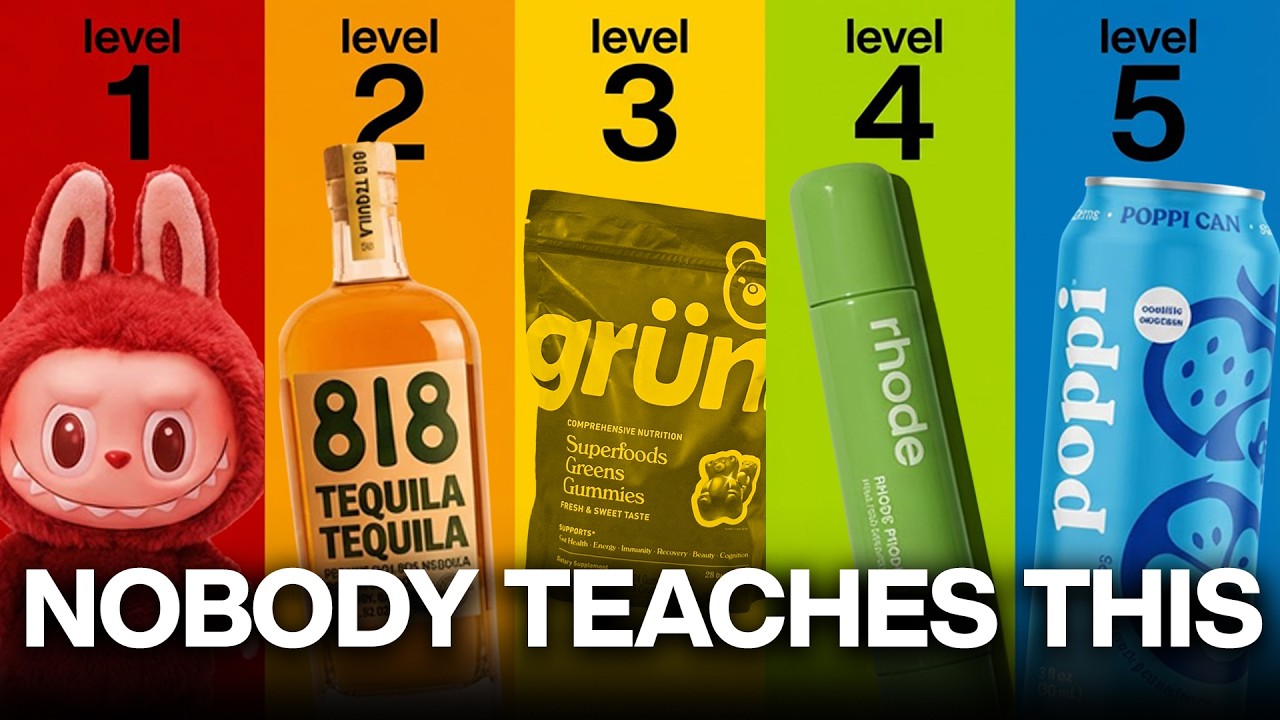
Most brands think scaling comes from better ads, better creatives, or better funnels. But that's not why 99% of brands fail. They fail because they're operating at the wrong level. Every successful brand that I've known moves through these five stages. And if you bring level one behavior into a level five business, you will destroy your own growth. You see, I've spent over the last decade studying patterns and working with the biggest brands and creators in the world. Today, I'm breaking down each of these five levels of building a brand and showing you exactly what
98 words, the words spoken in the first 30 seconds at 195 words per minute.
Free, no signup. See how the first 30 seconds hold attention, with rewrites.
Sentence shape
| Measure | This transcript |
|---|---|
| Sentences | 265 |
| Average words per sentence | 11.7 |
| Longest sentence | 48 words |
| Questions asked | 15 |
| Sentences containing a number | 5 |
Most used terms
Filler phrases
29 in total: like 16 · actually 6 · literally 4 · kind of 1 · sort of 1 · you know 1.
A literal whole-word count of the same phrase list the Prepublish browser extension uses, so a phrase inside another word is not counted and a phrase used in its ordinary sense still is. It is a count and not a judgement.
Free, no account. See where attention is likely to drop, with a rewrite for each weak line. The free check shows the scores and the one issue costing the most. Or run it on the words above first.
Free · No login · See a sample audit first if you prefer.
What this transcript is
Every word below is the caption track YouTube publishes for this video, pulled from the video itself and reproduced unchanged. It is not Prepublish's writing, not a summary, and not a re-transcription: it is the video's own published captions. English captions, generated automatically by YouTube, in the video’s original language. Source: the video on YouTube. A channel that would rather this page did not exist can ask for its removal through the contact page, and it is removed.
Most brands think scaling comes from better ads, better creatives, or better funnels. But that's not why 99% of brands fail. They fail because they're operating at the wrong level. Every successful brand that I've known moves through these five stages. And if you bring level one behavior into a level five business, you will destroy your own growth. You see, I've spent over the last decade studying patterns and working with the biggest brands and creators in the world.
Today, I'm breaking down each of these five levels of building a brand and showing you exactly what you need to focus on at each stage if you want to transform your brand into a household name. Let me tell you something most e-commerce founders don't want to hear. At level one, nobody cares about your brand. You don't have any authority. You don't have trust. You don't have that cultural pool yet. And you don't even have proof that your product works.
All you have is an idea and an opinion. And the biggest mistake I see these [music] founders make at this stage is believing that they're actually building a brand. You do not have a brand at level one. All you are trying to do is answer one question. Will a stranger exchange money for my product and will they do it consistently? Because until that happens, you don't have a brand. You have an idea. [music] And level one isn't about scaling.
At level one, it's all about relentless action. You're the salesperson. You're the strategist. You are in the trenches. And you're learning directly from the [music] heartbeat of your market. reading literally every comment on competitor's ads, Tik Toks. >> I actually do cuss a little. >> Do you? >> Also, yeah. >> What's your favorite curse word? >> It's Britney, babe. >> You're answering every DM. You're watching where customers fall off in your funnel.
And you should be living inside of your Reddit threads where the competitor's comments are in customer DMs because that's where the real pain points lie in your market. And winning at level one doesn't look [music] like winning at level five. And that's where most people are going wrong. Winning at level one looks like people buying even though your website isn't perfect. [music] Customers are DMing you asking questions.
Your ads may not look the best, but they are converting at some level. This all answers our [music] question. Will a stranger exchange money for this? And will they do it consistently? Look at the big brands today [music] that you buy from. Gym Shark didn't start as a polished global household name. They started very scrappy, [music] working with small micro creators at a time. It was raw content, constant testing, and learning and doubling down on what works from that.
Poppy didn't build with mass retail dominance from the beginning or going viral on TikTok. It began with two creators putting their head down and testing to see what worked and what didn't while building out of their garage. All of the biggest brands, they obsessively tested product [music] demand before going all in on scaling the brand's identity. So, the identity shift required at level one is you must kill that perfectionism.
You must kill the fear of looking like a rookie [music] or being embarrassed because the market does not reward the prettiest idea or the best looking ad or even the best products. It rewards the fastest learner. So to break out of this level one, you need to constantly be testing your offers, your messaging, your ad angles, and talking [music] directly to your customers, finding those first 100 people who don't just like your product, but need your product. >> Oh my god. >> Oh my god, my teeth look brighter on this side.
And once you've proven that people will buy your product, [music] you enter the most dangerous stage in building a brand, which brings us to level two. Level one was all about survival. Level two is about control. >> We have three distribution centers. >> This is where your brand starts making real money. Your Shopify dashboard now has consistent sales coming in. Your ads are beginning to work. Your customers are now buying.
This is when most people feel like they sort of figured it out. And when I talk to brands that are in this stage, they always think that now they just need more traffic. And now that people are buying, they just need more of it. But traffic without a system is the fastest way to lose everything you just built. Level two is where most brands are getting stuck for years. They're doing 100k months, 200k months, maybe even $500,000 months, but every time they try to scale, it gets harder and harder at every point because everything is dependent on the founder themselves.
You're approving literally every creative, every decision, the ad accounts, the fulfillment, rewriting landing page copy at night. The biggest mistake founders make at this stage is confusing activity with scalability. They're testing random creatives with no framework. They're launching random offers without looking at cogs and chasing random tactics online instead of building repeatable flywheel systems. This is where a lot of brands start to unravel.
There's team issues. Ads are constantly fluctuating in performance and you need new creatives, but you were spending your time in 30 other areas. >> Just make sure that we'reing locked and loaded. Systems, processes, order volume, everything's ready to go. >> And scaling isn't just about finding out one winning [music] ad. It's about building an actual process that produces winning ads consistently. Because level two is not about the hustle and the grinding.
It's about building a structure that supports itself. In level one, it was about how can I get more sales. Whereas level two is all about what systems can I build to bring predictability [music] and consistency to my brand and my customer acquisition. In these systems, you're focusing on creating clear positioning, a system that supports new creative offers that are consistent. This is where you stop testing and [music] guessing and you start actually refining that machine and really dialing it in.
Now, here's where most founders struggle psychologically with this. They built success through the effort that they've been putting in through working harder than everyone [music] else out there. But level two really requires a different kind of sacrifice. You have to stop being the go-to hero because if everything depends on you, ultimately you are your own bottleneck. And this is where brands either evolve or hit a plateau and eventually lose their place in [music] the market because scaling exposes those weaknesses.
And weak messaging gets more expensive, weak offers stop converting, and weak systems break under this pressure. So, here's what you really need to do instead. Document the systems. [music] Document your creative process. Document your offer structure. Document how campaigns are launched. Document the customer feedback loops. Because once something works once, your goal is to make it work again, [music] but this time faster.
This is also where you got to stop thinking like a content creator and start thinking like a system creator. Your creative can't be random anymore. By now, you have proven hooks, customer avatars, personas, [music] and demographics. Look at brands that have won here. They don't rely on one viral moment, a winning ad, winning creators. They built a system that supports that level of scale. Young LA built repeatable drop systems.
Grunes built content ecosystems that continuously feed growth and hos built UDC creator flywheels that [music] automate their paid collaborations at scale. And at level two, this is the identity shift that is [music] required to win. You must kill that chaos. You must kill reactive decision-making. You must kill the belief that more [music] effort equals more growth. Because at this level, clarity beats hustle any day.
And if you're in level two, your real focus should be building a predictable [music] creative testing engine, creating clear messaging frameworks, developing scalable offers that are tried and true, and removing yourself as the bottleneck. Because your goal is no longer chasing revenue goals. Your goal is and always will be creating that stability at scale. [music] Level one proves that people will buy. Level two proves your brand can scale without it breaking.
Once you've built a literal [music] engine that is stable and predictable, you enter the stage where most brands [music] can completely change their growth trajectory because this is where you stop being just another brand or oh, I've seen them on the gram before. This is where you start becoming a brand people actually believe in. Level three. Now, if level two was about building a stable machine, level three is about building meaning.
This is where most brands make a massive mistake. They think scaling comes from better ads, more creatives adding in Google ads, Tik Tok ads, Tik Tok shop. But the brands that break through at this level understand something very different. Ads don't just scale brands, but identity [music] does. Up until now, you've been focused on selling a product. At level three, you start selling something bigger [music] than your products.
You stop asking, "How do I get more people to buy my product?" And start asking, "What does this brand stand for? And who is it not for?" Because here's the truth. The market is crowded and everyone has similar products. Everyone has similar funnels. Everyone is literally running Facebook ads. So the brands that are winning don't just try to blend in with that or be slightly a better version of it. They become unmistakably different.
They are willing to quite literally draw a line in the sand and then stand by. This is where most founders actually get uncomfortable because picking a side requires a willingness to be bold. You have to take a side. You have to reject what everyone else is [music] doing. You have to risk being polarizing with people. But that's exactly what creates magnetic brands. Take Graza for example. Olive oil is one of the oldest categories on the planet and traditionally a pretty boring space.
But they broke through that by completely reframing identity. They made olive oil feel cool, modern, high quality and luxury. Bright colors squeeze bottles instead of that traditional bottle. >> Everyone is drizzling Graza. I am always using Graza oil. >> Lately I've been using Graza. >> They don't come out with a better olive oil. They changed the meaning of olive oil. Look at rise. Mushroom coffee isn't new. It's been around, but instead of competing as another coffee alternative, they built identity around calm focus, daily rituals, and wellness without burnout.
They speak to a very specific person. Someone tried caffeine and got anxiety, [music] someone who wants performance without the chaos. The identity creates emotional alignment with the person. At level three, you stop competing on features and you start competing on meaning because you realize people don't just buy products. They buy the identity of who they become when they use your product. Here's the biggest mistake founders make at level three.
They try to appeal to everyone. They soften their messaging. They take the steam off things. They don't want to offend anymore. They become too agreeable. >> When I'm drunk, I want a big one, but only when I'm drunk. >> Made fun of my buddy for having a small one, [music] but then he let me hold it. And now I lowkey want a small one, too. [music] >> Now we have small ones. >> And this is the fastest way to become a forgotten brand in the space because strong brands are clear.
They're specific. They're polarizing. And they stand for something bigger than just selling a product. And this is when you start to take a stand on what do you believe that competitors don't? Who is your brand for? Who is it not for? What identity does your customer get by choosing you? This is also where your marketing shifts. You're not just running ads anymore. You're communicating at a different perspective. Your visuals are different.
The way you speak is different. The slogans you use are different. >> My jeans are blue. >> Sydney Sweeney has great jeans. >> The humor you relate to, your tone, your offers, they all reinforce at that same identity. At level three, you have an identity shift yourself. You must destroy that safety net. You must stop trying to look like everyone else. You must stop copying what your competitors are doing. If they do their ads a certain way, you do yours completely different because level three brands don't follow the industry norm anymore.
They create their own because this is where you stop being just another brand and start becoming something people choose on purpose over other brands. And once identity becomes clear, growth starts to feel different because now your marketing doesn't just convert. It spreads like a wildfire. That's where level four truly begins. In level three, we built our [music] identity. In level four, it is all about building the inevitable.
This is where scaling a brand stops feeling like pushing a literal rock up a hill and starts feeling like everything is working in your favor now because you're no longer just running some Facebook ads. You're now playing the game of content distribution. At this stage, something truly shifts. Your brand stops relying on one channel, one platform, and one strategy. Instead, you've now built [music] a network of content distribution that supports each other.
Organic is feeding paid ads. Paid ad feels organic. Tik [music] Tok shop amplifies reach from UGC creators and pushes a wave of social proof organically that can feed right back into pay. And customers are becoming advocates and go to war for you in the comments online. Now this is when everything begins to compound. Loom didn't just grow because they have better supplements. They built a creator-driven distribution machine you see everywhere.
Micro creators, lifestyle [music] content, and routine-based messaging. You couldn't scroll on Tik Tok without seeing someone using Bloom in their daily ritual. and they just became number one on Tik Tok shop in their category [music] because of this. >> I'm the CEO of Bloom. This product just took over the internet. >> And it's not luck. This was all the system that has been refined over and over again as they went through these different levels.
And level four is when you break out of that one main driver of traffic for you and you diversify and build distribution channels that all feed into each [music] other. You build systems for creator seating on Tik Tok shop. You create pipelines for content production. You turn customers into storytellers through retention flows designed to educate them and convert them into advocates for the brand. Your identity is winning narratives and amplifying them everywhere because consistency creates familiarity and familiarity ultimately lowers cap.
It doesn't matter if they buy from your Facebook ad cuz next time they're on Amazon, they buy from you anyways or if they see your video on Tik Tok shop, who cares if they didn't buy there because when they go into Target next, they buy anyways. The identity shift required at level four is massive. You have to stop thinking like a media bar that's focused on metrics and start thinking like a media company. Because brands at this level don't interpret culture.
They create it. And once your distribution flywheel starts spinning, world stops feeling like effort. Your brand starts feeling like the inevitable choice that people will buy from anyways. And once you own distribution, you stop competing inside categories that everyone else is battling for. You start defining those categories and you enter level five. If level four was about controlling distribution, level five is about controlling perception.
This is where your brand stops competing inside a category and starts defining the category itself. And very few brands ever reach this level because level five requires a shift most founders are not ready for and never will be. You stop asking how do we sell more products and start asking what world are we building? >> Get rid of all these buttons and just make a giant screen. >> At this level, your brand is no longer just a company you found.
It becomes a universe, a movement, [music] a cultural signal, and an icon. People don't just buy from you any identify with you. Level three brands build identity. Level four brands build that distribution. And level five brands are cultural icons that shape generations. They shape how people think about an entire space. People don't buy Nike shoes, they buy what Nike stands for, the movement that they have created. People don't buy Apple [music] just for iPhones.
They buy the meaning behind Apple as a brand and the identity Apple gives you. And we know this because you know the question of you have an Android or oh you have green text in Ferrari, Rolex, Louis Vuitton, Northface, they all do this. People don't buy level five brands for the products. They buy what it stands for and the status it gives them. To become a level five brand, the mental shift switches from thinking short term and really starts focusing on years ahead.
You stop optimizing only for immediate rorowaz. You start designing for cultural [music] relevance. Because at this level, brand perception drives growth way more than any marketing strategy ever could. Icons don't chase that attention. Attention chases them. And this is why level five brands become almost impossible to compete against. They own the emotional landscape. They've defined the standards. They become the reference point everyone else compares to, and it almost seems completely out of reach.
So, when you look at your brand, the real question isn't how do I scale faster? It's what level am I actually operating at? because each level requires a different focus, a different strategy, [music] and a different version of you as a founder. And if you like this video, then you'll love this one I did on how to grow any brand 20 times faster only using this one simple trick. I'll see you inside the [music] next episode.
The words are the caption track's own and nothing is reworded or re-transcribed. Paragraph breaks are placed between sentences so the text reads as prose.
Free tools for your own script: paste a draft and see where it stands before you record it.
Paste your draft and see where viewers are likely to drop off, with a rewrite for each weak line.
Paste the first 30 seconds of your own draft for a hook score and rewrites.
Check your draft against YouTube's advertiser-friendly guidelines before you record it.
Read this channel's public videos and transcripts, and download a writing brief for it.