Getting the transcript
Reading the captions from YouTube. A video nobody has opened here before takes 10 to 30 seconds; this page fills in on its own.
Getting the transcript
Reading the captions from YouTube. A video nobody has opened here before takes 10 to 30 seconds; this page fills in on its own.
The Andrew Faris Podcast · @andrewfarispodcast
Words
11,720
Runtime
56:11
Speaking pace
209wpm
Reading time
49min
209 words per minute, above the 201 75th percentile of 349 measured videos. That distribution comes from the 349-video hook study.
Opening (first 30 seconds)
One of my absolute favorite people in the e-commerce business is Nate Legos from Original Grain. This is another one of my profit monsters interviews. And that's because Original Grain has just grew 100% last year and is on pace to grow 100% again this year. Is in the mid 8 figures, has been profitable at every step of the way while growing that much. They are a killer business selling watches and other men's accessories, and they do a lot of things really well. The bulk of this conversation is me talking to Nate who's the VP of marketing there, the highest level marketer
105 words, the words spoken in the first 30 seconds at 209 words per minute.
Free, no signup. See how the first 30 seconds hold attention, with rewrites.
Sentence shape
| Measure | This transcript |
|---|---|
| Sentences | 680 |
| Average words per sentence | 17.2 |
| Longest sentence | 153 words |
| Questions asked | 63 |
| Sentences containing a number | 52 |
Most used terms
Filler phrases
750 in total: like 275 · um 143 · uh 138 · you know 79 · kind of 38 · actually 27 · sort of 24 · right? 16 · I mean 5 · literally 3 · basically 2.
A literal whole-word count of the same phrase list the Prepublish browser extension uses, so a phrase inside another word is not counted and a phrase used in its ordinary sense still is. It is a count and not a judgement.
Free, no account. See where attention is likely to drop, with a rewrite for each weak line. The free check shows the scores and the one issue costing the most. Or run it on the words above first.
Free · No login · See a sample audit first if you prefer.
What this transcript is
Every word below is the caption track YouTube publishes for this video, pulled from the video itself and reproduced unchanged. It is not Prepublish's writing, not a summary, and not a re-transcription: it is the video's own published captions. English captions, generated automatically by YouTube, in the video’s original language. Source: the video on YouTube. A channel that would rather this page did not exist can ask for its removal through the contact page, and it is removed.
No Script X-ray for this video: YouTube shows a Most replayed graph only once a video has enough views.
One of my absolute favorite people in the e-commerce business is Nate Legos from Original Grain. This is another one of my profit monsters interviews. And that's because Original Grain has just grew 100% last year and is on pace to grow 100% again this year. Is in the mid 8 figures, has been profitable at every step of the way while growing that much. They are a killer business selling watches and other men's accessories, and they do a lot of things really well.
The bulk of this conversation is me talking to Nate who's the VP of marketing there, the highest level marketer at the company about how they approach product and price and we tried to get really hands-on here. The goal for all these interviews is to look at what is driving profitability in these fast growing businesses and then to figure out how to communicate that in a way that you can learn from and actually implement in your business as clearly as possible.
So we talked a lot about Nate's and Original Grains approach to product release. everything from how they conceptualize which products to release, as well as how they go about actually releasing them, like what's the email and SMS strategy and and all those things. And then we also talked a lot about price testing, which is something you are not thinking about enough in your business. I can almost guarantee you and how big of an impact that has had for Nate and for original Crane.
Nate is one of the most original thinkers in e-commerce that is in the conversation right now. I love talking with Nate. It's his third time on the show. That's how much of a believer I am in his content. He is just really awesome. And so, strap in. We start out all the good stuff, all the Nate Legos original things like how much Red Bull is everybody drinking and did the moon landing really happen? And then from there we get into all the product and price stuff.
This is a great conversation. You're going to learn a lot from it. Nate Legos, VP of Marketing, Original Grain. Let's get into it. I think this you're a three-time returning champion here. I think I think this is your third time on my show. Both of the previous two are great. Um you Yeah. I mean, I know that I know there's a lot of things in your marketing career that probably make you feel like you've really made it, but probably none more than that, right?
Yeah, that Yeah, that that's top three for sure. I think like, you know, buying a house, some financial milestones, and then three time Andrew Ferris podcast appearance is is right there. Yeah, that's Yeah, that should be. Um, let's get right into it. What you were talking about on X just moments ago, most important conversation topic we could possibly have. The moon landing didn't happen. Uh, go for it, Nate. Tell us why that's the case.
Yeah, I can give you the 30 second rundown. Um, we after we pardoned a bunch of Nazis and brought them over here to f to found uh NASA. Uh, we were not as good at rockets as the Russians, JFK promised we'd go to the moon this decade and then the CIA killed him. Uh, but then to kind of avenge his death, Nixon was like, "We got to go." So, he did it that decade with six months to spare. Um, every rocket that went up before that exploded before it got to space and then the next five somehow went to the moon and back with no problems.
And then Nixon resigned uh for lying about some other stuff. So, not the most convincing argument for me. And we haven't been back, so I don't know. All right, there it is. Um, I this is actually one of those things that I have no opinion on, but I have a really good friend who um uh actually my business partner, a brand I'm starting, he um he uh has said forever that the moon landing didn't happen. And a little bit like you, I can't really tell if he's serious about it or not.
There's like a lot of things that you do that I'm like like what's your percentage likelihood, you know, like like I don't know if this is like breaking news, but for example, I have it on good authority that you actually don't drink that much whiskey and that you like maybe put it a different way that you don't have a problematic relationship with alcohol, but that might like that might shatter your image. People know that.
So I never know what's marketing with you and what's real, you know? Well, yeah. When I meet people in person, they want to drink with me all night and I have to tell them like, "Hey, no, no, listen." I tweet out every drink I have. So, like when you see that's like four a week. Yeah. Yeah. When you see me tweet one, I'm not having seven more after the fact. That That's pretty much it. Yeah. Yeah. Um All right. So, uh I did seriously consider getting a Red Bull and like maybe even chugging it for this episode, but I have other things to do today.
Yeah, I know you've got yours. Um and I do think my heart might literally explode if I did that. I haven't had a Red Bull for a long time. So, anyway, if you don't know what I'm talking about, go follow Nate on X. And actually, before we get anywhere else, you should follow Nate on X, as well as his incredibly good podcast, Tactical and Practical, which is also short, which is great. Um, unlike this show, which um some some would would would consider me verbose perhaps would be um would be a word that you could use to describe me.
But the uh the but Nate stuff is really good and really focused on like exactly how you do things and how you grow. And you you should listen to Nate because I find you to be an interesting voice which is in in that you are like for example I don't really care at all I mean like literally at all that we disagree about manual bids in a meta ads account. It see it strikes me as um something that I think you're probably doing wrong, but there's so many things that you are doing right that are serious needle movers in the business.
And I think almost anybody who employs manual bids would say this is the case that is actually, you know, driving so much value in the business that you're you've got great perspective and a lot of that perspective is outside of these little detailed tactics, which is funny because you do a lot of tactical stuff as well. So let like what I want to actually start with is like what do you think original grain's been insanely successful as a as a brand in a pretty hard category.
Watches I think is a hard category in a lot of ways. Um and you guys are now mid- eight figures. You grew 100% last year. You're on pace to grow 100% again this year. You've been profitable the whole way. You still acquire customers profitably. Um what is the core driver of your guys's growth, success, profit all sustained over a long period of time? What do you think if you I mean there's probably a lot of things but what does that come down to?
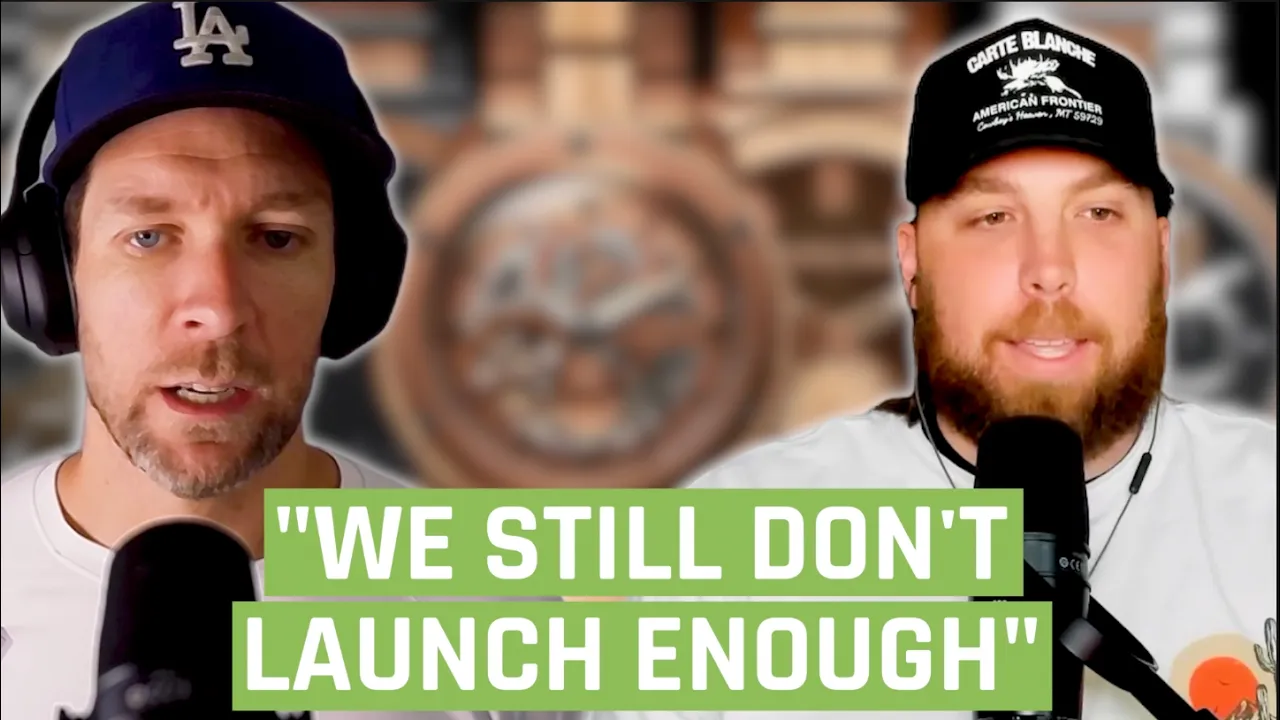
It starts with product for sure. I'd love to say it's our media buying strategy that I do disagree with you on. I'd love to say it's our uh pro strategy which is the next evolution of CRO which we'll get get into in a minute but with watches especially it's product like we have released a lot of product in the last three years maybe maybe a hundred watches over three years um and we are meeting these days talking about we still don't think we're launching enough um and it's very very clear to us we've released these different collections or different individual SKUs uh that like really change the trajectory of the business more than anything I can do in the ad account more than anything I can do with creating content.
Um you know product product I think is king. I think we all kind of believe that content's king but you can have the best content in the world of a subpar product and that's only going to get you so far. And uh the guys, the brothers and co-founders, Ryan and Andrew, do a great job designing everything um and makes my job a lot easier when they uh when they hit a home run on a watch. So, let's talk like a little more tactically about this.
This is the thing people talk about a lot is product, but what I I want to do is try to take that to a level that is like um something that you can you can actually grab on to for for somebody listening to or watching this. So um let's say again in the last year how many products did you guys release? Did you say in the last year? Probably 50 50 plus. Um is that 50 individual product release moments or is that 50 variations within like maybe 10 moments or something like that?
Yeah, probably uh probably 20 of those fit into like collections of four or five. Um and then the rest are all oneoffs. So, how often is your customer getting an email from you guys saying we release a new product? Uh, right now probably uh two to three times a month. The goal for next year is to have that every week. Yeah. I So, I think this is so striking. Um, can if you look back like one of the things I think whenever I talk to somebody in your in your world, really any business stage, I try to think about like what does a person one business stage before you need to hear, you know?
So, it's like if you guys are mid eight figures, what if I'm early eight figures and I'm starting to look down the barrel of of this and going like I don't know if more meta ads creative is the answer here? Yeah. How do I actually get to mid eight figures? Um, so if you're doing two or three a month right now, let's say you guys when you were early eight figures, do you have any sense of sort of how much product you were releasing then?
A little bit less. Probably one to two drops a month. Do you think the volume of drops before we actually talk about the quality of the product, the volume of drops has been a has been an important needle mover in getting you guys to that next stage. 100% growth again last year. I think the volume matters uh because of the speed in which you find new winners. Um, so like in fashion, you know, the guys are are are great watch designers and they have a great eye for things, but like we're not batting a thousand on, you know, what we think is going to do well.
Um, so we kind of look at it as we're just getting in our our at bats. We're just getting ourselves more chances to find something that hits. And that volume, that increased volume allows us to do that faster. And then on the flip side, we don't really worry about the flops, uh, because we're big enough at that point where, you know, we'll sell 100 to 250 of pretty much anything we release. Um, so we're not scared about getting stuck with inventory because everything comes out in that first small batch.
Uh, and yet the the the the volume just helps us get to winners quicker. Let's talk about those small batches for a second because this is actually the tactical element of this that I think is really important. One of the things that stops people from doing this is that the lift of developing the product plus the risk to your cost is pretty high. So, do you guys have like a reasonably lowQ that you can order from your manufacturer that allows you to essentially test this?
This is getting outside of the realm of marketing, but I'm assuming you have some awareness of how this is all fitting together. Yeah, we can do a hundred of anything. Um, which you know, 100 watches at 300 bucks a piece. I think that's 30K. Like that's not a crazy amount of revenue to do from a a a drop. And while there is a lot of cost with, you know, custom tooling and manufacturing and then new content, like there's a lot of cost that goes into a hundred watches.
And then we got to try to figure out how to advertise a new watch. So often that first hundred, you know, will not be profitable. Um, but we kind of look at it like an investing strategy of like, well, one for every 10 that hits is going to pay for everything and pay for, you know, 100% growth for next year. Like a VC model, basically. You're saying like Yeah. Okay. Because the winners are so outsized, right, in their in the value creation.
Yeah. Because you've also got to design the watch. You've got to do all kinds of things. When you look at those watch designs, let's talk about what kinds of designs you're doing. Like, are you does when you talk about these different kinds of watches? I'm actually I have a lot of questions, right? know about all this. Um, when you guys do that, uh, is it just is it is it simple design changes? Like I know you guys do a lot of collabs you've talked about in the past on my show, you know, doing stuff, you know, um, watches made out of old whiskey barrels and then, you know, doing a collab with, you know, um, different I think you guys use I think you're with Jack right now.
Uh, is is Yeah. So, you know, doing collabs with Jack Daniels like you've got I think Taylor Guitars has been in there somewhere. Yep. Um, I think my older brother bought got a Taylor guitar one. Uh probably based on something you wrote. Um thank you. Yeah. Yeah. Yeah. Um but the um Yeah. So so some of those things, how many of those product releases are like full-on collab type, you know, co like licensed drops versus just like design changes, new new kind of collection.
Yeah. So the way we kind of like approach product development is we either go into it thinking we're going to design a product that amplifies something we already do that our current customers and customers like them are going to love and it's a pretty safe bet. The other side of the coin is we're going to do something that hopefully opens up ourselves to a new audience that hopefully increases our our TAM. So that's kind of how we uh uh approach all product.
And then with the collabs, like we've done Whiskey Barrel watches for seven years. So the collab with Jack was something that like we knew was going to crush. We knew this was just going to amplify what we're doing to a bigger batter audience. We knew our current customers would like it. Whereas when we partner with someone like a Taylor Guitars or we have collabs coming out in the next couple weeks with Kors Banquet and Ford, um we are hoping uh hoping that opens us up to a new group of of people who previously might not have had the best reason to buy from us.
Uh but we're going to tap into something that hopefully they're already passionate about. I don't know a better group of people to help you build an excellent business with than my friends at More Staffing. more staffing is the Philippines-based staffing agency that staffs positions at every level of e-commerce businesses of agency businesses u and has been doing it for a while with real excellence because they come from a DTOC background.
They know what kind of people you need. And if you are thinking about hiring in the Philippines, uh which is where more staffing is going to reach for talent for your business as they are based in the Philippines. Uh, if you're thinking about hiring talent in the Philippines as just like $5 an hour virtual assistants, you are thinking about it wrong. You should instead be doing what I do in my business, which is find a range of levels of uh employees from uh graphic designers and video editors and and coordinator level positions all the way up through like manager, director level positions, etc.
I'll just tell you, I am starting a brand right now. I have an agency. I am beginning to think Philippines first in the way that I'm thinking about my hiring because I've been so pleased with the team that More Staffing has helped me build internally both at the level of talent and at the level of price. The the value proposition here is fairly simple which is that by paying towards the higher end of the Philippines-based market.
You are going to attract incredible talent in your business. People with deep DTOC e-commerce resumes, they understand uh the worlds of marketing, digital advertising, supply chain operations. I'm looking at accounting right now. I'm looking at um uh I'm looking at all kinds of stuff in my business. And uh they people are going to come with great resumes across all of those parts of the business. And because you are paying um at the mid to high end of the Philippines-based market, uh you are going to attract better quality talent than other people will and still have that be meaningfully less expensive for your business than what would happen if you tried to hire equivalent talent in the US.
I'm at a point now where I really don't know why businesses wouldn't be thinking about hiring in the Philippines because especially there is a resource like more staffing that can really help you get connected to great talent and because more will give you a one-year guarantee on talent they place in your business which is way longer than most hiring firms would be right so if somebody doesn't work out for a whole year in your business they will replace that person for free uh and so that's why so many people who have listened to my ad reads for more staffing over the last year and a half of partnering with them have uh have continued to work with them over time have up and have hired more people with them.
Uh you should be considering it too. Go to more staffing.co more staffing.co to get started in a conversation today with hiring incredible talent from the Philippines in your business with more staffing. So in the process of the design, you guys are actively thinking about this is a product for a new customer versus a returning customer. Yep. Um that's really interesting. I and I think I think this is part of the thing that's really underrated and the reason why product is so important here which is like this this notion of um expanding your ability to grow by really is either of those, right?
Because it could be an LTV driver. It could also be I imagine for you guys especially it's so much about the ability to drive new customer reach. And I think a lot of brands get stalled out, especially when they get to that sort of like, you know, a few hundred thousand a month in spend. Um, if they're not in a category with like a monster TAM to begin with, like t-shirts or something like that, right? Like, um, you know, if you're in that category, then yeah, go ahead and release more t-shirts for forever or go ahead and and run more ads for forever and see how far you can push it.
But like, you know, although you also got to release product there, but yeah, anyway, the point being like if you if you think about in a category like yours, like how do I get to that next customer? that is the mechanism for how you grow the business like it's like you you have to have something that appeals to to new customers like you know it and so when you guys think about sort of the next stage getting to nine figures or whatever the stage is in front of you like is that what you're thinking or are you trying to think are you guys thinking outside of this category uh of watches like does original grain expand into you know I don't know hats made out of whiskey barrels or something yeah we uh we think the next chapter of growth within the next few chapters of growth are going to come from more and better watches.
Um, we sell a decent amount of wedding rings and necklaces and bracelets and sunglasses and they do okay. Um, but for us, like we're a watch company and we've looked around the industry, there's not really a watch company that does other stuff well. Um, and we don't feel a need from our customers to diversify too much more into different categories than we have. Um, the only other new categories you're going to see from us for the next year or so are what I would consider more like LTV or upsell items.
So, like we're launching pens here in a little bit. Um, it's not going to be an acquisition tool. It's not going to be a new hero skew, but if I can get a 5% take rate on a pen upsell for 50 bucks, I'll be pumped about that. Um, so we have uh in the last couple of years nearly doubled our AOV. Uh, and a big part of that has been building higherend, more premium watches. Two years ago, our number one selling watch cost $200.
Uh, today there's a new watch that has taken the the throne. That one cost $350. Um, that's a huge deal. That's a big deal for us. And, uh, we launched one yesterday that costs 750. Um, and we've got more in the pipeline that are priced anywhere between, you know, 700 and,500. So, we think pushing up market is going to be important for us. Um, and then continuing on with our new partnerships as well. And you you're purposefully testing with again with a $750 watch, I assume.
You're purposefully going like, can we can we actually get this kind of money from our customer? Yeah. So, the first test was actually a year ago with bundles. uh we put to to together a series of of three and five watch bundles that are priced anywhere between like 600 and 1,500 bucks um to see like hey are there people who come to originalgrain.com today that only give us $400 because that's all we're offering them.
Are there people who would give us more? Um and we're kind of blown away at the amount of people who are coming uh to buy a $1,000 bundle and to buy a $1,500 bundle. So that was like phase one of testing that kind of gave us the the confidence to be all right let's go develop much higherend watches because there are customers coming to our website today who are willing to spend a lot more money. Yeah. Yeah. They have that money in their wallet that they can allocate towards this kind of a purchase for themselves for a gift whatever.
Yeah. And yeah, that's really interesting is um okay, let's there I have a lot of other questions still about the sort of the product release strategy because I I do think like you know this is getting a little more traction and awareness I think in current conversations in DDC circles of just like the importance of great product strategy but it's so important that I I don't want to lose sight of it. So um and there is a way in which you have to operate through every part of the organization um you know with excellence on on on all of this when you think about the product design side the manufacturing side the um cost side of the business being able to like you said like sell watches that don't sell kind of take the loss like do you turn stuff into a sales section of your site sort of like there's a merchandising question there's a marketing question there's a photography question there's all kinds of stuff here so um so I want to talk a little bit about some of the breakdown of how you guys go about this.
So, um, so who controls the product release schedule? Like, if when you say you're trying to get from you went from one to two launches a month to two to three and you want to get to every week, whose job is that and what needs to happen to make that happen at at Original Grain? Yeah, it it's come from looking at a lot of marketing data first uh and then Ryan and Andrew, we have a designer as well, um, are handling like what those products are going to be.
But last year, the first six months of last year, we launched uh the most products we ever had. We launched like 30 watches in like six months. Um and when we first analyzed that data, I think we interpreted it wrong. We looked at the revenue from all those SKUs didn't add up to a ton and we were like that felt like a lot of work for not a lot of revenue. We didn't like that. But what we've learned and what we've kind of dugger dug deeper into is that we shouldn't just be measuring the revenue from those SKs.
We should be measuring the revenue from the days where we get to announce a launch because we'll launch a new Whiskey Barrel watch today. And that watch isn't the one we sell, but we sell way more of the best sellers in that collection. We just got people back to our website because of the hype of the new drop. So that's why uh I kind of first pressed the issue of like let's go once a week next year because it's just going to give us more moments and more things to talk about, more reasons for people to come back to our website.
They're probably going to buy the best sellers. It's rare that we get one of these new drops to, you know, become a top five watch for us. We've done it twice in the last two years. Um, so we don't need everyone to be a home run, but we need everyone to create excitement and create a moment. Um, from there the guys will look at gaps in our current catalog uh to see like, can we make any simple new designs, colorway tweaks using a different movement or a different silhouette in a current style.
Um, those are like easy, super lowhanging fruit opportunities. Uh and then they will get with our designer and explore, you know, completely new designs and case shapes and movements and uh get into all the nitty-gritty of of watch stuff, but uh a big chunk of it has been and will be kind of colorways, line extensions. Nothing too revolutionary. Uh but it gets people to click again and it's been really valuable. Yeah.
Where do you as a as the marketing lead fit into that process? Like you said, you start with analyzing marketing data in some of the ways that you talked about, but where else in that process are you a part of that story? Yeah, I'm uh uh doing things like testing bundles and testing prices to see how price sensitive people are. And then I'm going back to the crew and saying like, hey, people are willing to spend more money on watches than we currently have.
Go build something higher end. Uh and then I've gone to them and say, hey, everything we do that's black does really well. let's go create this style watch in black and we did that last year and it's our number two selling watch this year. Um so marketing should definitely be involved and uh inform some of these decisions because sometimes it's data that you know founders or you know the COO or who whoever is in charge of your product uh it might be data that they're not aware of but it's data that marketers are used to seeing.
Um so I would definitely encourage everyone to speak up. Uh but like hey listen the market the customers are telling us to go in this direction we need to mix it in. Uh is there anything that you do actually at the level of product release? So when you actually kind of move this forward you've got the product. Um at some point I assume you're the one sort of leading any messaging around specific things. So like let's say you do a collab somebody has to come up with the language and the way you want to present that. um you know sort of in the planning stage of a product release.
Um and even if it's not a collab then it's then it's uh something that you still have to figure out how to frame for people in some way you know um at some point you know you know uh Xwatch is being released in two months. Um what does the beginning of your process look like as you think about sort of the the true creative angle of it? How are you approaching this and what does your team look like? Who's helping you etc?
Yeah. So, uh, the the blessing and the curse of the watch industry is, uh, it takes about a year for us to get anything to market. Um, so from inception to when it rolls out. I have 12 months to to figure out how we're going to talk about it, what I want the content to to look like. So, we have plenty of of time. And a lot of the messaging uh, is kind of product driven. Uh, if it's something like just a new black variation of a top selling watch, then I'm going to use messaging that has worked for that watch before.
The content's going to look and feel similar. But when it's something brand new like a launch with Kors, um, you know, I stop drinking Jack for a night, grab a six-pack of Kors, uh, and me and Chat GPT hang out for an hour, um, and just start to kick around some ideas. I copy all of their brands copy in there. where I put all of ours in uh and just start to see the synergies between the brands and start to figure out like, hey, if someone likes Cords Banquet, what is similar about them that might make them like Original Grain?
Uh, and just kind of refine the messaging from there. But we like to go with messaging first and then start planning our visuals so the visuals can kind of tell the the story uh that we want to from our copy. Like in that example, you'd say these people both have excellent taste, right? Like Yeah. You know, right? So that would be people people who who want a little more out of life. You know, they're they're drinking Coors banquet beer.
They're they're they're wearing original grain. These are this is not these are high quality people. 100%. Those are the And like that's a a throughine for uh a lot of our collections is I always say like you don't want to hang out with a guy wearing a Rolex. It's not fun. He's not fun to be around. Original grand guys are fun to hang out with. Yes. Yes. What do you Yeah. Sorry to anyone wearing Rolex out there, but No, I agree with you.
I agree with you. Um the um Oh, man. We might have just might have just really alienated my Rolex wearing audience. This could be bad for me. I'm gonna get I'm gonna get I'm gonna get I'm gonna get cancelceled by Rolex culture. Yeah. And so you get dragged. That's all right. I've been cancelled by them already, I think. Um, okay. Um, okay. So, you start uh building all that creative sort of get in your artistic mood uh with all of that and this is I think an underrated thing about you is I think you're just an extremely creative guy in general.
Maybe it's not underrated. Maybe people know this about you, but you actually blend that with this like vision for sort of datadriven tactical thinking about how you do things. And um and I think you it's funny. I was actually just arguing with people on the internet about um about whether or not we have to sort of draw a line between data and art or something. And you're actually a great counter example to this like um uh and and I I'll spare everybody what I want to do which is go into the baseball analogy he used.
I wanted to go into that with you because you would understand it as a former baseball guy too. Um but you know this is something that that people do right there's there's this mix in this process somewhere between thinking about data and then also trying to think about like creating experiences that are just unique and excellent for people and there's some risk involved with that like you're just going to have to like you said you're going to take some swings that don't work.
Um, I don't know if you want to comment on that at all, but just but just sort of the relationship between sort of the the being data driven, which I think you're extremely data driven. That's one of the things I think about you, but but also um sort of maintaining some space for creativity and and and art and doing things that are sort of interesting. Yeah, you need to and um you know there is a third category of product dev that I didn't touch on because I usually don't like to advise people to do this but if one category is things you know we are confident are going to crush because we do something similar already.
This next category is you know things that we want to reach a new audience. The third category, and it is the smallest one, but the third category is like sometimes we just build we want to build. And like sometimes that we just build watches that we want to wear. Um, and it's one of the advantages for me, Andrew, and Ryan, we're all guys aged 29 to 34. Like, we're a pretty good representation of of who our customer base is.
So oftentimes when we build something that we want to wear ourselves, our customers respond well to it. But I think that's true in marketing data as well. Like you know at the end of the day you should be going into the direction that the data is telling you. But that can turn into like a never-ending vicious cycle and it can turn into self-fulfilling prophecy because the data told you to lean a little bit over here.
So you leaned over here and keep going and going and going. Whereas like net new ideas h have to come from art like have to come from the creative side of your brain. You know, there was nothing in our data that told us uh that people who wear original grain cared about their legacy and cared about what they left behind. You can't find that anywhere. But one day, I wrote some copy that talked about our watches are built for people who are carving their own path and building themselves the life worth remembering.
We tested that on my gut uh and it crushed and it's it's been our winning brand copy for a couple years now. Um, so now again I'm using the performance data to determine that's right and that we should continue moving in that direction. And one of the reasons we partnered with Kors was because the core banquet tagline is start your legacy and I was like great I know a bunch of customers who align with that mentality already.
Um, but it's got to be a balance and I think most people that talk about marketing online are too often focused on just the data and not enough the creativity. I'll tell you why they do that. I'll tell you why I do that a lot, which is that like so many people are ignoring important financial data in their business. And so like it's because like there's real gains to be had there. And I sort of reject the notion that um that there doesn't need to continue to be more of that talk, right?
Like like like and not that you're suggesting that that that's the case. It's just that like the reason I talk a lot about those things is because you can't tell me everywhere that people are all struggling with profitability or whatever and then also they need to look at the data less. It's like no, there's some frameworks you can use and some numbers you can use that can really help you with this. But what I really agree with and the reason I'm spending so much time in this interview talking about product and product release is exactly the next part of what you just said, which is like there is this thing that happens where brands stall because especially brands in categories like yours that are like that are that are non-refillable products, right?
They're not they're not consumable products. They have to exist by making new cool products for people. And that is just yeah, there are there are some data driven ways to think about it. you mentioned what earlier which is like a lot of people are buying this black watch let's make another black watch like this that's a data driven insight that makes a ton of sense and same with your comment about like our launch days you know we release a new product and then people go buy their old favorite products that's another datadriven insight um but then you turn that into pairing that with this real sense of brand and I do think that is the that is like the missing piece sometimes for people the thing I reject is the notion that those are pitted against each other like like you know again like you just spoke to right which is like how how these things come together what you what I think the way forward here is is like get operationally excellent, right, at like integrating data everywhere into your process.
Look, look at how to do that and then find ways to make things interesting and create brands that are memorable and and all that, you know? So, um, at least that's my two cents on like on sort of how those things go together. That that little rant you just went on could sum up and what should be every marketing podcast ever is like get operationally excellent and then build something really cool. Like, that's right. That's going to be a winning strategy.
That's going to beat tariffs, that's going to beat economic uncertainty, that's going to beat anything. Yep. And I I that's why I think your guys's idea of like build some stuff that we like. Fantastic idea. If it's if you have built an operational process where it is not prohibitively expensive to do that, then do it. Yeah. Try it. Right. Because that's the thing. You're actually just like you said, you take as many swings as you can.
And that's why your operational process is interesting to me. Like okay, you've got a vendor where it's okay, it's a year long, that takes a long time. See if you could shorten that. LowQS like do you know, let's say you release a product and it's a smash hit. How long does it take to get more of it from your from your manufacturer? Do you know? Uh yeah, we're typically three months out. Okay. So, it's a little bit long still.
I that's you're in a hard category for that, right? People can't just spend much more weight on it. And uh we also do bigger batches than a hundred when we're more confident in it. Sure. Um like we have no problem buying a thousand or 3,000 of a watch that we're very confident are going to crush. U but for the ones that were like, eh, not sure. Let's do a hundred and see what what happens. and then we're sold out for a month and then we put it on pre-sale for a month and we're good to go.
Yeah. It'd be interesting to hear from from you guys over time as you attack that a little bit more. Again, you're in a category where the manufacturing is not not super simple like for some products, right? So, um so like it'd be interesting to hear from you guys if you tried to really attack that like what happens if you get that one year down to nine months or six months. What happens if you get that that uh expansion from three months to one or one and a half?
Like you know keep the MOQs low. how how much could you really fuel the product release fire? Um, you know, I don't know, maybe more than you need. Maybe there's a point at which there's diminishing returns, but um yeah, one last question about product releases. Do you um is there anything special you do in the sort of like marketing operations of this? Like I mean like the emails you send, the SMS you send, do you have like a private group that gets early access?
Do you do anything in the ad account with past customers? Like anything like that? So, so when it actually comes the moment to release the product to the customer, anything that you found to be important part of your process? Yeah, nothing too crazy. We follow like a what I think is like a pretty standard launch practice of we're going to tease it out on social and email. We're going to create dope content of it, send people reminders, do the little launch thing.
The one thing that we've done in the last year that has worked well, uh it's been an internal goal for us to grow our SMS list. Uh, I think an SMS subscriber is worth more to us than an email subscriber. So, we've been doing giveaways on a lot of new product drops where we email our list and say, "Hey, if you want early access to this thing and if you want to enter uh for a chance to win one, text us." That gets them to opt into our list.
And then to make the launches a little bit bigger, we send a little bit of a clickbay text to everyone who entered and we say, "Hey, we're announcing the winner on our website right now. go check to see if you won. Those campaigns, I'm not joking, have a 100% click-through rate. Uh, and uh, we put a little line below the copy of the product that says like, "And the winner of this giveaway is Andrew F. We'll contact you." Um, so that's been like the one kind of thing.
And um, there's been a couple times where like it's really crushed. Uh, there's a couple times where it just does okay. Uh, but that's the only kind of like fancy new product drop thing we do. I sort of find that comforting because it means there's no magic here. It's just like do stuff well like yeah, email, SMS, build your list, you know. Well, and like that's that's kind of what originally got us on this, you know, new product drop cadence was we do the same strategy for every drop.
We create content, post it on social, get some influencers involved, test messaging on the LPS, test prices. Like, we did the same thing for every single watch. And some we launched would do six figures the first day and some we launched would sell seven the first day. Uh and that kind of like put the spotlight back on product of like oh hey there's only so much marketing can do here. If marketing is the constant if we're you know inputting the same actions for every product drop and some crush and some don't then it's not marketing it's product.
Yeah. Yeah. Um that's really interesting. I I think that's a really helpful way of framing that point and it's it's probably also a really again a helpful thing to think about for brands who need to think like how do we how do we grow forward like it's not just marketing right it's like it's about it's about product product release all those kinds of things um okay let's shift over to some other stuff you're doing it did I miss actually let me just ask you did I miss anything on the product product um creation product um release side of things that you think people need to hear about no I think you nailed it I think everyone there should be taken more just more at hats.
Um, we do have the luxury in the watch category where like I can decide, let's sell a $1,000 watch and we can go and make one because watches have that kind of built-in price flexibility. But I don't care if you sell hats or Q-tips or whatever. You can go make a little bit better version, a little bit more sustainable version, a little bit, you know, branded feminine or masculine or, you know, tactical or soft. like you can make different versions of of what you do already and I think they're going to appeal to a different audience.
So, I just keep trying stuff. You just referenced hat as an example of something where there maybe isn't this kind of ability to test price, but that's wrong. And the reason I know that's wrong is that the other best brand I can think of who has really who had really um nailed a product release strategy that drove their business forward is Melon um the hat company which sells 80 to90 baseball hats. Um, and and uh and and I I actually think you're wrong on the example, but it actually reinforces your larger point, which is that like there is stuff you can do and try.
And I know I worked with them in their very early days of their business, and they tried very different kinds of hats. They were they had a $1,500 hat at one point um that that they released 10 of it was made out of stingray leather, had a diamond in it. CC Sabathia wore one. Um and yeah, he would that is the wears. Unfortunately, that is the TAM for that product, I think. Right. Professional baseball players who are flashy.
Yeah. Just CC, I believe. I Yeah, there were some other guys who were flashy Major League Baseball players who also wore them. But um but uh they only made like 15 of the hats. So that was part of the part of the deal. But anyway, the point is like in the early days a lot it didn't take off right away, but they tried a lot of different stuff, including in the ad account, and found eventually the thing that really worked and then dialed in a release strategy with that.
And um and I think it's a it's a perfect example of the thing that you're talking about. Um, and and also a really perfect lead into something else I know you've talked about. One of the episodes of your podcast that I found the most helpful is an episode about your price testing strategy. Um, I just think this is still another area that's extremely underrated in e in e-commerce. I still think people just sort of pick the price of their product out of thin air.
They choose it on vibes. They choose it based on what they think they would pay for the product or something like that. They really have no idea what somebody would pay and where the actual maximum profitability is, what their marketing can command, all that kind of stuff. Uh the way the price signals value in their business, how it would affect their margins. They just not think about those things. Um you probably have been one of the most vocal people in all of e-commerce about price testing, both in terms of how how important it is to what you do at Original Grain and also meth uh like methodologically how you actually do it.
Can you just talk through what price testing looks like in Original Grain right now and sort of how you got there? Yeah, it started three years ago. Um, it was my first year there. We had grown our site sessions by 100% for the first half of the year and revenue had grown like 40%. And I looked at that and I was like, uhoh, that's not good. What are we doing? Uh, and dug into some of our data and conversion rate uh had basically been cut in half and uh I was like, "All right, that's not good. what are we going to do about that?
Um, you know, I met with a bunch of CRO kind of experts and agencies and softwares and I didn't believe any of them were going to make a big impact. I like I think all all Shopify stores today have enough CRO built into them and as long as people can find what they're looking for, get to the PDP and check out page easily, like it's fine. So I knew there had to be more to this, you know, conversion rate optimization thing than buttons and navigations and site structures.
Uh, and that's when we started to look at price. We had te a quote tested price that year, but it wasn't a test. We changed the prices of things for a month and we were like, well, that seemed to go okay. And then we'd change them for another month and we were like, h, that's worse. Let's not do that again. But it wasn't, you know, reliable testing. Uh so that's what brought us to uh Intelligence, uh which is the software we use for price testing and uh that allows us to AB test everything in real time.
So we immediately tested all of our top watches. We tested them higher and lower uh and really like were really really surprised at the results. Our higherend watches could be priced higher and would produce a higher profit per session. Uh and our lower priced watches could be priced lower and conversion rate would increase so much that we're making up for the loss in gross margin uh by how many more people were buying them.
Uh and this really kind of opened our eyes to like wow we set our prices six years ago and like haven't thought about them. Uh that's probably a mistake. And since I've been speaking about it publicly, that's where most ecom brands are coming from. Like they picked their prices absolutely on a gross margin goal that incorrectly assumes one price will produce the same amount of orders as another. Um because you know, you shouldn't be shooting for 80% or 70% margins.
You should be shooting for the maximum amount of profit per website visitor. Uh and like real price split testing is the only way I know how to do that. Um, and then what's been interesting is we've been price testing every quarter for three years now. And different prices win all the time. So it changes seasonally with Christmas and Father's Day. It changes with the economy. It changes with the president. Um, so it's not something that's like one and done, but it gives us the kind of confidence that every day throughout the year, we have priced our products at a level that are going to be extracting the most profit possible.
It's a I think the one of the first things you said there is is extremely interesting which is that everybody is willing to do CRO or believes that CRO is going to help their their business in some way like the really kind of classic stuff but like so few people people are still so nervous to test their price and it's a weird it's a weird bias like why why are people so willing to do the one and not the other is it just because they've heard that CRO is good what do you think I think CRO early on had like good branding and it I think it had like Yeah.
Yeah. Yeah. Like I think uh I think it had like a little bit of what media buying had in the last decade where like it was kind of mysterious and no one really knew like what all was going on in there and everyone's like yeah like CRO like we should pay someone to do that because that's important. Um you don't need to pay anyone to do it. I don't think I'm a CRO expert by any means but in the last couple of years we've you know quadrupled the business uh while maintaining our conversion rate and AOB has gone up.
Um, and like a ton of it has just been about testing prices. And to to to be fair, like we were nervous before we did this because as a watch company, like we we want to hold some kind of prestige. We're obviously not anywhere near like the luxury watch brands up there, but compared to most Facebook ads you see, like we, you know, try to present ourselves as a a valuable quality product. Um, but at the end of the day, like we're in this to keep the business going and to do that, you got to make as much money as possible.
Um, and yeah, it's been another thing that's given us the freedom to go develop those higherend products because higher prices won on some existing ones. Um, so yeah, it's been really eye opening to the biz and we think a lot about kind of price market fit now. Uh, not just product market fit. You should be using Intelligjs to do all the price testing that Nate and I are talking about on this episode. It's what Nate uses.
It's what I use. It's what my clients use. I think nearly every one of my clients is using Intelligjs for some amount of testing, both CRO testing, offer testing, price testing, all kinds of stuff. And it's really about the ability to think about a profit first approach to your business, driving business through that. Intelligence is a very easy tool to set up in your business. The install is quick. You don't uh need any crazy technical expertise.
They will help you with it and get you set up so that you can start price testing today. And as Nate talked about on this episode, as I see all the time, there is real margin benefit, real profit per visitor benefit, which is their um god tier metric, uh profit per visit, right? Uh there's real benefit to testing your price. If you want to get more margin out of your business right now, it's very possible that the way to do that is to raise your price.
It's also possible the way to do that is to lower your price. It's also possible that the way to do that is to change your free shipping threshold. It's also possible that the way to do that is to change your your first purchase offer, the 10% off you offer to every customer who signs up for your email list on on the pop-up on your website, whatever it is. All of that is very easy to test. And if you are um a an operator or executive driven to operate excellently in your business and grow your business profitably, Intelligjs is an incredible tool uh to make that all happen.
Go to intelliggeems.io, IO. Use the code Ferris 20. F A R I S 20 to get 20% off your first three months with Intel gems. F A R I S20. Get started testing price, offer, free shipping threshold, and all the regular CRO stuff you would do today with Intelligjs. I like that framing so much is I mean I think the combination of the all the talk about product and then the price testing might reinforce a larger point which is that like to create larger growth moments in your company you need to test bigger swings like just sort of by definition the the the larger the thing that you test the more likely it is to have a very large impact on your business you know um and and price is just a much bigger change to the customer's experience of your product than than the copy on the PDP, you know, or something like that.
Now, I I think there's value to figuring out copy under PDP. You and I both would test price and copy on PDP with Intelligence, you could do both there really easily. Like it's it's like so it's not like you have to choose, but like it's just it's just that I would just expect price to make a bigger impact because the closer you get to testing the offer, and I define offer as a combination of product and price, the then the the the more likely it is to have a major impact on the customer's sense of the product, willingness to pull out their wallet, all those kinds of things.
You that's at least the way I would frame it. I don't know if you frame it any differently than that. Yeah. No, I think it's ex exactly the the same way. Okay. And like I really think, you know, you can look at product as like you're halfway there. Like I buy a copious amount of Red Bulls, right? If these cost $20 a can, some might say too many. Yeah. Some 10 out of 10 doctors, but you know, whatever is what it is. Uh but if Red Bull is 20 bucks a can, I would find a different way to get caffeinated.
And like it's not even that I can't afford 20 bucks a can. I could buy that today and not sweat it. And it's not that I don't like the product anymore, but the price to value in my perception gets thrown off and I'd go drink a bunch of Coke or I'd, you know, switch to Celsius or Monster, uh, one of those drinks for heathens. But, uh, because it's priced right, I buy it again and again and again. And I think everything applies to that. like I I don't think there's a product that you can say there's, you know, no price ceiling on.
Um, and I just think it matters a ton to your Yeah. customers. But to that point, you know, you think about a Red Bull and there's there's like direct competition with another brand on the shelf next to it in the place you buy it, right? like almost anywhere you buy Red Bull. I don't know, maybe you have like a subscription or something DTOC. I'm not sure. I had a wholesale account at one point that got found out when I moved.
They were like, "This is a residential address." And I was like, "Yeah, I don't know." But I consume a lot. Yeah. Yeah. Okay, great. Yeah. But like almost anywhere people are buying Red Bulls, right? It's literally right next to other products where that have very similar value propositions at a um and and the competition is right there in front of your face. You know, like uh something like fashion is famously different in the price sensitivity.
And in fact, like the Rolex type thing is a great example. Like if I just told you from like like if I just told you I'm going to start a company and we're going to sell a watch that costs I don't know what upper end Rolexes cost. Do you know? Yeah. I'm gonna I'm gonna I'm gonna I'm gonna buy a third I'm going to sell $30,000 watches. You would say you are crazy. You would say it is as crazy as selling a $90 baseball hat or whatever I said, you know, Melon is selling at or whatever it is, right?
Um or $1,500 baseball hat, right? It's like it's like the the the notion that um that you would do that if if you didn't know that category existed would be crazy. But what it what it speaks to is that there's there is as you said price market fit in different ways and categories that are sometimes surprising for people and people are I think scared to go test this. They don't feel like they can they can do these kinds of things and break out of their current you know whatever even if it would have like potentially really big impact on their business.
And I think people just have not thought creatively about those kinds of things or maybe just haven't thought enough about what is actual actually possible with their customer etc. So um yeah anyway I I I think you're really right and I think it's um a really helpful way of thinking about things. What about uh methodology? I know you've talked about this on your podcast. If you want to just point people there that's fine.
We can link the episode but um anything else about sort of how you go about price testing? Yeah, kind of the uh basic strategy whether I'm doing this before a holiday period or the start of the year or whether I'm doing it because of tariffs. Uh kind of phase one of price testing starts with large gaps. Um so, you know, if a watch usually costs 300, I'll test it at 250, 300, 350, and 400. These big wide gaps that are, you know, 20% swings in either direction. uh phases two and three narrow in on the winning prices from there.
So if 351 uh uh wins, then I'll test, you know, 329, 349, 379, and then 379 wins. I'll test 369, 379, 389. And by the end of that, you know, that process usually takes four to six weeks. We're leading into our Father's Day sale and we're like, "Cool. Now we know with 100% certainty that at this point in time in the market, this price is extracting the most profit per session. So, let's roll that out for the next, you know, four to six weeks." Do you get any customer blowback?
Like, I saw this watch was priced here and now it's now it's there. Like, I think operators are afraid of this. Yeah, not much. Um, I don't really know how IntelligJ does it, but it's really good about making sure if you come to our website, whether you come on your phone or your computer, you're going to get the same price. Um, and then we just tell our customer service team, hey, like if it ever happens, this is the lowest price we're testing.
You can offer someone that. Yeah. And Yeah. Then it probably turns that into a moment that converts more customers. Like, Right. Right. It ends up being a win. Yeah. Everybody's worried about customers freaking out about price. I just have never seen it. Never. No, they don't. And I think in a world where like we've been overrun with inflation the last couple of years, like I think people are less price sensitive than you might think cuz everything's gotten more expensive.
Yeah. And like I Yes, people are struggling financially, but I think it's just something they've accepted. Like they've accepted like Yeah, prices are going up everywhere. It is what it is. We're getting close to out of time. There's a little bit left that we had talked about talking about, but we could leave it for now. Is there anything else burning for you that you think is like crucial to what is you're seeing be successful uh or this just sort of top of mind for you as you think about marketing right now and DTOC that you think like people just need to know, need to hear like just insights, thoughts, anything like that that is that is your most burning insight?
Yeah, kind of like biggest thing I'm I'm hot on right now, especially with like I don't know what you're seeing out there. every brand I'm talking to is scared and maybe not off to the hottest start already this year and then tariffs hit and market un certainty hits. Like I think now is the time to lean into doing very few things really really well. Yeah. Um like just get excellent at a couple of things. One acquisition channel, a good product strategy, uh I think will take you a really really long way.
And there's so many, you know, shiny new tools and tactics out there. Everyone's hot on AI creative for a week and that's fine. But like I would really take this year to just kind of put your head down, get excellent at what you're doing already. Get consistent at what you're doing already. I think that'll pay off in the long term for sure. That's fantastic advice. I think it's really good. Good spot to end on. Nate, you are on XNate Legos.
That's linked in the show notes as well. Everybody ought to follow Nate uh to get um really great stuff. One of my favorite follows on on X. Um and uh has been the genesis of you and I becoming friends, which is great. And then uh and then uh listen to Tactical and Practical Nate's podcast as well. Anywhere else you want to point people to? No, that is it. Uh go to originalgrain.com and buy a watch if uh you're interested in supporting me.
That'd be great. And then as a uh as a three-time Andrew Ferris podcast guest, I'd like to ask you an important question. Would you like to make your first appearance on Tactical and Practical? Yes. Yes, I would love to. Of course. Just just send me the link. Tell me where to do it. All right. You didn't have to do that. That's very kind. Okay. Um All right. Thanks. Thanks, Nate. I loved that conversation so much. It's something that I'm going to send along to brands that I am working with because I think it will really, really help them, especially thinking about product, price, etc.
So, uh I hope you enjoyed it as much as I do. If as much as I did, if you did as well, you should subscribe wherever you are watching or listening. I've got more interviews like this coming up very soon. I'm going to have Bear Handlin from Born Primitive, another mid8 figure ecom business that has learned a lot. They were barely barely profitable two years ago and then turned it around really fast. Um, grew a whole bunch, generated a whole bunch of additional profit.
Bear's going to talk all about it. One of my favorite brands in e-commerce who I've known and worked with for a long time. You're not going to want to miss that conversation. So, subscribe wherever you are watching or listening. You can also reach out to me at podcastfgrowth.com if you have any comments, feedback, anything like that. Uh, and of course on Twitter at Andrewj Ferris. Uh, don't forget to follow up with my uh, sponsors, Intelliggeems, uh, where you can use the code Ferris 20 to get 20% off your first three months.
So, you can do price testing the same way that Nate and I are talking about. Uh, and of course, also, uh, more staffing, my just longtime partner in this. I love more staffing so much. More staffing.co to get started. Considering, get on a call, consider hiring incredible talent from the Philippines in your business. That's it for this episode. Thanks so much. I'll talk to you next time. [Music]
The words are the caption track's own and nothing is reworded or re-transcribed. Paragraph breaks are placed between sentences so the text reads as prose.
Free tools for your own script: paste a draft and see where it stands before you record it.
Paste your draft and see where viewers are likely to drop off, with a rewrite for each weak line.
Paste the first 30 seconds of your own draft for a hook score and rewrites.
Check your draft against YouTube's advertiser-friendly guidelines before you record it.
Read this channel's public videos and transcripts, and download a writing brief for it.