Getting the transcript
Reading the captions from YouTube. A video nobody has opened here before takes 10 to 30 seconds; this page fills in on its own.
Getting the transcript
Reading the captions from YouTube. A video nobody has opened here before takes 10 to 30 seconds; this page fills in on its own.
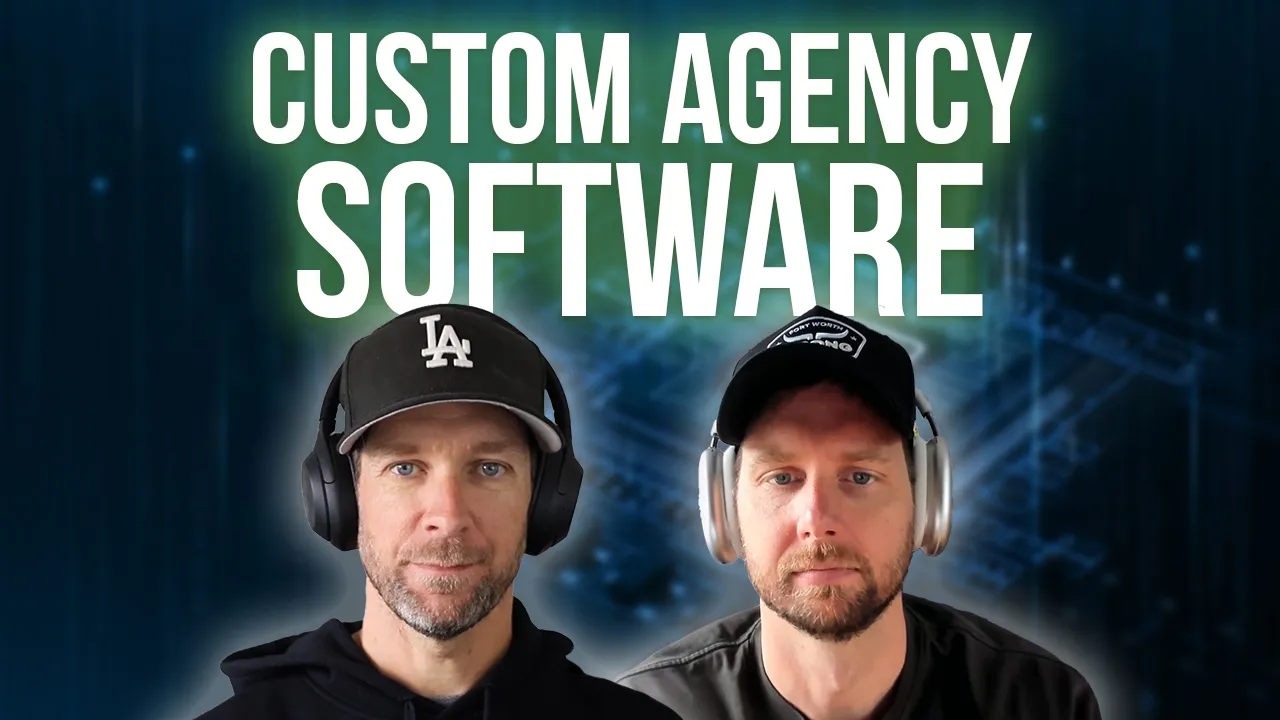
The Andrew Faris Podcast · @andrewfarispodcast
Words
10,128
Runtime
46:18
Speaking pace
219wpm
Reading time
42min
219 words per minute, above the 201 75th percentile of 349 measured videos. That distribution comes from the 349-video hook study.
Opening (first 30 seconds)
my business partner Patrick Kadoo back on the show today talking about two of the biggest threats that we see facing our day-to-day in AJF growth. Uh threats may or may not be the right word, but two of the things that we're wrestling with the most in the day-to-day. And one of those is our revenue model. We're going to talk really specifically about how we've built our services and whether or not I think the market actually values it. I have some concerns that our approach to growth pods and growth strategists and how much we charge and all that is something that operators don't actually value the
110 words, the words spoken in the first 30 seconds at 219 words per minute.
Free, no signup. See how the first 30 seconds hold attention, with rewrites.
Sentence shape
| Measure | This transcript |
|---|---|
| Sentences | 537 |
| Average words per sentence | 18.9 |
| Longest sentence | 235 words |
| Questions asked | 33 |
| Sentences containing a number | 15 |
Most used terms
Filler phrases
556 in total: like 240 · you know 71 · uh 57 · actually 44 · kind of 43 · um 43 · sort of 30 · basically 10 · I mean 9 · right? 8 · literally 1.
A literal whole-word count of the same phrase list the Prepublish browser extension uses, so a phrase inside another word is not counted and a phrase used in its ordinary sense still is. It is a count and not a judgement.
Free, no account. See where attention is likely to drop, with a rewrite for each weak line. The free check shows the scores and the one issue costing the most. Or run it on the words above first.
Free · No login · See a sample audit first if you prefer.
What this transcript is
Every word below is the caption track YouTube publishes for this video, pulled from the video itself and reproduced unchanged. It is not Prepublish's writing, not a summary, and not a re-transcription: it is the video's own published captions. English captions, generated automatically by YouTube, in the video’s original language. Source: the video on YouTube. A channel that would rather this page did not exist can ask for its removal through the contact page, and it is removed.
No Script X-ray for this video: YouTube shows a Most replayed graph only once a video has enough views.
my business partner Patrick Kadoo back on the show today talking about two of the biggest threats that we see facing our day-to-day in AJF growth. Uh threats may or may not be the right word, but two of the things that we're wrestling with the most in the day-to-day. And one of those is our revenue model. We're going to talk really specifically about how we've built our services and whether or not I think the market actually values it.
I have some concerns that our approach to growth pods and growth strategists and how much we charge and all that is something that operators don't actually value the way that I want them to value it, the way that I think they should value it. And so we'll talk really specifically about that. And then we're also going to talk about the day-to-day work of vibe coding of building AI based tools and what has been amazing about that for Patrick, but also what has been really hard about it.
So really in the details of day-to-day life at AF Growth today that I think maybe will be reflective of sort of what is happening for lots of brands, lots of operators, lots of agencies in our space right now. Let's get into it with Patrick Kadoo, COO at AJF Growth and my business partner right now. [music] Patrick, uh, we have barely had this conversation even between the two of us. I know I'm keeping a list kind of all the time of things that are on my mind for building this agency.
Uh I'm sure you have your list too of the things that are like the biggest threats as we are trying to build and there's some of them that are vague and broad like AI will make agencies unviable or something like that. I don't know whatever there's but there's like really specific challenges right now in the agency I think and I thought we could just kind of take some time and go go through some of them and talk publicly about what are the challenges people we've talked a lot about sort of us trying to grow something um and whether or not you know I've talked about I was going to be a solo thing for a while and then I brought you on and we've sort of been really public about all that so so so I thought could we just talk about what you and I see right now as the biggest as the more we get into this the biggest like challenges and threats that are facing us and things that we're working through. >> Let's do it. >> So, does that work for you? >> Let's do it. >> Okay.
Um, here's my number one, which we've kind of talked about a little bit for a while, but we have a weird revenue model relative to some agencies. It's not I don't know if it's that weird, but there's this there's this thing there's this bet that I am making and that I think the two of us have decided to make together about how we staff our teams that's different than I think a lot of agencies. I will say it's different than any agency I've seen.
And it's it's basically this. is that we're trying to trying to make it work so that we have 40 to 60 points of gross margin. That's pretty standard I think in an agency meaning like delivery of services against the humans it costs to deliver deliver them right >> humans and software. >> Yes, that's right. Especially Yeah. And that's a blurriier line all the time. Uh right. Uh and we are trying to do that while doing only three clients >> per pod.
So we have a pod structure. We're doing three like full growth clients per pod. Uh, and we we may on pods have one like media buying only client as well as kind of a side thing. Partly as a revenue kick, partly as like a way to sort of have a a lead flow over time, but that that's a definitely a smaller time investment, a much lower bill, all those kinds of things. So, we're trying to set a billing number that allows us like a try to set a billable that allows us to have only three clients per pod and the logic and and to maintain our margins.
And that means that we price our pod work on the higher end of the market without being crazy high, right? So like I don't I don't think we're like drastically higher than other people, but we're we're on the higher end. And the logic is that we're charging more money per client, but not way more money as a as far as the monthly bill goes, but at an hourly level, we are charging less money per client. Uh because we're applying people to less total clients, right?
So like we're doing three clients per pod. I I have not seen another agency do less than five uh clients per pod. >> And so so the logic is that we will we will we will be able to do this. And what I what I'm not sure about is if the market actually values that the way that I value it. I'm not >> I sort of think at the end of the day that clients will just go I mean that's fine that you have less clients for pod, >> but these people over here are $5,000 a month cheaper or $3,000 a month cheaper or whatever it is.
You know, again, it's not a crazy number cheaper, but like something like that. >> Um I don't know. I feel like we've talked about this from the beginning as potentially a challenge, but it's definitely come up repeatedly in bisdev conversations that we've had whenever we've added a client, you know, that kind of thing. >> Yeah, >> there's also more more we could say about it, but I'll just leave it there. What? >> Yeah. >> Is that is this going to work?
[laughter] Do BD when you're doing kind of BD calls or bisdev calls and you're talking to potential clients or existing clients, do any of them respond positively to the to the fact that we there's two things here. Well, there's a lot of things going on. One, I don't think we talk about it or or um market it well enough. Uh two, we're not sure if anybody cares. But then like three, my question is, well, how do we know if they do or don't care? like maybe all of our clients like actually love that about us and you know you mentioned something.
So, let me take a a quick tangent and come back to my question, but like >> I because my thesis is people actually care about it and it's because I used to sit in that seat and it's one of the main re it's one of the main reasons I left clients or excuse me, I left agencies and built a marketing team internally. And it's not the only reason, but I' i'd say it was the driving reason when I realized >> like I'm I'm being told that these people are going to grow my business, but I'm only getting a portion of a day of my growth strategist at best. >> At best.
Yeah. I'm getting one day out of this week. Yeah. And so like that just bothered me that I'm paying all this money for a tiny slice of somebody's brain. So that's why I I started to build marketing internally and so I feel like I would value that as a client. Now how much more am I willing to pay for that rather than build internally? I don't know. Yeah. I don't know that that's what I'm going to say. >> I to your question to to your question.
I think I think the answer is most people express it exactly the way you just did which is they express the negative which is like they either say yes I'm going to inhouse my team because I want because I want full-time resources. Yes. >> So they still see even three clients as sort of like not enough time. >> Yep. >> Um or they just complain about it as as other things. You know this, you know, over they'll say like, well, yeah, over here they're uh you know, or I was at an agency and it didn't work because that my my strategist was good, but I could tell they're working on six things at a time or whatever it is, you know, and they're always overwhelmed.
Uh but that doesn't mean they positively say we love that you only have >> correct or whatever you know and and I think I think they would say they love that if we were priced the same but we can't hit the margin profile that we want pricing quite at the same level. >> Yeah. >> As other brands and and so it's a really it's a it's a real consideration for me of like I said like how much does the market actually value it? like I don't and I don't really know the answer because I think I think what you're expressing from your from your supply days is right which is like yeah there's there is a there is a sense in which oh I mean I hear that complaint all the time people are just sort of frustrated that the thing is overworked um and I do think it's that one of the agency differentiators is that you have this ability to uh to operationalize your knowledge in a way that doesn't require like truly full-time resources and this is mistake everybody makes with in-housing.
Everybody says, "Oh, in-housing will be way better because I'll because I'll be able to get more of somebody's time." But what they what the the thing they can't see very clearly there is that actually like the operation like first of all the the operationalized knowledge is actually a really really big advantage for agencies because I I can see so many more ad accounts at a time. Right now I can see a lot of different decisions that we are making and that clients are making in ad accounts and I can reflect on what that means about the best strategies for growth.
Yeah. >> And that's a really really big advantage. So we can we can apply that sort of knowledge leverage more. Um but also because like what I know from building an agency alongside you at this point is that is that yeah the hours are really are are good and I think they matter and that's why we built this way. But also like operationalizing the skill set is also extremely difficult and if you don't do that like you can't just cover it with ours. you actually need you actually need um you know some ability to like I said operationalize these kind of things.
So uh so so I yeah I just I just don't know in the conversations I've had if people care about that. They also promised that we're going to fly to you twice a year to do two two inerson days that we'll pay for with the client on our dime to do sort of broader strategy. And the the belief that a lot of this for me right now comes from this belief about what makes a good e-commerce business. Like >> yeah, >> it's that it's that like >> you there are operationalized knowledge things.
There's lots of operational knowledge things that are kind of rinse and repeat and our job is for like is for you and I to work together to make it so that those are repeatable across the agency. And that's this distinct advantage. And at the same time, >> there's this sort of like step back higher level that requires human creativity and people to apply that sort of like just time and effort uh against the against the problems of of many businesses and that if you don't have that real thought partnership and real sort of in the trenches partnership >> that like you're just not getting the most out of what the relationship could be.
And so there's sort of this middle path of this like very hands-on, very deep, and at the same time, you know, there's there's these replicable things that we're doing across every client. And yeah, like I said, I just don't I just I think at the end of the day, it's possible that a lot of people are going to look at that and say, "That's really nice, but like these people over here are cheaper, you know?" >> Yeah. Yeah.
Yeah. I Yeah, I guess we'll figure that out over time. Couple things come to mind. One, I'm okay. And actually, I prefer being at the higher end of the pricing spectrum compared to our competition. I prefer offering a premium service. Um, I would rather, we've talked about this, I would rather over time and and by the way, as I say that, I'm also well aware that as we've talked about before, like there's there is there is pricing pressure coming to us. >> Yes. >> More more than any of us realize like I don't think extinction is a problem for agencies.
I think pricing pressure is um >> Yep. >> Uh because of AI and because of tools and software. So, so rather than respond to that by lowering our prices, I'd rather get really good at what we do and offer more things, more services to our clients. So, yeah. >> Anyways, I'm I'm I'm okay being at the higher end. I'd rather instead of talk about how can we offer a cheaper service, I'd rather offer more for what we charge currently.
Um, and but saying all of that, I'm still I think if I have, it's not a fear, but a concern about the current model. It's that we're going to have to add one more client. I don't I'm not interested in running an agent. This is just a personal preference. I'm not interested in giving five or six clients to my to my pods and to my growth strategists. I just have like a personal belief that one person, one team of people cannot provide good enough services across that many pods.
And that's not a bash on other agencies. I got, you know, that's not me talking bad about other agencies. That's just a belief I have that one person can only hold so many ideas well in their head across so many brands. um that I can't see us going above four, but I could see us a um a future where there's so much pressure on our margin that we we might have to go to four. >> Yeah. >> Um so that's kind of what comes to mind for me. >> Everything that we are doing for Meta Ads Creative is working through our team that is part of AF Growth supplied through Behindthescenes Studio.
Behind the Scenes Studio is a Philippines-based graphic design video editing team where the entire service is built around delivering high quality meta ads creative with a high amount of creative diversity uh and high uh scale. So you're getting a lot of ads, a lot of very different ads that look and feel great on brand, look beautiful, all the kinds of things that are required to make great meta ads creative. And that is the team that we use uh at AJF Growth to do our creative.
We love them. They're awesome. I've been working with BTS for a very long time. Our teams are staffed entirely with them. But beyond their work for us, BTS has a broader uh service for other brands who need the design and video editing uh support for their teams as well. So for example, if you have an in-house team and you want additional meta ads creative to support the things that you are doing in your account, go to btsstudio.co. co talk with them about whether or not they are the right fit for you.
If you're an agency and you want to extend your team with people who really know their way around, what makes good quality meta ads, uh ads that your clients are going to love, go to btsstudio.co, get on a call with my friend AC over there and talk about whether or not it's the right fit for you. I'm just a huge fan of them. We're building our entire agency handinhand with them because we love them. High integrity, great quality work, just really, really great people at a price that makes sense. because they're based in the Philippines, you can attract really, really, really good quality talent at a lower price than that same talent would cost in the US.
And that allows you to make better ads very simply for yourself, for your clients, for whoever. So go to btsstudio.co, schedule a call, see if it's the right service for you. If you're looking for meta ads, creative copy, design, edit, that kind of stuff. btsstudio.co. Go check it out today. Huge fan. You're gonna love them. And that pressure comes in a couple places. It's the AI pressure, but it's also that like hiring the best talent is just more expensive.
And so >> and gets more expensive over time. >> Yeah. Uh and the other thing is we we load those teams up. We have a lot of people on the team. And so it's it's like it's just it's just a lot of it's a lot of people working out. But I I agree like part of the idea here is like the AI element of this. >> Yeah. >> Theoretically should allow all of those people to accomplish more over time. Correct. Maybe there is maybe there is >> a way in which and and and go ahead. >> But how would you respond? because I've had some Twitter conversations with people that disagree with me, but like do you agree or disagree with this idea that I I don't know how to articulate it fully, but it's this idea that like people can only be creative across so many clients at one time.
Like even if we give them all of the best tools in the world, the best claw, like you know, they don't have to do anything but like start invoking Claude skills, you know, over and over again and they're just monkeys at this point. you know, I still want them to think creatively across um clients and to to me it just feels like there's a number of just creative things you basically get to a capacity point regardless of how efficient or effective you make somebody with AI tools.
Does that make sense what I'm trying to say? And like >> it does. In fact, I was going to say like I think another reason why I like this model and why I want to maintain it is becau is built on this this thing that we've sort of said is central to what we're trying to accomplish which is that the message is the most important thing and in advertising creative and because of that if that's true then some of that you accomplish with replicability around the message.
So there's becomes frameworks we repeat as ways of communicating messages so that we can do this. If you think back to like what what uh it's also possible that the AI of brands is going to lead to a sort of least common denominator creative output across the world and that there becomes actually more value in putting humans doing more creative human things >> um and more surprising things and I know one response to that right away was make the AI be creative with a better prompt but I just yeah I don't know if that's exactly yeah I think there's probably ways in which the human can still be more creative and in fact the idea of of leveraging AI and in the midst of it is to to take the kind of replicable things that really are really repeatable that actually aren't that creative and let the machine do that and then the human then is applying much more actual creativity to the brand itself and and and so that and and the the connection point to me is that if the message is the most important thing well the message is related to a customer and to a brand >> and there is this step back thing this is why I value the inerson time so much it's it's like a huge deal I think I think it's like a really big problem that people don't get in a room and talk for a couple days.
I value those times so much. I still go to almost all of them myself, even if I'm not the one doing the the day-to-day client work for the client because I just want to say like, well, what is actually happening at the financial level for this brand? What are the constraints first of all, and how are we doing relative to our plan? Let's make sure that everything is working well. I mean, I just still see brand after brand after brand struggling in those areas.
So, it's like let's let's actually talk about is our forecast there? Are we actually building a model that makes sense across the business? And then like from there what's actually happening at the brand level and the customer level and the product level and how can we think more creatively about the things and the efforts that we can do as a team from what I'm seeing in the ad account from what you're seeing as you look at your organic social and as you think about product development or whatever and can we sort of go and do things that are interesting because at the end of the day uh tactics replicable tactics is like this I am I am such a believer in them like it >> right >> I I never want to be the person who sounds like they're saying you There's this like trope that I've I've pushed back against recently the sort of media buying doesn't matter.
All that matters is the brand and the product and all that kind of stuff. And that's wrong. Like it really matters a lot. Like it matters. There's just so much money being spent that if you blow that money you can just do huge financial damage to a brand. And I know because I look at these brands all the time. Like I just see it over and over. Yes. But then secondly to be a great brand you have to marry those tactics to real human creativity and real human like you have to be interesting and while I don't think actually our job is the primary interesting people.
I don't think that's the first and foremost job of the agency. I actually think the brand needs to control that a little more. That's why I think like a good CMO in a in a in a brand right now is not primarily a growth marketer in the way that like you people think of. They're not a performance marketer primarily. They need to be they need to understand that. They need to be able to be conversant with it. >> But um but they are a marketer.
They're thinking in terms of marketing. But in the midst of that, I do think because we are writing so many ads for people that we need to be able to to get outside of just the sort of like rinse and repeat like you said monkey creative that that otherwise happens because we're because we're actually thinking instead about sort of like okay what are the actual angles for these customers and what do they care about and and sort of doing things that are more interesting and to me that requires time and effort.
So there's this being able to apply a brain against more of those things just really matters to me. >> Yeah. Yeah. Do you want to talk about AI next topic on the list? >> Um, sure. Well, >> or is there anything else there? >> I don't know. I'll be curious to see how this hits people. What one of the things like I'd be curious to hear even in comments and things like that. And by the way, subscribe wherever watching or listening.
I'm so bad at reminding people to do that, but apparently we're supposed to do that in videos. So, do it right now. Subscribe. Patrick and I do these month these these monthly updates. If you like this, you'll like them. But yeah, leave a comment. I'm I'm curious to hear how this hits you. If you are an operator and you think like I would really love feedback on this question publicly even if you're working with another agency or whatever and you're really pleased with the service it's really different I would just love to hear how people respond to this.
Do you think the market values that we have less clients per pot essentially that like >> yeah that's interesting >> our even if our total rate is higher our hourly rate is lower is essentially a way to think about it right because we're because we're applying more hours to the pot. >> Um it I'm curious how people respond to that. I'm curious how agency people respond to that if they think that we'll be able to do it who have just been building agencies for a while.
I'm curious how operators respond to it and what they say they I mean there's going to be a revealed preference versus data preference problem here. >> Uh you're also going to email email me those thoughts podcastfgrowth.com. But yeah, put it on a YouTube comment. Put it in a Spotify comment. I read and respond to like every one of those. So um >> yeah, and tell us if we're we're stupid. Like there's >> Yeah, you know, like >> there's part of me that's like, well, everybody does five or six per pod, so what am I missing?
Like I, you know, there's a reason why everybody does that. And if I'm trying to do something different, maybe I'm stupid. You know, there's a piece of that. >> All right. Number two, AI brain suck is what my note says. >> Patrick, describe your experience. What do Tell people what you do all day. >> I uh for the last >> And then tell us tell us how it feels. >> Yeah. For the last almost two months, I've just been vibe coding all day, every day.
So, I've got the Claude, like the most expensive Claude plan because every other plan I've maxed out and um codecs as well. Anyways, I'm building our AJFOS is what we call it now. We need a rename. So, if anybody wants to help us come up with a new name, but right now we call it AFOS and it's essentially meant to be a software that replaces every other software essentially that we use. So, uh Notion, uh Frame, those are the two main ones. basically all of our tasks, all of our pipeline, all of our creative process, all of everything we do, you know, people live in here.
Uh >> maybe it's helpful to say like we we've talked a lot about Prometheus and I've sort of framed it as an AI coowriter. It's a lot it's actually more than that, but that's like it's like a me the main way we've talked about Prometheus is that it's it's a it's a way of developing messages and developing creative ideas and the sort of that the actual work of the creative process. AJ OS is not that. It is it is it is the it is customuilt essentially project management software that facilitates all of our work. >> Yes. >> That is customuilt to agency work and not just agency work but to AJF's particular views.
Right. So it's like >> it's like if we're going to build if we're going to build around messages is the most important thing. Well, you've got like a special messages place in AJ FOS where you can see that you know and the messages connect to our to the meta primary text and headlines related to those messages. You know, it's just like the work that we specifically do, the software is built to do those things. >> Yeah.
And everything else we everything we used to do in Prometheus, which was a cloud skill, it now lives in AJFOS. So, it's not Prometheus, but it's like bigger than Prometheus. So, everything we used to do, >> you know, yeah, it's a web app that's AI enabled and writes our ads for us and helps us manage all the work we do. So, um, >> it's really cool. >> Yeah, it's great. It's only getting really cool. >> I love it. I love it.
Uh, I love working on it. It's It's a ton of fun, you know. Um, somebody said the other day on Twitter they they realized why it's so fun creating stuff like this. It's kind of like a video game. And uh, so the the upsides and the downsides in my opinion of building tools like this, just just the act of building them uh, are are the one and the same. And it's the dopamine hits that you get constantly all day every day.
It's like this. It's just this constant dopamine feedback loop of I have this idea. I want to create it and then bam, you make it. And it's it's it's hard to describe to somebody that hasn't experienced it. But it's, you know, it's similar to like a video game where you you know, you finish a video game and you get kind of that that um kind of rush of like I completed the thing, I got the thing done and now I've got the prize.
Well, every time you implement a new feature that that as an operator or an operations guy, that feature now takes something that used to be either done poorly in your business or done not at or done not at all or always messed up and now I've got this feature kind of implemented clearly in this uh in this app. There's there's there's this like just constant dopamine hit. So, so you're able to just work all day every day because you're just constantly kind of getting that hit, right?
It's kind of like an addict. Um, and you know, then you're up at night. So, my So, you know, what are the what are the downsides? The downsides reflect all of what I've just said. So, my cortisol rhythms are completely off. I've been up at like 3:00 a.m. a lot lately. I've been staying up late. My sleep is terrible lately. You know, I just work kind of constantly throughout the day. I don't take a lot of breaks lately.
Or or I should say that would be the default. You know, I'm I'm you know, you can just kind of work straight for a long time without, you know, needing to kind of take breaks. But so what I'm having to start to do is just like, you know, pay more attention to my personal health. And it sounds kind of silly, but you know, um >> there's just all these kind of addiction related behaviors that that come to play when you're when you're working with with a tool like this.
And so, uh, actually one thing I've started doing, I actually work out at home. I've got a tonal over here and it's great. Um, and so like I actually instead of working out like at one point in my day, I actually like take breaks throughout the day, like force myself to stop and go lift some weights or just freaking take a walk just to step away from the computer. So, I don't know. I'm kind of rambling, but um, yeah.
Did I answer your original question? >> Yeah, you did. I think it's a I I think it's a really interesting thing. One of the things I'll say about this is like you and I have >> you you sent me from the AI Daily Brief podcast which is awesome. I I have like I don't listen to every episode. I think you listen to most great podcast. >> Yeah, I listen to some of them now and like sort of >> Yeah. Uh but they did an episode about people feeling this basically.
So it's like it's like what you're expressing is a really >> is a known and common thing at this point which is essentially the problem is that you are >> you now have become so productive. >> Yes. uh in a way that was impossible before that it becomes really hard to not be productive because it's like a drug. It's a Yeah, >> productivity is a drug. >> Yeah. And I think it's an I think it's a very interesting thing. I think I think we shouldn't be surprised given what AI is if we find that there are weird externalities that we did not predict that change the way we have to relate to things like this.
Yeah. because it's just so revolutionary the technology that it's like the idea that you would you would have something like I didn't see this coming that suddenly my relationship to my work even even as somebody who's still >> clicketity clacking all day on a computer like I was before >> that my relationship to that is so >> is now different fundamentally because of this you know and I >> I and so the fact that like again like apparently thousands of people are reporting this kind of thing you know um yeah is is like is like interesting to me >> yeah I posted on on I guess a week or two ago sharing these sentiments and you know it was I want to say it's viral viral but it's one of my most kind of viewed tweets in recent history and like there were just hundreds of comments of people agreeing.
So there there's this interesting kind of broader topic which is and and Brent Behore posted about this a week or two ago but like the the things we do all day are forming us into the people we become. And so by so there's there's basically this topic we have to step back and consider which is how is our use of AI forming us and what kind of people is it forming us into. And right now I haven't had much time to think about that.
Like I'm just like cranking and pushing through and just trying to like get this app to a spot to where I can kind of take a step back and let people just use it without requiring tons of updates and new features. And I feel like we're almost there. But, you know, a bigger question in my work that you and I haven't broached this topic yet, but it's like >> I need to get to a point where I'm not vibe coding all day. Like, because it's >> it's a great use of my time right now, but it's not the best use of my time in the future.
And also, I just think it's not great for me. Like, it it >> it it's very similar to when I was running supply. We I started a Tik Tok channel and I posted videos of myself shaving, like ASMR videos, if you know what those are. Yeah. >> And we got some viral hits. You know, this was early Tik Tok days. I had half a million followers. You know, I was getting millions of views on these videos. And all I could think about constantly when that was going on was logging in to respond to comments and what's the next video I'm going to make and how did my views do on my last video.
And I did that for about three or four months and I got to the point where I was like, I'm done. I can't do this anymore. This is ruining my life. So, I logged out and I I literally have not logged back in to to Tik Tok at all in the last three years. And I have the same feeling about kind of vibe coding is that I'm going to get to the point where I'm like, I need to stop doing this and basically manage it, hire somebody, manage somebody else doing it rather than than like just continue to stay on that dopamine treadmill.
So, I don't I don't know how how do you respond to that? Yeah, I think my question is like this the way you just told that story suggests that there's something about a mix of the technology and you specifically >> absolutely >> and I I think that's the sort of interesting thing is like and and again you specifically are actually a standin for lots of people because again hundreds of people you said replied to your your thing.
It is not news that somebody would uh find themselves addicted to posting on TikTok because of the dopamine hit of a bunch of views like >> Yeah, that's not that's not unique to me. That's the whole >> No. No. And so I Yeah. And I think your question, how is this forming us is really important. And it it actually makes me ask like I mean it's not a very different question from from sort of early when you hear people talk about the sort of early industrial revolution >> where I remember I remember there was a story about somebody's going to know what this is and is going to be screaming through the computer that I've got this wrong but is there's there's an old story about basically a manager in like the early industrial revolution in assembly line kind of setup who figured out, use data basically to figure out the best way to shovel something or something like that, you know, and could get could get everybody doing it exactly the right way. >> Yeah, I know what you're talking about. >> Repeatedly.
Yeah. And and the end of the story is it worked great. It made everybody shovel a lot faster and everybody hated it and wanted to quit. It was dehumanizing. >> It was miserable. Yeah. >> It was miserable. Um, and I think that's like the fear is like, yeah, in a very different way, but but and that there's this way in which this happens. And I think >> there's this there's this what it actually makes me wonder about is like, yeah, can you get the AI to do the vibe coding for you?
It's almost like I don't know, right? [laughter] Like it's like >> because that's the that's the eventual answer to the shovel thing, right? It's like a machine does the shoveling. But >> yeah. Yeah. >> And and that was that's actually one of the takeaways people take from that is like people actually aren't machines >> and so if you treat them like machines they don't do very well and but uh but oftentimes you're right about the efficiency and so as long if it's reasonably replaceable with a machine then then it works.
But yeah I yeah I don't know. So I think I just think it's a hard problem like what of these things should be machines or not and you're and actually with HFOS in particular you're in a tough spot which you described which is like essentially like a half to 75% built app is like the worst app. It's not just that you need new features because uh because it will make it better. It's that like it doesn't work you know it doesn't work it doesn't do the thing you need it to do yet. >> And now that's not true.
AFOS does a lot of things that we needed to do right now. But but yeah, there's a point at which we have to you you have to be able to say okay I I'm able to do this sprint to get it to to like >> sort of capacity but then there's a different question and you and I talked about this the other day like let's get together in person once you've reached that point and then sort of take a step back and say okay now where should we put our efforts now that the thing basically works you know >> and that's not like maybe even vibe coding all day in quite the same way there's like some other elements I don't know so yeah I'm rambling but that's the the that conversation you just mentioned like when we're going to talk about what's next and like kind of dream a little bit like it's it's going to be such this is just the cool part of what what's going on right now.
That's going to be such a fun conversation because we're going to have all these ideas and we're going to want to go do all these things. And in the past, six months ago, when we had had that conversation, those fun ideas would have been, oh, you know, now we got to go figure out if there's a tool out there that can do that, and now we got to train people to use that tool and figure out how does that fit into our work.
You know, it's just like it's a completely different conversation now. You know, it's just, okay, let's just code it into the app. And like there are limitations, um, but there's not many. Like it's just kind of the world is your oyster. And so now we can it's going to be really fun to have that conversation because we're going to be able to dream and instead of like kind of putting a cap on our dreams we can just go what is it that makes that we want to do to be amazing and go go do it.
So that's anyways it's it's really really fun. Quote since deploying this tool is up around 50%. New customer rorowass is up close to 60%. End quote. That is what Cody Ploffer, the CEO of Jones Road Beauty, tweeted last summer, just days after turning on Wasten not within a few weeks. His team had cut their new customer acquisition cost dramatically. And the thing is, if you have been running meta ads for any amount of time and you have a kind of business that has a meaningful amount of existing customer revenue and you've tried [music] to run existing customer exclusions in your meta ads using all of the usual tools, [music] right?
Your pixel exclusions, your Clavio list, even Shopify's uh audience exclusion tool. you know that your ad spend leaks out to existing customers just because it's really hard to get your exclusions right. I have never seen any tool [music] more effectively manage this problem than waste not I experienced it firsthand one of my own brands that I was working with nearly 35% of our purchases that were coming from ostensibly our prospecting campaigns were actually hitting existing customers uh and then we deployed wastist knot and that number went down to like less than 5%.
It was like just like completely destroyed it. That allowed us to aim our spend at the outcomes that we wanted much better. Control how much we were spending on existing customers, control how much we're spending on prospecting. That's because of Wasten's AI enabled tool. A lot of brands are using have used Wastistnot to manage their exclusions much more effectively. [music] That includes brands like I mentioned Jones Beauty and Cody Ploffer um has worked with them, Cozy Earth, Portland Leather Goods, a whole bunch of others just like that.
They're using Wastistnot to make their exclusions actually work. If that is an issue for you in your ad account, go check it out right now. wasten.io and the link for that is in the show notes and sign up for a free trial. Mention the Andrew Ferris podcast. Tell them that I sent you um and during your do that during your onboarding call, they'll give you a free extended trial so you can just see for yourself if this is actually going to work for you without any risk to you. wasten.io.
Go check it out. One of the things, one of the things about that that is awesome for sure is like when I think about the way we'll actually be able to yeah facilitate better work. I I've actually thought about this sometimes like to come back to the kind of business dev conversation a little bit is one of the things I want to say to people is you should sign up with us right now because we're going to be really good for you on day one.
Like I I just know we'll deliver really good work on day one. >> Uh but man, I and I I think often about what it's going to be like in six months. like cuz I look back on what we were doing 6 months ago and 6 months before that >> and it's like we're just we're just like so much better because there's this ability to generate so much more firepower all the time and and there's a lot of ways in which we'll keep doing that and I I'm just like I'm just certain of this like it's just there are these things where I see areas where we could be like I don't know this this service could be better here's how we could you know what I mean it's just and it's just that it'll happen and it won't take it won't take years to develop it it'll just happen you know Yep.
And that's that's the benefit, but also kind of the challenge of the AI age is now now the limitation is >> is me, us humans, right? It's it's no longer uh we just can't get to that because, you know, it's just too big of a too expensive, you know? It's just like we're never going to be able to do that now. It's like we can do anything and everything. Why aren't we doing more? you know, so like there's there's always that feeling in the back of the head that I should be doing more.
I'm not keeping up. Things are moving too fast. Competition is moving faster. You know, that that has always been part of my persona and my kind of Achilles heel and it's just it's just been inflamed uh you know 10x 100x over the past month or two. You just said something that I think is one of the antidotes to this, which is to to be a little more comfortable with almost the way I'd say is not comfortable. It's like just realistic, which is that like it's easy to think that the competition quote unquote is out there just like moving so much faster and better than us. >> But the truth is some of them are, some of them aren't.
They're doing different things. They're still humans at the end of the day. And like >> Yeah. and our like there's enough clients for us to build the kind of thing at the size that we want to build it at. So the the constraint of our vision of our ambitions is a thing here and like I think that the what's the competition doing kind of mentality would be true if we've raised venture capital >> and we were trying to go insanely fast.
But by but by saying like we want to be growing steadily over a long period of time and that will get us the outcome that we want. >> Hopefully that can constrain our need to to go even faster all the time. >> Uh like >> I yeah I don't know. And I mean, I don't know, maybe we get wiped out at some point, uh, because somebody else does beat us, and if that happens, so be it. But I don't think that's very like I just don't think that's the way actually businesses mostly work.
Um, and and if we actually do the things that we tell our clients to do all the time, which is sort of like think carefully about margin and forecasting, follow your plan, don't overshoot, you know, you know what I mean? in general like you you might end up hitting escape velocity on some things at some point that create crazy value but >> it's hard to do that in an agency business because yeah it's hard to scale insanely fast.
So yeah that's I think I think the constraint the clarity and constraint of your vision of our vision of what we're how big we're trying to get how much money we're trying to make and on what timeline we're trying to do it is part of the antidote to the thing you just described which is like you just have to be okay with like saying I'm I have done we're doing enough actually. >> Yeah. that that's like comes from a outside principle and value outside of the the day-to-day feeling of vibe coding or whatever. >> Yeah.
And it also helps I have no clue what's going on in other people's businesses, what services are being offered, etc. But but I have a strong feeling that what we're doing is just world class and like I I just between you and me and our team and the work we're putting out. Like I don't I don't spend a lot of time worrying about the competition, but there's there's just this always you just log into X and you're just hit with this wave of what you know everybody's doing to leverage AI and you know it's like you're just and this isn't just me.
Everybody feels this that I've talked to. It's like just I can't keep up, you know? It just [laughter] it's just there's always something going on every single day. And I I've gotten okay with like not so like OpenClaw has kind of been the biggest kind of thing lately and I played with it a little bit and I'm going to play with it a lot more in the future, but I've just had to be like I'm just going to ignore anything on Twitter that talks about OpenClaw right now because I my plate is full.
I can't think about that right now. And >> so yeah, just kind of focusing on what I got in front of me. I think this is a really important point. Taylor Holiday recently accused me of like being anti-growth in a podcast we talked about. You know, [laughter] >> I'm really not. I'm really not. No. >> Well, what I've come to believe is just that algorithms by definition promote and and even aside from algorithms, media, >> media of all kinds promotes the most interesting stories.
Okay, those are the stories that rise up. So, they do not tell a story of a brand that grew 20% while maintaining their profit margin last year. They don't tell that story. And they certainly don't tell the story of the brand that did that for 20 years in a row until they are at year 20 and that number gets really big. >> So okay, so that means that a very small number of stories get the most noise. Like if I could just tell you how many times I've heard people talk about comfort recently as a brand because they have this insane growth story.
I mean it's they're everywhere. They're everywhere right >> for comfort. I really mean that and there's a lot to learn from what they have done. And so I think there's a way in which you can approach those stories. I certainly feature those founders, you know, um on on on my podcast when I whenever I can um and and tell that story. I did Baseball Lifestyle where it was like, you know, 1 million to 100 million in like three years.
No, that's actually not even true. They actually were building organic presence for like 10 years before that or whatever. But um but I just think like the things that make that that rise to the top of algorithms and of media companies more generally again this could be CNN as much as an algorithm but an algorithm only inflates us even more are by definition the most exceptional stories. And therefore it's very very likely just play the averages.
It's very very likely that that will not be our story. You know y >> um it will not be. And therefore, like there's like a there's a real trap in cha in like letting that dictate how we feel about our business or chasing it. And and I think actually most brands ought not to think that way. And uh they ought to think even I was actually even talking to a friend recently who said, "I'm actually not after huge returns in in my investments.
Um I'm after steady returns. I'm I'm consistent returns over a long window. I So he doesn't want 40% returns on something in a year. He wants 20% over a lot of years." um you know and he was saying actively he looks at he looks at deals and and things like that that are trying to pursue that way and I think that's the right way to think about the business is like >> we want to try to approach steadiness over time as like the more reliable thing um and it and that's a it's a that story doesn't get told as aggressively and yeah anyway it's it's just really it's I think it's just really important that people get clear about this idea as a way to think about what you're doing because yeah maybe maybe you end up being the exception but they are exceptions those stories are exceptions >> yeah I'd add more, but I can't.
I agree completely. >> Yeah, >> it's so hard to maintain that. [laughter] >> I don't I Yeah, I don't It's hard for >> I don't think so. I because I I I can hold I I know the the um the stress and the chaos that comes with >> Yeah. >> you know, rocket ship growth. And I don't I don't need that. Like I'm not interested in that. I'd rather build a and and and not just for myself, but for my clients and for my employees.
It's like my my fear is probably more and I've pushed on you, not pushed, but we've had these conversations about let's not grow too fast. And it's it's about three things. It's about I don't want that for myself. Number two, I know my client services are going to suffer and I I want to be able to look those clients in the face and go, we're giving you the best service possible, not and we're not sacrificing that service to like some sort of >> for the sake of our business over yours. >> Exactly.
Yeah. Exactly. And then I don't want to have to look at my employees every day and go, "Sorry, you know, I know you're exhausted and miserable, but buck up. There's more coming." >> So, and and like this is, you know, it's it's a very subjective conversation as to how much growth is too much. But, you know, I think I think we're at a nice sweet spot where we're being aggressive but also reasonable with our growth expectations.
And >> I don't know. I love it. >> I think we're doing great. >> I agree. But it's uh you say you love it, but you're also telling me that you're uh working too hard and have too much cortisol problems. >> Yeah. Yeah. Yeah. That's less growth oriented and just >> I think it I don't think so. I think it's part of it. I think it's the feeling that like we're going to die if we don't do this or like we have to grow, you know, or it has to go. >> No, they're somehow connected, aren't they? >> No, they're not.
They're not at all. It's a feeling of no, it's a feeling of I need to move as quick as I can to finish this project >> so that the whole team can do their work well and not be split across all like not live in confusion and you know because the more confusion the team has the worse that makes my job and like honestly the the like I just want to do it well and fast so that then I can take a step back and just chill and let people do their work because it makes my life easier if I'm being honest with It's not just about me, but it's about the team.
And so, I don't think it has really anything to do with growth. I think it just has more to do with >> wanting Yeah. wanting to deploy the the best tool as quickly as possible for the team. >> Yeah. All right, that's probably enough. I had other things that I wanted to talk about that I I'm concerned about. Uh but we'll see episode. >> Yeah. Or maybe I'll do a solop or something like that. Um subscribe wherever you're watching or listening.
Like I said, we're going to keep doing this. I think keep just talking kind about what we're feeling, experiencing. We do we are going to also try and show AJFOS in a future episode. We just have to there's like proprietary stuff, right? It's like a client names and some like that. So, we have to just >> you have to vibe code some blur effects into it. >> So, but we'll show it soon whenever we can. And uh yeah, thanks Patrick. >> Thanks. >> Big thanks to Patrick for taking the time.
Big thanks to you for watching or listening. You should uh go to afgrowth.com. you can see everything we're doing there, but also fill out the [music] intake form at ajfgrowth.com to uh tell us a little bit about your business if you do want to work with us, if you want to experience the future of AJFOS, of Prometheus, of our revenue model, all those things. Tell us a little bit about your business on the intake form there.
I'll reach out to you uh and talk about whether or not we're the right fit to manage services for your business to help you grow profitably the way you're trying to grow. [music] Uh so yeah, tell me a little bit about your business on the website. Love to hear from you. Email me podcastgrowth.com. Leave comments. I'd love to hear from you. Like I said, I do read and interact with basically every comment [music] on every channel that I see.
So, so go do that. Uh, and then big thanks to Wastenot.io and our friends at behindthescenes studio btsstudio.co. [music] Links for both of those are in the show notes. Thanks to them for supporting the show. And uh other than that I will see you next
The words are the caption track's own and nothing is reworded or re-transcribed. Paragraph breaks are placed between sentences so the text reads as prose.
Free tools for your own script: paste a draft and see where it stands before you record it.
Paste your draft and see where viewers are likely to drop off, with a rewrite for each weak line.
Paste the first 30 seconds of your own draft for a hook score and rewrites.
Check your draft against YouTube's advertiser-friendly guidelines before you record it.
Read this channel's public videos and transcripts, and download a writing brief for it.