Getting the transcript
Reading the captions from YouTube. A video nobody has opened here before takes 10 to 30 seconds; this page fills in on its own.
Getting the transcript
Reading the captions from YouTube. A video nobody has opened here before takes 10 to 30 seconds; this page fills in on its own.
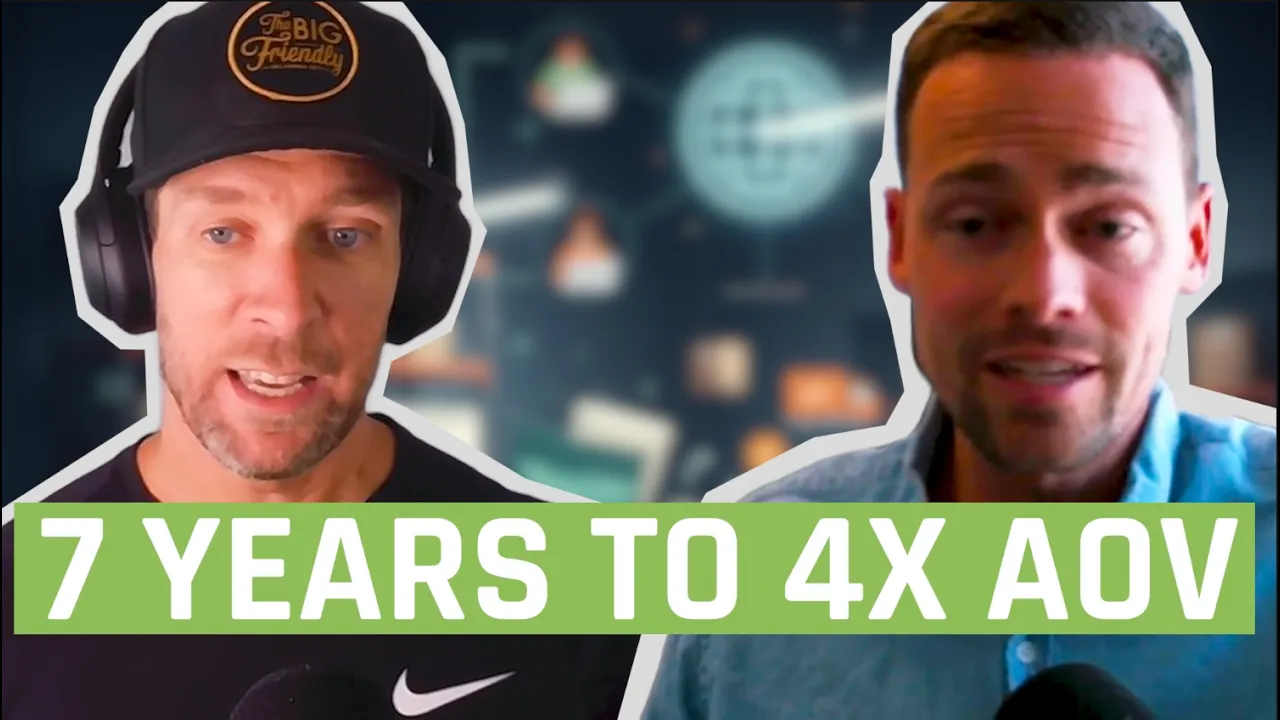
The Andrew Faris Podcast · @andrewfarispodcast
Words
11,897
Runtime
1:02:56
Speaking pace
189wpm
Reading time
50min
189 words per minute, between the 181 median and the 201 75th percentile of 349 measured videos. That distribution comes from the 349-video hook study.
Opening (first 30 seconds)
What a gift to have Brian Porter, chief e-commerce officer at Simple Modern on this podcast. Again, returning champion on the show. Brian tweeted recently something about a multi-year long path to growing Simple Modern's average order value on their DTC site. And if you know anything about Simple Modern and the way their business works, insulated drinkware as a core product for them, you know that it's a terrible DTC business by all of the standards of anybody would lay out for what makes a good DTC business. The margin profile, the repeat purchase
95 words, the words spoken in the first 30 seconds at 189 words per minute.
Free, no signup. See how the first 30 seconds hold attention, with rewrites.
Sentence shape
| Measure | This transcript |
|---|---|
| Sentences | 728 |
| Average words per sentence | 16.3 |
| Longest sentence | 110 words |
| Questions asked | 50 |
| Sentences containing a number | 43 |
Most used terms
Filler phrases
866 in total: like 326 · um 248 · uh 102 · you know 68 · kind of 38 · actually 35 · sort of 24 · I mean 11 · right? 10 · basically 4.
A literal whole-word count of the same phrase list the Prepublish browser extension uses, so a phrase inside another word is not counted and a phrase used in its ordinary sense still is. It is a count and not a judgement.
Free, no account. See where attention is likely to drop, with a rewrite for each weak line. The free check shows the scores and the one issue costing the most. Or run it on the words above first.
Free · No login · See a sample audit first if you prefer.
What this transcript is
Every word below is the caption track YouTube publishes for this video, pulled from the video itself and reproduced unchanged. It is not Prepublish's writing, not a summary, and not a re-transcription: it is the video's own published captions. English captions, generated automatically by YouTube, in the video’s original language. Source: the video on YouTube. A channel that would rather this page did not exist can ask for its removal through the contact page, and it is removed.
No Script X-ray for this video: YouTube shows a Most replayed graph only once a video has enough views.
What a gift to have Brian Porter, chief e-commerce officer at Simple Modern on this podcast. Again, returning champion on the show. Brian tweeted recently something about a multi-year long path to growing Simple Modern's average order value on their DTC site. And if you know anything about Simple Modern and the way their business works, insulated drinkware as a core product for them, you know that it's a terrible DTC business by all of the standards of anybody would lay out for what makes a good DTC business.
The margin profile, the repeat purchase profile, the value to weight ratio, all of it is terrible for DTC on the surface, which makes the success of Simple Modern all the more incredible. And in my view, perhaps those things that people think of as terrible as attributes of the brand are actually advantages in a roundabout and surprising way for Simple Modern. Well, in the midst of that, Brian tweeted about growing their AOV over time and that being something that grew their margin over time.
That made a bell go off in my head, which said, "Get Brian on the show to talk about why that mattered, why it mattered in a sort of surprising way." Like I think people think of AOV growing as something that matters, but maybe not the way you think. And also how they did it so that you could do it, too, and even if you should do it at all. We're going to get into that. We're going to get into all kinds of other things.
What I always say when Brian comes on the show is that he is one of the very smartest thinkers and most humble, absolute killers in this space who I always learn from. Let's get into it. Brian Porter, chief e-commerce officer from Simple Modern. That was my longest intro ever. Let's not delay it anymore. Let's do it. What's up, man? Hey, what's up, Andrew? Thanks for making time. Thank you for having me on. >> I got fully Oklahoma prepped today.
I got my Big Friendly Brewery picked up there. >> Last time I was there. Recognize that. I should have. Okay, you're Have you been to that Have you been to that brewery? It's great. Yeah, we've had a company event there. It is Awesome. It is really cool spot. Uh I've got my Simple Modern shaker bottle. This is I think my third one. I have personally dropped and broken the other two. That was not Simple Modern's fault.
They were my fault. Uh and uh and yeah, so I'm I'm ready to go. I'm I'm I'm I'm ready I'm I'm I'm Simple Modern Oklahoma City themed today for this. >> Let's go. When you coming back? I don't know. We got to I'm just making an excuse for me to get there. As As soon as there's one of those, I'll be back. Yeah, there there's tons of reasons to come to flyover states. So, we'll find an excuse. Yeah. Yeah. I was talking to Mike about that.
Like I was like, "We need an excuse. Like Can I do like a half day how to count thing?" Just with the team. And then And then that way we can just all go get dinner drinks and maybe go to a Thunder game. That would be a good reason to do it. So, it's part of the concern. >> do it. I'm in. >> Um Okay, so you heard my intro. You were here for the intro. You waited patiently while I talked on and on and on. I want to start with um with this AOV thing.
I thought it was really interesting. I am of the opinion that uh AOV is the most overrated metric in e-commerce. And you actually called that out in your tweet that like I have I have said that publicly. Um and uh and there's actually reasons why I think it's bad to grow your AOV at times, which is sort of uh counterintuitive. Um but your tweet I thought was good. So, can you start by just um rehashing sort of what happened over what timeline with your guys's AOV uh and then give people like just tell people about why you saw that as a big win.
Sure. Yeah, as you mentioned in your intro, um our business is not a great DTC business. Uh we we sell a product that uh is a durable and you don't need to buy very often. Um which is tough. >> Unless unless you are an idiot and break it like me. Yeah, yeah. Yeah, okay. Um Yeah. I don't want our products to break, but if they do, >> It was definitely not your fault. I definitely Yeah, it's definitely not your fault. Yeah.
Um yeah, we we sell a metal container that costs the same as a metal wallet, but for some reason our our bottles retail for much lower than metal wallets. Um that's not a shot. I'm just a little jealous. Uh-huh. So, yeah. We Our Our economics are based around Amazon because that's where we started our brand. So, um if you thought about our brand in terms of cost plus, uh we kind of designed our our economics around 30 points of margin um so we could have enough to spend on like Amazon ads, but we were still at a really great value.
Um It's not enough to spend on Meta and meaningfully scale ads there or with influencer. Yeah, cuz you cuz you need a three to one to get something like break even. Yeah. >> probably not even true. Yeah. Um and over time we've realized uh we we kind of need to be able to spend 20 bucks to acquire a customer on our website. Um and we have no nowhere near that amount of profit on a single unit purchase on Amazon. So, therein lies the rub and that is where AOV has helped us bridge the gap and create enough uh profit per order, not per unit, but per order for us to be able to try to scale marketing.
And I included a chart of our AOV over time. We went from around $18 average order value in 2020 to hitting over $80 in AOV um in August this year. So, we've more than 4xed our average order value. And uh there there's a list of reasons why we've been able to do that. Um I I don't want to belabor or belabor the >> Let me Let me Let me pick it apart for you. So, um so I'll I'll direct towards some of those things. So, we will get to how you did it, but let's talk about more of the margin profile thing cuz this is the thing I think is misunderstood for people.
Uh DTC, inherent in the idea of DTC as a business model, is the notion that you have to ship it to an individual's door, right? And uh and like it's always struck me as one of the one of the core advantages of Amazon, actually, that you um save a lot on that part of the transaction, particularly on low AOV items, that it just costs less to ship an item to a customer with Amazon uh than it does than it does in in owned DTC, like, you know.
Uh and and so so the the the low AOV on Amazon is just not the same problem that it is on on DTC. Is that right? That's correct. And to take it another step further, we sell a lot in Target and Walmart. And when you ship a lot of units to a store that people physically go to, obviously, you you save money there. And so, yeah, it's just a very different logistics profile. Shipping a pallet of of Simple Modern water bottles is really different than shipping one to some to an individual's door in Oklahoma or whatever, you know.
Correct, yes. Yeah. So, okay. And I think this is still The reason I like to harp on this is because I think still people really underrate how much of the game of DTC is logistics. Uh and and is like sort of the mar like And what I mean by that is not just like the sorting it out, but like the uh like like your 3PL relationship, not just that, but just like the margin profile. Very often for brands, the uh price of shipping the product to the customer is pretty close to the cost to the to the actual COGS.
Like And sometimes it's actually even more. And so, it's a huge part of why that works. And you guys have this massive disadvantage. On top of the low gross margin, you also have a low price point per bottle per bottle, which is which is it's like two ways of saying the same thing, sort of. But when you get to shipping cost, it's actually not the same thing. Um do you see what I'm getting at? Can you talk about that aspect of like why just just talk about how your margin profile changes as you add units to an order.
Yeah, for sure. Um and you know, I I think an interesting parallel here is whenever you go to Target and um you're you're very rarely going for one thing. You're usually um your basket is full of items. And so, your AOV on a run to Target is actually quite high. And that's part of how Target and Walmart are able to make their economics work is you're you're buying a bunch of stuff together and kind of bundling it together in that context.
And we're trying to do similar thing on our website. As you mentioned, um it's expensive to ship things. If it cost us 12 bucks to ship one bottle to you, um it costs us like 14 bucks to send you five bottles because we put them all in the same uh box and there's uh efficiency with our 3PL putting all that stuff together. So, um I think in your last episode you you said it was like your shipping costs is amor- amortized across a larger retail value.
Maybe it's 100 bucks if we get to get you to buy five bottles instead of 20 bucks if we get you to buy one bottle. Um so, your margins explode as your cart size goes up because of that dynamic. Yeah, and I I mean I I think you just mentioned one of the things, right? 3PL. There's like an economy of scale with the 3PL where most 3PLs charge like a per per order transaction fee. And then they charge a pick and pack. But the transaction fee will be like two bucks.
And the pick and pack will be like 25 cents a unit or 50 cents a unit or whatever, you know. Um depending on the units and so that stuff. So, like the second order the second unit you put in the bottle Sometimes the first two picks are free or something like that, you know. So, the third unit or whatever is just like or the second unit is like a massive saving. The third unit is percentage-wise as a total cost of your 3PL fees is way lower than the first one.
And then you have the same thing with the actual freight cost to customer where it's like essentially it costs at least five bucks to put anything in a package and ship it somewhere with USPS, but like to get the package a little bit bigger might go from five to six whereas or from five to seven as opposed to from zero to five which is like a massive margin. So, again, the percentage works really differently. So, that's why it caught my attention what you guys did and to the way you framed it which is like this it becomes a unit economic savior.
Now, for some brands these little small things just really don't matter that much. Like they they they have such a good margin profile that it works. But like I've worked in brands that have lower gross margin for D2C and it's a battle. And so, seeing you sort of get that W across that part of the business is so um is is like yes, that is like a really big difference maker to making meta and D2C as a channel in general it's like scale, you know.
Yeah. And and really it's been a I would say seven-year journey of getting like our product catalog to a place where customers want to bundle things together. Um August is our best season for bundling. We've intentionally Yes, back to school. We we had really great kids bottles with Disney licensing. And so we designed backpacks with the same uh ornamentations as our bottles. Uh obviously the the bottle can slide into the the bottle holder on the side of the backpack.
But even further we we made lunchboxes that would fit inside of our backpacks. They all go together. And so we we've been able to create an ecosystem of products that make sense together. Um and that's a lot of why we've been able to get customers to bundle. Um it's it's been very intentional from like even a product dev and design uh thought process. If you are trying to grow the average order value and more importantly the average profit per visitor in your business the way that Simple Modern is doing has done is going to continue to do you should be doing it with Intelligems.
Intelligems is the tool of record for doing this in the e-commerce space and they have an incredible tool that makes this really really easy to make the kinds of changes that Brian is talking about whether that's the level of new product introduction, new um funnels, or whether it is changing more tactical things like actually adjusting the price of your product and testing split testing the price of your product at a given time, changing bundle offers, site-wide discount offers, free shipping thresholds, all those things.
Intelligems is an incredible tool because it first of all makes it very easy to split test all of that stuff. So, you don't have to wonder what is going to happen and how it's going to affect your profit per click per visitor on your website. Uh you don't have to wonder about that. You can actually answer the question definitively by split testing and then you don't just have know the revenue per click or the conversion rate on those you actually can use Intelligems to tie into your product and COGS data so that the actual output you get is profit per visitor which is the core metric that is driving Intelligems tool and their development of all the things that they are doing.
It's also very easy to install. You can get up and running really really fast. Use it for everything from those kinds of larger price and offer tests all the way down through much simpler stuff like landing page testing. I have one brand that did a landing page test recently with Intelligems where it made a gigantic difference. They saw a 45% lift in conversion rate whether that's replicable or not at more scale we'll find out.
Um I'm always skeptical that you're going to be able to maintain a lift like that, but it was a huge lift and it was statistically significant. We tested it with Intelligems. Easy to install, happens fast, you don't need a developer. Intelligems.io is the place to go do it. Use the code fairis20 f a r i s 20 to get 20% off uh your first three months of Intelligems. Intelligems.io go check it out today. You're saying the actual product dev process was done in parts to solve this problem on the website?
Correct. Yeah, bundling is a reason why we've done it. It it happened to be perfect because um backpack is a very large search term on Amazon and as well as lunchbox. And so we're able to sell these products more as like individual items on Amazon. Um but on the website we can offer you if you buy all three together we can offer you $30 off if you if you get them all together which is a very compelling reason to buy on our website instead of Amazon.
Um additionally the the beauty of like in-cart discounts um or cart size discounts is that Amazon can't scrape that. And we have big issues with running deals on our website and Amazon scraping it. So, it's it's a very like um specific way for us to offer value on the website that like Amazon and Target are like, well, we can't even match that. So, like that's okay. Like you can do that and we won't even worry about it.
Huh. I love that part of the answer to this problem was product dev because like almost inevitably in a conversation like this the first place to go is tactics, you know, is like, okay, here's here's the upsell widget we used to grow the AOV or the way we changed the free shipping threshold. And I'm going to ask you about all that in a second cuz I'm sure there's some of that in there, you know, I'm not against any of that stuff, but I just think it's so easy to underrate for people how much how many of these problems are like like they they start a layer deeper than that and that you know, the way you consider product fit in different channels and things like that like is and and the way you develop products and sort of what place they hold in the total offering that you have is hard to do.
I mean it reflects a kind of maturity in your guys's thinking about the business, but it I think it's like it's so different than just saying yeah, like the the the upsell widget changed, you know, or we did a post-purchase upsell that mattered, you know. Yeah, for sure. It I I I am a believer that where it makes sense product expansion can be um a lever for like ultimately increasing your LTVs. Like if if you can get customers to trust you with one thing they're more likely to trust you with another as long as that other thing makes sense.
Mhm. Uh like we've done with back to school and we've done similar things around like gift buying season. We offer a lot of things that you might want to gift to your parents like your mom or dad. Um so it wouldn't necessarily make sense if we were expanding into like batteries or you know, something like that. >> Yeah. Yeah. Yeah. Kind of adjacent categories. >> Um I mean if you were expanding to batteries it might represent a different acquisition opportunity, right?
Where it's like you now can go take that product and God I've certainly heard Shawn talk about this from Ridge just the notion that like I the example I've always heard him use is that like Bic is the best cheap razor, pen, and lighter and those three categories have nothing to do with each other. Um and and he's right, you know, it's interesting to think about like the crossover on those is like I don't know, plastic I guess is like the is like the crossover.
Um so maybe there's a manufacturing advantage or something, but uh It might be more about shelf space for them. It's like stuff you would find at the front of the store. Yeah. Yeah, totally. Um but it's but it you know, it's it's interesting to think about like product development partly as a way to sort of have different acquisition mechanisms, but the the order profile of your battery customer, right? Just to to use your example would be really different than the order profile of your and the margin profile would be really different than your your drinkware customer or something.
So, whereas like your bundling actually has overlap on all those three things where if I'm need a kids water bottle like my my children just went to school with their Simple Modern kids water bottles and their Simple Modern backpacks today. It's like, yeah, there's going to be uh you know, a lot of it's really easy to have to see the overlap between those things, you know. So, it actually it lends to bundle building so well.
Um and then I think what you're saying about Amazon also makes sense. Do you guys sell the backpack and the um and the um lunch lunchbox stuff like that also in in your mass retail settings? We've started doing that this year. Um Targets and Shields both uh had facings with our uh kids textiles. Um it's a little bit unclear. It's easier for us to sell more expensive backpacks online than in Target and even Shields. Um we are the most expensive option in in those retailers.
But online um you know, whenever you're compared to things like Pottery Barn who does not sell in Target it it makes it easier I think for customers to to pay the the prices that we have to charge for it. You know what sucks? Unnecessary costs for software in e-commerce. And Richpanel is your solution to that problem for your customer service help desk software because Richpanel guarantees you at least 30% savings if you switch to Richpanel from Gorgeous or Zendesk.
And that is the first thing you should know when you think about Richpanel is that it is a great piece of customer service help desk software that is materially less expensive than legacy players in the space. That's because Richpanel was built from the ground up with AI. In a world of software bloat and price bloat they've made it very easy to transition very fast while saving you money. And they see on average a 30% reduction in the number of tickets that customers file uh when they use when you use Richpanel's self-help portal on your website.
Uh powered by AI so customers can get the answers to the questions um get get answers to their questions fast and easy and not even talk to your customer service team at all. AI also helps your customer service team answer your customer service tickets quickly and efficiently, which of course is a place where AI can make a very big difference in any business right now today without any more developments in AI. It's good enough to do it right now.
And Richpanel has built from the ground up with AI first, like I said. And so it's not just trying to add in AI tools to legacy software. They've made it so that everything about it is built on the foundation of using AI to create better customer experiences, make your customer service agents jobs um easier and to also make it so that it is it is more affordable for you in the process. I have multiple clients using it and if you and that those clients are all in the low eight figure kind of range.
If you think that it is only a piece of software for smaller brands, think again. It is also being used by huge nine figure brands like Ridge and Jones Road Beauty, Pillow Case, etc. So, go check out Richpanel today. Go to richpanel.com or follow the link in the show notes to take a look at it. It's only like a two-week transition to go from your old software to your new one so you can get it done before Black Friday comes.
Go to Richpanel today before that ticket volume goes way up and your costs go way up with your legacy carrier. Go to richpanel.com switch. You're going to like it. So, let's talk about how you did it with AOV. So, you talked about product development as one part of it that didn't happen overnight. Um can you just talk about what else you did to get from $18 to $80 uh to drive your AOV up? Um and we could you could take that in whatever order you want and however you've thought about that.
I'm sure Burke had a hand in all that, but like, you know, what what was the what was the actual set of mechanisms to do it? Well, our original strategy for D2C um was really dumb. We offered free free lids if you pay shipping coupons in our in our Amazon and Target boxes. We thought, "Wow, we've got a great way to drive customers to our website. Um it's around break even customer acquisition. Uh but it turns out that we just got the cheapest of customers who never came back to buy anything else.
Um and it was just a horrible strategy. So, that's kind of why our AOV started off so low is we were selling a bunch of accessories and nothing else. Uh we scrapped that idea. Then we thought, "You know, let's uh make our websites the best place to buy Simple Modern. Um we're the same value prop as Amazon. Get one bottle, free shipping. Um our margins were awful. We couldn't acquire customers to the website. Um that was a bad strategy.
It clicked with us. Let's let Amazon do that. They can sell the single single unit orders. That's great. We're still getting the the purchase there. Um let's build our website around features of D2C um that are unique. So, bundle building is is one of those features like we mentioned. Um personalization is a big one for our category. Um all of our drinkware competitors have um robust personalization software. Um we have the same capabil- capabilities and features.
Um for us, embroidery actually makes more money because when you buy kids backpack um a lot of people embroidery is like table stakes and they won't buy it if you can't offer embroidery. So, that's a great upsell for us, which pushes AOV up. And it's a unique value prop for our D2C channel. And then um unique drops like limited edition drops has been kind of a a third pillar for us. We are talking on September 17th and we just dropped our Halloween collection on our website.
It's a a very niche um product drop, but there's certain people who love it. It gives you something to talk about. If you don't buy it and you see our creative, it's still awesome creative and I think it's brand building. Um but it's also a way to to get a bunch of people to our website and buy something that we charge a premium for and that, you know, if you want it, you're willing to pay that premium. Um that's another thing that pushes our AOVs up.
Um >> I was working with you guys in those in the like the I did about six months of of work with Simple Modern a while back working with Chris as CMO and and some of you guys' team on sort of getting your ads program going and um I remember very distinctly when when you guys first dropped those Halloween water bottles both on email and at the level of ads. Uh it it took everybody by surprise how well they did. Like they everybody was like, "Whoa." That like I think people thought they'd be fine.
You know, but you guys dropped a lot of orientations all the time, but there is a rabid fan base for Halloween stuff. And uh yeah, it was it was a crazy thing to see. And it makes total sense to me that you just go like, "Oh, we'll raise the price on that a little bit." and uh and push that price up cuz that that that customer is quite happy to pay five to $10 more or whatever you guys charge more for that product than they would uh they would pay for a sort of a a standard everyday water bottle.
Yeah. Yeah, for sure. It's it definitely caught us off guard. Um but it's been a great great way to drive interest in the brand and get people on the website. I will say um the the biggest evolution for us as a brand um we are are as of this month entering year 10 of the brand. And we feel like we're being forced to have to drive traffic off Amazon even to Amazon to continue growing. Um we so the the play on Amazon is you want to get the most market share you can on the biggest keywords.
Well, we've kind of done that. And you hit a ceiling at some point. Amazon's not going to let you monopolize keywords on their generic search like water bottle. And so um for us, the next leg of growth is going to have to be like meta spends, um influencer spend, off Amazon traffic. And so because of that our product launches in the last year, like we've priced to be more of a kind of hybrid D2C retail type economics.
Um just so we can keep growing on Amazon. And really like with Amazon we have to be growing like our generic search. Searches for Simple Modern. Um which over half our sales on Amazon right now are from customers searching for Simple Modern. And that's going to have to continue growing for our brands to to grow on Amazon. So, it it's kind of gone from a like, "Oh, like meta's kind of cute. Like it's how we grow D2C, which is kind of our smaller channel." to like, "Meta kind of has to like grow our entire brand now." Um cuz just retail distribution expansion we've we've really capped out a lot of our market share and we we've got to pay to grow our brand now.
So interesting. It's so the opposite direction of like every other brand in our space. You guys are just such a you guys are such a different and awkward fit in the rest of the D2C world. I don't even know if there were maybe there's like an Amazon first brand world that on Twitter that I don't know about or something that you're just like the hero in because because like it is so crazy. The D2C like everybody else is like, "Wait, you're 10 years in and you're just now going like, you know, we really need to grow with meta." And everybody else is like, "What can we do to be less reliant on meta?" you know.
Um and is so opposite, but it makes sense. It makes perfect sense. It's what you're what you're um what you're seeing. Um to go back to your pillars a little bit. So, there was um I'm sorry. I'm I'm going to I'm going to struggle to summarize them. So, there was uh one of them was specifically about um introducing product that that commanded a higher price point like the Halloween stuff. What were the other two pillars?
You had two other ones. Bundling, personalization, and and limited edition drops. >> The the fascinating thing about personalization I think in particular and and bundling both actually I would say. Those are both they strike me as recognitions of a thing that's already happening in your category and you guys are just coming to take some of that wallet share basically. Like or or maybe it's just market share. Just like like you said uh personalization embroidery is just like if you don't have that, it's a non-starter, you know.
And so it's like, "Okay, there's already customers. They have you're not doing demand creation. There's just already demand for this thing uh that cus- that customers have kids going to school. They need a new backpack. They want it embroidered. They're not going to buy it if it's not embroidered. So, you guys have to figure out how to be a good option in terms of all the things that make you a good option. The product has to be a certain quality.
You need to get reviews validating that. You got to have um an easy checkout process and you have to be able to embroider it and have to be custom and all that stuff. And there's just there's just sort of a customer first thinking about that in terms of here's what customers are and here's what they're doing that I think is reflected in that process in a way that I really like. Uh it's just like you know, how are people already engaging in this category and then how do we build our product and then our customer experience to capture that in a way that serves the customer really really well, you know.
Um I don't know if there's anything else you want to say about that, but I'm just observing the way you guys thought about and approached that problem and it strikes me as like a really good process. Yeah, well, I I think one of the interesting things about where we fit within drinkware is that we have found kind of a unique spot. Like if you think about Yeti, um you kind of think about like dudes who want to kill things is their demographic.
Um that's not us. Um if you think about like Stanley, it's kind of affluent women. Um or like very trendy style-driven women. Um if uh if you think about Hydro Flask, it's like people outdoors going on hikes, kind of granola. Um for yeah, for for us it's more like moms. It's families. We build products for parents and their kids. Um you could think of us like the Yeti for moms, um if you will. So uh because like we have grown our kids business, our back-to-school business so well, we we've really kind of morphed into that identity.
And um interestingly it's like that's the people running the brand is like um a bunch of people with with families or about to have to have families. Um so we really love that positioning, and I I think it's kind of like in terms of like the competitive landscape we've we've found our our niche. Um and in some ways we're we're trying to expand outside of that, like both downwards in terms of like teens and upwards. Um for for people that may not may not have kids.
Um so anyway, we've it's been interesting how we've kind of found our spot within the category. And that that then leads directly into the product development stuff you're talking about, which like this is what our customer cares about. They want it's a mom, they want an embroidered backpack, so we will make that and we'll make it easy to embroider on the website, you know. Uh that's yeah. Um is there anything tactical along the way that was helpful, anything really hyper specific tactical?
Did you guys do anything that was like you mentioned the like the embroidery custom builder stuff, but like was there like a free shipping threshold test that was important, was there uh upsell widget in a cart somewhere, anything that you could think of that was just like hey, this was like one of the ways we executed this? Or would you think I mean I I'm tempted to not even ask this question cuz I just think people will end up thinking too much about this question and not enough about your other answers so far, but just in case there's anything along the way that I know you guys are doing regular CRO testing and stuff like that.
So is there anything else that sort of fit this for you? Um yeah, free shipping hit honestly it's been really tough for us to test that. Um one of the reasons why is I think the answer is different throughout the year. Um like our AOV, if if you look at the chart, it's a little bit like the stock market. Um during back to school it spikes, Q4 it spikes. Other times of year it's it's it's lower. Um we've kind of just decided on that we we need our free shipping threshold to push customer cart sizes up.
Um we're an omni-channel brand, and we know that um customers bounce from our website to Amazon all the time and vice versa. We just had a large product launch where um we sold out on Amazon, and we saw a surge in sales on our website. Um so we know there's that connection there. And um this is kind of why it's hard to test the free shipping threshold for us. Um we're okay with um customers flowing over to Amazon. Um and and we we need our cart sizes to be bigger.
If anything, Andrew, that I think pushes us towards like incrementality testing with our ads. And if we can attribute um Amazon purchases from Meta ads, that's like really key for us because we are like dependent on our omni-channel strategy, and we we use House to to test that. Um and that has led us to be accepting of lower ROASes um in Meta because we we we know that there's attribution happening in in Amazon. So I think that's that's one part that's enabled us to to really push Meta spend in ways that we were uncomfortable with early on.
Yeah. That's funny cuz I remember doing those tests too. I remember like sitting with you and Chris and trying to like just do daily correlation spends as like simple ways of getting at this. And and uh and you know, incrementality testing was just not so widely available at the time, but it's just like, you know, just sitting there going like what happens? And the problem is you can't actually see it daily a lot of times.
It tends there's just a lag effect in some of that stuff, but um I there was always a suspicion and even a belief that like the Meta spend was generating value on other channels, but um it's good to see that validated more and more. Are you able to say what the just while we're on the subject what the what that halo effect is? Like uh for your guys' business or is that a private piece of information? You know, it's not it's not just a cookie-cutter number.
It it varies based on campaign. Yeah. Um but yeah, we've we've seen I I would say our most successful campaigns have been uh in the two in the twos in terms of ROAS in platform. Yeah. Or like uh for what Meta would tell us, but then it would Yeah. be more of like four um when you factor in the halo >> yeah. Yeah. Yeah. That that's that's like yeah, two X in the value of the yeah. >> Yeah. Yeah. Yeah. That's the high end.
Yeah. There there yeah, certainly campaigns where there's much less halo effect. Yeah. Yeah. Yeah. Um awesome. Anything else about the AOV pathway? I love the way you answered this question. I'm not I am we hadn't actually talked about it before. I'm not surprised to hear that you went towards a bunch of really core product and customer stuff more than any tactics, but um yeah, anything else in there that we didn't get to?
Dare I bring up TikTok Shop? Go for it. >> It's I I've seen chatter on on social about price points in TikTok Shop. Um for us TikTok Shop has actually helped us to push up on price point and sell more premium products Huh. that are interesting to people. Um so our kids backpacks cost around 70 bucks now. Wow. Thanks to our president in part. Uh-huh. But yeah, like it's they've done great on TikTok because there's niches of moms who have kids that like Disney stuff.
And our Disney backpacks look awesome. Um they're able to show off the full bundle of products. And um unsurprisingly people don't trust buying on TikTok. Um so they jump over to our website. And oh yeah, we offer like in-cart discounts for for large cart values, so they're incentivized to buy on our website. Um additionally in in uh like Q4 last year we saw our products that were the most premium and the most new and interesting ornamentation-wise um really do well on TikTok.
There was a um one of our our high-end like really expensive coffee mugs. It's like a $35 uh vacuum-insulated coffee mug that's awesome. Um went viral on TikTok because the uh the color scheme was like kind of a checkerboard. The the it just looked really cool. Like no one sells anything else like it. Um and it doubled our Amazon run rate whenever it went viral on TikTok because it surged traffic on Amazon. It shot up the Amazon organic rankings, and it just stayed there afterwards.
So um that's been a a really great driver for us. I know I'm harping on this, but so much of what you're talking about is like product and customer, product and customer over and over. It's like why did it's not I mean TikTok Shop was a good mechanism that I'm sure you guys handled with some level of excellence, but you did not say a single thing about like a TikTok Shop strategy to accomplish the thing you just talked about accomplishing, you know?
Like what you talked about and I I don't know. I mean you're strategic, like there's maybe things like that, but it's so much more of what you're talking about is like there this product was made that is unlike any other product that was out there. It was really cool. And so a bunch of people picked it up on TikTok. And and in the midst of that what you're talking about is like, you know, we've already done what we can do on categorical brand terms or categorical terms on Amazon, right?
You sort of maxed out your ability to uh for insulated water bottle or whatever. Like you're just not going to get a lot of growth by doing any better there. You've you've reached the local maximum. Now you have to get people to search Simple Modern, which means you have to grow your brand. Which means like product, broader marketing. I remember talking to Chris last time I was there, again your CMO, about like um you know, being on some local podcasts that were like Oklahoma stuff to sort of continue to associate yourself with that.
You've got on your X profile now the Simple Modern logo over the Oklahoma Sooners uh like tunnel uh for Oklahoma football. You were talking about billboards, you know, it's like all of these much broader approaches. And I don't know if you guys would recommend that to other people or not. I'm sure some of those have worked better than others, but like obviously the Thunder uh stuff has been has been a a thing you guys have talked about.
But just all of this strikes me together as like a much bigger and broader thing than any individual tactical thing. And I just I'm harping on it because you know, one of the things I see stalled brands do all the time is try to figure out the tactical solution to their problem. And it's like, man, actually if you can just keep thinking about brand brand product and customer and the overlap of those three things in a way that makes sense margin-wise and do an offer and then and then think about what the delivery mechanism is to accomplish that as effectively as possible.
Like that is the actual driver of growth. It fits very much with like Taylor Holidays, this is growth marketing absolute smash thing you know is like that's that's the way you do it, you know. Yeah. A um war cry of of ours from the beginning of the company has been get as many products in customers hands as possible with the highest net promoter score um that you can and just doing that there is going to be a a high percentage of customers they may not need a water bottle for another year.
The next time instead of searching water bottle on Amazon they search for us or they Google us. Um so to your point it's very product centric. Um and you know when you're when you don't have like you know millions of impressions that make customers familiar with your product um getting it in their hands, getting repeat purchases, getting them to talk to their family about it or buy it for their friends for a gift. Um has really been what's scaled our brand.
But now we're trying to fill in the gap. Like our brand awareness is very low for having sold 50 million units. Um so that's where like at OU games, at Thunder games, um we're now at Tennessee's stadium. Like we're we're trying to grow kind of the impressions. And that's where TikTok is helpful. People just seeing the name Simple Modern you're saying just like getting used to like that kind of thing, right? Correct. And it's it's been a bit of a case study for us in Oklahoma.
Um Oklahoma is like I don't know 4% of our sales nationwide. Um but our goal has been to own our local market and like over the last two years we've been able to become by far the most searched drinkware brand in the state. Before we started that it was Yeti. It was who you'd expect it to be. Um and so we're adopting a bit of a mentality of like what if we take over one city at a at a time and focus on one area. Um may maybe we move that to Dallas next and Arkansas and kind of expand regionally.
Um but kind of like take one city at a time and and and grow our brand awareness that way. Yeah. I actually love that approach. I thought about this ever since my Kaylo days um because at Kaylo we we did that not so much with the city but with community and like I I I've talked about this a lot of times but like the big probably still the most sort of effective marketing campaign I was ever a part of where you saw like real penetration that was really profitable really fast in the community was Kaylo and CrossFit.
And that was sort of it in CrossFit's heyday at their peak I think it in terms of the sort of excitement around CrossFit that was happening like 2014 or something um at 2015 maybe and and uh you know that was like that and it was it was doing all those things right like sponsoring the CrossFit games. It was like being you know sponsoring CrossFit podcasts and and doing givebacks specifically to CrossFit charities and um sponsoring individual athletes.
Like it was all of these things that were like you couldn't probably draw an ROI on each one of them individually and if you thought about it like a direct response marketer you weren't going to get anywhere but um but suddenly there were a lot of CrossFitters buying and wearing Kaylo rings and it was like it was like a relatively closed community that was not that big but that had plenty of money and that would like really worked as a place to grow your brand and there was this question at the time in those days of like okay which community do we go to next?
Like we talked about surfing, we talked about uh you know the Pacific Northwest outdoors person like you know the the Hydro Flask customer you're talking about like and there's there's all kinds of things but like you know when I look back the mistake we made in my view was that we didn't own any of them. We like sort of started to spread out between too many of them. And what you're talking about is like going a city at a time is really interesting, you know maybe it is Nashville next if you're I guess I don't know if it Tennessee is in Nashville.
It's not is it? Anyway um but um yeah okay um uh When one of the >> Yeah like going going city to city like that is a very similar idea. Like you you try to get really connected. Obviously Oklahoma's the obvious starting point but yeah. Yeah. Um one one thing that we've uh liked is an idea that kind of along this uh these lines is like Seattle, Minneapolis and uh Bentonville are strategic locations for us because that's where like buyers live for mass retail.
Um so >> Costco? Amazon Oh Amazon duh. Yeah okay got it. >> I mean Amazon the algorithm's more of the buyer but we we saw buyers up there. Yeah. Um but like growing your brand awareness maybe in like strategic areas like that is also a a way to play it. Huh. Yeah that's that's clever. I imagine Bentonville would be relatively cheap. Can't be that many people there right? How big is Bentonville? >> Um yeah interestingly I think like Dude Wipes runs billboards there um because they want Walmart buyers to see Dude Wipes everywhere.
Um I I don't think it's like a a new idea. Um >> No yeah I'm sure. Yeah. It's definitely strategic though. Um all right we only got a few minutes left. Uh what should we talk about brand? I have a few different things I could do with you. I have I have questions around where you're at now, navigating tariffs you brought that up earlier. I have questions about uh the purpose of money in your life and joy. I have questions about how to have a good vacation when you when you are an employee.
Which one of those should we talk about? Which one of those do you have the Which one of those do you have the spiciest take on? Um Fatherhood we could do fatherhood if you want. >> Why yeah why why don't we chat about money real quick? Okay let's do it. Um all right you you I've talked with Mike on the show about about money. You and I have talked about money some. Uh do you have a particularly spicy money take? You've done well.
You're you're on the cap You're one of the founders of Simple Modern. You guys have had big distribution moments so you've made a lot of money. You guys have had a I know that because Mike talked about it on our show. He didn't talk about how much but like it's a big business that's done really well so Yeah. >> What what are your big reflections? Well I mean I I think in general um whenever you have success and kind of achieve what you're set out to achieve um we we still have aspirations but we've also kind of blown past our original goals.
It's uh a little bit illuminating of like okay well what's my what am I doing here on earth? What what is my purpose and how I spend my time? Um I know that like get as much money as you can is most people's answer for that and um I I don't think that's true. I think that's like a a part of how you can have impact um by making money and and giving it away but really my my spiciest take would be that um like Simple Modern's given away over 10 million bucks in 10 years and we we plan to give away way more than that.
But it's it's not for the people who receive the money. It's really for us. It's for our own hearts um that we do it and um it's there there there's studies that show that generous people are more happy. And that's because when you give money away um you're not on the the hamster wheel anymore of I need just a little more. Um or maybe you know that next distribution will make me happy. It's kind of like my kids. My kids always want a new toy and then you know the day after they get that toy it's like oh but there's this other thing.
And I'm like dude just play with the toy. And it's it's the same thing with us. Like in um greed and wanting more robs me of the appreciation of what I have. Um and so generosity like helps you to appreciate man I've got so much stuff um to be thankful for that I'm not going to have forever. Like I'm going to die someday. I'm going to get sick someday. Um my kids are going to get old and leave the house someday. I need to enjoy what I have right now because I'm just a a steward of that resource.
It's going to go away at some point. Um so instead of being focused on more being focused on like gratitude and enjoyment of life and thankfulness um is where I want to be pushed. So um yeah to summarize that like we want to continue launching and growing brands. Um but we want to do it balancing the enjoyment and appreciation of life um of relationships with our kids, with our parents, with our friends. Um for me with with like trying to know God.
Like that's a big part of my life. Um So yeah. Uh balancing um achievement, doing fun cool stuff with people I love and relationships is is really kind of where I want to live. Yeah um there's a lot there that I love and would love to spend a lot of time on. Uh the the first the first thing you're you're in analogy with your kids reminds me of a little phrase that I've heard from a number of people. I don't know who it started with originally but you've probably heard it and passed around a bunch.
Um which is uh having things isn't isn't fun getting things is fun or like buying things is fun, you know. >> heard that. That's great. Yeah well I don't know who the really true original was. I've seen Chris Williamson say it for Modern Wisdom and attribute it to to Tate maybe um which is maybe not my my normal source of wisdom on things, but uh You feel like it less, maybe? Yeah, yeah, right. Yeah. It is fascinating cuz he like drives around in a Bugatti.
So, for him for even somebody like him to say that is uh is uh is a remarkable like little thing. Um I I don't think it's original to him, either. I've heard it elsewhere, I think, somewhere before, too. Um, but there is a real truth to that, I think. And I think almost everybody who has done who has bought really big, nice things has already experienced that, you know, what your kids experience, which is like the thrill of getting the thing is more fun than the thrill of having the thing a lot of times.
Um, thanks to marketers like like me and you. Um, but yeah. So, there's there's that, first of all. I think that dynamic is real, and there's something to be said about that, which is why eventually you do that enough times and actually getting things sort of stops being that fun, also, cuz eventually that the sort of the promise wears out. That's my That's my sense of it. I don't know if that's always true, but that's my sense of it.
Um, I actually want to go back to something you said, you know, you guys said giving $10 million away is for you guys, not for them. How true is that? Uh what I mean is it is for them, too, right? Like, do you have some responsibility to like to to like guide that $10 million as well as possible, while recognizing you're not the ultimate distributor of the money, like, you know, that's somebody else's job, and they have to be accountable for that.
Um, but I'm just curious about like sort of I'm 100% with you that it's for you, and I think that's important to explicitly say, and and and the core bet that I'm trying to make with my life is basically the same thing, which is that like the actual path to joy is uh is not acquiring stuff. Uh the actual path to joy is probably more centered on generosity. I think that's right. And that's what I'm after is optimizing for joy.
But I'm curious how true you think that trade-off is. So, I'll answer your question with another question. Um or maybe a statement. I I feel like fulfillment comes for me uh with being a part of God's plans on Earth. Hm. And um that includes bringing justice on Earth, um helping the poor. Um Hm. A really cool stat uh that we learned um from one of our giving partners is like it was like 70 women were saved from uh trafficking because of the donations that we gave to that organization.
Um, we'll we'll never meet them, but it's really gratifying knowing that our work went to that. Yeah. Um, so I think in that sense it still is like for us. Yeah. And that's clearly for the women, too, right? That's the thing I think is like like that's a good example of the thing I'm talking about. Like, it clearly I I really I mean, that's a perfect example. Like, when I think of that, I'm like it is is actually like weird to think about as not being for them, cuz it's such talk about trafficking like the one of the most horrific things in the world that potentially women are being saved from because of that money.
Um, and at the same time, when I hear that, one of the things that goes through my head is given the opportunity, and I'm really not trying to sound sanctimonious here, given the opportunity to buy two things of an equal cost, one of those is 70 women being saved from that horror. And I if I can buy that, okay, or I can buy the equivalent cost in things for myself there's nothing you can There's no thing you can give me that will create deeper joy in me than option one there.
Like, I just And I And so, that's what I think that's like so core to the way I think about this this problem is like when I actually get closer to what this stuff is doing as best as I can like it's like that is the easiest decision ever for me. And it And it is And in that respect, you know, I've uh talked about this in a lot of places, but it's one It is totally self-interested because I I want to do the thing that provides the most joy for me.
And also, I think being aware of that self-interested joy actually creates the creates the it reinforces and then propels more of doing the thing that is good for the other person, as well, so far as I can tell. That's the way that I have tried to conceptualize that kind of thing. The hard thing for me is like identifying who it is that's reliably saving the 70 women, you know, like that's the that like and you know, that's the trade-off.
But it just feels to me like you start to get a taste of that, and it's like I can do I can be a part of that? Are you kidding? Like, it's like the greatest gift to me, you know. Yeah, yeah, for sure. And then I would say the the flip side of that, the reason why that's not why we naturally think that way is that we feel uh security and comfort the more money that we have. Um, it can buy us uh flexibility and um, you know, protection if if things get tough or, you know, whatever.
But I I think um the act of kind of giving up first, like, that comfort is a little bit of an illusion. Like um I really don't have that much control over my life. When I think about like my health, I I could have cancer right now and not know it. Um, but like giving up kind of that illusion of control and like giving that to someone else who like really needs it right now um is a healthy act. And putting it the way you put it, of course, like that's a very fulfilling thing to take part in and be a part of.
Um but our natural gravity is towards like you know, like, I would love to have an awesome retirement and go on a bunch of cruises um like hypothetically, and you know, have a ton of money to do whatever I want. Um, so yeah, getting kind of outside of ourselves and being pushed towards being involved with like um situations that other people didn't choose for themselves, and like being able to help people um that are experiencing um injustice is is uh is very very meaningful.
And we love being a part of that stuff. Yeah. The problem that I see a lot of times is trying to make this calculation for myself um and I and I I think this is the reason why there's plenty of thing Yeah, you could press this really far, and it's it's actually hard to work out some of the details, but is that like I actually am uh this is like a core problem, I think, of of life, and I think this is true for everybody.
I'm actually a pretty bad arbiter of what's going to bring me joy a lot of times. Like, I'm self- like, I am deceived very often. And this is the buying things versus getting things trade-off. The reason that you buy something is cuz you think it's going to bring you a lot of joy. And I guess the act of buying might, you know, give you some level of happiness, to to go back to that quote. But part of what that quote is what is is highlighting is that there is a self-deception that happens in that exchange.
And it's not totally reliable. Sometimes actually getting things or having things, rather um does create long-term joy if it's some of the right things. You know, there's some stuff in my life that I'm like really grateful for really regularly, you know, and it may or may not be expensive, but just like it it is actually doing that. But it's just it's so it's such an unreliable calculation. And I think like the problem of my own self-deception about what is going to bring me joy is so core to the challenge of thinking through how to think about the use of my money and generosity.
Mike Mike Beckham went on Sam Parr's podcast a long time ago, really amazing interview that people should go listen to, and talked about sort of his approach to generosity. And the one of the things he did in that podcast that I really love and have come back to and recommended to people a few times is just how much he he sort of makes he says like, "Let me make the case for generosity." And basically, he said he he makes the case around uh uh how generosity generates joy, which is also the case you just made.
You said basically, like, this does stuff for us. Um, and this is why we do it is it creates some joy in us. Um, and I I think that's a like a helpful exercise to go through is to ask the question like, how can I get as much clarity as possible to things that are truly bringing me joy, get out of the self-deception of my daily experiences and my day like my very narrow view of things, and and really try to reflect like what does it.
And Mike talked about in that podcast, relationships, people. That's actually things that bring me the most joy in my life if I really if I really look at my life, you know, it's that stuff. Yeah. >> And and so, so he sort of So, he said like, "Well, in that case, then it's not things, then I have to And then I should organize my money around things that generate more relational joy." And it's like, "Okay, that's like a really That's a really compelling calculation to me." Um, and it frees you up from some things and everything else.
So. Yeah. Yeah, I'll give you the last word on this. Yeah. Okay, yeah. One one last thought on it. Um for for anyone listening who's like skeptical of the idea, I think a a compelling point is that uh the US is the the richest country in the history of the world, and we are one of the least happy countries currently on the planet. Um just depression, uh suicide, like, loneliness, all all of the things um the US is struggling the most with.
So, um I don't think consumption has been the answer for us. I think it's something different. Um and yeah, I For me, it's like like I said, there's a gravity towards wanting things for myself, um but I don't think that's necessarily the answer for for my happiness and fulfillment. I'm going to say one more thing and then give you the real last word cuz I think I there's actually one point that I think is is actually necessary to make in this conversation, which is I think it's important to talk about that in the realm of entrepreneurs doing well, and just to also recognize that there are some people where actually there is a strong correlation between particularly getting out of poverty and having some level of happiness.
That essentially that first jump is is actually there is a correlation to happiness there. Like essentially that like So So the the point just being like I I think it's important to state that there's like some privilege in the answer there that like I might think about this problem really differently if I was in a very different life situation in terms of my wealth. Now, I think people can be happy even if they have very very very little.
So it's I don't think it's you can't be happy with much more, but I I just think it's worth noting that like I agree with everything you said, but also that like um yeah, poverty's bad. And like it's not it's not like so money doesn't matter at all, you know, it's like actually having your needs met is important, I think. Yeah. Okay, now you get the real last word. Any last comments? I I agree with that. Um appreciate you you having that in.
Yeah. Yeah. Yeah. >> Um yeah, my last thought is that I am glad to be on this podcast mostly to talk to Andrew Farris. I love talking through these subjects and I hope it's helpful for the audience and the listeners. Um but I want everyone to to know that um Andrew's one of those people that that the closer that you get to know him um the the more impressed you are with with his integrity. And there's there's people that share things online where the opposite is true.
The the the closer you get to them um maybe the the less you like the message that they share. Um but Andrew is not one of those people. Um Andrew, thank you for having me on the podcast. I I love getting to talk to you for an hour. Thanks, man. I'm editing all that out. That last part. It's very kind of you to say. I really appreciate it. I won't I won't. I really appreciate it. That's that's a very kind thing to say.
Thanks, Brian. Yeah, thanks, Andrew. I found that conversation insanely helpful for all the reasons I said during the conversation, particularly about um thinking about product and brand and customer. Really really good. Um you should follow up with Brian. Brian is a great follow on X and on LinkedIn. The links for both of those are in the show notes for this episode, but it's J. Brian with a Y Porter uh is is the place to go do that um on X and um and yeah, go go follow the links for both of those.
Uh so, thanks so much to Brian. Thanks so much to uh for his time today. I've got a bunch more really good episodes coming up. Uh I have a really fun one with Jordan Menard coming up, who is somebody who if you've seen follow both of us on X, you know that we have disagree with each other on some things. I don't normally do a lot of debate argument episodes, and uh I thought Jordan just seems smart and uh has a different perspective than me on some things.
Let's have him come on and tell me why I'm wrong, and we'll talk about it. Um and it'll be good. So he's coming soon. Got some other good stuff as well. Some brands you maybe haven't heard of that are really killing it. Um just really really good stuff. So subscribe wherever you're watching or listening. Reach out to me podcast@ajfgrowth.com. Would love your thoughts on any of this, and of course leave a comment on this video uh as a way to interact.
I try to engage with all those and look at them. I read them all, so please do that as well. ajfgrowth.com is also where you can go if you want to work with me and my team growing your business. And uh a big thanks to both of my sponsors for this episode, Intelligems and RichPanel. Great people, great products you should be using to grow your business. Thanks so much. Talk to you soon.
The words are the caption track's own and nothing is reworded or re-transcribed. Paragraph breaks are placed between sentences so the text reads as prose.
Free tools for your own script: paste a draft and see where it stands before you record it.
Paste your draft and see where viewers are likely to drop off, with a rewrite for each weak line.
Paste the first 30 seconds of your own draft for a hook score and rewrites.
Check your draft against YouTube's advertiser-friendly guidelines before you record it.
Read this channel's public videos and transcripts, and download a writing brief for it.