Getting the transcript
Reading the captions from YouTube. A video nobody has opened here before takes 10 to 30 seconds; this page fills in on its own.
Getting the transcript
Reading the captions from YouTube. A video nobody has opened here before takes 10 to 30 seconds; this page fills in on its own.
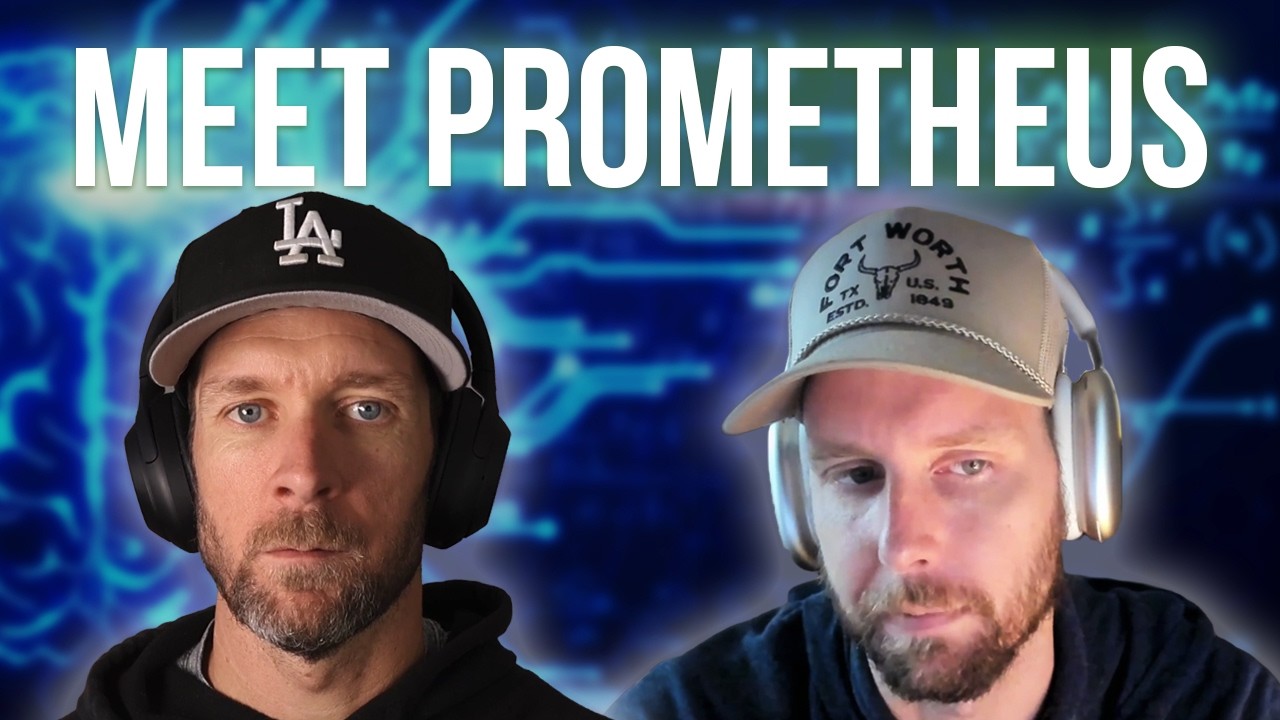
The Andrew Faris Podcast · @andrewfarispodcast
Words
9,499
Runtime
44:52
Speaking pace
212wpm
Reading time
40min
212 words per minute, above the 201 75th percentile of 349 measured videos. That distribution comes from the 349-video hook study.
Opening (first 30 seconds)
I don't actually know if we should publish this episode of this podcast because it shares the most like trade secrets, internal secrets of mine and Patrick's business and our work at Edge Growth of anything that I've ever released. I think Patrick in this episode is going to walk you through our AI coowriter, how it's structured, how it's designed, and why it is so freaking good right now in the details for you to understand. Like there's literally screen shares where he's showing source files and the whole setup of the thing. If you're working with LLMs in your business at all, I think
106 words, the words spoken in the first 30 seconds at 212 words per minute.
Free, no signup. See how the first 30 seconds hold attention, with rewrites.
Sentence shape
| Measure | This transcript |
|---|---|
| Sentences | 547 |
| Average words per sentence | 17.4 |
| Longest sentence | 124 words |
| Questions asked | 44 |
| Sentences containing a number | 9 |
Most used terms
Filler phrases
555 in total: like 185 · um 116 · uh 73 · kind of 57 · you know 55 · actually 27 · basically 13 · sort of 10 · right? 9 · I mean 7 · literally 3.
A literal whole-word count of the same phrase list the Prepublish browser extension uses, so a phrase inside another word is not counted and a phrase used in its ordinary sense still is. It is a count and not a judgement.
Free, no account. See where attention is likely to drop, with a rewrite for each weak line. The free check shows the scores and the one issue costing the most. Or run it on the words above first.
Free · No login · See a sample audit first if you prefer.
What this transcript is
Every word below is the caption track YouTube publishes for this video, pulled from the video itself and reproduced unchanged. It is not Prepublish's writing, not a summary, and not a re-transcription: it is the video's own published captions. English captions, generated automatically by YouTube, in the video’s original language. Source: the video on YouTube. A channel that would rather this page did not exist can ask for its removal through the contact page, and it is removed.
No Script X-ray for this video: YouTube shows a Most replayed graph only once a video has enough views.
I don't actually know if we should publish this episode of this podcast because it shares the most like trade secrets, internal secrets of mine and Patrick's business and our work at Edge Growth of anything that I've ever released. I think Patrick in this episode is going to walk you through our AI coowriter, how it's structured, how it's designed, and why it is so freaking good right now in the details for you to understand.
Like there's literally screen shares where he's showing source files and the whole setup of the thing. If you're working with LLMs in your business at all, I think this will be really helpful for you because it's it's it's really detailed. But also, if you're just thinking about how to connect strategy and ideas with operations and process, I think this will be a good look behind the curtain of how we're doing that at AF Growth, how you can be thinking about that as well.
This is me and Patrick Kadoo, my COO. Let's get into it. All right. Go ahead. You said you're going to do the intro, right? [laughter] Welcome, ladies and gentlemen, to the Andrew Ferris podcast. >> That just indicated to me that you've never listened to the Andrew Ferris podcast because that's not what the singer music sounds like. >> I know what it sounds like. >> D That's not it. Do you know what that Do you know what that little musical There's a little uh a little Easter egg in there.
Do you know what that Do you know what that little musical clip is? >> No. >> You have any idea? Have we ever talked about that? It's my It's my old. Um so, but it's >> okay. We'll have to talk about this on another podcast. >> Yeah, that's a whole episode. Uh, it's it's my older brother's playing guitar. It's actually after I left the band, so I feel like I can use it without without being like a weirdo about using my own stuff, but my older brother's a great guitar player and great great musician, songwriter.
And so, yeah. So, there's like it's a little stinger from from from uh from my old from my old band. So, we still keep it in there. It's like, like I said, little little Ander Ferris podcast Easter egg. >> I didn't know you had an old band, so we'll have to talk about that. >> Oh, yeah. Yeah, there's some Yeah. Yeah. Maybe I'll find some photos and integrate them into the uh into the YouTube video here. I think I've become the most convinced yet and the most excited yet about first of all the ways that an agency can uniquely provide value in a way that in-housing >> can't.
And I don't mean that to sell us really hard. I just mean like I I'm just seeing what agencies can be great at in a in a really unique way by focusing on a narrower set of problems that a wide set of people. >> Yes. Uh and secondly, I am the most convinced I think now that I I've ever been that we are building a great agency. Like we you and I sort of committed to the idea that like excellence was >> a core thing that we want to And it's funny because in some ways it's been a rocky month for a couple of clients in terms of like >> there's been like process breaks and a couple little detail things missed and I you know I'm running around like but but like the reason it's been rocky is because we've been spending so much time into >> the foundations and the processes and the engine of the whole thing.
I'm such a believer right now that it is like yeah it's really really easy for me to see right now why we will provide a ton of value to clients well in excess of our cost. And and again it's going to sound like in an episode like this like I'm trying to sell like I'm not trying to sell. I actually we have a backlog right now. I don't think we could take many more clients. Like we've got people reaching out. It's just I'm just I just uh as a as an observation about the space of e-commerce, about the role that agencies play in it versus software companies versus brands versus whatever communities like all the different kind of people in the space.
I just see it the most I've ever seen it right now. It's like it's really cool. Uh and it's and I don't know you say whatever you want about that, but you you >> Yeah, I could say a lot, but uh I won't wax poetic. I think we should just jump into the content and it'll come out in what we're about to talk about. >> Okay. Well, then I'll tell you there's two things. One of them I recorded an episode about already that will that is out before this one, which was the operational process that our sort of like team worked on at the level of designers and editors.
I made a big deal out of this metric far first pass approval rate. >> Y >> which is just like the the number of ads that get approved without needing to be re-edited. That little thing is a is a canary in the coal mine, but a good way. But like but a good canary a good canary. >> Negative canary. >> Yeah. Yeah. About how well your creative supply chain is working and it's like a really great metric to stand for. And I just think like >> it's really really cool.
Um and and so yeah like tracking even just tracking that is like awesome. I'm super excited about some of the data we're going to be able to develop from that. So I'm seeing us like invest with our friends at Behind the Scenes Studio in >> that whole >> side of things. And then Prometheus, the AI coowriter, which is you. And it's funny as I'm talking, what I'm realizing is like the reason I'm excited about it is because, uh, you know, AC and her team at BTS, um, and and their work, and then you.
So, the key was stop doing it yourself, Andrew. You don't provide the value. [laughter] Like, get smart people to help do it. And it's like 100% true. So, >> AI coowriter. Yeah. Go ahead. >> Well, it's it's other people on the team. like uh you know I'm telling my gross our growth strategists you know don't don't do those things that's not your job anymore you know it's not just you that we're kind of re putting right butts in the right seats making sure people are doing the right things >> do you think we should ever have him on here I've been thinking about that should I ever have a episode with you think so with Daniel >> yeah I think so I feel like I'm hiding him right now people don't know how good he is I don't >> ble bleep out his name [laughter] >> don't bleep his name he's the best Um, okay.
So, let's talk about Prometheus. The the um the co-writing AI tool. >> Yeah. >> Built in Claude that really you built like it's there's some stuff that I talked about that made it in there, but you built it. Um, and so why are you excited about Prometheus right now? What is what is it why has it leveled up so much in the last in the last month? And it really has leveled up a lot in the last month. >> Yeah, I'm I'm excited for a few reasons. and I can pull it up and show people while I'm I guess you can share screens on here, right? >> Totally. >> Um maybe maybe I'll talk through it, but you know, just as a visual for people who are watching, but if you're listening, that's cool.
You you don't need to watch. Um but you know, Prometheus is our AI co-writing tool. And here it is. It's built in Claude. And uh some of you may have heard of Claude Skills. Um, and we've we've been through many iterations of how we've built Prometheus, but we've ended up um really honing in on Claude skills. And what's really exciting about cloud skills is the more you learn about them, the more you realize it can basically it can perform deterministic tasks and workflows really well.
What I mean by that is when we we internally have um processes and steps we go through to you know we don't just go sit around and kind of pick our nose and go like ah I think this would be a good ad that we should make today. So we we start every week we start every week with what we call a weekly brand plan. And that weekly brand plan lists all the ads that we're going to go make for a client. And um it's organized into we call them flights, concepts, and ads.
So there's kind of a hierarchy. Uh, a flight is kind of a group of of concepts um that all focus on the same message. So every every >> Yes, we know we're not using that word quite right before some advertising nerd tells us. We just needed a word for it. So >> yeah. Yeah. Yeah. That's our internal nomenclature. Um whether or not that's anybody else's, that's fine. But for us, a flight is a group of concepts that are all centered around a particular message.
So the message really each, you know, our advertising philosophy is everything kind of starts with the message. Um, and then each concept has multiple ads within it. So it could be what we call a long form explainer video, it could be a socially native still, it could be all these other formats that we're developing. And the exciting thing about uh the Claude skill is I can train Claude on a massive massive amount of information um that we have internally.
So, what we believe makes good advertising, creative, copywriting standards, uh our brand standards for our brands that we work for, product information, ad formats, storytelling frameworks. So, we've got all this information that previously I just kind of had it all dumped into like a custom GPT or like a cloud project, which people are pretty familiar with. And what I found was Prometheus wasn't really um following steps properly.
It was getting confused. It was hallucinating a lot. It was like kind of making steps up. And um that's I think what I'm really learning is and by the way I'm I'm no LLM expert. Um but I've been doing a lot of research about claude skills and what Claude skills >> I think you're underelling just that comment alone. I I I think I think you're in the top 5% at the very very least and probably the top I mean yeah I know there's a level of like deep technical knowledge that goes beyond what you do and everything but >> like it's actually an important point and it's something that I think matters because the idea is that like >> like one of one of the things I want people to see in this conversation is like you can't snap your fingers and just have AI do all the work for you.
And that's what a lot of people's expectation is. That's kind of what a lot of people were sold. But it just doesn't it's not doesn't work that way. It's require less deep work. So you're explaining the skill and why the skill is so valuable >> uh because of all the things you're about to explain. So keep keep going. >> Yeah. Yeah. Yeah. So great point. Yeah. I'm not a technical guy, but there are some really important um kind of foundational principles of how LLM works.
LLMs work that Claude Skills really helps you kind of wrangle well. And there's a couple of them. one is progressive disclosure and um another one kind of related is context window and don't don't let your eyes glaze over yet because if you're interested in building LLMs or AI for your agency or your brand those are two really really really important things to understand and so um context window means you can only feed so much information to an LLM before it starts to get confused before it starts to hallucinate before it starts to like really break down And um that's just a fact.
You cannot get around it. It an LLM is just like a human. You feed it too much information, it's going to start to really break down and how it understands that data. The the problem with LLMs is uh they won't tell you when they're breaking down and they won't tell you when they're starting to make things up or skip steps. They'll just act like they know what they're talking about. Um, so Claude Skills helps us work around that kind of context window issue with with something called progressive disclosure.
And and the way I've built Prometheus, um, um, this is really more kind of my philosophy about how I've built Prometheus is like with really granular progressive disclosure. And here here's what I mean by that. So, by the way, just to define terms, progressive disclosure just means um giving the model the right information it needs at the exact point in the workflow that it needs the information. Not too much, not too little, just enough at the right time.
That's basically what progressive disclosure is. I'm sure somebody could correct me, but that's kind of how I understand it. But for Prometheus, the way uh we've built Prometheus is um I've skill >> you just gave that little prompt. Prometheus, let's make fire because that's fun. So if you [laughter] weren't watching that, you got to say that out loud. The way you like activate Prometheus is Prometheus Let's Make Fire.
It's also a good point by the way at which we should say that we were to we were at the name you really got to the name Prometheus before freaking Bezos did and stole our thunder with his new AI thing called Prometheus. like that that he just raised six billion dollars or whatever for his company, new new entity called Prometheus and I'm really mad about it. Uh cuz we we only raised five and a half billion for ours. So >> yeah.
Yeah. Just five and a half billion us. Yeah. >> Um so here >> Prometheus Let's Make Fire that activates >> that activates process, right? >> It's actually not going to work in this incognito chat. I was going to go I went incognito so that I wouldn't share too much of what's going on in my cloud, but that's okay. We'll uh we'll start here in a normal chat. >> We can blur anything we need to or anything like that. >> Yeah, it's fine.
I don't I don't think we're going to be okay. >> Lead with value, Patrick. >> Lead with value. Um okay, so we say Prometheus, let's make fire. And that's so uh I've built the claude skill. There's like a main skill file where Prometheus knows, hey, when I say Prometheus, let's make fire, great. what would you like to do? So, he's telling me you can create a weekly brand plan, which is like the core start of how we do advertising.
We start with a weekly brand plan. You can make concept briefs from that weekly brand plan. You can develop a message. Um, so we have a really particular workflow that we follow when we develop messages. Um, and then there's some other kind of administrative things that that we can do with Prometheus. And this is going to continue to be built out like soon it'll it'll help us make landing pages. It'll help us do other things as well.
But what's [snorts] really interesting with um like uh create let's just say create a weekly brand plan. Let's let's uh create a weekly brand plan for um what what client should we use. Andrew is is uh >> uh I think we should use um she's Birdie, our friend Richie Mashico. She's Birdie. He's been on the podcast before to talk about sort of what he's doing. And uh yeah >> really cool brand uh there's a there's a there's a brand turnaround story with with Richie.
In fact really cool turnaround story that Richie came on and talked about in in so much honesty that I had to take it down later [laughter] on. So he'll come back at some point for sure and talk about um he he was like ah sorry I said too much. Can you please take that down? So anyway you probably heard that story and if you didn't you can't find it now it's gone. So there you go. >> Um that's funny. Hopefully we won't have any cloud issues.
It it one of the challenges is like claude um you know just like any other tech kind of or LLM kind of breaks every now and then. But um >> yeah, >> usually we'd come in here, we'd say, Andrew, you would put together or the growth strategist would say like, "Hey, I've got kind of this general idea of these ads I want to make. Um and let's go let's go make a bunch of ads." But we're going to kind of ignore that and I'm going to I'm actually going to test Prometheus right here.
See how he does with this. I don't really have any brand notes. So, what I'd love for you to do is come up with five new flights based on what you know about Cheese Birdie, their products, and their brand language. Uh, propose those flights to me, and then we'll go from there. So, you you can see um or you can't see >> you also talk to your computer so much more. I I still type, but you use Whisper for that. Is that what it is? >> Yeah, we use Whisper.
Um I don't type anything at all um really ever. So what he's done is he's that you're seeing kind of some progress progressive disclosure going on here. So he the first thing he did was he read his Prometheus skill which and we can open up the skill files later and kind of open up the kimono and see how it works. But he's got this skill file that says, "Hey, here are all the things I'm trained to do. What would you like to do?" And now that I've asked him to do those things, he's going to go reference a bunch of files to to to kind of perform this progressive disclosure.
So, he's going to our She's Birdie uh brand standards. He's referencing, I've got a product file for every single product that Birdie sells. So, he's going through and he's looking up, hey, what do I know about this brand? What do I know about the products? What do I know about AJF Growth's ad formats, storytelling frameworks? So, okay, great. I've got everything I need to know. So, I'm going to go put together what I think would be some great flights to to do this week for for um for birdie.
This isn't normally how we do it. We would feed it a lot more kind of information, but he's basically kind of doing right now what a growth strategist would do, which is, hey, I've got this message. I've got a few uh um formats I want to do for this message. And um he's providing some additional stuff that's kind of helpful. that um soon he'll have five flights. And by the way, feel free to redirect me, Andrew, if you want to >> go somewhere else with this.
Um >> this is great. >> Um so what he's doing is he's putting together uh what Claude calls an art artifact. >> I'll just go ahead. >> I'll just chime in really fast and say what we would normally do here that is not as part of the step is that we would look at the ad account and we would say what ads are working. >> Yeah. >> We would analyze them according to their message. We used >> Yes. Um, we use Prometheus, uh, and Poppy, which shout out Alex Cooper, who first turned me on to Poppy, and I think maybe you had seen Poppy before too, Patrick, but we use Poppy to to help connect ads and pull transcripts um, and and h and then use Prometheus to analyze what the message is, the core messages of these winning ads.
That goes through a whole process where you've given a ton of information to Promemes for how to think about that problem. It follows a very clearly stepped out framework like boom boom boom boom boom this is how you know a message is >> and so we'll say like okay this ad is working so like let's expand that ad and I would give those brand notes to you know I put them somewhere notion for us we would take those brand notes and give them to Prometheus basically and say okay here's the message here's the ad I want I want you to make some some additional ads in different styles and frameworks but use the same message and retell retell the same story with new words and with new framing and some stuff like that.
So we would have that or we'd have explore like we want to go try a different angle we've never tried before and so help us develop that message Prometheus and D. So all of that work would be done in advance of this usually. >> So much of what Patrick and I are doing exists because of our relationships with people helping us staff our agency in the Philippines and that includes my friends [music] at More Staffing. I just could not be more grateful for More Staffing the way they have helped really every business that I touch.
That's because more connects me and AJF Growth [music] uh with the best talent in the Philippines at a price that is top of the market there and is also lower than market prices here. What that means is I can access better quality talent there. My dollars go further there than I can here and it works out to be a winwin across the board. I can keep my opex [music] leaner. So can an e-commerce business as well. And in fact, e-commerce businesses are the ultimate place for more staffing to really be helpful.
And that's because Morphin was built out of US-based e-commerce businesses. Literally, the whole thing came out of there. Uh they saw the power, Greg Kerry and Laravar, they they saw the power of uh putting incredible Filipino talent into a US-based e-commerce business, [music] staffing the whole business that way across every part of what that business was touching. They could see incredible work being done, lean offex at the same [music] time.
It's just a real win-win situation. Uh more staffing also just does an incredible job with uh all of the the parts of hiring that are just tricky. that includes recruiting, onboarding, training, providing ongoing coaching. They even provide a one-year guarantee so that uh so that if you have uh talent that doesn't work out very well in your business, they will help you replace that talent at no extra cost as long as if the person doesn't make it for a year in your business.
So go to more staffing.co staffing.co/af. See what talent is available for you and don't just think I got to go cheap virtual assistant whatever. There's much more to to it in uh in the Philippines for your business. More staffing.co. [music] / af get on a call. See if they can find somebody. Just start to look at some resumes. See if they can find somebody as you look towards 2026 who can help your business as much as they have helped mine.
The thing that makes the tool so powerful is the ability to connect it into these different processes where these conversations are happening all the time. If you're in your ad account, whether you're an operator or an agency or whatever, and you're seeing like, oh, an ad is working. Let's go make more ads like that. Well, what does it actually mean to make more ads like that, quote unquote? And the answer is it depends what you mean >> by like.
Uh do you mean the is it the format? Is it the creator? Is it the whatever? You know, we've made the decision that the answer to that question is >> above all else the message. The message is the thing that's at the center of everything we do. And so now we've built the backend tooling around how do you take those messages and either find new ones or expand on winning ones and try to replicate that at scale scale. And um and then Prometheus would go through the whole process that you're showing to go build build that in.
So you you short circuited that process a little bit, but it's really important, I think, because uh because there's this whole series of steps and at the level of an agency, >> it's it's funny like whether or not I'm right that the message is the most important thing. >> I think I am. Uh you just an agency has to have conviction about like the thing that I always say to people when they're looking for agencies is look for point of view. >> Like try to understand like what do they say about the way the world actually is?
They have a way to test that theory. They have a way to action that theory. And for us the point of view in creative is the message is the thing that wins. You know if you go to common thread collective the point of view is you want predictable profitable growth and forecasting is an exercise in execution. And so everything kind of ladders to that and um and and they have clear point of view on all these kinds of things in relation to this core principle you know um and I love that like I think it's one of the reasons they do such a great job.
They just dig into that over and over. And so what we're doing now is saying here's our point of view, here's the messaging, and now here's all the stuff that we can do as a follow-up at the level of uh at the level of the tooling now to support the work that gets done so that we can take that point of view and actually replicate it across a wide range of clients. >> Amen. Amen. Yeah. Yeah. We would usually start this with a with a really clearly validated, really strong message.
You can see um it's not actually part of his workflow because he expects us to provide messages already. This isn't really I what I would call a fully uh built out message, but it's good enough for this um this example. Um but basically, I said, "Hey, turn this turn these kind of notes into a brand plan. Follow our weekly brand plan workflow and assume they're all explore ads, which as as you mentioned, we have kind of different categories of ads, explore, expand, and execute." Um, so what he's going to do is he's actually going to follow all of my documentation and build out a weekly brand weekly brand plan draft.
So he's built this he this is a kind of a deterministic task. You know, I've got these table formats that I need him to follow every time we create a weekly brand plan. and he's done a really great job at drafting up um these tables and [snorts] um so not not too like magic, you know, it seems uh on the surface, you know, he just kind of made some tables, but he's following uh a lot of steps behind the scenes. And what's important about this is he he's actually doing what I tell him to do.
If you've ever worked with some of these models like the custom GPTs or the cloud projects, you're used to like I have been in the past them um these LLMs kind of making things up or or skipping steps. And so what I've really built Prometheus to do is um do a couple of things. One is like what I call kind of human in the loop AI. And this is maybe a topic we could spend more time on, Andrew, which is like, you know, before we started recording, you you made the comment that, you know, a lot of people kind of want to approach AI like push a button and, you know, outcomes.
It's like the ad machine. You know, push a button and it just makes a bunch of ads. We don't really believe that's the right way to use AI. We've taken the approach that we believe it's kind of a human in the loop process. And so, the way I've built Prometheus is he's going to kind of work alongside of you to to build out these things. So, he's built this brand plan right here, and he's basically saying, "Hey, how does this look to you?" And I'm like, "Uh, okay, great.
Notes are good. Me, let's just assume the messages are good. All the formats are good." Okay, so he's done with his work first workflow, and then I'm going to ask him to go to um the next workflow. So, this is kind of a stopping point to get the human in the loop. And then the next workflow, he's going to go back through these tables and he's going to break them down into um concepts. Uh there's basically a concept overview tables that he's going to break these down into and he's going to create a summary table at the top.
So, it's a little bit nerdy, a little bit kind of in the weeds, but it's this framework is really important for how we um kind of divide workout and then send it to the team and make sure that, you know, um every every ad that's being made starts with a message and comes down to a format and, you know, eventually comes out as an ad that has kind of all these pieces tied to it. So there's there's kind of a few probably extra steps that some people might feel that you know it's like is that really necessary?
I just want to go make an ad. But this is really important to our process. And then when you click a button I don't I can't remember if you said this or not but you at some point when this is all done you basically say okay send it to notion. Right. And it like puts the plan into notion >> including each individual task basically. Right. >> Exactly. Okay. So, what what he's doing now is he's breaking it down into these concept breakdown tables, which will show up here in a minute.
That's workflow two in this uh workflow. And then workflow 3 is just send it to notion. So, we use the notion MCP um which is just a connection to notion to push all of this directly to notion. So, you asked why I'm excited about it. One is that um Prometheus is really really good at um if you feed it the right information. He's really good at writing really good messages, writing really good ads and like making really good creative decisions.
Claude in particular is really good at that. Um that's >> people have made this point about Claude for a long time that Claude is a better writer and a better creative partner than than JBT is. You know, it's no secret, you say, but at the same time, it's helpful, I think, for people to know that because maybe they don't. >> Yeah. Yeah. And we found that if we feed him the right information, he's he's really good at at writing ads.
So, do um but um so that's one piece that's exciting to me. The other piece that's exciting to me is this allows me to create process within our organization that is really that basically forces people to use I'm basically forcing people to use a process um and to like follow a bunch of rules that that they would not normally follow and that you know we use like for example we do a lot of reporting with our information in notion. you kind of alluded to some of it before that reporting requires a lot of like manual work of tagging ads with the format with the you know like there's a lot of data that needs to be gathered on our ads and like previously we would we would rely on people to make sure to like tag ads properly to name them properly to to track them properly and and now I've basically taken that task which is really you know a great task for AI to do off of our creative strategist plate off [snorts] our off of our growth strategist plate and we've we've made it to where AI is doing it for us.
So that that's exciting to me. You know, we're not replacing humans. Um we're we're helping them. >> We're trying to hire more of them. >> Yeah. Well, over time over time, right? Like we're not doing this super super fast, but we're building all this specifically so that we can grow our agency and accomplish more work. Like there's going to be more people at AJF growth, not less. >> Yeah. And the way I see it is I'm taking all the crap off of their plate that nobody wants to do, which is name concepts and build tables and and and build stuff in notion and like organize stuff properly.
Like a creative strategist does not want to do that, right? That's not why we hire a creative strategist is to be like a really good project organizer. So, I'm forcing Prometheus to do that. And um you can see now he's he's broken down. It's such a small thing, but we had such a challenge when we were doing this on a human level. We were like, "How many ads are we actually briefing? I don't even know. I got to go through and like count them all and those counts are wrong." But um and like and then we'd brief a flight and we'd be like, "Well, well, how do we break that down into like actual work for the team?" And now Prometheus has done that.
He's broken it down. And so he's doing all the hard work of actual creative work, but also like the just the crap that nobody wants to do. And then to your point, the next step in the workflow is send it to Notion. So, he's going to actually push this to notion and bam, we've got a we've got a weekly brand plan. So, we've got a you know, we our team now knows exactly what they need to go do. >> So, that's our weekly brand plan workflow.
That's one of of multiple. >> Yeah. And then from there, somebody will go and actually start making the the actual ads with scripts and all those kinds of things, right? So, that's the plan that lays out the message and all that stuff organized around that and then people will actually go write the scripts with help. Yeah. from from from Prometheus. Of course, >> I do not know how to make money for people with Google ads.
I only know how to not lose money for people on Google ads. And so, repeatedly at AJF Growth, something that has happened has been I have seen brands come to us. I have pull up their analytics. I see all the money they're blowing on bad PMAX ads and bad branded search ads and stupid spends and search terms that aren't getting filtered out properly and all that stuff. And I cut a whole bunch of spend for them. But then they're left stuck going, "Well, is Google ads a channel that can actually create any value for us or not?" And the answer is yes, it can, especially if you do it with my friends at Zetto Marketing.
Zetto Marketing is led by Kirk Williams. Kirk's been on this podcast before and it is the place that I send my clients to to partner with when they need Google Ads help. They are the people that I trust to do a great job running Google Ads for e-commerce brands. Uh, and I really mean that. Like I have multiple clients where we are the meta ads agency and general growth agency and forecasting all that and we work handin-hand with our friends at Zeto who like us is pretty boutique smaller team uh gives a really high level of attention to detail people with really long resumes in the space uh and we work handin-hand with Zato to accomplish goals together because they do a great job managing ad spend and amazingly they have very high attention to detail detail on your account.
The thing I never see happen with Zato run accounts is money just like blown on stupid keywords and like I said, stupid use of brand search and all those things. They do an incredible job. They don't overpromise. If you talk with Kirk Williams, he's not going to tell you he's suddenly going to scale your Google Ads account to millions of dollars of spend per month or something crazy like that. And that is something that should make you like them more, not less.
Kirk realizes that there's a great place for Google ads in an e-commerce brand's uh ad mix, media mix, but that also uh it's not a good idea to sort of oversell and overpromise and do those things. You should have uh have Zetto run your Google ads. If you're an agency, you should partner with them the same way that we do with clients. Reach out to Kirk Williams by going to zoomarketing.com, zatomarketing.com, or just follow the link in the show notes to get a call going.
If you would like somebody to audit your account, you know, reasonable fees on your Google account, all those things, high quality work delivered over time, I'm really confident, my friends at Zeto, um, I would recommend them to you, even if they were not paying for this advertisement. I really would, and I have many times. If you know Kirk, you know he's been an expert in the space for a very long time at PPC onx if you're a follower.
Um, so go check it out today. Zoomarketing.com. Tell them I sent you. This is the first time they've played around with like running an ad on a podcast like mine because all their growth has been organic so far, but they're they're thinking about uh fueling it a little bit more. So, go tell them tell them that I sent you zomarketing.com. Get your Google ads handled with expertise and real care at a reasonable price. We haven't changed the information input into Prometheus a lot recently.
There's a couple little things we've done. You know, we have visibility into what's working across a bunch of different brands and so we want to replicate styles of ads uh that we see winning. I have been in these conversations for forever >> and I've never seen an organization effectively operationalize this. Every brand I've ever been around has an ad inspiration channel >> and it just kind of sits there and the idea is like we'll come up with an ad and we'll you know say hey go make an ad like this because we think it's cool and it's sort of helpful but it's also sort of a distraction and sort of feels like but what we've actually been able to do now because this process is good is like go build into Prometheus's context uh and into our >> into our notion and stuff like hey >> these formats are formats we want to come back to a lot and over time that format library and and context library will get very big.
There'll be a lot of different options in there. >> Um, so that's that's like a really cool thing. And we've actually already seen even the last week, we've seen a couple of ideas pop, a couple ads pop that came out of that kind of work, even some work you did literally in the last week to to take some ideas I had and and said like go go get them into the into the workflow. So that kind of thing is really really useful because information like that is constantly floating around, but it's so hard to operationalize it.
I'm curious about why why you think like what has happened in the last couple weeks that has made Prometheus so much better because I do think it's really upgraded. >> Yeah. So, it's it's everything kind of I started by saying which is like the the progressive disclosure the like the granular way I've broken down Prometheus and the way I've really started to understand um how specifically Claude skills work. So, um I'll get in the weeds real and then I'll get back out.
But um for anybody who's building Claude skills, um if you if you find that Claude's not following your instructions, there's probably one of two reasons why. One is um an easy one to fix, which is you've got memory turned on in your um in your in Claude and you need to turn memory off. So Claude will he won't tell you he's doing this, but if you give him a task to do with a bunch of instructions and kind of a long workflow, um he will be he will be inclined to ignore your steps that you've told him because he has memory about stuff that you've worked on in the past and he will decide, hey, I think I'm smarter than you because I've got this memory of things we've done in the past and so I'm just going to shortcut the workflow you've told me to follow and I'm going to um I'm just going to rely on my memory.
Mor. So that's like step one takeaway. If you're using cloud, turn off memory. If you're if you're doing things like this, deterministic tasks. Now, if you want more personalized tasks, like, hey, I'm a COO at at an agency and like I'm trying to send out this email to this team and help me write it. Like that's a different thing. But um so turning off memory is a big deal. But then uh the other thing >> specifically that reduced hallucinations and stuff, right?
Like >> Yes. >> Or or just like it just kept it it just kept it on task. maybe is a better way of saying that, right? >> Yeah. Keeps it on task and keeps it from thinking that it knows better than your instructions. >> That's a good way. Yeah, that's exactly the language I was looking for. Yeah. >> Yeah. And then uh it's funny you said that you said that um there I think you said something along the lines of nothing's really changed behind the scenes, but um this week has been a huge rebuild of the what the next topic is, which is um the fact that Claude um when Claude loads files, specifically in Claude skills, um he will only load roughly 500 lines of a file.
And so this kind of goes back to what I was saying before. I used to just dump tons of information into Prometheus and just go like, "Hey, go make sense of all this and make some great ads." And I realized that that wasn't really the right way to go about it. And so one thing that I've done more recently, so you can see these are all of my Claude skill files. Really opening the kimono here, but um so you can see all of our ad formats have their own file.
So, here's a here's a uh long form explainer. So, this is just a 50 line um um document that tells uh Prometheus what a long form explainer is. And this is such a simple thing, but it's really powerful. All of these ad formats used to be in one long um document. But um you can see that um I I think what I'm trying to say is what's gone on behind the scenes is we've gotten way more granular in in our product f in our files and we're only disclosing to Claude what we want him to know at the time we want him to know it rather than giving him this huge file which um he he actually what again he won't tell you he's doing this but if you give him a massive file he's going to truncate that file.
He's going to, let's say you give him a thousand line file. He's going to load the first 200 lines and he's going to load the last 300 lines and he's going to completely ignore everything in the middle. And that's what he was doing to us in the early days that we didn't realize he was doing. We give him this long workflow. Uh everything I just showed you that I just did in Claude. We'd give him a long workflow and by the end of the workflow I' I'd be pulling my hair out because I'd be like, "What is going on?
Why don't you follow the steps in my workflow?" finally found out he was just skipping all of the middle steps and kind of making up his what he thought would would be a good [laughter] would be a good way to like accomplish a bunch of those steps. So when you say like not much has changed like actually everything has changed. So since >> what I mean is what I mean is not is not that is not that the way we have built Prometheus hasn't changed and this and the the architecture hasn't changed.
What I mean is we've been making long form explainers for a long time and >> and that hasn't changed there. I haven't given you any new instructions to say here's how to make a long explainer better, you know. Yeah, I it's not like that. So I I recognize that a ton has changed at the sort of technical level. Uh that's totally overall. In fact, that's exactly what I was asking was like considering that we didn't change the information at all, why does it do such a better job with our outputs?
And and I think getting into the weeds here is really helpful. >> Yeah. Yeah. Yeah. It's back to smaller context. Only give him the context we need when we need it. And um he does way better way better at that. So if I'm if I'm writing a product about the birdie box and I want him to write a socially native still, that's the only information I give him and I say, "Do it exactly like this." Um and then the other thing this helps us do uh by breaking it down granularly like this to your point, like it's way easier if you if you come to me one day and you're like, "Hey, I got this this is really gets really exciting. we have this idea for this new ad format.
Help me make sure that we get this into our, you know, we start we start making these ads. Okay, old days, we'd have to like round up the team. We'd have to kind of make some documentation. We'd have to train everybody on what this new format looks like, >> you know? Okay, here's how you brief it. here's here's the right length of of like some of these like it's really important that >> [snorts] >> uh the text is shorter.
The concepts are are uh choppier, the the word count is really important. And so we no longer have to number one train people about that or like retrain them. So like when our writers are sitting down, they're they're not going, you know, how many words was this concept supposed to be? We just put that file in there and bam, we can start briefing that across the entire organization immediately. And so we're pretty small right now, but as we grow, you know, it's th this is really exciting to me as the as the operations guy to not have to build like all this training and just all this like, you know, pull the team up the hill every time you want a new ad format.
No, it's just create a new file, pump it in here, let the team know, hey, this is a new format. And then by the way, it automatic every time we create a brief with a new format, it's going to automatically link them to the instructions and the best the examples of what makes a really good, you know, ad for that format. So that that excites me a lot that that >> and for me like I uh I went on a little like midday 10-minute break walk yesterday and I sent a message to um to Taylor uh just because the kind of thing that he and I reflected back and forth on a long for a long time saying like the thing that's happening right now is that I feel like what this is all allowing us to do is like spend as much time as possible working on the things that actually create the most value and that we love the most in the business. >> Exactly. >> Um, and it's so fun and it's so freeing and it's like I can just continue to, like I said, like see this very exciting vision of why it works.
Like for me today, Daniel sent you and I an ad that is working for our clients. Um, and he sent that ad and it was a slight tweak on a different version of the same format that we had made for a different client and it was it was like really really working for this for this client. And so he surfaced this ad like it's a newer format for us. He surfaced the ad and uh and I immediately was like, "Oh, awesome. I think I I have a hypothesis about why this is working." I immediately went and changed the the template library to to reflect that.
I added the new ad to that. So now other people can look at that winning ad and messaged you and said, "Hey, here's why I think this is working. Is there anything we need to change at at the level of Prometheus to make sure we can replicate this?" And the whole thing took five minutes. Like it was like because all the architecture is already built up and like it was is just so easy to go do that. But it was also so it's like the thing I like to do most is like think strategically and try to identify >> kind of big ideas and messages and you know and do these kinds of things.
Um and and the thing that I'm so bad at, right, is all the stuff that you're great at where it's just like actually turning that into this repeatable process at the technical level. And then of course like what's going to happen on the back end of that right is is our design and edit team now has this process by which they will turn around and actually quickly replicate these formats as well so that they can actually go and and yeah anyway to kind of take the last leg of that and they now operate really smoothly and quickly and better all the time.
So it's like it's just coming together in this way that for me is like it's just really exciting because um because it frees me to do the work that I like the most and I think creates disproportionate value for our clients. Um, and in fact, in fact, one thing I've been thinking a lot about is like I sort of think every day right now, like, man, I create so much more value for our clients by not doing the actual work than by doing it.
And it's because I could spend more time on this kind of higher level thinking. And that just wasn't true before you came and before we were before because we didn't have the ability to turn any of that thinking into sort of replicable stuff, right? So, it's fine if I have a great idea or whatever, but it just doesn't turn it into any action. And that gap between idea and action is like such a difficult thing for organizations of basically all kinds >> to get right.
And um and especially if you're an agency where your entire product is operationalized knowledge uh man it just doesn't matter if you have the knowledge if you can't operationalize it. But man when you have the operational backend built it really it it further encourages me and incentivizes me to go chase the knowledge you know. >> Yeah. And because creative is such a core part of what we offer uh to our clients, like it tends to take up all of our teams mental bandwidth the most. um our growth strategist, our creative strategist, you, me, and and by starting to build these better tools.
Um we can we can get those harder, not harder, but like just more minutia things off of their plates so that they can do the higher level thinking and be truly a creative strategist and a growth strategist rather than like a, you know, a button pusher and an organizer and a table maker and a and they what what was that format supposed to be? remember, you know, it's just it's really exciting. >> Yeah. Um, this is fun.
Okay. Um, anything else we need to add here? I feel like that that makes a solid episode right there of just kind of showing that process for people. And what what do we miss? Anything? >> Yeah. I mean, there's a whole there's other workflows we don't need to go through. You know, we'll take that brand plan and actually turn it into scripts and ads. Um, and then there's this whole other piece that we haven't really gotten to yet, which is like, okay, so we've written everything, but now what are the ways we can use AI to actually um support our creative development?
And so that's kind of >> Yeah. And it's funny, too, because last episode we did, we were talking about our SOR 2 plans, but we really haven't gotten to those yet. So that's that's still a little bit on the back burner because it's like got to be downstream from this, you know. >> Exactly. But you can brief. starting to brief in some of these ads. We're briefing like the prompts that our editors will use to prompt the uh you know the video generation or the image generation.
So um it it all kind of works hand in hand. >> Definitely. Anything you want to add? Anything else? >> No, no, that's great. >> Cool. All right. Thanks very much. Appreciate it, Patrick. >> Yeah, man. Good talking.
The words are the caption track's own and nothing is reworded or re-transcribed. Paragraph breaks are placed between sentences so the text reads as prose.
Free tools for your own script: paste a draft and see where it stands before you record it.
Paste your draft and see where viewers are likely to drop off, with a rewrite for each weak line.
Paste the first 30 seconds of your own draft for a hook score and rewrites.
Check your draft against YouTube's advertiser-friendly guidelines before you record it.
Read this channel's public videos and transcripts, and download a writing brief for it.