Getting the transcript
Reading the captions from YouTube. A video nobody has opened here before takes 10 to 30 seconds; this page fills in on its own.
Getting the transcript
Reading the captions from YouTube. A video nobody has opened here before takes 10 to 30 seconds; this page fills in on its own.
The Andrew Faris Podcast · @andrewfarispodcast
Words
9,860
Runtime
43:12
Speaking pace
228wpm
Reading time
41min
228 words per minute, above the 201 75th percentile of 349 measured videos. That distribution comes from the 349-video hook study.
Opening (first 30 seconds)
I just passed 10 years in e-commerce. I have 10 lessons I would tell a younger and dumber Andrew Ferris as I reflect on that time and think about what I did right, what I did wrong, and what I would do better if I could do it again, or I hope I do better if I could do it again. I'm going to pass them along to you. I think you're going to like these. Okay, what would I tell a younger version of me? 10 reflections on my time in e-commerce, 10 lessons that I think will be useful to other people. So, number one, and here's maybe the most obvious, most
114 words, the words spoken in the first 30 seconds at 228 words per minute.
Free, no signup. See how the first 30 seconds hold attention, with rewrites.
Sentence shape
| Measure | This transcript |
|---|---|
| Sentences | 537 |
| Average words per sentence | 18.4 |
| Longest sentence | 102 words |
| Questions asked | 59 |
| Sentences containing a number | 27 |
Most used terms
Filler phrases
359 in total: um 94 · like 88 · uh 52 · you know 42 · actually 29 · right? 25 · kind of 12 · sort of 9 · I mean 4 · basically 3 · literally 1.
A literal whole-word count of the same phrase list the Prepublish browser extension uses, so a phrase inside another word is not counted and a phrase used in its ordinary sense still is. It is a count and not a judgement.
Free, no account. See where attention is likely to drop, with a rewrite for each weak line. The free check shows the scores and the one issue costing the most. Or run it on the words above first.
Free · No login · See a sample audit first if you prefer.
What this transcript is
Every word below is the caption track YouTube publishes for this video, pulled from the video itself and reproduced unchanged. It is not Prepublish's writing, not a summary, and not a re-transcription: it is the video's own published captions. English captions, generated automatically by YouTube, in the video’s original language. Source: the video on YouTube. A channel that would rather this page did not exist can ask for its removal through the contact page, and it is removed.
No Script X-ray for this video: YouTube shows a Most replayed graph only once a video has enough views.
I just passed 10 years in e-commerce. I have 10 lessons I would tell a younger and dumber Andrew Ferris as I reflect on that time and think about what I did right, what I did wrong, and what I would do better if I could do it again, or I hope I do better if I could do it again. I'm going to pass them along to you. I think you're going to like these. Okay, what would I tell a younger version of me? 10 reflections on my time in e-commerce, 10 lessons that I think will be useful to other people.
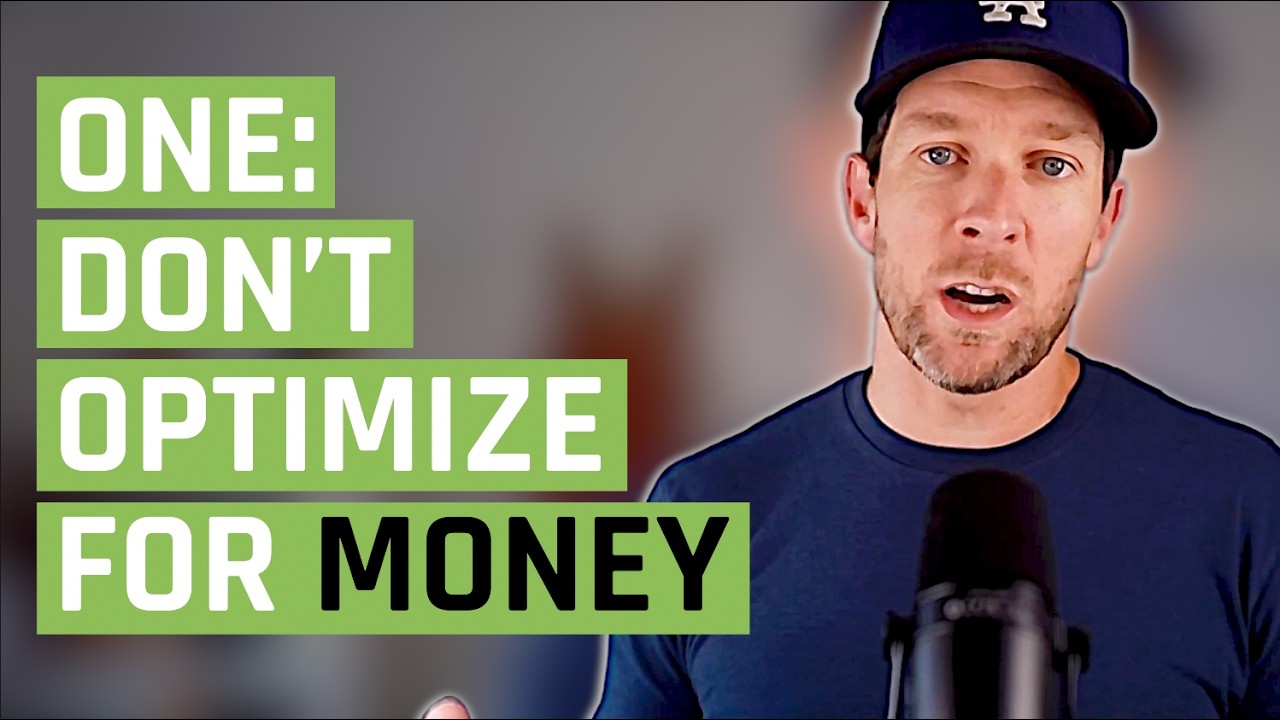
So, number one, and here's maybe the most obvious, most and now maybe not most but the the the one that was most obvious to my own mind that I think about, that I mostly did well, which is don't start by optimizing for money. Don't optimize for money in the earlier phases of your e-commerce career. And and and really I mean by earlier phases, at least within the first 3 years probably. The the vast majority of us are just not going to have sort of like gigantic wealth opportunities in those times in our lives in in those first few years.
Like there's one way of looking at e-commerce which is that because you can build a business for relatively little money to start that you should go and start a business right away on your own and get all the experience you can and lessons you can from doing it all yourself. And there's some wisdom to that. There's some people who are so entrepreneurial, they're just going to do that. But I actually don't think that's the best way forward for most people.
The thing that I value so much at this point, 10 years into my career, is experiential capital, uh intellectual capital that has been built up over more time. And that What I mean by that is like the knowledge that comes from experience in the business. And 10 years ago, there just weren't very many people who were super knowledgeable in e-commerce. E-commerce was extremely young 10 years ago. Um but over that time, a lot of people, including myself, have learned a lot more.
It's actually one of the most encouraging things to me to think about when I think about uh that my time in e-commerce, which is that I am so much better at this than I was 10 years ago. I'm so much better at this than I was 2 years ago, I think. And uh that makes me really optimistic because I assume that trajectory will continue as long as I don't get too lazy and I will be a lot better at this in another two years and another five years and so on, okay?
Um and so part of the reason I am so much better at it now than I was before is because I have um I have had opportunities to be with people in the early stages of my career who taught me a lot and from whom I learned a lot. Um and so this is the thing I would tell people to do is in the earlier stages of your career especially optimize for getting as much time as possible with the smartest people you can. Like the realistic difference between how much money you can make uh by taking let's say you're deciding between a couple jobs or thinking about switching organizations.
Like most of those decisions are worth 10 to 20 grand in salary per year, maybe even less than that depending on a few factors and after taxes and all that, right? Um you know, if you're deciding between like leaving an organization you like now and going to a new one because, you know, there's more money at this new one. Um those kind of things like those those kind of decisions are not worth that much money to you in the short term, but in the long term your knowledge and your relationships and your especially especially your your developing skill set is just worth so much more to you because you will end up over the long term creating way more leverage on um on skills that develop over time and overwhelmingly that's about being with the right people in the right position earlier on in your career.
If you have that, if you have somebody in your organization right now who is really smart, who you think really gets it, they're going to be wrong about things, but who who who really really gets it, do everything you can to get into as many rooms as you possibly can with those people and be near to them. For me, I got to do this side by side normally working for Taylor Holiday really directly and that was an incredible gift to me.
And And Taylor and I are still very good friends. You know, we we put out content together. We talk all the time. Um And And you know, over time that relationship had become less of a mentoring relationship and more of a sort of um side-by-side relationship. But in the early stages, I literally knew nothing and Taylor came from some background and he taught me the very beginnings of things that I knew. And And that was so valuable to me, but he wasn't the only one.
There's other people I got around. I can think of a graphic designer or two who I've worked with who have been extremely smart and from whom I've learned a lot about how that part of the organization works. I've I've been around some other executives between Common Thread Collective and some other places where I've seen like, "Oh man, this person was strong." I guess I worked side-by-side with Dave Rehkopf for a while.
Really smart guy um and from whom I, you know, I've I've learned a lot and again, somebody I keep in touch with pretty regularly and process things with because he just thinks really really well about these things. Those relationships are way more valuable to me than any financial impact I could have made by, I don't know, chasing down some amount more salary early on in my career. Value above everything else. Getting time with the smartest people you can.
Optimize for that before you optimize for money. And in sort of related to that, something I'm going to talk about here in a second is is your actual resume and the skills that you get the problems that you get to solve that the things that you get to work on. So, let's go to number two, okay? Number two, develop a highly specific skill if you can. Something that you can really sink your teeth into, get really good at.
Something like like um being a great meta ads media buyer, being a great Google ads media buyer. Really understanding the details of how Amazon works, which might start with like Amazon ads, but could go into all kinds of other things. Performance creative. If you can actually learn to develop ads that sell product. Like if you're a graphic designer, at some point what you should be doing is thinking about or or a video editor, make in your free time or whatever, make some ads yourself, okay?
Just like go above and beyond and like develop the skill of actually selling product with your ads. CRO, if you if you have the opportunity to to be in a job, even if you're at a coordinator level, low level, but you get to be on the inside of running a lot of CRO tests, and you can get really good and understanding what moves the needle conversion rate optimization, that can help. Email and SMS, everything that's part of that, right?
Wherever you start as a an individual contributor role, oh, AI adoption, like if you're somewhere where you get to be hands-on with how an organization is leveraging AI, that's obviously a huge thing right now. Um if you get to get your hands dirty with uh with some kind of really specific skill, it's going to be really valuable to you. It's going to be valuable to you in a couple ways. First of all, any anything like that that's sort of a a closed sandbox of of uh problems to solve is not only a great resume builder, okay?
Because now you can actually go to some organization make an impact in a really um financially measurable way for an organization, which is really important. Um you can go to them and say, I can do this particular thing for you. Like resist resist the possibility of getting thrown into a generalist role because you're early in your and you're younger than this. Like And if you are thrown into a generalist role, make sure that you develop skills around a specific thing.
So, if they want you to be a generalist, fine, but at least take something you're working on and get awesome at it. Because if you can do that, you can again uh have on your resume a really specific skill set that you can bring to whatever organization you work on next, which makes you more employable everywhere else. So, it's a hedge against whatever's happening in your organization. But secondly, what I find is that nearly everything that I just listed off has involved with it a whole bunch of pieces of the organization that that go way beyond the skill itself.
For example, um if you are getting really good at CRO, okay? Then what you can actually be thinking about is something like profit optimization. If you if you can understand how an organization is thinking, not just about how the for you know, conversion rate on a page looks, but like how about the conversion rate and AOV and how those things ladder into an actual profit number relative to the product that you're working on, relative to offers you want to move, relative to ad spend against those products.
Like, if you can understand where that fits in the system, you actually don't just have a website to analyze and do CRO with, right? Or or you know, yeah, or whatever. You don't just have a website to to analyze, but you actually have a financial problem that you can solve and something that creates the the impact the organization values the most. And if you can do that, now what you've done is taken a really specific skill set and developed muscles from that skill set that are going to translate to all kinds of other parts of the organization and they're going to go with you everywhere else you go.
So, like, a lot of you know, I've watched this happen with like really good executives a lot of time. They come through a certain pipeline where they developed and learned one really specific thing in the beginning that got them their next promotion. They managed people who did that or whatever or they or or somebody said, "Hey, you're good at solving this problem. Go solve some other problems like that." And now you know which like mental pathways to go down to solve related problems and over time you're going to be able to direct other people to do the same thing because um, you know, because you know how to do it.
You've learned how to think through those processes. You understand what it takes and then eventually you can think organizationally about how small problems fit inside the big problems of the organization. And so uh and so so anything you can, even if you are not put into a highly specific role now, develop a highly specific skill set. Get really good at it. And if you don't know where to start, try to understand which one has the most impact for the organization you're in.
I've watched a lot of people early in their career get asked, especially for smaller organizations, get asked to do a lot of things in the organization. And that's because organ- small organizations need people to wear a lot of hats. And that's fine. That's part of it. If you can do that, that's still a skill. But make sure somewhere in there you develop a specific skill that you can hang your hat on. Without that, it can actually become really hard at some point.
You become too generalized and you become less hireable because people at higher levels of organizations want to see specific skills along the way. If you are running Meta Ads and you are not using Billy to track the events that customers are taking on your website and send that data back to Facebook. If you're doing that especially with the native Shopify integration, you are missing out on getting Facebook the best data possible from your website so that it can optimize and report with the best and most complete data set available.
That is why I use Billy with almost all of my clients b i l y.ai. Uh Billy is an unparalleled tool that I know of. I've tested it against the native Shopify integration. I've tested it against other third-party pixel tools. It is the best tool that I know of out there in every possible measure that includes the objective measure of event match quality score. That also includes head-to-head AB tests that I have run running Billy against other tools.
It's also incredibly easy to install. I could not be worse thinking about like developer type skill sets and yet even I can install Billy um because it is that easy. It's like a couple clicks away. You can also take all of your past information and data that is currently stored in your existing pixel and make sure that when you install Billy all that information transfers over into Billy so you don't have to start fresh and get data fresh anything like that.
Um Billy is also really affordable. It is just a great tool and even can replace Google Tag Manager basically completely with with a couple clicks. You can track enhanced conversions in Google Ads. You can get GA4 installed every other tool every other uh platform you're running like TikTok. If you're running X Ads any of those things, it's all right there. They also even have um an attribution plat uh uh platform tool written built into the tool at no extra charge.
Go check out Billy b i l y.ai to get started with the best Meta Ads conversion tracking available today. Okay, number three. This is related to my number one point but I'm going to say it similarly cuz it's so important. Value relationships and similarly behave with integrity in those relationships, okay? Value relationships and behave with integrity in those relationships. The very simple idea here is everybody talks to everybody.
The e-commerce world and pretty much every business world that I've been around is actually pretty small. Word travels much faster than you realize about who is good and who is not. I can think of somebody right now in an organization that I've done some work with who is beloved by the leadership in that organization. They take very seriously this person's development because this person has worked hard, is really talented, and cares.
And this person right now is not making the most money that they will ever make. They will make more money later and that is fine. They don't need to optimize for making the most money now. They should maintain everything they can with maintain the the relationships they can with those people in those rooms and do a great job in that setting because when they go on to go to the next place at some point somebody's going to call for a recommendation and the executives in that organization are going to say, "Yep, this person is excellent." And that's going to matter.
Or even besides that person calling, they're going to the executives are going to say, "Oh my gosh, you should hear about, you know, this person on my team. They're so good." And suddenly over enough time enough of those conversations are going to happen. It's word of mouth referral marketing is what it is, right? There people are going to talk about all these things. The world of that space is not that big, which also has a reverse implication, which is that if you are not very good, people will talk about that, too.
They will know it. You will burn bridges and it will and word will travel at some point. Now, you can make it for a while. You know, some people just are able to go from org to org based off of whatever reputation. But, yeah, it is a real thing that people talk. The relationships really, really matter. I can think of a friend who is a CMO in an organization right now who got his first job, um, back when I was at Kaylo, got his first job on the marketing team there.
And, um, you know, very intro stage, but he really valued the relationships, was a super team player, and since that time he's just gotten promoted and promoted and promoted and promoted into better and better and more opportunities, and that has led to a really, really good career for him. And and a lot of those opportunities have been with people from that original relational sphere that he was in. I maintain those relationships.
So, not only um did did those people that he first talked to talk to other people in their networks about him, so he eventually got jobs in the network of those people even not directly connected to them, but then eventually worked with those same people again as well. So, like circled back in both directions. It was both the network and the individuals themselves. Um so, really value the relationships. Get to know people, work hard for them, have integrity in those relationships, behave in a way that people are going to want to hire you and to pass your name along and to recommend you and all those things.
It will pay off really, really deeply. It's very similar to the concept of don't optimize for money first. Um so, similarly, if you can do those two things together, find really smart people, be around them a lot, and then value the relationships and behave with integrity in them, that that those two things alone will get you extremely far. Number four, start engaging online. Start engaging online. I owe this directly to David Holiday, who told me very early on in my e-commerce career to start a Twitter account or start engaging on Twitter about work stuff.
Um and I was like, I don't really get it, you know, in those days it was like I I I just I I felt like I didn't know enough to offer my opinions. I felt like all this imposter syndrome. I'd come from a different career entirely and um but I just started doing that. I started replying, I started tweeting, and I that was I mean, I I now have a moderate-size uh following on X, and I I have not really ever put that much effort into like really trying to grow it.
I here and there I'll do some stuff where it's, you know, read different people and about how to grow your X account or whatever, but I just I got other things to do that are more pressing to me. I'm happy to kind of let it grow slowly. And so, slowly but surely, it has grown. And that has allowed me to have more influence in the space. When I went and ended up with an agency of my own, um you know, I just have never had a a client lead flow problem.
Part of that's cuz I'm not building a very big agency, but it's just been really easy for me to maintain work and to maintain opportunities because I've built an online presence that has been good. And that gives me all kinds of leverage as an individual in the relationships I choose to say yes to and no to in the space including obviously in the business relationships. Um, you also get a chance to learn a lot from a lot of smart people.
Everybody under rates this. I talk about it a lot right now, but everybody under rates this. There is so much free knowledge on X. I'm sure there is on LinkedIn as well. I'm sure there is in ECF live or e-commerce fuel, excuse me. You know, whatever online community you choose, there's all of these different places where you can do this um and where you can generate relationships that really matter and get a whole bunch of knowledge.
Uh it's it's also just fun. Like there's just sparring with people or chatting with people in those places. Um you meet people at conferences that you've had a bunch of interactions with online and it's just like, "Oh, you've got a friend now when you go there." And there's somebody who and you go to dinner and get to know each other, you know. I think about going to dinner. Uh the last conference I went to was at e-commerce round table in San Diego.
For the first time got to meet Nate Lagos in person and Sarah Levinger in person and uh the three of us and then Aaron or Aaron Orendorff went to dinner together and that was great. Aaron was somebody I first met on X or somebody on Twitter, right? And then we started a relationship there. He's become a good friend. Like there's all of that kind of stuff really matters and it's and those are also people who are all doing really good stuff in the world of e-commerce.
They're all really smart, really talented people who's got their hands in a bunch of different organizations and opportunities and now I have network like that because of them. And that's really, really helpful. I've sent I think all of those people business at times. They've probably all sent me business at times. Like I don't even remember, but um but it just really matters. So start engaging even if it's in small ways.
Don't worry that you don't have the biggest platform right away really fast. The simple thing to do by the way, if you want to know like highly practically, one way to do this is to be a reply guy on X. Like on e-commerce Twitter, just go in there, find followers, find accounts. Go look at my Go search for my list um Titans of DTC. that's what it's called, right? And just like go on that list and start replying to people.
You know, when you have something thoughtful to say, when you have a question, when you have an idea, just jump in there, get in the conversation. Over a 5-year time window, you'll get followers, you'll get you'll get engagement there, and that is a really, really powerful thing. It's been really important for me, and so I'm really glad that Taylor forced me to do that cuz it's really mattered. Thanks, Taylor. Number five, try to get experience across a range of organization types if you can.
Now, this could contradict what I said earlier, number one, number three, value relationships, don't optimize for money, but I I think this is really helpful as well. The the this this is a this is something for me that's been really useful. So, my journey, I started on the brand side at Kalo. Okay, so in a DTC brand, then I moved over to an agency, Common Thread Collective, then I became an executive at Common Thread Collective.
So, that was sort of very different kinds of work, right? If you're an agency, if you're a strategist working on actual accounts, that's really different than being an agency executive, okay? So, very, very different type of experience there. Then we went over to an aggregator, Forum Brands 400, we're acquiring brands, which I eventually got to run. Okay, so that was really different again. So, brand, agency, aggregator, then I freelanced, and now I have a boutique agency of my own, okay?
And and I think that that's been one of the greatest strengths that I've had has been the ability to understand how the e-commerce world works from a lot of different perspectives, from the brand perspective, from the agency perspective, from the only one I don't have yet is the software perspective, but and and while that's probably not going to happen anytime soon, it would have been useful somewhere in the process as well to understand kind of how they're thinking about their role in the ecosystem.
It's made it so that I can relate to a lot of people in a lot of different places, and and basically take a core set of skills and apply them in really different ways in different sets of organizations. It's helped me have a lot of vision for what works and what doesn't work from a lot of different seats, and now when I talk to CEOs and when I talk to entry-level employees and something like that, I have some feel for what their life is like.
It's really, really helpful. So, if there's an opportunity at some point if you're weighing job opportunities, all other things being equal, again, earlier in your stage, if you're if you're taking earlier in your journey, if you're taking my advice, don't optimize for money in the earlier stage, right? This is another thing you can optimize for instead. If you're looking at different places to go, you're ready to leave your brand, you're ready to leave your agency, whatever it is, uh knowing nothing else about the situation, choose the one that's not like your past experience.
You're going to learn a lot more from that. If you are growing in your e-commerce career and you want a place to develop specific skills, I have a great place for you to do that, and that is Admission from Common Thread Collective. Admission will be the deep dive that you need to develop the skill set that will carry you through your e-commerce career, whether you're an operator, an entrepreneur growing a business right now and you need to get your hands dirty with Meta Ads, understand the details at an earlier stage of your business of what makes a profitable, high cash-flowing e-commerce business, how you actually build that at the level of P&L, all those things, or whether you are like a media buyer type trying to develop skills around Meta Ads, Google Ads, anything like that, Admission is an unparalleled resource.
It is basically e-commerce university down from the mind of Taylor Holiday, who I mentioned a lot of times in this episode because he has been such a big influence on me. It also includes um monthly Q&As and uh private webinars with Taylor, so you can get a little bit of his mind the way that I have over my career, as well as a weekly private webinar with others. And if you use my link, which is in the show notes for this episode, you actually get a free coaching call with media buyers from CTC to uh to look over the shoulder of your ad account, help solve some problems for an hour.
That is incredibly valuable. I can't believe how much money people waste on Meta Ads because they uh don't take advantage of free coaching calls from my link from Admission. Um like it's just crazy. They just throw away hundreds of thousands of dollars on agency carousels, on um bad media buying, all kinds of different situations get in the way of them doing their best, you should be using that tool. Um Admission really is unparalleled.
If you're trying to grow in your career, if you're trying to grow your e-commerce business, if you are spending less than 50 grand a month on Meta ads right now, you should join Admission today to get uh all the best knowledge you possibly can so that you can build a profitable, growing e-commerce business or have one part in it as a media buyer um or as a creative strategist type person growing brands with ads. Join Admission today.
Number six, write. w r i t e, write. Write, write, write. Any chance you can, you should write, whether it's for private consumption or public consumption. Writing has an unparalleled ability to sharpen your thinking. Um this is this is a crucial point. I've made this point before. There's a There's a Christian theologian pastor uh who I've who I've heard who's written a who I've heard say this. He's written a whole bunch of books.
His name is John Piper. He says, John Piper I've He's written, you know, like like I don't know, probably 50 books or something like that. And so, a lot of articles, whatever else. And I've heard him say something to the effect of, "The reason I write so much is because writing is an act of thinking. And when I write, I think more clearly." And I think that is a really helpful piece of advice and that you should take that and write anywhere you possibly can.
Writing is indeed an act of thinking. If you've ever tried to write anything, you know what this is like. You write a newsletter or a blog post or even a tweet or something like that, right? You um get to some point where you're trying to make a point to other people to understand and it is difficult to do. You are you have to work through how to make your point. And the reason it's difficult to do is because you are probably less clear in your own mind about that point than you would like to be.
Um and so, you have to work through and think, "Gosh, how can I say this better?" Or phrase it differently so that the person is going to understand me. So, as you uh and every opportunity you can, as you write, what happens is you're forced to think through. That's actually one of my concerns about AI is that if AI makes writing too easy, it's going to cut off people's ability to do that act, which is to work through the problem of communication for themselves, and therefore to learn and develop not only to present themselves more clearly, but at the same time uh to actually to actually learn cuz it cuz you actually learn.
You you internalize ideas more as you write them out, right? So, there's a bunch of different outlets that you could do for this, right? If you're working for an organization has a blog, um try to write blog posts for them. Um you know, again, I did this at Command Z Collective where I would write blog posts explaining ideas that I was working through, and some of those I could still refer to and think about, okay? Um write them for other outlets as well.
Um sometimes when I'm preparing my podcast, I will write an outline for it like I have for this one, for example, um where I'm trying to do that. That's like more bullet pointy, but still helpful. Um this is another advantage of X. Uh X is a writing first platform. I'm sure they're moving towards video-first like everybody else is, but um X forces you to write and and to express ideas in writing, including now in longer posts than of course what you used to be able to do.
Uh LinkedIn posts might be something similar to you. Um I don't really use LinkedIn very much, but could be. Newsletters, like I said. Um and here's an underrated one, journal for yourself. Sit and write down your thoughts as journal entries on your own. I used to do this a lot more. It still comes up sometimes in my thinking. Um I'm I'm pretty regular journaler, probably three to five times a week I'll sit and write a journal entry for myself.
Sometimes 5 minutes, sometimes 20 minutes. Um and just sit and write out ideas. A lot of that stuff is not related to work, but obviously work stuff gets in there, too. I'll just think about like what could my organization be next if I put in this kind of effort, and what happened if I would brought this person into the organization, or whatever else. Writing is really helpful to help you clarify your thinking. Get in the habit of writing anywhere you can, even in 5 minutes at a time.
It'll help you a lot. Number seven, don't sacrifice family or friendships to grow financially. I think this advice applies all the way through your entire career. Um but I think it is a major mistake that a lot of people make to think first and foremost about career advancement and financial advancement instead of thinking first and foremost about how that fits as one piece of a well-lived life and a life of joy. And I've just experienced this in the last 10 years in a bunch of different ways.
I I can think of a couple examples. One of them um one of them is really clear to me, which is I I always think about this example. When somebody asked me if I'd be willing to relocate for a job at one point. And it was an immediate no for me. I've had other people bring this up to me because I live in Southern California, which is a beautiful and wonderful place. It's also expensive. Um it's also expensive to live in Southern California.
And some people have said to me like, "Man, do you know how far your money could go if you lived somewhere else, you know?" And there's all kinds of places where people move from Southern California. I have loved friends who have moved to um to Dallas and Nashville and and you know, other places that probably are really tired of people from California coming and this and moving to their place and making their money go further.
Because you can definitely buy a much bigger house in those places. Um and I'm sure there's all kinds of great things about them. And that's fine, right? I I don't resent any of those any people I know who have moved into those places. It makes sense to me why people do that. But um what my experience has been has been that the greatest possible joys in my life, the actual places that generate the highest joy in my life are directly connected to the places where I experienced the deepest and most meaningful relationships.
Put another way, love is actually the path to joy, not financial freedom. And um and now, I recognize I say that from the place of making enough money to where I'm okay. There's a There's like a different version of this where you could say like, "You actually might need to move somewhere where there's more financial opportunity because there's financial need that you have to go solve." Or you know, there's whatever reasons you could do that, right?
And that's not really what I'm talking about here, right? If that's your situation, I totally understand that. But um what I'm talking about is when you're at a point where you're starting to think about how to optimize your life for the best outcomes possible. I think a mistake that a lot of people make is they think everything everything everything about career. And so they work extremely long hours, or they um or they think again, like they'll they'll move too easily for jobs.
Listen, if you have a community where you have where where you are right now, if you have friendships there, do not make the mistake of undervaluing those friendships. They're so valuable. People all over the place are starved for community. Be very slow to move somewhere else away from that community if you are um to go get more money unless you have a very clear way to generate more community in your life, right? And some people do, and so they they they can find community places they go cuz they know exactly how to find community, but it's really hard for a lot of other people.
And so, be very slow um to give that up. Another way I think I see people make this mistake when they're younger, and uh listen, this is me getting in in my my uh head into your business in a way that maybe is uncomfortable, but I'll just tell you my position on this. I think people wait too long to get married and too long to have kids. I had kids later in life for all kinds of reasons, like, you know, later marriage anyway.
We've been married my wife and I for 10 years before we had kids. And so, um and so, maybe I'm a hypocrite here, but um but uh and for us that worked out for a couple of different reasons, but not really related to our financial situation. It would have been harder for us to have kids earlier, but I I think that those are the places where there's the most joy in life, and that one of the big mistakes a lot of people make is they push those things off because, and this is the thing you should be clear about, they create a ton of obligation and constraint in your life, right?
Uh a spouse and children definitely create constraints in your life. You lose freedom in both of those cases, and you should be clear-eyed about that. But in my view, as you are making decisions about your career as you go, um those decisions to to optimize for those, for your family and for your relationships in your community, end up having paying off a much higher return on investment in terms of joy than the financial possibilities that you can.
You can find good jobs in a lot of places. Everybody has some remote option. Pursue those relationships of joy first and foremost. Don't make the mistake of optimizing entirely financially, okay? Obviously, things are blurrier than that in most people's situations, but don't sacrifice family or friendships to grow financially, okay? That's the most life advice you're going to get in this one. Number eight, go to in-person conferences.
It is popular to make fun of conferences or to think of them as lame, and I get it if you're going to all of them all the time. If you're a salesperson, that's your whole life, they probably all get old. But, I love going to conferences as a change-up from my regular thing. I probably really only get to about one a year for a couple days at a time, but every time I go to conferences, there's one thing that happens at a conference in in the industry that I that I sort of can't get anywhere else.
And it is it conferences are unparalleled at getting me un- unstuck from my thought processes. Or what I mean is opening up my field of vision for what thought process thought processes are out there and available to me in the ecosystem of D2C or e-commerce or, you know, retail business, whatever you want to call it, that otherwise I'm just not seeing. You you go to conferences and you hear different people talk, and you realize people are thinking about problems in all kinds of different ways.
They're having experiences that are really, really different. In some ways, this is an extension of what I'm saying about getting into as many organization types as possible. It's just like you get a couple days to look deeply at how other people are thinking about things, and you're going to walk away and think a lot of them were wrong, and a lot of them were right, and some of them were dumb, and some of them were smart, or whatever, right?
I'm not saying you have to take it all as gospel when you go to those things, but I just think there is so much value in getting a couple days outside of your day-to-day work, step back, think a little bit big picture, rub shoulders with people who are in the space. I can think of a little story I heard from being at some conference at some point from from a guy who had who had just like a really, really good resume, and I just happened to sit next to him, and we were talking shop, and I still think about it.
Like, I still think about like, oh, this guy had this really good insight about how to think about the place of advertising in an e-commerce organization as it expands to omnichannel, and I think about his point all the time because he really knew something and it was just I wouldn't have that opportunity if I wouldn't have gotten near him. It can become too much, they can become expensive, they can be a waste of time if you're doing them all the time, I get all that, but I think they're really useful.
On top of that, they're fun. Like I said earlier, I got to go to dinner with Nate Legos, Sarah Levenger and Aaron Ordorf last time I went to a conference. You know what? I can tell you about those three people, they're delightful to hang out with. They're awesome. I like them all so much. They're good quality people who are all like just a good time to spend time with. Um and in keeping with my earlier point, value the relationships.
The relationships are maybe the most important thing in the whole thing. Um so, go to conferences anytime you can. A lot of times by the way, if you're younger in your career, um you have to actually tell your boss you want to go to a conference, do that. Try that. Go telling your boss Find a conference that looks good to you. Tell your boss, "Hey, I'm interested in going to this. Is it possible for the company to pay for me?" Um most bosses will really appreciate that you want to grow and therefore they will find a way to do it if the organization can afford it or, you know, pay at least for half of it or whatever.
Okay? Uh number nine. Okay? Number nine. Work with people who suck. This uh works a little bit against my earlier advice, but uh but it's also valuable. I have learned so much from working with great human beings who care about me as a human, who are smart, who I learn from and all those things. But I have also learned a lot from working with terrible people at times. I've learned what makes them terrible, I have learned what makes them awful to be around, I have learned how I do not want to treat people, I have learned um all you know, a lot of sort of things from the negatives on all those things.
Um I have also learned in that time though, and this is a really crucial skill, I have also learned how to get better at being less of a people pleaser. And this I think is the underrated thing about working with people who suck. If you work with people who suck, especially if they're a co-worker who outranks you or if you are working at an agency and they are a client. In both of those scenarios, you have to it's very hard to advocate for yourself a lot of times unless you are extremely good at being disagreeable.
And that's not most people I don't think. I think most people are pretty nice um and and have some level higher level of agreeableness as a personality trait. Um and and so it is it is hard to find um it is it is you you need to develop the skill of disagreeableness is what I'm saying. And people who suck are often the best people to learn that skill with because they will sort of you know, take the everyday low-level tensions that you can live with and just be agreeable with about forever and they will make them too tense.
They will make your life too difficult to just sort of go with it. They will eat up your time. You'll have anxiety about it. And when you have those situations, it gives you an opportunity to learn how to advocate for the ideas that are right in the right times. They will also sometimes force you to get more humble um in the sense of maybe sometimes somebody's pushing back on an idea really aggressively cuz they're really disagreeable and maybe they're even doing it in a mean way and it will force you to articulate an idea better.
It will force you to think, "Oh man, do I really believe the thing I'm telling this person to do? Do I really believe in the work that I'm putting forward or not?" And so working with people who suck has a way of creating tension in your life that is really, really good. Um tension, relational tension, is potential energy, okay? Um relational tension is potential energy in your in your work life and probably in all of your relationships in some way or another.
And the more that you avoid the relational tension and let it sit there, the more the energy remains potential. But if you can actually find a way to step into the to the tension and address it and work on things head-on, it can actually be a great catalyst for making growth happen in different organizations. So if you can move towards different ones of those. Now often times the people who really suck are not actually the people who are going to like where the relation where the tension will turn into kinetic energy, will turn into actualized energy, right?
Because they're just going to suck forever and who knows if they'll ever listen to you. That is the reality in some situations. Like if you've been in client services for a while, you know what I'm talking about. There's people who are just kind of disasters, okay? Um and but in other cases, you can actually, instead, um take more normal levels of disagreement and and get better at stepping into it and using those kinds of disagreements to get solutions to problems.
This can be really, really valuable. And it's just an important skill in life to find ways to kind of advocate for your position at different times. I'll give you so many stories. Let me just give you uh let me just give you one of them, okay? The first clients, one of the first clients I ever had at CTC, uh who was actually the most valuable client CTC had at the time, Taylor passed those clients to me and said, "Work with these people, okay?" And um what There was two partners in their organization.
One of them was a really, really nice guy, easy to work with, smart, all those things. The second guy sucked. He was a monster. One of the worst clients I've dealt with. I'm sure I'd be fine dealing with him today. But especially as a guy who was pretty green, really my first time ever in client services, and again, the people pleaser, he was very hard for me to deal with. At one point, he sent an email where the last two words of the email, cuz he he disagreed with some analysis I had given, right?
The last two words of the email were uh it it was like, "Period. End of sentence." And then, the next sentence, and the last sentence in the email, "Simple math. Period." Okay? Or no, "Simple arithmetic. Period." Arithmetic is such such much so much more condescending of a word than math, right? "Simple arithmetic. Period." Okay? And he sent that, press send, and that was his his response to me. And the thing was, he was wrong.
He was wrong. His math was wrong and mine was right, even while he was saying that. And that's the kind of guy that that this was. Well, at that point, I still didn't know how to deal with that level of tension. Now, I would know exactly how to handle it. It was I would press. I would not let his um emotional uh his his emotional movement up, right? His raising of the tension in that situation affect me. I would just go back in and make the point and say, "Actually, your math is still wrong.
We need to move forward." I would just push on that. And then I would probably, you know, create some borderlines around how we talk to each other in a relationship and what's going to set us up for success, okay? At the time, Taylor being a great boss actually called him and and said, "Come on, what are you doing?" But um and defended me. By the way, that's another thing that if you can find a a boss who will defend you and then come back and tell you where where you were right and where you were wrong, um that's a really good boss.
But uh but that kind of thing really helped me because if if I you know, I stewed over it. I was like, "Oh my gosh, did I send this guy the wrong thing? Is he right? Am I wrong?" Whatever. And over time, I had to learn how to fight through things like that so that much simpler, easier relationships to manage, I got a lot better at managing and I'm better at stepping into. Um and so yeah, work with people who suck, it's good for you.
Not for too long, hopefully. All right, lastly, number 10. Take on something you'll fail at. Whether you elect it or whether somebody puts you in that position, do a job that you can't do yet. And my ultimate example of this is what we call 400. I became the CEO of what we call 400. And the longer that I've had the experience of thinking about my time managing up to six brands at a time in our portfolio, handling the acquisition side of those, like picking what brands to buy, picking what brands to sell, thinking through the cash movement in the business, my my self-evaluation has gone to a full-on F.
I rate thinking about the way the business was capitalized, I was terrible at that job. I was terrible at it. And I have learned so much from being terrible at that job. Being terrible at that job has made it so much more possible for me to be good at jobs since then and to make a lot more money from it since then, to understand what good opportunities and bad opportunities are, what I like and don't like about the work, what it means to be a good and bad leader.
And actually, one of the reasons I still am not pushing very hard on growing a large organization is that I think I'm um fairly weak as a leader in some ways that got exposed in that situ- in that um experience. And I'm so grateful for that now because now I can pick the opportunity I think I'm best at uh and and pursue that in a way that makes the most sense for me. And if I do want to pursue a larger organization at some point, I now know what much more clearly what things I'm bad at and what things I'm good at.
Particularly because I haven't always failed. Right? Lots of things that I have done have gone well, including some things at 400 for that matter, went went pretty decently, okay? And because I have some experiences of some wins alongside some losses, I can see more clearly the difference in each, and that makes the losses much easier to learn from. Because I you know, you can't learn if you only lose all the time. At some point you need to win, otherwise something is wrong and you need to probably step down from organizations, but if you get some wins alongside some losses, you can compare them to each other.
You And especially if you can also um be humble about it and be honest about it, right? To where you can analyze as objectively as possible, and I'm not calling myself humble, but I've tried as best I possibly could to analyze as objectively as possible. And secondly, to have other people with me who um do the same. Okay? Um who will be in that with you and will help you think through here's what you did well, here's what you did poorly.
Those are hard conversations. I don't like hearing from somebody else, especially from somebody I respect, that I did a bad job. Just like just like uh you know, nobody else likes hearing that either, right? But if you can, especially if you can have those relationships with people who are relationally relationally safe for you, who you know are on your team and then can help you evaluate the good and the bad of those situations and can process those things with you, they're just extremely valuable experiences.
So, in your career, where you can, at some point, you know, don't do something where you're going to let a bunch of people down purposefully or something like that. Don't go don't go so far out of out of the way to be bad at something. I'm not saying that. But if there's an opportunity to take on something challenging that you might fail at, and you have any nervousness about doing that, try it anyway, and see what can happen, and surround yourself with some people who can evaluate it with you and and be honest about it.
And when you have failures along the way, know that that's part of the deal. Everybody has failures along the way. The best thing you can do is learn from them because they will actually make your next success better. I'm really convinced of that. I believe part of the reason, as I said earlier, that I'm a lot better at this than I used to be is because I was so bad at it for my 400. I really think that was a necessary step for me and trying to avoid that kind of step actually would have been a mistake.
Um, but uh, you know, I wish I would have done a better job. If I could go back and change it, don't get me wrong. I would if I could go back, I would turn 4 by 400 into a, you know, financial monster and made a whole made a whole bunch more money out of the situation, all those things, but um, I also don't regret the experience in the sense that I learned so much from it and it was uh, and so did a lot of people who were working with me and I think it was a really valuable thing in the long term.
Take on something you'll fail at. It's good for you. So, let me hit them all again really fast. Number one, don't optimize for money at first. Number two, develop a highly specific skill if you can. Pick something and develop it. Number three, value relationships. Okay? Everybody talks to each other. Value relationships. Number four, start engaging online, build a presence. Number five, try to get experience across a range of organization types.
Number six, write. Number seven, don't sacrifice family or friendships for financial growth. Number eight, go to in-person conferences. Number nine, work with people who suck. Number 10, take on something you'll fail at. That's what I would tell myself if I was younger. Uh, and there's probably stuff that I'm missing. If there is that you can think of, please leave it in the comment. I would love to hear from that. Uh, I would love to hear from you about what you would add to my list.
What would you tell your younger self or email me pod uh, podcast@ajfgrowth.com. Let me know. Shout me out on or uh, or call call it out on X uh, and tag me. What would you tell your younger self? @AndrewJFerris. Tag me in the answer. And like I said, thanks for watching and for listening. Don't forget to subscribe wherever you're doing that and uh, follow up with both the sponsors that I mentioned for this episode. That is Admission from Common Thread Collective.
Uh, you can get the link uh, with my um, my link for a free coaching call, which is in the show notes in the description of this episode. Um and don't forget to follow up also with Billy, and which is what I use to track Meta Ads and other ad platforms as well for my clients, bily.ai, the best Facebook ads tracking available. Uh again, as I said, please email me at podcast@ajfgrowth.com. Reach out to me on X at Andrew J Ferris.
And if you would like to sign up for my newsletter, you should do it by going to ajfgrowth.com. And you should sign up for my newsletter. Comes out every week. It is pretty short. It is actionable. And it's got a little highlight of the best episodes that I have put out recently on here as well. So, if you miss a podcast episode, you can follow up with it there. Um been putting more time and effort into that. Uh got some really good feedback from that so far.
So, go sign up for my newsletter. Just drop your email address into either the pop-up or the footer on my website. Someday I'll get better and create a better way to do that. But for now, that'll do it. ajfgrowth.com for all of those things. I'll talk to you next time.
The words are the caption track's own and nothing is reworded or re-transcribed. Paragraph breaks are placed between sentences so the text reads as prose.
Free tools for your own script: paste a draft and see where it stands before you record it.
Paste your draft and see where viewers are likely to drop off, with a rewrite for each weak line.
Paste the first 30 seconds of your own draft for a hook score and rewrites.
Check your draft against YouTube's advertiser-friendly guidelines before you record it.
Read this channel's public videos and transcripts, and download a writing brief for it.