Getting the transcript
Reading the captions from YouTube. A video nobody has opened here before takes 10 to 30 seconds; this page fills in on its own.
Getting the transcript
Reading the captions from YouTube. A video nobody has opened here before takes 10 to 30 seconds; this page fills in on its own.
Dark Skies · @DarkDocsSkies
This video has no Most replayed graph yet: YouTube shows one only once a video has enough views. These are the moments viewers replayed most in Dark Skies's most watched videos.
Most replayed moment at 6:44
8.7x that video's typical replay level
the aircraft had been tracked at speeds as high as Mach 3.2. The Americans had no idea how the Soviets had managed to create an aircraft this powerful. And it seemed they would never have a chance to catch one to find out for themselves.
Said at 6:37
The graph counts replays. It does not show where viewers stopped watching.
Words
4,006
Runtime
25:20
Speaking pace
158wpm
Reading time
17min
158 words per minute, below the 160 25th percentile of 349 measured videos. That distribution comes from the 349-video hook study.
Opening (first 30 seconds)
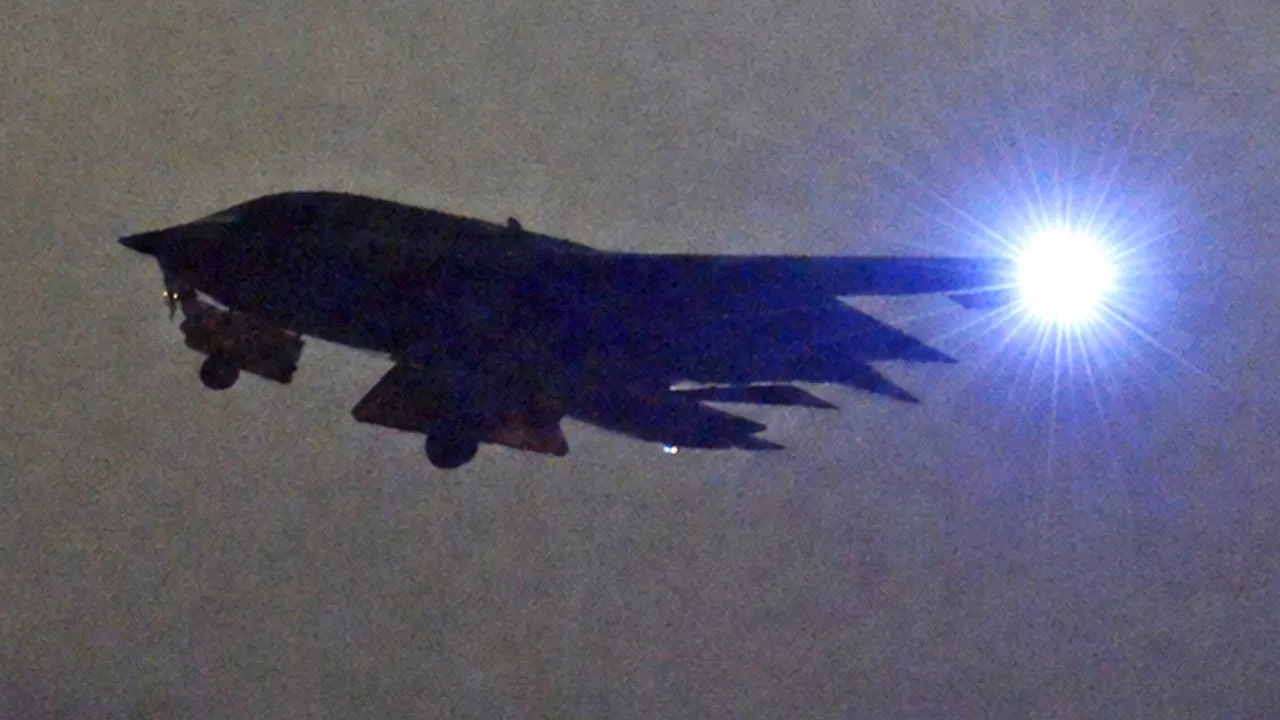
The B-2 Spirit takes off from Missouri, crosses an ocean, drops 40,000 pounds of ordnance within defended airspace, and returns after 30 hours without ever appearing on a single enemy screen. Something very special about its shape made it all possible. Engineers had tested designs for decades, but the shape simply seemed too difficult to fly. The idea was almost dismissed as impossible until Soviet air defenses became dense enough that no conventional bomber could survive them. America had
79 words, the words spoken in the first 30 seconds at 158 words per minute.
Free, no signup. See how the first 30 seconds hold attention, with rewrites.
Sentence shape
| Measure | This transcript |
|---|---|
| Sentences | 236 |
| Average words per sentence | 17.0 |
| Longest sentence | 38 words |
| Questions asked | 0 |
| Sentences containing a number | 81 |
Most used terms
Filler phrases
9 in total: like 7 · actually 2.
A literal whole-word count of the same phrase list the Prepublish browser extension uses, so a phrase inside another word is not counted and a phrase used in its ordinary sense still is. It is a count and not a judgement.
Run the check on the words above: where attention is likely to drop, with a rewrite for each weak line. The free check shows the scores and the one issue costing the most.
What this transcript is
Every word below is the caption track YouTube publishes for this video, pulled from the video itself and reproduced unchanged. It is not Prepublish's writing, not a summary, and not a re-transcription: it is the video's own published captions. English captions, published by the channel, in the video’s original language. Source: the video on YouTube. A channel that would rather this page did not exist can ask for its removal through the contact page, and it is removed.
The B-2 Spirit takes off from Missouri, crosses an ocean, drops 40,000 pounds of ordnance within defended airspace, and returns after 30 hours without ever appearing on a single enemy screen. Something very special about its shape made it all possible. Engineers had tested designs for decades, but the shape simply seemed too difficult to fly. The idea was almost dismissed as impossible until Soviet air defenses became dense enough that no conventional bomber could survive them.
America had no other choice. The shape that kept others grounded is what makes it invisible. What keeps it flying is something no other plane had. During the late 1930s, as large bombers like the B-17 began to define modern air power, aircraft designer Jack Northrop believed the bomber had not yet reached its final form. He believed the future of flight lay in the purest possible shape: the wing itself. In his view, conventional aircraft carried a burden he thought engineers had simply learned to live with.
Fuselages added drag, and tails added weight. Both helped keep an aircraft stable, but neither produced lift. His answer was to create an aircraft built around the wing alone, with as little extra structure as possible. He spent years testing the idea in gliders and experimental aircraft, convinced that a pure wing could fly farther, carry more, and do it more efficiently than any conventional bomber. From a purely aerodynamic standpoint, he was right.
A flying wing could move through the air more efficiently than a conventional bomber. That line of thinking led first to the XB-35 and YB-35, and then to the jet-powered YB-49. When the YB-49 flew, it proved that Northrop’s vision was real. The aircraft could take off and sustain flight, but it also exposed the problem that Northrop’s generation could not solve. Conventional aircraft have a tail or empennage for a reason.
It helps stabilize the machine and provides the pilot with a steady platform to control. The YB-49 had sacrificed this in pursuit of something more advanced. The aircraft drifted in flight, resisting the controls. Pilots had to make constant corrections just to keep it level, and even then, the aircraft never settled into stable flight. The shape had effectively removed the features that made large aircraft manageable.
In the 1940s, no system could fix that. The aircraft could be flown and tested, but it still suffered from serious stability, control, and development problems that military planners did not trust in an operational bomber. Then, one YB-49 broke apart in flight and took its crew with it. The last operational prototype was later destroyed in a high-speed taxi accident and fire. By then, the Air Force had lost confidence and shifted toward more conventional bombers it considered safer and more practical.
The program was canceled, and the surviving airframes were ordered scrapped and cut up, leaving Northrop with nothing. The flying wing did not just fail, it was erased, and for decades the idea looked finished. By the 1970s, the United States was facing a problem its older bombers were no longer built to solve. The B-52 could still carry nuclear weapons across continents, but against the Soviet Union, it was now expected to penetrate some of the most heavily defended airspace on Earth.
The Soviet air defense network was no longer a thin line of warning radars and interceptors. It had grown into a deep, layered system of ground-based radar, long-range surface-to-air missiles, and high-speed fighters working together across the same defensive zone. Flying high had once given bombers room to operate. By this stage of the Cold War, that advantage was gone. Even at high altitude, bombers flew well within reach of advanced Soviet missile systems.
Speed looked like the next answer. Aircraft such as the B-70 had been built on the belief that sheer velocity could outrun danger. Once Soviet missiles and interceptors improved enough to catch fast, high-flying targets, that window closed as well. Flying low offered another way in, using terrain and ground clutter to delay detection, but, by the early 1980s, interceptors such as the MiG-31 added true look-down, shoot-down capability against low-flying aircraft, closing off yet another escape route.
None of these methods solved the main problem. A strategic bomber that could be tracked on its way to the target was no longer a dependable leg of the nuclear deterrent. The United States needed a bomber that was invisible to Soviet defenses. That requirement ruled out the old bomber shape. A large aircraft with a tall tail, exposed engine faces, and weapons hanging outside the airframe would always give radar a strong return.
If the goal was to drive that signature down as far as possible, the aircraft itself had to change. In 1979, the Air Force launched the Advanced Technology Bomber effort to build an aircraft that could get through Soviet defenses without presenting a clear radar target in the first place. In August 1980, the Carter administration publicly acknowledged that the Pentagon was working on stealth aircraft, including a bomber.
The competition narrowed to Northrop/Boeing and Lockheed/Rockwell. Northrop’s answer brought back a tailless flying wing. Lockheed’s competing concept followed a different stealth approach, with a smaller tail and greater reliance on angular shaping. On October 20, 1981, the Air Force chose Northrop, effectively reviving an idea the service had once scrapped and never fully solved. The cost reflected the size of the gamble.
By 1989, the United States had already spent an estimated 23 billion dollars on B-2 research and development alone. And still, the design did not move forward on a straight path, either. In the mid-1980s, the Air Force changed the bomber’s mission profile, shifting it from high-altitude penetration to low-altitude terrain-following flight. That redesign alone delayed the first flight by about two years and added roughly $1 billion more to the budget.
All of which reflected how abnormal this aircraft’s development effort was. It was a program trying to push forward stealth materials, manufacturing methods, flight-control software, and bomber design simultaneously. The old problem that sealed YB-49’s fate had not gone away. The flying wing was still unstable. What changed was that, this time, the instability was not dependent on the pilot; it was handled by a computer.
The B-2 is a 172-foot flying wing with a maximum takeoff weight of more than 336,000 pounds, yet it has no vertical tail. To reduce its radar signature, the aircraft gives up the natural directional stability that would normally help keep a bomber this large pointed straight. So the B-2 replaces that lost stability with a quadruplex digital fly-by-wire system built around four flight-control computers. Those computers take in a constant stream of data on airspeed, angle of attack, attitude, and motion, then issue corrections faster than the crew could ever make on their own.
In this configuration, the pilots do not move the control surfaces directly. Instead, their inputs pass through the computers, which decide how the aircraft can respond without slipping toward instability. A typical sortie can run 30 to 40 hours, sometimes longer with aerial refueling. The aircraft leaves Missouri, crosses open water, enters defended airspace, releases its weapons, and returns without landing. Keeping a bomber like that stable for the whole mission is a problem of its own.
Weather is one of the first things that tests the aircraft. Turbulence does not hit a wing this large evenly. It catches one side first, then moves across the rest of the airframe, and the bomber starts to yaw out of line. The flight-control system answers at once, moving the trailing-edge control surfaces to force the aircraft back into alignment. The most important of those surfaces are the elevons and the split drag rudders at the wingtips, often called decelerons.
In a normal bomber, a vertical tail would help keep the aircraft aligned. On the B-2, the decelerons do that job by creating drag on one side or the other, yawing the aircraft back into line. Even in straight and level flight, they can keep pulsing open and shut in small increments, catching drift before it grows. The corrections have to come early, while the drift is still small enough to contain. Even in calm air, the aircraft changes as the mission goes on.
The B-2 carries roughly 167,000 pounds of fuel, most of it stored inside the wing itself, and in long-range cruise it can burn fuel at roughly 10,000 pounds per hour or more. As it does, weight shifts across the aircraft, and the center of gravity moves with it. The aircraft that left Missouri is no longer balanced the same way hours later over another continent. Once again, the system must continuously track those changes and keep the bomber within a narrow flight envelope.
Aerial refueling narrows that margin even further. After hours in the air, the B-2 has to close in behind the tanker and hold a precise position while both aircraft continue moving through the same patch of unsettled sky. At that distance, small corrections are no longer routine. The same system that has been correcting turbulence and compensating for fuel burn now has to hold the bomber steady in close formation long enough to refuel and keep the mission alive.
Even the release of weapons can create another disturbance. The B-2’s bays can hold up to 40,000 pounds of weapons. That means that, when the bay doors open, they change the airflow. After surviving that, the moment the weapons leave the aircraft, they change the bomber’s weight and drag at the same time. The flight-control system must detect the change as it occurs and quickly adjust the elevons and decelerons to keep the aircraft stable through the release.
The reason for all of that effort lay in what the shape could do to radar. Radar works by sending out energy and measuring what reflects straight back. Strong, direct reflections create a clear track that can be followed and targeted. Thanks to its odd shape, with no exposed angles and no large surfaces standing upright, the B-2 reduces and redirects the amount of radar energy that returns directly to the transmitter.
Instead of producing a strong, clean reflection, it scatters much of that energy away from the radar, while specialized materials further weaken what remains. For comparison with other contemporary bombers, a B-52 gives off a large, obvious return. A B-1B cuts that down, but it still looks like an aircraft. The B-2’s radar cross-section has often been described in public sources as closer to that of a large bird than a bomber.
To an air-defense operator, it may not look like a penetrating strike aircraft at all. It may look like clutter, noise, or a weak contact not worth trusting. In a real engagement, that uncertainty is enough to slow the response, break the track, or delay the shot. The shape is only the first step. The airframe is largely built from carbon-graphite composite materials, and its outer surface is covered with specialized low-observable coatings.
The exact makeup of those materials remains closely guarded, but their purpose is well-publicized. These coatings make the aircraft difficult to classify, track, and hold long enough for a missile battery to do its work. The engines are hidden for the same reason. Four General Electric F118 turbofans sit deep inside the wing, with the intakes shielded so radar cannot look straight into the compressor faces. The exhaust is flattened and spread across the upper rear surface of the aircraft, where it mixes with cooler outside air before exiting the aircraft.
That lowers the aircraft’s infrared signature, making it harder, though not impossible, for heat-seeking missiles and infrared sensors to detect and track it. The B-2 carries its payload in two internal bomb bays, avoiding the external pylons and exposed stores that would ruin the clean shape. With the bay doors closed, the aircraft presents the smoothest possible form to both radar and the air around it. Near the end of his life, Jack Northrop was shown that the B-2 drew inspiration from his ideas.
The old flying wing had returned as a strategic bomber built for the most dangerous mission the Air Force could imagine. He could no longer speak, but according to those present, he wrote: [QUOTE] “Now I know why God has kept me alive for 25 years.” The old flying wing had finally returned. Congress still was not convinced. In 1989 and 1990, lawmakers cut 800 million dollars from its development budget and seriously considered ending the program outright.
Opposition came from both parties. Figures like Ron Dellums and John Kasich pushed to limit production, arguing the aircraft was becoming too expensive and too uncertain to justify. At its peak, the program was projected to cost 7 to 8 billion dollars per year, a level Congress warned would not be sustainable. At the same time, analysts questioned whether the bomber could reliably evade modern radar. By the early 1990s, even senior officials were backing away.
In 1992, President George H. W. Bush called for cancellation. Military leadership later opposed buying more. Even so, the bomber stayed alive, though in a much smaller form than the Air Force had imagined. The original plan had called for 132 aircraft. Due to issues in Congress and the end of the Cold War, the Air Force did not get the large stealth bomber force it had once imagined. It only got 21 aircraft. Once these hurdles were cleared, the renewed flying wing achieved initial operational capability in April 1997.
Less than two years later, it was sent into a real air war over Yugoslavia. In March 1999, NATO opened Operation Allied Force over Yugoslavia to force the government of Slobodan Milošević to halt its military campaign and ethnic cleansing operations against Kosovo Albanians. On the first night, March 24, two B-2s lifted off from Whiteman Air Force Base in Missouri, each carrying 16 satellite-guided munitions. They flew a 31-hour nonstop mission, crossed the Atlantic, entered Serbian airspace, struck their targets, and turned back without landing.
Across the campaign, the B-2 flew only about 50 sorties out of roughly 34,000 NATO sorties, yet delivered 11 percent of the total bomb load. It was also the first aircraft to use GPS-guided JDAMs in combat, introducing a strike method that could hit fixed targets with far more precision than the mass bombing methods that had drawn heavy criticism in earlier wars. Public Air Force and defense reporting credits the B-2 force with dropping more than 650 JDAMs during Allied Force, placing 90 percent of its bombs within the prescribed 40-foot accuracy window.
Other widely cited accounts state that B-2s destroyed roughly 33 percent of selected Serbian targets in the first eight weeks while flying only 49 sorties. That did not mean every B-2 mission in Kosovo was clean. On May 7, 1999, a B-2 dropped five JDAMs on the Chinese Embassy in Belgrade, officially because of a targeting error. Three people perished, and twenty were injured, showing that precision weapons were only as reliable as the targeting behind them.
The failure was not in the bomb’s guidance or in some dramatic cockpit mistake. It was in the targeting chain behind the mission. The B-2 delivered exactly where it had been told to. The problem was that it had been told wrong. After Kosovo, the B-2 was no longer an expensive promise. It was an operational weapon. The wars that followed would show what operating that weapon actually demanded. In October 2001, when the United States opened air operations over Afghanistan, B-2s launched again from Whiteman Air Force Base.
Thanks to aerial refueling, they flew some of the longest missions the aircraft had flown up to that point, striking targets in Afghanistan on sorties that stretched beyond 40 hours. Inside the cockpit, exhaustion became part of the mission. There were only two men on board, and they had to divide the work carefully. At every point, there was one man flying, one resting, then switching back again inside a space designed for function, not comfort.
There was just enough room for one crew member to lie down behind the seats while the other stayed at the controls, along with a chemical toilet and a small microwave to sustain the sortie. That helped, but it did not remove the strain. The aircraft demanded constant attention, so rest came in short stretches, broken up by refuelings, navigation checks, and weapons activity. The same model was carried into Iraq in 2003, but on a larger scale.
In that year alone, the aircraft flew 27 sorties from Whiteman and 22 from a forward location, dropping more than 1.5 million pounds of munitions, including 583 JDAMs. The longest combat mission reached 44.3 hours. And yet, even then, the aircraft was not fully mature. The Air Force did not declare the B-2 at full operational capability until December 2003, after it had proved itself in three theaters. Pentagon testing that year still found the aircraft’s serviceability inadequate.
Combat had proved the concept, but sustaining it was another matter. After landing, the aircraft needed to be moved into a climate-controlled shelter or hangar, given that the B-2’s stealth was tied to the condition of its skin. A crease, a damaged panel, a rough repair, or a lifted section of coating could change the plane’s radar signature. That made post-flight inspection unusually demanding. Humidity, water, and temperature swings could degrade the surface, so maintainers had to check seams, access panels, edges, and repairs across the full wingspan as soon as the aircraft returned.
If they found a lifted edge, a worn patch of coating, or a repair that had not blended cleanly, the aircraft had to be restored carefully, section by section, before it was truly ready again. In 1997, each hour of B-2 flight required about 119 maintenance hours, compared with about 53 for the B-52 and 60 for the B-1B. The workload was so heavy that one later Air Force improvement program treated a 50 percent reduction in maintenance man-hours per flight hour as a major achievement.
Forward deployment made the problem worse. In places with tropical humidity, there was extra stress on the aircraft and on the maintenance system that kept its stealth intact. As if that wasn’t enough, to support the B-2 overseas, the Air Force had to bring in deployable climate-controlled shelters, each costing about 2.5 million dollars and requiring 29 C-130 sorties to move. Even permanent forward bases had to be built around the aircraft’s maintenance needs.
At RAF Fairford, that meant two 50,000-square-foot climate-controlled hangars built specifically to handle low-observable work. Crews also had to adjust procedures in the field just to keep the bomber mission-capable. That helps explain why so many B-2 missions began and ended at Whiteman Air Force Base, where the aircraft could return to a controlled maintenance environment. One example of that fragility happened in Guam on February 23, 2008.
The aircraft was Spirit of Kansas, a B-2A deployed to Andersen Air Force Base as part of the Air Force’s bomber presence in the Pacific. It was taking off to go home when the aircraft’s own dependence on data worked against it. During air-data calibration, moisture in the Port Transducer Units distorted the data sent to the flight-control computers. So when the bomber accelerated down the runway that morning, the system was already working from false data.
As the aircraft lifted off, the computers calculated a negative angle of attack and reacted as if the nose needed to come up sharply. The result was an uncommanded 30-degree nose-high pitch-up almost immediately after takeoff. At that height, there was no room to save it. The bomber had actually rotated at about 12 knots slower than indicated. Now it was nose-high, losing speed, and being pushed into a stall just above the runway.
The crew recognized the loss of control and ejected. Seconds later, the left wingtip struck the ground, the aircraft crashed, tumbled, and burned. Both men survived, but the bomber did not. The loss was estimated at about 1.4 billion dollars for that aircraft alone, making it the most expensive aircraft crash in history at the time. It was also the first operational loss of a B-2. The bomber’s vulnerability was not limited to flight-control logic.
In December 2022, another B-2 from the 509th Bomb Wing was approaching Whiteman Air Force Base when the line suffered its next major accident. The aircraft had launched earlier that morning as an airborne spare for a mission to Joint Base Pearl Harbor-Hickam, Hawaii. Nothing in the sortie had pointed to disaster. Then, on approach, as the crew lowered the landing gear, they received a primary hydraulic system caution, followed by a backup hydraulic system caution, clear signs of a leak.
The left main gear and the nose gear extended completely. The right main gear did not. The crew declared an in-flight emergency and used the emergency extension procedure. The cockpit indicators then showed all three gears down and locked, meaning the aircraft could now reach the runway. The B-2 touched down and, almost at once, the left main landing gear gave way. The bomber dropped hard onto its left side. The wing struck the runway and ground along the pavement for several thousand feet while the crew fought to keep the aircraft together.
As the wing scraped along the pavement, it ripped open the left fuel surge tank. Fuel spilled out and ignited, feeding a fire that spread into the left outboard fuel tank. The aircraft finally stopped when the damaged wing hit the grass beside the runway, while firefighters moved in to fight a fire still burning inside the wing. Then the left surge tank and the left outboard fuel tank exploded, tearing apart the wing.
Firefighters fought the blaze for roughly six hours before it was finally under control. There were no injuries, but the damage estimate exceeded 300 million dollars to the landing gear and outer left wing, with another 27,500 dollars in damage to the airfield. Once again, the fleet was grounded after the mishap. The damaged aircraft never truly returned to service, and by 2024, the Air Force had decided to retire it rather than restore it, reducing the fleet to just 19 aircraft.
The official investigation traced the mishap to a failed truck position sequence valve hydraulic CryoFit coupling. Landing-gear design vulnerabilities and delays in fully extinguishing the fire, made the damage worse. By the early 2000s, total program spending had approached 50 billion dollars, spread across a fleet that never grew beyond 21 aircraft. Estimates put operating costs well above 100,000 dollars per flight hour, much of it tied to the labor required to preserve the bomber’s low-observable surfaces and sustain its complex systems.
Even so, the aircraft remained in service because nothing else matched its combination of range, payload, and ability to penetrate defended airspace. Recent official reporting shows B-2s taking part in Bomber Task Force deployments and exercises, including missions from Australia and Iceland in 2024, while the Air Force continues modernizing the fleet for nuclear and conventional roles. The United States completed the B61-12 program in December 2024, fielding a new precision-guided nuclear gravity bomb.
Its follow-on, the B61-13, is being developed for harder and larger military targets, including deeply buried facilities. In practical terms, that keeps the B-2 tied to some of the hardest missions in the arsenal. But the handoff has begun. The B-21 Raider, the B-2’s successor, is already in flight test. The Air Force plans to buy at least 100, with a target cost of about 692 million dollars per aircraft, far below the B-2’s program cost per airframe.
Northrop also says it was designed to be easier and less costly to maintain. In the end, the B-2 did exactly what earlier generations could not: it made the flying wing operational. Jack Northrop’s vision had finally been vindicated. The flying wing did return, but only after technology became powerful enough to control it and a support system large enough to keep it stealthy.
The words are the caption track's own and nothing is reworded or re-transcribed. Paragraph breaks are placed between sentences so the text reads as prose.
Free tools for your own script: paste a draft and see where it stands before you record it.
Paste your draft and see where viewers are likely to drop off, with a rewrite for each weak line.
Paste the first 30 seconds of your own draft for a hook score and rewrites.
Check your draft against YouTube's advertiser-friendly guidelines before you record it.
Read this channel's public videos and transcripts, and download a writing brief for it.