Getting the transcript
Reading the captions from YouTube. A video nobody has opened here before takes 10 to 30 seconds; this page fills in on its own.
Getting the transcript
Reading the captions from YouTube. A video nobody has opened here before takes 10 to 30 seconds; this page fills in on its own.
Lume · @lume-channel
Where viewers went back to watch this video again, from YouTube's public Most replayed graph, lined up with what was said at that moment.
Most replayed moment #1
8:175.9x the video's typical replay level
They were green like cannabis, Marshall like me. They liked risk. And above all, they spent their whole lives in the sewers. In a few weeks, these men are going to spend months in a storm drain. So, how
Said at 8:10
Most replayed moment #2
15:035.2x the video's typical replay level
The tunnel is connected. And that is when the plan meets the [music] one thing they got wrong. They had planned for a wall of individual boxes. What they find is eight mobile steel safes, 50 boxes each,
Said at 14:58
Most replayed moment #3
4:165.0x the video's typical replay level
bank on earth is built to keep people like him out. Getting in was never going to be the hard part. So what is? Here's the insight the whole case turns on. A bank is protected in two completely different ways depending on
Said at 4:09
The graph counts replays. It does not show where viewers stopped watching.
Words
4,176
Runtime
25:04
Speaking pace
167wpm
Reading time
17min
167 words per minute, between the 160 25th percentile and the 181 median of 349 measured videos. That distribution comes from the 349-video hook study.
Opening (first 30 seconds)
The 13th of January, 2006. Akaso on the northern edge of Buenocides, one of the richest suburbs in Argentina. 7 in the evening, a police officer walks toward the last locked door inside a branch of Bunkco Rio. Behind him, 300 officers, snipers on the rooftops, 6 hours of live television, a block sealed since lunchtime. For those 6 hours, a negotiator has been talking a man in a gray suit down from the ledge, releasing hostages in ones and twos, ordering pizza, asking
84 words, the words spoken in the first 30 seconds at 167 words per minute.
Free, no signup. See how the first 30 seconds hold attention, with rewrites.
Sentence shape
| Measure | This transcript |
|---|---|
| Sentences | 346 |
| Average words per sentence | 12.1 |
| Longest sentence | 45 words |
| Questions asked | 11 |
| Sentences containing a number | 58 |
Most used terms
Filler phrases
8 in total: like 5 · actually 2 · you know 1.
A literal whole-word count of the same phrase list the Prepublish browser extension uses, so a phrase inside another word is not counted and a phrase used in its ordinary sense still is. It is a count and not a judgement.
Free, no account. See where attention is likely to drop, with a rewrite for each weak line. The free check shows the scores and the one issue costing the most. Or run it on the words above first.
Free · No login · See a sample audit first if you prefer.
What this transcript is
Every word below is the caption track YouTube publishes for this video, pulled from the video itself and reproduced unchanged. It is not Prepublish's writing, not a summary, and not a re-transcription: it is the video's own published captions. English captions, generated automatically by YouTube, in the video’s original language. Source: the video on YouTube. A channel that would rather this page did not exist can ask for its removal through the contact page, and it is removed.
The 13th of January, 2006. Akaso on the northern edge of Buenocides, one of the richest suburbs in Argentina. 7 in the evening, a police officer walks toward the last locked door inside a branch of Bunkco Rio. Behind him, 300 officers, snipers on the rooftops, 6 hours of live television, a block sealed since lunchtime. For those 6 hours, a negotiator has been talking a man in a gray suit down from the ledge, releasing hostages in ones and twos, ordering pizza, asking for patience.
The officer opens the door. >> I was the one who got to open the last door, the garage one. I opened it and there was nobody there. >> No man in a gray suit, no gang, no hostages, nothing. At 8, behind a filing cabinet on the floor below, someone finds a hole in the wall, 50 cm by 30. A tunnel behind it, dropping into the dark, running toward the storm drains under the street. Inside the empty vault, 143 safe deposit boxes stand open.
Five toy guns [music] and three grenades lie on the floor. And taped to the wall above where the hostages had been sitting, a note. White card, meet hand. In a neighborhood of rich people without weapons or hard feelings, it's only money, not love. The men had left hours ago on rubber boats, rowing, which means the negotiators spent the back half of that siege bargaining with an empty building. 300 officers guarded a bank that no one was in.
And that is the small version of what happened here. Because 20 years later, the men who did this are still winning. Not the bank, the story. So, how do you rob a bank by talking to police who are guarding no one and then get the whole country to call you a genius? Santa Cedro Buenocides, September 2004. A 38-year-old man is lying on a couch in his psychoanalyst's office, and he says five words out [music] loud for the first time.
I'm going to rob a bank. >> His name is Fernando Aruo, and almost nothing about him fits the sentence. Born and raised in Santa Cro, the same district as the bank he [music] is going to hit. Upper middle-class family, not one relative, not one friend in his circle, has a criminal record. He trained as an electronics technician, studied engineering and physics, teaches martial arts, paints in a technique he invented and named [music] reverse time.
He runs a studio named after a madness song, One Step Beyond, where he blacks out the windows and [music] controls the temperature until there is no day, no night, no seasons, and grows cannabis under the lights. He keeps a notebook of lines from Sunsu. He is not a safe cracker. He is closer to a screenwriter. And he has one rule he has kept since he was 18. Replica weapons only, never a real one. If somebody has to run the risk of death, it has to be me. >> So why does a comfortable man from a good family decide to rob a bank by his own account, not for the money? >> I love adrenaline.
Everything that gives me adrenaline, I do. That was at the beginning. Later, I admit ambition for the money invaded me. >> He even has a private code to license it. Morality, he says, is the conduct society judges, and he has always ignored it. Ethics is the conduct your own conscience judges, and that one is binding because the conscience does not forgive. So, he rules out the victims he thinks can't survive the loss and picks a clientele he believes can, a rich bank in the district where he grew up.
Now, the problem he sits down to solve. Every bank on earth is built to keep people like him out. Getting in was never going to be the hard part. So what is? Here's the insight the whole case turns on. A bank is protected in two completely different ways depending on whether it is open or closed. Closed at [music] night, motion sensors, seismic detectors, the vault sealed. Open in business hours, panic buttons, a guard, [music] an alarm to the police.
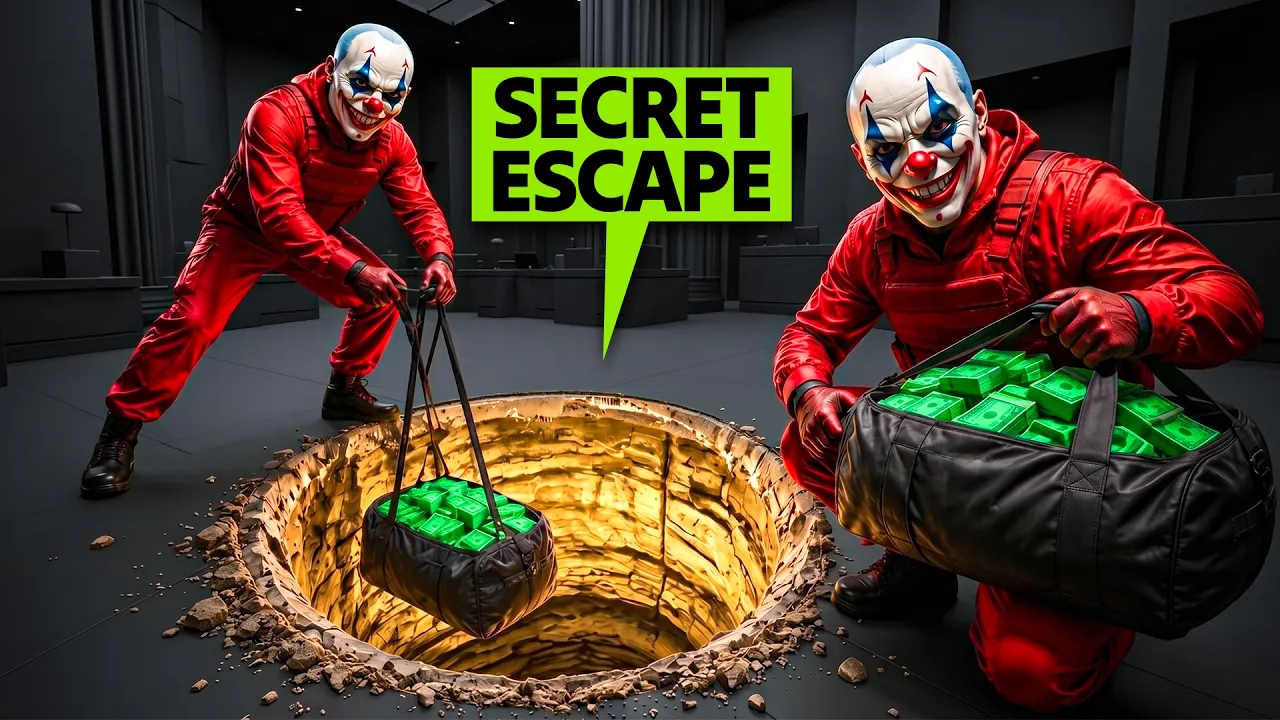
But it is never protected for both at once. [music] During the day, the vault door stands open and the night sensors are off. The building is at its most valuable and its least defended at exactly the same moment, the middle of a working afternoon. So, a normal robber breaks in at [music] night when the money is locked away. Aruo does the opposite. Build a tunnel, but not to get in, to get out. He is not going to dig into the vault.
He is going to walk in the front door in daylight, take the building, empty the vault at his leisure, and disappear through a tunnel while the police are still setting up outside, [music] which turns the entire robbery into a timing problem. How long did the police give you before they stop negotiating and come through the doors shooting? Aruo does the arithmetic. 30 minutes from the alarm to the arrival of the group Helon, the [music] elite tactical unit.
And then if the man inside stays calm, releases hostages, hurts no one, up to four hours of negotiation before anyone forces the issue. 4 hours. That is the [music] tunnel's construction schedule measured in police patience. And this is where a national trauma becomes an engineering component. >> 7 years earlier in a town called Ramalo, a hostage siege ended in a massacre. >> When the robbers ran for the car, hostages held in front of them as shields.
The police opened fire to kill. Two of the hostages died on live television. >> So did Aruo. It would be unforgivable to repeat the Ramalo massacre. He isn't being sentimental. He is reading the police the way an engineer reads a load limit. If the man in the gray suit is gentle, the memory of Ramallo forces the police to keep waiting. Their own decency becomes the clock that lets him finish. He is not planning to beat the hostage protocol.
He is planning [music] to use it. But you cannot dig a tunnel and hold a bank and perform a 6-hour hostage drama alone. So who does he need? Because that is the right word for it. Not a [music] crew, a cast. A Rajo has about $3,000 and a pickup truck. He sells the truck to fund the project. And through 2005, he assembles the people. Sebastian Garcia [music] Bolster, nicknamed the Martian. Good with machines, no criminal record.
He builds the tunnel and [music] designs the boats. A man they only ever call the doc. A doctor of sociology who took his degree in prison. Calm, theoretical, the one who reads the fine print. The doc brings in Betto deatoré, 50, a veteran armed robber with gout, the oldest in the group. He is the one this will cost the most. Hold on to him. El Pisa, a former legislative aid turned driver who steals the vehicles and waits underground at the wheel.
A seventh man, a Uruguayan who will never be caught and who the world will one day know only as the ghost and the one who becomes the face of the whole thing. Luis Mario Vitete Sean. UN, a jeweler and a performer. To prepare for the role of negotiator, the Tete takes acting classes. In one, he plays Juliet, a grown man in a wig rehearsing Shakespeare so that months later he can improvise for 6 hours in front of a live television audience.
When Ajo recruits them, he names a figure, $50 million, and he gives the operation a code [music] name from the Teenage Mutant Ninja Turtles, the Donatello Project. They were green like cannabis, Marshall like me. They liked risk. And above all, they spent their whole lives in the sewers. In a few weeks, these men are going to spend months in a storm drain. So, how do five men dig a tunnel under a [music] rich neighborhood without anyone noticing the hole?
The answer is that for the most part, they don't dig it. It is already there. Under the northern suburbs runs a storm drain system. Huge concrete conduits carrying rainwater to the river. Arjo finds them by talking to a municipal drainage worker, then walks them on foot to the outfall at a yacht club. He needs the plans, so he walks into the palace of public sanitation and asks for them as Professor Salvatore, chair of urbanism at the University of Buenocidis.
They hand him the drainage maps of the entire zone. And here the story does something you couldn't put in a novel. Garcia Bolster, the man who will now tunnel into that conduit, had played beside it as a 10-year-old boy while it was being built. He is breaking into his own childhood. Aho scouts the bank under another false name and confirms it. 400 boxes, all leased, down in the basement. Then they dig. A chamber 2 m square, a shaft climbing at 69° toward the bank.
The ground is brutally hard. They buy an electronatic hammer. And down in the conduit, there is a problem no one anticipated. It is a Faraday cage. No radio, no mobile signal, cut off completely. Their only warning of danger is the weather forecast because a storm could fill the drain and drown them. They work down there for months. To be sure the shaft is coming up in the right place, they weld a drill bit to a steel rod and bore straight up through the pavement.
While on the surface directly above, Betto de Lator pretends his motorcycle has broken down to hold the spot. The drill breaks through, spinning, and then the rod jams and can't be pulled back out. There is now a fresh hole and a broken paving tile in a public street in daylight. So, one of them borrows a German Shepherd puppy and walks it back and forth over the spot, cover for a man crouching to repair the tile with quick set cement.
That is the level of it, a puppy deployed as a countermeasure. By November, they have a shaft, a chamber, and the storm drain waiting at the bottom. But the tunnel is only half the trick. The other half happens upstairs in front of the cameras. So, what exactly are the police supposed to see? On the 16th of December, 2005, the gang holds its decisive planning meeting. And what they write is not a robbery. [music] It is a screenplay, a running order of 12 numbered steps, stage directions, code words.
Above it, in their own book, the heist must have one essential artifice to make the police believe that time is [music] on their side. We are nothing more than a cast performing a script. They pick the day and hour with the same care. Friday because the two days that follow are non- workinging for the courts, slowing everything down. Half 12 because at that hour [music] the sun reflects off the branch's windows straight into the eyes of any sniper trying to see in.
They manufacture their props. Five resin grenades with little aluminium spoons that actually move. Replica pistols. Police jargon taught to [music] Vitet so he'll sound like a corrupt ex- cop. Then the single most important thing they steal and they steal it before the robbery. The hostage negotiation protocol itself, the actual doctrine the groupo Halone is trained on obtained through a judge Arjo happens to know. The doc reads it and understands the [music] whole case in one breath.
Them to gain time. That's exactly what we need. On that point, both the elite unit and we are in agreement. Both sides of the coming siege [music] want the same thing. Time. The protocol that is supposed to defeat the robbers has been reverse engineered into the robbers getaway plan. And one more design decision quietly made months in advance that will outlast everything else. Arjo defines the audience, not the police, the public.
People have to identify with us, the working man, the office worker who gets pushed around by his boss. The old man who gets treated like dirt at the banks. So that once the robbery gets out, these poor people say the thieves are geniuses. I call this the sensation of popular clemore. Sit with that. The whole lovable geniuses reputation these men still enjoy 20 years on is not something that happened to them. It is a line item in the plan, written down, named, and aimed at a specific audience before a single door was opened.
Now it is the second week of January. The tunnel is [music] finished. The script is written. On Friday morning, Ajo sits down and writes the note. Friday the 13th of January 2006. 12:20. Betto deator goes in first in a doctor's white coat and a wig. >> Five men inside, two outside, 23 people in the bank. Almost immediately, it nearly falls apart. A guard named Walter Serrano sees the weapons on the monitors, hits the alarm, and reports it by radio.
The police are coming. The clock Arjo calculated a year ago has started. So, he executes the first piece of theater. It's called Cuckoo. Arjo walks out the front door holding a hostage as a human shield toward the avenue. is challenged by [music] police, turns down the side street, is challenged again, and retreats back inside and locks the door. The whole point is to plant a false memory in the first officer on the scene.
If they think we tried to escape through the door, they'll never think of a tunnel. >> 12:50 Chronica TV is broadcasting live. The block is filling with police. And now a real problem, and it is a gun. Serrano has locked himself in the security bunker and won't come out. It is Vitet who talks him out. And here is the line the whole country will fall in love with. >> I give you my word as a thief. >> Serrano comes out.
Vet takes his service pistol and hands it back to him with the magazine removed. He keeps the officer's mobile phone and starts using it to negotiate. Remember that pistol? It is real. It is loaded. And in a few years, it is going to matter more than [music] anyone in that bank realizes. They cut the internal cameras, [music] sealed the car park with the vehicle. Only now was the bank truly theirs. Downstairs, [music] three hammer blows come through the wall.
Dust. Then an eye in the hole. The Martian's eye dripping with sweat. The tunnel is connected. And that is when the plan meets the [music] one thing they got wrong. They had planned for a wall of individual boxes. What they find is eight mobile steel safes, 50 boxes each, standing free. It is slower and the schedule is the whole game. So they work against the locks, a brand they'd identified in advance. A hydraulic tool takes about 2 seconds a box, one after another for hours.
While upstairs, the man in the gray suit keeps 300 police talking. And this is where the two versions of this story start to pull apart. [music] It is one hostage's birthday. A woman named Estella. So Betto and the doc sing to her. They find champagne among the bank's corporate gifts and [music] drink it without letting their lips touch the bottle, so they leave no DNA. The gentleman thieves legend is [music] being manufactured in real time and it is genuinely partly true.
Now set [music] that beside the other thing happening in the same building at the same time. The hostages have been locked in the safe deposit room. The air is running out. [music] They are searching for paper bags to breathe into. >> We were running out of air. >> And on the wall above them is taped the [music] note. And beside them on the floor are three grenades. they have every reason to believe are live. The most quoted sentence in Argentine criminal history was written above the heads of people locked in a sealed room gasping next to what they thought were live explosives.
Both of those things are true. That is the whole difficulty of this case. They finish the anti-forensics with a chemist's discipline. Chlorine against their own [music] sweat. Human hair bought from two hairdressers scattered through the tunnel to seed the scene with strangers DNA. Half 4, they order the pizza. Six of a kind called fugateta because the first syllable fuga [music] is the Spanish word for escape. It is the withdrawal signal. 300 officers and they take the order.
Now they have to get out under all of it. They sweep the cleaning room, draw the cabinet back over the hole with a rope, and hang a fake bomb in the mouth of the tunnel, an empty tube, wires, a clock to force the bomb squad to move slowly when they find it. Then they go down. Arajo and Fet listen on the police radio as snipers outside report movement. >> I've got one, I've got the other. The gang is already 18 m underground and Vet is mocking the marksmen because there is no [music] one for them to shoot.
The outboard motor fails. So they row [music] using ores that Arajo had insisted over the others objections on buying a month before. The single most mundane decision in the whole operation and it is the thing that gets them out. They pass [music] directly beneath the first police cordon 18 m down. Through a grate, they can see the [music] feet of the officers surrounding the bank. They come up through a second conduit and walk about 40 minutes underground.
Above them, El Pisa waits in [music] a battered Volkswagen combi parked over a manhole, a hole cut through the van's own floor [music] and lined up with the cover below. He lifts the cover up through the floor and five filthy men caked in mud climb straight up out of [music] the street and into the vehicle from underneath. They pull the loot up [music] after them and drive off into a Friday evening in Sanicedro. 14 blocks away, [music] the police are just arriving with the pizzas because the police don't know they're gone.
Around 6, the negotiator reports he has lost contact. And then two hours [music] pass in which 300 armed officers hold a perimeter around a building with nobody in it. At 7, the tactical team goes in. I thought they'd find them all there. I assume they'd [music] receive us with gunfire, but I opened it and there was nobody there. At 8, they find the hole behind the furniture, the opened boxes, three grenades, five replica weapons, and the note.
So, they got clean away with the contents of 143 boxes. The court would later say 145, the newspapers 143, and no two counts ever quite agreed. And that disagreement is the first crack in a question no one can answer. How much did they actually take? If nobody could agree on how many boxes were opened, nobody had a chance with what was inside them. Aruo had promised the crew 50 million. The court settled on 19. The low estimate is around 7.
And that one is worth taking apart because it isn't a measure of what was in the vault at all. It's insurance arithmetic. $50,000 a box time 145. It measures what the bank was willing to admit it might owe because a bank [music] does not record what you put in your safe deposit box. That is the entire point of one. The only people who knew were the people who were robbed and they had reasons to lie in [music] both directions.
Some inflated their claims, some quietly deflated them. This was 2006, 5 years after Argentina's banking system froze and swallowed ordinary people's savings in the crisis they call the coralito. A box in Akasuso was where you kept the money you had pulled out of the banks and never mentioned to the tax office. To claim it now was to explain it now. Some preferred to lose it. So they had robbed the one target on Earth whose value cannot be [music] established.
A vault full of money its owners had every reason never to declare. The uncertainty isn't a gap in the reporting. It's the crime. [music] That same evening at Arujo studio, they poured it out onto the floor and one of them slipped out for beer and cookies because after a year of digging, this was the party. Almost none of it was ever found. Delator for years when anyone asked where his share went, >> I spent it on slow horses and fast women. >> The tunnel was flawless.
The money vanished. So, how did anyone ever get caught? Not by police work. None of it came from the investigation. and the investigation was a disaster. In the first days, they announced three theories. That corrupt ex- cops were behind it, that it was a political plot, and that there had never been a tunnel at all. All three were wrong. The first 1600 pages of the case file are warrants against 35 people who had nothing to do with it.
The lead investigator, whose career this case ended, could only manage a compliment. >> They're clever kids. >> What caught them was a woman in her own kitchen. Remember Betto Deator, the oldest of [music] them, the veteran with gout, the one this was going to cost the most. Every man in that gang had a plan for the money. [music] Betto took his home. His partner, Alicia Dulio, lived with it. And a month after the robbery, she walked into a police station and gave them everything. >> Why she did it, nobody has ever agreed.
She says he beat her. He says she wanted a bigger cut and he refused. what we agreed. >> The investigators believed it [music] was jealousy over another woman. Three versions and no way to choose between them, except that [music] all three come down to the same thing. The safest place in the plan was Betto's house, and the plan never accounted for the person living in it. They arrested him at home and pulled out $938,000 and 8 kilos of jewelry.
Then they sat her down with photographs, and she went through them, naming the men one by one. But a furious partner naming names is not a case. Anyone can say anything. So she gave them something they could go and check. She told them that the day before the robbery, Betto had taken a real gun and fired it into the floor of their flat as a joke. The police went and looked. The hole was there. And from that moment, everything else she said was worth listening to.
Arujo, they never really caught at all. He was already in the mountains near the Chilean border, [music] exactly as he had planned it. 2 months later, a border patrol stopped him on a routine check. No manhunt, no tip, nobody looking for him, [music] and he simply told them, >> "I'm one of the men who robbed Banko Rio." >> So, they're caught. And the strangest [music] part of this story is a detail everybody has known since day one, and nobody has ever thought about.
Everyone remembers the same thing about this robbery. plastic guns. Nobody hurt. And it's half true. The guns left on the vault floor were fakes. And years later, an appeal cut every sentence because nobody could prove they could fire. But the court also found a loaded Browning shotgun inside. [music] And a hostage named Gustavo Praau testified about what was held to his head. >> I felt the cold of the metal against my temple. >> Even the note was borrowed.
Nice, France, 1976. Arujo knew his genre. On the phone that afternoon, Vet promised they would never use anyone as a shield. And the first move of the whole robbery was walking a hostage out the front door as one. Arujo served 2 [music] years and walked free. So there were two sieges in Aasuso. [music] The first lasted 6 hours around an empty building. The second has lasted 20 years, and they are still winning it. Every time this gets retold as five charming men with plastic guns, which is harder to accept, that they negotiated with a bank they'd already left, or that the story, you know, is the one they wrote for you before they ever opened the door?
The words are the caption track's own and nothing is reworded or re-transcribed. Paragraph breaks are placed between sentences so the text reads as prose.
Free tools for your own script: paste a draft and see where it stands before you record it.
Paste your draft and see where viewers are likely to drop off, with a rewrite for each weak line.
Paste the first 30 seconds of your own draft for a hook score and rewrites.
Check your draft against YouTube's advertiser-friendly guidelines before you record it.
Read this channel's public videos and transcripts, and download a writing brief for it.