Getting the transcript
Reading the captions from YouTube. A video nobody has opened here before takes 10 to 30 seconds; this page fills in on its own.
Getting the transcript
Reading the captions from YouTube. A video nobody has opened here before takes 10 to 30 seconds; this page fills in on its own.
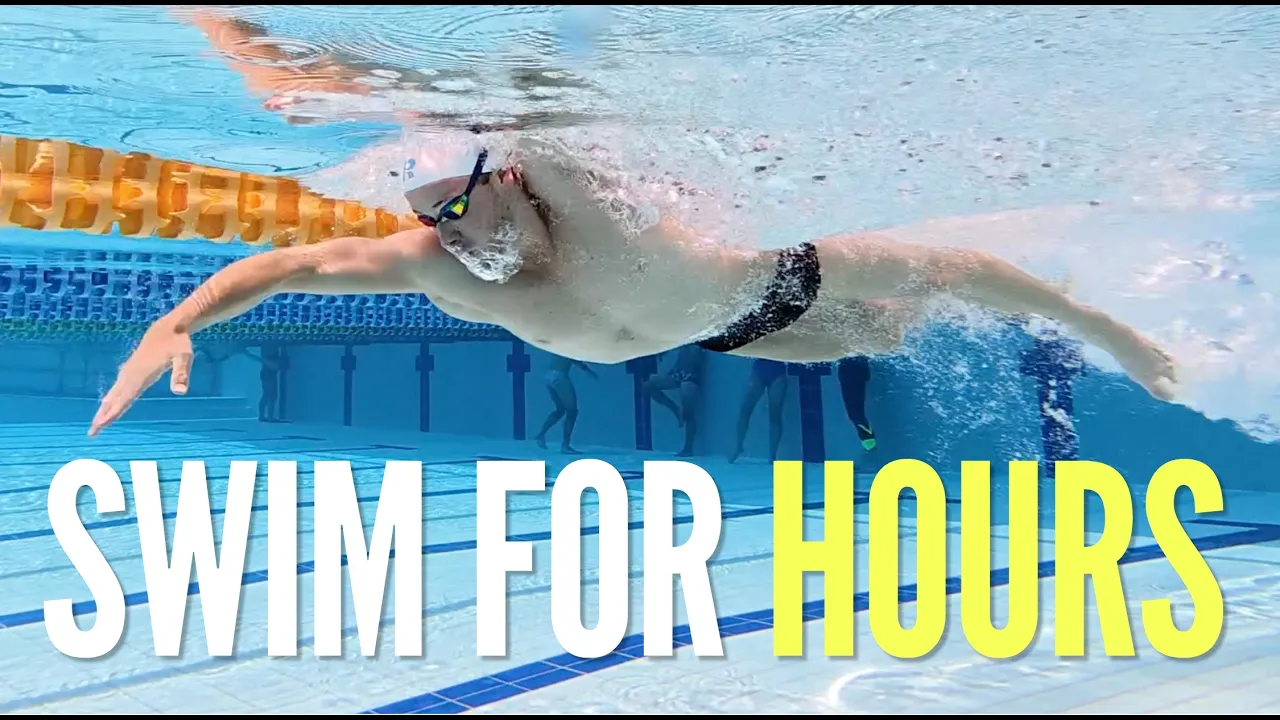
Effortless Swimming · @EffortlessSwimming
Where viewers went back to watch this video again, from YouTube's public Most replayed graph, lined up with what was said at that moment.
Most replayed moment #1
7:264.1x the video's typical replay level
you do that on a continuous basis, that's when you start to get that feeling of this effortless way of moving through the water. But, that's not going to be enough. We need to make sure we do step three. Step three to swimming freestyle with almost no effort is
Said at 7:18
Most replayed moment #2
2:063.1x the video's typical replay level
tight pair of jeans where if you did that squeezing here, you'd suck your tummy in and you'd squeeze your butt cheeks together. I got that from Andy Donaldson, which is a good good way of thinking about it. Now, with that posture and frame of the body, we have this tautness or this little bit of tension through the
Said at 1:59
Most replayed moment #3
3:552.4x the video's typical replay level
feel like you're bringing everything into the center. Like you're almost bringing your inner thighs together, and we're just doing this little flick of the foot. And that little flick of the foot is going to help you rotate to the other side, as opposed to doing this big kick like you're riding a bike, for example.
Said at 3:49
The graph counts replays. It does not show where viewers stopped watching.
Words
2,990
Runtime
14:00
Speaking pace
214wpm
Reading time
12min
214 words per minute, above the 201 75th percentile of 349 measured videos. That distribution comes from the 349-video hook study.
Opening (first 30 seconds)
In this video, I'm going to share with you the easiest way to swim freestyle with almost zero effort. If you look at the smoother smooths at your local pool, you'll notice that they're probably not trying harder than you. They might not even be fitter than you. But what they do really well is they know how to let the water support them and balance their body and how to use their catch, their rotation, their kick, and their timing to help propel themselves forward with very little effort. So, in today's video, I'm going to share with you the three things that will help you
107 words, the words spoken in the first 30 seconds at 214 words per minute.
Free, no signup. See how the first 30 seconds hold attention, with rewrites.
Sentence shape
| Measure | This transcript |
|---|---|
| Sentences | 139 |
| Average words per sentence | 21.5 |
| Longest sentence | 60 words |
| Questions asked | 1 |
| Sentences containing a number | 6 |
Most used terms
Filler phrases
26 in total: like 23 · actually 2 · kind of 1.
A literal whole-word count of the same phrase list the Prepublish browser extension uses, so a phrase inside another word is not counted and a phrase used in its ordinary sense still is. It is a count and not a judgement.
Run the check on the words above: where attention is likely to drop, with a rewrite for each weak line. The free check shows the scores and the one issue costing the most.
What this transcript is
Every word below is the caption track YouTube publishes for this video, pulled from the video itself and reproduced unchanged. It is not Prepublish's writing, not a summary, and not a re-transcription: it is the video's own published captions. English captions, generated automatically by YouTube, in the video’s original language. Source: the video on YouTube. A channel that would rather this page did not exist can ask for its removal through the contact page, and it is removed.
In this video, I'm going to share with you the easiest way to swim freestyle with almost zero effort. If you look at the smoother smooths at your local pool, you'll notice that they're probably not trying harder than you. They might not even be fitter than you. But what they do really well is they know how to let the water support them and balance their body and how to use their catch, their rotation, their kick, and their timing to help propel themselves forward with very little effort.
So, in today's video, I'm going to share with you the three things that will help you swim freestyle with almost no effort, but it'll make you look smooth. It'll help you move through the water very comfortably, and it might even be a little bit faster than what you're currently doing. So, the first thing that we want to make sure we get in place is that we let the water hold us up. We let the water balance our body because if we are swimming in a way where our hips and legs are really low, it takes so much effort to overcome that.
And the very first thing I always go to is head position because your head weighs 5 or 6 kilos, so how you hold your head in the water can really impact what happens at the back of your body. So, the way I like to think of this is we look anywhere from straight down to 45° and more importantly, think of your head like an iceberg where just the top of it, 10% or so, is above the water, but the majority of it is below, and that's one thing that will help you balance in the water.
Now, the second part of this is how you hold your body, and this is your posture. Now, you may never have thought about posture before when you swim, but posture is very very important. And the reason for that is if you have bad posture or poor posture when you swim, and the way I think of that is like a teenager lying on the couch hunched through the shoulders, it's really hard to firstly use your stronger muscles like your lats.
Secondly, your body's going to have this curve through it, and it won't have this tautness through the frame. And we want to be like a needle, not like a noodle in the water. So, we need to think about being tall and proud and really long through the body. And the other part of that posture is imagine you're trying to squeeze into a tight pair of jeans where if you did that squeezing here, you'd suck your tummy in and you'd squeeze your butt cheeks together.
I got that from Andy Donaldson, which is a good good way of thinking about it. Now, with that posture and frame of the body, we have this tautness or this little bit of tension through the body so we're not wriggling and moving around. And that is the the real key to then being able to use your lungs for balance and buoyancy. Because for most people, your buoyancy will come from your lungs, the air that's in there. So, if you imagine you've got a balloon, you try and push it down, it's really hard to do.
It wants to come back up because of all the air. Now, we've got a similar thing here in our chest with our with our lungs. So, if we hold our body tall and proud and we apply a little bit of downwards force through the chest, that's going to help bring the hips up and the legs up because that's going to change the balance of our body for the for the better. So, we need to do those couple of things to make sure that we are horizontal and not dragging our toes along the surface of the bottom of the pool.
Now, the third part there is with our legs. What do we want to do with our legs? They are not necessarily for propulsion, even though you'll get a little bit from it. Your legs are more to help you rotate to the other side and to help counterbalance you as well. So, the way I see the legs working is it's not like we're using them to kick really hard and move ourselves forwards. It's like if you were to throw a ball, you've got something stable to press off of and then you can really throw a ball hard fast and a long way.
But in the water, we've got nothing stable to really work with. So, our legs out behind us are providing that counterbalance to work with to be able to press off and help us rotate to the other side. So, that's the main purpose of it. And the key to swimming with almost no effort and making sure your legs do the right thing is I want you to feel like you're bringing everything into the center. Like you're almost bringing your inner thighs together, and we're just doing this little flick of the foot.
And that little flick of the foot is going to help you rotate to the other side, as opposed to doing this big kick like you're riding a bike, for example. So, if you can do those three things, that means that you'll be horizontal, you'll feel the water supporting you, and that is step number one to swimming with freestyle with almost no effort. So, the second step in swimming easy freestyle is using our rotation to help us recover easily and to help us reach and be long in the stroke.
So, we've built the frame of our body, the next step is we got to rotate side to side. Now, we need to rotate enough so that we can comfortably recover our arm over the top of the water. Because if we stay flat, it's really hard to get the arm over the top because our shoulder just doesn't work very well that way. So, we need to rotate enough to comfortably get the arm over the top. Now, the important thing here with our recovery is that it's called a recovery because we shouldn't be tense and shouldn't be stiff.
So, I like to think of a relaxed hand, a relaxed wrist as I come over the top of the water. And we want to be opening up this underarm here, almost showing this underarm to the side of the pool. And we want to feel like the elbow is the thing that's almost carrying the rest of the arm over the top. That is how we have this relaxed recovery. Whereas a lot of times people will be very stiff and very tense as they come through.
So, we want this sense of relaxation over the top. And your arm weighs a couple of kilos. So, that means that when we swing this arm forwards, we generate some momentum with it. And if we do this in a relaxed way, we carry that momentum forwards, and then as we enter the water, we want to enter fingers first with our elbow up. Because in that position, we're going to carry that momentum in and send it out in front of the shoulder.
And that's where we start to get that feeling of like we're we're skating through the water or gliding through the water without much effort. Now, once we enter with our fingers, we want to feel like we are just straightening the arm in front. Don't feel like you are spearing the arm in cuz it can cause you to do some funny things. We want to feel like we are just straighten the arm and that'll send us out in front. Now, you'll notice as I rotate, that also gives me a little bit more length in the stroke.
I get a little bit further up here. And so, generally a a longer body is going to be a faster body. So, that will help us get in that extra few centimeters within the length of our stroke as well. So, we want to rotate enough to comfortably recover and enough so that we can get into a good long position and strong position with our arm out in front of us. And a good position there to start is making sure your hand and your fingers are about underarm depth when you finish extending forwards because that's where we're going to be most streamlined and that is a really good place to then begin our catch.
Cuz what we don't want to do is enter and drift up and put the brakes on as we call it, where we drift up and press against that water cuz that's going to slow us down. I also don't like it when swimmers go too deep with the hand because if you're starting that far below your shoulder, that does create quite a bit of drag on the arm. So, I like to teach get to shoulder depth when you finish extending forwards. And so, our starting position or our base position every time is arm up here, rotated on the side, that is where we're going to be very streamlined.
And if you can transition from that position here to that position on the other side and you do that on a continuous basis, that's when you start to get that feeling of this effortless way of moving through the water. But, that's not going to be enough. We need to make sure we do step three. Step three to swimming freestyle with almost no effort is making sure that we time the stroke correctly and that we do something effective with our arms so we use them as for propulsion.
Now, the timing of our stroke should be what I'd consider front quadrant. Now, all front quadrant means is that if you split the body into four quarters, the front quadrant would be always having an arm above our head or in front of our head if we're swimming. And the way that we do that is we need to make sure we're patient with our arm as we're extending forwards in front. So, the last thing we want to do is enter and immediately go down.
Even though it feels like we got to get going and we want to pull through, you're actually better off entering and extending out in front and rotating at the same time because you'll be longer in the water and you'll also be more streamlined in the water. And more importantly, it'll help with your timing. So, if you keep that arm in front a little bit longer as you're extending out and you give this arm a little bit of a chance to not catch up completely but catch up almost to it.
So, you get to this position here where this arm's about to begin what we call the catch and this one is about to pass our head. That will mean you've always got something in front of your head. And the reason that's really helpful for swimming freestyle with almost no effort is because then we get to coordinate all these different parts of our body together. So, we first to get to begin the catch here. So, we're starting to press back.
The momentum from this arm is going to come over and then we're going to tie that together with our shoulder rotation where everything goes together. And that means that we're not just swimming with our arms and our legs separately. It means we get to tie in the whole body. And that's where you can really start to notice that difference. So, take a little bit of time to reach out. This arm comes through and then we swap.
We swap. So, almost this arrow position is like your trigger point. That is when we start to to swap. So, that's the timing that we need. The next thing is with our arms, we want to make sure that we've got a good amount of surface area pressing back on the water. Now, the way that we do that is we want to get a high elbow catch. But, rather than thinking of a high elbow catch is your elbow needs to be right up near the surface.
That's not a good way to think of it. Really, it just means the hand's got to be a bit higher than the fingers. But, the way I would think of it is if we're looking on the side and we were to draw a line from my shoulder to my fingers, that elbow should be somewhere above that imaginary line. And that way we've got our hand and forearm, which is our big paddle, that's going to be pushing backwards and that means we're going to move forwards with it. >> So, the way to do this is to not think of your catch as the power phase of the stroke, but think of it as the setup phase of the stroke.
And all that means is we don't want to muscle that initial movement because we're not very strong overhead and our main goal there is to get a high elbow catch, meaning we need the hand and forearm to face backwards. And it's easier to do it if we go for something like a four or a five out of 10 in terms of the effort and the power through the catch instead of a 10 out of 10. That's where a lot of people try and rip hard at the water, which we don't want to do, particularly at the start of the underwater phase of the arm.
So, in order to get that high elbow position, there's two things that I think of. One is we want to get the fingers to point down. And secondly, we want the elbow to bend or fold so it moves out the side, it moves a little bit wider than the hand while it's moving down. And that gives us the space to be able to set up this high elbow position. Then you end up getting this big armful of water, which you can then accelerate back past the hip and that is what's going to help move you forwards.
There's a number of drills you can do, which we've got inside of our membership and you'll probably see on this channel as well. But, the main thing is we need to point the fingers down, let that elbow go out to the side. Now, the last thing that's going to help you swim with effortless freestyle, where it just feels very, very easy, is to use our kick the right way. And your kick does not provide that much propulsion for most of the swimmers that I coach, but it's very important to do it well.
The main role of your kick is actually to help you rotate to the other side and provide a little bit of a counterbalance and stability out behind you. So, the way that your kick works is when you're reaching forwards and you're about to start your catch. So, you're in this streamline position on the side. Your kick on that leg that is lowest in the water over there or the side that you're on, that's going to you're going to kick down and that's going to help you start rotating back onto the other side.
And that's what's then going to help you go through your catch and your pull through and you'll be rotating back and that will get everything to work together. So, if we've got something like what we'd call a two-beat kick, which is one kick per arm stroke, then that kick is going to be the thing that will help you initiate the rotation back onto the other side. And that is when you time that well, that is when it becomes really easy.
So, the way you can think of that is two different ways to think of your kick timing. One is you can think of your opposite hand entering the water when your other leg kicks down. So, that might be your left hand enters the water as your right leg kicks downwards. Now, the other way you can think of it is think of your catch happening at the same time the leg on that side is kicking. So, same side kick and catch. Now, it doesn't matter which one you think of, they're kind of the same thing because if you think about it, your left hand's going to be entering roughly when your right hand is finishing the catch and you can kick down on that right leg.
Same thing, just a different way to think about it. Now, that's a little bit more advanced for a lot of swimmers, particularly if you're new, but if you can get that right and use that kick to help you rotate back onto the other side, then your freestyle and your timing will feel very easy and that's where it starts to feel effortless. Now if you're not sure where to start, we have two courses available. One is our beginner freestyle program, the other one is our 8-week faster freestyle program.
I'll put the links below. If you're a beginner and you're struggling to go more than 100 m, get the beginner course. If you can swim 400 m without stopping, then the 8-week faster freestyle course would be the best option. I'll include those below. Thanks for watching. Make sure you subscribe. The we put out videos every single week to help you swim faster.
The words are the caption track's own and nothing is reworded or re-transcribed. Paragraph breaks are placed between sentences so the text reads as prose.
Free tools for your own script: paste a draft and see where it stands before you record it.
Paste your draft and see where viewers are likely to drop off, with a rewrite for each weak line.
Paste the first 30 seconds of your own draft for a hook score and rewrites.
Check your draft against YouTube's advertiser-friendly guidelines before you record it.
Read this channel's public videos and transcripts, and download a writing brief for it.