Getting the transcript
Reading the captions from YouTube. A video nobody has opened here before takes 10 to 30 seconds; this page fills in on its own.
Getting the transcript
Reading the captions from YouTube. A video nobody has opened here before takes 10 to 30 seconds; this page fills in on its own.
The Andrew Faris Podcast · @andrewfarispodcast
Words
10,488
Runtime
48:22
Speaking pace
217wpm
Reading time
44min
217 words per minute, above the 201 75th percentile of 349 measured videos. That distribution comes from the 349-video hook study.
Opening (first 30 seconds)
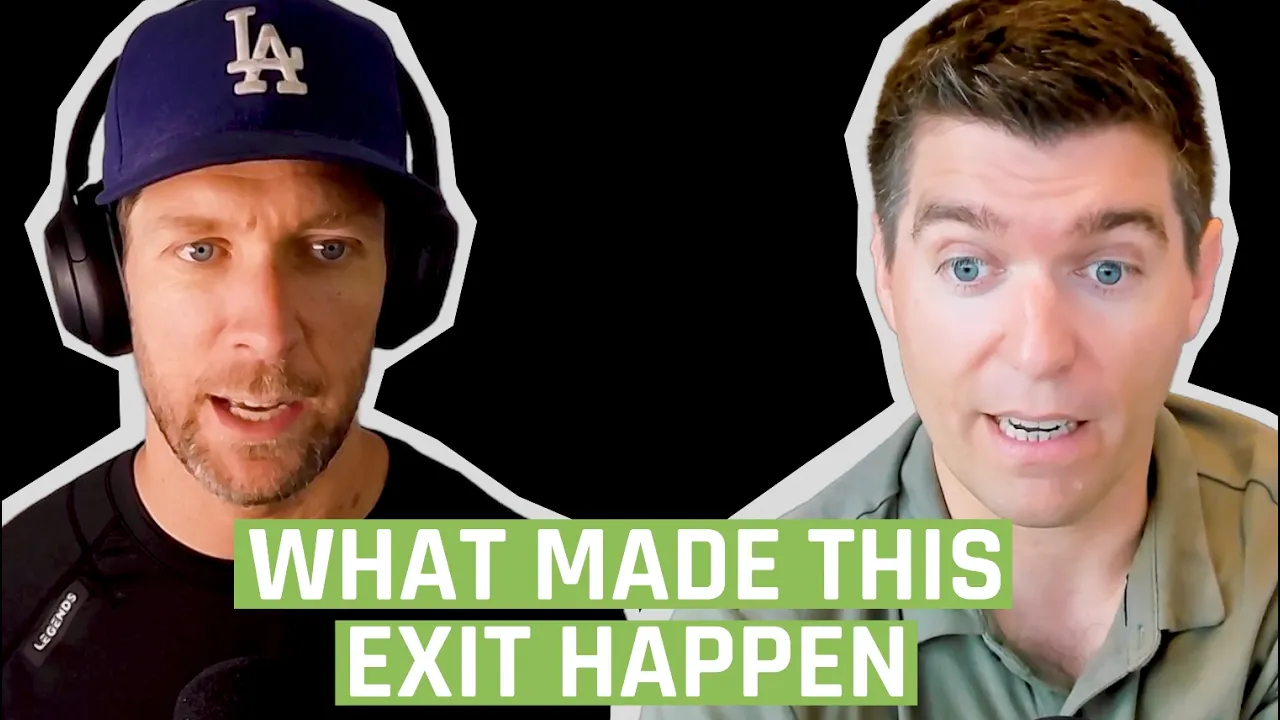
my good friend and client Bill Alessandro sold natural dog company the brand that he's been working on for a long time in the dog supplement space and he is here to talk about it. This is a huge win I think in our space in the e-commerce space. You've been following this for a while. I've had fan buy on recently talking about how so many businesses are worth nothing and Taylor Holiday yelling about how nobody should start an e-commerce business and to all of them I say meet Bill Aleandro Natural Dog Co. who has had a meaningful outcome in his business. We're going to talk
109 words, the words spoken in the first 30 seconds at 217 words per minute.
Free, no signup. See how the first 30 seconds hold attention, with rewrites.
Sentence shape
| Measure | This transcript |
|---|---|
| Sentences | 649 |
| Average words per sentence | 16.2 |
| Longest sentence | 140 words |
| Questions asked | 65 |
| Sentences containing a number | 44 |
Most used terms
Filler phrases
637 in total: like 182 · uh 131 · um 125 · you know 65 · right? 39 · I mean 32 · actually 24 · kind of 21 · sort of 16 · basically 2.
A literal whole-word count of the same phrase list the Prepublish browser extension uses, so a phrase inside another word is not counted and a phrase used in its ordinary sense still is. It is a count and not a judgement.
Free, no account. See where attention is likely to drop, with a rewrite for each weak line. The free check shows the scores and the one issue costing the most. Or run it on the words above first.
Free · No login · See a sample audit first if you prefer.
What this transcript is
Every word below is the caption track YouTube publishes for this video, pulled from the video itself and reproduced unchanged. It is not Prepublish's writing, not a summary, and not a re-transcription: it is the video's own published captions. English captions, generated automatically by YouTube, in the video’s original language. Source: the video on YouTube. A channel that would rather this page did not exist can ask for its removal through the contact page, and it is removed.
No Script X-ray for this video: YouTube shows a Most replayed graph only once a video has enough views.
my good friend and client Bill Alessandro sold natural dog company the brand that he's been working on for a long time in the dog supplement space and he is here to talk about it. This is a huge win I think in our space in the e-commerce space. You've been following this for a while. I've had fan buy on recently talking about how so many businesses are worth nothing and Taylor Holiday yelling about how nobody should start an e-commerce business and to all of them I say meet Bill Aleandro Natural Dog Co. who has had a meaningful outcome in his business.
We're going to talk all about it. How did he get Natural Dog Company to a place where it was ready to sell? What are the elements of that business that made it a good business for somebody to acquire? We'll see how much he give us around numbers and some of that kind of stuff. And then we'll talk also about what it's like on the other side of an exit after working on this business for so long coming out of a portfolio that he had before.
All these things. You probably know Bill, you've heard him on my podcast a couple times before. He's been in our space for a while. He's a great voice uh around how to run a business profitably, how to sell it. Let's get into it with Phil Dislesandro, formerly the CEO of Natural Dog Company and no longer because he sold it. Wow, that was the best intro anyone has ever given me, Andrew. Really? That was so kind. Thank you.
I'm glad to be here. Well, I mean, maybe it's just familiarity, right? Cuz I, you know, like like I said, I think this is I think you're a three-time returning champion here. Something like that. And the vibe though was so strong. I loved it. I do feel like I've I do feel like I've I've I've added some energy to my intros. So, uh I'm trying. I'm trying. I loved it. Yeah. Um I always like to record it with the person on the line, too, because then they know what I said about them.
Sometimes I go back and re-record it anyway. But, um if I do that, I won't like it won't turn around with me like just slamming you in the intro. It'll it'll be the same spirit. So, you're gonna say really nice things and then the live version posted like this guy's kind of an idiot. Wait till wait till you hear what he says in this episode. Yeah. Yeah. Yeah. Yeah. Uh, okay. Natural Dog Company uh is a uh dog supplement brand in so many words.
You might want to you might want to frame it differently than that. That's fine. That's fair. Yeah. We do dog supplements. We do grooming. We do fish oils, treats. Yeah. Uh basic dog consumables, not food. Yeah. Dog Yeah. Yeah. Okay. Yeah. Dog consumables on food. Great. Um so there's a lot we could say about that in that space. Um, but I, you know, and I, and some people will know your journey that for a while you had a hold called Elements Brands.
You sold off all of the other brands besides Natural Dog after being a holdco guy for a while. Uh, I once was a hold guy, too. So, we've connected over that at points. That's how we met Live. That's right. Yeah. Yeah. And um and uh and then got down to this one brand. Um, so you exited that brand uh very recently, within the last couple months. Uh, something like that. Um, great. I've I've gotten the chance to work with you guys up close for the last six months or a year or something like that as well.
Seen the business up close, seen the way it's firing. I I understand why somebody wanted to buy this business. It's a really good business and that's awesome. What can you tell us about sort of the context of the transaction and um and maybe even kind of what can you say about the scope of the transaction? I don't know what you want to say about that exactly, but um but give some sense of kind of what happened here. Yeah.
So, for for context for people that may not know me, I've been in ecom for over a decade. Elements Brands was a rollup of ecom businesses before the word aggregator was a thing. Um, we kind of pioneered that model uh in the mid 2010s. Um, we ended up selling it all to go in a natural dog company and so what used to be the whole co became just natural dog. Um, and we've been just natural dog since 2021 or so. Um, just great space, pet supplements, co really created a lot of tailwinds for this industry.
There's also a lot of structural tailwinds, you know, as sad as it may be, people having fewer kids, people having more dogs, uh people the humanization of pet, which is a huge trend uh in our space. Birthday parties, high quality food, organic food, all that stuff. Things you do for yourself, people are doing for their pets. That's a great business opportunity as well. Um so we sold the business uh to a company called Food Science, which is a portfolio company of Morgan Stanley Capital Partners.
So Morgan Stanley Capital Partners is a private equity side of the financial behemoth Morgan Stanley that you've all heard of. Um and they have done uh several investments in PET and you know the thesis here is they bought Food Science uh last year and thesis was let's go find several other really high quality brands that fit alongside the brands that food science had. So they had a business called Veter Science which was really vet focused dog supplements sciencebacked have been al around for a long long time decades.
Um and so they bought uh bought bought Veter Science Food Science uh and then called us and said hey you know we've admired your brand for a long time. We think Natural Dog would be a really excellent fit uh alongside Veter Science. You know would you ever consil consider selling your business? Um, and so we were, it was sort of a fortuitous call because we were considering selling the business anyway. Um, and had been speaking to investment banks.
Um, so they called us and if you, if you get a call like this, first bit of advice, the first thing you should do is hire an investment bank immediately. Do not try even even if you're not going to talk to any buyers except this one. Do not try to do it by yourself. You should hire an investment bank that's qualified and a good lawyer, not your brother-in-law or whatever. You know, hire a good experienced M&A attorney to represent.
You didn't just chat GBT your way all the way through that. Do not catch GBT your way through a multi-million dollar transaction. Uh it it it the our investment bankers earned their fee many times over. They were phenomenal. Um so we hired an investment bank. We negotiated with them kind of through Q4, Q1, and then ended up closing the deal uh in late April of this year. So, they bought our whole entity. They bought it's still technically Elements Brands LLC, but doing business natural dog company.
So, they bought the whole thing. Uh I rolled some equity with them. So, I still, you know, I hope we do well and I stayed on. So, I'm now head of M&A at Food Science with the charge of going to buy more natural dogs to combine in with our business. Amazing. Um, you there's a lot to say there. I I'm curious to hear you talk more about what made as much as you can. Um, again, I know there's some NDAs and stuff like that involved here, but uh, which which is I think everybody understands that, but I'm curious sort of generally what you think makes the investment bank in that process so useful?
Like you you you made a point of going out of your way to say like they made their fee many times over like all all those things like what why why that why was that the case? Uh because when you are selling a business, especially to private equity, there's an asymmetry of experience. You will do this once, private equity will do it a hundred times. The people on the other side of the deal are professional dealmakers.
They know every trick, every little nook and cranny in the document, etc. Um and you all and you're just not going to you just don't have the reps. So, an investment bank has the reps. And the other thing too is an investment bank will cause them to take you seriously. Um, and will help you present your business in a way that they will most easily understand it. Um, because private equity likes to look at businesses a certain way.
They expect the spreadsheets to look a certain way. They expect the story to be told a certain way. And I have seen many times over entrepreneurs do not naturally speak this way or present their financials in this way. And it causes I think private equity to not understand their business as well and as a result not pay as much for said businesses. Yeah, that that's actually a really interesting point because when you think about it like what you it's it's like the thing I would be nervous about is like getting taken for a ride by somebody who knows more than me, right? like sort of the experience of talking to a car salesman or or whatever where it's like or used car salesman where like oh you know there's a mismatch of information that would make me as the buyer or as the customer in this case or whatever, you know, come out in a worse place.
What what you described is actually something different than that which is actually that like essentially if you can't communicate well enough um it's not that the PE firm is trying to short you or something like that. it's that you are going to have a really hard time expressing to them in language that they care about the actual value your business is creating. And I know I've looked at another business recently that is is um looking at trying to sell at some point here.
Um and I've I've thought about this and and I didn't even think about it in these terms, but I've tried to make it clear here as somebody who works in business every day. Here's what I think the most valuable part of this business is. And and I it's actually fairly clear and it won't just be the Ebida number like it, you know, because anybody can come up with that, right? But there's actually other reasons besides the evida number to say like like this business should be extremely appealing and to get the most value for the business.
You want you need to find a buyer who sees that and who is therefore willing to pay for it. Um it sounds to me like that is a bigger challenge than people will often realize and that a great investment bank will help make that case. It it is and and a big part of it is just using the right words sometimes. Like I I mean if if you've ever talked with somebody who has, you know, has an MBA and a lot of business education, they speak in a certain way, right?
And they will hear you better if you speak the way that they speak. Um and Investment Bank will help you to do that. Um the other thing also they will help you to do is to present the financials of your business in the best possible light. Um and I'll give you an example. Um, anybody can you can just dump it out of QuickBooks, you're trailing 12 months income statement. But if you had say you switched 3PL's 6 months ago and there was a bunch of cost involved in doing that.
Well, that's an adback because that expense all that trucking that you know between the two 3PLs that's not going to recur and buyers going to value your business on a multiple of Ebida and if they just see your IBIDA, you're going to get penalized for that. But an investment bank is going to help you communicate, hey, we moved 3PLs. Here's why. Here's why this is a one-time expense, so you won't recur going forward.
And we expect to get paid as though that expense had never happened. And then they'll also help put the the buyer at ease as far as it's this is not some systemic issue. We don't have to switch 3PLs every year. Let's explain why we had to leave that one in a way that doesn't freak you out, etc. Phil, you and Natural Dog.co uh have used Rich Panel for a long time as your customer help desk software. Is that right? That is true.
We've been using Rich Panel for two or three years at this point. Uh Amit, the founder, pitched me personally and we switched almost immediately. Uh why did you switch? Uh it is AI first. It had all of the features of the help desk that we were then using. Uh that was uh not beautiful, but a word that is synonymous with that word. uh and we uh they had all the features and they were one-third the price uh and they it was obvious their product velocity was extremely fast.
Uh and I've talked with Ahmed a fair bit uh and the amount of AI that is fused in their organization and the the rate at which they release features is really impressive. I had a call with him right when uh I started building a partnership with them and I was like extremely impressed with him uh as a founder in part because of the combination of what you just said which is that the rate of AI was really fast but also that he refused to overpromise uh about the AI.
So he would he he's building it into things but also was like holding it back. So like they didn't at the time at least when we last talked and I don't think still have like an a fully AI autoresponder for the for the actual tickets because it wasn't good enough yet. He said it couldn't get the 99.9% perfection and so instead it's like AI assisted. Um, and I I love that because the AI world is so filled with overpromising as far as I can tell.
Um, you guys have been happy with it. Oh, it's been great. Yeah. I mean, we've renewed more than once. Um, my favorite part about it is that their AI cites its sources. So it in it will if you onboard with rich panel they ingest all of your old tickets from whatever old system you were on train their AI on all those tickets and then when you press the button hey AI write a response to this ticket it cites the historical tickets that it used to learn from so you can your agent can go okay yeah that makes sense right and put you consistent across tickets is really cool amazing richpanel.comf still guaranteeing 30% off your uh when you switch from gorgeous or zenesk to Um, uh, so there's just no reason not to pick up the phone and take a call, so to speak, uh, with Rich Panel and just see if they can do that for you as well, especially if you're on Gorgeous or Zenesk still.
Richpanel.com, uh, links in show notes. Go to rich panel, tell them I sent you. It's worth it. Yeah. And and in that situation too, perhaps your new 3PL actually offers you better rates as well, but your last your trailing 12 months only shows six months of those better rates. And you would maybe want to try to make the case at the same time like hey our go forward margin is actually better than what it shows in the last 12 months because of you know something you know this thing that we did and therefore yeah anyway it's it's the same principle in another way.
Um uh uh I'm curious also like when you look at sort of at that baseline and when you apply that thinking to your transaction, were you able to kind of look at anything where you said like uh this was this was value in the business that we were able to show that was unique in your particular space. Um as you guys went through that exercise, what what what did you sell to people basically? You know, uh this kind of gets us towards the tactical things a little bit more, but like what did they like about our business?
Why Yeah. Right. What Yeah. Yeah. Aside from the specifics of adbacks like what what um what was it at the core that drove the value of the sale? Yeah. So I think the answers to these questions will be unexpected to some ecom people um because they are not and this is a perfect illustration of why you should have investment bank also. Um they were very very attracted to our focus on product quality. The degree to which we had vetted our suppliers and tested our products. the strength of our brand equity.
Um that our brand would travel across categories. Um they really liked I mean our scale mattered. I mean to be an eight figure brand really matters to these guys. They got to put a lot of capital to work. Um and scale is rare. Um so they really like the scale. Just on that point, you're saying you're saying private equity needs to deploy capital. They need to spend money, right? that's the only way they make money and therefore like this the size of the business was a crucial part of making you attractive and therefore getting you into that buyer pool.
Yeah. When you think about it, I'm just making up numbers. These are not real numbers. If you're a private equity fund and you have a billion dollars that you've raised, right? You only make money by investing the billion dollars and returning $2 billion, right? Um and you can do 10 deals or you can do a hundred deals that are onetenth the size, right? They would just rather do fewer bigger deals for one and for two, bigger businesses are more resilient just generally.
I mean, anybody that has run a small e-commerce business knows you're flying pretty close to the trees and you have one hiccup and you got to lay somebody off, you know, but if you're a big business with several million dollars of ebida, you have a hiccup, you're not doing you're you're not doing layoffs, right? So, they're just more robust. They're bigger. They have more brand value. Being bigger helps a ton. Um, so you're saying so they I I cut you off a little bit, but they were attracted to the product quality.
They're attracted to the size of the business. Um, uh, they're attracted to the brand equity. Anything else that you would you would say like drove really drove the value of the business? Uh, I mean fit too. And like this is the thing about acquisitions that you just everybody wants to know. How do you get bought by a strategic? The way you get bought by a strategic is they call you. Like you're on a whiteboard in their headquarters and then they call you.
That's how you get bought by a strategic. Uh like they've they've got to want like there are all the strategic buyers in every industry in the world have corporate development teams and they sit around and they got whiteboards of targets and they know who their M&A targets are and you got to get on that list through whatever idiosyncratic process. You know, maybe they're h and for example, I know our buyer cared a lot about our expertise in e-commerce.
Like that was one of the things that really attracted them to us. But I know it was because they didn't have that expertise in house. So they were going through a buy versus build decision, right? And they came down on the buy. So now they were like, "Okay, we need to buy this capability, but we also want to buy a brand that fits very well with our existing brands and it needs to be of a certain scale." And pretty sure soon soon the ven diagram gets pretty small, right?
Like how many, you know, businesses actually fit and we were in the small part of that ven diagram. Yeah. Sort of an aqua hire for them. uh and kind of that's part certainly part of it. So they because they want to win on all the dimensions. They want to acquire great talent. They want to acquire great business. They want to acquire great brand. And they want to have some synergies when they do it. If you're building an e-commerce business that is trying to grow its profits, then there's no reason you shouldn't be using Intelligjs as part of that process.
That's because Intelligence is not just CRO software. Even though on the surface they kind of look like that, they do help you AB test things on various pages of your sites. Uh but the reason they're not just CRO software is because conversion rate optimization, which is what CRO stands for, is the wrong way to think about it. The right way to think about it is profit optimization. Profit optimization is the god metric for uh intelliggeems and rightly so in my view.
And that means they've built a tool that allows you to test the things that actually move the needle in driving profit in your e-commerce business. doesn't that does mean uh things that traditional CRO software would allow you to do things like imagery and copy and all that kind of stuff but beyond that intelligence allows you to test bigger profit impactors on your site such as the offer uh the price of your product sitewide discounts that you give to people you know the 10% off that you offer every customer have no idea whether or not you're just cannibalizing profit that you would have made or actually adding value uh the um the free shipping threshold that you're using the amount you're charging for shipping all these things have meaningful impacts on whether or not customers actually purchase on your store.
And Intelligence makes it extremely easy to test all of them in real time and give you feedback not just at the level of conversion rate or AOV, but at profit. They tie into your COGS data through Shopify and they spit out for you profit per visit as the core metric for uh for whether or not your test is working or failing. Go to intelliggeems.io io uh and use the code ferris 20 f r i r i s20 to get 20% off your first 3 months with intelligence.
It's an easy install. You do not need a developer to do it and you can get testing sooner than later when I launch my brand. I am planning on testing price from day one and I'm going to do it with intelligence because I think it has such a big impact on customer behavior. You should do the same thing. Go to intelliggeems.io again. Use the code ferris 20 to get 20% off your first 3 months today. Okay, let's go more into natural dog then.
So, um, all those things sort of assume that the business is in a good spot financially. When you look back on your time running Natural Dog and getting it from where you got it, when you bought it to where it ended up, are there any like, if you just do a little reflecting, what are there any top top lessons for you that you're like, "These are the things that we did really right that if I was running an e-commerce business again, I would go do this again." And that could be anything from opportunity selection, which obviously you just alluded to when you talked about selling everything else off in the hold co um, to that.
That's clearly one of the things there, right? Is that you just decided to go all in on what you thought was the best opportunity, but it could also be tactical or strategic things that were just really important uh for the success that you guys had. Yeah. One one of there's a couple. Number one is the the importance of quality talent. I mean, it is I've employed over the journey. I think I looked in our HR system like 500 people at various times, right?
And now we had a warehouse for a little while. So, we turned through, you know, you turn through some blue collar labor a little faster. Um, but still it's a lot of people. Um, but then when you can get high quality people that stick, their knowledge compounds in your business and they gel as a team and they push you. And I also learned though, you've got to continually push them and continue to recruit outside people.
We recruited a guy to lead uh you know him Matt uh to lead our revenue our revenue from outside and he was ex Google and exfredo and he is the best person I've ever hired and I hired him 18 months ago you know and he really pushed our organization um so you've got to always be bringing new talent in but you've also got to be retaining that talent um and I've I've looked at a lot of businesses and I think one of the things that separates good businesses is that really they have really good talent which means it's not just the founder pushing everything forward.
The business can push itself forward and it doesn't have to be this command and control. The founder is the only one with urgency or talent. And it's not necessarily that private equity is going to require that. I mean, that will be better. But that will yield a business that propels itself forward, that grows and is profitable, and that is attractive to acquireers. Sounds like what you're really saying is that hiring AF Growth to get you over the finish line was the key to the whole pretty much the whole thing.
Was the key to the whole Exactly. Um Exactly. Uh we had a very small part in this journey. Um the um the uh the Yeah, in fact, you know that we had a very small part in the journey because I would be touting the win much more if we had a much bigger part in the journey. Um we um uh so it's funny you say that about hiring. It's one of those things that I feel like I haven't um heard much about how to do well. I see a little bit from MAB Bogle who's actually come up in another podcast conversation earlier today as well.
Matab talks about just like people in e-commerce a lot of times entrepreneur kind of found businesses really don't have a great hiring strategy or management philosophy or anything like that and there's and the thing about that space is there's like lots of stuff written about how to do it right everything from like hey run EOS to like build a comp structure that makes sense I think um mate that talks about I think a ver no I forget who anyway um there's some book he likes that was like just do this and it's really easy to implement but it really helps you have these these like mechanical elements almost like tactical elements of like people management that is just like missing from so much of what e-commerce does.
I' I've kind of pointed to the same thing in supply chain where people just don't have any idea what they don't know in supply chains and think they need to grow there. And there's just sort of a maturing that needs to happen in e-commerce across the board so far as I can tell. You talked to a lot of people too. I'm curious if you agree with this, but it seems to me like there's all this content on marketing and growth and that's great.
You need that content. You need to market and grow your business. I I produce lots of that content. I think it matters. um the um you know there's content increasing around finance and some of those things. Um I'm seeing little bits more about supply chain some of that but I actually really don't hear very much that's like clear and tactical about how to do the thing you just said and it feels like an area that's just kind of a weak spot for a lot of brands in our space.
It's it's very hard. I mean it like most of the biggest mistakes I've made have been people related for real. I mean, yeah, I've made plenty of mistakes, but like if the p the pie chart of my mistakes is mostly people focused. Um, the wrong person in the wrong seat, I managed them wrong, I didn't understand them, I didn't give them the right KPIs, I didn't I didn't do right by them, etc. And I'm not saying it's always just, oh, I hired the wrong person, it was their fault.
Most of the time, it's your fault, the leader. Um, you know, it's almost always your fault, the leader. Um, and it's really hard to read a book about management and then just do it right on the first try. Uh, you sort of have to earn the stripes a little bit. Um, no one can really be told what the matrix is of managing a 100 person organization. You know, you got to kind of feel it. Um, but also I get the sense that a lot of brands are looking for like, oh, what's like the latest hack in management?
And if you want to be good at management, like go to the old stuff. People have not changed. You know, good management practices have been around for decades and decades and decades. You know, the the Peter Ducker stuff, the Tim Jim Collins stuff, like all the famous management books are still great books. Scaling up by Vern Harish, like there's a ton of good ones. Just read the hits. Like you don't need some sexy new thing.
Yeah, makes sense. Um, what else? What else is a big uh a big thing that you think got you guys to a spot that that made your business good and sellable? Picking a good market. Um I know that you know you have had businesses in good business in good markets and in bad markets. Like a good end market solves so many problems and also buyers want to buy businesses in growing markets in large and growing markets. So if you're in a large and growing market you will have more acquirers.
It will just be it'll be harder in other ways because larger markets are typically redder oceans, you know, with more people slugging it out. Uh like but like look at the size of the businesses that you can build in cookware or in men's basics, right? Like there like these are big industries um with almost it and your TAM is everybody with a torso, right? I mean, it's like it's great, but and and dog supplements, like we were lucky in that like it's a growing market, but it's not a huge market.
Uh it's between one and two billion a year. Um depending on kind of how you slice it, like that's big enough, but like if you get to 100 million in a billion dollar market, you have 10% of the market. That's a lot, you know, and think how many brands there are in dog supplements. Um, so you want to be in a market that is large and growing. It's papers over a lot of sense. A lot of sense. I have uh I have thought for a while that um yeah that TAM is is maybe the most underrated thing that just in terms of some of the stories that people tell like yeah it's just it's a really it's a really really big deal and it doesn't mean you have to go chase that market.
It just means you need to know um sort of what the challenge is if that's not if that's not what you're doing and just just yeah how how much easier I think it probably is to build if you really want to build a big business um then it just seems like TAM is just this like crucial thing. Um is uh is is there anything else that you think of that comes to mind for you before we switch to sort of uh what your life is like now?
Uh I'll say one maybe a little controversial which is that I might even be controversial with you. Uh, come on, give me the hot takes. LTV businesses are overrated. Subscription repeat purchase businesses are overrated. And I mean, we came from a like we're a supplements business, right? And there are great things about subscription businesses. Yes, don't get me wrong, but I made a lot of people mad on Twitter when I wrote that LTV is just AOV that takes forever to arrive, right?
And fundamentally, lifetime valuebased subscription businesses are fundamentally a financing problem because if you've got a $30 AOV and a $300 LTV, what's going to happen is all your competitors do too. And so you're going to pay a $80 CAC, right? Which makes sense on an LTV basis, but does not make any sense on an AOV basis. And you are going to have a perpetual problem financing those cohorts until they stick around.
Let's just assume you have perfect data and forecasting and you know these people are $300 LTV. Even if you know that, right? But if they're $30 AOV and they buy 10 times and you got to pay an $80 CAC for them, you're going to be waiting around for a year and you're going to have to finance that. And that is hard. uh versus if you have a product that is a the same, you know, AOV is $300, but it's AOV, not LTV, you're not going to have any cash problems at all because that is not is not a consumable product.
All your competitors don't have consumable products. The CSS are going to settle in a place where you can make money on first purchase, right? So, I think everybody wants to do subscription based business models and they don't realize that it is a blood sport because you have to finance. you are always going to lose money on first sale and so you have to be really good at retention. I um I agree and I disagree. I agree with the fact that it was a financing problem and it is a problem.
I mean you and I have been working on this together for a friend's business and and some of that recently, right? Uh and there there are real landmines here. Um I'll tell you the reason I disagree and I actually well here's the this very specific dynamic. I think I disagreed with your tweet when you tweeted it. Um, the very specific dynamic at play is that I think the cost of getting someone to try to buy uh a $30 thing or a a $70 thing or $100 thing is just fundamentally different.
And the only reason that the um CACs are so aggressive in these LTV subscription businesses is because they net out to being worth it. Like essentially, it's not really about anything besides besides that that they produce that value. And I think after that first AOV, um, after that first AOV comes through on a higher AOV business, uh, it it ends up tailing off really long. So like the specific dynamic is tailing off really fast.
So the the specific dynamic I love about subscription supplement businesses is that the the LTV cohorts last for so long. So, if you're playing a truly long game, and this this will this the the dynamic that will happen at some point that will really reinforce your point here is that somebody's going to come in and just going to be willing to outweight everybody else for the value creation. They're going to look at this on a three-year timeline, realize that subscribers stick around for three years, and they're going to pay a year and a half.
They're going to take they're going to take a a year or a year and a half long. You know, this is probably what Athletic Greens is doing, right? Like some of these fans, they're going to make it really really hard. the people with all of that money and they might compete everybody else out because just and but that's because it's such a good opportunity and it's high margin. And so here's my here's my my real simple response to your to your point.
I actually think the answer is not either of those. The answer is margin. Um margin over LTV, margin over AOV. I think margin is the actual thing that makes things best because then whether or not you have a high AOV or a higher L LTV um if you have more margin than other people then that's the way you can actually win the game most because you can pay the most to acquire the customer and get paid back relatively fast.
And so to me it's there's different ways to to get to that margin but to me that's like the actual most important thing. I think still the most underrated thing about e-commerce somehow is that you at the end of the day you have to ship the product to somebody's store and that that costs a bunch of money to a business that eats into your margin a lot. Individually shipping one person a product is super expensive and uh and so in businesses where that eats up a lot of your margin it creates a it makes a real challenge in businesses that that does not eat up very much margin that's the business that really wins in e-commerce and it's directly connected to the delivery mechanism of the product.
And I will say like Natural Dog like I don't think you know you guys have you were like an Amazon first business as you guys as you guys grew. Can I say that Bill? Yeah we were. Yeah we were about 50% Amazon. I've said that before. Yeah. Okay. Great. Great. Great. Yeah. Um that like is not an accident to me because you're like not a super high AOV. You do have some LTV. And when you're dealing with those lower AOV categories, Amazon is actually the best delivery mechanism possible because then there's that they do a great job on some of the logistics side of those things etc.
Um but um but yeah, so but that's a really specific thing to where you guys have I mean I think it's really hard if you've got a you know AOV that's sub $50 like it's just going to be very hard to ship that in a way where that shipping cost doesn't end up eating up 10% of your gross margin or something you know. Yeah. And I just like obviously subscription businesses are great for a lot of reasons but I thought it was worth mentioning that subscription businesses are not all great.
They have a fundamental financing challenge baked in that subscription businesses more than non-subscription businesses are actual actually capital wars and very often the best financed and best capitalized company wins in subscription because they can wait longer and longer and longer for that LTV to pay off to cross for the LTV to cross the CAC threshold. If they have cheaper and more capital it can be hard to compete.
Yeah. Um, one thing I want to put my finger back on, we've talked about it before. People probably heard you talk about this before, but just in case, just see if there's anything you want to come back to this is that you you've been uh emphatic about emphasizing about contribution margin and just being tied to that in your business. Um, this far into it, we haven't talked about it for a while. Anything else you'd want to say about sort of the the way you guys built around that metric?
I mean, I will tell you it's 2025 and I think I've been talking about contribution margin on the internet for it's seven years at this point. Um, I still run into business all the time that have no idea what I'm talking about. Um, which you have you have to understand it. Yeah, I get that there are flaws, but variable profit aka contribution margin is a or delivered margin, you know, whatever you want to call it. You got to understand what it costs you, how much profit you get after you have made the product and shipped it to somebody's door, aka delivered margin.
And then less the cost of advertising, aka contribution margin, less overhead. that margin. Uh, and if you're not tracking your business this way, I mean, you're just you're playing with one eye covered. It's just hard. Yeah. Yeah. I mean, I that's why I asked because, uh, it's still, I think, helpful for people to hear just like that emphasis on that. You you guys built monster core spreadsheets around, uh, tracking this over time.
I've seen them. I've I've been in them. Uh, and they're really helpful. You just you just it's really hard to get too far turned around on that if you're measuring it religiously, you know. Um, okay. I want to talk more about uh some of the elements of this which is the the human side of it a little bit. Uh what was your stress level going through the transaction? This is not a reflection this question is not a reflection on uh your buyer or anybody else involved.
I just mean that process uh for you personally uh everybody I've ever talked to about this no matter how much they like their buyer or not has some experience of what that is like. And so again just this has no reflection on those things. Uh but just just for you uh talk about that process a little bit. I mean I was at a 10 out of 10. It was very stressful. I mean, you've got you've got this is the most important transaction of your life, right?
All all of your chips are in the middle of the table and you're trying to take some of them off, right? And you're and the person who's trying to buy you is trying to poke holes in you and figure out what's wrong with you and you're trying to say, "Hey, look, there's really nothing wrong. This is a good business." Um, and so it's very stressful and it's it's a lot of work because all buyers need to cover their butts.
Like they need to make sure that you're not hiding something. Like that's called due diligence. Uh there every buyer is going to do it. Um and it's a lot of work and there's and that's the other reason you need good lawyers and good banks because it is if you don't hire a bank and a lawyer you will drown because the amount I mean our investment bank we had a deal team of four people and they worked I barely exaggerate around the clock for three months to do this.
Four very high horsepower 4.0 GPA people. you know, these were very bright people crushed it for three months straight on my deal and like I couldn't have done that and run the business at the same time. So, the horsepower they bring is really helpful also. So, it was it was very stressful and the the day the wire hit was a pretty great day. Yeah, I talked to you that day. Uh and or maybe the after you I can cut this if you don't want to include this.
Um, but you you told me you just put your head down on your desk and cried and that it was like a moment of just like and I I mean what I read in that is exactly what you just said, which is like this in this like relief. Like it's like you you have a sense of the journey that you started this thing because you're an entrepreneur and you wanted to build something. You used to be in investment banking, right? Like uh like and to get to the end to the finish line like that is like a really awesome thing and uh it's it's great.
It's part of why like I like having this conversation to celebrate the win so that other people can see it's not all doom and gloom. Like there's there's all these things. Uh what about uh after the fact? You still have a job. Uh you have probably I assume uh you know they didn't give you a bunch of cash and walk away and say see you later bill. Go sit on the beach. Uh there's probably earnouts and all those kinds of things that I'm sure you can't talk about, but um but you still have a job.
Uh nonetheless, life before the exit and after the exit has got to feel at least somewhat different. I'm just curious what your day how your day-to-day feels relative to what it was like uh before that it feel so it's it's great. So yes, I do still work for them as I mentioned at the top and so my job is to go talk to founders of pet brands and see if they're good fits for us to acquire which is fun because I've always loved doing that.
Um and I've always loved the deal making and and meeting entrepreneurs etc. Um, what I found is so great is you are no longer so tense like you're like the sports analogy, right? Like the basketball player who's like in his head and he's so tense and he's just got to loosen up and he can't hit a shot. Like a golfer who's all in his head and he can't can't hit the fairway. But like when suddenly when it's not all on the line every day, you can you just feel looser and I think you probably make better decisions to be honest.
Um, so I I mean I've read a lot about how, you know, VCs will try to let founders take some off the table in a series A round so they can exhale on their personal finances, right? And I think that's very real. Yeah. Okay. So anyway, so you were saying you that people you can actually exhale some. So you felt that you felt the exhale to in terms of big big exhale. Yeah. If and you know the money is really good is great like that's wonderful part but what's crazily almost better than the money is the sense of achievement like that you ran the race and you made it you know like it's like very rare to start a business build it and sell it to private equity like that is a small small needle head to to fit through uh the eye of the needle to fit through and so it to feel like you know I did it you know and also I kind of did it like in public too a little bit and like you know a lot of people knew that I was trying to do it.
Yeah. A lot of it. Yeah. Yeah. And so like that felt really good to be like I made it. I won the game. I did it. And that feels great. I have a theory actually about the e-commerce space in particular, which is that that's actually the bigger driver for more people than the money itself. The money is just a scoreboard measure uh of of a way to sort of validate that kind of thing. That there's something just humanly and I don't think this is all bad or all good.
That's probably a mix, but like just this this notion of like the thing that motivates me in work a lot of times and that motivates anybody is that you are trying to achieve a goal and it's worth pursuing that goal and it's really fun when you hit it and it's really great when you hit it. And um some people I think find their lives to be a real challenge after they hit the goal because they have no other goals. Um and so like you know I don't know and again I it's a super human experience.
I think I I don't I don't I say that with no judgment and other people I think have that fit into a broader set of goals and it and it feels satis satisfying in a different way. I don't know if you're able to speak to that at all, but do you feel like you lost anything when you uh when when you sold it in the sense of like uh you don't get to go to war for Natural Dog anymore? You know, a little good like that. Yeah, I'm still process and that's the crazy thing too, right?
It's been like 6 weeks and I can tell I'm not done processing it, you know, like it's not like, you know, the the deal closes and you're a totally different person like right away. Like for weeks after the deal, I would still wake up in the middle of the night stressed about the business. And I'm going, you don't need to be stressed. Like, but it's very hard to to put down the ball, you know, a little bit. Uh, and there are other people, you know, out of our choir and I' I've transitioned a lot of my responsibilities and like these things are not my responsibility directly anymore and I care how we do and I have financial incentive, you know, for us to do well and I want us to do well, but like I don't need to be the one not sleeping over some of these things anymore and I couldn't just turn it off.
Uh, and even still, six weeks later, I don't think I fully processed like I I it took me a while to even figure out how to tell people like what I do now, you know, because I've been an entrepreneur for a decade. you know. Yeah. Yeah. Now you're just a corporate suit, Bill. You just just a suit. You just work for the man. Um no. Uh no, definitely not true. Um uh yeah, that's awesome. Um well, I'm excited for you. It's been really fun to watch.
I've been kind of, you know, just excited to see the whole thing happen. Uh and and uh again, just having gotten to process some of this with you along the way, um has been really fun and really cool to see. Um, anything else that you that you feel like uh is just sort of top of mind for you this whole process that we didn't get to? Anything you're noticing in our space? Any sort of broader observations? I always like to ask people this question at the end of a conversation like this.
Could kind of take it anywhere you want, but I'm sure there's stuff floating around your mind that you notice or see right now that you maybe didn't 3 weeks ago for whatever reason or 6 weeks ago before the business sold or whatever it was, but just just curious if anything's floating up there. Uh, just a couple things that I've noticed. Um you this is another thing that came to my mind about what made our business attractive is that we were omni channel.
I mean, we were pretty well balanced. Like, yeah, we had big Amazon concentration, but we also had thousands and thousands of retail doors, like big box retail. 50% Amazon isn't isn't over. 90% Amazon, right? Yeah. Yeah. And so, we had really good retail penetration, which they really liked. Um, and and the great thing about retail too is it's a little bit more defensible. Um you know I mean everybody listening here is an e-commerce person and so you are you fundamentally understand kind of the diabolical nature of the auction business model right that like anytime like broadly right improvements in the P&L of the ecom industry broadly acrew to Amazon and Facebook because the the CSS go up right because your margins go up so people can afford to bid more for CS but that doesn't happen in the same way in retail right um and there's And retail shell space is finite and there's a lot of hard things about retail.
I'm not trying to make it sound easy at all, but it is it has some def more defensible characteristics than ecom does. And I have seen actually uh a lot of businesses not get sold because they were really dependent on meta. Uh they were like even like what we in ecom would think this is a great business. It's 100% Shopify. It's all meta. They have direct. It's all subscription. Buyers want to see that you can go cross channel, that you can go to retail, that it works on Amazon, that it works on Chewy in our sector or wherever.
They want to see the brand travel because, you know, Meta could change the algorithm tomorrow, right? Or and that's risk and, you know, buyers don't like risk. Single point of failure problem. It's a single point failure problem, right? I mean, how many times how many businesses out there listening, right? You had an ad that was crushing it and then suddenly it puked and you could never get it going again, right? I don't know.
I've been a meta ads guy for a while. I've never seen that problem before. Yeah, right. Happens all the time. Happens all the time. iOS 145 happens, right? I think people still have trauma from that. That was several years ago at this point, but still that was rough. That was rough, right? Um, so single point of failure, buyers don't like. Um, so the if you can, if you're building a brand, uh, and more than ever, if you think you're building an e-commerce business, you're not, you're building a brand with e-commerce as a delivery mechanism.
And maybe that's your first channel, but you're building a brand. You're building a brand with one delivery channel right now and if you want that brand to be really valuable, you need to cultivate other delivery channels. Yeah. I always think that people should do this and not too soon. And it's like and I think there's multiple ways to diversify, right? Like I I still think for most businesses around, you know, 10 20 million bucks in revenue like uh you could probably can probably be single channel for a while still.
I mean, unless you're really trying to gear up for sale and trying to max multiple and you need to validate some other channels, but um but I mean, you can of course, can you get to 20 million on one channel? Sure. Knock your socks off. Like, but I'm not saying to if your meta channel is growing, great. Don't like artificially limit it. But like if you want to get valuation, you need to cultivate other channels. Like great, good luck.
If you're crushing it on meta, you just got to crush it that much more in retail to keep up. Good luck. Yeah. Yeah. And and the diversification can happen via ad channels and so you can stay more Shopify and if you but if you're you know if you've got Tik Tok shops and Meta and uh Google and AppLin all spending or something like that then it's probably less risk there. That's a little less but you're still all DTOC. Yeah.
But and of course this is where like the the sort of dream version of the business is that you've got those and then you've also got Amazon and then you've also got retail. So now you're diversified on traffic channel and and distribution channel. That's right. And that that's that's the goal. the questions like timing and sequencing and you know when is the best use of your next dollar. That's right. I got I got one more thing.
Go ahead. I I was gonna ask. Yeah, go ahead. I got one more thing to say. Um I think the ecom world has changed is that we we are the era is over or the tail end of it. I think everybody knows you can't just go to Alibaba and private label something and have a quote unquote brand, right? A lot of people made a lot of money doing that in the mid210s, right? But the market is way more mature than that. Uh buyers care a lot about intellectual property now.
Um and I don't just mean trademarks. I mean patents. I mean proprietary molecules. I mean utility patents. I mean stuff that is actually defensible. Real IP is going to make your business much much more valuable. And not all businesses lend themselves to that. But if there is any way that you can build IP in your business outside of just your brand and trademark, do it. uh it it is rarer and rarer and more and more valuable.
I've heard a few people say that recently. I think it's interesting because the thing that everybody's worried about is is barrier to entry getting lower and lower all the time. And so having something like that that's defensible I think makes sense. Bill, this is awesome. Um you're active in a lot of places on uh in the e-commerce community. You're active on X at builda. Um and you uh you are obviously involved in ECF as a forum which is great.
Uh the question um or the place that though I think people should most listen to you now is your podcast Acquisitions Anonymous which you've been doing for a long time. All the more relevant now that you actually are an M&A person professionally and have recently sold a business. Uh tell people about Acquisitions Anonymous and where to find it. Yeah, so we are now over 400 episodes of Acquisitions Anonymous which is pretty wild.
So you can think of Acquisitions Anonymous is basically a talk show about businesses that are for sale. So uh twice a week we release like a 20-minute episode, so it's bite-size. Uh, and it is myself. We have four coasts total. And we'll talk about a business for sale anonymous because we won't reveal the name of the business, but we'll talk about the industry it's in, the financials of the business, and what we like about it, what you should think about if you were to try to buy this business, uh, what you should diligence, the risks, the pros, the cons, uh, etc.
And we do two deals a week. So, if you're into buying businesses or into maybe selling your business and you want to understand how buyers and lenders think about that, uh the podcast is called Acquisitions Anonymous. It's at aqanon.com, available wherever podcasts are downloaded. And the links in the show notes for that, of course, so you can go check that out there. Go do that uh after this. Bill, thanks so much for your time, man.
Congratulations again. Thanks, Andrew. Good being here, man. One of the things I really love about the e-commerce space is that people just root for each other so much. And I know I've felt that with Bill's exit. It's just one of those moments where everybody comes around and slaps somebody on the back and says, "Great job." Because it is such a hard work to get there. So, so glad to have Bill on this episode talking about his experience, talking about his transaction.
Really awesome stuff. Um, you should go follow up with Bill, follow up with Acquisitions Anonymous, um, and follow him on Ax. He's a great follow and is a is a great voice in the space and just a great dude. So, uh, so go do those things. Thanks so much to Intelliggeems. You can use the code ferris 20 to get 20% off your first three months at intelliggeems.io. and Rich Panel uh for customer service help desk software that is AI first.
Go to richpanel.com to go check all of that out. You can see everything I'm doing at afgrowth.com including signing up for my newsletter getting more podcast episodes and if you want to try to work with me um that's the place to reach out about that. You can just email me if you want as well at podcastfgrowth.com or follow me on xandrewj ferris and of course of course of course you should subscribe wherever you are watching or listening to this conversation.
Thanks so much I will see you next time. [Music]
The words are the caption track's own and nothing is reworded or re-transcribed. Paragraph breaks are placed between sentences so the text reads as prose.
Free tools for your own script: paste a draft and see where it stands before you record it.
Paste your draft and see where viewers are likely to drop off, with a rewrite for each weak line.
Paste the first 30 seconds of your own draft for a hook score and rewrites.
Check your draft against YouTube's advertiser-friendly guidelines before you record it.
Read this channel's public videos and transcripts, and download a writing brief for it.