Getting the transcript
Reading the captions from YouTube. A video nobody has opened here before takes 10 to 30 seconds; this page fills in on its own.
Getting the transcript
Reading the captions from YouTube. A video nobody has opened here before takes 10 to 30 seconds; this page fills in on its own.
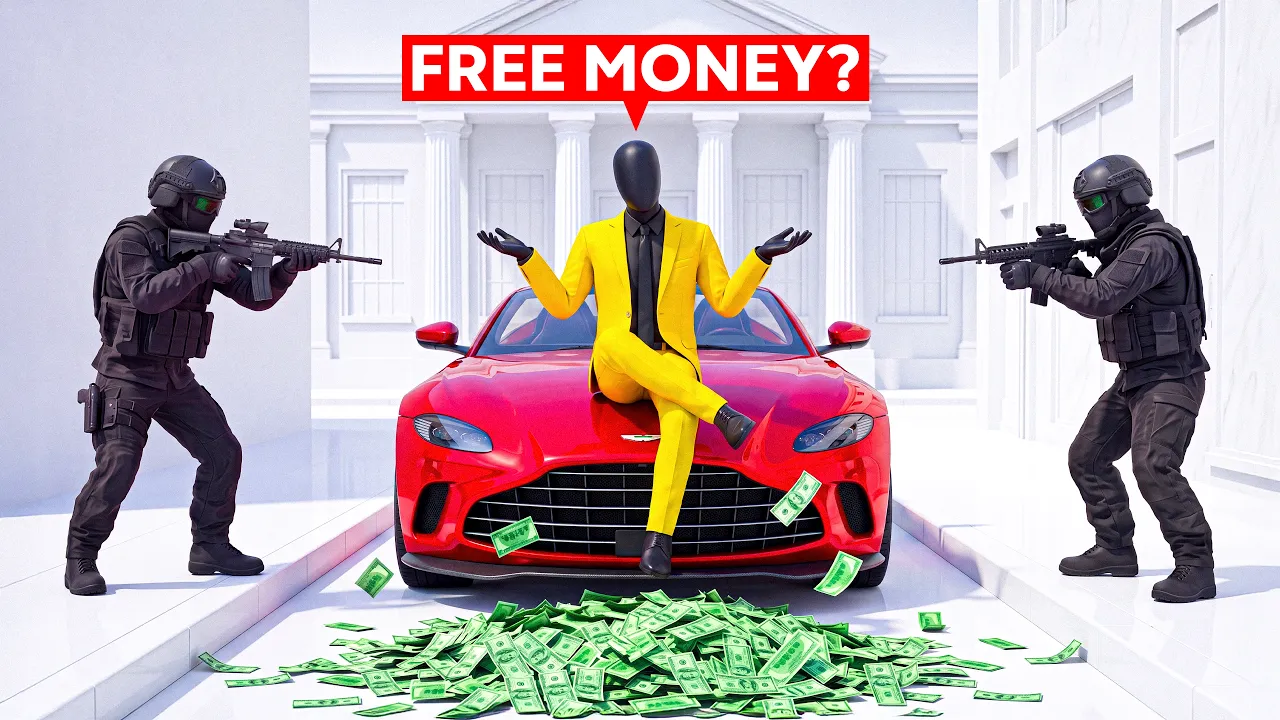
Blackfiles · @Blackfiles-HD
Where viewers went back to watch this video again, from YouTube's public Most replayed graph, lined up with what was said at that moment.
Most replayed moment #1
2:335.2x the video's typical replay level
his survival. Every bill on direct debit, his whole life automated. The account has a name printed right there on the paperwork, and you couldn't script it better. Complete freedom. The bank chose that name, not him. Somewhere in the machinery behind that
Said at 2:25
Most replayed moment #2
25:453.9x the video's typical replay level
Everything on the record. Always. February 2021 is where it pays for itself. Moore phones a Sydney police station about a case and records the call. The officer on the other end types up an official account of that conversation.
Said at 25:38
Most replayed moment #3
5:233.6x the video's typical replay level
"Yes." The entire story pivots in that moment. For nine months, this was an accident happening to him. A drift, a glitch, a bank error in his favor. The instant he typed that number, it became a decision. His decision. He probed the system deliberately, and
Said at 5:16
The graph counts replays. It does not show where viewers stopped watching.
Words
4,512
Runtime
28:17
Speaking pace
160wpm
Reading time
19min
160 words per minute, between the 160 25th percentile and the 181 median of 349 measured videos. That distribution comes from the 349-video hook study.
Opening (first 30 seconds)
December 12th, 2012. Goulburn, New South Wales. Armed police surround a quiet suburban house at dawn and smash through the front door. Their target doesn't run. He's asleep. Officers move room to room and find something that makes no sense. A broke, unemployed man on $449 a fortnight in welfare sleeping in the middle of an Aladdin's cave. An Aston Martin DB7, a Maserati, a speedboat. Walls of signed memorabilia catching the torchlight frame after frame after frame. A bank
80 words, the words spoken in the first 30 seconds at 160 words per minute.
Free, no signup. See how the first 30 seconds hold attention, with rewrites.
Sentence shape
| Measure | This transcript |
|---|---|
| Sentences | 421 |
| Average words per sentence | 10.7 |
| Longest sentence | 39 words |
| Questions asked | 12 |
| Sentences containing a number | 77 |
Most used terms
Filler phrases
20 in total: like 14 · kind of 5 · actually 1.
A literal whole-word count of the same phrase list the Prepublish browser extension uses, so a phrase inside another word is not counted and a phrase used in its ordinary sense still is. It is a count and not a judgement.
Free, no account. See where attention is likely to drop, with a rewrite for each weak line. The free check shows the scores and the one issue costing the most. Or run it on the words above first.
Free · No login · See a sample audit first if you prefer.
What this transcript is
Every word below is the caption track YouTube publishes for this video, pulled from the video itself and reproduced unchanged. It is not Prepublish's writing, not a summary, and not a re-transcription: it is the video's own published captions. English captions, generated automatically by YouTube, in the video’s original language. Source: the video on YouTube. A channel that would rather this page did not exist can ask for its removal through the contact page, and it is removed.
December 12th, 2012. Goulburn, New South Wales. Armed police surround a quiet suburban house at dawn and smash through the front door. Their target doesn't run. He's asleep. Officers move room to room and find something that makes no sense. A broke, unemployed man on $449 a fortnight in welfare sleeping in the middle of an Aladdin's cave. An Aston Martin DB7, a Maserati, a speedboat. Walls of signed memorabilia catching the torchlight frame after frame after frame.
A bank account sitting $2.1 million below zero. The seizure takes hours. They photograph everything, tag everything, tow the cars, freeze the accounts, and lead Luke Moore out of the fantasy he'd been living for 2 and 1/2 years. A jury will call it fraud. He'll be sentenced to years behind bars and shipped to a maximum security prison. Case closed. The scrounger who robbed a bank without a mask. Except this story doesn't end at the sentencing.
The highest criminal court in New South Wales is going to sit down with the exact same evidence. Every withdrawal, every purchase, every dollar of that $2.1 million. And hand down a finding almost nobody believed possible. Three judges, one word buried in a charge sheet. A ruling that will be studied in Australian law schools for decades. How do you take $2.1 million from a bank without breaking a single law? And what did those three judges see in his bank statements that a jury, a prosecutor, and an entire country missed?
Goulburn, New South Wales. March 2010. Luke Moore is nobody's idea of a master criminal. He's a young man from a working-class town who's been employed since his teens. Long enough to get a mortgage before most people his age had a car. Then a road accident wrecks him. The injuries linger, the job disappears, and the man who always worked finds himself in a Centrelink queue that smells of wet raincoats and disinfectant, signing for $449 a fortnight while the mortgage keeps bleeding him on schedule.
So, in March 2010, he does the most boring, responsible thing imaginable. He walks into St. George Bank, by then a brand of Westpac, Australia's oldest bank and one of the big four that hold this country's money, and opens an account to organize his survival. Every bill on direct debit, his whole life automated. The account has a name printed right there on the paperwork, and you couldn't script it better. Complete freedom.
The bank chose that name, not him. Somewhere in the machinery behind that account, something goes wrong. His incoming money ends up routed elsewhere, but the direct debits stay pointed [music] at complete freedom, which means an empty account starts getting billed. Then comes the moment the entire story balances on. The first debit hits an account with nothing in it, and it clears. The empty account goes negative and pays the bill anyway, like a vending machine dispensing [music] snacks into an open hand.
The bank's entire acknowledgement is one small line on his next statement, a $9 honor fee, a fee for honoring a payment he couldn't cover. Right now, it looks like a rounding error. In 6 years, that $9 fee will be evidence in front of the state's court of criminal appeal. The debits keep coming, and the account keeps saying yes. Phone bill, yes. Insurance, yes. Loan payment, yes. Months pass on autopilot while Luke barely watches. -$2,000, -$5, -$9,000.
And the angry letter he keeps waiting for never arrives, just statements. Every month an envelope with the bank's logo lands in his mailbox, itemizing exactly how far below zero he is, adding interest, adding the $9 fees, and asking for nothing. Somewhere inside St. George's systems, a safeguard that should have slammed shut months ago has simply gone missing. Why? That answer is the whole story. And it's coming. But not yet.
A bank that charges a man for its own mistake in writing monthly and never once tells him to stop. That's already strange. What happens next is stranger. Because every single one of us has stood at an ATM with the same thought flickering somewhere at the back of the skull. What if it just keeps saying yes? Luke Moore got to find out. Christmas 2010, not with a small test, with a scalpel. He requests a transfer of $4,999. $1 under five grand, $1 under where he figures somebody somewhere has to be paying attention.
He types the number. His thumb hovers. Confirm. Approved. He does it again. Approved. Again. Approved. Five times he asked the machine for $4,999 of money that does not exist. And five times, without hesitation, without a single human being anywhere in the chain raising an eyebrow, the machine says, "Yes." The entire story pivots in that moment. For nine months, this was an accident happening to him. A drift, a glitch, a bank error in his favor.
The instant he typed that number, it became a decision. His decision. He probed the system deliberately, and the system answered. And something is missing from the scene. A lie. His real name is on the account. His real address. He walked up to his own bank, through the bank's own channels, and asked. That distinction feels meaningless right now. It's about to become the most expensive question in Australian banking law, but here's the trap already closing quietly underneath the thrill.
By the time he understood what he had, the negative number was bigger than anything a man on welfare could ever repay. Stop spending and the debt remains impossible. Confess and you hand yourself to the police. Continue and nothing happens at all. Nothing kept [music] happening. And that was the most dangerous thing the bank could have done. For roughly 2 years, Luke Moore lives the intrusive thought, the fantasy fully indulged, every dollar real.
He gets systematic about it. Transfers flow out of complete freedom into PayPal, into accounts at other banks. Money parked, moved, spread, always by request, always under his own name. The pattern settles into a rhythm, ask, receive, spend. Every swipe is a question. Every approval is an answer. The answers never change. The balance, minus $100,000. He buys a Maserati. Then an Alfa Romeo. Then the one that will end up in every headline, a used Aston Martin DB7, James Bond's car purchased by a man whose official income is a Centrelink payment.
At the handover, a salesman drops the key into the palm of a bloke from Goulburn who 18 months earlier couldn't cover a phone bill. He buys a boat. He travels, the Gold Coast, Thailand, the kind of trips a man takes when the money in his pocket has no yesterday and no tomorrow. Court reporting fills in the rest and it isn't subtle. Cocaine, strippers, walls of signed memorabilia that police photographers will later document frame by frame.
The full catalog of a man spending money like it isn't his. Because it isn't. Minus $500,000 and Goulburn is not a city where an Aston Martin parks quietly. Neighbors slow on the footpath. Old workmates do double takes at traffic lights. At the pub, someone finally asks the question the whole street has been chewing on. Mate, what happened? And he gives the only answer available to him. Been having a good run. Investments.
Luck. His mother watches the driveway fill up with machinery worth more than her house and files it. The way mothers of grown sons learn to. Under things he'll explain when he's ready. Nobody looks at a boy they've known since primary school and thinks bank error. Remember her, standing at the edge of the fantasy. When it all burns down, hers is the spare room he'll be sleeping in. And underneath all of it, every second Thursday, like clockwork, the government deposits another $449 of welfare into the finances of a man driving an Aston Martin on a bank's money.
On paper, he's one of the poorest men in Goulburn. At the dealership, he signs like one of the richest. Both things are true. But every high in this story comes with a piece of mail. That's the thing the daydream version never includes. The statements. They never stop. Every month, St. George prints out his doom, itemizes it line by line, adds interest, adds the $9 honor fees, folds it into an envelope, and mails it to the man they're funding.
The bank is narrating his destruction to him monthly in writing with a customer service smile. He reads every one. Then, he keeps spending. Years later, he'd sum up those months in one flat line. Once it started, I couldn't stop it. Couldn't or wouldn't? Past a certain depth, a debt loses its units. Minus 800 grand and minus 900 grand look identical from down there, which means every new purchase costs, in any way his brain can actually register, nothing.
The trap that snapped shut in Christmas week hasn't loosened. It's just gone quiet, the way a current goes quiet once it's carrying you. Minus $1 million. A negative million. The interest alone on a number like that outruns anything welfare pays in a year. And the account keeps clearing anyway. Fee after $9 fee, envelope after envelope. Past the first million, the purchases change character. A speedboat for a man drowning in a different kind of water.
Another car for a driveway that's already full. 29 months of envelopes pile up in a suburban house. A paper monument to a number nobody at the bank appears to be reading. Nobody except him. Awake at 3:00 a.m. doing the one sum he can't automate. Which raises the question that must have whispered at him in the small hours. Two and a half years of yes. Who is watching this account? Is it possible that nobody at one of Australia's biggest banks has ever once looked?
August 10th, 2012. An ordinary day, an ordinary transaction mid-routine, and the answer arrives without warning. Declined. One word on a screen. After two and a half years, after roughly $2.1 million, after a wall of consecutive yeses, the machine finally, quietly, says no. The account is dead. Killed mid-transaction, like a heart stopping between beats. And then, nothing happens. The knock he braces for never comes.
Silence. Which, as Luke Moore is about to learn, is the worst sound a bank can make. September 2012. His kitchen. The Aston Martin is in the driveway. The statements have stopped meaning anything. The account is a corpse. And the phone doesn't ring. A week passes, nothing. A month, nothing. He checks the mailbox anyway, habit, and finds junk mail and silence. September ends. October crawls by. November arrives and some traitorous part of his brain starts whispering that maybe, just maybe, he got away with it.
He is misreading the quiet completely. A bank that finds a $2.1 million hole doesn't send its angriest letter. It goes silent. It opens an internal investigation, reconstructs 29 months of transactions, traces the transfers into PayPal and the other banks, and hands a complete gift-wrapped case to the fraud squad. While he wakes up each morning hoping the silence means it's over, that same silence is being spent in Sydney building the exact opposite.
Four months of quiet, four months of assembly. December 12th, 2012. There is no knock. The front door comes off its hinges at dawn. Armed police pour into the house and catalog the cave, the DB7, the Maserati, the boat, the walls of memorabilia. They freeze what's left of the money and the clawback begins immediately. Roughly $733,000 recovered from accounts at NAB, about $394,000 sitting in PayPal. Just over $1.1 million pulled back on the spot.
The rest, the car's depreciation, the trips, the parties, the powder, is simply gone. Converted into experiences and seized property. To every officer in that house, this is the easiest case of their careers. Man on welfare, $2.1 million, Aston Martin, done. But one fact rides with him in the back of the police car and nobody else in the justice system is going to carry it for him. In 29 months, he never told the bank a single untrue thing.
Every dollar in that house was requested under his real name from his own account and approved in writing by the bank now pressing charges. The brief lands with the office of Lloyd Babb SC, the New South Wales Director of Public Prosecutions, and the charge comes back. Obtaining financial advantage by deception plus dealing with the proceeds of crime. The trial arrives in 2015. 12 jurors, a judge, and in the dock a man who 3 years earlier owned an Aston Martin.
Now in a suit that hangs off him next to the kind of debt no suit can hide. The Crown Prosecutor rises and the opening address is asymmetric warfare, a story a jury can swallow in one breath. An unemployed man on welfare took $2.1 million that was never his and he spent it on sports cars, a speedboat, cocaine, and strippers. Then the prosecutor sits down. >> [music] >> That's it. That's the whole case. You could convict on the opening address alone.
And the defense, stripped to its bones, the account allowed it. He asked and the bank said yes. Moore has never dressed it up any differently then or since. I never pretended to be anyone I wasn't. I asked my bank for money and my bank kept giving it to me. In a courtroom, that defense [music] has a sound and the sound is a punchline. A child explaining that the cookie jar was unlocked. The jurors look at a man who lived like a lottery winner on money he knew wasn't his and they hear his entire defense come down to the machine.
Let me. They retire. There was only ever one word coming back and everyone in the building knows it before the foreperson stands. Guilty. The sentence, a minimum of 2 years and 3 months, maximum 4 and 1/2 years. And the system, with a straight face, sends a soft-faced young man from Goulburn to share a yard with the most dangerous prisoners [music] in the state, maximum security, for overdrawing a bank account. Be honest, if some part of you would have typed that first $4,999, too, that verdict lands closer to home than it should.
The ledger looks balanced. The scrounger got [music] caught. The bank got its verdict. The fantasy got its punishment. Everyone can go home. Except for one loose thread, so small it's almost embarrassing. His defense sounded like a joke, but what if the joke was written into the contract? Maximum security is a world of steel and count times. The doors close with a clang you feel in your back teeth. The yard is bare concrete under coils of razor wire, and the men circling it are serving decades.
Armed robbery, manslaughter, things you learn not to ask about. Into this walks Luke Moore, 20-something, soft-faced, in for overdrawing a bank account. The other inmates size him up in about 4 seconds and hand him a nickname, Milky. He learns the survival arithmetic fast. Eyes down, back to a wall, owe nobody anything. And at night, on a thin mattress, listening to a wing full of hard men breathe, he does a different kind of arithmetic.
A minimum of 2 years and 3 months in a place like this, and his entire criminal skill set is asking politely. Seized, clawed back, or converted into headlines about the welfare cheat with the Aston Martin. But prison cannot confiscate the one thing it hands out in bulk, time. Years of it, scheduled down to the minute. Luke Moore spends his on the single most dangerous thing you can give a convicted man. He starts reading law.
A prison law library is nobody's idea of a war room. Laminated tables, a caged ceiling light, statute books soft and swollen from a thousand angry hands. But it becomes his. He starts with his own case, the charge sheet, the judgment, the statute underneath it all. And the statute is where things begin to unravel because the crime he's convicted of has a name with two parts. Obtaining financial advantage by deception.
The financial advantage part is beyond argument. The man bought an Aston Martin on an empty account, but the second part is a separate element and the Crown has to prove it on its own. Deception. In law, that means a false representation. You got the money by making someone believe something untrue. So, he runs the tape back month by month hunting for the lie. One lie anywhere in 29 months, that's all it would take to sink him.
He opened the account under his real name, real address, real identity at his own bank. Every transaction was a request from his own account, a question posed to St. George in the bank's own language through the bank's own channels. And every single time the bank answered with authorization, with processing, with a $9 fee and a line on a monthly statement mailed to his house on the bank's letterhead. And there it is.
The realization that arrives somewhere between a statute book and a stack of photocopies. You can't deceive someone who keeps telling you in writing that they know. In a cell, a realization like that just keeps you awake. Typed into grounds of appeal, it can open the gates. He works the system from the inside. Six months in, he gets himself in front of a Supreme Court bail hearing and wins it. He walks out of maximum security into a stripped-bare life, broke, assetless, the conviction still hanging over him, carrying one permanent habit through the gates.
Everything on paper, everything on the record, always. Prison taught him what documentation is worth. In a few years, that habit is going to put a serving police officer in a criminal dock. Not yet. First, the appeal. He finds a Sydney barrister willing to take a case most of the profession would call unwinnable. A man who reads the file the way More read the statute and comes back with advice that fits in one sentence.
They proved the first word of the charge and they never proved the second. And in the appeal process, the mechanism underneath every yes in this story finally surfaces from the Crown's own side, from the bank's evidence itself. The reason the account never said no is almost insultingly simple. When the account was set up, a bank officer accidentally tagged it with a special internal status, the kind reserved for customers managed by a relationship officer.
Premium treatment. And one of the things that status did was switch off the human being. The employee who was supposed to review and approve every overdrawn transaction bypassed by a flag from day one. That single flag rewrites all 29 months. Every yes, the first $9 honor fee, the five taps of $4,999 in Christmas week, the transfers that bought the DB7, was the bank's own system carrying out the bank's own [music] instructions.
Extend this customer credit, charge him the fee, bill him the interest, mail him the statement, which transforms the accounting. An unauthorized taking is theft. But money your bank knowingly extends you, records, charges fees on, charges interest on, and confirms to you in writing every month? The law has a name for that arrangement and it isn't fraud. It's a loan. Around 50 significant overdrawn transactions over 29 months. 50 requests, 50 approvals, 50 entries in the lender's own ledger, invoiced at $9 a piece.
The fine print, the terms and conditions, the fee schedules, the automated machinery of consent that banks use on us every single day, turns out to bind in both directions. St. George's business model is contracts nobody reads. Luke Moore went to prison and read one. Late 2016, Queen's Square, Sydney, the sandstone heart of the state's justice system. The Court of Criminal Appeal convenes in the matter of Moore versus R.
Three judges of the New South Wales Supreme Court, the most senior criminal bench in the state, in a room built to make everyone standing below it feel small. No jury this time. The Aston Martin is irrelevant up here. The cocaine is irrelevant. The only thing on the table is one word and whether the Crown ever proved it. Moore's barrister rises and puts the proposition that was born on a laminated table in a prison law library.
The Crown proved financial advantage. It never proved deception. A real name on the account. 50 requests through the bank's own channels. 50 authorizations, invoiced at $9 each, confirmed by statement to the man's home address. Monthly for 29 months. Then the bench turns to the Crown. Think about what it's being asked to produce. One false representation. A fake name, a forged document, anything. One would sink the appeal.
And every document the prosecution can reach for was printed by the bank on the bank's letterhead. Billing Luke Moore for the very arrangement he's supposed to have hidden from it. How do you argue a man deceived an institution that invoiced him for the deception monthly in writing? The court reserves its decision. Luke Moore walks out onto Queen's Square to wait for a piece of paper that will rule whether the last 4 years of his life were a crime or a loan.
What he doesn't know yet is that the same judgment deciding his fate is also going to brand him with one word he can never appeal. December 2016. The judgment in Moore versus R comes down. Conviction quashed. >> The evidence quashed. >> Quashed, erased from the record as if the trial never happened. The court's finding lands like a thunderclap in slow motion. The element of deception was never established. Luke Moore never made a false representation, not once in 29 months from the day he opened the account to the day it died.
He asked his bank for money. His bank, through the system it built, configured, and operated, said yes, approximately 50 times in writing with invoices. But the judgment doesn't pretend he's a saint, and here comes the word. The judges accepted his conduct could fairly be called dishonest. He knew the money wasn't his and took it anyway. Dishonest is a judgment of character. Deception is an element of a crime, and the Crown never proved it existed.
That razor-thin distinction cuts this case in half, and it's why Moore versus R now sits in the law reports. A citation students will still be fighting over when everyone in that courtroom has retired. On the evidence, no crime was ever committed. He walks out a free man, thinner, broke, 6 months of maximum security behind his eyes, and every symbol in this story flips at once. The $9 honor fees, invoices, the monthly statements, a paper trail of consent, the defense that sounded like a punchline in front of a jury, the law waiting in the fine print for someone desperate enough to find it.
That's how you take $2.1 million from a bank legally. You ask in your own name through the bank's own machinery, and it keeps saying yes. But the victory comes with its own invoice. The cars, the boat, the memorabilia, gone. The recovered $1.1 million, the bank's again. The debt still his, still impossible. He served roughly 6 months in maximum security for what the law now says was never a crime. >> looks so good. >> is no compensation scheme for that. >> [music] >> very good. >> The man who once drove an Aston Martin is living on instant noodles, driving an $800 car, sleeping in the spare room at his mom's place.
The woman who watched the driveway fill up and never got a real explanation until it came from three judges. Most people would sprint from the legal system forever after that. Luke Moore walks straight back in on purpose. He enrolls in a law degree. The convicted fraudster from the news now a law student. And aims it at helping ordinary people take on the institutions that grind them. His pitch is this entire story compressed into one sentence.
I know what it's like to be locked up for something that was never a crime. Remember the habit he carried out of prison? Everything on the record. Always. February 2021 is where it pays for itself. Moore phones a Sydney police station about a case and records the call. The officer on the other end types up an official account of that conversation. And in the official version, Luke Moore threatens to kill a detective.
It's sworn. It's signed. It comes from the one kind of witness courts are built to believe. On the strength of that signature alone, handcuffs and a cell door closes on him again. 22 days. Then his lawyers play the tape. Picture the moment. A sworn police account on one side. And on the other, the actual audio. The whole call. Word for word. With no threat anywhere on it. Both cannot be true. And only one was made in the moment.
The case collapses, then detonates in reverse. The officer is criminally charged and convicted of fabricating evidence. And Luke Moore walks out holding something almost no Australian ever gets. A written apology from the state. Then, the last rung. In 2025, his wrongful arrest case ends in a court order against the state of New South Wales, pay Luke Moore $456,160. Nearly 40 years of the Centrelink payments he was surviving on when this story began, awarded to him this time by judgement.
In 2012, the seizure inventory ran one way. Now the money runs the other. And underneath all of it, one discovery worth more than the DB7 [music] and the boat combined, the system that rules your life is a text. Terms, >> [music] >> conditions, statutes, fee schedules. Almost nobody reads them. The bank counted on that. And then it met the one man who finally did. One more thing before you go. Luke Moore wasn't the only Australian who found a bank that couldn't say no.
Around 18 months before his account died, a bartender named Dan Saunders stood at a NAB ATM late one night and discovered the machine had the same disease. A window where it would hand him money that didn't exist over and over until he'd pulled about $1.6 million out of thin air. Same country, same fantasy, same machine saying yes. His story ended very differently. And the reason why is the whole lesson of this one, running in reverse.
That story is right here. The man who found the infinite cash hack. Watch what happens when the glitch is real, but the fine print isn't on your side.
The words are the caption track's own and nothing is reworded or re-transcribed. Paragraph breaks are placed between sentences so the text reads as prose.
Free tools for your own script: paste a draft and see where it stands before you record it.
Paste your draft and see where viewers are likely to drop off, with a rewrite for each weak line.
Paste the first 30 seconds of your own draft for a hook score and rewrites.
Check your draft against YouTube's advertiser-friendly guidelines before you record it.
Read this channel's public videos and transcripts, and download a writing brief for it.