Getting the transcript
Reading the captions from YouTube. A video nobody has opened here before takes 10 to 30 seconds; this page fills in on its own.
Getting the transcript
Reading the captions from YouTube. A video nobody has opened here before takes 10 to 30 seconds; this page fills in on its own.
The Passive House Files · @griffithselijah7018
This video has no Most replayed graph yet: YouTube shows one only once a video has enough views. These are the moments viewers replayed most in The Passive House Files's most watched videos.
Most replayed moment at 18:23
6.0x that video's typical replay level
current US retail prices. Dig 10 holes in moist ground spaced about 12 in apart. In each hole, push one copper section and one galvanized nail about 6 to 8 in deep, keeping the two electrodes 3 to 4
Said at 18:17
Most replayed moment at 22:09
11.9x that video's typical replay level
event for recurring revenue. And an industry built on recurring revenue does not help you find the thing that would end it. But you do not need their permission to build it. Here is how you build one in a single weekend. Friday evening is your parts run. You need 36
Said at 22:04
The graph counts replays. It does not show where viewers stopped watching.
Words
5,182
Runtime
33:01
Speaking pace
157wpm
Reading time
22min
157 words per minute, below the 160 25th percentile of 349 measured videos. That distribution comes from the 349-video hook study.
Opening (first 30 seconds)
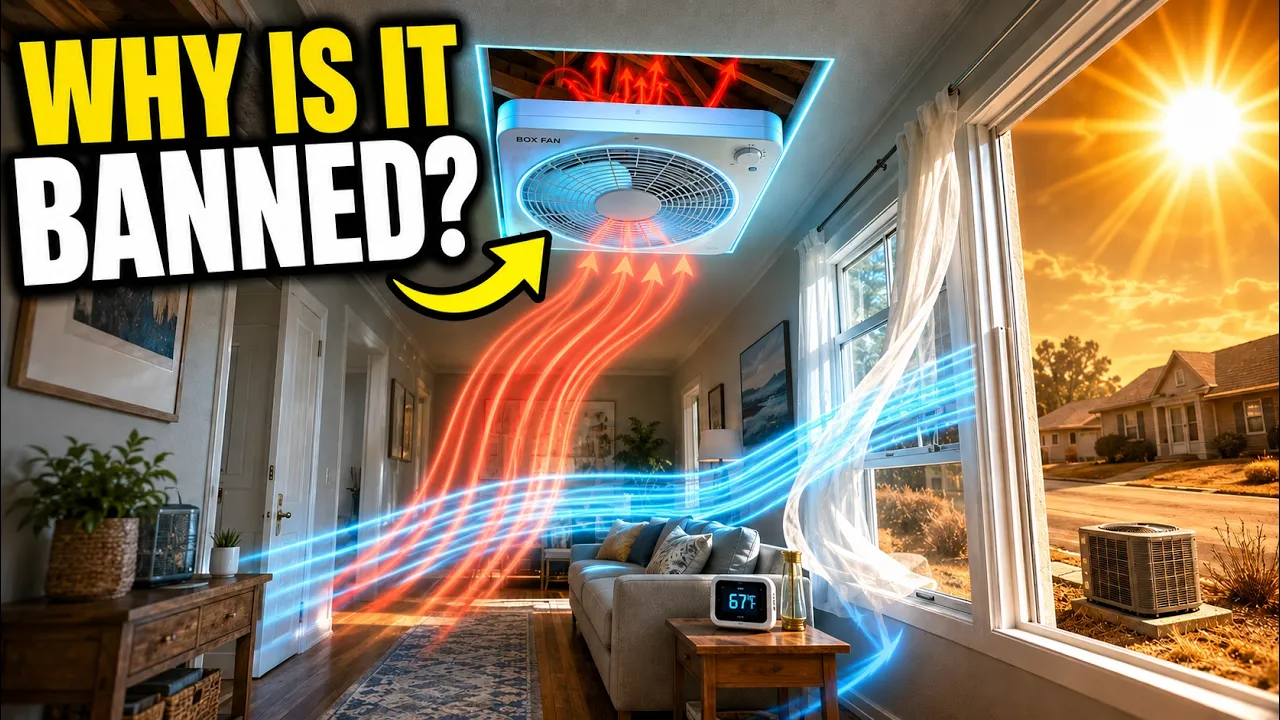
In 1983, a retired postal carrier named Harold Engstrom cut a 20-in square hole in the hallway ceiling of his stucco bungalow in Redlands, California, mounted a $30 box fan over the opening, and spent the next 41 summers without once turning on the central air conditioning unit sitting in his side yard. His neighbors thought he was cheap. His grandchildren thought he was brilliant. The University of California, Riverside, when a building science team surveyed his home in
79 words, the words spoken in the first 30 seconds at 157 words per minute.
Free, no signup. See how the first 30 seconds hold attention, with rewrites.
What this transcript is
Every word below is the caption track YouTube publishes for this video, pulled from the video itself and reproduced unchanged. It is not Prepublish's writing, not a summary, and not a re-transcription: it is the video's own published captions. English captions, generated automatically by YouTube, in the video’s original language. Source: the video on YouTube. A channel that would rather this page did not exist can ask for its removal through the contact page, and it is removed.
In 1983, a retired postal carrier named Harold Engstrom cut a 20-in square hole in the hallway ceiling of his stucco bungalow in Redlands, California, mounted a $30 box fan over the opening, and spent the next 41 summers without once turning on the central air conditioning unit sitting in his side yard. His neighbors thought he was cheap. His grandchildren thought he was brilliant. The University of California, Riverside, when a building science team surveyed his home in 2004, recorded an indoor temperature of 67° Fahrenheit on a morning when the thermometer outside had already climbed past 103.
No compressor, no refrigerant, no duct work, no monthly bill from Southern California Edison. Just a box fan, a hole in the ceiling, and a principle of physics so simple that the modern HVAC industry has spent the better part of 70 years pretending it does not exist. Because if you understood what Harold Engstrom understood, you would never write another $300 check to your power company between June and September for as long as you live.
And that is exactly what old-timers in Redlands, in Sacramento, in Fresno, and Bakersfield, and every hot inland valley from California to Virginia have been quietly doing for over 150 years. They call it the whole house fan. If you mounted the same fan in your own hallway ceiling this Saturday, you would watch your July electric bill drop by 60 to 80% and feel your bedroom hit the mid-60s by midnight without a single mechanical system running.
The entire job cost you less than $40 in materials from any hardware store. A box fan, a few 2 by 4s, a handful of screws, and about 3 hours of your Saturday morning. Compare that to the $12,000 central air conditioning replacement your HVAC contractor has been quoting you every spring. The one that comes with a maintenance contract, and annual refrigerant top-off, and a life expectancy short enough to guarantee you buy another one before you retire.
There is a reason he has never mentioned a $30 fan that does the same job for pennies a night. The company he works for, the manufacturer behind him, and every layer of the service chain between, has a very strong financial interest in making sure you never find out how simple the physics actually are. Let me show you why this works, why it has always worked, and why almost nobody in the HVAC industry will ever mention it to you.
The physics behind this is so simple, it almost feels like cheating. Here is what happens to the air around your house every single evening. Starting at about 7:00 or 8:00, the sun drops below the horizon, and the outdoor temperature begins to fall. By 10:00 at night in most of the inland United States, the air outside your house is 15° cooler than the air trapped inside your walls and your ceiling. Your house is a box full of hot air.
The drywall, the furniture, the countertops, the framing lumber, all of it absorbed heat all day long. Now that stored heat is radiating back into your rooms. Your air conditioner is fighting that thermal mass with a 3,500 W compressor. A whole house fan does not fight it. It replaces it. You open your windows, you turn on the fan. The fan pulls air upward through the ceiling opening into the attic, and that single action creates a pressure difference that draws cool outdoor air in through every open window in the house.
Every cubic foot of hot stale air sitting in your hallways and bedrooms gets replaced with outdoor air in 3 to 4 minutes if the fan is moving between 1,000 and 3,000 cubic feet per minute. That is not a metaphor. That is measured airflow. The hot air goes up out through your attic vents and it is gone. The cool air coming in through your windows takes its place and begins pulling stored heat out of your walls, your floors, your furniture.
By midnight, the mass of your house is no longer working against you. It is holding the cool temperature the fan brought in. When you shut the fan off at 6:00 in the morning and close your windows, your house starts the next day 15° cooler than your neighbor's house. The Department of Energy published a technical brief through its Building Technologies Office in 2017. It was titled Residential Ventilative Cooling Strategies, a title so boring that no homeowner on Earth would ever open it.
But buried on page 11 is a sentence that should be taped to every thermostat in America. It states that a residential fan operating at 1,500 CFM consumes approximately 50 W. Your central air conditioning compressor consumes 3,500 W. That is a power ratio of 70:1. You are using 70 times less electricity to achieve a comparable indoor temperature on any night when the outdoor air drops below 72°. Lawrence Berkeley National Laboratory confirmed the same math in a 2006 study on residential fan energy versus compressor energy.
Their field measurements across 67 homes in California's Central Valley showed that homes using whole house fans cut their summer cooling costs by $400 to $600, depending on the local utility rate. The fan itself costs less than a dollar a month to operate. And the mechanism is not some exotic engineering breakthrough. It is the temperature difference between inside and outside air after sunset. Engineers call it delta T.
You do not need to remember the term. You just need to remember that by 8:00 on a July evening, the air outside your house is almost always cooler than the air inside it. All you need is a way to swap one for the other. And if you were thinking this sounds too obvious to be real, that someone would have scaled it decades ago if it actually worked this well, you are right. Someone did. And stick with me because the history is only the first of three things I want to show you.
The third is the piece that almost no contractor in America will ever mention. Walk through any plantation home in Tidewater, Virginia built before 1840 and you will see it. The floor plan is a central hall running front to back with tall windows on both ends and a staircase in the middle acting as a vertical chimney. Open the windows at dusk and the heated air in the upper rooms rises through the stairwell and exits through a cupola on the roof.
Cool evening air rushes in through the ground floor windows to replace it. No fan, no motor, no electricity. Just a hallway shaped like a flue. Those cupolas and transoms worked, but they moved air slowly. The stack effect in a two-story house generates maybe 200 to 300 CFM on a calm night. Enough to take the edge off, not enough to flush every room in minutes. What changed everything was the electric motor. In 1930, Emerson Electric ran a full-page advertisement in the Saturday Evening Post for what they called the Emerson Bungalow Fan.
It was a belt-driven unit mounted in the attic floor pulling air through the house at speeds those old cupolas could never reach. The ad promised to cool a six-room home for less than 1 cent per hour. By 1938, Emerson had sold over 100,000 units. Sears listed whole house fans in their catalog right between window screens and screen doors. Through the 1940s and into the early 1950s, a whole house fan was standard equipment in a new American home, the same way a water heater was.
You did not ask for one. It came with the house. Then it vanished. Not because it stopped working. It vanished because Carrier, Trane, and a handful of compressor manufacturers launched marketing campaigns between and 1965 that repositioned mechanical air conditioning as the modern standard and whole house ventilation as the thing your grandfather used before progress arrived. A Carrier advertisement from 1957 shows a family in a sealed living room with the curtains drawn, the tagline reading, "weathermaker comfort, every room, every hour." The entire pitch was that you should never open your windows again.
By 1970, new construction homes in the Sunbelt were being built without operable attic fans, without cupolas, without transom windows, without any passive airflow path at all. Your house was designed to be sealed and cooled by a compressor. And you have been paying for that decision every July since. But the physics did not go away just because the marketing did. In 2003, a company called QuietCool opened a small operation in Temecula, California, about 60 miles from Harold Engstrom's bungalow.
Their product was an engineered whole house fan ducted through the attic with a damper that sealed when the unit was off. By 2023, QuietCool had sold over 200,000 units across the western United States. Their published performance data from metered homes in Sacramento, Fresno, and the Inland Empire showed an average 75% reduction in AC compressor run time during eligible cooling months. A second company, Airscape, founded in Medford, Oregon, built variable speed models with electronically commutated motors that draw as little as 30 watts on low speed.
Their metered installs in Southern Oregon logged indoor temperatures within 2° of outdoor overnight lows consistently through July and August. >> [music] >> Two companies, named cities, measurable results repeated across tens of thousands of homes for 20 years. The physics worked. The market moved on without it. Now, if you are already doing the math in your head, wondering whether this is really as simple as cutting a hole and mounting a fan, you are asking exactly the right question because there are three mistakes that kill a whole house fan setup before its first summer is over.
And every single one of them is avoidable. The first mistake is running the fan during the day. This is the one that makes you give up on the whole concept within 48 hours. You mount the fan on Saturday. You are excited. The house is hot at 2:00 in the afternoon, and you flip the switch. What happens is exactly what the physics predict. You are pulling 100° outdoor air into a house that was sitting at 82° with the windows shut.
Every room gets hotter. You shut the fan off an hour later and tell yourself it does not work. But you did not have a fan problem. You had a timing problem. The whole house fan is an evening and overnight appliance. It only works when the air outside your house is cooler than the air inside it. That crossover happens between 7:00 and 9:00 p.m. in most of the continental United States during summer. The Building America Solution Center, a DOE resource most contractors have never opened, states that ventilative cooling is effective only when the outdoor dry bulb temperature is at least 3° F below the indoor set point.
You wait for that crossover. You run the fan from that moment until 6:00 in the morning. You never run it in daylight during a heat wave. The second mistake is forgetting to open your windows before you turn on the fan. This is not a comfort issue. This is a safety issue. When a fan pulling 1,500 CFM runs in a sealed house, it creates significant negative pressure. Interior doors slam shut hard enough to crack trim. And if you have a gas water heater, a gas furnace, or a gas dryer, that negative pressure can reverse the draft in the flue and pull carbon monoxide back into your house.
The Building Performance Institute calls this combustion appliance backdrafting. The fix is dead simple. Before you flip the switch, open windows in every room you want to cool. Airscape's installation manual calls for 4 to 6 sq ft of open window area for every 1,000 CFM. On a standard double-hung window, raising the lower sash 12 in gives you about 3 and 1/2 sq ft. For a 1,500 CFM fan, you need at least two windows open.
Open them first every time, no exceptions. The third mistake is running the fan with your attic sealed. Your attic is the exhaust path. The fan pushes hot air up through the ceiling opening and into the attic. That air has to leave or you were just inflating it like a balloon. If your soffits are blocked with insulation, if your gable vents are painted shut, if your ridge vent is undersized, the fan stalls against back pressure.
The International Residential Code specifies a minimum of 1 sq ft of net free vent area for every 750 CFM of installed fan capacity. For a 1,500 CFM fan, that means 2 square feet of open, unobstructed venting. Go up there with a tape measure and check. If your gable vents are 12 by 18 in, that is only 1 and 1/2 square feet of gross area, and the screen and louvers cut it to about 1 square foot net. You may need to add a second gable vent or clear your soffit baffles.
A $20 fix that takes an hour. The difference between a fan that transforms your house and a fan that just makes noise. But whether any of this matters to you depends entirely on where you live and what your air actually does after sunset. If you live in Boise, Idaho, your summer nights drop into the mid-50s to low-60s from June through September. That is a 30° delta between your daytime high of 90 and your overnight low.
A whole-house fan in Boise is not a supplement. It is a replacement. You run it from 8:00 at night until 6:00 in the morning. Your house starts the day at 58° and your compressor never kicks on. Four full months of cooling for the cost of running a light bulb. Sacramento is nearly as good. Your July overnight lows sit between 58 and 63°. The Sacramento Municipal Utility District, SMUD, has been running a rebate program for whole-house fan installations for over 15 years because their own meter data shows homes with whole-house fans cut compressor use for 3 solid months.
SMUD is not a fan manufacturer. They are your power company. When your own utility is paying you to install something that lowers your bill, you should listen to what that tells you about the math. Now, take Phoenix. Your July overnight low is 85° That is still hot, and running a fan on those nights pulls warm air into a house that is already cooler inside. But May and September are different. Your overnight lows in those shoulder months drop into the low 70s and upper 60s.
A whole house fan in Phoenix gives you 6 to 8 weeks of free cooling on either side of the brutal core summer. That is 6 to 8 weeks your compressor sits idle. Not a full replacement, but a 40% of the season replacement. And that still means 2 months of electric bills that barely register. Houston is the honest limitation. Your summer nights stay warm, but the real enemy is humidity. Overnight relative humidity regularly exceeds 75% from June through August.
You run a fan on those nights and you were pulling moisture into every room. Your walls feel damp. Your sheets feel clammy. The fan works beautifully in April, May, October, and early November when the nights are dry and cool. But deep summer requires either a standalone dehumidifier running alongside the fan or the discipline to check a hygrometer before you flip the switch. Then there is Bozeman, Montana. Your July overnights dip into the mid-40s.
You barely need cooling at all. But every summer now brings a week or two where the daytime high pushes past 95. A whole house fan handles that odd heat wave as if it does not exist. You run it for a few nights. Your house drops into the 50s by dawn and you go about your week while the families who never installed one are dragging portable AC units out of the garage. If you live in a mild climate, it saves you money.
If you live in a climate extreme, it saves you money and it actually works on the nights when the compressor beside it is running at full capacity and still losing the fight. So the question is not whether the fan works where you live. The question is why nobody who sells cooling equipment has ever shown you the overnight temperature chart for your own zip code and handed you a fan. And that question has a very simple answer.
Why has no HVAC contractor ever walked into your living room, looked at your ceiling, and said, "Before we talk about a new system, have you considered a fan and an open window?" Why has no home energy auditor ever written it into your report? The answer is not a conspiracy. The answer is a business model. Follow the money from the moment your old air conditioner starts making that grinding noise in June. You call a contractor, he comes out, runs a load calculation, and quotes you a system.
That system was manufactured by one of four companies: Carrier, Trane, Lennox, or Goodman. Each selling equipment through a distribution chain that marks up every component before it reaches the truck in your driveway. The contractor charges you for the equipment, the labor, the refrigerant line set, the electrical hookup, and the permit. That installation runs between $8,000 depending on your region and your house. But that is only the first transaction.
Your new compressor needs an annual maintenance visit at $150 to $200 a year. Every 3 to 5 years, a refrigerant recharge at $200 to $400. Your air filter needs replacing every 60 to 90 days at 8 to 15 dollars each. And the compressor itself has a functional lifespan of 12 to 15 years before it degrades enough to justify the next replacement. Lennox International reported in their 2023 annual filing that residential HVAC replacement and service revenue accounted for $4.8 billion in a single fiscal year.
That is not new units in new homes. That is the replacement and maintenance cycle applied to homes that already have systems installed. Every dollar of that revenue depends on one assumption. Your house needs a compressor to stay cool. The moment you mount a fan in your ceiling and open your windows, that assumption collapses. The manufacturer does not sell you a unit. The service contract does not exist. The refrigerant recharge does not exist.
The 12-year replacement cycle does not exist. Your $30 box fan needs a $5 motor replacement once a decade, if that. A product that costs $30, lasts 30 years, uses no refrigerant, requires no service contract, and never needs a permit is an extinction event for recurring revenue. And here is where the structural barriers lock it in. No building code in America prohibits a whole house fan. But no building code requires your contractor to present one as an alternative.
When your HVAC company runs a manual J load calculation, the industry standard sizing method published by ACCA, ventilative cooling is not a recognized offset. It does not reduce your calculated load. It does not shrink the size of the system they quote you. And when your home gets appraised, a central air conditioning system adds measurable value. A whole house fan adds nothing, zero. The appraiser does not have a line item for it.
The financial system that values your home pretends it is not there. Your contractor is not lying to you. He was trained on compressors, certified on compressors, and the software on his laptop only calculates loads for compressors. The fan was never part of his education, his licensing, or his revenue. It was designed out of the conversation before he ever knocked on your door. But that does not change the temperature outside your house at 9:00 tonight.
And it does not change what happens when you put a fan in the right place and open the right windows. Here is how you build one in a single weekend. Friday evening, you do three things. >> [music] >> First, go up into your attic with a tape measure and find the hallway ceiling below you. You want the fan centered over the main hallway on your highest floor because that is where the hottest air collects. Locate two ceiling joists.
In most American homes built after 1945, those joists are spaced 16 in on center. Measure the distance between the inside faces and write it down. Second, check your attic ventilation. You need at least 2 square ft of net free vent area for the air flow you are about to create. If your soffits are stuffed with blown-in insulation, pull it back from the eaves and make sure the baffles are clear. Third, drive to Home Depot or Lowe's and buy the following.
One Lasko 20-in box fan, model B20200, $27. Two 8-ft 2x4s, $4 each. One box of number 8 by 3-in wood screws, $7. One tube of silicone caulk, $5. One small pack of foam weather strip tape, $3. Total out the door is under $50. If your store does not carry the Lasko, any 20-in box fan rated above 1,500 CFM works. The CFM number is printed on the side of the box. Saturday morning, you start cutting. Mark your joist locations on the hallway ceiling from below using a stud finder.
Draw a rectangle between the two joists that matches the outside frame dimension of your box fan. For a standard 20-in Lasko, that rectangle is 21 and 1/4 in by 21 and 1/4 in. Put down a drop cloth. Cut along your marks with a drywall saw. The drywall comes out in about 4 minutes. Now, you are looking up into your attic through a square hole with a joist on each side. Cut your 2 by 4s to length and screw them between the joists at the top and bottom of the opening to create a complete [music] frame.
Use two screws per joint. Run a bead of silicone joint where wood meets wood to reduce air leakage in winter. Saturday afternoon, you mount the fan. Set the box fan face down on top of the framed opening so it pulls air upward from the hallway into the attic. Secure it with four L brackets screwed into the fan housing and into your 2 by 4 frame. Plug the power cord into the nearest attic outlet. If you do not have one, run a 14 gauge extension cord to the closest outlet and tack it along the joist with cable staples.
You can hire an electrician to add a dedicated outlet later for about $120, but it is not required for your first test. Below the fan on the ceiling side, cut a piece of 1-in rigid foam insulation board to fit snugly inside the opening. This is your winter cover. When cooling season ends, you push the foam up into the hole and it seals the opening. Total working time from first cut to mounted fan is about 3 hours. Sunday morning is when you find out what your house can do.
Saturday night at 8:30, check the temperature on your back porch. When it drops below your indoor reading, open windows in every room you want to cool. Raise each sash at least 12 in. Walk to the hallway, reach up, and turn the fan to high. You will hear it pull. You will feel the air moving through every doorway. Place a digital thermometer on your kitchen table. Write down the reading. Go to bed. At 6:00 Sunday morning, before the sun heats anything, walk to that thermometer and read it again.
Write that number down next to the first one. That number is your baseline. Everything you do from this point forward gets measured against that single overnight result. And there are adjustments worth making because the $30 version you just built is not the final version. Before you order a single upgrade part, here are the details I deliberately held back until now because they only matter once you have already decided to build this.
And if you have made it this far, you have decided. I can tell. The first detail is winter heat loss. That square hole in your ceiling is an open pathway between your heated living space and your unheated attic. Every hour it sits uncovered in January, you are bleeding warm air straight up and paying your furnace to replace it. The 1-in foam board you cut on Saturday is only R-6.5. And your attic floor insulation is probably R-30 or higher everywhere else.
The fix is to laminate two pieces of 2-in polyiso foam board together with construction adhesive, giving you a 4-in cover at R-26. Cut it a quarter inch smaller than the frame on all sides. Wrap the edges with adhesive-backed foam weather strip tape. And press it up into the hole from below. Total cost is about $11. When cooling season ends in October, that cover goes in and stays in until May. Do not skip this step.
The second detail is noise, and this is an honest trade-off. Your Lasko box fan on high speed produces roughly 55 to 60 dB at 3 ft. That is the volume of a normal conversation. If the noise bothers you, your first option is free. Run the fan on medium. You lose about 20% of your airflow, but you drop the noise to around 48 decibels. Your second option costs money. A purpose-built unit like the QuietCool QC ES-1500 runs at 25 decibels, moves 1500 CFM through an insulated duct, and seals automatically when it shuts off.
That unit costs $190 and installs in about 90 minutes in the same opening you already cut. A genuine upgrade. But Harold Engstrom slept fine behind a box fan for 41 years. You might, too. The third detail is fire safety, and this one is not optional. The opening you cut creates an unobstructed vertical pathway between your living space and your attic. In a house fire, that pathway lets flame and smoke travel directly into your roof structure.
The International Residential Code, section M1503.4, [music] addresses this. The fix is a fusible link damper, a small metal flap that remains open under normal conditions. If the temperature at the damper reaches 165°, the link melts and the flap drops shut. The part costs $8, 15 minutes to install. Some jurisdictions require it by code. Install it regardless. The fourth detail is dust and pollen. Your fan is pulling outdoor air through every open window, completely unfiltered.
If you have allergies, you will notice within 3 days. The fix costs $3 per window. Buy a standard 20 by 20-in furnace filter rated MERV 4 or higher. Cut it to fit inside the window frame behind the screen and hold it with two binder clips on the sash. Replace them monthly. The cheapest air filtration system you will ever own. The fifth detail is two-story homes. If your bedrooms are upstairs, mount the fan in the highest ceiling point you can access, usually the second floor hallway.
Never mount it on the first floor of a two-story house. You want the fan pulling from the hottest air layer. Cool air enters through your ground floor windows, rises through the stairwell as it warms, and gets pulled out through the second floor fan. Your entire house becomes the flue that those Virginia plantation builders understood in 1790. The sixth detail is humidity, and this is the second honest limitation. In any climate where your overnight relative humidity stays above 60%, the fan is pulling moisture into your house along with the cool air.
The fix is a $15 digital hygrometer on your porch. Before you flip the fan on each evening, check the reading. Below 60%, run the fan. Above 60%, close the windows and use your AC or pair the fan with a stand-alone dehumidifier drawing about 300 W in the hallway. You need to know the number before you make the call. Buy the hygrometer. Check it every night. Use it. The seventh detail is electrical load. Your box fan draws between 70 and 90 W depending on speed.
That is negligible. But if you upgrade to a larger unit rated at 3,000 CFM or above, you may draw 250 to 400 W on startup. Make sure your circuit can handle the load without tripping the breaker. A dedicated 15-A circuit is ideal for any fan above 2,000 CFM, and that is the one upgrade where calling an electrician is worth every penny. If you want to power, heat, and cool your home off-grid, The Passive House Files show you how.
Full plans, exact materials, and the honest numbers nobody else gives you. It's not too late to start lowering your bill. Scan the QR code and see for yourself. The cupola on a Virginia farmhouse built in 1790 was doing the same thing your box fan does tonight. Moving hot air up and out, pulling cool air in, using nothing but the temperature difference between the earth and the sky. That is a 230-year-old answer to a problem your utility company pretends requires a $12,000 machine.
Go stand in your hallway tonight. Feel the dead hot air pressing against the ceiling. Now, picture next July. Your neighbor's compressor is grinding at full load behind his fence. His meter is spinning. His bill is climbing past $300. Your house is silent. Your windows are open. Your hallway feels like October. The only sound is a breeze moving through the kitchen. A $30 fan doing the work of a system that costs 400 times more, lasting 30 years on a $5 repair instead of 15 on a $5,000 replacement.
A lot of what this channel covers disappeared from the mainstream, not because it stopped working, but because a sell-it-and-service-it industry decided that simplicity was not profitable enough to sell. A box fan and an open window cooled every house in America for 100 years before anyone told you it could not. The physics never changed. The revenue model just found something more expensive to put in its place. If this is the kind of knowledge that matters to you, subscribing and sharing is the simplest way to make sure it keeps being found.
Tonight, before you go to bed, put a thermometer on your nightstand, open two windows, and turn on any fan you own. At 6:00 in the morning, read that thermometer and tell me in the comments exactly what it says. I read every single one. Next video, I am covering radiant roof barriers, the $4 roll of material that drops your attic temperature by 40° before the fan even turns on.
The words are the caption track's own and nothing is reworded or re-transcribed. Paragraph breaks are placed between sentences so the text reads as prose.
Free tools for your own script. No signup, no login.
Paste your draft and see where viewers are likely to drop off, with a rewrite for each weak line.
Paste the first 30 seconds of your own draft for a hook score and rewrites.
Check your draft against YouTube's advertiser-friendly guidelines before you record it.
Read this channel's public videos and transcripts, and download a writing brief for it.
Sentence shape
| Measure | This transcript |
|---|---|
| Sentences | 372 |
| Average words per sentence | 13.9 |
| Longest sentence | 53 words |
| Questions asked | 2 |
| Sentences containing a number | 130 |
Most used terms
Filler phrases
10 in total: like 5 · actually 4 · kind of 1.
A literal whole-word count of the same phrase list the Prepublish browser extension uses, so a phrase inside another word is not counted and a phrase used in its ordinary sense still is. It is a count and not a judgement.