Getting the transcript
Reading the captions from YouTube. A video nobody has opened here before takes 10 to 30 seconds; this page fills in on its own.
Getting the transcript
Reading the captions from YouTube. A video nobody has opened here before takes 10 to 30 seconds; this page fills in on its own.
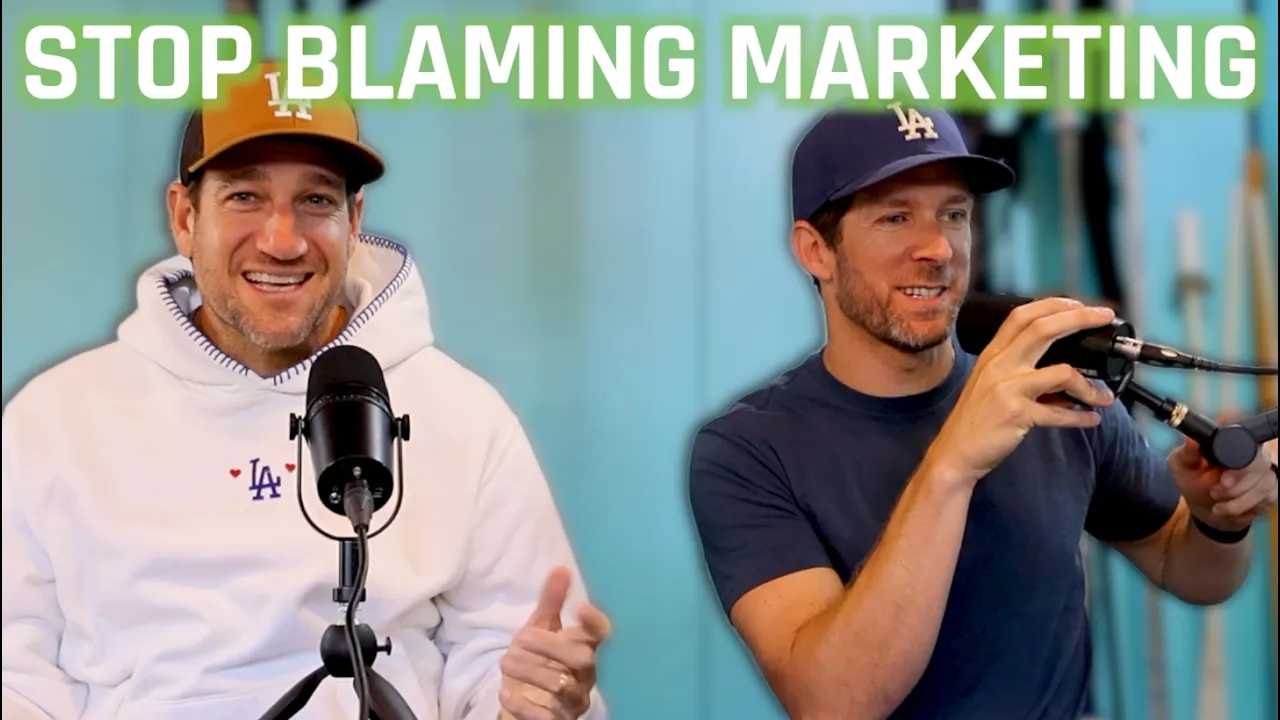
The Andrew Faris Podcast · @andrewfarispodcast
Words
18,538
Runtime
1:17:21
Speaking pace
240wpm
Reading time
77min
240 words per minute, above the 201 75th percentile of 349 measured videos. That distribution comes from the 349-video hook study.
Opening (first 30 seconds)
Taylor Holiday is back on the show. Today we are in my garage talking about all kinds of different stuff. Random show style episode like we've done before. We talked today about the equity split in my business. Taylor gave me direct advice as Patrick Kadoo has joined AJF Growth as my COO and business partner. I've been calling it that, but we actually haven't technically worked out the business partner part yet, like the equity split. So Taylor just sat and told me like what percentage of equity should Patrick have versus me? What should I be looking out for? How should Patrick value the equity? how should he pay for the equity? Really candid conversation about stuff that
120 words, the words spoken in the first 30 seconds at 240 words per minute.
Free, no signup. See how the first 30 seconds hold attention, with rewrites.
Sentence shape
| Measure | This transcript |
|---|---|
| Sentences | 1,151 |
| Average words per sentence | 16.1 |
| Longest sentence | 244 words |
| Questions asked | 136 |
| Sentences containing a number | 52 |
Most used terms
Filler phrases
936 in total: like 514 · um 101 · uh 84 · actually 72 · you know 41 · right? 36 · sort of 27 · kind of 25 · I mean 21 · basically 10 · literally 5.
A literal whole-word count of the same phrase list the Prepublish browser extension uses, so a phrase inside another word is not counted and a phrase used in its ordinary sense still is. It is a count and not a judgement.
Free, no account. See where attention is likely to drop, with a rewrite for each weak line. The free check shows the scores and the one issue costing the most. Or run it on the words above first.
Free · No login · See a sample audit first if you prefer.
What this transcript is
Every word below is the caption track YouTube publishes for this video, pulled from the video itself and reproduced unchanged. It is not Prepublish's writing, not a summary, and not a re-transcription: it is the video's own published captions. English captions, generated automatically by YouTube, in the video’s original language. Source: the video on YouTube. A channel that would rather this page did not exist can ask for its removal through the contact page, and it is removed.
No Script X-ray for this video: YouTube shows a Most replayed graph only once a video has enough views.
Taylor Holiday is back on the show. Today we are in my garage talking about all kinds of different stuff. Random show style episode like we've done before. We talked today about the equity split in my business. Taylor gave me direct advice as Patrick Kadoo has joined AJF Growth as my COO and business partner. I've been calling it that, but we actually haven't technically worked out the business partner part yet, like the equity split.
So Taylor just sat and told me like what percentage of equity should Patrick have versus me? What should I be looking out for? How should Patrick value the equity? how should he pay for the equity? Really candid conversation about stuff that I think Taylor is really, really helpful on. So, there's that. We talked about CTC's coaching tree, which is something that's come up a lot. Why have all of these people who have left CTC done such good things?
Is that does Taylor attract those people? Does he develop those people? What's going on there? We talked about whether or not Facebook ads actually used to be easier or not. People say that. Is it is it was it actually easier? All kinds of good stuff. Very business focused today. Some of these episodes get all over the place, but it's very business focused today. Hey, I think you're going to like this episode a lot as usual with these.
Let's get into it with Taylor Holiday in my garage right now. >> Do you want to just start right in on my equity deal with Patrick? >> Yeah. How is this not done yet? What are you guys doing? >> We're fine. >> Why can't we just get on a call and work this out? >> Because there's too many like three episodes now. >> Well, okay. So, we're almost there. I mean, it it is one of our rocks because we're doing US. So, one of our rocks to get uh for gosh >> to get this done through the um before the quarter. >> Mhm. >> Uh so, it's definitely happening.
Um okay, Patrick, my uh business partner soon. >> Yep. >> COO. >> Yep. >> We just been call We've just been calling each other business partners because it's happening. Like, it's just it is happening. Um >> okay, here's the question. You've been advising us. Thank you for your help. >> Like three Marco Polos. >> It's been helpful. I mean, nobody I know has thought more about how equity actually plays out >> in this kind of setting.
For sure. >> Yeah. Right. And so, your advice has been extremely helpful and it's really underrated how much that matters. Like, I think just like >> No, this is something you want to get right. You want to get this right. >> Exactly. I've watched you get it wrong so many times. >> I just don't want to follow your footsteps. >> So, okay. Um, so, uh, so, okay, but here's actually the thing that I want to ask really specifically because I actually haven't talked to I talked to Patrick this morning, okay?
And I was saying like, "Okay, what do we need to do to keep moving this ball forward?" And uh and he said, "Well, the one thing that came up in my conversations with Taylor, because both of us are asking you for advice." >> Yeah. >> And what I what I asked you to do to frame it was don't think about loyalty to me to Patrick. Think about loyalty to AF growth. Like imagine you're an equity holder in AF Growth. What do you think is best for the business as you can see it?
Okay. >> Um and you know, originally we had talked about sort of I would own twothirds of the business, Patrick would own about a third of the business. That's the way we had looked at it. >> Yeah. And but you told Patrick you think it should be closer to 50/50. Uh >> is that what he said? >> That's what he said. Okay. Uh but you could say whatever it actually is. So what is it? Is it 4951? What what do you think is actually best for us?
Because this is the thing I think is interesting. Our equity split may be a curiosity to people, but I'm actually really curious to unpack your thinking about why you say the things you're saying about it. >> U well there's a few reasons. So, I get the sense that when you talk about Patrick, you talk about him and you've used the word business partner. Um, not that he owns a part of your business. I think these are different things.
Um, and I think that the closer you are to equal in it, the more truly the partnership is. Um, so that's just like a little bit of a >> philosophy. Should I say, let me say something about that first. Y >> one of the things that we were first sorting out in this was we don't we think we think our skill sets are really complimentary. >> So when Patrick brought this up on the call today, what I said was >> I think we maybe hedged the initial equity conversation a little bit around the idea that yes, he was joining my thing >> as opposed to it was going to be our thing and he was going to have a really big part of my thing. >> Right. >> But what I told him today was I just don't really see it that way anymore.
Right. I and so so I said he said like are you open to the idea that it's closer to 5050? And I said yes because that's how I in my mind I think of it as like two talking about it >> a two-headed monster. Well, I'm actually glad to hear that because that's that's really what I feel is that like there is this thing that Patrick brings to the table that I do not bring and the business is unscalable without that thing. Right. >> So it's like I it it doesn't exist without Patrick as as a future thing that it could become.
Right. So anyway, so to to your point about the equity reflecting the actual relationship, >> I don't think that's true, by the way, that you say that you like you're very differential in that, but I think you would figure out lots of things without him. I think I think it's the question of like how much valuable how how much more valuable do you think he can make it? How much faster? Um >> yeah, >> because uh but but regardless like >> I think that you should maintain control over certain decisions.
Um which I think is what the 5149 represents and you can define what those things are. I think there should be a pretty small subset of things that wouldn't require both of you, but there should be some things. Um, and then the ultimate protection for me is the buyback, right? Like that to me is actually the most important thing, which is the way you hedge the idea of whether or not you're actually complimentary is that to get for him to get to a place where that 49% is fully vested and owned.
Like there should just be a way for you to get your company back in the event that you guys are wrong for whatever reason. Um, and I think if you do that, then there's pretty little risk to the partnership because in the event that you don't exercise the buyback, it's because you've realized the value. And so, in that sense, it's like the splits don't really matter other than what they sort of represent symbolically because the buyback actually represents the hedge against the value creation, getting to a level that would warrant it being a good partnership because the second it's not, you buy him back out and you shut the partnership down and that's only cost you whatever the cost of the buyback is.
Um, so I think that's where I look at it and go like, hey, you guys are creating a symbolic partnership that's governed by this buyback, right, that actually is about the value creation. And so like the amount matters. I know like Patrick, he had he like when he initially messaged me and I'm I'm assuming we're okay to share, >> he was like, I don't think you're right on value. And I'm like, well, I don't think the value is the thing that you guys should get hung up on.
Yeah. because I think to try to value the entity today would be the wrong exercise for what you're trying to create in this partnership in my opinion. >> Oh, so I think that's right partly like you you can't do like a TTM EBID value on this. I don't think so. And I I think for multiple reasons like it's just it's just not a bank loan, you know, like it's not like and it's and it's not and it's not like a public market thing.
So I think there's a bunch of questions around that that I think are are helpful. >> And what I even said to him is like if you don't think Andrew the person is worth this much money then what are you even doing like then then I think you are making a horrific bet in total like like if you think the distinction in value Andrew's value to you for what you guys are going to do is the difference between 1.7 and $ 1.1 million then you are >> you're in the wrong endeavor >> yes >> like it should be so obviously worth that amount of money that we're talking about in this distinction for what you guys think you're going to go make together otherwise like get out of here because this is this is not trying to buy a stock to make 12% % return where the base underlying cost price really matters. >> Like the the distinction between 1.3 and 1.6 in terms of the total value creation in the future should be inconsequential. >> Those numbers are fake. >> Yeah.
I'm just saying that like >> I don't feel like that's the right assessment that like oh you're worried about whether you're going to make 12% or 22% in the long run. >> Now again part of this is like your guys' conversation of what is the endgame? Because if the endgame was sell in 12 months, well then the underlying cost of today really matters. >> Yeah. But if if you're saying, "Look, we're trying to build a $50 million thing, well then like the underlying entry point today probably matters less, you Um, so >> this is the reason I think it's an interesting conversation worthy of like podcast time is because >> what like one of the things I think that you're really good at doing and I think I've I've learned from watching these conversations play out at CTC and and sort of the things that we've been in together in various ways is like the way that um the way that equity uh essentially ought to be aligned to reality basically, right? which is like like okay so what is what is the actual partnership like and what are you actually trying to accomplish and what is the what is the value of the person and what is the you know and like it's not it's >> what do you want your employees to think of each of each of you >> that's right >> like how do you want them to be perceived hierarchically like like what kind of authority do you want to grant each of you like there's lots of things that it communicates >> so I think I think all those things are good I don't want to get too hung up on some of the things I think you brought up a lot of good stuff there and it make makes sense so so you think the idea of like a closer to a 50-50 split is a bigger reflection of the reality of the partnership. >> The other big concern I have is just he's rich. >> Yeah. >> This is like one of my fundamental concern >> because he sold supply. >> Yeah.
And again, I don't know how rich Patrick is. I've never asked him for his bank statements, but like I'm genuinely concerned that he's going to tap out in the event that things are not providing the long-term upside or his family creates he starts to see a cost to his family where the benefit doesn't match. So you're concerned about that for me essentially that eventually he would go like I I no longer need to do this. >> Yeah.
Well, so it's got to be really worth it to him. >> Yeah. >> And so maybe it is at a third like I the difference between 33 and 49 is probably less consequential. I think it matters somewhat. >> So I see you want him to put more in now. I I want >> because you want you want him really pot committed >> because I think the two of you together fully committed as assets like I think you guys will deliver value to each other and I I would my biggest concern is that it doesn't matter enough to him.
Yeah. Yeah. Um >> because I also think he's developed all sorts of like philosophical principles about work life balance and other things that concern me. So I that's like a concern I would have about both of you in some way. >> Right. We we're actually that's actually part of the reason why I like partnering with him is because we are so aligned on that stuff. >> Yeah. >> Like we we we have so much shared vision that I don't think we're going to get to a point where he and I are like, "Hey, you're not pulling your weight here around these things." Because because we don't Yeah. because we are not necessarily trying to create the largest outcome possible.
And and again, this is another thing I think you've been really good on. I remember a long time ago you said like you didn't want CTC at a different phase of CDC's business. This is no longer true I think of CTC, but you you didn't want to use the word like we're going to be the best at something. >> Yeah. Yeah. Right. Cost too much. >> Right. The logic was when you watch Kobe Bryant say he wants to be the best, >> he means I'm going to shoot 2,000 free throws every day. >> It's and I'm going to sacrifice everything else in my life for the achievement of that idea.
Correct. I heard a crazy story about him in a meeting with some people where he almost kicked somebody out of the meeting because they were talking >> the way that Patrick and I talk, you know, that was like postplaying career. Yeah. >> Yeah. Um anyway, uh when he was like investing potentially and he was like you should just leave this meeting. You're not ready to be part of this. >> If you are building a business, you are already remote.
I don't know why you wouldn't be considering working with incredible talent from the Philippines with my friends at more staffing. I actually maybe do know why you wouldn't do that. And it's because you think of Filipino talent in your mind as just like introlevel $5 an hour talent. And if that is your conception of what's possible for hiring in the Philippines, you are doing it wrong. And you are doing it wrong. I can say that uh with so much confidence because I am building my businesses with talent from the Philippines.
Like everything I touch right now has more Filipinos working in it than people in the US by a long shot. And I could not be more grateful for that. And it is a great relationship because I go to the with uh with the help of more staffing and hire people in my business who I'm paying at the higher end of the market in Filipino costs and yet it is still meaningfully uh more affordable for what my business is can do than if I was doing that same thing in the US. that actually allows me to hire more people, incentivize people really well, create margin in the business, grow the business, do all the things that I want, while at the same time um creating really great quality of life in the Philippines just cuz your dollars go so far there, including for your team when you hire them.
And that means you get people who are not only you're not only attracting high quality employees because you can pay at the top of the market, but you also retain those people and have people who love and are motivated to continue working in your business. It's just a huge win-win. All of the things you think about are uh as problems, particularly if you're concerned about English speaking or cultural awareness are just not really.
Everybody in the Philippines grows up speaking English and understanding American culture pretty well, watching American TV, all those kinds of things. So, go check it out today. I could not be more grateful for Lara and JC and their teams in the Philippines. I can go on and on about it. Morstaffing.co/ af. They even give you a one-year guarantee. So, if you hire somebody, they don't make it for a year in your business.
They just don't work out. But sometimes hiring goes that way no matter how good of a job you do. Uh they will help you replace that person with no additional recruiting fee. So that's a really awesome guarantee. Morstaffing.co/ af get going with it today. I think and that that's what I mean when I say like we're not trying to create the largest outcome possible. I recognize that we are not >> we are not doing that. But because we're aligned on that I feel good about it anyway.
I think so you're so you the 50-50 thing that's interesting. So it's partly about perception within the company and all those kinds of things, but also partly about you want him to be pot committed because you're concerned about feel it's a relationship and I just think that the 13% value like again I just go for both of you if you don't think he can create like to me >> I do I do I have no problem with it. >> Yeah, I just like what what are either of you giving up here?
Um >> nothing money he's putting money in to buy it. So >> that's actually the biggest thing is he has to be I think that's the biggest cost in the whole thing is like he has to be willing to buy more which means more dollars to me now. >> Yes. >> And that's actually my concern for him is sort of like I I don't I don't know how much money he has exactly either. >> That's the thing I want it to hurt. I want I want him to be at risk. >> Yeah. >> Candidly like that's another part of it too is that like I don't want it to be like a >> nominal amount of money that's like oh if we lost it like whatever you know I don't want it to be that way.
I think that's I think there's >> I think that that equity like this is one of the things like the the risk >> is a is a as important as the upside like yes that you need carrot and stick you need both um and if there's no if the stick is like whatever then it becomes easier to walk away from >> and I'll say like for me the idea of having less of the equity >> as a percentage it also makes me think okay I actually have to work a little harder for the total thing to be bigger because I get a smaller percentage of the total thing which is I would want if I were him, too. >> That's right.
Yeah. And I think what I'm saying is I think that aligns our incentives nicely. Yeah. I really I mean what I told Patrick also about this was like >> definitely talk to Taylor like I want I want Taylor's input on this. Like I I think again if you sort of position yourself as loyal to the business >> then it's like well what do you think is best for the business? And all the things you're describing reflect that to me which is this this thing.
This is one of those things I I think I have less developed opinions on and feel like >> the only concern I would have is if you guys are going to bring in someone else and and so that >> that's that's actually the one concern I have too. >> Yeah. And almost for sure we will do something like that at some point and so that's like the concern I have like whether it's a employee pool or something. >> Well then I would be careful then I probably wouldn't go all the way to 5149 because I just would never want you to find yourself in a position where someone else could kick you out of the company.
So yeah, like so I do think that if you both agree like, hey, we're going to do a 20% employee pool at some time or we're going to do we think that there could be a world where there's a third partner who does XYZ or we want to do an acquis whatever it might be that would lead to a position where suddenly Patrick plus person new could affect you negatively. That's the only >> What if they need to be able to do that? >> Yeah.
What if I do such a bad job that Patrick at some point needs >> you're being altruistic here in OA that I think you should be more selfish? >> That's just my personal opinion. I think you should be allowed to mess up your own company and keep it. >> Yeah. Well, I mean that's part of what I'm saying is it my own company or do I or is my partnership with Patrick at a point where it's not really my own company anymore. >> Yeah.
I don't >> you know until where like actually like what we need is for Patrick and I to be able to be united against sort of anybody else at an equity level. Um yeah. Uh again like position yourself as sort of I mean I know you're confident in me. You've expressed that a lot of times. So like what so so maybe you do view it as like no I want you if if I'm a shareholder in this thing I want you to maintain control. >> I would never give up control.
There'd be no scenario where I would seed a position that someone could >> remove the thing from me. >> Mhm. >> If I were you. >> Yeah. Yeah. Okay. >> Um Yeah. Or or I would like so narrowly define the parameters under which that could occur like that. if you truly like screwed up people's lives or embezzled money or something like fine but otherwise like I don't think that should be >> a possibility. >> Yeah. Okay. Um I mean one of the things that I have thought about in all this is like in the sort of risk reduction thing I'm I've tried to play out the the trade-off between wisdom about like looking down what you're doing there which is like you're looking down the the into the future and saying this this kind of thing could happen.
Make sure you protect it. This kind of thing could happen. make sure you protect it. I think that's really important and really what is part of why I like really appreciate your advice on this stuff. Um there's another part of me though that has said even with Patrick like we sort of did this assessment in the beginning. We literally did actual literal assessments at points to try to figure out as best we could. And at some point I got to the point where it's like I don't think I can increase my confidence in this decision anymore than we're at right now.
And the reality is it could go bad. Y like I mean I think that's just one of the things I've sort of gone to in my mind is like at some point yeah I don't know the partnership could go bad and and we'll we'll have to deal with that when it happens and you know and so I don't I don't want to let that be a um excuse to not think carefully but I also am trying to be cleareyed about the idea that like >> in any any way we arrange this it could go badly and um and hopefully it won't but like who knows what the future is like you know so >> u okay thanks >> good luck >> super helpful We'll keep you updated.
Uh, okay. You want to do collective balance sheet? I don't know. Is there anything Is there anything non- businessy? Should we stick with businessy things? >> Um, you got >> We could keep one of So, I'm having a conversation with I don't know if I should say this yet, but a former colleague of ours that is getting into the game, too. >> Yes. Okay. I know who you're talking about. >> Two of them. >> Um, >> I I know both of them who you're talking about.
And so I was just thinking about >> Oh, actually maybe one of them on this list I didn't know. One of them I did. >> Yeah. One of them's public about it already. One of them is not. >> Okay, great. All right. >> Um and so we're going to have a conversation tomorrow and I've been like talking through it and I just keep thinking to myself how sad it is that these things are all going to end up like bludgeoning each other. like that there's just this like when I read person three on that list content I'm like you are just saying all the things we did together and now you're just saying it through your own voice and like there's variations but it's like man is there is this really the way is like I think about this with TL and them it's just like is photocopy repeat the actual maximum value creation for individuals and it makes me sad that it may be the I don't think you're being clear.
I uh not about the No, no, no, no. Not about the people about the concept. Uh like you're saying there's a kind of Are you saying that what you want is that people who have been in your ecosystem to go create new and interesting things as opposed to replicating >> in in some ways? Yes. I want to I want them and you to recognize that the reason we won and the thing that we did was compelling was because of original thought and that >> unique value proposition in the world matters um and that finding the way in which you differentiate yourself from everything forever is important.
Yes. >> Um >> and this goes to this. So, so the the quote I put up there, I'm going to tie this to the first point, was this your idea that you talk about all the time that it's never been a better time in e-commerce and the collective balance sheet. >> Um, >> and more and more I've just come to have this like almost Peter teal to, you know, maybe speak of the antichrist here or whatever your view of it may be, but but is that like the goal is monopoly.
The goal is not perfect competition. The goal is to create a monopoly. And how do you do that? Um, and and I I think a lot about that in the context of a service business, which is like the most competitive, like lowest barrier to entry. Anyone can grab a mic and create a podcast world. Like how do you actually create a unique value proposition in the world? And so I think about all those people on the list and that that's like my challenge to them and that's why I think like I've always been like compelled by the idea that you think you can solve create.
So it's like the thing that I couldn't do not going out and saying do forecasting and like you do talk about that but that's not I don't feel like you're like >> that's table stakes >> by exactly you're not >> we have to do it to be responsible you think you can solve something novel and I actually I I have a deeper appreciation for that pursuit in the world. Well, and when I So, you're definitely right and this is very conscious like I I when I assess the agency landscape in DTOC, >> y >> what I think is there is essentially no chance for not only us but for anyone to compete with you >> on the on on the profit machine, >> right?
On our own ideas >> and it's because you have too big of a head start and too much money now. Y >> you have too you there's just no world in which I can do this. And what I'm concerned about is that even on the stuff that I think I can beat you on >> that actually you you still are just too resourced >> that like I you're it's just like the Dodgers and the Brewers that we're going to see. It's just like the Brewers are really analytically good and smart as a team.
They do a great job with player development. Their bridging development is awesome. The Dodgers just have too much money. Yeah. >> They just they just they're just too So they're not only are good at all the same things, but they can afford better players. >> That's right. Uh, and so it's just going to be really hard for the Brewers to compete. As I say this, probably by the time this goes out, the Brewers will have come back and won four out of six.
But the but yes, and so so what I my I actively assess this and say you aren't good at creative, right? >> CTC, I would never send somebody to CTC to say go get the creative that is going to unlock your ad account and win and create scale there. In part because you would never sell them that, right? >> Um, and so it would be it would be disingenuous, right? So, what I have thought is maybe Patrick and I can create the best creative shop combined with the best media buying and financial stuff in DDC to where maybe if our maybe if our maybe if we can 8020 the other things in the financial part of the business to where it's good enough, we can then get to a point where it's like okay our creative is going to be so good that we are going to solve this way of doing uh winning in creative because it will be different than what you can do and maybe it's something that I can do and maybe not.
That's the bet. That's the bet. It's time to switch your customer service help desk software to Rich Panel. Rich Panel is AI first customer service software that creates a great experience for your customers, a great and smooth experience for your customer service team, and also saves you a bunch of money. So, let's just talk about that last part first. If you switch over from Gorgeous or Zenesk, Rich Panel guarantees that you will save at least 30% on your customer service help desk bill.
If you care about running lean opex, you should be interested right then and there. Okay. But it's not just that. it is uh more affordable. It's also that it is a great experience for like I said your customers and for your team as you scale. First of all, on average they see a 30% reduction in customer service tickets when brands switch over to Rich Panel. That's because in large part their self-help uh customer service portal that goes on your website like is so good that customers get answers to their questions much faster and much quicker than going through uh customer service tickets the old way.
And that's one of those things where being AI first really makes a difference, right? Uh they've been they've been built from the ground up. AI first. If there's anywhere in your business where AI makes a ton of sense to make an immediate impact, it's probably customer service. Like getting answers to questions you need quickly, sorting through large amounts of orders, all that kind of stuff, helping your customer service agents craft answers to questions really quickly, all that kind of stuff.
They even have, by the way, an AI agent that will go respond and interact with questions uh on your Facebook ads and your Instagram ads. That's really, really cool. That's been a pain for the entire time I've been in business. And by the way, very large brands that have like serious brands are using that. that's so accurate and so good and so reliable that large brands will use that uh to do it like and in fact in general it's worth noting that uh rich panel is not only good and not only more affordable but it is scalable with your business.
So uh like brands like Ridge and Lomi and Pila are using Rich Panel and that's because it's great software that works at scales with you. So go to richpanel.com to get started today. richpanel.com get on a call switch over it's a twoe transition to rich panel from your old software. Go check it out. Like if I were right now going and I was sort of walking into the agency landscape to compete, the the game I would play would be like revenue is the goal, you know, like you want to occupy this contrarian position that is actually the place where you can develop like not every the key is to make sure not everyone agrees with you, right?
You want a loud um opposition. That's one of the other important things is that you want to come out and create this sense by which there are a lot of people to disagree, but then there this there's your tribe. There's this small cohort of people that deeply and intimately agree with you and then best case scenario is you're right, right? Like so that's how you really win, right? Is that you have this contrarian idea and then you end up being right about it.
That's another Peter Tealism, right? But but but I I see this all the time where I watch a bunch of people go, "Oh, we're going to like occupy the like profitability and marketing and finance and forecasting." And I just go, "Okay, you're going to win some like exhaust of this like the the sawdust of this industry or whatever, but but you're missing." And I think the people that came from CTC in particular, my challenge to you is not to go like what did we learn about specifically how to be a growth strategist.
It's what did you learn about understanding how CTC positioned itself in the world all the time, >> which is actually always the thing that CTC was best at? >> Yes. Was to find an edge, an angle. >> Do you think it's possible for them? Aren't you just better at that than everybody else? I think but I think that's what people don't understand about what my skill really is is is to find that thing and to and to occupy it obsessively. >> Not only are you that but you are so willing to be contrarian. >> That's right.
And to be and to be argumentative and friction and like some of that is is where people really don't want to occupy that kind of character. >> Yeah. They don't like it. Um, >> but I think the person on the list, like the the the first person, I think she can >> she could do great. >> And I so I think she's going to be highly effective at this. And and it's the thing I want her to lean into is like, hey, people really respect your voice and you do this good job of say and like it even makes me feel threatened sometimes where you're like, I'm in this big business.
This is really how it works. And you're like, oo, okay. Um, >> that's good. I I was going to say that would be the place I would carve. >> That's right. Right. And so >> can we just say that? Come on. >> I don't know. I I just want to be careful. Maybe. Okay, >> but yeah, I think I think she's going to do a good job with that. And that's like my message to her is like, >> yeah, go do that. Be that >> be a monopoly here.
Go monopolize a position that no one else can occupy. What can you say that no one else can say? >> And I I think that's right. I um I Yeah, I I'll tell you actually one of the messages that somebody ought to do for this is the uh the why you should raise money and go big and DDC, the revenue one. So I I actually think supplements in particular is the place where this is >> well so this is a good parlay into the Jordan Menard thing which so this this natural CAC and like spend infinity dollars thing which I think is insane in many ways but but I I I spoke after Jordan at commerce round table and his his talk people were laughing because they were so like >> different >> yeah contrast to one another but I actually think he's making a way for himself amongst a subset of people with a message that people go wait a second that doesn't apply to everybody and they want to argue it but it's it's got edge it's It's pointed in a way that I'm going to have him on the podcast soon to talk about it.
And I also think I also think he's on something very important for Meta. >> I don't I don't think all the implications are right, but I recorded a podcast about this. >> I know. I listened to it. That's why I wrote it down cuz I was like the natural CAC framing I think is like insane. But >> well, I think the the phrase is wrong, but I just used it cuz he used it, right? >> But because it's not natural. I think it's a marketplace CAC. >> That's right.
That's that's the phrase. You're a market taker. You're not a market maker. But the point being that there's this there's this this thing that happens in meta ads that I think is very important for people to understand you and you guys you guys model this and I referenced this in my episode that you guys actually model this specifically, right? This marginal frontier idea and these trade-offs which is that the relationship between spend and efficiency is nonlinear.
So you will get a whole bunch more spend at a slightly lower efficiency or or sometimes or sometimes your spend will drop off drastically at a slightly higher efficiency. and where those trade-offs are and what it reflects is that all of these brands have the same economic characteristics and are going for the same customer. And so the example I use is supplements where it's like they all have roughly 65 points of margin landed to the customer.
They all have it. They all have that by the time they do all their discounting and all that stuff, right? Uh by the time they do all their pricing, they all have that margin landed to the customer. They all have through the roof LTV, similar AOVs if it's the same customer. They're all going after the rich people who want health and wellness products. And that means that in an auction system, there are there are there are cliffs over and over again of CAC where it's like if you bid $1 more than this person, you're gonna win every auction for every timeline.
And that's what the that's what that's what quote unquote natural CAC is. Now, I I do think it's important to always clarify that it's possible that a big tech company is putting the thumb on the scale somewhere in here. We should never count that out. I think it's a marketplace occurring in nature. Like it's the actual exact opposite. It's a synthetic market that's like dynamic relative to pricing every day. And so this is why bid caps are so important.
I think it it goes back to this idea that like on Saturday that market is different than Friday is different than Thursday. That's right. For the volume at that price, right? And so I I do think though that the the general principle that I think Jordan gets at, which is that like your goal is to be able to be the person that can spend the most. Yes. >> Is true and why supplements work so well. It's it's funny because even I think it creates capitalization as a leverage point against your competition if you're smart about the calculation on the LTV side and things like that.
So there and and if you look at some of the really huge supplement brands, it's exactly what they did, right? AG1 raised all the money. >> Grunes raised a bunch of money. Um, you know, Seed raised a whole bunch of money. I think Armor raised money like and and it's because there's what everybody realized right about DDC is that it actually doesn't function like software unless you're a supplement business where it kind of does where it's like all the cost is the upfront getting your stuff in this case out to people initially but the but the LTV timelines are so good that in fact like the value realization over time and the margin is good enough so maybe not quite software scale but like there's there's like a very similar dynamic here and what I think if I was going to make a bet on the future of DC one of the things I would say is that like that segment just gets eaten by brands who realize the natural CAC thing and and they all go raise a bunch of money and they just outmuscle all the bootstrapping health and wellness brands.
So all the people are just like starting this and what I would do if I was doing public content. So back to your point is I would I would tell everybody go do that. The other space I see it so um we work with a number of brands that are hardware plus software >> and I don't know if you saw like Aura just raised at like an 11 billion valuation like this is very clearly part of the future of all of this is that like the ability to pay get someone to pay for a hardware at a slight loss and aggressive acquisition and have this long tail >> never ending subscription at 99% margin >> is like such a leverage point in this game that you when you because the thing about the distinction between competing in a Google SER ecosystem is that what you just said which is that like everybody has the same economics as you is true but in meta that's actually not true.
The point is is that the hardware businesses are competing against the sub businesses for the same user feed right so you actually get blasted out of that arena by the auras by the AG1s by the whatever because they can afford to pay the 35-year-old woman's Instagram feed way more but they're not bidding on your Google SER for protein powder. But this is another that's right. This is another point that I've I made is like people sort of see this dynamic the market equilibrium at the level of Google search ads.
Everybody understands this is happening. The example I gave is like I remember talking to some injury attorneys where they pay like $150, $200 a click, right? The reason they pay that much for the click is because the click is worth that much to them. And so and they so the value just gets competed away for search and that just is there's just a limitation to the number of to the volume and that's that, right? Um, and I mean I've literally talked to these people like $200 a click, $100 a click.
The um, so but um, but I think in that respect, Meta actually functions more like that than people realize. And that's what the marketplace CAC is. Now, what you're saying is also true, which is >> That's right. This is where I disagree. >> Well, well, what what I just mean is like people think it's different because it's demand generation versus demand capture, so to speak. But what I mean is there's a way in which the click has a value that it that gets competed down.
And what you're saying is right the way the way it stops functioning like Google is that is that somebody can make that click worth a lot more than everybody else going for the same click. >> Yeah. Exactly. So whereas the injury attorneys all have roughly the same value realization potential. That's right. >> Like you're not going to get injury attorneys suddenly bidding on you know uh leggings. Like you're not going to compete in that way where crap you're like oh the injury attorney is paying so much for the leggings click because it's worth so much to them.
But on the meta environment you do. like that's the same person in theory whether it's exactly leggings and injury. The point is is there's a broader competition for that feed. And so I do think this is why I'm like dude there are some brands that you just you you have no chance because you just don't realize enough value to win the paid advertising game like >> and you're not capitalized for it. >> That's right. It's just like so and even if you were like your LTV sucks.
So like this business has no chance to go into this like knife fight and win because you you just don't capture enough value to get scale >> or Yeah. or at least not like that. Like the the the the way you'd have to do it is a much slower, more deliberate thing with with you know sales channel expansion and things like that, but you're not going to get it TODC the way that like the way >> or you'd have to just have so much demand on the front end for your thing versus everything else that's like you'd have to capture this trend or moment or product that was the conversion rate was so high that you could bid so much like >> and I I think brands need to assess that more clearly.
They need to understand who they are in that. So I have a client uh uh right now who just came on. I think it's fine for me to say this. Uh she's Birdie. Yep. >> Richie Mashiko who I had on the podcast um since deleted because he didn't want to come to the internet with >> Oh, really? >> Yeah. There were some things there. Anyway, he'll come back at some point. But, uh, great dude. And what you know, he took over this brand and one of the things they tried to go hardware plus software.
It didn't work. All kinds of problems. Anyway, one of the things that he has said about that business since is like he thinks it's a great business at like low mid eight figures, right? >> Spinning off a bunch of cash as opposed to and and but there's something that's really right about his calculation. Whatever you think of his involvement in that business. um the the calculation he's making that's correct is the way that business is currently constituted is simply not set up to go scale to the moon and those kinds of things.
Instead, it's like you just have to either accept that it's this business or fundamentally change something else about it to move it. But you can't pretend you can't let it be a low LTV customer acquisition business and then expect it to get to $100 million. Like >> I don't think you can expect it to sit at eight figures and just stand there and protect it. I think it's dead. Yeah, that's possible >> because because the the dis the difference is is that um in that environment if there's somebody who sells a similar product who's willing to take less margin then you just get competed down and there's no barrier to entry to making the product. >> The KO problem, >> right?
Exactly. So it's like you we could not have said, "Oh, you know what we want to do with Kalo? Keep it a nice $10 million business." It would have all been competed down to nothing. We would have made no money on silicone wedding rings. >> Yeah. >> So that's the you had to do something else in the business to expand it. time you see this where you see these businesses that are static like I like is an example where I I me once met with this brand who sold like restaurant hoods.
Okay, so think of it as like really complex manufacturing and they were like there have been two businesses in this space for 30 years and we just compete with each other >> and nobody else enters the space. There's no competition. It's hard to manufacture. There's market's not that big. >> This is like Bobby Bobby Bobby the the um >> right there's some moat to protect the dynamics of the market that make it so that your profits don't get Bobby, for Bobby, it was regulation basically.
It was so hard to get into the game for baby formula where it was like and that's exactly what they said. There were two two brands in there for forever >> and they didn't like either of them. They thought they could do it, but it was like this huge difficult thing to get into. >> That's right. >> Um Yeah. >> So, in those spaces, you could say like, oh, like even in that industry when I met with them, they're like, look, we kind of almost have this mutual agreement.
We don't bid on them, they don't bid on us. We both take our market share and we all make a bunch of money every year and that's kind of it, you know, like. And so like but it's so rare to have that actually be the market dynamic for your product category. >> Yeah. That's what I mean that's uh that's no longer even real competition. That's what it's called a uh duopoly. >> Yeah. What's that? Yeah. There's another word for uh a cartel basically.
That's the control price and you're like exactly. >> So hey while we're on the subject CT people say this about CTC a lot about the coaching tree. >> Yep. >> Um so why does CTC have such a great alumni list? Well, I I think we have a Twitter famous list is part of it is that like I think that one of the things >> so it's not real. >> Well, I think I think there are a lot of talented people that have worked at CTC. If you like held us up against Mute 6 or W Promote or Power Digital and compared our alumni and what their actual job listings were now, I don't know.
I don't Yeah, I guess that's right. >> I don't really know. It's not like the MLB where we can be like they're >> That's a fair answer to the question. The answer to the question might be you invested a lot in Twitter so it looks that way. >> Exactly. I think that's part of it is that what people realized was that the way to get reputation they watched me get reputation and so they all went like oh this is how you become known and so a bunch of people replicated that.
Um so I think if you go down the list the people who when they refer to that list they don't actually refer to the people who I think maybe are the most talented necessarily they play they they make that list the most famous people. >> Yeah. >> It's like you and Nick and you know like so so I think >> not the most talented people. >> No I'm just saying >> I'm kidding. I'm kidding. relax but but I so I don't I don't know I think what we have is like ambitious people who have built a personal brand and reputation there's been a number of those folks um but I so and I think we fostered a place where people learned a certain set of skills around like problem solving ambition and communication and like put those things to use in a way that probably disproportionately rises to the surface >> do you think so here's my question about that do you think it's that's primarily drafting or do you think that's primarily development what I mean is do you think you attracted the kinds of people who were drawn to that in the first place or do you think that those kinds of problem solving skills, desire to be famous, whatever the do you think that those were developed at CTC? >> I think >> obviously it's going to be some of a both hand, but like >> yeah, I think you get a personal network um effect that reflects your character and and attributes primarily in your company.
And so I think you got a lot of people that like exhibited traits like me because those were the people that were attracted to me. Yes. >> And that wanted to be around me. And so what you get and that's why I go like the Twitter thing like like >> I just think that what you get is a bunch of people that were productive in similar ways that I'm productive. Yeah. >> And so you tend to you tend to attract that. And so like you get you end up with this like >> thing which is your sphere because so much of your hiring early on is personal relationship, right?
Like it's degrees out from who you are. And so I think in a lot of ways every company is going to reflect closely the person whose network was most overpop populating the place. Yeah. Um and so I think that's like a a function of my community and people and like uh the kinds of people that would want to be around us >> because people I think have asked the question because they want to have the same thing like when when people bring this up they say like well what is it about CTC that does that and essentially trying to ask the question like can I create that too?
Oh, so the thing the thing I would say is like sort of like dating, which is like be the kind of person you want to attract. >> Yeah. >> Right. So it's like if you want to be around smart people who lead well and are in great shape, then like be that and you'll attract that, you know? And so I think in some ways >> I like I don't this may be sounding narcissistic. I don't know. I'm trying to make it sound less that like I did some thought and more like >> it was like oh these are this is this is the community of people we had.
It was a I had a good community of people that were smart and capable and whatever. >> So you are magnetic and part of that is literally algorithmic. >> Yeah. >> Right. Like you you've created content that generated a following that made people interested. Some of that is because of the things that we talked about which is your argumentative. Yes. And that that's sneaky magnetic because what it creates is interest and awareness. >> And I get that a lot of times I get young smart people that want to argue with me.
That even in our company I notic that it's like almost like you want to come spar in the arena and find out do I have it? you know, like and so there's there's an element of that that I think especially now as I've got a little older, I've noticed that like I get young smart people that it's like >> I gotta go see, you know, see if I can hack it, you know. Um so I I think there is there is a piece of that. >> I um I think that's Yeah, I mean that's part of it is it attracts sort of those kinds of people, but but also like I said, literally that creates algorithmic reach, right?
Like when you when you argue. So, um, so there's that, but then I I always say that I think the most underrated thing about you is that, uh, is that you're nicer than people think. >> And I think high character and integrity. I think one thing I look about on the group of people is that we just have a bunch of good humans. They're good people. They love their wives. They're good parents. They like are honest. And I think our our our network, like even, you know, the old Aaron Dorandorf walking in and going, "Who are all these people?" Like, and and what it is is it's that it's there's high levels of character that have always been around. >> And that's because of you also.
That's magnetic, too, that people get around that and they realize, you know, oh, there's something here about the the flavor of the place >> that is not the same as when you think of like Wall Street or something where it's like a bunch of argumentative opinion people, but they're all just at each other's throats. That's like my impression of it, you know? >> Right. Like you never like we're never out at night and all of a sudden someone's passing around cocaine like and you end up in those kinds of circumstances actually. >> And also they're not all undercutting each other and trying to take each other's legs out. >> That's right.
And so I think what what you all of a sudden you go like, "Oh, I'd like to be a part of this. this is like uplifting. These people uplift each other in a way that so I I do think that a lot of that is a byproduct and and >> it's not just me. It's Josh, it's Ian, it's Jordan even like they were all that kind of personality that early on like >> Jordan especially is like very charismatic, right? Where people want to be around him and and so I think there was a lot of that that like attracted other people and I think you're like that.
I think Shireen's like that. There's just a bunch of people that I think are going to go on and replicate that because they are that kind of person themselves. One of like the little jokes in DTOC land is uh saying like uh you don't know what Vermont actually does. I will tell you because I have not only used Vermont many times but I've also asked Rishab their CEO to tell me what do you say Rishab is like the one core thing that Vermont does and here's what Vermont does according to Rishab and according to me who has used the software a good amount okay um and uh what Rishab said is look it's really simple there are there there is one website for your brand and that doesn't really make any sense when you think about it because actually you talk to lots of different customers lots of different ways and you want to be able to build customized messaging and customized experiences without going and touching and messing with the main website.
So what we allow you to do is go beyond just simple landing pages where you get a landing page and then send people right back to that main website. Instead, you control the whole customer experience uh all through Vermont pages where you can build basically custom website experiences uh in in really quick and easy uh in easy ways so that you can actually go speak to different kinds of customers in different ways uh and and maintain consistent messaging all the way through your funnel.
You can do that with uh like custom pre-sale pages, PDPs, uh custom cart upsells, custom product names, all kinds of different things. Vermont's built to help you as a marketer go really far, really fast with different kinds of customers. And if you know anything about Meta right now, right, you understand, of course, that like reaching different kinds of people with diverse messaging is critical to success. So, Vermont is there to help you do it.
I've had clients use it and see real percent real spend increases very quickly from using it just basically because of this being able to build custom funnels. You should check it out if that's the kind of messaging that you are trying to do in your business. Go to ver for vermontcommerce.com/af vermontcommerce.com/af. Take a tour of the software. It's really slick. Fastest loading landing pages I've ever seen by the way.
So incredible mobile experience. Go check it out today. It's like the parenting thing you know that I've thought about a lot that is like so much of what happens with your kids is caught not taught. That's right. You know, and it's like you can which is like the most terrifying thing about parenting to me in the one respect because it's like >> well maybe that's the perfect metaphor for leadership is that like you can design whatever system and recruiting process and hiring flow you want but you're going to like basically make people like you.
Yeah. Yeah. >> And so maybe the most work you can do is figure out >> Well, there's an old professor who I liked a lot who um actually like whose content I never took it, but anyway, he would say after a lot of years of teaching college students, the thing he sort of came to realize that most people won't remember almost anything you say, but they'll remember what you're excited about. >> So, um so like they'll they'll maintain that.
I think that's that's uh right, too. So, um yeah, I think that's uh >> good there. >> I think I think that's that's enough about why that's worked well. Um, but actually one one last question about do we have anybody who's like LinkedIn famous? >> I'm trying to think about how much this is the Twitter effect. >> Nick. >> Nick. Yeah. But yeah, >> but not in our not really in our world. It's so much is the Twitter thing.
It really is. >> Yeah. So that is >> But there's a whole there's a separate conversation here about getting >> What is it? What's the separate conversation? Go. It's a random show. Talk about whatever you want. >> I think that if I could go back again on like then >> Well, I even think right now I might go really hard. I think it might be more valuable in our in our world. >> Yeah. >> Like I think Twitter is ego, but like I think LinkedIn might be the money. >> Like I think I think you're going to get paid a lot more money if you have a large following on LinkedIn than you will if you have a large following on Twitter. >> Um I paid a lot more money in what respect? >> Need to be ad sponsorship. >> Okay.
Yeah. >> Yeah. In our world, not if you're like maybe >> So content creation you mean? >> Yes. >> Yeah. I think that's probably true. >> And part of that is just like talking with Chase who I think has done such an amazing Diamond. Yeah. Yeah. >> Have you ever talked to him about his business? >> No. >> He's like very quietly gone off into the world of like super LinkedIn influencer and is doing really really >> good for him. >> And you talk to him about it and it's like >> one it's like way less intensive too.
It requires a very different kind of content workflow too than Twitter where Twitter I think requires so much of the like baiting engagement and that kind of thing. >> LinkedIn is not quite as much that. Um >> but so so I'm really fascinated by that arena. It might it might be a little late for it but um it's super interesting. >> Yeah. Um, I think I could be right. Makes makes sense. Um, it's just hard for me to hear you say that you could have made money more money somewhere else. >> Yeah, that's fair.
That's fair because you because it worked out great for you. So, yeah, totally. >> In a bunch in a bunch of It might be less pod sponsor dollars, but I think you probably >> That's fair. That's fair. And and the thing maybe what's making me think a lot about it is trying to replace myself right now like on the content side and figuring out >> where to do that. >> Where to do that? And I think Twitter's >> I think that's very interesting.
I think that's like I would bet if I was you and I was making that bet right now, top of my head without thinking too hard about it, I would make those bets on YouTube and LinkedIn. Yeah, exactly. >> I would not I would not make those bets on Twitter >> because what you have to the other thing about Twitter is that like I've given an unhealthy amount of my time and mind share to it that like you really because the thing about it is that it's so time agnostic meaning it's like whenever the conversation happens is when it happens.
Yeah. And that would be sometimes a random Sunday afternoon that I said something and all of a sudden it popped off and now I'm four hours of engaging in the hamster wheel that came that. So to ask that of an employee is also really hard >> cuz it's so it's >> and you probably kind of have to like it as part of it, you know, and it's it's like it's like it's part of the reason that I've stayed on X and continue to engage there is because it's fun.
I like it and I and also I like the people there. >> Yeah. There's there's an element that I think is really awesome about it, which is that like >> like I always try to explain this to some of my other friends like don't if people root for each other in this way that's that that is sort of uh under and around the conversation so that like when people are also arguing with each other it's not just like when people talk oh Twitter's the worst or whatever >> they think about conversations about Israel and Palestine. >> Exactly.
It's just not like that. It's not that. Yeah. And people are actually really excited. I I just remember like when you sold the the when CTC had this transaction, right? It was like >> how much positive. >> Yeah. Or I think about Bill Aleandro when his thing it's like >> people that's the collective balance sheet aspect. It was like people are like that's a win for all of us and we're excited. You know we've been around that person and most yeah most people I like.
So okay um >> growth is the CEO's job. >> Yeah. Yeah. >> Okay. Is your phrase. I really like this phrase. I'm not disagreeing with it. >> You could if you want to podcast. So you kind of do you kind of do >> I don't I think I think it's possible that uh it removes some responsibility from some other people to do some things that are good for businesses. So um so growth is the CEO's job is a phrase of yours that you've been using a lot.
So before I ask you the my my one question about it, what do you mean by that? >> Um that when I think about growth, the question is what are you growing? Um and I think what people mean is revenue or profit growth and in particular profit growth. And so if I think about profit growth specifically, it requires two types of inputs. It requires revenue creation, but it also is completely dependent on controlling the cost.
Uh including the opex, including the marginal value of every unit you sell. Those things generally marketers have no control over. So in particular, if you mean profit growth, it is fundamentally true that the only person that has oversight of both sides of the P&L is the CEO. Um, if you mean revenue growth, which I think some people might, I also contend that how much revenue I can create is completely dependent on how much inventory I have, which is a decision that most marketers don't make.
So I I just I I think that this is a much more cohesive effort than people would like to represent by calling one person the head of growth who's like a a a subposition to the CMO and lateral to like four other people responsible for the inputs. >> So I think that is that last part is the reason that it's an interesting question because uh everything you said in the beginning of that answer is sort of obviously true. >> Yeah. you know, um, but it's it's not that interesting.
You know, it's like, of course that somebody else has to be in charge of how much inventory you can buy, but I think you mean the phrase more poratively than that. You mean it you mean you're you have a you have a a a an interlocator in your head when you say growth is CEO's job. You mean growth is a CEO's job as opposed to this person's job who everybody else thinks it's this person's job. And you you used the phrase head of growth a second ago.
So say more about that which is like >> in particular I think that what got created in our industry is we took a phrase which was very common in the world digital marketing manager whose job was to allocate the media budget and generate a return and we took we wiped that role away and we called it growth because the primary lever of growth inside of a business was paid media. Uh and so it started by just swapping those titles to make them sound cooler and pay people more money.
Um, now what happened was people when people took that job, >> they actually accepted a level of responsibility that they couldn't deliver on. Yeah. And so it became a like a just a you'd hear about all the time people going it's so hard to hire for this is impossible or there was like massive turnover in the role. I watched a bunch of people leave CTC to go accept these roles and get wiped out very quickly. And it's because you're accepting an outcome that you don't have authority over.
And and so what happens in that case and when that term gets encapsulated into one person, it's the same reason I hate the phrase chief brand officer. I don't like the idea that these collective efforts are the responsibility of a single individual that like I think is very dangerous uh and makes it really hard to actually deliver that thing. >> You mean like a profit engineer? >> Profit engineer. Okay. But the engineers >> like just like a whole bunch of different things combined into one person.
What >> does engineer mean? What does it mean? Uh I don't know somebody makes something. >> Yeah. Yeah. Exactly. Who builds or operates a system. >> Yeah. Sure. Yeah. >> So our job and in fact very clearly stated is not an expectation that that number goes up. >> So like I the reason why I want to stop being called a growth agency >> Yeah. >> is because I don't actually think that we have the capacity all the time. Yeah. >> To do that. >> You're saying somebody's hiring you for a job you for a They're trying to get you to make a promise that you don't feel comfortable making. >> That's right.
And and so what I want us to sell is a system. >> Yeah. >> And the outcome of the system is dependent on all of the inputs to the system. >> Yeah. >> Which I don't control. >> If you make bad product at a bad margin and you had a production like we're dealing with this with a customer right now where they are so tariff affected that they've now raised their product to a price that nobody wants it. >> Yeah. >> And I can't UGC this problem more. >> That's right.
Yeah. Like I don't know. I don't know how else to make it such that there is demand for your thing. And if you want to keep whacking the metahhammer, okay, I will do this with you till we both die. >> Yeah, >> fine. But I just look at it and I go, this is this is >> not going to work. And >> so this is the thing I like a lot about your phrase and this is why it's not a true disagreement because as I've watched different brands like what my sort of realization recently is just that like expectation setting for what your company is capable of given its current state and then the way to manipulate the company if you if you want to change the expectations you have to manipulate the company different ways. >> Yes.
This is where like I um I think what you're saying is right, which is like ultimately the CEO has to make that decision and and the the phrase is good. And this is where like you know I try wherever I can to make content about all kinds of other things besides ads. The really fascinating thing is that ads wins all always >> and it's because somebody I think is >> it's also why like I I'm starting to think about this idea that like we would all say >> the idea that you should get rich quick or that you could get rich quick is almost certainly a lie.
Y >> you know, anytime somebody's selling you that they're selling you something that you probably shouldn't buy a priori, you should have a baseline. Your prior should be that's probably wrong. Y >> right. >> Uh and like and so and so there's something about that that I think is super right about what you're saying. I think the um the and I and I I don't want to like go too fast past that towards a potential disagreement because I I think it's really important.
Um like and so this is where I you know try to make content about like here's how to hammer your supply chain and here's this here's how this person capitalized differently or here's how this person thought about product development and pricing and you know all of these things that are these elements that are way outside the growth agency's concerns >> but you think you can make things grow >> well I I don't know I mean this is the counterargument to my bet about creative but I I there's another group of thinkers I see in our space >> who just hammer ads >> CEOs. >> Uh, no. >> Oh, yeah.
Like the person that you like to reference in this story to be very clear. >> I guess I guess CEO. >> Well, Zack, you uh I think that's probably I guess that's true. He is a CEO. >> Sort of true. It's definitively true. >> He is. He is a CEO. Zack Zack Stuck, I think, is really good at this. Jordan, I think, is really good at this. I think he's a CEO as well. I'm not really sure about his relationship business. >> And I actually don't know.
I mean, I don't see the P&L, so this could just be wrong. Right. like I but my but but I also see a bunch of other people who have seemed to have done a really good job of this somewhere in this ecosystem and in fact it gets sort of something you have mentioned before which is like Alex's point about just sort of number of actions against the thing >> y >> and and this is like the sort of like make more ads idea and some of that kind of stuff so I I I think there's and I'm I'm I'm undecided about this point okay so I'm I'm trying to say this with some hesitation but there's this part of me that's Is it just a lie?
If if people are being believing a lie or believing a thing that meta ads will make them rich fast or something like that, right? That's the like get-richqu promise, right? Is it just a lie that better creative sells more products to people? You know what I mean? Like that you can actually maintain CAC and scale more. Do you think that's just wrong? Should everybody quit doing that? >> So, it goes back to the like genetic attribute versus outcome thing.
So, let's take Driveline, one of our favorite training facilities in the world. >> Favorite companies in the world, people we love. >> Um, if you go to Driveline, >> Mhm. >> and get the best training in the world. >> I have an answer to this question. Go ahead. >> Your upper bound of outcome after training there, uh, would be what? >> Uh, so I mocapped when I was there. I threw y >> in my underwear. >> I could pull the video for that.
I haven't not going to do that. Uh, 72.6 at age 38. That was my fast ball velocity. So, let's say the next year. So, I asked them exactly this question precisely to assess the thing that you wanted. What I said I I think I was age 38 when I did it. I'm 41 now. >> I said, "If I if I trained your program exactly as you did it, what do you think you could get me to velocity wise?" Right. >> Um and the first answer I got was they thought I could touch 90. >> Yeah. >> Which is which was shocking to me.
I was like, "Whoa, I got to do this." And then a future answer said maybe low 80s if it goes great. Mid 80s, right? I'm old, right? would make you great in the men's league on honestly >> amazing >> but would not get you to the big >> it would not >> so I think that my the point is that >> the underlying genetic attributes represent the ceiling potential >> did you notice that I got the seven the six on there I want I want every half a mile an hour of velocity >> so the underlying genetic attributes of the thing represent the ceiling of the potential tactic um so does making a lot of creative for some brands unlock massive scale yes because they have amazing LTV and great gross margin and they came up with a novel solution in the world like when we created Kalo rings and it didn't exist and the margin was amazing like it like was our ad creative really that amazing noct on it but if we had produced 10 times the amount of creative could we have gone further probably if we were smarter we could have just gone we didn't even need to do all that so I just think that the answer of the impact of the tactic is relative to so many other inputs that matter a great lesson I'm learning in this is like I so I'm trying all this time for youth coaching right like and so I coach like 11 year olds okay well do you know what's happening to 11 year olds. >> I don't. >> Boys, what happens around that time? >> Oh, they start to stink and they start to grow.
What's called >> puberty? >> So, I have watched So, we use blast motion. I track these kids bat speeds >> and we do all the driveline drills and we train them and I watch some kids make progress. I have this one kid right now u that when I started with him on my team last year, he was like mid-range. He could probably swing the bat like 41 42 miles an hour. He can now swing at like 58 almost 60 and he's at the top. And you know what happened?
He w he started getting bigger. >> The drill didn't like the drill was great and certainly helped and like contributes to some realization of the value, but he's just gotten big and strong. >> Yeah. >> And so I think about it sort of like that. Tactics are they're they're bound maximizers is what I would call them. But the bound like what is the bound >> is defined by other inputs. >> Yeah. Yeah. Uh I think that's I think that seems like a reasonable analogy.
What about um what about your example that you've used a lot of times of loop ear plugs? >> Yeah. >> Where you I think you have talked about them as if they're like the greatest advertisers in the world and they've built a system that's like amazing. >> I think Yeah. Like they're bound maximizers. They they >> But that but the thing is that's a pretty big bound. >> It is. It is. It It's a really big bound. How good is the underlying attributes of the product?
I think one of the things that maybe I underestimate is they like it's like Kao in that massive gross margin. >> Yeah. >> So you're talking like It wasn't that great. >> No, no, no. Like not in terms of pure dollars, but in percentage you're talking like 90%. >> Okay. I didn't realize that. I thought that was lower percentage margin. >> Terrible LTV. >> Yeah. >> But all of a sudden, and this is maybe what now this is a question of whether you can create this or whether this was like latent in the market, which is all these use cases. >> So they started as like rave going people like TAM, but then you went like, oh, parents of kids that are noise sensitive, motorcyclists, all these things.
Now were those like pro what's they call it like problem unaware or like problem aware solution unaware markets that they unlocked which is what great advertising should do. Yes. But does every product have the potential to do that? No. Like I don't think so. Now your job should be to make sure you explore as many potential avenues as possible. And I think that's what bound maximizing is about is like how many use cases are there for the silicone wedding ring?
We came up with a lot of them. Firefighters, police officers, military people who work as chefs. We musicians we learn drummers I didn't know that when we started like but then all of a sudden we discovered like oh you playing the drums with your ring sucks like so you find these things that actually >> now the question of like was that cuz I didn't know that tam existed or was it because the tam truly didn't exist well I think it's it's a little philosophical but probably that I didn't know it existed the problem was there >> um we have this framework I've talked about a lot right explore versus expand for our creative the idea is everybody who has ever run a Facebook ads account understands that you you have this conversation you open it up you Okay, what ads are working?
How do we make more like that? We call that expand. Okay, that's our idea. We're trying to get away, we in fact, we are totally away from just change the hook or whatever, right? We're trying to think about how do we create net new ads while maintaining a message that we believe resonates with a certain audience. To use the example you just used, if you're doing Kalo for drummers, we would find we would try to find a new way.
I mean, that's a really hard one because KO is such a simple product, but we we would try to find a new way to say the same thing or find a different age drummer or something like that, whatever, to to kind of create diversity while at the same time maintaining a message. And the theory, the hypothesis underneath that is the notion that you probably didn't make your best drummer ad on your first shot. And so you could probably reach further into whatever that relative tam is that you just described, right?
Drummers and cayo rings by making better ads for those people. Okay. Um that's the idea. And we put a fair amount of effort into that and we sort of built our creative coowwriter in, you know, AI tool in into being able to do that first. Um, but what you just described is something different than that, which we would put in our explore bucket, which is essentially go find a new message for a new audience that still communicates that still represents uh represents the overlap of customer desire and product value.
Okay. >> Think about our experience with the gun is another great example. >> Yes, absolutely. There's there's a whole bunch of different people who were using it for all kinds of reasons from somebody who's sitting on the couch and just wants a massage to like a crossfit athlete to a baseball player, whatever. So, um, >> okay. So, so you go find new ones of these and the more your product naturally lends to those etc.
We would put that in the explore bucket and say this is finding new messages. If you go to health and wellness products, supplements or something like that, it might be your gut health product really helps your skin, hair, and nails over here. Um, over here it also helps your brain function or something like that, right? Okay. Those are really different outcomes. And um and so you can try to speak to both and open up new audiences.
So, um, so in the story you just gave about Loop, what they figured out was there were actually a bunch of little mini TAMs within their big TAMs, right? >> Um, here's the here's the reason I say all that. I am starting to think that the core effort, especially in light of what Meta Ads is today and what it's great at today, is that basically the moment you hit a winner within a certain TAM, you should move on. Like I'm kind of wondering if we should be like 95% explore.
Like essentially the way to to unlock the most scale in an account is to overwhelmingly say we found Meta is so good at reaching the right person that if you have any ad that has reached some level of scale, you're not going to beat it. It's like it's the meta's it's good enough. Like the the sort of distinct attributes of those ads are too small in their differences. And so what you ought to do instead is go to the next go to the next one.
I'm not totally convinced of that yet, but it's it's an idea I'm starting to play with. So this this is to me when I think about like redesign one of the like pieces of content I have a dream of creating today is like the redesign of the modern marketing org um and like doing a bunch of content on this and I think there's an idea here that is right that I watch brands struggle with. So I'll give you an example of two different cases of the way they did this idea and one that worked and one that didn't.
So, we worked with Travis Matthew uh for a long time. Obviously, historically, a men's polo business. That was like the primary business. And it's called Travis Matthew. It's named after a man, right? And they wanted to expand into women's. Okay. The way that they expanded into women's was same people, same budgets, same KPIs, launched the women's. Guess what happened the second it was? Didn't work that well. They just took that budget went back to the men's because there was no incentive to work through the problem for that group of people.
Interesting. Their job was to get the best result in the ad count and people kept hammering on like oh what's your like the monthly income and so you would just leave the new thing alone all the time because it was never going to be the most efficient thing right away. juxtapose that with our friend Alejandro at Mottenbal >> who builds separate growth teams for each product line and says you don't get to use the men's >> jeans you're like a product manager >> you have to solve women's jeans that's so you're firing solve >> I'm having this exact conversation with a client and there's a question of like resource allocation relative to size because we're so overwhelmed by exactly this problem there's too many possibilities >> and so we go all over the place and everybody's getting burned out and they're like h we're we're chasing down this funnel over hear this, whatever it is.
And so that's like the other possibility is that you say like you've got an internal product person whose job is and you basically just don't grow faster than you can produce those teams. So you just say like each each team does this then the creative is do that and this this does go to growth of the CEO's job then because it becomes like >> well that's why I think it's a system design problem. Exactly. >> Yeah. >> And and so even in an explore exploit team like imagine you built that as your internal org is that there's one group that's like we found a thing that's winning.
Your job is to maximize. Now you guys over here don't talk about that ever. Your entire job is go explore new unlocks of >> opportunity. That would be interesting way for us to organize our teams. >> Yeah. Exactly. So I think that these kinds of ideas >> about system design are often and incentive design is another thing that I think about why growth happens is that I watch the behavior of every organization come down to the incentives designed by the people in it.
And so incentive design is again fundamentally a CEO's job. It's like the behavior of everybody including us as your partner is a function of the financial incentive you've created for us. And so that's another big piece of what I think about C growth is the CEO's job is that growth is an incentive problem. CEO usually just gets the set the compensation methodology. >> What I see your mind doing there is the same thing it did with the profit system where it's like or or whatever that you guys use, you know, where it's like which is like you just go think through how the system creates the outcome you want.
What are all of the elements of the system and now how do I keep designing system and tooling to to create this problem? this is how I think I'm going to beat you on creative is that I'm just going to think harder about it and this is how I think you will end up potentially beating me instead is that you will you'll just be able to outsource the thought process but let me give you >> but my my my mentality is >> I'm going to think about creative the way that you've thought about profit systems and where I'm sure there are things you used to believe that you now think are wrong but that you sort of get as many tests into the market as you can you keep learning from the data and then you keep redesigning and re-engineering the system to to do this and you get down to to brass tax on everything you can.
The example I always use with you guys is is that you're you are forecasting down to the level of campaign per day. Y >> that is, you know, in your creative demand model is another good example of this. That is the kind of thing that I I have in mind where it's like, can we do that with creative? Can we actually say, okay, I mean, can we have a a a playbook for explore that is different than expand? I we already have that, but like that goes down to every possible thing.
What about category? What about I mean it just like detail detail detail into oblivion basically. I'll give you an example of one of the evolution the ones that I've come to believe that I think will be a way in which like this idea of like consolidating all the roles into one person. I think that there is almost always always an uh incentive conflict between a channel specific media buyer strategist that you cannot actually design the right incentive to get them to behave according to it where their behavior is actually impactful to the end goal and they know what to do every day.
And I actually think that you have to give the controls of the channel upstream in order to make it work. So that's like an example. We have banged our head against the wall of media buyer incentives forever. Um and and so it's an example the creative one I like. So if we could set the system thing aside, the head of growth, can we stop that one for a second? Talk about creative. Sure. >> How much time do we have? >> We have like just a few minutes. >> Yeah.
Yeah. We we should leave in a few minutes. The I do have one last question that I want to ask you too. >> Okay. So let me do the uh >> it's it is short. It my last question is short. do creative in >> I just saw this today. So this kind of overlaps with AI. So I've been thinking a lot about um like so one of the challenges with our creative system is that like everything we're doing right now is about like helping people to answer questions about how much the efficiency expectations but it's not enough around like net new value creation.
Um and so uh Eric Seafford put out this tweet today of this study super fascinating. Did you read it? >> I did not but I just like him so Okay, so it's a study out of uh Cornell where they tried to see if an LLM could be predictive about ad performance prior to its launch. Okay, so they do a study and they did it against the the the variable I don't like about the study is that the comp was to human declared intent. So they took 9,300 people and they showed them ads and they had them pick which one they thought was most impactful to them.
So it's a survey response more than an actual transaction. >> That's a that's a really big problem. But keep going. >> I agree. But but and then they tried to see if they could get the human or the LLM to predict what the humans would say. >> Yeah. >> And they did. They were able to make the LLM predict which ads humans would respond to. >> So I look at that and go like, well, what if you just changed rather than the survey response, you change?
Yes. >> Could you actually create an intermediary between the testing process? Cuz one of the biggest conversations that happens is creative testing >> and the problem with it as a >> what if you didn't need to spend money to find out, right? So like the big debate and you've even talked a lot about this content is what is the right testing methodology, right? And so there's this debate about how much money you need to spend and the structure and blah blah blah.
And so the question is, what if the LLM could actually analyze ads in the way that creative strategists pretend they can, which is creative strategists pretend like they can tell you which ad works. All of them are full of including you if you ever say that. But >> this is why we've never we don't make that content. >> So So the question is, what if you could actually validate that you could have an LLM assess your creative prior to it and then recommend which to upload and not?
Yeah. >> Um, there's something really interesting about that. Well, this is this is essentially my manual bid theory, which is that like uh it's it's a little bit more expensive than what you're saying, but not a lot more expensive because the whole idea is that engagement metrics predict conversion metrics and that that actually engagement metrics pile up really fast that like impression counts are Yeah. Right. We're doing on a CPM, a,000 impressions.
So, you can get 400 3se secondond views for $12. So, when your ad only spends 40 bucks, it's like actually has a lot of information about how >> thousands and thousands. >> That's right. So, yeah. So, so yeah. So, I think there's a there's a a thing there where like I do think engagement reliably does this at at least at a probabilistic level. Okay, here's my last question for you and it actually relates exactly to the question CPMs and stuff like this.
One of people one of the things people like to say a lot is that Facebook ads used to be so easy and now it's really really hard. I mean, I I see that piece of content twice a week. Um, oh man, now and in the days of rising CPMs and everything else. >> Do you think Facebook ads was ever easy? >> Do you think it's actually do you think it's harder now than it was? the price and the ECR was better. >> Uh so so you you think that it was more advantageous? >> Yes. >> Do you think the brands in general are spending more or less now than they used to >> as a like aggregate? >> Uh individual the average brand uh oh gosh average is tough because there may I think what what I >> because my my count my counterpoint is the same.
I'll just tell you too. Why are there so many more big businesses now that spending more on Facebook? >> Time. >> Yeah. Yeah. That's part of it for sure. Time. But I mean they also seem to be spending more money on digital platforms and maybe it's because they push out the value creation and some of those kinds of things. But I look just to air my point here. I just think it's wrong. I just think the idea that >> I just think the idea that it used to be so easy is like >> has gone down >> for sure.
Yeah. >> I think that's the simplest measure. >> Yeah. Is it though? Because doesn't that just mean people have also gotten better at the other parts of business? Opportunity selection and >> I think >> and supply chain optimization. We just know nothing about that stuff then. I just think though that like the idea that everybody like just spends to their optimal CAC level is like sort of not probably not optimal, right?
Well, a and I think that if you gave everybody if they could take a better efficiency, they would um is also true. So >> I don't think that >> I I just think Well, I I think that every category you don't think everybody if you could get to get a better efficiency would take it. >> I think they would spend more. No, no, but like if they could spend more at a better efficiency >> constant, would you take a better efficiency? >> You would, but then you wouldn't hold spend constant.
You would spend more money. >> But in the event that that curve could move up, >> Yeah. >> two uh uh >> Yes, you would take more efficiency, but then immediately you would turn around and spend more money. That's the reason they're spending the money now. >> No, but I don't So I don't I don't know. One, I don't think that was true then. Yeah. >> Um I think >> because we were too dumb. Well, no, no, but I actually think that we overdid it like >> and so now we're right sizing that behavior where there there was a theory about the network effect of a business and the value capture long term.
That's it goes back to that like that's that we had at one point where like some crazy amount of spend was never profitable. That's like that's like that's like a behavioral pattern of overdue. I also think this is where like meta is really nefarious and they're incentivizing you to do this. I I think this whole narrative around CPM R and reach is like it's a scop. It is a fundamental scop. >> I don't get it. I don't get it at all. >> Um and so I think that there's this like this obsession with net new customer visits. >> Who cares? >> Is like a total scop.
They all about just getting you to spend more money on upperfunnel events that are like less value. Like it's the inventory constraint problem where all of a sudden when the good inventory goes bad, I have to sell you more of something. So I have to come up with why you should spend on it. And the incentive for that is just so strong. >> It's so strong. >> Yeah. I think it's theoretically a problem for very very large brands who actually need to do that.
But I think the vast majority of brands in our space are not in that world. >> Well, see the so I'll I have a brand right now. It's a nine figure brand that we have run a thousand incrementality studies. We just did an entire portfoliowwide hold out and basically found that the return the return of the portfolio in total was like a 6. Okay. So the question about this though, and this is what I watch happen, is that >> if they were to respond to that data, >> what it would mean is topline decline. >> Yes. >> That would take years to get back to being a growth story. >> Yeah. >> And this is what actually this is the trap I think Meta actually puts everyone in >> is that they actually make it so that if you want to get unhooked from this heroin, >> Yeah. >> your only goal is to go your only reality is to go backwards.
And nobody nobody >> wants to go backwards. >> And sometimes it's actually organizationally difficult too. >> That's right. And so like because you well you you have it would >> lay people off. You you end up with too much inventory on hand for a while. There's all cash challenges. >> And what ends up happening is you get this direction where it's like well just spend it to like the best >> just get another just get another hit. >> Yeah.
Like and so you're like well that's a 6. And you're like well that's better than a point4. So spend on the 6. And you're like oh my god what are we doing? But you're like you have to produce growth. You're literally producing 60 cents of growth for a dollar. >> Yeah. Yeah. >> And you're just like, "Oh, how did we get here?" Well, it's so fast and you're so far out and you've outpaced. >> You just have the wrong mechanism at that point to keep trying to grow.
I think is part of it. It's like you're just trying to push the meta thing forever. When I hear that, it's like, "No, you do still need to grow your business." >> It's digital media generally. >> Yeah. Yeah. But you do still need to grow your business. But the point is it's it stops at that point being the next the next most efficient use of your dollar. But it's really hard for people to think outside that when they build their whole business on it. >> That's right.
We have to go. Yeah. There's a Dodger game to go to and we have to clean up some things. So, um, thanks. This was fun. >> Hopefully, uh, you guys like Hopefully the audio is not bad. We didn't We didn't unwrap any baseball packs. >> Um, as always, these are random episodes. Uh, we generally get good feedback. The comments are awesome. I love There's nothing I don't know if you feel this way. There's nothing better in my heart than a YouTube comment.
It's like the best signal. >> I'll tell you, I'll tell you something. I was at a conference recently and a few people came up to me and said that >> like I haven't done a conference for a while. People came up to me and said like hey your content has been really helpful to me. It like yeah we make money on this. It's great. There's all kinds of financial incentive and I'm not going to pretend that's not true. That's why we do it.
It feels great when people say that. That's some regular person who built a business and we help them. It's amazing. So anyway, so so your feedback's really helpful because we actually care. >> Y cool. Thanks. Thanks so much for watching and listening. You should subscribe wherever you are doing that and you can email me at podcastfgrowth.com. Uh and also just leave a comment. Do that publicly so I interact with it. I read all of them and I respond to most of them.
So go go do that as well. Uh and anything you uh anything you want to do or see that is involved. What am I saying? Wow, a mess. go to my website, afgrowth.com, and uh and you can find everything I'm doing there, including filling out my intake form if you want to work with AF Growth at some point when we open up to start taking on more clients next year. Um, get the conversation started with me. I'd love to look at your brand, talk about whether or not we think we might be a fit and what the timeline would be.
I think that's everything. I have a really good backlog of guests coming up. Probably the fullest backlog of guests I've had in a very long time. So, um, so subscribe, like I said, wherever watching or listening. That's it. That's everything for today. I think I sent my email address. Whatever. I'll talk to you next time. [Music]
The words are the caption track's own and nothing is reworded or re-transcribed. Paragraph breaks are placed between sentences so the text reads as prose.
Free tools for your own script: paste a draft and see where it stands before you record it.
Paste your draft and see where viewers are likely to drop off, with a rewrite for each weak line.
Paste the first 30 seconds of your own draft for a hook score and rewrites.
Check your draft against YouTube's advertiser-friendly guidelines before you record it.
Read this channel's public videos and transcripts, and download a writing brief for it.