Getting the transcript
Reading the captions from YouTube. A video nobody has opened here before takes 10 to 30 seconds; this page fills in on its own.
Getting the transcript
Reading the captions from YouTube. A video nobody has opened here before takes 10 to 30 seconds; this page fills in on its own.
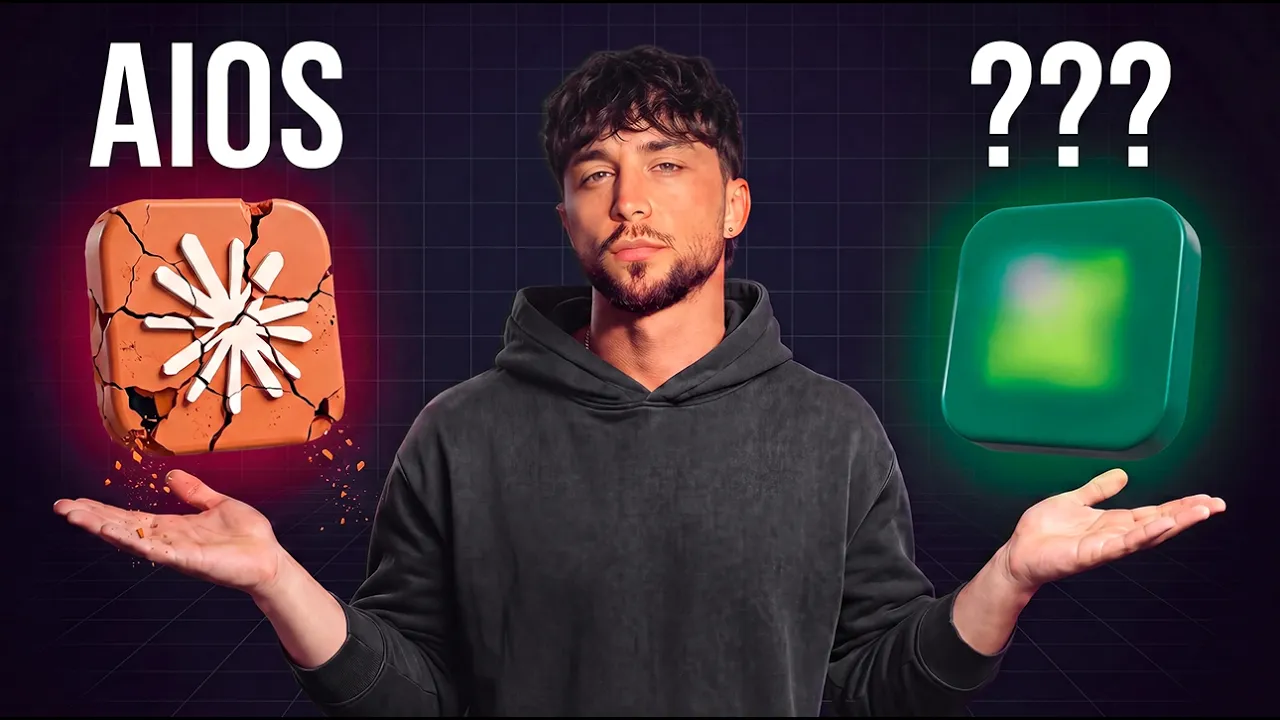
Liam Ottley · @LiamOttley
This video has no Most replayed graph yet: YouTube shows one only once a video has enough views. These are the moments viewers replayed most in Liam Ottley's most watched videos.
Most replayed moment at 5:02
5.8x that video's typical replay level
using no code tools, so there's no excuse why you can't get in there and get your hands dirty and start to build them. So, the first one is a speed to lead system. This is a simple automation that ensures that the business responds to any new customer inquiry or people reaching out to them in seconds, not hours. This
Said at 4:54
The graph counts replays. It does not show where viewers stopped watching.
Words
6,095
Runtime
23:06
Speaking pace
264wpm
Reading time
25min
264 words per minute, above the 201 75th percentile of 349 measured videos. That distribution comes from the 349-video hook study.
Opening (first 30 seconds)
So over the past 4 months, I've done four different full transformations for businesses doing on-site what I call AI makeovers, sitting up Claude Code AI operating systems for businesses, very hands-on. I've also done three different group sessions. The first one in Cape Town where I was helping seven founders to set up their AIOS on Claude Code, another one in Bali so helping another seven founders doing the AIOS setup on Claude Code. And just recently in Montenegro, I helped around 35 founders to do it in a big group setting at our recent Work Class event. I have a unique perspective on the reality of sitting up these Claude Code AI operating systems for businesses. And in this video, I wanted to share with you guys, whether you're an
132 words, the words spoken in the first 30 seconds at 264 words per minute.
Free, no signup. See how the first 30 seconds hold attention, with rewrites.
Sentence shape
| Measure | This transcript |
|---|---|
| Sentences | 273 |
| Average words per sentence | 22.3 |
| Longest sentence | 77 words |
| Questions asked | 7 |
| Sentences containing a number | 18 |
Most used terms
Filler phrases
95 in total: like 29 · uh 21 · actually 10 · sort of 9 · kind of 8 · literally 5 · um 5 · basically 4 · I mean 3 · right? 1.
A literal whole-word count of the same phrase list the Prepublish browser extension uses, so a phrase inside another word is not counted and a phrase used in its ordinary sense still is. It is a count and not a judgement.
Free, no account. See where attention is likely to drop, with a rewrite for each weak line. The free check shows the scores and the one issue costing the most. Or run it on the words above first.
Free · No login · See a sample audit first if you prefer.
What this transcript is
Every word below is the caption track YouTube publishes for this video, pulled from the video itself and reproduced unchanged. It is not Prepublish's writing, not a summary, and not a re-transcription: it is the video's own published captions. English captions, generated automatically by YouTube, in the video’s original language. Source: the video on YouTube. A channel that would rather this page did not exist can ask for its removal through the contact page, and it is removed.
So over the past 4 months, I've done four different full transformations for businesses doing on-site what I call AI makeovers, sitting up Claude Code AI operating systems for businesses, very hands-on. I've also done three different group sessions. The first one in Cape Town where I was helping seven founders to set up their AIOS on Claude Code, another one in Bali so helping another seven founders doing the AIOS setup on Claude Code.
And just recently in Montenegro, I helped around 35 founders to do it in a big group setting at our recent Work Class event. I have a unique perspective on the reality of sitting up these Claude Code AI operating systems for businesses. And in this video, I wanted to share with you guys, whether you're an AI agency owner who's been following along with my stuff and sort of has come onto this AI operating system wave, maybe using one yourself, maybe you're trying to sell them as in-stores to clients.
I'm going to be telling you from the front lines what I'm seeing and why I think there's a major shift underway and why I'm personally pivoting away from using a very flexible and custom Claude Code AI operating system for clients [music] in favor of a new and simplified setup in most cases. So this is not a blanket statement. It's not a I will never use this stuff again, but it's more of a looking and sort of skating to where the puck is going rather than building from where it's been.
In this video, I want to break down not only my approach and my reasoning and why I'm shifting away from this and what I'm currently sitting up for clients, what I have done recently. And then at the end of the video, I'm also going to give you a quick run through of the actual platform that I'm sitting clients up on at the moment to give you guys an idea of what the differences are, what the benefits are, and so you guys can make a decision whether you want to be using a platform like this or continue to use a Claude Code AI operating system as it stands.
So in order to understand the shift away from using Claude Code AI operating systems, you need to understand what a AI operating system really is and why we started creating them in the first place. And in its most simple form, an AI operating system was a flexible workspace that connected the context of a business with your data and your integrations and then allowed you to rapidly build agents and automations and >> [music] >> uh build applications on top of that stack.
The core premise of what AI operating system is, it will remain the same and remains the same in all of the builds I'm doing with my clients, but just the way that we get there is starting to change. It started off with me creating a a secure folder structure. We had like a context OS, which is all about getting the business owner's context in one place. We had a data OS, which was connecting to all the different data sources.
Had a productivity OS. We had an intelligence OS, which was about bringing in all the core recordings. So, all these these same ideas are still in play, but just the way that we reach them is starting to shift. And really this shouldn't come to you as much of a surprise. This is the same thing we've seen happen over and over and over again in the AI space, where people like myself and probably you watching this have been building ahead of the labs and building ahead of these uh big companies and taking what they offer and adding our own layers on top of it.
This started all the way back when I started my channel in 2023 and I was building these custom knowledge chatbots. And some of you guys might have even been watching my videos from all the way back then, but the point is that we were trying to say, "Hey, this this technology or this thing that we have released is cool. ChatGPT is really cool, but I want it to do other things. I want to be able to customize it and make it my own.
I want to be able to connect my own external data sources and and customize it to my own custom GPT." And then we had GPTs come out and that nuked the whole generation of of AI startups that had been building ahead of the labs here. And the same thing is happening now. And in this case, it's not exactly the labs that are getting to this first, but there are different startups popping up to try to solve this problem and and sort of centralize all of the good parts about an AI OS and giving them [music] to people in a much more easy and and and well-packaged solution that's accessible to a broader group of business owners in particular.
For many of us who've been in the AI space for a while, we're very comfortable with using Claude mode or understand the concepts of agents and setting up a Claude could AI OS, which is basically a a highly customized and and tailored coding environment with skills and context management systems. [music] This stuff is not going to be able to reach the mass market and it's not really something that I can see the majority business owners adapting to in the near future.
There's a few key problems with this previous way of doing things that is is causing me to lean more towards these new platforms. Firstly, it is the setup speed. For the first time we spent basically a day collecting all these different API keys, setting up their their context, exporting stuff out of ChatGPT, going through a questionnaire. So, just sitting up a founder on a good template will take like a whole day. And then on top of that, you have to teach them to kind of understand it, which is the second point.
The first issue is the setup time. The second one is the training required for founders to actually properly understand what the system you built them and just how powerful it is because there's all sorts of different skills you've got in there. There's context management systems. Getting them to understand how to use the AI OS on Claude code, I found to be something that does make me a little bit anxious when I hand this off to a business owner.
I'm like, "Okay, we're we're going now. We're no longer going to be supporting this." I mean, I do support them if they really need it, if they've got any questions, but at the end of the day, my service is not an ongoing one. And when I walk away, I'm I'm really concerned that they're not getting the most value out of it as they could because I'm not there to continue to help them. Now, if you are choosing to do AI OS installs, which is a really really really good service, and I think it's one of the [music] In all of my time selling AI offers, it's one of the fastest time to values that I've ever seen for any AI offer.
And that's why I'm really all in on doing these things for businesses at the moment. And a lot of other people are paying me on as well. You guys and gals who are going to be doing more of the agency offer where you're going to be in the mix and in the loop with them for longer, it could actually be a feature not a bug for you that there's a a longer sort of training time and there's more support needed. In my case, I'm looking to get something that I can very rapidly bring them up to speed on.
How can I get a transformation of 7 months brought into 7 days? And that's what my whole promise to the makeover clients I have is 7 months of AI progress in 7 days [music] and without me necessarily need to be there after that. I want you to be able to self-manage this. And the self-management piece is so key for all businesses because I don't want to be relying on an agency forever. That may be your model. That's personally not my model, but at the end of the day, the Claude code AI operating system is a lot more custom.
There's a lot more quirks to understand, particularly when they get into the development and building things. And the third and final issue I'm seeing is that challenge around building. How do you give them the ability [music] to sort of speak their needs into the system and allow to build agents, automations, apps, data structures, everything that they need to support their their desires. Like, "Hey, I want to build something that does this or have this problem.
When you're using code code and it's more custom, there's a lot more integrations and particularly with stuff like building and hosting and [music] maintaining and managing and improving agents, there's a big technical learning curve and knowing what right stack. I mean, you can build those into the template and say this workspace should by default use this VPS and this telemetry set and so it all works together, but at the end of the day, it's just not as well managed and tidy as it probably needs to be for the vast majority of business owners.
So, that leads me to the solution to this, which is a platform called Kylon, which I'm going to be talking you through in a second. And what Kylon does is brings all of the the key pieces of an AIOS into one place. So, the best way I could describe it is is Slack for all of your communications between you and your team, but also in A 10 for the agents. You can build agents very rapidly, as I'm going to show you in a second here.
And so, you have human and agent teams all working within a Slack channel. It's it's very unique. Kylon also has the ability to create its own database and and data structures inside the app. And then on top of that, you can vibe code things on top of it. So, you got Slack for all the communications, you've got in A 10 to bring agents in and put those agents into channels and you can go at Luca, the content specialist, >> [music] >> and you can chat and send messages in there and agents can talk back and forth with each other.
And then you have a lovable like builder on top, which allows them to vibe code and build apps for whatever they need and it's all in one platform. I'm super bullish for platforms like Kylon and just on the last makeover we did, I actually set up a 40-person accountancy division on Kylon as the platform to allow them to have these agents [music] working together and it honestly saved us a ton of time. And for you as an agency owner, you need to be thinking about how do I get the best bang for my buck here.
How do I get the service that can make me a lot of money, but also provide a ton of value to my clients and how [music] do I reduce the complexity and difficulty for me when I'm delivering it? And the final factor in there is how do I make sure that they can manage this on their own moving forward? And I think this platform Kylon is really the sweet spot for that right now. I've been working with the team a lot on the best features I think need to be added, but I wanted to make this video to kind of put you guys on to this as a platform for delivering your AIOS builds for your clients.
So, we're here on my landing page, but before we jump into things, there is going to be a link in the description for you guys, especially for you guys in my audience. They've put together a special offer for you guys, which is going to be a first month free, so you get to really try out Kylo, test it out, then it will click over to the $100 a month plan. So, honestly, for what you're going to get, extremely affordable.
You get a whole month to play around with it, and I really want to make sure they did this thing for you guys, but I know how frustrating it can be to have all these different tools and not knowing if they're a good fit for your workflow or what you do for your clients. And so, there's actually going to be a call for you guys to book a demo call with them so that you can have a chat with them, a free consultation. They can walk you through the features of the platform, tell you if it's a good fit or not, so that you can just compress that expiration down to just 30 minutes with them, and then decide if it's a yes or no for your agency.
So, it's all going to be in the first link in the description, special offer for you guys, and also ability to chat with the Kylo team to see if there's any stuff that you can migrate over to there or if you should be doing it for future client builds. So, let's jump into it, and I'll give you guys a bit of a demo. You can sign up here. For regular users, there's going to be a 7-day free trial, but if you use my link, this will be a 30-day free trial for you guys.
You can just click here on get started for free. Once you put your card details in and started that 30-day free trial, and they take you through the onboarding assistant here, which is really, really helpful for you to get your agency set up quickly. And it's going to be the same thing for you when you set up your clients' businesses as well. We have our agent here. Let me get set up first. Let's call this Huge Jackman.
OG reference for my OG OG Liam Otley viewers. I like the direct and pragmatic. Basis of the business, you can pick your Gmail, your Slack here. In this case, I'm just going to put my uh company URL. It's going to scrape my website, but you can also connect a bunch of other stuff, which I'll do in directly. Going to just create the web page. And so, if you start mapping this over to an AI OS setup on Cloud Code, this is basically one-to-one, right?
This is context. That's the context OS is the The part. You need to load all the context into the AI operating system. This is doing the first part for you. And you'll see as we go on, all of those key pieces of an AI operating system are simplified down into a platform that basically your clients can walk through themselves to do, but with a bit little bit of your pizzazz and your know-how, you can really give them the most powerful version of the system possible.
So, here you can see it's doing a full deep research run on the company, searching for general information and a social presence, pulling information from the website, of course. It's also looking up for LinkedIn profiles for the business or anything related to it, uh trying to find any information it can about that and pulling all that in as context so it knows what the business does, who it serves, what it's about.
Like so, it's completed the research run here. So, now it just needs to refine some of the details, which is literally part of the AIOS context aware setup that I used to use with my clients. We give it all the context and it says, "Okay, I want to sharpen that with a few questions." So, you can use their voice agent, which is actually pretty impressive. For the sake of the video here, I'm just going to use messages.
And this is exactly how I would do context aware setups with founders. I would upload all the data, uh take the ChatGPT and Claude export, put it in there, put in their business docs. It would crunch through all of that and then it would go to a questionnaire afterwards and ask them a whole bunch of questions just to sharpen the context up, confirm a whole bunch of things. So, this is literally the exact same process just built into a very easy to do uh application.
So, now we're inside Kilon, you can see the interface, which I'll go through in a second, but I'm just going to run through this and finish the onboarding. And I got is a AI service business that also creates documentaries and also full behind the scenes build videos where we play out for 7 days with a client. We completely transform their business within 7 days and we hand off to them to continue using it themselves after that.
We film a whole video, post it on our YouTube channel to generate awareness and traffic for more mega clients and to build my personal brand. The main goal in the next month or two is to build out a much more robust content system and that also helps to uh consistently put out one mega video per month and expand our content to a bunch of other platforms as well into LinkedIn, livestreaming, LinkedIn, Instagram, etc. So, my next step in content is to grow Okay, so fill these out and also some of the tools that we rely on.
So, it's starting to collect that tech stack information. Now, as you can see, we're moving from context OS into your data OS and connecting all your platforms. So, it's already asked about my tech stack and now it's saying, "Which should I connect first?" I've got YouTube, Gmail. Let's just go with YouTube and Gmail. And we'll show you just how quickly it is to get these integrations done. If you're going to be setting up a client, you're going from a whole day of collecting API keys, or you could set up Composer, that's also an option, but you really do want to have deep integrations with these things and proper custom scripts built around the specific platform you're using.
So, a full day of collecting API keys, setting up a Google Cloud, all of that rubbish, enabling different APIs in the Google Cloud, then you've got to build a skill so the workspace knows how to use it, on and on and on. And in this case, it's literally just a couple clicks. So, here I can connect to YouTube, start connecting up my data sources. Boom, I've already got my YouTube connected. If you're doing that through Google Cloud with a client, that might take you 30 minutes.
And I can do the same thing with Gmail here as well. You can just keep going through all of the integrations that your client needs. And now you're going to have your context and your integrations all connected into one workspace. Here now, it's continuing to do the onboarding process by pulling from these connected sources, analyzing the information that it can grab from there, and helping that to further fill in the blanks of the context that it's trying to build up within space.
Context and the data OS are being done at the same time. Your context and integrations are the bedrock of the AR operating system. Here you can see it's pulled the information from YouTube and be like, "Hmm, your first two episodes of the makeover were actually 47 days apart. There is a big gap between where you're trying to get to and where you are right now." Now it's suggesting what's called rooms. And so, rooms are what you have within Kylon that are kind of like channels.
And a room is where you can put humans and agents into them, which we'll see the agent builder in a second. But this onboarding agent is already walking you through the kinds of rooms I'm going to need to get this set up properly. On the side here, it's creating those rooms for us programmatically. One of the really cool things about this from a an agency or a developer perspective is that Kylon, unlike many, many, many other platforms that you will encounter of the sort, especially ones that are popping up right now, it actually has a CLI.
So, you as a developer, as the agency who's setting this up, when I built this on site for a client, we were just using the CLI. We didn't have to come in here and click through the UI. We could plan out the structure of the Kylon workspace, the agents we wanted to be in there, the different permissions and stuff like that, and the different skills we could easily push them in there. So, it allows you to kind of go in the back door to set up everything as quickly as possible for you as as a as a agency, and also to manage this moving forward as well.
You have programmatic access into their workspace and can change things as needed. And I I think honestly that's one of the best best features of this entire platform. So, we've got the room started up now. Now it's trying to help us figure out the first work that we want running. Uh episode pipeline tracker, the weekly channel performance brief, the clip plan from the latest episode, website order. Let's just go to episode pipeline tracker so I can show you guys the vibe coding or the the app building that we can do on top of this.
And why not? Why don't we do an agent as well so I can show you how we set up automations in here. I'm going to set up that agent and automation. We can authorize YouTube connection. So, as you can see, it guides you through setting up agents and automations. And this is unlike anything I've really seen at the moment. Um just making it so simple to go from context to data to analyzing what you have available on the platform, helping surface use cases according to the goals you have.
It just really feels like the start of where these business platforms need to be um in the in the near future. All right, so now we can go to the content engine. And if we drop this down, okay, so as it says here, both are being built out in the content engine here. So, we can see that it's shot off a brief. And this is one of the first things about Column you notice is that agents can ping messages into other channels that they're in.
So, in this case, we had Hugh Jackman, our our administrator agent, kick off into here and say this room is an episode pipeline, da da da da. We're trying to build two things here, the episode pipeline tracker and the weekly channel performance brief. So, that's an automation, this is an app. And now it's going out and it's building the vibe coded app for our episode pipeline. And what you can see at the top here is it's starting to build the database or the data structure to support this app or the automations that you want to build.
So, in this case we have um here, we have the two makeovers that I posted previously now stored in a table called episodes. And this is just taking away all the difficulty of of setting up a custom data structure, piping all the data in, uh cleaning it, auditing it. In this case, it's just pulling it directly from the sources, building something that's native to Kylon. And as you're going to see, this just makes it a truly unique experience for you and the client because when you have the data in one place, and you have your all of your business context and all of your integrations and the agents working as well, everything is just in one in one bundle.
It is essential intelligence. And your agents you build inside here can very fluidly interact with all your apps and update things. And it really does feel like this AI just knows everything and has access to do everything it needs to. And that really is the promise of an AI OS. While we're waiting for both of these to finish being built, what we can do is go and show you how you can create a new agent and just how powerful the default agents are in Kylon.
We can head over to the left side here, which is members. We can click plus. We're going to create a new agent. And we can call this Wayno. We can try another one of these. We can say this is our chief content officer. And we can have internal agents or we can have external ones, which I won't get into here. I want this to be a curious agent for our chief content officer. And here we have a default prompt. And we can go and look at the access it has to different agents and rooms we put them in.
But importantly, we have the skills here. And this is what really blew my mind when I first got onto Kylon is just how much they've stacked the default agent. And when you're talking about setting stuff up for clients, this they've done all the hard work here. Like they've got Appify, Apollo, design systems so all the apps come out looking correctly. This is all the stuff I do when I set up for clients. I have to do a whole design system so that things look consistent and doesn't look just like some trashy hard coded Browser use, they've got the skill for building apps that guides them through the correct process of building.
They have all of your kind of social scraping, access to emails, Google Trends, the Kylon API so these agents understand how to interact with the Kylon app as well, the Kylon design system. Just goes on and on and on. And this is even before you start to build your own skills on top of it. So out of the box, part of your subscription what you pay is going to include those Appify runs, all of these paid tools that they have in here already wrapped in it so you don't have to set them up, you don't have to pay for them separately.
And then you can always add skills in here as well uh if you want to. I tend to go into the chat with them, drop a zip file from my own workspace, and say, "Hey, can you install this work this skill workspace-wide?" And then I can click which agents I want to connect that skill to. Like, for example, my deep research skill, I added that into the workspace, connected it up to all the agents, and now all of my agents can run my custom deep research skill.
And so, we can very easily edit the persona. If we go back to our feed here, Wayno actually starts to chat with us when we uh create them. And then we walk through and refine that role and persona prompt. So, very quickly, you create a new agent, you can set the persona for it, you can determine what integrations and connections it has access to. Maybe a chief content officer needs LinkedIn, or maybe a chief content officer needs YouTube, and it might need, I don't know, a a social media scraping API, or it might need access to your content database or something.
But by default, it already has access to the content database if you've built it in Kyron, which is really the magical thing here. I'm not going to go through the whole process of of refining this prompt and getting it set up. It literally takes a few minutes. But a really important thing to point out is that you can now take this agent and deploy it on automated runs through uh a room like this. So, I can go into the content engine, and it's probably already finished by now.
You go up to the top right corner, you can see automations. We have weekly uh YouTube channel brief, and we have the prompt here, and it's already written the prompt um of what it wants the agent to do. And we have a ledger here of the previous runs that have happened. And in the same way as we set this automation up, we can say, "Hey, can we set up our chief content officer to monitor when a computer has posted a video, to analyze it, to pull the information into the database, to tidy that data, to classify it, and then send us a report at the end of the week or end of the day of all the new content that our computers have made." You literally can just ask it to set that up, and it'll walk through, build all the stuff natively that it needs, and within a few hours, you or your client will have that automation set up.
Now, so we have our episode pipeline. This is just actually a data app, so they've just built a database for us. We can build on top of that. To show you what these vibe code labs inside of Kyron look like, I've just asked it to build a pipeline management app for makeovers, where I can sort of have a Kanban board and see the status of the different makeovers. And actually, I stand corrected. It is already done the pipeline.
I just needed to change the tab here uh to the pipeline board. So, this in this case is kind of like a Airtable. It might look quite basic, but this is really just uh the most basic thing that Kylene can do in terms of building apps. I've been able to push this to make very advanced uh canvases connecting all the different agents in the workspace so that I can easily manage this as a system. But, I assure you, in terms of your ability to build custom internal apps for your clients, this [music] has everything you need, and the data's all going to be in one place.
We've been able to build an agent that is equipped with a ton of powerful tools in a few seconds. We've been able to build an app very quickly to set up a database and have a kind of Airtable style view on top of that. We've built our first automation based off an integration that we set up earlier. We've set up our business context. All of this has happened in the space of about 20-30 minutes here on my side. So, I hope you guys can see the value and and power of something like this for setting up your client uh workspaces.
And just one more thing, I don't quite have enough time in here to really show you guys just how magical this multi-human and agent team thing can look like. But, if I add Wayno in here, our chief content officer, and the structure of the rooms and the agents and and how to optimize them to make them work very well together, I'm still trying to really dial in and optimize. But, in this case, I can say, "Hey uh Wayno, can you please ask uh Huge to uh send a message in the welcome AI makeover channel to summarize the content systems we have built here." Just like in Slack with some of the other Slack-based AI agent and assistant tools that are coming out, we can now at a particular agent.
I'm asking Wayno, our chief content officer, to Oh, in this case, I need to add Wayno into here. Oh, no, I don't. Cuz we're asking See, in this case, we're asking Huge to send a message in there rather than Wayno sending it. So, Wayno is analyzing everything that we've set up here. And now he's going, "At Hugh Jackman, please post this message and send it into the welcome AI makeover channel." Now, old Hugh Jackman is finding the room.
He's reading this, and then he's going to send it in here. And this gets really, really powerful. The most powerful example I've had is when I have an email come in and I'm monitoring the inbox and you have some kind of trigger. I had a case where I have Sentry set up for my internal custom application I built for my business and I have a Sentry set up so when there's an issue with anything related to the application or the database, it sends a a Sentry notification to my Gmail and I had my email agent monitoring the inbox.
When that came in, it said, "Oh, there's something that's broken in the app. I'm going to send it into the dev channel." Sent it to my CTO agent and my CTO agent analyzed it then kicked it off to the uh engineer agent to build a whole fix for it and then push the PR and waited for me to approve that PR. And so once you have these triggers that can cause agents to reach out to the right people and you have a proper routing system, this can really get to the point of like hands-free business operations.
And it's it's we're getting so close with this sort of stuff. So now we're looking at the AI makeover channel here. Hugh Jackman has wrapped up the onboarding and given a feedback to the session on all of the stuff that we've done in the other channel. And so at that point, I think I'll wrap this up here. I hope you guys can see just how tightly this copies the sort of mirrors the AI operating system model and how it allows you to blast through in a very short space of time the setup of a system like this.
The time to value for a client on this is so short compared to 3 years ago when we had to build all of this stuff to try to get any value in the business. Setting these workspaces up is the most high value and sort of return on time invested and money invested that a client can get. If you guys can learn how to deliver this for your clients, I mean like I already am, um then there's a huge amount of upside for you guys and you'll be able to get incredible results for your clients.
So guys, I really do believe this is the next way for AI agencies is specializing in a platform like this and learning how to deliver incredible outcomes for your clients in a very short amount of time and then using this as the platform for you to programmatically through this CLI be able to build new stuff on top of it, new agents, new automations, new channels and structures within the workspace. So the link for Kylo is going to be in the description.
Thank you for them for sponsoring both this and the makeover that we did. If you're unsure on any of this, just book a call with the team and they're going to be able to tell you very quickly what's a good fit for you and your agency and what's not. So that's all for the video guys. Thank you so much for watching and I'll see you in the next one.
The words are the caption track's own and nothing is reworded or re-transcribed. Paragraph breaks are placed between sentences so the text reads as prose.
Free tools for your own script: paste a draft and see where it stands before you record it.
Paste your draft and see where viewers are likely to drop off, with a rewrite for each weak line.
Paste the first 30 seconds of your own draft for a hook score and rewrites.
Check your draft against YouTube's advertiser-friendly guidelines before you record it.
Read this channel's public videos and transcripts, and download a writing brief for it.