Getting the transcript
Reading the captions from YouTube. A video nobody has opened here before takes 10 to 30 seconds; this page fills in on its own.
Getting the transcript
Reading the captions from YouTube. A video nobody has opened here before takes 10 to 30 seconds; this page fills in on its own.
Blackfiles · @Blackfiles-HD
Words
4,468
Runtime
27:34
Speaking pace
162wpm
Reading time
19min
162 words per minute, between the 160 25th percentile and the 181 median of 349 measured videos. That distribution comes from the 349-video hook study.
Opening (first 30 seconds)
2007, a warehouse outside Toronto, Albania. Workers pry open steel crates packed in the 1960s. Inside, rifle rounds by the millions, stamped with Chinese characters. By tonight, the markings will be gone, stripped by hand, repacked into plain cardboard, and flown into a war zone for the Afghan army. The supplier, a 21-year-old named Ephrame Daroli, and his best friend David Pac, a massage therapist from Miami Beach. the client, the United States Army. The contract, $300 million, found on a
81 words, the words spoken in the first 30 seconds at 162 words per minute.
Free, no signup. See how the first 30 seconds hold attention, with rewrites.
Sentence shape
| Measure | This transcript |
|---|---|
| Sentences | 457 |
| Average words per sentence | 9.8 |
| Longest sentence | 45 words |
| Questions asked | 22 |
| Sentences containing a number | 45 |
Most used terms
Filler phrases
22 in total: like 15 · actually 4 · kind of 2 · you know 1.
A literal whole-word count of the same phrase list the Prepublish browser extension uses, so a phrase inside another word is not counted and a phrase used in its ordinary sense still is. It is a count and not a judgement.
Free, no account. See where attention is likely to drop, with a rewrite for each weak line. The free check shows the scores and the one issue costing the most. Or run it on the words above first.
Free · No login · See a sample audit first if you prefer.
What this transcript is
Every word below is the caption track YouTube publishes for this video, pulled from the video itself and reproduced unchanged. It is not Prepublish's writing, not a summary, and not a re-transcription: it is the video's own published captions. English captions, generated automatically by YouTube, in the video’s original language. Source: the video on YouTube. A channel that would rather this page did not exist can ask for its removal through the contact page, and it is removed.
No Script X-ray for this video: YouTube shows a Most replayed graph only once a video has enough views.
2007, a warehouse outside Toronto, Albania. Workers pry open steel crates packed in the 1960s. Inside, rifle rounds by the millions, stamped with Chinese characters. By tonight, the markings will be gone, stripped by hand, repacked into plain cardboard, and flown into a war zone for the Afghan army. The supplier, a 21-year-old named Ephrame Daroli, and his best friend David Pac, a massage therapist from Miami Beach. the client, the United States Army.
The contract, $300 million, found on a public government website. But here's what makes this insane. Nearly every round cheap enough to make their bid work, was banned by American law. Every crate they shipped was evidence they could never take back. And what finally detonates this empire isn't the FBI or a rival. It's a bill for $20,000 that the wrong man refuses [music] to pay. How did two stoned kids end up arming a war?
And when the bill came due, who actually paid it? 2005, Miami Beach. David Picow's needing a stranger's shoulders when his phone lights up. He's in his 20s and going nowhere in particular. Licensed massage therapist, table, oils, strangers by the hour, driving home every night through a city built on other people's money. He isn't stupid. That's the problem. He's smart enough to know exactly how small his life is and broke enough to do something about it.
The call is from E-frame Daroli, [music] childhood friend. Younger and already something Picaus can barely process. An arms dealer, Dberolei has been in the gun business since his teens, and now he runs his own company out of Miami Beach. AEY, Inc. It sells weapons and ammunition to the [music] United States government. He's too young to rent a car. How is that legal? Here's the door and it takes one sentence. The federal government posts its contracts on a public website and on many of them [music] it has to take the lowest qualified bid from anyone.
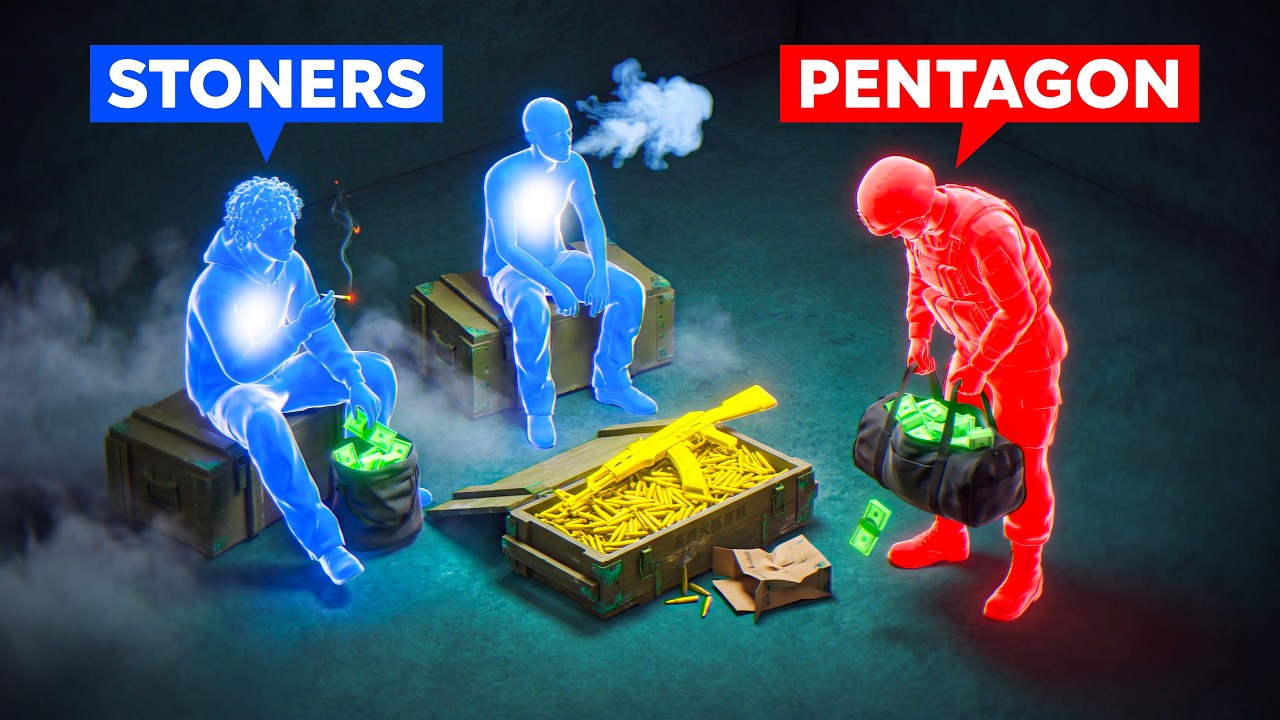
Defense giants [music] browse that site. So does a kid with a laptop. The system doesn't care. The system doesn't even look. Diver's pitch is simple. I'm winning these things. I need help. There's a cut in it for you. And Pacuz says yes. The war room is an apartment. Two desks, two laptops, a coffee table with a grinder on it. The blinds stay down. The money comes in through the screen. The grinder isn't a prop. They work [music] stoned.
They bid stoned. Two kids in a haze of smoke, refreshing government listings like eBay auctions, under bidding companies a thousand times their size on contracts those companies can't be bothered to chase. [music] The numbers start moving. A few thousand, then tens of thousands. Then the first deal [music] with six zeros in it. Pacuz stops booking clients and one day the massage table is in a closet and his commute is 10 ft from a bed to a laptop.
Before this starts looking like a success story, one early move gives the whole game away. On an earlier contract, a delivery goes sideways and AEY is staring at default. Diver's explanation to the government. A hurricane disrupted the shipment. A hurricane that per the record never occurred. He invented weather and the machine on the other end either didn't check or didn't care because AEY kept right on bidding. The winds keep getting bigger and Dvari talks constantly about the big leagues.
America is fighting two wars and wars eat ammunition [music] the way fire eats oxygen. Then in 2006 it appears a solicitation on that same public [music] website where anyone on Earth can read it. supply the Afghan National Army with ammunition. Not a pallet, not a warehouse load, a wars worth, the biggest small arms contract of the entire Afghan conflict. The Pentagon is outsourcing the arming of an army and [music] the listing is sitting in a browser tab in a Miami Beach apartment between the Bong and the coffee cups.
What happens when two [music] amateurs bid on the biggest ammunition contract of the war? And what does a childhood friendship turn into with $300 million on the table? Chapter two. The bid nobody else wanted. Here's what you need to understand. The giants didn't [music] want it. The Afghan army doesn't fire American ammunition. It runs on Soviet block gear, rifle rounds, machine gun belts, mortar rounds, calibers made in old Eastern European factories through supply chains that run on brokers, handshakes, and cash.
To a prime defense contractor, that's a logistical migraine with a thin margin. To a 21-year-old with nothing to lose, it's the opportunity of a lifetime. AEY wasn't the best company in the room. It was nearly the only company willing to be in the room at all. The bid comes together in a blur. Nights blinds down. Smoke under the ceiling light. Diver with a phone wedged against his shoulder squeezing quotes out of brokers three time zones away.
Hammering every cell of a spreadsheet toward one goal. Be cheaper than everyone alive. The final number is low enough to be unbeatable, which means it's low enough to be dangerous. He submits it anyway. Early 2007. Some hour past midnight in that apartment. smoke flattening under the ceiling light. Pac refreshes the contract page the way he's refreshed it a hundred times and the status line has changed. Awarded AEY Inc.
He reads it twice, three times. The number [music] holds still $300 million. Nine digits glowing on a laptop balanced between the grinder and the cold coffee. For one [music] second, the room is completely silent. Then Daroli is up screaming, kicking [music] a desk chair across the floor, grabbing puzz by the shirt with both fists because the United [music] States Army has just made two kids from Miami Beach the ammunition supplier for a war.
It doesn't sound legal. It is. For about a week, this is the greatest underdog story in the history of government paperwork. David and Goliath. Except David is stoned and Goliath [music] handed him the slingshot. Except underdog story is not what happened. The proof is in the army's own file. Before the award, the army evaluated AEY. Its own reviewers looked [music] at this company, the hurricane, the near default, the 20some CEO, and rated it unsatisfactory.
That's the actual word on the evaluation. In government contracting, that word is a locked door. No award. Then someone above them changed it. The rating was overruled to good. And the reversal in the government's own records was made with no additional information. Four words. [music] Nothing new was learned. No inspection, no visit, no discovery that changed the picture. A warning existed and a pen crossed it out. Without that stroke of a pen, there is no contract, no fraud, no story.
It gets worse. Congress will later hear that AEY was already sitting on a government watch list when the award went through. Flagged in the system, findable. Nobody checked the list. The army had already caught them, filed the catch, and paid anyway. Now, why does winning turn out to [music] be the trap? Do the math Daroli did. To win, AEY had to be the cheapest bidder on Earth. To stay profitable at that price, they need ammunition cheaper than the open market has ever offered.
Fresh rounds kill the margin. Standard European surplus still too expensive. On the entire planet, there is essentially one stockpile cheap enough to make this contract pay. A mountain of cold war surplus sitting in Albanian bunkers. Hundreds of millions of rounds priced like scrap. A price like that always has a reason. Nobody in that apartment asks [music] what it is. Not with wires clearing and a plane ticket to Albania making everything real.
The deal they just won only works if they buy the one stockpile the law won't let them touch. The trap is armed. All that's left is for someone to open a crate. What do two kids do the day the law and the math point in opposite directions? And who gets [music] pulled into making a banned stockpile look legal? Tyrana, Albania. The man AEY sends is not Daroli and not Pakuz. It's a third friend from Miami Beach. Alex Padriski, the partner history keeps forgetting.
He's the one who drives out to the bunkers. He's the one who opens a crate. Slow down. Watch this happen in real time. A steel lid, a crowbar, the squeal of hinges that haven't moved since the ' 60s. And under it, the smell of 40-year-old Greece. Padrrisky lifts a tin into the light, turns it, reads Chinese characters. You already knew. He didn't. He doesn't need a translator. He needs a lawyer. American law bans Chinese-made ammunition from US defense contracts.
One rule, one sentence. And nearly every round cheap enough to save AEY's bid was made in China decades ago for Albania's Cold War arsenals. Ship it and they're feeding banned goods into a US contract. [music] Refuse it and they default. Flagged, ruined, finished. Deliver or die. Diver's answer comes back from Miami and it's the hurricane all over again. If reality disqualifies you, relabel reality. The rounds stay. The packaging goes.
Here is where Costa Traba enters. And he matters more than almost anyone else in this story. Albanian businessman runs a packaging company. The kind of man who shows up early, does ugly jobs well, and believes doing them well is how you get somewhere in a hard country. AEY hires his crew for the ugliest job in the Balkans. The work looks like this. Crowbar, tin, strip, repack. Day after day, Albanian workers pry open Chinese crates and scrape away every marking that says where this metal was born.
What goes back on the pallet is plain cardboard, clean, anonymous. Crate after [music] crate, they are manufacturing a lie you can stack. And every finished box is a small physical federal crime. A lie in a phone call vanishes when the call ends. A crate doesn't. It flies to cobble with a manifest attached, lands on a US funded airfield, and waits. Thousands of them, patiently being proof. One more thing, and it isn't funny.
This ammunition has been rotting in Balkan bunkers since before either of these kids was born. Tins coming up with corrosion blooming green at the seams. Sealed steel swapped [music] for cardboard that's already falling apart by the time it's photographed in Afghanistan. Follow one box to the end of [music] the chain. An Afghan policeman at a dirtwalled checkpoint, thumbming 1960s [music] rounds into a magazine before a night shift in a shooting war.
If one of those rounds is dead, [music] the sound his trigger makes is a click. In a firefight, a click is how you die. And still the caper on paper is working. Now the clock spins. Early 2007, the award. Within weeks, planes cycling between Albania and Kbble. Within months, cardboard by the ton. Millions in American money landing in AEY's accounts. By mid [music] 2007, the machine runs flat out. banned Chinese ammunition, stripped of its origin and delivered to the United States [music] Army as something it isn't.
The army signs for it, shipment after shipment. Two kids from Miami Beach are getting away with it at scale in the open on the Pentagon's [music] dime. The money doesn't buy them the same nights, though. In Miami Beach, Pacuz [music] has stopped sleeping through. He handles the logistics, which means he's the one who understands what a manifest actually is. a signed confession with a flight number attached. He starts snapping awake at 400 a.m.
[music] running the same arithmetic in the dark. Crates, counts, federal fraud math, listening for a knock that hasn't come. Diver sleeps fine. That difference is the whole friendship, and it's about to matter because right at the top of the win, the first crack appears. So small nobody clocks it. Diver, sitting on a $300 million deal, starts shaving costa's money. pocket change against the size of the contract. He does it anyway because squeezing is what he does.
It's how you become the lowest bidder on earth. He is cheating the one human being alive who knows crate by crate exactly what's inside every box. Every shipment is evidence. How long before someone reads it? And what does a man do when the people getting rich off his work decide he isn't worth paying? If you're enjoying this story, hit the like button before the next chapter. [music] It tells me you want more deep dives into people who outsmarted the system.
Late 2007, the dispute has a number now, and the number is the whole story. $20,000. The shaving becomes a shove. Diver decides the man who built his repacking line isn't just squeezable, he's replaceable. Tribea is cut out entirely. The work handed elsewhere. And on his way out, he's treated like a man who should be grateful he was ever paid at all. $20,000 against 300 million, less than 100th of 1% of the deal. That's not a typo.
There's no threat is defending against. No strategy behind the insult. The crumb exists, so he collects it. But one thing a 21-year-old can't price. Some men keep score in money, and some men keep score in respect. Tribika is the second kind. Cut out and humiliated, he does not go quietly. He gets Daroli on the phone and he presses record. Everything else in this story moves fast. Not this. This part you hear at the speed of tape.
An office in Albania. The recorder beside the phone. A ring. Miami picks up. Who took this from me? E-frame. Who decided? It's not in my hands. Costa. The money over there moves through people I can't touch. You know how it works. Then what does it take to get my operation back? A pause long enough to hear the tape hiss. Then the answer that will outlive the empire. This mafia is too strong for me. Diver keeps talking.
No apology anywhere in it. Just the arrangement, the middlemen, the money moving through Albania. Laid out in the easy voice of a man describing weather to someone who has never seen rain. The tape takes down every word. Understand what just changed. Every crime so far is deniable. Labels, boxes, paperwork, expensive attorneys can argue all of it. A recording isn't arguable. On it, he framed Diver's own voice, walking through the Albanian arrangement.
Holding it, the one man with nothing left to lose. You now know something nobody in Miami Beach knows. The money still flows. The planes still fly. Diver's red on the situation is that he just saved 20 grand. The other betrayal runs in these same weeks. Quieter, closer to home. Miami Beach blinds down. Pakuz has the spreadsheet open, the one that tracks his cut. When Diver pulls up a chair and explains that the deal has changed, costs ran high.
Margins came in thin. The split they shook [music] on back when the office was still a massage table turns out to have been, in Diver's mind, an opening offer. We'll square it on the next one. He says there is always a next one. The number never squares. Pakuz knows this voice. He's heard it work broker's [music] three time zones away. Warm, reasonable, unmovable. Now it's pointed at him. He looks across the desk [music] at his best friend and sees a stranger.
Or worse, he sees him clearly for the first time. Remember this desk? It decides how the story ends. If you're yelling just pay the man [music] at the screen, that instinct is exactly what Diver doesn't have. Triba sits with his tape. Then he takes it somewhere nobody at AEY [music] has priced in. To CJ Chivers of the New York Times, a war correspondent and former Marine, a man with no stake in the contract and no Bill Devoli can shave.
The tape leaves Albania in Miami Beach. The crates keep shipping and [music] the wires keep clearing. The kids have one news cycle left to live. What happens when a [music] recording of the war's biggest ammunition fraud lands on a reporter's desk? And when the federal government finally comes for the partners, what will each of them trade to survive? The collapse doesn't start with a headline. It starts with a man checking.
New York, early 2008. Chivers has handled Soviet block ammunition in the field. He can read a headstamp the way a jeweler reads a hallmark. He works this story the way AEY never worked the contract. Carefully the tape, the crates, calls to Albania, photographs of Chinese characters stamped into 40-year-old tins. Week by week, the hunter walks the paper trail the kids left stacked on pallets across two continents. Diver suspects [music] nothing.
Pacuz has spent months lying awake at 400 a.m. waiting for something exactly like this and has no idea it's already moving. March 27th, 2008, front page of the New York Times. The Pentagon's ammunition supplier for the Afghan War is a company run by kids in their 20s. And the ammunition is decades old Chinese stock repackaged to hide what it is. It reads like satire. It lands like a subpoena. The word kids does half the damage.
The word Chinese does the rest. Then everything happens at once. By morning, it's in Washington. Within days, the army suspends AE. Within weeks, federal prosecutors in Miami have a case with AE's name on it. The scandal has a docket number now, and Congress will later hear where the scramble abroad went once the question started into making the Chinese crates a non-issue. Whether 40-year-old rounds were safe in the hands of the soldiers carrying them came second.
The file starts talking too. Investigators pull AEY's correspondents and find the company's own verdict on its product in writing. The rounds [music] described as [ __ ] ammo. Their words. Prosecutors don't have to characterize anything. The defendants did it for them. The scoreboard freezes where the music stops. By the suspension, the army has paid AEY66 million and tens of millions of rounds have already been delivered into the war.
One number is the size of the fraud. The other is how long nobody looked. Then the federal case lands [music] and the friendship reaches its fork. Fraud counts, the specific, provable physical kind. The crates were the crime and the crates still exist. Here, the two men from that apartment finally become two different people. Miami, 2008. A government conference room. Fluorescent light. A table too long for the people at it.
A folder of crate photographs lying face down like a dare. Pakuza's lawyer has walked him through what federal fraud math does to a man who gamles at trial and loses. The same math that's been snapping him awake since the plane started flying. But the math only opens the door. What walks him through it is that desk in the apartment. The shaved split. the warm unmovable voice, the best friend who turned out to be an opening offer.
He watched Diveri cheat the one man who knew everything over pocket change. He knows exactly what his own loyalty is worth on that spreadsheet. You don't do federal time for a stranger. Across [music] the table, the investigators wait to hear which version he reaches for because everyone in this story has a version. Diver in this seat would give them weather. Picow's gives them the beginning, the stockpile, the repacking, [music] the labels, his own part in all of it.
Hour after hour with no draft of the story where he's the bystander. Nobody has to press him. The complicit every man becomes the honest witness. The first fully honest thing this empire ever produced. Diver fights. Of course he fights. Squeezing is what he does. And now he tries to squeeze the federal justice system like it's a box vendor in Tana. You're about to find out how that goes. One more thing is true in this stretch.
Easy to miss in the collapse. Far away in Albania, the man whose tape started everything got none of the money and none of the protection. And he isn't finished telling the truth. When the biggest procurement scandal of the Afghan war reaches a hearing room and a courtroom, who does the system actually punish? And what happens to the one man in this story who never got rich at all? June 2008, Washington, Henry Waxman's house.
Oversight committee hauls the army in to explain its own paperwork. And for one afternoon, the record convicts the machine out loud. The army's position delivered with a straight face. AEY showed no history of quality [music] problems. Waxman looks from that claim to the file in front of him, the unsatisfactory rating, the overrule, the watch list nobody ran, and calls it on the record pure fiction. Two words into the microphone aimed at the United States Army.
And the real question flips permanently. Forget how two kids got away with it. Look how wide the door was. The army leaves that hearing room embarrassed. It [music] does not leave indicted. Now the courtroom. Starting with the man who never learned anything. Ephraim Davarolei pleads guilty to fraud. He's out on bail midcase waiting on a sentence [music] and every lawyer he's paying would give him the same three words.
Sit absolutely still. 2010 Central Florida. A parked car in the kind of August heat that makes the asphalt shimmer. Diver has driven out here because somebody has guns to sell. And guns are the only song he knows. The seller talks product, makes, models quantities. Diveri leans in, prices [music] the merchandise, starts squeezing the margin. A federal defendant mid prosecution for illegal arms dealing, negotiating for weapons in a parking lot.
The seller is an undercover federal agent. Every word goes to tape. Doors, badges, hands on the hot metal of the hood. The cuffs close a second time. And this time there's no label to strip [music] and no hurricane to invent. He has just handed the government its final piece of evidence in person in his own voice. The sentence, 4 years in federal prison. The rest of the org chart gets its numbers, too. Ralph Merrill, the Utah financeier who bankrolled the deals, [music] is the only one who rolls the dice at trial.
And a federal jury convicts him. Alex Padrriski, the friend who opened the first [music] crate, pleads guilty and stays out of prison entirely. House arrest, [music] not a cell. And David Picaus, the massage therapist, the number two, the one who [music] told the truth. Seven months at home. House arrest against a $300 million fraud on the United [music] States Army in wartime. The every man who got in over his head and got out the only way that works in this story, [music] by telling the truth.
One whole side of the page stays blank. No procurement official was punished. Not one. The reviewer who wrote unsatisfactory [music] did the job right and got overruled. The hand that crossed it out, never had to give its name to a docket. The men who committed the fraud were sentenced by the institution that made the fraud possible. And the institution never so much as sat in [music] the room. There is one more line.
No court ever priced it, and [music] it's the one this story has been walking toward since the tape started turning. September 2008. A dirt road in the Albanian countryside. Six months after Travika's tape put the fraud on the front page. While the federal case he fed is still very much alive. He has gone back to his life. The businessman who did the ugly job well got cheated over pocket change [music] and told the truth about it first before any agent or committee made truthtelling safe, which makes him at this exact moment one of the most inconvenient witnesses in the Balkans.
His truck leaves the road. It rolls. When people reach the scene, Costa Traba is lying in the dirt, thrown from the cab, dead. Albanian prosecutors rule it a single vehicle accident. His family [music] never accepted that, and their reasons were specific. He had driven roads like this one his whole life. His name was live in an American fraud case, and the tape had earned him enemies on [music] two continents. Brokers, fixers, officials.
Guy Lawson, the reporter who spent years inside this story, never accepted it either. The file says accident. The people who knew him best say otherwise. That gap has never closed. Hold the ledger up to the light. Diver lost 4 years. Pacuz lost 7 months of evenings. Triba lost everything on a dirt road for free. Two questions left. What was the government's final word on AEY and the door two kids walked through? >> [music] >> Did anyone ever close it?
Years after the sentences, with the cameras long gone, one last piece of paperwork moves through [music] the system. No press conference, no headline. A ewise debarment. The ban that was supposed to be the government's [music] final word on all this is lifted quietly. The file closes the way the machine likes files to close with nobody watching. Hollywood will eventually turn all of this into a buddy comedy. It will leave out Padriski.
It will leave [music] out the $20,000 bill that actually brought the Empire down. And it will leave out the dirt road. The title [music] was true. Two stoners scammed the Pentagon criminally, physically by the plane load. But the first con happened inside the army at the stroke of a pen before Miami Beach ever shipped a crate. And the bill skipped everyone who got rich and landed on Afghan soldiers trusting 40-year-old rounds to fire.
Because the door is real. The website where a 21-year-old [music] found a war contract is live right now. Same public listings, same lowest bidder gravity, same machine on the other end. Somewhere on it at this very moment, there's a contract nobody serious wants and somebody unserious reading it. How many doors like this are standing open tonight? And who's walking through one right now? One answer, the Pentagon already knows because it happened [music] to them, too. a 15-year-old, a bedroom computer, and classified military [music] networks opening like a cheap padlock.
That story is called The Teen Who Hacked the Pentagon and it's on your screen right
The words are the caption track's own and nothing is reworded or re-transcribed. Paragraph breaks are placed between sentences so the text reads as prose.
Free tools for your own script: paste a draft and see where it stands before you record it.
Paste your draft and see where viewers are likely to drop off, with a rewrite for each weak line.
Paste the first 30 seconds of your own draft for a hook score and rewrites.
Check your draft against YouTube's advertiser-friendly guidelines before you record it.
Read this channel's public videos and transcripts, and download a writing brief for it.