Getting the transcript
Reading the captions from YouTube. A video nobody has opened here before takes 10 to 30 seconds; this page fills in on its own.
Getting the transcript
Reading the captions from YouTube. A video nobody has opened here before takes 10 to 30 seconds; this page fills in on its own.
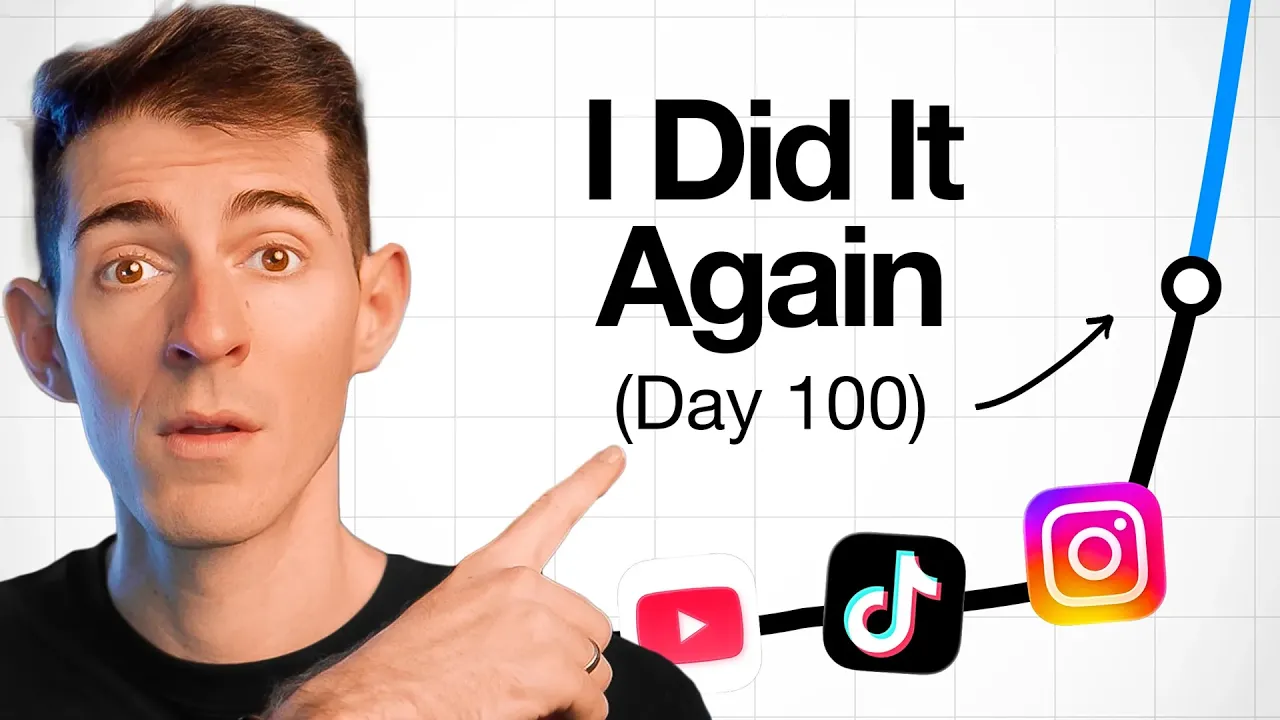
Kallaway · @kallawaymarketing
This video has no Most replayed graph yet: YouTube shows one only once a video has enough views. These are the moments viewers replayed most in Kallaway's most watched videos.
Most replayed moment at 12:50
4.7x that video's typical replay level
sure you're picking the right topics that actually work for your avatar group is to just study the videos that are already working in your niche. It shocks me how few people actually do this, but in sandcastles.ai, you can build a group of competitor channels that are already
Said at 12:43
Most replayed moment at 7:24
3.4x that video's typical replay level
one, you can use contrast, where you compare a known thing to an unknown thing. Or two, you can frame a super shocking or weird premise that they've never seen or heard before. Typically, unknown things pop curiosity better than anything else because curious people want to know what the thing is they've
Said at 7:17
Most replayed moment at 7:51
3.0x that video's typical replay level
each step as we go. And you'll feel the difference immediately. All right, here we go. This is the flat version. A prince's kingdom is in trouble, but he learns there's a valuable resource locked at the top of a tower that's being guarded by a dragon. He realizes he must go. So, he rides to the tower,
Said at 7:44
The graph counts replays. It does not show where viewers stopped watching.
Words
8,932
Runtime
37:44
Speaking pace
237wpm
Reading time
37min
237 words per minute, above the 201 75th percentile of 349 measured videos. That distribution comes from the 349-video hook study.
Opening (first 30 seconds)
Today we're talking about how to scale on social media as a business owner. Over the last 3 months, I've grown this new Instagram account to over 60,000 followers. But more importantly than the followers, I've collected over 30,000 emails and drove over a 100,000 in revenue, all in just my first 100 days. Now, to do this, especially the emails and the revenue, I ran a very different social media strategy than you typically see. And I designed it to rapidly grow my authority and following without needing to go viral. Of my 85 videos posted, only six of them have more than 100,000 views. None of them have more than a million. And that was completely on
119 words, the words spoken in the first 30 seconds at 237 words per minute.
Free, no signup. See how the first 30 seconds hold attention, with rewrites.
Sentence shape
| Measure | This transcript |
|---|---|
| Sentences | 592 |
| Average words per sentence | 15.1 |
| Longest sentence | 63 words |
| Questions asked | 27 |
| Sentences containing a number | 67 |
Most used terms
Filler phrases
101 in total: like 46 · actually 28 · kind of 8 · you know 8 · right? 4 · literally 3 · I mean 2 · basically 2.
A literal whole-word count of the same phrase list the Prepublish browser extension uses, so a phrase inside another word is not counted and a phrase used in its ordinary sense still is. It is a count and not a judgement.
Free, no account. See where attention is likely to drop, with a rewrite for each weak line. The free check shows the scores and the one issue costing the most. Or run it on the words above first.
Free · No login · See a sample audit first if you prefer.
What this transcript is
Every word below is the caption track YouTube publishes for this video, pulled from the video itself and reproduced unchanged. It is not Prepublish's writing, not a summary, and not a re-transcription: it is the video's own published captions. English captions, generated automatically by YouTube, in the video’s original language. Source: the video on YouTube. A channel that would rather this page did not exist can ask for its removal through the contact page, and it is removed.
Today we're talking about how to scale on social media as a business owner. Over the last 3 months, I've grown this new Instagram account to over 60,000 followers. But more importantly than the followers, I've collected over 30,000 emails and drove over a 100,000 in revenue, all in just my first 100 days. Now, to do this, especially the emails and the revenue, I ran a very different social media strategy than you typically see.
And I designed it to rapidly grow my authority and following without needing to go viral. Of my 85 videos posted, only six of them have more than 100,000 views. None of them have more than a million. And that was completely on purpose. So, in this video, I'm going to break down the full six-part blueprint for how I've built a lead machine on social media in just the last 3 months. And I fully believe this is the only content strategy business owners should be running if they want to use social media to drive leads and sales.
By the way, if you don't know me, my name is Callaway. I have a million followers. I've done billions of views, and content is all I do all day long. All right. Now, before we get into the six-step blueprint, let me just set the stage. The reason I know this is the best social media strategy to drive leads and sales is because I've run a completely different strategy on my other channels in Tech and AI. On those channels, I have over a million combined followers and I purposely tried to go mega viral on every single video.
I've gotten over a million views more than 100 different times. So, it's not that I don't know how to go viral. It's that for conversion, I've realized you actually don't want to go mega viral, especially not at the beginning. So, I want to be very clear. There are many different ways to play the content game. The one that I'm running on this new Instagram channel for marketing that's driving leads and sales is not designed to go viral.
And that's what I'm going to talk about in this video. And this is the exact playbook that I install one-on-one with every business owner I work with, and it's crushing in every niche that we've tried. The first two steps are about strategic positioning in your niche. If you want to build a lead machine that actually works, the strategy and the positioning are critical things that you cannot ignore before you start posting.
The first step is to make sure you define your content audience offer alignment. Now, this is a bit counterintuitive, but if you want to make content that drives revenue, you actually don't want to start with the content. You want to start with the offer and work backwards from there. Because it's actually incredibly hard to build a system that prints leads and sales unless you are crystal clear on what the offer is and who the buyer is. that is buying that offer.
Any person that you're working with that's helping you with content that isn't starting with your offer is just wasting your time and money. And the reason is actually very simple. When you get clear on the offer, you're also clear on who the buyer avatar is, what pain points they actually have and what pain points they think they have, and the best performing words, messages, and phrases that have already resonated to get them to buy your offer in the first place.
Now, if you're watching this video right now and you don't know what your offer is, that's okay. You can still make content that gets tons of valuable views, but it's going to be hard to build a content money machine unless you have a method to actually collect the money. So, oftentimes the best content strategy, step zero if you call it, is to first figure out the offer before you get into the content. Now, as we go through this six-step blueprint, I'm going to address how I applied each of these steps for my Callaway marketing channel and how it helped me grow so fast.
So, in this case, establishing my offer alignment, I have two core offers. The first one is Short Form Academy, and this is where I help business owners one-on-one install this authoritydriven lead machine that we're talking about right now and the content systems that go with it. They come in, I level up their content skills from like 1 out of 10 to 8 out of 10. I personally review a bunch of their videos every week, give them three to five tactical things to improve.
We implement a bunch of content systems to help them make content more efficiently, and then after 6 to 12 months, they graduate out and they start scaling on their own. The second offer I have is Sand Castles, which is my platform for making short form video 10 times faster. Just a ton of AI workflows to make the content process easier. Essentially, it's the data intelligence layer for social media. So, it helps you use data and act smarter so you can make better content faster.
Now, I frame these as my offers because since I've had a bunch of happy customers on both sides in the past, I knew exactly who they are, exactly what they struggled with, what their pain points were, what they thought their pain points were, and the messaging that I've communicated to them in the past to get them to want to buy. And knowing this is super helpful because it tells me exactly what I need to say in my free content so that they trust me more quickly.
Now, I know this strategy part that we're going over right now may seem kind of boring to you, like you've got the strategy figured out. But I'm telling you, if you haven't thought through these exercises, it is so much harder to make content and scale fast if you don't know what offer is at the bottom of the funnel to capture that value. Now, I have a very specific exercise that I put every business owner through as soon as we start working together to help them define their target authority statement.
And this will help them deeply map exactly what their offer is and who the buyer avatar is. And so this is the exact exercise that I put myself through when I was trying to define the Callaway marketing positioning. And it helps me figure out these four things: topic buckets, key messages and power words, core beliefs or truths that the buyer already has, and then objections that would prevent them from buying what I'm selling if they were to get down the funnel.
Without knowing these things beforehand, you can try to make content, but it's probably going to take you 20 to 50 videos guessing before you start to get signal back on what's actually working. If you run these exercises and you know what these are from the beginning, the leads basically flow instantly. And this fundamentally is the difference between trying to create viral views versus creating views that actually drive leads and sales.
Now, the macro reason why all this is important is because in order to get leads and sales out of your content, you need trust to acrue directionally towards you in the niche you're talking about. If you make accounting content and you sell accounting services, you making a pop culture video may get millions of views, but it doesn't actually acrue trust directionally in the domain of accounting for you. That's why those videos don't drive sales.
So, this exercise is step number one in adding guardrails to make sure this happens. If I know my offer, I know the exact buyer avatar, pain points they have, and messages to share so that the trust can acrue every time. All right. Now, step two in the blueprint is niche strategic positioning. Where step one is kind of going inside out and looking at your offer to map who the buyer would be, step two is going outside in where we're actually looking at the niche on social media, who the players are, and we try to find where there's white space that we can carve our own lane.
And again, this is extremely important to do before you start making content. It will save you months and months of headache. It is very hard to convert at a high level on social media if you are just a derivative in a lane that someone else already owns. Because the truth is the average viewer only has enough brain space to remember one person per lane per niche. They just can't keep all of it straight if you're a derivative of a derivative.
And so if you want to scale fast and actually drive trust acrruel and conversion, you need to find your own lane within your niche that has whites space. I call this your unique positioning angle or your UPA. Now there are seven positioning attributes that you can use and stack together to create a new lane for you. Let's break down what those are. The first one is topic selection. So this is the topics that you cover in your content.
In this case, to create a new lane, you would cover topics that aren't normally covered in your niche if this was the attribute you wanted to use. The second attribute you could use is substance depth. In this case, you're covering topics that are already commonly talked about in your niche, but the substance and depth and the value you communicate is just on another level. The third attribute you could use to create a new lane would be unique stories or scenarios.
This is you having specific experience that other people could not match unless they were lying about things they hadn't done. The fourth attribute would be avatar specificity. This is where you would talk to a specific slice or certain avatar within the niche that is currently being underserved. The fifth attribute you could use to create whites space in your positioning would be delivery style. So this means your tone, your cadence, your flow, the way you tell stories is just different relative to other people in the niche.
The sixth attribute you could use is storytelling format. So this is where you use different formats in your videos that are not currently oversaturated in the niche. And then the last attribute number seven would be visual format. So this is where your editing and your visual style differentiates across other people in the niche. Now the goal is to stack uniqueness across as many of these seven areas as possible. And the more you have the more unique of a lane you'll build because they multiply together to create this unique element.
Now, some people in some niches can create whites space just with differentiation on one of these elements. For other people, they try to attack all seven at the same time. And the ones you choose, the ones where you feel like you can differentiate come from your unique background, your unique expertise, and your unique skills relative to the field. For example, on my Instagram channel, this Callaway Marketing channel, one of the reasons why I grew so fast is because I found whitespace differentiating on four of these seven attributes.
Now, for three of these unique stories, avatar specificity, and storytelling format, I wasn't able to find ways to differentiate because what I authentically wanted to do was already being done by different people in the niche. So, for those, I wasn't trying to compete. Instead, I decided I was going to create differentiation across the other four buckets. Substance, delivery style, visual format, and then one of my topic buckets being different.
For substance, I was going to cover most topics that were already being covered, but just at a level and value and depth that was completely different in the niche. So, that was number one. For delivery style, as you can tell, I kind of have my own like rapping rhythmic style, tone, and delivery cadence. And so, I knew that would be a differentiation against the field as well. That's number two. For the visual format, if you've watched any of my videos on the Callaway Marketing channel, I took a very different approach than most people do in social media growth.
Most of the visual formats are raw. They're in world. they're this kind of like cutting back and forth or yapping style. I took a completely different approach. Split screen, premium motion graphics, premium visuals. So, I cut through immediately because not a lot of people were doing that. And then for number four, the topics. Most of my topics were going to be things people normally talk about hooks and script writing and storytelling cuz I know that's pretty saturated, but there was white space in AI workflows, specifically talking about sand castles and claude, taking social media data and building AI workflows around it.
So, that was going to be one of the topic buckets that I knew I could win on because most people weren't talking about it. Now, I made a different full video breaking down these seven attributes and exactly how I analyzed the seven for my niche and came to the conclusion of those four being the way I would differentiate. I'll link that in the description below if you want to watch that to go deeper so I don't have to rehash it here.
Tactically, if you want to run this exercise, you can just go into Sand Castles and build a list in the channels tab of the top channels in your niche. And then you can just watch the top five to 10 videos that they've put out one by one. And you try to create a mapping across those seven categories of what is being done a lot in your space. Your goal is to do something else. You want to find whites space against that. every time you can find whites space based on what's not being done, what you're seeing in other niches and your own unique perspective.
You can just combine those together and then that becomes a unique attribute for you. And I go through that whole exercise in the other video. So if you want help with that, you can just watch it. But there is one piece of that exercise that I want to double down on here. Once you pick your positioning, the beauty of it is that it gives you creative constraints. And ironically, constraints are the best thing to add if you're trying to systematize your process and scale faster when you're creating.
If you could make anything in any style, for anyone, in any way, it becomes a blue ocean. And that blue ocean is actually suffocating for most people. Instead, what you really want to do if you're a business owner is add very strict guard rails on where you can create, what you can create, and how you can create it. It seems counterintuitive, but this is actually extremely helpful. For example, I have a rule on my channels where if I have to get out of this chair to film something, I will not make that format and I will not make that visual layout.
And this may sound insane to you, especially if you're a creative. Like, why would you constrain yourself to the chair? But it makes things so much easier for me. There are all types of crazy formats that work out in the world and vlogging and shooting. I've tried all those, but those take more time, and the reward for those is not there. So, just this one constraint in the visual layout category reduces my options from like 30 different layouts down to five.
And that lets me go from idea to post way faster without any analysis paralysis. If you apply those same guardrails across every category, it becomes super easy for you to make content. Now, everybody's going to have different creative constraints that they put on themselves. I am just this way. I don't want to be a full-time creator. I want to make content and grow my business. And so, I'm trying to have the most efficient return on my time.
I'm not telling you which creative constraints to add. I'm just telling you to add some because by adding some, you remove optionality. It actually helps you go way faster. So, at this point in the video, just as a checkpoint, we've covered the two strategy exercises that are critical to run before you start making content. And this is exactly what I did when I was planning out how I was going to speedrun on my channel.
First, we mapped the offer. We figured out who the avatar is, what the pain points are, what the messages are they resonate to. And then, we figured out our unique lane, our unique strategic positioning angle that we can attack the, in my case, social media growth niche with whitespace. And when there's whitespace, you can grow so much faster. Now, you don't need to spend a ton of time doing that. 30 to 60 minutes on both combined.
That's it. Don't procrastinate and spend weeks doing this, but it's very helpful to do this upfront. So, that is the strategy layer, steps one and two. All right, let's get into the rest of the playbook more tactically on how we actually make the content. Step number three is the content strategy itself. And this covers more of your content mix. Like, which topic buckets do we actually make stuff about? How do we strategically approach that?
This is where strategy kind of blends the actual content itself. Right? So, I said tactics, but it it's still like how we're approaching the tactics. I recommend every business owner run what I call the 321 strategy. Now, I've run many content strategies for me on multiple channels and for a bunch of the business owners I've worked with. I'm very confident this is the best, easiest to implement content mix strategy for any business owner that's trying to drive leads and sales.
The 321 is very simple. You're going to come up with three topic buckets that you're going to cover on a weekly basis. You got seven days in a week. You got seven videos in a week. Three buckets, two videos each. That's six plus one chaos agent. Now, the chaos agent can be a double down on any of the buckets or any random thing you find. If you see something crazy and you want to try it, you have one attempt per week where you have no rules.
The other six, we're going to run a very rigid three bucket strategy. One of the buckets, two of the videos is going to be more broadly positioned, still within your niche. Now, I want to be very clear about this. It's still a topic bucket that acrus trust and authority directionally to your niche, but it's designed to apply to many of the people in your niche to give you a chance to get some broad viral growth. These are the ones that are going to step you up a few thousand followers at a time.
The other two buckets, four videos, are designed to be much more narrow and specifically targeted at exactly your buyer avatar. These are not meant to go broadly viral. They may, and you might get lucky, but they are really not intended to. They're going to be specifically about pain points you know resonate, messages you know have hit to drive buyers before. So you got three buckets, two videos each, and then one chaos agent.
Now, figuring out what these topic buckets are is your number one priority. And I recommend doing this process that I'm about to go through before you start making content. This will save you about 20 to 30 videos worth of mistakes and effort confusion while you try to come to the answer that this will tell you. So you have two paths for actually coming up with these three topic buckets. Number one is you could just randomly guess.
And if you randomly guess, you pull some pain points. You're like, "Okay, yeah, for social media growth, people talk about hooks and they talk about strategy and they talk about ideas." So like those are going to be my three buckets. Cool. I'll make two videos about each one. One of them is broad strategy. Two of them are narrow ideas and hooks. Cool. We'll do that. We'll see how it goes. You could do it randomly like that.
Again, it's probably going to take you 20 to 30 videos to like figure out if those are actually working. Okay, so that's option one. Option two is to use the data and to study first the answer what has already worked and then guide you that way. So this is what I ran myself and what I teach all the business owners and exactly what I recommend doing. You are going to research the top competitors between 10,000 and 250,000 followers in your niche.
You're going to figure out using AI what topic buckets are best performing for them. I'm going to step you through exactly what to do. So if you know who those channels are, we want to get to like 20 to 25 channels. You're going to go into Sandcastles. You're going to go to the channels tab. You're going to search those names in the search. If you find them, you're going to press the plus and add them to your watch list.
If you can't find them, you're going to copy their profile URL in the add URL tab. Those will then get imported in your watch list. So, if you know who they are, you just take 10 minutes and you build this out. If you know a couple, but you don't know the full amount, do that process for a couple of them. Press the double arrows more like this, and Sand Castles will give you a bunch of recommendations that are closely linked to that person.
Now, if you have no clue in your niche who the top people are, go to San Castle's channels, pick describe niche, and you're going to go in and you're going to write the description of the type of content you're making or the avatar you're searching for. We will then give you the best fit channels. If none of those are working, you can scroll your for you page until you see something interesting, get that person's profile URL, go to channels, go to ad URL, and put it in.
Any which way you do it, whether it's from sand castles, you search, any of those ways, you have no excuse to not be able to build this list of 20 to 25 channels. There is no niche on earth where you are inventing it. You just haven't looked hard enough to find people talking to that avatar. So, that gets you the list of channels. The next thing you're going to do is go to the videos tab in Sandcastles. You're going to go last 3 months or 6 months in the filters on the left.
The engagement rate you're going to set to 2% on the lower bound. That will filter out brand deals. Then you're going to go to this sort, the double arrows in the upper right, and you're going to pick outlier score. This is now showing you the best videos from all those channels in order from the last three months. Now, what you're going to do is you're going to analyze the top 50 to 100 posts. If you want to do this individually, you can scroll down, you hover over a video, you open it in a new tab, you watch it.
If it feels like something related to your niche, go back to Sand Castles, press the analyze button. You're going to do this 50 to 100 times. If you don't want to bother with watching every single one, click the lightning bolt button in the upper right, type in 50 or 100, and we will bulk analyze the top 50 or 100 that are showing. FYI, this will spend one credit per video. If you're signed up on the pro plan, you have 100 credits, so you can do freely up to 100.
I recommend just starting with 50. Now, that'll take about 3 to 5 minutes to run. You'll get a little notification that says the analysis is completed, and you'll see the little green badges on the upper left of the videos as they're done. Once they're all done, you're going to go up to the export button, which is the cloud with the arrow. Click it and then drop down, click CSV, and press export. This now gives you all of the advanced data about every single one of those top videos, including the topics in one CSV report.
You're going to go to Claude or you're going to go to Chat GBT, Codeex, whatever AI platform you use. You're going to drag this in and you're going to run this prompt. My goal is to build a high authority audience for insert your avatar description here. build a visual distribution showing me the best top performing topic buckets based on the performance data. What I'm giving you is a list of the top performing channels in my niche.
And you can put whatever number of videos, 50, 100, however many you do. Screen out any video that doesn't fit for my niche. My goal is to come up with one broader topic bucket that still applies for my niche and two narrower topic buckets. If you're in Claude, you're going to go Fable 5 as the model and you're going to press run. Now, what this will do is build you a report of the top topic buckets for basically the top videos in your category from the last three months.
There won't just be three. There'll probably be five, six, or seven topic buckets. You can from here pick and choose what you want your 321 buckets to be. Now, this alone won't give you the topics per video, but it will give you the bucket. So, it adds those guard rails for you to then come up with topics within. So, you're going to take three of those. Now, you've validated with data. You're going to make your first seven videos in the first week.
You're going to do that again for the second week. At two weeks, you're going to re-evaluate. Are any of the buckets really outperforming? Are any of the buckets misaligned with what I feel like authentically my expertise or insight would be? If so, kill those and populate in a new bucket. If one's really working, you're going to double down on that. This process that I just went through is the fastest way to make sure your allocation of time on your first 20 to 30 videos is the best spent because the data is validating the topics you want to make.
And this process is extremely important if you want to avoid that first 30 to 50 videos of confusion where you're not sure what's going to work. Now, the reason I start with this and why this is so critical is because topics are the loadbearing element for content. They are the highest leverage thing to needle move your performance on. Everything else outside of topics, the hooks, the structure, the visuals, that's all icing.
We can fix that later. The topics are the 8020. And the problem most people run into when they don't do this data driven exercise is that they end up making videos about low TAM topics, lowinterest topics, low painoint match topics. People just don't care about those topics that you're making and that's why the videos aren't working. Most people don't run this exercise because they didn't know it was that easy to use sand castles and claude.
Now you know that is the way to do it. It's the easiest way to get your social data into Claude and get the answer. Now typically the arc for someone that doesn't use this data method, they'll make 20 to 30 videos. None of them will work. Most of them because they're either not good enough at content or the topics they're choosing are bad. And then they start looking around. They start scrolling. They're like, "Why is my content not working?
Why am I in 200 view jail?" They look around. They look around. They see a bunch of super mega viral videos from other people. And they're like, "Huh, maybe I should make some of those." So, they start going out of their niche, these big macro cultural big TAM topics. They make a few, maybe one hits, they get 200,000 views. They get a rush of followers and they think it's working. But that never ends up converting into leads and sales.
And the problem is you went outside of your normal topic slice. You're not directionally acrewing trust in your domain. That is a huge mistake. The reason it happens is because people don't use the data to get a winner quick enough so that they don't end up scrolling and looking around. I'm telling you, I see this over and over and over with all the business owners I work with. Hundreds and hundreds now. This happens every single time.
So don't do that. Instead, just run the 321 strategy from the beginning. Run this data exercise. is you only have to do it once upfront to kind of define your initial take, your initial three buckets and then you iterate that over time. The reason it's helpful is because certain topics are favored in your niche more than others. And this is very unintuitive. Like take the social media growth niche for me. No matter what videos I make or what I say, people do not care about ideas or strategy or recording or delivery and even editing.
They don't care about those topics. They really care about hooks, script writing, storytelling, and AI workflows. No matter what I do, if I made a video about recording, it's not going to do that well because the topic is not that powerful. You have to find what's powerful in your niche and only make content there. That will rev up your performance much easier. There's just no way you would have that insight on which are winners and which are losers unless you run this data exercise.
So, just to close the loop, if you look at my channel, cuz I wanted to address like what I did in every step, this step three is exactly what I did on my Callaway Marketing channel. If you go back, there's a clear batch of seven. My fourth, fifth, and sixth videos got 88,000 88,000 and 430,000 views because I ran this data exercise. I really studied who in social media was winning and what were they winning with topically.
I put this into Claude from Sandcastles. I got the buckets and I was like, "Oh, content strategy, hooks, and storytelling seemed to be working right now." So, that's what I made my first seven videos on. Boom. I got three bangers. I went from zero to 8K followers pretty quickly. I think I hit 10K followers in like 12 days. That's how this process works. Now, I'm not going to guarantee you are going to hit 10K in 12 days, but because I aimed my attention towards topic buckets that were already validated and then could be creative within those constraints, I was able to win so much faster.
All right, now we're moving to step four, which is the datadriven iteration step. Step three is that 321 strategy, getting it the first couple buckets. Now, we are iterating from there. And I'm going to talk about what my iteration process is using the data. I like to call this the data driven iterative loop. So, I post seven videos. I let the data tell me what's working. The next seven, I use the data. The next seven, I use the data.
And I'm constantly reinforcing my learning to try to make better and better decisions on my video stack as I go. The reason why this is so helpful is because I view myself as a time allocator. I want to derisk my effort so that when I press post, I have the best chance of it working. There are some creators that are yappers and they go willy-nilly and they don't want to use the data and they're like, I just post what I feel.
That's not me. I'm a business owner. I'm a busy person. I don't want to spend time making videos that might not work. I don't want to talk about my feelings in the videos. All I want is leads and sales to come out the other side. If that resonates with you, you want to use data to iteratively improve. Anyone who's not using data, you're just leaving insights on the table and you're just wasting time. If I gave you a paid ad and I said, "This paid ad is returning 5x on cash." Would you make a new ad or would you just put more money into the paid ad that was 5x on cash?
Of course, you'd put more money into the winner. Organic works the same way. You find the winners, you let the data tell you why they won. Very non-obvious sometimes. and then you double down. Now, the two easiest ways to use data to iteratively improve are the Sandcastle's MCP in Claude. It's the social media plugin for Claude and the dashboard feature inside of Sand Castles. I'm going to explain what these are. The Sandcastle's MCP is like a social media plug-in for Claude.
So, think of it like the bridge that pipes your social data into Claude so that Claude's magic machine can actually analyze it for you. Now, before we launched the dashboard feature, this is how I was using data. Just using the MCP, I would set up a scheduled task in Claude and I would say, "Yo, anytime I post from this channel, I want you to deep analyze that video. I want you to run reports pulling in all my videos.
Pull in the transcript and the idea and the topic stuff and the hook and the storytelling format. Everything Sand Castles gives you in the deep analysis. Run the deep analysis for all of them and pull it all in. Then I want you to run a report breaking down the top performing topics, hooks, formats, and script writing tactics. anything non-obvious, I want you to build a report visually in Claude. And because the MCP is set up, Claude can auto run and grab my videos automatically.
I just show up and the report is made for me. It's pretty sick. And so what I would do is just read those reports. Whatever it told me to do, make these seven videos, make two more like this, stop doing this, you say these words, stop saying the words. Whatever it said, I would do it for my next seven videos. Now, about a month ago, we launched the dashboard feature in Sand Castles, which automates this MCP process a little bit.
It visualizes it better. And so this combo is really helpful. Now, if you want to use the dashboard in Sandcastles, it'll run those reports for you. So if you just scroll down on dashboard, once you verify your social accounts, it'll show you topics, hooks, formats, and script writing tactics. It will rank all of them for you. You can click into any of them. And on the right side, it will show you notes and suggestions for what to do and not to do.
Think of it like a lighter, quicker version of that deep claw report that's just automated happening for you. So if you want to run the cloud report, you don't need to look at dashboard. But I find if I just open dashboard once a day and I can read what it's saying, it's super helpful when I make videos. So again, if you think about my channel, the Callaway Marketing Instagram, I'm about 85 videos in at the time of this recording.
That's 12 batches of seven that I've done. And literally to a tea, I've run this process. I'm saying I went through the process before I posted the seven. I made my best attempt at the seven. The mo biggest guess of this process, but I was using the data, so I was hoping it would work. Three of them popped. Boom. Now I have three winners. The next batch of seven, I'm doubling down on those three. What were those topic buckets?
One of them was content strategy. One of them was viral storytelling. Boom. I'm going to take that. I'm going to make sure I make more videos like that in the next seven and the next seven and the next and the next. Now, the chaos agents are random shots, right? So, sometimes those don't hit. That's why not every single one of my videos is just up and to the right. But this process of constantly refining and letting the data tell you what to do and not to do very helpful. one example of something that's not topic based that was super helpful for me.
In those first seven videos, four of them didn't work. Three of them worked, four of them didn't. And then the next batch, we had a couple work and many of them didn't. And I wasn't sure why they weren't working because I was doing this topic refinement. So I asked Claude, "Deep analyze the videos, run a full report and tell me." And Claude told me, "Anytime you make a hook where you go, if then if you want to grow in storytelling, do this.
If you want to grow your content strategy, do this." The videos flop. The hooks were flopping. But anytime you're declarative, this is how you grow your hooks. This is the three-step framework for this. It crushes. I live in the content every single day. You if you're not living in the content and you're a beginner relative to me, these are hidden patterns you just would not see. Unless you feed all the data into Claude and have it parse out the patterns, you're not going to know.
So, as soon as it told me that, I stopped making hooks like that and the videos started growing. This is what I mean by data driven iteration. You make seven videos with your best guess. You feed the data in. You let Claude tell you what worked. You bring those to the next batch. Now, you have 14 to analyze. you have a bigger sample size. Seven more. Now it's 21. Feed that in. Feed that in. You just keep going. I'm 12 rounds in.
And I've already have pre I have a formula for exactly what works for me. So whatever your niche is, whatever topic buckets work for you, this same process will work. All right. Step number five in the process of [music] six is the content systems. All right. So so far we've covered the strategy, we covered the content mix, and we just covered the data driven iterative loop. How we actually progress using data. Now let's talk about content systems.
[music] How do we actually make these videos faster? Because in order to press post 99 times in the last 100 days, 85 reels and 14 carousels, I had to have systems dialed to be able to hit that volume because I'm not doing this full-time. Truthfully, and I mean this truthfully, sincerely, I only spend 4 to 5 hours per week on this channel. Every single video, every single carousel, all rolled up, 4 to 5 hours per week max.
And I've been able to grow it extremely fast and turn it into one of my most profitable, lucrative lead generating channels. The way I'm doing that is through batching because I'm looking at the data. Now on my tech videos I've in the past I've said on videos I never batched but here I've batched from the beginning and it's been a gamecher for me because I can use the data to quickly understand what works and doesn't work.
I can then run batches of seven or 10 at a time and feel confident that I don't need the iterative data loop on a daily basis. I can go weekly when I'm looking at the data because sand castles and claude is such a powerful combo. So the systems that I'm running, I'm literally looking at the data to tell me which topics are working. That's how I inform the topics. And then when I go to write the scripts, there's a couple things I do that are very helpful.
The first thing I'll do after asking Claude what script writing tactics I should make sure to double down on is on the hook. So I'll look at the hooks tab in Sandcastles. I will sort all of my hooks by performance. Go filter by outlier score, search for your name, and then you can sort them. And then I will just study the power words and the formats from each of the top performing hooks. So, anytime I make a new topic in a bucket, I go and look and I see, okay, I'm making an AI workflow video.
What are the hooks that I've used for AI workflows that have worked the best? What power words or phrasing did I use to signal those AI workflow videos before? Oh, that's interesting. I noticed a pattern there. Okay, I'm going to run that again. That's the process I'm running. Now, on the ideas part, I know this may not be intuitive for most people, and a lot of business owners want to like use their own expertise and their own kind of insight for ideas.
Like, oh, I filmed all these videos. is like how do I turn these into ideas? There are a few different pipes that you can use to get content ideas. You know the buckets based on the data, but actually the ideas, the individual ideas, how do you come up with those? The two main pipes would be your own channels winners or competitors outliers. So your own channels winners is like if I made a video about a storytelling framework with three steps.
Are there any other storytelling frameworks I know with three steps that I could say in the same way? Are there any other frameworks in this that are cousins to the one that I made? That would be your own winners trying to find like remix other alternatives. Now competitor winners, you go on Sandcastles, you go to the videos tab, you sort by outlier score with all the channels and you see what they're talking about and you just watch them and you ask yourself, do I believe something different than what they said?
If so, that's a great topic. Now, if you're unable to get enough ideas to run a batch of seven between your winner remixes and your competitor outliers, these are the other two pipes that I recommend using as a business owner. Number one would be scroll reactions on the social apps themselves. So, [music] kind of how I talked about you look at competitor outliers and you ask, "What's the unique angle or insight that I have that they're missing?" Well, you could do the same thing just scrolling.
It's going to be noisier and less efficient, but you could just scroll. And every time you land on something that resonates with you for your niche, you ask yourself, if I made a version of this, would it directionally acrue trust for this niche? And two, do I have something authentically different to say that I really believe? If so, that's a great way to find ideas. And if you just scroll, you can really get a lot if you scroll for 30 to 60 minutes.
So that would be like the third less precise option. The fourth would just be customer conversations. You're talking to clients. You're reading comments. What are customers saying that is peing their interest or that is a common pain point you're hearing over and over. That could be a great narrow video that you could use if it's within one of your proven topic buckets. Now, I have a whole system that I teach people for like figuring out how to actually come up with these ideas, how to develop them so you can pull the angle.
I'm not going to get into that now, but essentially across those four pipes, I'm trying to get to seven different ideas for the week's batch. And I want those ideas, of course, to be within those three topic buckets that we validated. So that covers mostly ideas and then the hooks. For the script writing itself, I'll usually, if I'm remixing my video or a competitor outlier, I'll just pull up the deep analysis in Sand Castles, I'll look at the transcript.
I can click that little bullets with the lines button in sand castles in the upper right, and it will actually show you the sections of the story. If I need to, I'll just copy that one video into Claude and I'll say, "Hey, I'm trying to write a script similar to this with similar structure. Here's my idea. Here's my take. What would I say if I wanted to write this in a script? How would it look?" Right? So, often times I'll start there and then remix accordingly.
Now, if you want to go deeper on script writing, I have a lot of videos on this channel. I also have built like the most comprehensive trainings in SFA for hooks and script writing. They're absolutely dialed. I'm not going to cover that more now, but that covers the front half of this process. For the recording, like I said, I batch record. So I can do about 10 in like 45 to 60 minutes. So that covers the recording. And then on the editing side, I send them off to my editors and I don't touch them.
Again, when it comes to editing, it is very simple. If you're a business owner, you do not have time to edit your own videos. Maybe you can get away with the quick 5minute yap edit, but like if you're really trying to run an operation and build a system where you're posting seven times a week, you should not be editing. Once you can afford an editor, which is about 100 to 150 bucks per video, you should hire them immediately.
If you want to work with the guys that I work with, I'll put a link in the description. you can apply and I'll connect you if you're a fit. Now, I'll just say like if you're not at the point of hiring an editor, don't worry. You're just going to do it, right? You can either pay with time or money. So, if you don't have money, you're going to pay with time. But this will be the main constraint preventing you from going to two to four videos a week up to seven.
It's going to be getting the editing off your plate. So, I recommend hiring someone as soon as possible. By the way, before I get to the last step in the blueprint, I just want to say if you're [music] watching this and you hear me talk about sand castles a lot and you're like, "Oh man, this guy really talks about sand castles a lot." Sand castles is my brain and content put into software. We're literally building features to solve the exact pain points that I, as a creator and business owner in the trenches, need solved.
So, the reason I'm talking about it a lot is because it is the answer for all of this stuff. I've custom built it for short form. That's why I'm talking about it so much. At the beginning when we launched it, I mentioned it, but I didn't really deep dive on it, and that's because the features weren't bestin-class. It is now so far best-in-class that I'd be a crime for me not to mention it. So, if you're ever watching and you're like, why does he talk about Sand Castle so much?
It's because we are custom building it for this specific purpose. All right, the last piece number six in the blueprint, the last piece to actually make the money come out the other side is the funnel architecture because it's one thing to be able to get views on demand. It's another thing to be able to get views and have them follow, but it's a whole other thing to get the views and the followers and actually turn it into leads and sales.
Right now, I'm compounding my email list at about 10 to 15,000 emails per month. And I'm doing that purely based on short form growth. Every single video I make has a CTA with a custom lead magnet designed for that video. Now, I have a very specific funnel architecture that I help all the business owners I work with install. This is how I'm able to drive so many leads. You probably heard this before, but Instagram is a rented platform, emails owned.
Your goal is to get as many people from the rented place to the own place as fast as possible. And so, the funnel system that I run does that very effectively. Now, for a sense of scale, I have about 65,000 followers at the time of this recording. and about 40 to 50,000 of them have clicked asking for a lead magnet, some of them duplicates. So, we have about 30,000 unique emails from that. And that is all off of just like 4 to 4 1.5 million views in the first 100 days.
That means roughly 1% of the people that are viewing the videos are giving me their email, which is an insane ratio. If you were a business owner and you get 100,000 views and you get over a,000 emails, you will just print. That business will be super super healthy. And so this is really what you're going for when you're trying to build this funnel architecture with your content. I call these buyer activation flows. It's how you actually take a viewer and get them active in order to be a buyer.
Now, I'm not going to talk about how to build these flows right now. I have the whole thing built out in SFA so I can install this for you. But this is critical. This is the last mile of getting the views into dollars. All right, guys. That is all I've got for this video. As promised, I wanted to go through the whole blueprint that I've been using to hypers scale the Callaway marketing account on Instagram. This is now my fourth channel that has grown above 50,000 followers.
By the end of the year, it'll be at 100K. That'll be four times plus this YouTube channel that I'm able to go over six figures audience size on a channel. If you're a business owner, you can probably tell just from this video, this will be the best channel that you could ever watch if you're trying to learn how to use content to grow your business faster. I've scaled on the brand deal model. I've scaled on the leads and sales model.
I've got both absolutely dialed. So specifically, if you want lead genen, this is the system you should be running and this is definitely the channel you should be watching. If you want to work with me directly to install this whole playbook, I've done it dozens dozens of times across many, many different niches. I've got a link below where you can work with me. We got a fixed number of spots. So if there's any spots available, you'll see in the link.
If not, there's a bunch of free stuff in the description. My goal is to help give away more free stuff than most people put in the paid courses. So there's plenty of stuff there. Make sure to look as well. All right, we will see you guys on the next one. Peace. >> [music]
The words are the caption track's own and nothing is reworded or re-transcribed. Paragraph breaks are placed between sentences so the text reads as prose.
Free tools for your own script: paste a draft and see where it stands before you record it.
Paste your draft and see where viewers are likely to drop off, with a rewrite for each weak line.
Paste the first 30 seconds of your own draft for a hook score and rewrites.
Check your draft against YouTube's advertiser-friendly guidelines before you record it.
Read this channel's public videos and transcripts, and download a writing brief for it.