Getting the transcript
Reading the captions from YouTube. A video nobody has opened here before takes 10 to 30 seconds; this page fills in on its own.
Getting the transcript
Reading the captions from YouTube. A video nobody has opened here before takes 10 to 30 seconds; this page fills in on its own.
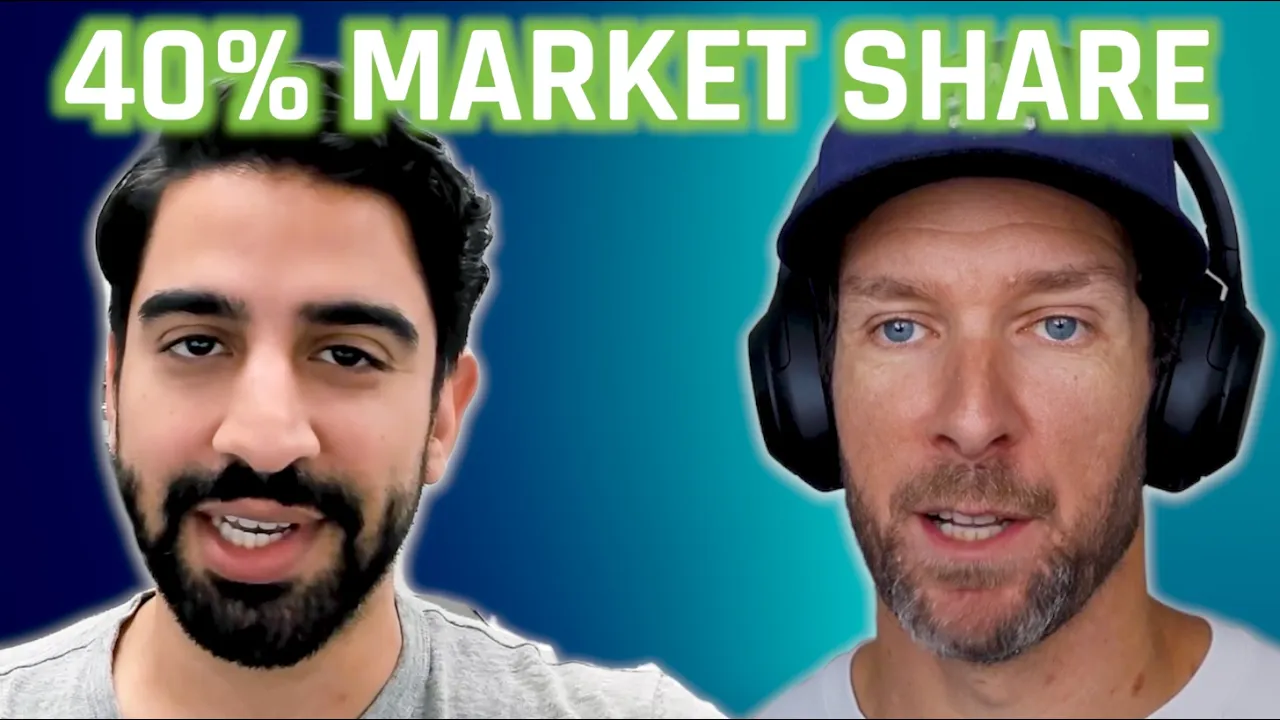
The Andrew Faris Podcast · @andrewfarispodcast
Words
11,042
Runtime
52:34
Speaking pace
210wpm
Reading time
46min
210 words per minute, above the 201 75th percentile of 349 measured videos. That distribution comes from the 349-video hook study.
Opening (first 30 seconds)
Imagine for a second that you had penetrated 40% of your target market in e-commerce. That is the story of Veiled run by CEO Kareem Elgendi. Really fascinating business that is now leading to a bunch of other businesses being created. This is a true profit monster episode. Kareem has built something really incredible at Veiled, [music] which sells modest apparel, including hijabs, but not limited to hijabs, to Muslim women. And so it's a really interesting business targeting a particular community with particular values and they've had incredible success at it. They're opening their first retail store. They're incubating other brands. They've got their
105 words, the words spoken in the first 30 seconds at 210 words per minute.
Free, no signup. See how the first 30 seconds hold attention, with rewrites.
Sentence shape
| Measure | This transcript |
|---|---|
| Sentences | 593 |
| Average words per sentence | 18.6 |
| Longest sentence | 222 words |
| Questions asked | 26 |
| Sentences containing a number | 47 |
Most used terms
Filler phrases
858 in total: like 337 · um 206 · uh 102 · you know 91 · kind of 38 · actually 36 · sort of 18 · I mean 17 · right? 8 · basically 3 · literally 2.
A literal whole-word count of the same phrase list the Prepublish browser extension uses, so a phrase inside another word is not counted and a phrase used in its ordinary sense still is. It is a count and not a judgement.
Free, no account. See where attention is likely to drop, with a rewrite for each weak line. The free check shows the scores and the one issue costing the most. Or run it on the words above first.
Free · No login · See a sample audit first if you prefer.
What this transcript is
Every word below is the caption track YouTube publishes for this video, pulled from the video itself and reproduced unchanged. It is not Prepublish's writing, not a summary, and not a re-transcription: it is the video's own published captions. English captions, generated automatically by YouTube, in the video’s original language. Source: the video on YouTube. A channel that would rather this page did not exist can ask for its removal through the contact page, and it is removed.
No Script X-ray for this video: YouTube shows a Most replayed graph only once a video has enough views.
Imagine for a second that you had penetrated 40% of your target market in e-commerce. That is the story of Veiled run by CEO Kareem Elgendi. Really fascinating business that is now leading to a bunch of other businesses being created. This is a true profit monster episode. Kareem has built something really incredible at Veiled, [music] which sells modest apparel, including hijabs, but not limited to hijabs, to Muslim women.
And so it's a really interesting business targeting a particular community with particular values and they've had incredible success at it. They're opening their first retail store. They're incubating other brands. They've got their own 3PL. This is uh this is no joke of a business. Multiple eight figures, profitable. Let's get into it. You're going to learn a lot from Kareem [music] Elgendi from Failed. Kareem, thanks for taking the time and I'm super excited for this conversation.
We were introduced by a mutual friend and uh and I'm just I'm just really fired up about this. So, thanks for taking time. >> Yeah, absolutely, man. Thanks for having me here. I'm excited. >> All right, let's let's talk about Veiled a little bit. Um, you know, uh uh I and I'm sure many of my um of my listeners and viewers on this podcast are are not Muslims. And so, help us understand a little bit about sort of the core product and the core um customer.
And what I'd actually really love you to focus on in there is why you were able to reach, as I said in the intro, 40% of this market. So I think I think people who you know people are not living under a rock whether they're Muslim or not understand there's some different clothing and standards related to religious convictions not only in Islam but in other religions and and so that I think makes some sense but what I'm actually really curious to hear you talk about is how you've been so successful about seeing you know a pathway to reaching so many of your target customers within that like what is different and better and has helped you to do that at the core of the product and the customer >> there there's definitely a lot to unpack there Uh yeah, >> huge question. >> I think what's interesting is that um so so Nora Shamash, she's the founder, actually her and her husband started the company, they're the original founders of Veailed back in 2016.
The first modestware brands that were serving the Muslim market emerged around like 2012 2013. Even like the big global like retailers like Modisa, that's kind of like when they all started back in like you know the early 2010s. So what caused the emergence of that and and h and why did that happen to align with the advent of like e-commerce? Well, it's because um you know um essentially like Muslim women in western markets um are looking for a new type of fashion that is modest but also modern.
And um the way that like you can kind of start to um capture um a more you know homogeneous community that's spread out um that's so dispersed in something like you know the US or like the UK etc. Um e-commerce is a great tool for that. So that's why it's like no surprise to me that like you know with the advent of e-commerce and e-commerce becoming as popular as it as it has become is kind of like when you start to see these brands emerge and I think that's that's the same for any kind of niche kind of business that has like this new distribution channel and medium where you can kind of reach very targeted audiences and cater to them specifically.
So, so that was the like kind of um genesis, but we were not the first. We just happened to approach it in a way that was really sophisticated from a digital, you know, marketing like growth strategy perspective. >> Uh okay. So, is there anything do you think at the level of like it's interesting you you're making this about sort of distribution possibilities with ecom that the ability to go straight to a customer no matter where they are. uh of you know of course there's going to be pockets of communities and stuff like that and sometimes people are just going to be spread all over a mix of those kinds of things where your customers are algorithmic content is going to make this this simpler to reach reach people within you know obviously certain you know interests and values and things like that um I'm curious though about the product itself how much this comes down to sort of the ability to stand out at the level of design and and some of that because I I think from outsiders people might not [clears throat] like think about something like Modest Wear, excuse me, something like Modest Wear having nonetheless like a real fashion component.
It's very clear when you go to your site, when you go to veiled.com, it's like it's it's it's a fashion website, you know, and and yet I think probably people who are not Muslim maybe I I don't know, maybe don't understand that element. >> Yeah. So So definitely there's a little bit of like a misunderstanding around the Muslim community and like I spoke with an a potential investor at one point. We've been completely bootstrapped by the way which is another interesting thing about the company.
But um at one point we were kind of possibly seeking an investment looking into doing like B2B in retail. I'm speaking with this guy who is very well-known VC and very involved in like CPG retail and he asked me he asked me he's like you know can't they just go and borrow these garments from like the mosque you know and it's like um there's just a complete misunderstanding of um Muslim women and the fashion that they seek and and the other thing with veil that I should say as a disclaimer is like we're not proilitizing in any way we're just filling in gaps in the wardrobe between like, you know, um very revealing clothing and clothing that covers you like all the way up.
And we have a lot of those variations on that spectrum. And it's up to our customer to choose like how she wants to cover up. We launched a retail store recently. If you go into the store, um not every girl in there is wearing a hijab. Um just as an example, right? So there isn't like a very distinct or super clear archetype. there's obviously like a general inclination towards covering up more. Um, but there's a lot of variation there which does make it difficult to enter from like a design fashion design standpoint because of the variability and understanding those nuances.
Um, but then the the part that is kind of straightforward is like if you're in the US and you're in the mall and there are certain fabrics and materials that are trending, we're we we have those materials and and fabrics, you know, but we're just the silhouette's a little bit different, the trims might change. Um, we also have a little bit of a take on like we have our own stylistic sense of like what are the, you know, the colors like Veil is a little more streamlined, minimalist and like, you know, in in just like agnostic of like the religious component just like as a as a fashion brand.
Um, so yeah. So, uh, >> that's very helpful. No, that's exactly what I was asking. It's very helpful. Thank you. is um I I'm want to stay on this notion of like I I actually think there are a lot of brands who are building for some kind of a like subculture feels like the wrong word because when you're talking about a religious community it's not quite a subculture but where there's there's communities that have a distinct set of values based on a number of things you know I mean honestly one of the things I was thinking of like jokes about um CrossFit which is sort of pastor's heyday but in its earlier days of people comparing it to religion you know and there there there would be a set of things that are like sort of uh in that community even from a non-religious perspective that like sort of almost look like that where it's like these values that are shared by most members and so then if you're going to build you know a food product for that community man better hit your macros correctly or whatever you know there's like these little distinctions so I think there's a lot of people who can relate to the idea that there's a particular culture particular community um whether it's an interest level or something even stronger and more core to people's value sets than than um than that.
And so I'm curious if you have any reflections broadly on how you think about that from a marketing perspective. This might be too broad of a question. Just tell me if it is. But uh but sort of how can you help people thinking about that because because the penetration you guys have had has been so massive to get to 40%. Like uh like I'm curious, you know, to to hear you reflect a little on on that element. >> I think what's cool is I think Inveiled had more of a take like a religious take on the fashion.
I actually think we would not be nearly as successful and that's because even and then you know we do have to understand a little bit like from a religious lens like even in the religion itself >> [snorts] >> um there isn't kind of like a mandate on like you must dress this way. It's kind of like everyone has it's very personal and it's like the but women uh who are who happen to be Muslim they just choose to cover up um to whatever degree you know and obviously there's like I'm I'm very well aware of a lot of the controversy especially like in certain countries overseas and like different things that are in the law but that doesn't actually translate to the religion.
And so now when you're in a in a free uh country or society like in the US or like the UK, the um expression has a little bit more freedom um in terms of fashion, everything else. And that actually is the true nature of it, which there's there's there's that within the Muslim context, but also the fact that Veil does get a lot of customers who are from all different faiths. Um, and so there's just like a proclivity that happens to um overindex like with Muslim women in terms of wanting to cover up more, but that might just be a proclivity that exists generally throughout.
Um, and so, uh, we can't talk about the marketing without talking about like the product, but now that we kind of have that layer, um, now it's just putting on display like, you know, in a way that is exciting, that's fashion forward. Um and so anyone who is looking for a beautiful way to cover up more um veiled is a great option for them. >> Yeah. Yeah. um is uh uh you know you in in the midst of like sort of these product and customer components of it and and community components there's also another part of your story which is this like whole element of essentially strategic and tactical excellence and um and so I want to move there a little bit because uh >> excellence makes me very bashful but go on >> well yeah well what I I'll tell you what I mean by that I mean when I see you have floated to me numbers that I I think you said I could share like you're running at an ME [clears throat] over 10 year to date.
You were previously not profitable or break even, but you took at the 15% IBIDA while and you know you're you you're launching a 3PL that's like reaching capacity really fast. You're doing all these things that that reflect some deep down work in the organization itself. So, uh, you know, while it's easy, especially for somebody who's not a Muslim, to kind of get like interested in in the like, okay, there's a really particular element of the product and the customer here, like I want to dive into the sort of the more translatable strategic stuff at the level of just e-commerce and and some of that.
So maybe you can talk first about about the move from break even to to profit like what was required for you to accomplish that because if you're growing at the rate that you're growing at opening up retail stores and at the same time increasing your profitability and living at this extremely high me like I think that's a sort of fascinating thing. So can can you start with what's been the core of getting profitable for you guys?
Yeah, I think analytics, really good, welldefined analytics, dashboards, reports. Um, I'm very lucky that, you know, between the three of us, the three executives, I can just focus on this all day because I have Yaser who, you know, operates all of our logistics and like warehousing, we do our own fulfillment. You mentioned the 3PL. We are also, you know, expanding staff and resources into that. So, that whole world is kind of delegated.
The whole world of being creative and product, even though I love that, I used to be an architect. I can talk about, you know, the the fashion. Um, but Nura being just like the spirit of the brand and like creating the brand initially for herself and being able to focus on that and I could just focus on >> the numbers and the efficiencies um all day long, which has been just awesome. Like I I you know, I'm aware of like >> other operators that kind of have to wear so many different hats.
I do wear a lot of hats, but I can really just focus and hone in on that. Um, but in a nutshell, you need to be able to look at your numbers every single day. You need to understand them in a way that's logical. I I still find a lot of operators even at my scale or larger. Um, getting stuck there like in understanding what's actually happening with their business when sales are not quite there. Um there are different paradigms that I have when it comes to uh being able to recognize whether performance is lacking because of a demand issue versus like a supply issue which I mean the number of conversations I have where I'm noticing the operator doesn't even really understand like you know they're blaming it a supply issue on Facebook ads um or vice versa.
Um, it's there's still like a little bit of a a lag in competence that I'm finding when it comes to e-commerce. And it's it's no fault to the operators, but it's more just like a combination of, you know, the way a lot of like agencies and service providers um measure results and, you know, provide insights and feedback and the operator having to deal with so many things as is the nature of this business. the lack of sophistication in um ecom because of uh the lack of funding and the lack of support there that you would have like someone tech and you could put the right resources and systems and >> um and and I'm sure you're well aware of all of this um like these kind of challenges.
So I think we're a little bit fortunate that we were able to dedicate someone to focusing on that and building a team like I have a full stack developer on staff. I have a full-time analyst. I have multiple engineers that work on this backend data engineers and and so on and so forth and um and that we were able to master this as the business grew. Um and I I think that's the biggest like in a nutshell like reason for our success.
I'm happy to dive into like certain specifics but it is quite broad. [music] If you are the kind of person that is nodding along with Kareem in this conversation because of his commitment to analytics [music] and data driving his decision-making to operate with that level of commitment and excellence, then you are the kind of person who will love working with Intelliggeems on your website. Intelligjs is a tool that literally all of my clients use and they use it for the same reason, which is that Intelligjs gives you unprecedented ability to test the things that really matter most to your brand and your customers on your website and then to measure the performance of those tests based on the actual profit it drives in your business, not just conversion rate, average order value, whatever.
Uh, Intelligence is a is is is like a CRO tool, but they don't even like the words CRO. They don't like the phrase when you talk to the people intelligence cuz when when you hear CRO sometimes you think changing a headline, changing a button color, whatever. And that is not what Intelliggeems is primarily for. It is testing beyond the basics. Testing things that really move the needle like the price of your products like um a full Shopify theme split test.
Like if you're doing a full redesign, you could do that. How about your free shipping threshold, your shipping uh charge to your customers, how much you're charging for shipping. Sitewide offers. This is one that I think like basically every brand ought to have intelligence and should be testing like the 10% off you offer to new customers versus no new customer discount versus a bigger new customer discount. What is actually going to drive the most value for your customers sense of your products and then therefore in your business at the level of profitability measured again not just by conversion rate but how uh the the offer uptake from your customers is driving profit in your business including net of the discounts of the shipping costs all those things.
Intelligence is easy to get set up with is the other wonderful thing about it. It's you can be up and testing very very quickly. you don't need a developer. Uh and and you can start uh testing the things that are going to really move the needle. Uh all the things I just mentioned, many more. And of course, also all your basic landing page testing needs, all those kinds of things as [music] part of it as well. Go to intelliggeems.io, intelliggeems.io, and use the code ferris 20.
F a r i s 20. Uh to get started with it today, you'll get 20% off your first three months. Intelligjs.io ferris 20. Go get intelligence. Go get testing. I I think it's a great starting point answer to the question, and I do want to dive in some specifics. So let me let me let me ask a couple follow-ups. The first is uh uh you know what I one of the things I hear in that with the developer and um analyst and engineers like is a higher investment in opex than many brands would do.
And in fact I've certainly been among the chorus of people preaching one of the things that make e-commerce work is low opex. But it sounds to me like you guys are I mean I don't know what your opex is a percentage of revenue. still might be totally reasonable, but like it sounds like you are not trying to run it as thin as possible, but you're actively investing in infrastructure at the level of process and information that you think can help you.
Um, I'm curious how you've thought about that at a P&L level, uh, and why you're willing to make those investments. I mean, you kind of just answered why you're willing to, but, uh, but yeah, that is a lot of investment. >> We're saving a lot of money on shipping, which is a huge variable cost and fulfillment. We're saving a lot of money on the shipping, by the way, like well, first of all, like 3PL, most of its cost is like shipping.
They're marking up your shipping. So, um, so that's that's one thing. And then the fulfillment, us owning our own fulfillment, owning it for for the entirety of the business. Tons of savings there. Our me is super efficient. Um, so now I can invest a little bit more in labor. My my my payroll is still like within reason. Um, but rather than hiring say like a CFO, no, I'd rather hire someone who can help me build a custom ERP in house that um I then use to like pump and like you know um yeah, just a lot of trades there.
Trades between like engineering or systems development um like operational investment versus like outsourcing and spending a ton of money on you know say traditional more traditional hires. Um so yes I'm a little bit overinvested in operations and engineering but I'm underinvested in you know traditional roles um because I'm able to automate and and you know in have have a system that kind of um covers the that that scope.
One of my theories about 3PL versus 1PL shipping is just that what you're saying is basically true, but the 3PL's also arbitrage the or you know they they essentially by doing a few things well they make their prices competitive to doing at one PL and then when you add in that most people are not actually set up very well to run an efficient warehouse and it's actually a big brain drain on their organizations and time suck uh the net cost of the whole thing ends up as good or better with a 3PL as it does by doing it yourself.
So for most folks, I would encourage them to go to a 3PL, a good 3PL. You could do as badly of course, but um but 3PL operator, right? So >> yeah. Yeah. Yeah. But but I mean um yeah, I've just noticed that as we've shopped around in the past with like 3PL's um and and also this might be like an inefficiency in the way 3PL's operating, the way that they need to make money and and there's a lot we could talk about like in terms of technology and like how they go about doing the things that they do, but um the number of businesses whether it's us just comparing like the amount of savings we have or like taking on new clients and comparing the cost they were paying with their 3PL and then versus us.
I mean, it is just like kind of incredible. Um the amount of like bloated expenses and fees and things that like um >> Yeah. >> Yeah. 3Bs charge. >> Uh the I've definitely seen that too, by the way. I've have like a brand that is messing with that for that reason. Um but but part of what I hear in your answer too is that you have a an executive over your essentially logistics uh among other things that is really good that you try.
I mean you're speaking of this person with immediate reference >> exactly right. So you're like this person is not so it's not the time suck brain drain on your time it sounds like because he is in control and doing a good job of those things. It's a it seems to me that you have to choose though which is like you either need to take the value of outsourcing as a way to stay lean on your internal team and focus on other things or if you're going to take it on for the sake of the cost savings which are real if you can do it right because again the margin on the shipping costs themselves um which is a really big deal in e-commerce right because core of the model is shipping the product to the customer store so it's a huge part of the cost structure of of brand's unit economics so um so if you can save it that makes sense but you it seems to me that you need the kind of investment that you're talking about which is like somebody over it who is good and trustworthy and in the numbers and cares about it. >> It's a very good point.
Yes, there's a huge caveat for sure. And then I'm happy that you you exposed it because I it would have been a completely different story if it was like something either I had to manage myself. I probably would have just you know outsourced it. Um but because of the unique dynamic at Veil in the in the or chart, yeah, we're we're we're fortunate to be able to just take it on ourselves. [music] If you are an operator of an e-commerce business trying to think about how to deliver your customers a great experience while saving costs for you.
And of course that is what you were thinking about, you should be getting Rich Panel for your customer service help desk software. Multiple of my clients are using Rich Panel for their customer service help desk software. And that's because it is a built from the ground up with AI customer service help desk tool that is built to make it so that you can more affordably have your customer service be incredible and more affordably they are really willing to put where uh Rich Panel is really willing to put their money where their mouth is on that claim.
If you are on Gorgeous or Zenesk you can uh switch over to Rich Panel and they guarantee you at least a 30% savings when you switch over. On top of that, on average, they see a 30% reduction in customer tickets. And that's because uh their self-help customer service portal powered by AI is so good that they get your uh your uh customers answers to their questions very very quickly and very very easily. They also have um an like an agent that responds to your Facebook comments and Instagram comments for you.
They have tested this into oblivion to make sure it gives good quality answers on your public social media feeds and it does and it delivers them reliably. That is an amazing time saver and cost saver in your business. That [music] alone is worth testing Rich Panel for because it's just so remarkable. Uh and in all of that, Rich Panel uh is very fast and easy to set up. They guarantee that you will be up and running with their software within 2 weeks of signing with them.
They know you don't have a ton of time to waste uh you know, building this software, uh installing the software, getting used to it, training your team, all those things. They make it fast. They make it easy for you because they know your time is valuable. Go to richpanel.com. richpanel.com today to get started with it. Check it out today. Let's talk about other things. You you referenced the importance of setting up dashboards uh and having data and numbers um and living in those.
Could not agree more. Love this point. I'm curious for you to pull out some specific observations. So like what is it could be a really recent small example can be a bigger example in the history of the business. Tell me about a dashboard you have set up that exposed to you a number that you fixed and led to increasing profit. >> Okay. I have a fun example. So, there was a day that our um MU just completely tanked. Completely tanked.
Nothing changed. Nothing changed in terms of my merchandising. Nothing changed in terms of like massive stuff that stocked out. Um nothing I can point to that would that would be like a demand factor. Nothing I can point to that would be sorry, a supply factor. Um but the thing is nothing also changed on the demand side. like none of our campaigns or anything really changed, but I knew for sure nothing changed on the supply side, like in terms of my website, my merchandising, my promotions.
And for it to like crash so suddenly was, you know, a real anomaly. So, I called up our media manager um and I said, "Hey, you know, I can't figure out what's going on here. um did anything possibly change upstream because I'm not noticing anything like on the website or you know lower funnel. Um he's like you know let me look into it and see. And turns out that Facebook had modified um something and um and what was happening was we have a very specific um way of controlling the amount of money that we're investing in warmer audiences versus colder audiences.
Um, we're not just relying on like, you know, Facebook's like standard optimization um to to to dictate that. We actually have like different kinds of sidecar um campaigns to influence that so that um we um we're more in favor of like warmer audiences, but that's another thing. And so this adjustment that happened on Facebook's end um indirectly impacted um the way that we were investing the balance of like those warm versus colder audiences a lot more in favor of the colder audiences and um and that was like an overnight thing that no one really was like aware of. we switched it back and like the ME came like literally right back like that day it started to improve and then by the next day it was back but like my sales almost went to zero um overnight and so a lot of what I do when I'm looking at the the metrics and and I'm looking at very simple things like I'm just looking day overday revenue um me is the first thing because if me is fine I I don't spend any more time I just like exit the program and I'm doing other things that I need to do um so revenue M that's good.
Don't worry about anything. I'm looking at conversion rate. I'm looking at which kind of like that implies a lot of the supply because you'll notice that your conversion rate is probably double when your best items are in stock and it's when when they're not in stock, you know, your conversion rate sucks. Um or if you have a promotion running, your conversion rate also goes up. So there's a few like things that really influence your your the demand side.
Um uh and then you know and then and then okay and then it's like okay CPM is like skyrocketing why what happened like am I bidding against more people for my audience is it just um are the creatives like you know starting to falter um and then you can you can drill down further into what's happening and then take action. So that's what I do every day. Every day I'm not waiting two days. I'm not waiting a week to talk to an agency.
I'm just I have a dashboard. I look at it and then we're being very proactive. Um, fortunately for for a long time now because we've been doing this for a while. Um, it's mostly just yeah, everything is good and move on. Um, which is cool. Like it wasn't like that in the beginning, but it's very rare that I'm finding issues and then having to kind of triage and fix things um in over the last like year, year and a half. >> All right, I'm going to ask you a question now that is going to uh sound like you're going to have the potential to offend me and uh and you're not.
So, you know, I'm an I have an agency. Very small agency, but I have an agency. Um, but I've heard you say a few things now that have been uh uh both before we started recording and uh and elsewhere. Before we started recording, I'm just going to I'm just going to I'm just going to say [laughter] this. Okay. So, Kareem, you just let me know afterwards if we need to bleep this. All right. You said, "Oh, you were at Comic Threat Collective.
That's the only agency that I respect." [laughter] Or something like that. Right. So, so there's that. And then and then No, not your bad. It's fine. you you should tell me honestly what you think. Um cuz because you're not alone in this like >> I just like I didn't spend a lot of time like really just analyzing like all the different I don't know anything about your agency. Um but >> it's it's [laughter] fine. It's fine.
I'm not offended. >> Also, you were there so it's like if anything that's an ode to you >> No, no, it's fine. I Yeah. Yeah. I was worried I was going to offend you about [laughter] saying something wrong about Islam before we started. Um but no, it's agency talk. I'm not offended at all. Um I I I think it's a valuable perspective and you've now said a couple of other things that have been um negative towards uh vendors and agencies both.
And it sounds to me and this is actually what I care about. You have point of view and I I love talking to people with point of view like with with something like that that the worst interviews I do are on here are people who don't really have a clear point of view on what's working and what they believe in. So um almost certainly whatever your point of view is on agencies or whatever you're seeing something real and that it should it's worth saying, right?
So, uh, so tell me about that. It, uh, maybe I'm over over, uh, over extrapolating a couple of your comments, uh, and you can correct me if I'm wrong, but it sounds like you have a pretty strong preference to keep things internal, um, wherever you possibly can and to not outsource. Is that right? And if so, why? >> Uh, not necessarily. I I actually like to collaborate. So, I like to keep um, as much of the executive decision-m in-house as possible.
I really like to outsource with people who kind of fit into the paradigms that we have kind of established. I was never very confident in that, but just the more that we've scaled up now I'm kind of in and this isn't necessarily a good thing uh because it might actually slow us down or hinder us in the future. So, I have to be really open-minded that like we might not always be like uh the the sharpest when it comes to like overall executive decision-m but um but the the the the challenge I have with a lot of vendors is like when we're going through the sales process, they'll say like, "Okay, like we're going really deep here.
Like you're asking a lot of very technical questions. this is really taking a long time and it's because um it's hard for me to give up that kind of like executive decision- making or or outsource it or or or take on help. Um and then the other thing that we do is we experiment a lot ourselves in trying to do things at a at a more affordable level in the in-house before we give it up, you know. So we'll we'll we'll experiment a little bit say with like a new service or something doing it in-house see how it goes if we can scale it in-house on our own then we do that and if not then we'll go and find a partner so I'll give you an example there's a company called flagship RTL they do like in um merchandising forecasting we have a really sophisticated way of doing it like there to their own admission and this is a company that's raised like a massive amount of money um and phenomenal engineers Um but I'm willing to give up forecasting on hijabs and accessories because uh it can be identified.
It can be done in an automatic way. Uh but like on the clothing there's a lot more nuance to it and I'm not yet comfortable giving that up. Just as an example like so we're not always like all or nothing but it's more like what parts fit okay let's do that otherwise you know give it up. The other thing I hear there is just that like there's some things that are particularly important to your business that are more important to keep internally.
For example, uh I would just imagine because of the unique nature of your product again having this religious element of it. It would be really hard to get a regular marketing agency because of and obviously it's still apparel and fashion people could do it and you could communicate those things but you'd probably want a Muslim or somebody who understands that community you're really leading marketing efforts there. The agency that we're using only does analytics.
Analytics and media buying for us. We do all the creative in-house. So we have like >> That's what I mean. Yeah. Like somebody you could media buy for, you know, I I would have no problem media buying for you guys, I think. But like the but like you wouldn't want us my agency doing the creative. We don't have any Muslims who could do it, you know, like and it just feels too important, you know, in that world. And in fact, fashion in general has these kind of elements of it make it hard.
Um, but but then also when you're talking about merchandising and like what products are in stock. I mean, I have like personally run fashion brands growth, you know, and and digital marketing where like you get the wrong product out of stock and you are dead. Um, and and it's a it's a really it like is a complete killer to your to your >> in stock and you're also dead because you just all your money and you're you're stuck and you don't have cash >> and you can't get rid of it.
Yeah. Yeah. So that kind of stuff, keeping those kinds of things, the creative for a modest wear brand targeting Muslim women primarily, that's something you're going to keep internally, that's too core to who you are. The analytics for your merchandising, especially, you know, where your cash is going for forecasting, you're too important to keep that internally, you know, whatever to have to have these things outsourced.
So I think that makes sense to me. Whereas it sounds like maybe like you said, hijabs or something like that where you're saying this is a little easier for us to do. We're a little more comfortable saying this is not the best use of our time. Um, so again, I don't want to put words in your mouth, but that's a little bit of what I hear in the way you're saying it. Yeah. Um, okay. What else? Give me another example of your of your analytics that you have done.
Um, so let me take a guess at one. All right. Uh, about part of your part of your path to profitability. Um, tell me how much is what I'm actually interested in is sort of like where on the P&L to to go from break even to 15% IBIDA means that some amounts of your P&L that was previously taken up with a cost became a source of profit. So, I'm going to guess at where one of them is. Um, and you tell me if this is right or wrong.
One of my guesses is that growth naturally created this to some degree in the sense that um, returning customer revenue has become a larger percentage of your revenue because customers are happy with your product. It's a really particular I imagine again like if you found a DTOC brand in this space particularly that you really trusted and loved that uh, as returning customer revenue represents a larger portion of your total revenue. uh you end up create you end up um lowering ad spend as a percentage of revenue sort of as a as a correlary.
That's one of my guesses. When I see a 10me for a fashion brand serving a niche community, my assumption is that over time that has happened naturally in the business. And so a larger investment earlier is going to pay off in that respect. Almost like a subscription brand or something, you know, probably not to that extreme, but you can tell me if I'm wrong, but something like that element of it. So that that's my guess as to where one of them was. >> You're exactly correct.
Like our me is actually improving. You're over here. >> Yeah. Right. Because it's actually just really funny because everyone else's me is like going down. We're ours is improving year over year. >> Um the other areas that like we really tightened things up was content. We were spending so much money on content. >> Huh. >> Yeah. Like >> how did you do it? How did you tighten it? >> Yeah. >> How did you tighten that up? >> We were not allowed to spend more than X dollars anymore.
Like like this is it. Like we can't keep scaling this. This can't be this can't be a variable expense. So we actually like killed it. U there's two parts. There's two parts to content. There's like the the campaign production and then there's like the ecom production. So, so ecom shoots, we figured out, we found a partner that does a really good job, shoots a ton of images, apparel, as you know, like this stuff is just so expensive.
Um, so that was just like we found a a really good solution. And then for campaigns, we just became more u more savvy around there and just like incentivized the team to just like sharpen um the numbers a little bit around those those investments. Um, so that was a big one that brought down our overall marketing cost and our marketing cost is also improving. Our shipping has gone down every single year because we're just negotiating with carriers at like volumes now that um we didn't have access to before.
And we introduced new carriers that we weren't using. Like no one a lot of people spoke really poorly about DHL e-commerce when we were thinking about different carriers that we could use. We tested them out. It was actually fine. We brought down our cost there. Then we negotiated with other carriers. We kept bringing down our cost. So our shipping costs have just been continuing to decrease. >> Okay, let's stay there for a second.
I I have a lot of questions about this. Uh this is this is like I've I have fully fetishized the idea of negotiating your shipping rates down for a long time because I've heard people talk about this. One of the best e-commerce talks I've ever heard um was was a guy giving a talk about about how they negotiate their shipping costs down. And it was really cool. So they were his company had this like mission element to where they were going and like using their their saved money on shipping costs to like immediately create a generosity outcome where they were like going and saving women from like horrible situations in these places all over the world.
And so he his talk was all about drawing a line between how they negot how like he was motivated to keep negotiating down his costs so that he could turn the money into save lives. And it was like he had made this sort of mission connection. It was amazing. Anyway, um it was a long time ago. I don't even know if it exists on the internet anymore, but it was really cool. But so since I heard that talk, I have always been like this has got to be possible in some way to do because there are these this is sort of natural market, but nobody negotiates their cost down.
So first question, very specific. Was this possible at lower volumes or is this basically just an economy of scale issue as like at least as a base baseline? Like and what scale how many orders did you have to get to or whatever number you can give me to where you could actually start making this material? >> Interesting. I noticed like when we crossed the 100,000 order a year threshold, that's when we were able to come to the table with some of these larger carriers and actually meet like, you know, the VPs at these companies and have a sit down and like start to negotiate because otherwise like you're just going to get cheaper rates from Shopify out the box or ShipStation um if you're doing like the 1PL model um or your 3PL, right?
Um, but as as like once you cross over like into the 100,000 orders, I think you you get some negotiating power and then what happens is once you're in now everyone wants to talk to you and everyone is trying to undercut everybody else. I don't know like it's a it's a race to the bottom. I actually don't know how some of these carriers make any money. I mean, maybe some of them just don't. Um, but we're constantly just like we're printing out our PLLD um, which is package level detail report that has like anal, you know, metrics on like, you know, your average shipping cost, all that, and shopping it around with different carriers and coming to the table and negotiating and showing them our growth and just having those like discussions.
Um, and that's just been improving. >> That's a good example of analytics creating the outcome, right? You said just get down to the PLLD. It's very similar. Roman Khan came on the podcast a while ago and talked about what they do at the supply chain level. And his basic answer for like how they get their supply chain costs cheaper and cheaper and cheaper was just like you got to get your bombs and understand when you look at the bill of materials like [laughter] >> but the thing is >> look at every element of it. >> But you know the reason we're able to do that is because we're doing our own fulfillment.
So, like if I'm working with a 3PL, I'm not going to be able I probably won't, first of all, I don't have any access to negotiate my carrier rates really. Um, unless the 3PL allows me explicitly to introduce my own carriers and to take on that cost. But a lot of people, they like the terms that they're getting with the 3PL and the carrier, etc. Um, but you know, because I have access to that data readily and I can just pull it on a whim and and just send that email out to the rep because I'm very busy doing a million things, right?
So there's a little bit of like a taking the time to actually do it and follow up and get, you know, have those conversations that a lot of people are just like too busy to really do or they don't really have access to the information to do it. >> It's that again strikes me as like a way where investing in opex actually creates a unit economic benefit. So that you sort of creates a benefit on another part of the P&L.
Um yeah um which is I mean I think there's a couple ways to do it here. There's trade-offs trade-offs to doing it. So um the um >> can I say one more thing? >> Uh yeah please. I was going to ask you another thing about the >> biggest lever which is just reducing our costing like going to ch we manufacture most of our stuff in China going there sitting down with these manufacturers talking to them um improving your terms like we've improved our costing like 30 40%.
That's the biggest lever. That's by far the biggest lever. We without losing quality. And now And now my terms on average are like 25% down on deposit and then net 90 from receiving on the balance on average. Um which is a huge cash flow hack which is also a profitability hack in a way because you're able to buy yourself kind of more time. You're able to invest more in things that matter to improve everything else across the whole unit economic spectrum.
Um, and so there's this like reinforcing phenomenon that's happening between cash flow and profitability that we didn't have the space or the um the flexibility to even pursue in the past because we were just kind of like in the past I was like shipping everything by air to get it here at the last minute because of course you got you're getting slaughtered at that point. >> Yeah. >> Yeah. Uh you're saying you didn't have the space in the past.
What was what was preventing you from that space? >> I I mean like the financial space. >> Yeah. Yeah. Okay. >> Yeah. >> Yeah. Uh so so tightening up the operations of the total business and things like forecasting your inventory allows you to move towards uh sea freight instead of air freight which creates a dramatic cost savings which then allows you um to breathe a little bit and then you can go turn around, get on a plane, go to China, do the negotiations.
Yeah. I I um uh yeah, this [clears throat] I love that. I actually have one more question about the shipping thing, then I'm going to come back to this. Um how much eventually were you able to save per order on shipping costs uh at the end? I'm wondering how big the opportunity >> like $2 an order right now, which is >> Whoa. Like freight to customer? >> Yeah. Like two like net $2 less per order on >> Oh. Oh. Oh. Oh.
Oh. I thought you meant like you're shipping it for $2. $2 per order is a lot. Um that's It's like a 20 30% reduction. Yeah. [clears throat] >> Yeah. Yeah. Um I think people get their shipping costs very wrong all the time. They they make a couple of moves mentally that I think don't serve them very well. Okay. So you save a couple bucks. That's that's actually a lot per order. It's really good. Um okay. So let's come back to China for a second.
Um could couldn't agree more with this point and think it's one of those things to do. Let let me ask the same question I asked you about shipping though. Was this doable for you at lower volumes? Um, and I've sort of heard mixed things about this. Or was this also >> um an aspect of scale? Uh, yeah, I tend to follow, but I'll leave it there. >> Yeah, there was a inflection point where it was kind of like we knew that if we had it was a chicken or the egg.
If I have this, I'm going to blow up. We're going to get a lot of revenue. Um, and but I need that to prove to the to my vendor that like, you know, this is worth it for them. So, we just projected, we did like, you know, some analysis and we modeled out how we would be able to perform if they improved our terms. And I was like, look, you're going to make either this much, this much, or this much. It was like, I just kept it simple, like three curves.
And and I was like, look, like, um, you guys have already seen a ton of growth from us. um we're still on this you know on this train and and look this is I was very clear like and transparent about all the math open up the Excel file the formulas like very very very honest with them um and that convinced enough of them to do it which I was then able to leverage that to go to the ones who weren't as you know willing and be like hey look these other guys are doing it you should do it too otherwise all my money is going to them And in some cases like we actually had to reduce our uh spend with some some of the suppliers.
Um and then eventually they would come around and they'd be like okay fine like we'll we'll we'll we'll give you know these terms. Um and then just going there regularly and sitting with them and meeting with them and you know meeting their families and their and their workers >> relationship man. Yeah. >> Yeah. I love that. This fits so well with what the smartest people in the space have told me repeatedly that the smartest people I think of Roman Khan um Matab Bogle and um and then actually my friends at Move Supply Chain who are based in the Philippines and one of the things that they talk about they've been a sponsor of the show for a while they built the supply chain for the brand that I'm starting and one of the things they talk about is like we one of the big advantages for us is that it's just an hour and a half flight from the Philippines and so we can just go over there and meet as a as a member of your team all the time um and and just be there.
Yeah. And they all talk about the same thing. The relational component of it is real. Um, everybody tells me about I've never been to China, but everybody tells me just that like you got really sophisticated people who get it when you put the numbers in front of them and who are like really really smart and who are actually willing to work with you because there is really something in it for them, especially because manufacturing businesses are volume businesses.
So, if they can help you get volume, their margins increase, right? Um, you know, MAB always points out that they have they have often have access to better financing than than you do in the US. And so, they actually can front the terms if you can show that it's going to actually create more volume. it it's sort of the trade-off works better for everybody. Um, so yeah, I I love that advice. It's like just reminder number 20,000.
Get on the plane, go over there or get members of your team to go do it and have be part of that. Uh, yeah, it's really good. Um, with with that one uh go ahead. What were you going to say? >> No, I said I love that. I love I love exactly how you framed it. Yeah. Get on the plane. Get on the plane. Go there. >> Yes. Yeah. I even even your comment like meet their families. It's like it's totally right. Like these are just humans.
[laughter] They care about things like you do. Um, and and in the end, what also ends up h I hear all the time is just how grateful US-based businesses are for their partners in China who really do care about them and care about their business and are real partners in the business. You know, >> the ROI on sending just like a really thoughtful gift on like a Chinese holiday, just that alone is insurmountable. Um, >> uh, I love that.
That's a really really good call. Um uh so let me actually come back to the numbers you mentioned because it's a cash flow yeah >> uh thing especially especially especially in apparel where cash is cash management is so hard. Um so you you're now just to repeat it you're at 25% >> down uh correct me and 90day net terms for the other 75% >> 90 days net from receiving in our warehouse >> for receiving. Yeah. >> Yeah. >> Okay.
Yeah. Uh and that's on the other 75% Yeah. >> of the of the cost. That is fantastic. Was there an intermediary step? Yeah. Somewhere in there. >> Like all the stuff like >> let's get 30% from receiving. Let's get to 45 60. Hey, we could really use like 75 now. >> Yeah. And now your business cash flow is way better. >> Night and day. Night and day. >> Yeah. It helped us get out of like a debt situation because I mean we're talking about all like the great stuff now like now that we're on the other side of the fence but there were some very crushing moments believe me. >> Yeah. >> Um and we made some >> it wasn't easy the whole time.
K has not just been all win after win after win. really bad decision. Like not not like not like um nothing I can really fault us for, but like you know there was a a point we're really feeling ourselves and we started to release these like really expensive you know collections and we invested so much in them and they got stuck and we like kind of like we didn't we didn't rely on our data. It was like one of the few times that we didn't actually just like we made a play off of gut rather than data.
Um and boy did we learn from that. like since then we've been uh maybe airing too much on the side of like being conservative with how how we go about like merchandising. Um but yeah, I mean uh the company is bootstrapped so we rely a lot on inventory financing and um we we got into a little bit of a hole at one point and that's kind of what that was also part of the impetus of like sitting down really tightening up the union economics figuring out we had growth so we always had demand we always had growth and that was able to cover our ass so to speak.
Uh but you can't rely on that forever because you know especially as you scale up into eight figures and and beyond. Um you know at some point you're going to hit a a wall. Your business is going to taper. Um especially with us having such a kind of like a limited market here in the US. Um having to rely on other means like opening the store is a huge way for us to like expand our TAM, you know, our CLV or whatever just like expand our our revenue container. um going into overseas markets is another way for us to like we're doing it already with stuff like global e and whatnot but like you know there's there's a there more direct ways to actually like expand the container internationally.
Um, so anyway, it was uh yeah, there there was a lot of pain um that we're even still to this day still climbing out of at least now like we're soaring but um it was necessary to to kind of do all these things otherwise the business would have you know it might have went under. Um >> yeah, >> so >> okay I want to respect your time. I want to leave space for one question I like to ask smart operators, which is just is there anything super top of mind burning for you right now?
Something you're hot on, something like that. It could be totally unrelated to anything we've talked about, just that you think other people should hear while while while you've got a little audience here. >> Um, two things. One is like retail retail. Um, we we we probably could have gone into it a little bit sooner. Um, it's been incredible for the business. I mean, the performance is just insane. Um and then the other thing is uh you know GEO I think is the future of generative engine optimization ranking your brand for the LLMs.
I would just say go on to like Chachi Atlas that just released and put in your website and have it find a product. Like for us, I asked, you know, recommend a winter hijab and just watch it, you know, it starts to pilot and take over and click around your website and navigate your website. Um, and just watch how it tries to find things on your website and just look how inefficient your website is in terms of indexing for the LM.
Uh, so I think that that is something that a lot of operators should start to focus on as LM start take up more of a share of traffic. >> Okay, we're going to need to do a how-to episode next time you come on so you can walk people through that because I think uh there's a lot there. That's really good. Um, you have an incubator and a 3PL. Uh, talk about both uh while we wrap up so people know how you can actually help them grow and and do the same thing because you guys are doing all kinds of cool stuff beyond veiled. >> Yeah, we we uh we've been working with uh businesses that are starting from scratch and more like adventure studio style, offering managed services in return for equity and also investing a little bit of cash.
Um, so if you have a new e-commerce brand and you're looking for help there, we can have a conversation. Um, and then we also have a 3PL based out here on the East Coast. Um, run by operators for operators. Um, so if you need that, um, we can also talk yk.com. >> I was say ykinccubator.com. The link for that is in the show notes in the show description. So if you didn't catch that, don't worry about it. Just go to the show notes if you're on uh Spotify or Apple or if you're watching this on YouTube in the description and you can get that there.
By the way, while you're at it, you should subscribe. Obviously, I'm so bad at this. I never tell people to subscribe or like it or comment. But go do all those things, too. It'll help me make more content. Um Kareem, thanks for your time so much. I appreciate it a lot. This was a great conversation. >> Open invite. I'm just going to put it publicly. You you've got the you've got the uh come back anytime card. >> You're the man.
Thank you. >> All right. Thanks. The more I talked with Kareem, the more I understood why my good friend uh Sam Mendlesson introduced me to Kareem uh and said, "This guy's a guy you got to talk to." I I just loved that conversation. Clearly a guy who's hammering away at all the core things that drive value in his business and uh and doing that while delivering a product that his customers really value and really care about.
Really cool story. I love that conversation. If you want to follow up, don't forget to do that with Kareem and his team. The links again uh that we mentioned are in the show notes for that, so you can go check that out. And uh and if you want to follow up with me, email me at podcastfgrowth.com. And uh and go to afgrowth.com if you're interested in working with AJFgrowth for your growth needs in the future, digital marketing, Facebook ads needs, that sort of thing.
Uh and as I said, don't forget to subscribe wherever you watch or listen. All kinds of great conversations still coming up, including I got the founders of Popsmith who have a crazy story, crazy story, uh, that you're going to want to hear about how close they got to dying and how well they're doing now and the personal chaos that came with that. Just crazy. Um, so definitely don't want to miss that interview. Um, Taylor Holiday and I are really working on getting these monthly conversations going.
So, if you like those conversations, you're not going to [music] want to miss that. And subscribe. Patrick Kadoo and I, my co- my, uh, my business partner COO, we're doing monthly conversations now. Lots of good stuff coming. You know where to find it. that you know where to get it all. It's right here on your feed. So, subscribe wherever you're watching or listening. I'll see you next time. [music]
The words are the caption track's own and nothing is reworded or re-transcribed. Paragraph breaks are placed between sentences so the text reads as prose.
Free tools for your own script: paste a draft and see where it stands before you record it.
Paste your draft and see where viewers are likely to drop off, with a rewrite for each weak line.
Paste the first 30 seconds of your own draft for a hook score and rewrites.
Check your draft against YouTube's advertiser-friendly guidelines before you record it.
Read this channel's public videos and transcripts, and download a writing brief for it.