Getting the transcript
Reading the captions from YouTube. A video nobody has opened here before takes 10 to 30 seconds; this page fills in on its own.
Getting the transcript
Reading the captions from YouTube. A video nobody has opened here before takes 10 to 30 seconds; this page fills in on its own.
The Andrew Faris Podcast · @andrewfarispodcast
Words
9,264
Runtime
40:32
Speaking pace
229wpm
Reading time
39min
229 words per minute, above the 201 75th percentile of 349 measured videos. That distribution comes from the 349-video hook study.
Opening (first 30 seconds)
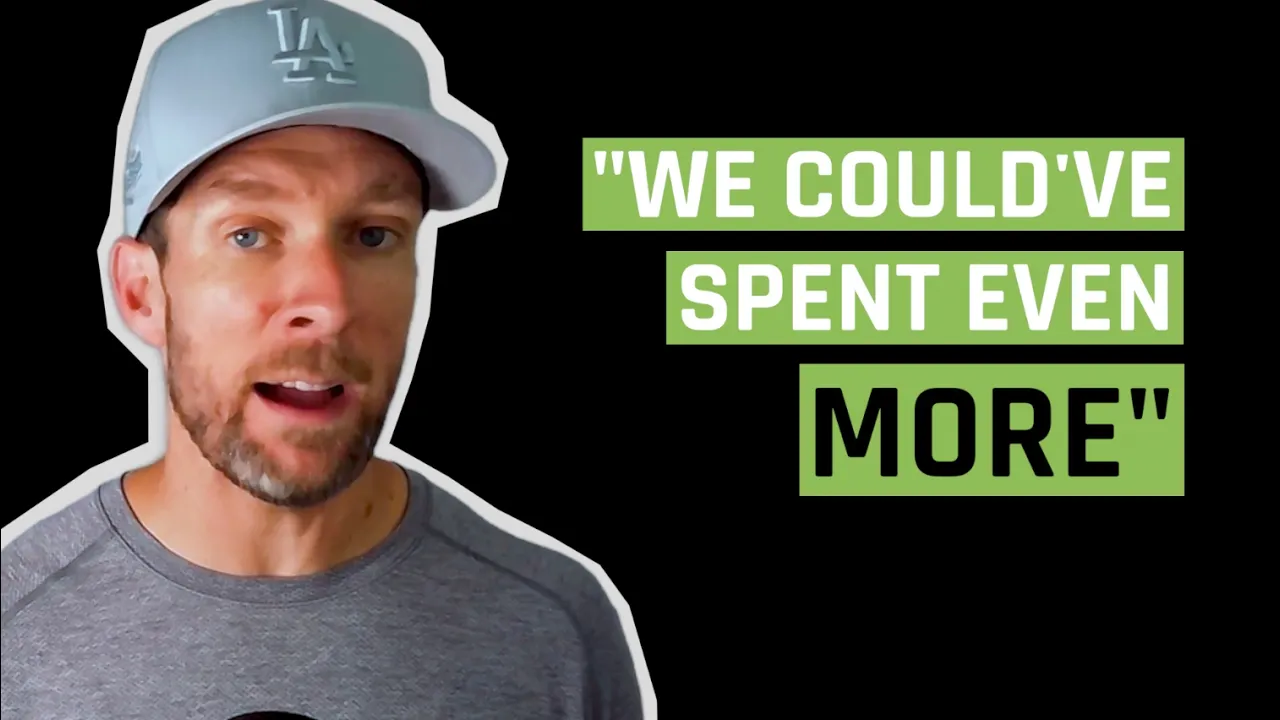
I have a client that 10xed their ad spend in four days. What I mean by that is like on Thursday it was X dollars. On Sunday the daily spend was $10. Wasn't just because of a weekend effect. Even though if you run manual bids, you know all about that. It was just an unlocked funnel that went crazy. And the honest truth is we could have gone bigger if we had more inventory for the moment. And I'm going to tell you all about how we did it on this show and exactly what my learning for my client's business is and how we're thinking about what to do in light of this
115 words, the words spoken in the first 30 seconds at 229 words per minute.
Free, no signup. See how the first 30 seconds hold attention, with rewrites.
Sentence shape
| Measure | This transcript |
|---|---|
| Sentences | 496 |
| Average words per sentence | 18.7 |
| Longest sentence | 154 words |
| Questions asked | 42 |
| Sentences containing a number | 47 |
Most used terms
Filler phrases
466 in total: like 129 · uh 115 · um 69 · sort of 35 · you know 33 · actually 31 · right? 20 · kind of 18 · I mean 10 · basically 5 · literally 1.
A literal whole-word count of the same phrase list the Prepublish browser extension uses, so a phrase inside another word is not counted and a phrase used in its ordinary sense still is. It is a count and not a judgement.
Free, no account. See where attention is likely to drop, with a rewrite for each weak line. The free check shows the scores and the one issue costing the most. Or run it on the words above first.
Free · No login · See a sample audit first if you prefer.
What this transcript is
Every word below is the caption track YouTube publishes for this video, pulled from the video itself and reproduced unchanged. It is not Prepublish's writing, not a summary, and not a re-transcription: it is the video's own published captions. English captions, generated automatically by YouTube, in the video’s original language. Source: the video on YouTube. A channel that would rather this page did not exist can ask for its removal through the contact page, and it is removed.
No Script X-ray for this video: YouTube shows a Most replayed graph only once a video has enough views.
I have a client that 10xed their ad spend in four days. What I mean by that is like on Thursday it was X dollars. On Sunday the daily spend was $10. Wasn't just because of a weekend effect. Even though if you run manual bids, you know all about that. It was just an unlocked funnel that went crazy. And the honest truth is we could have gone bigger if we had more inventory for the moment. And I'm going to tell you all about how we did it on this show and exactly what my learning for my client's business is and how we're thinking about what to do in light of this for that client, for other clients, etc.
I think the learnings are going to be really helpful for you. Let's get into it. So, like a month ago, I recorded an episode of this podcast called Eight Steps to Fixing a Broken Meta Ads account. And uh and this was uh because of a client of mine where things were going really really wrong all at once. And it was just compounding in a whole bunch of ways. And uh and the result of that was that basically the majority of my time working with that client was spent trying to fix and overhaul that ad account uh after we had made all kinds of changes.
Uh we made a bunch of changes leading up to that where we saw a bunch of other changes that we needed to make and and it was just one of those times where you work with a client, you work with a team and everybody everybody's heads go to the same place like how do we handle this thing? And the other thing about that, as so often happens in these cases, is that the attention that goes into a moment like that ends up yielding results that are really impactful.
And you kind of look back on it and go like, man, if that wouldn't have happened, I wonder if we ever would have achieved the things we ended up achieving because the effort and the problem solving that we put into solving that kind of moment in the brand's business ended up yielding results that were not just a fixed ad account, but an unlocked uh whole brand. and in a lot of ways unlocked ad spend. And that's exactly what happened here.
Like I said in the intro, in the course of 4 days, we 10xed our ad spend. And uh and it went to like a big number. Like they were not spending $100 a day, right? So I don't mean it went from $100 to $1,000. They're spending material money, like meaningful money ahead of time. And and so they they really grew their spend a lot. Uh and uh we could have spent more money. Uh when you grow your spend that much, you do not have inventory planned for it.
I can just tell you. and uh and that's like really normal. So, we've immediately had to slow back down uh and think about inventory ordering in light of that. And I'm actually going to talk about that part of it towards the end of this episode. So, if you're an operator and you've seen moments like this and you want to know how I think about inventory forecasting in these moments, it's actually a really hard challenge and a really important part of doing this process, right?
So, I'm going to tell you what I'm thinking about for this particular brand towards the end of this this episode. The other thing about this that you should know is also, as I said in the intro, this was not during an evergreen uh or this was not excuse me, it was during an evergreen moment. So, it was not like a sale. We didn't 10x it because of a sale. Uh it was actually just like the products that we had, rethinking offers, etc.
As as I'll mention in a second and so it wasn't some special seasonal moment or anything like that where I'm, you know, uh fudging that information to make it sound better than it was. This was just like the regular course of business kind of stuff. Um one of these kind of crazy moments. And uh and and also you should know that that result has basically held so far. So again, we've had to pull back spend because of inventory, but aside from that, the results have have continued to be excellent, just at a lower scale.
And so whether or not it hits exactly a 10x spend every day, it's going to be at least probably an ongoing 5, six, 7x, something like that. Again, depending on how we plan the inventory in the moments from here. So um so that's that's the basics of it. I mean, what I really want you to hear with this is that it's real. Like we had a real unlock in the ad account. the kind of thing that as a growth person or as a marketer and an agency person, you kind of stop, think about, reflect on, and go like, man, how do I do that for other clients as well?
What do I need to learn from this for other clients? So, let me describe to you what happened, what went into this, and and a few different elements of the spend. Uh that way you can uh understand kind of how I'm processing this and what the takeaways are for me. So, um so uh and of course, I can't say who the client is or anything like that. So, uh so there's that. Okay, the first thing um to know is let's let's break this down into like four kind of elements of an ad account.
And the first of those is an offer. Okay. Uh so the offer is a critical part of what happened here. And this is a great example where this brand had tested multiple offers multiple ways. We had tried um straight discount offers. We had tried gift with purchase offers. We had tried stacked discount offers, sort of good, better, best bundles. um you know all kinds of different things to incentivize customers to make purchases in different ways.
And one of the things that happened here was somebody in that process had the idea of like wait a minute what if we did a two product bundle, okay, a two product bundle offer specifically and put these two products together that are really complimentary towards one another. And that was different than anything we've done before. And that offer ended up being really really powerful for this brand. And that's a really big deal um because um I mean it had all kinds of impacts, right?
It it materially changed the AOV. Um it materially changed the CAC relative to that AOV of course. And it seemed to hit customers at sort of just the right amount of money to ask for them to to um take out of their wallet and and spend on a product that they hadn't tried before. And I think that's a really big part and sort of an underrated part of offers with another brand that I've worked with. One of the things we've noticed is that no matter how many price tests we run with Intellig um or and we we run them a lot for for this other brand that I'm talking about and no matter how many ways we change the sitewide offers and things like that, we find that customers during non-sale periods are pretty willing to spend about X.
And what I mean by that is like no matter how we change the offer or whatever, we haven't moved the AOV much on this particular product set. What we find is customers just sort of like have probably subconsciously some amount of money they're willing to spend on this product category. And when they're willing to spend that amount of money, what our job is to cram as much value into those amount of dollars as possible to the customer while doing that in a way that is economically like makes sense for us.
Um so so we have this game to play. That's why it's actually why IntelligJ is such a crucial tool for that particular client because that that client we're finding the AOV the conversion rate changes differently. The AOV changes and then the margin changes quite a bit uh with with each of these different offers. And so if we lower the price of a product, let's just call it from $25 to $20 or from $50 to $40 or whatever.
Um what we find is that the total that product gets bundled a bunch and and when that product gets bundled the total bundle ends up being in revenue about the same amount no matter how we do that. They just put different amount of product different amounts of product into the bundle and and so uh and so this is like a critical thing. There's there's something to be said about this for a lot of brands that it's price elasticity but it's not in the way that you think of it.
It's not just like an individual price that you can command for an individual product. It's that there's like some for some brands, and this is not true for all brands, but for some brands, there seems to be basically some amount of money people will spend on the category and that's just kind of it. And and so finding that amount and sort of optimizing the the funnel towards that amount or towards the ideal amount of money works really really well.
And if you don't have a a product or a bundle or something at that price point, you you can end up being sort of less efficient in your conversion than before. Like a really simple way of thinking about this is like is if you just think about your product uh that probably in most categories a customer just isn't going to for like sort of most non-f furniture categories or something like that customer just isn't going to spend $1,000 on their first purchase, right?
And you know that or let's just whatever let's just say a million dollars that you know a customer on their first purchase is not going to spend a million dollars to buy your product. It's just more than they're willing to spend on your category. And that's really obvious at a million dollars. But what is sometimes less obvious is that like it's actually possible that a customer generally wants to spend $100 and they're willing to do that instead of 80 or 150 and if you go to 150 or even 120 you might be leaving a lot of customers on the table.
So finding an option out of 100 is really helpful. [Music] You just heard me talk about intellig. That's because I love intelliggeems. It is an amazing tool. It is to me one of the core tools that basically every operator ought to be using for exactly the reason that I mentioned on this episode which is that intelligence is uniquely excellent at CRO as a CRO software tool for e-commerce brands because it is so much more than CRO.
It is a profit optimization tool. You just call it CRO cuz that's what you're used to calling this sort of thing, but it's so much more than that. You take moments like this in your brand. you take whatever's happening in your brand and uh test not only the the page design and the copy on your pages though I think you should be testing those things too and Intelligjs is a great tool with which to do it but uh actually things like pricing and offer and shipping thresholds the 10% off you give to every customer who goes to your website like there's all of these trade-offs because you don't know so much of the time whether or not these decisions you've made about price and about um and about discounting and about uh free shipping thresholds and about offers.
You don't know if those are hurting or helping conversion. And either way, whether they're hurting or helping conversion, if they're doing that in a way that is actually detracting from or driving profit in your business. Uh because conversion rate is not the only metric that matters. And what Intelligence does is it ties into all of your Shopify product data and will tell you, it will output for you uh not how the results of every test based on the actual profit that it drives.
And that's the critical thing and that's the way you should be doing all of your tests. Intelligent is also super easy to set up. doesn't require a developer or anything like that. You can get going and start testing like right away. Um, it's a really great tool. Intelligjs.io slash uh oh, excuse me. Use the code ferris 20. F a r i s20 to get 20% off your first three months with intelligence. Intelligj.io. Ferris 20 to get first three months off.
Every one of my clients uses Intelligjems. Literally, every one of them does. Uh, you should be using it, too. It's a great tool. Go get it. So that seems to me to be one of the things that happened in the situation that we we found sort of the right amount of product at the right price with the right discounting and of course by doing some bundling you can do some things margin-wise. Still one of the most underrated things in in a lot of people's consideration of e-commerce businesses is that people don't think explicitly enough about the fact that shipping is such a massive cost in your business and is a huge part of the margin cost the the cost to your gross margin in in DTOC.
I mean, even if you charge, especially if you if you don't charge for shipping, if you get over if you're bundling in some way or you're, you know, over a free shipping threshold or whatever, you know, the five to $6 you pay in shipping or maybe even 10 bucks depending on your category sometimes is like 10% of your revenue. Um, you know, and and so it ends up eating up a huge amount of the cost. If you actually go and look at the unit economics sheet in the episode I released uh recently about the financial breakdown, the unit economics breakdown of of the brand that I'm starting, you'll see exactly that that like the product actually has incredible margin, but that the the biggest margin challenge we actually have is shipping the product to the customer.
Not because it's prohibitively large or anything like that. It's just that it just takes a lot just like last mile delivery is expensive. It just is just but that's core to what DTOC is. And so um so thinking about how that works is really important. So in your offer design, if you can generate a higher AOV or find that right AOV, um point, you can often discount the product more to customers in ways that make it so that it advertises the shipping cost across more stuff, right?
Like if it costs $5 to ship your product, but you can get customers to spend $100 instead of 50, that is a massive amount of margin to get back, right? It drops the shipping cost on your margin from 10% to 5%. And that's really big deal. And so again, um, finding the right bundling and finding the right offer economically. And this is what I mean in a way that is produces value for the customer. So the customer perceives it as a as a lot of value.
Um, and sometimes people say perceived value almost like it's a trick you're playing. But that's not what I mean. I mean the customer experiences value in exchange for their money. They they experience that. And at the same time, it's economically sensible for your brand. It makes the unit economic sense. If you can find the overlap of those two things, it's a big deal. And that's why offer testing, I think, really matters for a lot of brands and price testing, etc.
Um, I mentioned Intelligjs earlier. It's why I brought them on as a sponsor on the show and why I like love their business model so much because it's just a really important part of doing this, right? Uh, so yeah, I it's it's it's it can be really helpful. So, finding the right offer made a huge difference in this process. And yet, here is the most fascinating part of this whole story. We actually had the same multiple products bundled the exact same way at the exact same price, but framed and marketed extremely differently.
Extremely differently. And one of those funnels smashed. The other funnel uh has done relatively little sort of a not nothing but nothing remarkable. I certainly wouldn't be recording a podcast about it. Okay. Uh and again same exact products, same exact bundles, same exact offers, same exact landing page structure and format. So this is not about content format or design or information hierarchy etc. The big difference was the message like the message and the way that we framed it and the angle that we tapped into. you know, this brand is a brand that um has thought about their message in a sort of pro product focused way and then in multiple problem focused ways as well.
And so like sort of just like lead with the product and talk about why it's better than other products that you can buy. Uh or lead with the problem and talk about how it solves the problem, right? And of course, both of those are viable things to do. This brand is not nothing. It's a good brand building a good business that already exists in the business. So, it's not like one of these is the thing that you should never do and you should only do this one way.
Sometimes marketers talk that way about problem solution marketing or something like that. It's not what I mean. Like there's there's lots of ways to sell products and and for all kinds of reasons they can be good. In fact, one of the things I'd say about meta ads in particular is that really product focused stuff where you talk about why your product is good in a category that is known can be really effective because if you if you've ever scrolled your feed and you've been in market for a product, so you're sort of solution aware as my as my friend Jess Bachmann would would frame it from fire team.
If you are that customer, then what you know um is going to happen is that you're going to get every brand's version of that product in your feed. you know, Meta is going to show, hey, look, you are in the market for, I don't know, men's basics, okay? Then we're going to show you all the men's basics brands once we've seen that you've browsed True Classic or whatever brand. Okay? Uh you're in the market for wallets because you browseed Ridge, like we're going to show you all the wallets.
And so product focused marketing, why your product is better than others is powerful and is an important part of the experience of customers uh using Meta like that. it can be a really important thing uh because customers are often going to see that alongside other products in their feed. Um but um and so we have tried that we've tried multiple sort of productled approaches and we've tried multiple problemled approaches and sort of um problem solution approaches to to this product.
Workspace 6 is a digital community that you as an e-commerce operator ought to be joining and that's because you need to be talking to other e-commerce operators who can help you when moments like this come up in your business for what to do. Let's say you're in this position, your spend goes crazy and you need to ask the question, how should I order inventory in a moment like this? Well, why don't you talk to other operators who have been there before, who know what to do, who can talk to you about the ins and outs of it, and you can do that accessing seven and 8 figure um e-commerce operators via the Slack community that is Workspace 6.
Workspace 6 also wonderfully does not include me. And the reason that is great is because I am a grimy salesperson selling agency services. And sometimes e-commerce operators need places to go where they can talk about people like me and whether or not AF Growth does a good or bad job for our clients. without AJF growth being there. You need to be able to talk about it freely and honestly. Workspace 6 allows that. It is really awesome.
It pays for itself really easily because it is hundreds of e-commerce operators who are just like you and high-end executives who are just like you who can uh get into the community on Slack, chop it up with other people, share knowledge. It's one of the best things about the e-commerce community is the way people are willing to share knowledge with each other. And Workspace 6 just makes that easier and faster. So, if you want to join Workspace 6, you can do that by joining workspace 6.io or excuse me, go to workspace 6.io to go join the community today.
First month is free. Uh there's a money back guarantee on it. Go check it out. workspace 6.io. Go check it out today. You know, we've actually framed different problems as the core problem people are trying to solve. Most many products solve multiple problems and people's sense of problem uh is is different. Like again, I just mentioned Ridge Wallet, so it comes to mind. Um so, well, let's let's do True Classic. Okay.
Like I don't know anything about that brand. I'm a Fresh Clean Threads guy. That's that's what I wear. But like, you know, uh let's actually use that Fresh Clean Threads. The reason that I like their t-shirts and over the others, and I don't even know if the other ones have it. Um is that they are priced at a level that I want. Uh I like that they are mostly solid colors. That's the kind of shirt that I wear. And uh and critically for me, I am uh about 6'4 and built pretty lengy.
So, a medium tall fit is the right kind of shirt for me. Um, and I am looking for medium tall because the problem that I always have buying men's basics is that shirts uh either look too short for me or they look like I'm swimming in them. Okay. So, uh I I don't want to wear a belly shirt and I and I I my preference for style is to wear a slightly slimmer fitting shirt. So, um so that's a few different things like price is a factor with the way men are going to uh are going.
You can imagine an ad that is all about here is the great offer and the great deal. It's men's basics. like you're just looking to get the shirt and pay as little as possible while still being a decent quality. And maybe fit is something. And you can imagine a sort of problem focused ad that addresses both of those things. But the thing is, it's also likely that one of those problems represents a drastically higher TAM than the other problem.
And so part of the job of the marketer is to open up additional funnels that uh that reach the largest TAM with your problem solution focused marketing. Okay? and and that's the reason to test it. So you can do this kind of thing where if your product solves multiple problems, think about running an ad or running a bundle or putting together an offer or whatever that is focused on each of them differently and think about how do you do that because in this case the the uh the offer be finding the right problem to address for the customer was critical.
It was a it it is as so far as any of us can tell the key unlock that it was a problem that many people have a certain experience of and that by sort of tapping into the way that this product uniquely solves that problem. uh you we were able to get a whole lot of scale unlocked and that has been a critical thing and now of course it's going to guide a lot of our thoughts and of course we're going to do two things here right we're going to go and make a bunch more ads aimed at this funnel but the other thought that it immediately triggers for you is well okay what other problems do my customers have what other problems do we have and how do we solve those problems and let's think about other bundles other offers things like that that our products make sense to solve and can we actually is there anything we're not thinking of is there anything our customers are telling us that this product does for them that we're saying like okay we we need to we need to now unlock a new funnel for that etc.
So the framing the angle ends up being really critical and uh and this is why I am such a believer that in your creative development process like the angle is so important at AJF growth what we do right is we we uh we think about all creative in two buckets explore and expand. Explore is find new angles. So this is where like you what are the other problems that you're trying to solve. Okay something like that. Okay.
But then expand is uh is take the problem that you've already addressed that you can solve and now create more ads that uh with different with different framing devices. So same angle, same message but different framing devices and uh and seek to communicate that same angle in different ways because you need to create creative diversity and volume for your ads to work. And so we have built and are constantly building our creative process to do both of those things.
How do we explore as efficiently as intelligently as possible so we find those problems that our customers are having and how we speak to those things and then how do we expand once we have winners. So once we've once we can how do we make sure that we expand our problems um or expand our winning messages against everything with the basic hypothesis that the message is the most important thing. Once you have communicated how your product does the thing that the customer wants how your pro product provides value to the customer once you're there then uh then you want to say that as many times in as many ways as you possibly can.
And a really simple example of this would be like uh an insurance company like somebody like Geico. like Geico's tagline, right? Uh what is it like a 15-minute call can save you 15% or more in your car insurance? I think that's their line. That is an extremely tight way to phrase what is almost certainly the two problems people have with insurance. Number one, they just want to pay less for their car insurance. Number two, they don't want it to take forever.
And so they have solved that. And they have all kinds of different mascots. They've got a gecko and like a primitive guy and like I think there's like a secret agent guy. I don't like a what do they have whatever you know you've seen Gecko commercials they've got all of these different um spokespeople and they frame it all these different ways but everything comes down to this one thing that they have determined is the thing customers care about uh they found the problem they know what customers care about and they're they're messaging the solution okay over and over that's what we're trying to do in our creative explore find the problem and and find the messaging that works once something resonates expand and so our process is built to do that yours should be built to do that too or for that matter if you're looking to hire an agency and you know that AJF Growth is starting to look at adding clients, you should reach out to us and we can help you do those things.
Uh, by the way, if you want to do that, afgrowth.com, fill the form, etc. I'll get an email, I'll reach out to you. Great. Um, you can also email me podcastfgrowth.com. That'd be a good way to do it. While we're on the subject of things you should do right now, by the way, you should comment on this episode if you have thoughts about it. I would love to interact with you there, respond to you there. Um, think about uh if there's any feedback you have, I'd love to hear about it.
And also like and subscribe because you're not going to want to miss these episodes. They're good. You like my content. you made it this far, subscribe. All right. Uh, number three, uh, creative. Okay. Of course, you know, I'm going to talk about creative. So, this is an interesting thing where, um, the creative that unlocked this was actually the kind of creative we've been making for a long time for this brand. So, we had a format that we know works.
But in this case, now what we did is we connected the offer and the framing and particularly the framing to the creative and released a suite of stuff. And once we found the kind of uh frame, the angle that we wanted, then having creative that hits that angle was critical. And it is the case that of the different creative shots we took which are all pretty diverse from one another and very and like you know a wide variation of creative that we launched for this particular funnel especially at the test you know we had four or five options that we took right away and just said like as we launched this funnel as we launched this offer and this lander and and this whole sort of uh angle that we're doing this angle in this funnel we're going to take the same kinds of creative that we've known worked for a long time create all of them so we have variations at launch and then put that into uh into our uh creative process.
Okay. And so uh and and so that's what we did. And one ad over all the other ones took off. One ad beat all of the others uh from the launch. Now, we didn't have tons and tons of creative on this angle because we're actually testing a lot of different angles all at once. So, we are instead taking formats we knew worked and using that to explore uh new angles, right? Uh uh excuse me, new bundles um and new offers. And now, now that we have that, of course, we will go into that expand process I talked about a second ago.
But it is really important to get your creative right. And in this brand, we had locked in on a style and a format where we can sort of take that format and press into it. And every time we launch something, use it over and over again. And um and we did that again with multiple formats, but in this case, it's one particular format that worked. And I am happy to tell you it was the explainer format. The explainer format, which I've talked about for a long time, the long form explainer.
Uh it just works. Like when when when an explainer ad hits, it can just really hit. I have other brands where all of the creative we make that reaches the farthest and the whitest just explainer creative. And when you get the angle right and when you get the messaging tight enough and clear enough and when you get an offer that makes sense and the pricing and all those things, the explainer format just works. Make explainer ads.
I'll just remind you the format of that ad. Talking head or VO. Uh uh just you can even just use VO only, right? No talking head. um uh hook body offer uh excuse me hook body validation offer and CTA. Okay, if you just make your content that way where the body is the education point, the hook is the hook around the angle that you care about and then you you validate it with something, you know, money back guarantees, uh star ratings, whatever, and then offer.
Don't worry about length. Everybody's too worried about length. It works. And uh and there's a lot of categories where you can make a lot of versions of that ad and um and do that. Again, this is like sort of bread and butter for AF Growth. We're looking at sort of adding formats to that that take the explainer format and then just repackage it into different styles and we're trying to do that all the time. We'll certainly do that in this case, but the creative really can matter.
Okay, number four, let's talk about media buying. We've talked about the offer, we've talked about the angle or the framing, we've talked about the creative. Um, and now let's talk about the media buying because I think this is important. Uh, it is it is the most misunderstood thing about manual bids, which you've heard me talk a lot about, bid caps, to targets, etc. is that they are entirely a tool for efficiency. I tell you today that when you have moments like this, there is no tool that is better suited to generate volume than manual bids to generate volume quickly.
You know, I had this thing happening for this client where uh where suddenly the spend kind of starts going crazy and you're like, "Oh my goodness, our performance is really good." And then you kind of tick up your budget and there is this fear if you're running an autobudget. There is this fear that like, okay, let's let's just say let's say you're spending $1,000 per day, okay, on some campaign. If you 5x the budget and it goes poorly, you're like, oh man, you could go from a really good moment to losing a bunch of money.
If you 10x the budget, it's even riskier. But when you are running bid caps and target rows, and in this case, a bidcap campaign was the one that really took off. You can you can as long as as long as you're have a decent volume of signal in your purchases. If you have if you have enough purchases to be pretty confident in the result um and and an AOV where you're like, "Okay, this this AOV feels pretty locked in." You can set a bid cap a lot of times and really um really push.
I knew at the end of the week that our weekend was going to be really big because weekend volume for this brand is generally big. Um and so I was expecting it to be pretty big. And by the way, this result held into Monday after the weekend. Okay? So it wasn't just a weekend in fact like held at the same pace as from Sunday into Monday. Um so but I knew that we would get to Saturday and that it would be crazy. So I checked things like first thing in the morning on Saturday and sure enough we had already spent basically Friday's entire budget by like 8 a.m. on Saturday, something like that.
Um and and it just went crazy and I opened up my laptop. I looked at the ad accounts and I saw a whole bunch more spend at exactly the target that we needed to be at because my bid cap was set. I could trust that it was spending. It was fine. And you know what I did? I went and confirmed that we had enough inventory. And then I pushed the budget up even further knowing that we would be just fine. And this is where one of those times where just manual bids are so useful.
As Meta starts getting that conversion data, as it's piling it up, it will start spending really, really aggressively and you can feel great about it. And so, um, it is so fast and I I actually think it's not out of the question this brand could have spent another 2x their 10x, right? Like essentially gone up like 50x or something like that in their spend from from where they launched or whatever that number is. Like they it's just was an insane amount of volume.
Now again, there's no way they had inventory planned to do this. But um, but I would have been very comfortable at the level of budget taking that campaign and doubling it again even after I'd already 10xed it. And I would have felt so comfortable because of manual bids. This idea that you can give meta a target cost and say u please spend at this number uh is just really really helpful. And the more data you are getting to that campaign more consistently the more that you should feel good about it.
This is another misunderstood thing at more scale manual bids work better not worse because meta is getting more data faster and is reinforming uh its its own conversion um predictions based on that information. And so it tends to be the case that manual bids stabilize more at more volume um not not that volume works against them. So it's one of those things where it was extremely helpful and I could scale really really fast once we saw what was happening there.
Uh and is really helpful. It's it's sort of the the perfect use case for when that goes really really perfectly and writes um and and look I'll just say I'm exploring some things right now on the creative testing front where I'm sort of checking some assumptions that I've had and some things that I've made for a long time. There's nothing in that data right now that makes me feel like I've had it all wrong with creative testing.
But I am coming back around and saying like, let me just make sure that my creative testing process isn't broken, isn't messed up. There's a lot of things there. I'm trying to ask the question if I'm wrong about creative testing. You know, if you've listened to my show for a while, you know that I'm a big fan of manual bid creative testing so you don't waste money on tests. And I still believe that right now, right? So, but but I just want you to hear what I'm saying here, which is like I I'm willing to check my assumptions, but this is one of those times where like the tool works really really well and does something really really effective.
Uh it's also really great when you want to constrain spend because all you do is turn around and say like, "Hey, what if you'd give me less volume uh but at this cost?" And so you just drop 10 or 20 or 30 or $40 from the bid cap depending on what it was set at or whatever. And now you've got whatever volume you can get at that spend. And maybe it takes a couple days to sort of restabilize and relearn, but it's just really useful.
Bidc caps in particular here are helpful because again uh bidc caps cannot bid dynamically. Cost caps can uh bid caps uh in what I mean by that is cost caps can bid above and below your target and give you the average that you want. But bid caps are towards a threshold uh or a threshold of of um expected cost. And so uh and so they don't bid dynamically above or above the threshold only below it. They they'll do that.
And so again it's just sort of a safer bet when you're trying to scale. There's another realization sort of at the center of it. Right? I talked about the offer. I talked about the framing. Talked about the creative. Talked about the media buying. And I talked about all of that for this particular moment for this brand. And it's all true. Everything I said is true. But there's a deeper truth underneath all of this, which is that it actually took a lot longer than 4 days.
It took multiple years. It took since this brand existed. Because if you look at this at the tactical level, there's a lot of stuff that I'm taking away from this and learning and thinking about for my clients. But there's a lot of other things. For example, this brand was built on the foundation of a lot of insights and thoughts that the founder had before he ever started the brand about who the customer is and what the value of the product is to the customer and that's why he started the brand.
Uh you know the product development is probably the easiest thing to mix to miss. the the products that make up this bundle both have like sort of TAM related tailwinds to them based on what other brands are selling, based on what's sort of in the water of culture around these brands and around these product, excuse me, around these products and about what people care about right now that are influenced by a really wide range of of things.
Um, and so actually developing the products there in the first place is a really important part of the story because by having the right products in place, they could then go after a funnel that tapped into the desires that the customer had. Okay, but then uh after that, right, on top of that, the products not only tap into that, but they're also not garbage products just trying to ride some trend, you know, um they're actually products that are materially differentiated from the other products in the space.
So there's an awareness of what the trend is. There's an awareness of what people want. There's an awareness of growing growing customer awareness of problems and potential solutions in the category etc. And yet on top of all of that, the client went and developed products that is that are actually like meaningfully different and differentiated from the other products on the market. And that meant that when you found the right tactical uh funnel to attach to it, they're able to um move a lot of product because I think customers who are familiar with the category and the thought look at it and go like this is interesting and this is different, this is better and and that's reflected in the outcome that we've presented here.
And even things like the media buying tactics and the landing pages and the offers, all of that stuff reflects things that we've learned along the way. For example, I mentioned that we had we had tried a lot of offers before this, right? So in one sense this new offer that we had built was uh new in a real important way where the new offer actually did do something different than the old offers and the new offer uh the new offer was developed relatively quickly like within the last month.
Okay. However, it is important to note that we had had a lot of other offers before this and that those offers that we had gotten through before in fact informed the offer that we landed on. seeing sort of our discontent with the performance of those other ones and in fact seeing our contentedness. We had we had looked at various ones this one worked okay over here but the economics didn't quite work. This one worked better but we feel like it's not quite there.
Okay, what if we went from this one to the next one? And and so that process of thinking and and moving on is really important. In fact, in this process with this particular client, one of the things I've advocated for repeatedly is not any particular offer per se or lander per se. It's a process by which we continue to test new ones of these because the knowledge will compound as long as we have a process that allows it to do so.
Uh and I'm not a very good process builder, right? But that's the way that we're thinking about this. And in fact, as I come back to this at AGF growth and think about what we're doing, you know, how we'll do this with clients, like this is one of the things I want to work into it is to say, we actually need not only the ideas and the offers and things like that, but really good process by which we can do this over and over for clients in ways that actually make sense so that we can take the learnings and and put them into sort of next ideas for the next thing that we try.
Even at the level of media buying, you know, I mentioned my commitment to bid caps. Well, I've been running bid caps for a long time at this point. and I understand how they work and I understood exactly what to do when it was time to scale. And so it didn't just have a 4-day uh scale up process. Like this is like why you hire an agency is that if you're insing this kind of media buying and people will sort of mock this idea, but it it's like if you if you don't have access to the shared knowledge of doing this across a lot of different brands, across a lot of different time, it becomes much more difficult to uh it becomes much more difficult to know what to do in these situations when they come up.
And and so theoretically having perspective that is institutionalized knowledge for an organization and this is something you Taylor holiday talked a lot about about CTC is like they have access to a much wider range of knowledge and what they've gotten really good at doing there is internalizing institutionalizing that knowledge so it becomes repeatable process and certainly when I think about what we do now it's like this is one of the core jobs of AI is to keep turning these things into process into the right ideas into repeatable processes with you know everything from you know notion cards to um to actual tools that are sort of software tools that do this for you and everything in between, right?
Um and so all of those are part of it. It's just important to note that because if you're listening to this or watching this and you're thinking about, okay, well, how do I repeat this? You got to be able to think about that uh not as actually a 4-day thing, but as actually a much longer process where you do this um over time. And sort of the takeaway there is keep going, keep hammering, keep learning, keep trying stuff because as you can do that, that's how you can can um can find wins over enough time.
Okay? uh as long as you know you're in a financial place that it makes sense to keep trying. Uh sometimes it's best to just give up. But but that's another conversation for another day. Um okay, I want to talk about one last thing here. Um because this is something that I've seen before is that when you get moments like this, there is this outstanding question which is what do you how aggressively should you order inventory based off this?
Right? If you 10x your ad spend, suddenly there's a question of like okay, we're going to run out of inventory, but like how much do we order? Do you order it at the 10x pace? if you've got that 10x uh 10x volume for two days, how reliable is that over time? And my answer to this question is partly that it's based on goals and risk tolerance, some of those things. Um it's partly based on the product itself, right? If you have a product that you know you can move, then you can order a lot of it and feel pretty good.
If you over orderer, you can run a sale, etc. Um and and try to turn that inventory back into cash if things go badly. Uh you you can actually do okay doing that and it and it can create challenges for you. But again, if you're really trying to grow a really big thing super fast, then then there you go. What I actually said to this client in this case was, let's not be overly aggressive here. Let's be aggressive but not crazy.
And that's because this client is going to have a plenty good enough outcome without going totally nuts here. And we can actually sort of scale this up over time. I think I saw enough to say this is going to be an increase in spend that is going to hold to some degree. We don't need to go so crazy that now suddenly we're thinking like, okay, we we um we have to like order again at that 10x level that we were at before.
What if we order at a 4x level or a 5x level? We're pretty sure we can meet that based on the things that we have there. If it's inventory that's really movable, then it derisks it some. If your cogs are lower, it drisks it more, right? So, so if you have better margin, you derisk this moment a little bit more. But really what I'm advocating here is like grow aggressively in this moment, but don't grow so aggressively that you're going to put the business at fundamental risk.
Because when you have a moment like this, it's very likely that you've made a step change in the business that creates so much more additional value in the business that that like as long as you don't fumble the ball, you should be fine. You know, you you should you should now have a much more valuable business. And you don't want to sacrifice that in the hopes of chasing, you know, some crazy run of whatever it is. And so, uh, that's the way that I tend to approach this is to think about sort of the trade-offs of those things.
What's your risk tolerance? What are your goals? How do you lad decision back to that? How confident are you you can move this inventory if this funnel dries up a little bit, etc. And then you go from there. So, um, so that those are the kind of factors that I would weigh there. Obviously, your cash position is a huge part of this, too. If you got a ton of cash on hand, you can be more aggressive. If you don't, you got to be a little more conservative.
Um, and and so on. You can uh you can approach this a lot of different ways. So, that's the way we're thinking about that. So I hope that that's helpful to you as you think about what to do in these things. Just to repeat one more time, offer framing, creative, and media buying all had parts to play in this. But the truth is that actually all those things um were we were able to pounce on this because of the compounded knowledge of everything including down to this is so important.
The product development, the brand positioning, all those things that actually underlly all of this. It's really easy to miss in a moment like this because we developed the product a while ago, released the product a while ago, it was a hit, but it wasn't this much of a hit, etc. Um, so that's that's the way that I would think about uh how you take a moment like this and apply it to your business and how I'm thinking about doing it for my other clients.
Thanks so much for watching or listening. If you would like to work with AJF Growth on moments like this in your business, I certainly can't guarantee that I'm going to 10x your spend. But I can guarantee that we will run a process that we believe in based on ideas and strategies that we believe in to do our best by your business, for your Facebook ads creative, for your Facebook ads media buying, and for financial forecasting for your business.
Go to afgrowth.com, fill out the form there or just email me podcastfgrowth.com. Love to hear from you and to talk about what's going on and I will tell you really honestly if I think we're a bad fit. We are not at the point where we are blitzcaling our agency. If we think you're a bad fit, we will not try to work with you. Um and so uh so maybe I can be some help to you along the way. Everything else I'm doing is also at afgrowth.com and you should also check out my uh sponsors.
Oh by then my newsletter. My newsletter is also there. You should check that out. Uh if you just enter the email address there in the popup or in the footer, you'll get to to my newsletter as well as my four free essential e-commerce resources which are really good and really helpful. So go do that. And then uh go check out Workspace 6. Workspace 6.io and Intelligjam. Intelligjam.io to uh they're both great. I love them both.
They're awesome. Workspace 6 my favorite people in the e-commerce space. Go join them. Intelligjam some of my favorite people in the e-commerce space. Go use it. I love them all. Uh subscribe wherever you're watching or listening. I probably already said that. I've got a bunch of great episodes coming, but you don't want to miss them. So, you should subscribe. That's it. That's all. That's the end of the show. Thanks so much.
Talk to you soon. [Music]
The words are the caption track's own and nothing is reworded or re-transcribed. Paragraph breaks are placed between sentences so the text reads as prose.
Free tools for your own script: paste a draft and see where it stands before you record it.
Paste your draft and see where viewers are likely to drop off, with a rewrite for each weak line.
Paste the first 30 seconds of your own draft for a hook score and rewrites.
Check your draft against YouTube's advertiser-friendly guidelines before you record it.
Read this channel's public videos and transcripts, and download a writing brief for it.