Getting the transcript
Reading the captions from YouTube. A video nobody has opened here before takes 10 to 30 seconds; this page fills in on its own.
Getting the transcript
Reading the captions from YouTube. A video nobody has opened here before takes 10 to 30 seconds; this page fills in on its own.
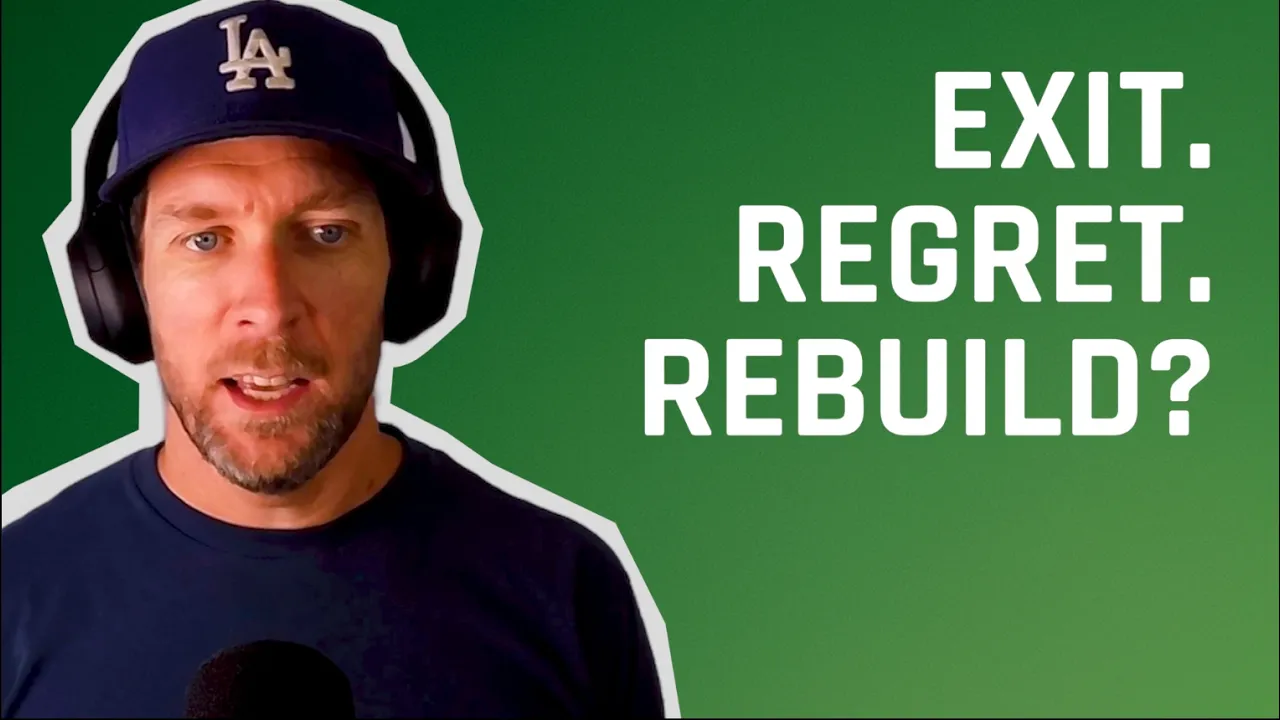
The Andrew Faris Podcast · @andrewfarispodcast
Words
12,671
Runtime
59:05
Speaking pace
214wpm
Reading time
53min
214 words per minute, above the 201 75th percentile of 349 measured videos. That distribution comes from the 349-video hook study.
Opening (first 30 seconds)
Two years ago, Patrick Kadoo accomplished his dream of selling supply razors and never having to work again. And yet, here he is on this episode of the podcast telling you that he is working again. And in fact, he's doing it with me at AJF Growth. Patrick Kadoo is joining AJF Growth. If you don't know his story, he built and sold an e-commerce business, did Shark Tank, did the whole thing, and now he's getting back in the game. This episode is really in two parts. The first part of the episode is Patrick and I discussing what it was like to sell his business,
107 words, the words spoken in the first 30 seconds at 214 words per minute.
Free, no signup. See how the first 30 seconds hold attention, with rewrites.
Sentence shape
| Measure | This transcript |
|---|---|
| Sentences | 688 |
| Average words per sentence | 18.4 |
| Longest sentence | 170 words |
| Questions asked | 70 |
| Sentences containing a number | 14 |
Most used terms
Filler phrases
882 in total: like 305 · um 195 · you know 134 · uh 109 · kind of 43 · actually 36 · sort of 22 · right? 15 · I mean 13 · basically 10.
A literal whole-word count of the same phrase list the Prepublish browser extension uses, so a phrase inside another word is not counted and a phrase used in its ordinary sense still is. It is a count and not a judgement.
Free, no account. See where attention is likely to drop, with a rewrite for each weak line. The free check shows the scores and the one issue costing the most. Or run it on the words above first.
Free · No login · See a sample audit first if you prefer.
What this transcript is
Every word below is the caption track YouTube publishes for this video, pulled from the video itself and reproduced unchanged. It is not Prepublish's writing, not a summary, and not a re-transcription: it is the video's own published captions. English captions, generated automatically by YouTube, in the video’s original language. Source: the video on YouTube. A channel that would rather this page did not exist can ask for its removal through the contact page, and it is removed.
No Script X-ray for this video: YouTube shows a Most replayed graph only once a video has enough views.
Two years ago, Patrick Kadoo accomplished his dream of selling supply razors and never having to work again. And yet, here he is on this episode of the podcast telling you that he is working again. And in fact, he's doing it with me at AJF Growth. Patrick Kadoo is joining AJF Growth. If you don't know his story, he built and sold an e-commerce business, did Shark Tank, did the whole thing, and now he's getting back in the game.
This episode is really in two parts. The first part of the episode is Patrick and I discussing what it was like to sell his business, what the years after that were like and what that made him realize about his relationship to work. Him then asking me some similar questions about why I am putting my foot on the gas of growing AF growth more than I ever have before. I've always said I'm keeping it really small, but Patrick and I are talking about growing it and he's joining to help me do that.
So why am I doing that? Some sort of existential work-related conversation there. And then after that, we talked about what makes a good agency and why should an agency try to grow its services, what can separate it, how can it actually do a great job delivering good services to an e-commerce business and how should that relationship actually work. I think this will be an instructive episode to you whether you're thinking about the existential questions or the business questions.
Let's get into it with Patrick Adoo, now my teammate at AJF Growth, formerly of Supply Razor. People probably kind of know who you are. You built and sold an e-commerce business called Supply. You talked about it on I think one of the very first episodes of the Andrew Ferris podcast. It was right when I had switched over from e-commerce playbook. So if somebody goes way back deep in the archives, they'll find a conversation with you right after you sold the business.
Um supply was an 8 figureure e-commerce business or right around there when you sold it, something like that. You had a really good exit. Somebody you can go back, go into Spotify, go into Apple podcast. My wife is watching a nearly one-year-old in my home right now and it's not that big of a house. So uh if there's some noise in the background, that's why. That's all right. Anyway, somebody can um somebody can go back and hear your whole story back there if they don't know who you are.
Um but you how long were you not working in um in e-commerce for? How long did you what was your sbatical for? >> Almost two years. It'll be two years since I left supply in August 1st. So coming up pretty soon. >> And you were doing and you were doing like you weren't totally right. You were doing some consulting for them and stuff, right? >> I was I was still consulting for them. Um so yeah, I wasn't Well, yeah, it was very little.
Very little. I wasn't doing much. >> Okay. Um, so there's a lot of things to ask you about this. I'm tempted to go full existential on this podcast because people do like it when we when we have those conversations, >> but I did I did think it's an interesting place to start. So, why are you coming back? Why are you coming back to work uh in e-commerce after being out of it for a while? >> Well, I'll warn you if we go full existential, my thoughts will be pretty pretty muddy, but I'll do my best.
Um, why am I coming back to work? Um I um it's funny. I was just texting Taylor about this Taylor Holiday and um I you know I think I realized after the exit um I I wouldn't have said it at the time when I was running supply but um looking back it's clear to me um accumulating uh money was a big objective of mine and it it wasn't necessarily about the money it was about the freedom that the money would give me. Like that was really the the goal was was freedom.
It's funny. I was thinking about this last night. I was like, where did that come from? So, I was, you know, I was of the 4-hour work week generation. I read the 4-hour work week probably in 2014 or 15 when I started my business. And like that was a dream for me. It was, you know, figure out a way to to not have to work ever again. And um that was kind of my philosophy for a long time. um I don't think it was the right one um looking back, but that's what drove me was to to make a bunch of money so I could never have to work again.
And then I realized um when I stopped working that well that that that infinite freedom wasn't all the freedom that I thought it would be. It was actually um you know uh I don't want to say it's not freedom but it's it's a strange thing to it's it's hard to relate to to people but um it's a strange thing to have all this freedom but then also not be um satisfied. Um and um so yeah, I started to think about what does it look like for me to go back to work?
Do I do I go back to work? If I do, what do I want to do? Maybe I don't go back to work. Maybe I go into nonprofit ministry. You know, maybe I go back into to school. You know, I told you seminary is something that always interested me, still interests me. So, but where I landed was, you know, after you and I talked for a long time back and forth, um, because we've stayed in touch. We've been friends for for years now, and we've stayed in touch, and our conversations kind of, you know, uh, lent themselves to the idea that, hey, Andrew has some needs in his agency. um I have some skills and uh the two of them together could could really be something.
And um uh so the more I thought about it, the more I realized like there's basically an opportunity here that is going to be difficult to say no to. Um and yeah, just kind of taking a leap of faith and and seeing what happens. >> That's the short of it. >> Let's talk we'll talk more about what you're going to do with me in a little bit. Um do um and I think that's that's accurate what you said about about um me having some needs that you could fulfill uniquely.
Um I'm curious to hear you talk more about in what ways the freedom wasn't what it was cracked up to be. Uh like what was the experience of that like? And I I think I think you're I'm also you hinted at something else there, which is that like you had this idea that uh you know the 4-hour work week idea. You had this idea that you were it wasn't money per se, but it was freedom. And then it almost sounds like you came to realize you're not totally sure why that idea ever appealed.
Like it almost sound like you were saying you ended up reevaluating that idea that that was a good thing or something. So I don't know, say something about that about the freedom experience. >> I am generally a pretty leisurely guy. Um, and I, you know, I don't have to do a lot to to be entertained. You know, I can sit by the pool and read a book and be happy. And I kind of figured, well, that'll just that'll fill up my days.
I'll sit by the pool, I'll be happy. You know, I'll be pretty leisurely. I'll do some gardening. And I think what I realized was like there was an, you know, that was great for a year, for months, I don't know how long, but eventually there's like an aimlessness and a purposelessness that starts to kind of creep in. And um you know I believe that um you know we were created with with with purpose and when we live our lives purposeless um it it um shows up in aimlessness, depression, you know uh vices.
Um you know for me what I would use to fill the time was like I found myself buying a bunch of stuff online. You know it's like I'm you know I'm filling my time with with stuff that I you know wouldn't otherwise be filling it with. Um, but I think the main kind of the where it all clicked for me, like the main aha moment for me was when I read a book by a gentleman named uh Tim Keller uh about um about work and it's kind of his theology philosophy of work.
And um it basically I realized like the purpose of my life isn't to avoid work. Um work is actually good. And um you know in in the Christian narrative which I am you know work was created before the fall of Adam and Eve. You know it's like work wasn't a thing that was like evil and like a curse. Um yeah it wasn't a punishment like we were created to work the land and to build and and more than work like the the the the concept of building and creating and um you know uh that was was built into our DNA.
And so I realized that about me, like that's what I loved about the work that I did at my previous brand was building something new, being creative. And um so I, you know, I've kind of my theology, my philosophy of work has has kind of changed a lot from 4hour work week to um every good endeavor, which is Tim Keller's book. I don't ever personally have a plan to even now as we talk about building AJF Growth more um you know even if we decided at some point to exit AJF Growth somewhere down the line right if it's even still called that if you if you're if you're really working with me >> definitely never getting you're you're never getting your name on the on the logo.
No, no, never. No chance. >> I don't want it. I don't want it. I want the fame. >> Yeah. No, I um that's not the that's not like the goal for me is to like not work. I think I think it's uh it's not it's not what I would think of. I And one of the things that's become clear to me too, and this is kind of related is that like my own version of that story though is to essentially avoid discomfort even while maintaining work.
So, it's like like trying to, you know, trying to to do that. And I I've come to really question that instinct and start to think like it's maybe not such a good instinct all the time. Somewhere in the midst of that is also another consideration which is that it's very easy to work too hard and that like that like people are um that that the I think I think one of the things a lot of people struggle with in our space and that I watch happen with entrepreneur types over and over is that the work is fun and interesting and compelling.
It's the problems to solve are interesting and therefore it creates a challenge to ever go away from it, you know, because >> for sure >> because because it's too interesting and so it becomes hard to like put your attention on like >> I mean like I have a 5-year-old and three-year-old and I love them so much. But it is the the problems they are trying to solve are less intellectually interesting to me than trying to fix somebody's business.
And so the me the mental downshift >> um to that kind of time is not always easy. As much as I'm so happy to tell people that I think they should all have families because it's great, like it's it's not that's that's not the way this that's not always what's great about it is like trying to figure out how to play with a three-year-old, you know? >> So, >> so yeah. Anyway, I the point is like there's this weird consideration where the work is pulling you and drawing you to it and therefore can eat up more and more of your mind share and more of your time and at the same time I want to and so I want to like resist that to some degree.
There's something about that that I don't quite like. And at the same time, I think it's a good thing because it's pulling me towards creative outputs, like you said, problem solving in real ways. These things feel human and good in terms of the way that we're designed. And um and so yeah, there's like a there's a weird mix of competing desires there and trying to sort out how those things all play out in the day-to-day of your life, all within the consideration that you're going to die at some point.
Um and yeah, and I mean for real. >> Yeah. Well, I mean, I talked about this with Mappertuli a little bit when he came on, but like I I just think we probably don't think enough about that that like agree where I where I put my time >> uh relative to the reality of my impending death is is a really important question. So, um so anyway, I so there's there's all of these things in there about like trying to sort out what's the highest and best use of my time that I think is is really challenging, you know. >> Yeah, for sure.
Uh well, there were there was a lot going on in my head, but I I lost it all when you started talking about dying. Um, no, but what I what came to mind was this book I read called uh living life backwards that that talks about that concept um about thinking thinking about your death often is a is a good thing. >> Did Kelsey send that to you? Kelsey Ler. >> Uh maybe >> he sent it to me. >> Okay. >> I haven't actually read it yet.
A friend of mine had already read it, but Kelsey Kelsey Ler sent it to me. Thanks, Kelsey. >> Really good. >> Yeah, it's on the list. It'll get there soon. >> Uh yeah, so that's where my brain went. There were some other things that I thought of, but uh yeah. Anyways, keep going. Okay. So, you're going to get back into the business. Uh um you're going to work with me. >> Mhm. >> Do you know what you're going to do yet?
I I have a sense of what you're going to do. >> I think it's pretty clear to me. I guess we're kind of we're kind of having this conversation live here. Um although we've obviously discussed it a ton. Um, I think it's clear to me that what you need most and what I'm most interested in is are the same thing. And it's building a business out of your um I don't know, I don't want to call it's not a oneman show because there you have a a great team, but you don't have a business yet.
You don't have something that's scalable. And so I think I'm particularly good at that and I think I can take your processes and and help you build teams and um so so the framework through which we've discussed that is the visionary integrator framework through EOS which is uh what I used in my previous business and I'm going to try to cram down everybody's throat here but um you know essentially being your integrator and and helping you build a business and and I think talked about this anything else is anything else that takes up my time is is not the best use of of my time.
Um, but I think we can move pretty fast. You know, we can move as fast as we want to be honest. Um, within the constraints that we want to make for our personal lives and for our team and etc. You should be working with the same creative team that I'm working with that delivers great creative to my clients and that is the team at Behindthescenes Studio. Behind the Scenes Studio is a Philippines-based creative agency that will be an extension of your team to help you create, execute, and deliver a creative process that generates high-erforming meta ads at scale at a great price for you.
I love Behind the Scenes Studio. I've been working with them basically the entire time that my agency has exist in some form or another. They are based in the Philippines and extremely talented people uh who can help you really think about how to execute a great creative process. This is not just like virtual assistants in the Philippines. These are people who have a creative process. In fact, built on the back of my creative process, informed by it, constantly in conversation with me about what is the newest and best ways to integrate AI and to think about how to generate lots of creative.
They've actually seen their process change multiple times as my process has changed. So, they're updating it all the time. And they deliver a high volume of creative for your Meta Ads account that is optimized for meta in all the formats that make sense on that platform. they do a great job. Whether it's like higher touch um more difficult sort of brandoriented edits that are still performance marketing but you know you really need that brand touch because you're really trying to preserve a certain brand identity or whether it's sort of socially native lower fidelity that kind of thing because that's more your style.
They can do all of it. they can deliver it at a very high level. And that's because they're staffed by incredibly good designers and editors who really know what they are doing and who have built the whole process not just around creative extensions of your team, but around meta ads and digital advertising specifically. You should get uh get started with behind the scenes. Take a call with them. See if they're right for you as an extension of and a part of your team.
Uh they they offer a bunch of different services related to Medads Creative. You should check it out. Go to btsstudio.co. btsstudio.co. or even easier, just follow the link in my show notes and go get a conversation going with Behind the Scenes Studio. I can't recommend them any higher. I love them and you can do a great job in your Meta Ads account delivering creative with them, too. Taylor has always he said to me like he's like, "You're just kind of playing at it." Like, you don't you don't really have, you know. >> Yeah.
And I don't think that's um I don't think that's totally wrong. It's it's a little unfair to the team that I have because they are not playing at they they are hardworking and and for that matter, I think the clients would feel that the >> that the work is real. But I think what Taylor has meant by that is that I'm not trying to I'm not I haven't taken growing an agency very seriously as a business. And I said to you yesterday, right, like part of the challenge for me is that like I actually haven't spent that much time thinking about agency businesses.
I spent all my time thinking about e-commerce businesses. So >> how to grow a very processoriented service business. It's just it actually like if you give me an e-commerce business and you give me a P&L, I can look at it and understand very quickly what I think needs to change because I just have good pattern recognition for that now and some of that, right? like but like I have not actually applied that kind of mind share to an agency itself um and to this kind of business and therefore I've kind of always done that and that's partly because I just haven't wanted to you know like I haven't tried and increasingly it's it's more interesting to me now to think like oh maybe I should do that uh maybe there would be some value to doing that it would be worth the discomfort involved and and some of those things you know >> yeah when I was at supply uh my old brand you know I called it the founder to CEO transition after I read about EOS And I I started to have a small team.
We had a business. It was a very healthy business. Well, on the on on a on a numbers perspective, it was a healthy business. The way it operated, it was not healthy. It was the the whole way the team operated was Patrick showed up to the office today and what are we going to do, Patrick? You know, it's like, what are our priorities today? And it's like whatever fire was was was flaming. It's like, yeah, let's go put these fires out instead of having a real business.
And so I, you know, I I kind of came to call that the founder to CEO transition. How do I go from the guy who started selling stuff on the internet and now has a bunch of people working for him to like a real business? And I feel like that's kind of the transition you're making. And I guess if I'm going to, you know, if you'll let me grill you a little bit, why why do you feel like you want you want to make that change? like why what is it that that made you want to kind of have the realization that you know I want to keep pushing this business to grow and you know there's a lot of there's a lot of like uh uh commitments and you know there there are some downsides to bringing more people on oper oper operationalizing things you know process you know you've got by the way you know I've seen um the deliverables you deliver to your clients the the work that is done is really good work.
So it's not like we're trying to fix bad work, just trying to improve processes. So you know, anyway, >> you think you would have been an AJF growth client at Supply? You would have been >> Yeah. Uh for sure. >> Yeah. >> Yeah. I would have been I think I would have been a happy client for sure. >> Yeah. Yeah. Um okay. So why am I doing it? Um a few things come to mind uh in answer to that question. Um, one of them is that, >> okay, I'm gonna I have I have four answers.
Um, I think one way, number one, one way is that I um I think I have partly kept my vision small as a this is probably the most most uh sort of human weakness part of the answer. I've kept the business small in part as a way to resist accountability in life. Um like by not having larger goals, uh it it's it's very easy to clear them and I don't have to disappoint myself or others, right? So um yeah, so it becomes a copout for um for for doing worse work and taking less risks than I otherwise I'm capable of doing.
Um and again, I actually don't think almost any of this has showed up at the work level of like client work. I actually think our client work is really good. Yeah, it's all in like the sort of the way that I'm building the organization. So that's number one. Um is I don't think that's a good reason to not do it. Number two, um and relatedly I think I have come to the conclusion and this is a sort of broader reflection for me that almost all forms of that almost always well the way I'd say it is almost always uh discomfort is the path to maximal satisfaction and joy. um as as a sort of law of the like a sort of moral law of the universe and I almost mean it in those terms like like this is true like I think gravity is true and I think it's the mirror image of what you experienced that essentially your experience of eliminating a huge amount of discomfort in your life uh was actually really bad for you and that you have to do that and that what you ought to do is instead try to choose the right discomforts and discomfort is bad uh uh in some ways when it is imposed on you in lots of ways.
So it's not that all discomfort is good, although that discomfort can even that kind of discomfort can can be redeemed um in in powerful ways in people's lives, right? And can actually be turned for good in real ways. But that's not really what I'm talking about. What I'm talking about is like avoiding discomfort because I have some kind of element of lack of accountability or something or because I don't want to or or some kind of element of like keeping my goals small is actually not going to deliver me the maximum amount of joy.
And what I am after in life is maximizing my joy. So um that's like my goal in life is to maximize my joy. So um so I think the way to do that I think that discomfort is a path to joy is true in almost everything. It's true um in a relationship, right? When you get married, you you have to um eliminate your ability to get short-term comforts and pleasures in in other ways, right? By committing to one person through all of their stuff.
My wife is amazing. I'm not saying she's hard to be married to. She's not. She's easy to be married to. But I'm saying we've been married for 16 years. you have to work hard things out in that, you know. Same thing is true with parenting. Like the joy of parenting is not the is not that I love getting up at 2 in the morning when my kid is crying. It's not that's not it, you know. In fact, it requires a bunch of cost.
Um and uh and so there's that. I think it's true at the level of fitness is the really obvious example of this. Um eating is a really obvious example of this. You know, you could look at this with almost every sort of I just think hedonism doesn't work very well actually uh to deliver joy. And not that I was ever prone towards hedenism per se. Uh but as the mere image of that I think that it's the case that discomfort is good.
So in that my business I'm realizing I want to actually be more willing to bear the discomfort of trying to grow the business which is which requires a bunch of hard things that I'm not that good at and I was avoiding those before. That's number two. Number three, um there's I think there's a possibility to create a lot of opportunity for others. The really really obvious version of this is that like my my kind of growth strategist number two guy Daniel who you now know pretty well at this point Patrick having worked with him is extremely talented and at some point um he's going to quit and go somewhere else if I don't give him more opportunity. >> It's also true for my next person. >> That's right.
Uh and so I need to keep creating opportunity for smart people to keep growing and to thrive in the business. It's also just like doing right by them. This is true for my entire Philippines team. um there are just like a lot of extremely talented people across a lot of different parts of my business and I'm just constantly thinking like if I don't grow this I lack the ability to create opportunity for them and that especially if especially if I do that for the sake of like my >> comfort uh that's like doesn't feel like a good way to serve them and love them well and care for them and and listen I'm not the end- all beall of providing for them like there's there's a limit to my responsibility in that respect I can't do everything but in so far as I'm able uh number four.
I think I have an opportunity based on the present moment of time that I live in, the advantages I've been given in life. Uh uh I think I'm smart. Uh the work that we can do, some of those things, I think I probably ought to try to steward that opportunity. This definitely comes back to the way I think about God and some of those things is sort of like if all of life if the actually maximizing my joy if another way if the way to do that is to maximize my service to God and my worship of God in my life.
One of the ways I do that is with my work and so um how do I steward those gifts as well as possible um as as essentially worship to God. So that's the way I would think about that as well. That includes financially. I think there's opportunities to do to >> you know you can make a lot of money and not just spend it all on yourself, right? There's other things to do with it. In fact, there's things that could generate more discomfort and therefore more joy um with your money.
So, um >> yeah. So, that's that's the way I'm thinking about it right now. Uh >> so, yeah. >> So, you haven't thought about it. >> You haven't thought that. >> You know what's funny is I didn't have that list of four things before this call started, but as you were asking the question, I started asking the question myself and I was I have thought a lot about this question, but I hadn't actually categorized them, but those are the four things. >> Amazing. >> Okay.
Anything else on that? Um, no, you nailed it. >> Okay, great. All right. So, what do we need to fix? You are here. So, I I I think there's an interesting question in this that and part of the reason I wanted to do this conversation was, >> you know, we're talking yesterday about what needs to happen for our service to get awesome. Um, and I think it's really good right now, but like both awesome and replicable, right?
That's like that's what an agency is. >> Yeah. It needs to get it needs to be a very good service delivered by not just me and not just my my team immedately on >> that's the core problem. >> Okay. Yes. So um so I'm just curious like you you have an interesting perspective because you come into the agency and we should talk about what your role is by the way. Like the idea here is that and we'll figure out exactly how it all works and if there's a partnership at some point I have an idea that you and I should have that conversation publicly and record it which I think it would be fun.
Um but you know you but you you are looking at sort of trying to fix these things but you come at this as somebody who was on the other side of these relationships which is you were an e-commerce operator and you you've even commented to me at some Slack interactions like I wouldn't have liked that when I was the operator or oh that was really good when I was the operator you know whatever >> uh which is really helpful.
Um so um so you know if we're trying to do that like what do you what are like the initial things you see as coming into the business about like what what needs to be done well to accomplish that goal and maybe that we're doing poorly I don't know when AF growth makes landing pages as much as possible we try to do it for our clients by using forat that is because the most robust easiest to use landing page software, funnel building software that I know of uh in e-commerce.
They are uh a monster piece of software. They do a great job and it's because they've really thought about how to do everything you possibly can to make it possible for performance marketers to create funnels at scale including easy to test offers, easy to test landing page changes, all kinds of different sort of pre-formatted PDP and landing page type designs that allows a performance marketer to try all the things they want to try without ever touching the website.
That is the thing that makes it so useful. On top of that, it's really easy to uh make the kinds of changes that you want to make really, really fast because the tool is so well built. It's also the fastest loading landing page software I've ever seen. So, customers have a great experience with it. You can build all kinds of custom upsells and uh everything you want to do if you if part of your performance marketing strategy is to build custom funnels relative to specific ads that you're building, etc.
Vermont does an incredible job of allowing you to do that at real scale so that each ad leads to customized funnels um that that allows you to maximize the performance of every click that you drive. Go check out Vermont, see if it's right for you. Uh go to vermontCommerce.com AF verontcommerce.com/ af. Multiple of my clients are using have used Vermont. Um you should check it out for yourself as well if you're serious about landing pages.
Uh it is really really good stuff. VermontCommerce.com. Yeah, I think I'm a maybe I'm a little naive about this, but it it's not, you know, it's not difficult things. It's just it's just work. So, we need to really one of the things that I was just working on like you've got you've got like a notion database that connects to an ASA page that connects to Google Docs that then your Filipino team is taking one thing out of here and popping it in Slack and they're getting notifications over here.
And I don't think you even know all the things they're doing over here. And it's like you've got this >> it's like this the process is a mess. And it's like it's working. It's working. >> But uh like that's not we're not going to be able to scale it. And and when I say the process, I mean like the creative the creative process making making new creative. Um so we're going to have to streamline that. Um we're going to have to be really clear about what our goals are when we when we grow.
Like who is it that AJF wants to be in 10 years? Do we want to be like the the all-encompassing marketing gurus? Do we just want to stick to really good media buying and creative etc? So we got to do just kind of these foundational planning things that are that are just what's our service offering uh going to be today, next year, etc. Um you know these are kind of these are kind of standard EOS things for those people out there that are familiar with EOS vision planning.
Um, one thing I I we found to be really helpful at supply, my old brand, was like quarterly planning. So, rocks in EOS parlament. Um, and then, you know, hiring, getting bringing new people on board, bringing new clients and and expanding, you know, what we're doing to to additional clients. So, I think there's like there's nothing wrong with the organization that needs to be, you know, completely overhauled. It just needs to be improved and built upon. >> Do you Let's talk about the creative process because I I have a theory right now that basically for an agency that for somebody listening to this like there's this relationship between um between >> like what the client needs from the agency and what the agency is working on delivering better. you know, like that the overlap of those two that is the that is it's very similar to in an e-commerce business, right?
Like the customer shows up and buys a product. The customer has an expectation of what the product's going to be. The product needs to deliver on that and the and the and the brand needs to be able to communicate that the product delivers on that with a value in excess of the cost. Okay. Um and so the the uh the the client services version of that same thing in my view is that if the client is receiving good quality ads at reasonable scale uh specifically for a meta ads agency and then those are being distributed in a way that makes sense at the media buying level that that goes really really far to cover to cover like the sort of that value exchange that I just discussed, right?
That essentially a client is probably willing to look past a lot of stuff if that happens, if that is my delivery. Um, do you think I'm right about that? >> Absolutely. It's probably it's not it's not like a main reason, but it's definitely one of the reasons why I was interested in working with you. And let me see if I can I can tease this out a little bit. I I think you're part you're particularly good at what you just said.
Like I and and I have frankly no interest in being like a Facebook ads guru. And when I say ads, I mean like ad buying um >> media buying. You're going to have to learn a little bit about it. Patrick, I'm >> I know. I know. I know. But I think what I Let me go Let me put my brand hat back on. Like if if if I had a marketing team or an agency that was just always delivering, you know, well, of course this is the goal of what I'm about to say.
This is stupid, but you know, up until the right, you know, profitable media buying and ads, like I don't necessarily care what's going on behind the scenes. You know, just call me up. Tell me how much money you made me this month and uh how much more you're gonna make me next month. I mean, I'm simplifying it, but like at its core, that's that's that's what I was interested in. If I was working with my marketing team or my uh uh agencies, are are you hitting the targets?
Um, so I don't know if I'm answering the question, but but yes, yes, is the answer. >> Yeah. And I can hear Taylor Holiday in my head saying the problem with that is that like that's sort of an endless hamster reel and that if and that actually you shouldn't promise up until the right performance because if that's what brands are chasing, you're going to get bad you're going to get bad uh clients who are chasing this all the time.
They'll fire you when you have two months of bad spend. And instead like being able to predictably design a system for profitable e-commerce business operations is sort of more important. And so we offer a financial forecasting service like as part of our service, right? Like um but I um but I and and that's why right like that because I want to be able to say at the same time like I'm going to try and do the thing that we just said but also I want to do that within reasonable uh forecasting constraints, right?
Like with reasonable expectations because that is the that is the back and forth. Um, so like I I think there's this question of like uh if that's the case, you know, what do you have to get right to deliver that within reasonable expectations? And I I I really struggle with this question a lot like you know especially in a world with AI and especially in a world with you know I look at our current service offering and I think like okay we deliver a lot of ads to right now we deliver I mean just look some of the ad dumps that I've seen in the last couple days go through Slack and just like we deliver a high amount of creative and we do that and the creative I think is good.
Clients almost never look at it and think this is like bad like in the sense of like it just doesn't look good or whatever it is. That's because all the people touching it are high quality talented people who at this point we've also trained and have a good sense of like kind of how things are going. But the scalability of that process just feels so so difficult to me because it's like man how do you then go and like replicate that same thing for a whole bunch of clients as you grow and do that over and over again.
It just there's like a process challenge to this that's so so difficult to me. Um I mean you started talking about like ASA notion as part of that but like I I don't know. I'm just curious how you're assessing sort of that part of the delivery of that service because I have the theory right now that we should basically and tell me if you think this is wrong. We talked about this a little bit yesterday. I'm curious if you reflected on it at all.
I have the theory right now that we basically shouldn't try to add any clients through the rest of this year. you know, maybe one, maybe something like that, but like uh just like kind of keep the lights on number, but like uh instead we should put all of our time into just like hammering until we have like a great version of this process with the right AI tools and the right editors and the right financial model, all those things, and then you step on the gas after that because it seems to me that that's so important.
What everybody hates about their agency is their inability to deliver on the thing that I just described. >> Yeah. Um would and yeah I mean you basically just said this but you would say you're proud of what you're delivering now. You just are >> Yeah. I just always can scale it to twice as many clients three times. >> I just always have this sense that we should be hitting on more ads and making more ads both. And also that we do a really bad job with creator relationships.
Um and like it just feels like there's these things and also we can make more stills. And I just go down this pathway like like this all the time. I just see all of these holes and I can't figure out if that's like what is the reasonable expectation for the client. Where am I just being like, "No, you're doing enough. Just go scale it." Like, I don't know. >> It's funny you say that because I've also heard I don't know if you've said this, but I've heard somebody else say this, but like the the I've I've almost feel like the the fire hose of creative is almost too much.
Like we're we're creating too much creative that like it's just you can't use it all. I feel like I've heard that been said before. So I don't >> I do wonder if that's the case if we've actually passed the point where we have like we should actually slow down and deliver less less creative but better. >> Yeah. Yeah. So maybe Yeah. I don't know. Is there like a budget number? Have you ever thought about like you know as a part of your service like this is the number of creatives you offer or an optimum number of creatives per month or how do you think about that? >> Every everybody wants me to answer this question.
Like my clients, they not my current clients, they all know what I'm going to say. But like when when I talk to people who are interested in becoming a client at some point in that in that rare cycle of bisdev that we have like uh they they always ask this question and what I always say is the same thing which is like I don't promise a number because um because like me combing your existing social feeds Oh, >> hey buddy. >> Check it out. >> Not right now.
I'll come see you in a minute. Okay. >> Are you like in the back house or something? >> Yeah. Yeah, we're in the garage. Sorry about that. >> Oh, that's awesome. I didn't know you had that. That's great. >> Um, is that where I'm going to stay in August? >> Yeah, it is. Yeah. I got a nice spot over here for you. >> Bam. Looks great. Okay. I'm going to go and comb your existing organic posts and I'm going to put those under the ad account.
I'm going to go and get your customer reviews and make those ads. I'm going to um create text and context ads, right? For better or for worse, the post-it note ad. Okay, that's what people think of is like that's and and then I'm going to create long form explainers that are 3 minutes long, maybe longer, and everything in between. Okay. So, how many ads do I give you? I I'm not trying to budget each number of those. Like, you have helped you already built before you went to Italy for a month, you built our AI co-writing tool to help us expand ads.
At some point, we should do a full show people a tour of the kind of output and what they can try and build also. I don't know. And um and it's a really cool product. Well, like I don't know how does that play into volume that creates short, medium, and long. So my mentality about it is like just create as much as we can and try to get the cost per ad down while making it good. That's like a that's this is why I'm not scaling the service business though cuz that's a terrible answer. >> Yeah.
Yeah. Yeah. I think we should think about that. Um like what is the optimum number? We don't have to answer it here. Um but back to your original kind of you said like I I don't know how I can scale what I have. That's if I'm kind of paraphrasing like to me I actually don't it doesn't maybe I'm naive. doesn't seem hard to me. Like it just seems I got to I got to kind of tweak some of the stuff that's going on. We got to add more people to the team.
Uh obviously we got to find talented people and train them properly and that takes time. That's probably the hardest part, you know, uh in my mind is finding people and training them. Um you've got some amazing people already. So, you know, it's easy to be like, "Yeah, we'll just find more amazing people." But that's really difficult to do. Um, so that like the people part of it is probably in my mind the hardest part.
The process part is is not like not at all. Like we can we can we can build it and scale it by next month easily. I think >> really >> um >> by next month >> yeah 100%. >> What what can we do in a month? What what are the things that can be fixed in a month? >> Uh I can hand you a clear documented creative process that people are following. um and then say, you know, this is the process we got to we got to have everybody else follow that we're we're bringing on board.
Now, the problem with that with what I just said is that the process >> doesn't take care of everything. Like, you still need creative people. You still need really good ideas and we have our AI tool that's helping with that. >> Um but the process isn't going to solve do we have really good butts and seats, you know? um like are we going to find a really great growth strategist? >> Um and so like that's the part that I'm not particularly, you know, um >> I'm good at finding I'm good at that process, but it's it's slow or I just I don't know. >> I don't have enough reps. >> It's hard.
Those people are hard to find. >> Yeah. I don't have enough reps with it to be like I can definitely, you know, >> Yeah. >> Uh find those people for you. We're probably not hiring today, but if you are if you are the person that Patrick is describing and are interested, you should email me podcastfgrowth.com and you should you should just get a conversation started. Um I um I I think there's this opportunity to do this.
Also, one of the things that also excites me about the opportunity to grow the agency is that I also see the possibility of growing something that is an incredible service at a really high margin with a combination of AI and Philippines. Um, and Philippines as as my standin for offshore talent. Like big shout out to behind the scenes studio and more staffing who we've used to staff multiple employees across different parts of the organization.
Um, and they've been sponsors of the show for a long time because I really do use them for everything. Patrick, you've gotten to hang out with some of those people as well. But like I am just convinced that highquality super talented people in the Philippines by paying them like a good rate in the Philippines, you get good quality talent in that market. Um, and combining that with AI means that there's this one-two punch of like creating a huge volume of creative that is really, really good at what is either going to be a reduced cost for the client or a high margin for for us depending on which way we think about what's the smartest way to build the system in the marketplace, you know, and I mean either way it'll be a really good value for our client.
But just like how you think about where the where the margin opportunity is, I think is an open question. But the but the that possibility of integrating extremely talented people into overseas into a process that is aided with AI for the creation and I'm I'm really especially excited about this with like our expand creative uh framing like this is something you know I've talked about on this show like then we think of creative in two stages right explore and expand explore is go find new ideas that work expand is iterate uh create variation iterate is too soft of a word, create variations across a whole lot of different styles on messages that actually work, right?
So, the winning ad hits in the ad account. How do you do more of that? Well, you built this tool we call Prometheus to help us um to co-write scripts for us um for the expand part of this process where you can feed it an ad and it will write scripts in different formats to to do this. And I think there's this opportunity where uh and I I actually would say I think this is going to be some something like this is going to be SOP for brands going forward and exactly how it looks we'll see um but in our system of having really talented people in the Philippines aided with that tool um is going to be a combination of talent cost and speed that is going to be unbeatable for generating a huge volume of creative at scale and if we can actually deliver that service that feels like yeah I'm I'm just like I know you you were supposed to talk to the Philippines team lead today.
Did you talk to her? >> Yeah, yesterday or no, this morning. This morning. Yeah, Coco. You talk to Coco. She's the goat. Um she um like So yeah, like I don't know. I >> You seem to be of the same same mindset that I do, which is that like there is a monster opportunity there. Uh if we can actually do that well. And I've just been like, ah, how do I fit the pieces together? Because there's all these processoriented problems with it.
But it feels to me like a uniquely valuable thing in our space. >> I'd say that that what you just said informs what I previously said about the the relative ease of of growing this thing like I'm very optimistic for a lot of reasons but one of them is how much this AI that AI is going to help us right because it takes the tool that we've built which is very much kind of in the early stages you know it it basically accelerates our ability to onboard new creative strategists you know etc you know so I don't I don't have to sit down with somebody and say, "Hey, study this, you know, 20page document about the brand and study this about, you know, how we make creative and like train and like drill and, you know, then they go put together a concept and you're like, "Oh, it's not really that good, you And you know, we went through this at supply.
You know, we would we would onboard new creative people and they would be talented people, but it would still take months, you know, to get them to like kind of do things the way that we wanted them to do. And that training is still going to have to occur, but it's going to it's going to be so much quicker from day one to like, you know, great asset because you're going to have a tool that helps you start from zero, get 80% of the way there.
Takes a little bit of massaging probably. Uh and then you know we don't have it yet but hopefully we'll have like a QA tool or something eventually. Basically all of these AI assisted workflows are making you know informing my my answer to your question earlier that I think it's I think it's going to be on the on the somewhat simple side to >> you know I may eat my words later you know >> but um that that certainly informs how um how scalable this is going to be.
I think hearing you talk about how easy it can be is another thing that illustrates the like why I'm thinking more about growing it is like growing growing the business is like another thing that's been a real challenge for me is like just this like visionary integrator framework just I just hate building processes. The reason the process that you described earlier is such a mess is because I built it and I just had to get something that was like within the tools that I understood and it's been fine.
But yeah, I think there's no question. I mean, I I I could there's nothing that could offend me less than you saying it's bad because it's like, well, yeah, of course it's bad. I built it. Um, and uh, and I just I have just always been such a bad process thinker. Like I and there's this thing that's happening in the business where you're going like, "Oh, we can do that. We could do it in a month. Boom. Just like move the pieces around." And whether or not you're right about that, I'm sure there'll be problems that we don't anticipate and all that. like the I I think there's a thing for a lot of leaders that they probably don't realize which is that like you probably are actually one side of that equation or one side of that coin and finding the person who is the other side of it is like it is hard but it's like yeah just already it is like like I told you yesterday in our calling I just wanted to jump through the screen and give you a hug just of the conversation because it's like there's nothing I could want to do less than go build those processes.
And uh and I also think it will be create tremendous value not only for our business but like I I think even for our existing clients it will deliver a whole bunch more value to them because we will be able to do our to run our process better and easier and this yeah I I just think I think people probably underestimate I think they have the sense that they have to be all of those things and I I just I wonder how much like more how many brands are stuck because they are a visionary without an integrator or vice versa.
Um that framework is really helpful. I read Rocket Fuel on your recommendation um which is an EOS book about this kind of relationship. I would highly recommend it to anybody. It's really really helpful for me. >> Yeah. Yeah. I you know I resisted to anybody listening that's curious you know EOS um I'm not going to go into it but uh Google it, look it up, read the book called Traction. I resisted it forever and then finally like just broke down.
I had so many smart successful friends tell me that they used EOS. I was finally like okay fine. If you're all using it, you know, I'm going to use it. And um yeah, it it ch that plus um Filipino talent changed our business. Those two things. So >> why do you think uh agencies go bad then if this is not if you look at this and think this is do like scalable like you had plenty of bad agency experiences? You had bad experiences with agencies that ended up being good later like you know like what what what is why do you think it goes badly for them?
I have a theory but I'm curious what you think. you know, I I don't know that I had what I would call bad agency experiences. Um, you know, I was certainly sus susceptible to the idea that, you know, you know, I guess I'd call it agency hopping. You know, it's like, uh, well, you know, I'm not getting the right row ass here. We're going to hop to the next one. You know, that kind of thing. Um, you know, we got great service.
We were with CTC a long time ago. That's that's how you and I met. We got great service there. um my account manager and I, you know, we haven't caught up in a while, but we stayed friends, you know, for years after, um Kyle. Yeah. Uh I need to catch up with him. But um anyways, like I don't want to I I don't I don't know. It's It's hard for me to make up, you know, like what you know, to dunk on bad agencies cuz I I don't want to make stuff up. >> Yeah.
I don't mean dunk on it. I just mean why does it go badly? I mean because this is such a common problem in the e-commerce space. Like it's just like agency relationship. It's >> every everybody I've talked to at some point is like I've been through four agencies and none of them worked. Like >> what is >> what is the problem? >> I'd say the root of the problem if I'm just making this up top my head is like a mismatch of expectations versus deliverables, you know?
So, or or like um you know, if I was if I was ever unhappy, it was because like the deliver the like creative I got was poor or or I thought it was poor. In my mind, I defined it as poor. Uh it didn't match my brand, you know, didn't follow uh what I what I knew or at least I thought I knew would be high performing creative. And actually, most of the time my hunches were were right, which is why I continued to lean into them.
Um, we worked with, now that I think about it, we worked with a lot of agencies on creative that would deliver stuff that just didn't perform for us. And um, that's probably why that was probably the root of of of um, most of my issues with agencies um was was poor creative. I also felt frustrated, you know, when um you know, if I hired, let's say I hired a growth agency, like their their goal was to grow my business and and you know, they're telling me, "Okay, we're going to grow your business by working on your ads and your um just we're going to make good ads for you and we're going to do really good media buying." But then I'm like, "Well, what about the landing page?" Like, that's a really important part of the growth piece, isn't it?
Like, and um I I don't know. it that was maybe a frustration of mine is like um how can you grow my business if you're not like working on all the pieces of it. I don't know if that makes sense but >> Yeah. Yeah. Yeah. No, I mean I have a brand that recently just had a whole big challenge and a lot of it was related to offers and landers and and like it just we had to get that right and we ended up kind of piecing it together between some things that we offer and some things that the brand does on their side.
But it does make me think about it's a hard service to build. Um, and it's it's it's important. I I have a theory about it, which is that um, and this also fits my theory with AI right now in general, which is that the winners are going to be the people who can operationalize the best ideas. And there's that means there's two components of it. One of them is having the best ideas. Another one is um turning that into operationalized uh things whether that's training processes and hiring great people who can replicate those ideas or uh like careful processes or whatever. um in my view like that that's where the gap is somewhere either the either the agency leadership doesn't actually have the best ideas or they are people like me who cannot operationalize them themselves you know so like I cover that right now with meetings and slacks and stuff like that right it's like if if Daniel and I are working on something or Morgan and I on my team you know both really talented really smart people um you know like I slack them and say hey do this differently you know that's really different than like actually operationalizing the idea, you know.
Um, and I I think that's the that's the that's the challenge. And I I I do think in the marketplace a lot of people have wrong ideas about media buying and about creative and about forecasting and they just haven't thought it through enough. And the reason that I have not delivered that service at more scale is because I can't operationalize them. Um and so this is where like the thing that excites me about this right now and about sort of how we could fit into the space and the things that we're working on is like okay how do we get together with the ideas which you also have plenty of input on of course because uh like you you know what you're doing in e-commerce and have sat in that chair um but then actually taking those and turning them into like things that we can actually deliver because it's just it's just hard to do that you know I think the like extremely super tier mode of this right now is honestly CTC where they have where Taylor just drilled into every single idea that he had and then it like it exists in a spreadsheet or in their program in their you know platform status somewhere or whatever and that's like sort of the the shining beacon of what great agency services looks like in my view.
Um is like that you know and that that's the gap between what they were when they were struggling and what they are now. Um, so yeah, I I think that's like that's the thing that I look at is like you got to have the best ideas. That's hard. And then you got to figure out how to deliver those ideas across the organization. And that process is really difficult. If I was shopping an agency, whether it's AF Growth or anybody else, that's the thing I'd be looking for.
How do I validate that you have good ideas? How do I validate that the person that's going to work on my account can actually deliver them? And it feels to me like that's our challenge like is like we got to figure out how to have the ideas and then how to actually deliver them all, you know? >> Yeah. Yeah. Yeah, >> I got questions, but um this is probably running long. >> What questions you have? >> Well, like what what are those what what are the ideas that that set AJF Growth apart?
Like what what are going to be the things that you know that you you're going to want me to operationalize that are going to make us better than all the other agencies out there? >> Forecast the entire P&L uh and with a clear vision for what a good P&L looks like. That's one of them. um like having an actual model for what a good e-commerce P&L looks like and then forecasting the whole thing for the business. That's number one.
Number two is you should be doing your meta media buying with a clear manual bid setup. Um we should be running bid caps and target row ads for at least the vast majority of your spend for the vast majority of clients. Um and then having a a smart way of sort of doing that relative to unit economic expectations and and on all that. Um, our media buying should look the same across all of our clients and it should be based on based on those that that commitment.
Um, another one would be um at at the level of creative this is the foundational idea for each that's financial forecasting that the foundational idea there here's what the P&L is supposed to look like etc. Foundational idea of meta media buying is trust the machine learning. That's basically it. Okay. Number th number three um uh foundational idea for creative is that you want to be able to generate um as much of it as possible that is as clear as possible.
Uh and I I think clarity is still the hardest thing for more people for most people to do. But having clear compelling ideas in creative is really important. And I do think quantity covers a multitude of sins here. Uh that like getting ideas that are pretty good and then being able to deliver them at scale um allows you to do that. But I would say in some ways creative has more ins and outs with different styles of creative etc that are are tough.
So so maybe my actual answer is is explore and expand. Um it's it's the notion that you you deliver a repeatable creative process that seeks to discover messaging and then replicate that messaging across different formats. uh if we can actually build a library of formats that we appeal to all the time, okay, that we think work, okay, and then we can use those formats regularly in the delivery of a message that makes sense that focuses on clarity.
I think if we can do that over and over again, then we'll have a creative process that works. >> Yeah. Yeah. Yeah. Let me let me revise my I said before like I'm not you know, I love that you you you know about media buying and and you you're great at media buying. What what I'd revise that to mean is you have a very clear philosophy about advertising in general and um that excites me cuz like I you know I don't I don't think I could come up with a good philosophy but you've got a really good one and now we just got to go make it work or implement it. >> People resist the idea that there's a right way to do it. >> Uh I love the idea that there's a right way to do it or at least that you ought to try to find it and that way you can be held accountable to the to to the idea, right?
Like if you if you can just say test it for every account forever, then there's no way to ever be wrong. And that's that's like the death spiral of agency and media buying things. >> I love it too cuz it gives me it gives me something concrete to go to go implement rather than just kind of like >> the the worst feeling as a kind of an operations guy is just kind of floating in like an ether of like nothingness and ambiguity and like uh you know what are we going to do today?
I don't know. We'll make it up. >> Yeah. Um, >> yeah, it's been fun to watch you do this for this reason. Like you're like sending me back like yesterday you sent me like, "Okay, here's what our accountability chart should look like in our organizational uh outline. Here's what our pods are going to look like. Okay." And then we talk about it and it's just like I'm like sitting and working on clients and like this work is happening.
You're just doing it. It's it's happening. >> I don't have to >> having meetings having meetings with my team talking about people. It's amazing. >> Yeah. I love it. Well, we're just getting started. >> I know. All right. Well, we'll check in later and see how it's going and maybe as we roll some things out, we'll talk about them. I think my hope for this episode is that people get a sense of like how we are thinking about the way that agencies and brands relate to one another in the current law landscape >> um and reflect on their own relationships to their businesses along the way.
But, uh you uh you um you know, I've I've told you this, but like I'm just like couldn't be more excited to be partnered with you in in this and and working on it together. just like at the level of skill set, character, values, it's just unbelievable that uh this opportunity is in front of us. So, we'll we'll see what we can build. >> Couldn't agree more, Andrew. Couldn't agree more. >> This is sort of a watershed moment in the history of AJF Growth because Patrick is a really um experienced guy, high performer with a really complimentary skill set to mine.
And so, we're going to see what we can do together in this business. If you're interested in staying up on the journey, you should subscribe wherever you're watching or listening and and see. will check in occasionally and try to roll out things that we're working on that we think will also be helpful for you to hear about to make your business better whether or not you ever work with us. Um, or if you are interested in working with us at some point or sort of getting on that list, you can shoot me an email podcastfgrowth.com or fill out the intake form.
This would be actually even better. Fill out the intake form on my website at ajfgrowth.com. Uh, we're not taking on clients yet really. May maybe maybe one, something like that, but uh but not doing that yet, but when the time comes, uh, reach out. Let's get a conversation going. If you're interested in um experiencing the the quality of work that we think we can deliver to e-commerce brands, uh you can also of course uh sign up for my newsletter at afgrowth.com.
Do that by just entering your email address in the popup there or in the footer um and uh follow me on Xanderj Ferris. Thanks a lot to behind the scenes studio. I love to recommend BTS to you. They do a great job um with uh creative uh meta ads creative built in the Philippines as well as uh Vermont. Vermont's great landing page software and uh you should go check it out from.com/af. Links for both those are in the show notes.
Uh you know what to do. You know how to follow up. I got a bunch of great episodes coming. Alex Cooper coming back soon to talk about the state of AI. I think that's going to be a really really good one. and I'm going to um open up the books on my e-commerce business that I'm starting and and show you sort of financially where we're trying to take it to. Um exactly the theory of why we're starting the business and what I think the opportunity is.
There's a lot there. Subscribe. Like I said, I'll talk to you next time. [Music]
The words are the caption track's own and nothing is reworded or re-transcribed. Paragraph breaks are placed between sentences so the text reads as prose.
Free tools for your own script: paste a draft and see where it stands before you record it.
Paste your draft and see where viewers are likely to drop off, with a rewrite for each weak line.
Paste the first 30 seconds of your own draft for a hook score and rewrites.
Check your draft against YouTube's advertiser-friendly guidelines before you record it.
Read this channel's public videos and transcripts, and download a writing brief for it.