Getting the transcript
Reading the captions from YouTube. A video nobody has opened here before takes 10 to 30 seconds; this page fills in on its own.
Getting the transcript
Reading the captions from YouTube. A video nobody has opened here before takes 10 to 30 seconds; this page fills in on its own.
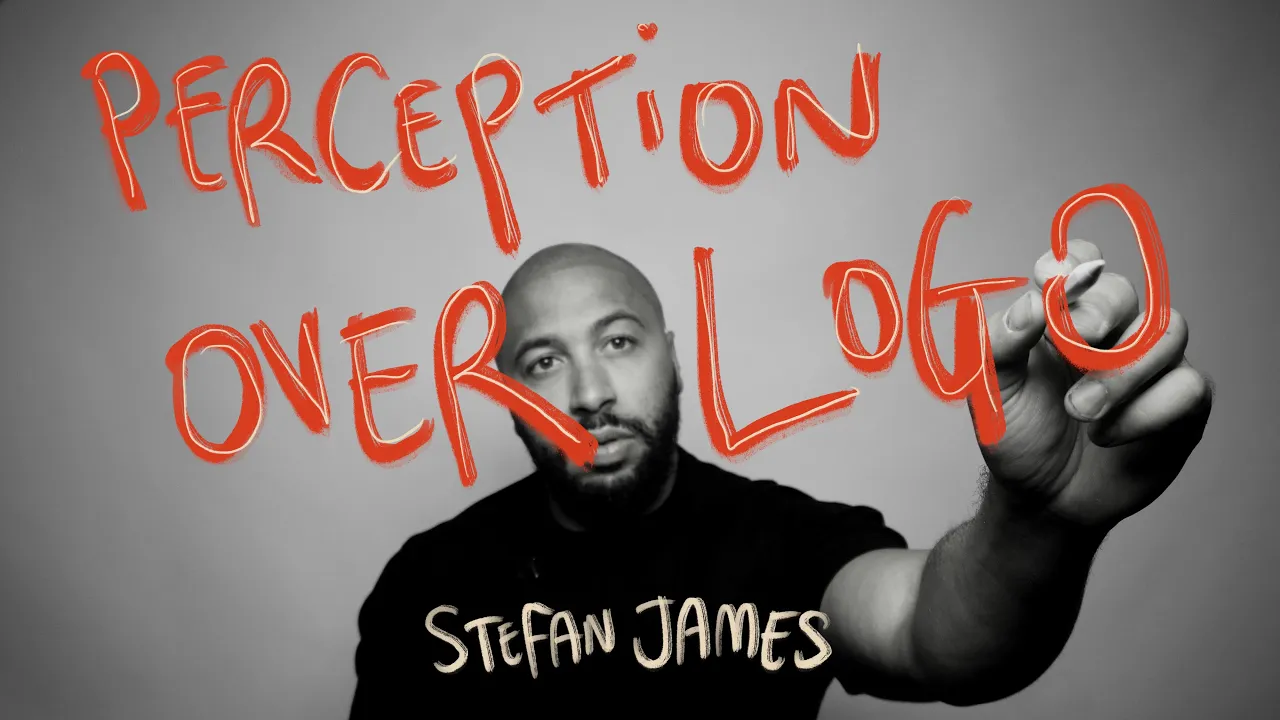
Stefan James · @stefanjames.brandbuilding
Words
3,869
Runtime
20:36
Speaking pace
188wpm
Reading time
16min
188 words per minute, between the 181 median and the 201 75th percentile of 349 measured videos. That distribution comes from the 349-video hook study.
Opening (first 30 seconds)
So, if you're building a brand, listen up. In this video, I'm going to show you what great creative direction looks like, what great brand psychology looks like, and how it's used and why it works, and also great brand positioning. How to position yourself as elevated in the category that you're in. This is specifically for someone who's been building a brand for a little while. They're a bit stuck, can't quite reach that 10, 20k a month revenue milestone, or for a creator with an audience, people who love what you produce,
94 words, the words spoken in the first 30 seconds at 188 words per minute.
Free, no signup. See how the first 30 seconds hold attention, with rewrites.
Sentence shape
| Measure | This transcript |
|---|---|
| Sentences | 275 |
| Average words per sentence | 14.1 |
| Longest sentence | 64 words |
| Questions asked | 25 |
| Sentences containing a number | 9 |
Most used terms
Filler phrases
67 in total: like 29 · actually 13 · you know 11 · basically 5 · kind of 5 · right? 1 · sort of 1 · uh 1 · um 1.
A literal whole-word count of the same phrase list the Prepublish browser extension uses, so a phrase inside another word is not counted and a phrase used in its ordinary sense still is. It is a count and not a judgement.
Free, no account. See where attention is likely to drop, with a rewrite for each weak line. The free check shows the scores and the one issue costing the most. Or run it on the words above first.
Free · No login · See a sample audit first if you prefer.
What this transcript is
Every word below is the caption track YouTube publishes for this video, pulled from the video itself and reproduced unchanged. It is not Prepublish's writing, not a summary, and not a re-transcription: it is the video's own published captions. English captions, generated automatically by YouTube, in the video’s original language. Source: the video on YouTube. A channel that would rather this page did not exist can ask for its removal through the contact page, and it is removed.
No Script X-ray for this video: YouTube shows a Most replayed graph only once a video has enough views.
So, if you're building a brand, listen up. In this video, I'm going to show you what great creative direction looks like, what great brand psychology looks like, and how it's used and why it works, and also great brand positioning. How to position yourself as elevated in the category that you're in. This is specifically for someone who's been building a brand for a little while. They're a bit stuck, can't quite reach that 10, 20k a month revenue milestone, or for a creator with an audience, people who love what you produce, and now you're looking to monetize that with a physical product.
So, let's dive in. Branding is way more than just a logo. It's a perception. And it's built on three things that I've come to understand. Psychology, positioning, and creative direction. See, brands aren't built in a factory. They're built in the mind, the mind of the consumer. And I'm showing you how exactly real brands use this stuff and how they use it to build a premium perception in their category. Not a logo, a perception.
So about those three pillars, this is pillar number one, brand psychology. Now you don't need to be a psychologist to really understand this or to use it. I like to think of it as simply understanding your fellow human being. That's it. That's the whole skill. So the real question isn't what does my product do? It's what does my brand make someone feel before they've read a word of copy or any kind of marketing material.
See the best brands optimize for feeling first. That bypasses the prefrontal cortex and that's basically the part of the brain responsible for slow logical decision-m and instead it goes straight to the amygdala and that is the emotional center of the brain that decides things in under a second long before the rational brain has time to catch up. A brand like Bloom understood this early. See preworkout when they were launching was really loud aggressive.
It was red, black, chrome, very masculine. Bloom went the other route, totally different end of the spectrum. Bloom went for soft, calm, and the opposite feeling. And they did that intentionally on purpose because the founders knew exactly who that aggressive branding was targeting and who it was leaving out. Scarcity works in the same way. See, I'm not talking about a fake countdown timer that, you know, goes to zero and then a week later you see the same stock readadvertised.
That's People see through that. So, you want to champion a real constraint and say it out loud. I've got a whole video on how to build authentic scarcity. So, jump into the channel. I'll probably link that at the end. A brand like Cole Bucks then, one of my favorites, they rarely restock. They just do limited runs of small batches. Same with UVU, another brand I'm loving at the moment. They run popup drops with nothing that's really permanent.
So, again, small batches of stock. Once they've sold, they've sold. That's not a shortage. That's not a flaw in the business. That's a decision and it works because your brain values what it might lose more than what it might gain. And scarcity isn't the only brand psychology lever that you can pull. We've got other things like the halo effect. See, that matters just as much. One strong credible signal quietly colors how someone judges everything else related to you or your brand and even the parts that they've never actually checked or inspected.
That halo casts a shadow over everything that you do. And you want to make sure that shadow is positive, not negative. And something like brand authority works in the same way. I've done a whole video on brand authority, but to give you an idea, brand authority is built through layered evidence, not just random claims. And through this layered evidence over a long period of time where you're showing your progress publicly and showing all the stuff that goes into your brand and building this brand and making this incredible product and the journey that you have to go through as a founder to become a better business owner and meet the challenges of the business as it grows.
Showing all of this progress publicly does more than simply saying that you're an expert. It layers in evidence and proof over a long period of time. And that also cast a halo over everything you do. So the halo effect also works in this situation as well. There's another thing called the labor illusion which basically means people value something more the moment they can actually see the effort that went into it. Whether it's the hours that you put into it, the process, the craft, even when that visibility doesn't change the product itself.
And all of this brand psychology and these behavioral biases that we're all wired for is the feeling underneath the brand. It's the current that runs through the brand. And all the strongest brands we know are underpinned by real brand psychology and using this to their advantage in an authentic and natural way. Well, a way that feels natural. Um, it's very engineered. I did this with my own brand. That's what helped me take it from 2000 a unit to 10,000 16,000 a unit.
And like I always say, I've still got a wait list of people ready for the next drop. I'm going to be dropping something soon. So, I'm building up towards a a big release. But essentially I built this creative brand which sold physical creative products through layering on many different brand psychology tactics or hacks and leveraging so many behavioral biases. So once you understand the psychology that triggers these specific behavioral biases which every single one of us already carries around in our heads every day, the content that I put out on this channel will go through all of these different behavioral biases and I'm actually going to do a video on each of them.
So subscribe, stay with me because they need a lot of depth. But understand this, if you're not leveraging brand psychology and the things that make humans tick and understanding the ways in which the human mind works, the way it makes decisions, the way it generates and attaches emotions to physical products. If you don't understand this stuff, you're going to lose. You'll never build that cultlike following or be the brand that you want to be without this stuff.
So the second pillar, brand positioning. See, Al Rice wrote a book decades ago See if I got it here. Two of my favorite books written in the '9s, I think. And the information in these books still holds up decades later. Is stuff that I built my brands on. Whether that was a boxing accessories brand, sold thousands of units of a specific skew, whether that was a company that sold hardware tools and drill attachments, whether that was a fine art business that I went on to create, whether that was a pocket square company.
I've built so many things. A few died. a few just ran their course. A few were really profitable. Then I used that money to put it into a next big idea or something that I was excited about at the time. But all of the stuff that I built and the major successes that I had were because I really understood the fundamentals in both of these books. Again, going to do a deep dive on each of those on the channel. But what they basically said is this positioning happens in the mind of your customer, not in the product.
So you need to really understand where you want to be positioned in the category you're in. And you also want to question whether you even belong in the category that you're in or you should be competing in a totally different category. You want to understand who you're positioned and compared with, not just on price, not just on features, but all the other characteristics that make up a brand. So, you really want to do a deep dive on who you're competing against and figure out how you're going to elevate yourself above the competition in your category.
Brand positioning is all about the battle for the space inside the customer's head. And most brands never fight the right fight. Most founders or brand builders think that positioning means picking a niche or writing a clever tagline or maybe adding more features to the product hoping that if you add more value, someone's going to love it more than your competitor. Hoping that it makes it look better than the competition.
That's wrong. That's just the surface level. That's kind of a minimum expectation of a product is to be better than your competition or add more val or provide more value. See, real positioning starts with an enemy. might not be a person. It could be a norm. It could be something that's normalized in your category. It could be a categorywide thing that everyone kind of just assumes is normal uh or the way you do things.
Or it could be making an enemy of a specific competitor or a specific thing that they produce or that they put in their drink or whatever the materials it's made with. See, the best brands we know stand for something. They stand against something. One of my favorite brands at the moment, OddMuse, hugely successful. They built an enemy out of fast fashion. They completely rejected fast fashion and everything it symbolized.
A brand like The Ordinary. They reject inflated pricing and all the marketing fluff that goes around in that industry. It feels like every other month the beauty industry is coming up with yet another fancy wanky word for anti-aging. They reject all of that and they strip out all the unnecessary visual elements within the brand. Element fantastic brand rejects the idea that salt is bad for you. So, they're tailored towards endurance athletes and people are really sweating a lot through exercise, right?
And they reject the idea that for decades we've been taught that salt is really bad for you. But if you're someone who needs deep hydration, salt is actually your friend. Hospitality brands like Soho House and Airbnb. They reject the generic hotel and members club experience. Airbnb built a whole brand that stood for feeling like a local in a random city. See, none of them started with, "Let's be a bit different." They started with, "Here's what's wrong and here's our answer to it.
That's why you should get behind us or line with us." Good Fats, they did this in one of the boldest ways I've seen. See, they didn't just launch another olive oil. They rejected the entire category. So, we're not an olive oil brand. We're a fat brand, a healthy fats brand. And that built a wider space that nobody else was standing in. They actually reposition the word fat itself, which for years most people have been taught that fat is simply, you know, really bad.
Cut as much of it out as possible. Eat low-fat this, 0% that with no distinction between saturated fats and monossaturated fats. And, you know, polyphenols, all those good things that filter out toxins that are found in genuinely good high-grade olive oil, the kind of olive oil that's linked to real antioxidant benefits. Most casual shoppers that, you know, go to the local supermarket don't know that distinction exists.
So, when they see an oddly shaped bottle next to a whole aisle of bottles that look the same with the words spelled fats with a ph instead of fats, it doesn't read as a typo. It reads as intentional. And to someone who doesn't understand nutrition, sparks a question. They're stopped in their tracks and they're starting to think, wait, is fat actually good now? And they start to question what they've been taught. And that question alone makes the brand distinctive in a category that most people walk past and just grab whatever off the shelf without a second thought.
Cole Buckton, Wicked Fashion Brand, is another strong example of this. They could have been just another streetear brand. Instead, they position themselves as British luxury sportsear. three words that instantly separate them from every other hoodie brand and similar brands who use similar weights of fabric and cuts and dyes and all the other stuff that makes a clothing brand different. Those three words separated themselves and positioned themselves as a brand in a very unique way and elevated them above other street wear lines.
Fear of God did the same in the US. Jeremy Lorenzo positioned it explicitly as American luxury. He didn't label it as street wear. That would be a disservice to all of the work that went into the garments. He elevated it above that by defining it as American luxury. So merging street wear with genuine high fashion craftsmanship rather than competing as just another label which you could have easily done. See that's the difference between a brand with an opinion and a brand that's just another option on the shelf.
Pillar number three, creative direction and visual language. I.e. your visual aesthetic or your vibe, however you want to name it or define it. But all of it is about creative direction. And this is the visual language of your brand. How your brand looks, how your brand feels, how you create a brand world, all of that good stuff. The aesthetic, the vibe, the feeling you get the moment you land on the page before you've even read a single word of copy or even considered the product.
People are looking at you and assessing you on their phone and thinking, "What is the vibe here? Do I align with it? Do I love the aesthetic? How does this make me feel subconsciously? Those are all the things that are going on. So ask yourself, why does some brands feel expensive from like a really single glance or a microsecond of seeing the brand? It's because of oneowned visual cue. Let me explain. Porsche owns the silhouette, you know, the 911 silhouette.
Christian Boutin owns the red soul. Hermes owns a specific shade of orange. Harrods own a specific shade of green. In fact, none of these need the name written anywhere. The Q alone does the work. A brand like Loop, the ear accessory brand, they understood this almost better than anyone in their category. Earplugs, the most boring commoditized product you could ever buy, were seen as medical, forgettable, and sold next to things like plasters and bandages inarmacies.
Loop turned them into a fashion accessory with color drops, jewelry adjacent designs. So they made it feel like a jewelry brand, borrowed straight from street wear culture and they rejected all the norms in the category of hearing protection. They completely ripped up the rule book and borrowed from all these different categories and pulled it into theirs and made something completely different and therefore elevated their products above the category of hearing protection.
It then became so much more. And while we're talking about that category, another great brand here, a newer name in the space, but but they're doing something similar. Minimal design, moving like a tech company, a considered color range, you know, a beautiful color palette, and position itself as a elevated premium option in a category that actually used to never have a premium option. And Barla did this with a completely different kind of object, fitness equipment, which is usually like obtrusive, big, bulky, ugly, very functional, gray, industrial.
So those are the category norms. And then when you look at the accessories like ankle weights, they just always look really cheap and like they come from a Chinese manufacturer in some weird looking colors and they they just look crap. Bara turned ankle weights into something that look more like jewelry. Designed to be left out, displayed, showcased, not put away in a cupboard or hidden away. Same category, completely different visual language.
So why does this work? Well, you need to understand what's known as the mayor rule and popularized by Derek Thompson, but it basically means the most advanced yet acceptable, M A Y A. And the reason I love this concept as soon as I heard it over 5 years ago is because it's rooted in genuine behavioral science. It's not just a branding buzzword. And basically it means people want something they recognize but also sparks intrigue and novelty.
And to understand your fellow human being, understand this. Humans are wired to chase curiosity, chase novel things, novel experiences, novel products, new different, you know, what is that? But at the exact same time, we want the safety net of understanding what that thing actually does. We want to be able to understand what it is and interpret it and have a rough idea of what it does, but we want a new novel part of that experience.
So, the core concept has to stay familiar even while the execution feels new. And all of the brands I just mentioned do this. If you look at a here's product, you immediately understand that that's for your ear and that's the functional use for it. the novelty or the new thing becomes the fact that it's more positioned and manufactured like a tech brand, like something you you'd find from Apple. And that opens up an immediate curiosity loop in the mind.
To help you understand this further, I'll give you an idea. Imagine redesigning something as ordinary as a toothbrush, something we use every day to look like a piece of, let's say, surgical equipment. People would really struggle with two things at once. they wouldn't immediately understand it and what it was and what its use case was. Like what am I meant to use this for and the problem there is they wouldn't be able to picture themselves actually using it.
That example is too advanced and not acceptable and therefore the whole idea collapses and the mayoral is based on the work of one of the the most incredible designers Raymond Lowey and he's widely credited with discovering this. So Frenchborn later based in America and he's become to known as the father of industrial design. He's the man behind the iconic Coca-Cola shaped bottle, the Shell oil logo, the streamlined aerodynamic shape that he brought to locomotives and trains and cars.
You know, a time in the 1930s when everything was really boxy. And he turned boxy, purely mechanical machines into something people actually wanted to look at. He made them aesthetically pleasing, but also performed at such a better level. Gratza borrowed a sports drink squeeze bottle and put olive oil on it. Aura borrowed fine jewelry design and put health tech in it. None of these brands invented a new product. They imported a visual language that nobody else in their category had touched.
Advanced enough to stand out, but acceptable enough that people still understood what they were actually looking at. So when you're thinking about those three pillars, understand this. A brand is made up of many parts. They all work together. Each part throws off a signal. See, your job isn't to nail just one of them. It's to layer them on top of each other. I call these premium signals, premium brand signals. 10 signals, five signals, 50 signals, 70 signals.
There are so many you can layer on top of each other. I teach all of them on this channel. I'm going to be putting out videos every week to teach you this stuff. And you got to understand, it takes a long time to layer these signals. And it's got to be done intentionally. Got to be done right. And you build this over time. See, most people think of a product first, then dive straight into a logo. That's the wrong order.
Start with the problem it's solving. Then understand who it's actually for. And then you want to create the vibe and the world in which that product lives in. Because in the times that we live in with decaying attention, short form content, you know, brands being advertised to every moment of every day, people are now going off vibes. Do I vibe with this brand? How do I feel about it? Does it align with me? Does it align with my identity, my values, who I am as a person, what I love about the world?
That's your vibe. See, I have a beef with traditional brand strategy. I spent years at agencies selling in big campaigns, brand strategy, content strategy, you know, for multiple six figures. Yeah, crazy. And the problem I have is that a lot of brand builders now are going off traditional brand strategy methods. But it wasn't built for how fast brands move today. It wasn't built for brands who have got a small budget and need to execute quickly.
It was built for brands that have a year to put a brand strategy in place, have departments, have teams, have millions of pounds worth of budgets. You know, think of it like a speedboat versus a cruise ship. Traditional strategy was built for big clients, big budgets, a year to implement, teams to on board, millions of pounds to spend, and time to roll it out properly. What I teach is for smaller brand builders, the ones trying to do 10 grand to 100 grand a month, not the one with a boardroom and a 12- month timeline.
And here's how brands get built now, especially in the creator economy we're living in. When someone lands on your Instagram, your website, or wherever it is, they are asking themselves a series of questions subconsciously and almost instantly within micro milliseconds. Do I like their vibe? Does this resonate with me? Can I identify with them? What are they actually selling? Will it benefit me? Why should I give a Is this made for someone like me?
Why should I care? Does this align with my identity? Have I got the budget for it? Do I picture myself being proud to use this? Do I want to align myself with this sort of brand? So many questions like this go off in the customer's head as soon as they come across you. So, if you're building a brand, you want it to be really strong from a visuals perspective, from a psychological perspective, from a positioning perspective.
Answer those questions I just asked. And what I've done to make your life even easier is put a series of questions and prompts into a PDF that you can download in the link below. I hope it's helpful. If you're interested in any of the other videos that I mentioned earlier, you can find them here.
The words are the caption track's own and nothing is reworded or re-transcribed. Paragraph breaks are placed between sentences so the text reads as prose.
Free tools for your own script: paste a draft and see where it stands before you record it.
Paste your draft and see where viewers are likely to drop off, with a rewrite for each weak line.
Paste the first 30 seconds of your own draft for a hook score and rewrites.
Check your draft against YouTube's advertiser-friendly guidelines before you record it.
Read this channel's public videos and transcripts, and download a writing brief for it.