Getting the transcript
Reading the captions from YouTube. A video nobody has opened here before takes 10 to 30 seconds; this page fills in on its own.
Getting the transcript
Reading the captions from YouTube. A video nobody has opened here before takes 10 to 30 seconds; this page fills in on its own.
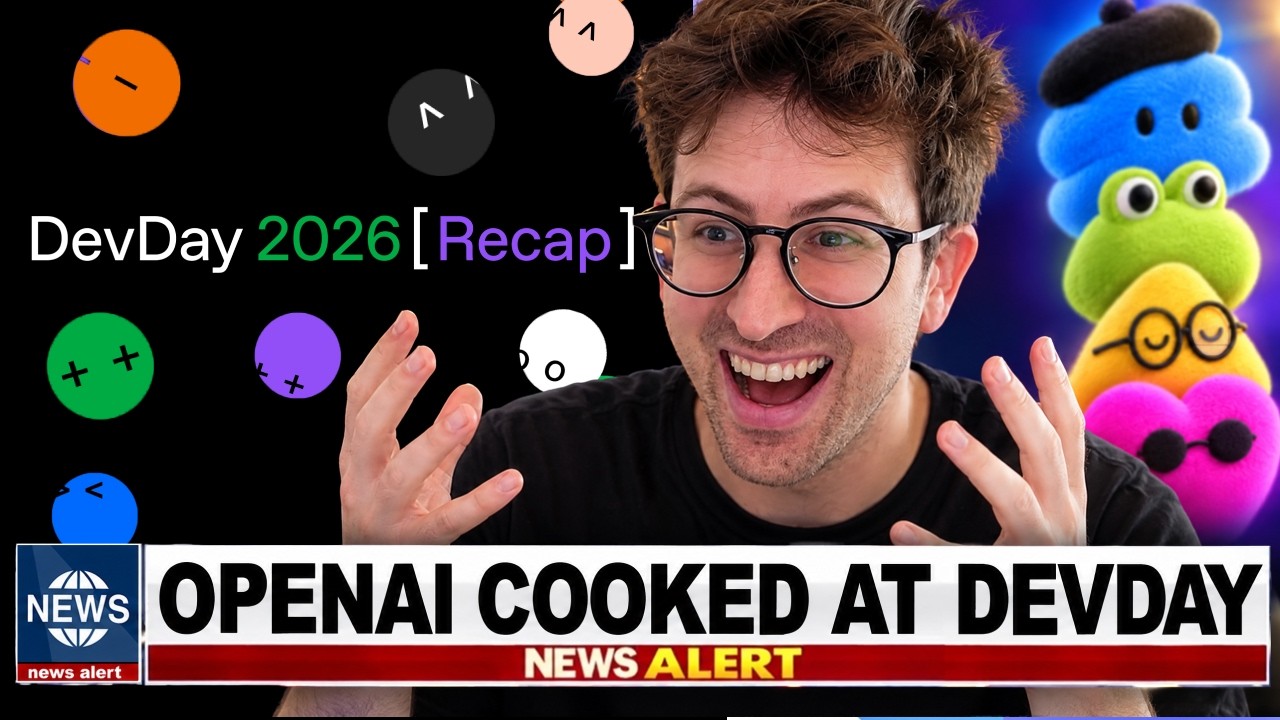
Greg Isenberg · @GregIsenberg
This video has no Most replayed graph yet: YouTube shows one only once a video has enough views. These are the moments viewers replayed most in Greg Isenberg's most watched videos.
Most replayed moment at 18:48
3.5x that video's typical replay level
find in general. And there's just a lot of marketing speak, so you'll see things like unlocking operational excellence. So, there's a lot of just like foggy copywriting. So, the startup idea is basically to make these websites
Said at 18:41
Most replayed moment at 27:20
4.0x that video's typical replay level
Find a workflow worth rebuilding. I'm going to link this. I'll have Greg link this this document, you know, in the in the in the channel. So, if you just want to dive in deeper in here, but the idea is again the same. Collect the context, trace the FTE findings, figure out the bottlenecks, the repetitive work, the
Said at 27:13
Most replayed moment at 6:26
2.8x that video's typical replay level
you're listening to this, I highly recommend it. And I'm using and this is what plan mode looks like. You can choose between agent mode and plan mode and cursor. Plan mode just means that it's going to actually plan out its steps and thinking and you'll approve it. And here's the hot take I'm going to have here. I am
Said at 6:18
The graph counts replays. It does not show where viewers stopped watching.
Words
3,102
Runtime
18:56
Speaking pace
164wpm
Reading time
13min
164 words per minute, between the 160 25th percentile and the 181 median of 349 measured videos. That distribution comes from the 349-video hook study.
Opening (first 30 seconds)
I got to be real with you. I didn't think I'd be making this episode of the podcast. But I just watched almost 60 minutes of Sam Altman up on stage and he launched a few things that I think are going to make people in aggregate billions of dollars. And I don't think that's a stretch. I think that there were 20 launches, feature launches today, but I think there was probably three or four that are so big that I
82 words, the words spoken in the first 30 seconds at 164 words per minute.
Free, no signup. See how the first 30 seconds hold attention, with rewrites.
Sentence shape
| Measure | This transcript |
|---|---|
| Sentences | 193 |
| Average words per sentence | 16.1 |
| Longest sentence | 75 words |
| Questions asked | 16 |
| Sentences containing a number | 10 |
Most used terms
Filler phrases
184 in total: you know 50 · um 44 · like 37 · uh 33 · basically 7 · actually 5 · right? 3 · I mean 2 · kind of 2 · sort of 1.
A literal whole-word count of the same phrase list the Prepublish browser extension uses, so a phrase inside another word is not counted and a phrase used in its ordinary sense still is. It is a count and not a judgement.
Free, no account. See where attention is likely to drop, with a rewrite for each weak line. The free check shows the scores and the one issue costing the most. Or run it on the words above first.
Free · No login · See a sample audit first if you prefer.
What this transcript is
Every word below is the caption track YouTube publishes for this video, pulled from the video itself and reproduced unchanged. It is not Prepublish's writing, not a summary, and not a re-transcription: it is the video's own published captions. English captions, generated automatically by YouTube, in the video’s original language. Source: the video on YouTube. A channel that would rather this page did not exist can ask for its removal through the contact page, and it is removed.
I got to be real with you. I didn't think I'd be making this episode of the podcast. But I just watched almost 60 minutes of Sam Altman up on stage and he launched a few things that I think are going to make people in aggregate billions of dollars. And I don't think that's a stretch. I think that there were 20 launches, feature launches today, but I think there was probably three or four that are so big that I think the people that who figure out how to you know, use those features and to grab a slice of those billions of dollars of transactions that are going to be happening within the ChatGPT platform, I think they're going to be able to create some really, really big businesses.
So I had to come on here and just break it down for you. You know, if you're new here, my name is Greg Eisenberg. I'm the host of the Startup Ideas podcast. I started and sold three venture-backed companies. I was an advisor to Reddit, TikTok, and I come on here because I think that this is an incredible time to be building your ideas. And I think that in the age of AI, you can use tools like this to go and do that. So by the end of this episode, you're going to learn about the most important things that happened today that Sam Altman launched at DevDay 2026.
I'm going to give you some ideas and some frameworks for thinking about how you could come up with your own ideas so that you can grab a slice of that pie. And I'm just going to cut through the noise. So you're by the end of it, I'm just going to I'm I'm just going to really focus on for people interested in building businesses, making money around AI, this is the episode for you. >> [music] >> The Startup Ideas podcast.
It's sleeping time, baby. >> [music] >> So the you know, yes, like I said, there were you know, 20 plus launches, feature launches today. The most important ones to me, the ones I think are the most interesting and I think, you know, maybe for you, um is let's start with dots. So, we have to talk about dots. Dots is the personal agent platform. Um and uh it's their, you know, answer to Muse by Meta and their answer to Instinct.
And, you know, what's really cool about it is they now have this, you know, front door where they're you're going to have access uh to the 1.2 billion weekly active users. That's what Sam Altman said today. Um so, you know, people are going to go and use their personal agent platform, dots, and they're going to be asking questions, right? They're going to say, "I need this permit fixed." Or, "I have this request." Or, you know, "I'm looking for a restaurant that you know, serves this." And ChatGPT is going to understand that job.
And uh your plugin that you have made, um which is essentially like a mini app, um is going to get selected for the work and we're going to talk about ways to surface that, but they've basically announced that plugins, they're doubling down on plugins. Um I think Sam said something or uh around like, you know, they've they He didn't say, you know, verbatim that it's like plugins were a failure. He didn't say that, but he did say like something to the degree I'm para- paraphrasing that they had some like mixed reviews on plugins.
They're now doubling down on plugins. And I believe Sam that he's going to like make plugins a thing and he's going to try to make ChatGPT the app ecosystem for AI. So, they're And that And that's a huge uh announcement of today and we're going to talk about some of the things uh we'll go deeper on that. Um so, your business, you want your business to go in like fix the customer's request, file the permit, you know, if if it's an you know, an example of like a permit company.
And then you're going to want to do the result. So this is the new app ecosystem. You need to drill this into your brain. You, you know, have to figure out how you could focus on the right customer. Um, chat GPT is going to understand the job, so they're going to do that. You're going to have to create the right plugin that does the right thing and actually creates a good result. Cuz if you can do that, you know, you can be hired before the customer knows your name.
Um, you can have access to the 1.2 billion weekly active users. And we're talking about like you know, I said in the intro, like billions of dollars of transactions. I'm even being conservative. Like I don't think it's crazy to say that in 10, 15, 20 years that there's trillions of dollars of transaction volume happening within personal agent platforms. But let's be conservative and say that there are billions of dollars that will be uh uh through you know, in in transaction volume.
So now that we understand that, let's go back to you know, Dev Days uh website. So you can see um here's their personal agent platform. The other thing that they announced uh today is Decisions API. Um, I did a video, I think it was last week on Jev. Um, and this is their answer to Jev. So you saw that their answer to Muse, this is their answer to Jev. Decisions API enables real-time decision-making by focusing Luna's intelligence on a specific set of user-defined questions with finite predefined answers.
So developers supply context using text or images and they get back answers they can use to classify content, route requests, or choose an agent's next action. So it's in limited preview today. Uh Excited to play around with it. I've been hooked on Jev. Hooked on Jev. I think there's a bunch of, you know, use cases for Jev that are you know, people are not talking about, underserved. You know, one that I think is really interesting is just, you know, UI design.
How do you How do you use essentially Jev is a decisions API. How do you use a decisions API to get you the most highly converted converting you know, app store screenshots or direct response websites and apps, things like that. So, there's a ton of opportunity there. Question here is will Open AI's decisions API be worse, as good, or better than Jev? TBD, we will find out really soon, but I think it's worth paying attention to.
The other big launch of today that I think is really interesting is the agents API is now is with computer use. So, the agents API now supports computer use, so developers can build agents that interact with software to complete tasks. It also brings Codex's multi-agent capabilities, tool search, tool calling, and context compaction into your application. Open AI runs it underlying infrastructure, so your team can focus on building applications.
This I've talked about this before around like, you know, vertical harnesses. You can see here Open AI the it's a managed Codex harness. Harness. So, you know, if you have, you know, great data, if you have a great brand, if you understand a vertical better than other people, you know, there's this huge opportunity to build apps. And that's why I would be playing with the agent API today. Like, go and figure out, you know, what you can be building, how you can extend yourself, uh extend your business to to this world.
And this is just like a new surface area. It's like thinking about how you can create AI native apps. Um and it's just I think there's a lot here. I don't think a lot of people are doing it. Um and obviously that excites me. The other like low-key huge announcements, I don't even know if it's I don't even know if it's on this page. That's how low-key it is. But when I saw it, it it it sort of blew my mind. But basically, you can now sign in with your ChatGPT login and use your token allowance and on those websites.
This is going to open up thousands of business opportunities. In the same way that when Facebook launched their login, it opened up thousands of business opportunities. And actually created many billions billion-dollar companies. Think about, you know, Yelp as an example. Like I remember when Yelp came out, it was basically, and you should you know, you can go check out what their early uh product looked like. Multi-billion-dollar company that was basically login with um your Facebook and you're going to see local uh reviews and and reviews that your friends have uh given.
And it had that Facebook graph, so it allowed you to do more. Now, where do I see the opportunity? We're going to go we're going to go into depth into this in in a bit. But where I see the opportunity with sign in with ChatGPT is now you can create a free app. You don't charge people, so you get your top of the funnel becomes bigger. It's connected to your ChatGPT, and then you can upsell them to other products and services from there.
That is a huge huge huge thing. Let's go back here. Here's my my word dump of ChatGPT login. I don't You know, I think a lot of people look at AI apps and they're like, "Do I really want to spend $20 or $30 a month for another AI app?" It's like, "No. You can just sign in with ChatGPT and start using the plan you already have." So, I think a lot of people, you know, if you're smart, you create your core app free and then you charge for advanced features.
So, you can charge for like enterprise stuff. You can charge for sharing with your team. You can charge for like more data. But, now you have this opportunity to create the core app for free. In the past, you couldn't create the core app for free cuz you were paying for inference, right? Um but now, you can just focus on your business, building the distribution, building the brand, getting the data sets, obviously getting those people from the brand into the app, get them to use it use the app, and when they start seeing value, upsell them to other things.
A few ideas around you know, what you can do with uh the login, an agent that cleans architectural CAD files, a researcher that monitors one specific uh specific scientific field, a Shopify catalog cleanup desktop app, a video production tool built around one repeatable editing workflow, a contract review tool for one of what one type of franchise agreement. Um basically, what's the opportunity? Uh these tiny AI categories um that weren't viable, weren't economically viable today, as of today, are.
So, you want to build these products that are too niche to become, you know, major AI open AI features, but you know, you you you you have enough of an an audience that you can charge, you know, something for up upselling and for that workflow. So, I think this is a really big deal and I'm really excited about it. Like my mind is going absolutely I can't stop thinking about it actually. Um and now we can focus on selling workflows, right?
Yeah, sell workflows instead of tokens. So, you you know, if you're I dating if you want to build a business in this agentic age, you know, what's some proprietary information that you have? Um a specialist workflow, access to outside systems, collaboration and auto auditability, a network of human or suppliers, a measurable business result. These are the things we can focus on and we don't need to really focus on um on tokens.
And I think uh you're also just going to get a lot more users to your app. Um you get their emails, you might get their phone numbers. Um and then you could email them, you can sell ads in those in those emails. There's just so much more that you can do now that I think uh it's really really interesting. I wanted to just talk about like the mental model I have of this new world where we have decisions API, we have login with ChatGPT, we have uh dots.
Um we have the agents API. How am I am I thinking about building a business in this world? To me it's this four-step framework, trigger, decision, action, and feedback. So, there's going to be a trigger, an invoice becomes due, the inventory runs low, or it's tax time. Like something happens such that I'm going to ChatGPT and I'm asking for some help or it does it autonomously. Then there's a decision. So, ChatGPT is like, "Okay, what should I do next?" Um then there's an action.
So, it you know, there's a correct, there's a submit, there's an ability for uh an application to do something. And then there's feedback. Um, you know, was it approved, was it rejected? Um, and I think that the strongest businesses are going to own two of three. So, they're going to own trigger, they're going to own action, and feedback. So, when you're thinking and you're brainstorming around what you can be building, I would be focused on those three things.
I wanted to give you a couple ideas just to get your creative juices flowing around, okay, uh, what other businesses could you build now that Sam Altman and OpenAI team have launched this? Um, one is like a real-world API. So, in a world where you're going to have millions of people, uh, basically going to dots and asking it for stuff, um, some of those stuff are going to be digital, but some of them, um, some of those are going to be digital, some of them are going to be structured jobs.
So, if you can figure out a way to get vetted specialists in the real world, um, I think that that's a huge opportunity. So, like, permit expediters, custom brokers, and then you make a transaction fee. So, I think that my point is there's all this stuff happening in the physical real world. Um, a lot of people are going to be focusing on the digital stuff. How can you create real-world work APIs in specific niches that you can connect, uh, dots or connect ChatGPT to real-world workers who can finish the last mile of, uh, the transaction.
Huge opportunity. Um, throwing it out there. The second, uh, is who's going to build the analytics and optimization layer for agent discovery. So, I'm not the only one who's thinking about building plugins right now. At this very moment, there's probably thousands of companies thinking about how the hell do I get surface within dots. Not just dots, how do I get surface within Muse? How do I get surface within, you know, Gemini, uh Google's platform?
Um I think it's called Spark. There is all these personal agent platforms, Instinct. There's all these platforms, Grok Bot. How do you get your plugin surface? Some of these have plugins, some of them don't. Um but I think eventually they all will. Um if you can create like an analytics platform uh that shows um that he actually have it here. That generates realistic indirect prompts which measures which plugin gets selected, which tracks activation share by customer intent, which finds metadata and tool definition problems with which measures whether invocation turns into completion.
Tests every plugin update. There's a huge opportunity here. In the same way that uh in the web era, you had huge companies, Mixpanel came out, Amplitude came out, Google Analytics was a huge product. I think there's tons of analytics products that are going to come out around helping you be seen. And you're you actually saw that with AEO GEO. I mean, I think Profound raised at like a $2 billion valuation or or billion-dollar valuation, some absurd, you know, large amount.
I mean, you know, they deserve it. They're they're generating kind of buzz and and and revenue and they're solving a real problem. My point is, there who's going to be the profound for this personal agent era? Huge opportunity. Uh I hope someone takes that. So, um I'll I'll end with they obviously launched other stuff. They've obviously launched GPT 6.1 Soul, which was huge, which is obviously a major upgrade to GPT-6, but um we kind of expected that.
They obviously launched ultrafast, which now which is amazing by the way. If you haven't tried ultrafast, it's absolutely amazing. You know, you're going to you're going to love it. It's just way faster. Of course, it's a lot more tokens, but like of course they launched this. And they obviously launched private intelligence, which um you know, I think a lot of companies are scared to use frontier AI because their data isn't really protect protected.
So, I'm not surprised that they're doing things like that and doing stuff like Codex security cloud. But I think the point the point of this whole episode was there's a few main features, decision API, agents API, the login with ChatGPT and dots that I think you know, if you're listening this, you're a founder or you're someone who wants to build a company, you want to bet on yourself. Um That's uh that's going to be huge.
Um So, yeah, and they also launched the you know, spaces, which is basically their version of having cloud slides and docs where you can bring your you know, AI agent to work with work with it. So, yeah, it's it's cool and it's going to help make people more productive, but for for people listening to this, for my people, for the idea junkies, the people who like want to build businesses, I thought this would be most interesting to you.
Hope it was. Let me know if it was. Um I'm I read every single comment, YouTube comment. I reply to a lot of them, too. Um and uh have a creative day and I'll see you next time.
The words are the caption track's own and nothing is reworded or re-transcribed. Paragraph breaks are placed between sentences so the text reads as prose.
Free tools for your own script: paste a draft and see where it stands before you record it.
Paste your draft and see where viewers are likely to drop off, with a rewrite for each weak line.
Paste the first 30 seconds of your own draft for a hook score and rewrites.
Check your draft against YouTube's advertiser-friendly guidelines before you record it.
Read this channel's public videos and transcripts, and download a writing brief for it.