Getting the transcript
Reading the captions from YouTube. A video nobody has opened here before takes 10 to 30 seconds; this page fills in on its own.
Getting the transcript
Reading the captions from YouTube. A video nobody has opened here before takes 10 to 30 seconds; this page fills in on its own.
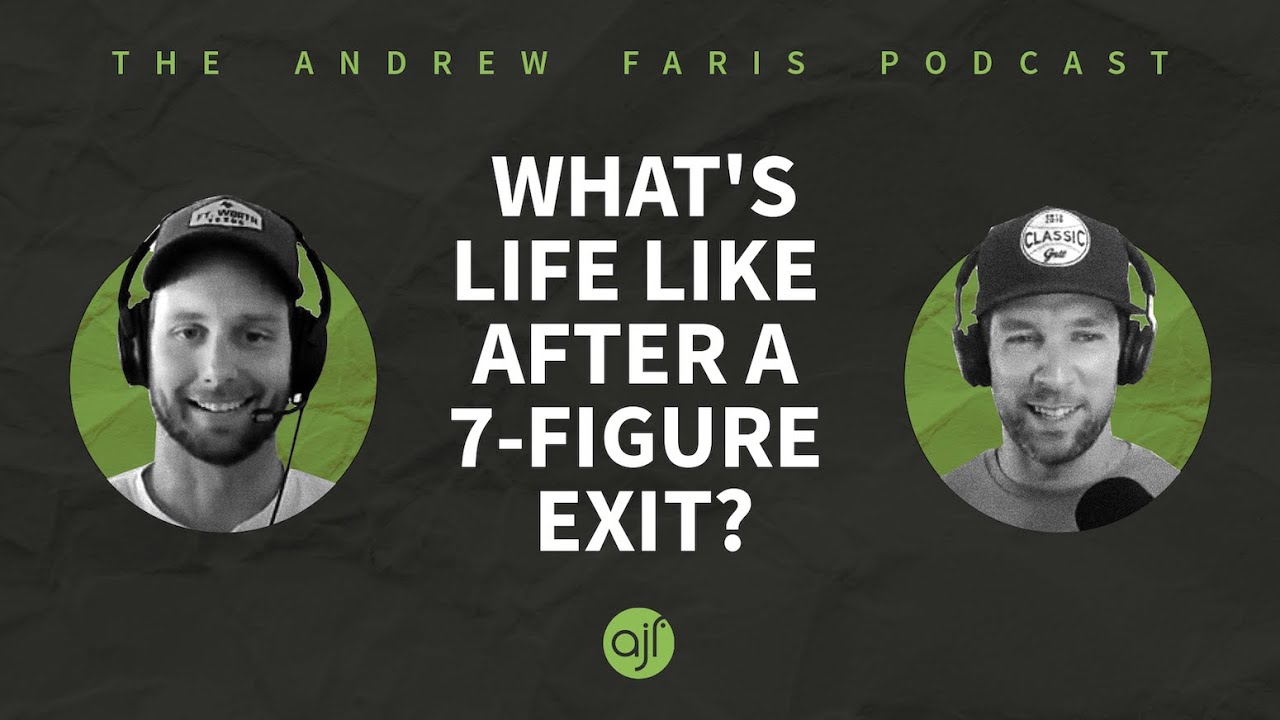
The Andrew Faris Podcast · @andrewfarispodcast
Words
10,408
Runtime
47:39
Speaking pace
218wpm
Reading time
43min
218 words per minute, above the 201 75th percentile of 349 measured videos. That distribution comes from the 349-video hook study.
Opening (first 30 seconds)
Hello and welcome to the Andrew Ferris podcast. Thanks so much for joining me for another episode today. An interview today with my great friend, the once and former CEO and I guess so, still the founder of Supply, razor company. Just called Supply really, I guess. Anyway, Patrick Kudu is the man and he is here and I'm excited to have him. He's a great friend of mine. A while back on this show, one of my actually with my first interview episode after I launched my solo podcast, I got Patrick on the show to talk about the exact actual process for selling Supply. He acts as
109 words, the words spoken in the first 30 seconds at 218 words per minute.
Free, no signup. See how the first 30 seconds hold attention, with rewrites.
Sentence shape
| Measure | This transcript |
|---|---|
| Sentences | 656 |
| Average words per sentence | 15.9 |
| Longest sentence | 114 words |
| Questions asked | 102 |
| Sentences containing a number | 46 |
Most used terms
Filler phrases
515 in total: like 254 · you know 94 · kind of 40 · actually 31 · I mean 29 · sort of 22 · right? 16 · uh 16 · basically 9 · um 4.
A literal whole-word count of the same phrase list the Prepublish browser extension uses, so a phrase inside another word is not counted and a phrase used in its ordinary sense still is. It is a count and not a judgement.
Free, no account. See where attention is likely to drop, with a rewrite for each weak line. The free check shows the scores and the one issue costing the most. Or run it on the words above first.
Free · No login · See a sample audit first if you prefer.
What this transcript is
Every word below is the caption track YouTube publishes for this video, pulled from the video itself and reproduced unchanged. It is not Prepublish's writing, not a summary, and not a re-transcription: it is the video's own published captions. English captions, generated automatically by YouTube, in the video’s original language. Source: the video on YouTube. A channel that would rather this page did not exist can ask for its removal through the contact page, and it is removed.
No Script X-ray for this video: YouTube shows a Most replayed graph only once a video has enough views.
Hello and welcome to the Andrew Ferris podcast. Thanks so much for joining me for another episode today. An interview today with my great friend, the once and former CEO and I guess so, still the founder of Supply, razor company. Just called Supply really, I guess. Anyway, Patrick Kudu is the man and he is here and I'm excited to have him. He's a great friend of mine. A while back on this show, one of my actually with my first interview episode after I launched my solo podcast, I got Patrick on the show to talk about the exact actual process for selling Supply.
He acts as founder of his e-commerce business himself. He had sold his e-commerce business and he came on and talked to me about all the details. The links for that episode, if you want some context, they are in the show notes, of course. But now, we are talking to him like a year later or something like that. And I'll get the exact timeline from him in a minute, but we're talking today about what it has been like after selling your business.
To me, it's one of the most interesting questions because so many people uh have brands, are trying to get to the point that Patrick got to and then I think have no idea what to expect actually. They're not really thinking past that moment very much. They're just thinking, I got to get to the exit, I got to get to the exit, I got to have the payday. Well, Patrick has had the exit, he's had the payday and now we are going to talk about what life after the exit is like, what he's up to and why he never tweets anymore.
Stay on. It's going to be a good conversation and uh yeah, let's just go jump in. All right, man. How you doing? I'm good. Sorry for ruining your intro. No, no. It wasn't a very good intro anyway. I'll probably re-record it. People are going to be listening to this going like, what? What did you do? Yeah. Maybe not. I don't know. Maybe now I have to keep it, but So, let let's just get right to it. Why don't you tweet anymore, Patrick?
That's the question everybody wants to know the answer to. Man, I want to know the answer to that, too. I don't know. It wasn't on purpose. It wasn't like I sat down and decided I'm never tweeting again. The short answer is I got I got real tired. Not of Twitter and now this isn't like a this isn't like a political or an or a Elon or a Twitter statement. I love Twitter, but I just I got tired, man, and I just quit tweeting.
I just stopped tweeting and never started again. It's hard after you stop doing it for 6 months, like how do you start again? Yeah. I mean, the way you do it, you just come in with a banger. You know how to do that. I'm tired of coming up with bangers, though. Yeah. I think the rest of our conversation will help to answer that question. Yeah, maybe so. All right. So, give people context for what happened just so they get the full story.
Let's just start with that. Let's do some quick recap. You found Supply in what year? I'll do it for you real fast. Started Supply in 2015. Left my full-time job in 2017 to do it full-time. My wife joined me a year later. Built it over the next few years. We went on Shark Tank in 2019. That was a big inflection point for us. Sold it last year, August of 2022. By that time, we had like 15 employees. And they all stayed with us, and my wife and I stayed as well, and then I left the company just last month.
Actually, a couple weeks ago now. Yeah. And you met We met in like 20 I think 2019 was right around Shark Tank time, I think, that we probably first met when you were working with CTC. Well, like 2018 or 17. Yeah, I guess that's right. I think it would have been 18 I something like that because and it was also when you were in the midst of maybe this will help you date it. You'll You'll remember this better than I did, but you were you were redoing your entire supply chain at the time to like to get a whole bunch of margin back.
And that's when we met. So, when was that? Do you remember? 2018? 2018 or Anyway, it doesn't matter. But yeah, so we met and then I've sort of been able to follow the journey from there, and this is part of why when you sold, I swooped up on that and had you come talk about it on my podcast. Yeah, eat that, Eric Bandholz. Just kidding. I like Eric a lot. No. I know Eric's a good friend of yours. I know. And then, I scooped him.
And then, we've kind of just stayed in in contact after that, have remained friends. And I have been really fascinated by this because you sold the business yeah, about a year ago now. And so let's just like kind of start there. What was it like to sell your business at first? And then what was it like sometime after at first? That's kind of a broad question, but like you know what I'm saying? Yeah. Oh man, I mean yeah, there's been a lot of emotions over the past year and thoughts and going counseling to work through some of them, too.
Um the short way of saying it is the first kind of like two months, two to three months after I sold, I was still working for the company. I was still in charge of the brand. I still had my employees with me. So I mean I very much had a full plate and a full, you know, agenda. But after you sell a business, you know, it becomes, whether you like it or not, I found out, I certainly didn't like it, but it becomes a big part of your identity.
I don't think that's healthy. I don't like that it became a part of my identity, but it certainly did. And I realized it after I sold that I had sold this thing. And now you have to ask yourself, well, who am I now if I'm not this thing? So wait, let's before before you go further there, let's let's do some timeline cuz I'm curious about when that realization kicked in. Cuz when we when we talked last time about this on the podcast, we had talked a lot about celebration.
And it was like you had been you had been celebrating all these big moments and there were all of these like really exciting moments between when papers are signed and then money hits your account and all those things. Like so like how long do you think that period lasted for, the celebration period within the time of of selling it? Like I I know this is going to be a little bit vague probably, but like Well, it's not vague, it's just convoluted, right?
Cuz the two emotions exist together. So there has been celebration since the day we sold, right? I mean gratitude, I still you know, even now, now that I've I've left the company and I'm not working. So right now I'm basically unemployed. I'm still consulting for the brand. I'm also taking on a couple other clients here and there. But, for the most part, I'm not working. And so, I wake up in the morning with, you know, no Slack notifications and no emails to respond to.
And I'm I'm overwhelmed with gratitude that I have the opportunity to just take a step back and rest. So, there's celebration even today. There was celebration when we sold. But, then there's also this like I won't call it remorse or regret cuz I I've never regretted selling the company. But, there's this thing you have to work through that's it's basically a question of kind of who am I is the way to to summarize it.
Yeah, okay. How fast did that dawn on you? I mean, was it like the moment you signed something? Like, I mean Way quicker than I thought. There was probably a week or two of like just like popping champagne. And then, you know, soon after it's it's who am I and what am I going to do with the rest of my life, right? Cuz you've you've had this thing that you've built and you spent nights, weekends, days, like your every waking moment thinking about.
And then, you're suddenly confronted with a void. And it's not an entire void, right? I was again still working for the company. But, that was a finite thing that was going to end. And so, I'm 37. What do I do with the next the rest of my life? So, I was 36 at the time. And the way I thought about it was I started working at 21. If you take the typical retirement age of like 65-ish, I'm only a third of the way through my career.
Like, what am I going to do with 2/3 of my working career? And that's just the typical retirement age. And so, you're like kind of confronted with a little bit of a midlife crisis of So, so I'll I'll make it real tangible. Do I want to start another e-commerce brand? Do I even have that in me? You know, cuz one of the things we'll get into is like I was really burned out, really tired. E-commerce, you know, is hard work.
You've never been shy of talking about it, neither have I. I really wore myself into the ground. And so, one of the questions is like I've gotten really good at this. Do I want to go do it again? And, you know, I spent a lot of time trying to trying to think through number one, could I? And number two, do I want to? Number three, like what would I even do if I went and did it again? Like if I could go back and start all over again, would I build the same business?
Would I build a different business? So, there's all these kind of thoughts rolling around in your head. And I'd say that was like the first two to three months was like celebration, confusion, all that. And specifically working through celebration confusion, specifically working through what will you do next? Like that question, was that very central? Yeah, yeah. And cuz we should say like your exit was a very good exit and you feel great about it, but do you want to say we talked about this in the last episode, but I don't think it was like definitely can live on the beach forever exit, either, right?
Like it was I mean, I don't know, maybe you can. I'd call it a live by my backyard pool, which I'm building right now forever. I don't It's not a It's not a live on my yacht. It's a It's a what I mean. That's what I mean. It's It's not so much money that it would be almost impossible to squander it. I'm a very simple guy and, you know, let's just say I'm not really in a rush to go back to work. I'm looking for something I would enjoy rather than something that would pay the bills.
Yeah, okay. Yeah, that's great. So, okay, so then so then you thought for the first couple months, including in there, will I start another e-commerce brand? Did you come to a conclusion about that? I haven't yet. The short-term conclusion, so I'll kind of I won't bury the lead. What I'm doing with the next kind of year of my life I've decided is I'm taking a sabbatical. So, I'm not doing anything. Like I don't know if you've ever read the book The Ruthless Elimination of Hurry.
Have you read this? Yeah, John Mark Comer, yeah. Yeah, so good. I have realized that I'm I'm very poor. Pretty much every entrepreneur is poor at what I believe is a very requisite intentionality around arrest. And like I burned out really hard toward the end of my reign at Supply. And you know, frankly, I don't I've never really said this publicly, but I don't know if we hadn't sold it, I'm not sure what would have happened.
But the business was doing great. It's not like things were on fire. Like I don't know if I could have physically continued on and mentally and emotionally just cuz I was so Why do you think it took you to that place? I mean I I know being the founder of a business is hard, but that's a pretty that's a pretty extreme level of of expressing that. It is and and it's not. I mean, you talk to founders, I talk to founders every day that are at that point.
It's like burn and successful businesses and not successful businesses. I don't know if I can keep going. Just like the entirety of which it consumes every waking moment. So you wake up in the middle of the night at 2:00 a.m., you're thinking about the business. You're falling asleep thinking about the business. You're sitting on the floor playing with your kids thinking about the business instead of thinking about your kids.
At least this is my This is my personality. I'm not going to paint broad brushes. I think it does apply to a lot of people, but it just for me, I'm an obsessor. I'm you know, I won't say I'm obsessive-compulsive, you know, but I'm I'm a perfectionist. I'm an engineer. I'm an obsessor. I'm a detail guy. So I know everything that's wrong with my business. I know everything that needs to be worked on and it just never stops rolling around in my head.
So that 7 years of that for me was enough to know that I needed a break from that personally. And it wasn't cuz it was a bad business or like I had a I had a great I loved my team. I loved my business. I worked with my wife. I loved that. I loved everything about my business, but just for me it was all consuming. Yeah, it's interesting cuz when you say that, I can think back to when I was a CEO of an e-commerce business.
And you know, we were an aggregator and at for a for 100. And so we had a bunch of brands. but like it was just also like by the time I left, it was really hard. The business was not in a good spot, and we had to untangle a bunch of stuff. And a lot of our hypotheses had had proven wrong. And so So I always kind of wondered what that would have been like, what what my journey would have been like had it actually worked out a different way where I'd been in it.
And also I wasn't the founder, which is a big difference. You know, I didn't have nearly the amount of equity in it than that you did. And And so there's there's some differences in that experience, too. But I what I do really relate to, and I think is is something I've been thinking about a ton, actually, is the notion of it's very hard to turn off my like strategic mind, even for my current business, where it's a very simple business in terms of my consulting business.
And And I'm not overburdened with work and volume. And like yeah, the business got my stuff's going well. Like you know, it's mostly a 40-hour week job for me, but it is still very hard to not do this. And particularly, it's very hard, I think, to remember that I have an identity outside of the business, you know? And And to like to think about like I'm not just an ads monkey, you know, or whatever. Like Or, you know, that's like a that's a sort of an overstated way to say it, right?
But like I'm not just a an e-commerce strategist or whatever. And And I don't even mean just in like a bad way. Like I I just mean it's not the only thing about me. And But what I've noticed about that for myself has been that as I start to realize tap into these other things, it feels like there's there can be some some like fullness or wholeness that I'm missing out on when I'm just in sort of like how do I optimize my business mode, you know?
There's there more truth about what the world is like and what it means to thrive as a human in it. And so yeah, so So that I I relate to the the element that even if I don't know if I am as obsessive as you're describing, like I I think I'm probably not, but I still relate to the sense of if you're even if you're just a strategic person at all, like it's just very hard to stop trying to solve problems, you know? Cuz I It's the same thing.
I could think of all the problems I would like to solve right now, like, you know? But, I have to record this podcast with Patrick instead, you know? So, one additional reason why I think it was so weighty for me, and I've I've said this before, for me, there was there was the financial piece to it, too. For me, this was my So, we bootstrapped it. I put a ton of my own money in it. There was a lot significant portion of my net worth, more money than I ever knew exist not more money than I had before I started the business, significantly more, invested in Sparks, Nevada, so the way I like to say this is, you know, my entire net worth was sitting on a shelf in Sparks, Nevada, right?
And, you know, I would write I would write very large checks, you know, more than my house was worth to go to buy things that I just was hoping would end up getting made, shipped across the Pacific, and put in a warehouse, and then shipped out to customers, and eventually result in profit to my business. And And it all worked out great, like it worked very well, but there's a lot of stress, especially when you're risk averse human, you know, I'm I'm an engineer by background, like we're trained to eliminate risk.
Like, there was significant The longer you own a business, and the more it grows, an e-commerce business, an inventory-based business, the more the chips pile up on the table. You put them in, and you get to take some out every now and then, but you don't get to take a lot of them out. And so, it was really the business was my retirement plan, and there was this weight of if I don't make this work, you know, I'm in my mid-30s, for my family, like I don't know what else I'm, you know, it it felt it felt weighty, you know?
There's always something else that can work out, but but I for some reason I made it feel very weighty. Yeah, you said there was So a second thing, too. Is it your Oh, I was just as you were talking, I was I was remembering how I used to work 40 hours a week at an aerospace company for like 7 years and I was it's funny how the grass is always greener. Like I went home at the end of the day and I never thought about work, you know?
And I So now it's funny is like I'm like, man, I would really like to just get a job that I could just go to for 40 hours a week and then go home and So I'm I'm starting to go like, should I just call up, you know, Lockheed Martin and and try to go work for them again? You know, but it's funny it's funny how the grass is always greener. Anyways, cuz I wanted something I was passionate about and I left that job and like you didn't like being an engineer, right?
Like I mean like at least yeah. I didn't. No. Yeah. Um okay, so so you go and you have some identity crisis basically, right? So you go like, who am I apart from my business? Can you talk more about that? It's tied up in everything we just said. So and there's a little bit of I I really enjoyed so I don't know that I've thought much about this to be honest, but like I love the community. So, you know, you're a great friend, Eric is a great friend, you know, there are plenty other people I can list.
E-commerce Fuel has been phenomenal. Twitter has been a great place. So I've I've like joined this community and made these friends. And It's a It's a shockingly root-for-each-other community. Like people even competitors sometimes are like Oh, yeah. I mean, I know all of my competitors. I wouldn't say like we're besties, but like we talk to each other on the phone. Yeah, because part of that is you realize that at our scale for most of us like the real competitors are like actually like, you know, brands owned by P&G or something like that, you know, it's like they're just like such a different scale that it's like what I mean if Yeah, so it's it's and there there is this camaraderie in the entrepreneurial space and people are trying to help each other solve problems and I think a lot of people relate to the things you're describing, you know, all my net worth is in my inventory and Spark Hustle with like you're not the only one who has that, you know?
And so there's there's some kind of solidarity in that. Exactly. There's people you can relate to. And I honestly, I never really cared about this, but like, you know, I had built up a following and so people kind of knew who I was and so that opens doors for you. I never really cared about being Twitter famous, but you know, it it opens doors and you know, it you know, it's just there's a lot of great stuff that goes along with that.
And so like let's just take Twitter for an example. It seems like a silly example, but you've tweeted for what? 3 or 4 years? Probably 4 years, you know, about e-commerce and bootstrapping and founding and running a small business and and now you've sold it. So like what do you tweet about now? Like how do you I could continue to tweet about kind of the day-to-day stuff, but it's like like okay, if that's kind of who What what's backyard pool Twitter like?
Yeah. Well, it's funny cuz I told somebody the other day like nobody wants to hear about what I'm doing now, you know, I'm sitting I'm coloring, you know, unicorn horns with my little girl and going to the park and building a pool, you know, so like that's boring stuff, but to me I'm loving it. Like it's best I'm having the best time of my life, but nobody wants to hear about that. So Sure they do. Yeah. Well, I mean they do.
This is why I had you on the podcast, actually, is cuz I I actually really wanted to hear about that. Sort of the the other side of like what are you spending your time on and and like it it is interesting to even hear you say what I've heard you say now is like you would maybe now consider starting another e-commerce business at some point. And that was that's like that's different than when we last talked. Like I think last time I heard you reflect on this at all it was like absolutely not.
Like there was like I think, you know, that's kind of interesting. And then at the same time also like who maybe a 40-hour Lockheed Martin maybe even reference something like that is like a really funny thing, you know? So I I just think like it's interesting how much what I hear in that in part is just that like there is an intensity of your feelings about all those things in those first few months, probably. But then now what I get is like you're a little more relaxed about it and have a little more distance from it and and maybe with a little more time, your reflections on sort of like post-exit life have evolved over over time.
Do you think that's accurate? Yeah, absolutely. Yeah, and they'll continue to evolve evolve. You know, I told you I'm taking a year sabbatical. You know, I could after 6 months be like, "That's enough. I'm done sitting around doing nothing. Like I need to get back to work." So, you know, it could change again in another 6 months, um for right now what I know is uh I'm going to practice intentional rest, spend a lot of time with my two little girls while I have it, and maybe one day start something new.
I also have uh I've got a couple things I'm consulting on, so I've got this really really cool brand that I'm starting to kind of do a little bit of brand work and comms on. And so, I think what I'd like to do is to continue to consult in a uh really low-key kind of low-pressure way for both me and the people I'm consulting for. To kind of just keep me busy, help other people, and and kind of keep those skills active while I, you know, wait for whatever's next.
Yeah. While you do your sabbatical, do you Are you going to keep your consulting? Yes. Like I've got I'm Yeah, I've got like three. If and if somebody's listening to this and they want you to consult with them, is the answer no? Because you're cuz you're uh No, the the answer is get in touch. I've got a really specific way that I want to do things, and it's pretty pretty low-key, pretty low-pressure. And so, if it's a good fit between both of us, you know, it's it's for like small seven-figure brands.
I was going to save this for the end, but where where should they reach out to you if they want to do that? Email me. We'll put my email in the show notes, patrick.kedu@gmail. If you are hiring in your e-commerce business and you have not yet considered working with incredible professionals in the Philippines, it is time to go do that with my friends at More Staffing, a recruiting, training, onboarding, full-service Filipino talent agency who are doing an incredible job not just bringing you virtual assistants, but virtual professionals, people who are highly skilled across every part of your business in the Philippines, deep understanding of D2C e- commerce, whether that's on the design, marketing, that side of the business or the operations, logistics, fulfillment, that side of the business.
You can find incredible talent and pay them great money relative to what is locally available to them in the Philippines, but much cheaper than what it would take to hire somebody in the US or probably wherever you are in your business. So, go work with More Staffing by going to morenow.co. If you are adding talent, I don't know why you wouldn't go and pursue my friends at More Staffing, pursue expanding your team overseas.
If you are remote at all, it is an incredible way to get incredible people at a great price for your business and that is exactly what you're looking for. So, go do that right now, go to morenow.co to work with my friends at More Staffing. Okay, so what makes your sabbatical a sabbat? And you just use the phrase intentional rest. So, I'm curious to hear you talk about this. What do you It sounds like you have some clear ideas in your mind about about what that is and isn't.
Can you talk about that? Yeah, I I do and I don't. Part of what I want to figure out is is like what those clear ideas are. The Judeo-Christian ideal is that God created the world for men and women to rest one day out of seven. If you've ever been to Israel, this is uh it's such a beautiful thing about Jewish culture. The whole place shuts down at Friday at sunset and it is the most one of the most beautiful things you've I've ever seen because I've been to Tel Aviv a few times for work and I would be there over the weekends and Friday night like the Boulevards the the beaches just are full of people and families and kids and they're just enjoying life.
And it's this beautiful thing that the whole city, you know, is basically celebrating and resting and it's this thing that we don't do very well and we've always mocked so I yeah, I worked in France once, you know, they were rest a lot over there maybe too much, you know, US American culture mocks people that rest and what I'm learning is what happens if you don't rest is you burn out, you're unhealthy. So like I I got the most unhealthy physically, emotionally, spiritually I've ever been kind of towards the end of my business and towards the beginning of my burnout.
And now the opposite is true, man. I'm figuring out what does it mean to rest and and there's difference between rest and laziness, right? I mean I think that's kind of So that's actually one of the distinctions I was going to ask ask you about because like you it doesn't sound like you're talking about watching Netflix all day. Like talk more about the distinction between rest and laziness or or maybe a distinction I I like to think about and maybe this is maybe this is or isn't a distinction you would make, but is between rest and leisure.
And so yeah, I I don't know if you'd frame it exactly that way, but that's one way I've heard people frame it. I think it's interesting. But what what do you mean what do you mean by it? Like why isn't it just laziness or For me it involves a a couple of things. One is people and the other is is learning and self betterment. So So for the second one like I got like so I tweeted a long time ago one of my favorite tweets if I'm going to grade my own tweets.
I started a habit where that's made one of the most substantial impacts on my life where every time a friend recommends a book, I go and buy the book and the impact has been that now I have a huge stack of books on my bedside table that I've never read. And like it's so true. So like I got all these books that I want to read and I'm reading I'm reading a ton of books, but I'll give you this little this little speech.
One of the books you should read is called The Good Life and it's it's about the the Harvard study which has been done since the 1930s. I'll make this really fast. It's one of the most in-depth longest 100-year studies of its kind that studied has studied 1,800 people. And the point of the study and the point of this book is that the happiest people in this study and in contrast the the saddest people have the have all have the same thing all have something in common.
The happiest people are the ones that have the strongest relationships in their lives and the saddest people and the sickest people and the ones that die sooner are the ones that don't have strong relationships in their lives. So for me rest does not mean so well, it can mean solitude, but it doesn't mean isolation. It means so I did take like a solitude trip. My wife gave me a few days alone. Like that's that's great, but not isolation.
So intentional rest with other people, other families, neighbors, family. And then another way I'm resting is reading. And then the other thing for me that's intentional is I really spending a lot of time with my girls. So I'm catching up on I I really regret that and I got a lot of time left or not a lot, but my kids are six and five and three. So I got some time, but what I don't want is sitting on the floor with my kids and my brain is somewhere else, right?
I want to be very involved in those magnetiles, you know, and there for my two little girls in the short period of time I have them. So I don't know if that answers the question, but that's kind of how I'm thinking about it. No, it does. I I think like so you're you're prioritizing relationships, you're prioritizing your family, and you're prioritizing reading. Any other practices in there that you're that you're working on?
Like do you have like a fitness practice? Do you have a spirituality practice? Yeah. I mean, I've been going to the gym since November for the most consistent time in my life. I'm in the best shape of my life. I love it. What do you do there? What like what are you following a programming or anything? It's actually one of my favorite questions to ask people. Oh, I'm loving it because for me it's a strength and conditioning gym that has classes.
So, what I am terrible at gyms is is knowing what to do and having the motivation to do it. Even when I know what to do it, having the motivation to do it when I get there. So, what's great about this gym, I show up, they tell me what to do, and I've got peer pressure cuz there's a bunch of other people doing it. And the other thing I love about it, it's weightlifting. Like we are throwing heavy weights around and I've tried to be a runner, I've tried to be a biker, I've tried to be all these things.
I realized I love lifting weights. So, it's been great, man. Yeah, so you're describing why CrossFit caught on for me because I I I actually didn't know what to do when I would go into a gym, I'd see all these machines, I had no idea. I didn't know how much weight to put on, I didn't know how many times to lift it, I didn't know if I was hurting myself, etc. And then the class component and then also it gamified for me cuz CrossFit there's always like a time element or a a reps element or something like that.
Yeah. And it was with like the dumbbells. Yeah, right. And so it's just And I wouldn't I mean, let's be clear, I don't win a lot of CrossFit workouts, but it's just fun to like be able to score yourself, you know? So, yeah, I relate to that a lot. And then over time I became like sort of a truer believer in the methodology, but that's not really why I got into it. It was just like a helpful thing. And also because Kayla was supporting the CrossFit Games, that's why I got into it.
I'm with you on that, Kayla. But, um yeah, okay, super interesting. So, you go to the gym how many days a week? Three. I'm trying to get up to five, but it's pretty heavy it's heavy intensity, so it's just three right now. Yeah, I think I think that's yeah, three I'm happy with while we're like if I get a fourth I feel good. I occasionally I'll get a fifth or I'll go play I'll go play softball or something like that.
Okay. Pickleball. I'm going to start getting into the pickleball also. Of course I haven't done this yet, but I'm getting into I love pickleball. Late 30s white guy living in Dallas. I'm surprised that you don't At this point, if you move there, they just hand you a paddle, right? Don't they? It's so much fun, man. So much fun. Yeah. Yeah. Okay, and then what about spirituality? Do you have any practices around that?
I know you go to church consistently. That's like a Sunday thing probably. Any any other sort of like prioritized spiritual practices? So, I'm reading scripture more consistently than I ever have in my life and enjoying it significantly more than I ever have. This isn't spiritual, it's more kind of mental health. I've been going to counseling just to kind of I mean, not for frankly anything really specific or but just for like maintenance, which I think everybody should do.
Especially entrepreneurs and founders. And then, you know, along with we talked about community and relationships, you know, most modern churches are big on community groups and or places to serve in groups and so we got some neighbors that were trying to kind of rebuild. So, that book, the ruthless elimination of hurry, he's got like a series and like kind of a curriculum that that he'll take you that that he does and so we're going through that curriculum.
Cool. Yeah, I this is actually something I tell people all the time when I know that they've moved somewhere or they haven't found friends. I always ask them, "Do you have any church background?" Because people I think a lot of times are really starved for friendship. It's really hard if you're an adult and you're working and especially if you're working remote to like you don't know where to make friends. And so, my my whole life has been lived in church and so I I always say to people like, "If you have any background in church and you have and you're and you don't have an aversion to it, like go to a church because you'll end up making friends in the probably the easiest possible way there because people just want to be friends." So.
Yeah, it's interesting you say that like I've never had want for friends in my life and it's not cuz like I'm a popular guy or I'm awesome, but it's cuz like when you belong to a church body, it's like just built in. But, I know so many people that are just so lonely and just don't have any friends and just spend time at home and yeah, if you're if you don't have an aversion to it, even if you're not, you know, a believer, just go to church and meet people and you may be surprised at how quickly you make friends and Yeah, I saw I saw actually somebody say this to the point of that relationship study you mentioned from the good life.
Somebody mentioned the other day that consistently going to church if that's the only thing you know about somebody moves you from the bottom quartile of happiness to the top quartile of happiness. Like that one really lever basically. Yeah. If If you are in church? Correct. Yeah, church goer versus not. Yeah. And I don't I don't think I think I'm using the term church, which is officially a Christian term actually, but I actually don't know that they had solved for like was different among different religious gatherings, but Sure.
It may have been synagogue and Sure. At least in this particular study that was the case. And And so yeah, so it was uh It was just It was just interesting to see. I I mean, I've heard things like that, but that was a pretty stark version of it and it kind of aligns with what you're saying there. The reason I bring it up is because I'm really interested in how you sort of intentionally structure something like a sabbatical.
And then the other question for me is which of these things for those of us who haven't sold a business, uh which of these things can you kind of put into practice now? I think the other reason I'm interested in it is I think a lot of people go to the exit expecting that the financial transaction will be the fulfilling thing. And so like the money will hit their account, and then what they expect to have happen there is like great, now I can do whatever I want, I can buy whatever I want, and I don't have a need for anything.
But what I hear from you is actually that you're actually bringing some intentionality, and maybe if it's not perfect intentionality in everything, but like okay, I'm working out three days a week. This is the program I like. It's working for me. It's It's all these things. I'm going to church, this you know, I'm meeting with my neighbors, reading books, reading the Bible, like whatever all of these different things that are like sort of these practices in your life, playing with your daughters.
There are these practices in your life that are actually now sort of once the chips are cashed in and you walk away from the table, now like what do you actually do? You know, what do you actually do with the time and the money? And now think about consulting and maybe over more time work will re-enter the picture in some way, but but the sort of the the great value of the exit in that respect is the un-rushed nature in which you can make that kind of decision.
You don't have to put food on the table and the intentionality you can put towards the season where you go like, "Okay, let's re-establish these." Because what I And then what I wonder about from there would be if you were to go back to work, will you maintain 3 days a week in the gym? Will you maintain a scripture reading habit? Will you be able to keep reading? Or will it fall, you know? And obviously, I you don't have to know the answer to that cuz that's not the stage you're in, but I'm just it's just interesting to think about.
Yeah, I'm definitely sitting and listening to this sitting and listening to this thinking, "Which of these can I do now?" even though I'm not, you know, 37 and retired. You know, so to speak. Yeah. Well, I was coaching my the guy who replaced me as brand manager at Supply, you know, he's really overwhelmed right now. I don't think he would mind me saying. I mean, how could you not be? You're drinking from a fire hose.
And, you know, what I was coaching him is like, "Yeah, you're you're probably going to be working nights and weekends for a while, but you need to have your eye set on on some boundaries or you're going to run yourself into the ground. And so, whatever those boundaries are for you, they don't have to be the same for me, but you have to build rest into your schedule. Otherwise, work will fill to give Work will expand to fill the time that you give it, right?
You know, it's the the saying, and and it will happen. So, he's actually really good at kind of setting boundaries, but I think that's the biggest thing that entrepreneurs can do is is sit down and think about what your boundaries are and if your current boundaries, if they even exist, number one, do you have them? Number two, if they do exist, are they actually fulfilling? Are they meaningful? Are they bringing you joy?
So, another great kind of boundary to talk about is like my phone. So, I've got like super hardcore limits and we don't have to We don't have to go deep on this, but it. This is the most important thing in the world, right? I mean, like I mean it. Like what what could possibly be more relevant to people's lives than their relationship to their Oh, it's great. It's great. So, I you know, one of the best things Actually, I will go into this a little bit cuz I've had people ask me I've mentioned this before and they're like, wait, tell me tell me more.
So, you can on your iPhone, I know you're an Android guy, but you can you probably have it on your Android. There is like what's it called? Screen Time settings. And you can basically set up to where certain apps only you can only use them for certain amounts of time. And you can get very granular. You So, you can do 15 minutes for this app. You can do 30 for this group of apps. And whatever it takes, I've kind of set what I call my time wasters.
So, the things Everybody's got them. The things that you when you're like you open your phone like what is your your finger go to immediately when you're just looking to waste time or distract yourself. For me, it's Twitter, Reddit, and you know, that's that's basically it for me. I don't do TikTok. There's probably another one. Oh, for a while it was Boat Trader when I was looking at buying some boats. Hello. So, I put all those apps into one group that that have a combined limit of right now it's 30 minutes.
I'm going to drop it down to 15 probably. It was at 15 and I move it around, but doesn't matter. Set it all up, but here's the important part part. Somebody else has the password. You don't have it. So, my wife has the password. I don't know what it is. If I want to override that limit, I have to go to her and I never do. So, that's the one limit I do and then the other limit is it shuts down at a certain point at night.
For me, it's 9:00 p.m. and it doesn't come back on until 8:00. So, email and Slack, at least when I was working, didn't work from 9:00 to 8:00. I could not open it. And again, Jennifer had the password. There were some other work-related things that I could not open between 9:00 and 8:00. So, like if you're looking for like little ways to set boundaries, man, that would be my highest recommendation. Set some Don't even like make them super strict.
Like start lean and give somebody else the password. Even if it's a friend, you're not married, give it to a friend and that would be my biggest recommendation. Set time limits on when your apps are allowed to be used and then time limits on how how long they're allowed to be used. Yeah, that's really good. In the ruthless elimination of hurry, John Mark Comer talks about his Sabbath practice with his family and that includes like putting the phones away for a day.
I found some practical challenges to this especially having small children and like some of the chaos of that. Like just if I leave somewhere my wife is like I need to be able to get a hold of you just in case anything crazy happens. But do is you just lock every app on Sunday or whatever your Sabbath day is. That's a good idea. Here's the thing that really surprised me about starting this when I did it. I was surprised how easy it was once I did it.
I expected to to like fight it but I was amazed. Once I like put my phone away I was like this is actually so great that I like love it and I don't and I like suddenly felt a whole area of my brain open up with freedom that it didn't have before. And it was just like it was awesome. When I first started doing it I remember this so clearly. I would find myself like just dopamine scrolling, right? I don't even know what I'm doing.
I'm just scrolling Twitter, right? Cuz I'm trying to distract myself and I'm just getting the dopamine hits. And as I'm scrolling the time limit would hit and then the screen would go black and it would say your time is up or whatever. And my immediate reaction wasn't oh no give me more time. It was oh thank god. Like something stopped me. No, I'm I'm dead serious. Like thank god something stopped me cuz I was stuck.
Like my brain was just like I was stuck. I couldn't put it down and it's like oh thank god it's I'm done so I can go on with my life and do other things. I reme- I mean I very clearly remember that. Yeah. Yeah, that's really interesting. Okay, let's talk just a little bit more about your your Sabbath that you're going on and do you excuse me yeah, sabbatical. Do you have any more sense or maybe you've already had this sense how you expect that to or how you already have reworked your sense of self, your sense of identity in this time.
So, yeah, this may be work that's already done, it may be work that you're expect to have done on this sabbatical, or maybe both. But, you talked about that sort of like you had this whole you're in the e-commerce community, you had this identity, some stuff around being the founder of business owner, and it ate up some of your life. It sounds like some of that's already changed, but I'm just curious if it sounds like you've deleted one thing, but I'm wondering if you've replaced it with anything yet.
I'm hoping not to Well, hopefully I haven't deleted it. I mean, one of my challenges is like I I still want to stay plugged into the community, but I don't feel like I have anything to offer it. So, I'm not trying to replace that community, but what what if I was, you know, quote replacing it with anything, it would be family and and close friends what I would call, you know, community. So, neighbors and and friends at church.
So, like really, again, it's a boring answer, but you know, I spent all morning coloring with my daughter and taking her to the park. And I brings me so much joy. So, yeah, I mean, if you if you want to put that as in like what's your identity, I don't think it's my identity, but like being a father it takes intentional time, a lot of time. I don't know how people work and do fatherhood at the same time and all the other things we have to do to survive, especially if both parents are working, which Jennifer and I were doing.
So, yeah, I mean, just being real intentional with my little girls and with my family and with my with my closest friends. It's interesting. Uh sermon that I listened to by the very recently deceased Tim Keller about work and rest. I mean, he's he's a pastor, but he was also sort of broadly, I think you'd consider him sort of a philosopher, theologian type, and definitely was talking to a lot of folks who are who are not just Christians.
And he A friend of mine, Cody Widdick from Kinship, sent me a sermon of his. It's called Work and Rest. I'll put it in the show notes if anybody's interested in it. And I think it was in a series. I haven't gone back and checked the whole series, but he was, you know, he was a pastor in Manhattan in New York New York City. So, just with a very hard-driving work community, basically. You know, people who are working incredibly hard, making tons of money.
He's right there in the city. And And so, he made a lot of ref makes a lot of refs in that sermon to a Jewish woman who a woman who grew up going to, you know, synagogue, I think is the right terminology, temple, maybe every every anyway, on the Sabbath every week, once a week, and shutting down work, doing all those things, and then ditched that practice when she started working later in life. And And actually like sort of resented it.
It was just sort of like this annoying thing you had to do when you were a little kid, you know, sort of she got dragged there by her parents, that kind of thing. Which I think a lot of people have had that religious experience. I certainly had some of those days growing up. And then, she later, after pushing really hard without that without that practice in her life, reintroduced Sabbath and frames it really in terms of actually getting out from the need to be constantly proving yourself.
Which I thought was like a really interesting thing that when you sort of intentionally rest, one of the things it does is that when you're in a work environment all the time, you have this non-stop engine of like of in some way or another proving yourself in your work environment by the quality of your work or by the amount of money you make or something like that. And so, by removing yourself and not just not just pursuing leisure and not just pursuing total checking out, but actually sort of an intentionality around connecting to deeper, larger truths about the world and to God and to those kinds of things that you that you end up across doing that finding some of that stuff slipping away and that you you sort of re-center your identity on these deeper human truths.
And I'm using the term identity really loosely here. I think it's actually an overused term in a lot of ways, but that you end up finding yourself to be actually more than and different than just work and just and different than just like a prove yourself work person especially in American culture where there is this kind of need all the time. And I it's funny. I don't feel in some ways like I have to prove myself at work.
I have like I you know, I have one full-time employee now and it's my sister-in-law and we we're great friends like it's like I don't I'm not in some super competitive thing. I'm not super competitive but but it is incredible how much I related to that when I have made time to go to like a practice like that some kind of Sabbath. And I haven't ever taken a longer sabbatical but I've thought about this question and I'm I'm very interested to hear.
We might have to do another follow-up podcast mid sabbatical actually and and hear how it's going. But the notion of like just doing something to get outside of that whatever that sort of driving message is in your work life and creating intentional time regularly in your life to do that ends up I think making a tremendous difference in your sense of self and in your ability to like rest and recover and then kind of go on and and actually then I think in some ways you know, the point isn't just to do better work but I think it does often result in that as well that you end up being able to be more present and show up better and all those kinds of things too.
So Yeah, there's there's all kinds of studies that show that it work over 40 hours a week declines significantly in terms of what you accomplish and your effectiveness. Like and after 60 you're toast. Like you don't accomplish anything after 60. So the science shows that rest you know, is as important as the scriptures show. You know, it's like so rest does make you better at work even though that's not the goal. Yeah.
Interesting. All right. Anything we miss? Anything else you want to get in there? About your experience related to exiting post exiting what's going on next? No, you know, it's funny. I I tried to kind of write I don't know when so I left the company a couple weeks ago and I thought about kind of writing some kind of big magnum opus farewell tweet. You know, and really it's more like I don't really care that a bunch of people out there see it but like what I really want my friends to know and if I By friends, I mean basically anybody that I've interacted with in the e-commerce community, whether it's a few DMs or, you know, a many years friendship like you and I.
You know, like I'm just I'm so grateful for all the help I got all along the way, all of the friendship, you know, so much joy. So, back to This is a nice little bow. Let's tie this little bow. I didn't even mean to do this. Back to that book, The Good Life. Like, so much joy came out of the relationships that I've developed in this community. And it's like probably one of my If I ever regret, it's like that I don't have the uh I'm not able to kind of keep up those relationships.
So, if I'm going to say anything, you know, to anybody that's listening to this that I've interacted with, you know, I just want to say thank you and love you guys, and I'm still around. Give me Give me a shout at my personal email address that you'll put in the show notes if you ever want to just chat or if you want me to consult for you, I'm uh you know, great. If you just want to stay in touch, I'd love to stay in touch.
Or just get on a call and and and talk shop, man. I'm just I'm grateful. And uh grateful to you. And thanks for having me on the show twice now. Is it two? Yeah, twice. Twice. Two times. Twice plus we did a little mini bonus hit on the last one, but that was really a walk-on. Oh, yeah. That's right. Yeah, yeah. Yeah. All right. I think that's a good place to stop. Thank you, Patrick. Appreciate it so much. And I will talk to you soon, I'm sure.
Huge thanks to Patrick for coming on that episode of the show, talking through all those things. If you liked that conversation, definitely go back and listen to my uh uh episode with Ezra Firestone from a few weeks ago, where we reflected a lot more on life beyond just the tactics of e-commerce. You know, I've just been really interested in this question recently about sort of what's going on at a deeper level for a lot of the people who are around the e-commerce business, entrepreneurs, operators, those kinds of folks.
And so, I appreciate very much Patrick talking about those things. And if you liked this, like I said, Ezra and I talked about those things in some detail as well. And all of the show notes, as usual uh or all of the references that we we mentioned today including some of the books and some of that stuff are all in the show notes. You can go check those out and get anything you need including following up with Patrick if you want him to consult in your business or if you just want to reach out to him it's patrick.kedu@gmail.com.
All of that is in the show notes go check it out and don't forget to subscribe. In a couple weeks we're going super tactical, super practical again telling the stories of massive success with Sarah Moret from Curie. Sarah is a monster of an operator building a great brand that just sold into every Walmart just launched in every Walmart. And so we'll talk about what that has looked like from a business that was low seven figures last year to launching every Walmart door this year.
It's going to be a really good episode. You're not going to want to miss that. Make sure you subscribe wherever you are listening to or watching this episode. As always don't forget to follow up with my sponsor for this episode More Staffing. Virtual assistants can be helpful. Virtual professionals can transform your business. I am amazed at the quality of work I get from my friends at More Staffing and that I personally seen with the work that they provided.
I just heard from a somebody who just added them and used them to hire in the Philippines after listening to this show and they're going back for more because it has been so successful. So, go check out morenow.co to work with More Staffing and of course rate review share with a friend. All those things are super helpful. Thanks so much for listening for watching. See you next time. And I say I know the script WITH MY HIGH SCHOOL CLOTHES.
And I say that's all with the little scissors in the way they are.
The words are the caption track's own and nothing is reworded or re-transcribed. Paragraph breaks are placed between sentences so the text reads as prose.
Free tools for your own script: paste a draft and see where it stands before you record it.
Paste your draft and see where viewers are likely to drop off, with a rewrite for each weak line.
Paste the first 30 seconds of your own draft for a hook score and rewrites.
Check your draft against YouTube's advertiser-friendly guidelines before you record it.
Read this channel's public videos and transcripts, and download a writing brief for it.