Getting the transcript
Reading the captions from YouTube. A video nobody has opened here before takes 10 to 30 seconds; this page fills in on its own.
Getting the transcript
Reading the captions from YouTube. A video nobody has opened here before takes 10 to 30 seconds; this page fills in on its own.
Blackfiles · @Blackfiles-HD
Words
4,776
Runtime
28:00
Speaking pace
171wpm
Reading time
20min
171 words per minute, between the 160 25th percentile and the 181 median of 349 measured videos. That distribution comes from the 349-video hook study.
Opening (first 30 seconds)
November 15th, 2008. 8:32 p.m. Guadalajara, Mexico. A phone buzzes in Pedro Flores' pocket. The man calling is Joaquin Guzman Loera, El Chapo. And in 10 years of hunting him, no American working for the United States government has ever [music] gotten that voice on tape. Tonight, one man can, and he can't answer. Pedro is standing in a room full of people, and the recorder is in his other pocket. But here's what makes this insane. [music] Pedro Flores isn't a cop. Nobody recruited him.
86 words, the words spoken in the first 30 seconds at 171 words per minute.
Free, no signup. See how the first 30 seconds hold attention, with rewrites.
Sentence shape
| Measure | This transcript |
|---|---|
| Sentences | 437 |
| Average words per sentence | 10.9 |
| Longest sentence | 41 words |
| Questions asked | 21 |
| Sentences containing a number | 65 |
Most used terms
Filler phrases
18 in total: like 12 · actually 4 · kind of 1 · you know 1.
A literal whole-word count of the same phrase list the Prepublish browser extension uses, so a phrase inside another word is not counted and a phrase used in its ordinary sense still is. It is a count and not a judgement.
Free, no account. See where attention is likely to drop, with a rewrite for each weak line. The free check shows the scores and the one issue costing the most. Or run it on the words above first.
Free · No login · See a sample audit first if you prefer.
What this transcript is
Every word below is the caption track YouTube publishes for this video, pulled from the video itself and reproduced unchanged. It is not Prepublish's writing, not a summary, and not a re-transcription: it is the video's own published captions. English captions, generated automatically by YouTube, in the video’s original language. Source: the video on YouTube. A channel that would rather this page did not exist can ask for its removal through the contact page, and it is removed.
No Script X-ray for this video: YouTube shows a Most replayed graph only once a video has enough views.
November 15th, 2008. 8:32 p.m. Guadalajara, Mexico. A phone buzzes in Pedro Flores' pocket. The man calling is Joaquin Guzman Loera, El Chapo. And in 10 years of hunting him, no American working for the United States government has ever [music] gotten that voice on tape. Tonight, one man can, and he can't answer. Pedro is standing in a room full of people, and the recorder is in his other pocket. But here's what makes this insane.
[music] Pedro Flores isn't a cop. Nobody recruited him. He is the cartel's biggest American customer, and he already owes the boss his life. The phone keeps ringing. Answer wrong and four people in his family die. Let it ring and the voice [music] from the mountain may never dial this number again. How does the cartel's own cash cow end up hunting the boss? And what does one phone call cost when the bill finally comes?
Little Village, Chicago. Two square miles of brick, two flats, and taquerias on the city's southwest side. Everything the mountain will one day collect starts here. Pedro Flores is 7 years old the first time he works. It's a run. A package moves from a car to a kitchen, and a kid carries it. Because a kid with a paper bag on a Chicago sidewalk is the most invisible object in America. His father, Margarito Sr., has been in the trade for decades.
The handshake era, when deals closed on a man's word at somebody's kitchen table. His whole world runs on favors done [music] and favors remembered, on friendships measured in decades, and on one rule he holds like scripture. You pay what you owe, and friends [music] of 30 years don't touch each other. Hold on to that rule. Before this story ends, every person in that house will be weighed against it. Nobody ever explains the business to the children.
They grow up already knowing. Then his father gets caught with 11 kilos. Pedro's mother is pregnant. The The goes away, and the debts don't pause for prison. They sit there compounding waiting for whoever's left standing. At 17, that's Pedro. First deal, 30 kilos. His identical twin, Margarito Jr., works the other half. Same [snorts] face, same voice on the phone. So interchangeable that customers can't tell which brother they're negotiating with.
Pedro handles the buyers, the codes, the books. Margarito handles the money and the loads. Two bodies, one operator. Here's what you need to understand because the entire story runs on it. In this business, nothing is paid up [music] front. The kilos arrive on credit, fronted on consignment. [music] You take the product, you move it, you pay after. The twins never own a gram of what sits in their garages. >> [music] >> They're holding other men's money in powder form and every hour it sits there, it's a debt with a face, a phone number, and a very short temper.
Remember this. 30 kilos a month becomes 100. 100 becomes 400. And from the street, industrial smuggling looks like this. 6:00 a.m. A Denny's parking lot off the interstate. A van is already there. Nobody's in it. The keys are in the ashtray. Pedro drives it home at the speed limit while every set of headlights in the mirror is a federal agent until it turns off. The box truck stands [music] 8 inches too tall for the garage door, so they back it up to the mouth, tarp the gap, and unload roughly 250 kilos at dawn in garbage bags from the store.
One bag rips down the seam. Pedro is on his knees scooping up bricks worth more than the house while a neighbor's sprinkler ticks on and a dog barks a block over. Nobody comes. He sits on the garage floor with his hands shaking and they keep every entry, prices, weights, who owes what, down to the dollar. Clean books because in a fronted world, your books are the only thing standing [music] between you and a bullet. February 2004, somebody talks.
A raid puts the machine on a federal desk, [music] and by 2005, there's an indictment out of Milwaukee with Pedro's name in it. He later describes what came next in four words: They left as fugitives. Two 20-somethings on [music] the run, cut off from their own city, their own corners, their own customers. That should be the end of the operation. So, how do two fugitives keep an American drug empire alive from a foreign kitchen table?
And what happens to a [music] fronted debt when the men holding it disappear? Here's the part nobody predicts. Exile turns out to be a promotion. A fugitive can't run to Mexico for a weekend. >> [music] >> He has to live there. So, the twins set up in Guadalajara, 2,000 mi from their own neighborhood, and start rebuilding the machine from a kitchen table. The table becomes a control room. [music] A stack of burner phones swapped every few days.
Orders traveling in code that means nothing to anyone listening in the middle. Loads cross north while the money rides back south. And the twin trick still works long distance. Customers in Chicago negotiate with a voice they've known for years, never sure which brother owns it that day. Nine American cities >> [music] >> run by voice and memory from a house their customers couldn't find on a map. And the operation that should shrink does the opposite.
It triples. They're sitting next to the source now. Product that used to change hands four times before reaching Chicago changes hands once. The twins aren't customers of customers anymore. They're becoming the pipeline itself. Watch the machine assemble. Stash houses across nine cities. Drivers who know one route and nothing else. Codes for product. Codes for money. Codes for the codes. And underneath all of it, the same clean books from Chicago.
[music] Every front and every payment logged to the dollar because the numbers are still the only armor they own. The twins rent normal houses on normal streets. Wives inside, dinner on the stove, and a logistics operation running through the [music] back bedrooms that a Fortune 500 company would envy. But here's what growth means in a fronted world. Bigger is not safer. Every kilo is still somebody else's money, and the somebody keeps getting bigger.
The debt that [music] used to have a face and a short temper now sits on a balance sheet reviewed at the very top of the mountain. Then, in a single night, roughly 400 kilos go missing. Robbed. Not their product, their debt. And a supplier [music] named Lupe Ledesma sends word about how this ends. Whoever owes is going to pay. Then comes the invitation. A sit-down in Zacatecas. A peace meeting, they call it. Everything settled calmly between businessmen.
You already know what that is. So, what actually waits in Zacatecas? And in a business where whoever owes always pays, what do the twins owe now? The answer arrives as a flashbang. Pedro walks into the meeting, and the room detonates. Light, noise, hands. Men strip him, cuff him, hood him. The peace meeting was the invitation. This was always the collection. 16 days behind a metal door that only opens from the outside.
He doesn't know where he is or whether his brother is alive. Food comes or it doesn't. He measures time by the light under the door, and loses roughly 30 lb. And one detail tells you what kind of animal survives in this world. While he waits to be [music] executed, he works a handcuff key into his shoe and gets hold of an old Nokia. He never dials it. He uses the flashlight to see what's in the dark with him. Under oath in Brooklyn, a decade later, he puts it as plainly as a man can.
He thought he was going to die. On the day they come for him, everything in his body agrees. They walk him out. They put him on his knees. He waits for the sound. It doesn't come. Instead, someone tells him he's lucky. Margarito went to the cartel's people, argued for him, guaranteed the debt with his own life, and the answer [music] came back down from the top of the mountain. Let him go. 16 days of engineering his own escape, and what saves him is a word from a man he has never met.
He is delivered back to his own people filthy and half-starved. By his account, the first thing said to him is that he stinks. He hugs the man who says it. The mountain doesn't spare men for free. Next comes the audit. Ismael "El Mayo" Zambada, the other head of Sinaloa, wants to know exactly what the twins have been moving because the numbers don't match. Pedro sits with the books and does something almost nobody [music] in that organization's history has done.
He argues his own tonnage down, corrects the ledger against his own interest, and hands it back [music] honest. The response, by his account, is respect. If there were three of him instead of two, they'd own everything. Then a sentence [music] that changes his life. Go see my compadre tomorrow. The compadre is El Chapo. Think about the geometry of that moment. 16 days ago, Pedro was kneeling in the dirt waiting for a bullet.
Tomorrow he drives up a mountain to meet the man who decided, sight unseen, that he was worth more alive. So, what does the most wanted man on Earth actually want from him? And what does Pedro see [music] on the way up that nobody will ever explain? The drive goes up. Pavement becomes gravel. Gravel becomes [music] track. And at the top, there are men with radios spaced along the ridge, watching every approach for miles.
On the way up, Pedro passes a man tied to a tree, naked. Nobody explains him. Things hang unexplained [music] on that mountain, and nobody asks twice. Then the most wanted man on Earth walks out of a building in jean shorts, a short man with a radio in each hand, and a .38 on his hip, running an empire the way a foreman runs a job site. He knows the numbers before Pedro opens his mouth. He is above everything else an accountant with an army.
And Pedro gets to watch that accountant hold court. Chapo hears the Lupe Ledesma dispute himself like a judge in chambers, [music] and the deciding evidence isn't a witness or a threat. It's a recording. One of the cartel's own men had a device in his pocket during a conversation, and the tape settles who was lying. In this world, the pocket recorder is the Supreme Court. File that away. The ruling lands on a balanced testimony, puts it around $4.4 million.
The debt stands, the twins live, the matter is closed by his word, which in that geography outranks every court on the continent. Then someone offers Pedro the men who robbed the 400 kilos. Once in each eye, a phrase from that day still [music] gets quoted. Pedro says no. A man who lets people be killed over his money becomes a man other people kill over theirs. What follows is the golden era, and you need to see its actual size.
Buying straight from the top of the mountain now, no middlemen left to cut, the twins reach the volume that will one day stun a courtroom. According to what later comes out in court, between and a half and two tons of cocaine a month moving into the United States. Two tons a month. That's not a typo. Over roughly 3 and a half years, the government's eventual accounting will put the Flores operation at 38 tons and more, with something like $800 million flowing back up the mountain.
Do the math on that. It works out to better than half a million dollars a day, every day for 3 and a half years, collected in duffel bags, counted in back rooms, riding south in the same trucks that carried the product north. Two kids from 26th Street are now the largest single customer the Sinaloa Cartel has in America. Hold that against where they came from. Their father [music] went to prison over 11 kilos. His sons move that much before breakfast.
Margarito Senior's era was handshakes, favors, small rooms, and men who kept faith with each other for 30 [music] years. His sons operate at an altitude where disputes are settled by recordings, and the men below them are entries in a book. At one point, [music] Pedro asks whether all the men below them have to die. The answer, as he tells it, is simple. No. Only the ones we have to. They work for a man whose small talk is execution orders, and the machine [music] has never run cleaner.
This is the exact top of the arc. Maximum money, maximum protection, maximum invisibility, which is always the moment the first crack shows. If you're enjoying this story, hit the like button. It tells me you want more deep dives into people who outsmart [music] systems built to be unbeatable. So, what happens when the empire that owns them splits down the middle? And which side do you pick when both halves already hold a piece of your life?
January 2008. The Sinaloa Cartel splits in half. Chapo on one side, the Beltrán Leyva brothers, former allies, former family, [music] on the other. A shooting war starts across northern Mexico that will fill morgues for years. But here's what makes this worse than a war. The twins aren't bystanders. They're the prize. The single largest American distribution pipeline in the country belongs to whoever they answer to, and the government's own filings would later name the twins' loyalty as one of the things the two factions were fighting over.
Two armies, one asset, and the asset has a face, a wife, a house, and a phone number. Mayo comes in person. By Pedro's testimony, the message is delivered without heat, which is what makes it worse. "This is the last warning I'm giving you. Pick a side." The other side sends the same message. "Do the math with him. Choose Chapo and the Beltran Leyvas kill them. Choose the Beltran Leyvas and Chapo does. Stay neutral and both [music] sides read betrayal.
Both come. Run home to Chicago?" A federal indictment has been sitting in Milwaukee [music] since 2005 with Pedro's name on it. Three doors, a grave, a grave, and a cell. [music] So, the twins sit down at a kitchen table with their wives. Four adults, coffee going cold, phones face down in the middle of the table like weapons surrendered at a truce. A television mutters in the next room, and every few [music] minutes somebody glances at the window without meaning to.
There is a fourth door. And nobody will say it first because in their world, >> [music] >> it isn't a door. It's a cliff. You do not hand the man who spared your life to the Americans. And whatever Pedro decides, his [music] twin is chained to it. Margarito's life is still the collateral holding up the family's debt. And hanging over [music] that table, unspoken, is the man who taught them everything. Their father is 30 years deep in the old world, still living by the rule he raised them on.
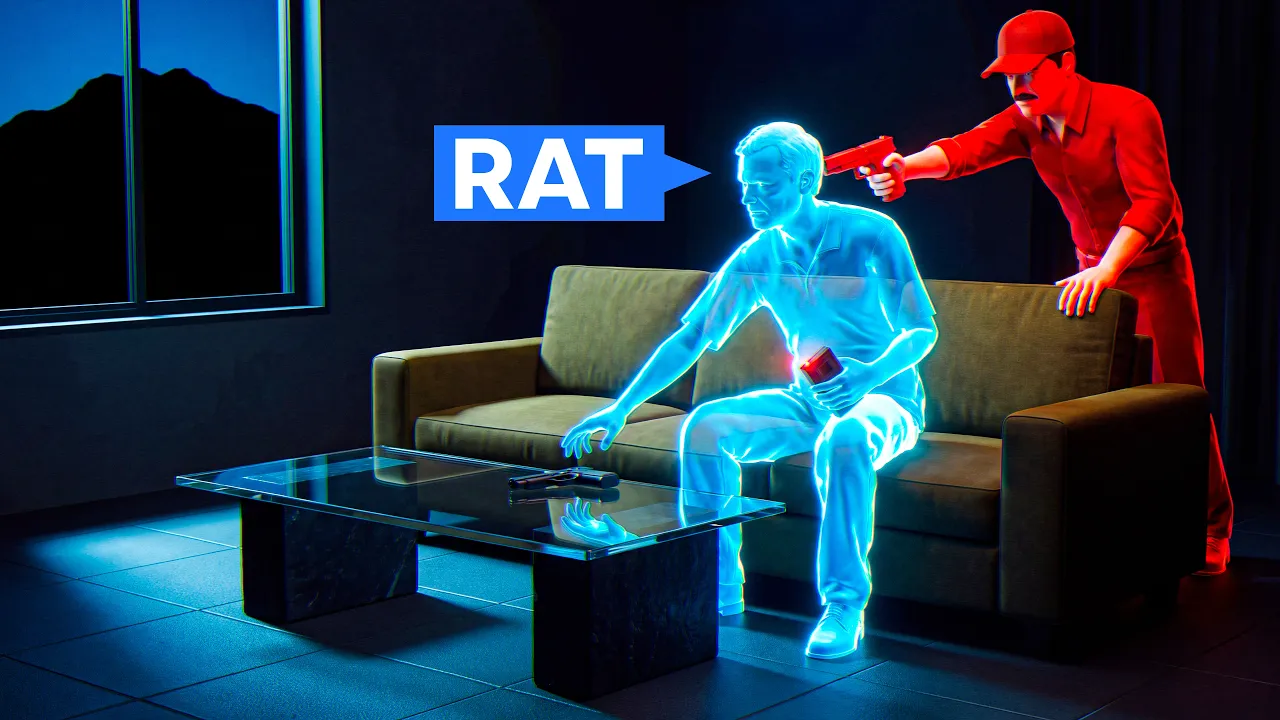
You pay what you owe, and friends don't touch friends. Here's the thing about affronted debt. It never dies when the debtor walks away. It rolls. Nobody at that table says out loud who it will roll on to. Nobody votes. Nobody [music] has to. The coffee goes untouched, and four people at a kitchen table quietly agree to do the thing [music] Pedro will one day name out loud in a Brooklyn courtroom, snitching, ratting on the man who let him live.
Then Pedro Flores does the one thing nobody on that mountain would ever predict. He calls a lawyer, and through that lawyer he reaches out to the Drug Enforcement Administration [music] on his own clock before anyone forces his hand. In his own [music] words, he wanted to come in. Picture the other end of that call. An attorney is offering the DEA the man two armies are currently shooting each other over walking in the front door under his own power.
And the answer comes back cold. Terms. Ledgers and testimony [music] won't do it because cooperators get shredded on the stand. If the government is going to burn its one shot at the top of the mountain, it needs the thing that has never existed, his voice saying it himself. So, how do you make a man buried behind a hundred layers of protection pick up a phone and call you? And can two minutes of tape possibly cover a debt this size?
The mechanism wants and it's almost insulting in its simplicity. You don't chase the top man. You complain about the price. A deal is already done. When agreed, closed. Pedro reopens it and pushes back on the number. >> [music] >> A price complaint is the one thing that cannot be settled by a lieutenant because nobody underneath is authorized to move the bosses money. Insult the price and the price comes down the mountain to defend itself.
The capture device is a pocket recorder, a consumer unit, the kind sold at Radio Shack, wired to an earpiece microphone so the audio comes off the call clean. That's it. That's the weapon. The same tool the cartel used to settle its own disputes aimed straight up at the man at the top. November 15th, 2008. 1:49 a.m. Pedro is on the line with a Sinaloa contact he calls Wancho, and the whole conversation runs in code. Prices discussed like produce.
Kilos anything but kilos. Pedro pushes. He wants 5,000 off. 50 instead of 55. Juancho tells him what he already knows. He's not going to call you now. Then but I will [music] tell him. That's the hook set. Two minutes of coded haggling just before 2:00 in the morning that do nothing except make sure a message travels uphill. Juancho, for the record, would be killed not long after. In that world, phone numbers have a short shelf life and so do the men attached to them.
Two questions now own the rest of this Saturday. Does the message climb all the way up the mountain? And if it does, will the most hunted man on Earth decide his biggest customer is worth a phone call? The trap has to sit. The whole afternoon of November 15th is a dead zone. Pedro checks the recorder's batteries, then checks them again an hour later. In the next room, there is the sound of a normal house on a normal Saturday.
A television, dishes, somebody's kid laughing. And Pedro moves through all of it like a man listening for a second frequency underneath. The light through the curtains goes white, >> [music] >> then gold, then gone, and the phone against his leg stays dark. 8:32 p.m. [music] it buzzes. This is where you came in. A room full of people. The recorder a hand's width away in the wrong pocket and no version of this where he digs a wire out of his clothes in front of witnesses.
Pedro watches the screen glow through the fabric and does the hardest thing anyone does in this entire story. Nothing. He lets the most important call of his life ring out. Then he walks out of the room, away from the voices, >> [music] >> hands working. The earpiece goes in. The wire runs down under the shirt. The recorder goes into the correct pocket and he presses down. And the little red light says it's [music] rolling.
If the phone doesn't light up again, the window is gone. And the most hunted voice on Earth stays a ghost. 8:34 p.m. It lights up. And the voice that comes through the earpiece could belong to anybody's uncle. Warm, friendly, a man happy to hear from a good customer on a Saturday night. Fine, fine, nice talking to you. Then he asks how Pedro's brother is doing. Sit with that for 1 second. The last time Chapo weighed in on Margarito Flores, [music] it was to spare Pedro's life.
And now the same voice, casually, warmly, asks after that brother. Down a wire, into an earpiece, into a device the size of a deck of cards, in the pocket of a man who is at this exact moment converting that warmth into federal evidence. Then they do business. Chapo haggles. Pedro holds his number. 50,000 a kilo, not 55. And tells the boss the money is already counted. The check ready to move the moment they agree. And Joaquín Guzmán thinks about it and agrees.
That price is fine. Four words, under a minute of audio. And every element the government has failed to prove for a decade [music] now sits on a consumer recorder in an American's pocket. The man, the drug, the price, the deal. Then the night does something nobody watching would predict. 9:03 p.m. Chapo calls back. Pedro fumbles the start. The first seconds of the second call are lost, never captured, and that imperfection is exactly why the tape reads as real instead of staged.
What he does get is worse for Chapo than anything a script writer would dare invent. A courier's name goes onto the tape. A password for the handoff goes onto the tape. And then the boss, [music] unprompted, starts upselling his customer. How many can you get rid of in a month?" He'll send some from this week to the next. More product, bigger volume. "Would you like to expand?" He is closing a sale into a federal recorder enthusiastically because to him this is a good night at work.
Two Americans he fronted, trained, audited, and spared are the biggest customers he has, and business is business. Then the tapes go into a drawer and the twins have to keep living. 15 days, 15 days of ordinary calls and ordinary reassurances. Same codes, same jokes, same respectful goodbyes to the mountain while two audio files sit 10 ft away that would get four people [music] killed the instant anyone up there heard the word recorder.
Every knock is a verdict. Every unfamiliar car idles a little too long. At one point the fear gets said out loud in the family that he might just send someone to kill all four of you. November 30th, 2008, they surrender. Millionaires at breakfast, federal witnesses by nightfall. Two men who moved two tons a month walk into American custody carrying the only things they still own, what they know, and what they taped. They are out of the war.
They are also out of the world. But the ledger they walked away from doesn't zero out. It rolls. So who inherits a debt the twins can no longer pay, and which member of this family still believes 30 years of friendship can protect him? Somewhere on the American side an agent puts on headphones and presses play. Careers were spent on this man. Task forces, [music] wiretaps, informants who went quiet or went missing, and the sum of it all was zero seconds of his voice.
Now the most hunted man in the hemisphere is haggling over heroin like a guy disputing a cable bill, naming a courier, handing out a password, offering to expand. Brooklyn prosecutors will one day call these the only recordings of that voice ever made. They will wait 10 years for a courtroom that doesn't exist [music] yet. The intelligence doesn't wait. Watch how fast a ledger becomes a weapon. The twins read the government the entire architecture, customers, [music] stash houses, codes, the same clean books that once kept them alive.
And every entry in those books becomes a warrant. Networks in nine cities come apart in weeks. A dozen major seizures across Chicago. About 1,600 kilos taken in a single Los Angeles operation. More than $15 million in cash. Think about that inversion for a second. The numbers [music] two brothers kept to stay alive inside the system are now the numbers tearing it apart. In August 2009, federal prosecutors unseal [music] an indictment naming Joaquin Guzman and Ismael Zambada, built in substantial part on what the twins provided.
[music] Then the ledger collects. Margarito Flores Sr. is warned. Everyone warns him. His sons are federal witnesses now, and Mexico is the one country on Earth where his last [music] name is fatal. But he has spent his whole adult life at those tables, doing favors for men who are grandfathers now. And he cannot make himself believe that friends [music] of 30 years would ever touch him. It's the rule he raised his sons on.
You pay what you owe, and friends don't touch friends. He goes. Days later, his car is found empty. He is never seen again. Government filings describe him as kidnapped and presumed killed as a direct result of his son's cooperation. A man who signed nothing, taped nothing, and carried nothing across that border except a 30-year-old faith that the tables he sat at were safe. His rule turned out to be half true. Whoever owes always pays.
The part about friends was never in the contract. The tape bought two lives, not the third. So, what is a tape like that actually worth in an American courtroom? And who pays for everything the twins did before they made it? January 27th, 2015, Chicago. Judge Ruben Castillo credits the cooperation in full. Nothing like it exists [music] in the history of American narcotics enforcement. And then refuses to pretend, "Even though I am not going to sentence [music] you to life, you are leaving here with a life sentence." 14 years each, plus the sentence he actually means, [music] the permanent, unappealable condition of being wanted by the only organization that never forgets a debt.
The man on the tape takes three more years to reach a jury. Brooklyn, December 2018. 10 years and 1 month after the wrong pocket. The defense [music] sets Pedro on fire in front of that jury. A trafficker, a fugitive, a man who moved kilos behind the DEA's back, and is testifying to buy down his [music] own sentence. Pedro doesn't dodge any of it. Asked what he did to Joaquin Guzman, he uses the words himself, out loud, snitching, ratting.
He could only give them one life, his own. He couldn't buy back anyone else's. Then the government plays its second [music] witness, and this one is immune to cross-examination. The transcript notes the moment flatly, [music] audio recording played, and the room fills with a man haggling over the price of heroin on a Saturday night. Warm, reasonable, that price is fine. >> [music] >> February 12th, 2019. Guilty on all counts.
Life plus 30 years, served at ADX Florence in Colorado, a facility built to hold men who have money, reach, and friends, in a cell where none of those things can follow. What finally buried the most powerful trafficker of his generation was 2 minutes of consumer audio waiting patiently in a drawer. The verdict closes Chapo's account. The twins' account stays open [music] forever. Their sentences ran their course. Where they live now, under what [music] names, is not public and never will be.
A name is the last asset a cooperator surrenders. Here's the measure of what it cost. When their wives published a book about those weeks in 2017, they wrote it under fake names because they couldn't sign their own. What's left of that world is smaller than a wallet. Two audio files stamped 8:34 p.m. and 9:03 p.m. November 15th, 2008. And here's the most unsettling [music] part. Chapo learned the lesson. Once you know the highest court in your world [music] fits inside a customer's pocket, how do you ever trust a phone again?
He built his own phone system, an encrypted network no government could listen to, engineered by a young IT specialist he trusted completely. It worked beautifully, right up until the man who built it did the exact same thing Pedro Flores did. That story is next. Subscribe so you don't miss it.
The words are the caption track's own and nothing is reworded or re-transcribed. Paragraph breaks are placed between sentences so the text reads as prose.
Free tools for your own script: paste a draft and see where it stands before you record it.
Paste your draft and see where viewers are likely to drop off, with a rewrite for each weak line.
Paste the first 30 seconds of your own draft for a hook score and rewrites.
Check your draft against YouTube's advertiser-friendly guidelines before you record it.
Read this channel's public videos and transcripts, and download a writing brief for it.