Getting the transcript
Reading the captions from YouTube. A video nobody has opened here before takes 10 to 30 seconds; this page fills in on its own.
Getting the transcript
Reading the captions from YouTube. A video nobody has opened here before takes 10 to 30 seconds; this page fills in on its own.
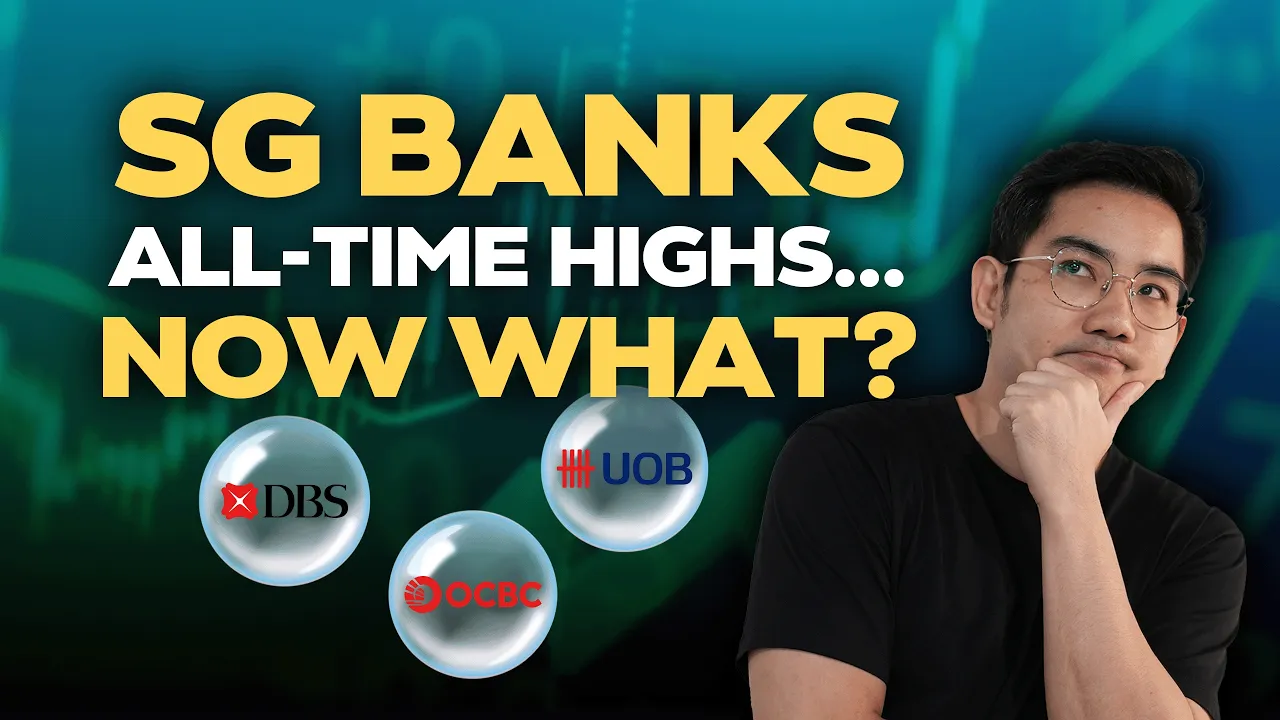
The Fifth Person · @TheFifthPersonChannel
Where viewers went back to watch this video again, from YouTube's public Most replayed graph, lined up with what was said at that moment.
Most replayed moment #1
5:437.8x the video's typical replay level
thing will continue to go, okay? I'm happy for all the investors who made money on DBS, but at the same time I'm very worried. >> Okay. >> Because the valuation is way overstretched. Okay. >> All right. So I guess that's the next natural question is how high can it go looking at the chart here?
Said at 5:36
Most replayed moment #2
18:026.7x the video's typical replay level
Excluding the dividends, yeah. All right. You should be happy about it. Okay. I pity those who bought at the high and then have to sell at the bottom when COVID crash happened. People panic, they sell their bank. Those are the one that even I feel very
Said at 17:57
Most replayed moment #3
10:586.6x the video's typical replay level
buy in tranches. Right? Because we can never ever catch the lowest. We can never ever sell at the highest. So our strategy here is always like okay, you can sell in tranches if you still confident that there's there's still upside, but at the same time the downside seems to be quite obvious. Then you can trim.
Said at 10:50
The graph counts replays. It does not show where viewers stopped watching.
Words
5,054
Runtime
22:50
Speaking pace
221wpm
Reading time
21min
221 words per minute, above the 201 75th percentile of 349 measured videos. That distribution comes from the 349-video hook study.
Opening (first 30 seconds)
Welcome back everyone. My name is Adam Rusman. >> Hello Victor. >> Hi everyone. >> Thanks for joining us today. We're going to talk about Singapore banks once again because all three Singapore banks, DBS, OCBC, UOB are at all-time highs. >> Yeah. I'm I'm very happy to achieve for a lot of Singaporean investors. >> Yeah, and I think a lot of people actually like the banks. They invest in banks. Nowadays, I hear people saying just invest in DBS can ready. >> [laughter] >> Two months Two months ago, I was at a counter at community centers. The lady was asking me whether can still buy DBS bank. >>
111 words, the words spoken in the first 30 seconds at 221 words per minute.
Free, no signup. See how the first 30 seconds hold attention, with rewrites.
Sentence shape
| Measure | This transcript |
|---|---|
| Sentences | 508 |
| Average words per sentence | 9.9 |
| Longest sentence | 54 words |
| Questions asked | 90 |
| Sentences containing a number | 50 |
Most used terms
Filler phrases
162 in total: right? 56 · like 33 · uh 21 · I mean 13 · actually 12 · you know 11 · kind of 7 · um 5 · basically 4.
A literal whole-word count of the same phrase list the Prepublish browser extension uses, so a phrase inside another word is not counted and a phrase used in its ordinary sense still is. It is a count and not a judgement.
Free, no account. See where attention is likely to drop, with a rewrite for each weak line. The free check shows the scores and the one issue costing the most. Or run it on the words above first.
Free · No login · See a sample audit first if you prefer.
What this transcript is
Every word below is the caption track YouTube publishes for this video, pulled from the video itself and reproduced unchanged. It is not Prepublish's writing, not a summary, and not a re-transcription: it is the video's own published captions. English captions, generated automatically by YouTube, in the video’s original language. Source: the video on YouTube. A channel that would rather this page did not exist can ask for its removal through the contact page, and it is removed.
Welcome back everyone. My name is Adam Rusman. >> Hello Victor. >> Hi everyone. >> Thanks for joining us today. We're going to talk about Singapore banks once again because all three Singapore banks, DBS, OCBC, UOB are at all-time highs. >> Yeah. I'm I'm very happy to achieve for a lot of Singaporean investors. >> Yeah, and I think a lot of people actually like the banks. They invest in banks. Nowadays, I hear people saying just invest in DBS can ready. >> [laughter] >> Two months Two months ago, I was at a counter at community centers.
The lady was asking me whether can still buy DBS bank. >> Everything is Everything is very robust buying DBS. So, all three banks are at all-time highs and we're going to answer the question, "Hey, all of them are at all-time highs. And the valuations look a bit stretched. We're going You're going to go into that as well. Uh but can they go even higher? I think a lot of people who are might be asking this. For those who are already holding on, they might think can it go higher?
Should I trim my position? Again, we're not recommending anything, but we're going to answer the those questions. And someone who's looking at this, can I jump in now? You know, stuff like that. Uh so, what do you think? Why why are all three banks are at all-time all-time highs now? >> Yeah, I I think to to give a context, if you go back a year ago, right? That was not how people view the banks because uh we are expecting the interest rate to uh to drop, right?
To decrease moving forward because everything start to stabilize. But of course, no one knows that the war is going to happen. And because the war happened this year in 2026, uh it caused the inflation and Fed has been holding the interest rate. So, in the past, let's say we are expecting the interest rate to drop, right? People are expecting the banks to reprice at a lower interest rate moving forward as the interest rate drop.
But with now the interest rate continue to hold, right? They are repricing at a very stable rate moving forward. So, there's no drop in terms of their net interest income and they looks like they have stabilized the thing. Unless there's a sudden drop, then you can expect the net interest income to to slow down or decrease even further. All right. And the next thing that we have always been saying that the wealth management and the fund management of the banks, right, uh have improved significantly as any holds the non-interest income.
So, to give you a context, right, if you look in terms of DBS, back in 2006, fund management and wealth management accounts 13% of the total non-interest income. The rest are like trading and all these, which is slightly more cyclical and all these. Then you come back to 2025, now it accounts 33% of the total non-interest income. So, that means all these are recurring management fee that is very stable. So, the bank now and the bank in the past is totally very different.
Then if you look in terms of the OCBC, back in 2006, it was only 10%. The fund and wealth management was only 10% of the total non-interest income, and right now it's 29%. For UOB, it was 14% in 2006, and right now it's about 23%. All right. For UOB, they didn't really grow this a lot because their main focus is still the credit card. So, there's a bit of different strategy over over here. All right. But, overall, you can see all three banks, right, their fund management and wealth management recurring income, actually increased significantly throughout the years. >> Yeah, I think Singapore has become like a basically a global wealth hub uh over the last 5-10 years, or maybe 15 years.
They've been building on this for a long time. We're now I guess global in that sense. So, a lot of wealth is coming here from even after the Iran war. >> Yes. >> No, the people >> from Dubai to here and Hong Kong with the and they know back then with the taxes and all that, money was coming here as well. >> We are considered politically neutral, that's why a lot of the funds are flowing here. So, the wealth management is doing very well.
On top of that, the interest rate is is very stable now at a uh high for the US Fed. They didn't decrease, they have been make it steady. >> Yeah, in fact now the Fed is talking about hiking the rate if the inflation is continue to go up. Yeah, so and that's the reason why I think all the three banks hitting all-time high. >> Okay, because their performance is still very good. >> Yep. >> So again, we couldn't predict the Iran war was going to happen. >> Yes, correct. >> So so these are things that just they just you just something just throws something into the into the works and you go like, "Oh, things things change." >> Yeah, yeah. >> So if you go back to the previous time that we we we talk about the banks, our thesis at the point of time based on that current situation is that I mean you you still can hold a bank, but the U is still higher than the SGXU, the 10-year SGXU. >> But based on price to book, let's say let's take a look at DBS, right?
So I think earlier of 2025, I still remember that I think we did a session on the valuation for the bank, right? So and I give my take on the DBS, right? So DBS was hitting like plus two standard deviation. So they have actually exceeded their valuation level in '06, '07. And my lawyer Peter pointed out that wealth management business is now a bigger business, so maybe the market is pricing more than that, right? So but you know, my take last year, a year ago, DBS is really expensive. >> Mhm. >> All right?
And then after that Iran war came and then the price retracted back, all right? And now as we in our 2026 of course it's two no no two three SD. >> Three standard positive three standard deviations. >> Yeah, record. >> Okay. >> Okay, the valuation is new record, all right? So and I think if you have been investing in the market long enough, I think you would have seen that all you have seen is this thing called reversion to the mean, okay?
So I don't know how this thing will continue to go, okay? I'm happy for all the investors who made money on DBS, but at the same time I'm very worried. >> Okay. >> Because the valuation is way overstretched. Okay. >> All right. So I guess that's the next natural question is how high can it go looking at the chart here? Positive three standard deviations for in terms of price to book for DBS. How high can it go? And someone who's looking at this, can I should I hold?
And you know, ride the wave or try to trim? >> Okay. So, actually let's go back to last year. If I held DBS last year, I would stand in the position where I would trim. And would I regret? Now is it 3 SD? >> No. >> Okay. >> Because it was a My investing principle is that, you know, I won't overpay for a good stocks. I mean, DBS is a good stable stock in Singapore, right? So, I won't overpay for it, right? But if the valuation is way overstretched, all right, I will start to trim. >> Mhm. >> All right, in trenches.
So, we have our selling strategy all together, right? And yeah, so this is something that I would do, okay? So, of course in the hindsight now, okay? You look back, I I should have trimmed that. >> Mhm. >> All right, it's uh now it's 3 SD. >> Who can predict a war? Who can predict a war? Who can >> predict that? >> And it was supposed to go down now, it's supposed to go up. All right, no one can foresee that. So, it's that's why investing is not that easy. >> Mhm. >> All right, >> [laughter] >> I think at at a point of time when we did right, it's based on whatever information out there and we can based on the probability and we assign and we do a bet.
But it does not mean that when you do that, you 100% you're going to get it. It's not like investing is not like that. You never get 100% in terms of probability. You always get either high probability or low probability, but there's always a case that things will go against you and you must accept the fact you must accept the fact that is is normal investing. >> Mhm. >> Right? If you always want to think that you are right and everything you you you invest, okay, will definitely be right, then it's going to be very emotional draining for you in investing.
So, this one you need to understand. You you don't anchor on the price, but we focus back on the valuation at that point of time. >> Mhm. >> And this is exactly what I do, right? I mean, my in-law bought OCBC, right? In 2020. That was like the COVID, right? Nobody wanted banks. It was low. I think we talked about banks for a long time, right? So, they were 2020, 2021 was one of the best time to really accumulate. I mean, we accumulated bank ourselves.
So, my in-law also my father-in-law also bought, right? And then I think I remember he bought about 850 to 9, right? And then a lot of his friends also bought at one time. And I think 2022, the prices of the go up. And then a lot of friends wanted to exit at 11, 12 dollar range, right? So, he kept asking me whether he should he sell cuz a lot of his friends sold. I told him, "Look at the fundamental, right? Look, OCBC now is still cheap.
I think it doesn't make sense to sell, right? So, continue to hold." So, once it reaches $15, he come and ask me, "So, can sell now?" >> [laughter] >> I say again, you ask me, I will base on my fundamental. I think it's still cheap, all right? It's it's not And then once it started to reach 17, it was started to reach the fair valuation of the bank, right? So, I say, "$17 you still can continue to hold, right? I mean, the interest rate is still on the high side, so the bank should continue to do well, right?
So, and then only until like earlier of this year, Iran war, all right? I think the OCBC was trading at about 22.5 there about, all right? And there were a lot of uncertainties, right? A lot of stocks in the US had started to crash, going down, right? Asian stock going down. So, you ask me whether should we exit because now at the time of the war was just breaking out and then we were not very sure as to how things going to happen.
Oil prices, a lot of analysts were predicting they're going to hit 200 dollars per barrel, right? So, I still remember those days. I say, "If you are worried and then you are not very comfortable, you want to build up cash, you can consider trimming half, right?" And then I think he did. >> Okay. >> Right. And I told him, "The valuation is very near to the 2007 level. Although it is not haven't exceeded that level yet. >> But it is a good time to catch up to trim.
Right? So he trimmed. Right. Now, on the high side, now also you see at the time of this recording it's about $25. >> Okay. >> Right. So >> up a little bit more. >> It went up a lot. Yeah, a little bit more. Okay, 10% more. Okay. So on the high side, he shouldn't trim now. >> Yeah. Okay. >> But at the point of time, you see there are so many opportunities >> your father-in-law still love you? >> Um yeah, he still [laughter] buy me food.
But you again you >> It goes back to the valuations cuz I think a lot of people look at prices. >> Yes. >> And they think oh it's going up, it's getting expensive. But actually price and valuation is two different things. Cuz your price can be your price could be going up, but actually valuation-wise it's still reasonable or still undervalued. Uh until you know and then you don't you don't actually have to sell it. But sometimes people just take a look at the price and then they think oh it's time to sell. >> So right now if I look at the valuation for CVC, oh it's like almost at the '06 '07 level.
That was one of the >> highest point. >> Right? So at least he still got some share. Half half of the share he he kept it. Right? He wanted to cash out everything. I told him no need la. Just partial. You don't need to Investing when it comes to selling or buying is not a all in all out. Right? You can always buy in tranches. Right? Because we can never ever catch the lowest. We can never ever sell at the highest. So our strategy here is always like okay, you can sell in tranches if you still confident that there's there's still upside, but at the same time the downside seems to be quite obvious.
Then you can trim. >> So you basically adjust your exposure based on valuation. >> Yeah, and of course your portfolio location. >> location. I mean of course you want to recycle capital and all that. That's other considerations. But in terms of like a single stock lens, if it's getting more and more expensive, you kind of like reduce your exposure along the way. You don't just go all in all out. And then you just kind of adjust it. >> Unless the valuation is very stretched to the point that it does not make sense.
Right? So I've jumped all the three banks together and formed this chart over here and I you can see the long-term since 1996, right? Right now, like Roshan say, OCBC is above the 1 SD based on long-term. I put the three banks together, they are also above the 1 SD based on long-term and they they are at the range where they are in the previous peak in the 90 99 and also the 2006 2007 peak. They are they are at the range already, right?
Of course, the 90 97 98 that 99 that year the the range went even further. They can they go as high as close to three times book value. So, right now in terms of book value, yes, this is expensive, but if you go back to at the point of time during the book value, right? At the point of time, it makes sense to sell all the banks because at the point of time they are they are they are dividend yield, right? It's traded at or below the 10-year SGS yield. >> Singapore government bond. >> Singapore government securities.
If your risk-free bond is like that, it does not make sense to get the same yield and I invest in them. >> Yeah. >> But if you look at right now, the TTM dividend yield for DBS about 3.78%, the OCBC about 3.29% and UOB is about 3.88% based on depressed dividend because they reduce the dividend. And the 10-year SGS is around 2.09%. The 10-year uh SSB yield is about 2.06%. >> So, like 2% and then 3 plus percent for banks. >> Yes, correct.
So, there's still a a That's why the strategy of not selling everything it because there's still some room for the banks to run. But if you were to go in to the bank right now, then you must be prepared because there's more downside than upside. Right? It's it's reverse. The risk reward is reverse. There's more risk than reward going at this stuff. >> Yeah, but looking at the the the price to book now is above 300 basis above the mean and your yield is only 3 plus percent. >> Correct. >> So it's actually not great. >> So like for us we when we bought when the risk reward was very high, even when let's say OCBC were to crash and they go through the down cycle again, the probability of them going back to my $9 price is I won't say it's totally one but it's low low probability.
So So if you if you buy at this uh the probability of you losing money and making money yes you can make but you are taking a lot of risk to make this amount of money. That's what I'm trying to say. It's a bit risky right now for people who enter but people who already bought long time ago you you should not be all out. There's still room for the the banks to run but how how much room? I don't know. >> Yeah. >> I really don't I can't predict. >> Again we are not giving any advice and we cannot really time the highest and lowest.
Nobody can, right? >> So actually we look at the CEO of DBS, right? Piyush Gupta. He sold a lot of shares in 2024, you know, at 35 to 42 dollars that range. All right and that's like in 10, 20 million close to 20 million shares there about if you add it up all together, right? Yeah that's a this is a former CEO of DBS. All right now Tan Su Shan took over, all right? And on a on a high side again he shouldn't have sold, man. >> [laughter] >> Now it's 66 at the time of this recording. >> say that insiders sell for any reason, right? >> Yeah well many reasons.
Maybe he's retiring, right? Stepping down. He's going to take the money and do something else, right? But the new CEO relatively young, all right? Recently sold 400,000 shares for 6 million. So if you ask me is this a good valuation? Let's look at the fundamental again DBS uh somehow it may yes it's good because 3 SD she's selling at 3 SD. Pretty good. Cashing out some share that she owns. I will continue to run as DBS.
I think it's a good decision. >> Okay. >> Yeah. >> All right. So, I think we want to kind of like summarize in a sense that this is why the banks are doing so well, because of inflation. >> Holding up interest rates are holding up. And of course, now they have more recurring wealth management, fund management segments in their business now. >> non-interest income, yeah. But even for wealth management business, actually when I study them, I mean, I do at other part not DBS, but other business. >> Mhm. >> When the downside come, you get hit, no matter how recurring it is, because the AUM drop.
Once the AUM drop, your recurring fees, management fees all drop. >> Mhm. >> So, that applies to like your ETF providers, MSCI. You know, they do have asset ETF management fee tied to the ETF. The same thing can be applied. Yeah. >> But the banks now do have more diversified income streams. >> It's a it's Now we are global hub for wealth and all that. >> not as like interest rate dependent as compared to the past. >> I think it still is, but less dependent. >> Yeah, yeah, yeah. >> All right.
So, that's why the banks are doing well, that's why the banks are all-time highs. But again, someone watching this go, "Oh, it's They look at the price." >> Some people might >> go, "Is it going to go higher?" Some people might go, "Oh, no, when is it going to turn around?" >> Yep. >> And then again, you can't just look at a price itself, because looking at price is just it's just a price. >> Yeah. >> Go back to the valuation, and in this case, it's PB or the yield.
And then you compare that to the the risk-free rate in Singapore. >> Yes, correct. Yeah. >> And then you kind of make a decision based on that. And then you adjust your exposure based on that. >> All right. I mean, people who have bought early, they can continue to benefit from the upside. But people who are going in now, be prepared that you're taking more risk than than those people who have bought earlier. >> Okay. >> So, again, you have to ask yourself what type of investor you are, right?
I mean, I My in-law told me that one of his friend bought OCBC before oil overnight crash, and hold until today. Return very good. >> Wow. >> Never cash in, cash out, good time and down time. >> Diamond hands. >> Diamond hands. Just [laughter] Just continue. And now, the return is really fantastic. >> Mhm. >> All right. So, um you know, you invest in a stock that the intrinsic value will grow over time, it makes sense to hold it over time.
All right. It's just that, there will be bull and bear market along the way. All right. Can you hold through that cycle? All right. So, some people if they focus too much on short-term performance then of course you will regret a lot of time. Should I cash out? I yeah, should have bought more. All right. It's never-ending process. All right. So, it depends on what kind of style you are. All right. And of course, never ever be too greedy also.
I mean, if you bought in 2020 and then now I mean last year let's say you cash out and then I yeah, I shouldn't have cash out. All right. This is on the hindsight. All right. I think if you make a profit 2x I think easily 2x for banks if you bought from 2020 until now. Excluding the dividends, yeah. All right. You should be happy about it. Okay. I pity those who bought at the high and then have to sell at the bottom when COVID crash happened.
People panic, they sell their bank. Those are the one that even I feel very sad for them. >> Okay. >> So, once again it depends on the investor cuz like for example someone who's an income investor >> Yeah. >> he just hold through it regardless of the valuation and just collect the dividend cuz that's their strategy for their portfolio and their financial needs basically. >> Yeah. And my low yield is like what? Close to 10%.
For OCBC. >> Okay. >> I yeah, very good. It's just better than putting money in the bank. >> Okay. But still he still decided to trim a portion. >> Yes. Yeah. Because traditionally their mindset is that if you don't sell how do you make money? >> [laughter] >> Okay. Okay. >> Yeah. So, I understand because I when I started investing at the time I have a lot of seniors who think like that. If you don't sell how do you make money?
But actually investing you don't have to sell sometimes. You can make money through dividend. >> But you still have your dividends. >> Yeah. >> Okay. >> Of course. You have to come back and tell me oh, OCBC so much dividend. >> [laughter] >> Yeah. >> Yeah. I think another thing is sometimes what you can do is that if it goes up then you basically sell to recoup your capital. >> Yep. >> That's one strategy that some I think quite quite few people use as well. >> Yeah. >> So, you kind of like protect your downside in that sense.
Yeah. >> You can trim a little when the bank really drop then you just buy back on your own. >> Yeah. >> But again, mean reversion to the mean always happen in the stock market. So, I hope it's not in the very sharp drop. All right, if DBS ever happen and I hope the book value catches up catches up. >> Okay. >> So that the PBP multiple will start to go back to your 2 SD, 1 SD or even average. >> All right. >> Right. Yeah.
Because now the market is already pricing that all the book value is going to grow very very fast. >> Okay. >> Yeah. >> So once again, we are not making any predictions. We have no idea which way it's going to go, but at this point, this is this is the valuation and it's up to you how you want to you know, manage your portfolio based on that information. Some people have dividend strategy, they'll hold on to it. Some people feel like it's going to be a bit stretched, I'm going to trim.
Some people say, I'm just going to hold on and you know, cuz I think it's going to go higher. >> Yeah. Correct. >> Um but for us >> or if the dividend yield of the banks is way lower than the risk-free rate >> Then it makes sense to change it. >> then clear everything. >> Yeah. So again, it all depends. Um but I think the takeaway that we want to give someone here is that if you're watching this, you can't No, have a look at prices and then oh, in hindsight, I should have done this. >> Yeah.
Yeah. Yeah. >> Because that's based on an outcome. >> Yeah. >> It's an outcome-based um kind of like thing. Whereas you should make your decisions based on process. >> Yeah. >> At that point in time, what is my process? What is what are my principles and you practice valuation discipline. >> Yeah. >> And you stick to process and then you repeat the process again and again. >> Yeah. >> So even if the outcome doesn't actually go the way you want because something like a war happens, you can't predict that.
You're sticking to your process. >> Correct. >> As long as you have majority of the outcome in your favor >> Yeah. >> it's it's okay already. >> Yeah. >> You can't catch every boat. >> Yeah. >> Right. It's okay to miss some boats. >> Yeah. Because if you I think if you always place your success on the outcome all the time, then you're going to get like I think a bit >> I think it's very draining to you. >> Yeah. Yeah.
Because you always think I need to be right. I need to be right. But you should be comfortable with the fact that I made this decision based on this process that it was the right decision for >> Yeah. >> for that particular stock, and that's it. >> And if you are new to investing, I have this message for you. You can never ever buy a stock at the lowest. You can never ever sell a a stock at the highest. >> Uh-huh. >> All right, if you are aiming for that, good luck. >> Yeah. >> Sometimes >> Sometimes you can. >> Sometimes you are lucky. >> That's right. >> Sometimes you are lucky, yeah. >> Yeah. >> Most of the time, no. >> Yeah. >> I buy so many times so far, I only I think we got it only one time in the past. in the past [laughter] 5 to 10 years.
One only, one only. One only, yeah. If you get got one time, it means you're very lucky. >> [laughter] >> Once. >> Okay. So, I think that's what we wanted to answer for this round table, right? If you're looking at the banks, why is it so high, and why is it can it go even higher? Uh the answer we can't predict, but then based on the valuation, this is >> Yeah. >> what we see, yeah, based on the price to book and the yield.
Uh and again, the takeaway is you should base your decisions on your process, >> Yes, correct. >> not on hindsight, what the what the prices are, and could have been, and all that stuff, because that would just eat you up. >> Yes, correct. >> Uh so, if you have a process, stick to it, and you know, uh that should hold you all the way >> Yeah. >> your investing journey. >> Okay. >> So, I think that's pretty much it >> Yep. >> uh for banks and chance for today as well.
Anything else? >> That's all. >> That's it. >> Banks to the moon. >> To the moon? >> We almost reached the moon. >> Yeah. Okay. I mean, it's good to see our banks doing so well. I mean, >> I'm happy for a lot of Singaporeans. >> Yeah. >> Yeah, who invested. But, >> Yeah. >> uh cautious. >> Cautious, right? >> Be cautious. >> Okay. All right. So, with that, my name is Adam. We're with Victor. Thank you for joining us.
Any questions about this, comments, put them in the comment section. We'll have a discussion with you. Uh if you like this round table, please hit the like button, and subscribe. Many more round tables coming up, and we'll see you again.
The words are the caption track's own and nothing is reworded or re-transcribed. Paragraph breaks are placed between sentences so the text reads as prose.
Free tools for your own script: paste a draft and see where it stands before you record it.
Paste your draft and see where viewers are likely to drop off, with a rewrite for each weak line.
Paste the first 30 seconds of your own draft for a hook score and rewrites.
Check your draft against YouTube's advertiser-friendly guidelines before you record it.
Read this channel's public videos and transcripts, and download a writing brief for it.