Getting the transcript
Reading the captions from YouTube. A video nobody has opened here before takes 10 to 30 seconds; this page fills in on its own.
Getting the transcript
Reading the captions from YouTube. A video nobody has opened here before takes 10 to 30 seconds; this page fills in on its own.
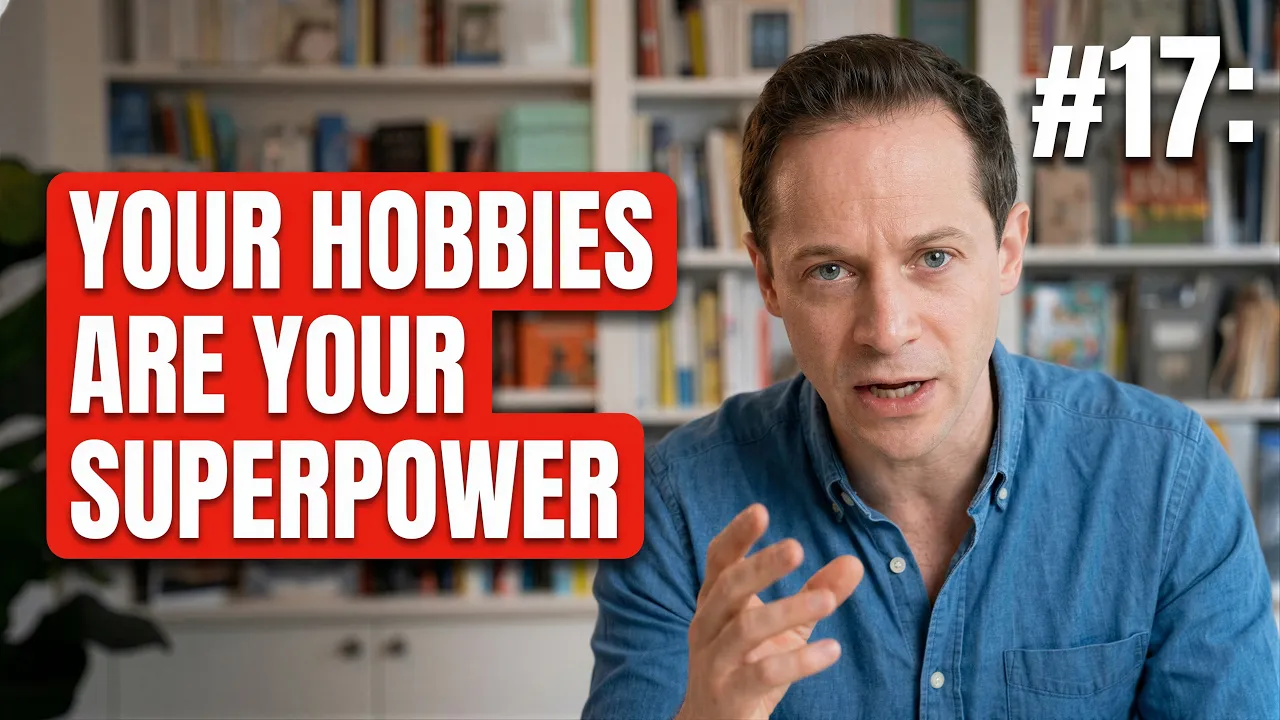
David Epstein · @DavidEpsteinAuthor
Where viewers went back to watch this video again, from YouTube's public Most replayed graph, lined up with what was said at that moment.
Most replayed moment #1
17:294.7x the video's typical replay level
move on because his lifestyle didn't demand it. For me, I always think the main things I buy are books and running shoes, not expensive stuff. Frugality isn't deprivation, it's freedom. Number 35, write down your small wins. This comes from Terresa Amabil's research, the [music] progress principle. Just
Said at 17:22
Most replayed moment #2
14:453.3x the video's typical replay level
environment that they're in. Once you find that fit, the grit often takes care of itself. So, if you're struggling to stay motivated day after day after day, before you blame your discipline, ask whether you're doing the right thing in the first place. Because when you get fit, it will look like grit. Number 29,
Said at 14:38
Most replayed moment #3
9:182.6x the video's typical replay level
destructive when you're comparing yourself to the entire planet on a daily basis. We're not built for that scale of comparison. If this is a fight that you're losing, it's not a personal failure. It's a design flaw in the environment. Try to take some time away from social media and realize that you don't need to be
Said at 9:11
The graph counts replays. It does not show where viewers stopped watching.
Words
4,822
Runtime
22:42
Speaking pace
212wpm
Reading time
20min
212 words per minute, above the 201 75th percentile of 349 measured videos. That distribution comes from the 349-video hook study.
Opening (first 30 seconds)
40 harsh truths I wish I knew at 20. Number one, multitasking is literally impossible. You can't do two things at once. You just toggle between them and it makes you worse at both of them and raises your stress level. So instead, try to monotask and you can do multiple things but one at a time. Number two, the average founder of a fast growing tech startup is 45, not 22, not in a hoodie. A 50-year-old is more likely to start a fast growing tech startup [music] than a 30-year-old. Now, this is controversial, but it's research from MIT, Northwestern, and [music] the Census
106 words, the words spoken in the first 30 seconds at 212 words per minute.
Free, no signup. See how the first 30 seconds hold attention, with rewrites.
Sentence shape
| Measure | This transcript |
|---|---|
| Sentences | 366 |
| Average words per sentence | 13.2 |
| Longest sentence | 49 words |
| Questions asked | 5 |
| Sentences containing a number | 54 |
Most used terms
Filler phrases
53 in total: like 26 · actually 15 · you know 3 · I mean 2 · basically 2 · kind of 2 · sort of 2 · literally 1.
A literal whole-word count of the same phrase list the Prepublish browser extension uses, so a phrase inside another word is not counted and a phrase used in its ordinary sense still is. It is a count and not a judgement.
Free, no account. See where attention is likely to drop, with a rewrite for each weak line. The free check shows the scores and the one issue costing the most. Or run it on the words above first.
Free · No login · See a sample audit first if you prefer.
What this transcript is
Every word below is the caption track YouTube publishes for this video, pulled from the video itself and reproduced unchanged. It is not Prepublish's writing, not a summary, and not a re-transcription: it is the video's own published captions. English captions, generated automatically by YouTube, in the video’s original language. Source: the video on YouTube. A channel that would rather this page did not exist can ask for its removal through the contact page, and it is removed.
40 harsh truths I wish I knew at 20. Number one, multitasking is literally impossible. You can't do two things at once. You just toggle between them and it makes you worse at both of them and raises your stress level. So instead, try to monotask and you can do multiple things but one at a time. Number two, the average founder of a fast growing tech startup is 45, not 22, not in a hoodie. A 50-year-old is more likely to start a fast growing tech startup [music] than a 30-year-old.
Now, this is controversial, but it's research from MIT, Northwestern, and [music] the Census Bureau. We never think about this. We just think about Mark Zuckerberg, who famously dropped out of college and started Facebook. Your 20s [music] are not your deadline. It's actually your research phase. Number three, most productivity hacks are mirage. I hate to say it, but a lot of the tricks people obsess over are really just avoiding the hard work of deciding what actually matters.
[music] There's no system or app or routine that's going to save you from the need to ruthlessly prioritize if you want to get to the things that matter most. Number four, never start your day with email. I know this isn't possible for everyone, but email is a gateway to multitasking. It opens all sorts of loops in your mind, and many of them won't be closed. And if you think of your brain like a whiteboard, this is what the psychologist Gloria Mark told me.
Every time you switch, it's like you erase the whiteboard to do something else, but a residue stays [music] on there and interferes with your focus for the next thing. And so if you start in your inbox, you're going to be building up a lot of residue to start the day. Number five, keep a notepad next to you. We're so used to interruptions and alerts that we actually get accustomed to a level of interruption such that even if you take away your phone or your email, you'll self-interrupt at that [music] same cadence, thinking about what you should be checking, what message you didn't respond to.
But if you keep a pad next to you and when those intrusive thoughts come in, you write them down, that will help offload them for now. what's called cognitive outsourcing and help you focus on what you're doing at the moment. Number six, your resume should be a story, not a list. I've been on selection committees for scholarships and grants and things like that. And the difference between how a committee rated someone who had a zigzaggy path, if they explained it like a series of sensible pivots, those were the people who usually won with the selection committee.
Whereas, if they were zigzaggy, but they didn't really explain what was going on, then they usually lost. Before I was a writer, I was a grad student living basically a tent in the Arctic studying the carbon cycle. I was studying environmental science and I learned that [music] that wasn't quite the path for me. I got off that track. I became a temp fact checker at Sports Illustrated just with a temp gig doing sort of basic work for people that were several years younger than me.
But that unusual background, that science background actually gave me something that nobody at Sports Illustrated had. And that's how I pitched myself when I tried to get in there. that I have this background that other people in your office don't have and someone picked up on that and gave me a shot and it ended up being my most powerful tool. It was those pivots justifying them to myself and to the people that I was hoping to give me a shot that really opened doors for me.
Number seven, give yourself advice like you'd give it to a friend. There's research showing that we give much better advice to other people than we give to ourselves, even for the same problem. So [music] when you're stuck, imagine a friend came to you in that exact same situation that you're in. What would you tell them? Whatever that is, that's probably the advice you need. Number eight, your physical decline is mostly in your head.
Medical dogma says that bone density peaks in your 30s and then it's all downhill. You can just slow the decline. There's other data that says that's really oversimplified. Those assumptions are [music] largely based on populations that really stopped challenging themselves. I've seen data from Cir to Sole that they had performers who were at 60 who hadn't started declining yet. You're not on a [music] fixed schedule to the extent you might think.
You're building the chassis you'll be driving for the next 60 years. So don't treat it like it's disposable. If you keep working, you have regular physical activity, healthy habits, you don't have to age the way that people used to think you do. Number nine, you don't have to be the best at anything. It's called skill [music] stacking. The idea that you don't need to be world class in any single skill. You just need to be reasonably good or competent at a few different things and then you can overlap those in a way that makes you unique.
When I was training to be a scientist, I was shaping up to be an average scientist, I would say. Then I got to Sports Illustrated and I take those average science skills to a sports magazine. It's like Nobel laureate. You're like something super [music] special just because other people around you don't have it. Number 10, old dogs absolutely can learn new tricks. There are narrow exceptions like you don't acquire a new native language after about the age of 12.
But most of the things that we think decline with age are really just things that people stop trying. And the research shows that people stop [music] getting out of their comfort zone and they blame aging for the results, but really they're just not pushing themselves anymore. Number 11, your peers will surprise you. The people you know when you're young, as you grow older, those people are going to progress in wildly different directions.
Those that you thought were going to be the most successful may not be. Others that you thought would flail will find some unique path in the world. And it's really hard to tell who's going where. Be nice to everybody. Not to be transactional, but that's a nice thing to do anyway. And you just don't know how people are going to change and develop. And that includes yourself. Number 12, your decks will never be clear.
I often hear people say, "I have this project I want to do and I just need to get all the other stuff done first and clear the path and then I'll do this." I can't count the number of people who have told me that they want to write a book and they have a great idea and they say, "I just have to clear the decks, then I'll get to it." But it never happens. The decks will never be clear until you're dead. So start in the mess.
[music] The mess is permanent. So start meaningful projects now. Number 13, don't borrow trouble. This might be the most important finding in clinical psychology that feelings are tied to thoughts. You change the thought, you change the feeling. What often happens is something bad occurs and or it looks like it might and you [music] spiral through all the possible negative repercussions. And research shows that most of the things people worry about don't actually end up happening.
But by borrowing that trouble ahead of time, you feel dramatically worse. So cognitive behavioral therapy in one sentence, stop ruminating about futures that may never arrive. You don't have to borrow trouble ahead of time. It's like the Buddhist parable of the two arrows. The first arrow is something bad that happens to you and there's nothing you can do about it. But the second arrow is the pain you inflict on yourself by catastrophizing.
And you have a choice about getting hit by the second arrow. Number 14. Attention is a bucket. Take breaks before it overflows. I used to say, you know, I'm going to sit down now and focus for 10 straight hours. But that's not how focus works. You get more total productive time if you take small breaks before you're burned out, before the bucket overflows. Refill the bucket before it's empty. Because once it overflows, it takes you more time to recover.
Number 15. Unfinished tasks will haunt you. It's called the ziggarnic effect. When you leave a task unfinished, it creates a strong imprint in your brain like a whiteboard that doesn't fully erase. It makes it harder to shift your attention to something else. That's why toggling between dozens of tasks all day is so exhausting. You're carrying the cognitive residue, as psychologist Gloria Mark calls it, of every one of them along with you.
The fix? Batch your tasks. Do similar things in blocks. Number 16. Nobody's paying as much attention to you as you think. Psychologists call this the spotlight effect. You do something embarrassing or subpar. You feel like the whole world noticed. But what the research shows is that everyone else is too busy focusing on themselves to be that focused on you. If you can internalize this at 20, I think it's probably incredibly liberating.
You're screw-ups. They're not front page news in anyone else's life. Number 17. Side quests aren't a distraction. They're a superpower. The engineer who built Claude code said recently that they are specifically looking to hire only engineers who have side projects because they want these broader thinkers that tracks with a lot of research. >> For me, like when I hire engineers, this is definitely something I look for. >> Side quests are one of the common characteristics of so-called serial innovators.
They build your sense of self-efficacy, which is your feeling of competence and ability to overcome a challenge. And they give you a space where you're not just your job title. I go to dance meetups now. Not all the time. It's this space where I'm not David Epste the writer. I don't have any of my personal professional baggage. I'm just another guy who's trying to learn the [music] same steps as the other people next to me.
And I find it wildly rejuvenating. Number 18. Build an identity house with [music] many rooms. Even if you are aiming to be the best at one single thing in the world, it still helps to build an identity house with multiple rooms. When things aren't going well in one room, and they won't sometimes, you can move to another. That's not weakness. It's what helps keep you resilient enough to recover and come back stronger.
[music] The identity is a house and you don't want to have to spend all your time living in one room. Number 19, the strength of weak [music] ties. There's research showing that most people's most important job opportunities don't come from their closest friends or associates. They come from the fringes of their network, acquaintances who bridge you into different social circles where new ideas and opportunities flow.
Your best friends tend to know about the same things and same people that you do. So, cultivate the edge of your network because that's where a lot of the opportunities will come from. Number 20. Comparison is the thief of joy and the internet makes it a thousand times worse. Social comparison was useful when you were comparing yourself to a few dozen people in a village. I mean, it's inevitable. It's catastrophically destructive when you're comparing yourself to the entire planet on a daily basis.
We're not built for that scale of comparison. If this is a fight that you're losing, it's not a personal failure. It's a design flaw in the environment. Try to take some time away from social media and realize that you don't need to be comparing yourself to the entire world. Number 21, be a scientist of yourself. Every 2 weeks, write down a few things that gave you energy and also a few things that drained it. Just put them in two columns.
These things drained energy in the last 2 weeks. These things gave energy. It's remarkable how fast patterns emerge. But unless you do this explicitly, you may not just understand all the things that give or take your energy. We don't extract everything from our experiences unless we actually reflect deliberately. Scientists call it the self-regulatory learning cycle, but almost nobody uses it enough. We're past the halfway point.
The truths are about to get a little more personal. Number 22. Lock in your circadian rhythm, especially in winter. I wish I'd taken this [music] seriously when I was younger. Sunlight early in the day, dimmer lights later. I use electric candles at home. It has a massive impact on your mood, your anxiety, your endurance when you work, and your sleep. And in winter, I use sunlamps. Circadian rhythm affects everything [music] downstream about your wellness.
So, get that locked in. For a little while, when I really wanted to have better mornings, I would go to sleep in workout clothes so that the first thing I would do when I woke up was start moving and get outside. It's amazing how a little change like that, just not having to get dressed for it in the morning, can get you up and going in the morning and help get your circadian rhythm in line. Number 23, synchronous communication is wildly underrated.
We love that saying that meeting could have been an email, and that's often true, but sometimes those emails should have been a meeting. There's research by Gloria Mark on mission planning at NASA where she found that mission teams typically took 6 months [music] to design a mission. Lots of emails going back and forth. Then they tried making a war room where they brought in all the teams that were designing the mission in the same place.
They put their work on public monitors so people could see what one another were doing and they could hear when something came up that was relevant to their work. They designed a mission in 9 hours. It went from 6 months to 9 hours. Instead of weeks of emails back and forth on a particular topic, it would get solved right there in minutes with synchronous communication. Email is great for lots of things, but we should recognize when synchronous communication can get done in hours, but will otherwise take weeks.
So, one takeaway for this is instead [music] of sending that email, just call that person. Or instead of CCing a bunch of people on an email, get them together in a room. This is one of the advantages of being in an office [music] sometimes is that you can just walk over and start talking to someone instead of having a back and forth for two weeks of email. Cold call. People actually like it now because it's so rare.
I do it all the time and you get a lot done. Number 24. Doing what's asked of you is essential, but it can also be a trap. Back when I was a fact checker at Sports Illustrated, I got good at it. And because I got good at it, people just kept wanting me to do it forever. But if you only do what's assigned to you, you can get [music] stuck in that box. My colleague who was also a fact checker then Pablo Toré who has a massive podcast now.
We were always looking for writing opportunities [music] on the side, stuff that nobody asked us to do. We still had to get our main work done, but we were looking for those opportunities. We executed on what was expected of us, but we kept one eye open for opportunities that nobody was assigning because if we didn't look for those, we would have just kept getting the same assignments over and over because we could do them.
So keep an eye out for other things you can do that might open opportunities and help people at work see you in a new way. Number 25, be a giver, but draw boundaries. This comes from Adam Grant's work. The [music] givers, people who do lots of favors in an organization, end up being both some of the most and least productive people depending on how they do it. Pick the thing that you can uniquely add value with. And be generous with it.
Maybe it's making connections. Maybe it's tech troubleshooting for your colleagues. But don't do everything that's asked of you because that's a recipe for burnout. Be a giver, but draw boundaries around where you're willing to give. Number 26. [music] The planning fallacy can ruin your week every week. We underestimate how long everything takes and how long it takes to move between things. So, we pile too many things on this to-do list, fail to get through them, feel bad, rinse and repeat.
You can fight this by actually timing the things you do. You'll be stunned at how wrong your estimates often are for how long things take. Then, once you've really figured it out, put fewer things on the list. Maybe even just one thing at the top that if you get it done, the day was a win. I used to have ever growing to-do lists where I wouldn't finish everything for a day, so I'd carry those over to the next day and again and again.
The list would get so long, eventually I would turn it over so I wouldn't have to see it because it caused so much anxiety. And then as it got longer, I would just shred it and throw it in the garbage and start over again and the cycle would repeat. Now I have a list, but on top is one important thing that if it gets done that day, the day was a win. Number 27. Trainability is the most important kind of talent. Just like with medicine, no two people respond to the same training in the exact same [music] way.
So, if you're doing exactly what someone else did and it's not working, that's not necessarily a sign that you lack talent or potential. It's a sign you need different training. So, start experimenting. Number 28. When you find better fit, it looks like grit. We're taught that perseverance is just about pushing through. Sometimes it is, but the research also tells a different story about people who actually sustain extraordinary effort over long periods.
They're not the ones who are just always grinding through a bad fit because that's not sustainable. They're the ones who found a good match between their skills, their interests, and the environment that they're in. Once you find that fit, the grit often takes care of itself. So, if you're struggling to stay motivated day after day after day, before you blame your discipline, ask whether you're doing the right thing in the first place.
Because when you get fit, it will look like grit. Number 29, identify your superpowers and believe people when they tell you what they are. Early in my career, a famous psychologist I was interviewing started kind of diagnosing me sort of. He started interviewing me and he told me that I have what he called a flat associative hierarchy that I see lots of ideas as related and I connect them across distant space. [music] I had no idea that could be a strength.
I thought everyone's brain worked that way. I actually thought maybe I was just scattered when I thought about it. And it wasn't until I started hearing people say, "How did you pull all this stuff together?" that I realized maybe it was my unique superpower. So when people who know you or your work well tell you what you're good at take it seriously, they can [music] often see it before you can. That was certainly the case for me.
Number 30, learn from your critics. Malcolm Gladwell once told me, "I have the luxury of learning from my critics." And he was talking about me at the time. I I was his critic. But I adopted that when someone is an earnest critic, my first impulse is not to defend myself, but to try to understand what they're actually saying. It's really how Malcolm Gladwell and Angela Duckworth, who we also had some public disagreements, [music] became two of my favorite conversation partners.
We started by disagreeing, but all saw that we had the luxury of learning from those disagreements. Number 31. There are three paths of regret, and only one is useful. I learned this from my friend and neighbor Dan Pink. When you feel regret, you can wallow and get [music] depressed. You can say no regrets and learn nothing. Or you can ask, "What is this feeling [music] teaching me for next time?" The third path is the one worth taking.
Regret is data. You should use it. Number 32, write the angry email, but don't send it. When you're upset, draft it. Get it out of your head and get it down onto paper or onto your email. Then close it. Sleep on it. you'll almost never send it the next day and you'll have saved yourself from damage that's much harder to undo than the 10 seconds [music] of satisfaction the email would have given you. Number 33, program deliberate recovery.
We all program deliberate practice and work, you know, the workout, the deep work session, the study block, but few people program recovery, and if you don't schedule it, it probably won't happen. Recovery isn't laziness. It's the other half of the performance equation. Number 34, find things you love that are cheap. I [music] take this from someone I once interviewed, John Ershel, an NFL offensive lineman and mathematician.
He retired from football much earlier than people would have expected. [music] And when I asked him about that, he said the things I like to do are cheap. Math and chess. He didn't need to grind through a career when he felt like he wanted to move on because his lifestyle didn't demand it. For me, I always think the main things I buy are books and running shoes, not expensive stuff. Frugality isn't deprivation, it's freedom.
Number 35, write down your small wins. This comes from Terresa Amabil's research, the [music] progress principle. Just writing down things you got done, even if they're really small, it gives you momentum. And that momentum in turn makes you more productive. When you're in the middle of a long project with no clear finish line, tracking small wins is what keeps you moving. I use this constantly when writing books. 2 years, no benchmarks, just me and a deadline.
Writing down what I chipped away at each day is what keeps me sane. [music] I actually call it cutting stone. that stone that I have to grind into dust by two years. You see barely any change every day, take one hack after another. So, I write down what those little hacks are and two years later I've ground down the stone. But documenting those small wins and steps, it keeps me going, keeps me motivated, and gives me a feeling of momentum.
Number 36, play with new tools. I was surprised to find in my chat GPT year-end rap that I was one of the first 5% of users and the top 1% of questions asked. And I was surprised because I don't consider myself an early adopter. I'm not some special tech person, but when new tools come out, I do tend to play with them. You don't have to master them, but refusing to touch them is how you can become obsolete. Number 37, be polite and be on on time.
This sounds like something your grandfather would say. And he was right. But people, especially more experienced people, they genuinely [music] like to help young people who are polite and timely. It becomes a character habit. It compounds. So here's how I think of it. 5 minutes early is late when it comes to an important meeting and how you respectfully use other people's time. Number 38. Keep up your exercise in your 20s.
Your future body is counting on it. A lot of your health in the next several decades is built upon the foundation that you're laying or not laying right now. And [music] aging isn't linear. So your experience of decline maybe in the past is not what you'll experience in the future. You need to build a strong physical foundation now in your 20s or your 30s and you'll be dramatically better positioned to handle aging later.
Exercise doesn't just help you now. It's one of the strongest predictors of your physical and cognitive function decades later. So move your body consistently. Your 50-year-old self, your 60-year-old self, your 70, 80, hopefully 90-year-old self will thank you. Number 39, decide on commitment. Don't slide into it. This is a relationship tip. There's a difference between what the psychologist Scott Stanley calls sliding and deciding.
Sliding is when a relationship escalates basically just because of inertia. You move in together because the lease was up or you stay together because it's just the comfortable thing and things drift forward without an active choice. [music] Deciding is looking clearly and asking am I making a commitment or am I going along with momentum? In [music] relationships, careers, life, you want to decide, not slide. Stanley's research shows that a lot of people slide into escalating commitment because they don't want to make a decision.
They want the feeling of keeping their options open, but their options aren't really open. they slide into that escalating commitment. What you want to do is make an active choice. [music] So decide, don't slide. Number 40, cultivate fewer deeper relationships. You're connected to thousands of people online. But the longest running study of human development in history, the Harvard study of adult development that tracked people over the entire course of their lives, came to one conclusion above all others.
Robert Walddinger, the study director, summarized it as happiness is love. Period. Instead of spreading thin across a million acquaintances, make sure you have a handful of people you can call at any hour. People you can just talk to. That's the thing that actually matters. Everything else is mostly noise. One of the earlier points was about the strength of weak ties, about how you actually should cultivate the fringes of your network.
And you absolutely should, but you want to make sure that you have that core of strong relationships that are people you deeply care about and who deeply care about you. And that requires seeing them or talking to them in real time with some regularity. I could have given you a simpler list. Work harder. Believe in yourself. But that's not what I've actually learned anyway. I mean, you should work hard and you should believe in yourself.
But I've learned that the path is messier than that simple advice. And the people who end up in the most interesting places often explored broadly. They reflected [music] honestly and they didn't really let anyone else's timeline define their work. Every major phase of my career, I've started later than most people, but it didn't end up mattering. It's never too late. As the saying goes, the best time to plant a tree was 20 years ago.
The next best time is today. The only question is whether you're going to keep delaying or start running experiments now. So from this list, pick the truth that made you the most [music] uncomfortable. That's the one you need. Write it down and be intentional about following. If you like this topic, you're probably going to like my book, Range: Why Generalists Triumph in a Specialized World. It expands on all these topics with more stories and more research.
But before you go buy that, I created a free PDF summary of the entire book that you can go download in the link in my description for free. Thanks so much for watching. If you like this video, there's another one I made right here.
The words are the caption track's own and nothing is reworded or re-transcribed. Paragraph breaks are placed between sentences so the text reads as prose.
Free tools for your own script: paste a draft and see where it stands before you record it.
Paste your draft and see where viewers are likely to drop off, with a rewrite for each weak line.
Paste the first 30 seconds of your own draft for a hook score and rewrites.
Check your draft against YouTube's advertiser-friendly guidelines before you record it.
Read this channel's public videos and transcripts, and download a writing brief for it.