Getting the transcript
Reading the captions from YouTube. A video nobody has opened here before takes 10 to 30 seconds; this page fills in on its own.
Getting the transcript
Reading the captions from YouTube. A video nobody has opened here before takes 10 to 30 seconds; this page fills in on its own.
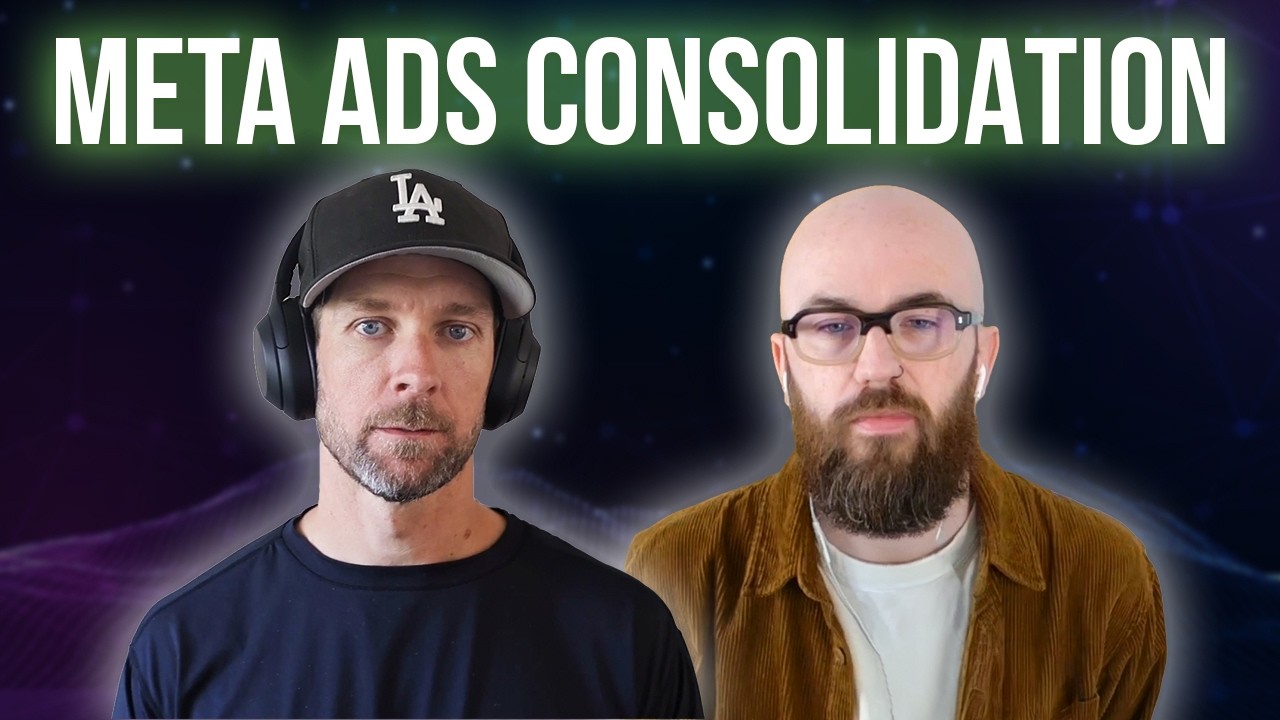
The Andrew Faris Podcast · @andrewfarispodcast
Words
12,708
Runtime
1:00:37
Speaking pace
210wpm
Reading time
53min
210 words per minute, above the 201 75th percentile of 349 measured videos. That distribution comes from the 349-video hook study.
Opening (first 30 seconds)
You are wrong about the metrics that you are building your Meta Ads account to pursue. If you're just going after ROAS and CAC, and you are not thinking about reach, CPMR, everything you're doing is wrong. Your account is about to break. That is not really the perspective of Phil Kiel, but I don't think, anyway. But, Phil has been putting out a whole bunch of information, and so is Cody Plopker and myself and Taylor Holiday and Clicks a whole bunch of people in the digital marketing ecosystem right now have been talking about this metric CPMR, which is the cost of your
105 words, the words spoken in the first 30 seconds at 210 words per minute.
Free, no signup. See how the first 30 seconds hold attention, with rewrites.
Sentence shape
| Measure | This transcript |
|---|---|
| Sentences | 787 |
| Average words per sentence | 16.1 |
| Longest sentence | 138 words |
| Questions asked | 101 |
| Sentences containing a number | 52 |
Most used terms
Filler phrases
495 in total: like 143 · uh 102 · um 74 · you know 52 · actually 43 · sort of 36 · right? 17 · I mean 12 · kind of 9 · literally 4 · basically 3.
A literal whole-word count of the same phrase list the Prepublish browser extension uses, so a phrase inside another word is not counted and a phrase used in its ordinary sense still is. It is a count and not a judgement.
Free, no account. See where attention is likely to drop, with a rewrite for each weak line. The free check shows the scores and the one issue costing the most. Or run it on the words above first.
Free · No login · See a sample audit first if you prefer.
What this transcript is
Every word below is the caption track YouTube publishes for this video, pulled from the video itself and reproduced unchanged. It is not Prepublish's writing, not a summary, and not a re-transcription: it is the video's own published captions. English captions, generated automatically by YouTube, in the video’s original language. Source: the video on YouTube. A channel that would rather this page did not exist can ask for its removal through the contact page, and it is removed.
No Script X-ray for this video: YouTube shows a Most replayed graph only once a video has enough views.
You are wrong about the metrics that you are building your Meta Ads account to pursue. If you're just going after ROAS and CAC, and you are not thinking about reach, CPMR, everything you're doing is wrong. Your account is about to break. That is not really the perspective of Phil Kiel, but I don't think, anyway. But, Phil has been putting out a whole bunch of information, and so is Cody Plopker and myself and Taylor Holiday and Clicks a whole bunch of people in the digital marketing ecosystem right now have been talking about this metric CPMR, which is the cost of your reach of your ads [music] very very simply how many people you're reaching and how much it's costing you to reach those people.
Some people see this as the key metric right now to be um thinking about at least at least at least as a leading indicator of whether or not your ad account is about to really sink. Maybe as more than that. Maybe as the the leading indicator of how incremental your ads actually are. [music] Uh smart people are saying smart things about this with nuance and thoughtfulness, and I am trying to get uh us sorting through that conversation.
So, to do so today, I brought on Phil Kiel, the director of Paid Social at Tycoon Digital, uh who has been writing a whole bunch about this. And I'm going to ask Phil a bunch about sort of how he thinks about this issue, how you reach people with your ads, who is missing out on potential growth because they are not thinking about this, whose performance is suffering because they're not thinking about this, and most importantly, how to use CPMR as a metric to diagnose problems in your ad account and improve your performance.
Phil has thought really really hard about this. He's written about it. He's responded to Taylor Holiday and Clicks in their study about it. And so, we're just going to get straight to the source with Phil Kiel right now. You're going to like this conversation a lot if you're like a media buying wonk trying to uh think carefully about how to leverage Meta Ads to grow your business from a media buying perspective. Let's get into it with Phil Kiel from Tycoon Digital all the way across in Liverpool.
Let's do it. Phil, what's up, man? Great to have you on here. Great to actually finally meet. We were talking to you like the The DM I have from you is from 2020 when I was at 4 by 400 still trying to sort things out. You very kindly pointed out that I had a broken PDP I think and here we are. Here we are 6 years later working on very different businesses. >> Thanks Andrew. Yeah, I mean long time listener first time caller.
I think that's the line. I've I've been listening to you for a long time. So I appreciate it. >> Yeah. Yeah, man. And you're out in Liverpool in England of course like everybody else. I think I associate Liverpool entirely with the Beatles. So yeah, there you go. >> Yeah, that's it. Yeah. >> So let's just get right into it. You You have been writing about CPMR and what I would like to start with is for you to sort of summarize the the big picture position that you have as a as somebody running paid social for a bunch of eight and nine figure e-commerce brands.
CPMR is something you've been talking and thinking a lot about. I've read your stuff about this and we're going to link to your Twitter account. Let me just tell everybody right now follow the link to Phil's Twitter account. You'll see a whole bunch of stuff about this. Phil, if you want to send over the particular posts that maybe guide people will put those in the show notes as well so people can follow up on some of the conversation here.
But start by summarizing your position for me on sort of what is CPMR? Why should people care about it and and sort of how are you using it in ad accounts at the big picture? But start by defining it and then and then what's the what's the baseline position that you have? >> So in matter you can see this metric has cost per 1000 unique accounts reached. And that's a column that you can add by default. It isn't a isn't a isn't a custom metric.
And it's a it works out as CPN times frequency. And it is the metric that tells you how much it costs for you to reach ads which is I know and CPM is what probably one of the first metrics that you learn about when you get into media buying. We are buying based on impressions. It would be good to buy based on CPA or ROAS but we're not but we're paying for impressions and cost per reach is I guess the the next version of that because it's CPM times frequency and why or I I yeah, I'll I'll pause that.
I'll I'll let you let you talk first. >> Well, so so basically it's just a way of saying uh it's just showing you not only how many impressions you've served but how many people you've actually reached, right? People have been talking about frequency for forever. And so the notion of CPMR is saying like are you actually reaching more people with your with your ads or not? And um and so that's that's the whole idea. Cost per 1,000 people's reach.
So CPM is impressions, CPMR is is people. And like I have an account that I'm coaching right now that is a really nichey product and and and and it's sort of a great illustration of some of some of the things I think you've talked about where they started to try to increase spend and all that happens is the frequency went up so their reach really didn't go up very much at all and their performance suffered a whole bunch.
And you see situations like that and you go like, "Okay, well, what do you what do you do? What do you think about this?" And my my Phil Kiel sirens went off in my alarm in my in my mind when I saw this. I was like, "I wonder what Phil would do here." Because uh because of all kinds of things. And and I'll the other thing I'll say is there's a bunch of approaches to this question. I don't think it's actually new that you need to reach more people with your ads, right?
Like I think that's sort of like obvious in one respect. But there's a lot of questions around campaign structure and signal engineering and stuff like that and what it's going to do. So with that defined, Phil, can you say a little bit more about um what you notice about that metric and how it how it sort of tells you something about the performance of an ad account. Like why does it matter? Cuz haven't you like what is new about this?
Haven't we always tried to reach more people, you know? >> Yeah, I mean I I I think over the years we've become more and more we we were we were even more focused on the lagging indicators because this is performance marketing. This isn't marketing. This is performance marketing where we're we're spending to get a result that we can measure. And naturally we can over focus on the most important metric. You've got profit, CPM, um profit, CPM, uh sorry, profit contribution margin, you know, ROAS, CPA.
Let's just think about those and ignore everything else. Uh, and CPMR is essentially a signal. There are plenty of other signals in your ad account that you can use and there's been arguments on the arguments discussions about click-through rate, measuring creative based on click-through rate. I feel like that, you know, that was a little bit more popular a few years ago as a discussion. Uh, and I guess this is I guess the the next conversation around trying to understand what is happening based on signals other than business performance, ROAS, profitability.
So, we really use it as a signal and I really got into it a few years ago now because of a a specific account, specific business, maybe two and a half years ago, which had the setup to fall into this problem. And I think on one of previous podcasts you talked about there were certain types of businesses where this was is is more of an issue. And it was uh, it wasn't a retention business, so it was more of a single purchase business.
They weren't doing very much product development. They were over-indexed on Facebook. Uh, they were advertising in the UK, so the population is 60 million, which is, you know, smaller than you the US. So, you you can approach problems quicker than what you could do in a in a in a bigger territory. And so, they had all this of this setup that allowed the the account to fall into this problem of CPMR. They were also maybe around six or seven years old as a business.
Cuz I I don't think you face this problem straight away. And so, that's really where I Okay, what is happening? Why is business getting harder? And then the end result was yeah, CPMR. >> Yeah. Um okay, so so let's start breaking this down a little bit more. So, when you when you say the end result is CPMR, what showed you that? How did you How did you discover that first? So, like like was there a report that you looked at that's or there's something you, you know, sort of set up for people right away that was like that like, okay, this this showed me you're reaching less people with your ads? >> Yeah, and that that that multi-year thing is that's the very really important because we could compare data per year as a starting point.
So, we had all of these metrics from the start of the funnel to the end of the funnel, spend, impressions, reach, frequency, you know, click-through rate, add to cart rate, CPA, and ROAS. And we we we we uh we created a table over multiple years and we looked at, okay, so what's changing? Why is performance now harder to come by? And the metric that jumped out that was changing the most was CPMR and that resulted in spending more, reaching less people.
Yeah. >> Yeah. Okay, so there's two ways of of per- When I hear that, when I hear you're spending more and reaching less people, I don't hear that as a media buying problem. I hear that as a creative problem. And and you know, I I'll say here, I I just released two episodes kind of talking about this issue from from a creative lens and a media buying lens both and talking about sort of how I have thought about this issue in the past.
And the TLDR is that I haven't thought about it in the past. I've I've I've and and yet I would say I have at the same time by proxy. And and essentially saying like my approach to this is like, yes, you need to reach more people and the path to doing that is is creative. So, when I hear you say um when I hear you say uh they were reaching less people, one way of approaching that is like, we need to do something from a media buying perspective that's going to help them reach more people uh differently, you know, uh for for less money.
Another way of approaching that is is by saying that's because they have done poorly with continuing to generate a high volume of high quality highly diverse creative. It's that is rewarded now more than ever in the current algorithmic and machine learning environment and therefore they probably haven't kept up with that and that's why they're reaching less people. That's sort of the way that I would interpret that is that they probably didn't need to do anything differently with their media buying.
They just needed to approach it from a creative lens. That in in that respect CPMR would actually be a leading indicator yes of problem to some degree but it but it wouldn't actually be the problem if you know what I'm saying. Like it would it would be that there's something else that's causal to it. Now I don't know if you agree with that statement at all or not. And by the way both of the episodes that I just referenced that I did before are linked in the show notes so you can go back and get those.
And while we're on the subject please do subscribe wherever you're watching or listening because we're talking about deep media buying stuff like this all the time and if you like this conversation if you're this far into it and you and you want to keep going you will like my content in the future. You will. We do this kind of stuff all the time. Probably I'll have Phil back at some point. We'll talk about it. And uh and so subscribe wherever you're doing that.
Leave a comment as well. If you have thoughts on this issue I would love to hear them. I read and interact with every comment there. So okay back to my question. Um Phil so when you see that sort of where does your mind go next? What is the actual problem? If if I'll if more expensive reach is the problem what's driving that problem? Do you see what I'm saying? >> Yeah so in that specific example it wasn't while it can be creative and it is creative more often now because of the changes with Andromeda and whatnot and the way people are using platforms.
Uh the problem for that specific example was new product development and the length of time that they'd had been advertising in the UK and the amount of investment that they put into the ad account over that time. So therefore they'd reached most of the population in the UK with a product that was predominantly a single purchase product. And they had been very slack with new product development. So, there wasn't an opportunity there wasn't a reason for the ad account to reach different people.
There wasn't also wasn't enough a reason for the ad account to reach the same people again with a different with a follow-up product. Um and so while us as media buyers and marketers were focused on the account structure creative, those activities were actually fairly futile as solving this problem. That's the That's the sort of the the biggest example of uh CPMR is the signal from outside ad account problems, business problems. >> Interesting. >> Um or business lack of business activity.
Whereas nowadays, the the signal is increasing CPMR, decreasing reach, and it usually comes down to uh there's a you know, there's a big list. There's campaign overlap, poor exclusions, a lack of organic activity, a lack of activity from other channels. Uh and obviously uh creative and messaging being too focused. >> Okay, so So, in that case, what did you do? It sounds like what you're saying is that you you needed to tell the brand, "Hey, listen, you need to make some more products." Like I mean like that and now by the way, I actually I think it's it's actually elite tier of media buying to tell the client what's true even when they don't want to hear it.
Cuz what what other what agencies will do is is they will say, "Oh, we can fix this. We don't These The reason that your your CPMR The reason that your ROAS sucks is because these these idiots over here like are doing the media buying wrong and the creative wrong. But if you give it to us, we'll solve it for you." And that's what they That's what the operator often wants to hear, right? Cuz then it's not their problem and it's not a hard It's not as hard of a problem, you know?
Somebody else can just solve it magically, right? But what What sounds like what you're saying is that in that case, the brand needed to hear, "Uh you need to develop more products." And I can actually think of a brand I've worked with where what you're describing sounds very similar to them. It sort of It seems to me reached their max CPM and they were it was it's going to be really hard to reach more people without product development.
So, anyway, what did you tell them? Or what did you do? >> Uh we we kind of I mean, nowadays I would be a lot more blunt with it. I was sort of 3 years 3 years younger, 3 years more or less experienced. >> Yeah, yeah, yeah. Yeah, I know that well. >> And CPM wasn't as common of an issue. It seems like it's a lot you know I I >> Yeah. >> I don't know if it's a self-fulfilling prophecy or I have a lot more people coming to me now where CPM is the issue.
Is that because I'm looking for it or what not? Maybe that's a you know, that's a deep question, but yes, so we talked about it. They probably haven't solved it yet as a business, I imagine. I'm not I'm not working on the account anymore, but I expect they haven't solved it, yeah. >> Yeah. Yeah. Um okay, so let's say you um let's actually let's actually talk about something. You talked about account structure and it's being more of an issue and it drove me out on some of those things.
Here's one of my big questions with this. Um do you do you think that this is a ghost in the machine problem? And what I mean is essentially is Meta working against you? And this is one of the things I hear from Cody Plucker a lot about this, which is sort of the notion that Meta has a really hard time getting outside of its sort of like um loops of people reach um and that you actually have to fight Meta here. You have to work against Meta's default behaviors to increase CPR CPMR and therefore increase your performance.
Um is that the way you think of this problem or is or or not? I mean, I I have a I have a response to that, but um but uh but I'm curious if you think this is like a Meta if this is a problem in Meta. >> That's a broad answer and it it it it it it impacts more some businesses more than other others because of the the makeup of those those businesses and the product and the time and and the and the territory and whatnot.
So, there are some businesses where this is not an issue whatsoever. And those are the people who are probably on Twitter who are a little bit more like, "What are you talking about? I don't need to even think about that." Because because they are advertising a a product in a very large territory that is has a huge addressable addressable market. Uh I think it is a bit of a feature and a bug because Yeah. Frequency is important.
We all use Apple MacBooks and iPhones. If our frequency of Apple was one, we likely wouldn't have pur- purchased the product. So, and I feel like you talked about this before where there is there is a there's a point at which performance can improve as frequency increases. And then you go past that and performance starts to decline or or it's diminishing returns. Uh I think it's difficult for Meta to know where that point is.
I think it has to be impossible for Meta to know where that point is. Yeah. Unless you're using manual bidding and the spend starts to then drop. >> I have a a recent hire, a new growth strategist at um at AJF Growth, who's been really great as an addition to our team. And he said to me recently, he said, "Man, this guy, Yiaz, he's talking about this this guy Yiaz from your team, he's so awesome. Like, where did you find him?" And I said, "I found him with More Staffing." More Staffing is the place where I found this incredible employee who does all this amazing work for us, got recently promoted.
Uh Yiaz came in as a media buying assistant in a in a sort of introductory media buying role at AJF Growth. He's gotten promoted and I'm just going to tell you he's going to get promoted again in the future because he is an absolute beast who's a critical part of our team because More Staffing helped us locate >> [music] >> incredible talent in the Philippines that we have every expectation in the world of continuing to um create more opportunity for because that's what More Staffing does.
More Staffing was built on e-commerce businesses. They understand every element of the e-commerce ecosystem as well or better than anybody else because they literally have been staffing Filipinos in e- US-based e-commerce business businesses for a long time. It was so effective for them, it was so transformative for them and for their businesses that they went and started a staffing agency to help make it possible for more businesses.
That's what you should do. The The reality here is really simple, which is that the your dollar goes a lot farther to get incredible talent in the Filipino market than it does in the US base [music] in the US market. It's just It's just that simple. And so you can get great talent added to your team, people with deep e-commerce resumes who are going to work hard, who know what they're doing, who grew up speaking English.
If you're worried about that, just about every Filipino is an English speaker made pretty much natively. And just uh you can find incredible talent, people who are going to really contribute. If you're thinking about this only at the $5 an hour level, you're just missing out on the opportunity. There's just more to it than that. You can get really, really good talent throughout your organization. We've continued to staff our team with incredible Filipino talent from More Staffing and their sister companies.
We expect to do the same going forward. You should do the same thing. Whatever position you're hiring in your e-commerce business, go to morestaffing.co/af. Get on a call. Just do this. Just talk with them about what the job description looks like. See what kind of resumes come back. I bet you it will be awesome. They will find you that talent. They will pre-interview, pre-screen candidates. They'll give you just the best of the crop that they find.
You don't have to go sorting through hundreds of resumes or anything like that. And and you can get down to just the best candidates. And I bet you will find great talent for the position you're hiring for. Go check it out today. morestaffing.co/af. Yeah, I um I mean I think you're right uh about the frequency thing. And actually Meta's own reports on this when they've sort of talked about this. Last I've seen Last I seen is that if a customer sees the same ad more than once, literally the same piece of creative, the performance immediately declines.
There is no There is no good frequ- There's no good increase in frequency if it's the same ad. Now, I don't think that's true if there's multiple pieces of creative. But um but if it's the same ad multiple times. So there is there is an element here to where this is This is like one one of the answers. And I'm curious if you agree with this. One of the answers here is a high volume of high-quality, highly diverse creative.
All right? Like that that has to be in the answer somewhere to this problem, yes? Yes. >> Yes. >> Yeah. And if you if you It's I like to think about it as like what's the experience that the consumer is going to have as they as they bounce between ads and campaigns in the in the account. You want them to have a You want them to go through a story with the brand and the product, and that is therefore different creatives rather than the same one over and over again. >> Yeah.
Yeah. Um is there anything else at the level of media buying that you look at for this and you say these are other things that we do that are really important so that we can make sure to minimize this as a problem in so far as it comes up like like you're saying like some accounts this is just not an issue based on spend level TAM, all those kinds of things, you know, but when you see it as an issue is are there like media buying or let's say for all the people who are coming to you saying, "Phil, we have a CPMR problem.
Fix it." Uh are there any media buying things that you see people doing wrong consistently that you think is really hurting them? >> Yeah, it's it's it's the things that impact the individual metrics that make up CPMR. So, it's CPM, which is a little bit less uh you can impact it less because it's a you know, it's a platform cost based on the market and the product and the you know, the the niche that you're in. So, it's more often than not it's frequency.
So, it's exclusions, and exclusions are not consistent. The exclusions that worked for your account 2 years ago may need to change. You may need to increase your exclusions because you're spending more, your TAM is shrinking, your product development is is low. Uh so, changing exclusions over time and then consolidation. So, the overlap between multiple campaigns and ad sets in an account will increase your frequency.
Increasing frequency increases CPMR. >> Huh. >> And and that go ahead. Keep going. >> Um and cool it's very common nowadays that we see people having too many campaigns and ad sets for the level of their spend. They they generally don't have enough ads or or too many ads. It's very often it's not very often I'm saying you've got too many ads. It's more often that I'm saying you've got too many campaigns and ad sets. >> But practically what does that look like?
There is it like they have 10 campaigns and five ad sets in each campaign, but only three ads in each ad set? That kind of thing? >> Not necessarily the last point. So, 10 campaigns, five ad sets in each one, a ton of creatives, and then they're spending $2,000 a day. >> Got it. So, that that's interesting. So, they have actually too much creative and too much split out. And when you consolidate, you see CPMR go down. >> It will do.
It will do, but guaranteed because frequency will decrease. And then your CPMR will decrease, and if you're spending the same, your reach will go up. And you you could actually spend less and reach the same number of people. >> All right. So, let's actually let's keep let's keep talking about this. So, So, why does why do multiple campaigns drive up CPMR? Why can't can't why can't Meta just deliver some and not the others?
I guess yeah, uh yeah, what is the mechanism for that problem? >> So, each campaign will have its individual reach. If each campaign reaches 1,000 people, and you have 10 campaigns, your account reach will not be 10,000. Your account level reach will be 7,000. And at that point, there's a 3,000 overlap between those campaigns. That's that's low. >> I audited an account last week where the account overlap is like 80%.
So, that the the number at the bottom was 80% lower than the total reach when you added up each individual campaign. And that is an issue. That is the bug that you asked about earlier, which is >> each campaign >> is not going after a total or a total different pocket. It's that Venn diagram. And that but those circles are overlapping a hell of a lot. But you haven't just got two circles with a Venn diagram. You've got 10.
Um and you're increasing spend across all of them. >> So for that account, where you see an 80% overlap, your solution to that problem will be to just to create less campaigns in the ad account. So you could literally take all I mean, I guess this is what I'm asking. If you took all the same ads that were active in that account, but just put them into less campaigns, and I assume in CBO setups, if you did that, uh that that would decrease the overlap.
Even Even So even if there's Let's say there's just as many ad sets, but there's just less campaigns. Is that what you would do, or would you actually kill a bunch of ads, get less ad sets as well? >> Yeah, but by having less campaigns, you would likely have less ad sets. So the ad sets are the real issue, because that's where the the audience is set. So you would have less ad sets, and you know, moving to CBO is obviously important, because then some will receive less spend, and will have less smaller impact on the overall account. >> And then essentially increasing exclusions at the same time. >> That's interesting.
Okay, so kind of trying to understand the mechanism is why is why I'm asking about this more. And a part of it is that I think I buy media so differently than what you're describing that it's hard for me to imagine. But um but uh it not it I don't I don't think it sounds like I buy it so differently than what you do. Uh I think I'm It sounds like I buy it really differently than what these audited accounts do. Um but uh but it sounds like what you're saying is if you if you have a bunch of campaigns, and and I think your assumption is that these are auto bid campaigns, yes? >> Yeah, more often.
Yeah. >> Yeah, right. That's what I would That's what I would assume. So if you if you are auto bidding across multiple different ad sets, multiple different campaigns, or a bunch of ad sets, whatever, then Meta in at each ad sets level is just going to try to find the most likely person to buy, right? Um off of that and it is forced to spend money across each of those things. And so, with no ability to rank the ads itself because the ad sets are all split out into different campaigns or if they're all or whatever, each of those ad sets is just going to find that same small group of people and say like, "Okay, well, like you know, if Phil's the person likely to buy, I'm going to serve him ad A and ad B and ad C and ad D." Instead of Instead of in a CBO setup, you would have Meta just saying like, "Well, we're just not going to spend on ad D.
And so, we're not going to deliver ad D to Phil even if Phil's the most likely person to buy from ad D. We're just going to keep serving ad A to the next to the next Phil or to Andrew, right? So, something like that." Um and by by just allowing some ranking, it allows Meta to sort of extend the reach of better performing ads um instead of forcing each ad to spend on the most likely person who who would buy when when those ads are going to have sort of an internal ability to reach um sort of an innate ability, like almost a genetic component of the ad to reach more people.
Does that It I'm I'm trying to describe it in a way that's clear. I feel like I'm stumbling over it, but is something like that what I'm Sound right to you? >> Yeah, so essentially each ad set is when when when you buy media on Meta and you presume that you're going to use auto bid, we're asking it to do something. And each ad set is trying to do that task to the best of its ability. And the best of its ability, a portion of that will be the same audience that another ad set is trying to reach.
Because that will be the lowest conversion because that that audience is in market. They're showing signals. Frequency is important. No ad set has a frequency of one as a minimum. Everything is 1.5 or above. >> Yeah. >> Uh and so, it that overlap will will happen. And there is, you know, you mentioned your you're buying media in a different way to other people. There was a lot of people out there who Yeah, and I'm I'm not saying this is wrong, but there is a lot of people out there who and I'll help I'll help them.
I'll jump on a call. I'll talk through this. Always want to provide some value. There's a lot of people out there that think any activity that they are going to do in the account requires a new ad set. >> Huh. >> Every every time every time it's like having a coffee in the morning. It's a new ad set. >> [laughter] >> It's a new ad set. It's a new ad. I've got three new ads. That's a launching new ad set. And if you do that for 6 months, that's a that's a real big problem. >> And that and that's and that's probably because they have this idea that if you add to an existing ad set you're going to screw it up, right?
Like Like people are very worried about this. >> Yeah, I there's there's a there's a there's a fear from some people from I don't want to talk about some people as if I'm putting them down or whatever, but I think some some media buyers approach it worrying too much about what could happen in the future. >> Yes. >> Whereas they should think about what's happening right now. And when we talk about campaign type and they and we talk about different ideas for setup, sometimes I get the question back of but what happens when I've got new creative to test?
I say, "Well, let's try and get this working now and then approach that question in a week's time." >> Yeah. >> Rather than trying to almost um predict what is you know, what is coming down the down the track. >> Yeah. Okay. Uh First of all, I think you should be more I think you should be more willing to say you think those the people who are saying these things are wrong. I think I think the point of view is helpful.
Like I I'm having I continue to have This is a broader point for me. And I I've I'll try not to get lost in this point too much, but uh there are better and worse ideas about how to do it. And the idea that like it just depends on the account and there's no you know, there's no playbook or something is wrong. This is the reason we're having this conversation is because like you might what you are saying here about CPMR, while there is probably some nuance to who it applies to and who it doesn't, there's still something objective in the foundation of the way the whole thing works that is important and is either right or wrong or is partially right or partially wrong or whatever.
And I just I think it's important for people to keep that straight. I'll tell you honestly, part of the reason I'm motivated to say this again is that I'm watching our accounts right now. I I've had just some very fascinating um confirmation of the way that we buy media recently. And of course it could probably be better in certain ways and maybe we need to take CPMR more seriously or whatever. But like uh but that that some of the principles we do, like I'm watching our some accounts that we just did full media buy overhauls where all we changed is the media buying and it made a real big difference.
And then I've watched other accounts of ours that have left us, left our agency and I still have access to the account or whatever and I've seen them change the approach and things have gotten dramatically worse. And it and it's why I want to say to people like, no, there is actually right and wrong ideas. There are better and worse ideas. And uh and you should care about them. So anyway, so my encouragement to you is if you think you're if you think you're right, you should say it strongly.
You should tell people they're wrong and you should help them fix it. Their businesses are suffering because of it. So. >> Yeah. On on that note, the a couple of bullet points, most people will be better off having less campaigns and ad sets live. And yes, I agree. And put put have bigger budgets and fewer places. Yes. Most you will you chances are you will be better off for that. And this isn't this isn't people spending six figures a day.
Those are the edge cases or more. Um most people would be better off having less things live in the account. And most people will will be better off having more of a week we call it like a weekly OS. So, launching creatives on a specific day every week. Pausing ads on a specific day, increasing budgets on a specific day, and moving away from the emotional reactivity of performance. So, if you do those two things, chances are you'll have better performance and you'll make better decisions.
You'll have cleaner data. And yeah, you'll you'll be in a better place. >> Yeah, I think you're right. Um okay, so then let's talk about that at the brass tacks level. So, so part of that is baseline, like don't do this dumb thing of just adding a few ad sets here and there because you're going to you're going to decrease your reach. Uh, another another possibility another thing that comes to mind though for me is like so what do you do when you have a brand with like, I don't know, let's call it 20 products that they're advertising.
How do you how do you organize that account structure where you maintain some consolidation, but at the same time uh, you you recognize that these products have different I mean, you a lot of times you you literally you can't combine products in an ad set because they have two two different of economic principle realities, you know? So, um, you know, I talk about this all the time, but right like a a product with a $200 AOV and a product with a $300 AOV require a really different CAC to be successful.
And even if it's the same ROAS, and therefore combining them in a highest volume ad set, you're you're actually going to do real disservice to the ad account. So, um, so what about that? So, how do you how do you maintain some approach to consolidation so that you maximize CPMR or maximize potential reach for the same cost and at the same time do that across different products? >> So, you are going to need more campaigns and ad sets.
And we have we have accounts where there are more campaigns and ad sets because of the there's a business lead to business need to do that. But we aren't then launching more campaigns and ad sets for sandbox reasons. The approach in the account is is is focused on the setup that you talked about the volume of products, the the volume of audiences that we can speak to, male or female or kids or pets. Um, we treat it more like a department store.
And I like to have an idea of I like having a having a campaign for each section of a department store or each rail in a shop. You know, you've got uh, jackets, pants, trousers, you know, shirts, having a campaigns for each one of those. Now, you may need to have stronger exclusions. But by proxy, having more products will help you reach more people. So, if you think about it like a fashion brand, menswear, their new product development are built on new product development.
And so, therefore, that is a tick in the box of protecting them from CPMR issues because they're launching products spring, summer, autumn, winter at minimum, likely even more than that. It can, you know, the whole like drop uh set up. It's not Sometimes it's like monthly or weekly these brands are doing drops, so that will help you reach more audiences. You will need more campaigns and ad sets. Um you may need stronger exclusions.
And you would then monitor CPMR frequency, new visitor percentage, overlap. >> Yeah. >> But, the But, at that point, I think those accounts are a little bit different because you're focusing on like sell-through, which is a very different uh people who are selling protein or creating gummies don't really think that much about sell-through, whereas >> Yeah. Yeah. Yeah. >> If you were the kind of operator who is trying to build a seriously profitable, excellently run business, then IntelliGems should be part of your tech stack.
Basically, once you're in that sort of mid-seven-figure range and growing, you should add IntelliGems and be running constant split tests across your website, across your traffic funnels, uh to figure out how to make those funnels more valuable uh for your business [music] and to make that your website more valuable for your business. And the thing is, there's just all kinds of stuff that you can >> [music] >> test and optimize to figure out what works.
That can be everything from sort of like headline, copy, messaging tests, which are super valuable um as as part of a business, but [music] it it can also be uh larger-scale changes, like the first purchase offer that you give to new customers, the 10% off that shows up on your pop-up. Like, should you be doing that, or is that just eating away at your margin? What about your free shipping threshold? Somebody asked me on a call today, like like how do these shipping thresholds hit you?
And my answer I told them what I what I thought, but my answer over time would be test it with IntelliGem. Go find out which ones are going to work better and see how the shipping charges relative to to order size is actually producing value or not. When you're telling somebody they're going to have to pay five or 10 or 15 more dollars or whatever at checkout >> [music] >> for shipping, that's a real cost added on. Is that hurting your business or is it helping your business?
You know, I don't know, but you probably don't know either. IntelliGem allows you to test that sort of thing and critically to measure it down to the level of profit >> [music] >> per visit. And that's so much of why this matters. Maybe you would sell more stuff if you offered free shipping, but it would come at the cost of your profit, right? [music] Like I don't know, but but IntelliGem can tell you that answer because it ties into your product data into your COGS and tells you the outcome of each test based off of the profit per visit, not just the conversion rate, not just the AOV, whatever, the actual profit per visit.
So it's really awesome tool. Many, if not most of my clients are using IntelliGem. Just It's just one of those things that I think is sort of standard in an e-commerce tech stack at this point. I could go on and on about all the different things you can test and and set it up, but the key here is that you should have an ongoing testing cadence and you should be getting the output of that testing at the level of profit.
IntelliGem is a tool to help you do it. It's easy to use. You can get 20% off your first 3 months if you go to intelligem.io and use the code Ferris20, f a i r i s 20. 20% off your first 3 months with Ferris20. Links in the show notes. Go check it out. Yeah. Uh So in addition to this, let's also talk about the Okay, so a well so a consolidated approach I I 100% agree with Phil and I I think like uh for me this comes down to a much simpler principle, which is like let Meta sort it out.
Um like the the principle is just like give Meta uh like as much signal in as few places as possible so that Meta can sort out how to how to deliver your ad spend. Um and and be the reason to separate out campaigns and ad sets is because of is because of economic realities in your business, not because of um not because of of anything else. It's just that like you you you have to control inventory differently and you have to control pri- you know, different CAC differently relative to different products.
And so, it's about financial considerations first and foremost. I'm not saying you disagree with that. I'm not saying you wouldn't do it for that reason. I'm sure you do. But, it's uh uh it it it's the main thing there. The CPMR thing is just like the uh yeah, I'm just sort of going to let Meta reach more people um as it sees fit. But, also I'm okay if Meta reaches less people as long as my ROAS is still really really good.
And this begins to move us towards the conversation towards sort of the value or not of retargeting, the value not of extended reach. And this kind of gets into the disagreement with CTC and some of the stuff they published about this. Which is like this question of, okay, maybe maybe and I think this is the thing I've heard Taylor say a lot of times. What which is like it's actually good that Meta delivers your ad to the person most likely to buy sooner than later, that it sort of prioritizes those people.
Um now, you need to factor in the incrementality of those ads. Um but but in fact, uh you end up generally getting better performance by allowing Meta to do that. All other things being equal, do you actually agree with that or disagree with that concept? >> I I do I do agree with that in over a a finite time period. I do agree with that completely over a finite time period where it can impact businesses is where the account performed in over over tw- during 2024, the account performed in this way.
And in 2025 the account performed in this way. And there was a change and there was a change in CPMR went up by 10 uh sorry, CPM went up by 10%. Frequency went up by 10%. Those two things combined will have a real impact on CPMR and then your reach will go down. And that's that's really where this becomes more important is when there was a change in the wind rather than uh it's just CPMR being low consistently. And it's this And it can't You can see the same thing around other metrics where if you've got a $50 CPM, but you've always had a $50 CPM, your business will be set up hopefully to support that.
You'll have a very high conversion rate. You'll have a very high click-through rate. Your cost per click could still end up being $1. Uh and you'll get used to that. Where it's an issue is where your CPM was $10 and now it's $40. Something else in that funnel going from you know, spend to conversion something else has to afford to that increase. >> Yeah. >> And in most cases, it doesn't. And where I see businesses really struggle with this, and I talked about like the example previous is when businesses are naturally trying to do the right thing.
They're increasing AOV. They're increasing LTV. They're in increasing conversion rate. And over a long period of time, like like 2 3 years, these improvements can be washed out because of rising ad costs. And that's CPM frequency and CPMR. So, if you Quite often, I've seen brands increase AOV by new product development, but their CPM has gone up. And they're just not better off. What they're actually doing is staying in the same position.
Whereas, they went through that idea of increasing AOV to improve their profitability. >> Yeah. >> But actually, it's not It's just made that they It's just meant that they can continue to advertise and and afford the price increases. So, that's I agree with, you know, the idea that high CPMR isn't bad. Where it's important is when it changes over time. >> Yeah. Yeah, so so basically in the short term at any given in I'm going to repeat this back.
You tell me if this is right. In the short term, if I if it's if I uh >> [clears throat] >> uh if I if my ad is dispro- if my ads are disproportionately retargeting my ROAS actually might be high and in fact my incremental ROAS might be high. So, not just a platform attributed ROAS, but the actual incremental contribution might be high. But, if I get stuck in that loop for for a long time and my or if over time my cost for reaching more people, my CPMR, goes up, eventually I'll pay the piper on that.
Eventually, what will happen is that I I will I will not have uh I will not like essentially maybe the way I think about it, the mechanism here would be that those retar- retargeting audiences sort of dry up and you no longer can sort of squeeze any more juice out of that and and in that case, you actually have now run into a problem that that the sort of short-term ROAS wasn't going to show you that like that like you you know, over the longer term it creates a prob- it creates a problem because over time that decrease in reach really hurts the business and and now you don't have a pool of people to retarget when the time comes or whatever it is.
Um is is something like that right? >> Yeah, exactly correct. And you can when you think about the wider business, it's really I find it really straightforward and hopefully you know, a lot of people over do it. It's really easy to see why these things are important because you think about organic. >> Yeah. >> And follow a growth. You think about your email list growing and your people falling into your welcome flow and you think about word of mouth and you think about direct.
Um and where this becomes really helpful from a planning perspective is at the start of the start of the year, you can look back at your CPMR and any metric for the previous 12 months. What happened versus the previous year? Okay, now what do we want to do this Q4 coming up? These metrics are increasing. How much extra are we going to have to spend just to stay level? >> Yeah. >> So, if we want our Black Friday to be twice as big >> Interesting. >> but our CPMR is increasing by 50% we're going to need to need to spend more than double because of email and that's throughout the whole year because it's and I think there's the way of thinking about thinking about Black Friday is is is really helpful because >> Right.
Right. >> spend you spend all year trying to build this audience and your list. And where some brands can get a bit of a sucker punch with CPMR and any other metric, feel like I'm saying it a lot, is you you spend all year thinking that you're building this audience and then it comes to Black Friday, you send that email >> Interesting. >> and your email but your email list hasn't grown at the same rate and actually maybe it's gone backwards cuz your ones because you've been getting unsubscribes and actually what can sometimes happen is with Black Friday those returning customers start to make up a bigger percentage >> Yep. >> year over year. >> Yep.
Yep. I mean it's interesting. My counter to that a little bit is that when I look at some of the highly highly seasonal brands that I've run, one of the things I've noticed about them is that like uh in fact I had a meta rep say to me like you guys leading into into holiday ought to be spending on like some video view campaigns and things like that because you're going to have right now you're not going to reach those people but by uh but you know, spend spend on that in October, get a bunch more people into your funnel and then November, December you you know, you'll you know, it's it's one of these brands that's like you know 40% of their revenue happens in 30 days or whatever, you know, like it's crazy crazy seasonality stuff.
Um And then I looked at their old metrics and it's funny cuz this is well before the CPMR conversation that is happening and I was I looked and I was like well they're actually reaching plenty of people in November, December because the key the key thing was that when the demand side actually changed uh because there's more demand for their products at this moment cuz it's such a good gift. When that happened, uh, well, at the same time, uh, at the same time, uh, as the demand changed, Meta picked up on that and just extended the reach of the ads, you know?
And of course, this is Andrew Ferris, so these were all manually bid. I didn't change the manual bid. Meta just quickly determined that, "Oh, look, all these conversions are coming in under the price that was set at the manual bid, and that means it can extend the reach of the ads to a broader group." Uh, and uh, and because of that, like, it just it just extended reach. So, what I said to the Meta rep was like, "This problem This account does not have a reach problem.
At this moment, even though they were reaching not that many people throughout the year, Meta was perfectly good at finding those people when the time came to reach them more, and it didn't actually have a prospecting problem." Now, um, so anyway, so I I think there's like a a weird trade-off here, where at times I think Meta's actually incredible at doing this, especially with a manual bid, where you set the price and where the the demand side changes enough that Meta can sort of interpret in real time, "Oh, the conversions are coming faster.
I can actually extend now to this person that I would have considered outside the price range. Now it's inside the price range cuz the conversion rate has gone up enough." And sort of, you know, the the bid in my in in my buying setup, the bid cap solves the CP MRR problem for you, you know? It's almost the opposite of what people say about these things. Like, when cost when people talk about the limitations of cost caps or or manual bids, and I don't really run any cost caps.
I only run bid caps. But, uh, when when we do that, uh, Meta is able, remarkably, to go find more people under that cap as long as the demand side changes or as long as the creative is performing especially well or whatever it is, you know? Um, and so so I just I've just not seen a real reach problem from doing those things. I I don't know if you have any thoughts on that. It's sort of a specific use case, but >> Yeah, I I wouldn't be trying to artificially improve CP MRR before I start doing beforehand, and actually the the uh, before you mentioned the meta rapper I was asking if I need to make a point about this, but running non-converting campaigns is the last thing >> the It's not the answer. >> is the last thing we do.
Once we've done everything else and you know I daily everything else is in a perfect order. We don't actually need to at that point. We do have tactics and an approach to doing it, but it's the last thing we do. And in your example where the manual bid isn't spending and then is all of a sudden and it's the right reason. We would be using CPMR from a diagnostic point of view at the end of that period to understand uh year-over-year was the performance better or worse?
It was 10% better, why was that? Was that because the product was better? Was that because the creative was better? Or or did we actually find an efficiency in the cost to advertise? Um and that and that afforded us a you know, a luxury that that we didn't have the previous year. Or the other way around, it was actually 10% down. Okay, why was that? Was that because the creative was worse? Or because the account did more retargeting previous So, it's more of a diagnostic thing to help you make the right decision.
Uh and it and the idea of saturation and TAM I think sometimes people can struggle to quantify what those things are. But frequency and CPMR and reach can put some black and white numbers in front of you. >> All right, so let's give some people some really simple practical stuff and then let's also give them some bigger picture stuff, okay? So, let me let me let me rattle a couple ideas off that I hear from this conversation and from your thinking about this.
Um that I can help. So, the first is go look at your go look at your reach first. Just like go check. Are you reaching Is your reach changing relative to your your total I mean, really the question is almost like reach aside from cost because it's possible that you're costing more money to reach more people but you're still reaching more people and it's worth it in the end, right? So, go look at your reach. Right, do you think that's that's like a good good start?
Just go check and see if you see any patterns in your reach. That's that's a practical start for this. >> Yeah, and the two time frames I would look at cuz I think the time frames are really important is year-to-date versus the same time last year. >> Yeah. >> And then and then you compare that with spend and reach. Is reach flat but we've spent more? That that that can tell you something. So, year-to-date versus the previous year.
And then also last 7 days versus the same time last year. 7 days is a very small time period. But and you could increase it to last 30 days but a smaller time period versus the same time last year, especially if there's an element of seasonality, which there is for most brands. Yeah. >> Yeah. Okay, if you see a problem there, I see two solutions right away. So, if you see yourself reaching less people Now, uh One thing I do actually before I do more practical, one more other thing.
Uh do you think it's possible also that Meta's efficiency is getting better enough from in terms of ad ranking and ad creative delivery that one reason for less reach is that Meta is getting better at putting your ad in front of the right person faster with less waste? >> Potentially. Yeah. I don't I don't I I I mean the platform is really good especially even from like a user perspective. The the relevancy of of the ads in my feed is very strong. >> Yeah.
This is one of my big theories right now is that Meta has to do this because they already got all the users, right? So, like if they want to grow their revenue, they have to make it so that each user is worth more money to them, which means they have to make the efficiency of your reach better, which would actually push your reach down without affecting your actual impact because the more Meta can match the right ad to the right customer, the the more they can charge for each impression.
And and they like I said, they already got all the users. They can't get more DAU. Everybody uses it who's going to use it, right? So, um you know you know I don't know, maybe they can make Threads really really big. But like otherwise it's just tough. So, um okay, so there's that. Okay, let's say you see a problem though. Uh with all those then. I see two two things that are first steps. Uh tell me if there's another first step.
Tell me if you disagree with these. The first is consolidate, right? Less campaigns, less ad sets. And I'm going to ask a specific question here. Should people get rid of their creative testing campaigns as part of this because that would be campaign bloat. Uh or not. >> It depends what else it depends what other campaigns you have as well as creative testing. I think creative testing has a definitely has a place in a lot of accounts.
Um and and especially if you've got a lot of really good creative, then it yeah, it just depends what else you've got. I would also it depends where your spend is. >> Okay. Um okay, but either but generally speaking more consolidation. Okay. Um Uh and then uh and then let's talk about this from the creative perspective. The other thing that you might consider doing is check your creative. Is it stale? Do you need a higher higher volume of high quality highly diverse creative and you can add anything else that you want to that.
Anything else besides consolidation and creative diversity, volume, and quality? >> Exclusions. >> Oh yes. Okay, yeah, good. Talk more about that. >> Yeah, do we need to increase exclusions? I I feel like when I first started getting into media buying at a decent level, you know, 2018, 2019, listening to the great Andrew Forrest podcast. >> [laughter] >> I feel like I feel like we used to use exclude all of the exclusions possible.
We used to use social media engager exclusions, page follower exclusions. We used to use all of them. Website visitors obviously. And then post iOS 14, it sort of scaled back to purchase and email list. And I think that's where most people are and in most cases that should be enough. You may need to increase you may need to include website visitors is is usually the next port of call. Um So, exclusions maybe need to >> would separate those people and put them in a different re- remarketing campaign.
Is that what you're saying? >> In some accounts we'd In a small number of accounts, we would do that. If you need to do that If the frequency will never be one. If you're using Northbeam or Triplewhale or any of these tools, you can see new visitor percentage and it will never be 100%. So, it will always do with some level of retargeting. So, exclusions and then creative One thing we haven't talked about is >> Sorry, Phil.
Just Just for exclusions, just to just to be clear about it. So, what are you saying pull those in retargeting audiences into a separate campaign specifically so that your your true prospecting audiences don't get stuck in a loop on them? >> That is one thing that we're doing that we're testing at the moment is and we haven't spoken about this, but I've got a couple of tweets about this on on that and we're testing it in a maybe like five or six accounts where we have a retargeting ad set where the purpose of that ad set is as a distraction.
So, that Meta doesn't serve those audiences in top-of-funnel. >> Yep. >> Because if we if we're not serving that those audiences in that ad set, Meta will try and serve them elsewhere. Yeah, we're collecting data on like that approach, but we have seen it perform perform really well so far. So, yeah, I can >> What were you going to say about creative? >> Placements and platforms. >> Okay. Yeah. One of the One of the first things that we that we used to do a lot more of when we were auditing accounts is, okay, so where are you spending >> with creative?
Is it Facebook feed? Is it desktop? It's all one by one. Yeah. Okay, well, now you know, stories and Reels. Reels is obviously like the success story of maybe like the past 3 years. That's where it's growing. >> Yeah. >> 9 by 16. So, look at where you are spending. Look at your frequency and CPMR per placement and per platform. There's a potential that you'll find a real interesting data point there that maybe your CPMR on Instagram Reels is tiny.
And you could massively increase reach by creating more ads that serve to Reels. I'm not saying go out and make the the natural media buying approach there is let's make an ad set with custom placements and force spend into Reels. I'm not saying that. One thing that we'll do is we'll only upload videos in 9 by 16 tall so that we don't give Facebook a or Meta, sorry, a a 4 by 5 feed asset so that Meta Yeah. hopefully defaults to Reels or Stories. >> Okay, any other super practical simple things like that?
I like I like that point about placement diversity. I don't say that enough. It's good It's a good thought. >> Partnership ads. >> Oh, okay, good. Yeah. Yeah. Yeah. >> Yeah, and one of the one of the big things that we've seen for a long time is partnership ads can get a cheaper CPM. I don't want to start an argument about, you know, with CPM doesn't matter and low CPM is low quality. >> But if if you've got really high quality partnership ads with really high quality creative and a love a large volume of partners posting regularly, you may get a benefit in CPM and then that can then both help from a marketing experience point of view.
You're reaching you're taking advantage of their audiences, but you're also getting a benefit from Meta. And for a long time we did used to see Meta it felt like Meta favored our activity because we were using partnership ads. And you know, maybe it's a little bit uh uh of a theory, but Meta used to be very very focused on shopping. The shopping feed, I believe they moved to partnership ads and partnership content instead of shopping. >> Yeah. >> Interesting.
Um okay, and then I'll and then let's let's let me give you one scenario here and we'll wrap up, okay? So um so assuming those those those simpler things are done. Simpler {quote} {unquote}, there's they're still hard. It's hard to develop good real Reels ads and things like that, but um Okay, so let's say I've got a brand, and this is an actual brand, that uh that is finding extremely high frequencies and low reach.
They have conceptualized their customers as existing in sort of three concentric circles, okay? Inner circle, super core customers. Second circle, circle two, people who are are relevant to them for sure, um but maybe a little less super core, and then circle three would be the um the people who they eventually would like to reach. They recognize they probably can't reach them that effectively right now, but they're they're tangentially related to the community they're in, um etc., okay?
So, you get the idea, right? Three circles. Um They're there. They have done all of the things you've said, right? They're generating a high volume of high-quality, diverse creative, all that stuff. Uh They are um they are consolidated. They uh they're running some partnership ads. You know, they could always do more of them better, of course, but there's there's no glaring issues with any of those things in the account, okay?
Um When I hear when I do this and when I go on my coaching call with them in about 2 minutes, okay? Which is which is about to happen. Um Uh what I have said to them is "You don't have a media buying problem. You don't have a creative problem. What you have is a product and marketing problem, and you have to now think about this at a much broader and harder level." And we talked about this a little bit earlier in in in this episode, but um but it is is that the reality for a lot of these brands running into this, Phil, that that actually at the end of the day there's the challenge is something much much larger, which is that at the end of the day there really is a customer and there really is a product, and you have to be able to reach different customers than you're reaching right now with your product if you want to expand your reach. >> I would be asking them to talk me through what are you doing outside of the Meta ad account.
Yeah, and ensuring and ensuring that that either stays level, they're consistently doing these things outside of the ad account, or ideally they're doing more of those things. Same as how you could launch 10 creatives this week. Okay, let's launch 20 creatives next week. Do the same thing but outside of the ad account. What else are you doing to help Meta and then measure the impact of those things inside Meta. >> Yeah.
I like it. I think it's really good. That includes product development, right? >> Yeah, product development, seeding, giving products to to people to post about your product and tracking when they post is is quite a big thing and and measuring the the impact on Meta. Um you know, blog, SEO, uh GEO, um >> Yeah, yeah, sure. >> all of these things, yeah. >> Phil Keel, as I said, is the uh director of paid social at Tycoon Digital.
Phil um uh that means uh helps brands, e-commerce brands, scale their businesses. If you want to work with them, I'm so happy to recommend taking a call with Phil if you've got the CPMR problem. He's looking at CPMR at problem ad accounts all the time and could probably help you with it. You can go to tycoondigital.com or even better, Phil still says just reach out to him on X. Go check that X feed. There's a bunch of stuff there about this topic where he's really broken it down in a lot of details.
Um shoot him a DM and DM's are open, Phil, you know? >> Yeah. >> Great. Shoot him a DM. He'll check that out and see if he can be some help to you. Um so go follow him. Go go see if he can be some help. Uh Phil, uh delighted to have you and delighted to have this conversation. Thanks for taking the time. >> Thanks, Andrew. >> [music] >> If you want to follow up with Phil and see more of how he's thinking about this, he's published a lot about this on X recently.
You can see his interaction with Taylor Holiday and CTC about their study that actually took kind of a counter position to Phil. All that stuff is really easy to find on Phil's X feed. So go go give him a follow. Go start scrolling. Find [music] that and uh yeah, the link for that's in the show notes. Of course, I'd love for you to subscribe. Like I said, if you like this episode, you will like a lot of my content that is full of media buying stuff like this.
We're really trying to understand the best way to do it. I think media buying makes a huge difference for businesses. I care about these conversations. I want [music] to do these things right because I care about doing a great job for for brands trying to grow them profitably and and quickly and stuff like this really helps you get at that. So I'm recording this stuff all the time. Definitely subscribe wherever you're watching or listening to do that.
You can also email me podcast@ajfgrowth.com [music] with any questions or thoughts you have. I'd love any suggestions for episodes you Q&A episode or something like that, that'd be really fun. Good good good mailbag episode. Uh so email those to me podcast@ajfgrowth.com. You can also go to ajfgrowth.com and fill out the intake form there. Tell me about your brand if you want us to work with you. Uh I'd love to hear a little bit about your brand.
Just tell me a little bit about it and I'll I'll get back to you and we'll um see if there's a fit for us to work [music] together, grow your business together. Uh we'd love to do it. Don't forget to subscribe. Uh also because I have a great episode coming up with Ezra Firestone very soon which is always great to have Ezra on the show. Such such a legend. It's going to be great. So I think that's going to be out next week.
Uh so thanks so much for watching, for listening. Don't forget to follow up with my friends at More [music] Staffing and at uh Intelligens. Go check both those out. Thanks so much. Talk to you soon.
The words are the caption track's own and nothing is reworded or re-transcribed. Paragraph breaks are placed between sentences so the text reads as prose.
Free tools for your own script: paste a draft and see where it stands before you record it.
Paste your draft and see where viewers are likely to drop off, with a rewrite for each weak line.
Paste the first 30 seconds of your own draft for a hook score and rewrites.
Check your draft against YouTube's advertiser-friendly guidelines before you record it.
Read this channel's public videos and transcripts, and download a writing brief for it.