Getting the transcript
Reading the captions from YouTube. A video nobody has opened here before takes 10 to 30 seconds; this page fills in on its own.
Getting the transcript
Reading the captions from YouTube. A video nobody has opened here before takes 10 to 30 seconds; this page fills in on its own.
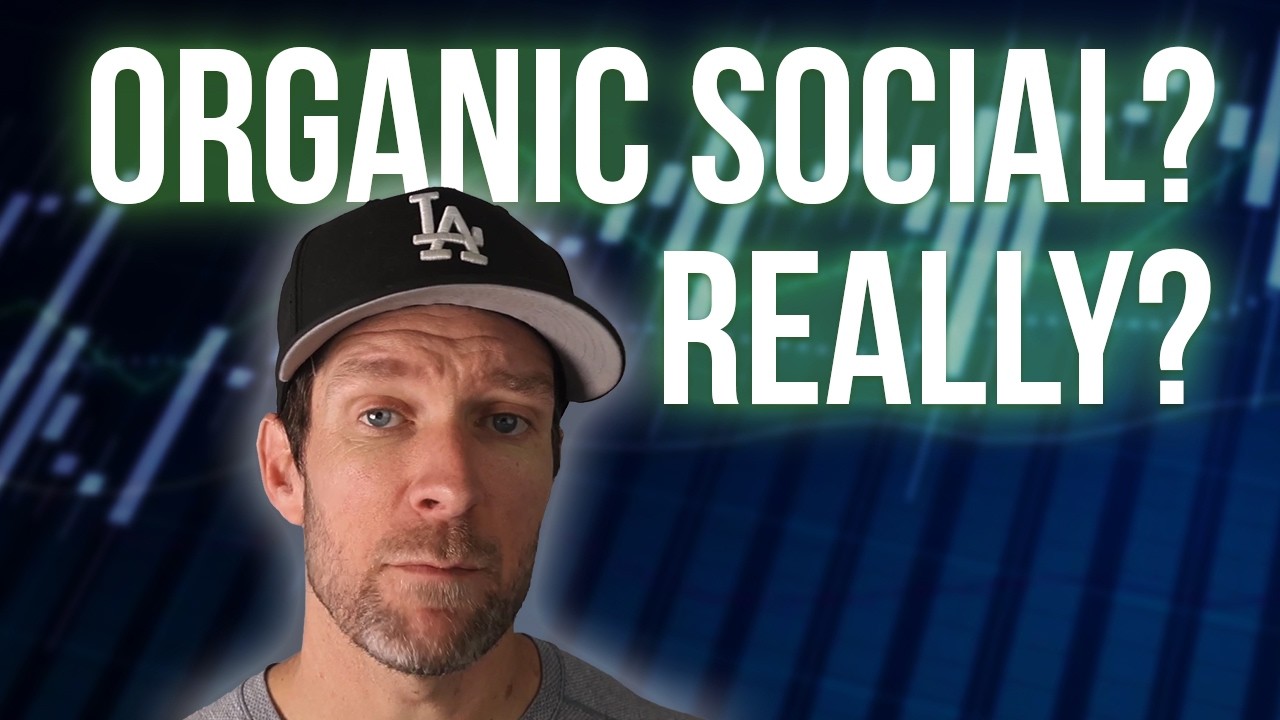
The Andrew Faris Podcast · @andrewfarispodcast
Words
10,404
Runtime
42:42
Speaking pace
244wpm
Reading time
43min
244 words per minute, above the 201 75th percentile of 349 measured videos. That distribution comes from the 349-video hook study.
Opening (first 30 seconds)
One of the common problems I see for DTOC brands is just being stuck. You've hit some revenue level. You can't seem to break through [music] it. You don't know what's holding you back. And so today on the show, eight ways to break through the stagnant revenue level you are at right now beyond just pounding more on meta ads. Let's get to it. All right. Eight ways a brand that is stuck get through it. I'm thinking here especially of sort of like mid to high seven figure early eight figure brands but really into the eight figures brands that are sort of have grown for a while and are having a hard time keeping the growth going. It's very
122 words, the words spoken in the first 30 seconds at 244 words per minute.
Free, no signup. See how the first 30 seconds hold attention, with rewrites.
Sentence shape
| Measure | This transcript |
|---|---|
| Sentences | 658 |
| Average words per sentence | 15.8 |
| Longest sentence | 121 words |
| Questions asked | 60 |
| Sentences containing a number | 37 |
Most used terms
Filler phrases
251 in total: like 110 · actually 39 · sort of 27 · kind of 23 · you know 19 · right? 15 · I mean 8 · basically 3 · uh 3 · um 3 · literally 1.
A literal whole-word count of the same phrase list the Prepublish browser extension uses, so a phrase inside another word is not counted and a phrase used in its ordinary sense still is. It is a count and not a judgement.
Free, no account. See where attention is likely to drop, with a rewrite for each weak line. The free check shows the scores and the one issue costing the most. Or run it on the words above first.
Free · No login · See a sample audit first if you prefer.
What this transcript is
Every word below is the caption track YouTube publishes for this video, pulled from the video itself and reproduced unchanged. It is not Prepublish's writing, not a summary, and not a re-transcription: it is the video's own published captions. English captions, generated automatically by YouTube, in the video’s original language. Source: the video on YouTube. A channel that would rather this page did not exist can ask for its removal through the contact page, and it is removed.
No Script X-ray for this video: YouTube shows a Most replayed graph only once a video has enough views.
One of the common problems I see for DTOC brands is just being stuck. You've hit some revenue level. You can't seem to break through [music] it. You don't know what's holding you back. And so today on the show, eight ways to break through the stagnant revenue level you are at right now beyond just pounding more on meta ads. Let's get to it. All right. Eight ways a brand that is stuck get through it. I'm thinking here especially of sort of like mid to high seven figure early eight figure brands but really into the eight figures brands that are sort of have grown for a while and are having a hard time keeping the growth going.
It's very unlikely that you're going to double your brand every year for a very long time. Let's just get that out of the way fast. Like those levels of growth at some point are going to slow down for the vast majority of brands. And of course if if that's true for the vast majority of brands, you should basically assume it's true for you. Go listen to the rocket ship stories out there. go listen to the brands that are growing at insane rates all the time, even when they're huge.
Those stories exist. You can learn a lot from them. But no, by definition, those are outliers. So, if you're stuck, it's normal, actually. And you have to think through how to solve these problems in hard ways. How do you get even 20% growth or or maybe even something as aggressive as 50% growth, something like that? As you grow, that gets harder and harder. So, I'm going to give you eight ways to break through that right now.
But first, number one, and it's the thing that I think is the most important thing to really internalize and to think about how your organization produces this. It's new product. Number one is new product. And that can mean so many different things. I'm going to have Curtis Matzo on this show from Portland Leathergoods. He's coming on in a few weeks. So, by the way, wherever you're watching or listening, subscribe right now.
You're not going to want to miss that episode. One of the things that strikes me as so impressive about Portland Leathergoods and Curtis and what they've built there is an insane volume of new products releasing all the time. Now, you've heard stories like that before, but the thing I want you to really understand about what Portland has done is that they own all their manufacturing so that they can do this. And you probably can't go own all your manufacturing.
Curtis literally moved to Mexico where they manufacture their leather. Okay? You probably can't do that right now at your stage of business. So you might be able to and you might maybe consider it. But the reason that I I bring up that story is that what I want you to hear is the level of investment from Curtis and his team in their supply chain in order to make this possible that they could release a whole bunch thousands of products per year as they've grown that they could release that much product all the time to keep growing.
The point that I'm making here is that when I hear great brands do this in fact let me let me give you another example. A few weeks ago, I had Nazarin Jafari from Mix by Nazarin long time. She's been on the show, you know, four times or something now. Has been a client of mine in larger and smaller ways for the last few years and remains a friend and somebody whose business I see closely, right? Nasmin said in that episode as well, she doesn't own her whole supply chain, but she is shopping manufacturers, changing uh getting a whole bunch of reduced costs in her cogs and is going to be able to keep growing.
And that has happened at the same time as she has increased her product release cadence and grown her business a whole bunch. She had hit a ceiling. She had been kind of stuck and she released a bunch more product all the time. Now that's fashion and apparel and so it's sort of the most obvious category to do that. Port and leather goods similarly, right? It's an accessory. But that's something to learn from people in that space.
The more product you can release, the better. And so Nasser at a much smaller scale, like mid-se figures, is hammering away at supply chain and critically her internal operational processes to release product as often as she can. And she's now got it down to where she's releasing product. You know, I I forget what her number was, but she's hoping to have eight releases or something like that last year off of having like six or something this year.
Maybe she's trying to even get to 10 or something like that. And and to have those kinds of things, I I think about another apparel brand that I've worked with, Melon, the Headewear brand, I worked with when they were very small. another huge brand doing awesome. They had gotten to a point where they were releasing product every two weeks at one point and even aligning those product releases to customers paydays etc.
Again, apparel. So, it's it's sort of core to the thing. But what I want you to hear in that is that these brands work really really hard to generate high quality products that do this and they've built a whole bunch of time and effort into doing this really really well. Again, I have another another brand that's not an apparel brand. I can't name the brand, but another brand where practically for them basically doubled their business and they're not apparel.
Like I said, it just opened up a whole new set of customers for them. And this is what people I think miss a lot of times is that new product is a way to re-engage past customers for sure. And that's one of the things that it does. It generates a bunch of returning customer revenue for you. It has much more impact on your retention than something like um you know, better email or something like that. Better email serves the new product release in fact.
But new product, what it also allows you to do is reach customers that you are not currently reaching because they don't like your current product as much. Even if they're kind of interested in your brand, you're just not quite there or whatever it is. It allows you to make new ads, different messaging. It allows you to all kinds of different things. So, new product is where you should be looking. And the critical thing here is that the operational and supply chain related processes take up a lot of time to do this very, very well.
And I want you to consider that. I want you to consider putting in the time and effort in your current stage of business to doing this and putting off some other things that may take up a bunch of your time. So again, if you're going to do this well, it's maybe a place that's really really worth building a bunch of organizational depth, especially if you are in that sort of mid-seig range, pushing to eight figures, something like that, you probably don't have the organizational capacity or manpower to like take on a bunch of huge projects at a time.
But if you're going to overindex on one skill that's going to help you really grow your business and become a great business and if you're going to overindex on one cost that's going to do that with by bringing in product developers and again you know manufacturers you can work with on NPD new product development like if you're going to do that then that's a place that's really really worth your time and really worth investing in because it can have a really big impact.
It's it allows you to do everything else. you've got a great meta ads machine set up, media buying is dialed, all those things. Giving new products to your meta team, whatever, like that really allows them to push on new messages, to reach new people, have new fodder, new creative to keep working with. It's just really, really valuable if you can do it really well. Now, there's ways to do it poorly and sloppy as well, and we don't have time for that because this is an overview kind of episode, not a deep dive onto product development.
We've done a bunch of episodes with different people who have done this well. Um, go check those out. But that's the number one thing and is the first place that I would look. Are you really putting serious effort into your product development, making your current products better, releasing new products, etc. All right, number two, better promotional moments. If you are under $30 million in revenue, then you are very likely in most cases too nervous about launching sales, in my experience, most promotional moments, most sales actually do generate a bunch of incremental revenue for your brand that you were not going to get otherwise.
Now look, you may be nervous that you're sort of discounting your brand too much and harming the the quality of your brand. You're training people to buy only at sales, whatever. I suppose that's fine. I think one of the questions I would ask is how big of a brand are you trying to build? If you're trying to build a $200 million brand or something like that, and that's really your goal, then maybe you have to be a little careful about this kind of thing just because you want to build the skill set to not be reliant on those things even as you grow. it becomes like a crutch and then you can never get out from under it.
I don't know. That said, I've seen a lot of $200 million brands that have a really good promotional strategy, right? Again, I've talked to McCoy Merkel, the CMO at Portland Other Goods. McCoy has talked about how they have sales or something every month in their category. In some way, they're constantly creating a reason to buy in a promotional moment. And this is the thing. When I look at promotional moments for brands over and over and over again, what I see is a way to capture a bunch of value that from demand that you have created in your ads and in your marketing efforts, right?
You go and put all this money into ads and you go and get people to click and click and click and click, but there's not a reason for them to pull the trigger and buy right now. But what a promotional moment does is it creates that reason to do it. Even if they've never heard of you before or whatever, you collect their email address and now you have the opportunity to get them to go do that. And the thing is that is really super valuable.
I talked to another guy recently who was talking about a working on a brand that that was just all built on flash sales where they were like, you know, the whole brand was building flash sales all the time. They were like it was like 50 of them on different products like every month or something like that, you know, it was like a crazy volume of those. Sunil Agaral has talked about building a $400 million business portfolio.
He's been on this show again. Go look look that up. Su nil. Go search that name in my podcast feed and go listen to my interview with Sunnil. built a $400 million business that he started in the 80s focused on value shoppers and it's just deals and drops all the time. We love valueoriented shoppers because we're happy to serve them. There's a lot of them out there. Walmart for example is a really big business and we can in fact still create a huge AOV on value shoppers by deeply discounting and building that strategy right into the core of what they're doing.
You can build a great brand while running regular promotional moments and promotional moments generally do create incremental revenue. And so here's the way I'd frame it to you. If you are really strongly anti-promotional moment in your business, the burden of proof is on you to tell me why it's bad for your brand, not on me to tell you that it's a good idea for your brand. Because what I can tell you from a lot of experience that it does create incremental revenue and incremental profit.
You know, you have to be careful about unit economics and discounting and all those things, but you can get good at that stuff. You can make sure that it produces actual profit. I'm telling you, it produces additional profit for your brand by running better and more promotional moments. and you only get better at it over time as you do more of it and you figure out what your customers really respond to, etc. If that's the case, the burden of proof is on you to tell me why not to do it.
If I'm telling you there's a way to generate more incremental profit for your business, you should default to doing it, not to not doing it. A lot of people default to not doing it because they're too nervous about all kinds of things they've heard people say. Don't be too nervous. Try it out. See if there's an opportunity there. Number three, let's just talk about the meta side of this. More creative manual bids. Okay, I'm saying this just because some people are probably watching listening to this who have not seen my content before, but I think that in conversations around growth, you know, Taylor Holidayiday has said recently, you know, the CEO growth is the CEO's job.
He said that on my podcast, he said that elsewhere. I sort of agree in some ways with that sentiment, which is this idea that that your ad account shouldn't be the main way that you're thinking about growing the business for forever. or it's going to stagnate at some point and brands have to do things on top like the things I've been talking about moments product etc. But you can overstate that I mean the the ad account run effectively can really create growth the next winning ad can really be a serious differencemaker in the performance of your ad account like and running manual bids really does most efficiently distribute your ad dollars and generate the most profit in your business at the same time while you also maximize your reach on your ads.
So running a bunch of building a a muscle to generate a whole bunch of creative to hammer the moments that you have and to generate good quality creative as you do. You should always be trying to do both, right? Like the point of more creative doesn't mean it should be bad. The point of more creative is more good creative. There should be some level of quality that you're producing and you should produce as much of that as you can as cost effectively as you can within whatever budget constraint that you have and you should be trying to build that muscle all the time.
It's going to only help you more and more as you grow, as you release products, as you have promotions, those kinds of things. So, you should be building that way. And we believe as an agency, this is what we do. Like, we help brands with what I think is best-in-class media buying built off of manual bids, combined with pursuing a high volume of really high quality creative. Trying to do those two things together really can make a difference and help you break through ceilings, and can help you distribute your dollars really well, can help you reach audiences more effectively because better creative means more persuasive creative, and it can make more people available to you as potential customers under your CAC target by doing a great job.
All of those kinds of things. So, don't mistake anything I'm saying here to say like even though most of this episode is not going to be about the meta ads account, there are ways to get better at that all the time and to keep hammering away at that and you should be doing that. We do this for brands and I think it works. It makes a difference. I watch brands perform better when they run manual bids with a bunch of creative and a bunch of quality.
Like we're seeing this with brands that we are working with now and we're able to do that. Now, there's a weird thing here which is that I think also and this is going to come out an episode I release I think next week at the time this goes live. I'm going to do an end of year reflections episode. And one of the things I'm going to say in that episode that I've said in a few places elsewhere and that I continue to believe is true is that most brands are also overspending.
So it's actually possible that a lot of brands ought to actually come down a little bit in revenue sort of before they go back up or at least ought to be unafraid to have something like that. So it's possible that running something like manual business more creative makes you get a little smaller before it makes you get bigger. I think that's probably good for a lot of brands and that they ought to do that because it will help them actually generate more profit in their business and eliminate cost centers.
So that's sort of a separate thing. But on the whole, the pathway to growing your business often is actually better quality creative with better quality messaging run through manual bids to maximize the reach at your target cost and to ultimately have a business that really really works. So don't lose sight of that. But again, Nasin Jafari came on this podcast recently and talked about two things she did to help double her businesses last year after seeing some stagnation.
Number one was the supply chain and product release side of things, right? The this like getting that product development and product release timeline right. And number two was really well executed promotional moments. Not too many of them, but a couple of them that were really key. Number three, a whole bunch more creative. She just built a creative machine that runs basically without her. So, she gets a ton of creative in the account all the time.
And wouldn't you know it, at her business double, you know, it's like you do those three things that I just mentioned really, really well, you can get really far. Ask yourself honestly, are you actually doing these excellently? Um, again, in that episode, Natherine had toyed around with a bunch of different, you know, after we had stagnated running ads for a while with manual bids. She kind of toyed around with, should we run auto bids or something like that instead?
Are we sort of holding ourselves back with our media buying? And eventually came full circle after trying it out and going, no, that wasn't the problem. It was these other things. It was product, it was promotion, it was creative, and those are the things she had to do. Those are operational challenges first and foremost. We certainly AJF Growth, go to afgrowth.com right now. Tell me a little bit about your brand. If you're interested in us being the the team that helps you with this, this is our bread and butter.
Manual bid media buying and creative output run through financially intelligent processes. Okay, that's the idea. But whether or not it's with us, you should be building that kind of muscle in your business. Number four, organic social. All right, now we're getting a little more speculative, but I'm a real believer in this right now. I think this has been overlooked by a lot of DTOC brands. There was a time period in DTOC where like organic social and really especially influencer like paid influencer where you're pay for post.
Those two kind of things came together as like strategies that sort of worked in a distinct way. And for a little while there's also like the grow on Tik Tok grow on YouTube kind of strategy where you generated you had great output around those two channels in particular and that allowed you to create a bunch of organic interest in your brand and a bunch of revenue etc. But those both of those things I think have kind of died. like pay for post is dead with influencers at least as a way to drive a bunch of revenue right now.
There's a good use of influencers still. And then secondly, you know, I just don't see as many brands scaling organic. Tik Tok or YouTube or whatever it is right now. The way I saw a few kind of outliers doing some things really impressively, you know, I think about beard brand with their YouTube channel for a long time. They were sort of the best class of this in YouTube. Certainly Isaac Maderos and Mini Katana doing this on Tik Tok and on YouTube for that matter.
But I do think there's a place for organic social that I've watched at least one brand that I have worked with for a while get a lot better at and see have real impact. And it's a brand that's in a niche kind of world. It's Driveline Baseball. Driveline Baseball. My friends there, I've seen them really try to hammer their e-commerce business, kind of find a ceiling there, and ultimately realize the core of their business is actually their their training business with their athletes.
And as Driveline baseball has invested more in their organic social, it has really helped them lead to it has really been correlated in their business with generating a bunch more leads for athletes to come train with them. Now, that's not an e-commerce business, but there's a critical principle here, which is that what I watched them do was bring real measurement to the process. So, they built a whole system for capturing content that was in their case in their gyms.
Okay, they built a system to do that really well, produce a whole bunch of content and then from there they started measuring, okay, on average how much reach do we get per post? Okay, if I do this over a long period of time, how many how much reach do I need to generate a lead? And they just sort of built a simple model that allowed them to figure out, okay, well, what does that end up being at a CPM level? If it takes me this much money to produce the content to generate it somewhere, and if that much money produces X number of leads, okay, then I'm going to try and build and give myself goals around how much reach I can get and how many leads that gets me.
And then I'm going to build an organic content machine to reach my core audience doing that kind of thing. Now, I love this way of thinking about it because driveline baseball is a niche baseball thing. It's like for high level baseball players who are trying to train at with, you know, the best baseball training facility in the world. And so, there's actually a decent number of those kinds of levels of baseball players.
You're talking about really good quality high school players. You're talking about D1 and and other college athletes and and even pros and MLB players all the way up through the greatest MLB players who've ever played the game. But that still is high level baseball players. And this is actually the kind of people that I think a lot of times ought to be thinking about organic social in their business is brands that have some kind of a niche community.
And niche almost sounds like I mean small, but I don't really necessarily mean small so much as I mean self-contained. I mean a group of potential customers who are addressably in one community, right? An old version of this would have been CrossFit and my days at Kao. You've heard me tell that story before about how we reach those people. But the basic idea is if you think that your product appeals uniquely to some community of people or could reasonably do that that you want to reach over and over, organic social can be a great investment.
It just takes some time to build muscles for to pay off. It's a little harder to measure than just like seeing a CPM and meta and pounding the spend more button, right? Like it's you actually have to think through a process here where again where you're setting it up the way that my friends at driveline did where it's setting up like an actual dollar per lead or dollar per order or something like that kind of cost. And the goal here is really to think about going deeper with that community of people and what I would call sort of a medium reach medium.
Okay, sorry to use the word medium twice there, but like a middle reach, right? So So there's like some things you can do that are super scalable, super fast like Facebook ads. you just press the button and it spends more money and you get reach millions and millions of people. There are other things you can do that are extremely narrow and extremely like go really deep with a few people. Like pick up your phone and call customers or go do an event, do event marketing where there's going to be 500 people in an event or a thousand people in an event or even 5,000 people in an event.
If you go to an event where there's 5,000 people at the event and you set up a booth there, you're only going to reach, I don't know, maybe a thousand of them. I'm not sure exactly how many, but you're not going to reach that many of them. And it's going to take a bunch of time and effort. you have to travel. You have to buy a booth. You have to set the booth up. You have to do all these different things and it's going to be like expensive and a bunch of work.
The only reason you ought to do that in your marketing is if reaching those people is disproportionately valuable because you can go really deep with them by being live with them at an event they care about. Maybe they're really core customers or whatever. Organic social is somewhere in between those two. It allows you to reach a sort of medium amount of people somewhere between very small and very large, right? But it allows you to do it replicably over time with potentially some deeper hits on those people.
And I think this is a muscle that a lot of DDC brands have a hard time thinking about because you just think like, I don't know, am I going to really actually reach anybody or whatever? But the people you reach in your organic social are going to be people who again are really core and who maybe at some point you do go and show up with at an event. And what I want you to think about really is, do you have that kind of audience?
If so, who are they? What kind of content appeals to them? and how can I get really good at making that and give myself some time here. If you start posting on Instagram or Tik Tok or wherever your audience is, X, whatever, like, and you reach 100 people at every post, you're going to be really bummed, right? But here's what's likely to happen. As you start posting more, you're going to start getting feedback. Oh, this post didn't reach a 100 people, it reached a,000 people.
What was the difference between a thousand people post and 100 people post? You go try and make a thousand people post. I know this because I have an organic content engine. I've never paid for a single view of my podcast. I know what I have some idea, I think some guesses about what kind of YouTube content I make that leverages YouTube's algorithm to reach more people in my target audience as I make this show. Okay?
And I've now made a lot of these shows. And while I'm certainly no organic marketing expert, you can see that by my reach numbers, okay? It's also not that big of a community. And I've learned over time how to think about better and worse. And I try not to be audience captured. I try to just make great content. It's going to appeal to core people. I think more about depth than breadth. And you can do all those same things, too.
But again, this is not going to be easy. Building this kind of thing is going to take effort over time. It's going to be really knowing your customer, knowing where they are, knowing how to reach them. But I think this is one of those ways to generate a lot more depth, a lot more value with your core customer. I think more brands ought to think about it. Don't worry about virality here in the true sense. What I hear from everybody who goes viral is that actually super viral posts don't generate very much money.
And it's because it actually gets away from this depth thing. Virality by definition means you've sort of broken containment on your core audience and you want to get somewhere in that sort of core to middle core audience with organic. That's where I think the real value is and that's where I think you should be thinking about the value of the channel. Number five related to this influencer event and other depth approaches.
So I just mentioned influencer I just mentioned event. Okay so we just say influencer event and more. Okay these are actually really good possibilities for how you ought to work with your audience particularly again if you're really niche. What I'm thinking about here is like how do you show the person that you are trying to reach that you really are for them? Where do they congregate? Whether that's in person or online and how do you go show up there?
How do you create an influencer deal with the right kind of influencer that makes sense for your audience? Even if that means giving away equity in your company for an influencer equity deal, which I've seen brands do. I've been been inside a couple of those deals and I've seen it really matter for brands where like having a really good quality influencer really matters. How do you do that? What about showing up to the events where those people are?
One of the mistakes we made back when we we ran Slick Products, a brand that was targeted at off-road wash, okay? So, wash products for off-road vehicles, dirt bike, ATV, etc., is that we didn't do any event marketing. Now, part of that was because we were cash constrained. But in retrospect, one of the things we should have done is we should have been going to different places where really hardcore dirt bike and other people were showing up or those races for them or other I don't know.
I don't know what it would have been. That's not my community, right? other places showed up with a table and showed up and said, "Here's our product. Let us show you how awesome it is. You should see, you know, demonstrate it in in in person, those kinds of things, and really be where the people were so that we could show them, hey, you people who care a lot about this niche sport, about this community, you people, we are for you.
We are with you and you should buy our product because we understand you and we really are for you and we're really quality." We didn't really do that and we should have and I think a lot of brands ought to be thinking about this as well. The thing that is required for you to think about these bigger influencer deals or for event deals is that you have to get outside of the mentality that it's going to make you money right away.
You have to be ready for a long payback window. This is why, like I said, pay for post for influencer to just like generate a bunch of revenue right now is dead. I worked with DIFF eyewear a long time ago. Diff was built on pay for post with like reality TV stars, okay? And that was the the way that they got going. It was like pay this person a bunch of money. They post on Instagram, a whole bunch of people, you know, somebody who was on the Bachelor posts, a whole bunch of people flood to the website from that.
I think they were doing stuff with like a Kardashian or something at some point early on. And it was just like tens of thousands of website visits like immediately coming to the website to where they could actually just say like, I don't know, we paid 10 grand for this post, we made 20 grand in revenue, it was a win. Or we paid 10 grand, we only made five grand, it was a loss. Nobody measures that this way anymore. You have to think about longer term payback windows. event marketing.
If you show up to an event with a booth where you sell product and you break even net of everything that you have done, you have done great on your event marketing. But what you have done is over time showed people you really are for them. And so much of the problem, so many of the reason that DTOC businesses don't actually grow over time or they stagnate is because they are thinking way too short term about their business.
They're hearing them rocket ship growth stories and they're going, "Oh, I just got to pound my Facebook funnel farther and farther and farther and that's going to be the way to ultimately get there." Like I said, there's a lot of value in pounding your Facebook funnel and doing a great job there. I think you ought to do that. In fact, in the order of operations here, I would be doing that first. Get great there as well.
But, uh, but a lot of people just are not realizing that actually showing up to one event doesn't really doing anything. Working with one influencer doesn't do that much either. But working with core influencers a whole bunch of times over the period of five or 10 years and trying to build something lasting in a space with people who really care about it, people who care about their community and their stuff and their values and those kinds of things or showing up to 20 events over that time to where people see you repeatedly and now know this is a part of my community.
That's actually where the payoff is. And so if you are thinking really short term about how do I generate a whole bunch of money right now and that's it, these strategies are not going to work for you. But if you're thinking about how to build a long-term valuable business with real resonance in a space that people actually care about and that matters in that space, these things will actually matter for you a lot. And you ought to go show up and do them.
And you should think about what amount of money can I allocate right now to go make this happen. What's the most I can do? Well, that's the most you can do. If you've got an extra 20 grand this year to go put into something like this, well, then you've got 20 grand. Think about how to allocate that as well as you possibly can. What are the events that are most local to you so you can cut down on travel costs? Who's the who are the are there four influencers that you can get multiple posts with at five grand each or sort of middle tier influencers?
That's what your investment is this year and you can also reuse them for your ad content, something like that. Then that's fine. Next year maybe you'll have 50 grand for it and you can go a little bigger. The year after that you might have 100 grand and so on. You build it slowly over time but you keep showing up to where people are at. Show them that you actually care about them. Support the charities they support. All those things and that's how you build a brand with real resonance.
Okay? So consider that if you are listening to this episode and you hear me talking about CRO testing that is serious and processdriven and profit driven and goes beyond the basics, you know that you need to be considering using Intelligjam. Go to intelliggeems.io to get set up with Intelligjam. Very easy to get onboarded and get testing right away. Doesn't require a developer. You can just get up and get testing right away.
As I said in this episode, you can test all the things that really move the needle the most. [music] That's what makes IntelligJ so great. You can test things very close to checkout first of all, which is really important, like actually on the checkout pages themselves. That's a new feature. You can also test like price of your products. I bet you picked your price out of almost thin air. You have no idea what the actual best price to charge for your product is.
You can test it with Intelligence. Test the sitewide offer that you give to new customers. Test your free shipping threshold. Test how much you're charging for shipping. All these things that really do matter. And of course, all of the other more traditional CRO type test, messaging and design, those kinds of things as well. You can even test full Shopify themes. Like if you're thinking about switching to a new website, you can do that as well.
There's just so much you can do by having a good quality repeated testing process. That's why I think every one of my clients that is on Shopify is using Intelligj. It's just become the standard [music] in this case. And on top of all of that, Intelligjs measures the output of your tests critically based on actual profit per customer, not just conversion rate, not just AOV, but the actual profit you're driving. It does that by tying into your cost of goods data in your Shopify store. and then giving you the output based on your actual profit.
So go get started if you are going to start a serious testing program and you should be if you're listening to this. Go to intelliggeems.io. Use the code ferris 20 fs 20 to get 20% off your first 3 months. Nice little benefit there of getting started. Make it a little bit easier to get going. Intelligjs.io. Ferris 20. Get going today. Number six, let's get a little more tactical. Intelligent CRO. Intelligent CRO. What do I mean by intelligent CRO?
What I mean is CRO, okay, conversion rate optimization. Sure, you should be doing that. It is a way to generate more value for yourself and for your customers for everybody who gets to your site. CRO is just a way of figuring out how to communicate your best products in the best ways to your customers as they show up to your website. So that might be the arrangement of your menus. It might be the merchandising on your site.
It might be the design of your site. It might be all the things that Intell can do for you like price testing and offer testing and shipping thresholds and all those things. All those things really matter and that's part of it, right? Really be thinking through the experience your customers are having on your website and how to get there. But I actually don't just mean this and the place that a lot of CRO goes wrong is that people have no plan, no road map for what they ought to test next.
They're just kind of throwing tests at the wall, but they're not thinking carefully about like what does my customer actually care about? What is getting in the way of them purchasing? What do I need to know about this? Certainly the price of your products and the offers you have are always things your customer cares about. And so you ought to think about prioritizing those in your testing road map. But you should be thinking about trying to pile up big wins over a long period of time.
So let me give you a couple hallmarks of intelligent CRO. Okay. First, have a real process for it. Have an actual process for what you're testing. And so what I mean is like know why you're testing the thing that you're testing. Make some kind of hypothesis about the revenue impact it can have and why. If it's the biggest questions, the closest to checkout, that's probably the most likely things to make the biggest impact first.
Check some of those off the list. again, free shipping threshold, price, your shipping charge, your actual price of your products, a bunch of things like that. Those are all the things to me. Sitewide offers, those kinds of things, right? Like 10% off for new customers. Those things all matter and you should be considering those probably early on because they are obviously going to be needle movers in some way simply because they get very close to the experience of a customer exchanging dollars for your product.
The closer you get to that, the more impact it's going to have. Okay, so there's that. But beyond that, think about like what about messaging? This this is a thing I've watched Nate Legos do, my friend who's the CMO now at Adapt Naturals, client of mine, and I've seen him talk about doing this back at Original Grain. I've seen him do it now at Adapt Naturals. He's really good at it. And what he does is like really prioritizes how do I find the best and most important messages in my funnels, on my landers, etc. that are going to really move the needle for like customers experiences.
So, there's that. Okay. So, think about messaging and then how that really matters. Try to think and understand what does my customer really care about? How do I communicate that value as well as possible? Don't just rip off a new landing page super fast that AI made. Like think think about how do I communicate value to my customer. Make a hypothesis and do that. Okay. Another thing I'm going to say in this a third thing, okay, is don't end your test too early and seek to replicate when you have a win.
Like make sure your win is really bankable. What I'm saying is please bring some statistical rigor to the testing that you're doing. I watch this happen all the time. Somebody launches a test and they're like, "Oh my goodness, cell A in my test got 20 purchases. Cell B got 10. It's winning by 100%. That means it's definitely the winner." Even if it's even even if you know like, okay, it's not actually 100% better, but you just you just have this sense that like it's so much better that even if it's not actually going to hold that level of result, it's going to win.
If that's what you do all the time, you are going to constantly have false readouts. You may actually put live winners that make no impact all the time or just waste time doing tests or even actually have tests that have a negative impact on your site because you end your tests too early. I am so biased when I go into any CRO test that I ever set up. I am like I have a clear rooting interest because I wrote a headline or something and I really want to see it win.
Like try as much as you can to think instead about creating a hypothesis, predetermining a time range. Don't just bias a test towards sat sig. If you just say I'm gonna end this test when it hits statistical significance, you're biasing the test towards stat sig and that is not actually a good test and not a thing to do. It sort of creates an arbitrary end point to when the test runs. Don't do that. Create a predetermined timeline, a predetermined amount of traffic, whatever it is, run the test that way.
And if you see a result that really matters or that's too good to be true or you think it have a real impact again on especially as you get to things like your price or whatever before you go push the new result live replicate it or at least like replicate the test so that if you run it at 50/50 traffic split and when you do that you see like the control loses and the variant wins and you're like awesome my variant wins and it wins by a lot but if it's a big test like at least go run it again at 8020 towards the variant and just make sure that you're not doing something wrong here.
Okay. So yes, replicate your test. Bring some rigor to it. Again, think long term. Don't think about how do I just like pile up a bunch of tiny wins right now and triple my conversion rate. That's not going to happen. Okay. What instead you should think about is how do I set things up for the long term of winning big over time. Don't just try to win in a short-term way right now. Try to win over the long term by creating solid winners with solid methodology.
That's the way you ought to think about things. Okay? And of course with Intel gems you should be doing that also with a profit focus. Make sure you fill in your COGS information. Know that this your test is winning at the level not just of see of conversion rate but actually of profit and so on. If you are trying to add Google ads as a meaningful part of your revenue in your business and you're trying to do it with in a way you can trust with people with real technical expertise so you don't blow money on stupid branded search ads on stupid display retargeting ads on stupid uses of your money that just suck value out of your business because Google hides what is best in for your business [music] in its reporting you should go to my friends at Zetto marketing zatomarketing.com led by Kirk Williams very long time extremely trusted PPC, Google Ads expert in the space.
I know Kirk personally pretty well. He's a friend of mine at this point and really am a huge fan of what they've done. We've partnered with Zetto on a whole bunch of ads. What I always say about AJF Growth is that we will not run Google ads for people because I know how to not lose people on money. But I personally don't know how to use Google well enough. It's too technical for my skill set to actually make money for clients.
And so instead, what I end up doing is referring people out to Zeta. We do this over and over. I've got multiple clients who've used Zato for a long time to run their Google Ads who have been really happy with it. I look at the reports week in and week out. I see under the hood of the Google Ads account. I watch what Zetto is doing and I see really well-run ad accounts. No wasted money, attentiveness to things, high integrity.
It's a boutique team, boutique agency with really high quality people who've been working on Google Ads for a whole bunch of years at this point. You should make Google Ads part of your media mix in 2026. almost certainly it has some value to you. Zeto is priced reasonably. It's just the first place I would look. Honestly, it's the first place I send people all the time when they ask me about Google Adore. I send them to Zet Marketing first.
That's where I'm sending you as well. Go check them out. Tell them that I sent you. Marketing.com. Tell them you came through this ad so that Kirk knows that he didn't blow his money when he gave it to me. Ask for Kirk. Tell them I sent you. I think you'll be very pleased with the results that you get from Zato Marketing. Number seven, consider adding apploving and Google ads. Now, Google ads is a whole bunch of different things.
It could be YouTube, especially if you have Amazon in your business. YouTube can make a real impact. Could be Google Shopping, categorical search, categorical shopping, those kinds of things. That stuff can really matter. I am also just so bullish on Apploving. You got to be careful here with Google because there's PMAX that's going to be a problem. and there's branded search and there's now demand genen ads that throw a whole bunch of what I call Google soup ads all together and you can't see if you're just remarketing people or running branded ads or whatever it is.
That sort of stuff can be a problem. But I think there is an opportunity to get really good with Google Shopping, Google search, building funnels off of core terms, getting people into landers that can really work or offers that can really work. Again, think about YouTube with its impact on multiple channels including especially Amazon on top of your actual e-commerce business measuring with incrementality, etc. and App Leven I'm just really bullish on.
I just continue to see really good quality incrementality tests. In both of those cases, App and Google, I've seen mixed results from incrementality tests, but some showing really really strong incrementality on those channels to the tune of like 10 to 30% spend lifts on top of meta for brands. And of course, it can go bigger than that depending on your particular brand. If you have the exact right brand for that exact right channel, you can really be somewhere.
Apploving to me is the most obvious here is a place we're going to be putting a bunch of investment in 2026. We want to get great at this channel. They're still so early. Listen, 10 years ago, 12 years ago, whatever it was when Meta launched, the platform was not as good or effective as it is now. I expect AppLan, which has a very large reach to its users to get better and better and more effective all the time at an advertising channel.
You should expect that, too. Start investing there. See if you can get good there on top of Go get good at Meta first, don't get me wrong, before you go get good on those channels. But if you're there, if you're good on meta and you're stagnated, consider putting disproportionate time and effort towards those next channels. I don't think in most cases this is going to double your business. But I do think in a lot of cases it's going to potentially improve your spend and your reach by 30% or something like that.
And there are some cases where it doubles it. Again, if you have the exact right sort of customer channel fit, I'll call it where you can get there. Just consider those channels. You're going to have to measure them with incrementality studies. All your measurements is going to get tougher, but they can really be worth investing in. I also saw some recent stuff around X ads that can be effective. So yeah, there's a lot of different stuff like that.
Consider where is my customer? How can I reach them? Do I have good measurement and incrementality setup? Again, what I want you to hear me saying here is this is going to require real time and operational effort. It's not going to be easy. It's not going to be fast. You have to build muscles to accomplish this sort of thing. If you can do that, those channels can be good. If you can't, then you're probably just going to waste a bunch of money.
That's actually the case for nearly everything I've said so far. You're probably going to waste a bunch of money if you do a really half-hearted organic social effort. Just try to outsource it and that's it. Okay? Get some creator and don't measure it. Seriously, you're probably going to blow money on influencers if you don't have some real way and some real process of thinking about who to work with, why you should work with them, etc.
You're going to blow money at events if you're not thinking carefully about the finances of the whole thing, who's there, whether it's actually good for you, whether it's worth it, all that. All of these things require a bunch of work and a bunch of time, and you should build those operational process. All right, number eight, very last one, and then we'll wrap up. Distribution channel expansion. What I mean by that is add Amazon to your business.
Like, consider trying to sell into brick-and-mortar retail. This is the the sort of white whale for a lot of customers or for a lot of brands. They just think like I could be saved if I can get into retail channels. And that's not true. It's not that simple. Again, like all these other things, they require time, effort, financial intelligence. They require financial some sophistication a lot of times because suddenly you're going to have differences in the way that money gets passed to you through others.
Almost nothing that is going to be really good for your business happens quickly and easily. But 50% of e-commerce in the US still happens on Amazon. There is real incremental revenue to be had on Amazon in your business. Consider going to get it. Okay? Why wouldn't you do that? It makes sense. I know Amazon comes with some problems. Some people want to stay away from it forever. I don't want Amazon to be my main channel, but it can really create incremental revenue because it's the greatest shopping experience in the world and it's only getting better.
Delivery timelines are insanely fast. There's no shipping cost. Like, it's just being a Prime member and buying things on Amazon is so much better than buying it on your website. I would rather buy your product on Amazon every day. I did this when I bought a Ridge wallet finally. I was like, "Wait a minute. Why would I buy from Ridge.com? I'm going to go to Amazon and buy it." It was actually incremental. It was actually better.
Would I have bought it on Ridge.com? Maybe. I don't know. But it sure was nice to get it like right when I wanted to get my product, etc. Just yesterday, just yesterday, I considered going and buying a fitness product on Amazon instead of on a company's website. Ultimately, Amazon did not have it. So, I had to go to the company's website. And so, in that case, I still stayed on there. And maybe maybe that was ultimately the reason that I bought on the website.
So, maybe it was good for them to not be on Amazon. On the other hand, if there were some really close competitors to the product on Amazon, they didn't have quite the spec that I wanted, but if they did, I would have bought it there over buying from the brand that I first bought from in a heartbeat if that is in a sort of nichy spot. And so, if that product ends up on Amazon, I'm going to buy it there. Just better. It's just better.
Okay? So, I'm just trying to buy on Amazon wherever I can. That's happening for your business all the time. People are searching there, go show up there. Another possibility that you consider again is sort of retail, brickandmortar. There is real expansion of reach here. D TOC or e-commerce continues to grow, but it's still only 20% of total less than 20% like 18% of total commerce in in the US. So if you really want like to reach the most people, brick and mortar retail is still where most shopping happens and so you should be considering the possibility of being set up to go do that.
I think it's also really incremental. Again, especially think about if you have the right customer, etc. Yeah, brands where retail makes the most particular sense are brands with bad DTOC economics. Okay, if it's if you're shipping heavy stuff all over the place, there's a good chance that you're not actually that great of a fit for DTOC and you should not think about that as your model. Okay. Second, stores that appeal to your specific customer or where your specific customer shops or how they shop, right?
An example I think of sometimes is like selling deodorant uh DTOC is just like not that great. People want to go get it in the store. Shampoo or something like that. Like a lot of times people are just going to buy that at Target or wherever they else they like to go shop for those kinds of products. You could do it at DC. It's not a terrible product for that. It's not a niche product. It's just just not the way people shop for that particular category.
And the economics don't work that well. So you have to buy like three sticks of deodorant at a time. Again, low AOV. So for me, I'm buying that on Amazon way before I buy it on an individual brand's website because low AOV means I'm going to have to pay for shipping. Low AOV also works well for Amazon economics. So again, deodorant, I'm going to just just go buy it from an Amazon store instead. And if I'm selling deodorant, I probably have just as good of economics on Amazon, if not better.
So yeah, there's a whole bunch of reasons to go do that. What I'm saying is work out the economic considerations for all of these things. Work out where your customer actually is. And it's possible that you should be investing in brick-andmortar retail a little more aggressively. It will not happen fast. It will not be easy. There will be challenges with it, but you can consider doing it. All right, I hope that was useful to you.
If there's any way I can be more help to you in the future, you should email me podcast at ajfgrowth.com and tell me about it. whether it's a response to this episode or a question you have or you want to work with us, I'd love to hear about it. If you do want to work with us, go to afgrowth.com, fill out the intake form there so I can learn a little bit about your business and then I will get back to you and tell you if we maybe are a good fit or if we should take some steps forward or if I have a great recommendation for you for somebody else to work with.
So, please do that there. And of course, you should subscribe wherever you're watching or listening right now. This episode was helpful to you, send it to somebody that will also like it. That's actually the number one way you can say thanks to me. And of course, leave a comment. Try to reply to all of them. I see them all on whether you're listening on Spotify or watching on YouTube or whatever. I see all them. So, go check that out.
Thanks so much for watching or listening. Do also go check out both my sponsors here, Zetto Marketing for all your Google Ads needs. Zetmarketing.com and Intelliggeems with the code Ferris 20 to get 20% off your first three months. Intelligjs.io is the place to go do that. Thanks so much. I've got one more sort of end of the year wrap-up episode coming soon. a couple of really good sort of end of the year interviews and then we'll get right back to it in 2026 with Curtis Matsco.
Like I said, a couple other great guests lined up. New episode of Taylor Holiday coming out hopefully pretty soon. Got all kinds of good stuff coming. Don't miss any of it. Thanks again. See you next
The words are the caption track's own and nothing is reworded or re-transcribed. Paragraph breaks are placed between sentences so the text reads as prose.
Free tools for your own script: paste a draft and see where it stands before you record it.
Paste your draft and see where viewers are likely to drop off, with a rewrite for each weak line.
Paste the first 30 seconds of your own draft for a hook score and rewrites.
Check your draft against YouTube's advertiser-friendly guidelines before you record it.
Read this channel's public videos and transcripts, and download a writing brief for it.