Getting the transcript
Reading the captions from YouTube. A video nobody has opened here before takes 10 to 30 seconds; this page fills in on its own.
Getting the transcript
Reading the captions from YouTube. A video nobody has opened here before takes 10 to 30 seconds; this page fills in on its own.
The Andrew Faris Podcast · @andrewfarispodcast
Words
10,600
Runtime
53:44
Speaking pace
197wpm
Reading time
44min
197 words per minute, between the 181 median and the 201 75th percentile of 349 measured videos. That distribution comes from the 349-video hook study.
Opening (first 30 seconds)
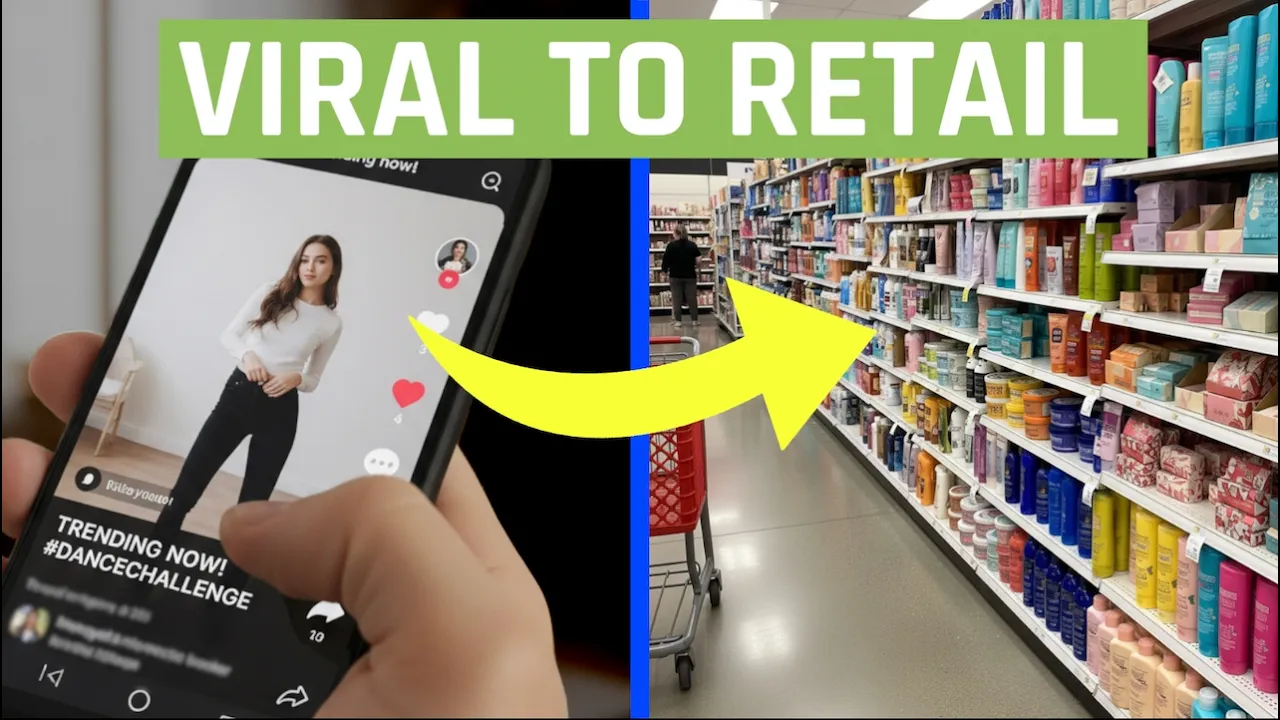
Colin Magcguire has been in the e-commerce game for a long time. He's building a hair care brand at Glimmer and he's building that brand in a way that is really different than most of what you have heard about how brands get started. This is not the story of Meta Ads to the Moon from the earliest stage of the business. instead. It's a really fascinating story about leveraging Tik Tok shop to get millions and millions of viral views on your product, parlaying that into mass retail from a very early stage of business and using that
99 words, the words spoken in the first 30 seconds at 197 words per minute.
Free, no signup. See how the first 30 seconds hold attention, with rewrites.
Sentence shape
| Measure | This transcript |
|---|---|
| Sentences | 589 |
| Average words per sentence | 18.0 |
| Longest sentence | 233 words |
| Questions asked | 127 |
| Sentences containing a number | 48 |
Most used terms
Filler phrases
804 in total: like 223 · you know 199 · right? 92 · um 81 · uh 74 · kind of 47 · actually 39 · sort of 20 · basically 17 · I mean 11 · literally 1.
A literal whole-word count of the same phrase list the Prepublish browser extension uses, so a phrase inside another word is not counted and a phrase used in its ordinary sense still is. It is a count and not a judgement.
Free, no account. See where attention is likely to drop, with a rewrite for each weak line. The free check shows the scores and the one issue costing the most. Or run it on the words above first.
Free · No login · See a sample audit first if you prefer.
What this transcript is
Every word below is the caption track YouTube publishes for this video, pulled from the video itself and reproduced unchanged. It is not Prepublish's writing, not a summary, and not a re-transcription: it is the video's own published captions. English captions, generated automatically by YouTube, in the video’s original language. Source: the video on YouTube. A channel that would rather this page did not exist can ask for its removal through the contact page, and it is removed.
No Script X-ray for this video: YouTube shows a Most replayed graph only once a video has enough views.
Colin Magcguire has been in the e-commerce game for a long time. He's building a hair care brand at Glimmer and he's building that brand in a way that is really different than most of what you have heard about how brands get started. This is not the story of Meta Ads to the Moon from the earliest stage of the business. instead. It's a really fascinating story about leveraging Tik Tok shop to get millions and millions of viral views on your product, parlaying that into mass retail from a very early stage of business and using that as the growth mechanism alongside all the other tactics.
Colin has been in the game for a while. Like I said, he's also co-founder of Booming, which is an ad agency that he had worked at for a long time. We're going to get into all of it right now. You're going to like this story because it represents a pathway to growth, particularly in a beauty business that I think is underrated, underconsidered for many brands. It's Dr. Colin Maguire about turning viral views on TikTok into getting into Target and selling a whole bunch of hair care.
Fellow Dodger hats on this call, even though you're in Michigan, uh, Colin. Uh, so dude, thanks for taking time. I appreciate it. >> Absolutely, dude. Yeah, I'm stoked to chat about it. Hopefully this can be helpful for others. I know Tik Tok shop can seem like a really difficult puzzle to master. So yeah. >> Yeah. >> Excited to do it. >> All right, let let's get people the context first for why I reached out to you and what was compelling to me about this story uh that I thought was just sort of worthy of attention from people.
Um, and and so I'll start by saying you you you uh in a forum had the uh spun the tale of your brand's growth in a way that was really different than what I mostly hear right now. Um, and so can you just walk people through what you have done to grow Glimmer to where it is at right now? Give any context you would like to give it give on on sort of where it is it is currently at. Um, and then I want to break that down for you and just see like who should do this, who shouldn't do it the way you're doing it.
Um, and and what is the next stage of growth and and and all that. So, you've just got a really interesting playbook here. >> Awesome. Yeah. So, you know, Glimmer is a premium hair care brand. You know, we we operate in operate in the salon care space. Okay. Um, and so while ours is, you know, they're functional products, not just meant to be cosmetics, right? Um, they they need to serve a purpose. They need to offer real benefits, solve real world problems.
And, you know, we're also pairing that, you know, with kind of the the premium salon care space. And and in premium beauty in general, one thing I realized really early on is yes, Meta can buy you revenue at scale, but it's not going to be very efficient unless I can kind of become culturally relevant. It felt like we were hitting our our head on a glass ceiling over and over again. You know, high high conversion rate on the website.
It felt like we were doing all of the right things, you know, with our ad creatives. Um, but the the scale, you know, being able to spend, you know, and get to, you know, big months, half a million, million dollar months just didn't feel like it was there. It felt like we kept hitting our head on a glass ceiling. And after a good amount of thought uh, and reflection on the brand, I realized that I thought it was simply because in beauty, you need a certain amount of cultural relevance. like you need to be like recognized and and and thought about and I think that happens mainly on social media these days particularly Tik Tok and so when we decided to kind of reapproach the business for growth right we we had already had success with meta ads we had success with Google ads but again it seemed like every single time we scaled per se um things just fatigued and like it just didn't feel like the other the other category ories I had operated in.
And you know the ultimate goal for beauty is to get into mass retail. And so when I had kind of re-engineered my approach and my thesis on the business, it was how do I long-term get into mass retail and also become kind of culturally relevant in the beauty space, right? And and that's where I landed on Tik Tok shop. And so the the thing is is is the reality is that like Tik Tok is it's it's like the cultural ele you know it it's the cultural engine right that is kind of powering the world right now right like and you know before it was Instagram right now now it's Tik Tok and if you look at Tik Tok like the way to scale scale there is through affiliate and Tik Tok shop.
Like things have to look and feel organic on Tik Tok, you know what I mean? And so the way to do that was to scale organically with Tik Tok shop. And so the the the reason actually for it was um Aaron Nosbish from Breeze actually uh came and visited um me here at my house in Michigan two summers ago, last summer. Um, and we were talking about his success on Tik Tok shop and I got really intrigued by I got reinspired with my original approach and that's when we just really decided to hit it hard and so um, yeah, I think that's the kind of story I mean where would you like me to kind of go obviously you know >> well there's something fascinating about what you have said elsewhere which is like I mean let's try to quantify the success a little bit. um when you did that, how how many Tik Tok views did you get and over what time period?
Like like cuz what you're talking about is the idea that like to break through in a certain space, you need to you need to you need to um register culturally with with your core audience, right? So particularly for beauty, >> uh that core audience, Tik Tok is is a is a critical part of it. So >> yeah. Um, so but like in order to register culturally, you can't do that with 10,000 views. Like you have not culturally registered at that point, right?
So So I see what you're saying, which is like here's where my customer is >> and and if I want to actually make an >> where they're making buying decisions, getting introduced to products, getting introduced to brands, right? Like >> and I realized that that was happening on TikTok. So yeah, that that was my general. >> So that's that's the consideration. And I think this is where like this this story is relevant even if Tik Tok is not the place where your culture where your cultural uh uh fit is, right?
Because the idea is go where your people are and be part of that community and find the way to break in. But I'm curious to hear like h like how much did you actually accomplish? How much did you resonate in terms of what kind of reach did Glamour actually achieve and over what timeline? uh uh uh you know on Tik Tok. >> Yeah. So we amassed roughly like 35 to 40 million views in about 90 to 100 days. Um I I can you know I I I'm actually pulling up the blog post post that that I wrote that you know we uh ended up talking about because I remember I did the research for for that blog post.
Um, and it was a while ago, but we did about 40 million views in roughly 90 to 100 days. Um, from that we did about 330,000 in sales on Tik Tok shop. >> Um, >> how much? Say that again. >> About 330,000. >> That's actually crazy low in one respect, right? Like it's like 40 million views, only 300,000 in sales. >> And and that's sort of part of the fascinating story to me is the mismatch there between >> Yeah. the revenue per view on Tik Tok is actually very low. >> That's one thing that I learned as well.
If you actually go and look at a lot of the really big a lot of the brands that are doing extremely well on Tik Tok or actually a better way to look at it sometimes is there's actually a lot of Tik Tok shop affiliates that post their their numbers on on X and and oftent times you see like okay yeah the revenue per view that I was seeing on the brand side is about the revenue per view that we were that that they're seeing as an affiliate.
And so yeah, the revenue perview is is definitely very different. That was a huge thing that I uh you know, learned as well, you know, pursuing this is that the value for a video view is not like it was on like Instagram or or Facebook even when you kind of would have a viral post on either one of those platforms previous, you know, because I've been doing this for a long time. And so it was kind it felt like a new set of rules on Tik Tok, honestly.
It felt like a new, you know, reality. >> Well, let's hang out there for a second. So, you did 330K. I mean, just to be totally honest with you, if that was the reach that you had had, >> while it's impressive to do that in 90 days, don't get me wrong, and everybody should feel really good about a business that's doing that kind of money, I I really don't mean to. Like, it's it's extremely hard to generate that kind of revenue, whatever.
I probably wouldn't have invited you on, right? Like, if that was the whole story. Um, you know, I I certainly don't invite people on who get a lot of views because I don't really care. Like what I what is interesting to me is like how you parlayed that into actual value for the business. So while you while you see I don't know if that's I don't know if that 330 or or whatever that number was is like Tik Tok shop affiliate is like specifically and if you could measure a halo to other channels or if it was like you know I know you've talked about selling into mass retail and an impact there.
So can can you sort of >> take us from the views to the the impact on the business at the broader level? >> Yeah. So maybe we should zoom out a little bit. Right. So, so the the general thing was like my approach to Tik Tok from day one, right, was like, okay, if this is the cultural engine driving, you know, beauty brands, right, driving, you know, consumers to to, you know, discover and purchase new beauty products. like I had talked to a lot of people um you know Aaron from Breeze um Zayn who runs a Tik Tok shop agency and it was the general consensus that like this channel was not going to be this like massive profit driver.
In fact like it was really high effort um and you would get get a lot of um you know views and and you it would be a massive prospecting engine for you but it wasn't going to be a profit driver. And so our approach to it, you know, right away was to basically use it, you know, again, as a prospecting engine for all of our other channels, right? And so what that looked like for us was we wanted to parlay it into success on Meta, success on Google, success on Amazon, and ultimately, you know, success for retailers.
My original appro like my approach as a bootstrapped founder, right? Like I actually acquired Glimmer. Okay. It's like we had you know capital to acquire a few brands between you know 22 and 23 my partner and I and my like my approach was like I had seen this work in the past with client brands at my agency by the way this is where I got it okay be so good that they can't ignore you right like be so like be so popular be the best categor be one of the best products in the category be you know have the product be so quality they can't ignore ignore you have your marketing and your aware, you know, and your attention, you know, be so good that they can't ignore you and they will come to you eventually.
Okay? And again, you know, that was our approach. That was part of our approach. On the shortsidedly, we wanted it to be a prospecting engine for our other advertising and marketing channels. Long-term, we wanted to parlay it into, you know, basically attention from retail buyers, right? Attention from mass market retail. Um, >> you actively thought of that in advance. You You were You were Yeah. Okay. Got it. Yeah. Interesting. >> Yeah.
And so it was like we knew that it would come eventually, right? I thought that it would come eventually. And if it didn't come naturally, my plan was to basically go and pitch it to to, you know, a a retail sales agency who would go talk to these buyers and say, "Hey, here's this brand, you know, 40, 50 million views on Tik Tok, regular viral moments, right? Top performing brand on Tik Tok shop, right? because that's what the retail buyers are interested in now, right?
The retail buyers that are bringing digitally native brands in store, right, are the ones that, you know, have cultural relevance. They have verality and that's who they want to bring in store. And so I knew in some way, shape or form, I kind of the way that I called my shot on it was saying that I knew that this would be a valuable asset in the future. I didn't know exactly how it was going to play out, but it ended up playing out that, you know, the lead hair care buyer from Target literally filled out a customer service form on our website and said, "Come meet me in person." And 8 minutes into our first Inerson meeting, stuck her hand across the table, and we made a deal, right?
And it within 10 minutes of talking because because of the cultural relevance that we had created layered with the pro like the the quality of our product and the fact that she had used our products, her team had used the products and they all liked it. And so, you know, it was just where, you know, quality products made, you know, met, you know, had a crossover with with really solid marketing and it was it she knew it was something that would would be successful in Target.
If you are building an e-commerce business like Colin and you want to grow that business fast and effectively and you want to do it while deploying most of your dollars into the things that move the needle like marketing and advertising and product development, making great products, putting them in front of people, you should consider hiring and staffing your team with more staffing because it will allow you to run a great e-commerce business at a low opex as a percentage of your revenue without skimping on getting the talent that you need.
That's because More Staffing connects you to the best talent in the Philippines for e-commerce businesses in the US. And that is because More Staffing was actually built not just as a general talent agency, but on the back of US-based e-commerce businesses that that filled their entire team basically with incredible Filipino talent. And so many people still are sleeping on the Philippines. They're thinking of the Philippines as uh a place that you go to only to get, you know, sort of super entry- levelvel talent and pay a very very very low rate.
That's the wrong way to think about what is possible for you in the Philippines. You should instead be thinking about hiring at the top of the Filipino market where your dollars will still go much further than hiring at the top of local markets in the US in particular. And at the same time, it creates a great opportunity for that talent. So not only you get great people but you give them the best opportunity possible which helps with your retention, attract great talent, retain great talent and in all of that more staffing is the group of people who can connect you to that talent uh and and who can identify because they are not some massive gigantic staffing conglomerate.
They are a more hands-on, more boutique, more work with you in the weeds kind of agency. They will help you at every level of the process. They will help you identify, recruit, train, uh onboard, train, provide. They actually provide ongoing coaching for professionals that they hire. They are just really really great. I know that because I have been working with more staffing in every business that I touch and I mean that uh for years now.
They are really critical pieces of the things that make AJF growth and the e-commerce brand I'm founding work. Uh I I I really think it's one of my competitive advantages right now is my relationship with more staffing. It can be yours too. Go to morsstaffing.co/ afmorstsaffing.co/ /fc if there is someone in the Philippines who can fill a key spot in your e-commerce business all across the business whether that's intro level or even better all the way up to manager director etc across your your organization more staffing.co/ / af get started today and it sounds like you you made sort of just enough money back because you mentioned like being bootstrapped.
You can't sit here and just do like a giant lead. You made sort of just enough money back to keep the lights lights on. And I don't want to overstate it like it's not it doesn't sound like you're on the brink of bankruptcy or something, but just like you you you were able to sort of like take a big swing, keep make enough money to where it was like worth it to sort of push forward the thing. And I I think this is actually a really important part of this discussion because I think lots of people would like look I'd love to go do influencer marketing in a broader way.
I'd love to go do I'd love to go where my customers are outside of Meta, but what Meta offers everybody is money right now, you know, and it's and what Meta and it's really hard to find channels outside of that that create cultural impact with with your audience that aren't uh long uh long slow payback periods, you know? So, so I think a lot of people would would love to do that. So, it's fascinating to me to hear like you're going like we made sort of just enough money back to pay for this mechanism and then and then what that allowed us to do is then go to these other places to where it actually becomes profitable and something that you can build a foundation on long term. >> Correct.
You know, the the thing that I will say about Tik Tok shop, right? You were saying the numbers are underwhelming, right? >> First of all, you know, Glimmer was a very small brand starting that year, right? >> Well, not the view count. The view count's amazing. It's just amazing with the revenue per view. Yeah. >> And so this was the launching point for the brand. I do I do want to like, you know, kind of set some parameters here, right?
To give to give people, you know, a good look like the previous year the brand had finished the year at 1.8 million. Right? So in March of 24 when we pulled this off, it skyrocketed us to a five million, you know, to to a $5 million a year brand. Right? So we we you know we grew significantly right. We became culturally relevant right we had like we had a bunch of organic moments where um housewives from you know the real housewives series were posting about us on their Instagram. they were mentioning us, you know, in Vogue articles and how they, you know, um, like we parlayed it into a lot of earned media, right?
And so that there there was a benefit to it and it and it made our meta ads like people, you know, there's the whole cost cap versus auto bid thing that, you know, I I love that you participate in on Meta. I participate in it from time to time as well. It's like you want to know what makes your cost caps perform really well when you just have natural demand off platform and like you know there there's this ecosystem of traffic happening right that makes it so you don't have to be the best med you don't have to be the best at creative the best at landing page the best media buyer on meta because you have exterior you know you have an exterior engine kind of starting to drive demand and so that was a part a part of it the other thing that I will say is Tik Tok shop is generally a race to the bottom, right?
The place where your product is going to sell for the cheapest ever is going to be probably on Tik Tok shop or maybe Walmart if you can get into a ma, you know, if mass retail uh in Walmart is a good fit for your brand. A lot of times it's not, right? But those are the two places where your where your product is going to sell for the cheapest. And so there's like, you know, you have affiliate fees, you have influencer fees, you have GMV Max ad fees, and then you have the the Tik Tok shop platform fees, and then on top of that, you're going to give away insane discounts.
Why? Because that's just how Tik Tok shop works. And so it's generally a break even approach, right? But we used it to basically parlay the next level of success, right? We became we used it to become a well-known booty brand, right? And so, you know, I think the the interesting part about the way that we approached Tik Tok Shop is I took what was working extremely well from my analysis of brands in many different categories, right?
What what people were doing with, you know, um affiliate creators, right? What people were doing with influencers, what people were doing with GMV Max, what people were doing with um creators on retainer. And I I figured out, okay, there's kind of a growth engine here, right? You get like content supply with these micro creators, right? And and and those are the people you're working with in exchange for free items on the Tik Tok shop affiliate platform, right?
Then you get cultural credibility by having either macro creators or influencers, right? Give your brand its moment, right? and and it seems like now you have these big people talking about you and there's this coordinated flurry of other creators, you know, hundreds and hundreds and hundreds of other creators talking about your stuff and then you layer in the paid amplification with GMV Max and then, you know, you have your conversion levers, right?
You have, you know, we were using SMS, pushing SMS traffic to Tik Tok shop, which I've actually personally never heard anyone else do that before, which is kind of a silly thing that we layered in. Um but but it worked. And then the other thing is like you have your you have your your flash sales, your promotions, your you know you build your urgency by you know crafting really good offers on Tik Tok shop and when you bring the whole thing together you know it kind of results in this in this engine or this flywheel that it once it clicked it boom it went really fast in 90 or 100 days about.
Um the problem was it just it wasn't really it for us a bootstrapped brand right that didn't have a ton of cash you know capital sitting in the bank did it make sense for us to continue to maintain it at that scale no it didn't now we've continued to maintain it and Tik Tok shop has had its problem we got our original Tik Tok profile banned all those tagged Tik Tok shop videos went away we actually got our first Tik Tok shop banned and so the the our current Tik Tok shop is the one that that exists right now.
And so, you know, that was our approach was like, you know, basically create this growth engine that could be a prospecting, you know, engine for us, that could build us cultural relevancy, that could make all of the other channels, you know, um, more successful and and, you know, ultimately that that's that's what happened. Um, I want to go back to something that you mentioned earlier, which is the the sort of like media buying tactics, you know, manual bids versus auto is one example, but there's more of them.
Um, uh, versus this kind of thing. And, uh, I I actually think this is like a a really important point that you're making here. Uh, and it's something I've heard smart people. I think there's there's a way in which almost anybody can swing in too far in any direction here, which is like you can you can say things like, you know, build a great brand and product, that's the only thing that matters and everybody stop obsessing over over your media buying tactics or whatever.
Um, and that's wrong. Uh, as I as I always say with people, and I don't think you're saying that, by the way, uh, as you said, you participate in those conversations, too. So I always say to people, your metas-pend is probably the biggest line item in your business. It might it might be number two behind your COGS, but you should care about managing the biggest line item of your business with excellence. And it's also your biggest potential growth lever.
So you you should you should care a lot. You should people should listen to or watch me and evaluate the arguments that I make for manual bids closely and carefully. um and talk about uh and think about whether or not I'm right or wrong and and get as good of a uh clarification to that as possible. And of course there's I'm sure there's probably things I'm right about and probably things I'm wrong about. Uh so because it matters it matter it is it is important to manage your biggest.
It's the same reason you ought to go hammer away at your supply chain because it's a really big part of your cost structure in your business, you know. Um and so you you can't just be like, "Wow, supply chain doesn't isn't the thing that matters. All that matters is growing on meta, you know, or whatever." um or or all that matters is brand. Like nobody would say that about supply chain. Everybody knows you should get a better supply chain.
It matters too much for the finances of your business. So there's that. But on the other side, what people will then do is say like the only thing that matters is like tactical meta growth. And here's the thing about that. I actually think there's like a subset of people who are so freaking good at meta and so good at like like landing page optimization. They they're both great strategically and they are excellent at the process.
They have uh and they just are super high effort. um that that they just are monsters at building teams, pushing everybody towards these things, testing at an insane light speed to where basically they've built enough brand and they're doing kind of the basics, everything else, but they're really doing everything else around these sort of like incredible funnels. Um but that is not most people. I actually think most of us should not try to go down that route because it's so hard to be, you know, my sense is like Zack Stuck is one of these guys and we mentioned Jordan Menard earlier.
Jordan's going to be on my podcast soon. Subscribe if you're watching or listening. Don't miss that. I'm going to have Jordan on. Tell me why I'm wrong about a lot of the things that I'm talking about here. Right. Um and and those guys it seems to me like are just machines of optimization on that kind of stuff. And I love listening to them talk about it actually because there's this sort of like subject level excellence.
Yeah. I I'll pass the ball to you in a second. I would love to hear um >> the um >> but what what you're expressing I actually think is probably the right way for most brands which is like attempt to build a you mentioned earlier both like being where your customer is and great product. You mentioned great. You you you said a few times like the product is great. My target buyer had experience that they knew it was great.
Like you you know hammering away at those things um as part of it. Growing from 2 million to 5 million is both extremely impressive and is not always the story that gets told. Like anybody who's thinking rationally about that knows that that's extremely hard to do but the story that gets told on Twitter is 2 million to 25 million. You know exactly like it's Yeah. And uh and so but people need to hear like this is actually the viable pathway for more people even pulling back the Tik Tok spend at some point because it stops becoming valuable and trying to kind of now hammer away the rest of this.
I think what you're expressing exactly and it's really good. It's like it's like people should feel you should I hope you feel like extremely proud of that process because it's very hard to do what you're describing. Um and I think it's the pathway for most people. So anyway, go ahead. What were you going to say about sort of tactics versus brand stuff? >> Well well I have a couple thoughts actually. I was just at Nick Shack's event and you know uh commerce roundt and was talking to a lot of people and you're right right like there's this grass is always greener on the other side thing or like you you start comparing yourself to others because Zack Stuck and Jordan and and and Breeze and all these really Obby and all these really popular brands, right?
Yeah. >> You know, are are just crushing at 0 to 30 million a year, right? >> Yeah. at endless. >> Can we talk about Breeze really fast? They're they're selling drugs. Like it's of course they make a lot of money fast. >> Exa Exactly. It's like, you know, they they >> I'm not even being condescending. I It's just like >> those guys are very impressive, don't get me wrong, but like >> Exactly. It's like >> that's exactly my point, right?
You have an extreme amount of product market fit, right? matched with the the people we just talked about there are some of the best most brilliant direct response advertising paid social minds in our industry point blank right these are the people that no really no matter what they're selling they're going to be successful at it right and a lot of these guys were agency guys you know it didn't matter what they were selling they were successful at it right across the board and then they >> I mean I actually doubt that I bet they were not as successful for all of their clients, but that when they and that's part of the point.
And that's part of the point, though. When their mind goes all in on the problem at that level, it creates a different kind of kinetic energy in the brand. And and it's and that's it illustrates exactly what I'm saying. It's actually so hard to replicate that, you know, that like people people ought to learn from. I mean, I I love reading those guys stuff, learning from because they ought to learn from them, but but that it's it's actually not always the replicable pathway for others, you know.
I'm sorry, keep going. And what I guess what I'm saying is like these people are brilliant. They're exceptional. They're the point 2 top, you know, 0.1.2% of our industry, right? They have brands with an extreme amount of PMF. They have offers that are, you know, great, right? They have, you know, uh, economics in their business that, you know, the numbers just work out, right? And that and that works out a lot of times in hyperco competitive categories, you know, like beauty, like hair care.
These are a little bit more difficult places to compete. And and when you're operating on a bootstrap budget, right, you need to get scrappy. Your growth is going to look a little bit more linear. It's not going to look like a hockey stick. You know what I'm saying? Um, you know, right away. And that's okay. Like I, you know, I said this, you know, to Taylor when he was speaking at the event, you know, just this past week that, you know, I really respect his his approach to stable sustainable growth, right? like he's not like the mega scale guy and neither am I.
Right? And maybe that's a mindset thing, right? Do I think it's possible for those things to happen? Sure. Right. Like we went parabolic in a very short period of time, but I knew that that wasn't going to be sustainable and we should have parlayed that into, you know, the next thing, right? I used that as a moment to build on, right? And and I think that the the the thing though is that people are still trying to just pour money into meta ads to just buy, you know, revenue and profit.
And do I think it's possible? Absolutely. Right. Is it possible? For sure. Is it is it easier to make Meta, you know, an even more amazing ad platform and and advertising channel for you if you can be successful off of Meta? Yes. Right. I also think that it just makes it easier, you know. So, you know, overall, I think that the the, you know, kind of the important thing that I've been thinking about is like, you know, don't treat Tik Tok shop as only a sales channel, right?
If you just look at it from a dollar and cents perspective and you don't treat it as a cultural engine, right? that could power, you know, a lot of different industries. Food and beverage, beauty, um th those are really, you know, common, you know, health supplements, right? Like, you know, you our goal wasn't to make Tik Tok profitable. It was to make us inevitably known, right? That that was our goal for it, right?
It's like, you know, the if meta ads can buy you revenue, then Tik Tok shop can buy you cultural relevance type of, you know, mindset. And once you have that cultural relevance and you're serving ads to people on Meta, you get 40 million views on Tik Tok. You bump into someone on Meta, you know, it's it's much more likely they're going to click on your ad. It's much more likely they're going to, you know, convert. And so that's what made us profitable, you know, much more profitable there.
It's what, you know, kind of put us in in kind of easy mode over there. You know what I'm saying? And not easy, but it's easier, right? >> Yeah. Yeah. [Music] Rich Panel is becoming the e-commerce help desk software of record in the e-commerce space. That's because they combine quality with price in an unparalleled way. Rich Panel was built from the ground up with AI. They're an AI first platform. If there's any area, as I've said before, in your business where AI can make an immediate and obvious impact, it is in helping your customer service team provide a better experience faster to your customers. not only with AI assisted, you know, uh uh tickets and and all that sort of thing, the sort of basics of of customer service, but also by providing an incredible self-help uh portal to your customers who are actually on your website, so they can find the answers to their questions in real time while they're shopping and uh and and because of that uh reduce your ticket load.
On average, people who switch from Gorgeous and Zenesk to rich panel see a 30% reduction in ticket load. uh and and what that of course indicates is more customers again finding answers to their questions faster which is really what you want at the end of the day get getting a great experience they uh customers also rate their interactions with customer teams using rich panel at very very high numbers so the AI is working great to provide high quality answers it's not slop and on top of all of that the most obvious thing here is that rich panel is uh guarantees that if you're switching from gorgeous or zenesk they will save you at least 30% on your bill they work with all kinds the size of brands including multiple of the brands that I work with at AJF Growth who are very pleased with the service uh all the way up through like the Ridge Wallets of the world and Pilicase and Lomi like really large brands uh who are doing huge volumes of tickets so they're not just an entry-level product they really can service your needs wherever your business is at go to richpanel.com richpanel.com tell them that I sent you go to richpel.com and check it out today how so how has Target gone since >> uh very well we're we're you know top performing um you know hair care brand at Target from like a you know dollars per store per week basis.
Um our hair mask which technically falls into the hair treatment category because it's like a uh you know basically a weekly a weekly treatment is you know one of the top performing you know um treatments at Target. Um we're we're gearing up to go nationwide or nearly nationwide with them. It's kind of going to be up to us as to how many stores we want. >> Yeah. How many doors do you have now? >> We have 400 doors now.
Now we're going to 8 800 in January and then basically >> it's like 2,000 total, right? >> Yeah. It's like 1994 or something like that. >> Right. Right. Right. >> Um but for premium hair care, you might not want to end, you know, they grade their sorts like Agrade, B-grade. So you might not want to be in some of the lower quality stores just because your stuff's not going to sell there. So we'll make that decision, you know, uh you know, here soon.
Um, but we've also parlayed into success, you know, in in Canada, right now we're selling in 600 stores in in Canada, you know, uh, unfortunately I'm not allowed to say which stores yet. You know, we we also have other, you know, retail interest from, you know, the likes of Costco and Target and CVS, right? Like once you get your foot in the door with a mass retailer and you're a top performer there, right? Like it it again it parlays success in in into other places.
And so, you know, that's really what we did. I mean, would it be helpful? I know we kind of we skimmed over the top of it, but would it be helpful to dive into the, you know, into the trenches of like what the growth engine was, like what the because it was, it was a pretty unique approach, I thought. >> Um, something that I had never really like heard anyone put together cohesively before. And so, that's why I wrote the >> the that original um, you know, forum post.
Yeah. Yeah. Yeah. I would love to. I would. Yeah. I This was essentially uh uh sort of where I was going next anyway. So, let's let's give people some more like handles to put on what they can do. Perfect. So, the the idea here is that like Tik Tok shop is like an ecosystem, right? Like if you zoom out and you look at, you know, what Tik Tok shop is, they have a really interesting algorithm and delivery engine. I'm sure all of us who have spent any time on Tik Tok knows that like once you engage with some sort of Tik Tok shop video or product listing, you get like hit with this coordinated flurry and it seems like everyone on Tik Tok is talking about, you just end up with so much stuff in your feed.
And that's actually the same way for like niches in Tik Tok, right? You might get into clean talk and all of a sudden you're in cleaning videos or I was on like uh North Sea Talk, you know what I mean? like like there's all of these random niches and like you engage with something a little bit and you get hit with this coordinated flurry of things where it feels like all of Tik Tok is talking about it. Videos have lights of lot lots of likes, comments, and shares.
And so it's it the the interesting thing that I knew is like number one, we needed content supply. And so where we got content supply was our goal was to send 120 samples a week through the Tik Tok shop affiliate center, right? And so we just selected, you know, qualified affiliates who had at least I think our our benchmark was $500 or $1,000 in total GMV um produced, meaning like they had Yeah, it was low. But we were just like, f it.
Like let's just try and get supply on there, right? Because we knew that the supply would then power GMV Max, which is another kind of part of of of the cylinder. So like cylinder one was content supply, right? We did this with micro creators. We did it, you know, through the affiliate, you know, Tik Tok shop affiliate center. Cylinder two of the of the growth engine was kind of what I what we were considering to be credibility, right?
It's like we then basically dropped a good amount of money, right? Roughly 200 maybe 250,000 on influencers, right? On uh 10 to 15 influencers. And these influencers basically they were known in the beauty space. Some of them you know had >> 200,000 for 10 for between 10 and 15 influencers means you were taking a big swing. >> Yeah. Big swing. And also giving them like huge commissions on the Tik Tok shop post. Some of them like were $50,000 posts for influencers and we negotiated down and say, "Hey, we'll give you this and a 50% commission." And so yeah, we we made we took a really big swing like we committed to like okay once we were getting the affiliates up and running and we did that for a few weeks.
Um that's when we started okay this is when we're going to start layering the influencers. We actually had all the influencers post in about a twoe period. So, we had like again I can't remember the exact amount of influencers but I'll say it's about 15 more than 10 maybe less than 15 um you know influencers post in about a twoe period. So there was just this big burst, right? And then what we were doing was we actually had a lot of our micro creators talk about, I'm sure you saw Kate Davis, you know, post about this pink hair mask, right?
I tried it, blah blah blah blah blah. So then we were briefing our micro creators who we were gifting product to to talk about some of the more popular creators. Now all of a sudden it seemed like everyone on TikTok was talking about this pink hair mask, right? And so that combined with the paid amplification through GMV Max, right? Which if you don't know, if you're watching, you don't know what GMV Max is. Basically put all your Tik Tok shop tagged posts in there.
You set a target rorowass and you set a daily budget. It's basically like a mega cost cap, you know, campaign. We set the thing to be break even rorowass, which for us estimated was about a 1.6. And we, you know, put, you know, 15 or $20,000 a day in budget. It almost never spent that entire daily budget, but um you know uh maybe one or two days, right? It spent that that full budget. >> But then all of a sudden between the GMV Max, the m the macro influencers, the micro creators, >> we had built this massive awareness engine where we were getting, you know, our top videos were getting 5 to 10 million views on those larger creators.
Why? Because they were powered by GMBB Max, right? and and and then the kind of the fourth cylinder. >> So essentially a mix of organic and paid at that point, right? In order to generate the view count. >> Yeah. A mix of organic, paid, and influencer. All kind of creating this ecosystem where it felt like everyone was talking about us for a period of time. Then that's kind of when we kind of, you know, things started happening.
Much larger influencers and creators on Tik Tok were noticing how fast our growth was. And in order to kind of get in and make commission, they were posting about us without us ever gifting them a product. Like some some of them were buying our product actually, believe it or not, and then posting about it, tagging us on Tik Tok shop because it was relevant. It felt like everyone was talking about us. So we got a lot of earned media towards the tail end of that influencer stuff as well.
And during all of this kind of conversion level number four was making sure we always had weekly promotion schedule. So, we were doing flash sales and BOOs and, you know, all of these things to make sure that we always had something that could like create urgency to get the purchase over and over and over again. And during some of those big periods, we're actually pushing SMS traffic to our Tik Tok shop listing. Why SMS only?
Because I figured, you're already on your phone. if I can click it and get it to launch the Tik Tok app right into our Tik Tok shop, maybe people will buy it and it will kind of help accelerate our success. And so, you know, the resulting flywheel was basically like, you know, the market started working for us, right? Like influencers we never paid jumped in just to earn affiliate, you know, earn affiliate commissions.
You know, the the product was trending and we like manufactured this cultural relevance, right? which when was driving interest for our our product overall, right? It was dude, we were having our biggest days on Amazon during this period. So there was 330K on Tik Tok shop, right? >> Yeah. But that's of course that's not the whole story. >> But but the net net of it, the whole story was like we're doing our biggest days ever on DTOC.
We were doing our biggest days ever on Amazon. And the overall marketing efficiency of everything was basically a four, right? And so that was great. >> Go ahead. Sorry. >> And it eventually started, right? >> It was it was a four and then it started tapering down, right? Things started fatiguing. It was almost like we needed to throw more coal into the fire. Do we invest in more influencers? Do we get this thing going again?
Like is it worthwhile? And we were at a crossroads, right? Where it's like what do we do here? And ultimately my decision, which you know, actively actually I will say there's not very many things I regret. Um, I will say that one of my regrets was realizing that I actually thought I was too late to the game in March of 24. I thought like the kind of the gold rush era had ended and I was in the middle of it and I kind of decided to scale things down a little bit because it wasn't very profitable and I thought that it was enough boost of success that we were just going to be successful with, you know, Tik Tok uh Tik Tok ads for website checkout, meta ads, Google ads, you know, we were just going to kind of be able to kind of slowly and consistently maintain which we have, you know, maintained and grown um and and ultimately you know towards the end of the year you know we got the outreach from Target and so it was like okay I think we achieved what we needed to achieve and so we've continuously maintained Tik Tok shop we still do affiliate sampling we still run GMVAX we still run ads right we still do you know uh influencer stuff on a quarterly basis but it's not the you know $250,000 big swing on influencer it's not you know setting GMV Max to a 1.6 six, you know, and letting it kind of spend wild, you know, it's a little bit more of a controlled, you know, engine for us.
Um, but it's okay though because we already achieved our relevancy, right? And we are, you know, and so we're getting the best affiliates we've ever gotten to post for us for free, you know, are posting for us now. Why? Because, you know, we have, you know, a lot of sales. We're a silver star seller. Like all these things, like it just happens a little bit easier now. Um, but you know that that's kind of the the the story.
Is there >> super super helpful and no, you know, it actually reminds me a lot of what I've heard Jordan West talk about. I've had Jordan on the podcast a couple times and he's, you know, transitioned his agency to focus from focusing on meta to focusing on social commerce and and is a big Tik Tok shop guy and and I kept trying to find a way to get him to say, "Here's how to make Tik Tok shop profitable without paying for ads in the early days and without and without taking a huge swing and spending a bunch of money." and he just kept being like, "No, like you can't." Um, and and he tells the story.
I don't know if you you know Jordan at all or follow his content at all. But um yeah, but he Well, okay. So, and if you know people who are listening to this, just search Jordan West on my channel. You'll find a couple of episodes with me with him. Um because uh the the thing that's really interesting about it is that he the what he describes as the thing that works on Tik Tok shop is basically exactly what you just said which is like full-fledged approach across everything.
Seed like crazy, pay for ads, um get bigger influencers in the midst of it as well. Give really aggressive commissions. All of those things work together and get ready to drop a whole bunch of money on this. If you're not ready to do that, then you're not going to get there. And the effect is multi- channelannel impact on your business. Omni channel uh omni channel, you know, measure it across everything you're doing.
Measure the the total Tik Tok spend across exactly like you said. I'm not looking at this as like Tik Tok shop revenue versus versus Tik Tok spend. It's like, okay, how does this affect my entire business? Um and and that's, you know, more traditional kind of marketing framework, but it's it's it's very similar to what you said, and that's that's the thing that's fascinating about it, right? you if you developed that independently of Jordan, but you're both saying the same thing.
It lends credence to the it lends credibility to the idea, right? Because you're both coming to the same independent conclusion. So, um, so I really like it. I mean, it actually reminds me in other ways of some things I've told the story a lot of times and so people are going to be sick of it if they listen to me for a little while, but you know, in the early days of Kao where when I was there, Silicone Wedding Ring Company, right? we had just made a decision to to to push into CrossFit and um as as like a core audience when in sort of CrossFit was in its heyday and and what what we did was we like we entered CrossFit uh from every angle.
So it was like influencer sponsoring the games, supporting charities, uh sponsoring podcasts, etc. because we just wanted to be everywhere where the CrossFitters were. Um and it worked great. It was like really really awesome and it was like a probably the best version of this that I'd seen from a brand where you just do all of these things all at once. And um and what you're describing sounds like a that you know that was like 2014 2015.
What you're describing sounds like a 2024 2025 version of that same strategy with a much larger market, right? Which is like all female beauty and hair care which is gigantic compared to CrossFit. So >> yeah, >> it's like works. >> Yeah. You can manufacture relevancy. You can kind of manufacture verality in a way by paying for it, right? But do the right things. >> Another way of saying that is sort of having some respect for your customer in a way that you understand where they are and how they engage with things and who influences them and so you just show up where they are and participate for real. that you know that sounds maybe less mercenary than manufactured relevancy but I think it's I think it's a very similar idea which is like you you show up and you and again when I hear you talk about your product you talk about it with like the sense of like this is really good so you're you >> you go in you really trying to serve the customer by showing up where they are >> I I I will say a couple things that I learned from this that for people that are listening >> if you are not confident that you can successfully capitalize if you don't have an amazing product and you're not going to be able to properly capitalize on all this new attention and um you know all of this relevancy and all of this media and everything and you like because Tik Tok shop itself is very likely not going to be profitable right I've talked to a lot of really large Tik Tok shop sellers and they all say the same thing that I'm saying to you the channel is not a profit generator Right.
And so if you don't have an amazing product, >> sorry, uh Colin, measured narrowly, you mean right? Like >> yeah, measured narrowly. Yes. Like just talking about Tik Tok shop related advertising and marketing investment to the Tik Tok shop revenue. But overall, it can and should have a larger impact. Right now, what I'm saying though is that you have to be investing in these other channels, right? You have to be running Amazon.
You have to be running Amazon PPC. You have to be doing Google. You have to be running Google brand in order to capture your brand terms. Otherwise, your competitors are just going to siphon your, you know, your your brand traffic right off the top. You have to be running meta. But the other thing that I will say is that um this is an just like uh uh what did you say? His name was Jordan West. Okay. >> Jordan West. Yeah.
M my I've actually taught this to a few other people who who did it 80%. Right? They're like, "Oh, we did the samples. We sampled 150 a week, right? We set up GMV Max, right? That seemed to be the heaviest lift." But when you take out the the manufactured, you know, a bunch of influencers in a two-eek period all of a sudden just hammer Tik Tok. And a couple of the videos I think three of the I think three of the videos got two million views or more.
Okay. Now again it was also being boosted by GMV Max by paid but they were also organically doing very well from well-known creators on Tik Tok right from influencers on Tik Tok. When you remove that from it right that wouldn't have been successful for us, right? So if you remove just the influencer or I've seen people say like oh yeah know we're doing like you know 20 to 30 you know 20 samples a month you know maybe you know close to a hundred or sorry 20 a week maybe close to 100 a month right and then oh yeah we went you know we hired some influencers and yes we have GMV set up it's like I don't there's a tipping point right there's a tipping point and this is an ecosystem where things are are you know building on each other and if you don't do all of them to your friend Jordan West Point.
I experienced the same thing. I tell people like, listen, if you want to do this, you better be ready to pony up like 250, in our case about $350,000 investment and basically expect to break even on the whole entire thing. You know what I mean? Direct one to one on TikTok. But it will create a better return for you on Amazon and DTOC and and in other channels for you. Um, but you can't do it just a little bit. There's no like, oh, I'm going to do 80% of the effort for 80% of the results.
I think it's like you do 80% of what, you know, me and this guy Jordan Weser are explaining and you're going to get 20% of the return. >> That's right. Yeah. And and and that's where there just is risk involved with these kinds of things and and people I think the reason people don't do it relative to something like me where you feel like you can kind of control the risk a little bit. you know, when I'm going to work on building my own brand in the next year, like I I'll probably have a less risk oriented approach than what you're describing, it's because my goals are not that ambitious and some of those things.
But I think if it's people got to decide here what they're trying to build and what they're willing to put into it and and where their customer is and what it takes to reach them and all the things that you said, you know. So, um Colin, this has been great. Thank you so much for taking the time to do it. Um I appreciate it. You can follow um Colin on X. Uh the link for that is in the show notes. Um, but you can do that at Colin Vcguire.
U MG MCG UI RE. Uh, uh, and then, um, and then, uh, Colin, you also came from Boomin, uh, uh, which is the agency that you co-founded. Um, and and so people can check that out as well. Boom. Mn uh, if you need help with your digital ads, digital marketing programs. And, uh, and any anything else? Did I leave anything out, Colin? Do we do we need to hit anything else? >> No, man. I hope it was helpful. appreciate, you know, the opportunity to talk about it and maybe it'll add some value to the, you know, to our community, to our industry.
So, that's that's what I was here for. >> I'm certain certain that it will. Thanks again for taking your time. >> All right, man. See you. >> What are your biggest questions and thoughts about this episode? Leave them in the comments on this episode, especially if you're watching on YouTube. I would love to interact with you there. And don't forget to subscribe if you liked it. Uh, I've got Jordan Medard coming up soon, like I talked about in the in the uh conversation with Colin.
And you're not going to want to miss that episode. It's going to be really good. Maybe he'll yell at me. It'll be fun. Uh, you can also email me podcast ajafgrowth.com or if you'd like to work with AJFrowth. You can go to my website, ajfgrowth.com, and fill out the intake form there. I'd love to interact with you. And don't forget to follow up with my wonderful sponsors for this episode. More staffing and rich panel.
They are both great. You should go check them out right now. Thanks so much. I'll see you next time. [Music]
The words are the caption track's own and nothing is reworded or re-transcribed. Paragraph breaks are placed between sentences so the text reads as prose.
Free tools for your own script: paste a draft and see where it stands before you record it.
Paste your draft and see where viewers are likely to drop off, with a rewrite for each weak line.
Paste the first 30 seconds of your own draft for a hook score and rewrites.
Check your draft against YouTube's advertiser-friendly guidelines before you record it.
Read this channel's public videos and transcripts, and download a writing brief for it.