Getting the transcript
Reading the captions from YouTube. A video nobody has opened here before takes 10 to 30 seconds; this page fills in on its own.
Getting the transcript
Reading the captions from YouTube. A video nobody has opened here before takes 10 to 30 seconds; this page fills in on its own.
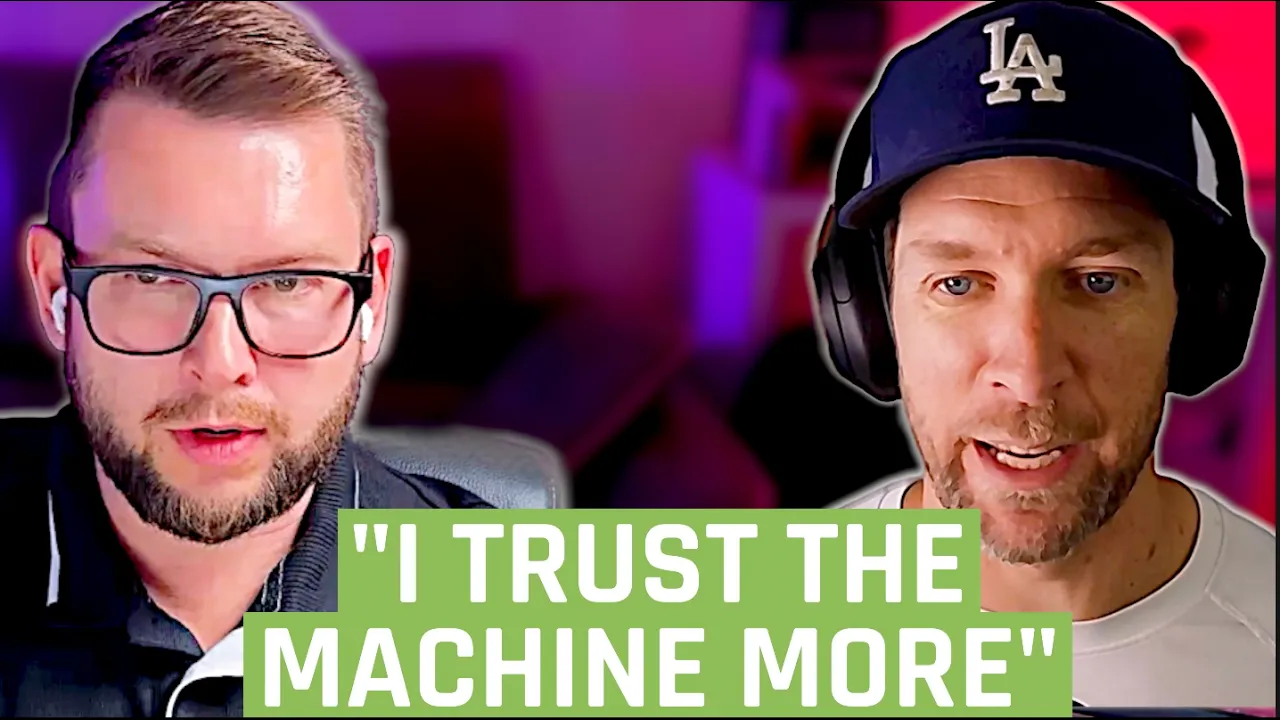
The Andrew Faris Podcast · @andrewfarispodcast
Words
9,997
Runtime
50:52
Speaking pace
197wpm
Reading time
42min
197 words per minute, between the 181 median and the 201 75th percentile of 349 measured videos. That distribution comes from the 349-video hook study.
Opening (first 30 seconds)
If you are serious about leveraging machine learning, datadriven principles, and AI in your meta ads and Google Ads account, this is an episode of this show that you're going to like very much because it features two extremely smart guys who really understand the details of that stuff. And that is Dr. Andre Lunv and Russ Garva from Russia coming to us on this call. Dr. Lunv has his PhD in math and physics. He was literally working on supersonic aircrafts before working in meta ads. The guy understands math really, really well and has applied that knowledge
99 words, the words spoken in the first 30 seconds at 197 words per minute.
Free, no signup. See how the first 30 seconds hold attention, with rewrites.
Sentence shape
| Measure | This transcript |
|---|---|
| Sentences | 404 |
| Average words per sentence | 24.7 |
| Longest sentence | 295 words |
| Questions asked | 38 |
| Sentences containing a number | 23 |
Most used terms
Filler phrases
700 in total: like 237 · uh 182 · um 92 · you know 79 · actually 39 · kind of 20 · right? 15 · basically 14 · sort of 12 · I mean 6 · literally 4.
A literal whole-word count of the same phrase list the Prepublish browser extension uses, so a phrase inside another word is not counted and a phrase used in its ordinary sense still is. It is a count and not a judgement.
Free, no account. See where attention is likely to drop, with a rewrite for each weak line. The free check shows the scores and the one issue costing the most. Or run it on the words above first.
Free · No login · See a sample audit first if you prefer.
What this transcript is
Every word below is the caption track YouTube publishes for this video, pulled from the video itself and reproduced unchanged. It is not Prepublish's writing, not a summary, and not a re-transcription: it is the video's own published captions. English captions, generated automatically by YouTube, in the video’s original language. Source: the video on YouTube. A channel that would rather this page did not exist can ask for its removal through the contact page, and it is removed.
No Script X-ray for this video: YouTube shows a Most replayed graph only once a video has enough views.
If you are serious about leveraging machine learning, datadriven principles, and AI in your meta ads and Google Ads account, this is an episode of this show that you're going to like very much because it features two extremely smart guys who really understand the details of that stuff. And that is Dr. Andre Lunv and Russ Garva from Russia coming to us on this call. Dr. Lunv has his PhD in math and physics. He was literally working on supersonic aircrafts before working in meta ads.
The guy understands math really, really well and has applied that knowledge to the fixed problem of meta ads, ad distribution, media buying, creative, that kind of thing. And that same mentality comes through Russ, his business partner, who is a Google ad side of their business, who's applying that same kind of thinking and actually a developer mindset as well. So, who's building tools on top of Google Ads with AI to manage their accounts.
This is the kind of stuff that I had this conversation just thought these guys just have more intellectual horsepower than I do to apply to some of these problems at some of the technical levels. and it's really helpful to get around them, hear from them, hear what they're doing, and try to figure out how best to use it for myself and my accounts. You're going to like this conversation a lot. Let's jump in with Andre and Ross.
Dr. Andre Lunv, I always like to call you doctor. When you do that much work and time for a PhD, you should get to be called doctor in your life. You've got a PhD in math and physics. You are in Russia. Andre, say hello to the people. Hello. My name is Andre. Thanks for having me here. Great. Great. Great to do this. We've had a couple calls now. You and I have interacted on X for a long time. Um, and I think see see a lot of things very similarly.
You're just a lot smarter than I am. And so I'm excited to pick your brain about how that plays itself out. Russ Galba, co-founder with Andre of your guys's agency, Tegra.co. Link for the agency is in the show notes if you want to follow up with these guys, including Andre's X account, which is a great follow. Um, there's some other places he can point you to as well. But Russ, um, say hello as well. I know, um, people need to get to know you.
Hey, Andre and thank you for having me on the call and I'm I'm pretty excited to be here today. Yeah, great. You're both in Russia, right? Yeah, I'm actually just got back like two weeks ago from Brazil. Like we went there with my family. We spent a lot of time in Argentina and Brazil for about two years or something. So now I got back home, you know, we got a kid, you know, in in Argentina. So, you know, our parents just want to meet her.
So we come back uh just to spend a little bit more time here. Awesome. Awesome. Um all right, Andre, let's start with you. This so you know I've framed up in the intro this call is is going to or this uh this podcast episode is going to be very much about um how you're leveraging sort of let's just call them like advanced math and dev type tools in media buying right now. And I think it's a really interesting conversation.
Before we hit record, Russ was saying that devs are like much faster on the uptick of AI than marketers. And I certainly feel that. I'm not a developer. I'm in fact extremely terrible. You may have noticed this in conversations with me at thinking uh in terms of dev stuff. But like Andre, let's just start by talking about like um sort of baseline approach to meta ads media buying. You're a big fan of bidcaps. I'm a big fan of bidcaps. um get like before you talk about anything specific like how are you thinking about the problem of distributing ads to people via meta and how to get the best value out of that tool like what attracted you to bid caps?
Well uh my take on that is that when launching ad predict the future performance because we don't have any data points on the specific ad unit that we are currently launching. That's the first point. The second point is that with all the AI tools, the cost of production of the ad it's it's just gravitating towards zero. So basically like it's uh it's now um there is no difference between producing one creative like one static image and producing the same image with the hundred of variations.
And uh as a result um as a result like if we upload ton of those ads we won't be literally able to test all of them with the classical approach because meta will just uh waste the money on the majority of the ads because the majority of the ads fail and the only way to run the ads that is left right now from my perspective uh is bit caps or like cost controls in general. So that's how you know automating all all of those parts of the processes uh leads to increased creative volume and uh much faster account growth when you can produce those ads at scale and launch them at scale.
Um, do you you were you were a believer in in cost controls before like the AI explosion happened? Because I would say I mean AI's obviously been on the scene for a little while, but before you and I ever talked about AI, you and I had had some interactions about sort of why we both had embraced cost controls as a way to scale an ad account. Is that is that right? Yeah. Yeah. Correct. So, can you make the case for that?
Why? Why? What attracted you to that way of thinking about about meta ads and then what have you seen since deploying it for clients of yours? Uh I think it came out of pain and I would say it like that like constant performance roller coaster like that's that's what pushed me to uh to the idea of controlling somehow controlling the CPA somehow and you know I remember that pivot point. So when I launch an ad and it performs for three days in a row and then all of a sudden, you know, I'm the happy media buyer that tries to scale that like ramp up the budget by 20% or by 30% like after 3 days and all of a sudden performance just tanks, you know, and I like since that moment like I started to dig deep in into your Twitter profile most uh most of the time and the YouTube channel and It leads me to a point to uh where I just was rethinking on how to uh how to run the how to run the other accounts and my understanding right now is completely different from what I was experiencing like and I can share it.
So from my perspective like we are trying to purchase to to buy the impressions like on on meta and there is a different pool of those available impressions that will uh lead to conversions with a higher probability right so and on weekends as usual we have more of those auctions that lead to conversions like compare just Walmart on Wednesday morning and on Sunday afternoon right so the amount of buyers is completely different and uh that Friday night case so you like my take on that so you launch an ad like in a very favorable period of time right so it performs uh great on Friday then on Saturday then on s Sunday then happy media buyers buyer thinks like it was me you know that it's time to scale like I decide when to spend and where to spend then Monday comes I ramp up the budget the amount of the options goes down and you know that's why CPA just goes through the roof.
So in this case like bitcaps they would just literally cut the spend instead of making the uh making the decisions you know like uh on compared to a media buyer. Uh so in this case bitcaps they just pull the span down like to the to the point where the conversions are still remain under the bid. It's so funny you make that point about uh launching an ad in a favorable environment and then trying to scale it. That's something I've never really thought about actually, which is which is funny because I've thought about this a lot, but um the idea that that you would launch an ad and and the reason it's performing really well is actually just because you got sort of the right timing relative to the DAUs, right?
Daily active users. This is something I talk about a lot with manual bids. I just saw somebody tweet this again today. They say, "How come my ads always rip on Saturday and Sunday and they do bad on Monday and Tuesday?" And the answer of course is is exactly what you said. There's more available inventory at your target cost. And so the mechanism for managing that um is a manual bid which is going to scale up and down with the available volume and hold the um the outcome probabilistically constant.
Right? So the outcome is not actually going to be constant per se, but it's going to probabilistically be relatively constant based on the best information. Now it's not a perfect system and sometimes people will give me this critique. They'll be like, well, how can you trust the system completely? And it's like I don't trust the system completely. I just trust it more than I trust me. That's the point. I trust it more than I trust me the most often.
And I trust it more than I trust you and either of you guys on this call, right, Andre? With your PhD in, you know, you were working on, you were telling me before with your PhD in math and physics, you were working on um on the uh flight patterns uh at supersonic speeds of aircrafts uh before you were a meta media buyer, right? And you you with that math background are sitting here telling me that you fall prey to all the same stupid mistakes that I did as a media buyer 15 or well not 15 10 years ago when I started which is like ad is working scale it go nuts you know and that's because all of our brains do that all the time and so it's this real real challenge so okay so that's your case for manual bids you also I want to push into this a little more you also had a conversation recently with reps from from meta that sort confirmed some of your inklings.
Is that right? Because this is something we don't always get to hear about is sort of Meta's side of the story and what they believe. I have had some really interesting conversations with Meta people recently as well that I'm actually not really at liberty to say much about. Um but they have I'll just say they have not um changed my opinion very much on how to about deploying manual bids. So um so uh yeah, they've confirmed them if anything.
So, uh, tell me, but tell me about the conversation you had, um, and sort of some of the behind the curtains deeper dive into how the auction works and why manual bids are effective. All right. So, like it was a an unexpected uh, call to be honest. So the like they just reached out to me on uh Meta and invited to talk bitcaps because all of uh my posts on uh on meta about the uh bidding strategies like and uh they basically confirmed the majority of my understanding and the approach on how to scale the accounts on meta how to uh um launch the new ads and basically the auction concept like and I'm I can just go.
So regarding the uh regarding the uh bitcaps, so they say if we take the ratio between the impression price and the expected conversion rate, we get a variable called the ECPA, expected CPA. Yeah. And with a bit cap of $98 for instance, we will basically sell you every impressions that uh which your ECPA is less than $98. So basically they are trying to sell you the uh all the impressions available that will probably like with a higher probability lead to this uh to this conversion and um yeah that's why that's basically the best way to to buy the ads on meta because otherwise if uh meta's prediction model says that uh you won't be able to get those conversions like there there's no point in just spending money in there compared compared to the lowest cost.
I just mentioned it, but my favorite use of AI tools right now on the creative side is actually not for me to tinker around with any one tool, but to instead work with my team at Behind the Scenes Studio that has scaled up my design and edit team and pull them into the process and see how I can help them leverage those tools the best. Because when Behind the Scenes Studio leverages the tools best, not only do my clients win, but all of their clients win.
That's because Behind the Scenes Studio is a Philippines-based design and video editing agency with a relentless focus on meta ads creative. And that means they do a couple things really well. Um, they first of all know how to edit and think in terms of advertising first. It's not just a bunch of designers and editors. It's meta adspecific creative u creative production process. They think in terms of speed and volume the same way I do because they actually built their process on the back of working with me as a scaled up version of essentially my approach.
So if you have liked the way that I talk about creative, you want to apply a volumebased approach to your creative where you maintain a high quality but you also do that with lots of variations, the right kinds of smart iterations on your ads and you do that at real scale. You should be looking at Behind the Scenes Studio because they're based in the Philippines. They are um an affordable solution for design and editing uh uh for design and editing help.
Whether you're an agency or a brand or freelancer or whatever, you should be getting on the phone with them and seeing if they're right for you. I love them. I trust them. I bring them into as many of my meetings with clients as possible with um AI tools as possible to figure out how they can get more of that knowledge and keep building that process. The result is that we output a huge volume of ads for our clients really, really fast.
They can do the same for you. Go to behind btsstudio.co btsstudio.co. Schedule a meeting. See if it's right for you. You absolutely should be exploring it. btsstudio.co. What they are confirming to you is that as long as your bid actually is at the number that you say, then their if their prediction says that the expected conver uh CPA, the expected CAC, right, is at or below that bid, it is it will deliver to you results at or below that bid, right? according to that.
Now, there's some attribution questions in there, of course, and um and some other issues, but basically that the that that the machine does exactly the thing that you and I and others are saying, which is you set a target price and you say here's the threshold at which I am willing to pay for a customer and meta says yes, that's exactly what this tool is built to do. Is that correct? Yeah. Yeah. Absolutely. I I tend I tend to set up the bid a little bit higher again because of the second point that they mentioned like we like we all know that Metas auction is the second price auction.
It means that for example if you have a bid cap of $100, right? And your competitor bids for $80. You don't have to pay $100. You have to pay $81, right? That's why uh I usually shift that scale a little bit up just to make this gap closer to my desired cost. So, and this is basically all the adjustment. This is a really important point about bid caps in particular that I think a lot of people do not actually understand.
You said we all know meta is a second price auction. I actually don't think most people know that that the way meta actually works is that when you place a bid, you actually don't get customers at that price. you get them, the way the bid works is that you get them again according to a probabilistic pred prediction, right? Because Meta can't actually predict exactly what everybody's going to do. You'll get the conversions at the second highest bid price.
And so it may be actually lower than your actual threshold. Now, um that means you may want to be aggressive. You know, it's interesting. I talked a long time ago to another guy um who was a quant type. He also met had a PhD. I don't remember. Um but anyway, he he was a quant at open store. It's an old interview of mine with a guy named Andrew Campbell. You can find it if you're on Spotify or Apple still. But he had pointed out this point to me and he said actually some folks at Cornell had done some studies saying that sort of how to properly and most um most effectively handle auction bidding in a second price sealed auction is sort of a solved problem from like a game theory perspective.
And what they say is that the the solved problem it is a solved problem in sense that you should build your true reserve price not above it, not below it, whatever. If you actually want that outcome, you should do that. So, you should bid at your true reserve. So, maybe he would push back a little. Now, of course, every brand's true true reserve is a little different. Your brand actually may be willing to say, I'm willing to go five bucks above this price occasionally if it means I get meaningfully more volume or whatever.
Um, but that basically that's the the right way to think about things. So, it's right around that number and maybe maybe if you want you go a little above again because almost every brand in my experience has some kind of a preference for more efficiency or more volume based on a certain amount of things because they recognize that you you know it's a probabilistic machine. you're gonna probably miss on one side or the other.
I do this all the time with manual bids. I'll say like for a client that is really really conscious of hitting a number at or under their target CPA. I'll bid my true reserve price or I'll bid a little bit lower even and say like we're just going to make sure we don't overspend. For customers with ext for clients with extremely high LTVs where it's actually much bigger cost to them to not get the customer then for them I'm going to probably bid a little bit more aggressively etc.
I know it may push out their the window a little, you know, a few extra days for their LTV to come through or whatever it is, but they're willing to do that at times if it means they get meaningfully more volume and meaningfully more more consistent spent. So, um, okay. And I just wanted to mention like the third point that is coming uh that is following this this point. So the main mistake, the most common mistake that I see media buyers make when trying to shift to bid caps is trying to force the spend towards a particular asset or particular ad by inflating the bid too much.
Yeah. So like the the u the common statement is like my beat caps don't span. Okay, what to do? Let's try to let's try to inflate the bid. and they uh they inflate it you know raise up the budget and end up with the inflated CPA. Why? Because we are just moving this limit or this uh threshold above and Meta is trying to to to do exactly what we ask it to do basically to find the conversions that are below that inflated bid and that that's why they start to to get those init initial conversions then lower the beat down and they lose the volume.
So this is pretty like expected behavior I would say. Uh and usually like they don't pump that much volume into the ad account and they say like that bitcaps don't work just based on like five 10 creatives like 20 creatives and again with all those automation tools uh it's when you can launch 300 creatives a day like in an hour it's not a problem when you have the volume. Yeah agree. And that's the thing that I think is the is the killer in all this where like anybody who is not already here is going to have to get there.
And this moves us to the AI portion of the conversation um a little bit because if mass production of creative I mean even without AI if people are just thinking this way about creative they're going to build systems. I mean we we were building a lot of ads before we were using much AI and so AI is only going to accelerate that thing. But as more and more people recognize that you can build a mass volume of ads even cheaper than before.
Uh it's going to be crazy. I you know I my team we build a huge volume of ads and we do that um especially leveraging a team of extremely good designers and video editors in the Philippines. I've talked about them a lot. We had built that system before AI became a part of it. And now what they are doing which is already like a really cost-effective way to to get really high quality talent working on your plan right is for a US-based business to outsource that um to really good quality people in different countries.
And so like you know that's what my team does. That's how we serve our clients. I've got you know like seven or eight people in the Philippines working on four clients. So we we can put a huge volume of output against those clients um in a way that ends up being really effective for everybody. So um so now you give those people AI who are already extremely smart and talented people, designers and editors, right? And they're all they're going to do is just increase their output more.
And so you know Andre and Russ, we were on a call with the team lead from that team recently. First time I met you, Russ was because we're all working together going like how do we make this machine hum even more? When you add all of that stuff together, you get to the point where there is no longer a world where it is possible to be to behave without manual bids because there is too much creative to test and to manage the distribution and therefore you have to have a machine do it for you.
You just have to otherwise it becomes cost prohibitive to do it. Um I want to actually jump over to the Google side for a second Russ um and just ask you a question. Is there in your opinion an equivalent on Google where people are bidding with sort of the same sort of manual bid target rowass target CPA that is reliable and works at scale? I've always found this to be more of a challenge on Google. No, I think I think first of all Google is that kind of datadriven machine that is primarily working on top of analyzing the data and using the data correctly because if we will go back and um I'm um in media buying for about 12 years I think you know initially the way we were doing the media buying on Google was primarily utilizing manual bits on the search campaigns right so the first campaigns like we were running were just search campaigns And we weren't using and there weren't like much of a option for us back then just to use uh just to use like any kind of like target draw or target CPA kind of automatic bidding and when it came up came out like it wasn't actually working you know that well.
So I think Google just started like as the as the engine for uh datadriven people to analyze the data and make it more efficient. So and and now um I mean there are a lot of accounts you know coming to us a lot of clients with the accounts to just to do the audit and I see that majority of the accounts actually relying on a automation uh automated bidding which is which is totally fine. It's so much easier to manage this kind of campaign.
You just put target return not spend on the search campaigns target return not spend on your Pass campaigns shopping campaigns. uh probably I see more people still using manual bids compared to automatic bidding even though uh again the majority of accounts that I see are shifting from shopping campaigns to the PMAS campaigns. So collect TLDDR is that Google initially is the is the machine is like you know demand from you understanding the data and optimizing on the data level.
Now these days when there are LLMs you know claude cha GPT you know Germany whatever like whatever AI LM you know people prefer to use. Now the question is like should we manually uh dive deeper into the data and do the optimizations because if we actually go like deep into the manual bidding then if you're running like the search campaign with exact match you know midtail to longtail uh search uh keywords then it's really a lot of um work that we need to put to uh you know adjust the bidding and everything.
I know that there are you know tools like optimizer that are doing this kind of stuff. it's got like more legacy kind of things that people used to use but I think there are so much better like more um advanced approach with the LLMs. So that's what we doing you know essentially uh now with our Google ads campaigns I don't like I will try to share my screen here and just show it um okay so um allow and and this one and again I know that some of the people will be listening to us so that's why I will try to and not seeing like the video I will try to comment as much as possible so kind like what we doing here is that okay so we have like all these different models models we have, you know, chip open AI, we have Jimny, we have cloud, we have like all of the other things, you know, dips for the god's sake and um, you know, we we can use like all of this just to analyze all our data.
So we don't have to do it like ourselves. So the issue then there is no um like easy way for us to pull the data automatically and propagate the data automatically for the LM to analyze. If you want to learn to think the same way that I think about meta ads accounts, certainly the same way that Andre does and the same way that Russ does about Google Ads accounts, which is a machine learning focused, datadriven focused, profit focused approach to all of this stuff.
The best place for you to go do that is through admission from Common Thread Collective. Admission is Comic Thread Collective's way to get you all the knowledge that you need concentrated in one place so that you have a foundational knowledge set on which to build your business and your ad accounts. And that is so crucial. If more people would take admission and they would get serious about um inhaling the course content from admission, inhaling the webinar content with exclusive webinars of Taylor Holiday, etc. at earlier stages of their business, I would get way less DMs asking me how to implement these things in their ad accounts, how come they're, you know, losing so much money and and uh less DMs saying, "I used to be on auto bids in my ad account and now I switched over to manual bids and uh and now I'm making a bunch more money." Those DMs would come less often because people would build from the beginning with this machine learning approach.
In the world of meta ads in 2025 and beyond, you need to be thinking this way because that's where everything is going. Meta is powering everything they can with more automation um and more of the tools that are going to lean on machine learning and AI to distribute your ads effectively. The best place, the best place, the best place to get the information you need uh at and up-to-date ways uh for your ad account and your business is in Admission from Common Thread Collective.
It's a whole bunch of courses in one place, exclusive webinars, and ongoing coaching with media buyers who know how to build these setups in your ad account. If you sign up through my link, which is in the show notes, you can get that first coaching call for free. Go join admission, especially if you're um earlier seven figures um or or anywhere below that. Especially if you're there, fire your agency. Maybe, maybe not, but uh go consider running your ads yourself with help from the people at admission.
You'll save money, you'll build a more effective ad account, um and you'll set yourself up for the most success building a profitable e-commerce business. Go to admission, join today. So that's kind of like what the thing that we are trying to um you know achieve here and there are some of the solutions actually one of the solutions that I will show and we also have the proprietary solutions for this as well but you know for the for the folks just to u you know see themselves there's uh this tool called adsvisor uh.com so what they're doing they're just building the connectors for Google ads for mata ads for Shopify for clavio for Google analytics and a bunch of the other things WooCommerce etc which is like not our uh domain of the expertise and allows to pull all of the data automatically and it's pulling the data um all of the data available.
So it's pulling all of the metrics available and all of the breakdowns available. So now there's very interesting situation. Okay, so we're pulling all of this information into the LLM and we know that LLMs are very powerful in analyzing the data. And now what we can do there are two things pretty much. We can either use just the standard chat where uh this data source is pulled into and we start asking we can start asking the questions to this uh uh to this chat like okay so just pull the data this data just analyze the search campaign just analyze this uh whatever pmax campaign etc. you can pull like everything from Google ads or there is another approach is that you know we can start building the custom chat GPT chats I don't know like if people know that but there's like open AI uh chat GPT uh um capabilities doesn't end on the uh just using the chat and asking the questions.
So you can actually build your custom chat GPT things that uh wired the way that you want it to work. you can just put like all of the parameters over there like what you want to analyze, how you want to analyze. Uh what we also in interesting thing what we do is that this is another tool we analyze Reddit for all of the recent Google ads content that people we know that are very knowledgeable in the niche putting into and we're pulling all of those you know live hacks uh optimization tricks and everything into our uh custom chbt so it can analyze all of the new accounts or recur recurrent accounts on the recurring basis and just provide like additional insights more and more insights what's working currently because Google is changing Google is and again I don't know like if I will get in trouble by saying that like mata and Google businesses are businesses that generate the money for their shareholders.
So sometimes these companies are doing the things that I personally like as media buyer actually see that are created specifically just to uh get more money out of the advertisers like for example um uh and again just a lot of people just don't know that actually and maybe it's a good time for them to check that uh in Google ads there is automatically created uh assets. So there was the option on the campaign level where you can just turn off automatically created um assets like images or videos or search um or or um um um site link extensions like all the different stuff.
But uh if you turn off that that one, there is another hidden one that is inside of the Google Ads account that actually creates this automatically created assets. And I don't know, it's just like it's silly to say that those automatically created assets that are just uh getting some spend are do not they're not performing really well. So again, just long story short, um we're just pulling like all this very relevant data to what's happening with the Google ads right now from the uh leaders of opinions for people we trust and then we put it into this um into this uh uh custom chat GPT bot and uh then you know again you can use like this ads wiser tool.
Now it's just pulling all of the available data from the from the Google ads account and provide you all of the uh optimization points or stats or whatever. Again, this is LLM. We can just go ahead and just ask it whatever. So this is like for example one of the things that u one of the accounts you know got analyzed in here. So as you can see we can also like compare it to claude if you want in here as well. Uh so it's just pulling all of the campaigns and provide us like actionable top level insights what can be changed what can be optimized and it's pretty thorough just going through all of the search campaigns PMAS campaigns shopping campaigns uh uh uh demand generation campaigns display campaigns whatever you have on the account and then what you can do you can just go ahead and just start to follow up with additional questions like in regards to every point of it so um that's kind of like what we do uh and why I was mentioning this uh approach is that especially when you work with the manual bidding with multiple search campaigns with exact uh you know mid to longtail keywords it's a mess to optimize everything by hand so that's where it's really good to pull everything in one place give LLM the opportunity to analyze the data and provide you the actionable insights so that's analy Russ you're actually doing that then through the lens of like you're If I understand correctly, you're taking insights from really smart Google Ads folks, you know, elsewhere that you believe in and trust and basically having feeding that information to the LLM and then having that analyze your account.
Am I understanding that correctly? Yes, that is correct. So we have like a foundation that we know based on our previous audits that we've done whatever we learned like so far we just feed all of this uh to LLM again and just ask it to create uh like a a list of the parameters for our custom chpt bot to work on and then what we're using is that yeah we are just parsing all of the data from Reddit and again I can show like some of the tools that we could use like to do that and automate that as well to uh get like all of relevant.
So that's why like all all of the relevant information in regards to Google ads. So that makes this system dynamic. So it's you're you you know what's happening uh your chatbot uh in chat GPT knows what's happening right now on the edge of the Google ads and it just automatic automatically gets it and analyze your accounts based on this new information as well. Russ, do you do you have any examples of a time where that has been like that you you probably can't share specific numbers or whatever from clients, but I'm curious to hear if that has like worked, you know, have you found times where that has led to some kind of insight that's been useful to you or or Andre if that's been if you've done something similar on the meta side or anything like that?
Go ahead, Russ. Yeah, I mean like yeah on the Google ad side of things like it's just very hard to underestimate like how powerful like just analyzing the uh data from uh from the search campaigns can be because you can get uh all of the metrics uh like for example you could have like 300 200 300 uh keywords right now running over there and to get all of the stats from all of all of the keywords and anal analyze them and just find like where you over bid where you under bidding it I'm just talking specifically about manual bidding campaigns for example.
If uh if you know if if if that's the case and uh and uh someone is using uh manual bidding campaigns and it and it can compare like all of this data inside of one campaign and across multiple campaigns that you're running just to find some um specific uh you know some keywords that underperform on the different time frames level. For example, this keyword was uh you know running pretty well for the past 3 months but in the past two weeks for example it doesn't perform any uh you know doesn't perform anymore.
So this these things like are very hard to across multiple keywords just to find yourself and you you need to spend a lot of time on it. Uh when with this you can actually get this data really fast. Another thing that you know we constantly doing for some of our clients is that we analyzing the uh shopping campaigns and PMAX campaigns on the per product level because uh majority of our clients are e-commerce businesses and for e-commerce businesses majority of the spend goes towards shopping placements either through shopping campaigns or Pass campaigns.
So for us it's really important to analyze the uh the performance of each product uh products that we are running and the tricky part there is that usually we run like different dimensions of the uh of the of the shopping uh categories or shopping products on the shopping placements and they are either divided in the asset groups inside of Pass campaigns or in the separate PMAS campaigns we are running like the same products so um there is it's very hard to um combine all of this data and and find underperformers because in one asset group one product can under underperform but they can perform really well like on another one for example but it's not statistically significant and uh you need to spot that and across you know some of the stores where we have you know 1,000 uh products for example it's really hard to do and that's where LLMs are really great they can just parse through the data like in the matter of a minute or two and uh get you all of the information that you need.
So just just it's it's hard to give like uh you know specific example. It's just like whatever account pretty much you you feed into this thing, it will show you your winners, your losers across different dimensions, across different campaigns combined for the products, the same for the keywords. So and and also Russ isn't isn't that what isn't that what Google is already trying to do? So this is one of the questions I have about this. like it sounds like you've built a machine on top of Google's machine and and you know you said earlier that Google has maybe different incentives than you do and I think this is one of the funny things is like I have a very high trust in Meta's alignment with my goals to deliver my ads to the best possible customers.
Like in my experience that's been true and I've seen that play out. I don't have that trust with Google. I found Google often to be something where it seems like money gets blown in ways that are not actually best for me. Pmax I think is like an incrementality mess and um and you know other people have said the same thing. Is that the reason why you're doing that essentially that like you know Andre you're talking about running manual bids like you know bid caps and everything but Russ you're like I'm building a machine on top of Google's machine so I can check Google's machine.
Is that am I stating that correctly? It's kind of but and neither Meta or Google as you said incentivize like it's to some extent it's incentivized to make the results good but also it's business to you know to get the money from the advertiser. So it's their best interest that to give you the result that you are happy but not to the extent where uh you know it's it's it's it's 100% out 100%. So there it should it still needs the operator in place just to operate as it should.
So for Google ads I think you know if there's some u Google ads uh media buyers watching us like uh it's very common when in the shopping campaign or pmax campaign Google continues to spend a lot of money on the product that is actually not performing and just forget or give so much less spend to the products that is not that are not performing. It's very common and if you do not uh go you will not go and just fix that and turn off that that product that doesn't perform it will continue doing so.
Yes, it's very smart machine like there's and Google is getting so much more so much smarter and medic becoming so much smarter as well but it's still not there to be fully automatic otherwise like we wouldn't be and maybe like at some point we will be relevant as well like as the operators of these machines that the only thing is that uh you know you just give like I just need the sales for this amount of money just give me that etc and maybe it will be in a way that actually it creates that the the black box where media buyer cannot do anything and this is kind of what's happening with the PMAS campaigns as well. there's some extent of the freedom that you have still but it's kind of like you know blackbox in a way.
So uh maybe we go that direction but until we can p pull like better results for for our clients until those machines are either become like black black boxes or they become so efficient that we are not needed uh you know we we just continue to do that and I'm not seeing that like in nearby future even though I can expect that it can happen like at some point and I would just vouch for probably you know blackbox uh forced approach and not the you know full like that the machine is getting like so smart that the human is not needed in there.
I just think these companies will be just closing the levers for us to intervene. You know there there's also like one one thing that I you know uh one tool that I want to just throw in like in regards to this as well like if people don't want to mess up with these connectors and everything there's like very interesting uh there's very interesting tool which is I don't know again uh and I told I I was telling this um a lot like earlier and before our call is that I think the developers are so much on the edge right now in terms of using AI while marketers are falling behind badly.
I think I think marketers are uh in a way how we know it uh without using AI tools just becoming obsolete. Uh it's very clear for me right now and I think that's what's going to happen like in the next maybe like year maybe two maybe even faster we will see and it also will depend on how many media buyers actually embrace the approach of using AI in the work that they do right so um that's why you know learning AI learning how to use these tools you learning how to connect you know things as well um um together glue them together which we were doing like for a long time for example, you know, in the in the past as well through the tools like uh make or uh Zapier for example, which is getting so much more advanced right now like for example like this is the one that we were using like a lot but now there are alternatives like gum loop for example just to automate everything but with the sprinkle of the AI you can just modify the data in the middle your endpoints like as much as you want either it's like form submissions on your landing page you're running for your uh I don't know like giveaway that you're doing like whatever you're doing can be uh augmented with the AI to make it so much better and there are tools for that or just using like N8N like for example this is a great tool for AI workflow automations but getting back to what I just said like in regards to the optimizations on the Google ad side of things there's there are two actually there's manus AI which is developers are embracing like crazy right now it's still invitation only which is like makes it a little bit hard to get hands on.
But there is another one called cider which is pretty cool which is like installing as the extension of the browser and it can it gets access to your viewport of the browser being Google ads account being merchant account um merchant center account Google analytics account and you can actually uh you know inquire what you want to do what kind of insights you want to get from uh whatever like in your viewport pretty much it could be like just a YouTube video it can do that as well but for the marketers Uh I think it's important to you know learn to how to use this stuff to and you can do it like with this one which is like pretty affordable as well and it doesn't need any kind of like backend connections or something like that.
You can just get data from your browser. That's pretty much it. So that will be pretty easy. I mean I think you're right and I and the thing I feel as you share all that is just sort of overwhelmed. I you know I'm not a developer. I'm not going to be a developer anytime soon. And the challenge is which of these things do I embrace versus not? I'm gonna have a conversation after this call with Alex Cooper who leads a creative agency.
And you know, Alex is a fascinating guy because he's extremely AI forward. He's really actively building these tools in. Um yeah, and sorry Russ you can probably kill your screen share now. Um but um but uh the um and so so it's at the creative level. Um, you know, I he's extremely AI forward and we're going to talk about this and at the same time is like I think ugly ads are going to work better now than ever before because feeds are about to get absolutely hammered with AI created stuff and so stuff that feels even more authentic and ugly is maybe maybe going to be where this ends up going.
Now I don't know exactly what I think of that because at the same time Alex is generating a huge volume of ads for people and and sees the value of like thinking about as Taylor Holidayiday has said think about your ad creative production like a supply chain, right? where you're trying to make every part of it better, faster, and cheaper. That's what you're that's the goal. The more you can do that, the better your supply chain works.
Um Andre, I'm curious to hear you talk a little bit more about this back on the meta ad side now. Sort of like if what are the kind of key things? We've only got a few minutes left, but what are the key ways you're actually using AI? If this is the framework, right, leveraging manual bids, leveraging the power of AI to do this, what are some of the like the actual brass tax way that you are using AI for your clients now?
And how do you expect to do that going forward? well that people can learn from and replicate. Yeah. So the the first idea is not even to just use the AI is to understand the processes first that you want to automate and then uh and then automate them. So for example like if you just uh switch your uh video editing pipeline into a module modular approach. So for example uh imagine you have a long form video or one minute video like doesn't um doesn't matter.
So you can split it into hook first like 3 to 5 seconds then lead part which just filters the audience and the body part with the product introduc product introduction like with the unique mechanism of solving the problem. So, uh, like imagine you just split this approach and you produce 10 hooks, 10 leads and one body part with the explanation. Like it's so much faster for the video editor to come up with 10 hooks and 10 leads and one body part compared to like u rendering all the stuff together.
Then with the AI, you can just mix and match them in a matter of minutes and get like uh get like uh 100 creatives out of uh 20 assets, right? So you just mix and match all of them and like attach the body part and and um and yeah, you have 100 of assets uh that that are ready to launch. And if you just want to double this volume, you just uh create one extra body part or double the amount of hooks. Right? So uh this is the first point.
Uh the second point uh again if you have the winning hooks you can automatically apply it to every creative in the ad account. Like this is basically how uh like one of our best case studies when we scale the brand from $40,000 of spend on manual bidding to more than $200,000 was spent in a matter of 1.5 month. So we just uh took all the creatives like found the winning hooks, slapped them in the beginning of each video creative there uh and relaunch it.
So like 10x the creative production and the brand grown more than six times in a matter of 1 month 1.5 months like that's crazy. Yeah. The second point uh is uh there are also tools like we also build those that can apply uh the text on the image and like it's not that technically technically hard but still if you have this process in place when you just design one template you have the Google spreadsheet and the tool just applies uh the text on a specific area. you know, I can come up I I've shown you this tool like in in a like in a video like which I've sent you so you you understand how it works.
But basically um multiplying the amount of the creatives like by like by 100 by 1,000 is not a is not an issue right now. Yeah. uh so templating uh templating the approach and then just applying the the tone of variations text variations on that and with this chat GPD tools producing templates uh became so much easier um and the third one is uh the uh creative uploading thing like I've built a tool like we will be releasing it very soon uh with R so there are like final testing so so many things uh to test like from the quality standpoints that like to to make sure that the process just doesn't break.
So I literally feed it with thousands of creatives and I just uh set up the number of ads per adset that I want to launch. I have the presets there. So the the client the offer so it automatically pulls the the link to the product, the primary text headline, uh bidding settings like age settings and so on and so on. So I basically drag and drop the creatives into the tool and it uploads that uh on the back end and creates the campaigns like in a switched off mode and like the only thing that is left for me is just to switch on the campaign in the ad account.
So I fired the media you launch those all with right you launch them all with manual bids and you make your team a lot faster and cheaper. Now what I think you just said you fired your media buyers. I think there's another element of this which is that like what we're starting to do is take our most talented people. We haven't fired anybody yet. Like we're what we're looking at is like what happens when you give really smart and talented people these tools to move faster and put their minds on other things, you know.
Um yeah, it becomes it becomes yeah it becomes I don't know we we've found to be helpful. Yeah. Yeah. They like media bars they should just become creative strategies more of the creative strategies because like the era of um test then scale approach is already gone. Yeah I know like many folks are claiming like I have this like huge spending ad account like on the lowest cost. Yes, you can. But if you like go in a breakdowns and try to understand which conversions were actually under your bid, right?
Like probably it's not that significant. Yeah, you can ramp up the bit and uh like end up with the same outcome with inflated CPA. Like if you need volume, of course, but I think it's more rational way to do that with infinite creative volume and controls. Yeah. All right, guys. Thanks. Great conversation. And I appreciate so much you guys coming and bringing um knowledge of of some of these things that you guys are doing that are pretty advanced right now.
I'm really curious to see how this gets democratized for those of us who don't have PhDs in math and physics and are or or developers like Russ uh to be able to use this kind of stuff. Um but yeah, thanks so much for your time, guys. All right, I hope you enjoyed that conversation. Don't forget to follow up with Andre and Russ. The links for where to do that with their agency are in the show notes, but if you need help with your ad account, they are taking on clients. you can reach out to them and see if they're the right fit for you.
Um, you can also follow Andre on X. He does a lot of their content. His content is really great. You should go follow him. I followed him for a long time. Um, interact with him a whole bunch. If you want more detailed breakdowns of how things like bid caps work and some of that, Andre at this point articulates that stuff as well as anybody else out there. So, go do that. Don't forget to follow up also with behindthe-scenes studio for ad creative production, btsstudio.co, and admission to if this conversation at points is over your head, admission is the place to start. go deeper on those things.
Um, again, go to the link in the show notes there or just tell them that I sent you your admission.co and they will get you um, free coaching calls so that you can get access to really good media buyers who can coach you in your ad account uh, at a really reasonable cost, which actually starts off as free through my link. So, uh, you're going to want to follow up with both of those. Thanks so much. I have so many good episodes coming up, including an incredible conversation with Alex Cooper that will release next week.
Um, at the time that this episode is released, like to go re get really serious about AI and creative. Alex is probably the best thinker I know of right now at thinking about the interse intersection of AI and creative for meta ads specifically. Really, really smart guy and it's a really good conversation. You're not going to want to miss that. So, make sure to subscribe wherever you are watching or listening. You can see everything else I'm doing at ajfgrowth.com and follow me on X at Andrewj Ferris.
I'd also love to hear from you. Email me at podcastfgrowth.com. Thanks so much for watching and listening. I'll see you next time. [Music]
The words are the caption track's own and nothing is reworded or re-transcribed. Paragraph breaks are placed between sentences so the text reads as prose.
Free tools for your own script: paste a draft and see where it stands before you record it.
Paste your draft and see where viewers are likely to drop off, with a rewrite for each weak line.
Paste the first 30 seconds of your own draft for a hook score and rewrites.
Check your draft against YouTube's advertiser-friendly guidelines before you record it.
Read this channel's public videos and transcripts, and download a writing brief for it.