Getting the transcript
Reading the captions from YouTube. A video nobody has opened here before takes 10 to 30 seconds; this page fills in on its own.
Getting the transcript
Reading the captions from YouTube. A video nobody has opened here before takes 10 to 30 seconds; this page fills in on its own.
The Andrew Faris Podcast · @andrewfarispodcast
Words
20,762
Runtime
1:45:06
Speaking pace
198wpm
Reading time
87min
198 words per minute, between the 181 median and the 201 75th percentile of 349 measured videos. That distribution comes from the 349-video hook study.
Opening (first 30 seconds)
Are we going to start with AppLovin or my vasectomy? You don't have 3 2 1 it. We can just start talking. What are we going to begin today? Vasectomy talk versus AppLovin. What do you think the people really want? Cuz we have to game the YouTube algorithm. If you hang around long enough, no pun intended, you put in vasectomy. This is just like Joe Rogan. Let's start with AppLovin. I think the people really really just got enough. Not about your vasectomy. No, no, no, no, no, no, AppLovin. I'll tee it up this way. In
99 words, the words spoken in the first 30 seconds at 198 words per minute.
Free, no signup. See how the first 30 seconds hold attention, with rewrites.
Sentence shape
| Measure | This transcript |
|---|---|
| Sentences | 1,591 |
| Average words per sentence | 13.0 |
| Longest sentence | 92 words |
| Questions asked | 212 |
| Sentences containing a number | 97 |
Most used terms
Filler phrases
1,138 in total: like 525 · um 169 · you know 115 · actually 91 · uh 81 · I mean 62 · right? 36 · kind of 21 · sort of 19 · basically 13 · literally 6.
A literal whole-word count of the same phrase list the Prepublish browser extension uses, so a phrase inside another word is not counted and a phrase used in its ordinary sense still is. It is a count and not a judgement.
Free, no account. See where attention is likely to drop, with a rewrite for each weak line. The free check shows the scores and the one issue costing the most. Or run it on the words above first.
Free · No login · See a sample audit first if you prefer.
What this transcript is
Every word below is the caption track YouTube publishes for this video, pulled from the video itself and reproduced unchanged. It is not Prepublish's writing, not a summary, and not a re-transcription: it is the video's own published captions. English captions, generated automatically by YouTube, in the video’s original language. Source: the video on YouTube. A channel that would rather this page did not exist can ask for its removal through the contact page, and it is removed.
No Script X-ray for this video: YouTube shows a Most replayed graph only once a video has enough views.
Are we going to start with AppLovin or my vasectomy? You don't have 3 2 1 it. We can just start talking. What are we going to begin today? Vasectomy talk versus AppLovin. What do you think the people really want? Cuz we have to game the YouTube algorithm. If you hang around long enough, no pun intended, you put in vasectomy. This is just like Joe Rogan. Let's start with AppLovin. I think the people really really just got enough.
Not about your vasectomy. No, no, no, no, no, no, AppLovin. I'll tee it up this way. In our entire time in e-commerce, 10 years together, you've you've got a little longer than that than I do. Yep. Than I do. The thing that is the frustration of everybody is that she's you can only acquire customers on Meta. Yeah, basically. The other thing is that that's because there's nothing else to acquire customers with. Yep. That works.
You you with you've put out a bunch of content saying in so many words that there's no other place to get it. Yep. AppLovin is showing meaningful scale Yep. on a click basis that there is a new channel that actually has real volume. And I am extremely fascinated by it. I think it I think it is probably real and also has extraordinary uh implications for our space. That's my initial read on it, having never run an ad on AppLovin.
So, I think it's important that we So, one, if you're listening and you don't know what it is, fine, no big deal. But let's just quickly uh AppLovin is an ad tech platform that allows you to buy inventory ad inventory within mobile games. Now, Is it all games? Uh I believe so. Maybe even broader than that. So, don't quote me on that, but I know the primary is mobile games. Um there are the interesting data because that they control both the sell-side inventory and the demand-side buying platform, right?
Which is unique in media cuz if you think about like normally Google um has inventory across a broad range of people's websites that they don't necessarily control the development of the inventory, but these people are the buy and sell side of the the the marketplace. So, uh that is part of why people believe that maybe they're able to get better optimization signal and price the correct inventory. This is the cuz this is the fundamental problem, which is that like the reason why your ROAS is bad on other platforms is because nobody seems to be able to match those things up right.
Like to sort of actually get you to target the right user at the right time the way that you can on Meta. And and AppLovin seems to have solved that. Well, I think what's interesting about mobile games is that there's so much the people I think don't have any idea how much transaction volume flows through mobile games. Like it So, in terms of which users spend money in apps that are clicking on their apps to buy things, like there's probably a really rich history that correlates really tightly with buying things on the internet.
Um I think that's the theory the working theory in my head right now is that there's a unique user behavior about buying things within mobile apps that correlates very tightly to buying things on the internet. That would be the theory that I think would make it so that what is functionally people just taking their Meta ads and putting them into this new ad ecosystem for it to suddenly work. I think what's skeptical to me is this idea that those users aren't also on Meta and Instagram and other places.
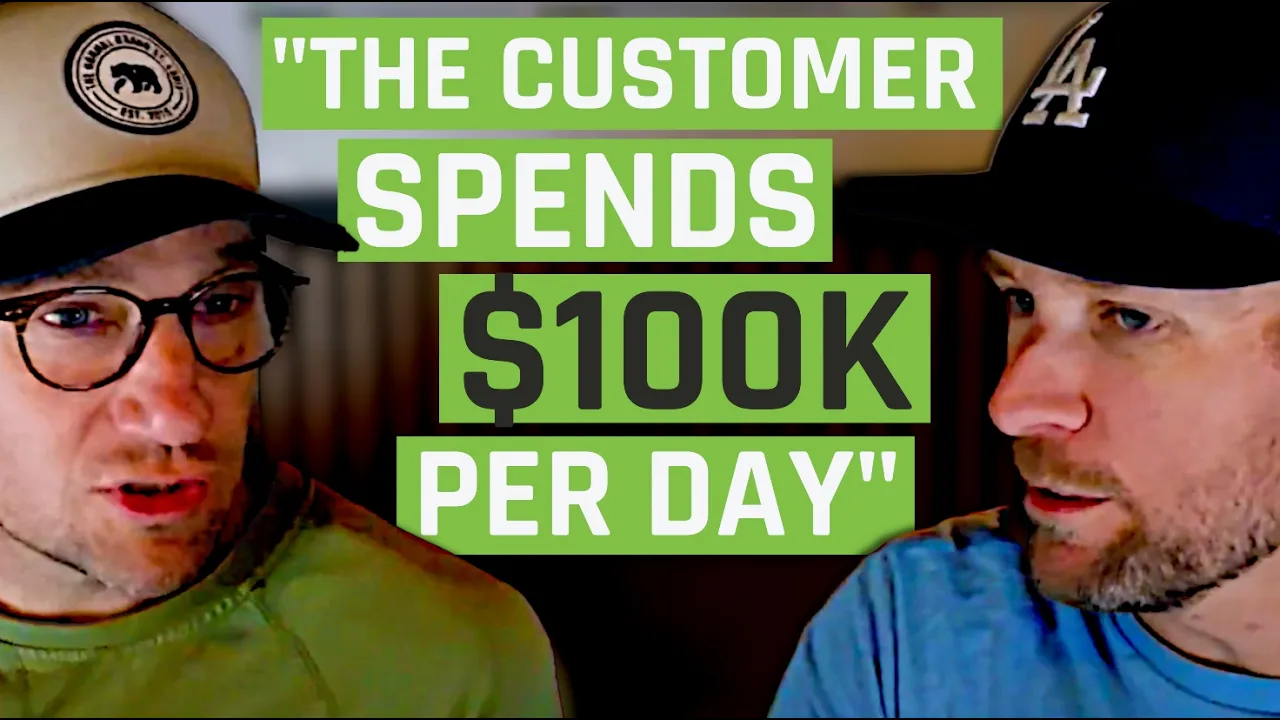
Right, that it's actually additive. Right, and incremental. That's right. So, there's this data point that actually they're they're touting that also leads to my skepticism. So, additionally, before we get into my skepticism, let's just give some context. I have a customer right now that's spending $100,000 a day on AppLovin. Right, and it's going great. Yes. And then when they say it's going great, what they're using is uh a triangulation, favorite e-commerce media buyer term here, that is both the the platform reported view from within um uh AppLovin, which is uses 7-day click optimization by default, and also is like target ROAS cost control bidding as like the default ideal structure, which isn't They're really interesting.
But the people are using first click um inside of tools like Northbeam, TripleLift, GA, whatever, and comparing it to Meta, and they're using last click and comparing it to Meta. So, customers all the way up to $200,000 a day, our own brand, Bambu Earth, Davis spending $1,000 a day right now. On AppLovin? On AppLovin. That's a really fascinating thing, too, cuz if you think of mobile game, you think of like, dude. Right.
Yeah. Uh and yeah. But, it probably shouldn't Of course. And of course, there's like a lot of women playing all kinds of Totally. games that as a dude, I'm not thinking about. That's right. And um $1,000 a day, and his measure right now, what he's saying is it comps to last click GA Meta. And so, for him, he's like, all right, that's enough of an indication that I feel good about it. He's not trying to scale it to the moon.
Do you know what his AMER and total monthly customer revenue is? Who who? Like, has it improved total new customer revenue at the same AMER that he would be targeting elsewhere? That's a good question. Because that that would be the way I would check this, right? It's just like, are you actually generating more revenue? Well, you'd have to look at the daily platform reported revenue from Meta to understand how those things flow in sync with one another relative to your AMER.
Right. Yeah. I mean, I would just look at total spend day over day. If it added $1,000 of spend, let's say we're trying to acquire customers with two to one, which is probably higher than Davis, but like, what? Right? Did you did it actually add $2,000? That's right. And so, so what you're getting at, right, is everyone's favorite secondary term, which is incrementality. So, Yeah. the good news is um right now, we have a group of customers, five of them, with uh house, who uh and we're doing a geo we just started geo holdout.
Seth, with that With AppLovin? Yeah. Right. Now, they don't offer uh zip code-based targeting. It's all state level. So, that's okay. They're we're going to get state-level geo holdout data. I saw Cody post one. There's a bunch of those coming. We're going to have answers very soon. Um this data point that I want to discuss is and tell me what you think about this. So, AppLovin just told I'm reading from um a message here.
It says AppLovin just told me, "In our data, we're seeing 98.8% of the purchases are done within 20 hours." So, the the specifically the AppLovin purchases. So, it's like super super super immediate. So, okay. What's the point of 7-day click attribution? Well, so so what I what we're we're back to the Oh, well. is if if if you are telling me that out there in the world there is this monumental pool of people that all are ready to buy within 20 hours at like massive scale to all consumer brands and to purchase within 20 hours of seeing the same ad that they may or may not be seeing anywhere else?
I'm just to be honest, it makes me suspicious. That actually like is a is a weird signal to me that these users and where they are in this purchase funnel process is just that's too fast. And I'm someone who believes in like that that I think that that time lag is overstated in this idea that there's these really long tails of attribution are kind of noisy nonsense, but the idea that all 100% of purchases basically 98.8% would happen within 20 hours for like t-shirts?
Like what what are we like or or makeup for I mean what are the betting or for whatever the ad category is? Like is it Let's just Let's Let's play the game of how that could be true for a second. Okay, let's say Let's say those are true incremental. Okay. First of all, these are on a click. Yes. Okay. So, that's interesting. Cuz the person I mean I always think the click is an interesting thing cuz the person had to take an action.
Like this is this is this is the fun move their body. This is Yeah, this is the fundamental argument in favor of you know, the a case you rented which is like like people you know, the sort of action equals incrementality. And off the right and the nonsense idea that top of funnel is necessarily more incremental than bottom of funnel, right? You're you're you have this contention that like retargeting is so is incremental.
Like so people people like, you know, It can It can be, yes. As long as it's click-based. Yeah. And And so, I agree. Like it it everything about it sound This is the sort of old sort of classic adage here. When it all sounds too good to be true, yeah, something feels off. The idea that there's instantly available $100,000 a day of customers that are waiting to purchase within 24 hours that using the same ads that you were running on the first platform, if you suddenly add $100,000 a day to spend, how come that customer can't just go look, "Did Did we generate that much more new customer revenue?" Yes, because if you're at that kind of scale, you have a bunch of stuff running.
It's It's very convoluted, right? Yeah, it becomes very complicated. Now, you can sort of um but you're you're really trying to sort it out if if you look at the aren't talking about the scale like like at So, for that customer, $100,000 a day, I've no idea who you're talking about, okay? So, for that customer, is that their second biggest ad channel then? Does that immediately move them into number two? So, okay, so then you should be able to see it.
You should be able to see him in new customer revenue there. That's a massive effect. You should be able to see did it actually generate meaningfully more new customer revenue? Yeah, I think the thing that would convolute it would be if there was a lot of overlap still for that same user in a bunch of other places. And that this is the part that what I think about incrementality is that again, if we're dealing with mobile game users, I'm guessing they have the overlap between mobile game users and Instagram users or meta users is very high.
So, are those people all Then you then overlap between everybody in the Instagram Everybody is really tired. So, is like is that that mean every other ad channel doesn't work at all? Like because they're also on meta, you know? Yeah, I don't know. Another another sort of wild data point and um this is for those of you that stick around and watch me and Andrew sort of ramble here, you get little sneak of things that will exist elsewhere under paywalls is in this month's DTC index report, No Commerce is is saying that they have seen AppLovin go from uh not AppLovin, excuse me.
Discovery came from an ad within a mobile game. It's gone from 0.16% of purchases in May to almost 4% of purchases so far this month. Okay, so suddenly so quick math like 20 to 30x increase in, you know, 4 months. So, when we think about the scale of what it would take to get to like 3.7% of all purchases across e-commerce, like we're talking about a massive influx of purchases being influenced by this. So, okay, but so yeah, there's so many layers here.
And this is why I think it's a finishing topic. One of So, one of the things that Okay, but yeah, I actually want to do this thing though like basically steel man the AppLovin case, right? And so like is there a world where this thing is happening here is that uh is that something about the user's mindset in a mobile game? Yeah. It's just in It's got to be something to do with the mobile gamer, who they are. And also just like they're just It's just I mean, you know, haven't you ever gotten sucked into playing Clash of Clans.
I was a big Clash of Clans. Okay, so I was never Clash of Clans. What was the What was the Candy Crush? That was Okay, that was the thing. I you know, I would have that thing where I would go to sleep and as I'm laying down like Candy Crush things are going through my head, you know. I had to quit. It's just like I crushed too much candy. It is. It's very like I think it is this state where one you're disruptable. Like ads are already a part of the mobile gaming experience.
They're annoying. You're constantly being up-sold anyways. These all sorts of things all the time. Um you spend a lot Did people spend a lot of money in these environments? Um so, look, I don't think I've ever seen anything I like to use this phrase. I probably overstated, but like in 10 years I don't know what has made this big of an this much noise this fast. I So, cuz I was I was comparing it to TikTok Shop. So, the closest thing I could think of to this recently There who are like tweeting pretty big numbers. to you know, like yeah.
Yeah. And I think I think TikTok Shop is a good example of something where it's both real and not. It's real in the sense that there are brands making meaningful impacts in their businesses on TikTok Shops and it's also less than you think because there those the brands that are doing that are really noisy in the in public spaces because it's so out of this world and there seems to me to be a bread and butter principle thing there where it's like a lot of brands basically have no traction at all and then a few of them really crush it so but that's so different than this.
This is just like everybody I see on Apple 11 it's just like that I got smashing. And and and cuz like here's always been if I step back a little bit from this, here's always been Well, yeah, just for the sake of this. Um so do you have like something about the mobile gamer mindset and even the sort of like the almost like him the hypnotic place that like mobile gaming puts you in heat and mentally. Um the combination of that with um with like the click-based attribution make makes me go like I don't know and they also just beat earnings in a big way like at some point So people are spending money there's no doubt about that.
Yeah. They use cost controls in 7-day click. And they have this very unique customer base and by like the strictest most conservative measures people are seeing impact. And so we're going to see a bunch of these world outside just come back it's going to get very public um and I my fear like one of the things that I feel this pressure for is it's November 12th and it feels like 2024 Black Friday Cyber Monday could be defined by did you spend money on Apple 11?
Apple 11. Yeah. And you don't want to be the group of people responsible for not letting your customers do that or not or failing to bring that to your customers, right? So we're trying to get an answer. Like clients are too small mostly. They have they have like at the managed kind of service. Yeah, they will prioritize you. You have Yeah, I got one who's like who's who's probably who's going to start seeing it and we're going to see how it goes.
And I'll be able to I mean that's a really simple media mix for that client. I don't I'm not going to need a whole outside in. I'm going to be able to tell if we add that's 50% more spend and it creates it creates much more revenue that's going to show up really fast. And that so that's like something. So I I think it's absolutely worth checking out if you have a try and harass somebody to get you in there. But let's let's zoom out even further on this for a second.
Okay. Um this like conversion optimized Facebook ads for 10 years like I said has been so dominant. Like the thing that has made me think about is just like what is the is this let's say it's real. Mhm. Okay. Is this going to be the thing in the back of my head for a long time I've had a theory about e-commerce which is that like Facebook's not going to be the only thing forever. Yeah. At some point somebody's going to do another thing and that's going to make this you know uh I'm I'm there's going to be another meaningful channel and some of that will cannibalize Facebook.
Yep, for sure. Yep. But some of it will not and that what that will do is make e-commerce a better and better world to be in. It will It will just It will just It will move more retail share online because of the way that Facebook has been a crucial driver of moving a large amount of retail share online. And and that's reinforcing back and forth, right? It like there's there's multiple layers to that. But I mean you just can't tell me that like part of the like like Facebook ads effectiveness is part of the reason why a lot of things get bought on the internet.
So Yeah, I think so somebody was posting the other day on Twitter about how like oh I'm buying Shopify stock. That's the downstream effect of the Apple 11. Yep. If what I'm saying is true then that's right. Right. And there's so there's this sort of down exactly. I'm saying the same thing with any e-com brand that would benefit from the success of that. I think there's like there is something to be said for that. The other theory I think is worth stating that I saw on This is where Shawn never do stating this is that like maybe this is like short-term arbitrage on people like getting excited by seeing a new ad type in their mobile game of like, "Oh, it's not an ad for another mobile game.
It's an ad for a brand I know." Yeah, Shawn was pointing out that like those customers are used to the absolute spammiest of all ads and now they're getting like pretty good quality Facebook ads. So, maybe So, I think there's obviously the scale question. Like the thing about Meta that's made it so special is that it's continued to find ways to build and grow the inventory at such a scale that like they have, you know, literally we're talking about billions of users.
That's like such a huge number. Mobile app games probably, I don't know what the TAM is on that. It's got to be close. But, the way that they were able to when they ran into CPMs on Facebook that became limiting stories and then Instagram and then yeah. They kept on locking new inventory. They kept Right. Oh, yeah. Facebook first buying Instagram and then yeah. They kept up They They were able to keep the ads at a price where people could still monetize them profitably.
And I think that's been ultimately the magic of it all that will see is yet to be seen, but there's probably a long way to go between here and there that people would make a bunch of money. So, certainly exciting and you're going to see a lot more information continue to come on about it. If you are thinking about hiring any position right now in your organization and you have not considered hiring with my friends at More Staffing to help you find that talent, you are missing out on a major opportunity.
My team for my own company is majority staffed from More Staffing. It's my More team members staffed by More Staffing than anywhere else. That is mostly video editors and graphic designers, but I also have a team lead from there. And I've also worked with More Staffing across a bunch of other businesses with supply chain people, with customer service people, like from coordinator all the way up through what I would say is like director level talent.
I am tied in in every way with More Staffing. And the longer I've worked with them, the more I appreciate what they do. That's because More Staffing gets you access to the best talent in the Philippines. And if you're still thinking about hiring in the Philippines as like $5 an hour virtual assistant, you you're just like behind the times. You need to understand what is available to you. It's really simple how this works.
There's 180 million people in the Philippines. Many of them come with deep e-commerce resumes and are good quality English speakers. They grew up speaking English in school. There's no issue there. And you, by paying your rate, especially if you're a US-based company, you can attract top of the market talent for a lower rate than attracting much lower-level talent equivalent in the US. And so you get the best talent in the Philippines.
You find hard-working, high-integrity, really high quality, just all the attributes you would look for in an equivalent employee in the US. And More Staffing is your gateway to finding those people. They have a streamlined, excellent process to help recruit, like identify, recruit, train, onboard, give ongoing coaching to talent. And then if you hire with More Staffing in the Philippines and there is somebody who doesn't make it with your company for a whole year, they will help you replace that talent at no additional recruiting cost, recruiting fee.
Really, really great people. Go to morestaffing.co/af, morestaffing.co/af to look into it today. It is a massive opportunity for you to grow your business. If I was starting an e-commerce business today, I would be thinking about staffing the vast majority of my team in the Philippines with More Staffing. They are great people. You would love you will love to work with them. Go check it out now. Would you So the you said you're going to buy the stock?
I'm thinking about it. Yeah. And the reason why and I know like I'm too late, I know like whatever, but I it just seems to me to be one of those things where it's like like if it's real, I just know how much money will go there, you know? I know how much money they're already going there. I I just know what it means for the ecosystem that I live in every day. And so I don't really do I mean right now it's trading at like an 86 key ratio or something on that, you know, it's like so it's already really hot, but it's like I I just think yeah, I just think it's a big big deal.
There's um there's this uh have you seen this these these headlines? About doom spending? Yeah. I mean, no. So, do you But this is this is like this is the most bad news bias news article I've ever seen. Americans are feeling anxious so they're doom spending. I mean, that is just like that is That is it's possibly true and also it's very bad news bias news. Yeah, so it's about So, this is there was there's a CNBC and a CNN article that's that's what he said that the presidential showing election is prompting some Americans to doom spend.
And so it says that 27% of polled shoppers say they are doom spending. That is spending cash despite concerns Is that what their Is that what their survey data shows from their base customers who are telling people what their spending habits are? Not actually reading any of the data. They're not actually reading any of the data. Um so, that that's a that's an interesting theory. What about what about But well, okay, here's my counter to that.
I could counter the doom spending thing. The 3 days after the election all of my accounts ran very slow. Yeah. You know. cuz you're a bad behavior buyer, but It's It's more than That might be I mean, actually be true. That could be true. Um so, I I I My assumption is because the only thing I they talk about with the 3 days after the election is the election and it was just like I I don't I don't know that there's anything to this, but it's just interesting.
Do you have the whole Then there's the whole like Bitcoin's exploding, stock is market's taking off. Like is there is there anything to any of that that's contributing to just general euphoria? Right. Um I don't know, but I'll take it any way we can get it. I'll take it. I'll take it. Well, yeah, I know. I know. Yeah, I mean, the other thing is like if AppLovin is real, right? There's just this thing where like multiple channels also do reinforce each other, right?
Cuz now like Facebook can retarget off of AppLovin and and presumably vice versa. I don't know how Apple retarget works, but like and so having another channel really helps because it gets people into your ecosystem and into your awareness, you know, into your funnel, so to speak, and and all that. So, like it could grow spend over there, too. So, I yeah, I think it's really fascinating thing. I think it's a wait and see, but yeah.
Cool. What next? Um Okay, I have a I have a This is There's There's just not going to be an answer to this question because it's going to depend too much on business to business, but sure. You talk a lot about how brands should just bank their profit more often. They should make their money, they should put it in their pocket, etc. Mhm. Um you know, take the cash. You also talk a lot about how brands should be profitable on first purchase, etc.
Um And one of the things I really wonder about is if there's if that is too narrow of a worldview about the value of ads in the long term of a business. Um that And and yeah. Compare your perspective And I'll let you say how you would frame this, but this is like my quick summary of it. Um Compare your perspective to what I've heard Sean say from Ridge Shop Frank say where it's like I'm trying to spend as many ad dollars as possible on on Ridge.
Now, he actively says he wants to grow a billion-dollar business. And so, you know, his mentality about that is I I've heard him say this, too, that like essentially intent starts with awareness. And so, you have to like you have to make people aware of you before they'll buy anything. And And as much as we would like everybody to buy something right away, many people will not. They need to become aware of product first, and all those things.
And so, there's this long tail of value that gets created in those kinds of ways. But that's a very different view of the of things than um take more profit now, basically. Um And so, it's just made I've just been thinking about this almost just sort of strategically, theoretically, how hot should a brand run their business, especially if you add another layer here. And by how hot, I mean like how aggressively should you spend on ad dollars, particularly past the point where you're like I mean obviously you should get profitable first in most cases, right?
You know, um so baseline thing probably you should be doing that. I don't know if there's some pathway to maximizing your EV while being not profitable then sure, but but that's not really the case. That's mostly. So, so how should brands think about this question of like how aggressively essentially think about the long tail value of building a brand and sort of all these other things that come with all the clicks and all these things.
Yeah, especially when you have the aware which is that like you know, like if you're in California and you have an LLC that's passed through entity, you know, at the end of the year LLC we're going to be paying 50 cents on every dollar they make to the government. So like they're actually not going to pocket all their profits. It's just that's not a real thing. Um So, yeah, I don't know. I just was curious. It's It's just been like kicking around in my mind a little bit more.
Yeah, so I think I think a lot about like when you and I used to talk about Jack Rubin's business and whether they should be first order profitable or not. They definitely shouldn't be. Yeah, they definitely should be, but they they the answer here is Did you see what he's spending a month on Facebook currently? A million bucks. Two million? Just in the UK. Yeah. That's amazing. Yeah. Um I bet his cohorts are degrading like crazy.
Um I don't know. I don't really know that Jack is in your pocket. Yeah. Um but it starts with I have a motivating desire to see more shareholders get liquid. Okay? I think this is a crisis of our industry is that nobody makes money actually. This is the big secret is that the number of people that have gotten rich is less than should have gotten rich relative to the size of revenue that was created in their business.
Um And so I think that through that lens, the strategy becomes very different than um Sean wanting to build a billion dollar business. I think that's a very different idea that I think is is should be the one chosen the least often because it's the least likely to happen. And so through that lens I think if like that is the game that is almost certain to fail for everybody who plays it I don't logically then I would say don't play that game and I actually think there's a lot of ways to get the business.
So when you talk about how hot you wrote really I think the question that you're poking at is like how much how far out do you push the value capture of the customer that you've acquired? Yeah. And there's a trade-off usually between the amount of customers that you get in that process and how far out you push that payback period. Yeah. What I've seen is that there's a bunch of things that happen that are unconsidered risk in the future of that value capture that nobody actually accounts for.
So when when everyone does their LTV to CAC analysis nobody risks risk adjust the future money. That is terrible financial modeling. Like there's no amount of money that you would put into any investment that you wouldn't apply some risk assessment against but LTV nobody risk adjusts. And there's infinite reasons why you shouldn't I I don't know if I think that's true but they don't risk adjust it in math terms for sure.
Nobody nobody goes in like says okay 100% LTV but like we should put a delta on that for risk. They don't do that. They don't do a calculation. But what they all do is find a million ways to doubt that the that the LTV will come through. No they don't. Okay well assume it comes through. I think it's the it's the point is I think they actually they even do it in different clothes and it's something I only think about in the conversations where it's like people are like I don't know that doesn't sound like real money and and I'm staring at their face and saying like you are making an argument sometimes to say no to like let's just say a 70% return on invested capital annualized.
I'm going to say this is my point. Here Roic you just what did you say to me about Uh, in the beginning about money getting out of the business. What's it subject to? Taxes. Okay, so a ROIC calculation is actually net of taxes. You know what nobody does in a calculation for their ad investment? They don't actually apply any tax. Uh, so it's it's another example of a way in which when you actually if you really want to do ROIC, if you want to actually create a return on the invested capital, it has to be net of taxes.
Okay, so Okay, but like com- So, here's here's the here's the thing though, like let's let's take that calculation and then compare it to the other things you would do with the money. Right. Don't you Don't you think that often the annualized return is still going to be much higher even if you have to push the the capture of that money out further that in your own business like like whenever Mike back and talk about the Simple Modern, he said the reason that we've kept investing money and not taking money out of the business until very recently.
I think it just in the last few years or so they started to take money out of the business. He said it was because for forever they kept looking at it and saying the return on invested capital in this business by putting more money into the business was higher than all of our alternative uses of that money and so we just kept putting it into the business. I bet they're wrong. I bet if they bought Bitcoin it would have been better.
Yeah, I mean So, I think So, I think what people do is that they like they just assume that that's true because the business is doing well, but I don't actually think that they're really actually comparing it to the other options that they had at the time cuz I bet if you go back to the moment that he made that decision, he's wrong. Yeah. Now, does that mean that you can perfectly predict the alternative asset returns? right.
That's the that's the problem. point is is that there's there's risk in your decision in both places. Um, and and Do you think Do you think having Do you think buying Bitcoin uh, let's call it 3 years ago was more or less risky than buying more Simple Modern water bottles to sell on the internet? I mean, this is a I'm fair question. Bitcoin, I mean, I think the only at the time I I don't know what the CAGR is on both.
I mean, they're probably both awesome. Right. Um, in a 3-year window, I'd bet Simple Modern's probably increased in value more than Bitcoin because Bitcoin's probably up three three times in 20 years. Right. But if you go 10 years it's probably not close. Yeah. Um It one went from $0 to a trillion. You know, so like I don't That's not similar matter to your story. Right. Yeah, yeah. So, but but I think I don't but you know I don't even care.
What I What I care is that they that they do start to do some risk adjustment and some actual consideration of the investment return. Um including net of taxes. If you're going to make that argument. Yeah. I think it's a It's an argument people like It's an argument I've made. There's a video on the internet of me making that argument. Which is not making what argument? That that you should invest in ads cuz it's a great return on ads.
Yes, the company real estates. Yeah. But what I found is that there's infinity reasons why the future gets degraded. One is the idea that your margin profile is consistent with today's purchase and tomorrow's purchase is not true. There's all sorts of reasons. One of the topics that we're going to talk about today is tariffs. So, um Right. How do you and this is going to spill over into this topic? Right. Um when you think about risk profile that if there's a chance that there's a 60% tariff on um on all product out of Southeast Asia.
Let's just say the most extreme case. Yeah, right. potential Yeah. policy. What does that do to your margin profile on that purchase 9 months out of your LTV curve? Yeah. Like Well, you can assume maybe I'm going to pass the purchase price all the way onto the customer and they're going to take it. Well, is your cohort going to perform the same? Like the dynamics of the future revenue are um harder than people realize because the margin changes more in e-commerce than people realize.
Like pull up any P&L for any business with a fairly large product mix and look at their cost of goods by month and you'll see dramatic swings. Yeah. For all sorts of reasons. And that's not factored into the the expectation of the future value. You take your margin today and you apply it against every future by dramatic swing? Like how many points of margin? Eight. Yeah. Like and and if you think about like if you're talking about break even in 6 months. that's usually driven by discounting?
It's driven by discounting, it's driven by issues with related to the product, it's choosing to send something back here versus ship it. Like, yeah, all sorts of problem on it that that changes. Yeah. Um There's also the other possibility. Yep, that it gets better. Yeah, right. That you hammer away at your margins and I have a client right now who has added 17 This is very early stage business, very different, right?
Added 17 points of landed margin to their business, probably about 17. We'll we'll know more in a week. Uh in like 3 months. You know, it's like just my you know, again, earlier stage business and so those kind of swings are definitely different. Um but it's like a you know, I mean, so there's that and so now all of their their investment thesis wrong, too, right? Like in the sense that they in that case if they underinvested.
And and all of that But that's my point is that is that sometimes you also miss on that side and maybe an owned audience and a customer list is actually the most valuable thing you have in some ways. Like you know, cuz the other thing is you can launch you can launch Yeah, I mean, this is also goes against the thing that we've talked about a million times, like what what should Kayla have done earlier? They should have you know, paid spend more on ads.
You know, like all of the kind of sort of thing. Like but we are for sure profitable by a lot. Like so that's that's not that's that we say that because Okay, I should say something. I I'm assuming in all of these that the that the business is profiting. Whether or not even the first customer is profitable separate. Like I'm assuming that the business is is is in in this scenario, it's like basically what I'm The question I probably didn't ask very well.
How much profit should you take versus reinvest into the business? And obviously you're not going to give me a 5% or whatever. You know, you can't give me an answer like that. But like at some point you actually are profitable and you and you have this decision which is like how do you deploy the capital best? And one option is take money out of the business and buy fun stuff. Another option is take it out and put it into other investment uh know, vehicles.
Another one is put it back into your business. And I'm just like thinking through how you should make that decision. You put it back into your business less. It's so funny, dude. That's not That's the answer. It's put it in your pocket more is is the answer. And So, why don't people do that? Well, I think smart ones do. And this is this is the thing I've learned behind the scenes, too, is that some of our favorite entrepreneurs in the world at least in this industry, they've done like even dramatic things, which I I think the dramatic version like the next series I'm doing this year of like Bridges 2.0 is going to be all about like liquidity.
It's going to be the five forms of liquidity and different ways to get it. And one of the big ones is like a debt recapitalization. So, it's actually taking on big debt to pay yourself money out of the business and using the EBITDA as a mechanism to secure financing to pay to put cash in your pocket today. Um But then the risk goes on the business. Yeah, exactly. Right. So, so that is actually like a transference of the money.
That's exactly what I think you should do. Which is to to put all of the liability on the business. onto the business and all of the security into your pocket. Yeah. Um And And oftentimes we do the opposite. Like people will be taking on personal liability in the form of of either financing things that are that they're personally liable for or mortgaging their home to do whatever and then putting all the business money back into the business.
And I I think the opportunity is to to try and actually do the opposite. If you want to start thinking about your e-commerce business the same way and with the same methodologies that Taylor does like we were talking about in this episode, you should do that by joining Admission from Common Thread Collective. There's a link in the show notes that will actually get you a free coaching call in your business from really experienced media buyers.
If you're trying to implement things that Taylor and I talk about a lot like manual bids on Facebook ads, cost caps, etc., um then you should use that coaching call. Get that for free through my link. Admission is um structured course material plus private webinars and private sessions with Taylor and with others about how to really think through how to grow any commerce business from first principles including how to think about your P&L well, the financial dynamics in your business as well as the newest and best of media buying tactics all the time not only on Facebook ads but also on Google ads and elsewhere.
It's really awesome. If you're trying to grow in your knowledge of e-commerce, there is simply no better place to do it on the internet than admission. I'm a huge fan of it. Follow the link in my show notes and you will get access to that free coaching call. Go check it out. I know you run a business. I do. And you take all the profits out every month and put them in your pocket. Not all of them. Besides the labor, I'm talking about the net income of the business.
I mean I've built up a savings account in the business just I would For what? Just to make sure nothing goes crazy. What happens if somebody fired Do you like take money out of your savings account and put it back into the business? Uh yeah, I guess that was just as well. Um yeah, it's I mean it is 100% owned by me at this point so it doesn't matter what I say and think. Well, except for the fact that you just keep it in a checking The encountering nothing?
No. I keep it in a in a high-yield savings account. Okay. Um and so but it is it is in my mind functions the same as my personal savings. Okay. Um but it's just like a make sure nothing goes crazy um kind of thing. I have employees now. I always you know, whatever bootstrap. It's not crazy now. Um But yeah, I mean what I'll say about this is that I'm actively thinking about whether or not I want to reinvest that capital into AJF Growth to grow that business more.
And I am in fact doing them in some ways. Like I've added additional post-production help on my content. You don't need to do that cuz you have next month's profits to use. Uh you you don't you don't need to use your savings to grow Not savings. I'm not taking money out of savings for I mean not like your personal savings but even even on the balance sheet. Like next month you will make a profit. Yeah. And if you hired another person Yeah. you'd still make a profit.
Yeah. So you don't What do you need growth capital for if you have a service business? Well, it's not like maybe maybe I'm I mean all I need is like I'm not always taking money out of the business and buying stuff for my house. I am sometimes taking money and more aggressively spending it on ways to expand revenue generating opportunities in my business. I'm trying to turn it into more money via my business. That's what I'm saying.
Right? It's not I mean I don't know if I don't know if you'd call growth capital quite like that. But like But but I just think it like you're doing the you're doing you are a basically functionally investing off of the profits of the business. what you're doing right now? You're you're machine's not a I disagree with you about something where I don't necessarily disagree with you. It's an open-ended question. I do disagree because your behavior tells me so.
I'm not saying I'm not saying I'm not saying I mean you would you do agree with me, but you're trying to disagree. I'm not showing necessarily disagree with you. I'm just trying to keep the question around like how should business owners think about Again, like if you just think about this question of like where is the best return on my money and what should I do? Cuz there's another layer of this that also something I want to talk about in this episode that we didn't get to now, which is like this question of like what is the money for when you take it out of your business?
Get rich. Okay, so so this is like part of the thing that's hard for me about this is like what if I don't care about that? Well, yeah. I I think you should. Why? Because I think that Do you want to value your Should we do this? Okay, could it really? Yeah. How in what ways would it be better if I was richer? Uh you could have a two fridges full of your favorite drinks all the time. Okay, so so this is a good one. So here let's let's pause right there.
I have a garage fridge in the middle of my life. Okay, I am I have thought specifically about this thing as as a thing. How much does the garage fridge cost? 400 bucks. How much does the drink do the drinks go in there? I you know, I I try to have I have pre-made protein shakes in there. Yeah. Which are expensive. Do you buy them wholesale from Costco? Not that I don't know. Or they're like three bucks a Maybe inflation hit.
But they're like five bucks or like less than two dollars greatest deal on the planet. Then you would say scrap. And then we have, you know, I had love Coke Zero. So I have a endless supply of Coke Zero. Yep. We have Starbucks Okay, I'll just tell you I'll just tell you right now I have enough money for that. I don't So you should do it. That's my point. Well, I I'm going to. You have to learn We need to find a garage space.
Right now, like it but this is a conversation I've had with Britt, like no I going like where should we put that drink fridge? Yeah. Okay, great. So now I've spent detail your car? Uh I Okay, so I don't wash my own car right now. I doesn't detail it but he get I get washed This is This is something we've never talked about. I've actually meant to do this. Okay. I think one of the greatest businesses I've ever seen. The guy who comes to my house and washes my car.
Yeah. It is genius because first of all, not only washes every car on the street Yep. And it's free advertising. Yep. And if you think about the target market for showing up to wash somebody's car. Yep. Like if I was a young entrepreneur, this is the business I would start. Cuz if you think about the target market for washing this car, they probably the people who have the expendable income to do that all live on the same street.
Yep. Right? So like if you could if I can afford to pay you to come to my house and wash my car. Yep. Very likely uh so come to my neighbor. Yep. And so like all the customers are right there. You're right where your customers are. It's genius. I love it. I think it's awesome. The guys who are doing this told me he started start out his dad started the business with one car in the city of Carson near me. Yep. And uh and they have like eight vans now.
It's like I love it. Okay, that's a great thing. Really cool business. Anyway, okay, so they do that. That costs for both me and my wife's car $80 they do it once a month. Yeah. So like these are I have These are all like I don't need to be rich rich to do What's the resort that you told me to go to over by your house? Terranea. Terranea. How often you go there? Not very often. You should go once a month. Uh It's It's It's amazing.
Terranea. It is amazing. It's beautiful and going with your wife and spending time together in that kind of setting is amazing. It's fun and it's nice to be waited on and and the food's incredible. don't care about getting waited on. But um the In fact, for both Britt and I don't like to To waited on like that. We we would find that kind of What I like is that I leave the room and I come back and my bed's made. Yeah, that was nice.
Um so that's what I would consider. Yeah, that actually I'd barely care about that. Um Yeah, okay. Um so you could just go down a list of I thought I think you should pay more for a haircut. I think you should spend more money on food. I think you you should have a personal chef. You should just go down this list of Yeah, personal chef I'm not interested in. Do you know why? Why? So this this actually begins to get at some of my concerns about this.
Do you Do you have a personal chef? No. Okay. Um so I have I know somebody who does and I've eaten at his house while he has his personal chef. Yeah, I have a all almost 5-year-old and almost 3-year-old. And I'm really I've thought a lot about what that teaches them about life if I have a personal chef in the house. About the kind of money it is, how that separates them from their friends, uh and and all those things.
And this is one of my concerns about getting very rich. And I think this is a good concern about getting rich. People people So here's here's my pushback. People I think believed that money will make them happier than it will make them. And it will bring them more joy than it will make them. So I think I think I think everyone's been misled about this. I think this is an this is an idea of the oppressor. Uh okay, so so what I think is that there's clearly a level at which um at which having a certain amount of money adds meaningful joy to your life.
And it's the level from where you don't have to think about money very much anymore. And I would say in that respect, this is actually one of my other points about this, which is I already am really rich. Yes. Right? I'm by any reasonable standard in the world. This is why that you and I both drove up in our Priuses today. That's right. Neither of us are car guys, right? So Um uh and oops, and I have no interest in buying like luxury luxury like that.
Like it I actually think a $100,000 car would add, and I mean this, zero joy to my life. Um I mean it would add zero. Now that might just be cuz I'm not a car guy or whatever, right? So for some people I I that they they kind of feel differently about cars, right? But Um but so I I think that like that level of wealth where you where you can go buy a drink fridge is plenty. I remember hearing hearing from uh somebody talk about this on a on a uh baseball player saying like, "Once you can walk into a Target, buy anything you want without thinking about it, you're rich enough." Uh you know, like that actually everything beyond that is diminished. saying that?
Who was saying that? The millionaire was saying that? No, it was like a coach. It was like a coach. Yeah. And and I do think this is I do think this is a good point. But I think the reason that millionaires say this is because plenty of them are miserable. Yeah, but I think that it's misplaced, right? Like the idea that they're miserable because of their money is wrong. And Do you think they were already miserable? Yeah, I think they're probably miserable people.
They probably have other things in their life that are making them miserable. I don't think they're miserable because they're rich. What do you think brings you joy in life? Um I think that What do you think it brings you maximal joy in your life? I think I've had these like three or four different moments of peak experiential joys as best of I understand and they're all related to different things. Um I've actually tried to This is actually connected to my religious experiences trying to understand are these things uniquely spiritual in some way?
Um I don't I don't think they are. They're They're like so I've had them in I've had a moment in sports. Um I've had um a moment in business. Uh I've had a moment with family. Um in each of these different scenarios, the contributing factors was like a deep sense of profound accomplishment relative to my effort in some way amongst a shared group of people. Yep. Um Like those were the common elements of peak joy. Yeah.
Um But the the But I will say is have to do with wealth? But I don't think that I can And that doesn't moments depend on that. No, but you you I'm not the center of peak joy in every moment of my life. Of course not. The answer is more quality of life all the time. But they raise the baseline. Um I don't think that money is necessarily the pathway to the peak necessarily. Yeah. So, it raises it raises that quality of the average experience.
Is there any diminishing return on that? If you Do you think if you Well, what do you think? Right now, from where you sit right now, you've talked to some very rich people. Do you think if you had $2 billion, do you think that it would make you Do you think it would raise your experience? If you had a yacht, do you think it would raise your experience? I think it would in the things that it opens up for you. Let's just use this Dodgers game that I went to.
Yes. Um I went to game one of the World Series. Yeah, I was hoping you'd get to this. So, that is is purely because I have an okay amount of money to be able to afford ex- game expensive tickets for me and my two kids. And it created uh now, I get it, this is not purely a function of the fact that it was There's a lot of luck involved in this. Um but, my access to that opportunity was expressly related to my financial well-being.
Yeah. Um 100%. So, I think that there are all sorts of things that I took my family to Costa Rica. Yeah. Hold on, let's do the Dodgers for you, okay? Well, we can do the family trip Do you think your experience of that Dodgers game would have been anywhere close to the level of joy that you had if you had done it alone? If you had gone alone Completely by myself? Yeah, actually a lot Yeah. So, what do you think made that So, this is Freddie Freeman grand slam, damn.
You were there with your two boys. How old are they? 10. 10. Do they like baseball? Yes. Uh do they like the Dodgers or like Freddie Freeman and all those things? Okay. So, what you actually invested in, I would say, was the relationship with your boys. Yeah. The whole goal Certainly part of it. You think that's part of it? I mean, yes, I've been to plenty of baseball games with my boys. That didn't there ain't no if, and But, what's the point of going to a baseball game with your boys?
It's your boys, right? Yeah, we're going to the World Series to watch the Dodgers, which by what if I had gone with you, I would have had an amazing time, too. You We would have had a lot of fun, but wouldn't you think it would have been a Do you think it would have And would you have paid that money for it? To go with me? Maybe, I don't know. Yeah. And then what kind of light contacts in our relationship? imagine us doing that.
Uh I would have been a That would have been a big fight in my life. Oh, cuz she would have wanted to go with you? No, she would have just been like, "You're spending that much money, really?" She wouldn't have thought that was a worthwhile Yeah. Uh That's actually That actually casts a negative light. I actually don't think it would have been a big fight with her, but she would she I'll say this cuz I've gone to I cuz I have people want to do it before with friends.
It was a really fun time. 2017 World Series Dodgers against the Astros. But I bet net of inflation You paid a little less than you paid for the tickets, but like she was like Yeah, no. So she No, she wouldn't have We wouldn't have had a fight. But she would She just didn't understand. She would have been like, "You spent that much money on that?" But what I'm saying is I think I think the the relationship with your boys Weird thing about that.
The relationship with your boys is actually where the where I'm going to call it 90% of the joy of that moment came from. Ooh, I I think I could have taken them to anything. Um and I wouldn't have had the Well, and your relationship to baseball, which is important. And to Freddie Freeman and to the like all of it. There's a lot of story in that moment. The Yankees. Like there was a lot Yeah. of the It was a culmination of a lot of things that were really special.
Like Yeah. And that's and and so Yeah. But but going to I took my kids to go Costa Rica? Well, my family didn't do for sale sports thing though. We went to a Lakers Warriors game to watch rotating in your chair so much. People are going to get so mad at you. Sorry. Sorry. Okay, Lakers Warriors Steph Curry. Steph and LeBron played each other. Okay, great. Yeah. And I was like, "That sounds awesome. I've I don't know how long they're going to be around.
I want to watch both of them play. I've never seen Steph Curry play in person. It wasn't as good as the Dodgers game, but it was amazing and fun. And like I feel very lucky to get to do that. Um Do you think if you went to 40 of those games a year, would you still feel that way? No. Like definitely not. So I just don't think 40 games that special all the time. Yeah. But I mean, I think this is part of the thing, too, is that like this is another thing that happens with people have really, really nice stuff is they get used to it.
Yeah. And then it be And it actually it actually works against those moments to some degree. I agree it raises the standard of what is elicits the same dopamine response, right? Like I think I think that's like any any any problem with the escalation, but the reality is that there are things that release more and less dopamine now. I'm not against I'm not against I'm not against spending on those things. And I and I think actually in particular, I think it's I think what you did taking me to is an especially good use of your money if you want to exchange your money for joy.
If if that's the goal of having the money is is actually the money has no intrinsic value on its own. What it does to you is it it provides something in your life and I think you made a great decision to do that because of exactly what you set it up for, which is the possibility of a lifelong memory with boys and you have a you have a life goal of being best friends with your boys when they're adults. Right? so many things though.
They're going to they're going to remember that game for forever. yeah. I'm saying it's not just joy though. Like what I mean that in a very all encompassing way. I'm saying in terms of the benefit of money though. Like my my wife was telling me the other day God bless her drove through a car automated car wash with a car with a bike rack on the back of our car. Uh-huh. Okay. And as the thing came up, the hooks in the back of it literally bent the frame of our car.
So I can I can choose the metal was bent and it broke the car wash. And Oops. Yeah, at the end of it it was embarrassing and annoying and but we're okay. Yeah, right. I agree with this. If that had been you know, whatever 5 years ago, that would have been like very stressful. You know, like it would have been months of replanning and figuring out and cutting something. That it would have which would have made her feel more anxiety about having done it and like I would have probably responded negatively.
I don't know I don't know, you know, like um and that's very real I think for anybody who 100%. Like so I don't know. I There's just so much that I think But even now, you haven't had a crazy exit. Nope. So you don't need I mean you already have enough money for that. For but I I agree with that amount of money. But what I'm discovering is that there's all these new levels of things. Yeah. And I'm I'll be curious if I mean I'll be curious to hear your thought on this.
I What I Here's here's my my broader pushback. I think a lot of people are trying to get really rich and don't really know why. Well, that's different. And yeah, but I It probably is, okay. But here's the here's the thing I've observed in our space. The thing I've observed is is that in the absence of This is one thing I really like about you and your life is that you you have these three goals Yep. that you were trying to pursue.
Yep. And you have total clarity to them and I think they're really good goals, right? It's die a sudden married to your wife Uh That's what it officially it is adult children. Yep. And be mostly done with by 40. Okay, right. So I think the third one is going to have a lot less value for you than the first two. That's what I think. But But But okay, but One of them will be dead, so I don't concern myself Yeah, but the Um But I think having a life long marriage and having a great relationship with your kids I think those are Those I think Right.
And I think they will deliver to you a kind of satisfaction that literally if you are post-economic by the time you're 40 and then and I mean this, I mean if you are borderline destitute, but you have those first two Yeah. you will you will have won. Yeah. That's what I think. time allocation says different. Um Well, so okay. So but either way, okay. So let's just take that for a second. What I actually think is that because you have clarity to those first two I'll be make all the money, man.
I hope Do you know what I mean? So you know like I because I think you'll I know you. You're really driven by those goals. You care about the friend goals or whatever. Like it goes right. That's fine with me, you know? Um And I'm definitely not against spending money on nice experiences or anything like that. I'm not I don't think you should always, you know, eat it like Taco Bell or something. It's just it's just that I think that a lot of people uh do this and and here's I think the reason why it's so seductive partly is it in the absence of clear goals the money number going up is a very clear measure of something.
And and just like every Shopify store operator who has ever had their highest revenue day ever, what happens? You are very excited for about 3 minutes. Yeah, and then you immediately think about how to beat it. And I think that hamster wheel is there. And so I think I just a lot of people I think are chasing that. And then what they will discover, and it's it's because they have they don't have enough clarity to the kind of things that you have clarity to.
That's that's that's the broader observation. And so, this is why I don't really care if you take my other business. Cuz I actually think it's like the wrong goal. Like there's actually like You think you just labor? Labor is the No, I think he I think I think you should frame the goal of your business within a broader set of goals that are going to that you that you think are are actually going to to maximize your joy in life.
And again, I mean joy in a very broad sense of the word. you're good at predicting that? I think my desires in any given time are fundamentally unreliable guides to that. Mhm. I think anybody who has ever uh eaten too many cookies knows what that feels like, you know? Um but um I think that uh wisdom taken broadly is gaining is is when there's an a better alignment between my prediction of of when that will happen, my alignment of my life to those things, and it actually happening.
And I think there are uh I think some I think I think today I see that more clearly than I did 5 years ago. Okay. I think I'm better at predicting that now than I did 5 years ago, and I think I'm winning. Yeah, that's probably true. You'll probably get better over the time. I I think it's a hard thing to do. Very To yeah, to predict what will make you happy, you know? So Yeah, I think that part of the goal thing to me is that I find and I don't know if this is just my current assessment of why this is is because it's the structure that my life I was kind of developed in around sports all in particular as being really formative to me as a young person is that like achievement feels good to me.
Um and Yeah, progress towards a defined good thing Yeah. makes me feel at the end of each day that I was uh useful, positive Yeah. and they can like rest well, you know? And so I think that that's part of why coming up with those things because I know that I can spin out like if I also start to grab any indicator of am I doing good or bad I mean it becomes really hard. And some days I'll like waffle very dramatically.
And so I think having those as like anchoring tenants is helpful to sort look back on my course and go okay, do I need to course correct in some way? Yeah. Um because I you can get pulled in a lot of ways really fast. I know a lot of what I could say about this but I should save for another time. let's go. Let's go to Taras. Taras. Um so uh I share another S Kulkin. Um their CEO Brian Wait, wait, wait, wait. Sorry, before we do that I'm going to say one last sentence about you.
Okay, the last sentence is I think that people are pursuing I think that people ought to pursue um and I'll call it contentment instead of joy Yep. with the same kind of uh intensity and vigor that they pursue all kinds of other things within life. People pursue health, they pursue and I have health look I mean that's what I'm saying I think it's a lot harder to be joyful if you're less healthy although What? People say otherwise. contentment cuz that working definition is like I often see it get down to like the absence of desire.
I I wouldn't define it that way. I I mean I I yeah, I I don't mean it in a very technical sense. I mean the idea of being satisfied with what you have. That doesn't mean you don't go pursue more things but it means that if you don't get them you'll be okay in some ways, you know? Um there's like there's that you actually experience like joy and and uh yeah, I mean all I all I can think of is satisfaction or contentment right now.
Um so you can you can put whatever definition you want any way you want. I think most people know what I'm basically what I'm saying. I hope I hope they do. Um and what I'm saying is we pursue a lot of things really aggressively and I think people think surprisingly little about that. Like your goals are good indication of you've actually thought about what are the things that are going to bring you contentment or joy or satisfaction or whatever in life.
And so and so then you actually direct your energies toward that. And I just don't think people actually think carefully. They don't read They They think around it. They hear a little bit about it. They don't think carefully. Yeah. You know. And third Okay. That's it. Tariffs. So, talking to BG today and we're talking about through 2025 forecast. So, BG CEO of Skullcandy, we share an office. He's a long-time friend. And we're sort of talk talking about 2025 forecasting for Skullcandy, how they're doing, how we're doing.
And I asked him like All right. Oh, cuz there's this conference in January so it comes slopes that we were supposed to be on a panel together. He can't come. I was like, "Where are you going to be?" He said, "I'm going to be in China playing." And so we started talking about China and why he was going there. And I asked him. I said, "How concerned are you about tariffs? Like what do you think happens to your business?" And he said, um "Well, I have an experience of this once in 2016 when the first initial Trump tariffs were put in place which was like 20% on China specifically.
And if that's the case like there's no concern because everyone just picks up their tooling and IP and goes to Vietnam, they go to Bangladesh, they go wherever else and manufacturing just moves. It's still controlled by the Chinese same people, but it'll just move its way around the tariffs basically. But knowing that that's the case, if the if the tariffs get more broadly applied to all of Southeast Asia, his words were we're screwed." Um and that is like a a massive variable that I don't think we're talking about.
And so I I had put out today a tweet just like, "Hey, isn't it weird how we're all How's everybody considering this?" Um And so I think it's really interesting just to understand what is the potential implication of well, how we handle this. Now, everybody's plan is to just sort of pass the cost onto the customer. But, now we're talking about like massive inflation on e-commerce products that is like not going to be stomached well.
No. I mean, I'll tell you it's funny cuz my very first my very first thought when I heard the tariff thing was like, if I was running a if I was running a business, I would just be like I would just raise the price. And now, I don't know if that would work or anything, but it immediately reinforced to me things economists say about tariffs, which is like they don't they don't work very well because I was like, "Oh, I get why I get why economists have this theory on top of whatever data they have, you know?" It's like they they probably just I mean, I I there was I mean, I thought about it within 1 second of your like seeing your tweet.
So, it's just like Yeah. So, um as a fun if you've made it this far to the episode um a guy up on Twitter who's awesome, his name is Matt. Uh he responded to my tweet saying that he had built a database of all of the product categories um and what the current general tariff rate is, the rate of duty right now, um that they are regularly updating and tracking. Um if you comment on this that you made it this far and see this, I will send you this spreadsheet.
Um this is literally every category of potential import and what the present duty is, what the present fee is. And you could go to yours, you could find out what would happen um based on the country code and what it would be if it happened. Um so, there are people that obviously have spent are spending time and energy trying to think through this problem. Yeah. Um so, I don't know. I don't know how to think about the risk in our industry for something like this.
Uh I mean Yeah, I don't I don't know either. I think I don't know if I have anything else to say about that. I'm just trying to think I the only thing I can think of is that I would raise the price. I It is interesting like if if the tariff is global enough and you really push to the US, would it I mean, well, I don't know. What would you do right now? Like if you're Would you do anything right now? If you're in e-commerce business, would you start looking at US manufacturers just to check?
I think you Cuz the other problem is the moment Depends on how elastic you think your pricing is in your market. And also What would happen if you raised your price by 20%? Yeah, right. Yeah. Bro. What? Yeah. I mean, if your costs go up 20%, you have to raise the price 20%. You're like But You There's uh I think certain categories, like if you're luxury, you can probably absorb it and whatever. If you're in a commodity where there's highly competitive on price, you're you probably can't stomach that and it's just going to be margin destructive to you.
Um Yeah. So, I don't know. I think that there's But wouldn't all of the other businesses in your space presumably have that same problem? Unless they're manufacturing somewhere else. Yeah, I mean I mean, one of the things I think is But then But then in the in the scenario you brought up if if they're manufacturing somewhere else, presumably it's more expensive. be If they were all all US-made and sourced from farms in the US and they don't have to pay a tariff on their ingredients, that could be a massive advantage.
Yeah. Yeah, I mean I I I was just immediately thinking like would I start shopping US manufacturers right now? I just can't imagine that Is that Is that going to be actually cheaper without the tariff? I don't know. So, there's that, first of all. And then secondly, there's going to be a massive demand side problem here, which is that like all of those manufacturers are going to all get shopped a whole bunch if the tariffs actually go into place and now your price is probably going to just going to go up, right?
Like it Suddenly your your lead times are going to get crazy because you're going to have too much business, you know? Um so, this is definitely the area where I feel out over my skis. I don't have any good advice to give you. I It was just stark to me BG saying we're screwed. Like Yeah. The level of concern he had about if that was broadly applied um was was just like, oh, wow. So, that's like it's got to be that top of mind for people at his level where he's importing all of his product on lonely times from Southeast Asia, um you can't it's just like it would be really destructive.
So, somebody's going to get hurt. The other thing it makes you think about is is like if what little action happened there's a bunch of US businesses just have to lay off employees. You know, it's like if it just has the exact opposite effect of you just have to find the margin somewhere else, basically. Or what Yeah, or they just or they just go out of business or they can't grow or or something like that. And so, it just ends up creating, you know, it's sort of a different new problem, you know.
I don't know. Well, yeah, for sure, inevitably. All right. Okay. Did you say that was our background information? Yeah, yeah. Um should we do Should we do Let's talk about I like your um my AI thing? Yeah, yeah, thing. Yeah, I think it's an interesting So, there's an article we'll put in the show notes that I saw on LinkedIn um from a person by the name of Let me pull up him on LinkedIn here. Sorry, this is great podcasting.
You're doing awesome. You're doing fantastic, Terry. Don't worry about it. so much. Alston previously of Meta, Google, Yelp, and other cool places. Um and he was talking to me about programming and AI. And the point that he makes in this article um and he's This is going to be a quote out of the article that I read right here. He says, "I encountered this barrier while working on a consulting project for a private equity firm.
Our AI system outperformed human lawyers in contract analysis, achieving over 95% accuracy. Despite this impressive performance, the client hesitated to adopt the system. Why? Because if a lawyer they outsource the task to makes a mistake, it's considered par for the course. However, if an AI tool they push to adopt makes a mistake, that's a career risk. Um and this is an interesting theory. It's the same sort of thing with like AI creative or copywriting is that there's a certain assumption of human error that we allow that's acceptable that in a job like being a lawyer or a creative might be acceptable.
But the second it's an AI tool, the singular error makes it feel like the tool is broken. Um and I've noticed a similar thing with forecasting, which is that we will we're walk into brands who have no model for how they currently set their financial goals. It's literally just like writing down things that they want to happen. And we will bring them a a pretty sophisticated model and they will spend hours scrutinizing every little input of the model.
Um or or or you miss forecast by x% and then it's just like Yeah. Exactly. And so what you do is you invite this level of scrutiny um with these things that makes it actually hard to get their adoption because the expectation is that it's perfect in some way. Um And so I've I've I've found this to be an interesting dilemma in the hurdle to getting adoption for things like forecasting and AI. Uh anything that's predictive in nature.
I think it's why people struggle with cost controls. Like it's like if it doesn't work once, it's like this thing is broken, you know? They're just not It's a very hard set of ideas to actually get adoption on. Yeah, the example of this that I always think of uh is driverless cars where it's like the notion of like you know, I wouldn't I wouldn't sit in that car if it makes a mistake. And it's like but do you know what you do every day otherwise?
And how much riskier like And but it's funny, I felt this with my wife and I went to uh Napa recently and we I was like, "Oh, we'll take a Waymo from the airport. That'll be cool." Like I've never, you know, I would ride in one of those. That's driverless. Yeah. And I remember like going to book it and being like, "Oh, that's kind of far. Like do I feel safe? Like it was a weird feeling and it wasn't logical at all. Like I know the data, but like there was something about it that was like if I died in a driverless car, like how dumb would that be?
The irony is. But But But it's just one of those things that there's just this insecurity or that high standard about it. Yeah, right. The broader thing you're talking about is that the moment you raise the bar of something's output, the moment that people also hold it to a higher standard. And I I mean, we You know the You know where I actually thought about this? And we should go delete this after if you want to. Is um I think you and I talked about this maybe last time I was here after we after we pressed stop on the recording, which was like um which was when you guys at CTC made a big effort to engage and think about equity in the business.
Uh right? And diversity, equity, inclusion, that kind of stuff, right? Um suddenly, a business that previously was run by a bunch of white guys or whatever, you know, became held to a standard around that. Yeah. And around customers and around employees' experiences that was probably much more exacting than it than had Had you actually not ever made those commitments. That's right. Right. Even if the same person were to come in, right?
Their disappointment level is really different. And um and you know, to your credit, one thing you always said about that is like, "That's right. That's what they're supposed to do. That's That's That was the commitment I made and they get to hold me to it, you know?" And but it is an interesting thing. And I think I think one of the things that AI artificial intelligence gets at and I want to say this with with the with what you're saying about the DEI stuff or what you guys with DEI stuff, like is that it it creates a frustrating disincentive to go do those things.
And and I think there's a there's a real problem there. Because you actually what what should have happened And plenty of people, I think, in your experience did do this, which is like Like all I'm going to say, my reaction when you did that was I wasn't sure that it was going to work. But my thought was, I know you. Right. know what your intentions are here. Right. And so I'm going to be in it with you and if it works it works.
If it doesn't it doesn't, you know, and I'll go with you kind of as far as as it goes. I know you thought about it etc. And I would think about like with a lot of these other tools there has to be some way in which we say, we want you to keep making incredible stuff, you know, like keep doing keep in in like it's okay if something breaks, you know, like if I'm the guy who has to drive this car and dies and somebody uses that to fix driverless cars forever, well then I've been a martyr for the good of science.
And we're all doing something about it. I mean you're saying that you're right and it's funny. I feel like in some ways there's a spirit there that is um one that I think people really do want which is which is like the idea of the being the constant cynic that criticizes everything is actually a really exhausting thing to be around. Yeah. Um so I feel like you know, pessimism always sounds smart. Exactly. And so I don't know.
There there's and I encountered this a lot inside of organizations where it's just like there it's clear that someone has made a role in being really good at finding the error in the proposed solution. Yeah. Um I can find myself being guilty of this. to say. Yeah, my name is Tara Harding. I mean and I recognize this too. I have to with it with with every new thing I find like my often initial exactly is to like go to why it's wrong, you know, versus why it's right.
And everyone wants it to be right. So it's actually way more exciting to say that it's right, you know. Um But but but but this is another helpful dynamic. So I've thought about this a lot with you cuz I've had a lot of this conversation with you. And I now appreciate it because I know that I what I know about you is here's the thing that Sweets has had of you a lot of times. Like we'll be talking about something and then we're arguing about it and I'll be like, "Gosh, he didn't hear me at all in that conversation.
He didn't you know all he did was I know you're listening. You're a great listener. But he it would be like he he he just counter argued and like it's like I could then I get then I would score any points in that conversation, you know. And the answer is actually yes because what will almost always happen is like within a day or two you'll call me and even private I can't remember what happened what what is that but one time you called me and like we argued about something and then like within a day or two you called me with in the attitude something like I don't even know what it was but it was like Okay, so how are we going to do this thing?
I was like what? Quite that was not happening at all. Because what I know about you is how you sort your ideas, right? And and that's that is a really good skill. But I think the thing there is that you uh pair that instinct and that way of processing ideas with actual like optimism of the future. You actually are an optimist. That's the this is the other thing I try to wrestle with is because I think I get I get And by the way you think you think well of people. by the possibility of things, too.
So, there's a weird tension there that I'm I'm trying to figure out why sometimes whether it's you know, NFTs or AI or whatever the thing is that captivates me and then other times it maybe it's source, maybe it's how I discover and how I feel about that person in some way. I'm sure. I don't know, but um yeah, I I I do I bounce between those those states where I become probably overly optimistic in a way that's like not examined enough.
Um but yeah, anyways. Well, they are going to be hard to adopt. That's that's the that's my fear in building this creative AI thing is I think there is a good organizational takeaway here, which is like you you ought to you ought to recognize this in yourself when it's happening because it does actually cut off good work. This is cuz the danger is that you you don't you then don't take the driverless car, which will save a lot of lives.
Um and and so like it actually matters that you do this. And in in in microcosm of that, the microcosm of that into his business is that when you hire help, this happens with agencies all the time actually. People's relationship to agency is that they go like they expect everything to be perfect all the time. And um and so then They not even close. Their internal employees are like you've made this point, right? That internal employees people spend way worse money on their internal employees than on agencies and it's because you can't feed the work and you're not holding the same way.
And so it's actually bad and it because the alternative framing is to view the person of the technology or anything else as a partner to work with and to and to basically believe is smart. That's right. And to basically believe is good but with some problems it's all like everything. And a good version of that partner, you know, the driverless car people are not satisfied if there's still people dying. So they're going to keep trying to solve the problem.
That's right. But it's probably a better solution today than the other one, you know. And so you have to accept both of those at the same time. That's right. And you know, it's funny like I think about like AI and Meta's even attempts at introducing to us features where it's like turn this on and we're going to pair all these different things together and all we've do is like we mock the ad where they played the rock music over the thing.
And like everybody loves to point out those examples and it's so destructive to the idea which is that like you were cherry-picking the worst example of a thing that's actually really powerful which is it's actually testing an idea that you never would. It's actually how you get to the edge cases that the exact fact that you think that it's a terrible idea is actually the thing to be explored because that's the thing that most people will not naturally move towards but the system doesn't inherit that bias that you have which is rock music shouldn't be on a makeup ad or whatever it might be.
And so by exploring all those edge cases is how it gets to the best potential return. And it's just it's just like what you were describing and during the people have burned so much money on stupid media buying where it is like town of those amounts of money just vanish from their businesses. You know, I remember seeing somebody post at one point on Twitter or something that was this Meta thing where it was like it was like Meta's now going to start optimizing this this and this for you.
And and of course it's just like 30 replies where it's like terrible, can you believe they do that? And me being me I had to jump in there and be like fantastic. I hope they do more of it. You know, like it is and that is I am I'm right in that situation. I know there's annoying counter-examples. I know but you know what? You know what you do when the customer sees sees the wrong ad because it they did something and they email your customer service they come to it.
You just go reach out to customer and fix it. Yeah, it's going to be okay. Exactly. It's going to be all right. Correct. And Yeah. And they got a discount at the wrong time? I chose fantastic. Let me know the day for them. You need to sign that work in some way that I've noticed this with like some of the people that would respond to me about the GTA I greatest office lot like choreographers or the people that it clearly was very personally to like threatening or offensive in some way.
Yeah. And I try to think about That's a different thing though, I think. You You think it is? I think somebody whose career is threatened or who doesn't feel like it's artistic is not nitpicking the the 1% of things that it got wrong, right? Well, so I think that I think media bars are doing that to like undermine Oh, yeah, yeah, yeah. Yeah, yeah. You know, uh so there's this similar sort of threat like it's actually I'm thinking about like what what areas would be threatening to me.
It's like if suddenly tomorrow somebody had a perfect e-commerce forecasting tool. You know, like what would I what would I feel in that moment to try and Yeah. Like I came across there's this actually this one of the best cases of software I've ever seen and um I'm so jealous of it is this company called Runway. Um now the the financial modeling that they're doing and the planning is built more for um SaaS businesses right now, but it's so beautiful and so good and I remember watching it and like it took my breath away almost a little bit of like oh, sh this is like so many of the things I've thought about in my head but didn't know how to communicate well and then like And so I can imagine those experiences feeling very you know, just like bad.
Like they would feel bad. Like when you discover something that might make you obsolete. Yeah. Yeah, yeah. Yeah. Um Yeah. Yeah, I think I'm actually completely sympathetic to that. Yeah. I keep thinking about that like it's like me watching, you know, Freddie Freeman hit. You're like, oh, I'm dead. Right. Well, you've told the story about a couple of guys I drafted in the same year being like oh that's a big leaguer.
I don't look like that. And so I know I know that it's hard to think back to that to just really think to how to meet these people in these moments like oh yeah. I did I do think a little different though. I think I think the idea of the person whose job is threatened that response is one thing but there's another person who just nitpicks the times where it gets it wrong. You know and that I think is actually something different which is like which is like anyway there's you know if all of this stuff is going to work it's going to work as tools which is a thing that increases leverage.
AI chatbots are downstream I mean let's let's actually use a different example that like here's a good one. Um Uh this is a really extreme example and I don't know if this is taking anybody's job but I saw in in Dan McCormack's uh weekly dose of optimism which is amazing. Um there's a company called USC's that is creating an underwater seagrass farming bot because seagrass um like absorbs insane amounts of carbon like it's like way more than rainforests do or something like that and so this bot is going to do that robo shark it you know whatever it's amazing.
And all I'm saying is like that tool is actually just downstream from a shovel. You know what I mean like it is just another leverage creation tool and just like over time humans create more and more and more and more leverage and so I think like what you have to be able to do is to think about any of these tools even with whatever shortcomings like for example that that robo shark might not be able to get seagrass cultivation perfect all the time.
You know right? But like you have to be able to you have to put yourself in the position and I I have a sense of this with AI a little bit like I don't really like it. I don't think it's very fun and I I almost no joy out of AI but I'm like I have to use I have to be able to swing the hammer. Like, want to go shovel the sea grass yourself all the time. I do sometimes. Yeah, yeah. Just sitting there and shoveling sea So, like, but I mean, but what I realize is if it's a tool to create the leverage, then you got to just be able to wield it, and you got to have some sense of like how to do that.
Well, I mean, let's be honest, while maintaining human dignity. That's the real picture, you know, um but but anyway, yeah. Yeah. Speaking of Speaking of human dignity. Let's talk vasectomies. Let's talk vasectomies. Okay, so I this is What? Took me so long, first of all. So, I actually I really didn't want to do Okay. I feel like I don't know and this is I don't know where this comes from, You can say whatever you want, but I feel like I am now a non-useless contributor to the human species.
I knew you were a useless I'm useless now, me too. I can no longer pro-proliferate the species, and you might as well just send me out to pasture And kill me. That's interesting. I don't know where it comes from, but Should we talk about that right now or no? Yeah, maybe. I don't know. We should explore it. No, I think it's interesting. Um yeah, like I don't know it's like maybe it's right, but currently we are just these evolutionary beings.
Tough. Maybe it's all tied up in that, but I don't really even want to. I don't know. So, you weren't scared of the pain? No, no, no. No, it had nothing to do with that. I just didn't want to do it. Yeah. Uh-huh. Now, uh Because you haven't had a kid in a long time. No, my youngest is seven, so we had I don't actually want another kid. No, but The I wanted the option. My youngest My youngest is about to turn three, and I've had a vasectomy for two and a half years.
Oh, so you did. Oh, yeah. Oh, I see. I mean, I got it very soon after. So, you didn't get it done. So, I want to tell you about my treasures you tell me yours was like you were scared of Dr. Bernard in It's kind of famous in Orange County. He's done 15,000 vasectomies. So, he's got it dialed. He's No, when they So, I have never experienced a better system of anything in my life. Like, if I could hire him to be the COO of my agency tomorrow, I would do it.
So, from the time that I walked through the doors at the office till I left it 13 minutes. That is especially in a medical office. It was unbelievable closing. Okay, 13 minutes. So, one, they have an amazing app. You fill out all your information ahead of time. You book your appointment. They give you all the information. It was a really well-done front-end experience. All private practice, no insurance, like just cash, like Um Yeah.
And so, you walk in. They hand you a cup of water and two Tylenol. Um You I take that, have a seat. Doctor will be with you in a second. Um he walks out. Walks me back through and he clearly has a a pattern of talking to you. He immediately engages you in conversation. Okay, so you're not You're getting your head around it. This is part of the process. The longest part of the process. He's clearly figured out And he starts just talking to me about life.
Like and we get into the room and in the middle of the general conversation, all right, take your pants off, put them around your knees, take your towel or shirt. Like and and so, it's like that's happening, but it's an afterthought, which that was awkward. And if I had had to linger on it, it would have been more awkward. Yeah. I'm sitting on the chair with my pants around my ankles. Yeah. And he just goes to work. Right, he lays me back.
They rubber band your dingus. rubber band your shirt. Like the most awkward thing. And he's just super flowing, dude. He's just talking. And then he has this His whole thing is it's like a needleless, like it's this air pressure gun that does the anesthesia, so there's no needles. Mhm. Um And like the pace of it, he finishes uh wraps it up, like whatever it was, 12 minutes. Um And then he's like, here's what's going to happen next.
Person's going to give you your They're going to come in with your home testing kit. You're going to fill this out. You're going to do this thing. And then he goes in and then he stops and goes, and I'm going to ask you to leave me a review. And there's two reasons why. One, uh uh he goes into this whole thing about how his mission and purpose is in the United States, uh women get their tubes tied at about 50% of uh contraception contraceptive surgeries are related to women getting their tubes tied. 50%?
That's that's and 50% men get uh uh in Canada, it's men gets uh 2/3 of the time the man gets it done. I'm amazed at that. Yeah. And so, he's like, "My mission is it's way more invasive for women than it's for So, your review, yes, it's going to help me, but what it's going to do is there's a guy like you that's going to read it that's going to read about this experiment that's not going to make his wife go through that.
And if you do that, it would mean a lot to me." And he walks out the door. Did you do a review? I wrote you a review, right? It because the the experience was incredible. And I'm like, and then so the woman comes in, she gives me my kit, she tells me to hold my kit. So, he's the doctor will call you this evening to make sure that you're all right. We get a call that night. "Hey, how are you doing? How are you feeling?
Okay, this is what you can expect. No problem if you wrote any issues, let me know. Here's my number on text." His personal cell phone. The whole thing was incredible. What should have been like a scary dramatic thing was over so fast. Yeah. He was so conversational. He made it feel normal to talk to me while he was, you know, fixing my my my one ovary one over tubes, you know. Um And it was just it was the best medical procedure I've ever received.
It's weird. So, I got two friends already signed up to head over there. I'm going to give you a referral, dude. I'm going to give you a referral, yeah. It's very That's very retirement money. Should we put his referral link? That's what I'm going to do. If you are a man considering this, and it's like think of like how you know how you go to Turkey to get your hair transplants, come here to Orange County Drive straight to the terminal.
And just He needs to clip this video as a podcast and wrote it as a freaking ad. You should send it to him. You appreciate that. I will. It's incredible. He should appreciate this. I'm I believe that you should have your contact card clipped part. Just send it over to A. We did. Mickey Mickey, clip it. We're sending it to the doc. We want this to be on ads everyone. Yeah. And the side for men, he'll he'll appreciate that.
He owns vasectomy.md, too. Great Yeah. So, if you really if you need to check him out, vasectomy.md. I don't know that mine was a lot longer than 13 minutes. Yeah. But it was and it was shockingly painless and easy. Yeah. And the idea I did have the I'm shocked at that 50/50 stat cuz I'm I just think it's it was so it was so easy. Yeah. It was so easy and yeah, anyway, that's that's I really just wanted to You know, we we've probably would have thought about having more kids but both of my wife's deliveries were really rough and so it just and so it just was like I just don't think we wanted to put her body through that again as much as we would maybe think it so sometimes sometimes even still we're just like I don't know if we want to have more kids but but so so be it.
We you know, we started having kids a little later in life and and all those things. So um so yeah, yeah, and I didn't think about it. You were fine with it. You were fine with it. Yeah, I wasn't yeah, I didn't have any reservation reservations otherwise about it. No, it was it was I mean I thought I mean I thought a little bit like am I sure, you know, and the doctor did say to me like you need to think about this is a non-reversible procedure.
But I I didn't have any existential reservations like like here or there, you know. Um okay, speaking of just like other fun topics. We're sitting here drinking this is the third one of these we've done. Did we have alcohol? Um we're drinking non-alcoholic beer. We got some Athletic. First of all, I am astounded at how good Athletic Brewing is and I'm I there's probably better ones. I have I've maybe had one other NA beer um maybe but um I had it and I couldn't believe how good it tasted.
But here's the actual thing I want to get at with you. Um so like I'm not I'm not drinking tonight because um I just didn't want the negative effects of alcohol which basically up my sleep, all those things. So that's the reason I'm not drinking tonight. I like beer, I still drink it some. I'll have a cocktail here and there. I think I had three cocktails with my friend the other night, slept terribly. Um uh but had a good time, you know, Uh, not getting hammered or anything.
That's not really my style but but just kind of sitting in the backyard having a few drinks is wearing out. Um, but there is this whole, obviously, thing of like uh, performance-oriented life around um, being totally sober. Like, alcohol is just like all bad for you. Yep. We never talked about this, I don't think. What do you think about that? Yeah, I think it's true. I think it Well, bad for you physiologically, like Well, so that's definitely true.
Yeah, yeah, yeah. Yeah, like but like this idea that like you should optimize more towards total not drinking. Do you know what I'm saying? Like He had a little something to drink. I Uh, I think drinking is a lot of fun sometimes. Yeah, that This is what I think, too, is there's because but there is this subgroup who who approaches it, and I think it's like the super optimizer type, you know? Dude. And that's my experience of it is like like uh, there's sort of a cost to optimization there that people I think don't see.
Experientially, for sure. Yeah. Same thing with food. Like, I know someone who only eats food. Right. So, that's great. Yeah. So, I don't know. I just didn't know. What do you think What do you think What do you think is driving people to do? I mean, this alcoholics is a different deal, right? Like, put them in a separate bucket. Like, you have to seek God or not drink if you're an alcoholic, and that's fine. But like I don't know.
Is it never drinkers? Like, how Yeah, there's just this thing where it's like you know, here's the things I don't do. Things I try to achieve, you know? Like I I don't know. Maybe I just think those people are missing something. But Peter Attia's comment uh, moderation in everything, including moderation. I'm sure that's not I'm sure that's not original to him. No. Yeah, that's a good quote. It's really helpful, I think, you know?
Occasionally, maybe you should drink so much. I don't know. Maybe that's wrong. Yeah. Well, I don't know. Yeah, maybe. I I think again everybody has this sort of deeper like value of what they want. One of the things I think about about optimization is that I actually think that the variance in life expectancy is something I thought a lot about, which is that um, if you could live to like 150 with these behaviors, I think they'd be way more worth pursuing.
But I don't know that the difference between like 75 and 90 is uh I really The worst years for one thing. What I really want is like a healthy 70s. That's like my ambition. But I don't know that I need that level of optimization to accomplish that. Yeah. Now I might make a mistake in that people argue that it's all under than 40 and be healthy in some way. Maybe Bryan Johnson cracked it. But um Yeah. But I just haven't seen any evidence that like the the the upper like that from 99% to 100% like that work in that range, the actual reward is that high.
Yeah. And in fact, I've heard specifically with alcohol um specifically with alcohol like something to the effect of like if you have a drink a night or something like that, it was like it probably shaves a week off your life. It's like maybe it's less than that. Maybe it's maybe it's a little less than that depending probably if you're a male or female or some of those things. But it like I it it it's like it's like are you willing to trade a week for some of those things?
Yep. Yeah, I think so. Yeah, that seems fine to me, you know. And again, it goes it's kind of like LTV. Like I don't know that I have 40 years anyway. That's right. Like you could die tomorrow. In which case, would you pass up that drink? Pass up that drink? So I think it's like You're a good case for this too cuz you're a good time when you have some drinks. Oh, it's I like Yeah. It you know, I don't know. Um Yeah. I think about it like playing we I went to Texas to hang out with uh the Heart & Soil crew and Taylor.
You call him Cowboy there and we we played golf in the morning, we went to the Texas game at night, and had a bunch of beers along the way. And you know what? It was a great time. Did I feel great the next day? No. But I got on a plane and wore my sweats and Whatever. Yeah. Yeah, I also had the plane thing where where like uh a few nights ago when I was with my friend had a few drinks. So my my wooks so my sleep was terrible.
Right? Awful. Right? I had that. But I actually I was journaling in the morning and I thought, "I'm going to pay special attention today to see do I actually feel that much worse today?" And I didn't really. I felt mostly fine during the day. And it made me wonder if actually that metric is like a little too in my head in that respect. And that almost like it's like an over optimization in that respect. That like when I actually I went and worked out in the afternoon.
I got a good workout in. I like I did all my normal stuff. I was I was perfectly pleasant and and present husband and father, you know, like I think it's a dream could be a little bit like running a sale. You know? Sometimes it's fine. Sometimes it's fine. Sometimes it's fine. The next day you can drink your coffee or whatever is going to be dialed in. The no big deal, you know? Don't do it every day. Don't do it every day.
But the kitty's rolling in. It's fine. Yeah, yeah. Special occasions, Black Friday, we're on the sale. Yeah. Okay, any Is there anything else that we are missing here? Any last or thing? Do you want to talk about your your big swing and miss on Athletic Brewing Company? Oh, yeah. I was offered to invest in Athletic Brewing Company during COVID and I didn't get it. Uh I thought, "People drinking beer is non-alcoholic.
That's dumb." Um And I'm invested in Ugly, the soda company that went out of business. Sorry, I understand. Listen, I'm a terrible angel investor. That was so sacrilegious to the building. Um We're last thing. Do you feel good about Black Friday, everyone? Do you think it's going to go well? Oh, yes. I can't believe we didn't talk about that. Uh I don't know. I never really feel good about what comes cuz I You know, I think the head lingering nervousness for me is always like maybe this is the year nobody shows up.
All right. Especially with my like especially with my brands we're going to spend four to five amount four to five X the money this month than they normally do, you know, or whatever or three X. Where it's like those days are so important for them. It just you always feel pressure, I think, about it. And one of the other things I know is that I'm going to get up at 5:00 in the morning and start checking out you know, right away.
And I I I'm not going to be useful at 5:00 in the morning. I won't do anything that's good for the other time of the year till the morning. Like you won't even know anything at that point today, you know. This happens every year. I'm like, "Oh, no, it's not going well." You know, like so I don't know. I don't like it. I don't My instinct with almost all of you guys right now is I I actually tell you guys this all the time today.
I really prefer the rhythm of like regular and consistent improvement with brands. I think it's more fun. Um That said, moments are fun when you hit them, when it's good. Um and also that's not a good way to run any business. You actually need to create moments. Since I like um you know, taking bigger swings is actually a better idea. So, I should probably do better. How how would you do you go about How do you go about it?
One of the things I hate about this month in particular is that because it like Black Black Friday is so late, it's like literally when I look at um like I plan for a business's contribution margin by day, Yeah. like how much is dependent on this last day, Yeah. just means that like you will not know if you're hitting the month until that day. this conversation with a client and said, "Hey, we're we're recording this on November 12th." Yeah.
I had this client I had this conversation with a client today. I said, "We're behind right now on my daily forecast. But first of all, the percentage that we're off is looks high, but the actual raw dollar amount is so low compared to what the rest of the month holds. So, like even if we're missing by 40% right now, Yep. I can make up 40% of this day in like 2 hours on that day, you know. It doesn't matter that much.
And and And so and so it's just like he was like, "Ah, I don't know. But how do you think it's going? It feels like we're a little slower to start this year or whatever. Maybe the lights will stop or whatever." I was like, I Yeah, I think we're probably slower this year so far than we were last year. But like But it's really a week behind. Exactly. I really don't I really don't know. And I don't That's hard. I don't know how the date November 12th compares to the date last year, even though Like I I don't know what that means cuz It's like 5 days backwards, but Do you think that's true today?
Because I know that like it's the same number of days till Christmas. It's the same number of days till Christmas, but it's a different number of days in November until Black Friday. So, if you think about like the last week of September So, so so it is weird though. Like I don't I'm with you. Like I don't know how to feel. The other The other problem that happens is like this is an example of the world of the other screen right now.
And like I'm way ahead on returning customer revenue, but I don't know if that's because I did my dailies poorly. Yeah. And so I'm like is that going to hold or am I Did I front-load this wrong? And so like I'm I'm all sorts of worried about like how right I am on Black Friday. You know, like there's so much of how I'm doing today depends on how right I am about that revenue. This This nicely touches a couple of the topics that we that we that we had talked about earlier cuz one of the things My had a client who has My client was probably the biggest holiday swing for me was like "Hey, I know we've missed forecast here and there recently, but I know I also asked you to something impossible by doing these daily forecasts." Like So, he he he was like grateful that I was doing this exercise in the business.
If you net it out through the year, I've done pretty well for him on the forecast. But then some months we're behind, some months we're ahead. My method for forecasting is way worse than his here than your guys's. So, um so it's like it it So, he was really gracious about that. So, I appreciate that. So, he didn't hold me to the to the driverless car standard, which was nice. It was It was really nice. He saw me as a partner in it.
And then and then at the same time I don't really know how to touch it. Well, yeah. So, it it is it's challenging. The other way to to solve it is this. So, this is Born Primitive. And this is this is so awesome. It's like bricks by graph. Like we call them shorts. This is fun, too. So, Born Primitive is um a friend of ours we've known for a long time, and they had a big moment on Veterans Day where they created this campaign to pay off $5 million in medical debt, and they got uh they are the founder guys invited to go on for Fox and Friends.
Um and that Fox and Friends moment um created a million-dollar day and he's he'd be okay with me sharing this. And it was almost exclusively new customer revenue, which is really cool. And what it does for the business long-term forward is like it's really important. And on top of that, the uh the timing of this is brilliant. Like like that you get in this moment right before Black Friday. He's going to get a bunch of money from these customers who all zoom out lunar are in love with the brand because of this.
He got their
The words are the caption track's own and nothing is reworded or re-transcribed. Paragraph breaks are placed between sentences so the text reads as prose.
Free tools for your own script: paste a draft and see where it stands before you record it.
Paste your draft and see where viewers are likely to drop off, with a rewrite for each weak line.
Paste the first 30 seconds of your own draft for a hook score and rewrites.
Check your draft against YouTube's advertiser-friendly guidelines before you record it.
Read this channel's public videos and transcripts, and download a writing brief for it.