Getting the transcript
Reading the captions from YouTube. A video nobody has opened here before takes 10 to 30 seconds; this page fills in on its own.
Getting the transcript
Reading the captions from YouTube. A video nobody has opened here before takes 10 to 30 seconds; this page fills in on its own.
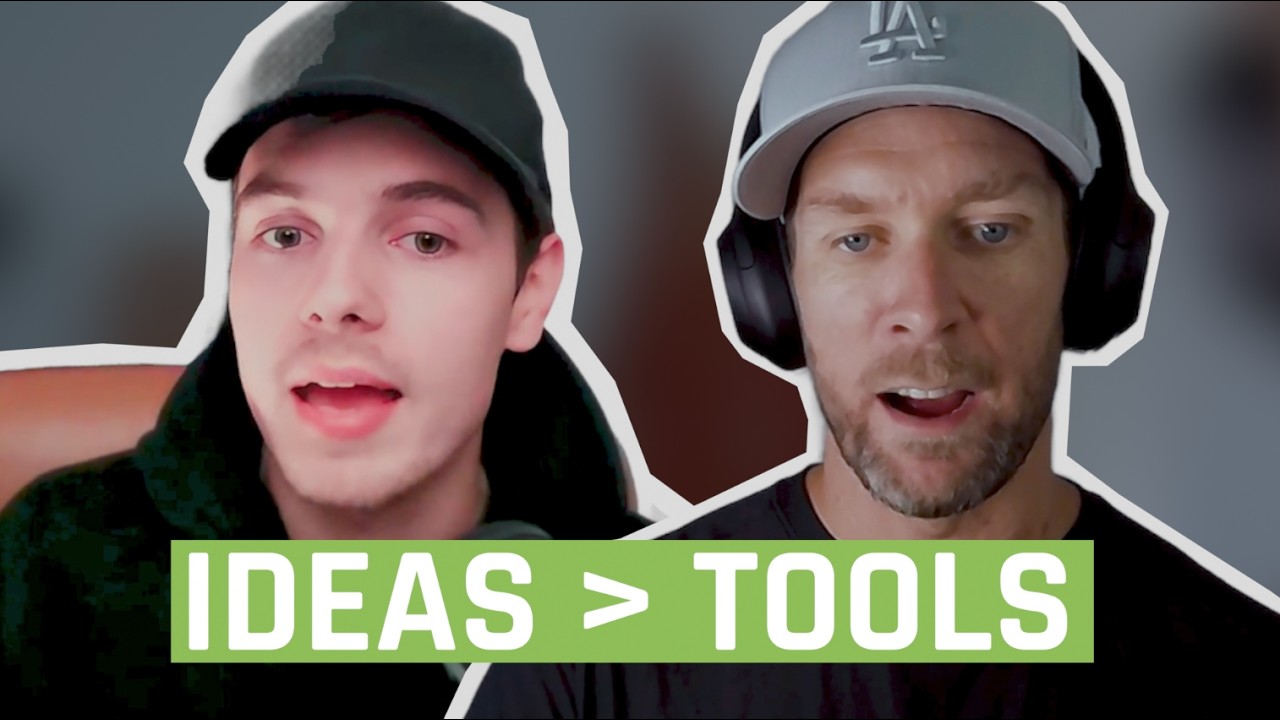
The Andrew Faris Podcast · @andrewfarispodcast
Words
10,660
Runtime
48:32
Speaking pace
220wpm
Reading time
44min
220 words per minute, above the 201 75th percentile of 349 measured videos. That distribution comes from the 349-video hook study.
Opening (first 30 seconds)
Alex Cooper is the co-founder and CEO of Ad Crate and a second time guest on the Andrew Ferris podcast. [music] We had such a good time talking about AI creative. Last time he was on the show, we scheduled it again. And on the show today, we're going to talk about just sort of the state of AI and ad creative. It's one of the most live questions [music] I think in DOC is sort of how do you utilize AI? There's an endless barrage of AI tools coming every day. We were recording this the [music] day after Chachi 55 came out and it's just a non-stop AI
110 words, the words spoken in the first 30 seconds at 220 words per minute.
Free, no signup. See how the first 30 seconds hold attention, with rewrites.
Sentence shape
| Measure | This transcript |
|---|---|
| Sentences | 528 |
| Average words per sentence | 20.2 |
| Longest sentence | 156 words |
| Questions asked | 42 |
| Sentences containing a number | 34 |
Most used terms
Filler phrases
801 in total: like 333 · uh 175 · um 102 · you know 74 · actually 44 · I mean 27 · kind of 19 · basically 8 · right? 8 · sort of 8 · literally 3.
A literal whole-word count of the same phrase list the Prepublish browser extension uses, so a phrase inside another word is not counted and a phrase used in its ordinary sense still is. It is a count and not a judgement.
Free, no account. See where attention is likely to drop, with a rewrite for each weak line. The free check shows the scores and the one issue costing the most. Or run it on the words above first.
Free · No login · See a sample audit first if you prefer.
What this transcript is
Every word below is the caption track YouTube publishes for this video, pulled from the video itself and reproduced unchanged. It is not Prepublish's writing, not a summary, and not a re-transcription: it is the video's own published captions. English captions, generated automatically by YouTube, in the video’s original language. Source: the video on YouTube. A channel that would rather this page did not exist can ask for its removal through the contact page, and it is removed.
No Script X-ray for this video: YouTube shows a Most replayed graph only once a video has enough views.
Alex Cooper is the co-founder and CEO of Ad Crate and a second time guest on the Andrew Ferris podcast. [music] We had such a good time talking about AI creative. Last time he was on the show, we scheduled it again. And on the show today, we're going to talk about just sort of the state of AI and ad creative. It's one of the most live questions [music] I think in DOC is sort of how do you utilize AI? There's an endless barrage of AI tools coming every day.
We were recording this the [music] day after Chachi 55 came out and it's just a non-stop AI tool machine that we live in. And so, how do you sort through it all? Which ones do you use? What is the point of AI? What's working? What's not working? Why are AI ads so disappointing so [music] much of the time? Alex is a great guest on this technical with AI. Really knows his stuff and also has spent a long time building [music] ads for brands that perform.
So, he knows what he's talking about. Let's get into it. V Cooper from Ad Great. Alex, we did it. We had technical difficulties, but here we are. So hopefully hopefully it sounds good for people still and all those things. Thanks for making time all the way across the world in South Africa. And uh yeah, you're in South Africa right now, right? >> I am currently, although I'm actually I'm actually moving to the States.
Uh I didn't know that. >> Yeah. Yeah. Yeah. I'm I'm super pumped for it. I mean, I ended up spending like three or four months of the year there anyway. So uh I uh I am looking forward to to heading over and yeah, I got I got a lot of good feedback from the first uh pod that we did um with people enjoying it. So, I'm really pumped to jump back on and jam with you again. >> Yeah. Where are you moving to? >> Undecided.
It's going to be in like January, February. Uh, I don't know. When I say the place, you're not going to want to stay there. >> Sorry. >> In January, don't go to the East Coast. You're not going to want to stay there. Like, don't go like >> I like Tennessee. I like Florida. Uh, I don't know. I don't like taxes, so >> Yeah. And um I I I would love to go to New York or LA. I I don't know. I don't know about the taxes, but we'll see.
I don't know. I have to fly 60 hours to get to states right now. So, if I can get that down to two or three to get to New York or LA, then I'll be uh I'll be over the moon. >> That's awesome. Um all right, let me give you my baseline my baseline AI take right now. And uh and and just like Los Angeles, just tell me how this hits you and tell me what you think about it. Okay. >> I've developed a position about AI and it goes like this.
Um AI for creative, AI for most things, um but AI for ad creative specifically. uh that AI at the baseline level is an amazing amplifier of great great ideas and that is the primary role that it can that it can play specifically with creative. It could do all kinds of other things in all kinds of ways in your organization, but um but but especially as you think about the creative process um and and and I think in a lot of ways a lot of things that businesses do and that people do, what it's really really great at is taking good ideas and amplifying them.
And therefore, the reason that a lot of AI creative is bad uh and the reason that a lot of things don't work the way you want them to, etc. Uh, some of it is technical. Some of it is that AI still hallucinates. Some of it is that it's hard to prompt uh and get the thing you want. There's all those things. There is skill involved with using it. I'm not great at it still. I'm not the one building this in my organization for this reason.
Um, but at the end of the day, a lot of it is because people don't have very good ideas about about things and therefore they amplify ideas that are not very good. That is like my baseline idea. And so then what that means for my organization is like the fundamental thing I'm thinking about is how do I how do I discern truth which is like a which is like a a hard thing but like in every part of my organization how do I discern what is true strategically about the way brands function and work and then build that truth into the AI brain uh of the tools that I'm using.
Right? So any anything that is an AI tool I'm trying to get that truth into the brain of the tool basically. Right? to the context of of the of catchup G or whatever it is and then and then use AI to amplify the truth. Uh and again by truth here what I mean is like strategically good ideas. That's my current position. I think it's it's there's all kinds of potential problems with that actually. Uh what how does that hit you?
Just just re react to that idea and then let's see where it goes. Yeah, I think I want to guess and it um so I I I firstly what I love is that like you know there's a discernment between like research and and execution. I think when a lot of people say that, you know, AI ads don't work, uh, you know, they're talking about the execution phase and like if you try and I mean, we spoke about this on the last podcast. If you try and look for the infinite button machine, like the infinite machine of ads, uh, and like the oneclick button that's going to generate all your ads, like that just doesn't exist today, and it probably won't exist for some time. uh to a high level.
I think that uh AI um is most useful by far in the creative process in the research phase for the time being. And then to your point of uh you know amplifying good ideas, I think that yes, I think that it's it's like one of the best use cases amplifying good ideas. I actually don't think AI is like I don't think it's actually bad at coming up with ideas if you use it properly. And what I mean by that is that like I think that you can come up with good ideas with AI by coming up with a lot of ideas and then working out which of those lot of ideas are actually the good ideas.
And this is why we have a saying like internally ad creators. Like the only people that we've seen make uh good ads with AI are the people who can make good ads without AI. Like I really think that the value of a creative strategist or like a growth market in general in the next 12 24 months and beyond is not necessarily in the uh actual skill of making ads itself because I think a lot of like AI will eventually get to the point where it is taking care of a lot of the execution but in knowing what to create.
Um, so it becomes even more important for us to like have like those reference points and like something that we're drilling into our strategists uh like all the time is like try and get as many different like absorb as many top performers from as many different industries as you can uh so that you can reference that when you're coming up with ideas and when you're looking through you know 20 ideas that AI has come up with you can go oh like this one reminds me of like something that I saw that work in this other account that was from a different industry or this one reminds you of this tweet that I saw like six months ago or this one reminds me of like a consulting call that I had two years ago with with Andrew um and knowing what to create rather than like the actual skill of creating itself.
So I I agree that one of the best things that you can do with AI right now is amplify good ideas. I also think that AI can come up with good ideas if it comes up with enough ideas, but like you still need to have the discernment as a strategist to say uh you know there's 10 headlines here, there's 10 hooks here, there's 10 scripts here, like whatever it is, number three, number seven, and number 10 are the ones I'm going to run into production. and then you get AI to amplify those. >> I don't disagree with that.
I think that um I think that it just sort of takes the same idea and pushes the ball to a different spot on the field. And what I mean is like like the way you're framing it, right, is that still somebody has to come and find the best ideas. And so AI amplifies the best ideas in this case by surfacing more total ideas in in the in the use case you're describing. It surface it helps you surface more ideas. But again in that surfacing process it actually surfaces a bunch of bad ideas too.
And so that so so that means that >> that like the thing that's really valuable about it is is the ability to help you get to the to the best things. and and so you know I I actually let's just stay there for a second. Um how are you using AI to surface ideas like at the ad level? So I I want to talk a little bit about how AI then amplifies those and we'll get there. >> So we'll just put a bookmark on that but but um but let's just talk about that idea of like idea generation because obviously this is something people talk about a lot with AI like how do we how do we do that?
So, so in what part of the creative process are you using it to generate ideas and um and how is it helpful to you? >> Yeah, I I've got like a few things I want to I want to share on this. Like the first thing is that like again there's it's not just like one prompt and it comes up to 20 ideas for me. This is a very iterative process. This is this is me going through in a chat with like multiple pieces of feedback. Me saying like okay first start on this emotion then drill down into this one then drill down to this one down to this one.
But I think in terms of like actual idea generation um you know I I think the sentiment's calmed down a little bit in the in the last few weeks but there was definitely a uh kind of sentiment in the in the community like within over the last few months it's like you know the value of AI in uh the creative process is like these like nan or like gum loop workflows where it's just like you press a button and it goes and scrapes you know Reddit and it goes and scrapes views it goes this and then it suddenly just pops out with like a bunch of different ideas.
Um, I actually approach it a little differently and this goes back to like the newsletter that you that you tweeted about a few weeks ago. Like the way that we go about idea generation uh and like one of the biggest use cases for AI I think for us at the moment is to build either custom GPTs or claw projects that are trained on your data and like more importantly trained on creative strategy. GBT or or Claude, even though the models are getting better, they're still not good creative strategists because they're trained on like, you know, blog articles from like marketers.
They don't they don't know context engineering and like >> to be able to selectively, you know, work out, okay, I I I want to train a custom GBT to be the best at headline generation. Like you as the strategist who knows a lot about creative strategy should be able to go, okay, I want to pick this podcast that Andrew did with a top copywriter, I want to pick these five tweets from Taylor Holiday. I think Alexosi did a great copyright video.
Harry Dry did a great interview on YouTube. Like you're you're selectively picking the the few bits of context that you can then put into, you know, GBT or put into a poppy and say, "Hey, build me a context document out of this." And what we've tried to do and we've actually done this internally ad crate is we have built context documents like that that have been context engineered for like each task in the creative strategy process and they serve as like basically live wikis for how we fundamentally think about each task.
So we have a document that's everything that we know about static headlines and that is you know a combination of all the content that I subscribe to the ideation of for example like a static headlines video that Dar did a while back uh I I put a couple videos from Dar's course I put the Harry D interview like context engineered and then add that to like our SOPs and our like internal beliefs about it to generate like one master document that represents everything I think about static headlines.
And then we've got another one for script writing. We've got another one for iterations. And now I'm going to take that and I'm going to plug those into my claw projects or my custom GBTs. So now I have a clawed project >> that are for the brand specifically you're saying. >> Exactly. Exactly. So I've got a brand that let's say I'm working with you know hollow socks. Uh we have a a hollow socks headline generator which is trained on hollow socks brand data. everything you want to know about the brand, USPS, uh, value props, etc., uh, personas, all of their top performers, and then also this document of everything we know about static headlines.
And like when you have those three things, the brand context, the domain context, and the top performers, it does uh, I mean, at least I found it does significantly improve the outputs rather than just going to a normal claw chat. And again, like these outputs still aren't 100%. In fact, you know, it's probably what less than half like less than half of them are actually good ideas, but like a lot higher of a hit rate than than just going straight into Claude.
So, I'm going into those chats inside the Claw project or the custom GBTs. And that's where I'm asking like, okay, for hollow, we are uh you know, we're looking for headlines for uh this emotion. Start giving me headlines for problem aware or unaware audiences. And then I'm going off of that. And like that's for me when I do creative strategies, a little chaotic. I just have three or four of those tabs open and I'm taking the best ideas from each of the responses from um uh from the chats.
I put them in like a a scrappy document just like jot them down as I'm going through and then by the end of that exercise after I've done that for 30 45 minutes I've got like a bunch of headlines that like AI has generated for me. So it's a bit of a scrappy process. I also think that like that's how creative strategy should be. Like it shouldn't all be like you should do creative strategy like 50 tabs open. At least that's what I do.
Uh, and um, and yeah, like you just you just put everything down on on a on a page and then you go, okay, I've got these 20 ideas of headlines I now, like how do I narrow this down to the best like five or six I want to push to production. Core to the bet I am making about AI and creative at AF growth is involvement with the team from Behind the Scenes Studio. Behind the Scenes Studio is a creative agency basically an extension of creative uh services based in the Philippines and really in a lot of ways connected to pretty much everything that I am doing.
I work really closely with this team, not only to staff my own team at AJF Growth, my creative team, video editors, designers, even creative strategists now, um staff with behind the scenes studio with incredible talent from the Philippines. And uh alongside that, they are building into their service all the things that we're working on at AJF Growth, they can also deliver to other clients outside of AJF Growth. And so what that means is that you get access to the kinds of thinking about creative that we are delivering to our clients that also can be delivered to you through affordable really highquality volume and creative diversity focused creative agency uh services with behindthe-scenes studio.
Put very simply, if you want to extend your creative team and you want to do that without paying an arm and a leg, have people deliver highquality meta ads performance [music] creative for your brand, you should get on the phone with Behind the Scenes Studio. They are great. Their um CEO is somebody who I trust so much. It's just an absolute killer and can really help you get connected to a great team there. Again, it's also affordable.
It's based in the Philippines. Uh they are doing that in part by hiring incredible talent in the Philippines like designers and video editors who are really really really good paying above market rate for uh uh competitive uh positions in the Philippines which allows them to attract the best talent possible. They're just awesome. Go to btsstudio.co. The link for that is in the show notes. btsstudio.co. Follow the link in the show notes.
Follow the link in the description to go follow up with BTS. They're awesome. If you need extension of an extension of your creative team for meta ads, performance creative, high volume creative informed by the same exact kind of thinking that's powered [music] uh that is powering AJF growth, the bets we're making at AJF Growth and that will continue to be informed by that kind of thinking. Go sign up with Behind the Scenes Studio today.
They can really help you get started. btsstudio.co. You're thinking about this so similarly to me and so I'm tempted to tell you why I love this. But if you even go a layer back further and you think about what an agency is, an agency is in two words operationalized knowledge. That's what it is. An agency you takes a set of knowledge. That's the reason an agency can exist is the idea is there's domain expertise about something that you can do and then you operationalize that domain expertise uh so that you can deliver that service as consistently and as high of a quality as possible.
And that means for an agency there are two fundamental tasks. One of them is that thing that I think a lot of people think about which is the operations component of this which is like okay agencies have to get good at delivering the service and you have to figure out how to like create SOPs and documentation and and tools and things like that to do this. You hear Taylor Holiday talk about this right now. He talks a lot about how service businesses and software businesses are becoming one thing.
They're be because they're building service businesses are building software to help them operationalize these things. But I actually think people underconsider the job particularly usually of a CEO in an agency but it can be somebody else could be head of strategy could be somebody else. Uh where the job is the actual knowledge part. So if it's if it's operationalized knowledge there's this challenge with knowledge where somebody's job has to be the truth teller.
They have to be the truth discerner. You just described a process. And by the way, I would love for people to comment on this video uh on a few things, including uh how they're using uh AI in this process if it's anything like what Al described. I would really love to hear your ideas or what you think we've got right or wrong. I'd also love to hear where you're going for knowledge on these things because it would be really helpful to people, I think, to to know that.
Um you know, you just rattled off a bunch of names, but I'd be curious kind of who else people are getting inspired by. So, drop a comment here if that's you. But, um hey, subscribe while you're at it, of course. Um but uh but the the um the knowledge part of this >> I think is is really hard and and you know you again you rattle off Horoszi and others and people talk about reading David Oggov and like older stuff and you know um I mean whatever it is I see on advertising right there behind you uh Alex uh you know we've got that kind of stuff.
I think um there becomes because of the process you just described where part of the context of the tool you're building is part of it is the brand's context, part of it is the domain context, right? It's Facebook ads and so you got to do all that stuff, but there's this context that is what is the best information possible about what actually works. And that's what I mean by discerning truth. Like you somebody's job at the company has to be the person to feed AI with those things.
And I I actually think you can go really wrong here by by getting this wrong. Like uh like it's really difficult to discern in there's so much content out there, right? Um you just mentioned a bunch of them like how do you actually get through and find what do you actually think works? And what I actually believe the future of agencies is in one respect is um at least part of agency future is is that as the ability to produce at scale becomes um faster and cheaper and easier all the time, the agencies that will win will be the ones that can actually have the best knowledge and who will know the truth the most essentially. uh and and therefore that truth then you know makes its way into the context of the AI machines right and stuff something like that and that's that's the bet I'm making at age of growth is like I I'm just I'm looking at the landscape going like I think that we could sort through a whole bunch of stuff about what makes ads work on the internet and I could work with Patrick my COO like and say like okay Patrick how do we get this here's what we believe is true and I'm talking about down to the level of the human condition like uh like what is it like to be a human and to desire things? >> The better somebody at a creative performance agency can understand that and how ads speak to that, the more that you can turn that into operations.
And the thing is in a pre-I world, it was really hard to operationalize that knowledge because you then have to take everybody into a philosophy class at your agency where you talk about the human condition and you might be, you know, informed here by Aristotle or something like that, right? And go like this is what people are like and this is what I believe about what what motivates people to make decisions and all these things.
Uh, and they're they might get that or they might not. And you have to be able to discern Aristotle, you know, but I really think it's down to that level like I think it's like down to the level of like of these things. And the more you can understand that and be right about those things, the better you will be able to then inform the context. And then this is what I mean where AI then in the exact process that you described, it's almost exactly what we're building.
AI will then become the amplification machine of those ideas. And so it will help people probably without a lot of strategists even realizing that that kind of uh information about what makes good ads, what people are like, how to sell, whatever. All these different layers of that will then kind of make their way into the specific hollow socks brand ad. You know, we're talking AI for ads on this episode of the show, but you should be thinking about AI used throughout your business.
And if there's one part of your business that AI can be obviously useful right away, make a real impact, it's on your customer service help desk. That's why multiple of my clients and are using rich panel. That's why I love to recommend rich panel. Rich panel is customer service [music] help desk software is built AI first and that amazingly still does not overpromise on AI. And so what they do promise is that if you uh are switching from Gorgeous [music] or Zenesk, they promise they guarantee at least 30% savings coming over from those two platforms while also building a uh a service, a piece of software that saves you a bunch of not only money but time and it saves your customers a bunch of time because uh it reduces on average your customer service tickets by 30% using AI to get customers the help they need with uh self-help uh self-service portal. on your website with faster, easier responses from your agents and amazingly with a tool that allows you to do in real time uh public comment moderation and interaction [music] on your Facebook and Instagram ads.
If you have uh any awareness, if you spent any time in meta ads for a long time, you know how much of a pain it is to go interact with [music] comments, but you know there's also real possible value there for brands and for um customers to interact in really good ways. So, uh, they have a they have a tool that will do that for you and that, uh, really does great work and that you will actually be proud of the way that interacts with customers through the voice of the brand.
There's just all kinds of ways in which Rich Panel is leading the way in customer service, help desk software right now to be a great piece of [music] software is affordable for your business. It's all the promises of AI, right? Making things more affordable, making things smoother and faster, and making things a better experience for your customers. And at the end of the day, that's what really matters the most. just go to richpanel.com uh afr richpanel.com AF to get started today.
That's that's my that's kind of like the bet that I'm making. The bet that I'm making AJF Growth is that like we if we put a bunch of time and effort right there right now, we'll have a we'll have a um a market advantage by having more truth than other people. That's that's that's what I'm hoping. >> Yeah. I mean I mean you're so right. Like I mean it's because it's garbage in garbage out. Like if I have a if I have a tool that's that's trained on the wrong uh information then it's going to spit out the wrong headlines or the wrong holes like the wrong you know whatever the outputs you're asking for is people make a big uh like a big deal online we made about like you know if you want to future proof yourself become a prompt engineer.
I think really what it is and and Harvey from Shopify said this better thing is is becoming a context engineer. Uh and like that's how I think you make yourself indispensable knowing what knowledge is truth or the best format of truth or the best version of truth. And like as it pertains to, you know, how do we how do we discern? Uh I mean, I don't I don't have a process for that, but like what I'd say is when I'm building these context documents, I try and make the context as specific and relevant as possible.
Cuz like in an ideal world, in the case of ad creative, I would have a a clawed project for this client for this persona, for this emotion, for static headlines uh in Q4. Like I would have the most specific context document that I could that has just information about that specific thing. If I did that, I'd have 600 claw project for every client, which is not necessarily, you know, the time to build that. So yeah, >> but then what you have is a is a cloud project that helps you sort through the cloud projects >> essentially. >> I do.
Yeah, that that's a great idea actually. >> Yeah. I mean everything you're describing is like is like use AI to build it, you know, use AI to build the thing that you're describing, you know, but yeah. >> Yeah. Actually, one of my favorite custom GBT I've got a custom GBT that helps me write system prompts for custom GBTs. >> Yeah. >> Yeah. Yeah. I I I use that a lot. Um but yeah, like thinking about how can we make these uh content documents as specific and relevant as possible to the task and like how much time you've got to invest in this.
I do think it's like it's a time investment rather than like a like time being lost. Uh like we actually have all of our strategy have client slots like dedicated just to context building. Uh so we're trying to make them as specific as possible. Like we we sat down as a team, we brainstorm 100 different context documents in the ad creative process. So everything as niche uh as like you know coming up with variations but headlines to you know high level you know marketing to uh different audience demographics or different personas or different industries like literally every pro every process or part of the process that we can think of we're trying to turn into a a context document and like have that context be as like have that context document have everything that it needs and nothing that it doesn't because like the last thing you need in a context document is to confuse if it's a static headlines document.
Like what you don't want is also some script writing information there and also some information about you know persona like things that are just not going to help uh and possibly confuse and get the model to forget um what it's actually supposed to be focusing on. So it doesn't matter if they're you know half a page or 20 pages. I just say like to to the strategy team make these as specific and as relevant as possible with everything that it needs and nothing it doesn't.
If we do that across every task in the I mean in this case creative process but at large you know every process like in in the in the Martin uh department then I think we should be in a place where we can get quite a lot of value out of our our core product and our custom GBTs. you talked about getting really specific with all of these things. You know, the more context like and I think that's right like you know um one of the things I've watched happen with common thread collective on their path to growing and having an exit and having like so much success over the last couple years in particular is that Taylor basically applied the kind of thinking you just described to the media buying and financial process.
So I I mean I've just I've looked inside that organization a lot and they you know they had they had this idea which like okay you start with a forecast. Okay well what's a forecast? Well it's actually a prediction about new customer revenue and returning customer revenue. Okay well what are the difference between those things? Well returning customer revenue is actually comes down to different cohort performances. Okay how do you forecast every single cohort monthto monthth?
Okay. How do you do that relative to the marketing calendar? And it's just it's just layer of specificity within layer of specificity within layer of specificity until it gets down to okay we have a spend forecast $100,000 for the month for the brand or whatever million dollars for the month. Okay. Well, you don't just spend a million dollars on Facebook. You spend it across campaigns. Okay. So, how much per campaign?
Okay. Well, you don't spend it all in one day. You spend it per day. So, how much per campaign per day are you forecasting? and the ability to take an idea about what makes a good e-commerce business which is um financial clarity and profit first thinking and uh and how e-commerce businesses drive profit and to bring that all the way to the layer of specificity with the with a long and continuous development of tools uh which which took I just know the way they did that there was like it required somebody whose full-time job was to be an Excel wizard full somebody they've got a developer to build internal software tools to help it you know all those things so as They they continued to do that and they got down to layer inside layer inside layer until eventually you're forecasting each campaign spend by day.
And that way you know every single day whether or not you uh are hitting you're on target to reach the financial track because the financial outcome is is the is the central metric that CTC says is what a brand should have. And the thing is Taylor's probably right about that. And so he had he had discerned truth about what makes e-commerce brands work specifically in the area of financial analysis and then went down to this layer of specificity and then built the service around the ability to deliver at that level of specificity.
And what I think is this is that's the exact same thing you have to do for creative which is like okay it's not just make a static image ad. It's there's certain like different kinds of headlines work different ways. Okay, what about with men versus women? What about with millennials versus boomers? What about with um beauty versus apparel? What about with And basically you just keep pressing in and pressing in and pressing in.
And the beauty is that ability to press in is now meaningfully amplified by the fact that you uh that you have AI to help you develop the tools, right? You could build the the the GPT that works through other GPTs or whatever. So So like, you know, that's part of it, but um but it's also this continuing ability to keep to keep asking yourself the question, well, wait a minute, how can I be more specific? How can I devel discern more truth here?
And if you could actually do that and and again I think that's what will make great uses of AI within organizations. I'm talking about this with an agency framework. Um but of course this would be true for all kinds of organizations in all kinds of different ways that that can just keep doing this across the board with basically any like service that they're delivering. And I mean again you know I think like smart broading uh humans are going to be really important in that process to like sort through a lot of good bad ideas in the midst of every one of those steps you know.
Yeah, absolutely. And and what makes it slightly like even more interesting about the creative process is like there is no step by step for coming up with good ads. Like I was speaking to my strategy about this the other day. It's not like you do the research, then you do the then you do the messaging, then you do the format like like most strategies I know literally do their creative strategy like I said with 50 tabs open and sometimes it goes I've come up with a headline, let me find a format that matches the headline and then put it into production.
Sometimes they find a format and they go, "Okay, what headline or what, you know, hook would work with this uh with this format and then they put it through to production." There's no like one sizefits-all process, even though like that's what um that's what everyone wants from us. Uh they they want to like do this and do this and do this, but there really isn't one. And then trying to trying to operationalize that at scale is uh is not easy, but like again, like this is why if you do it, you'll win over the long term.
It's not the the quick like build a build an end flow and then click a button you get all your ad ideas. Like it's boring. It's unsexy work. And like even when you complete it, you don't get the oneclick uh ads. You still have to go through the claw project. You have to give feedback and you have to say, "Oh, actually less of this and more of this." And like it's a it's not the the dream that everyone's been sold uh online, but like it is the best way to get value like actual tangible business value in the creative process out of AI uh today in my opinion. >> It's funny you say that because like the whole idea, right, is that is that like or the thing that people like you said have been sold is like this is going to do everything for you.
Um but and I don't know, maybe there will be but like right now everything we're describing is like a bunch more work. It's like a bunch more really hard work than it was before. >> Yeah. I mean, we like we uh like I said, have strategists who have dedicated client slots to this and we're like giving away tens of thousands of dollars a month that could be allocated to client slots to build these context documents. Like it's not easy to build them.
It takes a lot of time. Um and it was a lot easier for me if I just say to the stretch, hey, go and make some ads uh for our brands, but like this is an investment we're making that in the the way that the industry is going. Like I actually think the creative strategy becomes more important uh than they were pre AI uh at least the good ones uh cuz like it's not about it's not going to be about this the skill of creating ads itself but but knowing what to create and and being able to build the systems to help AI dictate what to create.
Um it's going to be valuable. >> Okay, let's talk about another aspect of all this which is the endless onslaught of new tools. Uh, like the other day I saw somebody say, "V3 ads are ripping right now." Might have been you. I don't remember if it was somebody saying something like that. Um, yeah. Yeah. Um, okay. So, should I drop everything and start using V3 when I see Alex Cooper tweet that? >> Yeah, you should. You should always listen to people on Twitter.
I think I think when I've done that previously, >> you >> Yeah. Yeah. When I've done that previously, it's always worked out well. Um, I was actually having a conversation about this as a slight tangent with uh with someone the other day about like how you really shouldn't listen to any of us on Twitter. Like like especially in e-commerce, every business is so different. Like we work in in in one of our actually one of our biggest accounts is a uh like is a beauty brand.
Actually, the tweet I made today was like somewhat related to this. and their like their top performer is a um is a hook where it's like a it's a makeup artist saying, "Hey, I'm Sarah and I'm a makeup artist." And like on paper, I wouldn't use that hook in for any other industry. Like someone introducing themsel, I don't know or care who you are, Sarah. And like I don't that doesn't you're not making it immediately relevant to me as to why I should buy your product or be interested in what you've got to say.
But like because that is the type of content that um that people in that industry actually uh consume organically, it works really well for our beauty brands. We have other brands where it's like you know whatever we try podcast ads work really well or a lot of supplement brands that we work with like VSSL style like longer um educational ads work well. So like you know you can you can look at people what people say on Twitter but like every business is different and you shouldn't really you know take anything that any of us say as gospel because what we say might be what's working for our set of clients or like that one specific brand uh one time um rather than like something that's going to work inside of every uh every single account uh for everyone.
Um but uh I mean on on a more serious note I even though you shouldn't drop >> advice. VO is uh like VO is interesting in that like some of the stuff that I've seen uh on Twitter uh over the last few weeks of VO like genuinely blows my mind. Even some of the ads that our team started to put out now like I used to think that AI limits your creativity but like now seeing a lot of the stuff that we uh that we're making I think the opposite.
Um, I think that like you're you're literally only bound by what you can come up with, like what you can come up with to create. Uh, which is again why like why collecting uh inspiration and like putting a like creating a foreplay board of all the stuff that you've seen on VR or on Twitter or like in other ad accounts uh is is uh something I think everyone should be doing. Um, it's still a little tedious uh and like it takes a lot of work to get good outputs from it.
What I'll say on on on video is this. I I think right now the the best use case similar to image gen is generating intentionally unrealistic hooks. >> Um for example, you know, we work with a um a like a joint pain brand. We've got a knee on like someone's knee on fire. Uh it was another one that I saw someone had an ice pack like or like a foot in an ice cube uh for some like foot pain. Uh, so like just intentionally unrealistic things.
I've seen people like right on skin uh that you know that you wouldn't be able to get like with a human things that like are not easy to get uh although don't look too unrealistic. Um I've seen do pretty well like on on Hooks as VO. But like I said it's very tedious. Uh so it's not worth I don't think it's worth investing too much time in right now. That being said, like I am getting all of our team like the trash and the editing team to invest more time than I think is worth right now because I think that and I may be a you know optimist here but I think within 18 to 24 months all creative if not all most if not all creative is done in VO or a tool like VO.
So like it's a very defensible skill set to practice uh to be able to prompt AI to come up with video content. Um and like go through that process of of like getting the output that you want even if it's not there today. Um I think it's something that I mean we're definitely pouring into our team to get them to get really good at it because I think a lot of uh a lot of the creative that we make uh over the next you know few years uh is going to be made uh in a tool like VO if not VO itself. >> I agree with the point about making unrealistic video.
I just made a VO3. I was just playing with it kind of for the first time recently and was uh yeah yeah playing with like a whole bunch of stuff that was exactly that use case. I think Taylor had tweeted this as well a while back. The notion that like everybody's trying to make AI look really realistic, but the actually really interesting uses to use AI to make unrealistic things. The way I've thought about this sometimes is that suddenly there's the democratization of Hollywood level CGI.
Like essentially it's like it's just like all of a sudden anybody can make stuff that previously was only possible with multi-million dollar um budgets in movies. And you know, I don't know that it's all the way there all the time. Like you said, it takes some work, etc. But um that's kind of the way I would think about it as like this ability to do really crazy stuff. Um I'm actually interested in sort of a broader question in some ways which is like great VO3 Alex Cooper says works really well.
Maybe you're not using it. That's awesome. What about um what about 11 Labs which just released uh the ability to make music? Do I have to go make 11 Labs music ads now? Um you know apparently it's really really good. 11 audio is apparently really good. you know, um what about the the 15 other tools they're going to come out in the next two weeks um that I'm going to be tempted to chase down because they're all going to have marketers uh telling us telling the whole world about how great they are and they're all going to have really impressive samples that they show everybody.
Um so how I mean are you doing anything to sort of stay on top of tools but also not be prone to shiny object syndrome? Kind of assuming in the question that you're doing a good job at this but maybe you're not, you know, I don't know. Maybe maybe you're doing a bad job at it and I don't know but but yeah I I mean what how are you sort of sorting through? I actually think it's going to continue to be a real problem in workflows.
Um yeah. >> Yeah. I Yeah. I mean I I think everyone's overwhelmed. I'm I'm certainly overwhelmed by the amount of tools that have come out this year. I think we said this in in the last podcast at the start of the year uh that there's just so much coming out right now. Um, and what I what I I try and think about is like what really is the like the business value that we can create from a tool like this? Because, you know, you can for a lot of these tools, you can spend 20 to 30 hours trying to make the perfect prompt or the perfect output uh and like optimize it to like get a get get to the point where it's really good.
Uh but then two weeks later someone else releases a tool that you could have done the same thing in 5 minutes. That's what happens with I imagen like I spent like 30 hours trying to make the perfect image gen prompt and actually then image gen updated like four weeks later and like I made I could make something that that was better than anything I could make in 40 hours a few weeks before. That's right. Like you really got to think about like okay what like >> what uh like what >> business value do I think I can create from a tool like this?
And I I like generally like I try and try as many of the tools I can because I I try and do it so I can tell other people so they don't have to spend the time on it. There's only a handful of tools that we actually use uh on a day-to-day basis and and I mean 78% of it is done inside of GPT and Claude. Uh I think deep research uh is really good. I mean that's inside of GPT. Reddit answers is one I would encourage uh everyone to use.
Um it's just like you know chat in to chat to UBC but it's sourced on Reddit and it sites actual Reddit thread so you could it's really good for research. Um we use a bit of archives use a bit of 11 Labs but like beyond that there's really not too much uh outside of a few things for image and video generation like we do a little bit on Higglesfield um for uh low production. Um but outside of that like it's it's you know I I think a lot of these tools are are sexier than our than they are practical.
And genuinely, if I was at a brand and like I didn't have the amount of time to commit to AI tools that Alex Cooper does, I don't know if there's better advice than like just follow people online who are going to, you know, kind of sacrifice themselves to to go and try a lot of these tools. Uh, and then feedback on the ones who are actually valuable because it's it is difficult. I find myself spending like, you know, demoing tools where 80% of them don't actually help her or more of that don't actually help her uh in the creative process.
So, it's difficult. I just try and like if a new tool comes out, don't get shiny object syndrome. Let other people test it. Uh see what the results come back as. Um or even like think about um hiring someone to just be a tester. Like we've actually got someone at Ad Crate who does some of our testing for us. Uh like someone I just got in in in Europe who like has a little bit of knowledge on on uh on strategy. Um and like whenever there's a new tool, I just send it his way.
Uh and he goes and test it and gives you feedback and see if he's got can come up with some good ads. So you know uh it's difficult. It is overwhelming, but try not to get caught up if there's a new tool that comes out, like let it sit. Let other people test it and see what people say online. Uh, and if you think that genuinely like it is something that is going to be around and not be replaced by another tool or a better tool uh, in the near future, then like that's when I think about jumping into it. >> So, I have a couple ways that I've been thinking about it.
It's very similar to what you said, which you you just kind of laid out a you know what, we have enough tools with the ones we have kind of mentality and we don't really need to go chase everything down. Um, and then also that you're dedicating some time uh in your job specifically and and including in your like public content. So there's kind of additional value for you to kind of be the one of the on the leading edge of this stuff.
I certainly would look to you as somebody to go like, "Oh, thanks." Like you point, you know, turn me on to Poppy, for example, you know, like um that that's like was a helpful thing. Um I I think there's a couple things that I'm sort of doing to sort through this and here's the bet I'm making right now and if you have any response to this, I'd love to hear it. One of them is that there actually isn't very much value in being first.
So, you don't need to be the first person to use it. I think there's this FOMO that comes into play and this idea that like, oh no, the new tool came out and everybody's going to use it and they're going to make more money to me, compete me into the ground and I'm going to beat that. But that's actually not true. Like most times, most tools are not step changes and uh and are not the difference between winning and losing.
And that means that you should instead ladder your decisions back towards the economic outcomes that you're pursuing. Like like you you kept using the phrase business outcomes. I think that's right. The idea is like I don't know is my client hitting their targets then I have enough tools if if so um I don't need to worry about chasing bigger crazier targets if my client is hitting their targets like that's what the point of a target is in fact a target is a helpful mechanism for dealing with shiny object syndrome and then um and then secondly uh you know like that that hopefully frees you a little bit from some of the FOMO but then secondly there are new tools that are really helpful.
V3 is really cool and there are times to use it. So, the way we're thinking about it is like what if we had a brief uh for each like video editor on our team, designer, strategist, whatever, where it's essentially like we expect this to take you x amount of time. We haven't landed on it, but we're talking about like building one and we're just going to call it the moonshot brief. And it's just like or the explore brief or something.
And the idea is like you got all these briefs to work through. You're a talented video editor, a talented designer, whatever. Uh, okay, great. here is a brief that is like, okay, here's the basic thing. Here's the brand that you want to work on. Go make something crazy for that. Here there's a bunch of new tools. Go explore a tool or just try something that you weren't going to try before. Uh we're happy to run it as an ad, especially for us.
We're launching it all in manual bids. There's very little risk to something going wrong here. Like um and so uh you know, Meta will just won't spend very much on it if it doesn't work. So the there's that's kind of the way we've thought about some of this as well is like sort of create an active amount of testing time but then also that creates a boundary on how much time you're allowed to put into it basically right so it's like if you all lot an hour then there's both time allotted to it but also not too much time so you can't go and like just h I'm going to keep doing this forever it's like nope that's that's the amount of time for the moonshot brief each week or whatever and so we haven't really like instituted this yet but that's kind of the way we're probably going to think about it and keep surfacing all the tools let them come and let people go play with them but have a really specific a predicated amount of time to do it. >> Yeah, I really like that approach.
Um, we do something not too dissimilar. I actually got this from um, Moretta Kresby at um, at Creative Milkshake. Uh, we have like an AI day um, where on the on the topic of uh, like you know not not FOMOing straight into new tools that everything gets bookmarked. If I see something, I bookmark it and then when it comes around to my next AI day, which you do sometime like often once a month, um, it's like, okay, great. like no one's expected to put out any ads today or like you're expected to put out less ads today, but you're just going to go and test everything that uh you found in the last two weeks or the last four weeks and when the day ends, you stop testing them.
That doesn't bleed into tomorrow when you should be working on your actual tasks. Uh but that way it's like like you said like a defined window uh that people can experiment and if they if they learn anything, if they if they find some monologues then that comes into their regular day-to-day work. At the same time, we're not, you know, eating into what we are like our actual tasks. Uh because I mean sure like as as you guys everyone here is aware like you can you can start playing with these tools.
Um like a VO for example I was playing inside of VO trying to generate things and I get lost in it and I look at the time I'm like dude like six hours have passed and I just messed around with VO and I've only learned a few simple prompts. Um, so yeah, it's I definitely like the uh the concept of, you know, defining uh a an amount of time that can be for testing all the new tools you found in the last, you know, x amount of time. >> I like that.
Yeah. Um I like that the the AI day is a good idea. Um okay, Alex, we're about out of time. Uh I want to just give you any space that you that um you want to have for anything else that's burning on on your mind. any thoughts, ideas, questions, top of- mind stuff that is just like, hey, we're talking AI ad creative. What what are we missing if anything? And if not, then that's fine, too. But >> focus on the fundamentals.
Everything we said in this podcast is irrelevant if you don't have a good understanding of the fundamentals. Um, don't even touch AI, uh, before you have a good understanding of psychology, research, and copyrightiting. Um, and if you do that and amplify it with AI, then you should be good. >> I like it, man. Um, okay, Alex, people should follow up with you. The the best place to go to follow up with Alex is I mean, you can go to adcrate.co and look into working with Alex and his team there.
If you want uh that big brain of his and his team working on your TOC business, generating creative for you. Um, you can also go follow Alex on X, Alex Cooper. Uh, the link for that is in the show notes. Um, the significant thing there too is any other follow-up you want, including subscribing to your very excellent newsletter. I subscribe to like three or four newsletters. That's it. Yours is one of them. and uh and uh and you can go subscribe there as well by going through the link in Alex's ex profiles.
Easiest place to go find all that stuff. Uh you've been super helpful on this stuff. I'm sure this won't be our last time talking. Alex, thanks so much for taking the time. Big thanks to Alex for that episode. He is preient on a bunch of things. I love talking to him about this stuff. You should subscribe wherever you're watching or listening cuz not only will he come back, but I have an amazing episode coming very soon.
It was just scheduled with my friend Richie Masho. I love to talk about um what this episode is going to be cuz it's so cool. Richie took over as CEO of a distressed brand that uh that he's been around for a long time, but took over as CEO to rescue it from over $6 million in debt uh in the last year that they had piled up. Um Richie did not plunge plunge them into that debt. He is taking over to get them out of it. He's begun that process and is willing to share the whole thing with you.
The brand is She's Birdie if you've ever seen that brand. And um Richie is is is gonna open the books basically and talk about what they're doing to get out of that. Amazingly, they have to do that with a bunch of sales, with a bunch of revenue, and they cannot use Facebook ads to do it. That's part of the really uh fascinating thing about this story because they owe Facebook too much money. So, until they pay down their bill, they can't run ads again.
Uh and so, they have to find other ways to generate revenue. It's been fascinating talking to them about the process. I'm going to bring them on the show. We're going to dive into it. I think we're going to do a series about it. So, subscribe wherever you're watching, listening, subscribe so you don't miss out on those episodes. As I also said, I'd love your feedback on this episode with Alex. Leave a comment. Um, email me at podcastfgrowth.com.
I'd love to hear from you there. You can also, uh, subscribe to my newsletter at afgrowth.com. Uh, or if you want to work with me and the team at afgrowth, um, go fill out the intake form on my website, afgrowth.com. Check that out. Let's get a conversation started and see if it's a fit. Thanks so much for watching or listening. I'll see you next time. [music]
The words are the caption track's own and nothing is reworded or re-transcribed. Paragraph breaks are placed between sentences so the text reads as prose.
Free tools for your own script: paste a draft and see where it stands before you record it.
Paste your draft and see where viewers are likely to drop off, with a rewrite for each weak line.
Paste the first 30 seconds of your own draft for a hook score and rewrites.
Check your draft against YouTube's advertiser-friendly guidelines before you record it.
Read this channel's public videos and transcripts, and download a writing brief for it.