Getting the transcript
Reading the captions from YouTube. A video nobody has opened here before takes 10 to 30 seconds; this page fills in on its own.
Getting the transcript
Reading the captions from YouTube. A video nobody has opened here before takes 10 to 30 seconds; this page fills in on its own.
The Andrew Faris Podcast · @andrewfarispodcast
Words
12,841
Runtime
58:05
Speaking pace
221wpm
Reading time
54min
221 words per minute, above the 201 75th percentile of 349 measured videos. That distribution comes from the 349-video hook study.
Opening (first 30 seconds)
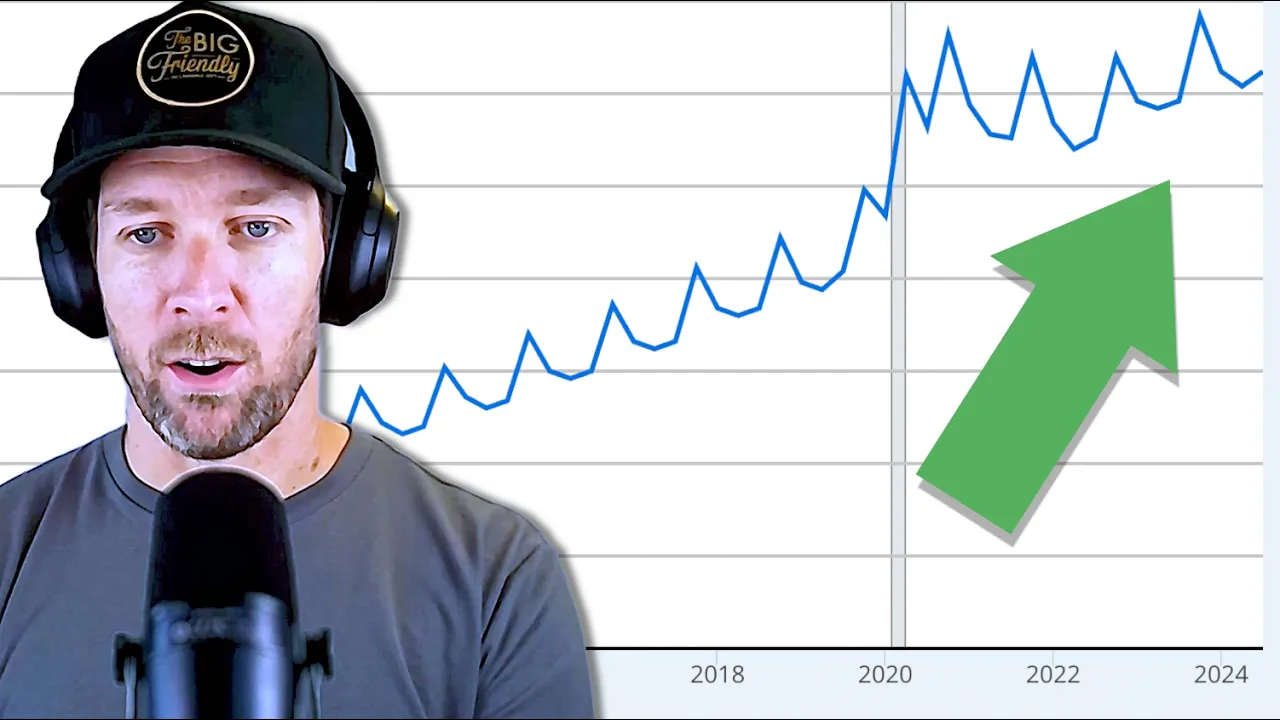
you just showed me data saying that maybe e-commerce is in the best place it has ever been like objectively definitively certainly is that am I understanding that correctly okay well I guess it depends on how we look at that right um definitely not best in terms of you know are we looking at like 2020 year-over-year growth 2021 versus 2020 doesn't count yeah it really doesn't yeah um but yeah I think the you know if we look at uh a few factors I think it's actually in a really good spot like in terms of like percentage of the economy it's the best it's ever been um okay
111 words, the words spoken in the first 30 seconds at 221 words per minute.
Free, no signup. See how the first 30 seconds hold attention, with rewrites.
Sentence shape
| Measure | This transcript |
|---|---|
| Sentences | 3 |
| Average words per sentence | 4280.3 |
| Longest sentence | 10,160 words |
| Questions asked | 0 |
| Sentences containing a number | 2 |
Most used terms
Filler phrases
840 in total: like 396 · um 150 · uh 78 · you know 73 · actually 71 · kind of 22 · basically 19 · I mean 15 · sort of 11 · literally 5.
A literal whole-word count of the same phrase list the Prepublish browser extension uses, so a phrase inside another word is not counted and a phrase used in its ordinary sense still is. It is a count and not a judgement.
Free, no account. See where attention is likely to drop, with a rewrite for each weak line. The free check shows the scores and the one issue costing the most. Or run it on the words above first.
Free · No login · See a sample audit first if you prefer.
What this transcript is
Every word below is the caption track YouTube publishes for this video, pulled from the video itself and reproduced unchanged. It is not Prepublish's writing, not a summary, and not a re-transcription: it is the video's own published captions. English captions, generated automatically by YouTube, in the video’s original language. Source: the video on YouTube. A channel that would rather this page did not exist can ask for its removal through the contact page, and it is removed.
No Script X-ray for this video: YouTube shows a Most replayed graph only once a video has enough views.
you just showed me data saying that maybe e-commerce is in the best place it has ever been like objectively definitively certainly is that am I understanding that correctly okay well I guess it depends on how we look at that right um definitely not best in terms of you know are we looking at like 2020 year-over-year growth 2021 versus 2020 doesn't count yeah it really doesn't yeah um but yeah I think the you know if we look at uh a few factors I think it's actually in a really good spot like in terms of like percentage of the economy it's the best it's ever been um okay by so let's let's clarify exactly what you mean by that because this is a stat that I point to all the time I think what you mean and correct me if I'm wrong is as a percentage of total us retail yes more retail is bought online now than ever before so online relative to Brick and Mortar yeah yeah absolutely this is this to me is something that people just don't take seriously enough it is just so much easier when 2 and a2x and to be 3x in in the next 10 years or over the next couple years uh so anyway on a 10- year timeline I think it's like between two and 3X the number of people or the amount of of retail that happens online yeah um is happening relative to uh brick and mo that is uh I think it was like 7% of total us Commerce 10 or 12 years ago was happening online and now it's like 17% with no signs of slowing down there was a big spike for Co and not and I'll try to get I have I'll try to get that the graph of that on screen I don't know do you have a I don't know if you have one you like but we can follow up afterwards but I'm sure it's the it's the Fred one I think that I always look at it's probably someone that you look at but the Fred one I think it's Fred yeah um okay you might have to send me that um but uh yeah okay great because because I I know I know the data because I've looked at it but yeah so anyway so walk walk back through that a little bit more I cut you off but keep talking about that no and I I don't have that in front of me right now but I believe the numbers is what you said it's like around 17% and it's now so what happened was in 2020 we saw a massive Spike when everything shut down and everything started going through online purchases not everything obviously but a lot more started going through online purchases and then there was the dip and now we've kind of come back up and if you look at the trend line basically we're back on the trend line um and so yeah I think objectively speaking we can look at e-commerce and say like that there is more being processed online than there ever has been in the past and that trend is to continue so I think that's one factor that I'd look at where I'd say things are good um the other one this is a new indicator so I can't look at this and say like almost everybody sorry I want to get to that in a second almost everybody recognizes that Tam to Total adustable Market is really important when they talk about something like the category they're in right like if you're in um if you're in Fitness apparel you know uh if you're one of the companies like like simple modern or something like that selling water bottles everybody in the US uses a water bottle so your Tam is virtually endless to say nothing of worldwide possibilities okay abely yeah but people underestimate that they'll all be like oh Tam is so important Tam is so important for your category and then they will completely write it off when it comes to like online sales now one of the things that implies is that Omni Channel still there's like there's still like a really big advantage to like growing your business into brick and water at some point right because there's still 80% of it happening there and that is that is why that's a real growth yeah um growth lever for Brands as they grow DDC but for a long time you could sell a lot of stuff to a lot of people online in a way that was is easier now than it used to be and I take as ultimate evidence of this the fact that there are just so many more big e-commerce businesses now than there there were when I started it's just not even close you know I just talk to them all the time eight figure businesses don't even surprise me anymore there was a time where it was like shocking to see an eight figure business on TC it's true you remember those days was that were you I got started in 2012 in the e-commerce space so yeah I remember I mean at the time a big brand for me was a brand doing a few million a year in Revenue um and that was like you know if I had a client that I was working with that was big it was it was yeah typically three or 10 million I don't uh first time I ever worked with a brand doing 10 million plus was probably 2016 would be my guess um yeah now and it was crazy I remember I still I've refenced this before but I remember the first Google anals uh I don't think it's a problem for me to say who it was either it was diff eyewear I remember the first time I saw diff eyewares I was worked we doing some agency work for them and I remember seeing their Google Analytics and actually Taylor pulled it up because we were like pitching them at CTC and Taylor pulled it up and he like waved me into his office like dude come look at this you know and they were at like 15 or something you know like maybe 20 I don't know and it was like Wow and now it's like yeah I'm trying to think there was uh there was a brand a lot of people wouldn't know and I don't have a close relationship with them so I don't know mentioning but this like six years ago for D or something I don't know who knows yeah these guys were it was another eyewear company they were kind of up and coming in 2015 I think it was I was doing some conversion and optimization work for them and they were on they were on a it wasn't shark tank but it was a show like that and just like watching their revenue Spike over like through the course of the show and and that whole proc it wasn't like we wouldn't I there's so many Brands I work with that do Mill a million plus in a day 10 million plus in a day on of these days um but it was I want to say it was like 600k that they did in a day and it was like a shocking number to me I just could believe that they did $600,000 in a day so yeah yeah it's crazy okay what was your other what was your other indicator I'm sorry I cut you off again because laor this point yeah I think the the other indicator we're looking at right now is this direct to Consumer competence index that we built with common thread Collective and that is never heard of them uh that is two years old at this point um at well next month it'll be two years old so we've been tracking this data for two years and the we actually sawed dip the last couple of weeks pretty significantly but up up until this point consumer sentiment is the highest it's been in years um and that's pretty interesting I think that's a a good sign of future buying as well so I think when I think about like is e-commerce good it's not just like the trend that we've been on but also like what do we have to indicate that the future is going to be good um so okay I love the dcci I think it's I think it's an unparalleled tool so this might be a good for people to understand a little bit more about who you are and what your place in that is yeah um you know they hopefully they've read the show Nots but we did The Joe Rogan style roll right into it inro here so um so Jeremiah prer you I mean so you tell people what your role and what no's role is yep in and what data you have access to and then what the dcci is and then let's and then let's keep talking about what you just said because I actually think this is a very big deal and people should understand this metric I actually remember working with a client at one point when the dcci went way down over a longer per time and they struggled and I kept showing that to them saying like hey this is like you actually have to reckon with this this is real objective data about the state of people's buying right now I think it's a really thing like everybody should go subscribe to that right now yeah like so yeah totally yeah and okay so a little bit more context about that so um couple years ago Taylor uh Holiday from Common Thread Collective and um myself kind of sat down and and he had been looking at the consumer confidence index and how that correlated with the effectiveness of AD spend um and so we we're looking at this and and the idea was what could we do to actually build something that um was representative of our industry not just the macroeconomy because that there is a bit of a difference potentially in online shopping versus in-person shopping there's a different type of person who buys online than the person who's buying in store sometimes and so if we could actually it for online shopping it would be more valuable and useful um and then the other challenge with the consumer confidence index is that it's a once a month data point it's not very actionable when it's happening one time a month four or like three weeks retroactively right so by the time you're actually seeing the data it's it's uh you know six weeks old most of the time like four to six weeks old and so that was the idea and so what we did is we went to um at no Commerce we run surveys for e-commerce Brands and so we actually built an experience uh called automated insights that Brands can opt into where we ask a bunch of different questions some of them for the direct to consumer confidence index some of them just for like broader understanding of how your brand fits into the ecosystem and um we rolled that out and started collecting this data and so we ask a series of questions that are basically like the intent of the questions is to understand how somebody's how somebody perceives their buying Behavior having changed over recent time uh how they think it's going to change in the future and also like how they perceive the economy in the moment and those are the data points that we're leveraging in this context and then we've got a little bit of stuff in terms of you know we've got like the zip code of the person who fills out the survey we've got a couple of data points like that where it's all anonymized data but it's also it it can be tied back to a goo for instance um and so this is really cool because then we can start to break down this data over time and so we've been tracking this now two two years thousands of people answer this survey every week um and so it's a pretty good replacement for the consumer confidence index another intellig win with an actual client of mine I want to tell you about a split test we ran that was massive for us and that was we split test cutting the price of customization on a product in half went from $10 to $5 monogramming type deal and uh and we decided to see how that would affect the take rate on people's um on people's upsell basically take on monogramming so we use intell gems split our traffic and uh and then measured it of course based off of the actual profit difference and it made a huge difference um when we cut the price in half the conversion rate basically doubled and so then the game was did we actually have enough margin was the cost in doing this better we actually for that business may even change how we do our customization at the level of our 3pl so we can generate more purchases like this um you know you can play out all these things like would you rather have people take more Monograms there increase their conversion rate across the board if they have access to cheaper monogramming on the product all these questions come up but it was a huge difference in behavior that we were able to get at because we used intelligence intelligence is the best cro software that I know of we running tests constantly with most of my clients across all kinds of elements of our sites of our stores that includes like total website larger tests that includes PDP tests that we're running that includes landing page tests we're splitting traffic between pdps collection Pages homepages landing pages doing all of that post click which is the best way to run landing page split tests if you're running meta ads and we're measuring it all based on actual profit not just conversion rate aov whatever uh actually getting the profit information in the store into that test um there's just no other tool as good as intell gems you should be using you should be testing the needle movers all the time I sent out in my newsletter last week another example of uh of a test you should be running which is should you be giving your 10% off discount to your clients that or to your customers that nearly every brand does for first purchase customers intelligence is great intelligence. andrewf podcast uh you don't have to remember all that the link is in the show notes use the code feris 20 F RIS s20 to get 20% off each of your first three months with intell Gams go get intell Gams now so it's real time yep it's it's from you the survey data because you guys are asking like attribution questions among other things right and at no and then you're also um and then you're also getting this other set of data beyond the attribution question about like what are people actually thinking about the economy like what kinds of questions are you asking people um in that in that context the I forget the exact phrasing but it's essentially like how uh have you spent more or less in the last uh 30 days than normal okay do you expect to spend more or less in the next 90 days the normal classic classic consumer comp same questions that are on the consumer comp right great but you're getting it in real time y okay and then you so then so you're getting you're collecting that data all the time so it's constantly updating and then CTC provides what they're basically grabbing that data and then what they're doing is they're actually mapping it against return on ad spend data so they're looking at like the ad performance across their setup data and then we're looking at those questions individually so you know like getting getting economic sentiment by itself so the question of like do you expect the economy to be better or worse in the future that's like that's one of the questions so we can actually look at those questions independently but then also um they can map the ad spin performance data against us and so the actual score that gets published factors in ad spend performance and so the idea being that we can actually predict with some level of accuracy future ad spend performance based off of that data and it's been I would say like it's not it's not incredible but it's like 90 to uh like 95 to 98% the the predicted score ends up being within um oh yeah it's like 90 to 90 sorry 95 to 98% accurate so it's pretty close um that's still like a decent margin of error in that context um so I think there's things we can do over time to improve it but it's still like close and and so you know we we oftentimes will see the drop coming before it actually comes uh or we'll see the spike coming before it actually comes and that's really where the value is so to come back then you brought up this data point to come back to what the dcci shows you and you were saying the the dtoc consumer confidence right now and this will release pretty soon so it should be should people people getting it right we're recording in February um what's um what you were saying it's the highest it's ever been or it was at least a week ago or something yeah so the peak the absolute peak of well ju just looking at this is actually the most interesting question to me is the the question of do you think the economy will be better or worse in the future um the spread of that like better versus worse hit its peak uh two weeks ago so it's actually Dro now right at the end of January yeah it's actually dropped now but it's still substantially higher than it was uh even looks like we're still higher than we were around the time of the election so um so anyway we've we've seen a massive bump since the election and what's actually interesting there is this isn't this isn't a surprise I don't think but it's cool to actually see this play out in the data there is a pretty massive difference in sentiment by geography so states that that lean red are are very positive on the economy right now States blue are not so positive um and are they are they um are they actively negative is they uh no they're both actually slightly positive like both are up from what they were a year ago certainly but like there what we saw pre-election and there's um there's data on this if you go check out check it out on Twitter and I TR on that and and there's links here to Jeremiah's Twitter where you can see some of this stuff there's also to his LinkedIn and then also in the show notes Here just there's just a link to the DDC index where you can find kind of all the resources here so you you just go follow that stuff it's it's a it's an it's a different and in my view much better resource than almost anything like it in e-commerce that I'm aware of like people love to pontificate about is e-commerce bad or good including yours truly I've done multiple episodes on this but like I I think this is sort of like one snapshot of objectivity that's unlike anything else out there for that yeah and the one one thing I think it's worth touching when we talk about like you know is e-commerce good I do think if you look at the total Tam it's good it's going up the Tam is growing all the time um the possibility for a brand to drive massive amounts of Revenue is really good and I think like if you look at certain categories you see that even more uh obviously than others so for example like I think true classic is a really cool story of how a brand came in uh what was it 20 21 they launched I it hasn't been very long at all like they they launched with and you know the story is it's bootstrapped and um I forget what it was a $3,000 initial po or something that they've turned into the last number I heard was something like 150 million in Revenue I think was expectation for last year um so I and so I have NOA idea what those numbers look like exactly but it's we're talking like easily like in the nine figures maybe mid n figures at this point from just like from moment in time but the reason that works is OB like obviously the execution has been phenomenal like not trying to diminish that at all but like I think that only works on a ham like t-shirts where you've got like something yeah where everybody's buying it you're your Market is literally every single person um obviously you want to you know scale it back a little bit for for uh like the specific type of customer you're trying to speak to but like there's there's yeah it to your point it's endless like that is such a massive market and you couldn't do that with um I'll use the it Katana the mini Katana right yeah the uh the samurai sword like how many people are buying a samurai sword um so like I I do think there's an interesting thing here where I think I although this Tam is growing massively different businesses are going to see very different results depending on which product category they're in how long they've been around their level of execution um and then obviously now we've got this problem where like it just it's harder to acquire customers it's more expensive I should say to acquire customers now than it used to be um and you know less data access and all that kind of stuff so I do think I I I guess the one thing I want to say is yeah oh yeah better as a category yes but I also do think there's a massive amount of variance in the outcomes here every average contains within it a really wide range of distributions right averages are evil in that respect like they don't tell you very much but I think but part of I like speaking in the average here is that like some sometimes like other other channels for this discussion naturally select for different things and they also have different incentives in terms of being right or whatever like I I also think there's a big question about like what means what is good like yeah because like sometimes I hear people complaining about like e-commerce isn't that good anymore and they have they they seem to be running $2 million a year businesses and I'm like well like how easy did you think it was to build a $50 million a year business like what do you mean it isn't good if you can't get it past 20 like that's pretty good $20 million your business is profitable but you bootstrap you own 100% equity and it's pretty good like so like it's just it's hard for me to hear that you know the idea that like there something wrong or something I recognize that it's hard I don't think any I don't think I would ever say it was easy but I just think like there's something like that and I mean to your true classic example I'm currently wearing a fresh clean threads shirt uh it's pretty much where I buy all of mine I don't know what you're wearing there but it looks like one of the one of the you know Big G big guys here maybe it's true classic maybe it's built maybe it's Cuts I don't know um but there's but true classic is just one of them is what is my point you know there's a buch of them who are doing real revenue on on solid color t-shirts I think the other thing that reflects and this also comes back to the averages thing is like what I see happening is that as the industry gets more intelligent there's also a thing happening where I think more people are realizing what makes a what what brand has the characteristics to be a better or worse e-commerce brand specifically for that distribution Channel and so like what I mean is like I worked for a long time with um cury deodorant had Sarah on the show a long time ago um and you know at some point I think last I had talked to to her and she had said this right they sold them to every Walmart door and now they're adding um you know other major retailers and I don't know if they can say that publicly or not but like you know they have really shifted their focus from being a dtoc brand and seeing a lot of initial traction there to being a mass retail brick and mortar brand and for me that makes perfect sense like I know what the margin is in deodorant it's okay I know what the LTV is in deodorant unless you get subscribers which is really hard to do in women's clean deodorant it's it's okay but you know where people buy a lot of deodorant Walmart and Target and like you know whatever places like that and so like the ability to scale the business and that channel for that brand D Toc became a way to sort of validate and then get into those doors but then the actual path of scaling for a brand like that really is brick and mortar and they ought to focus on that you know Amazon's going to be insanely competitive like it's just like all those things you know and so it starts to be the case to me that what Brand's really ought to be thinking about this is sort of hopefully one of the ways people can make this actionable is is if you have the right profile for D Toc to make sense for you as a channel you can write it for a really really long time and it's a really good business and you shouldn't you should pay attention to all of the like things people are saying about like how to avoid landmines to step on along the way but like listen if you're selling supplements that are subscription there is no better delivery mechanism like the idea of getting a supplement if you want to take it every day for 30 days every 30 days then getting that thing sent to your house subscribed where you never have to think about it or go to the store and buy it is actually the ideal way to consume that product and it's also high margin and reasonably cheap to ship usually for the for the brand and they can track your data and it's really easy to go like manipulate everything as you need like it's just like it's just a great way for both the consumer and the brand to interact with one another so that's why there's a million supplement Brands because it's actually a great delivery mechanism for that particular category and you know the same thing you said with like basic t-shirts like I don't really want to go to a store and try this on especially like it's the way men shop for clothes a lot of times especially like that's true great it's going to fit it's at a price that I like I found the the reason I wi fresh guys every time is because they have I'm I'm six foot almost four and they have tall mediums and you know what that that that cut of that shirt fits me I never want to go to a sort to buy it I just want to click a button and have a show to my house it's the same thing like it fits so well for the model and I think this is what brands have to think about is okay the thing works the model works in the aggregate consumers are buying online is growing all those things but does my particular brand make sense for this distribution Channel and if it does I think then there's a really big opportunity if you are thinking about how to build your e-commerce team while staying lean while assigning people to the right projects in the right places there is no better place to look than my friends at more Staffing in the Philippines uh more Staffing will help you get connected to the best Filipino Talent don't make the mistake that everybody makes with hiring Filipino Talent which is thinking about it as just cheap via type talent that is not all you have access to in the Philippines instead you should be thinking about how to get incredible Talent at every level of your organization like all the way up to the executive level and I mean that um by hiring in the Philippines with more Staffing there an incredible staffing agency they really care I've spent time in the Philippines in person with these people they have come to my house in Los Angeles like I I love them we've been working together for a long time they're great people who will do a great job for you they will also give you a one-year placement guarantee so if you have if you place Talent from the Philippines in your business with more Staffing and they don't last for a year they will help you find a new replacement for that person for free which is like way longer than what almost any other staffing agency will give you the standard recruiting firm thing is like three months I think so um more Staffing is just great go to Mor staffing.com staffing.com is the place to get started with them you should be considering hiring in the Philippines if you are growing your business because not only is it a great value proposition for both you and talent in the Philippines but you now have a reli iable person to help you locate that talent in more Staffing uh trust me on that I work with them I've staffed my business with them I love them go to more staffing.com get started today I totally agree with that and I I think what one thing I think is interesting that you just called out too is the there's a difference in buying Behavior depending on who your Target customer is too so for example with the t-shirt it's like yeah I mean uh obviously some men like to go to the store and Shop right but for me I'm like okay if I find something that works I actually just want to buy the same thing over and over and I don't want to have to think about it like that's my style and so um and that's again not true of everybody but like that's the way that I shop and so if you can identify that in a customer then your delivery mechanism to that customer in the context of of e-commerce becomes really easy um and yeah you're just trying to like it becomes more of like an LTV and replenishment play for that person um whereas that may not work for somebody else so um and actually like one thing that's worth just kind of noting real quick too like that's actually a big piece of what we're trying to help solve with at no is trying to identify like how are certain segments of customers different from others using data how do you guys yeah how do you guys do that um the easiest thing is just asking questions right so like a a good example would be um I'll just give this example because it's uh like yeah please one but there's a company we Jeremiah I'm sorry uh one of the things I'm thinking most about right now is that I may have been making a massive marketing mistake for a long time by talking to men and women the same way like again they're overlapping bell curves in the way men and women shop and it's of course of course of course there are exceptions to all of these rules but the averages do distribute different in terms of some behaviors differently in different places and and your T-shirt example is you know is one of them like the way that you and I both Express that we shop for this it's just really different than the way fashion or apparel works for women usually Etc so um thinking about that um a little bit differently that's like one segment I've been thinking but I'm I'm really just beginning to think about this a little bit more and go like how would how should this play into my tactics and strategies both like at the level of pure tactics and like broad strategy and um and so anyway so I'm really curious so so how do you guys get at different segments because I'm sure that's not the only one you could think of I people talk about this like gen Z versus Millennials and stuff like that too so um so yeah what do you guys do to get at that yeah um so like what one very simple question is just to basically be like well let's let's use a t-shirt example real quick so let's say I want to understand is somebody going to uh buy multiple different styles from multiple different brands or are they looking for the perfect t-shirt that's going to to fit them and they're just going to stick with that you can actually ask that person a question like that and basically you know get at the idea of you know uh I I don't know exactly how to phrase a question that's context but something to the effect of uh how do you like to shop and you just start to dive in a little bit and and you know the options might be you know I like to go to the store and try a lot of things on and another option might be um I like to buy the thing that I know works for me that you know that has worked in the past and you just kind of give them a few options and let themselves select into what that is that they that is their buying preference right and so then you I think the way that I would then treat that is if you're true classic for instance and you've got somebody who says that they like to shop and and try a bunch of different things then maybe I'm going to put them into email marketing flows that are a little bit more oriented around new product Discovery whereas the person who's like I just want the perfect thing really you're trying to figure out okay if this person's bought the same thing twice that's all we should be informing them about and how do we get them to buy that same thing on a more regular Cadence and not go shop from a competitor right um so those are that's the way that I would think about that I would probably turn that Insight around toward back towards my marketing actually and I would say something like I would try to build a funnel I mean I think actually true classic is done this right like I've I've at points had and I'm going to have again I think fmat as a sponsor on this show and like format has this like delivery mechanism where they they have like um stores that are you could sort of like self-contain bundles in a sort of like in a self-contained shop that doesn't take somebody into the full website experience and I think one of the things they've said is that they work Prett they work very well very often for like for men's Basics because they can basically do exactly thing you just said which is like instead of having somebody go browse around a giant site they can build like a a tight funnel for that customer and then you can message it that way and say to to the something to the effect of if we know there's a subset of men who want to shop this way and we say like hey these are going to fit right every time there's you know uh whatever zero doll returns we'll get it right like I don't know something you whatever you need to say like and maybe the messaging would be get the right fit every single time with in in less than three minutes you know or something like that and basically make it all about the convenience of getting this thing that I just need in my wardrobe all the time that I don't want to spend on that I can get and so I would I would build my marketing messaging that way and then yeah maybe on the back end of that also think about something like an email flow or something that's like really specific to that but this is the thing that I'm most interested in is like how do you speak more specifically to more specific subgroups of customers um and so anyway that's a great example yeah and I mean honestly like this actually happened to me with true Classic on Black Friday I I was like okay I'm going to go shop and then I got overwhelmed by options and I was busy and I never finished my purchase like I I actually needed that funnel to just be like okay what's the one thing you're looking for give it to me and then I'm going go make it happen um it's it's a very interesting it's very interesting a and the reality though is like that behavior may not be true of the same person always and so I think that's like going back ad side of things that is where it's actually interesting because if you can get your your ad creative to speak to whatever that person's buying behavior is in that moment and then you can push them into the right funnel for that behavior that then is going to be extremely impactful so yeah I I love that Concept in general yeah um okay let's are there other segments that you've seen people do this with like what are the other like little ways that people uniquely shop I'm just curious to go down this road a little bit more yeah well I mean actually one one uh example I was going to bring up there's a company where we work with that sells smoke bombs and they'll actually like literally a after the checkout they ask them what they're doing with it and so they have people doing gender reveals they have people doing like photographers who are buying it for photo shoots and then they have like First Responders and so they know that each that the LTV of each of those use cases is massively different if it's a gender reveal maybe they buy two or three times ever right like that's it but they might re refer you to a friend because you they love experience and and you know they've got people are friends with people their same age exactly yeah so like that's a that's a a really great example of how that works and then you know on the flip side of that you've got the first respond that are potentially buying this every month because they're they're doing something specific with it right they're using them as like road flares or not road flares but like in that sort of a context or or they're doing like trainings where they they need 20 of these at a time and so it's just like a a whole different purchase flow and use those use cases actually can have a massive uh IND indication of like how the volume they'll buy the type the even like the the color variant and stuff they'll buy like if it's gender reveal it's always blue or pink that's the only colors people um and so you can see obviously how that can work on the ad acquisition side of things um then on the downstream side of things too in terms of how you engage with that customer post purchase yeah that's another good example of something where you could have like a really tight funnel for these really specific groups and speak really directly do that right well they they do that with gender reveal like there's literally an entire portion of their website that's 100% dedicated towards gender reveal because it's only yeah you you're usually buying a pack of two both boy girl um and it's like the same purchase flow and funnel and it's really easy to set that whole thing up yeah um so I have a I have a a thing about this which is that uh I've thought for a long time that the where did you hear about us question uh the attribution question for postp purchase surveys it's not that I think it's totally useless or anything like that it's just that it's just that I it's just like one of the least interesting questions that I would use that space for because there's opportunity cost on the space right so it's like there's only there's only so many things you can get somebody to answer now I know some people will sit and answer questions for a long time but like um but but that's this has always been something that's more interesting to me the very first postp survey I ever used when I was at FC Goods selling wallets made out of baseball gloves and gosh now I'm trying to remember was it you that I talked to way back then do you know no did you guys used to be called something else Fair no that's fairing yeah yeah yeah they're okay great sorry Sor no it's fine they're they're awesome fairings a great tool we kind of are different but yeah okay I remember using that and I just asking the question with FC Goods like I already knew where they were coming from they were basically coming from meta like I didn't need that question to you know to answer that I the question that was more interesting to me was is this a gift and you could see like at different times of year how that changed and those customers really different from one another and we sold the company before I could go too far with it but that was like such a significant part of that brand that like understanding how to think about marketing to those people and following up with those people and all those things was just like a really significantly different thing based on if they were buying a gift or not you know so um anyway maybe I don't know no as a tool well enough to know like if I could get both of these answered or something but like the way I think about it is like yeah you can you can you can do both yeah the way that we operate is you can you can run lots of questions on a survey you can do you know different surveys to different customer segments all kinds of things like that um you know even based on like what they've answered in the past um so yeah it's like I I I definitely agree that like the the how did you hear about us question is useful it's most useful for brands that are call it 50 million a year plus in Revenue spending dollars on every platform you can and they're literally trying something new every quarter sometimes even more frequently than that right um and it's like like you know let's say you're you're going to spend $100,000 on TV and you that's like such a small percentage of your budget it's not even going to show up and in terms of being incremental for your business um so having a survey in place where you can see the numbers go from zero up to you know maybe it's 2% of your Revenue that's being powered by TV Discovery like that's it's useful in that yeah that's meaningful but yeah I agree with you like if it's those aren't the those are not the things that generally like change your business if that makes sense and and your funnel and the the questions that are going to actually change your business strategy are ultimately more meaningful they're also just harder because you have to be more thoughtful about it and you have to actually like change something with the the output of those questions if that makes sense do you have any good examples of this like change your business type questions yeah I I think your your smoke bomb one's a good one actually where it's like you're you're isolating this I've used the example in the past of Loom cube uh who talked to their CEO a long time ago I thought this was a great conversation from him but you know they sell like essentially LED lights for your desk once Co happened in particular right they blew up um for LED lighting for home offices they they did really well but they discovered that they had a a a subgroup of tattoo artists who were buying their products and that the tattoo artists really liked the lighting for these really specific reasons that was unique to them but it ended up being like a million dollar Revenue line basically for them and they built a separate funnel for them and everything like that I always thought there was a great example of this kind of thing where it's like you know a little bit like that first responder versus gender reveal thing where it's just like same product but really really different use case definitely um I think the so really common question I've seen that's really effective is the the who are you purchasing for question because it does allow you to kind of segment customers and it is a very different behavior for somebody who's buying a gift versus somebody who's buying for themselves and also like the the long-term Revenue potential on those customers is going to be different right um so that's a that's one that I commonly see um one cool example uh I heard of this was just before the holidays um beakman 1802 is one of the brands we work with and we have a case study with them where they had this gift bundle that they were selling with like this really nice packaging and it was um you know this beautiful package and they started surveying people and they realized that people actually just wanted the bundle they didn't care about the packaging and so they were spending all this money on this packaging it was extra shipping cost extra you know just like wasted Packaging um and they were actually just like taking this and dividing it up with friends and so they change they completely changed that piece of the funnel so it actually became the gift set did not come with the packaging and you could add that on in your cart for $5 or whatever that was and so it actually turned from a they took it from a cost and and transitioned it into a revenue stream then um they were saving from wasting the packaging and you know there's a bit of an environmental play there there's also just just like a cosplay like all those things and so um those kinds of examples I think are really compelling and that's the real what do you remember what question they asked oh man I don't remember the exact phrasing of the question it's on the um the case that's something we can share as well but yeah it's like those types of questions are like that one right there that's not that's not a that didn't change their business but over the course of time that's going to save them hundreds of thousands or potentially millions of dollars um in and profit for their business but it's also even more I even more than that my take from that would be that they had an assumption about gift packaging that that directed their mental energy at some point enough to where they built gift packaging and that's hard work I mean you have to go set up manufacturing and design and get samples and it takes a long time and this effort that's a huge lift to go do that and then to find out that people basically don't care is like a like now now you've got it done so go ahead and as an add-on but to me the win there is just knowing your customer better because this is this is something I think about so much like all the tactics feed product and customer at the end of the day there's only two things happening in your business there's a product and there's a customer and the relationship between those two things is the business that's the whole thing and it's really easy you know you listen to my podcast or you go follow Jeremiah on X or whatever and you're like you're seeing all of the stuff that all these people are doing and there's data and there's all this stuff you just lose sight of at some point the basic reality that there is your product and your customer and you have to figure out how to make those two things come together you know and that's I think that's the like is like finding out that yeah and a good example of that so one of the things we we encourage Brands to do is before you launch new tech ask your customers how they're going to use it if you're thinking about launching an app just survey your customers and figure out if they even want an app if you're going to launch a loyalty program like maybe you want to do it anyways but ask them what kind of loyalty perks they want don't just make assumptions about what you should be giving your customers and I think what's really cool with that is when you are thoughtful about that you're going to get the data to help you understand like should I even do this thing but then also you're going to segment customers to then reach out to them when you do that thing so if you find that 70% of your customers want a mobile app don't even bother reaching out to the 30% that don't care for a mobile app Focus your efforts on that 70% that want it make sure that they know about your app make sure you're hitting them regularly with messaging and ignore that 30% that said no I don't want your app um so there's different things you can do like that where it's it gives you the Insight but then also gives you the ability to action on that in the future it's really interesting I we're we're having this conversation I'll be honest with you I almost missed what you said at the end there because my mind immediately started turning towards a client of mine and I thought oh my gosh we're probably not talking to this subgroup of customers the right way in our marketing because we're just not thinking enough about what they care about here and um yeah so this is this is a really helpful conversation because immediately actionable to me um any I'm just curious you had the beakman example any other examples you could think of of of like just to get people's thoughts started here on other ways they could use something like no to ask this kind of question it's funny I brought you on here to talk state of the industry but then uh but but but this is this is so helpful like I I love this yeahman one is good uh man I'm trying to think I of like really strong cases outside of um attribution because it is honestly like most customers are still kind of focused on sure um I think okay so here's a here's an example of something that's a slightly different vein but I think is really interesting one of the brands we work with asked a question um basically trying to understand which competitor somebody has shopped and what was really interesting is they they asked somebody um have you ever shopped the competitor and then when they said yes they then asked them which one and um so they got that data which is really interesting and then they asked like why did you decide to shop with us instead and one of the options they included on the that ser was I still buy from that other competitor um and what they found is that people that buy from competitors actually would spend more money with them than the people who didn't and so you're actually like that's another really interesting Insight where like generally you think that what I need to do is is take this customer from my competitor but in actuality there's a subset and I think actually every Market has this there's a subset of like super buyers in an industry that are going to shop a lot of of different companies and a lot of different products because like they're looking for yeah exactly and that's like yeah that subset is actually probably the best subset for every business and so anyway it was just like it's a really cool like that's a small subset but just even like rethink how you're potentially marketing to your customers and figure out like how can I be attracting that subset because those are the ones that are going to spend the most money with me even though they're still buying from my competitors was it skincare no it wasn't skare it was of all things it was silicone Rings um which which is what I would expect right like that is one H that's really yeah that I wonder if it was specifically female customers who maybe access yeah that's a good question we I I uh I don't believe they ever dug that deeply into it but C okay this category makes sense for this though I'm working this back obviously I have experience in this category right it came from Kayla originally right so but one of the things that in the early days of K we were trying to figure out was sort of like who was going to actually accessorize with silicone Rings versus who is going to wear a gray or black ring every day I I've worn this ring forever I'm not going to change it I don't it doesn't matter what color shirt I'm wearing I'm just wearing this ring but like I've definitely seen and I think it's particularly females so not exclusively again there's overlapping belt curves here there's there's there's probably some distribution of males who do the same thing but there's there's particularly customers probably who were going like oh like this is like I like wearing it for all the functional reasons and the convenience and lifestyle or whatever but it's also something it's really easy and actually cheap to get different colors of and different styles of and so I can go get a few different ones and play with them and change it with my outfit and stuff and we always wanted those customers you know so that's really interesting but I I could actually imagine I mean it's almost like could you could you even go to the step of like of like getting people to like make those recommendations to other customers of yours or something like basically like you know could you even could you even do the really counterintuitive thing here and be like hey you know if you're Kao like we got a partnership with Groove you know get 20% off your like you know like I don't know like that would be a crazy version of it you know but like might it would be fascinating probably I mean I guess maybe we you want to survey those people on the back end and make sure they're actually like fitting the category that you want but uh yeah there's an interesting an interesting angle there for sure so and and yeah I say on the software side I kind of see this too right like there's there's super buyers of software and there's uh you know there's companies that are using eight different analytics tools and like are they competitive yes like for the brand that's only going to pick one of those tools they're absolutely competitive but for the super buyer of software they are looking for specific things here and there and like they're they're willing and they're willing to pay for it because it's not that big of an expense for them ultimately and they need that specific action item out of one of these things so yeah two things here one of them is you've convinced me that um I need to make sure we have these surveys on all of our stores and be thinking about the right question I don't know it's it's like actually making me think like what am I doing why do we not have I I mean I definitely have stores that use uh that use know for sure um but I I'm not clued in enough of it to to my clients I'm not I'm not clud in enough onto what the answers are and what we're asking and if I could be using it better um because I'm just thinking about the insights I could get for each of my clients it be really helpful uh the other um the other thing I was thinking of is like in a category like on rings to use that example from earlier I think this is another helpful thing to think about for for operators is like everybody's so worried about competitors and there's a way in which competitors are bad of course for you but there's also a way in which um in which really if you're selling silicone wedding rings your Silicone rings are not your competitors at all the other companies um you know there's some of that because there's a race of the Bott price there's so much margin there and all that kind of stuff but but really it's still metal rings that make up probably the vast majority of the of the Ring buying behavior in the in the world you know so essentially like um like what you probably really want to do is think about like how you go take those guys down and so having people who like are committed to the category is probably a kind of a win for everybody so I don't know that could be wrong but I you know I I remember Dave Dave Rook talking about this with bamboo Earth just that like you know when they do surveys of like about like people who use skincare that's the reason I asked that question earlier it was like basically no competitor was was was actually very big in terms of the total skincare Market because there are so many skincare Brands and customers were moving between so many of them so much that like it just is the reality of the category and just nobody could nobody could really and they they use I think you guys to ask like who else did you buy from and nobody came up more than like a couple percentage points of the time like that it was like everybody that's a good example of a brand that doesn't care about the attribution questions and Dave is like 100% focused on what are the things I can unlock are actually going to change the way that I think about my business and my customer segment and all that so yeah um yeah I think like on the Silicon Rings point I mean I never heard of it until I think Enzo was maybe the first one I heard of um back in what 20156 something like that and there was K and then Groove and like is like that category even especially back then I would think like the the number one thing wasn't so much the competition between the the companies it was more so like nobody knows what a silicon ring is and we have to tell them what that is and to buy it yeah yeah it's one of my favorite e-commerce types of Brands to start and this is like the brand that I'm working on spinning up I'm not quite ready to say exactly what it is yet but I'm planning to be pretty open with it because um because first of all it's one of the reasons I want to do it is so that I can share when I'm talking about things that I'm doing I actually share examples without pissing off a client but also um also though it's in a it's sort of one my favorite plays in e-commerce and D Toc again as a mechanism that you can like have relatively low amounts of capital bootstrap and start yourself um it's the the the brand that I'm working on is a subcategory within a much larger existing category so like silicone wedding rings is a subcategory within wedd Rings right um there's like a lot of examples of this and I think it's one of the best I think it's one of the best ways to build a DBC business is to find essentially like some kind of nichy subcategory um and then you can expand that out if you want to but um you know example I know Sean will say nobody should start a wallet company but but it's like yeah it's like it's just it's a subset of wallets and wallets is uh you know it's ubiquitous products so that's right yeah yeah so um yeah and also as somebody who has run a much smaller company than Sean I agree with that is the economics don't work that great and nobody ever buys second one it's not perfect yeah there's some limitations um so yeah but that's definitely like part of what I'm thinking about is like what is the subcategory with the larger category that you can like sort of carve out um because then when you do that too it's really nice because if there's any competitors there they're actually barely competitors like they really are like helping you sort of uh Rising tide lifts all boats kind of thing it's it's not totally unlike the notion of online retail as a percentage of total retail it's like it's all retail but like what you want is people to have a new behavior in this thing and grow I'm think like Poppy and ollipop right now is a great example of that in my opinion like those two companies yes it's funny they're like kind of like uh budding heads a little I I actually wonder if it's all just like performative uh because like at the end of the day the category is you know it's Pepsi and Coke that that own all of that um like I don't I don't drink soda I will drink ollipop or Poppy and and that's like I love it yeah it's delicious and it's five grams of sugar or whatever it is so I actually like feel okay about myself uh I'm making the exact same decision the exact same way I I turn the can around and look at the the amount of sugar in it every single time and it's available in more more places non-alcoholic beers another example of this where it's like you know growing that category and this is actually first how I think if I understand correctly it's I think first how Red Bull came on the scene was basically like especially the distribution mechanism there is a helpful thing to think about right like for them the key thing was like opening up convenience stores I think um and if you think about the way convenience stores work right they have a limited amount of shop space and uh and so the whole notion is like uh can they turn that shelf space into more dollars in their pockets because you just have to maximize the square footage that you have right um and so what what something like Red Bull does is like you know they take a space that was set for a 70 Cent can of soda or whatever at the time whenever they launched and they turn it into a place that you can get $250 for um in a category that didn't previously exist and so now it's like you know soft drinks but it's not just a soft drink it's like it's something else it's like that that kind of thing can be really really powerful I think if if Brands if definitely I forget exactly what the unit of measure is my dad owns a grocery store but there's basically there like a it's like a dollars per square foot or something like that measure that there if you're in grocery you're looking at that constantly and you're trying to yeah it's the metric yeah it's the one that matters so uh yeah yeah makes perfect sense that's funny I didn't know that red Five Hour Energy I think was like a the next iteration of that right where it's like even small teeny tiny yeah you've got you stick it on the counter and it's you know same I don't know what I have no idea what the prices are on those things but I assume it's SAR pricing um for even smaller footprint so yeah the application for D Toc I think is just the thing that I talk about a lot and I you know it comes around a lot which is like again think about how the economics of your business relates to the distribution channel right you if you if you can't ship it at a reasonable price it's really hard to make DTC work you know and so small product where shipping doesn't eat into your margin is a really big deal unless unless you want to go be Amazon first and this is this is the simple modern genius I've talked to these guys a lot like what they realized was there was a game that simple modern realized is there's a game they could play on Amazon specifically which was by having a lower price but more product options they built their business for Amazon first in a way that Yeti and whoever else couldn't and so they went and built a monster Amazon business and then DTC is actually the back end of that and so they align the sort of product and the consumer to the distribution strategy and even the margin profile the distribution strategy they purposely took less margin in that business to go be Amazon first I think that's what people got to think about is like does my business make a lot of sense for this Channel and if so why um and um and if not what's the best I love that um okay I know we're out of time uh you uh also became the CEO stamped recently so we've talked about no tell people about that really fast and then uh tell people I I I used stamp back in the day when I was at 400 I love stamp so very very quick on that we so we sold no Commerce to we Commerce tiny three years ago um and stamped had been purchased the year before um anyway the the CEO of stamped Mike has been he's amazing one of my good friends um and he's leaving to do something else and so we were looking at like what does the future look like and so we decided we're actually going to basically merge no with stamps it's kind of it's still like it BEC one of the products on the site so there's four different products now um I'm going to be CEO over the whole thing and um bar who's been VP Revenue at no is going to be GM of no um but yeah it's cool I I like when we talk about like the super buyers of products I think like what what I'm looking at is how do we be best in class at what we do individually and then also like be friends with our competitors because there's a world in which like if we can actually like pull all of this stuff together really pull meaningful Insight out of these products we're actually going to be able to raise the the ability for d2c Brands to drive incremental revenue for their business and that's what I'm after so um yeah I'm excited about that whole process so it'll be fun yeah this is a this is a good tag for my last bull case for e-commerce point which is like another thing that everybody underrates I think is that smart people like you are doing that and the way you actually make more money for no and for stamped is actually by doing the thing you just said which is that you provide value and excess of your costs by making your product better and so one of my beliefs about one of the reasons that e-commerce is still going to get better and better is that people like you are Building Services that accomplish or software in your case that accomplish that and therefore provide additional value like you can't all be wrong you can't all be extracting more cost actually extracting more value than you're providing you can't be um and so and so this idea that like SAS companies are out there like sucking the value out of DDC is like totally wrong what you're actually all doing is trying to solve people's problems and you'll die if you suck more value out of the cost then or out of the out of the out the entrepreneur so the more that you solve problems like that the more that e-commerce businesses are going to benefit from it and be able to have bigger and better businesses so you guys are an important part of the ecosystem and and literally one of the reasons I'm bullish on it is that like there are more people like you doing that who are building really good products yeah and I would say like to that point there's a few product categories that were became way overpriced especially during Co um reviews just candidly as one of those uh and that's what's happening right now is those reviews like that category is at least from like the ability to charge massive prices is dying and so that's something I'm really excited to dive in on is like what does that look like moving forward how do we rethink that how do we make sure that the value coming out of that is far in like far exceeds the the price of those things and so yeah there's there's some really cool stuff there that I'm gonna I'm excited to dive into so yeah I love it all right man um everybody should do a couple things here should go follow Jeremiah on X and on LinkedIn the links for those are on the show notes you should subscribe to this show of course while you're at it um and uh and uh then you should go and install no and install stamped and get uh reviews at a reasonable price like jeremi just said um what what how much cheaper are you guys than the Alternatives here like you want to start this for stamp at the moment we're not but okay great all right bet you're gonna be okay great so keep an eye on that yeah and then uh go go andall no ask better questions of your customers and uh and learn what is propelling them Jeremiah um thanks so much for your time I appreciate great convers yeah definitely I'm glad we got the chat I loved that conversation so much I got so much out of it you could probably feel my energy in it I hope you liked it as well Jeremiah is one of the people in the e-commerce ecosystem who gives so much value in his content that you should be so go follow him on a go follow him on LinkedIn links are in the show notes I mean it like I follow him for a while he's actually on lists I've created of like people to make sure I don't miss their tweets and those sorts of things so um go do that do subscribe to my podcast wherever you are watching or listening to it I would love for you to do that there's all kinds of great content coming up including a bunch of more interviews uh we mentioned I mentioned Cuts clothing on this uh one of the big uh men's Basics companies I've got Sean Chrisman uh who's been at that company basically from the beginning talking about their growth each stage of their business what it is like to run a a $1 million business versus 5 versus 10 versus 50 versus 100 all those things um I think it's going to be really helpful for you to think about which stage of business you're in this is something I'm really hot on right now he's an operational guy thinking about time systems those kinds of things don't miss that conversation that's coming very soon um and of course you can get everything I'm doing at AJF gr. comom I have revived my newsletter it's really simple I'm just sending out very quickly a short basic brief thought each week on something really actionable that you can take with you to make your business better and then uh and then just a couple backwards looking things of any podcasts you might have missed including um an EP links to an episode that maybe uh is older now that still is really good that you might have missed because if you're newer to me Etc so it's a good way to kind of stay up on what I'm doing what's coming um and get a lot of value in your inbox uh once a week on Mondays once span you uh also of course you can reach out to me podcast at ajg.com I'd love to hear from you you can also follow me on X andrewj Ferris like I said subscribe wherever you're watching or listening thanks so much I'll see you next time la [Music]
The words are the caption track's own and nothing is reworded or re-transcribed. Paragraph breaks are placed between sentences so the text reads as prose.
Free tools for your own script: paste a draft and see where it stands before you record it.
Paste your draft and see where viewers are likely to drop off, with a rewrite for each weak line.
Paste the first 30 seconds of your own draft for a hook score and rewrites.
Check your draft against YouTube's advertiser-friendly guidelines before you record it.
Read this channel's public videos and transcripts, and download a writing brief for it.