Getting the transcript
Reading the captions from YouTube. A video nobody has opened here before takes 10 to 30 seconds; this page fills in on its own.
Getting the transcript
Reading the captions from YouTube. A video nobody has opened here before takes 10 to 30 seconds; this page fills in on its own.
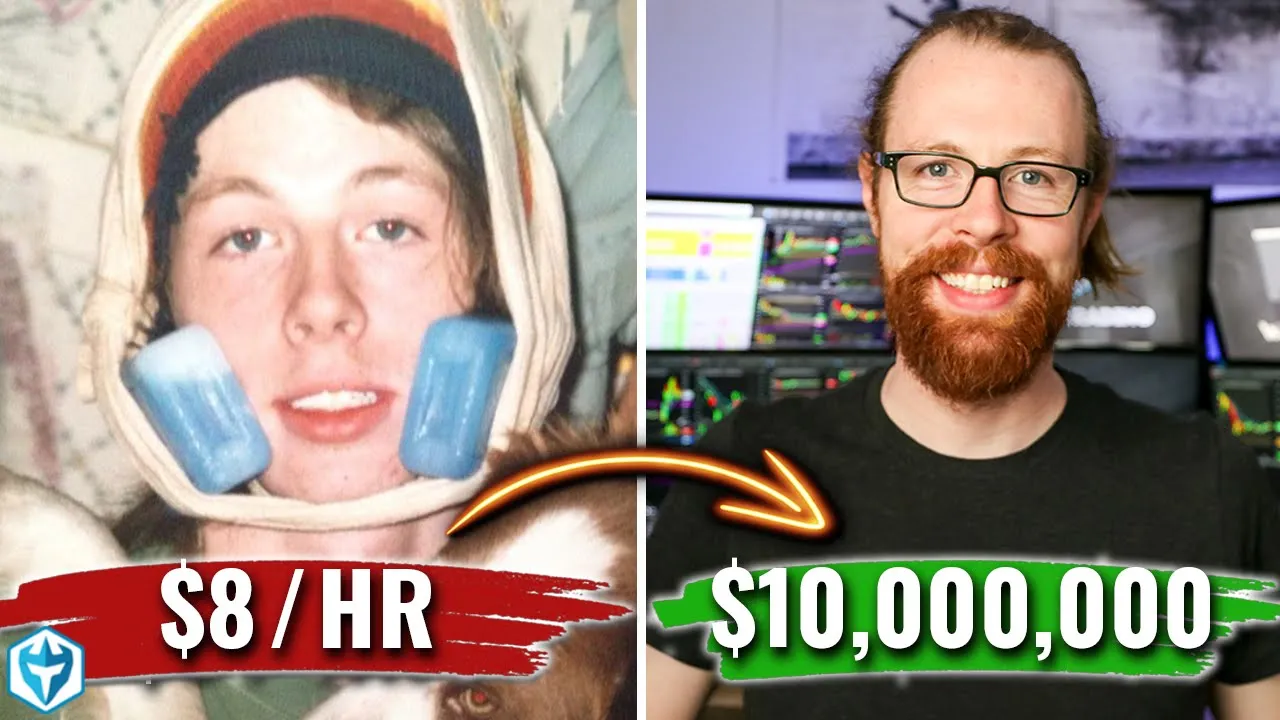
Ross Cameron - Warrior Trading · @DaytradeWarrior
Where viewers went back to watch this video again, from YouTube's public Most replayed graph, lined up with what was said at that moment.
Most replayed moment #1
25:562.7x the video's typical replay level
disciplined and with being Mindful and not letting myself give in to these emotions of anger fear and greed once I committed myself to focus in on trading just the setups that were within within my strategy and having the discipline to walk away each day usually by 10:30 that
Said at 25:49
Most replayed moment #2
26:512.6x the video's typical replay level
world and then I refused to give up I kept trading I kept trading I kept trading I kept trading and then I took one trade on a breaking news stock and I lost 25 Grand on it my account boom all the way back
Said at 26:45
Most replayed moment #3
14:492.6x the video's typical replay level
just so much more packed in there that you've got to know as a beginner Trader that's really hard and so I didn't find success with that you know I'd have some winners but then I lose more on the losers and I just I started digging myself a hole I started going into the red and so in my first year probably
Said at 14:41
The graph counts replays. It does not show where viewers stopped watching.
Words
6,359
Runtime
30:52
Speaking pace
206wpm
Reading time
27min
206 words per minute, above the 201 75th percentile of 349 measured videos. That distribution comes from the 349-video hook study.
Opening (first 30 seconds)
[Music] in today's episode I'm going to talk about how I became a profitable day trader and I'm going to share with you three steps that I would take if I were starting over today now you may have heard the stories of a day trader who ends up becoming incredibly successful and they basically hit the ground running whether it was beginners luck or they're just naturally really good at it they start trading they're making money right away and they go on to be a very successful Trader that was not me and it probably isn't you either because that seems
103 words, the words spoken in the first 30 seconds at 206 words per minute.
Free, no signup. See how the first 30 seconds hold attention, with rewrites.
Sentence shape
| Measure | This transcript |
|---|---|
| Sentences | 1 |
| Average words per sentence | 6359.0 |
| Longest sentence | 6,359 words |
| Questions asked | 0 |
| Sentences containing a number | 1 |
Most used terms
Filler phrases
175 in total: you know 55 · like 51 · kind of 17 · uh 12 · um 12 · sort of 10 · I mean 8 · actually 7 · basically 3.
A literal whole-word count of the same phrase list the Prepublish browser extension uses, so a phrase inside another word is not counted and a phrase used in its ordinary sense still is. It is a count and not a judgement.
Free, no account. See where attention is likely to drop, with a rewrite for each weak line. The free check shows the scores and the one issue costing the most. Or run it on the words above first.
Free · No login · See a sample audit first if you prefer.
What this transcript is
Every word below is the caption track YouTube publishes for this video, pulled from the video itself and reproduced unchanged. It is not Prepublish's writing, not a summary, and not a re-transcription: it is the video's own published captions. English captions, generated automatically by YouTube, in the video’s original language. Source: the video on YouTube. A channel that would rather this page did not exist can ask for its removal through the contact page, and it is removed.
[Music] in today's episode I'm going to talk about how I became a profitable day trader and I'm going to share with you three steps that I would take if I were starting over today now you may have heard the stories of a day trader who ends up becoming incredibly successful and they basically hit the ground running whether it was beginners luck or they're just naturally really good at it they start trading they're making money right away and they go on to be a very successful Trader that was not me and it probably isn't you either because that seems to be the exception not the norm for me I struggled to find success in the market in fact I came up against failure so many times I'm borderline shocked that I stuck with it and I I think I stuck with it for completely irrational reasons because all of the facts in front of me were telling me to quit and I want to give you just a sort of through this episode share a couple of stories of times where I faced failure and probably could have easily quit but I stuck through it now the first was in the late 1990s which dates myself a little bit for how old I am uh and for how long I've been interested in the market that was when I first got a taste of the stock market and I got it because the school that I went to had a semester focused on the dotom bubble and focusing on the stock market how to trade in the market how the market worked and everything else so in that class and this was in I think it was 1998 that I had this class we were partnered up and I was partnered with one of my friends Cooper and he was lived in the neighborhood where I grew up in Vermont and he and I had a pretend portfolio and we invested in different stocks in that portfolio and you know during the course of the semester we got a feel for how these stocks were moving and we were making money I mean you know pretend money but it was like this is really cool and from that moment forward I was like kind of knew knew that I was really interested in the stock market in fact uh during that same year one of my classmates in our uh writing class we had to write little biographies of each other just to kind of test our writing skills and uh he wrote my biography he wrote in it I still have a copy of it uh something about you know in in 20 years from now 15 years from now Ross is going to be in New York City working on Wall Street um you know and and in the stock market that didn't end up completely happening but it was pretty close and so that was from the age of I was a teenager maybe 13 or 14 years old and so at that point I decided I wanted to put my money into the market now I had a job my first job and this was what I was doing at the time was delivering newspapers so I was a newspaper delivery boy and I was mowing lawns and you know doing some like odd jobs for Neighbors painting and stuff like that so IID saved up a little bit of money and I went to my local stock broker's office and I said I want to buy shares of the American ski company and they said okay uh fair enough how many shares do you want to buy and I said well I've got $100 and I'd like to put it all in and they said son that is going to be a problem cuz we charge a commission it's $50 to buy and $50 to sell so your $100 is gone fortunately they didn't take my money I mean that would have been really mean of them to do but they they turned me away and said come back when you have some more money that was my first kind of you know first little let down first little failure and I accepted that I didn't have enough money at that time to start trading but I didn't lose my interest now today it's different because today if you know one of my kids wanted to open an account with 100 bucks you could do it with Robin Hood commission free trading you could get your taste of the market even with $100 and while you're probably not going to make a lot of money with an account that small you would gain a tremendous amount of experience you would learn about the market and that's worth more certainly much more than $100 financial literacy you really can't actually put a price on it just by understanding how the market works for active trading it's going to make you more likely to participate in your 401k your IRA and participate just from the long-term trends that are in the market so I had this first little taste of failure and I I didn't lose hope I came back and in 2001 I funded my first real money account with AIT trade I opened an Amit trade account and this was before they merged with TD Waterhouse and became TD amerit trade so they were just a merit trade and I funded the account with 1,000 bucks I had now saved up a little bit more money and I funded the account I did it during summer while I was in high school it was a summer kind of you know I just I I had the money and I was like I'm going to put this like this is something I'm going to do every single day I'm going to watch and study the market and I think I I had this dream that I would become successful you know that this was going to be my thing but I wasn't day trading I didn't really know how to day trade at that time and this was before YouTube or anything like that so you know trying to teach myself was I didn't know how to learn so what I ended up doing was funding this account with 1,000 bucks and with that $1,000 I bought shares of companies I knew I sort of was fancying myself I guess as an investor a young Warren Buffett if you will and so I bought shares of Exxon Mobile cater pillar Johnson Johnson fiser us steel shares of companies I was Vaguely Familiar with and I just parked it there and every day I opened my my account and I checked my balances and one of the things that I did in those days which was really great was I tracked all of my trades so if we look on the uh screen share here I'm going to pull down um this software right here this is the software that I use today for tracking all my trades and I actually have um if we look at this on a yearly basis say I've got right now let's see 2016 17 18 19 20 21 22 23 24 so I've got all those years of trading performance right in this platform which is amazing so I can go through and I can look at all of my analytics $12 million in gross profit 11.1 million in net profit 66% accuracy you know I can I can look at all of these trades and really understand the time of day that I trade the best the price of stock I trade the best etc etc so what I was doing in those days back in 2001 was I was tracking all of my trades in a little Ledger and I wish I still had it it was this little red Ledger if I hope someday I find it I don't I don't know that I would have thrown it away but anyways I haven't been able to find it but I had this little red Ledger and I tracked all of my trades in it so and they weren't really buying and selling it was just the positions I was in but I tracked the position why I bought it what my sort of you know I guess you could call it a thesis what my my my thought and thinking was on why I should get it but over the course of the summer my positions were more or less unchanged so by the end of the summer the account I I want to say it was at $1,060 and for some reason that number sticks with me maybe it was 1160 the 60 especially sticks with me and it's been so many years now more than 20 years so I think that that it was something like that but regardless I made basically nothing and so I took the money out of the account and you know I needed it for other things I had to buy a car so anyways took the money out didn't make much progress and I think it was the following year that one of my friends in high school made $166,000 on a penny stock which is incredible I mean for you know for young anyone 17 18 years old it's a lot of money to make so he made all this money on a penny stock and again I was like a little bit of fomo you know cuz I was like man how did he find that stuff and that's what I couldn't figure out eventually I learned that it was one of our friends dads who gave him the tip and I have no idea like how he got it but it was just some random little penny stock maybe one of those like pump and dumps that you get little like things in the mail for postcards I don't know but in any case my friend made 16,000 bucks on it so you know I I again got got this little taste of like all right someone else out there has made money so my first failure was in theate 90s trying to open you know fund or Buy $100 worth of stock my second failure was in 2001 when I funded this account with 1,000 bucks but I wasn't able to grow it so then I took some time off of trading I just felt like it wasn't worth my time I you know I I had tried but I couldn't figure it out so now fast forward to 2008 it's 2008 and I'm living in New York City I have a girlfriend from Vermont but she had moved down to the city to go to school and I moved down with her so we're living in the city and I'm looking for a job and I was on Craigslist looking at the listings for jobs and I saw a job description classified ad for a hedge fund they were looking for interns and I was like this this is perfect I'm in New York City you know I wanted to get a job at a at a you know like a hedge fund or or some bank I wanted to learn the markets and obviously trying it myself hadn't worked so it made sense but I was also terribly anxious I had gone through high school and became a young adult and I was very very anxious I was going through a difficult time my father had just passed away and I I was really struggling so an internship for me was like I was okay with an unpaid internship because then the expectations on me would be super low I mean I could let them down but I'm I'm not even paid so like you know what I mean and so I applied and I got rejected and it was really humiliating because I called was like hello and there was a woman on the phone she's like you know who hello who is this and I I said oh you know I'm calling about the uh the The Internship listed on Craigslist and she said uh hold put me on hold and then someone else picks up he's like hello who's this and I was like my name's Ross um I'm calling about the internship and he's like well what's your experience where what are you you in college you going learning about Finance how how much do you know about this and I I was honest I was like I really don't know much but I'm really interested interested and he said well we're looking for people to have more experience we'll call you if you know I don't know they never called me and so I was like all right kind of bummed out and so again like a third kind of failure just like trying and it was like not meant to be I got an internship working at um an architecture and Design Studio which was like my second choice and that was fine I I worked there for several years and then I moved back to Vermont and when I moved back to Vermont we were in the middle of the Great Recession the job market was terrible I was a college graduate at this point but I really didn't have a lot of work experience Beyond this Architecture Firm and jobs in Vermont were paying you know $ 122 $13 an hour a lot of them were very very low paid jobs even if you had not just a four-year degree but even a master's degree I knew someone with a master's degree who was making I think $18 an hour and I was like this is you know this is kind of like ridiculous especially considering how much money you spend on your college education I knew I needed to find a way to make some money and I was I was living in Vermont I didn't have a regular job I was doing a little odds and ends stuff but I needed some some money coming in but the market was so bad I was like what can I do from my computer you know online to make some money and there were different things that I looked at and kind of tried and and they didn't really pan out there's some stuff with um like copyrighting and or not more like editing um that I was looking at there was there was a couple different jobs graphic design stuff like that you could do from from home remote work so I end up uh deciding well what if I you know get back into the stock market it worked for Ben right it obviously works for other people and so at this point I said I'm going to start really investigating it and I funded an account again this time I used erade um I don't really know for any particular reason why but I set up an E Trade account and I also had an trade account and I decided to start trading and immediately I got flagged as being under the PDT rule pattern day trader rule right so I didn't have 25,000 in the account so I was like ah so that limited me a little bit to buying and and and holding uh or to trading options and I did a little of both so I started buying and holding penny stocks like my friend Ben had done I started trading options on large caps in the S&P 500 and I didn't find any success with that and so now I'm going to share with you the first step that I would take if I were starting over if I were starting over I would find somebody who is a proven verified real money profitable Trader and I would try to figure out what they're doing that's working I would learn their strategy now for what it's worth if you want to learn my strategy I have Linked In the description and pinned at the top of the comments my small account strategy worksheet you can click it you can download it this is a PDF so you can print it out you can start using it in your own trading the idea here is that this is sort of that business plan that Master document that lays out and articulates my strategy as I trade it today now you don't have to learn from me you could learn from anyone it doesn't really matter what's most important is that you're learning from someone who is proven profitable now for me when I was getting started one of the big struggles was the fact that I didn't have anyone that I felt like I could learn from so step one learn a proven strategy I didn't even know how to go about that especially at that time living in Vermont so what I end up doing I ended up dabbling now when I was getting started um you know this fourth time I guess it was kind of the third time um when I was kind of you know back in it I didn't know anyone that was trading I mean I had my friend Ben but that was just a fluke and he didn't keep trading he just had that one trade and then he was done so I was really kind of on my own to figure it out so I was just combing through the internet and it was so hard to figure out what was credible and what was not and when it comes to options trading that's really hard place to start as a beginner because it's you know options are a derivative they're based on the underlying value of something else and you've got to understand time Decay and this there's just so much more packed in there that you've got to know as a beginner Trader that's really hard and so I didn't find success with that you know I'd have some winners but then I lose more on the losers and I just I started digging myself a hole I started going into the red and so in my first year probably because of some degree of beginner's luck I did end up making a little bit of money I made about $330,000 which in hindsight is pretty darn good and for me at that time it was good I was I was pleased I was like this is proof of concept and but to be honest it was really beginner's luck because I didn't have a real strategy I mean I was trying different things but I had a couple of nice winners and then you know I had some losers and and this and that going into the second year I lost 30,000 I gave back everything I had made in the first year but the problem was when I was making money that first year I was spending it as soon as I would make it covering my cost of living that was my job so when I started losing money in the second year instead of taking money out of my trading account to pay my bills I started paying my bills with a credit card so I maxed out One credit card $5,000 and then I maxed out a second one and a third one and a fourth one and a fifth one and a sixth one I had six credit cards maxed out they were all within $1,000 of the limit so they were darn close to being maxed out so now I still have my trading account but I'm holding $30,000 of credit card debt and things are starting to get really scary for me and at this point I end up having a really big loss it's the beginning of August it's the new sort of new month I had a goal of trying to make $5,000 for the month that's what I was trying to make 5,000 a month that's $50 $60,000 a year you know basically $1,000 a week roughly 200 250 a day that was kind of what I was mentally targeting and when I was doing well I had no problem hitting it but here was the problem this is what kept happening I would have five six weeks of progress and in one day I'd give it all back I'd make three four five $6,000 and then in one trade gone I'd lose it all my accuracy was decent I had these long stretches of making money but my profit loss ratio was terrible and and I kept having these days where I would just spiral and it's not just to be clear it's not that I was having one trade that blew up my account every 6 to8 weeks what was happening is I'd have one trade that I lost maybe a little more than average maybe I'd be down $800 which is a a bit of a red day if your daily goal is $ 250 but instead of stopping right there I would double my my share size and on the next trade I would lose 1,600 and now I'm down 2400 and then on the next trade I would double my share size again and now I'd be down five grand or six grand and so I kind of got into this mental spiral where I would snowball and I would start to I would stop trading and at that point let's be real I was just gambling and what was happening was I was becoming emotionally hijacked I was becoming so afraid of being read on the day that I was taking huge amounts of risk in hopes of recouping the loss because my feeling was is that whether I'm red 800 or I'm R 8,000 either way I'm red and I'm a loser and I'm an idiot and I've already ruined the day so much that what's the difference between being down you know 6,000 or 7,000 at this point and that's when I would just start taking more and more risk and I would spiral and it's it took me a really long time to get that under control and every now and then I still have a little slip up and I fall back into that tendency I think a lot of Traders do Revenge trading the giving into fomo that downward spiral and so that's what kept happening to me this was an incredibly frustrating position because I knew that I was a profitable Trader if I took away all of those days right if I was able to get myself kind of like dialed in and for me it required doing a few things one of the things I needed to do was to get really honest with myself about discipline and one of the other things I needed to do was get a little bit more dialed in on my rules because especially on those spiral days I would start trading anything that was moving anything I thought gave me a chance at recouping losses I was trading it and that's why I would just start to spiral and spiral and spiral I was going outside of kind of what I would normally trade but I hadn't really articulated my strategy because in the first two plus years of trading I had been you know kind of getting into a Groove here and there but I'd venture out you know I was testing the water trial and error because I didn't have someone I was learning from I was really just trying to figure it all out for myself self and I think that that really is a mistake so if you let's just for example if you were going to open a coffee shop I think it would make a lot of sense to work at a coffee shop for a while to understand how the business runs you would learn the mechanics of how those businesses succeed what works what doesn't work you would understand the margins everything else and the same is true with trading so if you want to open your own business as a day trader it makes a lot of sense to look at another day trader running their business and sort of like Shadow them and understand what are they doing that's working you know can you intern with them can you learn from them now you have the opportunity to learn a lot from me I put a ton of free content out here on YouTube and of course I do Mentor students that are part of our community but it doesn't matter whether you learn from me or you learn from someone else just to be clear it's most important that you're learning from someone who is actually profitable because there are people out there who talk a big game and are trying to sell mentoring and coaching or classes or things like that but they're not actually profitable they're only making money on selling those things so it's always important to check people's broker statements make sure that they have them audits are ideal I have both of them just again not learn from whoever you want I don't really care but I'm just wanting to be very clear that this is something that's super important so what I would do is I would learn a strategy that someone else is trading because what you know is that somebody else is trading that strategy and they're making money so in theory I would think to myself if I was able to learn to find stocks the way they are finding them understand the entries and the exits then that strategy should work for me in a similar way now maybe profits would be significantly smaller because as a beginner my account would be tiny my confidence would be a lot lower so I wouldn't expect that I would perform the same as them by any means and you shouldn't and just to be clear my results are not typical so you shouldn't expect if you learned from me you'd make the same amount of money as me but you would think okay this is a strategy that's working so my first order of business is trying to learn it inside and out and as you go through that process you're going to learn a lot about the market you're going to learn about how to read Market depth level two how to read time in sales you're if you're doing options you're going to understand options you're going to learn all these things that are sort of you know peripheral to trading but obviously super important but that you'll learn it by sort of being Hands-On I am a Hands-On learner so I need something kind of in front of me to start putting it together and that's what I did in my first trading account I funded it with real money and I started put putting the pieces together there's nothing wrong with learning that way but step one learn a strategy someone else has already proven as profitable step two practice that strategy in a simulated trading environment a simulated trading environment is important because as a beginner you'll make mistakes and still handson because you're still trading right there's nothing wrong with using a simulator practice in a simulator and prove that you can trade this strategy profitably are you trading the same stocks are you getting you know do you understand the entries the exits once you get that dialed in then step three start trading with real money but here's something really important some people spend a lot of time on step two they'll trade in a simulator I've known people who have traded a simulator for years that's not a good idea a simulator is a tool that you want to use for a few months to help you learn just sort of the mechanics of how to trade how to get in how to get out how to read the tape but you want to switch into the deep end you know you want to trade with real money really as early as possible without risking losing a lot because you want to begin to experience the emotions that come with gains and losses and you cannot experience that in a simulator that's the one place a simulator falls short another place actually it falls short is that it can give you an artificial sense of confidence because sometimes people will trade in a simulator with like 25,000 share positions and they'll be making 10 15 20 grand a day but they're getting this ego that they're going to make millions of dollars trading real money but then when they fund the account with real money they realize that there's slippage you don't always fill your full order so it's really important in the simulator just to trade with like a 100 shares and your goal is just to make 20 $30 a day and then go live with a 100 shares even 10 shares if you want and just start practicing very simply making $115 a day and if you can make $10 to $15 a day and you can can do that consistently over the course of weeks and months the only difference between 10 and 15 a day and 100 and 150 and eventually 1,500 is increasing your share size yes you'll have a little bit more slippage with, 1500 shares than you have with 10 or 15 or 150 shares whatever the case is but realistically that's still within the spectrum of reasonable when you get up to 25,000 50,000 100,000 shares you would have unrealistic experience between Sim and real money so I want to encourage you not to feel frustrated at the beginning when you struggle to make even $15 a day consistently that's the one thing that can be frustrating as a beginner is you're like oh I'm trying so hard and I can't even make $15 consistently and the fact is once you realize that that is the hardest part because once you're making 15 to 20 consistently then you are a consistently profitable Trader and from there you could scale up so it's that final Tipping Point to going from just of break even a little bit of profit and then a little loss a little profit a little loss to turn the corner so for me the way I became a profitable Trader was because I had a really big loss the big loss I had that was the first week of August beginning of the new year or beginning of the new month that blew out my account I was offline I went back I studied my metrics I reviewed all of my trades what I was doing right what I was doing wrong and I came out of that with a game plan of what I was going to do differently I had a very strict set of rules and I forced myself to be disciplined I got a coach someone who helped me not with trading but with being a more disciplined person this is something that it was actually easier to find a coach for that than it was to find a trading coach in those days so I found someone that was going to help hold me accountable like an accountability buddy just with being disciplined and with being Mindful and not letting myself give in to these emotions of anger fear and greed once I committed myself to focus in on trading just the setups that were within within my strategy and having the discipline to walk away each day usually by 10:30 that was a big turning point for me I spent a very small amount of time in the market I got out I did that consistently rinse and repeat get in get a couple trades get out next thing you know I'm putting together a couple weeks 3 weeks four weeks 5 weeks 6 weeks now I'm going strong now my account's growing and what ended up happening is I actually grew my account all the way up to $50,000 just about 50 Grand and then in one day I had a slip up I was down about $5,000 on the day in one day which was bad but you know gave back 10% of what I'd made in the last 6 months bad but still net positive you know what I mean like not the end of the world and then I refused to give up I kept trading I kept trading I kept trading I kept trading and then I took one trade on a breaking news stock and I lost 25 Grand on it my account boom all the way back down and it was it was insane it was the biggest loss I'd ever taken at that point by far and part of me wanted to quit and I wanted to give up because now you know I've got three years plus of trading and I had profit and then I had a loss the second year and then I had some gains and then gone but this is what I said I said to myself well wait a second over the last six months I grew this account to here I am still the same person who did that did I go like that yes I did but I can do this again so I started over I took it on the chin and I started rebuilding again and that time I kept going and my account grew to 100 Grand and once it grew to $100,000 for the first time I was able to take out the money in a serious way pay off my credit card bills and now I was I was in the driver's seat recovering from your first big draw down is a huge accomplishment because now you know you've got it so for me what gave me the confidence to know that I could recover was when I looked at my metrics and that's why these metrics are so valuable so if we look just here at the last you know the last 60 days here you'll see the last 60 days or even the last 90 days I've had a couple of draw Downs I've had a couple of losses I had two red days right here right so dip down right here did I give up did I walk away of course not I rallied back and then I had a couple more red days right here did I give up no of course not I rallied back and today I'll pull up my account so you can see you know today ends up being a nice green day and it's a day where I feel like all right I've been able to bounce back I've shown that I can recover you know and I've done this so many times at this point where there it is so you can see $21,000 in profit today again I'll say my results are not typical you shouldn't expect that you'll achieve the same as me all right whether you learn from me or you learn on your own trading is risky but a big big thing for you is going to be to have your metrics track your profits track your consistency and then when you have that first setback you look back at those metrics and you say yes I can do this I can recover now I want to show you um this is a day 1121 to 31 2021 I want to show you this little window here because um while this was a a really nice move here uh and I and I traded really well right in here I made almost a million dollars and then as you could see I had a loss and then right there on this day if I put my mouse over it I lost $274,000 in one day and it took some time to recover that loss but even a loss as big as that I knew that I would be able to recover and I did and the only the only way I was was able to do that was just by buckling down you know sort of saying accepting that I was going to be it was going to be a while and so I sat down I just focused and next thing you know the account's growing green days are getting bigger and you know millions of dollars later I recovered all of those losses step one learn a proven strategy step two trade it in a simulator step three switch to real money as soon as you've proven in a simulator you know what you're doing those are the three steps I would take if I were starting over today and if you want to learn the strategy that I'm trading I will post a link where you can download the PDF of my small account strategy it'll be pinned in the top of the comments and it'll be linked in the description I hope you guys enjoy it I hope you hit the thumbs up I hope you subscribe this episode and I'll remind you again as always trading is risky so manage your risk take it slow I'll see you back here for the next episode real soon
The words are the caption track's own and nothing is reworded or re-transcribed. Paragraph breaks are placed between sentences so the text reads as prose.
Free tools for your own script: paste a draft and see where it stands before you record it.
Paste your draft and see where viewers are likely to drop off, with a rewrite for each weak line.
Paste the first 30 seconds of your own draft for a hook score and rewrites.
Check your draft against YouTube's advertiser-friendly guidelines before you record it.
Read this channel's public videos and transcripts, and download a writing brief for it.