Getting the transcript
Reading the captions from YouTube. A video nobody has opened here before takes 10 to 30 seconds; this page fills in on its own.
Getting the transcript
Reading the captions from YouTube. A video nobody has opened here before takes 10 to 30 seconds; this page fills in on its own.
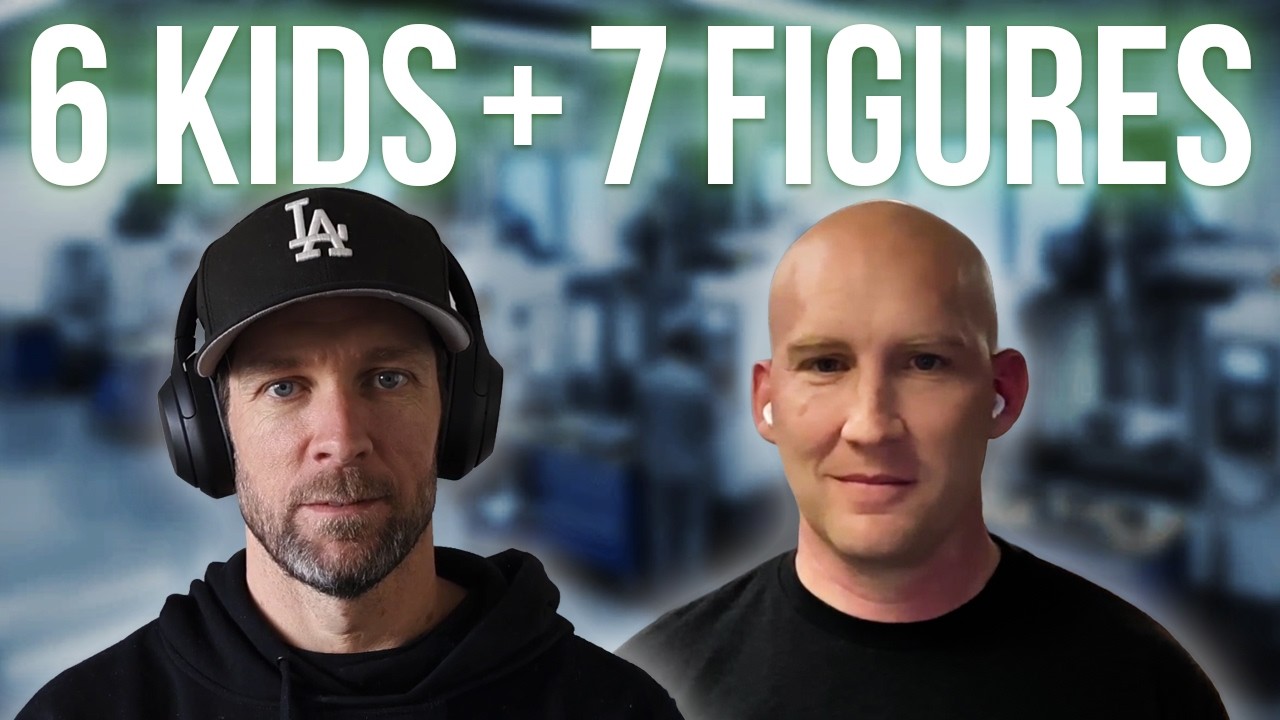
The Andrew Faris Podcast · @andrewfarispodcast
Words
10,267
Runtime
47:04
Speaking pace
218wpm
Reading time
43min
218 words per minute, above the 201 75th percentile of 349 measured videos. That distribution comes from the 349-video hook study.
Opening (first 30 seconds)
Matt Sikus bought a brand from me. Sort of. Actually, it was after I left for 400, but he bought Modern Fuel, one of my favorite brands that I got to work on, brand that makes really high quality, really beautiful writing implements, pens, pencils, etc. I have a titanium boltaction pen that I got from Modern Fuel when I was running it. It's a really cool company, early seven figures, and Matt bought the business in 2022 after 4x400, the aggregator that I was working with, was getting rid of some some of their brands. So, if you know anything about my story, you know that I was
109 words, the words spoken in the first 30 seconds at 218 words per minute.
Free, no signup. See how the first 30 seconds hold attention, with rewrites.
Sentence shape
| Measure | This transcript |
|---|---|
| Sentences | 540 |
| Average words per sentence | 19.0 |
| Longest sentence | 227 words |
| Questions asked | 30 |
| Sentences containing a number | 42 |
Most used terms
Filler phrases
701 in total: like 211 · you know 142 · um 139 · uh 97 · kind of 36 · sort of 22 · actually 21 · I mean 17 · basically 6 · right? 6 · literally 4.
A literal whole-word count of the same phrase list the Prepublish browser extension uses, so a phrase inside another word is not counted and a phrase used in its ordinary sense still is. It is a count and not a judgement.
Free, no account. See where attention is likely to drop, with a rewrite for each weak line. The free check shows the scores and the one issue costing the most. Or run it on the words above first.
Free · No login · See a sample audit first if you prefer.
What this transcript is
Every word below is the caption track YouTube publishes for this video, pulled from the video itself and reproduced unchanged. It is not Prepublish's writing, not a summary, and not a re-transcription: it is the video's own published captions. English captions, generated automatically by YouTube, in the video’s original language. Source: the video on YouTube. A channel that would rather this page did not exist can ask for its removal through the contact page, and it is removed.
No Script X-ray for this video: YouTube shows a Most replayed graph only once a video has enough views.
Matt Sikus bought a brand from me. Sort of. Actually, it was after I left for 400, but he bought Modern Fuel, one of my favorite brands that I got to work on, brand that makes really high quality, really beautiful writing implements, pens, pencils, etc. I have a titanium boltaction pen that I got from Modern Fuel when I was running it. It's a really cool company, early seven figures, and Matt bought the business in 2022 after 4x400, the aggregator that I was working with, was getting rid of some some of their brands.
So, if you know anything about my story, you know that I was working on an aggregator. There were a bunch of brands in our portfolio, >> [music] >> etc. And Modern Fuel is one of them. Really, really cool brand that I've always loved. Matt bought the brand and we're checking in with him now. I actually love Matt's story. He's running Modern Fuel as a sidekick and I'll let him explain that more, but it's an early sevenfigure brand.
It's profitable. And I think Matt's story represents a fascinating way to think about the place and the way that an e-commerce brand can develop and can produce value in your life outside of the monster crazy 9 figureure stories that you've heard about. So, I'm going to talk to Matt all about what it's like to run this [music] brand, what he's seeing working, how he's thinking about how it produces value in his life, as well as anything else that we get into about making beautiful pens.
You can see in the background CNC machines. I think I think I can see them in the background. Yep. There you go. Right there. >> That's one over there. So, yeah. Yeah. Yeah. So, you can see [music] them there. He's literally hand seating pens himself. Let's get into it with Matt Sikus from Modern Fuel. [music] >> Hello, Matt. >> Hey, afternoon. How are you? >> Good. I am so glad to be doing this. You and I have been talking for a long time.
Uh, ever since you bought the brand, really. Um, and you're you're in your shop, it looks like, in and uh and uh >> and kind of uh the full the full thing. So, so pointed out you you've actually got CNC machines. So, we just pointed out in the intro, but >> uh tell people what that is if they don't know. Yeah. >> Yep. So, this is our shop and you know, to give a little bit of context, um when I bought the brand, we operated out of my garage for about 6 months.
It became very clear like, okay, this has a little bit more to it than what I originally thought. And so, we moved into a space. Um we've since moved again. We're still in a small shop. Like, it's probably 1300 ft². I've got a Swiss CNC lathe right here kind of over my shoulder. You can see it. Uh you can't see it, but on the other side of that wall there, there is a three-axxis mill, uh CNC mill. And so these are, you know, um fairly expensive, robust pieces of equipment that you can make all kinds of stuff on.
And you know, this these machines uh were a part of the brand before I got it. Not these particular machines, but these were being made uh these pens were being made by by other people. And just in the last year or so, we've actually insourced this. And so now we're doing it here, which is a a super fun project, super uh cool aspect for me to get into. But yeah, this is this is our shop. Like this is where it's all done.
And that's I mean that's one of the things that makes this a unique thing. Like you are not uh outsourcing everything to a manufacturer from day one. You know, call up a supplier, get them to send you some product, and then ship it, right? That's that's one of the big differences with what you're doing versus what so many brands are doing. Can you talk about that a little bit? >> Yeah, absolutely. So, this has been um it it's sort of been an evolutionary process, I guess, from the time I got the brand.
So, when 4x400 had it, everything was being outsourced to a lot of domestic shops, but then some, you know, components come from overseas. Um, when I took over, I kept a lot of those same shops involved with making the stuff, but I noticed over time that I really didn't have control over the quality. Like, we could make we could design a great product, um, but if something went wrong or just went off from what we expected during production, we ended up with hundreds or sometimes thousands of components that were essentially paper weights.
And, you know, that gets expensive very, very quickly. Um and so I learned early on like okay if I am going to make it in this business I cannot just continue to pour money into working capital and you know keep growing the balance sheet of more and more things. You've also got dynamics of you know demand changes seasonally and there's an ad might hit and it's like this pen is crushing it whereas you know I I have way too much of this and way too little of this.
And so I saw pretty early on that if we could bring production closer to us, uh it would be a real strategic advantage for us in the space. Um you know, it it eliminates a lot of the risk associated with tariffs and you know, a lot of supply chain things and um and it also just lowers the cost of holding stuff. So that's kind of been the journey we've been on. It started with uh just a couple months after getting the brand.
And I I went from having them finished, you know, outsourced the finishing to completely doing the finishing ourselves, buying a little bit of capital equipment related to that in order to um, you know, I just I just basically saw where the margin stackup was and said, "Okay, I can go after that and gain, you know, $5 per pen by buying this one piece of equipment." Well, that payback period is, you know, a couple months or something.
Uh, and so just kept like iterating down that and before you know it, like you're learning CNC machining uh in your shop on on these big machines. And so not really a journey I had set out on when I bought it, but uh but here we are. >> Pretty cool. I mean, it's one of the things that's distinct about you is that you have a much larger capex investment than uh as a percentage of your revenue, I think, probably than than uh than many brands in our space.
And so you you know tell people I I I think I floated in the intro early seven figures but do you want to tell people a little bit more about sort of like the current state of the business because because you know yeah it's interesting to think about sort of the financial investment when you're literally manufacturing in house. I mean in in room you're standing in house. [laughter] >> Uh totally. >> Yeah. So uh so give people a sense of sort of where the business is at and how you have thought about investing capital into that process.
And then in a little bit I actually want to ask you about learning to CNC the pens yourself because that's crazy. >> Yeah. Yeah. Yeah. Absolutely. So we're we're very early. I mean when I say early seven figures like we're basically as early as you can get in seven figures. Um which you know is on the one hand like that's fantastic. It's a very niche market. Um I I could not be happier with that. On the other hand like would this be easier if we were mid7 figures?
I think so. Uh and and what it comes down to is, you know, I we just end up doing a lot of things inhouse that I can't I can't pay for in order to keep the brand um profitable, I guess. And um you know, I we do have a lot of capex and that's one of the things that I've done as we've gone along. So I'm actually doing this as a you know, a side job. um I have my main job and that allows me to not have to take a lot of capital out of the business and I've been able to say okay I have x amount of dollars um if I go and invest in this machine what's my return look like on that and you know I of course uh I I could always go to the stock market and I could do you know many time in many ways like probably better uh if you know I always joke if I would have just put the money from this business into Meta or or Nvidia or something it would have been a lot better.
But uh you know I I have to look at this like what do I think is the next best use of that dollar and sometimes that's going and getting more inventory or producing uh developing a product which is you know people don't realize if you're paying a designer to uh if you even if you have a great idea and you get it you know 80% of the way there if you have somebody else involved in getting it over the finish line like all that stuff is very very expensive between the design and the prototyping and figuring out the manufacturing and all of that.
Um, and I saw machining in-house as a way to, yes, capture some margin, but also increase our flexibility. Um, decrease the time it takes for us to launch something new. And in something like this where there's really no, you know, we design these things, unfortunately, uh, for me to last an entire lifetime. And so, um, you know, I can't I can't go sell somebody another pen the next week or maybe I can sell them a few, but eventually they stop buying.
Um, >> and so, you know, new products are the way to get that LTV to the extent that it's possible. Um, it's still not the greatest model, but yeah, that's kind of how we got here is a lot of capex to but but it's been very calculated in the way I've done it. Like, I didn't just go out and buy a machine and hope the revenue came along. It was like, okay, I've already got these consistent sales. I know what my ad costs are.
I know all this other stuff. And right now I'm paying for the machining company's, you know, building and machines and profit margin. Um, is there a way that I can do that that makes sense for us? And yeah, >> I mean, here we are. >> If you are a growing e-commerce business, you should build your team with help from my friends at More Staffing. More staffing is a staffing agency that connects you to the best Filipino talent across your e-commerce business.
And they do that because they were birthed out of US-based e-commerce businesses that were hiring Filipino talent. so they know what they are looking for and on top of that they go way deeper than just sending out a job description and getting you some resumes and getting you some interviews and that sort of thing. More staffing is actually building a whole system for how to help you forecast and get on top of and think about the opex in your business.
So you have a real plan for how to build your e-commerce business with an efficient opex so that you can be lean and profitable even as you scale while also adding incredible talent because your money goes so far to get great talent in the Philippines. People with deep e-commerce resumes across every single part of your business. On top of that, more staffing will actually even help you implement workflows to help you think about how best to utilize talent as you grow.
Most of us did not get into the e-commerce world because we are amazing managers. Managing growing teams is really hard and it's only a little bit trickier if you do that overseas. But more staffing has shephered people through that process a whole bunch of times and can help you with all of it. They even have a way to help you think about where AI can get into your business to help you build more automations and other more workflow help so that you can do this.
The point is they're a real partner in helping you think about the totality of your personnel in your business, your opex in your business. So you can do the thing that I always talk about, which is grow your e-commerce business with a very low percentage of your revenue going to opex while at the same time not killing yourself because you're running so lean. Get on a call with more staffing. See if they can help you.
They have a one-year guarantee on any talent they place in your business. So if they place talent in your business and they do not work out for a year, they will refund you the money or excuse me, they will not refund you. They will help you find a replacement for that person [music] for at no additional cost. So, uh, morestaffing.co/af morestaffing.co/ af. Get on a call and see what's available for you. I'm a huge fan.
I'm building my businesses with their help. I'm sending out job descriptions literally today for more positions to be filled by more staffing and you should do the same thing. More staffing.co/af. Check the show notes for the link. There's something I think about the your business that when you describe it that way, it sounds both like an incredible grind and really cash intensive and also like kind of the dream for people who are e-commerce people where it's like so much of the fun of e-commerce is making an actual product and and selling it to people.
And so when you get that close to the work, I mean, it does sound like a grind, but it's also there's like craftsmanship to it and there's uh and there's an element of like blood, sweat, and tears that you pour into it that I think is is really satisfying. and you have produced as I understand it meaningful SDE at this point in the business now I know that SDE does not equal cash but even at the low seven figure number right you're running it profitably and SDE for people who don't know right seller discretionary earnings used often to value businesses before you would use IBITA because like in a situation like like yours it would be sort of a mix of of the salary you pay yourself as a single owner of the business plus the profit all rolled into one number that would STE um seller discretionary earnings and so um and so as I understand it you you know again not that you're taking a lot of money out of the business but that but you are on paper at least producing some SDE and and I I think uh again you have a a distinct thing here which is it's not that you're growing at some crazy rate and that therefore uh you have to plow the money back into the business for inventory per se but you have capex and again just most brands at your size don't have that they have suppliers not capex you Um, so can you talk a little bit about about that breakdown a little bit more sort of SDE as a percentage now?
Anything you want to say about that to give people a sense of it and and is there a day when you can actually take money out of the business for [laughter] yourself? >> Yeah, that's a that's a great question and I hope so. Uh, >> so so when I when I got the business, you know, the um, >> one of the things that made it a great acquisition target for 4x400 was that the margins were pretty good. Um the uh you know I want to say they were in the 65 to 70% range or so.
Um a lot of that was to get and when I say margin I say gross margin you know I'm talking um what does it cost for me to get the product to the customer net of shipping costs net of um payment processing fees net of the cost of goods sold etc. Uh, as a >> person really fast, Matt, I want to pause on that and just say, and we call that cost of delivery a lot of times on my show if people listen to it for a while, but I want to say 65 to 70 points on like $200 to $300 pens.
So, just for people to realize like you see a $200 pen and you're like, "Oh, come on. That has to be insane margins." And the answer is they're good, but they're actually not. I mean, I've seen much higher margin products in in in in ecom. So, it is actually these things are really engineered amazingly and beautifully. So, anyway, yeah, keep going. >> Yeah. No, that that's a great call out. And you know, we're not we don't have 100% yield rate either, right?
Like if if somebody pays for engraving and we go and we misspell it. Like that's an expensive mistake right there. And so obviously there's processes that we do >> to try to get around that. But um but at the end of the day, like we're buying titanium, we're buying zirconium, like we're buying metals that cost real money and we're using heavy expensive equipment to uh machine them down. like it is there's no way to like make it super super cheap.
Um, but the margins were fine when I got it. What I didn't love was the volume and the cost of ads to, you know, get that sale. Um, and so I was able to kind of like knock down the supply chain a little bit. Um, insource some of the finish work and and assembly and that type of thing. Um, change the designs a little bit to make them a little bit more cost effective. and then changing some suppliers around in order to uh one I lowered the price by like I don't know 30 40% or something which is you know everybody says not to do most of the time in TOC they say like raise the price if anything um but I lowered it and captured a little bit extra volume I think that way and was able to keep the margin about the same um now after investing in capex I I've probably increased the margin by about 15% or so um I'm still selling through some of our older inventory.
So, I'm not maybe quite to that number if you looked at my financials right now. Um, but I think if we fast forward a year, that's probably where the margin lands. Um, and I'm trying to structure it in a way that I can, you know, if we come out with new products, I'm not just increasing the amount of working capital I need because, you know, a lot of times people want to add products to figure out what hits and what's going to have that product market fit.
And every time you add a product, you're just expanding the amount of inventory you have to set have to have sitting on the shelves. Yeah. Which is not making money. And so, you know, using some of that capex makes us more flexible that way. My goal is to decrease uh the working capital over time, increase the margin, and as a result, two years from now, uh I'm hoping, you know, once I'm full-time with this, that I can take a steady paycheck and, you know, be be very comfortable.
We're uh even still like with the margins that we're at, we're probably you know somewhere in the 20 to 25% SDE range I think. Uh >> yeah, >> in the trailing 12. Yeah. Like I I'm I am thrilled with that. Right. Like those are not blockbuster numbers, but it's also like it's, you know, like you said, it's a dream for me. Like I step in the door and it's a time warp in this shop. Like I can work 12 hours and not realize anything's gone by >> because you're enjoying it. >> Because I love it.
Yeah. Exactly. >> H man. I I just think and I think like when I hear that too, assuming you don't need to go buy a bunch more machines anytime super soon. Uh which might be a wrong assumption. Uh [laughter] yeah, >> I think it's I think it's a fair assumption. You know, I people always joke that like when you get these machines, they tend to multiply. >> And you know, we're always very like optimistic in e-commerce. Like I think we wouldn't be doing this if we weren't optimistic.
Yeah. Yeah. >> So, like month month to date on a year-over-year basis, like we're up 40 something%. And so, um, if that trend continued, I'd be probably needing to add capacity very quickly. >> Um, >> okay. >> But, yeah. >> Yeah. So, I mean, yeah, you'll be able to take probably some cash out of the business, but not not tons still, right? Yeah. Well, and and you know what's great about that is like if you look at traditional e-commerce financing, not that like I'm not always a huge fan of financing, but in the name of of growth, like it can be very [clears throat] very difficult and sometimes predatory to get decent terms or to get financing for inventory and that kind of thing. in um it's quite different in the machine uh machine tool sales environment where they will give you good terms and you know so it's a way to like finance growth that's very different from any other e-commerce business I think um in the sense that like you know if I want to go pay cash I can and there's always a down payment and that kind of thing but um but it also might make sense just to finance it and it's a good way to fund growth in kind of an atypical way. >> Yeah. uh is um is is that what tell me about what your goals for growth are actually because this is another thing I'm curious about with the way you're looking at this with how hands-on it is for you now.
Um how much how much do you want to grow it and and how and actually maybe even more interesting is how fast do you want to grow like what do you see the long term of of modern fuel at because this is another pathway to >> uh taking cash out of the business and that kind of thing. >> Yeah, for sure. When I originally looked back at acquiring it, um, I actually looked at it in a sense of I wanted a business that I can involve my kids in.
I have six kids. Um, and, you know, I wanted something that they could come into the shop, they could help me with it, we could put their hands on it, um, see, you know, what we're doing to sell pens and that kind of thing. And so, um, long term, I would love it if one or more of my kids came and wanted to just kind of work alongside me. they do some stuff now, you know, to the extent that they're able when they get fired up about buying something or whatever, uh, they'll put in the hours.
But, um, you know, for me, I I am not looking to sell the business. Like, I'm not looking for an exit in that form. Like, I want to produce steady, you know, meaningful income. We don't live lavish lives. Like, I would love to be able to not have to worry about a grocery bill and that kind of thing, but like, um, you know, with six kids, that's probably more than some people need. [laughter] um especially as they get older.
But uh you know I think for me I am I am trying to build the business around stability to the extent that I can >> which is part of why I'm not going hyperrowth on my ad account. you know, I'm trying to keep uh the AME at a reasonable uh multiple so that I can or reasonable number so that I can, you know, it it just gets exponentially hard the more the harder you have to work to make like fewer and fewer dollars per amount of work.
Like you hit that marginal frontier of AM, but it also applies on like the work involved when you're doing a lot of the work yourself. Um and so I would love it if modern fuel was the next, you know, 5 to 10 years of my life. um enjoying the shop, getting to do some fun things, teaching my kids stuff. Um that would be the absolute dream. And then also, >> I say that I would love to grow a little bit because I am, you know, tied to the business in ways that I wouldn't love to be tied to it all the time.
Like >> I would love to hire a full-time machinist. I felt like I needed to learn it uh myself in order to kind of better manage a machinist in the future. >> Um and I'm very happy I did, thankful I did. Like I think it's changed my perspective on a lot of this in terms of product design and product quality and all that. Um I would love to be able to hire a full-time machinist, hire, you know, pay my people well, which I think the people I have now, I do have a few employees.
I think we're paying them very well. Um but, you know, there are a few things that like it's not always my favorite when I'm getting ready to launch a product and I'm in here on like a Thursday night at midnight like taking pictures of the products or whatever. So yeah, there's some stuff I would love to just outsource and be done with which which is easier at scale. >> Yeah, I think that's it's true. One of the things I always say about lean opex as the idea of of a low opex as a percentage of revenue is that it's uh it's really hard to do at at the revenue number you're at now because you're just growing past the point where you can do everything yourself, but you don't have enough revenue to advertise many human costs yet.
So, it's just uh it's just like once you get past like 5 million, then it starts to really show up as a real thing. >> And you can still be disciplined about it, of course, on the way to 5 million, but but yeah, it's it's can be tough to do at that stage. You really have to be incredibly disciplined. And I think if you're literally machining the pens yourself, it's, you know, it's it's there's [clears throat] only so much you can do to keep that lean.
You know, >> it's next next level of lean. >> Yeah. Right. Yeah. Um Yeah. Um I I mean the the life you're describing is something that reminds me of like an earlier promise of what e-commerce people used to talk about actually. It uh I was just talking to a friend about this the other night that uh it reminds me a little bit of e-commerce fuel community when you hear Andrew Udarian talk about which shout out to them like go join e ECF e-commerce fuel if you're not a member right now.
I love it. Um, Andrew is one of my favorite people in e-commerce, but um, you know, that's a closed community for e-commerce operators, seven figure plus store owners. And Andrew, the founder of that, talks a lot about the idea of like building a life that you love uh, as as part, you know, building an amazing business, an incredible life. And and what I mean by that is there's still I think in like the ex world of e-commerce, everybody who gets all the attention is like nine figure plus super monsters, which is which is great.
Those people I I mean I learn a ton from them. I never want to sound disparaging about that. It's just not the path that everybody's going to go down. And there is still this idea of sort of entrepreneurship of building a business that you just described, right? Which like your kids can be involved. you can produce some level of real comfort even if you don't become a gazillionaire from it, you know, like and I I think I think that the pathway you're describing is really compelling to me as a as a potential way to get there.
Restrained growth, higher contribution margin per order, you know, um and and uh and scale within that. So, um yeah, it's compelling. It's compelling story to me. It's it's it's exciting to me. When I think about launching my brand, it's not it's a little different because again, I don't have to there's no capex, but like the uh there's it's not too far off the way that I'm thinking about what's possible for for me is like I'm not trying to build the biggest thing in the whole world.
I'm building something that I'd be proud of and I'm excited about, you know, and and where I like the work. Those are the things that I think are the are the compelling compelling story about it. Do do you have some kind of revenue number that you think like I would really feel great about getting to this? And if not, it's okay. But yeah. Yeah, I I mean I think like honestly I'd feel great getting to two million a year.
Like any any like step from here, it just like it just creates breathing room, right? And like I'm not I know I'm not going to sacrifice margin to get there. >> Um like could I hit 2 million if I really tried? I I might be able to, >> but it's not going to be more profitable than what I'm doing now. >> And and like when I'm machining them myself, that just means, you know, >> however much percent more work. Yeah. for the same amount or less dollars.
Um, and so I would love to get there and you know I I hint at the work and like when you're doing this as a side gig and you got six kids and you know I want to be a good dad. I want to be there for the kids but also like I want to set this up to where it's something I can do full-time and you know at at the end of the day like I want to make really great products and we get so much good feedback from oh I love that thing.
Um, and so, you know, I just I don't want to, you know, it's been a hard process to get here. Like, it has been a lot of, you know, I can work any 100 hours a week I want. um between the two jobs and whatnot. But um but I think getting to two or really like 3 million would probably give me the the layer of like okay um I can probably step away from this and that and like be a little bit more of a manager which is which goes more probably into my background.
Um but then the flip side of me is like just super thankful for where I'm at because with meta sometimes it feels like >> overnight it could be gone. um which I don't think would happen but it feels that way. >> Yeah. I um I'm curious to hear more about the pathway of growth. So if if you if it's not just turn up the meta machine, if it's make sure you maintain a a high AME, high margin per order, what um what is what will fuel the growth?
Uh like how do you generate higher revenue at the margin profile that you want? I have a I have a theory in my mind immediately, but I'm curious what the way you're looking at it. So, I I think it's a couple things. Um, one is that I've really leaned hard into some new creative just over the last like several weeks or whatever, which is proving to be um at least so far quite beneficial for us. Um, and so I do think there's a pathway on the ad side to like increase the um increase the volume at the same level of efficiency and and so I think there's that.
I also think there's a product pathway where we go beyond just pens and pencils. Um I have a product that I've I think we're going to be able to bring it to market in the next few months or so. Might I have a tendency to overestimate when I can get stuff out and it'll it might be a year from now, but it's a it's actually a patented it's got a full utility patent on it um in a space that has a much larger total addressable market.
And >> you know I think um >> to the extent that our ability to market pens translates to that you know not I'm not an expert marketer like I am very much writing on the coattails of a lot of the infrastructure that forex um or that 4x400 created um but then again like we have seen success with explainer you know long form explainers and founder style videos um we run 100% bid caps and so we can maintain oh I think it's 100% bid caps I don't know I actually don't pay that much attention into my ad account, which is probably not great, but um >> but I I think that's a pathway combination of products and then also just just and you mentioned this in an episode recently, but like continuing to tell the story of who we are and what we do and and I think people, you know, we have people who show up to our door.
We don't actually have a retail storefront, um but we have people who show up to our door because they find us, you know, or whatever and they're like, "I didn't realize you were in San Antonio, man. I love your videos." like and and so that's that's always fun. >> Yeah. Yeah. That's about what I would think is like there's probably some ad account stuff and creative like always at a stage of business like you're at um it's hard to produce that much of it all the time if you're a oneman shop or if you're involved as many things as you are.
So I get that um product releases including including higher tan products makes sense to me. But the uh you know the the the idea of yeah tell the story really well, do it with product, have moments that that feels fitting to me. Those are hard to pull off. Um but but it feels right. Do you guys have much in the way of like are there are there much in your creative right now that's like here's Matt machining a pen like tour tour the tour the the building? >> Yeah, a little bit.
Right. So, we've gotten um uh we've done a handful of that's been a lot of what our recent videos have been is like kind of I want to say talking head, but sometimes it's me moving around the shop or me talking to the camera as I'm walking through the shop, that kind of thing. Um explainer type videos where, you know, we'll talk through some stuff on how we do it. Um you know, what what makes a Swiss lathe different from a regular lathe and um to varying degrees of success.
I think that's something that uh you know I I sort of stumbled into like that's what was natural for me to make and it's like okay let's let's make several of these and they haven't done particularly well organically. Um but I've really was making them as ads in mind and then I post them organically and >> you know it's it's it's proven to be successful for us so far. Um, I'm certainly going to pull that lever and see, you know, how much deeper down that rabbit hole I think or how how much deeper we can go into that.
Um, so I don't know if that answers your question, but >> it does. No, I mean, it's an interesting story with Modern Fuel, and I've always felt this way about this product, which is that like there's this, you know, you you you're really outside of the world of function when you're talking about why you charge what you charge for the pen. The pen, >> I mean, a $100 version of a modern fuel pen is not a hundred times better at writing >> than uh a $1 pen.
To say nothing of a 10-centent pen, you know? That's not the point. The point is that there's a kind of craftsmanship that's that's pleasurable. you know, it's much more to me like like like uh >> like >> amazing watches or something where it's sort of like drastically overengineered relative to its function as a as a piece of art essentially. Um and and that's the way I I think about the product. And so there's this storytelling around that that becomes so much of it, which is that for people who are interested in that kind of a story, it makes so much sense to me that this is like this is the way you would think about, you know, um about sort of how that works.
And so finding ways to tell that story seemed to me to be become critical of uh um uh for for how you sort of continue to grow interest in the brand and some of those things, you know. >> Yeah. And you know, and I I don't I don't know how much I should give away the secret or the the stuff behind, but if you look at my Matt ads library, like you can see what's there. Um one of the videos we did recently was like >> the kind of the hook or the tagline was these uh these pens are made the same way that luxury watches are made.
And then we show, you know, some some real glamour shots of the pens being machined clo, you know, real tight shots on the lathe. And it's it's stuff that like is basically communicating almost exactly what you said. So, but yeah, I'm super curious to hear like what you would do if you were in this position on trying to expand that kind of, you know, creative volume and and how you get after that side of it. >> Well, I mean, I was in that position, right?
Because I I I ran the ads for that brand. And what I'll say is that I I shouldn't speak too confidently here because we did run into a ceiling on it. Um, >> for sure. And and it became an interesting thing where where I did wonder about TAM and I did wonder about sort of like is >> is this the right brand for this kind of approach, but I I think that for the for the customer for Modern Fuel, it's going to be about pulling them into the story in some way and about product releases that are interesting in some way as well. that there's there's got to be some level of >> of sort of showing that kind of thing.
And I think it would be interesting to poke around sort of luxury watch communities and forums and I'm sure there's some similar kind of thing for luxury pens and see what are people saying here. You're not going to compete with the crazy crazy expensive ones. But um >> but yeah, I I think that's probably I there's got to be some kind of influencer element to this and uh in terms of finding people who who lifestyle-wise are the kind of people where $300 makes sense.
There may be something around moments in life or $200 pound, I guess. Um, you know, whatever. Um, there's got to be moments in life. Um, I remember, uh, one of the guys who worked on the brand with me a long time ago really liked the idea that he would, um, sign his escrow paperwork for buying his first house with a modern fuel pen as like a little marker of like, yeah, this was with me at this moment and I can give it to my kid.
There's kind of an heirloom aspect of it as like >> this is the pen I used for all these big moments, you know? Um, and so >> business deals, that kind of thing. Yeah. >> Yeah. Stories like that where it's like there's something about this that's going to be with me as part of my life and part of my story in a powerful way. So probably a number of things like that. Yeah. Then I think pulling people into the craftsmanship and machinery and some of that kind of stuff is all it's all part of it.
I think um yeah but it is a different playbook than than you know build a lander and optimize it. You know it's just not it's just not Yeah. >> quite there's a messaging story that's significant but yeah. >> Yeah. And and to your point, like that was one of the things that when I got the brand had been tested relentlessly, like you know, I think you're good friends with Dave Reick, and Dave was the one who uh who did the transition period with me.
He was uh I think president of 4x400 at the time. Um and you know, he he like can't say enough good things about him. Like he is an absolute genius. Yeah. like if he I don't know if he does paid consulting, but like if he does, man, uh unsolicited uh recommendation there, but uh to to anybody, but um >> I'll put the link to his ex-profile at the very least in the in the show notes for this so that people can reach out to him.
So, just go check that out. But like he had relentlessly tested the offer on this like any combination of pen and pencil and gift with purchase and you know discount and all of these things were like in the interest of making it work um he had gone down that path and so that was one of the benefits I had was like I didn't actually have to test it test things that much now there's still a lot of ongoing testing that I probably need to be doing and you you know, especially the further and further I get away from that on a time basis and as our products expand and that kind of thing um testing, but but you know, that was one of the things that I benefit benefited from is all those great aders and great website and all the assets that had been poured into it. >> I'm also curious to hear you talk a little bit more about you mentioned Dave and his help.
Uh any other like and you mentioned hire having a couple people who work for you, you're trying to pay well. Anybody else like who have been sort of critical parts of team building at this stage of business? I think it's a hard question for people in the seven figure, early seven figure range where you're trying to find good help, but you don't have tons of money to throw around. So, you got some help from Dave because he's awesome.
Um, you know, you've got his team members. How are you trying to think about now like getting the right kinds of help for the right kinds of things strategically? You don't have so many dollars to throw around. Like, >> where where do you go find that? Yeah, I I think um I mean quite frankly and and you know I listen to all your podcasts so like I know you're a believer in this but I think overseas talent represents a great opportunity for brands now for like what we do I can't you know I can't get somebody overseas who can finish assemble you know fill orders that kind of thing um and so it doesn't work across my whole business but you know one of my one of my strategies or one of my things that I did as kind of a quick win was the packaging that We use and you know we use fairly premium packaging because if you buy a you know$1red or $150 pen and it comes in like you know a tube of plastic to me that's a little underwhelming and so we want it to present very very well.
Um and before I got the brand the the box for the packaging was something like $4 a box or maybe a little more. And there's a little bit of like COVID craziness in that probably um in that pricing. I was able to find my own supplier to get that down to about 250. Um, and then I actually went to to your friends at uh, Move Supply Chain and I said, "Hey, I I need help on this other project." And it was a completely different thing.
And then I kind of threw in like, "Oh, and if we could look at the packaging, too. Like, let's just throw that in there." And and this was probably a year and a half ago or so. And they went to China. They met with the factories. They got me like, you know, three or four different samples. um did a fantastic job. In the end, I think our unit price is was basically cut in half again um per per box and like you know you might say like oh from like $4 to you know $150 or something like that.
Um that's not much but like we sell thousands of pens and so like that's >> that's just a way to you know to keep things >> only matters more the more you grow too you know. Yeah >> for sure. Yeah. >> That's great. Have you worked with anybody else? I mean, you've got you've got move supply chain, you've got what who what are the teammates that you have doing right now for you? >> Yeah, I have um I have one individual who is in the Philippines who's doing uh some customer service for me and also some like a little bit of website management, a little bit of um >> kind of supply chain inventory type things.
And then I have uh two guys who help me. They're one's basically full-time, the other is is very much part-time. Uh they're here in the shop. They help with cleaning and finishing and assembling and then picking and you know building orders and shipping them out. We do all our fulfillment in-house partly because we have, you know, tons and tons of different SKs and, you know, people want specific engraving, which is like, you know, a real like strength of ours is the ability to customize.
Um, and so yeah, mostly they're doing like like product assembly and fulfillment for the people I have. But yeah, it's it is not easy to build a team, especially when like everyone is there's not a lot of dollars to throw around. like you can't just like hang out and do nothing like there's just a lot to be done and you know so yeah it's been a challenge >> you should work with move supply chain on your brand just like Matt talked about on his if you are looking to lower cost of goods if you're looking to get better terms if you're looking to source more manufacturers approach your new product development pathway differently lower yourQs all the things that make your supply chain more efficient you should consider doing it with Move Supply chain Move is based in the Philippines which has all kinds of advantages for you as a supply chain agency to your e-commerce brand.
One of those advantages is that they are affordable with a team based in the Philippines. So that you as a growing 7 figureure e-commerce brand who needs supply chain support can actually afford getting that help from your team despite that these people have incredible resumes. That's it's a team full of folks who have been working on e-commerce supply chains for a whole bunch of years and can bring that expertise to your business.
And that's the second reason to work with them. It's not just that they're affordable. They're really good. They know what they're looking for to help your supply chain to make it better, to make it more efficient, more robust, and also more agile. And third, the Philippines is also a huge advantage in supply chain because it's a very quick flight to both China and Vietnam where so many things are manufactured [music] for e-commerce.
Uh you're talking an hour or two easy visa issues, all those kinds of things. So they can go show up just like Matt described in this episode for your brand and can represent your brand to different suppliers in different countries and do that without taking a, you know, 15 hour flight or whatever it is to get to one of those places from wherever you are. So go get on a call with Move Supply Chain. If you're 7igure e-commerce brand, you know your supply chain needs to get better.
You know you need to save money there. You know you need to make your business more cashefficient. Go get on a call with Move Supply Chain. See if they can help you. Just see just see if they can help you. Really awesome service. I use them to build my brand supply chain. You should build them build your supply chain with them. They can help you a ton. Move supplychain.com. Tell them I sent you. What have I not asked you about that you're excited about in the business that you're um that you're feeling uh that you're that you're feeling confident about?
Something that you're sort of hot on? Uh any anywhere from your perspective running the business dayto-day that you're most uh most interested in right now? >> Yeah, I think um probably a couple things. Like I think people I think there is still this like movement towards less but better in general for consumers. I think we've been you know t-mooded and Amazon to death for the most part of like if you want yes there's a huge selection of anything you want on Amazon and like probably a 5050% chance that what you're getting is is not what you were expecting qualitywise.
Um and so I do think like there's a t a trend towards that. I think that there's a trend towards non-digital things like writing notes, you know, writing in a notebook, sending sending notes to people. Um, I think there's a lot of value to that. And then I'm also excited about the actual production for us, like the ability to make these pens. Um it really expands kind of the scope of what is possible for me in the sense of we can come out with new products, we can prototype very quickly.
We can iterate very quickly. Um and then also, you know, I've had I've had other businesses approach me and say, "Hey, will you make these parts for me?" And like once you once you start doing that, like American manufacturing is very very challenging. like yes it costs more but um you know the old adage is like good fast or cheap pick two and like with it feels like from what I've experienced with US manufacturing it's like pick one and just hope you get lucky and get it um and and so you know the ability to like potentially I guess what I would say is like stabilize with any excess capacity we might have from the D it's not like my core interest is hey I want to go make these parts for somebody else um but to the extent that like it provides a business that is more stable and is more predictable like I am happy to to pursue options that make me feel like I'm slightly less dependent on the meta acquisition piece. >> You know, it's funny.
I I remember a long time ago Taylor Holiday did a podcast episode with somebody who was as part of their deal was doing a couple million bucks a year because they were at a pretty big size or something like that in ad sales on their email list. It was a brand. It was like a brand who was like had found some partners in a similar space that were non-competitive to them and they and they and they sold placements on their email list to their audience to other brands.
And uh and what they said about that was like it sort of derisked parts of their business. It it basically looked at their business and said there are assets here that we're not monetizing and that we ought to monetize and and so why not do that? And I that's a little bit what I hear in what you're saying there, which is like there's yeah what you don't there's nothing that says you have to only sell products to your customers and whatever.
If you've got a skill that you can monetize in some way and it's stable high margin revenue for the business, go get it, you know, like that's right. >> I think that's good, you know. So yeah, I love that. I think >> for sure. Yeah. >> Yeah. >> Um All right, Matt, thanks so much for taking the time. This is a very fun look into this business. I uh I do I I understand why you're excited about the business and uh and and why you're excited about working on I'm just just looking behind you and seeing the the room there.
It's just really cool. It's exciting. Um let us know uh let me know when when you've uh conquered the next mountain and you're ready to come back and talk about how you got three or two or five or whatever and and did it again because I think it's a really cool pathway. >> Yeah. Thank you. Uh I appreciate the opportunity to come on and share and you know Yeah. I uh it's it's just it's fun. I love this. Like, it's super fun.
I enjoy getting to do this and, you know, just super thankful to have this. >> And the pens really are beautiful. They're really incredible. I I I have mine I I told Matt before we started talking about I just got a new desk. If you've noticed that my camera angle has changed in recent episodes, that's why. Just got a new desk. And so, my office is sort of mid-rennovation, which means I put my pen, my Modern Field pen, in a different room and don't have it on me right now.
And uh and so, yeah. Can you show people a couple of them, Matt? You got you got I hear the clicking happening right there. There's the bolt action. Oh, so awesome. >> Here's our bolt action pen. >> Yeah. So cool. >> Let me see. >> See, while I'm Matt's showing you those. Go ahead. Sorry. >> Yeah. Well, I was going to say like here's here's the bolt action pen we took. Everybody always said, "Hey, it's great, but there's no clip." And so we mod we retrofitted it to this is a little bit of a prototype, but like we retrofitted it to add a clip.
We did >> a fountain pen kickstarter, which was super fun. >> Um, >> we've got our own mechanism, you know, side click that we developed. It's just it's it's a blast. I love it. >> So, uh, if you're a pen nerd, uh, or want a cool heirloom gift, that kind of thing. Matt generously offered, uh, an Andrew Ferris podcast discount. So, go, uh, use the code Ferris 20. That's F A R I S20, like pairs with an F, and get 20% off a modern field pen for yourself and, uh, support a member of the community who's doing really cool stuff.
So, uh, yeah, Matt, you'll have to tell me how those redemptions work and what the CAC was on your time on this episode. >> Yeah, I will for sure. >> Yeah. All right. Thanks so much. >> Yep. Thank you. >> [music] >> Right when we hung up on this call, Matt was showing me some of the ads, some of the videos that he's launched recently that have like really helped explode the business. They're exactly the kinds of things we were talking about on this episode.
Go to Matt's Instagram account, Modern Fuel, on Instagram, and go check out some of what he's doing. It's really cool to give you another look at the process at creative that's working at pulling people into that story. I loved it. I think it's really awesome. Go check that out right away afterwards. Do go get yourself a pen, too. Ferris 20, like I said, get 20% off that. And of course, wherever you're watching or listening to this, you should subscribe so you don't miss out.
I have a whole bunch of great episodes coming up with Taylor Holidayiday's coming very soon. I've got Shireen Aubar talking about offers, which is a subject I haven't done for a little while. Next week, I've got an episode coming out with Josh Durham about influencers. That is great, great, great. Gets you every bit of information you need in less than an hour about sort of the the current state of influencer marketing in TOC, including relative to your revenue level.
I really love that conversation. You're not going to want to miss it. So, subscribe, like I said, wherever you're watching or listening. And of course, leave a comment on this episode if you have a question, have a thought. Uh, definitely do that. Email me podcastfgrowth.com with any questions or thoughts you have. And you can go to my website at ajfgrowth.com [music] to drop your email address there. Get my four free essential e-commerce resources that will get mailed straight to you.
I will not spam [music] your inbox. You can do that on the popup or in the footer. Both will work. And if you are interested in working with me in the AJF Growth team, fill out the intake form on my website. Tell me a little bit about your business. And even if I am not the right agency for you, I might have a great recommendation for you. So tell me a little bit about that and we'll get a conversation going. Thanks so much for watching and listening.
Big thanks to more staffing and move supply chain sort of sister agencies, sister companies, both helping you staff your growing sevenfigure business and plus in the Philippines. A huge fan of both of those. Check the show notes for links to them. Get on some calls. Go check it out. Other than that, I will see you next
The words are the caption track's own and nothing is reworded or re-transcribed. Paragraph breaks are placed between sentences so the text reads as prose.
Free tools for your own script: paste a draft and see where it stands before you record it.
Paste your draft and see where viewers are likely to drop off, with a rewrite for each weak line.
Paste the first 30 seconds of your own draft for a hook score and rewrites.
Check your draft against YouTube's advertiser-friendly guidelines before you record it.
Read this channel's public videos and transcripts, and download a writing brief for it.